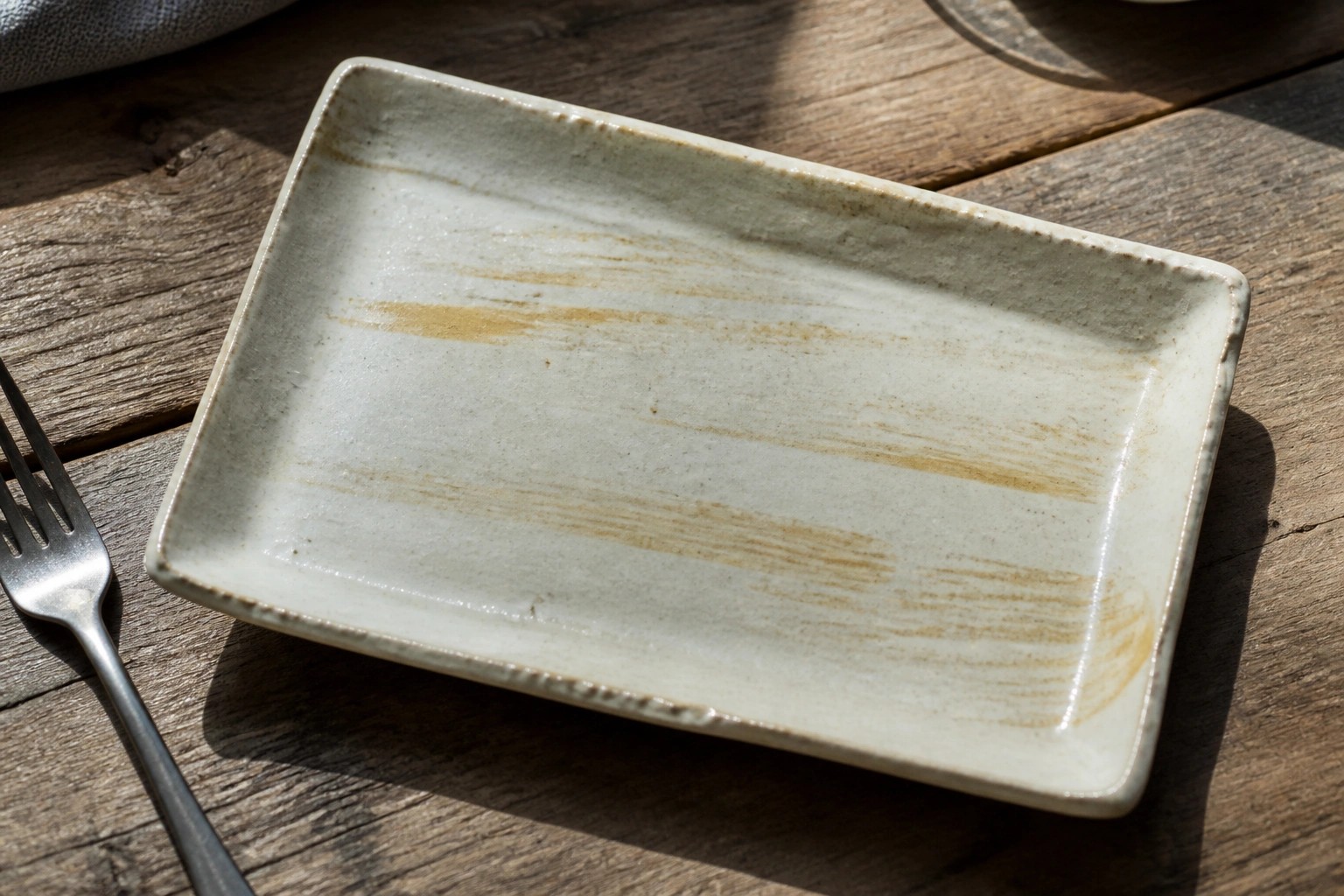
I’ve been working with slab pottery for a few years now and it has become a steady part of how I make tableware for my own home.
Some of the pieces turned out well enough that friends asked for the steps so I started keeping track of what worked.
This list covers 24 different ideas all built from basic slab methods and focused on plates bowls and serving pieces.
They stay simple on purpose because I wanted projects that fit into regular routines without needing special tools.
Most of them came from trying things out in my studio and keeping what felt useful for everyday meals.
Rectangular Slab Tray with Brushed Glaze Streaks
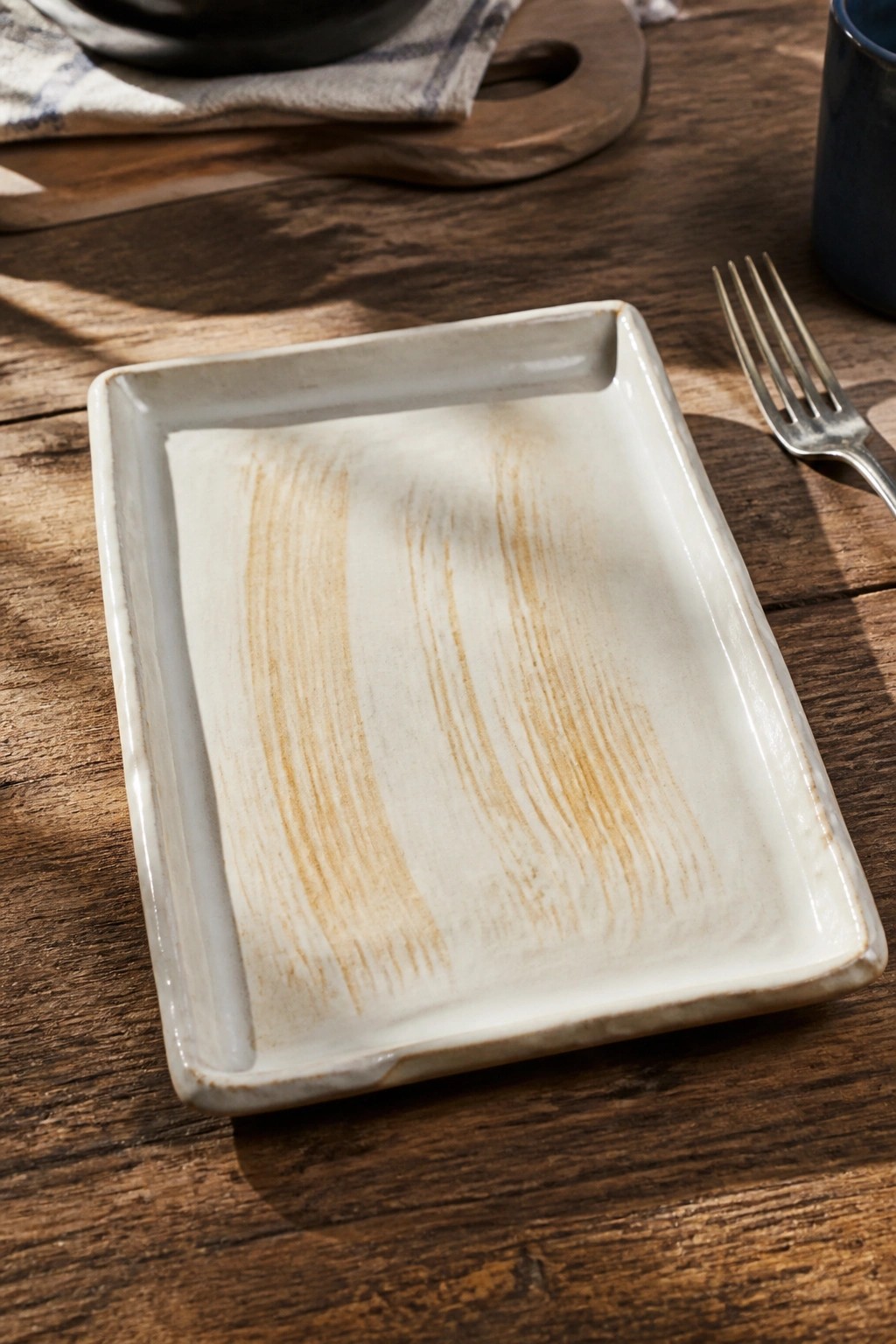
A rectangular tray built from a single clay slab gives you a flat surface with low, gently raised edges for easy carrying. The white glaze is applied with vertical brush strokes that leave soft brown streaks, creating a simple pattern that still reads as handmade. This kind of piece works as a kitchen or dining item for serving small dishes, holding utensils, or acting as a shared plate.
What makes this idea useful is its clean shape that fits on crowded tables without taking much space. You can adapt the glaze by changing the brush width or letting the streaks run in different directions to create new variations. In a kitchen, this kind of piece stands out when grouped with other slab items like plates or bowls. For a gift, the same form scales down easily into a smaller version for individual use.
Stamped Leaf Border Square Plate
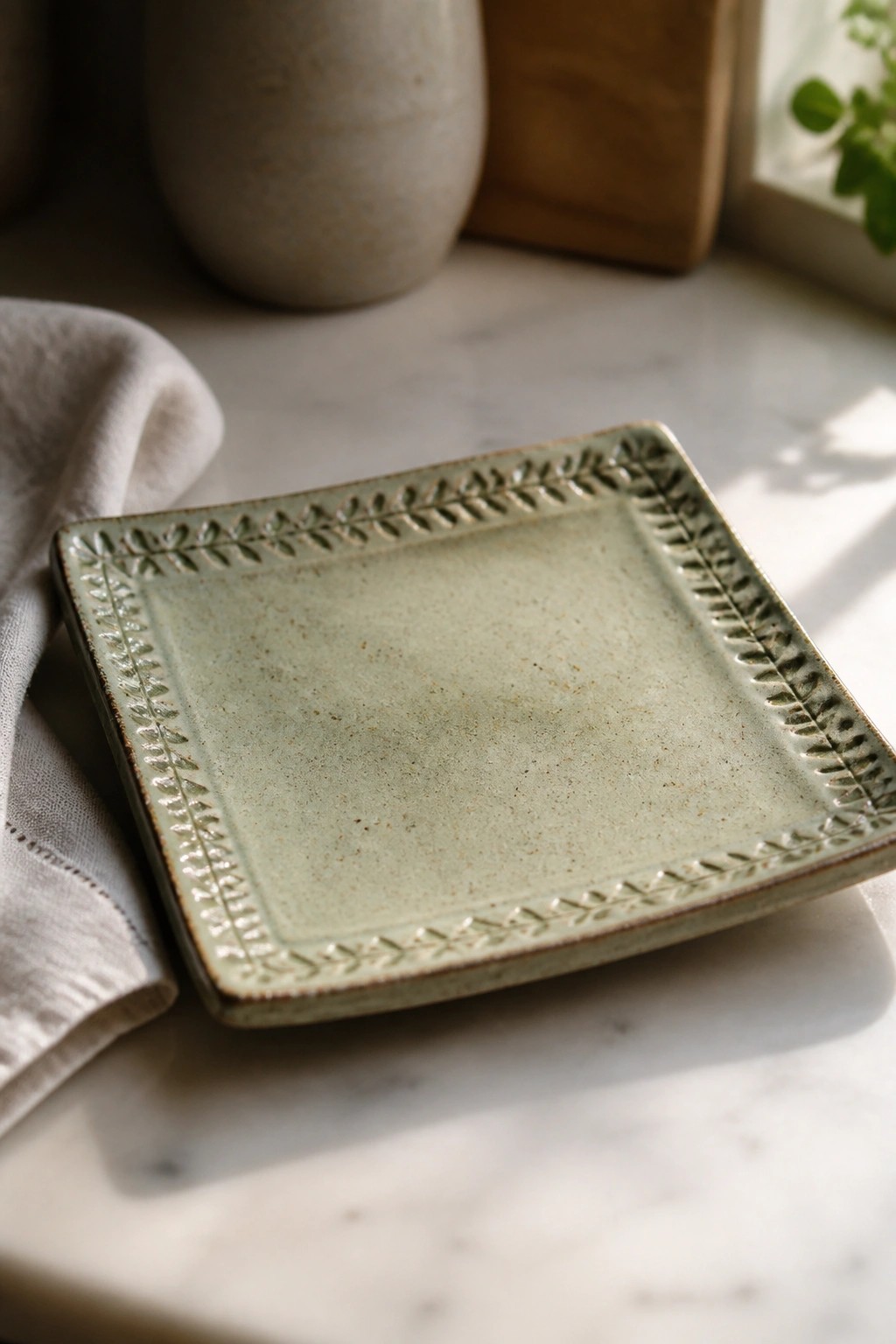
A square slab plate uses a repeating leaf stamp pressed into the clay to create a raised border along all four sides. The light green speckled glaze covers the surface evenly and lets the stamped details catch light without extra carving or painting. This keeps the center area flat and usable while the edge pattern gives the whole piece a finished frame.
What makes this idea useful is how the stamped rim adds interest without covering the serving area. You can change the stamp to other simple shapes like waves or dots if leaves do not fit your style. The square format works well for appetizers, small snacks, or even as a desk tray for keys and cards. The same border treatment could be applied to rectangular dishes or smaller coasters with very little extra effort.
Oval Platter with Brushed Green Glaze
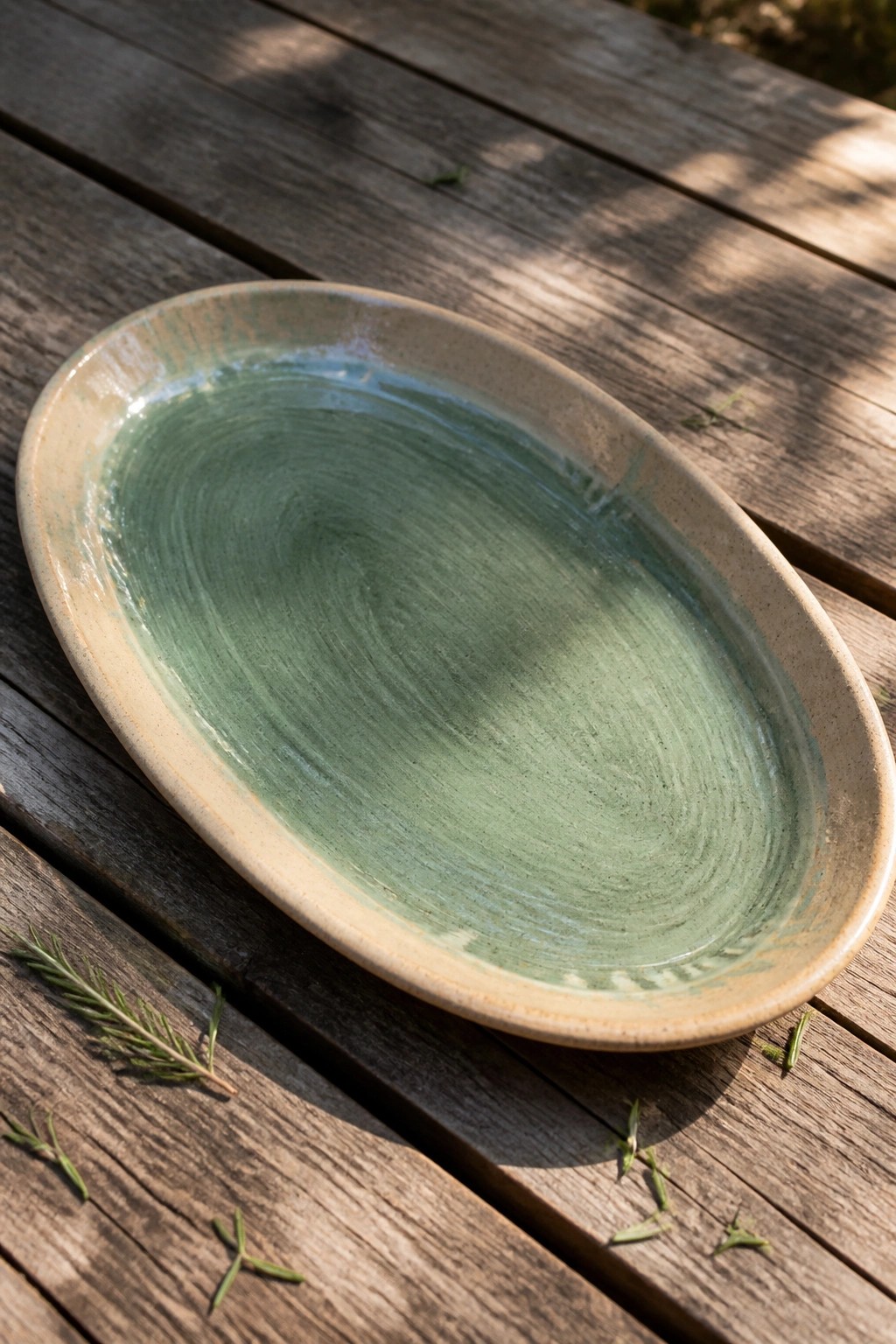
An oval platter formed from slabs gives a flat, stable surface that works well for serving bread, cheese, or small shared dishes. The interior carries a green glaze brushed in overlapping strokes that leave visible lines and slight pooling along the edges. A warmer beige tone on the rim keeps the piece from looking too uniform and helps it blend with other tableware. This style fits the tableware category where the main interest comes from glaze application rather than added handles or rims.
What makes this idea useful is that the oval shape stacks or stores more easily than round plates of similar size. You could repeat the same brushing technique on rectangular trays or smaller individual plates by changing the direction of the strokes. In a dining setup, the piece handles both food service and casual display without needing extra decoration. The rim-to-center color shift also gives a simple way to test how two glazes interact on future slab projects.
Rectangular Slab Butter Dish with Lid
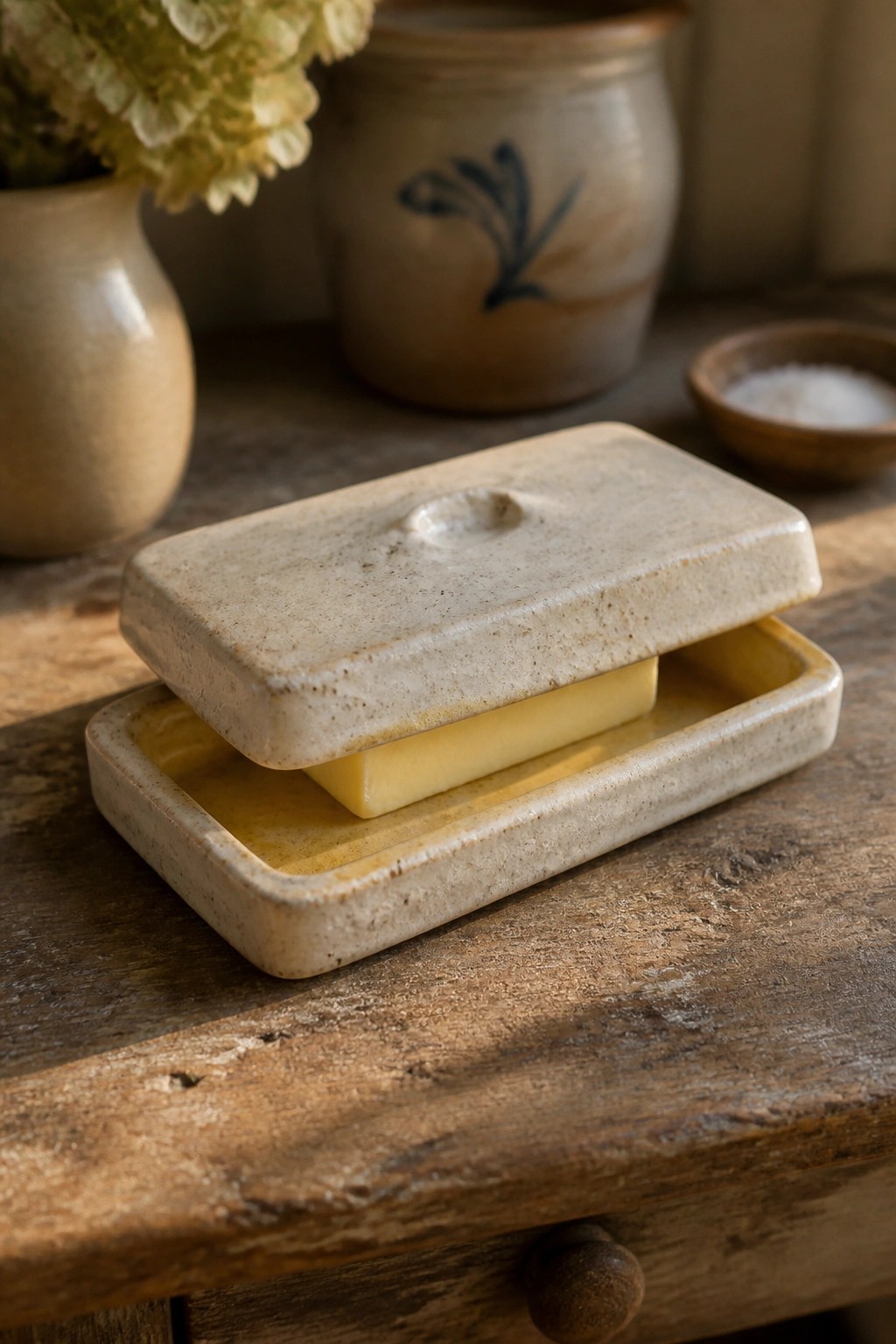
A slab-built butter dish uses flat pieces of clay to form a simple rectangular base and a fitted lid that rests directly on top. The lid includes a small centered indent that serves as a finger hold for easy lifting without adding extra knobs or handles. This design keeps the overall form low and compact while protecting the butter on the table. The matte speckled glaze in neutral tones helps the piece blend with other everyday kitchen ceramics.
What makes this idea useful is how well the rectangular shape matches standard butter sticks so nothing gets wasted on extra space. You can adapt the same slab method to make a longer version for a larger table or shorten it into a small cheese keeper. The plain lid surface also leaves room for stamping a simple pattern or leaving it smooth for contrast with other textured pieces in a set. In a kitchen, this kind of covered dish keeps butter at room temperature without looking like a plastic container.
Three-Section Slab Tray for Sauces
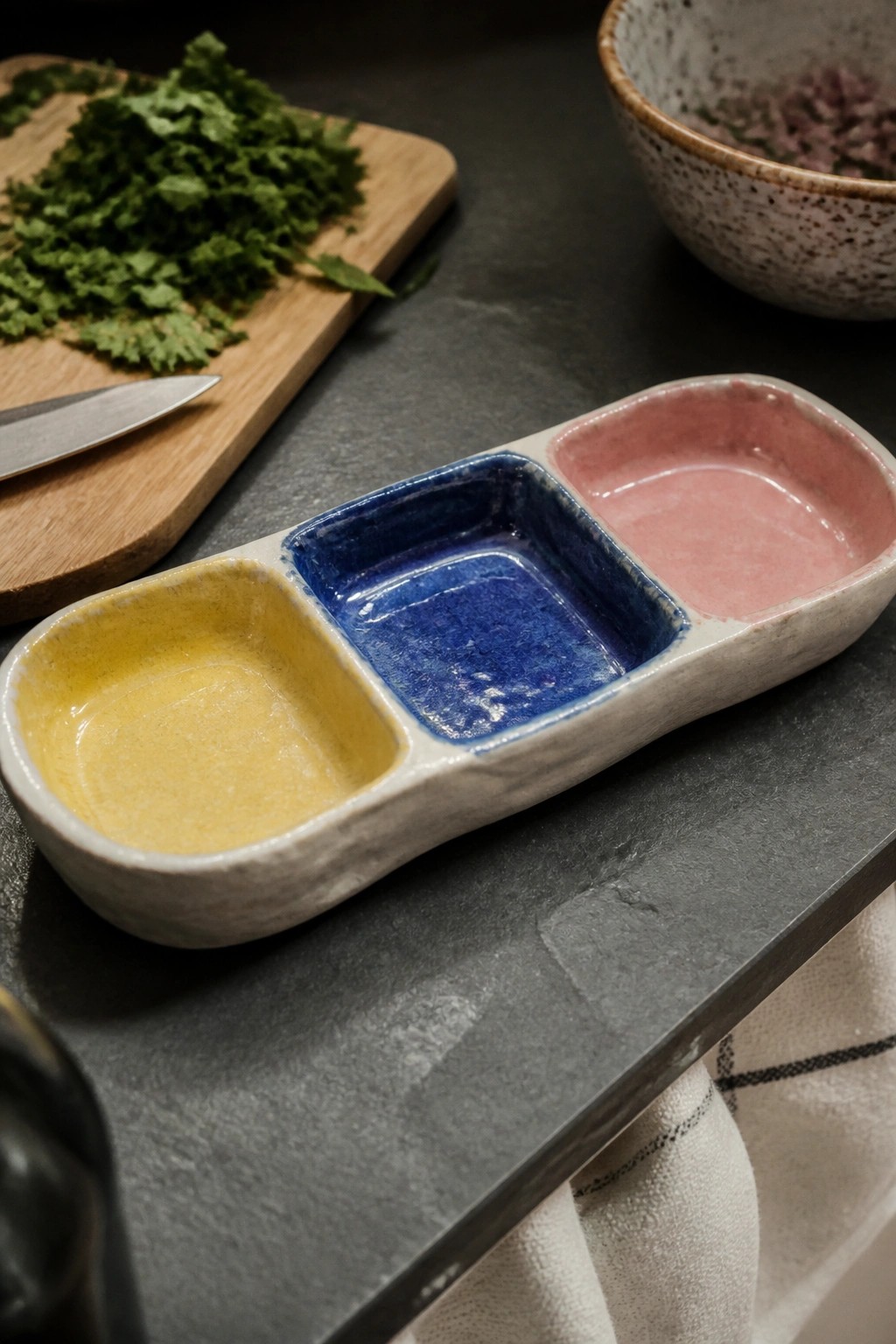
A slab-built tray with three compartments gives you separate wells for different sauces or small sides in one compact piece. The form stays simple with straight sides and rounded ends while the glazes in yellow, blue, and pink keep each section distinct. This kind of divided tableware works for kitchen use because it organizes condiments without needing multiple small dishes.
What makes this idea useful is how it keeps sauces or dips contained during a meal without crowding the table. You could adapt the layout by making the sections different sizes or switching the glaze colors to match other pieces you already have. In a kitchen, this shape works well for everyday serving or small dinner parties where you want everything in reach. The same idea could be scaled down into a two-part version for salt and pepper or turned into a longer tray for appetizers.
Curved Slab Serving Dish
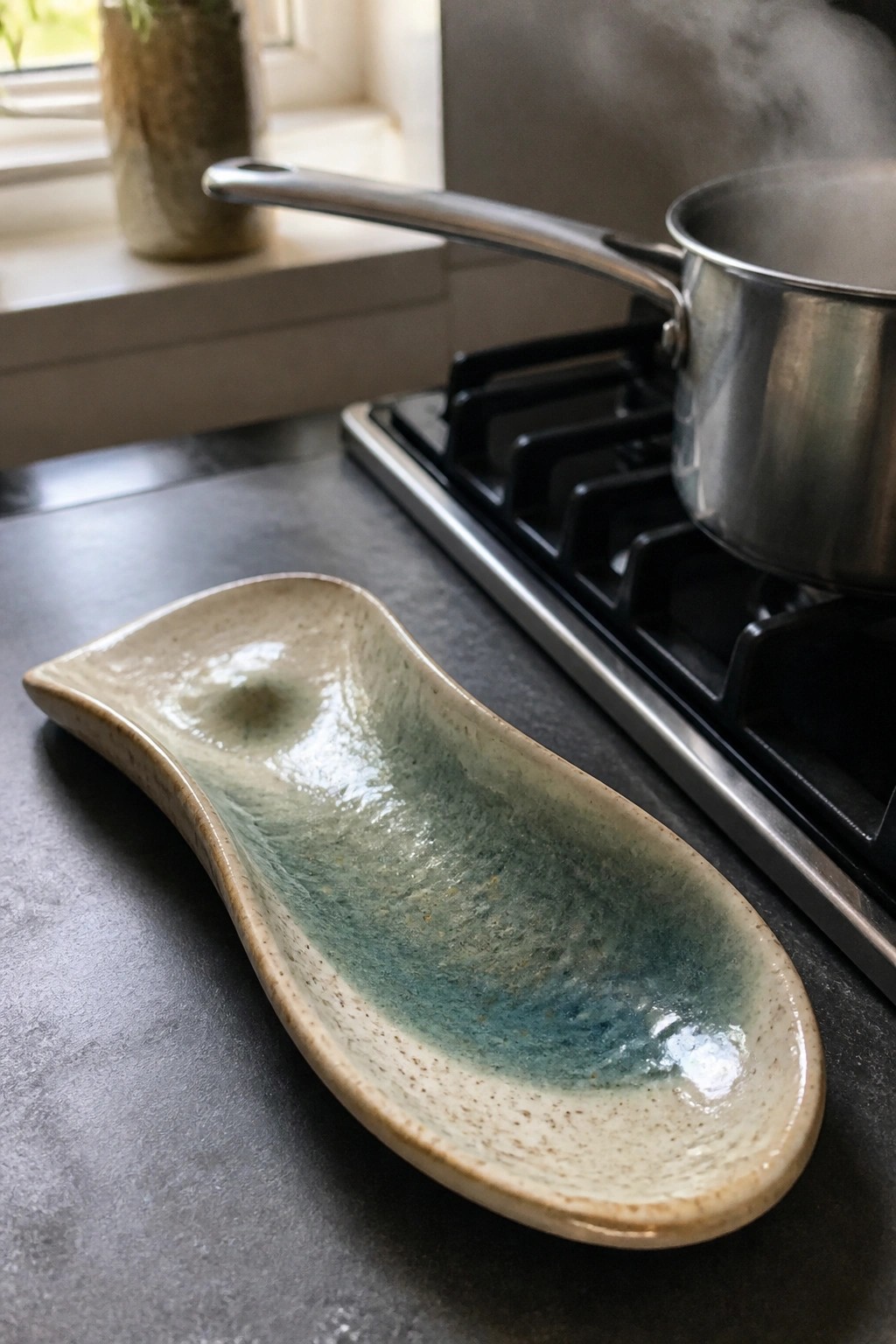
A slab-built dish formed from a single sheet of clay and gently curved along its length creates an elongated, boat-like tray. One end lifts higher than the other, producing an asymmetrical shape that still sits flat. The speckled clay body is left matte on the outside while a blue-green glaze is applied inside so it pools unevenly and catches light along the low center.
What makes this idea useful is how the curve turns a basic slab into something that holds spoons or small servings without extra trimming or handles. You can shorten the same shape for individual butter dishes or stretch it longer for breadsticks. In a kitchen setting the contrast between the dry speckled rim and the glossy interior keeps the piece from looking too plain on a dark countertop. The form is also easy to adapt by adding a small foot ring or changing the glaze to a single solid color if you want a cleaner look.
Slab Built Napkin Rings in Soft Pastel Glazes
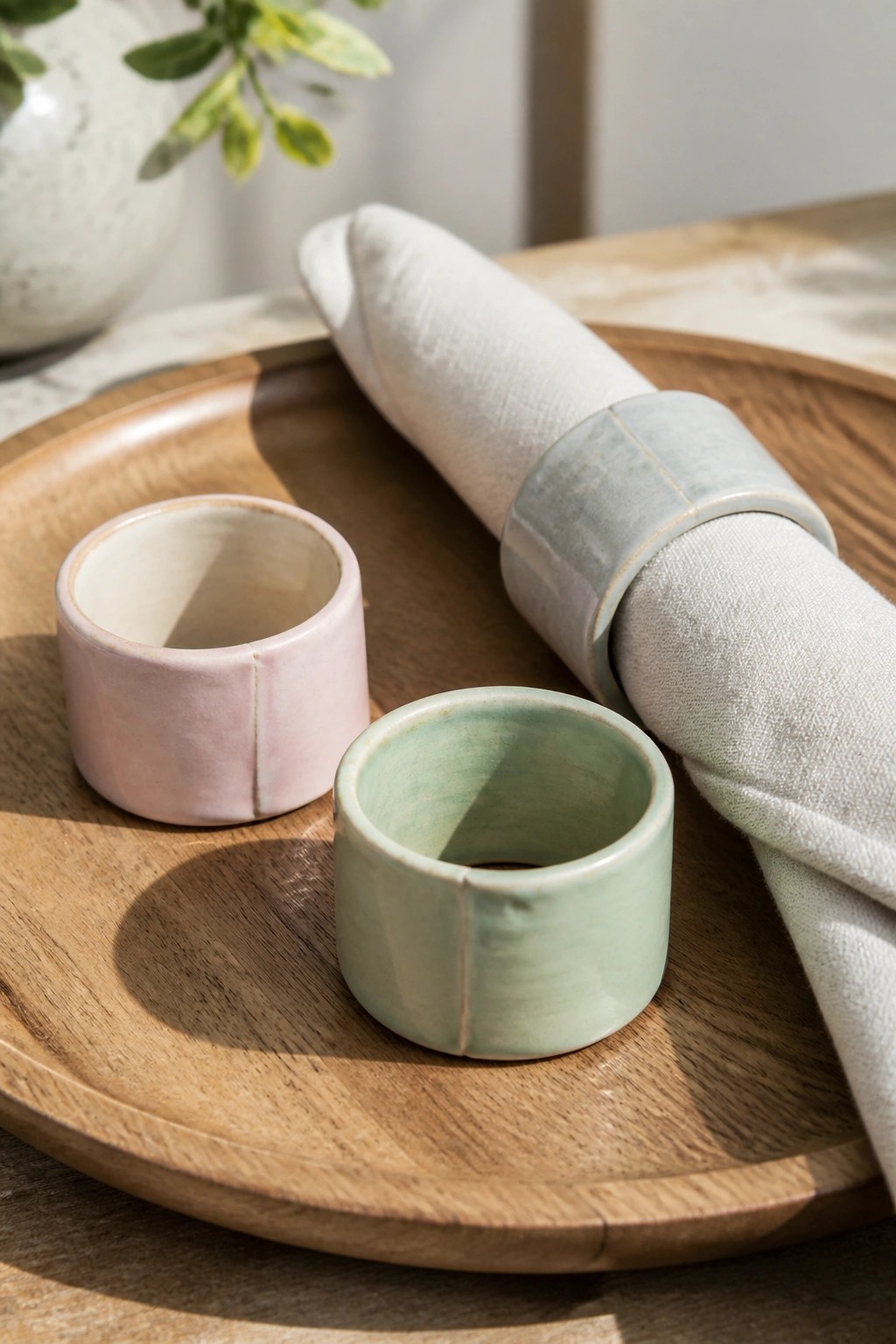
Napkin rings formed from clay slabs create simple cylinders that hold folded napkins upright on the table. Each ring shows a straight seam where the slab joins, and the matte glazes in pink, mint green, and pale blue keep the surface smooth and understated. The consistent diameter and short height make them stackable for storage while still fitting standard cloth napkins. This approach belongs in the tableware category because it turns a basic functional need into a repeatable handmade item that coordinates with plates or bowls.
What makes this idea useful is how quickly the same slab template can be resized or glazed differently to match an existing dinnerware set. A set of six or eight rings works especially well for small dinner parties or as a low-cost gift that still feels intentional. You could adapt the shape by adding a slight flare at the top or by pressing a simple texture into the clay before forming the cylinder. The small size also lets you test new glaze colors without committing much material or kiln space.
Fish-Shaped Ceramic Chopstick Rests
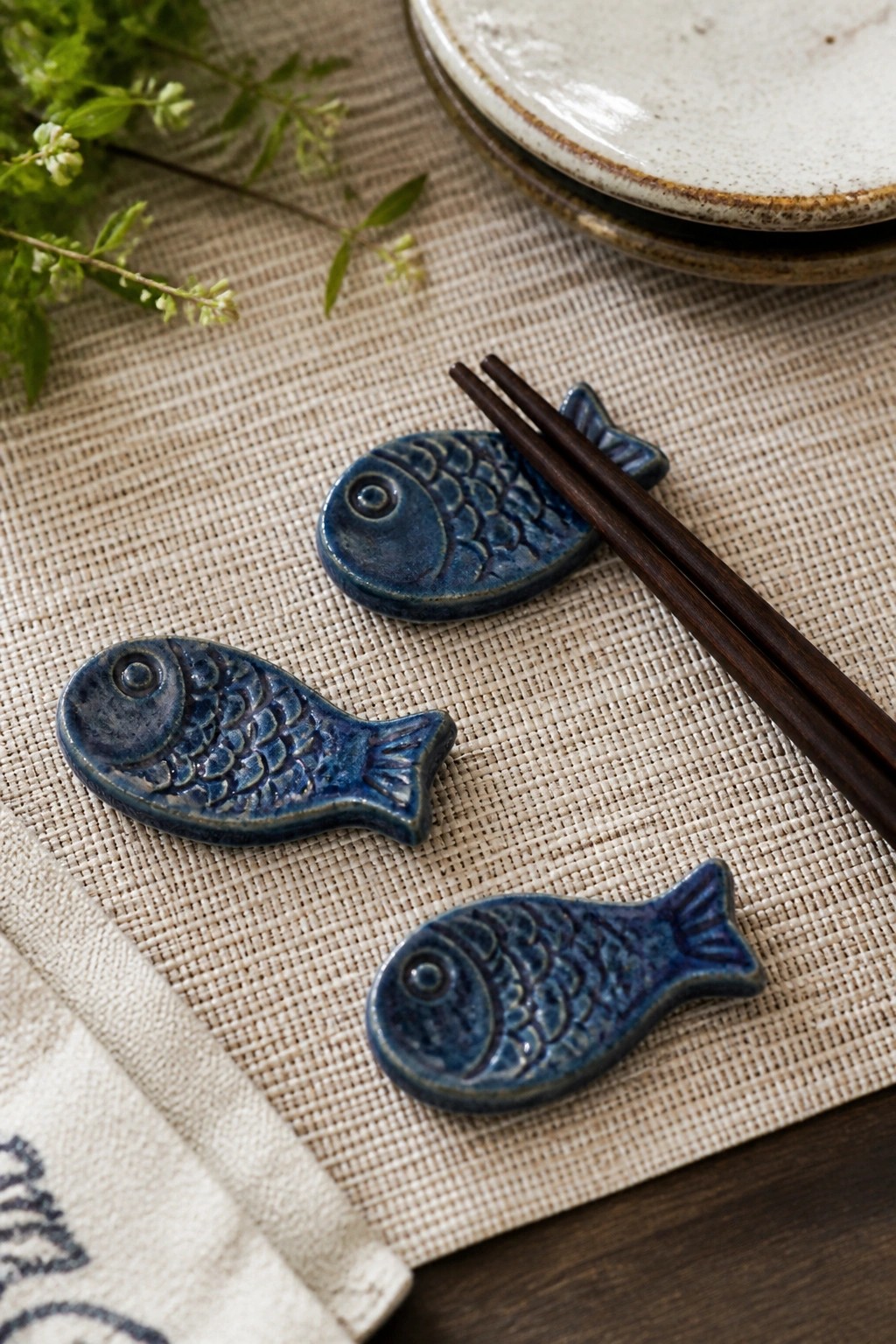
Fish-shaped chopstick rests are a compact tableware project made from small slabs of clay rolled thin and cut into simple fish outlines. Carved scale lines and a raised eye give each piece texture, while a single deep blue glaze covers the surface and settles into the details. The flat body and tail shape keep the rest stable on the table, and the overall size works well for holding a pair of chopsticks without taking up much space. This fits the kitchen and tableware category as a functional accent rather than a main dish piece.
What makes this idea useful is how quickly you can produce a set from one slab of clay. The fish form adapts easily to other simple shapes like leaves or waves if you want a different theme. In a kitchen, these rests keep chopsticks clean during meals and store flat when not in use. You could also scale the same idea up slightly to make spoon rests or small spoon holders for a matching set.
Faceted Slab Mug with Drip Glaze Rim
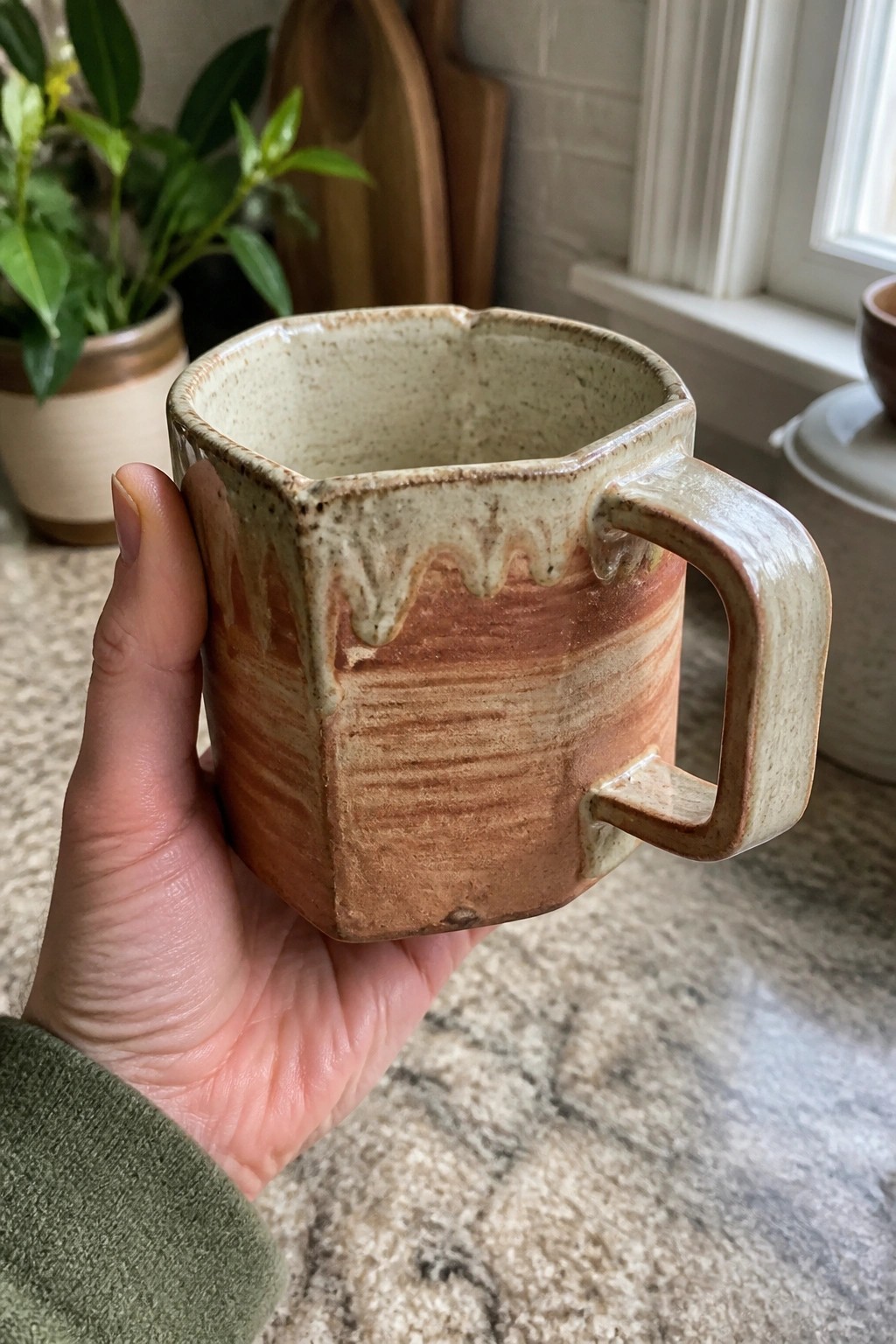
A slab-built mug with cut corners and flat sides creates a strong geometric shape that stands out from typical round forms. The surface shows horizontal texture lines from the clay and a two-tone glaze that moves from rust brown at the base into cream with controlled drips along the top edge. This style fits the tableware category because the handle and open form make it practical for daily drinks while the angular build gives it visual weight.
What makes this idea useful is how the flat sides simplify rolling out and joining slabs without needing a wheel. You can scale the same pattern down for espresso cups or widen it into a small pitcher by adjusting the template. The glaze drips add interest without extra carving so the project stays straightforward for someone building a matching set. In a kitchen this shape stacks decently on open shelves and pairs easily with simple plates or bowls made from the same slab method.
Freeform Slab Cup and Saucer Set
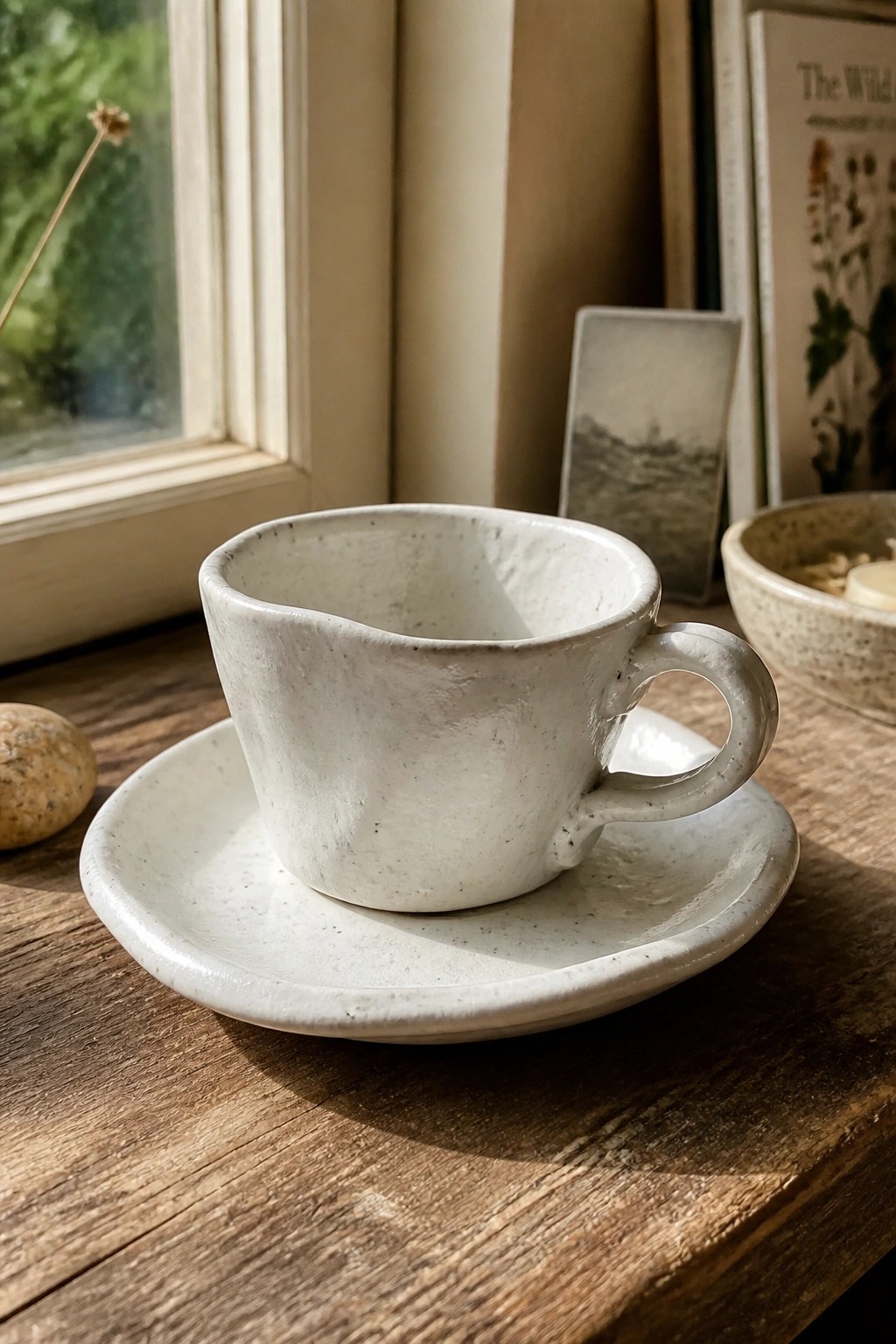
A slab-built cup with an uneven rim sits on a matching low saucer. The light speckled glaze keeps the focus on the hand-shaped surface and slight asymmetry instead of added decoration. This approach produces a simple cup and saucer that still reads as intentional tableware rather than a standard wheel-thrown piece.
What makes this idea useful is how the irregular edges and minimal glaze let the form carry the look without extra steps. You can repeat the same slab template to build a set of four in slightly different heights for a mixed breakfast table. The small overall size also works for serving small portions of sauce or nuts when the cup is not in use.
Sunburst Carved Serving Bowl
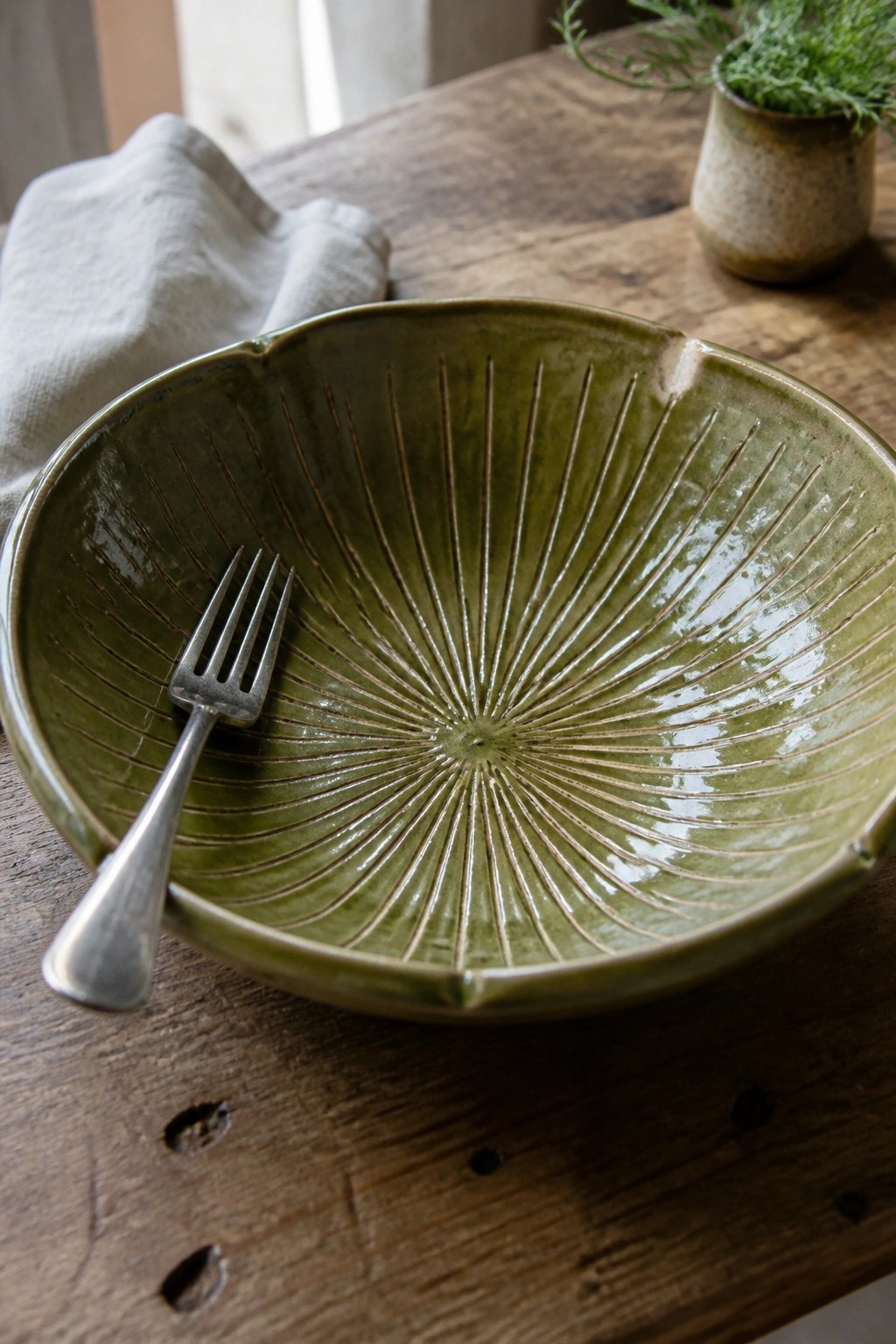
A wide, shallow bowl built from a slab of clay can be pressed into a mold and then carved with lines that radiate from the center. The grooves catch the green glaze and create contrast without adding raised decoration that might interfere with serving. This approach keeps the interior smooth for food while turning the carving into the main visual feature.
What makes this idea useful is how the radial pattern works on any round form without needing extra colors or stamps. You could repeat the same carving on a set of dinner plates or scale it down for small side bowls using the same slab method. The single glaze color makes it simple to produce matching pieces for a full collection. In a kitchen setting, the design stands out on a table while remaining practical for everyday use.
Square Slab Baking Dish for Individual Portions
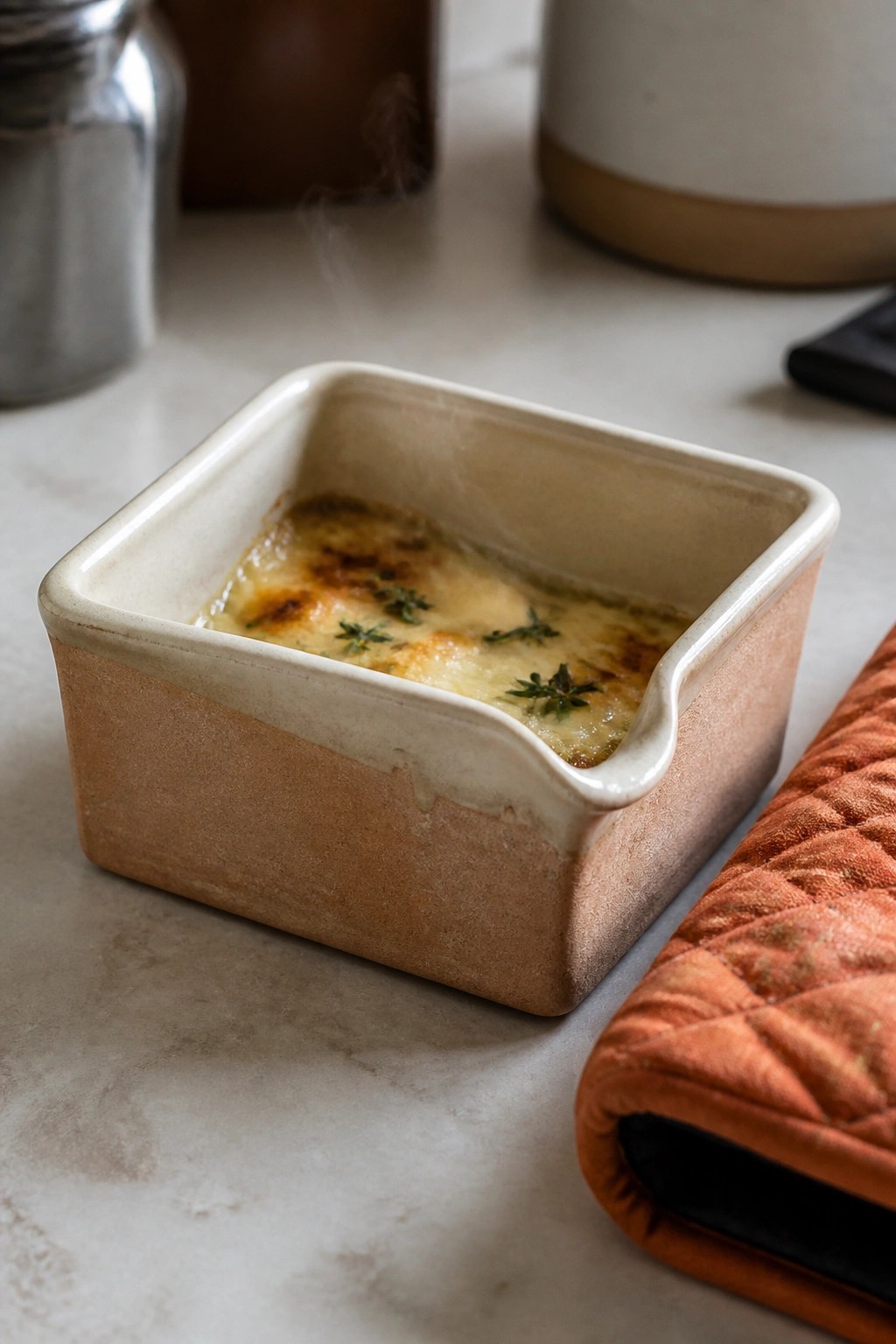
A square baking dish built from clay slabs gives you straight sides and a flat base that holds heat evenly for oven use. The form comes together by scoring and joining flat pieces, which keeps the walls uniform and makes the dish stackable for storage. A light glossy glaze on the inside contrasts with the matte exterior to keep the focus on the food while the clay body stays easy to grip with a towel.
The shape does a lot of the work here because the low profile and wide surface area suit gratins, dips, or small casseroles that need browning on top. You can adapt the same slab layout to make rectangular versions or add a simple pouring spout on one corner for sauces. In a kitchen, this kind of piece stands out on a table because it moves straight from the oven without needing an extra serving bowl, and the proportions scale easily if you want to make sets for four or six.
Slab Trivet with Cutout Triangles
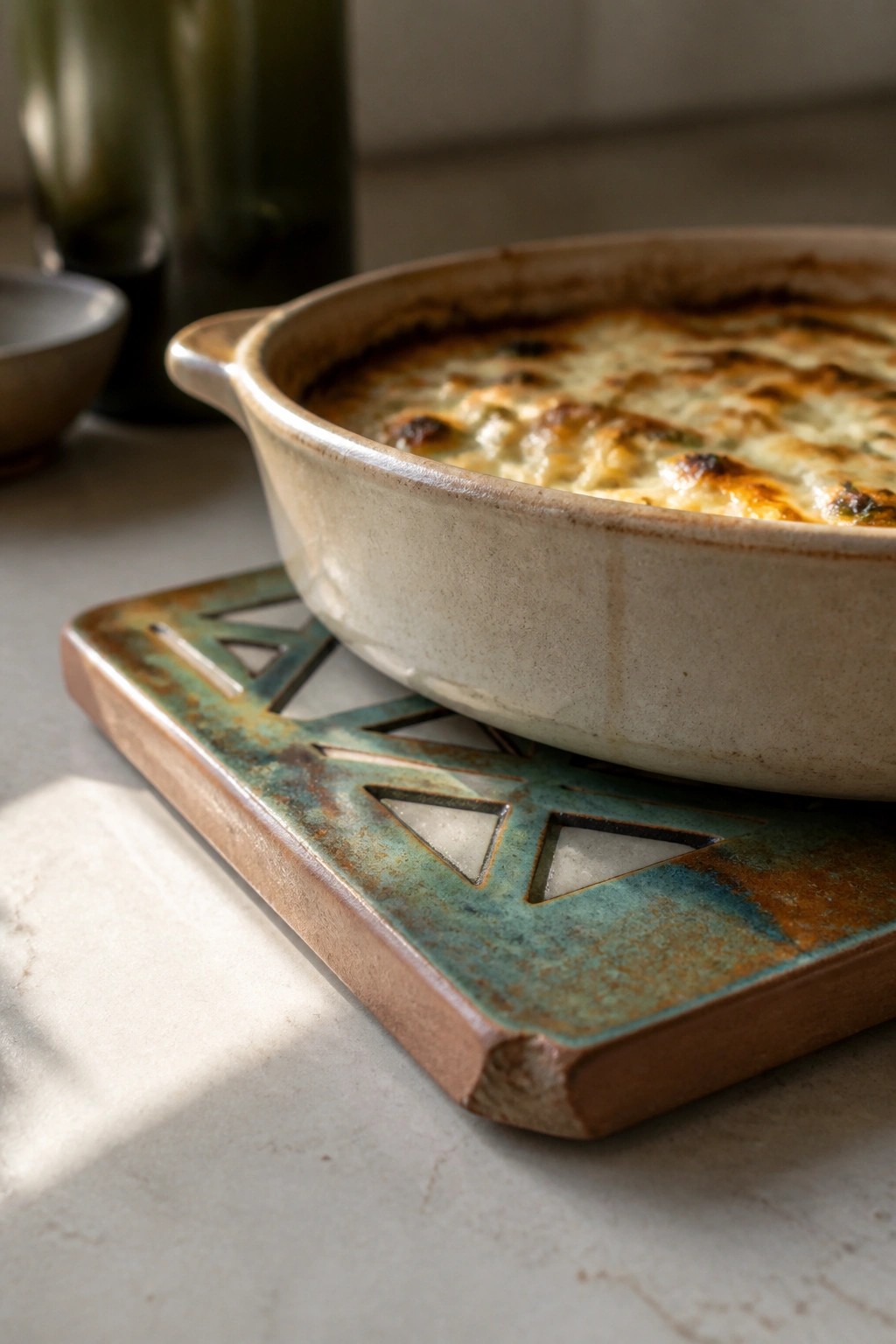
A rectangular slab trivet with multiple triangular cutouts serves as a heat-resistant base for casserole dishes and hot serving pieces. The cutouts are arranged in a repeating geometric pattern that reduces weight and adds ventilation while keeping the surface stable. A layered glaze in teal, brown, and tan creates contrast across the flat form without covering the raw clay edges. This approach fits the kitchen accessory category for slab-built tableware that supports everyday use.
What makes this idea useful is how the cutouts keep the trivet from trapping too much heat under a dish. You can scale the same layout to fit larger platters or shorten it for smaller bowls by adjusting the slab size before cutting. In a kitchen, the simple shape protects surfaces and stacks easily when not in use. For variety, repeat the triangle pattern on a round slab or switch to square openings to match different dish styles.
Faceted Slab-Built Serving Bowl
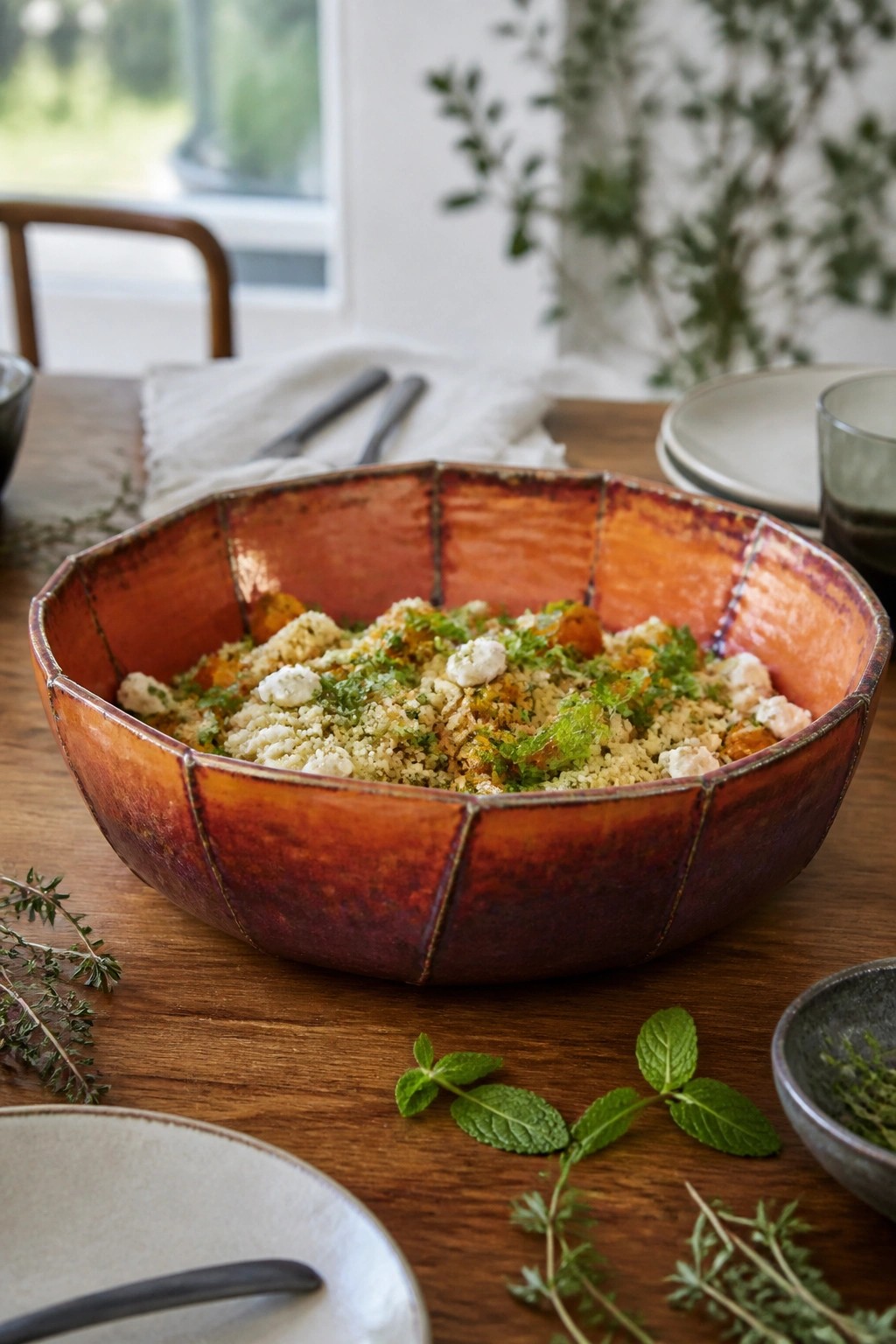
A slab-built serving bowl with multiple straight sides gives the form a strong geometric shape while keeping the interior open and functional for food. The glaze moves across orange, red, and brown tones with visible variation, so the surface itself becomes the main detail without added patterns or carving. This approach fits the serving bowl category well because the size and shape handle large portions like grain salads or roasted vegetables without looking plain.
The angled sides make the bowl easy to adapt by adjusting the number of slabs or the overall diameter for different table needs. It works especially well in a dining setup with simple linens and neutral plates because the warm glaze adds contrast. You could repeat the slab method for smaller individual bowls or switch to a matte finish if you want less shine on the final piece.
Textured Slab Box for Table Salt or Spices
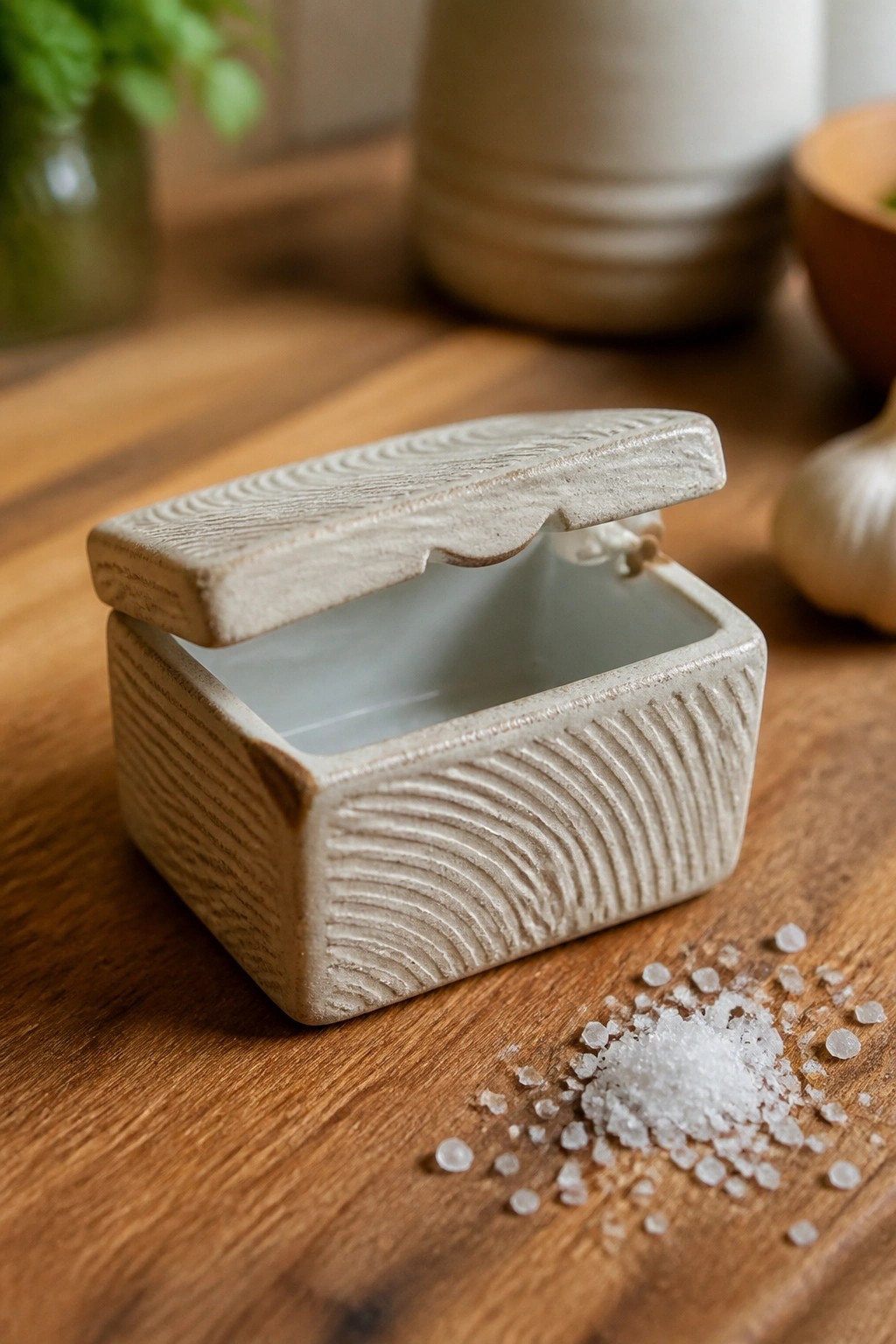
A small rectangular slab box with a fitted lid makes a practical salt or spice cellar for the table. The exterior uses a repeated combed texture that gives the piece grip and visual interest while keeping the overall form simple. The lid rests on a shallow ledge so it stays in place when closed but lifts off easily with one hand. Inside the box stays smooth and light-colored for easy cleaning.
The small size lets it sit next to a pepper mill or butter dish without crowding the table. You can change the texture by swapping the comb for a fork, wire brush, or even a rib tool to create different line patterns. The same box shape works for loose tea, coarse salt, or small kitchen tools if you adjust the interior depth slightly. A piece like this stands out on Pinterest because the texture reads clearly even in a thumbnail.
Speckled Ceramic Cake Stand
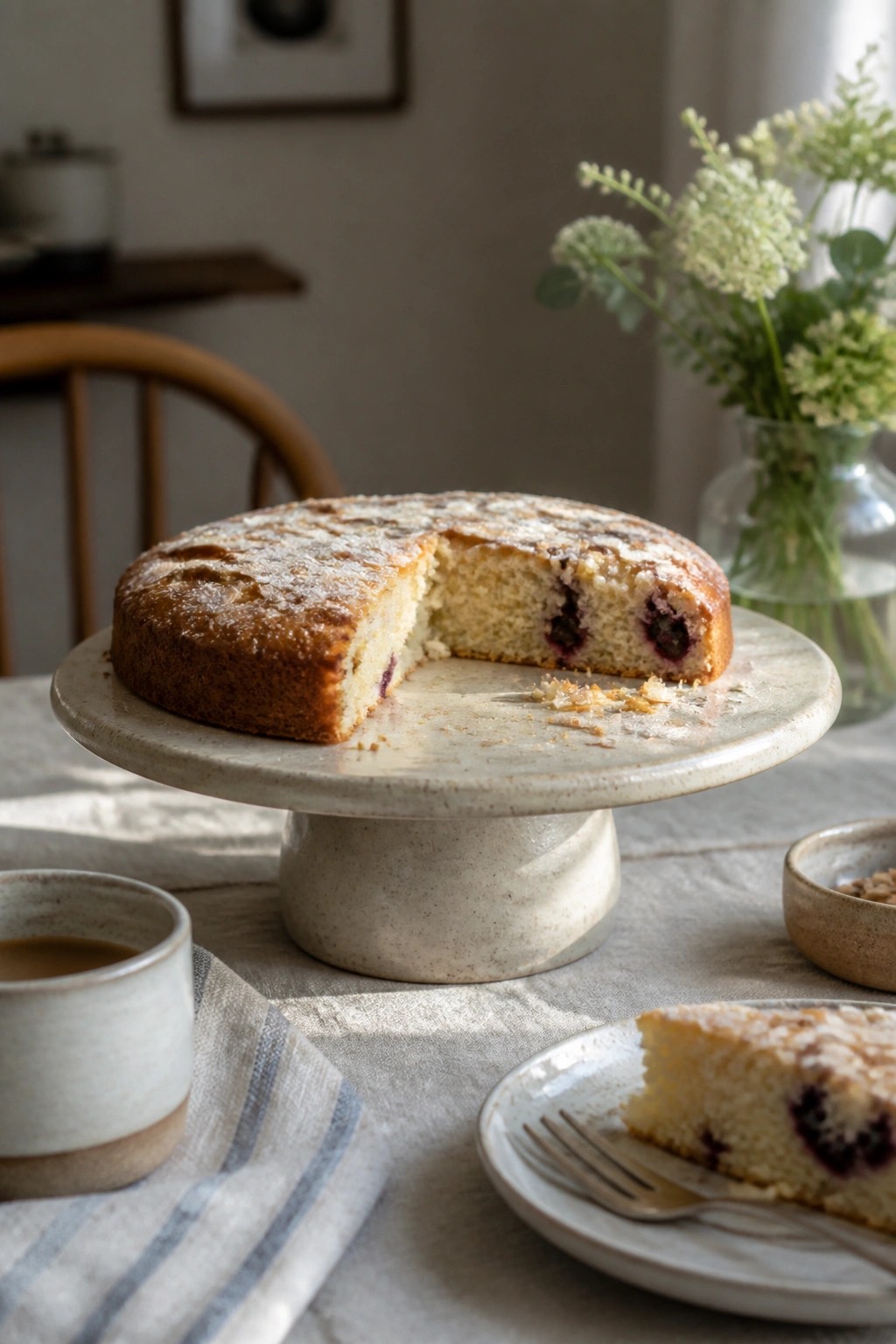
A cake stand formed from speckled clay with a matte, light-colored glaze gives a stable raised surface for serving cakes or pastries. The wide flat top rests on a solid tapered base that provides height and keeps the piece balanced on the table. The visible speckles in the clay create a subtle texture across the entire surface without any added decoration. This type of piece fits into the kitchen serving category for handmade tableware collections.
What makes this idea useful is the simple pedestal shape that works for both everyday meals and larger gatherings without needing extra space. You could scale the same proportions down to make a smaller stand for muffins or use the base design for a low tray. In a dining setup, this kind of stand keeps food visible while protecting the table surface from crumbs or spills. The durable clay body also makes it straightforward to match with other dishes in the same glaze for a consistent collection.
Divided Slab Tray for Utensils
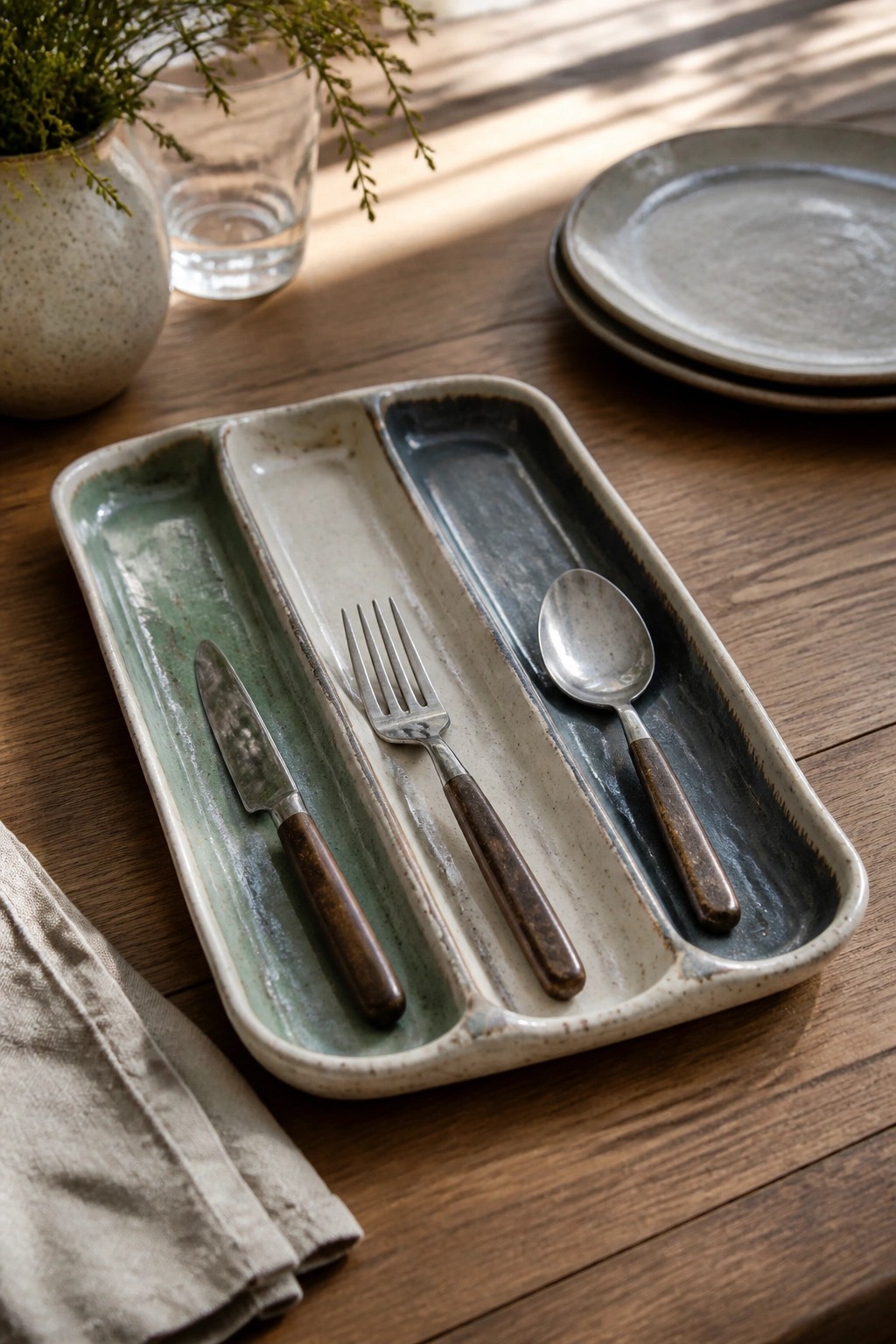
A slab-built rectangular tray divided into three long compartments works well as a dedicated holder for knives, forks, and spoons. Each section gets its own glaze color, which keeps the spaces distinct while the overall shape stays flat and easy to stack or store. The simple construction lets the tray sit directly on a dining table or sideboard without taking up much space.
What makes this idea useful is the way the compartments keep silverware sorted during meals or when setting the table. You could rework the same layout into a shorter version for chopsticks or dessert spoons, or widen one section to hold small condiment bowls instead. In a kitchen this shape also serves as a drying tray for hand-washed utensils. The basic slab form makes it simple to adjust the number of divisions or swap glaze colors to match other pieces in a handmade collection.
Slab-Built Serving Tray with Built-In Wells
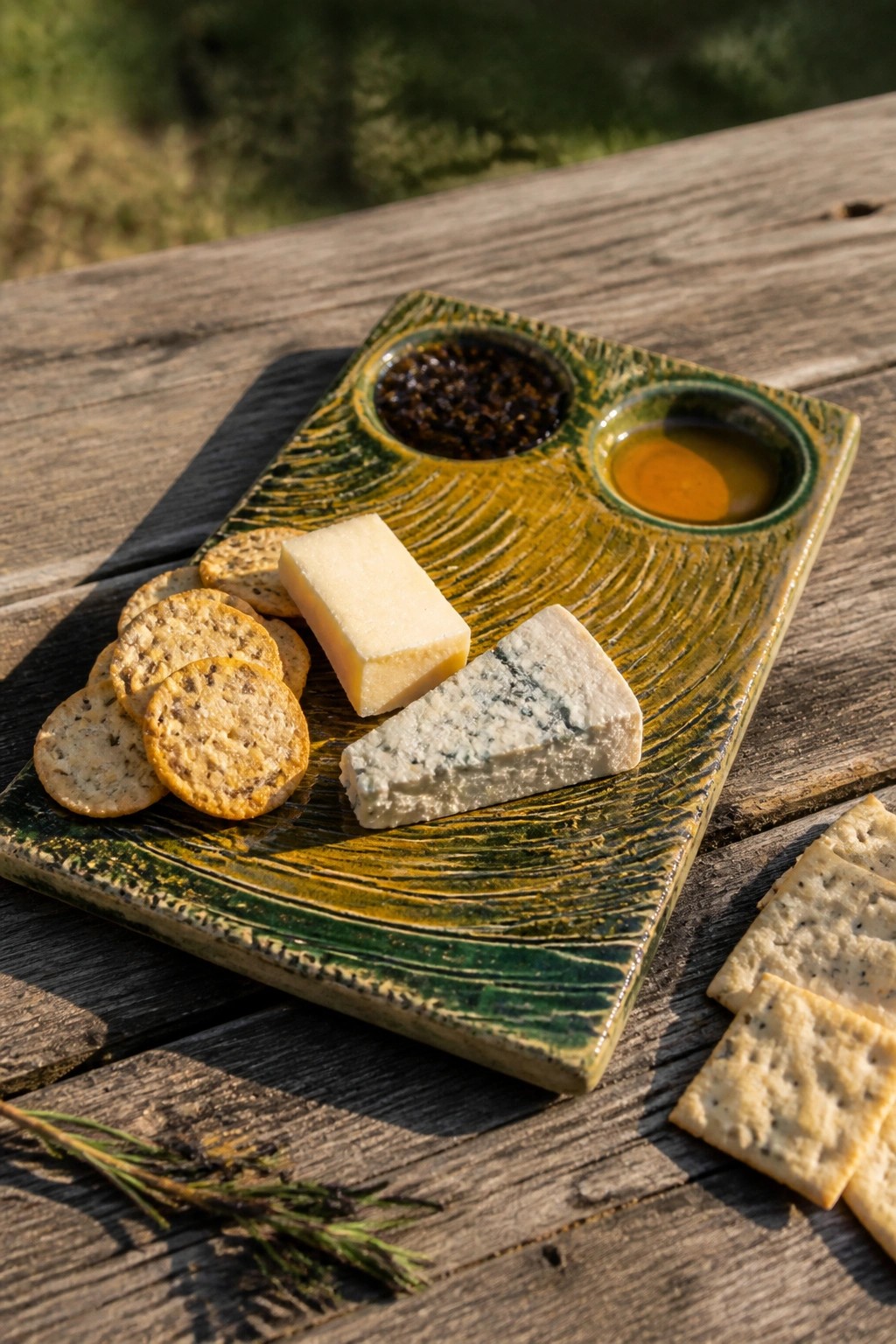
A rectangular slab tray with two recessed wells at the top end creates a self-contained serving piece for cheese, crackers, and spreads. The wells keep dips or honey in place without extra dishes, while the flat section holds multiple cheeses and round crackers. A variegated green glaze over a carved swirling texture gives the surface enough grip to prevent sliding during use.
What makes this idea useful is the way the compact layout works for outdoor tables or small gatherings where space is limited. You could shorten the tray for two people or widen the wells to fit larger portions of jam. The same slab method adapts easily to a longer version for bread and olive oil or a square shape for dessert items like cookies and chocolate sauce.
Angular Slab-Built Teapot
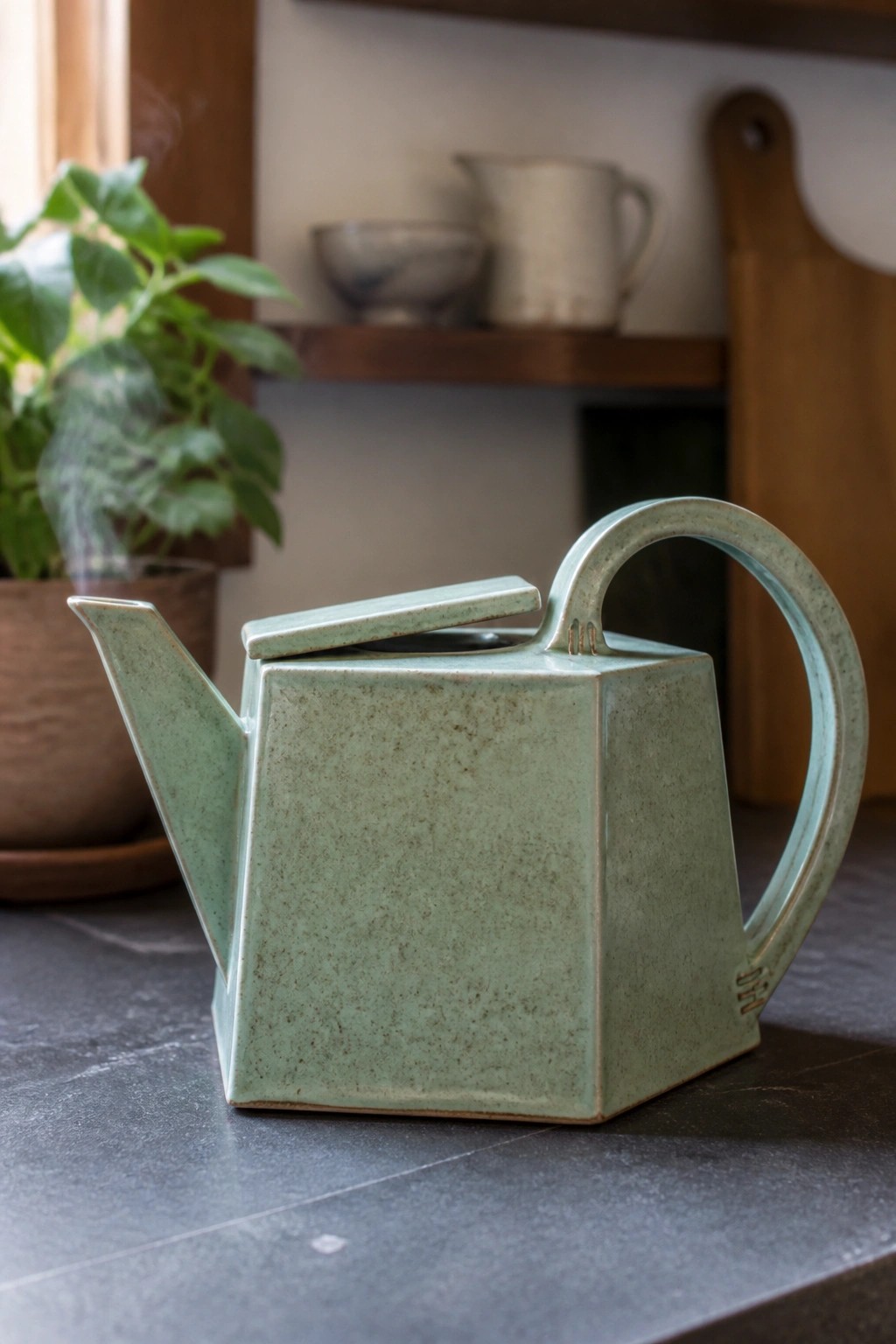
A slab-built teapot with a square body turns basic rolled clay into a functional tableware piece. Flat sides join at crisp angles to create the main form, while a separate slab shapes the lid and a pulled or coiled handle attaches at the back. The matte green glaze with fine speckles covers every surface evenly and highlights the geometric lines without adding extra decoration.
What makes this idea useful is the way the square profile stands apart from typical round teapots in a handmade dining set. You can repeat the same slab construction to make matching sugar bowls or small pitchers by adjusting the height and width. In a kitchen this shape sits flat on shelves and pours steadily because of the straight sides. Scale the design down for individual cups or keep the proportions and swap the glaze color to build a full coordinated collection.
Fruit-Painted Ceramic Plates
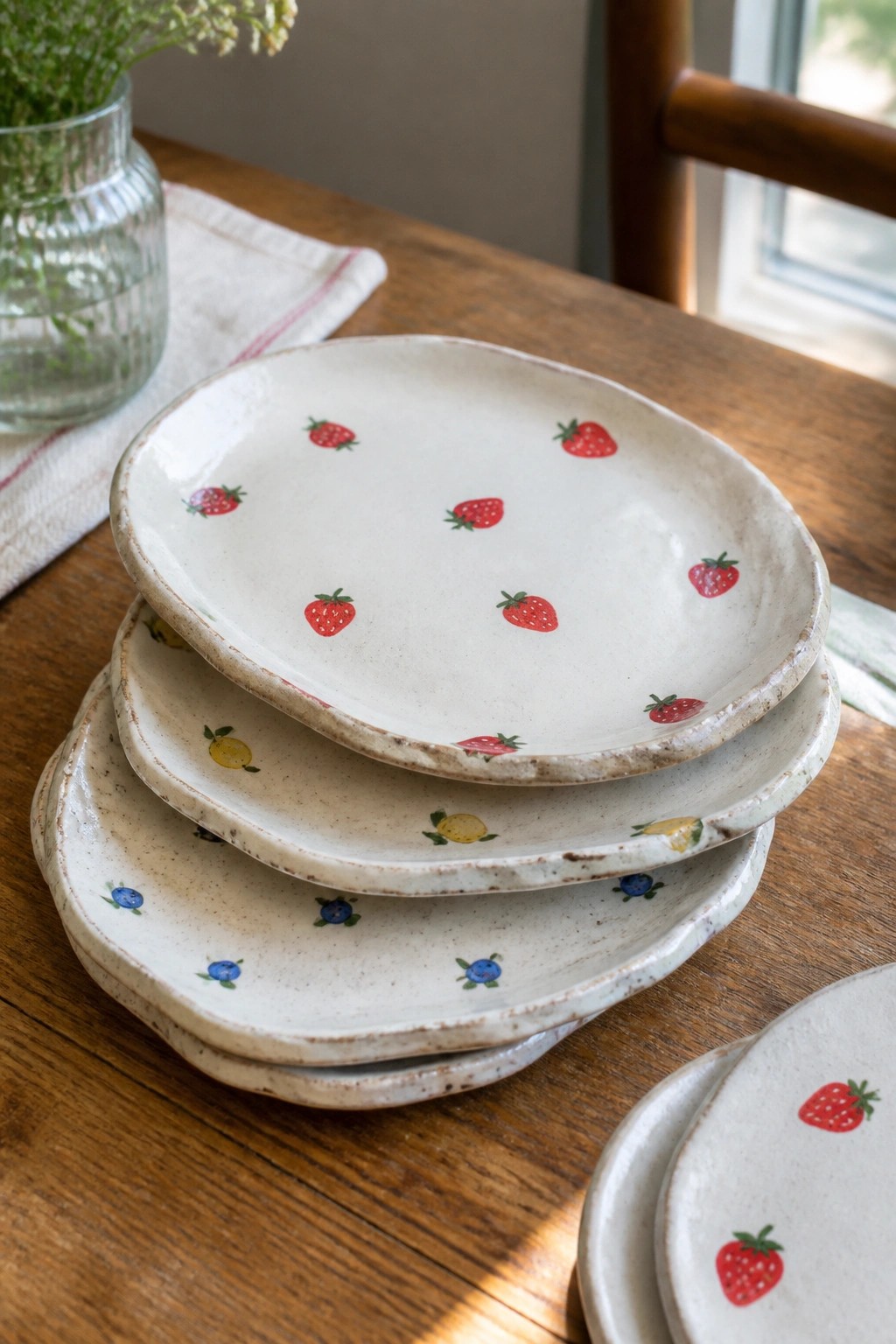
Handmade ceramic plates like these use a simple slab or wheel-thrown form with softly irregular edges and a matte speckled glaze. Small fruit motifs such as strawberries, lemons, and blueberries are painted directly onto the surface in scattered positions rather than a repeating border. The neutral base lets the bright fruit colors stand out while the handmade shape keeps the overall look casual. This approach works as painted tableware for a dining collection.
What makes this idea useful is how the scattered fruit placement can be swapped for any small motif without changing the plate shape or glaze. The shallow form suits salad, dessert, or side dishes in everyday kitchen use. You could repeat the same painting style on matching bowls or small trays to build a full set. For Pinterest appeal, the contrast between the neutral glaze and single-color fruit keeps the design easy to photograph and adapt.
Dot and Sun Patterned Ceramic Egg Cups
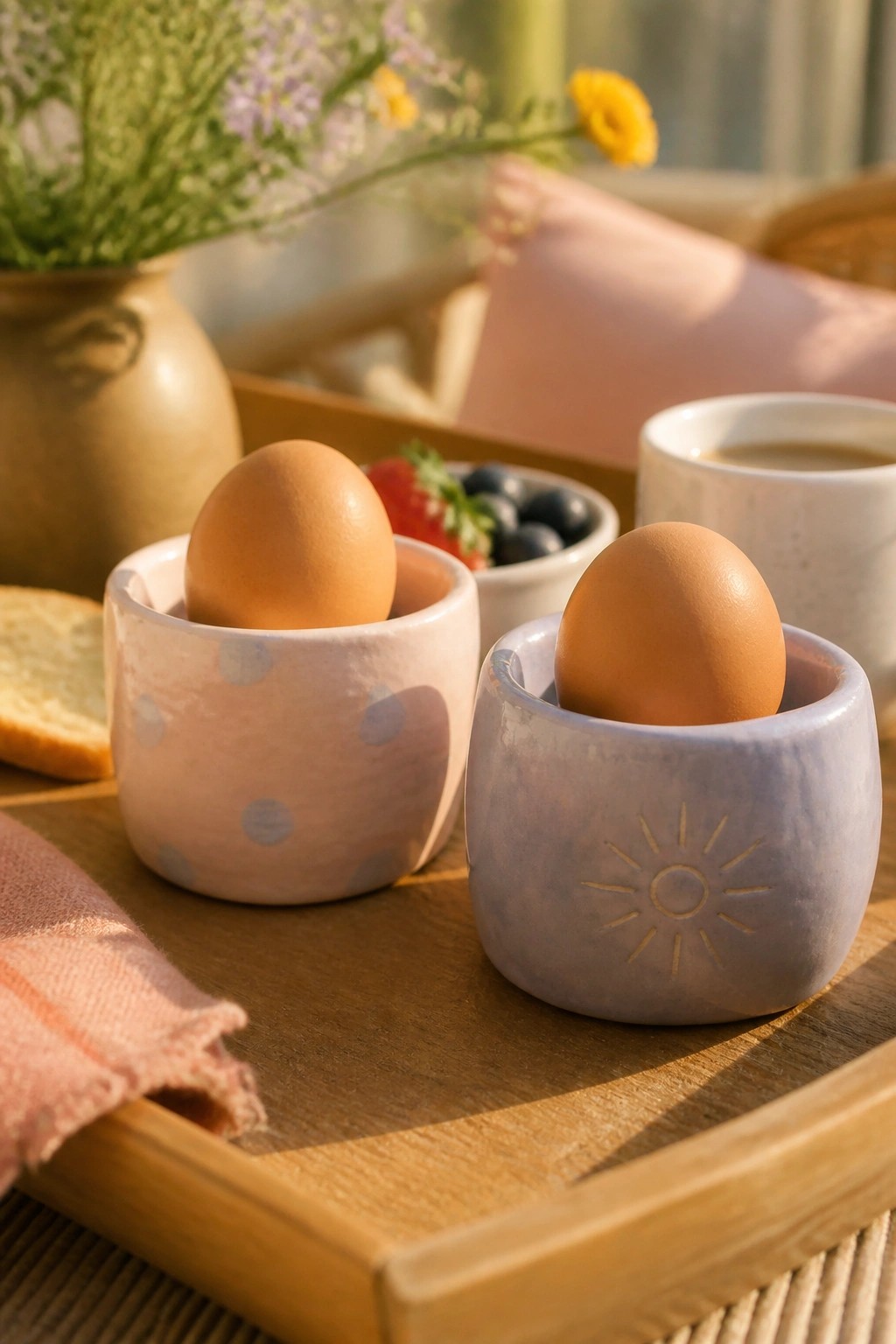
Egg cups are small, rounded ceramic holders made to keep a boiled egg upright at the table. These examples use a simple bowl shape with a slightly flared rim and sit low enough to stay stable on a tray or plate. One carries a soft pink glaze with blue dots while the other uses a muted lavender glaze and an incised sun motif. Both stay functional while the surface patterns add quick visual interest without extra form changes.
What makes this idea useful is the small scale that lets you produce several in one kiln load. You can swap the dot or sun details for other quick marks like lines or stamps and still keep the same shape. The same form works for tiny sauce dishes or pinch pots if you widen the base slightly. In a breakfast set these stand out on Pinterest because the motifs read clearly even in a small thumbnail.
Geometric Slab Salt and Pepper Shakers
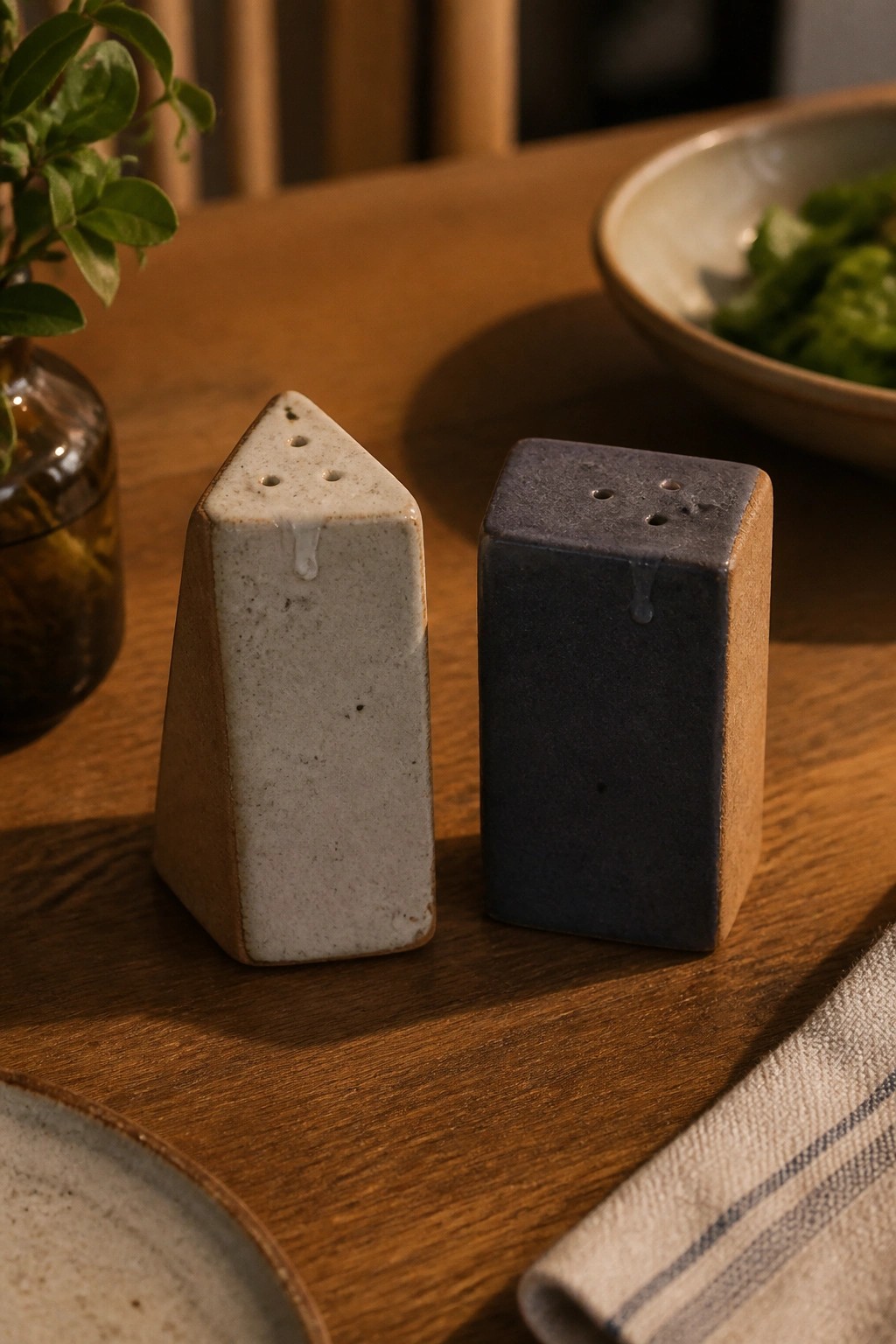
Slab construction works well for these angular salt and pepper shakers because it produces straight sides and flat tops that feel intentional rather than rounded. The pair uses two different forms, a tall triangle and a shorter rectangle, both with a handful of small holes punched into the top surface before firing. A light speckled glaze covers one shaker while a darker matte glaze covers the other, and the slight drip of glaze down the side adds a simple finishing detail without extra decoration.
What makes this idea useful is how easily the same slab templates can be adjusted to make taller or wider versions for other table items like oil bottles or a small butter dish. The compact size means they take up little room on a table setting yet still read as a deliberate pair rather than random pieces. You could repeat the two-glaze contrast across a full set of tableware so the shakers match the rest of the collection without matching exactly.
Slab Tea Light Candle Tray
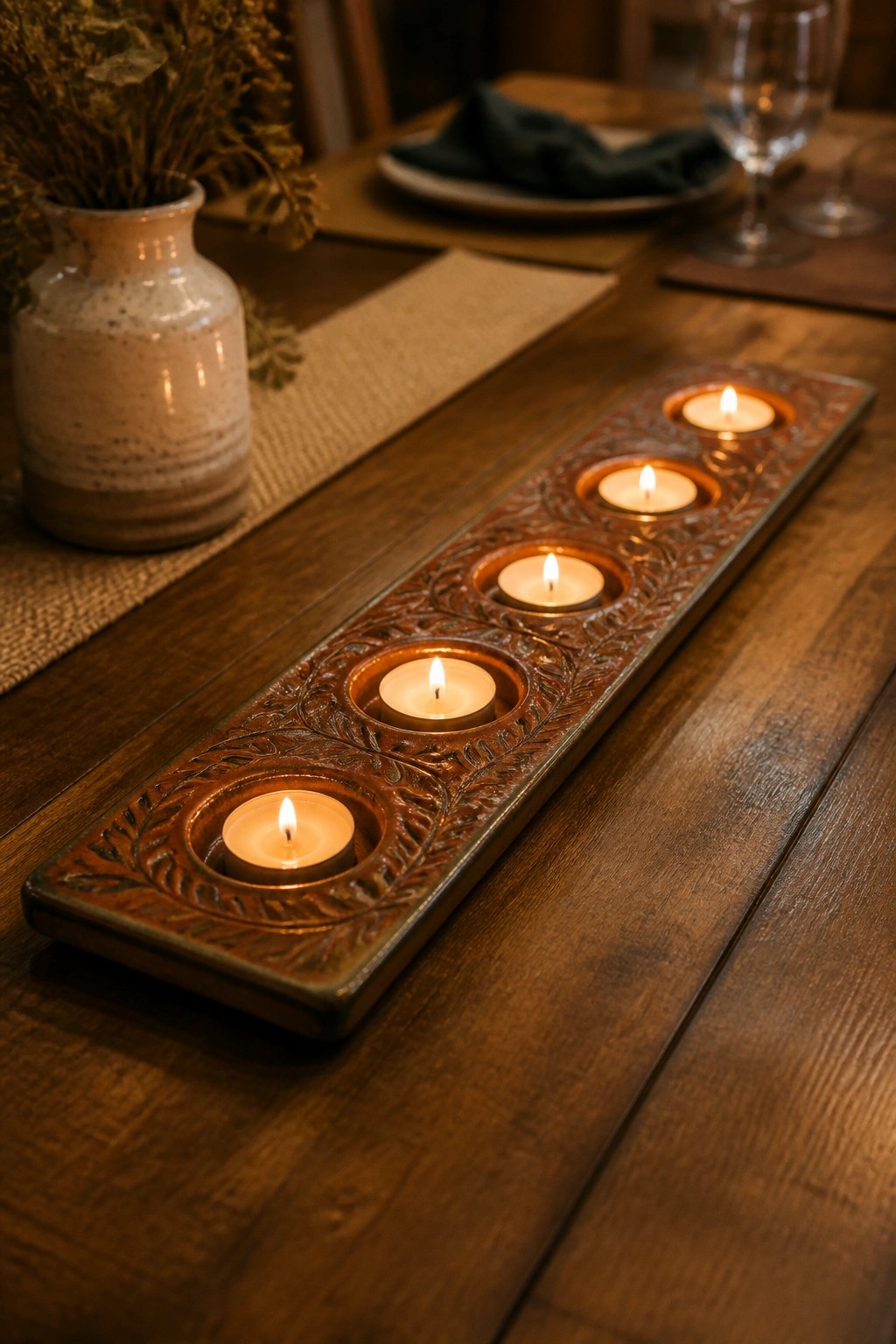
A long rectangular slab of clay forms the base of this tea light holder, with five circular recesses pressed in to keep standard candles upright and stable. Carved leaf patterns run along the borders and around each holder, adding surface texture that shows up well once the piece is glazed in earthy brown and green tones. The overall shape stays simple and functional so the carved details stand out without complicating the form.
What makes this idea useful is how the flat slab lets you fit several candles into one compact piece for a dining table or sideboard. You can shorten the tray to three holders for a narrower surface or change the leaf carvings to straight lines if you want less detail. The same layout works for an incense burner or small soap tray by adjusting the depth of the recesses.
Slotted Slab Colander Bowl for Bread Serving
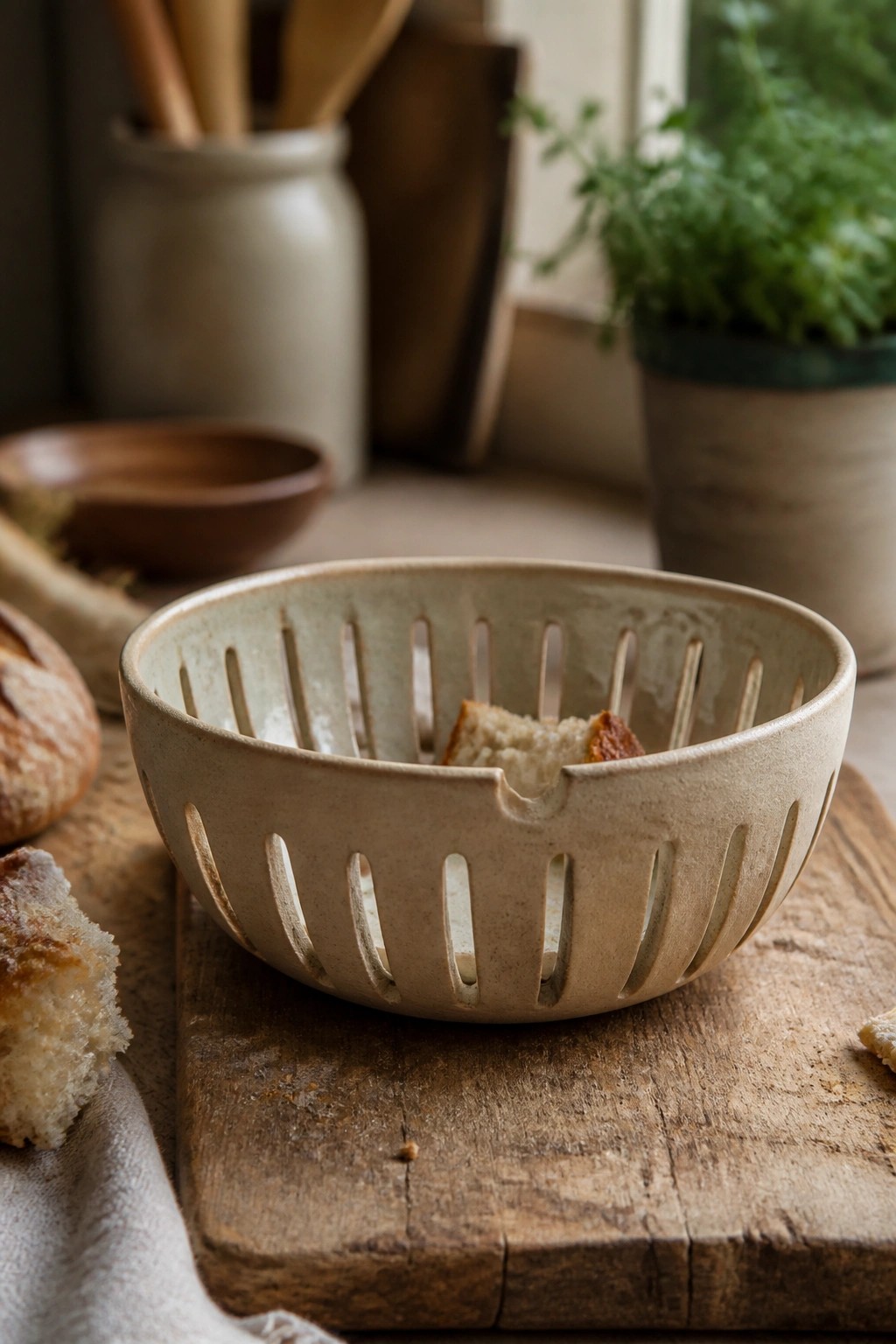
A handbuilt ceramic colander bowl uses vertical slots cut through the walls to create airflow while still holding larger pieces of food. The form works as both a serving dish and a practical drainer for bread, rolls, or produce. A simple matte glaze in a warm neutral tone keeps the focus on the cut pattern and the handmade shape. This kitchen item fits the slab pottery tableware category because the flat clay sheets are joined and then modified with functional openings.
The shape does a lot of the work here since the slots solve a real kitchen problem without needing extra parts. You can scale the same idea down for berry colanders or widen the base for salad greens. In a dining collection it stands out on Pinterest because most slab bowls stay solid while this one adds visible structure. For a gift it is easy to adapt by changing the glaze color or adjusting the slot spacing to match the size of the loaves you usually serve.
Frequently Asked Questions
What type of clay works best for creating durable slab pottery tableware?
Stoneware or porcelain clays are excellent choices for slab pottery because they hold their shape well during construction and firing. These clays also develop a strong, nonporous surface after high temperature firing, which helps the finished pieces withstand daily use in a dining collection. Beginners often start with a mid range stoneware that fires to cone 6 for reliable results without needing a kiln that reaches extreme temperatures.
How do I make my handmade slab pottery safe for food use?
Apply a food safe glaze to the interior surfaces of plates, bowls, and cups, then fire the pieces to the temperature recommended by the glaze manufacturer. Avoid using glazes that contain lead or other toxins, and always test a small batch first if you are experimenting with new combinations. Proper firing seals the clay and prevents absorption of liquids or bacteria, making the tableware practical for everyday meals.
What tools are essential when starting slab pottery projects for tableware?
A basic setup includes a rolling pin or slab roller for flattening clay evenly, a ruler and scoring tool for precise cuts, and wooden ribs or plastic ribs for smoothing surfaces. You will also need a needle tool for trimming edges and a sponge for cleanup. These items allow you to produce consistent shapes across multiple pieces so your dining collection looks cohesive.
How can I create a matching set of 24 unique yet coordinated slab pottery items?
Plan a color palette and a few repeating design motifs such as simple line patterns or textured impressions before you begin building each piece. Use templates to keep overall proportions similar while varying details like rim shapes or handle styles. This approach keeps the collection unified while still giving each item its own character, making it suitable for both casual and formal table settings.
What are common pitfalls to avoid when constructing slab pottery bowls and plates?
Watch the thickness of your slabs, as uneven rolling can lead to cracking during drying or firing. Support curved forms with molds or props while they dry to prevent warping, and allow plenty of time for slow drying under plastic to reduce stress on the clay. Checking for air bubbles before the final firing also helps avoid explosions in the kiln.

Pottery Path is my cozy corner of the internet where I share clay ideas, pottery inspiration, and simple projects you can recreate at home. I love exploring everything from air dry clay to handbuilt pottery to cute minis that brighten your day. My goal is to make clay crafting feel easy, fun, and welcoming for anyone who wants to try it.
You will find beginner friendly tutorials, creative pottery painting ideas, and lots of warm inspiration for slow and happy crafting. If you enjoy hands on creativity, this space will feel like home.