I started thinking about slab pottery projects after trying a few carved plates myself and realized how many variations are possible.
For beginners these can be a good starting point because they do not require a wheel or advanced techniques.
I came up with 25 different ideas that build around those carved decorative plates and kept them simple enough for anyone to attempt.
Some use basic shapes while others add a bit more carving detail.
You can adapt them based on the clay and tools you have on hand.
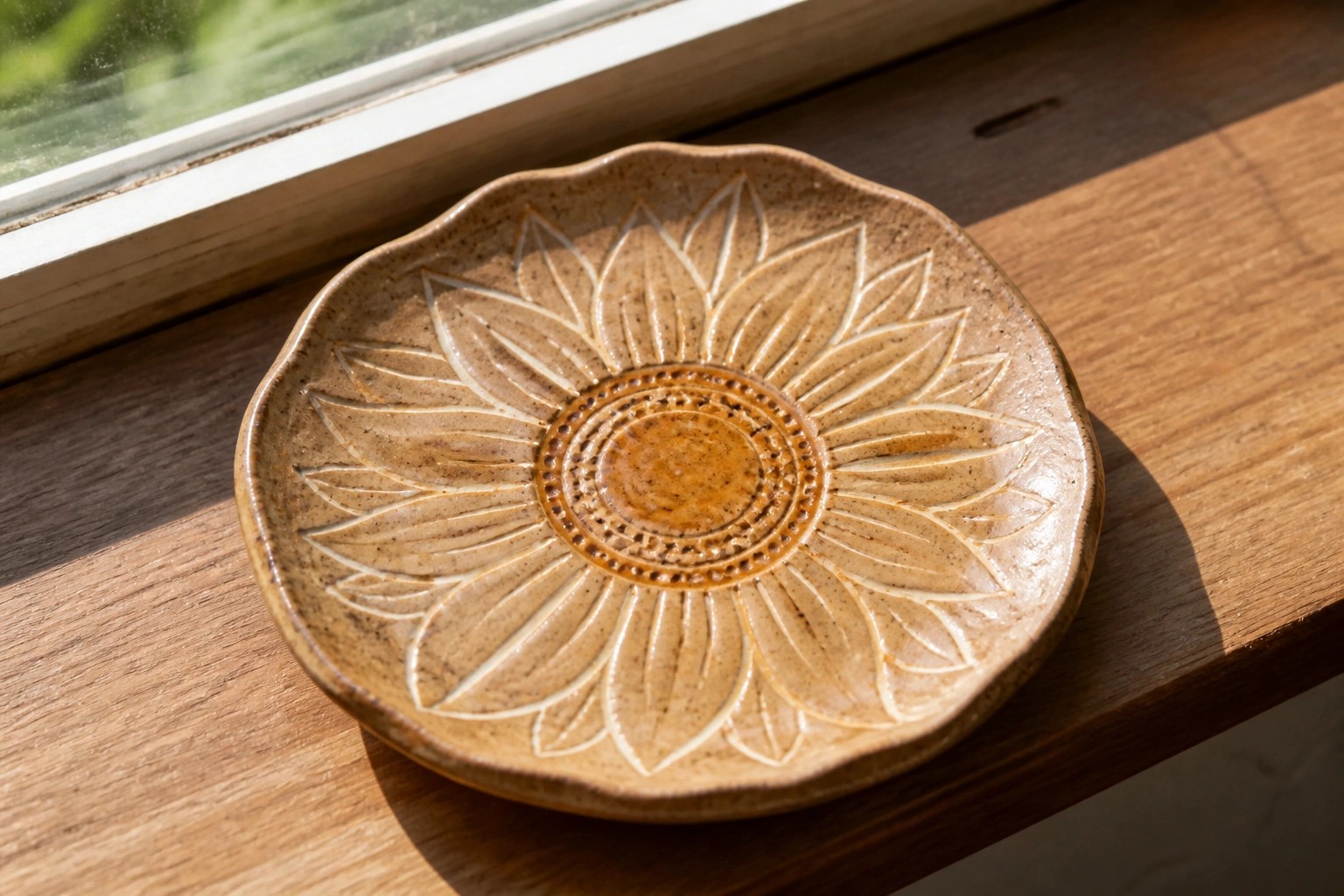
Carved Sunflower Slab Plate

A small slab dish with an irregular scalloped edge uses a carved sunflower pattern to create a decorative plate. The design relies on raised petals radiating from a central circle filled with dots and spirals, which gives the surface clear texture and depth. A light base glaze keeps the carved lines visible while the center takes on a warmer tone. This approach works as a simple carved plate that can serve as a ring dish or small catch-all.
What makes this idea useful is the flat slab construction that lets you focus on the carving without building walls or handles. The radiating petal layout can be swapped for other flowers or simplified by reducing the center details if you want faster results. A piece like this fits on a nightstand or desk for holding small items and stands out in photos because of the bold line work. The same carving could be repeated on a set of larger plates or adapted into a shallow tray by changing the rim shape.
Carved Shell Plate for Small Storage
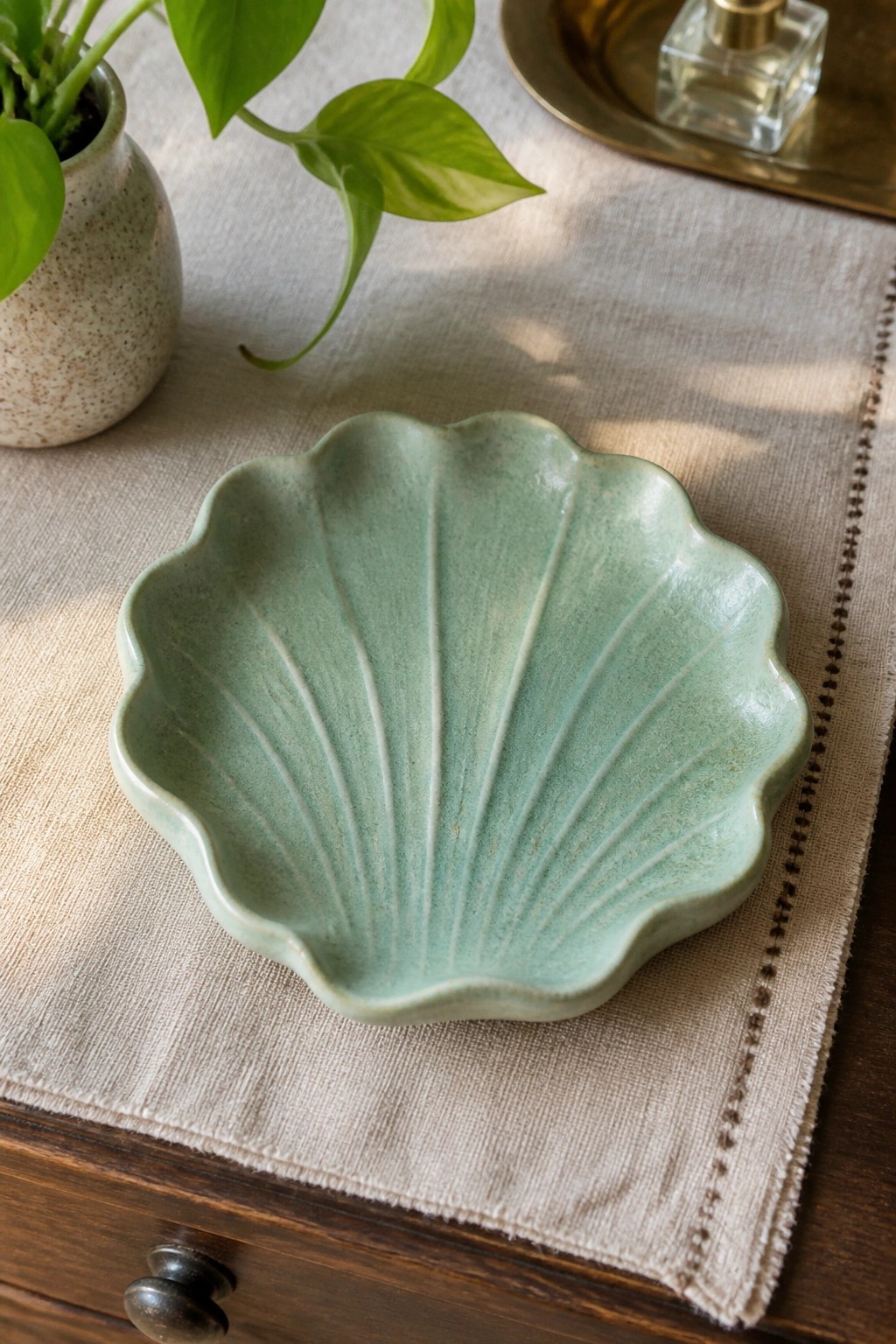
A small shell-shaped dish formed from a slab of clay makes a simple decorative plate. The design relies on carved lines that radiate outward from the center to suggest shell ridges, combined with a gently scalloped rim and a soft green glaze. This keeps the overall form straightforward while the surface carving adds detail that reads clearly even from a distance.
The small scale makes this easy to adapt for holding rings, keys, or loose change on a dresser or entry table. You can swap the glaze for other colors or reduce the number of carved lines to speed up the process on future versions. For a gift, this kind of piece works especially well in a bathroom or on a desk where a compact tray is useful.
Oval Slab Plate with Carved Leaves

A slab-rolled oval plate with a central branch and leaves carved in low relief makes a simple decorative wall piece. The leaves are shaped directly into the clay surface, then accented with a darker tone under a light glaze to create contrast without added paint layers. This turns a flat slab into a hanging decor object that needs only a small hole at the top for cord.
What makes this idea useful is the vertical branch layout, which works well on narrow wall spaces or grouped with other plates. You could rework the same carving on a round slab or shorten the branch to fit a smaller tray shape. In a kitchen or hallway, the neutral glaze keeps it versatile while the relief adds texture that catches light. For another version, swap the leaves for a different plant motif or leave the carving unglazed for a more matte finish.
Circle-Impressed Slab Saucer
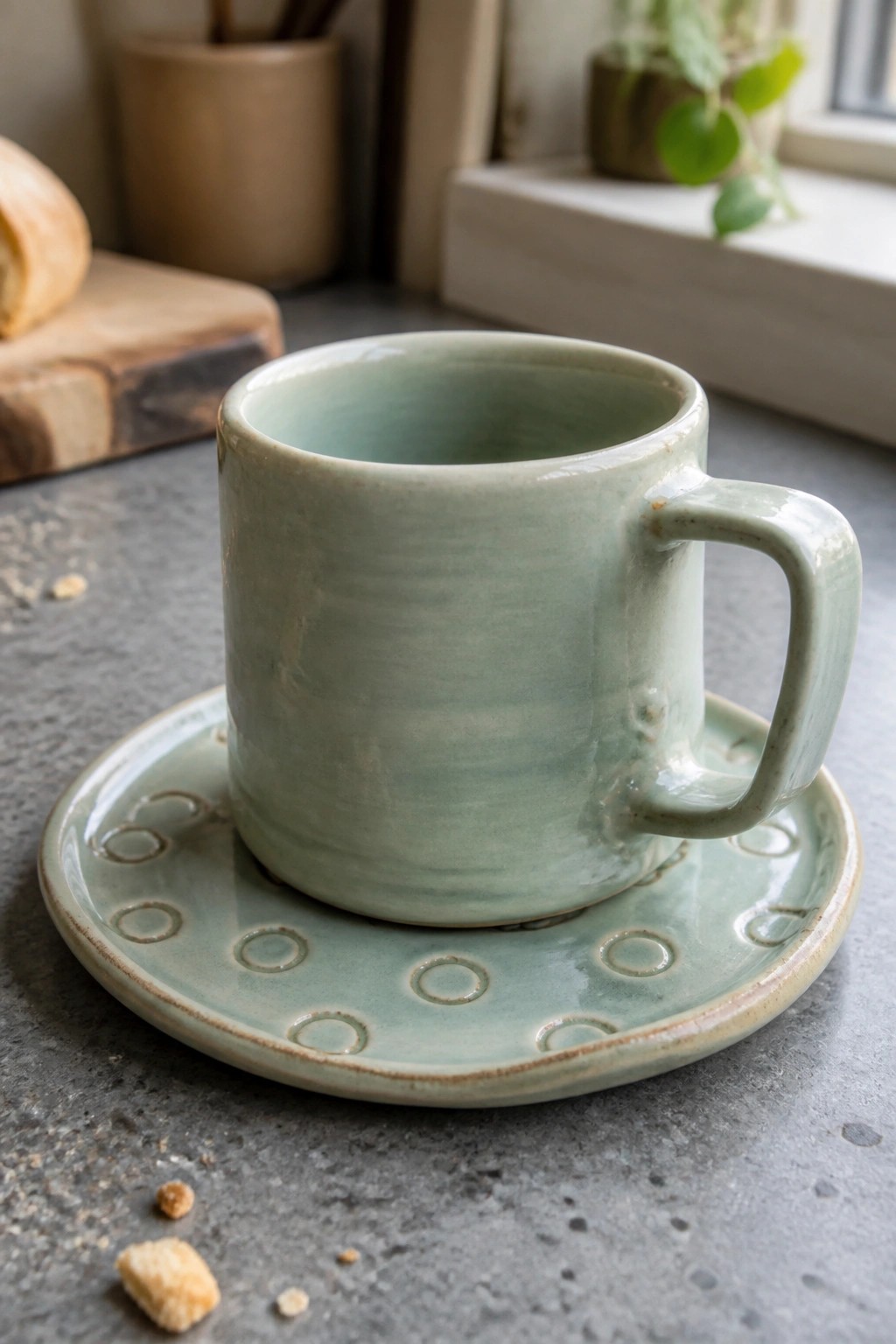
A flat slab saucer with a repeating border of impressed circles pairs easily with a basic mug. The pattern is made by pressing a round tool or stamp into the clay edge before the piece dries, leaving clear recessed rings that catch glaze. The soft green finish keeps the focus on the carved line work rather than color variation. This approach stays squarely in the carved decorative plate category and works as a simple kitchen accessory.
What makes this idea useful is how the stamped border adds visual interest to an otherwise plain slab without needing complex carving skills. You can reuse the same stamp on coasters, small trays, or shallow butter dishes by adjusting spacing and circle size. In a kitchen setting the saucer catches crumbs and keeps a mug stable on the counter. The compact shape also lets you try different stamp patterns on test tiles before scaling up to larger slab projects.
Carved Geometric Planter with Matching Tray
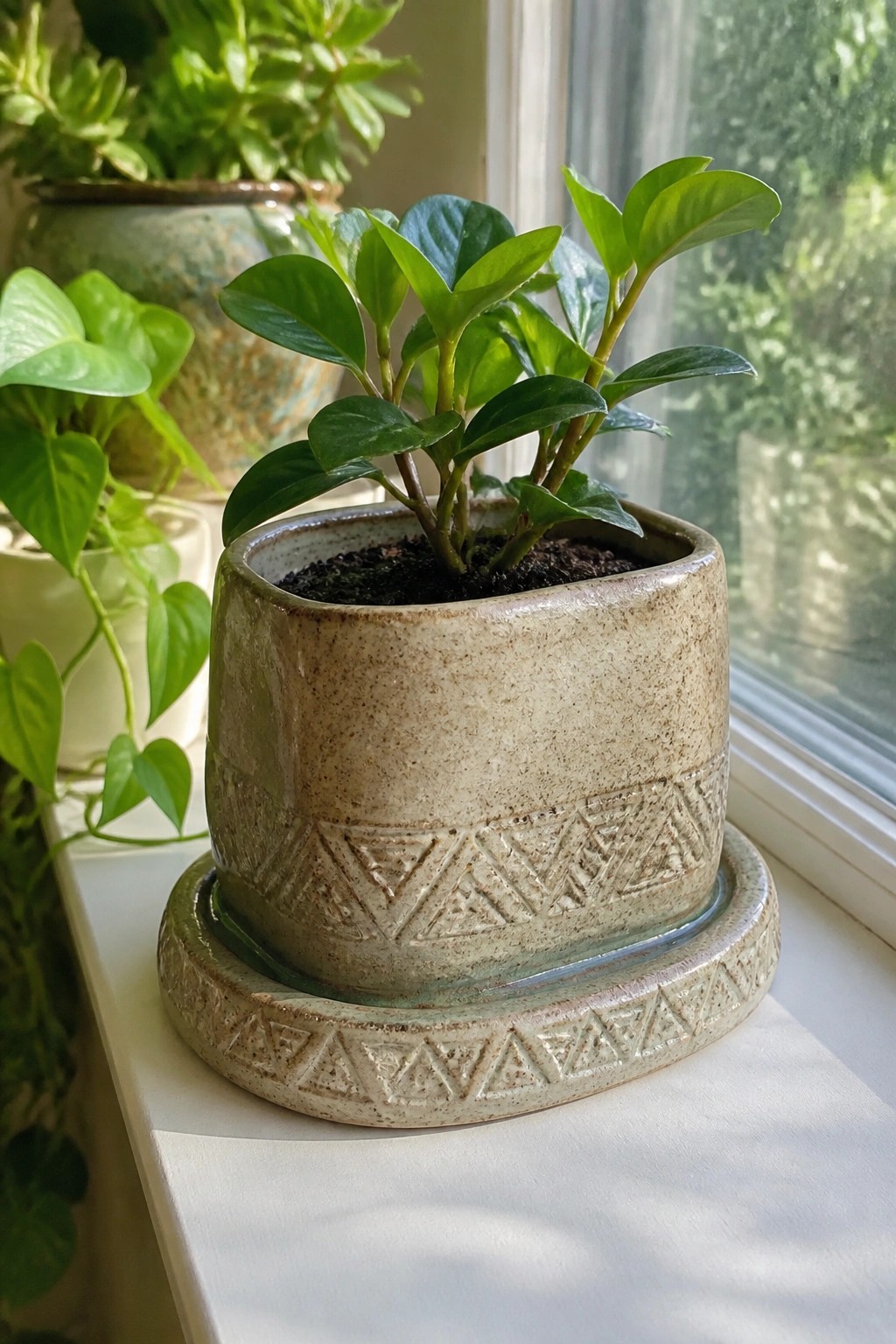
A cylindrical planter built from slabs pairs with a shallow round tray to create a self-contained set for small plants. The design centers on a repeating band of incised triangles and chevrons that wrap the lower half of the pot and the full surface of the tray. A light speckled glaze fills the carved lines while leaving the raised areas matte, so the pattern reads clearly from a distance. This approach turns the tray into a decorative plate that matches the pot instead of disappearing underneath it.
What makes this idea useful is the way the carved tray can stand alone as a finished piece if you want to practice the pattern first. You can adapt the same band of triangles to a taller cylinder or a wider bowl by adjusting the slab width before assembly. The neutral glaze keeps the focus on the carving, so the set fits with many plant styles without competing for attention. For a gift, the matching tray gives the planter extra value and makes it look more complete on a shelf.
Slab-Built Spoon Rest with Carved Scales
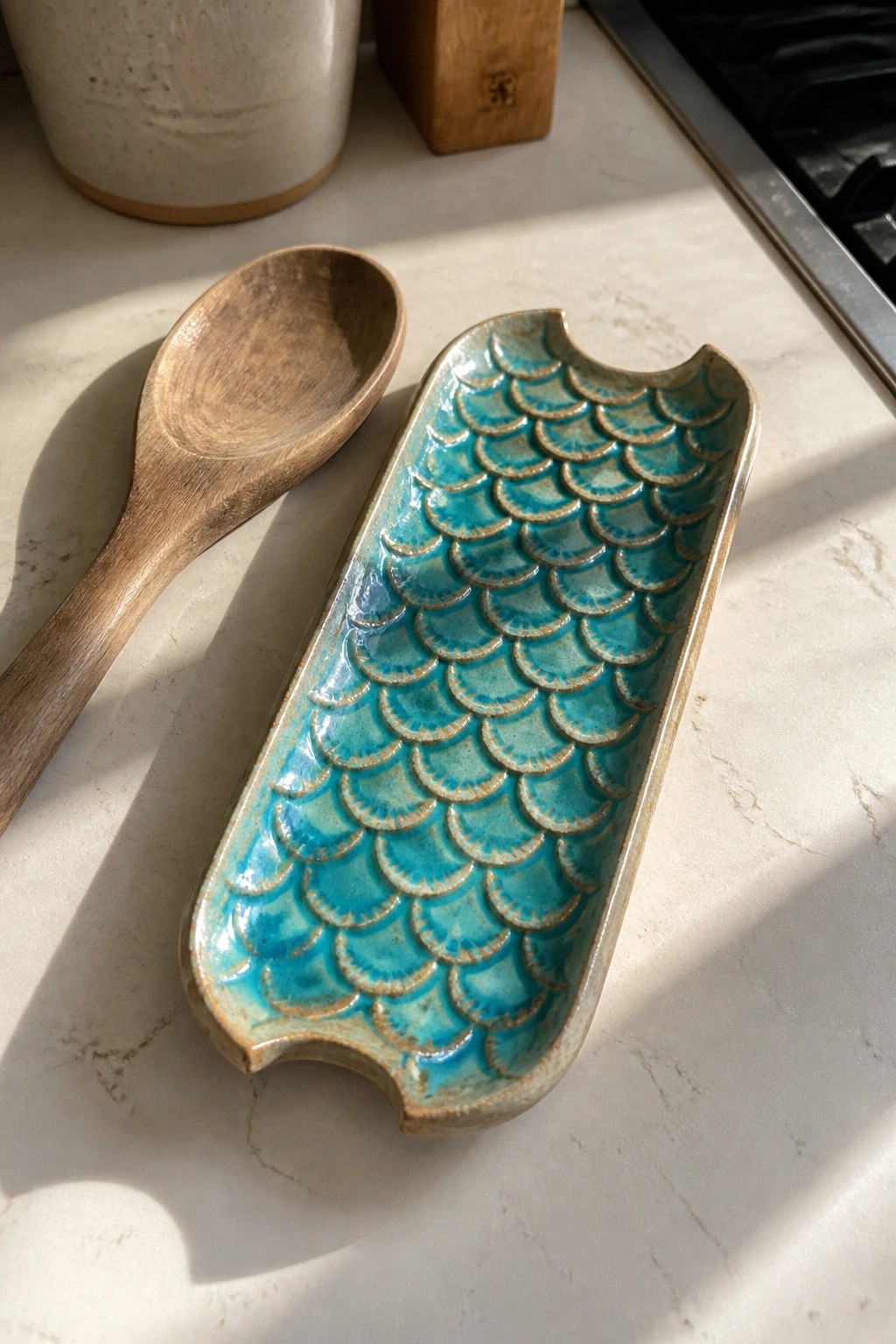
A narrow slab of clay cut into a long rectangle forms the base for this spoon rest. Carving overlapping half-circles across the surface creates a scale texture that holds glaze well in a single turquoise tone. Shallow notches at each end keep a spoon from sliding off while the piece sits on a counter.
The shape does a lot of the work here because the compact length takes up little space yet still supports a full-size spoon. You could repeat the same carved scale pattern on a shorter slab to make a ring dish or stretch it wider for a small soap tray. The single glaze color keeps the project simple while the texture gives it visual interest. This idea works especially well as a quick kitchen item that also photographs clearly for sharing.
Carved Heart Ring Dish from a Slab Plate
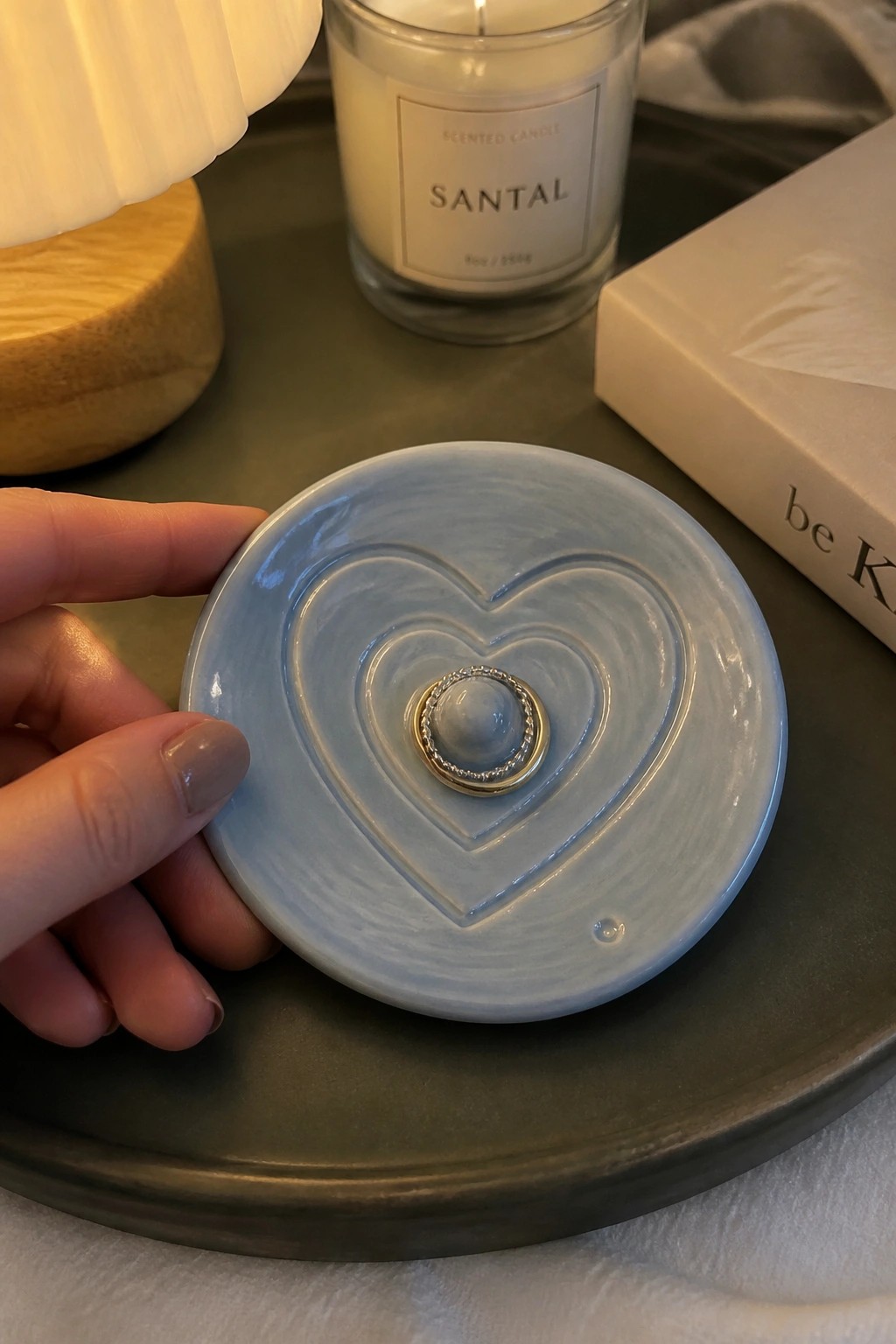
A small round slab forms the base for this ring dish, with a heart shape pressed or carved into the center to create a recessed spot for jewelry. The light blue glaze covers the surface evenly and makes the heart stand out against the rest of the plate. This approach keeps the project simple while turning a basic decorative plate into a dedicated holder.
What makes this idea useful is how the carved heart gives the dish a clear function without extra pieces or hardware. You can change the center motif to a different shape or add initials to match a specific person or room. The compact size works well on a nightstand or vanity and uses only a small amount of clay, so it is easy to repeat or adjust for different colors. For gifts, this style stands out because it combines a carved plate with everyday use.
Ridge-Grooved Slab Soap Tray

A flat slab of clay rolled into a rectangle and folded up at the edges creates a shallow tray designed to hold a bar of soap. Several parallel grooves pressed or carved into the base let water run off instead of pooling underneath. The speckled glaze in soft gray-green tones adds subtle texture while keeping the surface easy to clean. This type of project belongs to the bathroom slab category where a simple form gains usefulness from basic surface carving.
What makes this idea useful is how the grooves handle both drainage and pattern in one step. The same slab layout works for a larger sponge rest or a smaller version for a jewelry dish by changing only the size and spacing of the lines. In a bathroom setting the tray keeps counters drier and fits next to most sinks without taking much space. You could adapt the shape into a small kitchen herb tray by widening the base and skipping the grooves if you want a flat surface instead.
Carved Slab Coasters with Nature Motifs

Square coasters made from clay slabs give you a simple base for adding carved patterns that stay visible after firing. The examples here use a leaf branch on the top piece, wavy lines on the second, radiating lines on the third, and small dots on the bottom. These incised designs create contrast against the speckled matte surface without needing extra color or glaze layers. The project stays in the category of flat, functional kitchen or table items that can be produced in multiples from one slab.
What makes this idea useful is how the same slab method lets you change the motifs to match different rooms or seasons. A set works especially well for protecting surfaces under mugs or glasses while adding subtle pattern to a countertop or shelf. The compact square size keeps the work quick and lets you test several carving styles in one session. You could rework the same approach into larger square trivets or smaller round versions for different table needs.
Spiral Carved Slab Bowl for Table Use
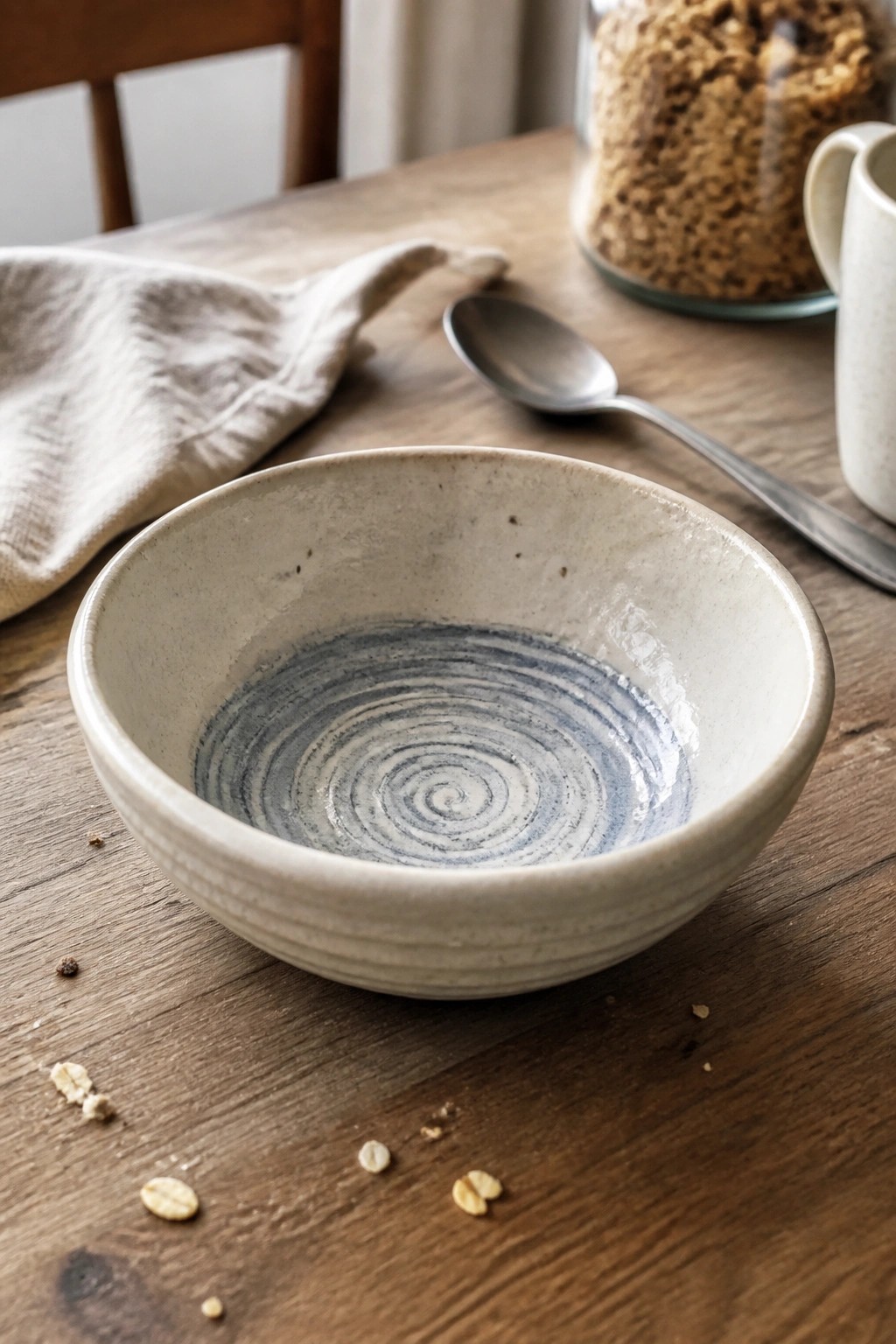
A slab-built bowl with a carved spiral on the interior gives beginners a clear way to combine simple construction with a single decorative motif. The form stays shallow and wide, built from a rolled slab that is shaped over a mold or by hand, then the spiral is cut or impressed into the base before any glaze is applied. A light blue slip or underglaze fills the carved lines so the pattern shows through after firing while the rest of the bowl stays matte white. This keeps the project focused on the carved detail rather than complex shaping.
What makes this idea useful is that the same spiral carving can be practiced first on a flat decorative plate, then transferred to the curved surface of a bowl with little extra effort. The compact size suits breakfast portions or small snacks and stores easily on open shelving. You could swap the spiral for other carved motifs like waves or concentric rings to match different table settings, or enlarge the base slab to make a matching serving plate. For a gift, the plain exterior and single interior pattern keep the piece looking finished without extra steps.
Carved Star Pattern Trinket Dish
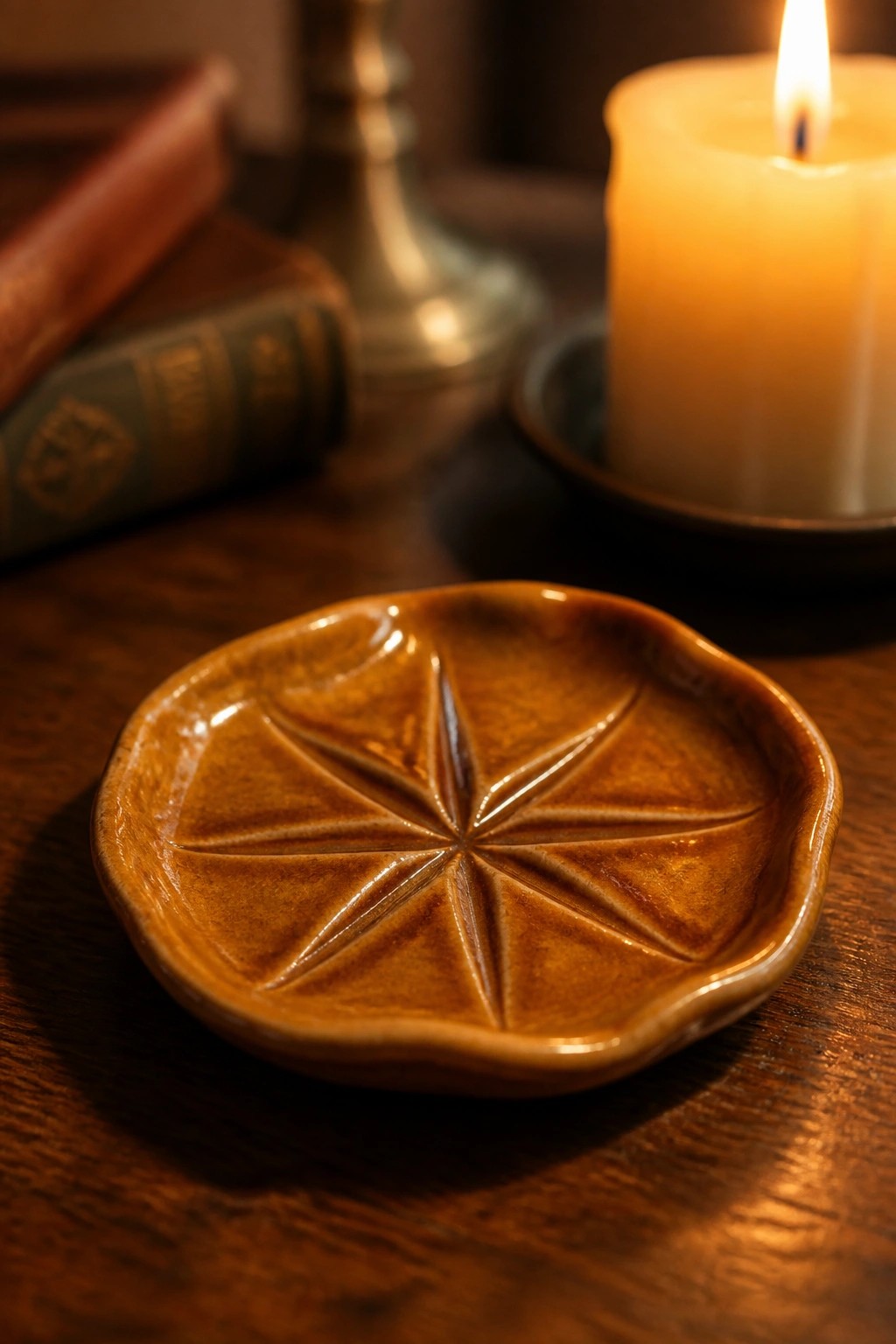
A small slab dish with scalloped edges and a starburst pattern carved into the base gives you a compact decorative plate. The radiating lines are cut into the clay before glazing, and the glossy brown finish makes the grooves stand out clearly. This style fits the carved decorative plate category and works as a ring dish, small catch-all, or accent piece on a shelf or desk.
What makes this idea useful is how the star carving can be scaled up or down depending on the size of your slab. The shallow form and irregular rim keep the focus on the center design without needing extra attachments. You could repeat the same motif on a set of coasters or press it into a slightly larger tray for keys or loose change. The small size also makes it quick to produce multiples for gifts while still looking intentional.
Carved Leaf Slab Tray as a Jewelry Dish
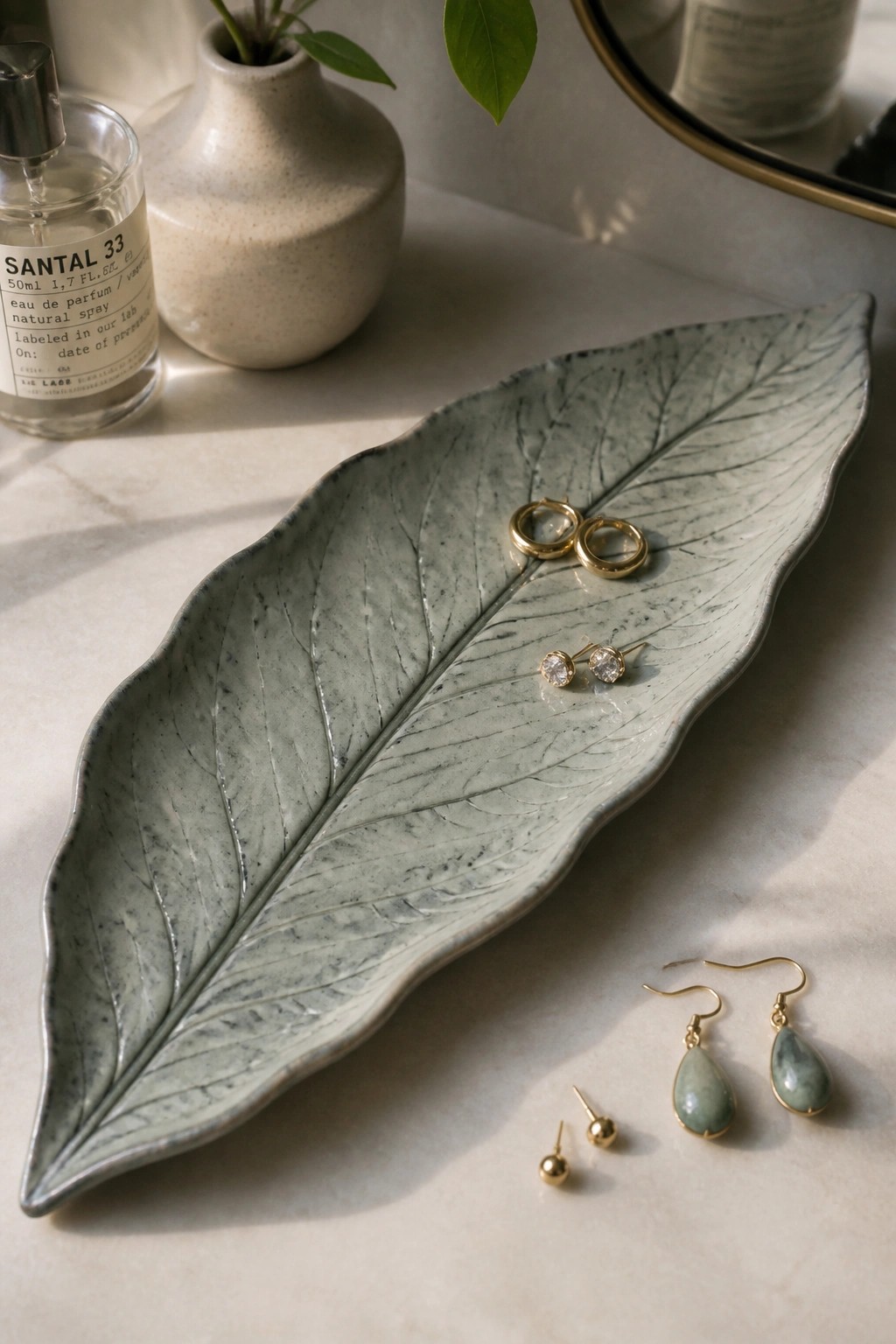
A slab-built leaf tray makes a simple jewelry dish by rolling clay flat, cutting a long pointed leaf outline, and pressing or carving vein lines into the surface. The tray is then glazed in a muted sage tone that highlights the texture while keeping the overall form low and functional. This approach turns a basic decorative plate idea into something that holds rings, studs, and small drop earrings without needing extra compartments.
The shape does a lot of the work here because the pointed leaf naturally guides items toward the center. You could scale the same slab method down for a ring-only dish or widen it into a soap tray for a bathroom. The carved veins give visual interest that still reads as handmade pottery even with a single glaze color, and the idea adapts easily to other leaf or botanical outlines if you want to make a matching set.
Slab Built Salt Cellar with Resting Spoon
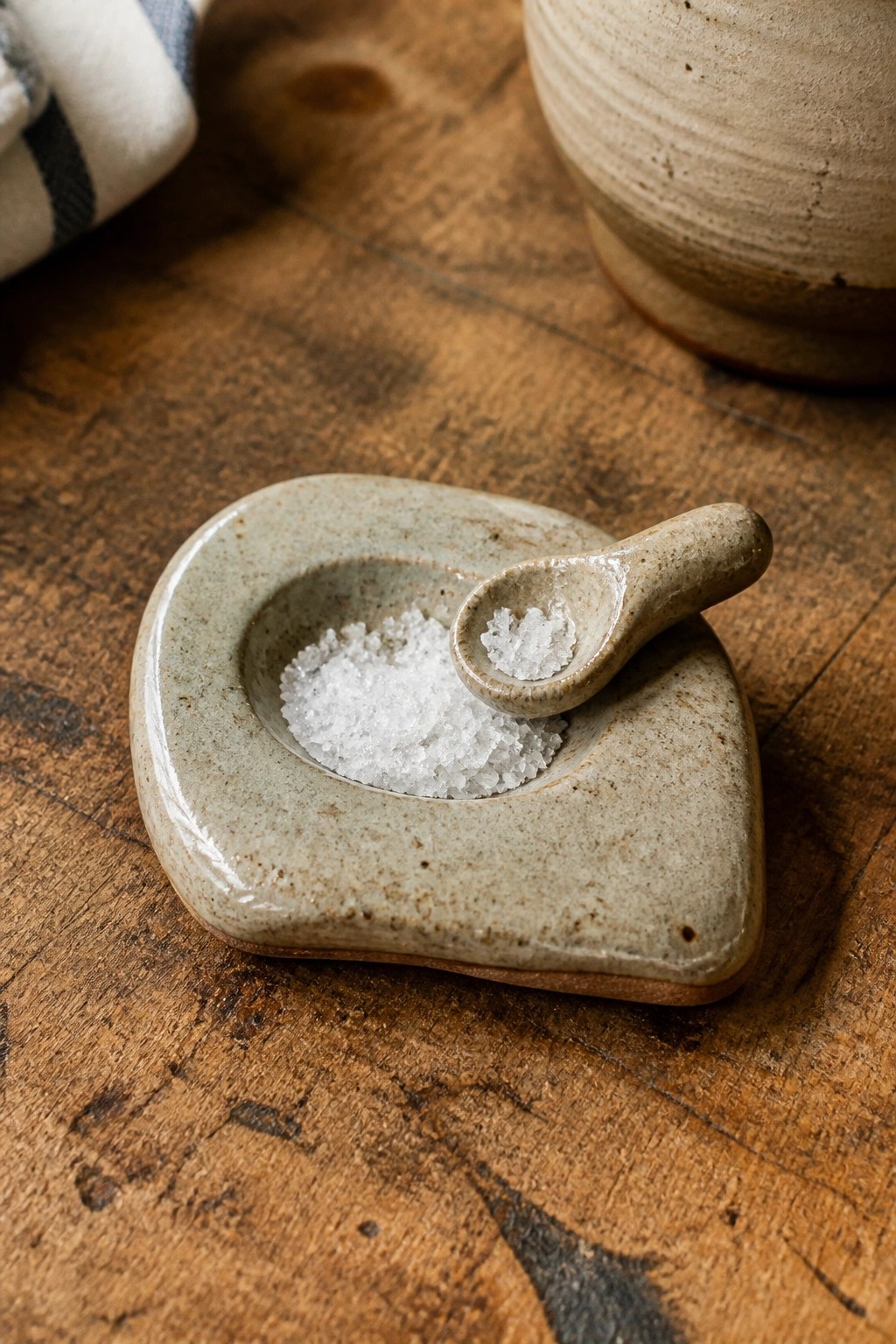
A compact slab dish formed with a shallow central well makes a practical salt cellar for the kitchen counter. The irregular rounded shape keeps the form simple while the added spoon rests directly on the rim so the two pieces stay together. A matte speckled glaze covers the surface and gives the piece enough texture to feel substantial without being slippery. This approach fits the category of small kitchen serving pieces that stay within easy reach during cooking.
What makes this idea useful is how the small scale lets you build it from a single slab without needing much workspace or clay. You can adapt the same well-and-rim layout to hold pepper flakes or dried herbs by changing only the spoon size. For a gift version, press a simple stamp pattern into the flat area around the well before the first firing. The design also works as a template for a double-well tray if you want to keep both salt and a second seasoning in one piece.
Carved Slab Incense Holder with Parallel Grooves
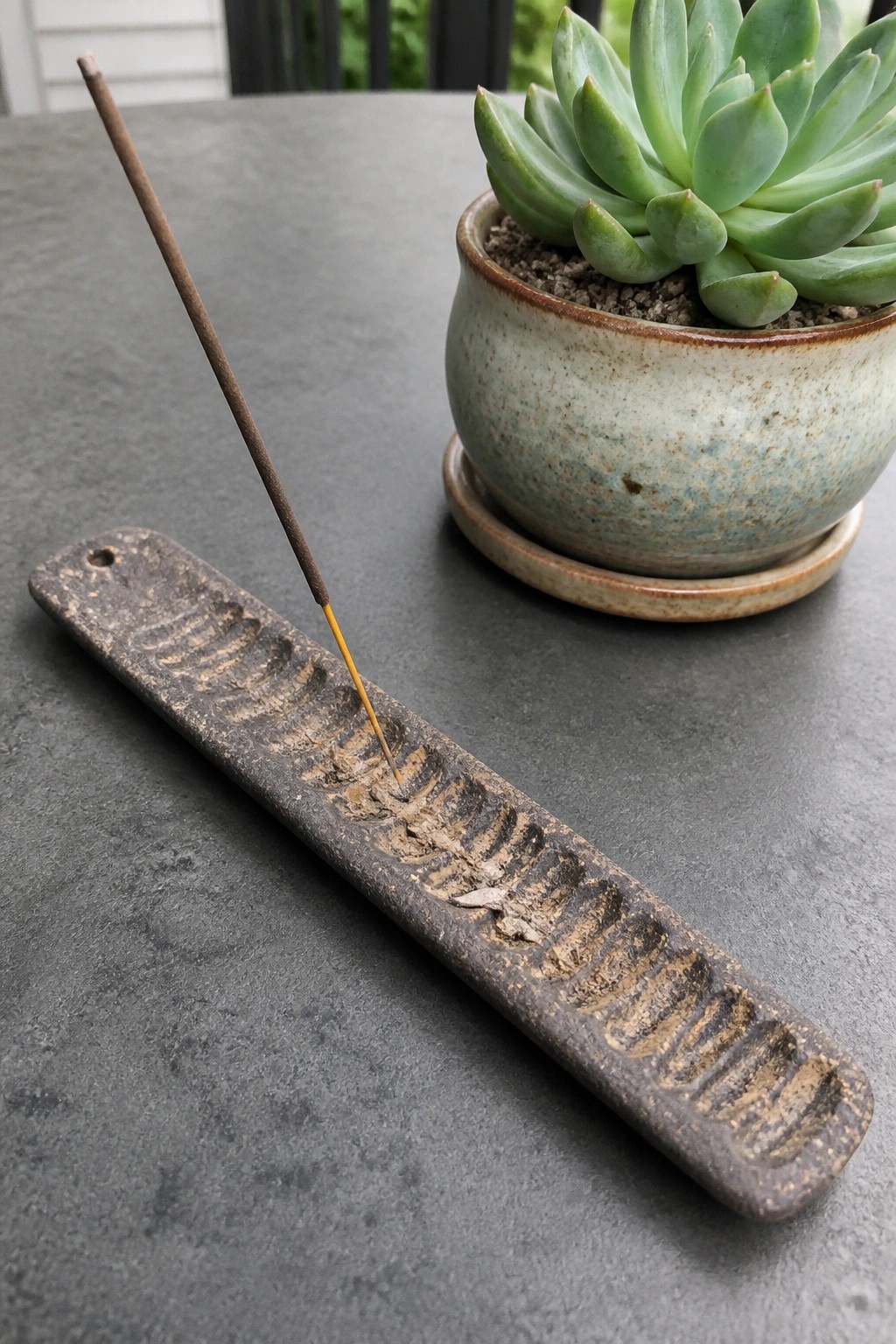
A long rectangular slab of clay rolled flat and then carved with evenly spaced grooves creates a simple incense holder. The grooves run lengthwise and give the surface both texture and a place for the stick to rest while ash collects in the channels. One end stays slightly raised so the stick sits at an angle, and a small hole near the opposite end allows the piece to hang if desired. This type of project falls into the decor object or small holder category and relies on basic slab construction plus surface carving for its effect.
The shape does a lot of the work here because the narrow rectangle fits on a desk or shelf without crowding other items. You could swap the straight grooves for diagonal lines or a repeating pattern and still use the same slab size and firing process. In a bathroom or entryway this kind of holder keeps the stick contained while adding a handmade touch that feels more intentional than a plain dish. The small scale also means leftover clay from another project can be used, and the carved detail makes the finished piece easy to photograph for sharing.
Carved Slab Plates Strung Into a Hanging Garland
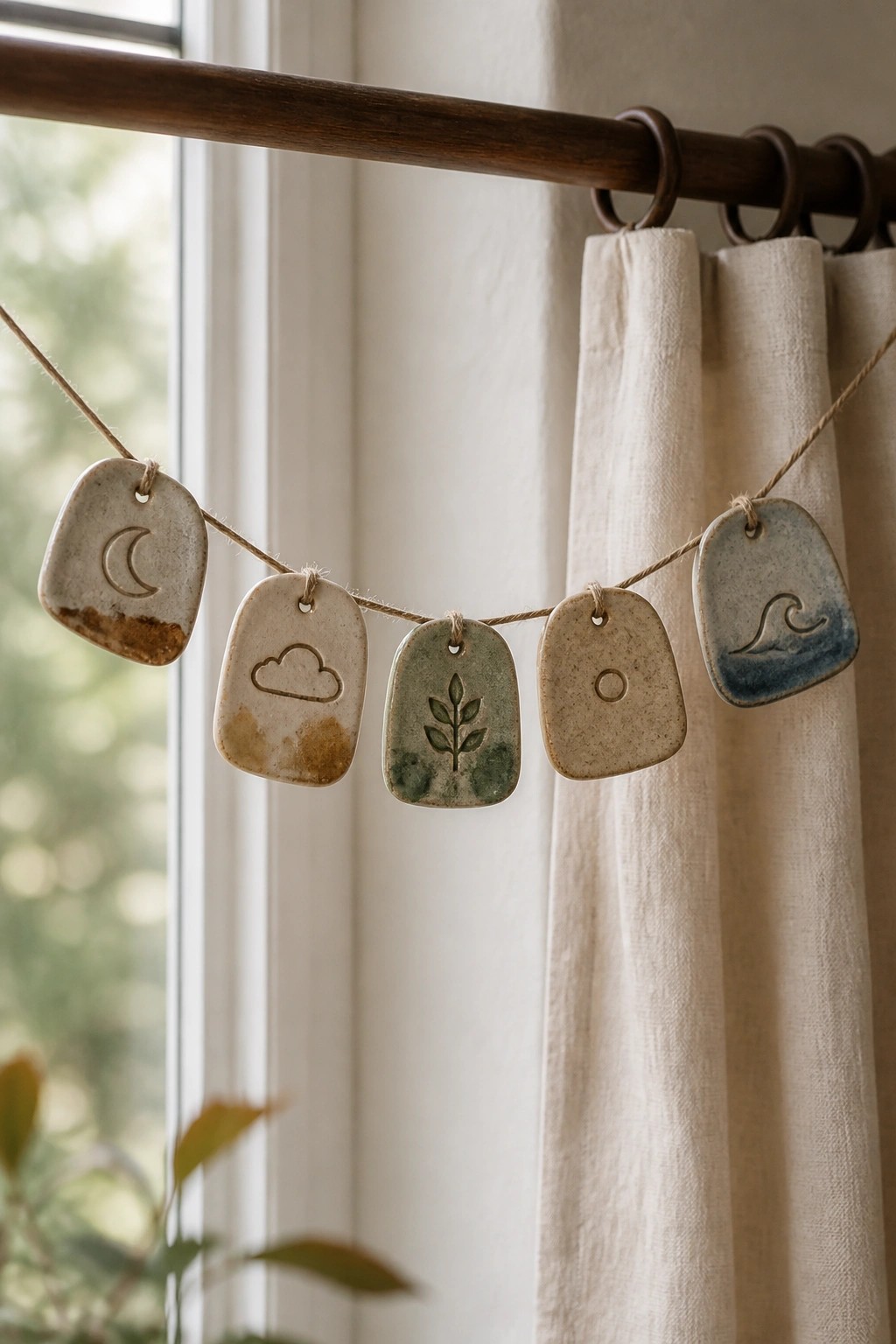
Small flat slabs of clay are cut into irregular rounded shapes, each drilled with two holes so they can be threaded onto twine. A single simple motif is carved into every plate, such as a crescent moon, cloud, leaf, circle, or wave, and the pieces receive light washes of neutral or softly colored glaze. The finished plates hang together as a lightweight chain that drapes across a curtain rod or window frame. This turns basic slab construction and carving practice into a flexible decorative object rather than individual standalone plates.
What makes this idea useful is how the repeated small size lets you work through several carving tests in one session without wasting clay. You can change the motifs to match a room’s theme or shorten the string for a doorway or shelf. The flat format also means any plate can be used alone as a tag, ornament, or fridge magnet if the full garland feels like too much. For a beginner, the project keeps the main skills limited to rolling even slabs, cutting clean edges, and making clear carved lines.
Slab Plate With a Bitten Cookie Edge
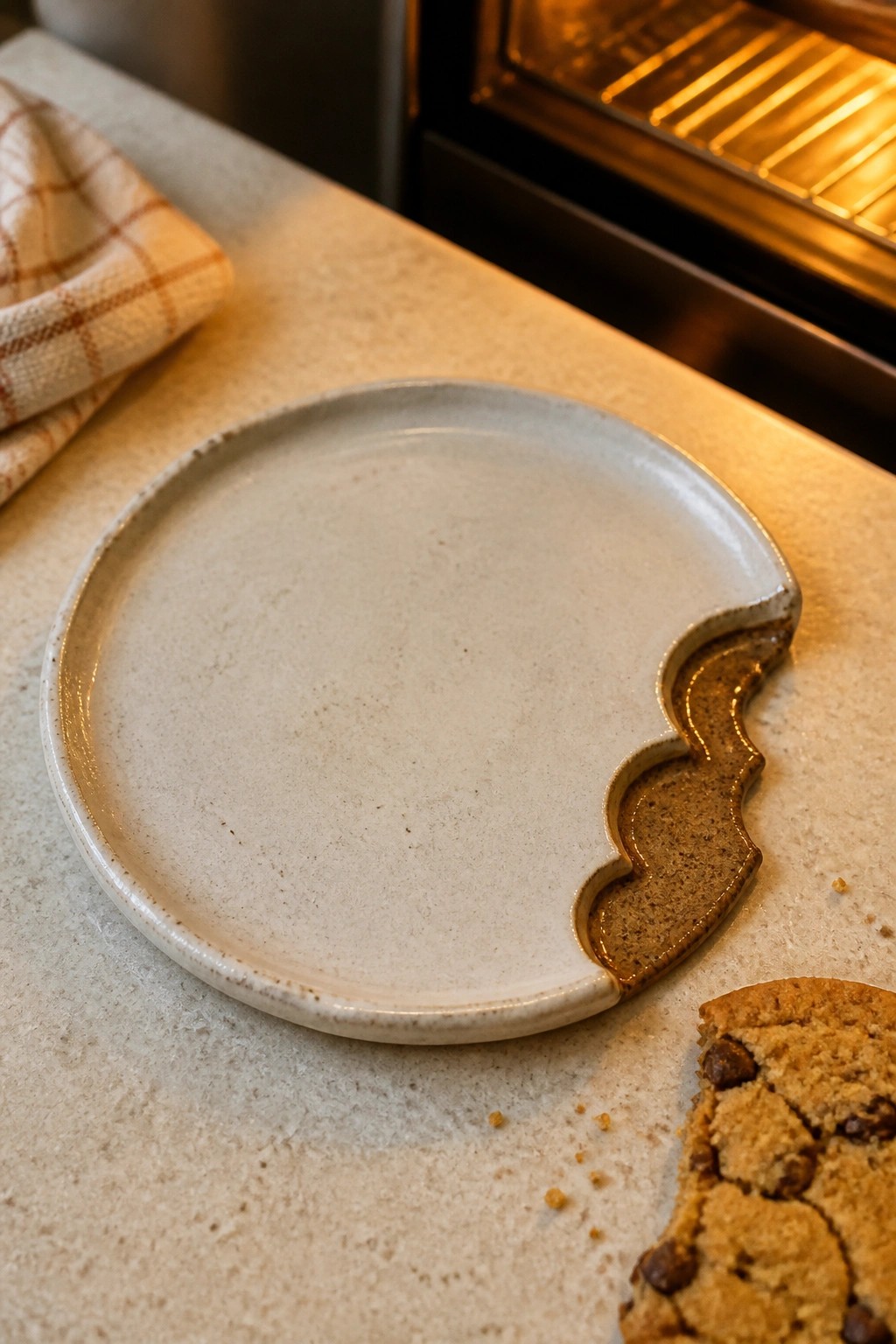
A slab-built plate works here as the base, with one section of the rim carved away in a scalloped bite pattern. The main surface stays in a light speckled glaze while the carved bite area gets a darker brown glaze to suggest the inside of a cookie. This two-tone approach and the irregular edge give the plate a clear cookie theme without extra surface carving or painting.
What makes this idea useful is how the carved rim turns an ordinary round plate into a kitchen accent that pairs directly with baked goods. You can change the bite depth or swap the brown glaze for other cookie shades like a deeper oatmeal tone. In a kitchen this shape stands out on a counter or dessert tray because the theme reads immediately. The same edge carving could be scaled down for small coasters or a ring dish if you want a quicker version.
Oval Cat Ring Dish
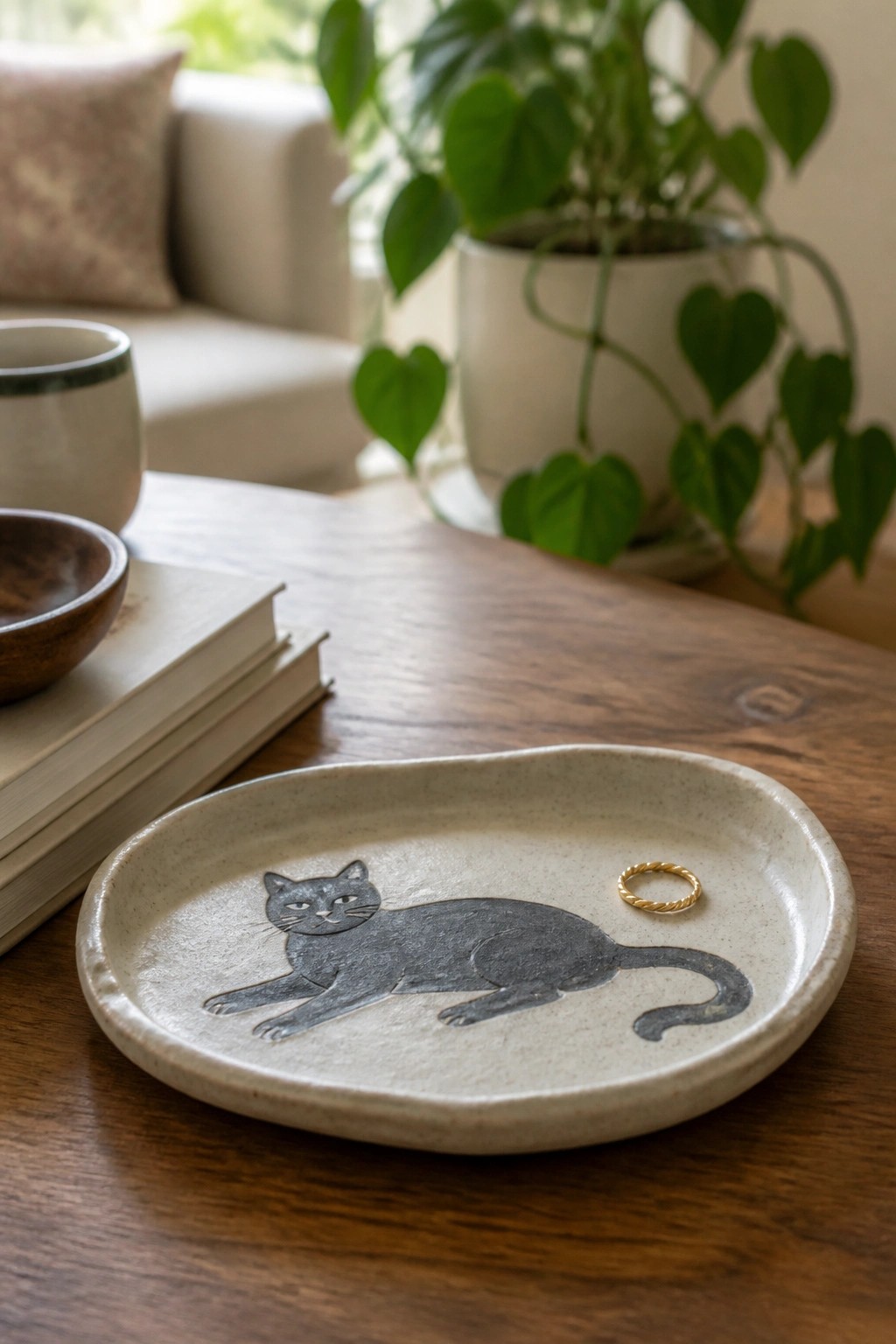
A small oval ceramic dish decorated with a black cat illustration works well as a ring dish or small catch-all. The cat is drawn in a simple, graphic style that covers most of the surface while leaving negative space on the right side for jewelry. The speckled clay and soft rim give the piece a handmade feel without extra texture or carving.
What makes this idea useful is the flat oval shape, which keeps the illustration clear and still holds small items like rings or earrings. You could replace the cat with any line drawing or silhouette and adapt the same form into a bathroom tray or desk organizer. The small scale also makes it easy to produce several versions with different animals or motifs for gifts.
Carved Three-Well Slab Tray with Fitted Cup
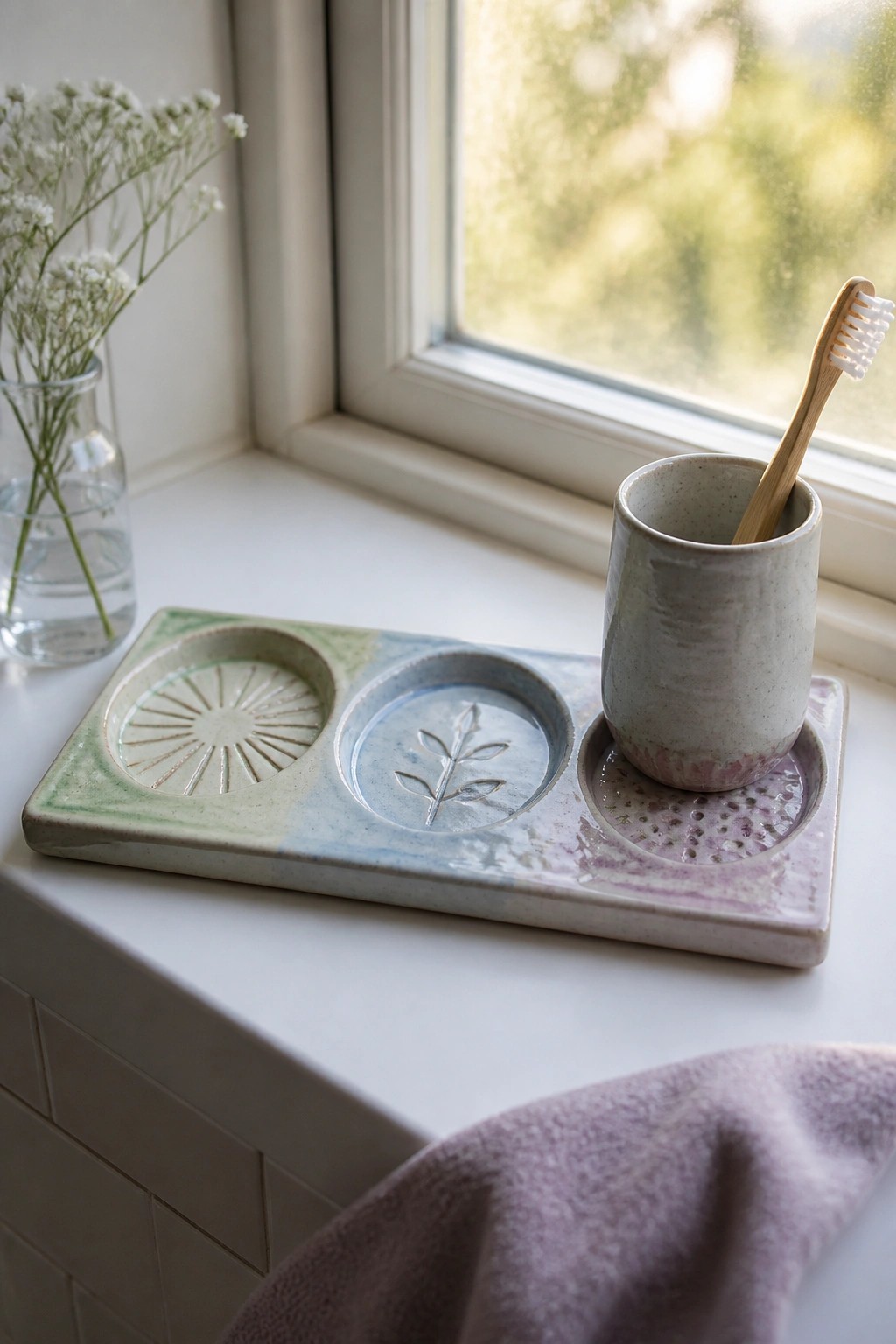
A rectangular slab tray divided into three shallow circular wells gives a simple way to organize small bathroom items. Each well carries a different carved pattern, one with straight radiating lines, one with a central leaf motif, and one with a field of small dots that adds grip texture. The right-hand well is sized to hold a matching cylindrical cup, turning the tray into a stable base for a toothbrush or soap. This layout keeps the project to one slab while still creating distinct visual zones through carving alone.
What makes this idea useful is how the three wells let you combine storage and display without extra pieces. You could swap the leaf for a geometric stamp or simplify the dotted texture to lines if you want faster carving. The same tray shape works just as well on a desk for holding washi tape and pens or in a kitchen for salt, pepper, and a small spoon. Scaling the wells slightly larger turns the idea into a plant saucer set with matching pots.
Sunburst Carved Slab Plates

Roll out two flat clay circles and stack them so the top layer sits slightly smaller than the base. Carve straight lines from the center outward on the upper slab to form a clean radial pattern that stays flat and usable. The speckled texture on the bottom layer gives contrast while the matte surface on top keeps the focus on the carved lines. This approach turns basic slab work into a decorative plate without needing molds or complex shaping.
What makes this idea useful is how the round shape and simple carving translate directly into coasters or small trivets. You can swap the radial lines for any repeating motif or change the diameter to fit a ring dish. The stacked construction lets you test two different clay bodies or finishes on one piece. For Pinterest, the strong geometric pattern photographs clearly and works at multiple scales.
Heart Shaped Slab Dish with Carved Grid Texture
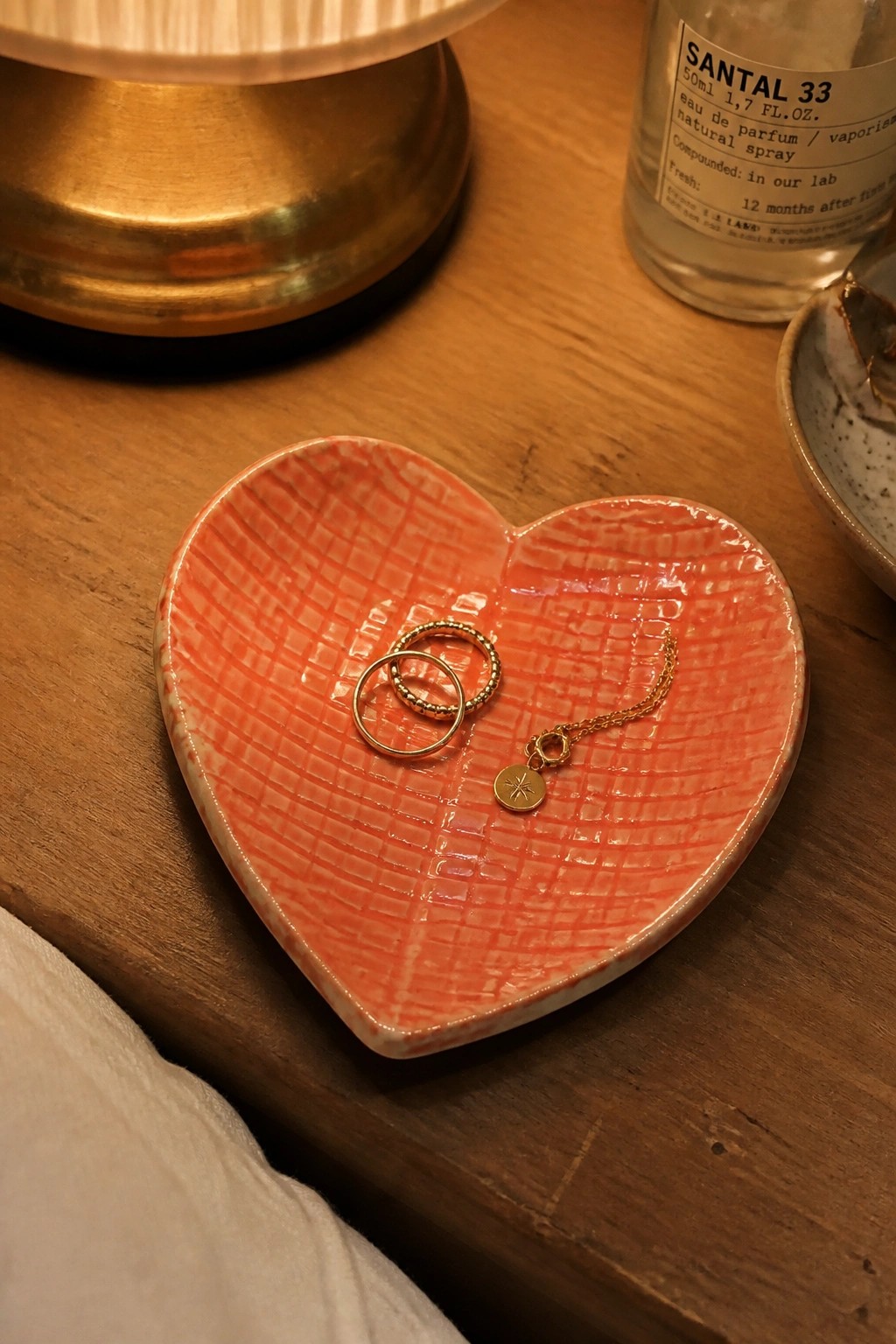
A slab built heart shaped dish makes a compact ring tray that holds small jewelry like rings and chains. Cut a heart from a rolled slab of clay, then carve or impress a repeating grid pattern into the surface before shaping a low rim around the edge. The glossy coral glaze pools slightly in the carved lines and creates contrast that makes the texture easy to see.
What makes this idea useful is how the small size keeps it simple for beginners while still giving you a finished object that serves a clear purpose on a nightstand or vanity. You can swap the grid for straight lines or dots and adjust the glaze color to fit different spaces without changing the basic construction. For a gift this shape works especially well because it stays quick to make and needs only basic slab skills.
Carved Radial Plate as a Tea Light Holder

A simple slab plate becomes a tea light holder when you press a round cutter in the center and carve shallow radiating lines outward before the clay firms up. The carved grooves catch glaze in a way that creates contrast between the raised areas and the recessed pattern, giving the surface visual depth without extra colors. This approach keeps the overall form low and wide so the candle sits securely while the plate itself functions as a small decorative base.
What makes this idea useful is how the radial carving adds interest to an otherwise plain round slab without requiring advanced tools. You can adapt the same layout to make a set of four plates in different glaze colors or scale the diameter up slightly for a soap dish. The small size means it takes up little shelf space during drying and firing, which helps when working in a limited studio area. For gifts, the finished piece pairs easily with a few tea lights and fits into most home decor styles.
Herb Tray with Oval Wells and Carved Leaf Borders
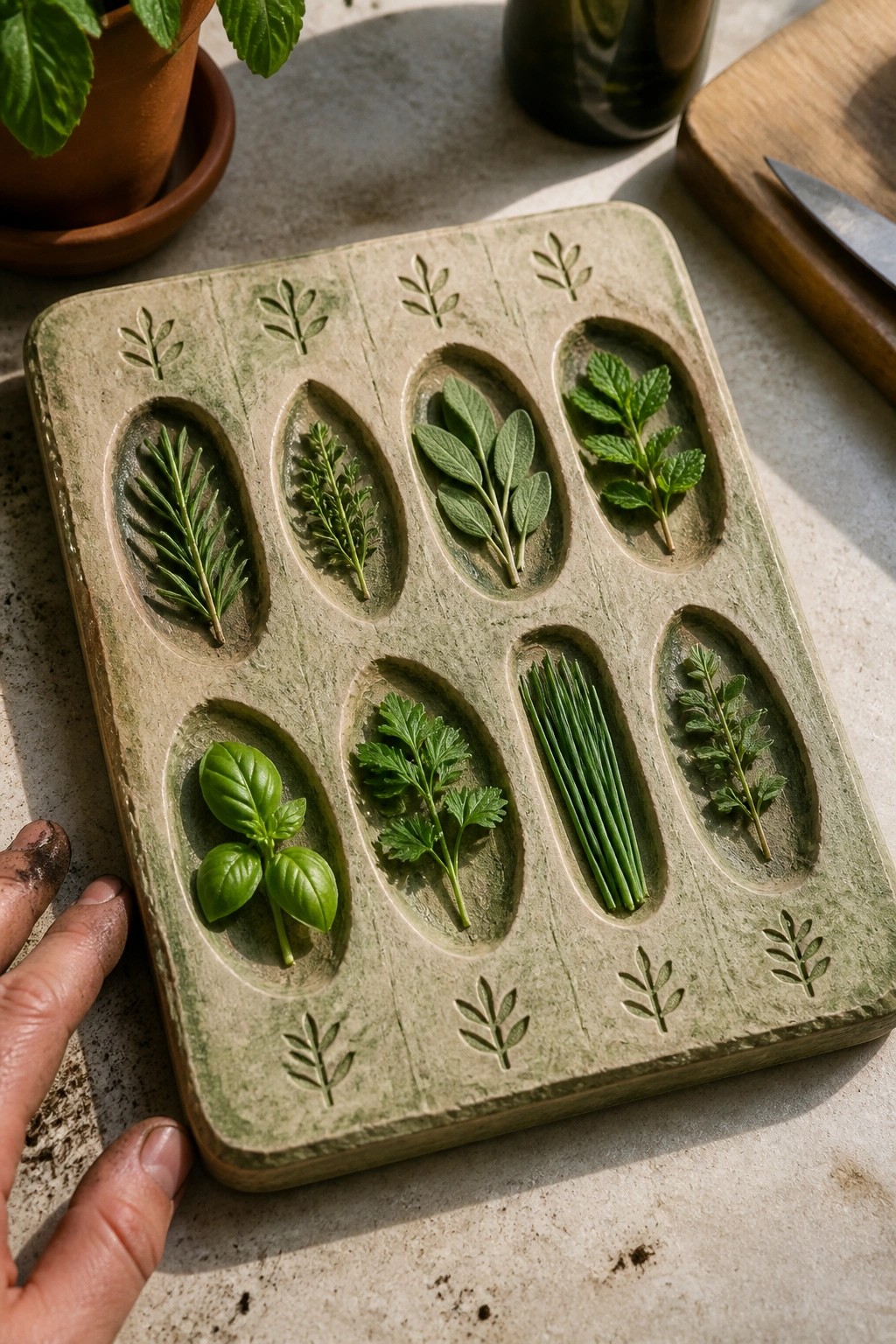
A slab-built tray divided into oval wells gives you a simple way to sort and air-dry bunches of fresh herbs without crowding them. The carved leaf shapes pressed into the clay around the edges create a repeating border that frames each compartment while keeping the surface flat enough for easy cleaning. A muted green glaze ties the whole piece to a garden setting and lets the herbs stay the center of attention. This kitchen item works because the wells are sized for typical herb stems and the slab construction keeps everything stable on a countertop.
What makes this idea useful is how the same layout can be resized to fit a windowsill or lengthened into a longer drying rack. The oval shape holds stems neatly but also works for small packets of seeds or dried spices once the herbs are gone. For a gift, swap the leaf carvings for simple geometric lines or change the glaze to match a friend’s kitchen colors. In a kitchen, this kind of tray keeps counter clutter down while still looking intentional.
Carved Slab Tiles with Arched and Leaf Motifs

Square slab tiles make strong wall decor when you press or carve repeating curves and simple shapes into the surface before applying glaze. These pieces combine arches, flowing lines, and a central leaf to break up the flat clay while keeping the overall design balanced. Speckled glazes in soft pink, blue, green, and purple sit in the recessed areas and highlight the carved edges without covering the texture.
What makes this idea useful is how the square format lets you hang several tiles together to fill a small wall space. You could repeat just the arch pattern across four or six tiles for a more uniform look or swap the leaf for a simple circle to match other decor. The small scale also works for making matching coasters or a single larger tray by adjusting the slab size before carving.
Egg Cup on a Carved Slab Saucer
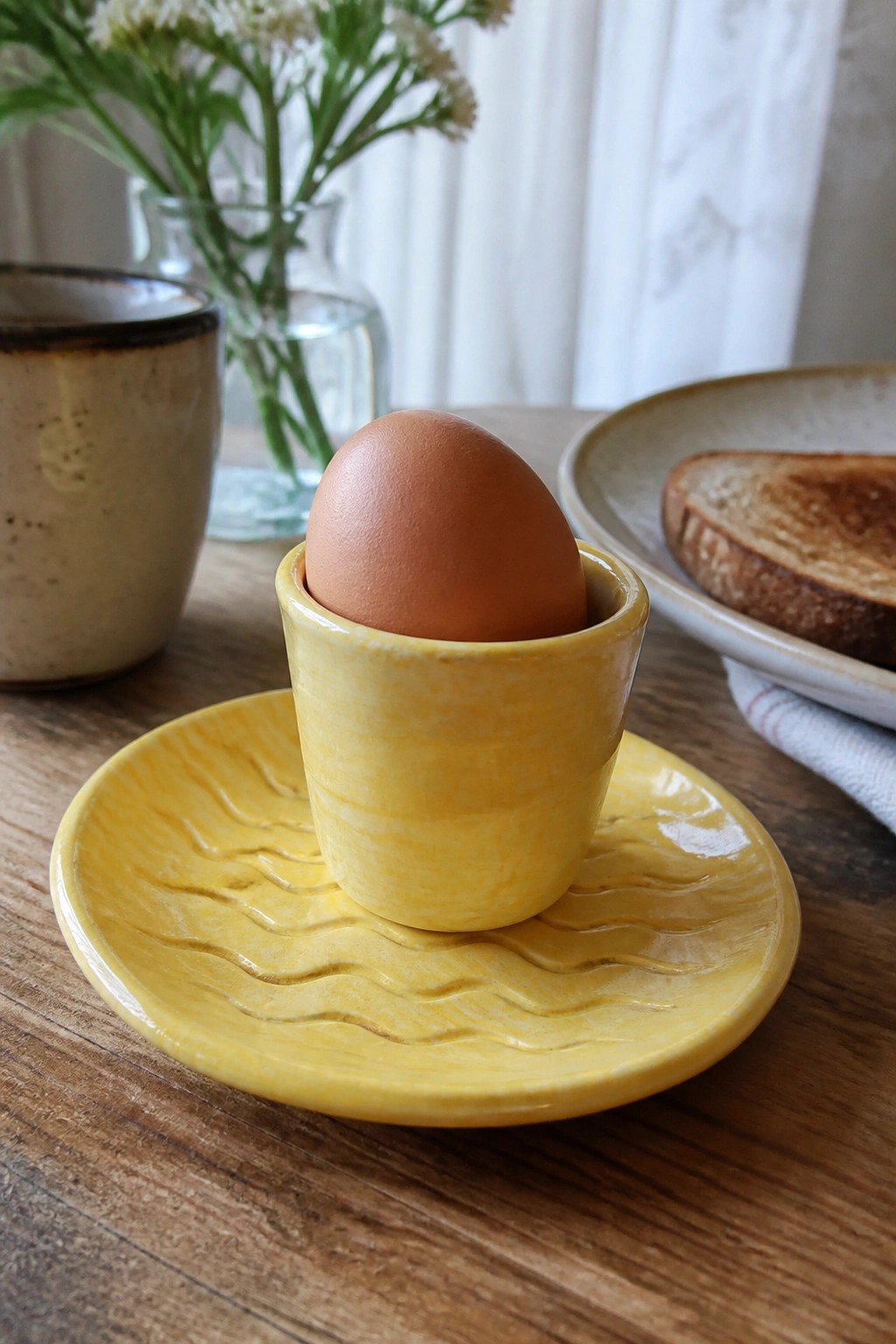
A small clay cylinder forms the egg cup while a flat round slab serves as the base plate. Wavy lines are carved directly into the slab surface before both pieces receive the same yellow glaze. The result is a compact kitchen holder that keeps the egg stable and gives the slab a clear decorative role.
What makes this idea useful is how the carved slab functions as both stand and crumb catcher during breakfast. You could repeat the wave pattern on larger slabs to make toast plates or butter dishes that match. The small scale means you can finish the whole set from one slab of clay and swap the carving for lines, dots, or simple geometric cuts if you want a different look.
Carved House Detail on an Oval Slab Planter

A small oval slab forms the base for this planter by holding soil on one side and leaving the other side open for a raised house carving. The house is formed by pressing a simple stamp or mold into the wet clay so it stands slightly above the surface. This keeps the piece shallow enough to work as a tray while giving the plant a contained spot to root. The speckled clay and light glaze let the carving stay visible even when the soil is in place.
What makes this idea useful is the way the carved detail stays clear without competing with the plant. You can change the house to any small stamp shape and keep the same oval form for other succulents or small herbs. The split layout makes it easy to water without soaking the whole surface, and the compact size fits on a narrow ledge or desk corner. The same slab method can be scaled up slightly into a longer tray if you want room for two plants instead of one.
Frequently Asked Questions
What type of clay works best for beginner slab pottery projects focused on carved decorative plates?
For these projects a plastic earthenware or stoneware clay body is ideal because it rolls out smoothly into even slabs and holds fine carving details without tearing. Choose a cone 6 clay if you plan to glaze fire in a standard kiln and always wedge it well to remove air pockets before starting.
How thick should the slabs be to avoid warping when making the carved plates?
Roll your slabs to about one quarter to three eighths of an inch thick. This range gives enough strength for carving while allowing the plate to dry evenly. Support the slab on a curved form during the leather hard stage and cover it loosely with plastic for the first day or two to slow drying.
What simple carving tools and techniques suit the 25 ideas in the article?
A basic set of loop tools, a needle tool, and a rib for smoothing will cover most patterns. Begin with light sgraffito lines or shallow relief cuts while the clay is firm but not bone dry. Many of the listed ideas use repeating geometric or leaf motifs that are easy to trace from paper templates onto the slab first.
How can beginners prevent cracking around the carved areas during drying and firing?
Score and slip any joined edges carefully and keep carved sections no deeper than half the slab thickness. Dry pieces slowly on a porous surface like drywall and turn them periodically. Once bone dry, bisque fire slowly to cone 04 so the carved details stay intact before applying glaze.
Which of the 25 ideas are the most forgiving for someone new to slab pottery?
Start with the flat tray or coaster sets that use simple border carvings because they require fewer curves and less handling. These projects let you practice slab rolling and basic carving without the added challenge of forming a deep bowl or adding feet.

Pottery Path is my cozy corner of the internet where I share clay ideas, pottery inspiration, and simple projects you can recreate at home. I love exploring everything from air dry clay to handbuilt pottery to cute minis that brighten your day. My goal is to make clay crafting feel easy, fun, and welcoming for anyone who wants to try it.
You will find beginner friendly tutorials, creative pottery painting ideas, and lots of warm inspiration for slow and happy crafting. If you enjoy hands on creativity, this space will feel like home.