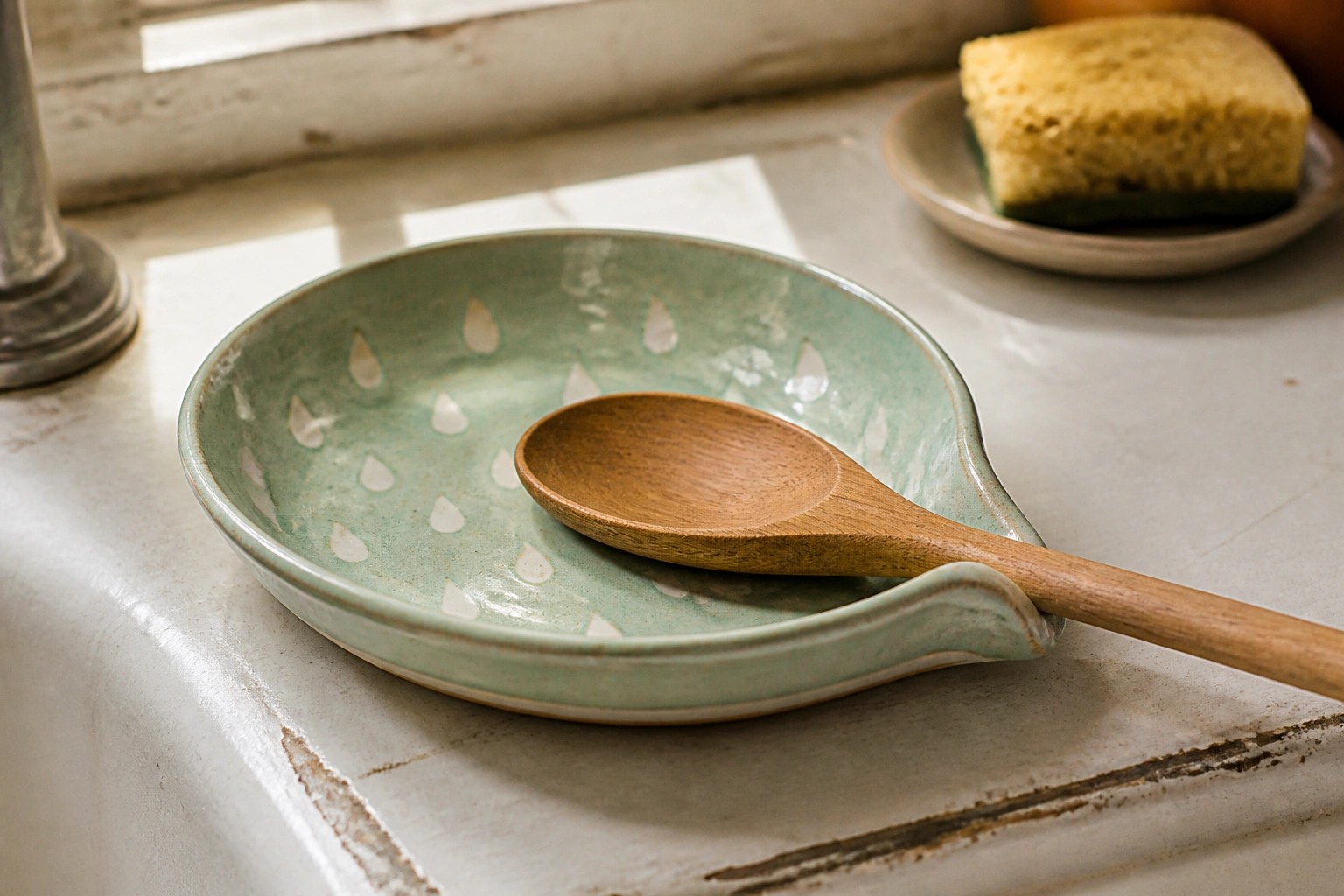
I started trying slab pottery because it felt simpler than other methods I had seen.
My approach has always been to stick with one piece of clay so there is less to figure out at the beginning.
Over time I came up with some basic projects that worked even when my skills were still developing.
These ideas focus on everyday items that do not need much experience or special tools.
I am sharing them here in case you are looking for something straightforward to try.
Spoon Rest with Teardrop Motif
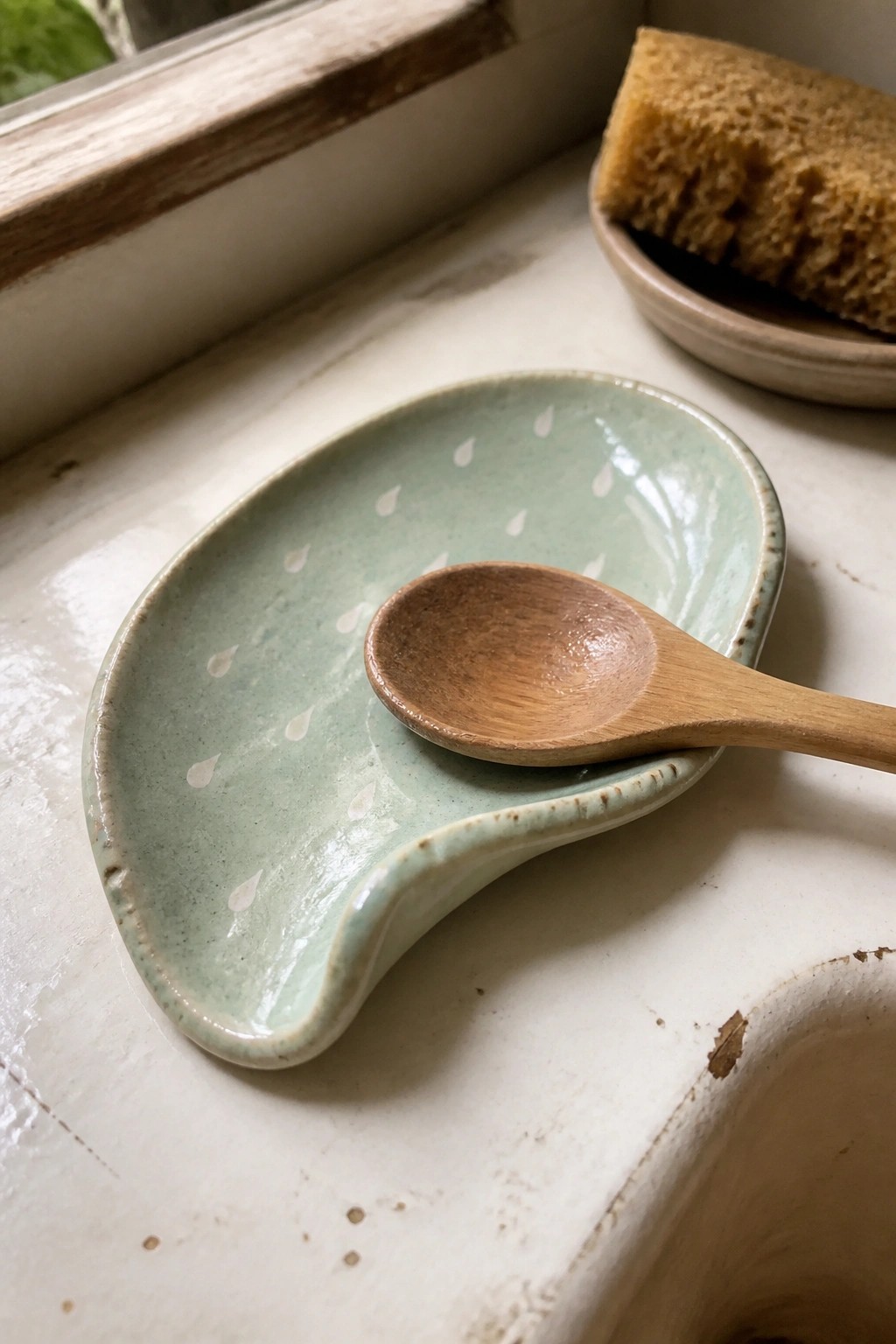
A one-piece slab works well for a spoon rest when you cut an organic oval shape and add a gentle upward curve along one side to hold the spoon handle. The light green glaze with scattered white teardrop marks gives the surface enough pattern without needing extra pieces or attachments. This keeps the whole project simple while turning a basic slab into a practical kitchen item.
What makes this idea useful is the curved edge that actually keeps a spoon from sliding off the counter. You can change the teardrop marks to lines, dots, or simple stamps to fit your own kitchen colors or style. The small scale makes it quick to form and fire, and the same basic shape adapts easily into a soap dish or small trinket tray by flattening the curve. A piece like this stands out in photos because the painted detail shows up clearly against the glaze.
Heart-Shaped Trinket Dish
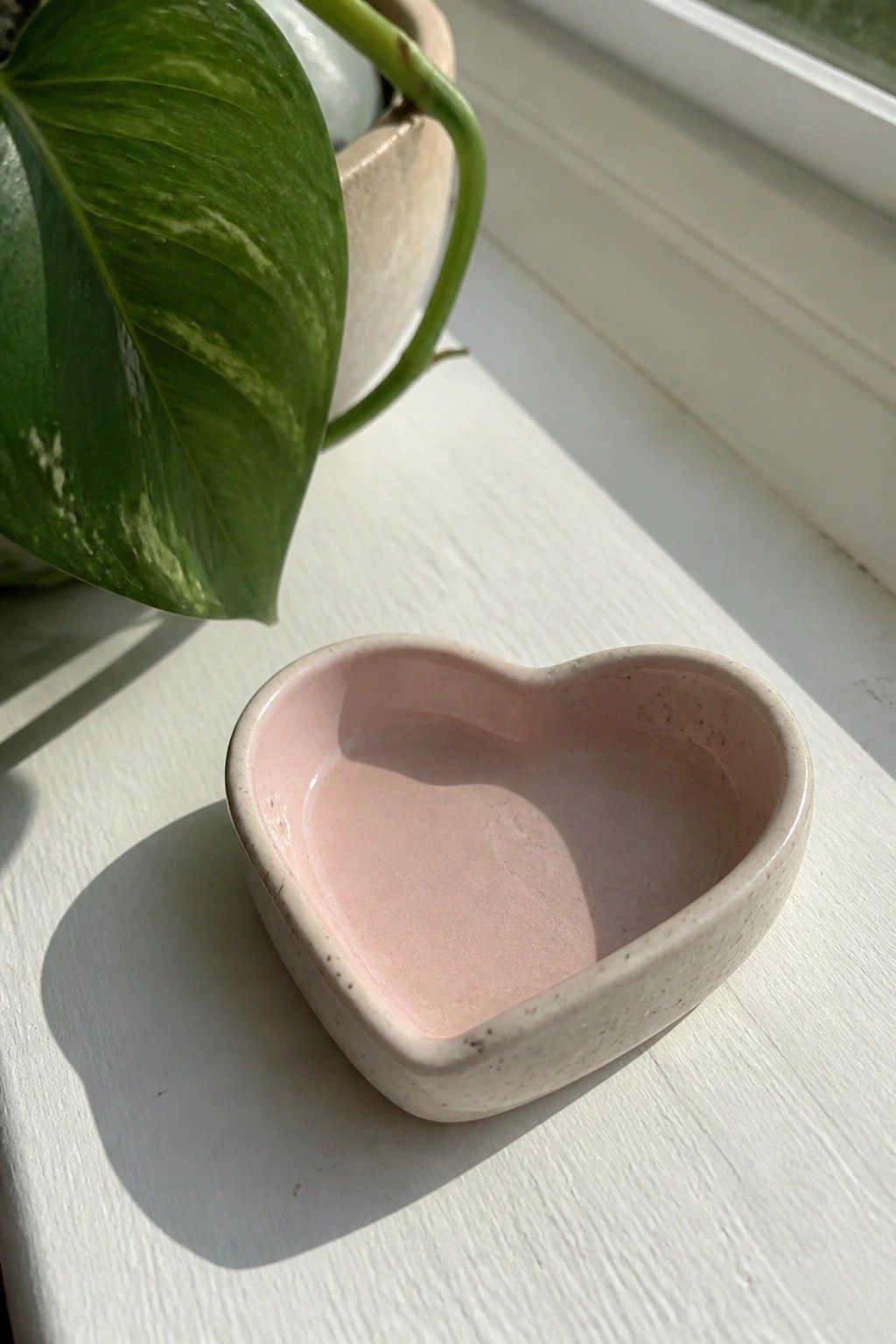
A heart-shaped trinket dish starts with a single slab of clay cut into a heart outline. The slab is then draped or pressed into a shallow curve to create a small bowl form that still keeps flat edges along the rim. A soft pink glaze on the inside paired with a speckled matte exterior gives the dish clear visual contrast while keeping the surface simple.
What makes this idea useful is how the heart cutout removes the need for handles or extra construction. The small scale works well on a dresser, bathroom counter, or desk for rings and small items. You could easily switch the shape to a circle or oval and test different interior glaze colors to match other projects or gift needs.
Square Slab Succulent Planter
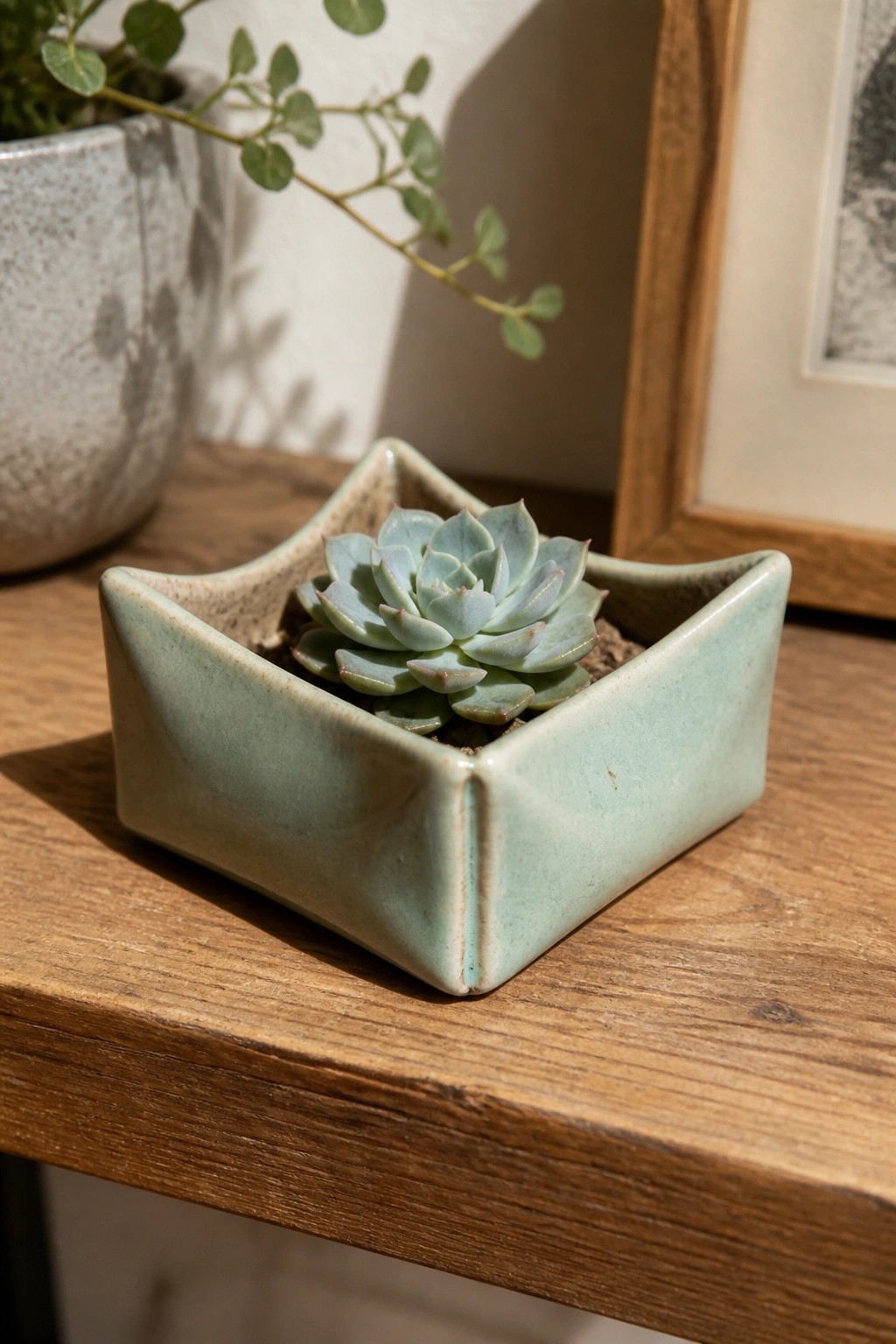
A small square planter built from one slab of clay makes a practical holder for succulents or small houseplants. The sides are lifted and joined at the corners to form an open, shallow dish with straight edges. A light mint glaze covers the form, leaving a slightly speckled rim that shows the clay underneath. This keeps the project quick while producing a clean shape that works for plant display.
What makes this idea useful is how the flat slab method lets you control the size in just a few cuts. The same square base can be made wider for a bigger plant or narrower for a desk tray. It sits well on shelves or windowsills where round pots take up more space. You could skip the glaze for a raw clay look or repeat the shape in different sizes to create a matching set.
Leaf Imprint Wall Hanging
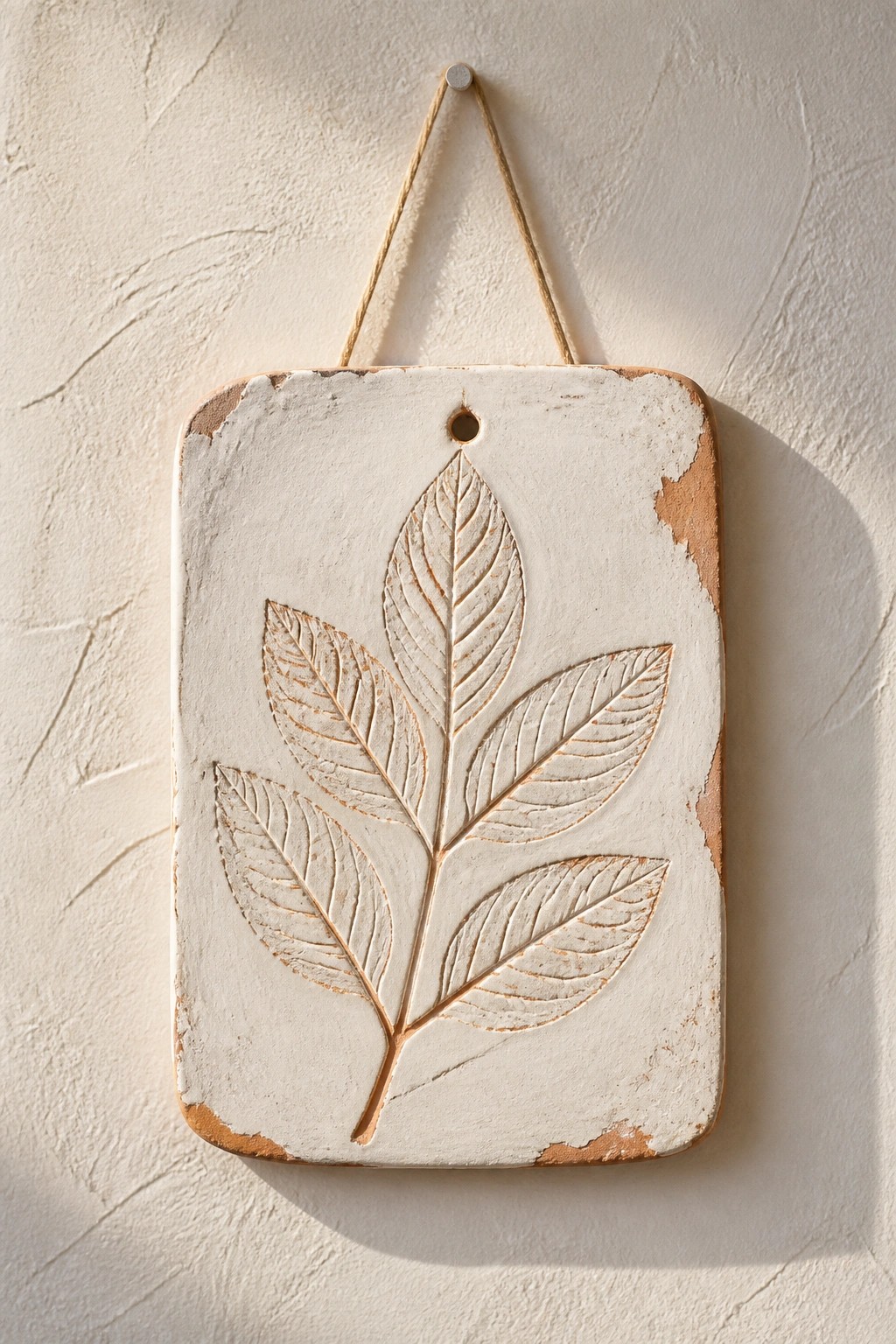
A rectangular clay slab makes an easy wall hanging when rolled flat and impressed with a leafy branch. The design uses the natural texture of the leaves to create recessed lines that catch light and shadow once the piece dries. A single hole near the top lets it hang from twine or wire, turning the slab into a finished decor object with almost no extra construction.
What makes this idea useful is how simple it is to change the plant for something more seasonal or personal like herbs or ferns. The flat shape hangs cleanly in small spaces such as above a desk or along a narrow wall without taking up shelf room. You could make a smaller version to fit inside a frame or skip the hanging hole and use the same slab as a shallow tray for keys or jewelry.
Striped Slab Tray
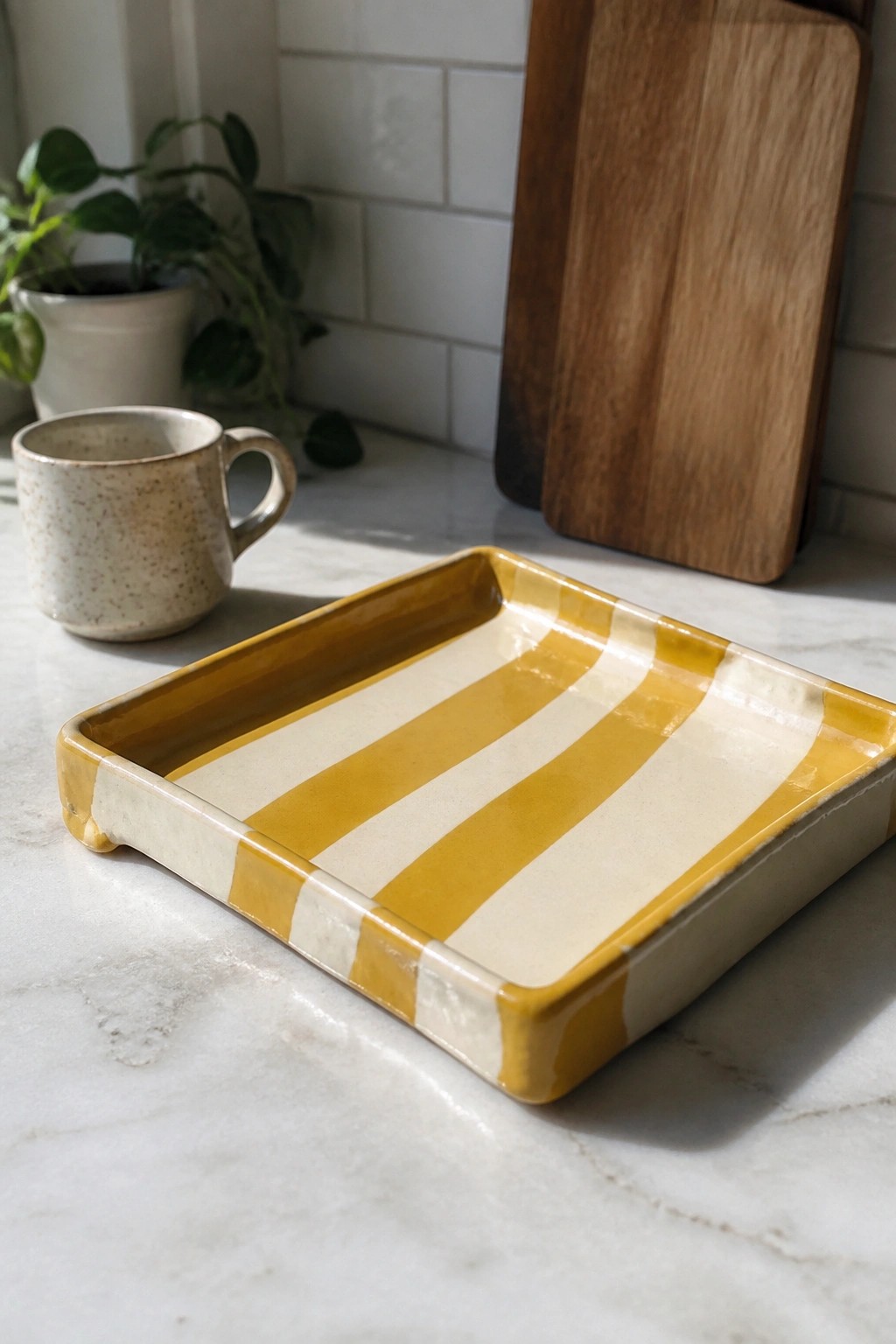
A rectangular tray cut from one flat slab of clay forms a shallow dish when the edges are gently folded up on all sides. Alternating bands of yellow and cream glaze create strong horizontal stripes across the surface, giving the piece a bold graphic pattern while keeping construction straightforward. The glossy finish highlights the contrast between the colors and makes the tray suitable for everyday use on a counter or table.
The shape does a lot of the work here because the simple rectangle needs only basic scoring and folding to hold its form. You could change the stripe colors to match your kitchen or shrink the size to create a smaller version for soap or rings. In a kitchen this kind of tray organizes small items like spoons or napkins, and the striped design makes it easy to photograph and adapt for other slab projects.
Leaf Soap Dish from One Slab
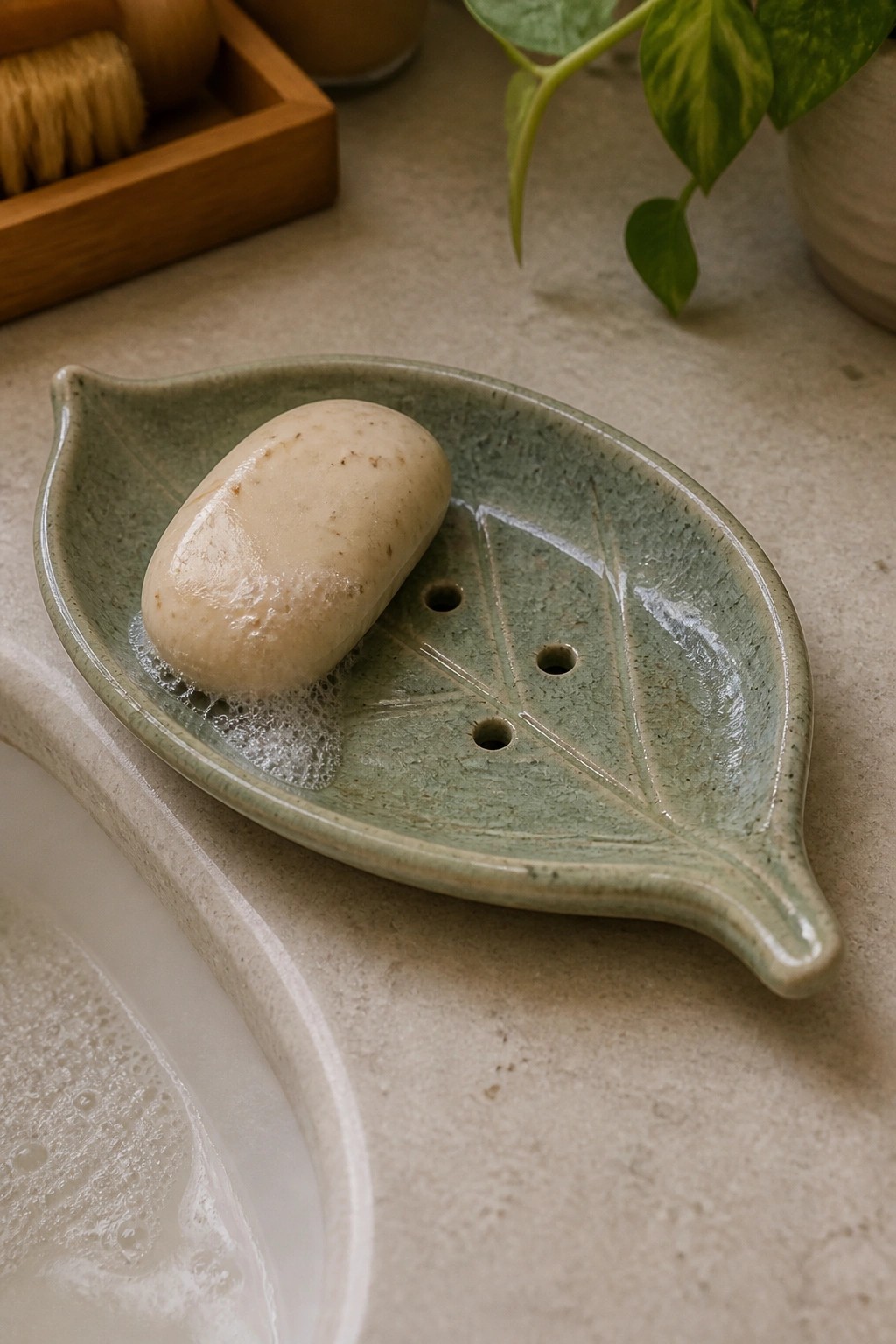
A flat slab of clay is cut into a pointed leaf outline and the edges are gently lifted to create a shallow tray that holds a bar of soap. Veins are pressed into the surface with a tool and three small holes are added near the center so water can drain away. The piece is then glazed in a muted green that highlights the leaf form without covering the texture.
What makes this idea useful is how quickly the same slab method can be repeated with different leaf shapes found outside. The drainage holes keep soap from turning to mush, which is practical in a bathroom. You could easily shrink the design for a ring dish or lengthen it into a small spoon rest for the kitchen counter.
Slab Cylinder Cup with Simple Pouring Spout
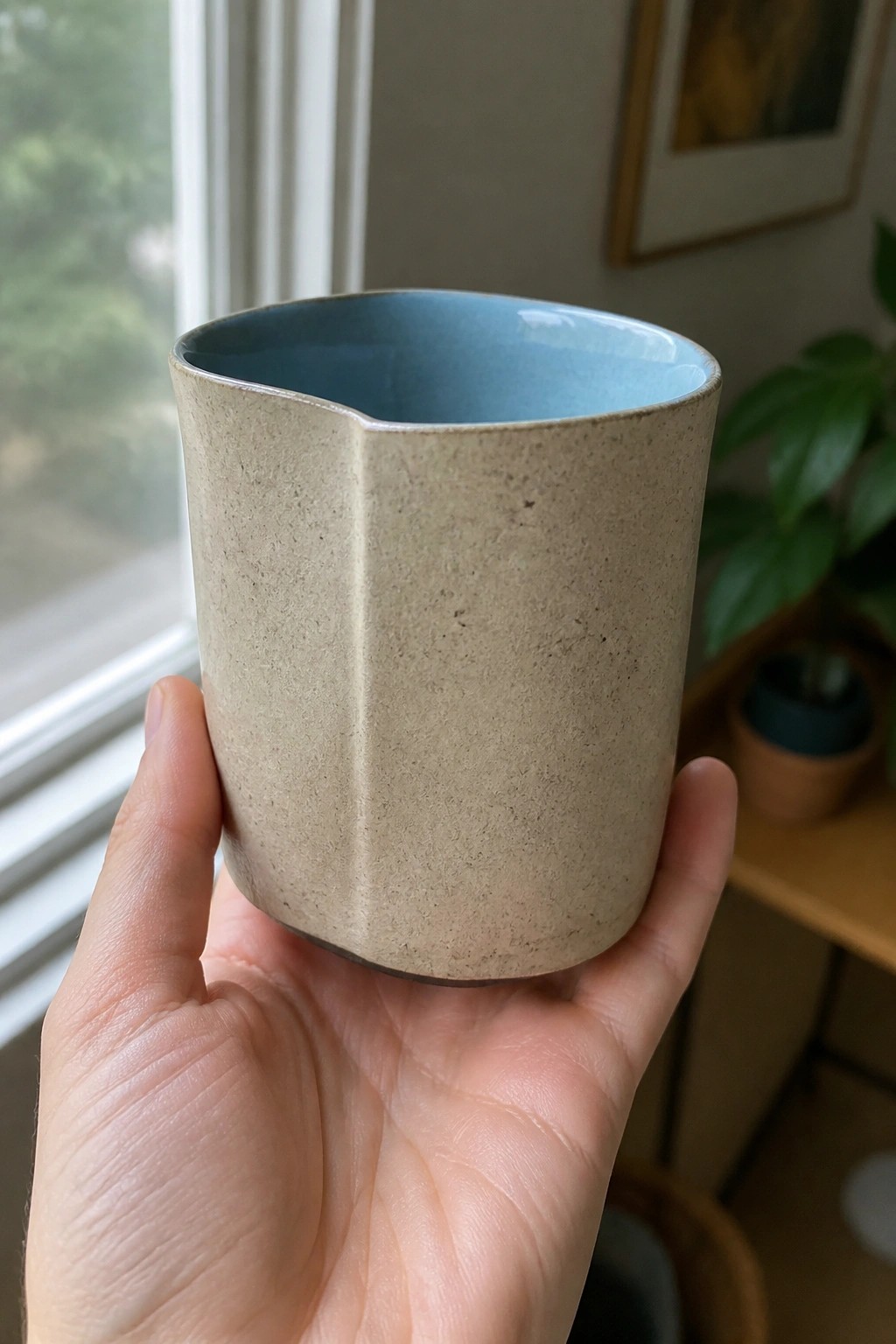
A single slab rolled into a cylinder forms this small cup or pouring vessel. The rim gets a quick angled cut on one side to create a functional spout while the rest stays straight. The speckled matte exterior pairs with a solid blue glaze on the inside for a clear contrast that highlights the handmade shape without added surface details. This approach stays in the mug or kitchen item category and works from one basic slab cut.
What makes this idea useful is how the spout turns an ordinary cylinder into something that can pour without extra parts or handles. The same slab size can be adjusted taller for a creamer or shorter for a small desk cup. In a kitchen it holds up for milk, sauces, or tea, and switching the interior glaze color lets you match it to other pieces without changing the construction steps. The clean profile also photographs well for sharing simple slab projects.
Slab Cylinder Candle Holder
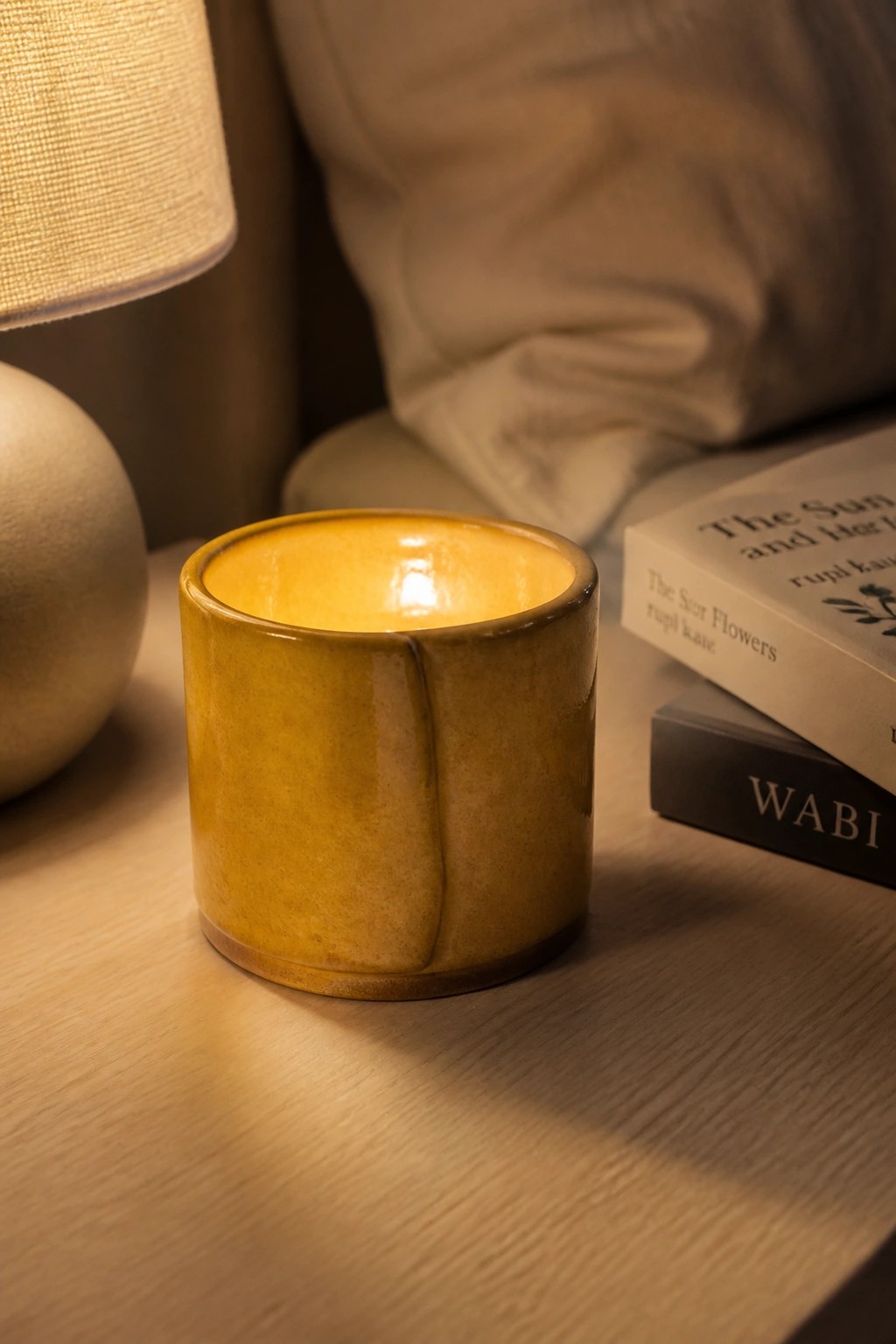
A basic cylinder formed from one rectangular slab of clay rolled into a tube creates this compact vessel. The single seam stays visible on the outside as a design detail while the interior gets a full coat of glossy yellow glaze. The straight walls and small scale make it a practical choice for a candle holder or tiny desk organizer that sits neatly on any flat surface.
What makes this idea useful is how the cylinder shape lets you control height and width with one simple cut before joining. A piece like this works especially well as a nightstand holder or small bathroom cup where the warm color stands out against neutral tones. You could adapt the same slab into a matching pair by shortening the height or switch the glaze to matte black for a more modern desk set.
Cat Face Slab Dish
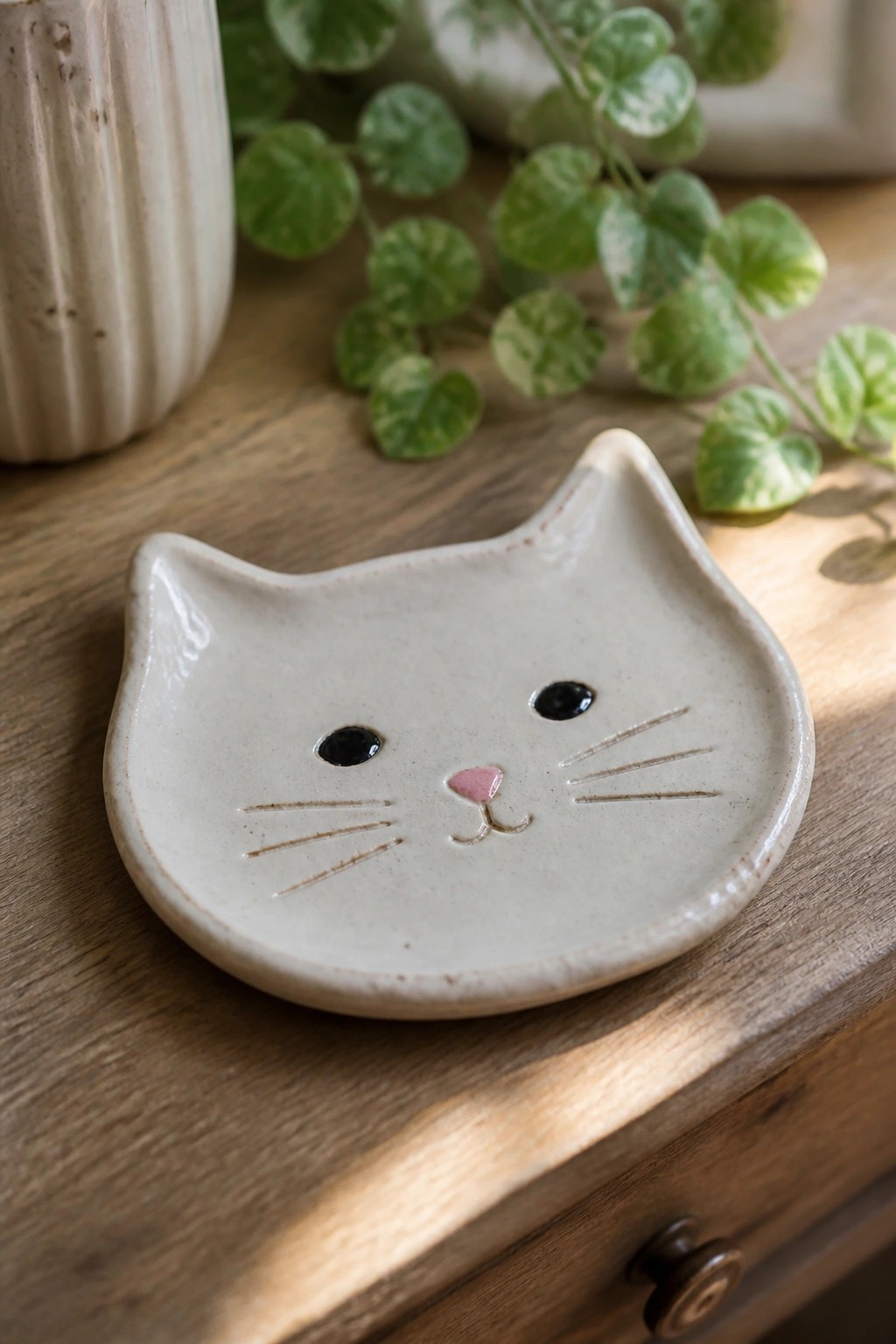
A flat slab of clay is cut into a rounded head shape with pointed ears to form a shallow dish that stays mostly flat across the center. Simple lines are carved in for whiskers and a mouth, while small accents of black and pink are added for the eyes and nose. The result is a compact tray made from one piece of clay that needs only basic shaping and surface details.
What makes this idea useful is how the small scale lets it sit on a nightstand or desk to hold rings or small jewelry. The same slab method can be adapted by cutting different ear shapes or swapping the face details for another animal. For a gift, something like this takes little clay and still feels personal without extra construction steps.
Scalloped Rim Shallow Bowl
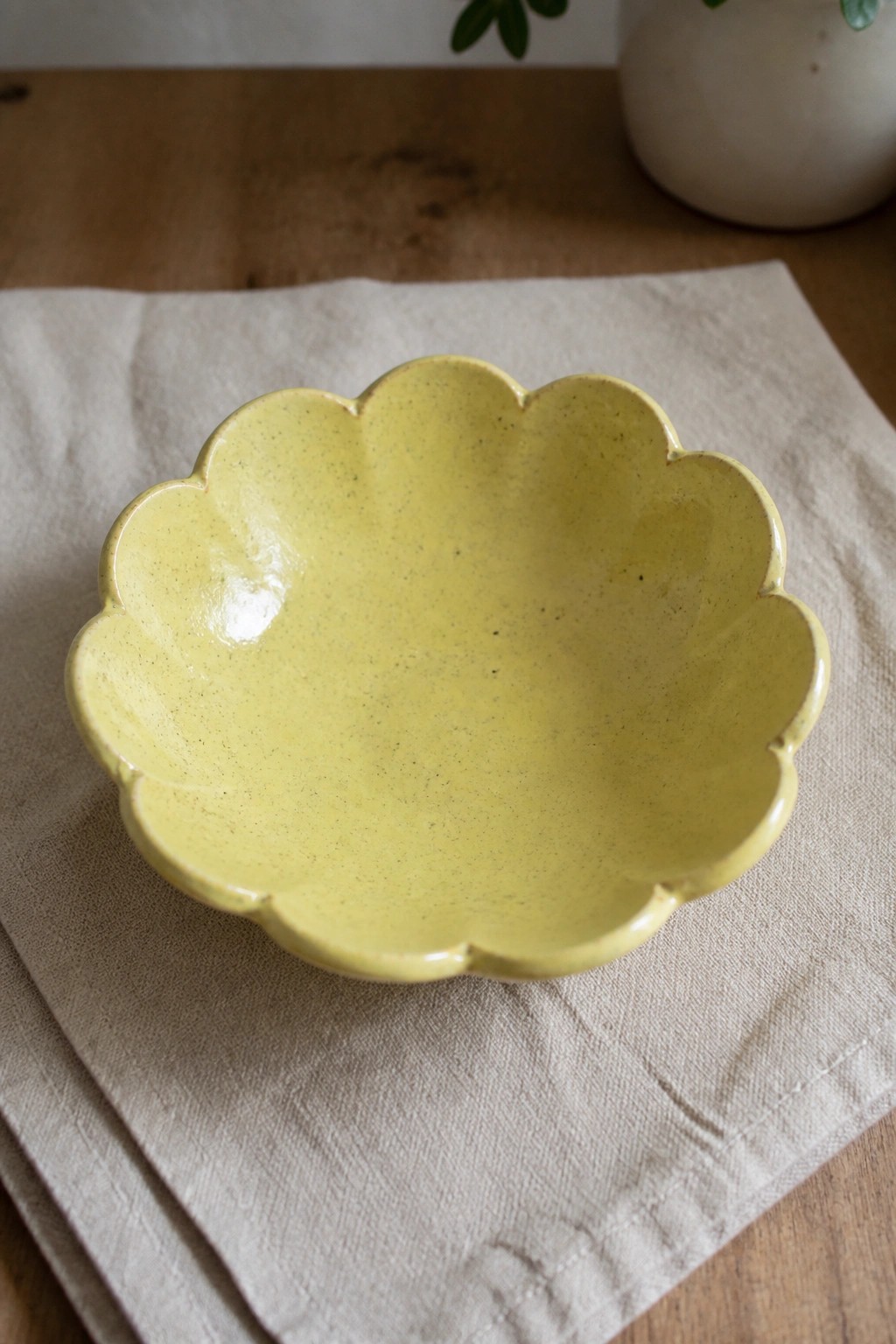
A shallow bowl formed from a single slab gains interest from a scalloped rim cut into soft waves. The clay is rolled flat, the edge trimmed with a wavy cutter or template, then gently shaped over a rounded form to keep the base simple and stable. A light yellow glaze with fine speckles covers the surface and pools slightly along the curves, making the rim stand out without extra decoration.
The small scale keeps the project quick and low-risk for beginners working with one piece of clay. You can change the glaze color or deepen the scallops to suit different uses like a jewelry dish or a small dip bowl. The wavy edge photographs well on its own, which helps if you want to share the finished piece online. The same rim treatment can be applied to a larger platter or a square tray for variety.
Double Compartment Seasoning Dish
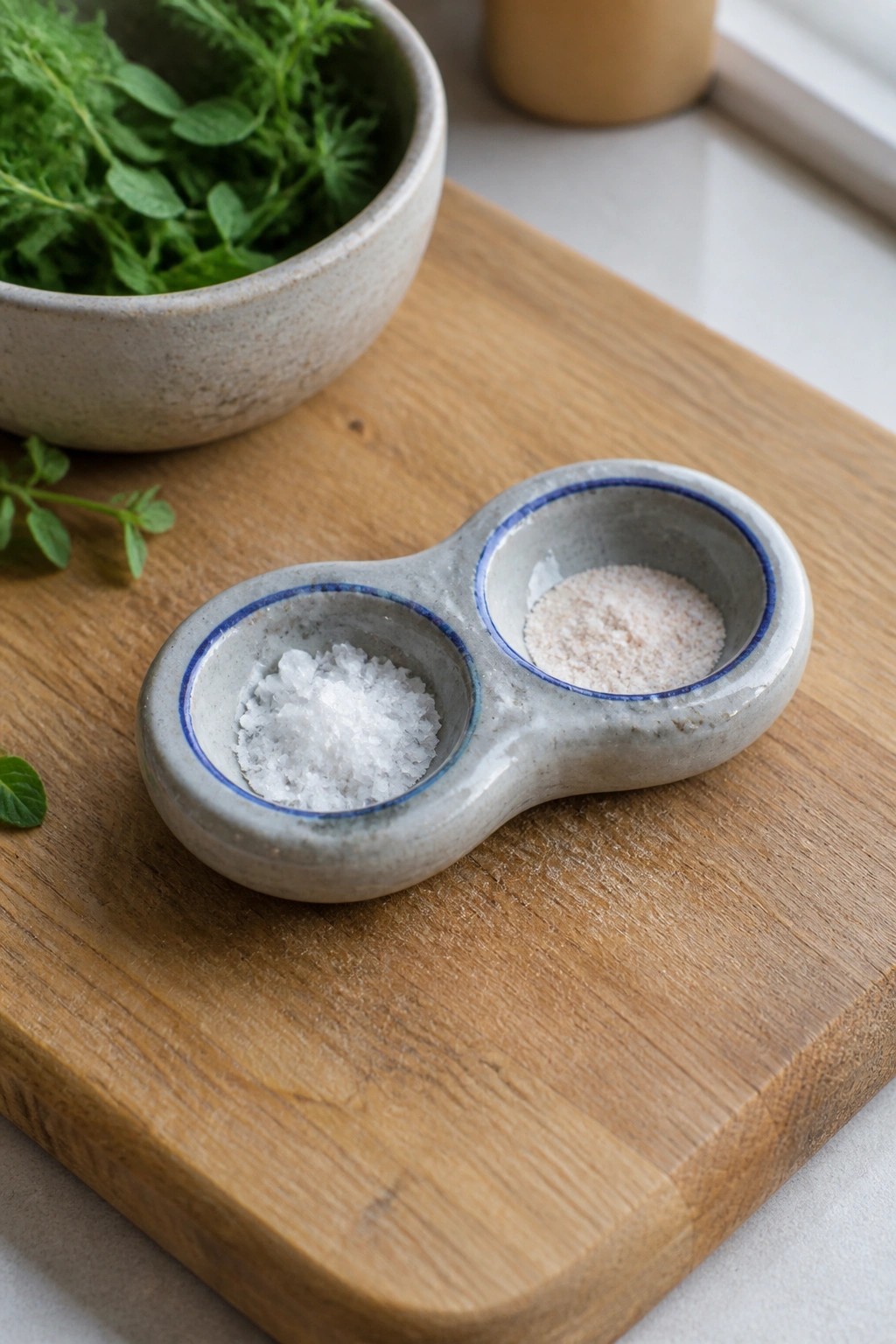
A single slab can be cut and shaped into two connected shallow bowls that share a center wall, creating a compact holder for two different seasonings. The rounded forms sit low and stable on the counter, with each compartment sized for easy pinching. A simple matte glaze in gray with a narrow blue rim line keeps the focus on the clean shape rather than busy decoration. This approach fits the kitchen item category and gives beginners a quick way to practice even walls and joined forms without extra pieces.
What makes this idea useful is how the connected shape keeps salt and pepper or two spices organized in one spot instead of scattered jars. You can adjust the depth or widen one side if you want more room for a larger spoon. The same slab layout could be reworked into a three-section version for herbs or a longer tray for olive oil and vinegar. In a kitchen, this kind of piece stays handy during cooking and takes up little space on a shelf when not in use.
Slab Incense Holder with Border Texture
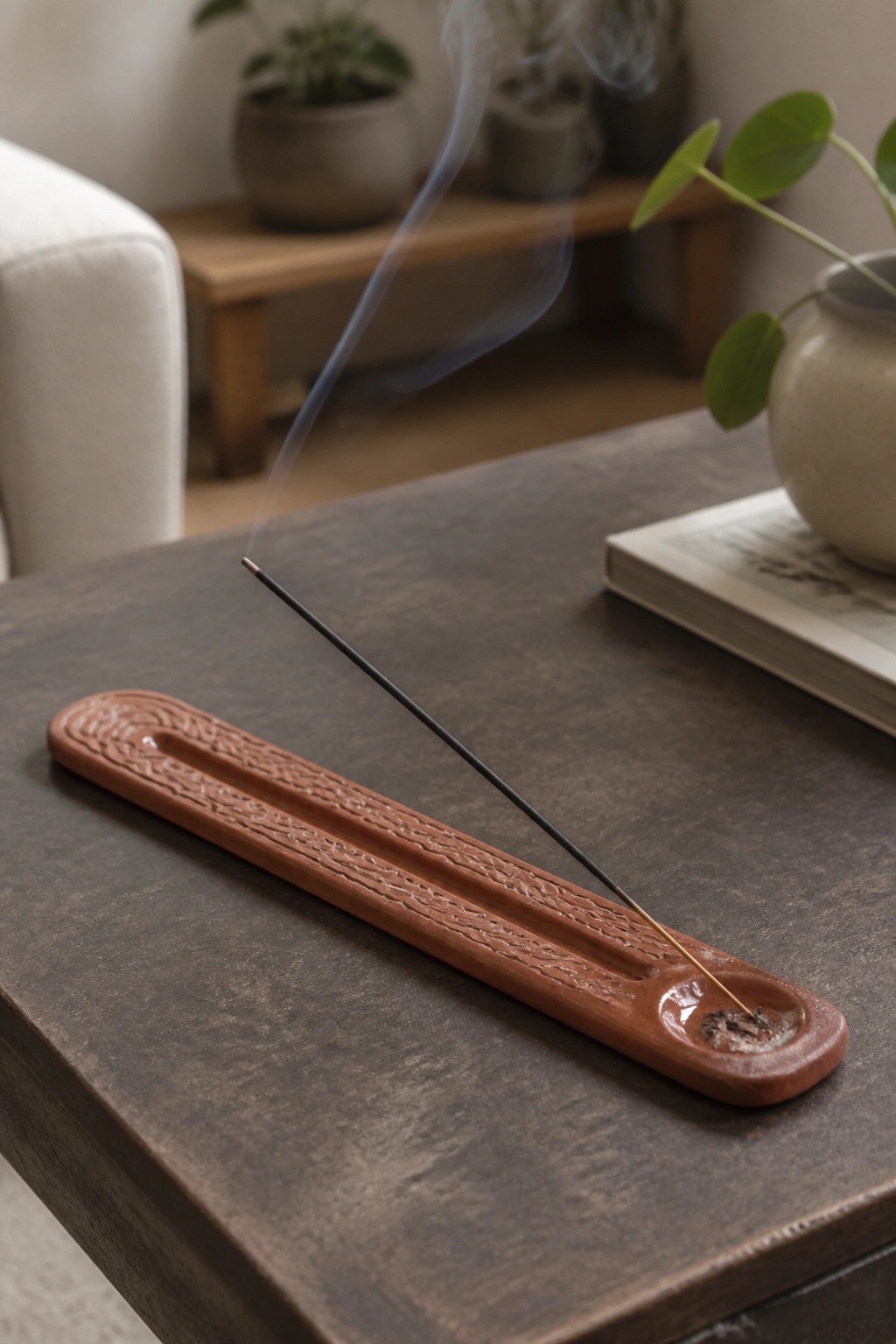
An incense holder formed from one flat slab gives you a long narrow tray with a straight channel running down the center and a rounded dish at one end to catch ash. The sides carry repeating carved lines that create a simple repeating pattern while the rest of the surface stays smooth. This layout keeps the piece compact and stable on a table without needing extra feet or supports.
What makes this idea useful is how the same slab shape can be shortened for shorter sticks or widened slightly for cone incense. The carved border can be replaced with stamps, shallow grooves, or left plain for faster versions. A holder like this sits easily on a desk or shelf and takes up little space when stored.
One-Piece Slab Wall Pocket Planter
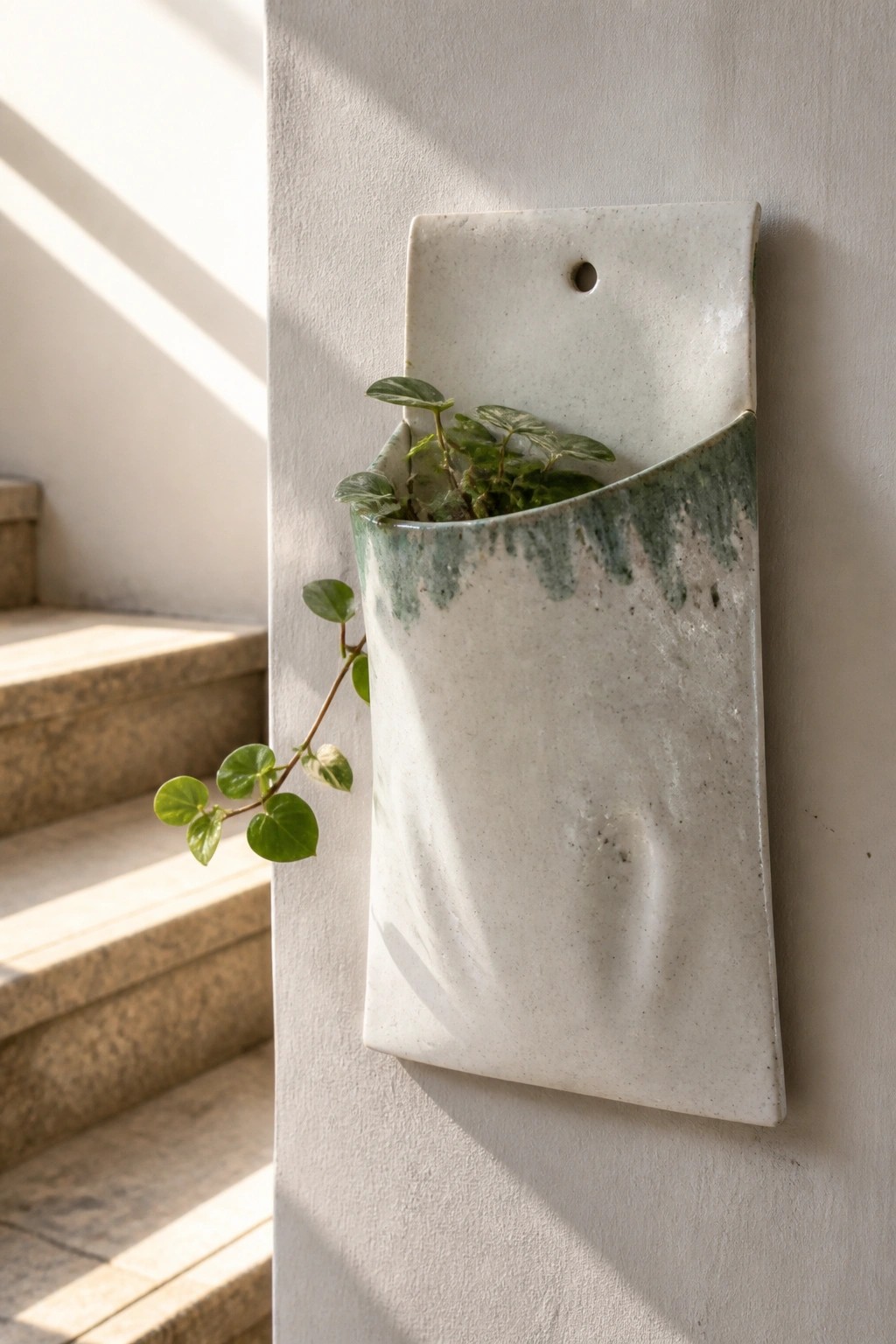
A wall pocket planter is made from one rectangular slab of clay that gets folded and joined along the sides to form a shallow pouch. A hole is cut near the top edge before drying so the piece can hang flat against a wall. The simple upright shape leaves most of the slab visible as a smooth background while the pocket holds a small amount of soil for trailing plants.
What makes this idea useful is how little shelf space it takes compared with a traditional pot. You can repeat the same basic rectangle in different widths to create a row of pockets for herbs or small succulents. The same slab can be adapted into a shorter desktop version by leaving the top edge straight instead of rounding it, or you can add a shallow lip at the front to hold more soil. The clean outline and single hanging point make it easy to photograph for project boards without extra styling.
Slab-Built Toothbrush Holder with Indented Texture
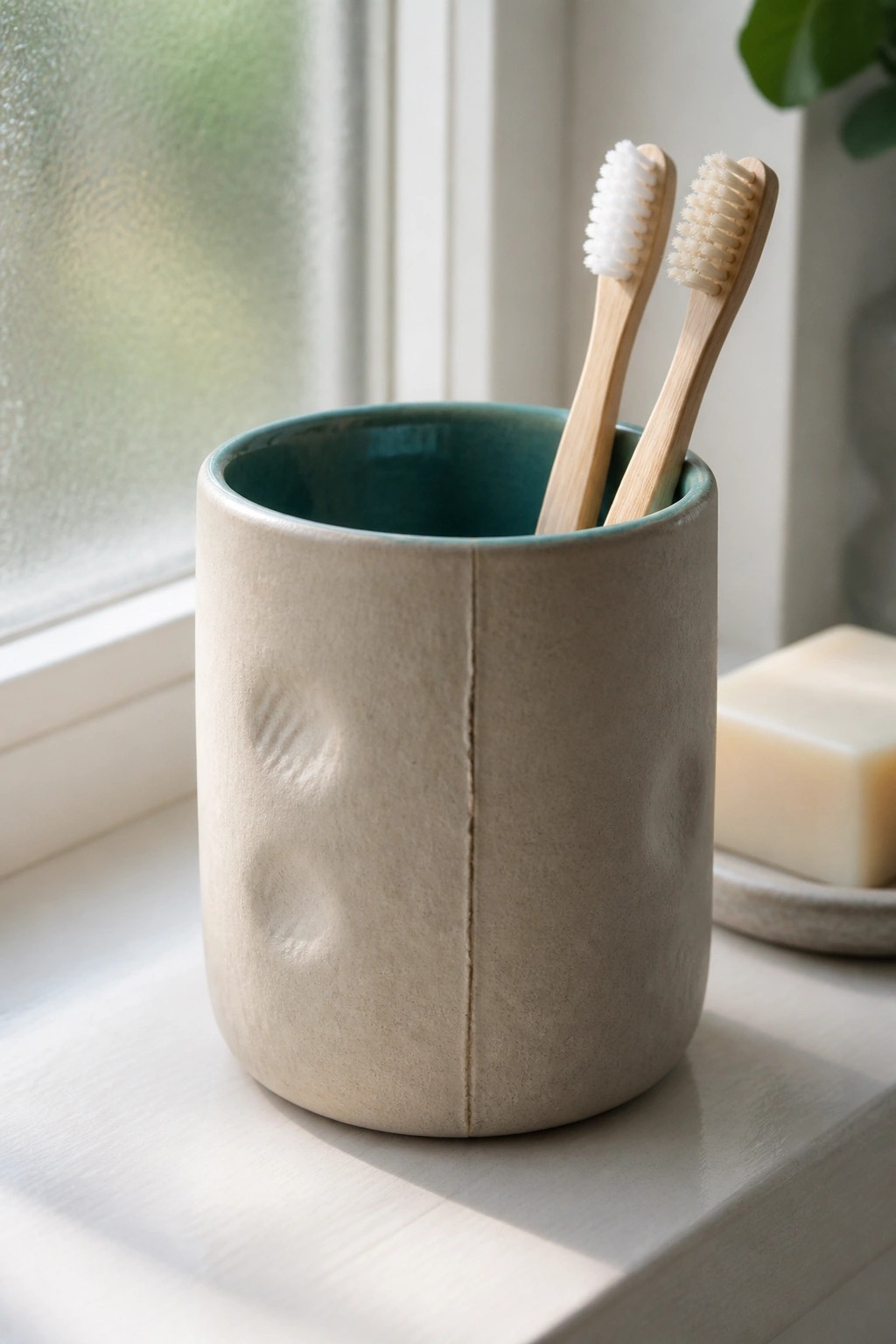
A simple cylinder formed from one slab of clay makes an effective toothbrush holder for the bathroom. The design keeps the exterior in a matte beige finish with light pressed-in marks for texture while the interior gets a solid teal glaze that shows at the rim. The vertical seam from joining the slab edges stays visible and becomes part of the look rather than something to hide. This approach stays within one-piece slab construction and needs no additional parts.
What makes this idea useful is that the same rolled cylinder can be made taller or shorter depending on whether you want a single or double toothbrush version. The indented texture is created before the slab is joined so it stays quick to do. A piece like this works especially well as a small desk cup or makeup brush holder by changing the height and skipping the interior glaze if you prefer an all-matte finish. For a gift it is easy to personalize with a different rim color while keeping the rest of the form the same.
Slab Tea Bag Rest with Painted Lemon
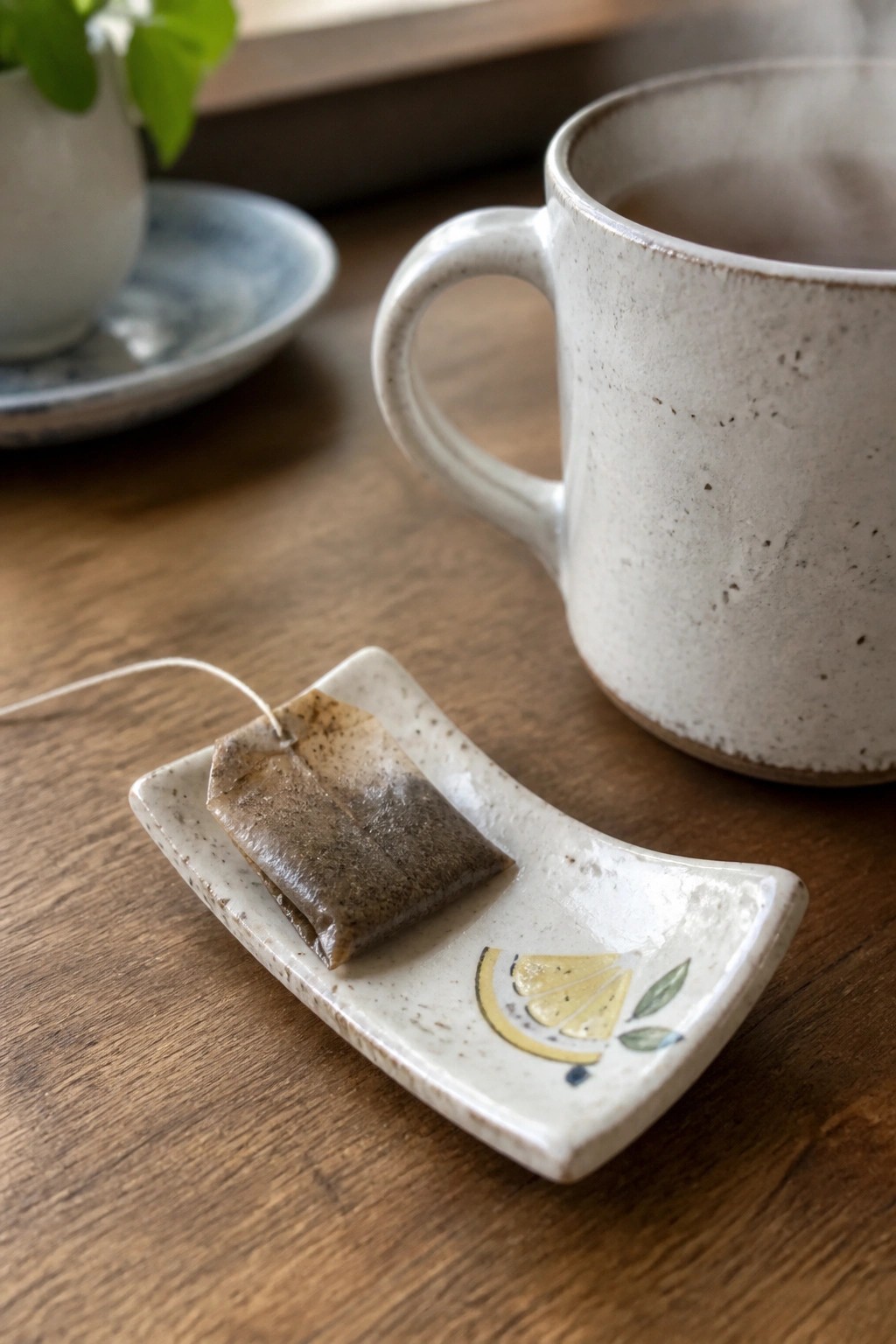
A flat slab of clay is rolled out and shaped into a small, curved rectangular tray with slightly raised edges that keep a tea bag in place. The surface is finished with a light speckled glaze, and a simple lemon slice with leaves is painted on one end using underglaze or slips before firing. This creates a functional kitchen item that sits neatly beside a mug and catches drips from a used tea bag without taking up much counter space.
What makes this idea useful is how the shallow curve and compact size let it double as a spoon rest or small condiment dish when not holding tea bags. You can swap the lemon for other simple motifs like herbs, berries, or abstract lines to match different kitchen styles or turn the same slab shape into a jewelry dish by making it a bit deeper. The painted detail keeps the project quick while still giving it a finished look that photographs well for sharing. For a gift, this works especially well paired with a handmade mug and a few tea bags.
Yarn Bowl with Rim Notch
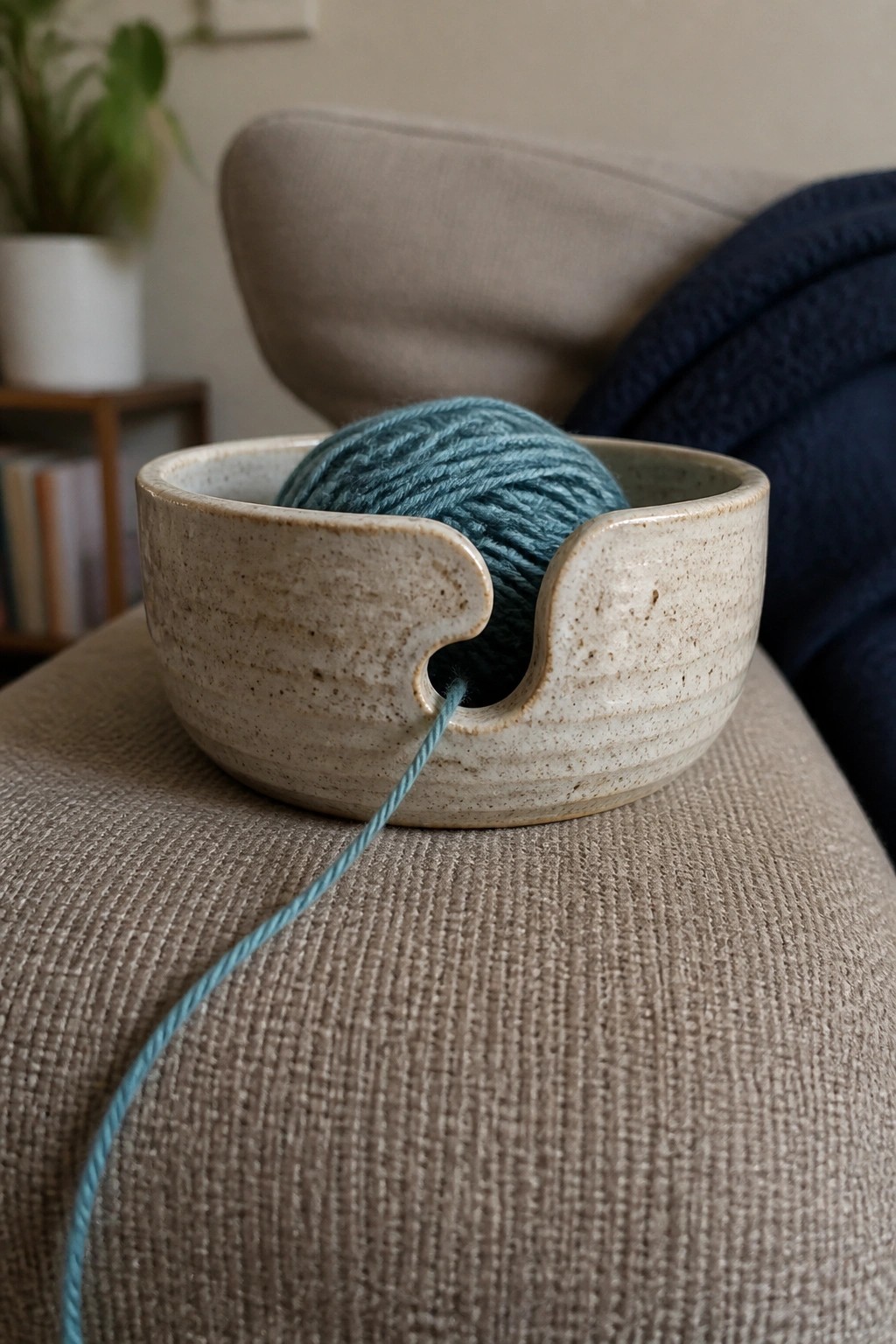
A flat slab rolled out and shaped into a low, rounded bowl can be finished with one clean notch cut into the rim to make a yarn holder. The notch lets the strand feed out steadily while the rest of the ball stays contained inside the open form. A light speckled glaze keeps the surface simple and shows the clay texture without adding extra steps.
What makes this idea useful is how quickly the notch turns an ordinary bowl into a working tool for knitters or crocheters. Place it on a side table or in a craft basket where yarn projects happen often. The same slab can be made slightly shallower or given a wider notch to suit thicker yarns or even embroidery floss. Many people save photos of these because the shape is easy to recognize in a Pinterest feed and simple to copy with basic tools.
Star Shaped Speckled Dish
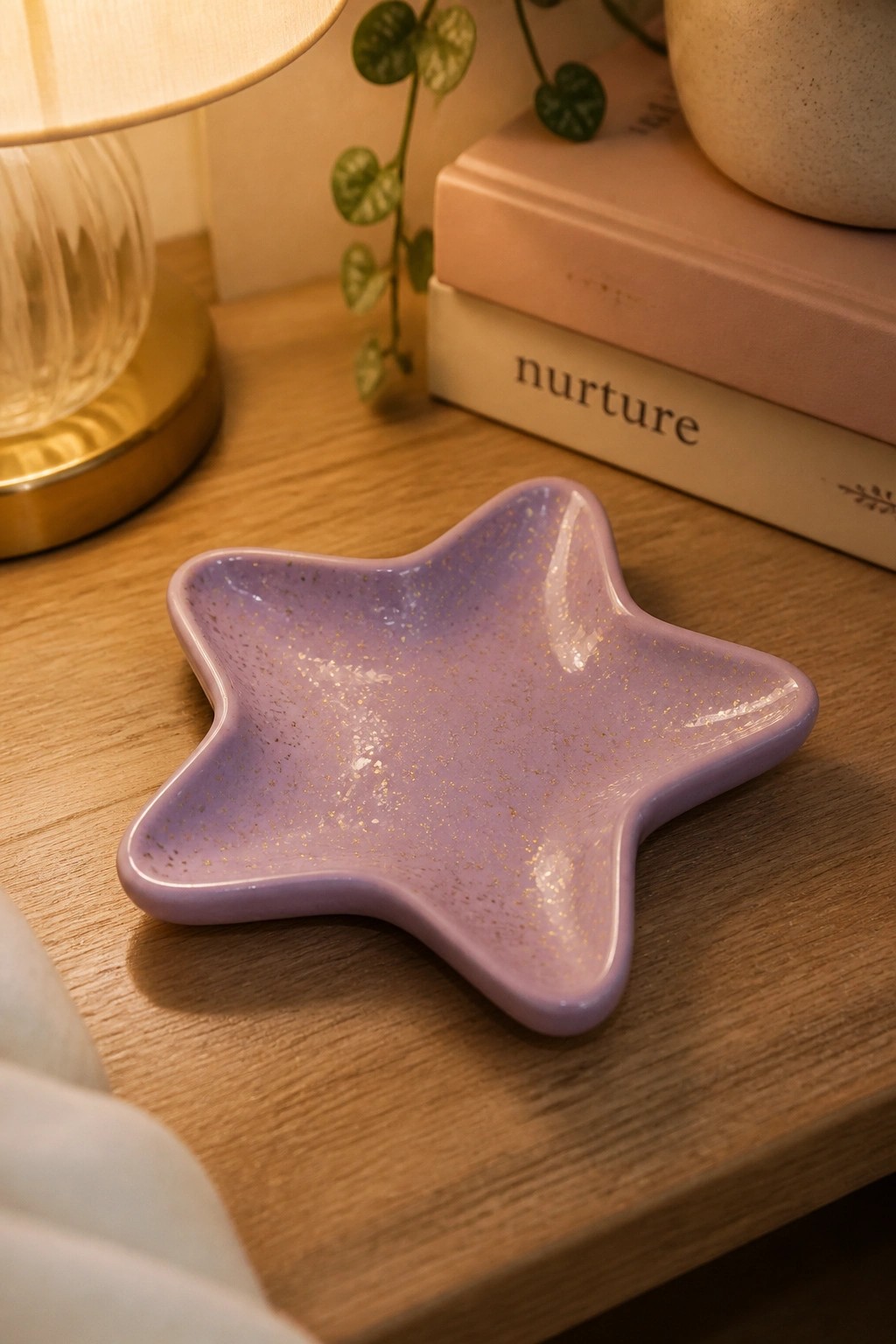
A flat slab of clay cut into a five-pointed star creates this small dish with gently upturned edges. The purple glaze with scattered gold flecks gives it a simple, finished look without extra carving or handles. This type of project fits the ring dish or trinket tray category and works well as a beginner slab exercise because the shape itself provides the main interest.
What makes this idea useful is how easily the star outline can be resized or swapped for other basic forms like hearts or circles while keeping the same slab method. The compact size makes it practical for a bedside table or desk to hold rings or small items. You could rework the same cutout with a matte glaze or add a simple stamped pattern in the center for a different version. In a bathroom or entryway, this shape stands out on Pinterest because the outline reads clearly even in quick photos.
One-Piece Slab Planter With Folded Angles
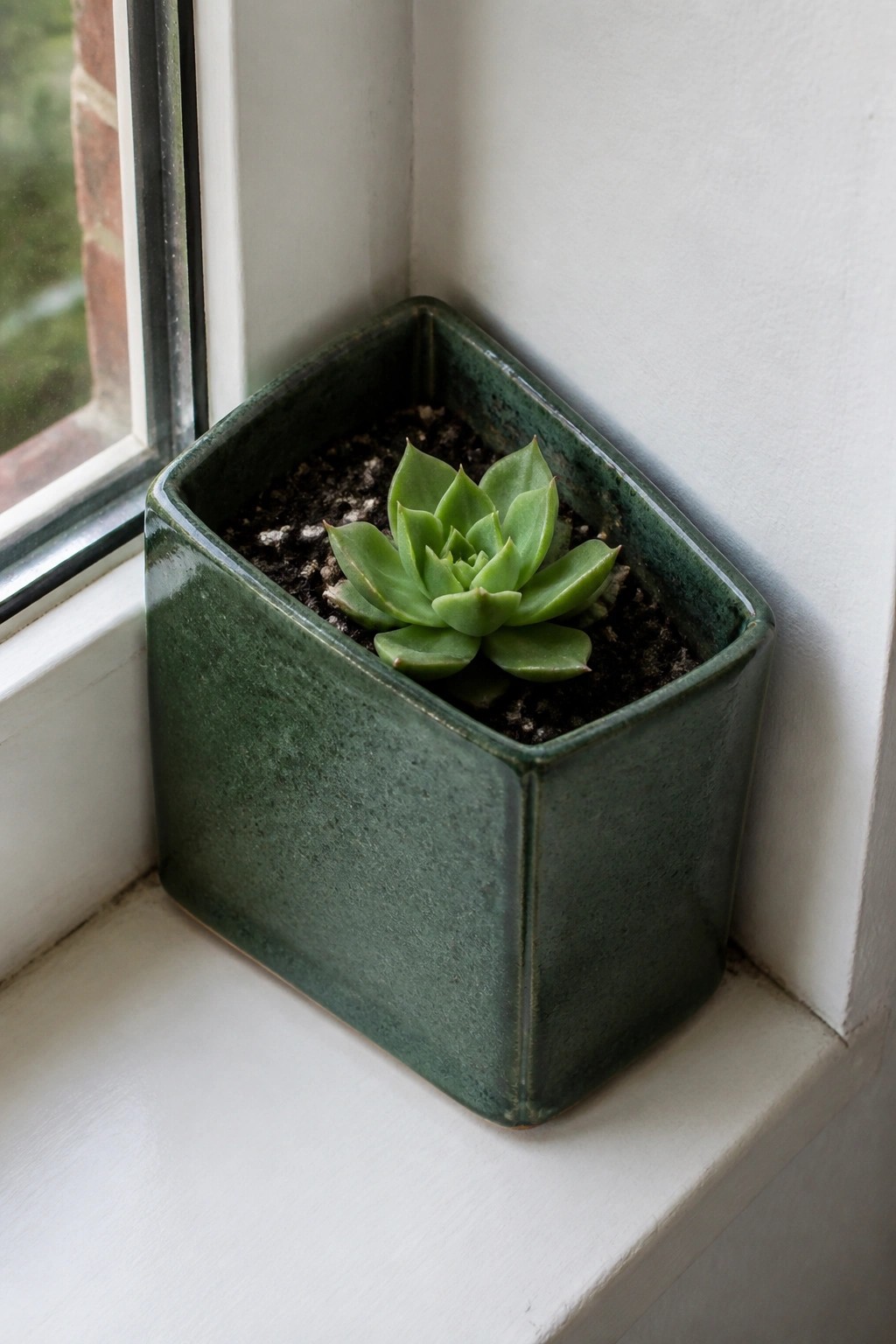
A square planter built from a single slab of clay forms a compact shape that works well for succulents or small houseplants. The sides fold upward into straight angles that create clean edges without needing extra pieces or complex joins. A mottled green glaze gives the surface enough variation to catch light while keeping the focus on the plant.
The shape does a lot of the work here because the angled walls let the planter sit flush against a corner or window frame. You could cut the slab larger or smaller to match different plant sizes, or swap the glaze for a matte finish if you want a different look. This style also adapts easily into a small herb pot for a kitchen counter. For Pinterest, the simple geometry and solid color make it easy to style in flat-lay photos with other slab projects.
Citrus Segment Slab Plate
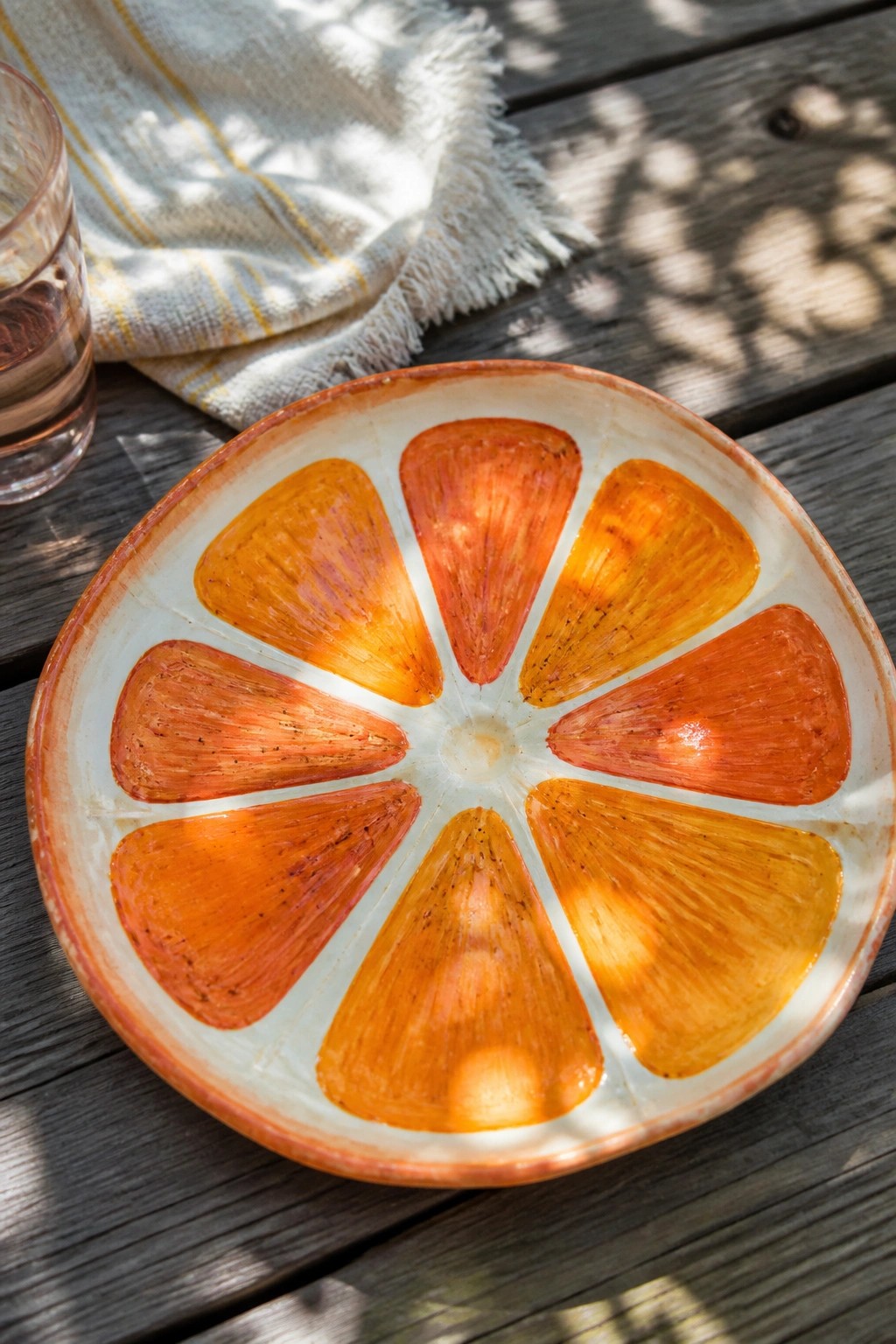
A flat clay slab rolled into a wide shallow plate lets you add a citrus slice design by painting or glazing wedge-shaped segments that radiate from the center. The white clay between each segment creates natural divisions while the orange and yellow tones build up the fruit look without extra carving. This approach turns one simple slab into a functional kitchen plate or small serving dish that stays flat and easy to form.
What makes this idea useful is how the round slab shape already supports a radial fruit pattern without extra construction. You could swap the colors for lemon or grapefruit versions to make a small set for gifts or everyday use. In a kitchen this kind of plate works as a fruit holder or appetizer dish, and the painted segments keep the focus on the design rather than complex shaping.
Low-Rim Slab Tray for Pillar Candles
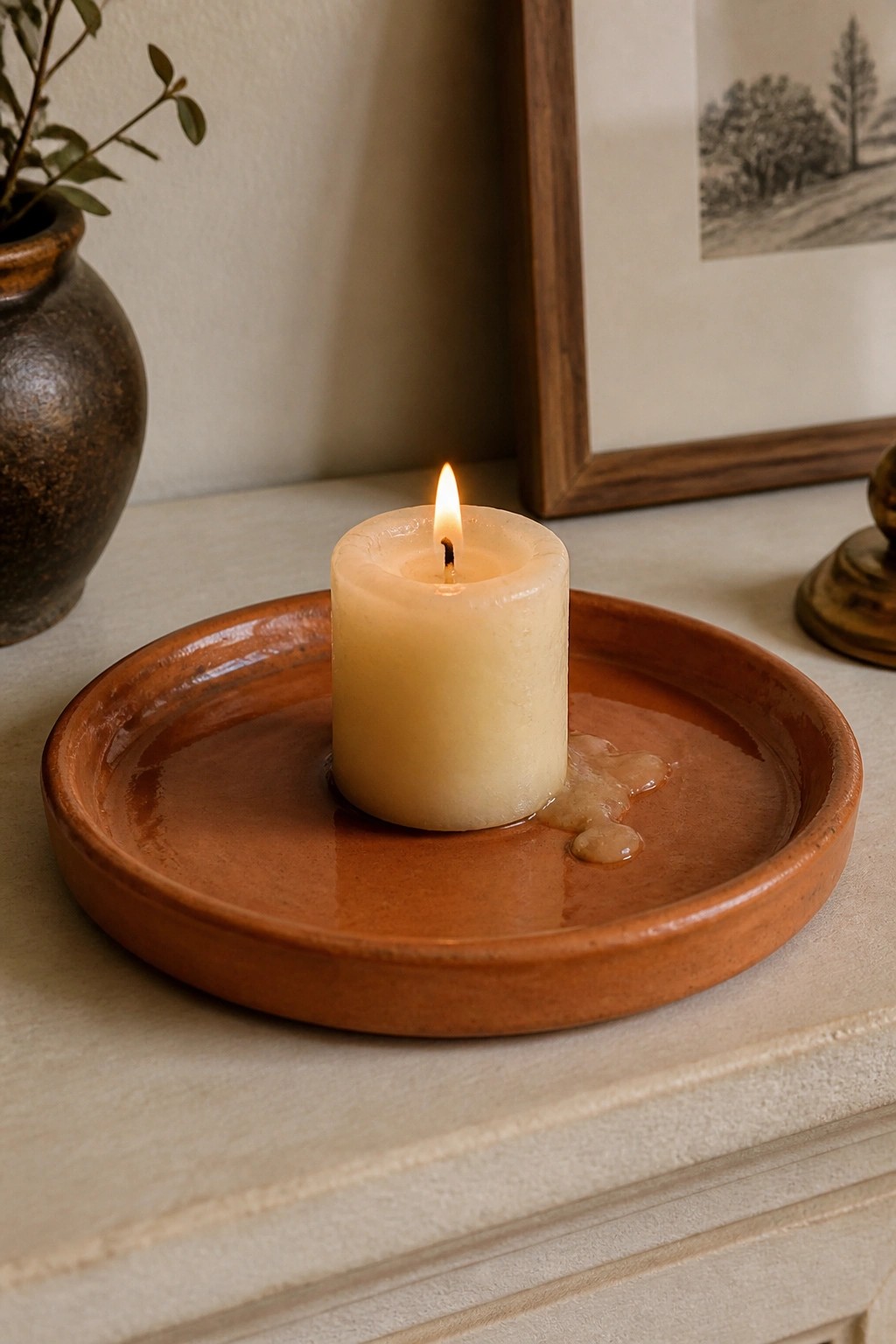
A round tray formed from one flat slab of clay creates a simple holder for a pillar candle. The low rim keeps melted wax contained on the surface while the wide base keeps the candle stable. An unglazed or lightly glazed clay body in a warm tone lets the flame stand out without extra decoration.
What makes this idea useful is that the same slab cut can be made larger or smaller to fit different candle sizes or used as a catch-all for keys and jewelry. The shallow shape takes little shelf space yet still looks finished on its own. You could change the rim height slightly or switch the glaze to make versions for the kitchen or bathroom instead.
Square Slab Tray for Rings
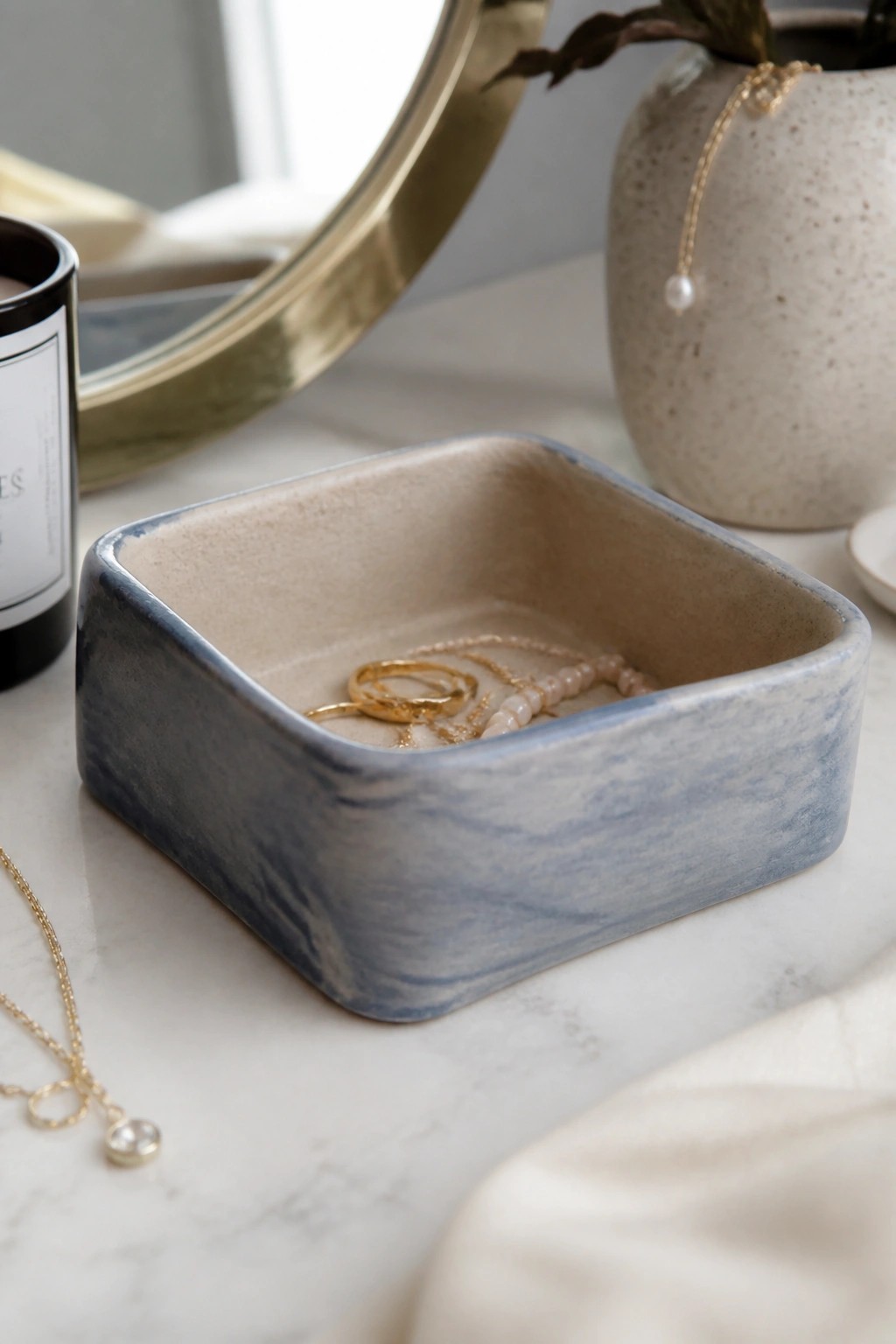
A shallow square tray cut from one slab of clay makes a practical ring dish or small jewelry holder. The low walls contain items without taking up much space, and the flat base holds multiple rings or short necklaces at once. A simple marbled blue and white glaze on the outside keeps the surface interesting while the lighter interior helps the jewelry stand out.
What makes this idea useful is how quickly it fits into a bathroom or dresser setup. You can swap the glaze colors to match tiles or bedding, or skip the marbling for a single solid tone that fires faster. The same square slab shape works for a larger catch-all tray or a smaller version just for stud earrings.
Oval Sponge Holder with Drainage Holes
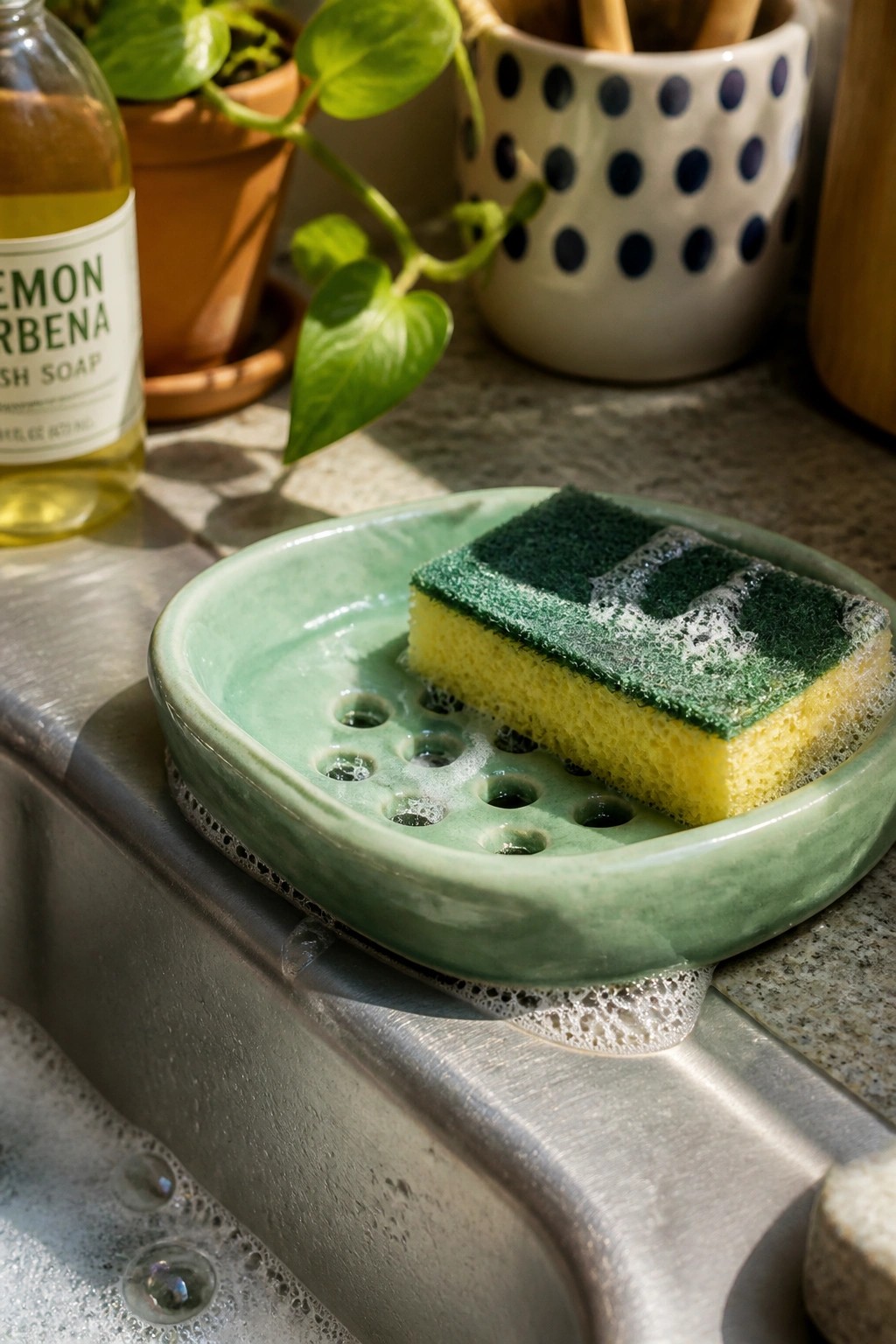
A simple oval slab forms a shallow dish that works as a sponge holder or soap dish. Multiple holes punched through the base let water drain so the sponge dries faster between uses. The soft green glaze covers the entire surface and gives the piece a finished look that blends into kitchen or bathroom settings.
What makes this idea useful is the way the oval shape and hole layout solve a common sink problem without needing extra parts. You can adapt the same slab by making it narrower for a bathroom counter or wider for dish sponges. Skipping the holes turns the basic form into a small tray or catchall, while keeping the size compact makes it easy to fit on a windowsill or beside the faucet. This kind of piece stands out on Pinterest because it shows a clear, practical use for a one-piece slab.
Frequently Asked Questions
What tools are essential for beginners starting with one-piece slab pottery projects?
You will need a rolling pin or slab roller for even thickness, a basic set of clay tools like a needle tool and scoring tool, a work surface such as canvas or plastic, and access to a kiln for firing. Start with simple items like a ruler and sponge to smooth edges. These allow you to create the 22 ideas without investing in advanced equipment right away.
How thick should my clay slabs be for the easy one-piece projects described?
Aim for slabs between one quarter inch and three eighths inch thick to balance strength and flexibility during forming. Thinner slabs work well for flat items like coasters while slightly thicker ones suit boxes or trays. Roll the clay evenly and let it firm up a bit before cutting shapes to prevent tearing.
How can I prevent my one-piece slabs from cracking when joining edges or drying?
Score and slip the edges thoroughly before pressing them together gently. Cover the formed piece with plastic for slow even drying over several days and avoid direct heat or drafts. This method keeps the projects intact through the 22 beginner ideas and reduces the risk of separation at seams.
What are some simple decoration techniques suitable for these slab pottery ideas?
Try pressing textures with household items like lace or leaves into the wet clay surface before forming. You can also add slip in contrasting colors or carve light patterns with a wooden tool after the slab firms up. These approaches enhance the visual appeal without requiring complex glazing skills at first.
How do I choose the best clay type for one-piece slab projects as a beginner?
Select a low fire earthenware or stoneware clay that is labeled as beginner friendly and has good plasticity for easy rolling and shaping. Test a small batch first to see how it holds form during drying. This choice supports successful results across the listed ideas and fires reliably in standard kilns.

Pottery Path is my cozy corner of the internet where I share clay ideas, pottery inspiration, and simple projects you can recreate at home. I love exploring everything from air dry clay to handbuilt pottery to cute minis that brighten your day. My goal is to make clay crafting feel easy, fun, and welcoming for anyone who wants to try it.
You will find beginner friendly tutorials, creative pottery painting ideas, and lots of warm inspiration for slow and happy crafting. If you enjoy hands on creativity, this space will feel like home.