I’ve been working with slab pottery for a while now since it lets me make small pieces without a big setup or much experience.
These projects have turned into some of my go to ideas when I need a simple gift for friends or family.
I focused on things that stay practical and don’t require fancy techniques or hours of work.
Most use just basic clay and tools I already have around.
It has been useful to have a handful of these ready instead of always buying something last minute.
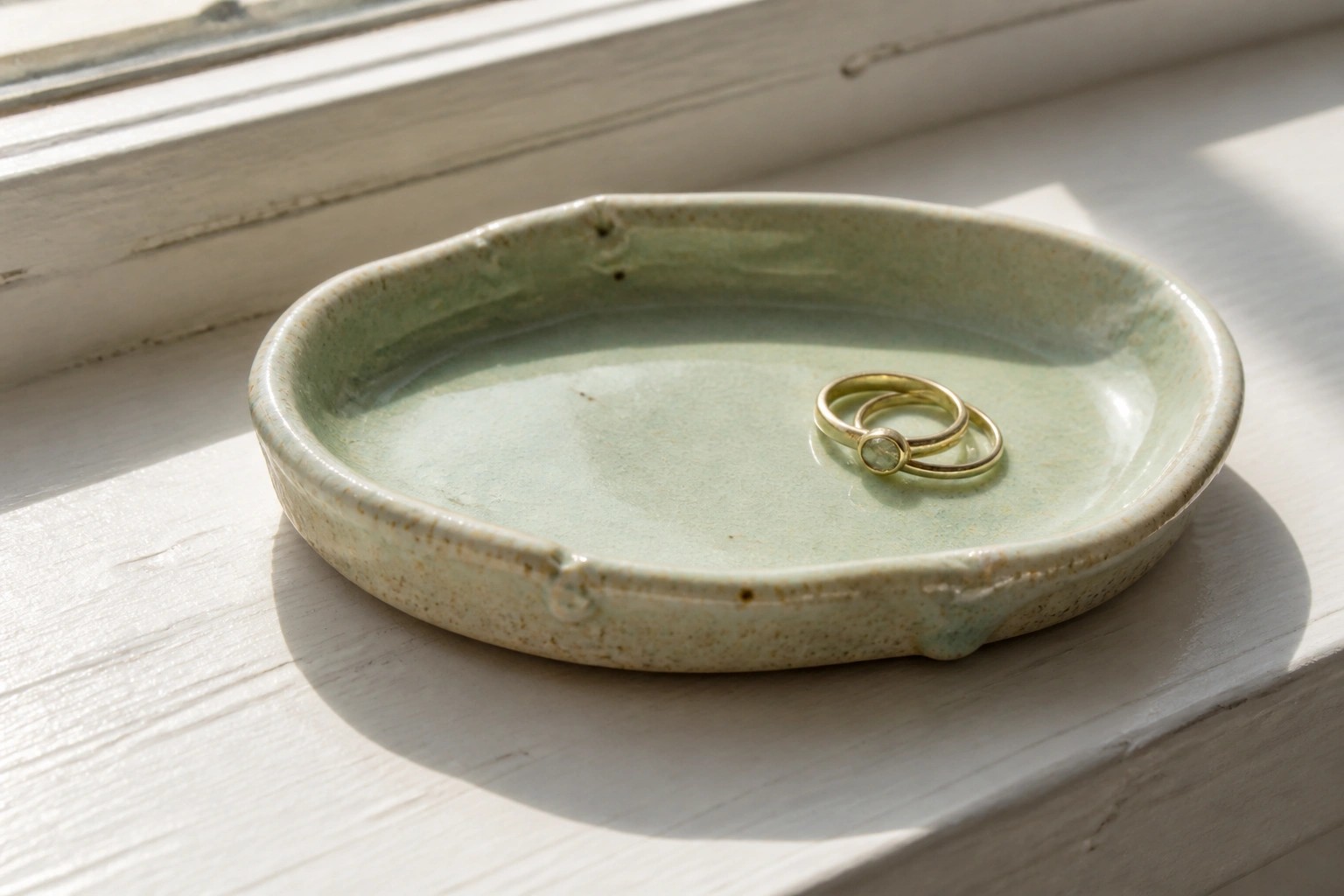
Speckled Ceramic Ring Dish

A shallow, low-sided ceramic dish makes an effective ring holder because the wide base keeps multiple rings in one place without stacking. The speckled light green glaze adds subtle color variation across the surface while the simple round shape keeps the focus on the jewelry inside. This project fits the ring dish category and works at a small scale that takes up little space on a surface.
What makes this idea useful is how quickly it can be formed from a single slab and trimmed to a consistent low profile. You could change the glaze to a matte white or deeper blue for different rooms or add a small foot ring underneath for a slightly raised look. For a gift, something like this pairs easily with a ring or works as standalone storage for earrings and small items on a dresser. The small scale makes this easy to adapt into a matching set of two or three dishes in different glaze colors.
Striped Mini Cup
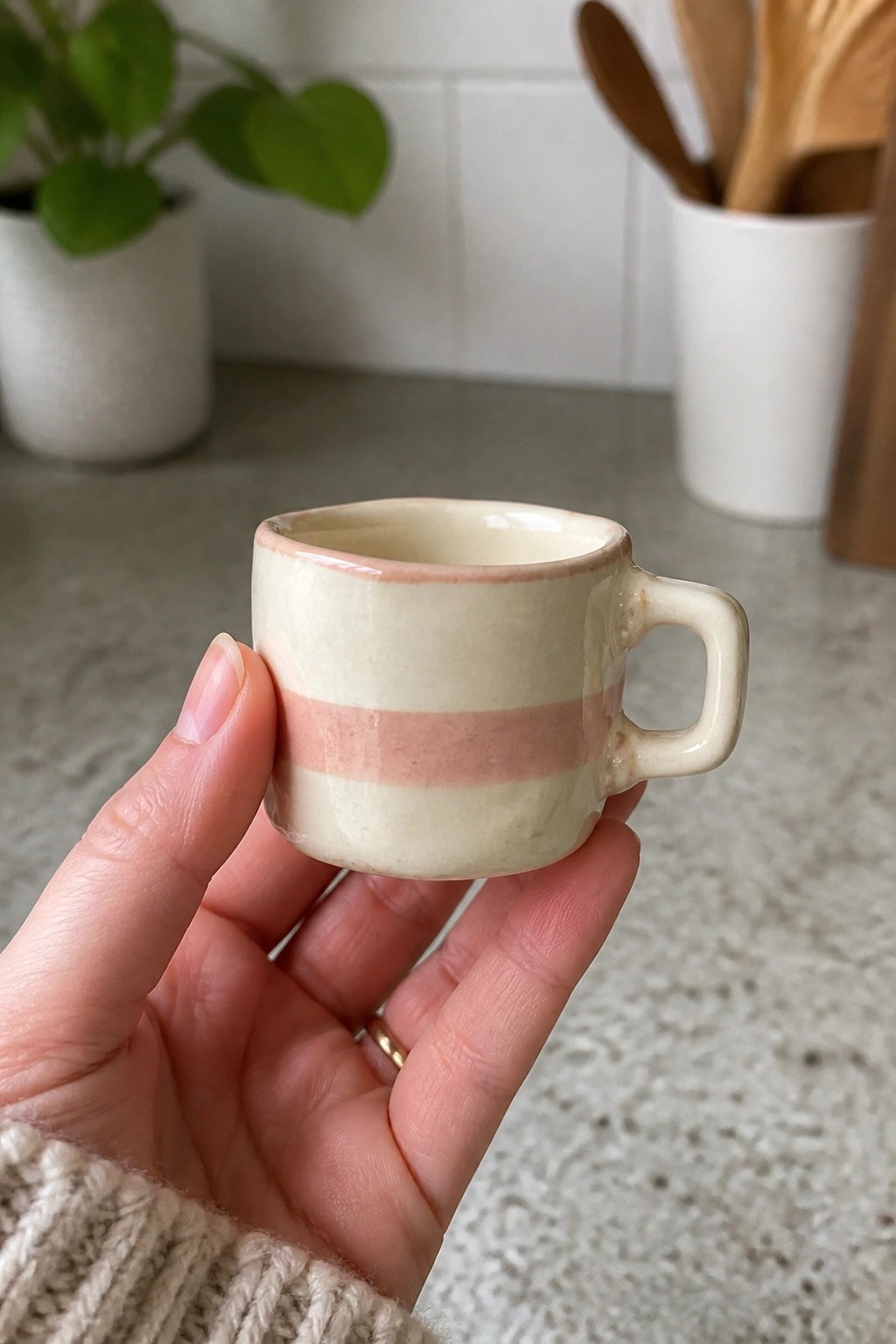
A small ceramic cup with a single handle works as a compact espresso cup or mini mug. The soft pink horizontal stripe across the cream surface creates a simple banded pattern that reads clearly even on a tiny form. This design fits the mug category and keeps the overall shape straightforward for beginners to form by hand or with basic slabs.
What makes this idea useful is its small scale, which lets you test glaze combinations without using much clay. You could adapt the stripe by changing the color, adding a second band, or leaving the rest plain for a different look. For a gift, something like this works well alongside tea bags or small snacks and fits easily into a kitchen cabinet. The same basic shape could be reworked into a tiny creamer or a holder for cotton swabs.
Leaf Pressed Slab Tray for Jewelry

A slab-rolled rectangular tray becomes a practical ring dish when you press fresh leaves into the surface to leave clear impressions before firing. The piece uses a warm terracotta glaze that settles into the recessed leaf shapes and leaves lighter raised areas for contrast. This approach keeps the project limited to basic slab work and one texture step while producing a finished object sized for daily use.
The rectangular form fits easily on a bedside table or bathroom counter without taking much space. You can change the leaf type or repeat the same press pattern across several trays for matching gifts. Scaling the slab smaller turns the same idea into a compact necklace holder or desk catch-all.
Divided Two-Bowl Dish for Seasonings

A divided ceramic dish made by joining two small bowls creates a compact kitchen item for holding separate spices, salts, or condiments. One side carries a light green glaze while the other uses a speckled neutral finish, so the contrast comes from the glaze choices rather than added details. The connected shape keeps the piece stable on a counter and easy to move as a single unit.
The shape does a lot of the work here by separating two ingredients without extra pieces. This kind of project works especially well as a quick handmade gift for someone who cooks often. You could adapt the same joined form for a salt and pepper set by pairing it with small spoons, or simplify the glazes to one color if you want to practice basic bowl construction first. In a kitchen, the small scale lets it sit beside the stove without taking much space.
Slab-Built Square Succulent Planter

A small square planter built from clay slabs gives a clean, compact shape that suits succulents or other small plants. The sides meet at soft vertical seams that add light texture without extra tools, and a single blue glaze covers the surface with natural variation from the firing. This approach keeps the form simple while the size works for tight spaces like windowsills or shelves.
What makes this idea useful is how little clay and workspace it needs, so you can batch out several in an afternoon. The square profile stacks or lines up neatly if you want to make matching sets, and you could swap the glaze for a matte finish or add a small drainage hole variation. For gifts, the same base shape can be scaled down further into a ring dish or adapted into a shallow tray by lowering the walls.
Slab Built Spoon Rest
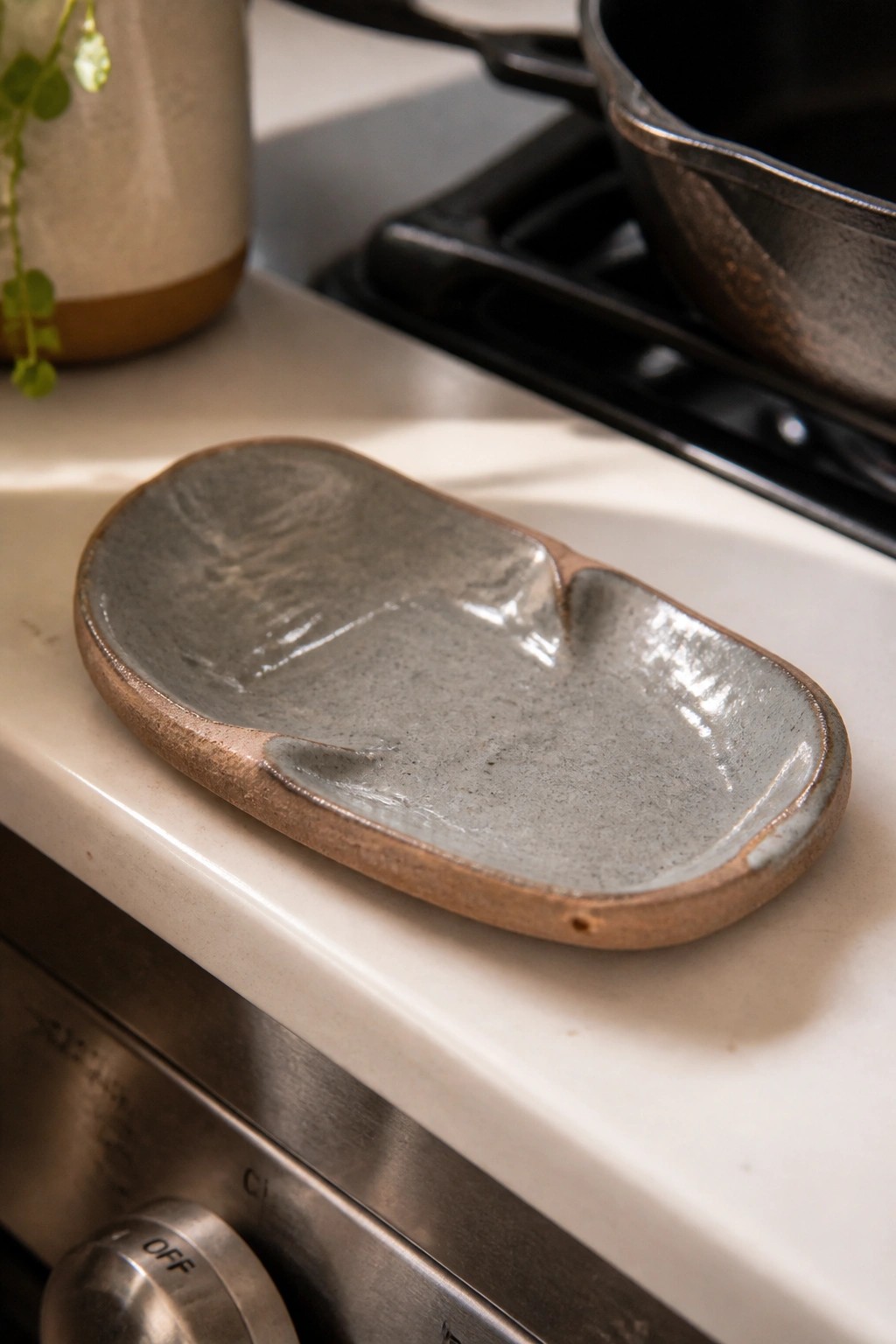
A narrow oval slab dish makes an effective spoon rest for the stove or counter. Cut a simple elongated shape from a rolled slab, then gently fold or pinch one side to create a shallow well that catches drips. The two-tone finish, with a matte brown edge against the speckled gray glazed center, keeps the piece clean while showing the clay surface.
What makes this idea useful is how easily the same slab shape adapts to other small gifts. Shorten the oval and you have a ring dish or soap holder. Lengthen it slightly and it works as a mini tray for keys or loose change. The straightforward construction lets beginners focus on clean edges and glaze contrast without needing complex attachments or molds.
Polka Dot Slab Candle Holder
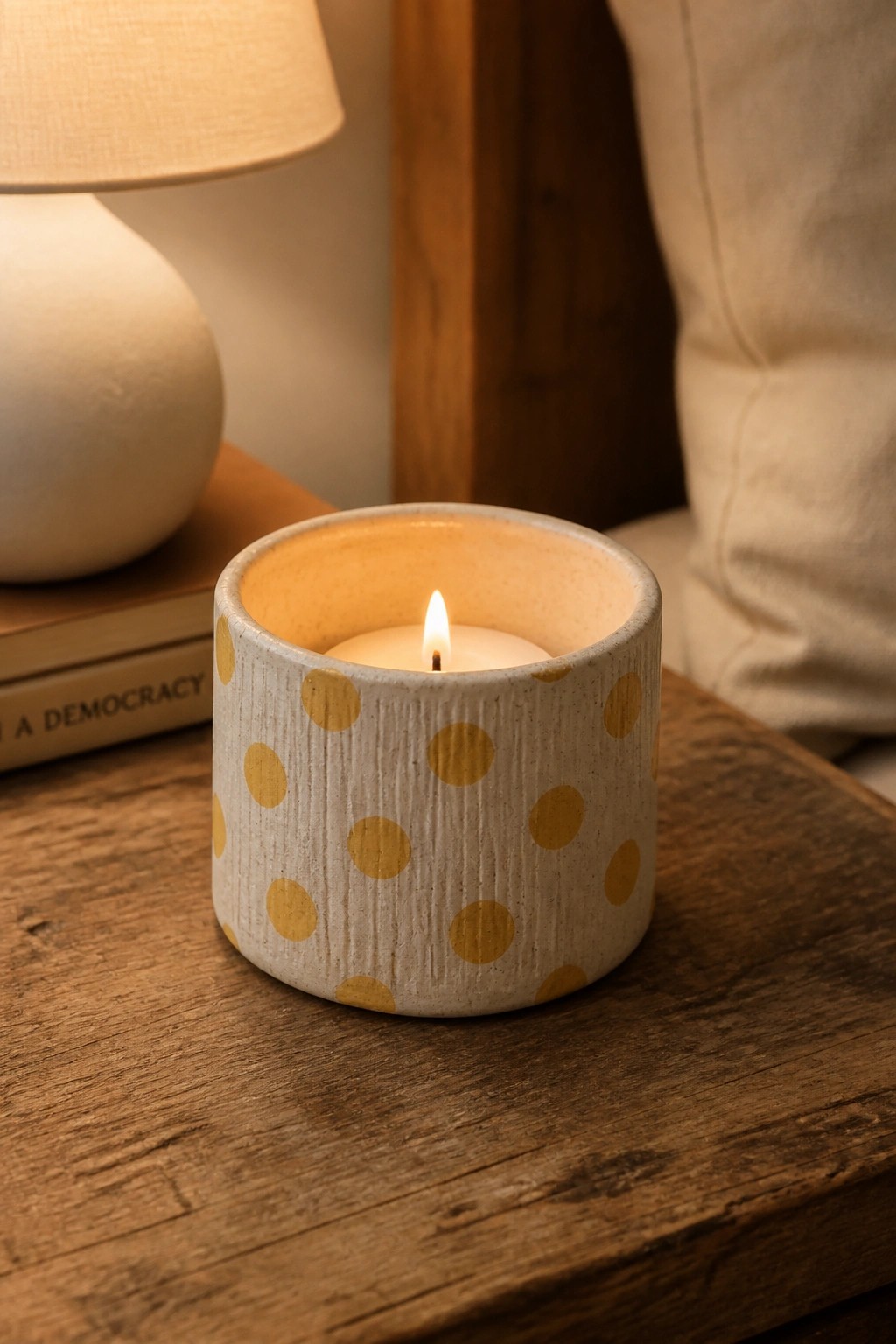
A simple slab cylinder forms this candle holder by rolling out a flat sheet of clay, scoring the edges, and joining them into a short tube with a flat base attached. Yellow dots painted over the light clay body stand out against the vertical texture lines that run down the sides. The compact size keeps the focus on the painted pattern while making the piece easy to finish in one or two sessions. This approach works as a straightforward decor object that needs only basic slab construction and underglaze or paint.
The small scale makes this easy to adapt by swapping the dot color or adding stripes instead. You could use the same slab template to build a matching ring dish or tiny tray by leaving the top open and flattening the rim. For a gift, something like this fits on a nightstand or desk without taking much space. The painted dots help the holder stand out on a shelf while still looking clean and simple.
Ridged Slab Soap Dish for Daily Use

A slab-built soap dish makes a practical bathroom item by using a flat rectangular base topped with evenly spaced raised ridges. The ridges lift the soap slightly so water drains away instead of pooling underneath. A simple glaze in a single color keeps the focus on the form while giving the piece a clean finished surface. This project stays compact enough to sit on any sink edge or shower shelf.
What makes this idea useful is how the ridges solve the common problem of soggy soap without adding extra parts. You could adapt the same slab layout to create a smaller ring dish or a longer version for holding toothbrushes. The shape works especially well as a gift because it pairs directly with a bar of soap and takes up little space to store or ship. In a bathroom this kind of tray keeps counters drier and can be sized to match standard soap bars.
Impressed Floral Slab Tile for Hanging
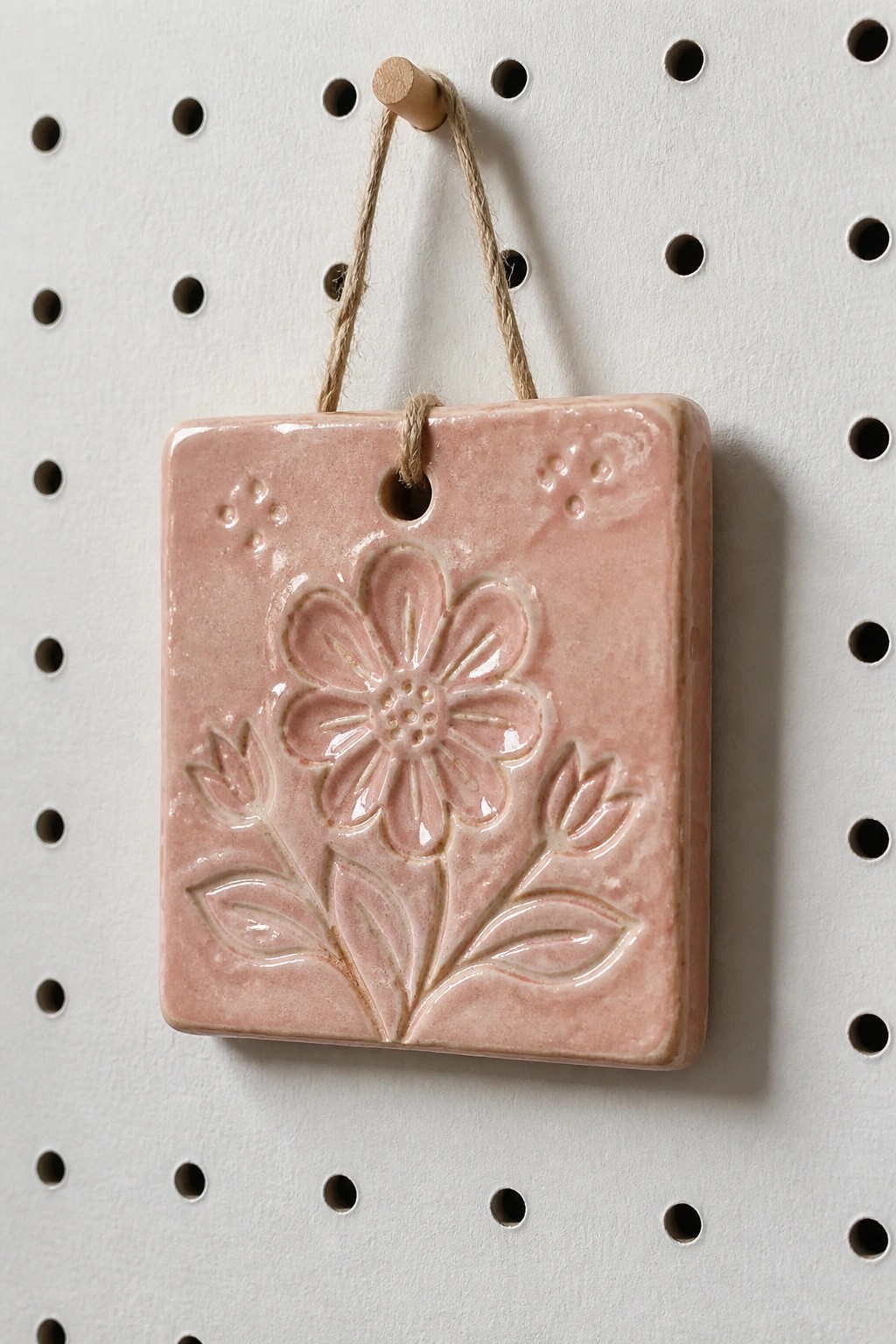
A flat rectangular clay slab makes a simple wall tile when a flower and leaf design is pressed or carved into the surface. The soft pink glaze covers the piece evenly and catches light on the raised details while a small hole near the top lets it hang from a cord. This creates a lightweight decor object that works as a beginner slab project without needing complex construction.
What makes this idea useful is how the same slab size and relief technique can be repeated to make matching sets for gifts. The shape lends itself to other small items like a desk plaque or a single tile trivet. Changing the glaze color or swapping the flower stamp for a different motif lets you adapt it quickly for different recipients. For Pinterest appeal, the clean lines and single-color finish photograph well against neutral backgrounds.
Lemon Slice Painted Bowl

A small ceramic bowl with a hand-painted lemon slice inside makes a straightforward kitchen item. The yellow segments and white dividing lines create a simple citrus pattern that uses the bowl’s curved surface effectively. This approach keeps the form basic while adding visual interest through color and motif alone.
What makes this idea useful is how the painted detail works on a compact scale suitable for dips, sauces, or small snacks. You could repeat the same lemon motif across a set of bowls or change the fruit to lime or orange for variety. For a gift, something like this stays practical and easy to pack while still feeling personal. The small size also means it adapts quickly to other shapes like a ring dish or spoon rest.
Slab Built Toothbrush Holder
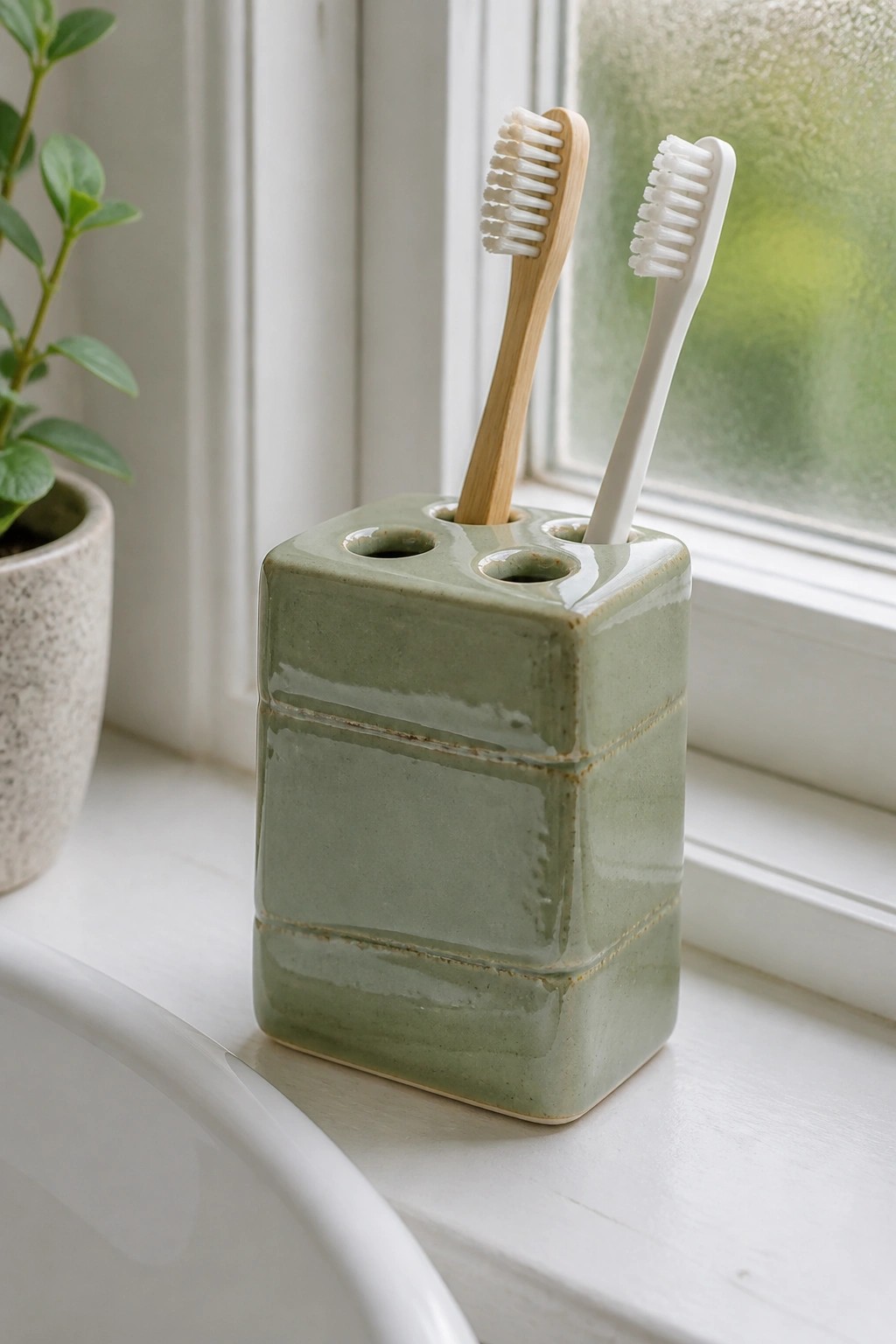
A square ceramic toothbrush holder formed from joined slabs makes a compact bathroom item. The box shape has several holes cut into the top surface so brushes stand upright without tipping. A light green glaze covers the piece and gives it a subtle sheen that pairs with basic sink setups.
What makes this idea useful is how the flat slab construction lets you change the footprint or hole count quickly for one person or a shared bathroom. You could scale it down for a single brush or widen it into a small tray style that also holds a razor. The same block form adapts to a desk pencil cup if you skip the glaze and use a different clay color.
Slab Built Cat Figurine

A small sitting cat built from clay slabs creates a compact decor object with a tapered body and flat base. The head uses pinched ears and minimal surface modeling, then gets finished with black painted eyes, nose, and whiskers plus two small pink cheek marks. A single soft off-white glaze covers the whole form and leaves the surface smooth and easy to wipe clean.
What makes this idea useful is the small overall scale that lets it sit on a desk, shelf, or windowsill without crowding other items. You can adapt the same body shape into a tiny planter by leaving the top more open or change the face painting to different animals for quick variety in a set of gifts. The painted details stay simple enough to finish in one session after the first firing, and the form works as a quick project when you want something recognizable without complex joins.
Speckled Ceramic Ring Cone
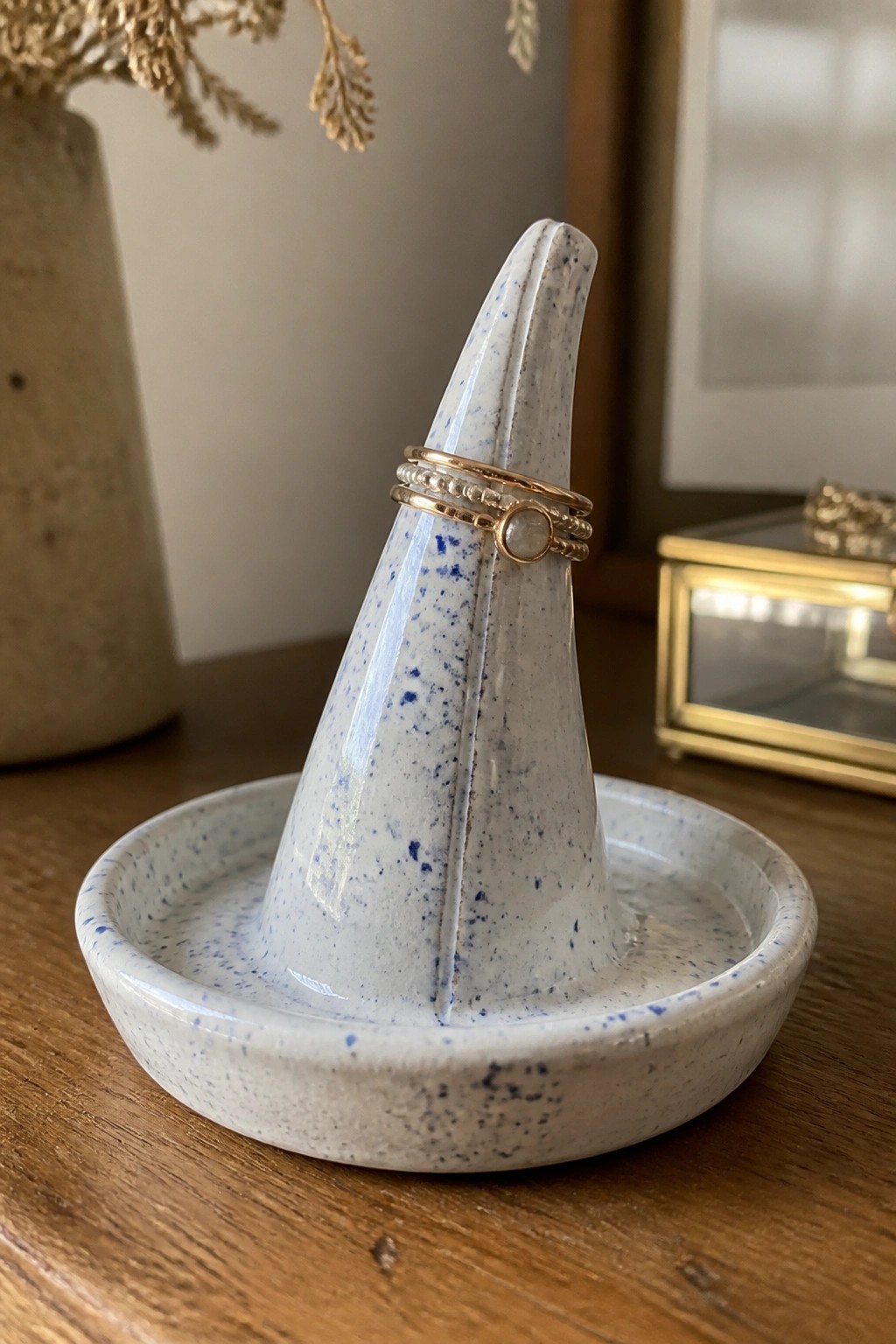
A cone-shaped ceramic ring holder with an attached shallow dish base gives rings a stable place to rest upright. The form tapers from a wide tray up to a narrow top, allowing multiple rings to stack without sliding off. A white glaze dotted with blue speckles covers the entire surface and keeps the piece simple while hiding minor surface marks from handbuilding. This fits the small accessory category of ring dishes or vanity holders meant for everyday use.
What makes this idea useful is how the cone shape organizes rings by size while the base tray catches dust or lost earrings. You can adapt the same form by shortening the cone or widening the dish to hold bracelets instead. For a gift, something like this works especially well on a dresser or bathroom counter because it stays compact. The speckled glaze could be swapped for other colors by changing the underglaze dots before the final firing.
Slab Incense Holder with Stamped Motif

A slab incense holder starts with a flat rectangle of clay rolled to an even thickness and cut to a narrow, elongated shape. A shallow channel is pressed or cut along the center to catch ash, and a small notch or hole at one end secures the stick. The dark clay surface is left matte so a simple stamped sun or moon design stands out near the notch without competing with other details. This approach keeps the project in the holder category and produces a compact tabletop item that fits on shelves or nightstands.
The shape does a lot of the work here because the length can be shortened or extended depending on the incense size you want to support. A stamped motif like the one shown is quick to swap for other simple stamps such as stars or lines if you want to make a matching set. This kind of piece works especially well as a small gift because it needs little space and can sit beside a plant or on a desk without extra hardware. The same slab method could be adapted into a shorter version for holding earrings or a wider one for a few sticks at once.
Ceramic Salt Cellar with Matching Spoon
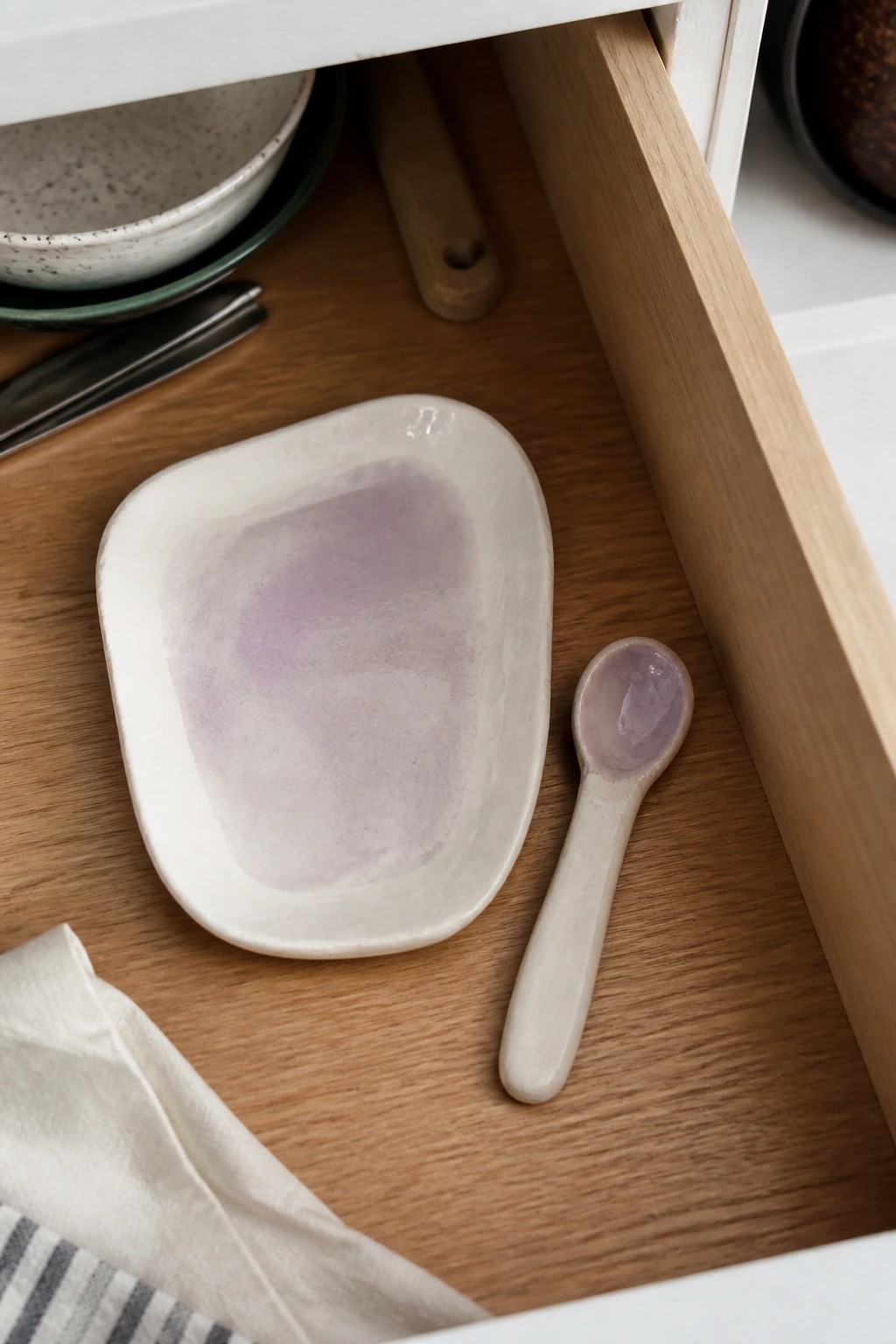
A small hand-formed ceramic dish with soft rounded edges pairs with a short spoon to create a compact salt cellar or spice holder. The white clay body carries a light purple glaze that pools unevenly across the center, giving the surface a simple watercolor effect while keeping the outer edges matte. This combination keeps the piece practical for scooping small amounts at the table or counter without taking up much space.
The small scale makes this easy to adapt into a sugar dish or loose tea holder by changing the depth slightly. You could swap the purple for a different accent color or skip the spoon entirely to make just the dish if you want fewer steps. In a kitchen this kind of set works well because the two pieces stay together and look intentional even when left out.
Star-Stamped Heart Ornament

A small heart-shaped clay piece makes a simple hanging ornament when stamped with stars before firing. The coral glaze sits over the raised star details and gives the surface a slight sheen while the hole at the top allows easy hanging with twine or wire. This approach keeps the project in the decor object category and works for gifts or seasonal accents without needing complex forms.
What makes this idea useful is how the stamped pattern adds interest with almost no extra skill. You can swap the stars for other small cutters or stamps to match different seasons or recipients. A piece like this works especially well as a gift topper, wreath addition, or small wall accent. The same heart shape could be made larger for a trivet or smaller for multiple ornaments on one string.
Narrow Bud Vase for Single Flower Stems

A narrow bud vase made from a simple slab gives you a clean way to display one stem at a time. Form a tapered cylinder about six inches tall, join the edges cleanly, and round the rim so the opening stays small enough to support a single flower without extra hardware. The soft mint glaze keeps the focus on the stem while the slight curve in the body prevents the piece from looking too stiff on a shelf.
What makes this idea useful is how little clay and space it requires. You can shorten the same shape to hold a makeup brush or a couple of paintbrushes on a desk. For gifts, the narrow profile means it works with whatever flower is in season and still looks finished. The same slab method can be widened slightly at the base to create a matching ring dish or small soap holder without starting a new design.
Square Slab Coasters with Simple Painted Motifs

Square coasters formed from flat clay slabs offer a straightforward way to create matching sets without needing a wheel. Each coaster sits on a light speckled clay body topped with a clear glaze, and the surfaces carry basic blue painted marks like dots, waves, or stars. The designs stay small and spaced so the neutral background remains the main surface. This category works as a kitchen or table item that also serves as a compact gift.
The small scale makes this easy to adapt by rolling out one larger slab and cutting several pieces at once. You can change the painted marks to match a recipient’s kitchen colors or add a single initial on each piece. A set like this works especially well stacked and tied for gifting, since the flat shape stacks neatly and needs little wrapping. The same slab method can shift into tiny trays or soap rests if you widen the edges slightly on the next batch.
Contrasting Rim Catch-All Dishes

These small, shallow dishes are formed from clay and finished with a single interior glaze color plus a thin contrasting band along the rim. The open, low shape makes them practical as ring dishes, jewelry holders, or tiny trays for loose change or tea bags. The clean color blocking keeps the design simple while the visible making marks give each piece a handmade quality that works well for quick gifts.
What makes this idea useful is the low material use and fast production time for making sets. You can easily adapt the same shape into soap dishes or desk organizers by switching the rim color to match a room’s palette. For gifts, try pairing two dishes in complementary tones or scaling them slightly larger for a small trinket tray. The straightforward glazing approach also photographs cleanly for sharing project ideas online.
Frequently Asked Questions
What tools are essential for creating slab pottery as a beginner?
You will need a rolling pin or basic slab roller, a flat work surface covered with canvas or plastic to prevent sticking, a sharp knife or clay cutter for shaping, a sponge for smoothing edges, and a small bag of beginner friendly clay such as earthenware. These items allow you to start making the small gift projects right away without investing in expensive equipment.
How can I prevent my slab pieces from warping or cracking while they dry?
Roll your clay to a consistent thickness of about a quarter inch and let the slabs rest on a flat surface. Cover the finished pieces loosely with plastic wrap for the first day or two to slow the drying process, then gradually uncover them over several days. Keep them away from direct heat, sunlight, or drafts, and turn them occasionally to ensure even drying on all sides.
What type of clay works best if I want to make these small gifts without access to a kiln?
Air dry clay is an excellent option for beginners who lack kiln access, as it hardens at room temperature and can be painted afterward with acrylics or sealers. For more durable results, look for low fire clays that can be fired at a local studio or community center. Always test a small sample first to see how it behaves during drying and finishing.
How do I add personal touches to make these handmade pottery gifts more unique?
Press textures into the wet slabs using household items like lace fabric, leaves, or rubber stamps before cutting out shapes. Once the pieces are leather hard, you can carve simple patterns or add small clay accents like handles or feet. After bisque firing, apply underglazes or slips in colors that match the recipient’s style, and finish with a clear glaze for shine and protection.
What are some common beginner mistakes to avoid when making these slab gift ideas?
Avoid rolling clay too thin, which leads to fragile pieces, and do not join slabs without scoring and slipping the edges first, as this causes separation during drying. Work in small batches to prevent clay from drying out too quickly, and always smooth seams thoroughly. Practice on scrap clay before committing to a final gift project to build confidence with the techniques.

Pottery Path is my cozy corner of the internet where I share clay ideas, pottery inspiration, and simple projects you can recreate at home. I love exploring everything from air dry clay to handbuilt pottery to cute minis that brighten your day. My goal is to make clay crafting feel easy, fun, and welcoming for anyone who wants to try it.
You will find beginner friendly tutorials, creative pottery painting ideas, and lots of warm inspiration for slow and happy crafting. If you enjoy hands on creativity, this space will feel like home.