
I often end up with bits of clay left after finishing a larger piece.
Instead of letting them dry out I try to shape them into something small and practical.
Over time I have found a few ways to turn those scraps into holders or little dishes that actually get used around the house.
It feels good to make the most of what I have without needing to start from scratch each time.
These ideas work well if you are like me and hate wasting materials.
Tiny Speckled Mug from Scrap Clay

A small ceramic mug makes an efficient scrap clay project since the compact size uses up leftover material without requiring a full batch. The straightforward cylinder shape paired with a simple attached handle keeps construction quick, while the light green speckled glaze provides even coverage and a finished surface that hides minor imperfections. This piece falls into the kitchen item category and works as a functional espresso cup, sauce server, or small condiment holder.
What makes this idea useful is how the small scale turns leftover clay into a practical daily object that fits on a kitchen counter or windowsill. You could adapt it by making several in matching glazes for a set or removing the handle to create a basic pinch pot version for spices or salt. For a gift, something like this pairs easily with loose tea or small jars without needing extra packaging space.
Flower Shaped Ring Dish

A small flower shaped ring dish makes a simple way to use up leftover clay. Roll or press scraps into a flat base, then shape the edges into five or six rounded petals before adding a shallow center. The streaky pink, orange, and yellow glaze creates contrast across the petals without needing extra decoration, keeping the whole piece compact and easy to fire.
What makes this idea useful is how the finished dish holds rings or small earrings on a nightstand or desk without taking much space. The petal outline gives it a clear identity that works in different color combinations, so you can match it to existing decor or try a single solid glaze for faster results. The same basic form can be scaled down into a tiny soap rest or adapted with a deeper well for a tea bag holder.
Scrap Clay Rabbit Planter

A small clay planter formed as a rabbit head uses two upright ears and a rounded body to hold a single succulent. The face is added with simple dots and lines in dark slip or underglaze, keeping the piece functional as a pot while using up leftover clay. The matte surface and light base color come from leaving the lower portion unglazed after the final firing.
The small scale lets it sit on a narrow windowsill or shelf without crowding other items. You can swap the rabbit ears for cat or bear shapes and keep the same face technique for quick variations. This shape works well as a gift because it needs only a small amount of clay and finishes fast once the basic form is made.
Patchwork Scrap Clay Spoon Rest

A narrow oval tray formed from leftover clay scraps makes a practical spoon rest for kitchen counters. Irregular patches of colored glaze in pink, green, blue, yellow, and white are applied across the surface to create a simple mosaic pattern without needing precise cuts. The elongated shape holds a standard spoon steady and keeps the handle from touching the counter.
What makes this idea useful is how quickly it turns random clay bits into something functional. You can roll scraps into a basic slab, cut an oval, and let the glaze colors do the rest of the visual work. This shape adapts easily to a shorter version for teaspoons or a wider one for spatulas. In a kitchen it stays out of the way while adding a bright spot among plain utensils.
Stacked Ring Tealight Holder

A stacked ring tealight holder uses leftover clay to create a compact candle piece. The form is built from two short cylinders joined with a shallow center well sized for a standard tea light. A single blue band around the middle break gives the piece a finished look while keeping the rest of the surface unglazed and speckled. This approach fits the holder category and works at a scale that stays useful on small surfaces.
What makes this idea useful is how the stacked construction turns scrap pieces into something stable without extra trimming. The same rings can be made slightly wider to hold a larger candle or shortened into a simple ring dish. A painted stripe like the blue one here gives quick contrast that still reads as intentional. For desk or bedside use the low profile keeps the flame contained while the neutral clay color fits most rooms without extra decoration.
Divided Salt Cellar with Matching Spoon

A divided salt cellar uses one small bowl split into two sections by a low wall so you can store two different salts or seasonings side by side without mixing them. The compact round shape and simple speckled glaze keep the piece easy to throw and trim, while the unglazed lower band gives it a stable, earthy base that contrasts with the lighter top. This kitchen item works well when you want one dish that holds both everyday table salt and something coarser or flavored.
What makes this idea useful is that the divided form solves a common countertop problem without taking up extra space. You can rework the same layout for sugar and cocoa, or for two different cooking salts if you bake often. The tiny matching spoon adds function and keeps the set together, and the whole piece stays small enough to fit in a drawer or on a narrow shelf. For a gift, make a second version with deeper sections and skip the spoon to turn it into a double dip dish instead.
Marbled Scrap Clay Bowl

A small shallow bowl shaped from mixed leftover clay bodies shows off a natural marbled pattern once fired. The surface blends streaks of blue, pink, and earthy tones across a light base, created simply by pressing different clay scraps together before forming the piece. This turns random studio leftovers into a compact bowl that can hold jewelry, loose change, or a few tea bags.
The small scale makes it easy to throw or hand-build quickly without needing much material. You can adapt the same marbling method with any clay colors you have left and adjust the depth slightly for use as a soap dish or spice pinch bowl in the kitchen. For Pinterest appeal, keep the shape simple and let the mixed clay do the visual work.
Scrap Clay Chopstick Rests with Pressed Details

These small ceramic rests are made from leftover clay rolled thin and cut into basic shapes like a circle, crescent, and leaf. A real leaf is pressed into the surface to add texture, then the pieces are glazed simply in off-white or pale green tones. The result is a set of low-profile holders sized for chopsticks or small utensils that take almost no clay to produce.
What makes this idea useful is how fast the forms can be cut and impressed in one session while using up slabs that would otherwise be discarded. The shapes fit neatly beside bowls or plates in everyday table settings and can be reworked by swapping the leaf for other flat items like ferns or fabric textures. In a kitchen drawer they stack without taking space, and the same method works for making matching spoon rests or tiny soap dishes if you adjust the size slightly.
Rectangular Relief Tile for Wall Hanging

A flat rectangular slab of clay makes an easy wall tile when you press flower and leaf shapes into the surface for relief. Two main blooms with smaller buds sit above leafy stems and berry clusters, all highlighted with soft peach and green glazes on a pale base. The hole at the top lets you hang the finished piece directly on a nail or hook. This keeps the project limited to leftover slab pieces and basic carving tools.
What makes this idea useful is how the flat shape uses up thin scraps that would otherwise be discarded. You can change the flower layout or simplify the stems to match whatever tools or stamps you already have on hand. A piece like this works especially well grouped with other small tiles on a narrow wall or shelf. The same slab could become a small soap rest or desk tray if you skip the hanging hole and add feet.
Hedgehog Figurine from Scrap Clay

A small hedgehog figurine makes a practical scrap clay project because it requires only a modest amount of leftover material to form a rounded body. Roll the clay into an oval, score lines across the back to suggest spines, and keep the face smoother so pinched ears and simple feet stand out. A basic two-tone approach, darker on the spines and lighter on the face, adds contrast without extra glazing steps. The result works as a compact decor object for shelves or desks.
The small scale makes this easy to adapt by switching the animal shape or changing how deeply the spine lines are carved. One or two pieces fit well on a windowsill or beside a stack of books without taking much space. For gifts, batch several together and vary the snout angle or foot position on each one. The same method can be reworked into other small animals if you want a quick series from the same batch of scraps.
Ribbed Toothpick Holder

A small cylindrical holder like this turns leftover clay into a practical kitchen item for holding toothpicks or other slim utensils. The vertical ridges add texture and a slight grip on the outside while the speckled blue-green glaze gives the surface variation without extra steps. Its compact size and simple open shape keep the focus on function rather than detail.
What makes this idea useful is how the ribbed form and neutral glaze let it blend into a countertop setup near the sink without competing with other pieces. You could rework the same shape in a taller version for cotton swabs or shorten it into a ring dish by skipping the ridges on one side. The small scale also means it uses up odd bits of clay quickly and still produces something that looks intentional on a kitchen counter.
Small Bud Vase From Leftover Clay

A small ceramic bud vase is an easy project for using up scrap clay. This version has a narrow neck that flares slightly at the rim and a rounded body that tapers to a stable base. The speckled glaze shows a gradual shift from light tan at the top to a warmer brown near the bottom, giving it a simple finished look without added decoration. It works as a basic holder for single stems or small cuttings.
What makes this idea useful is how little material it takes and how quickly the shape can be formed by hand or on a wheel. The small scale makes it practical for windowsills, desks, or narrow shelves where larger pieces would not fit. You could rework the same form into a slightly wider version for more than one stem or adjust the glaze to create a set in different colors. In a kitchen or bathroom, this kind of piece keeps a single flower or herb cutting in view without taking up much room.
Grooved Soap Dish from Scrap Clay

A small oval soap dish made from leftover clay creates a practical bathroom item with built-in drainage. Parallel ridges across the surface keep the soap elevated so water runs off instead of pooling underneath. The speckled neutral glaze adds subtle texture while keeping the overall form simple and compact. This shape works as a straightforward way to turn small clay scraps into something that sits neatly on a sink edge.
What makes this idea useful is how the ridges solve a real daily problem without needing extra parts or hardware. You can scale the same grooved pattern down for a smaller ring tray or widen it slightly for a sponge rest near the kitchen sink. The compact size means it uses very little clay and fits easily into a kiln load with other pieces. In a bathroom, this kind of dish pairs well with a simple handmade vase to create a matching set from the same scrap batch.
Scrap Clay Incense Cone Holder

A small, thick-walled clay holder shaped like a low bowl holds a single incense cone upright. The rough, uneven surface comes from pressing and pinching leftover clay rather than smoothing it out, and a shallow center dip keeps the cone stable while the surrounding clay catches ash. This approach turns small amounts of scrap into a simple functional piece that sits on a tray or shelf.
What makes this idea useful is how little material it needs and how quickly it can be formed by hand. You can adjust the depth of the center to fit different cone sizes or widen the rim slightly for more ash coverage. The same shape works as a match holder or tiny ring dish if you skip the burning step. In a bathroom or desk setup, the compact size keeps it from crowding other items while still serving a clear purpose.
Mini Lidded Jar for Tiny Storage
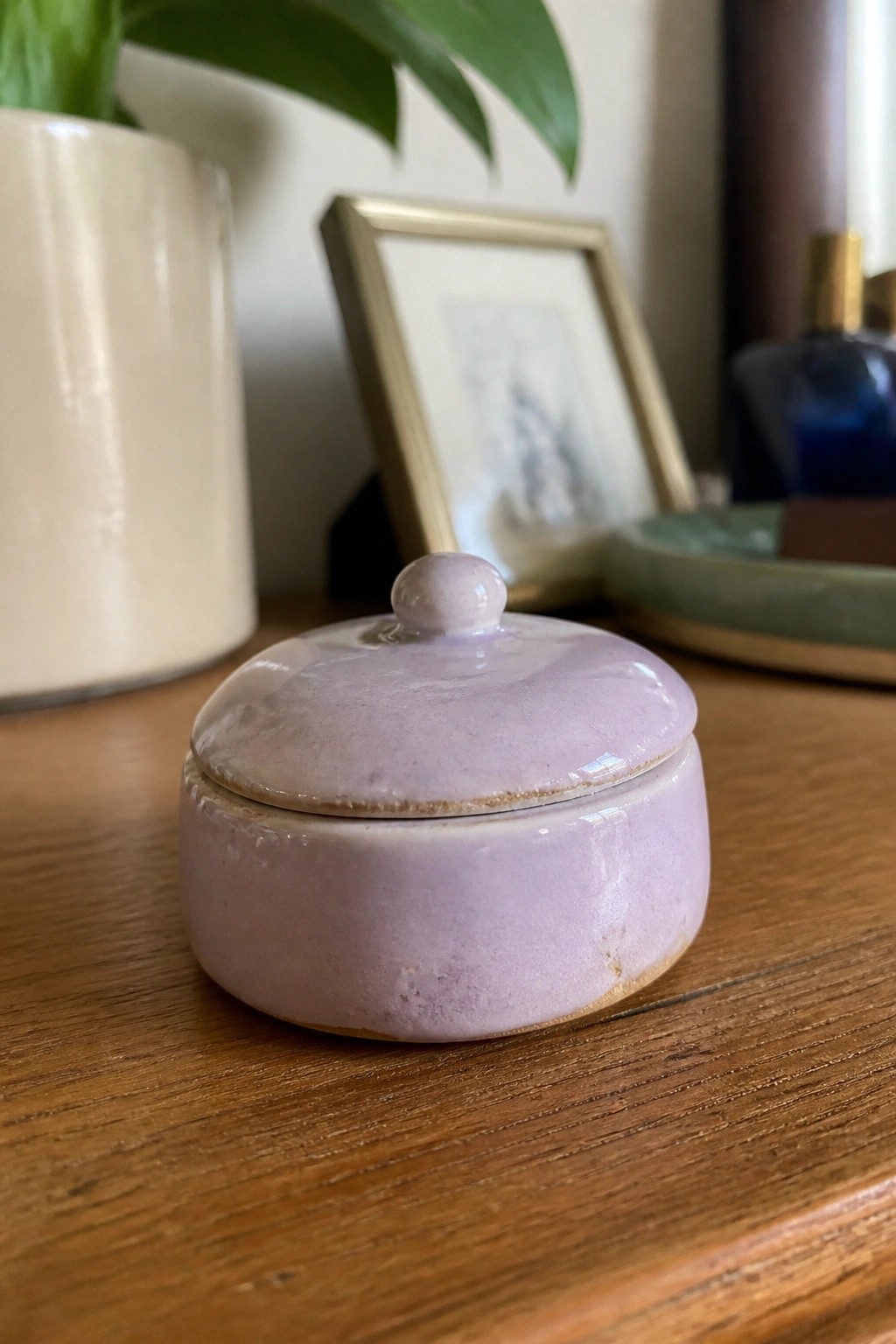
A small round lidded jar made from leftover clay gives you a compact container that works for rings, cotton balls, loose spices, or desk supplies. The rounded body and simple domed lid with a ball knob keep the form easy to throw or hand-build in one session. A single soft glaze color lets the shape stand out without extra decoration, and the small size means it uses up scraps without requiring a full kiln load.
What makes this idea useful is how quickly it turns into a finished piece that fits on a bathroom counter or bedside table. You can swap the glaze for a matte finish or skip the knob and make a flat lid if you want something even simpler. The same basic shape scales down into a ring dish or widens slightly into a small trinket box. Projects like this photograph cleanly for sharing, which helps when you need quick ideas that actually get used.
Rectangular Butter Tray From Scrap Clay
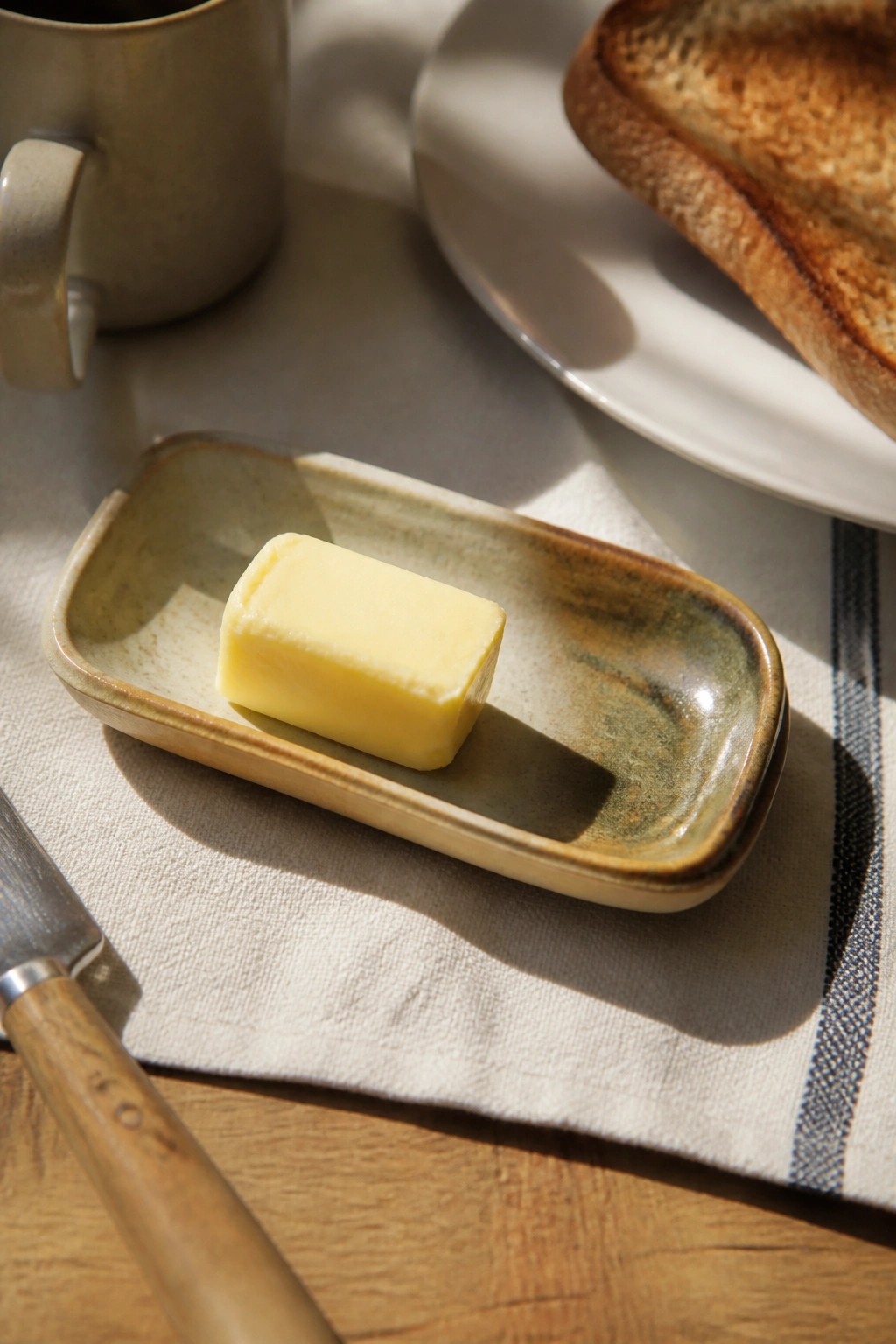
A small rectangular ceramic tray works as a simple butter dish for the table. Low sides contain the stick while the mottled glaze in earthy tones gives the surface visual interest without extra decoration. This project falls into the kitchen item category and uses up leftover clay efficiently.
What makes this idea useful is how quickly the shape can be cut from a slab and formed with basic tools. The proportions work well for holding one standard stick of butter at room temperature during meals. You could shorten the length for single servings or add a shallow groove along one edge to rest a knife. The same tray shape also adapts easily into a small cheese or cracker server by changing the glaze color.
Divided Soap Dish From Scrap Clay

A small rectangular ceramic tray split into two distinct sections makes an effective soap dish or utility rest. One half forms a shallow glazed well in soft green, while the other half stays unglazed with evenly spaced horizontal ridges that create texture and help water drain away. The compact size and simple division keep the piece practical without needing extra parts or complex construction.
What makes this idea useful is how cleanly it turns leftover clay into something that belongs in a bathroom or kitchen sink area. You can change the ridge spacing or swap the glaze color to match existing tiles, and the same two-section layout works just as well as a small sponge rest or garlic prep plate. Because the form stays flat and the details stay minimal, it fires quickly and stacks easily for storage or gifting.
Leaf-Shaped Ring Dish
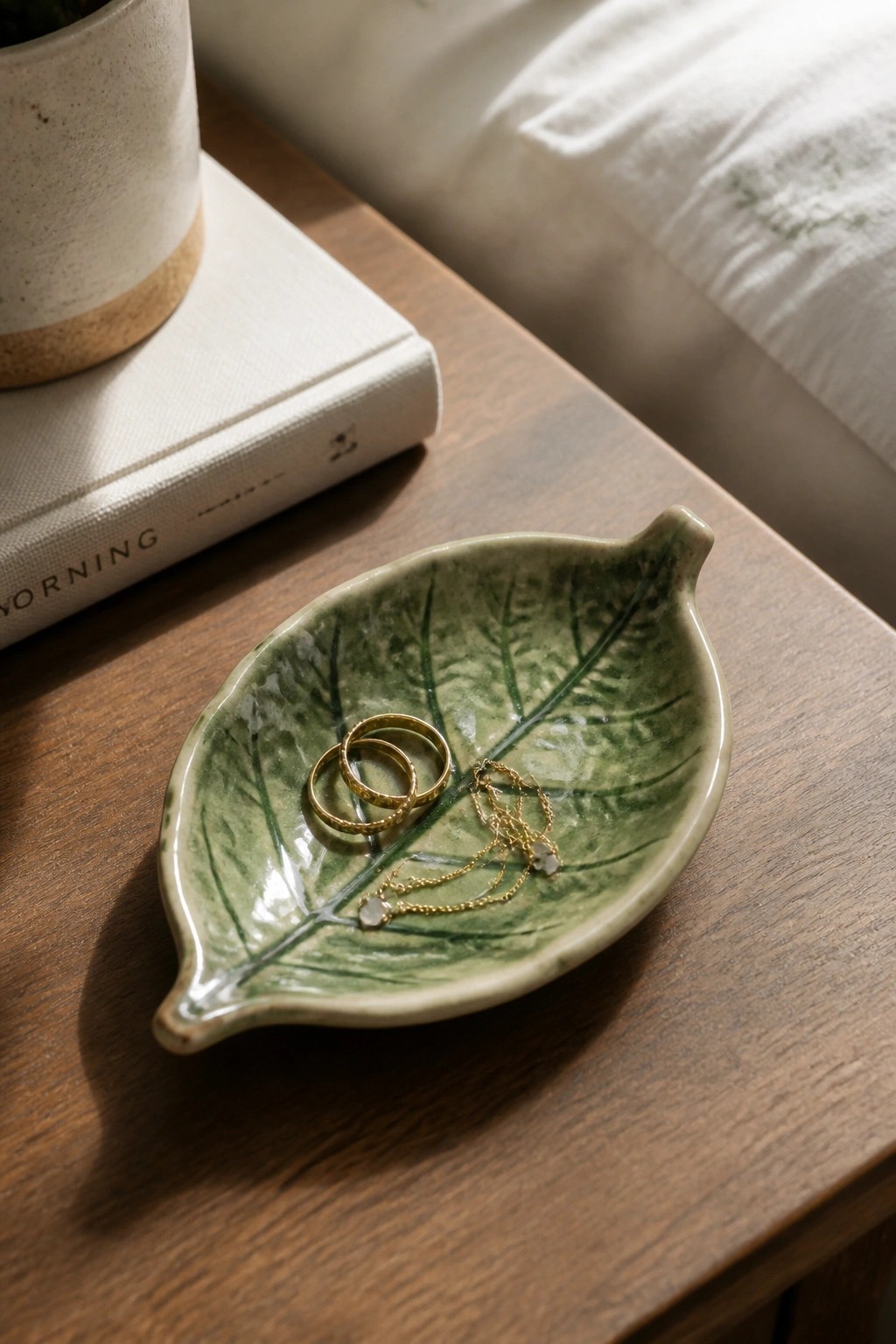
A leaf-shaped ceramic dish serves as a compact holder for rings and small jewelry pieces. The idea uses a natural leaf outline with raised veins pressed into the clay surface, then covered with a translucent green glaze that settles into the lines to define the texture. This keeps the finished piece thin and stable while giving it enough depth to contain items without them sliding off.
What makes this idea useful is how the irregular leaf edges add visual interest without extra decoration, making the dish easy to place on a nightstand or dresser. You could rework the same basic form as a small soap rest or change the glaze color to match different room styles. The small scale means it uses up only a modest amount of scrap clay and can be made quickly from a simple slab rolled over an actual leaf for the vein pattern.
Scrap Clay Egg Cup
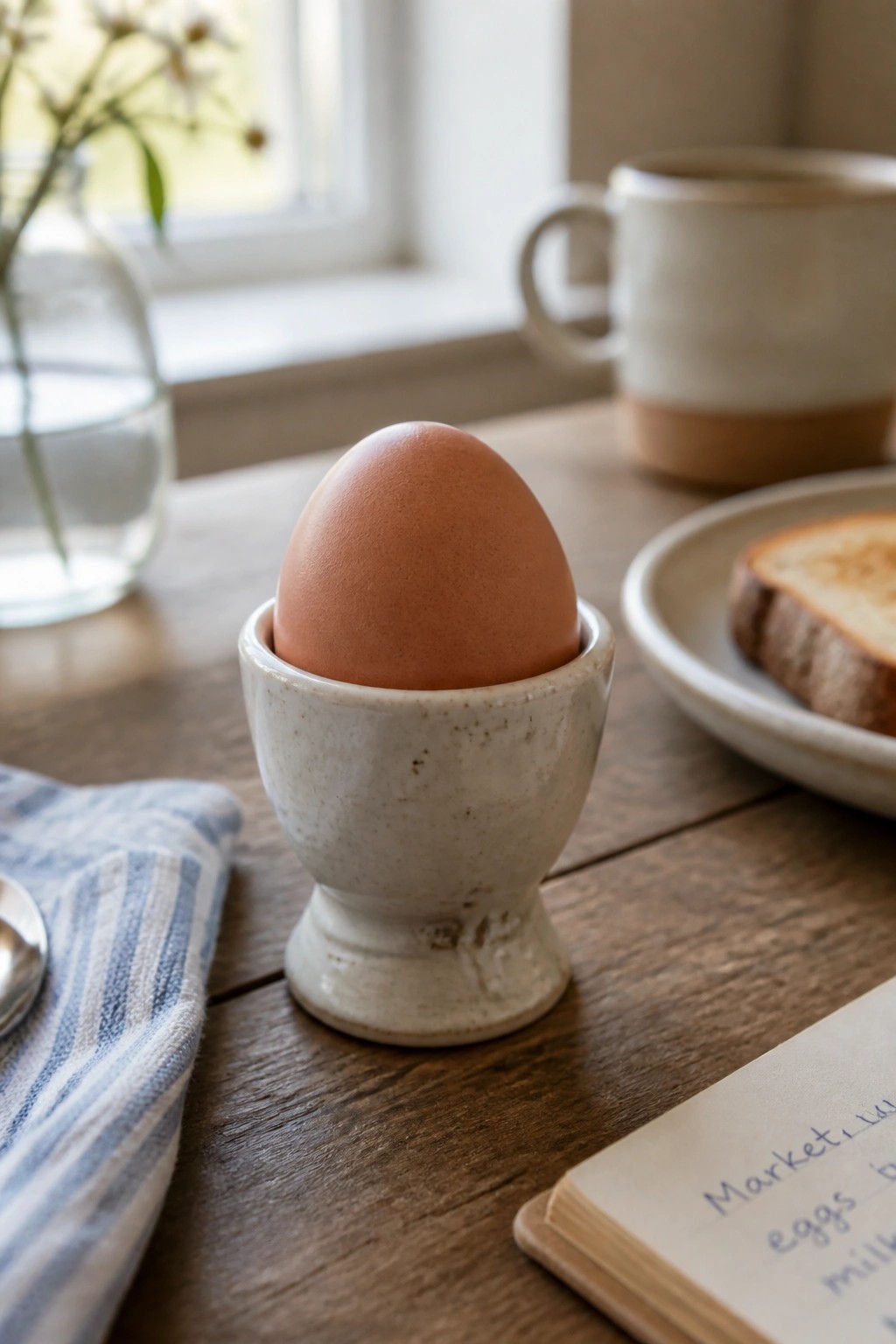
An egg cup is a small ceramic holder that keeps a boiled egg steady on the table. This version uses a simple rounded bowl on a short footed base, finished with a light speckled glaze that lets some of the clay show through. The compact scale matches a standard egg size and keeps the form minimal so it works as a basic kitchen item made from leftover clay.
What makes this idea useful is how quickly it turns scrap into a piece you can actually use at breakfast. The footed shape gives stability without adding much height, so the same idea works in sets or with different glaze colors. In a kitchen this kind of holder takes up little space and can be adapted into a small bowl or ring dish if you change the top curve slightly.
Three-Section Divided Dish from Scrap Clay

A divided dish with three pie-shaped compartments makes a practical small serving piece for dips, sauces, or snacks. The walls meet at the center to create clear separations, and each section receives its own glaze color so different items stay distinct. This layout uses only a small amount of clay and turns leftover scraps into a finished kitchen item without extra material.
What makes this idea useful is how simply the same radial division can be adapted for other small storage needs like spices, jewelry, or craft supplies. You can swap the pastel glazes for bolder kitchen colors or keep the sections plain if you prefer a more neutral look. In a kitchen this shape keeps condiments organized on a table without much space, and the compact size means it fits easily into a bisque load when you have other pieces firing.
Scrap Clay Ring Dish for Daily Jewelry

A small handbuilt ring dish made from leftover clay gives you a compact spot to drop rings and earrings on a bathroom counter or dresser. Pinch the edges into an uneven oval shape so the form stays shallow but still contains small items. Apply a simple mottled glaze in neutral tones to let the surface catch light without competing with other fixtures.
What makes this idea useful is how little clay it requires while still solving a common clutter problem. You can reshape the same amount of scrap into a longer tray for bobby pins or a slightly deeper version for loose change on a nightstand. The irregular rim adds interest without extra carving, so the piece stays quick to finish and easy to repeat in different glaze colors. For a gift, add a small stamped initial on the inside before glazing.
Small Spoon and Pinch Dish from Scrap Clay

A small clay spoon with a short handle and shallow bowl pairs with a flat round dish to create a simple set for tasting, pinching salt, or serving small amounts of spices. The spoon is formed in one piece with a basic pinched shape, while the dish has a low rim that keeps contents contained. Both pieces use a light speckled glaze that highlights the clay texture and makes the set easy to match with other kitchen pottery. This project works well for leftover clay because the pieces require only small amounts and can be made quickly without a wheel.
What makes this idea useful is how the spoon and dish function as a matched pair for everyday kitchen tasks. You could adapt the dish into a slightly deeper version for soy sauce or change the spoon handle length to suit different scooping needs. The small size lets you produce several sets from one batch of scrap clay and fire them together on a single shelf. In a kitchen, this kind of piece keeps counters clear while giving you something more durable than plastic alternatives.
Wall Pocket Planter from Scrap Clay

A small wall-mounted planter formed from leftover clay combines a flat tab with a hanging hole and a cupped lower section that holds soil. The two-tone speckled glaze separates the mounting area from the plant pocket while adding surface texture. This shape keeps the piece compact so it sits flat against a wall without taking up shelf space.
What makes this idea useful is how it uses very little clay to create a vertical plant display. You can adapt the pocket depth or tab width to suit different plant sizes or to make a row of matching pieces. In a kitchen or bathroom this form keeps plants off counters while still showing them clearly. The same basic shape works for a ring dish or small catch-all if you skip the drainage area.
Oval Ceramic Jewelry Tray

A small oval ceramic tray serves as a practical catch-all for jewelry and small accessories. The elongated shape keeps chains and pendants from tangling while the shallow depth prevents items from sliding off. A glossy brown glaze with a speckled rim creates contrast that makes the surface easy to spot on a counter. This project falls into the bathroom item or ring dish category and stays functional because of its compact scale.
What makes this idea useful is how the oval form fits flat surfaces like vanities or nightstands without wasting space. You could adapt the same shape by making a shorter version for rings only or stretching it longer for hair ties and clips. The neutral glaze works in most bathrooms, but swapping to a matte finish or adding a simple line detail would change the look without extra effort. For a gift, something like this takes little clay and still feels intentional.
Frequently Asked Questions
What kinds of scrap clay can I use for these projects? You can repurpose leftover air dry clay, polymer clay, or ceramic clay as long as it remains pliable. Knead different colors together for new shades or create marbled patterns by gently folding scraps without fully mixing them.
How should I store clay scraps to keep them ready for future projects? Wrap each piece tightly in plastic wrap and place it inside an airtight container. For air dry clay add a small damp sponge inside the container to maintain moisture and prevent premature hardening.
Are these projects suitable for beginners with limited experience? Yes most of the 24 projects rely on basic techniques such as rolling flattening and simple shaping. Begin with easy items like coasters or ring holders to practice before moving to slightly more detailed designs.
How can I ensure the finished pieces remain durable over time? Allow air dry clay to dry fully for at least 24 hours or follow the firing schedule for ceramic clay. Once dry apply a clear sealant to protect against moisture and everyday handling.
What practical uses do these small pieces offer around the home? The projects turn scraps into items such as jewelry trays soap dishes plant markers cable holders and desk organizers helping reduce waste while adding functional accents to daily routines.

Pottery Path is my cozy corner of the internet where I share clay ideas, pottery inspiration, and simple projects you can recreate at home. I love exploring everything from air dry clay to handbuilt pottery to cute minis that brighten your day. My goal is to make clay crafting feel easy, fun, and welcoming for anyone who wants to try it.
You will find beginner friendly tutorials, creative pottery painting ideas, and lots of warm inspiration for slow and happy crafting. If you enjoy hands on creativity, this space will feel like home.