
I keep a stack of pottery bowls in my kitchen because they come in handy for all sorts of meals.
They add a bit of texture to the table without standing out too much.
I’ve picked up most of them over the years from markets and a few I made during classes.
Using them feels practical rather than fancy.
These are some of the styles I reach for most often.
Wide Serving Bowl with a Brushed Red Band
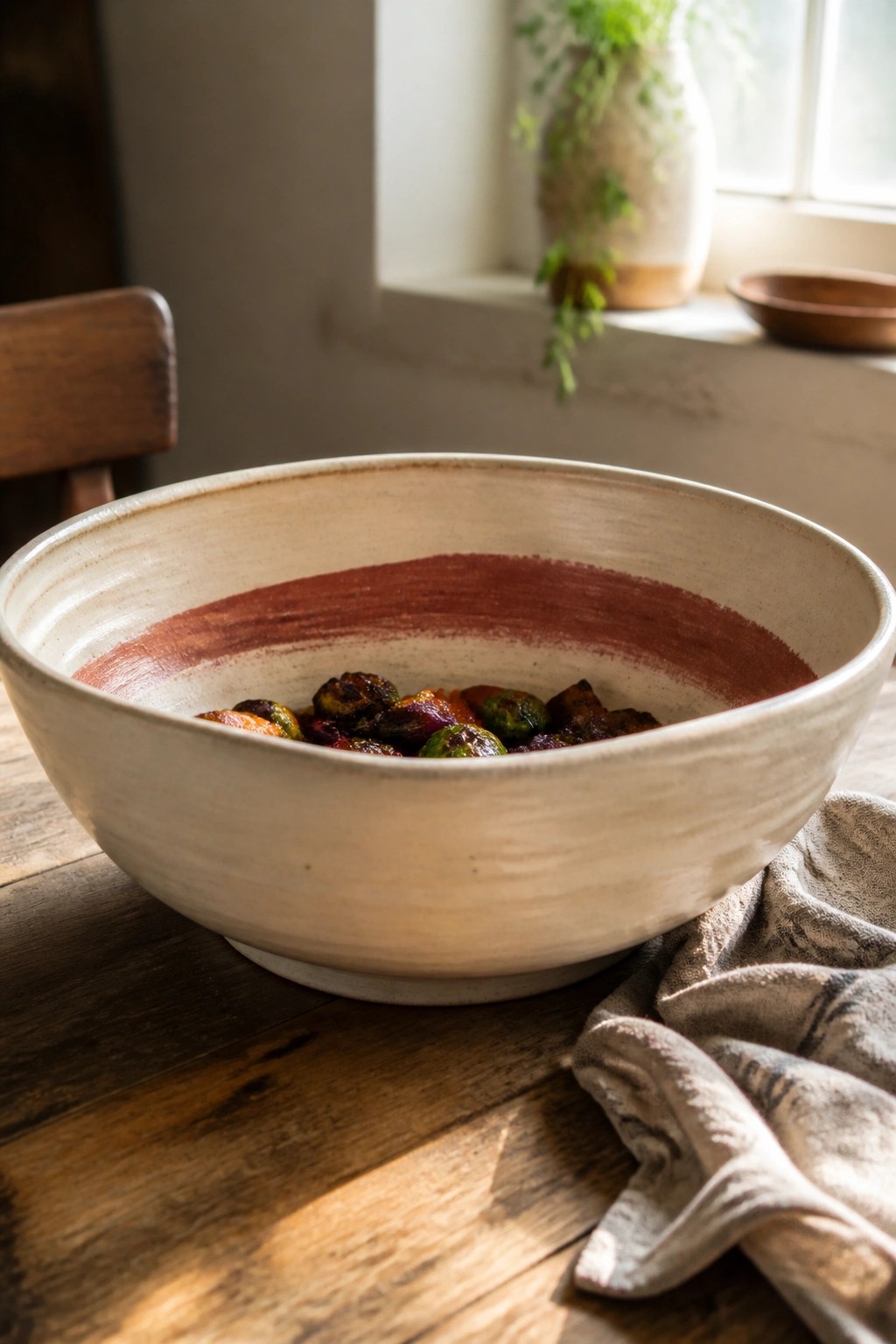
A large, shallow serving bowl formed from light clay uses a single wide band of reddish-brown glaze brushed around the interior to create contrast. The band sits low enough to frame food while leaving plenty of the natural clay visible along the rim and exterior. This simple layout works well for everyday table use because the open shape holds salads, roasted vegetables, or sides without crowding them.
What makes this idea useful is how the single color band scales up without looking busy on a bigger form. You could repeat the same band on a set of smaller bowls for matching sides or shift the color to a deeper blue or green to suit different seasons. The generous diameter also makes it practical for family meals where dishes need to be passed around. For a variation, try narrowing the band or placing it higher on the wall to change how much food shows against the glaze.
Speckled Blue Dip Bowl
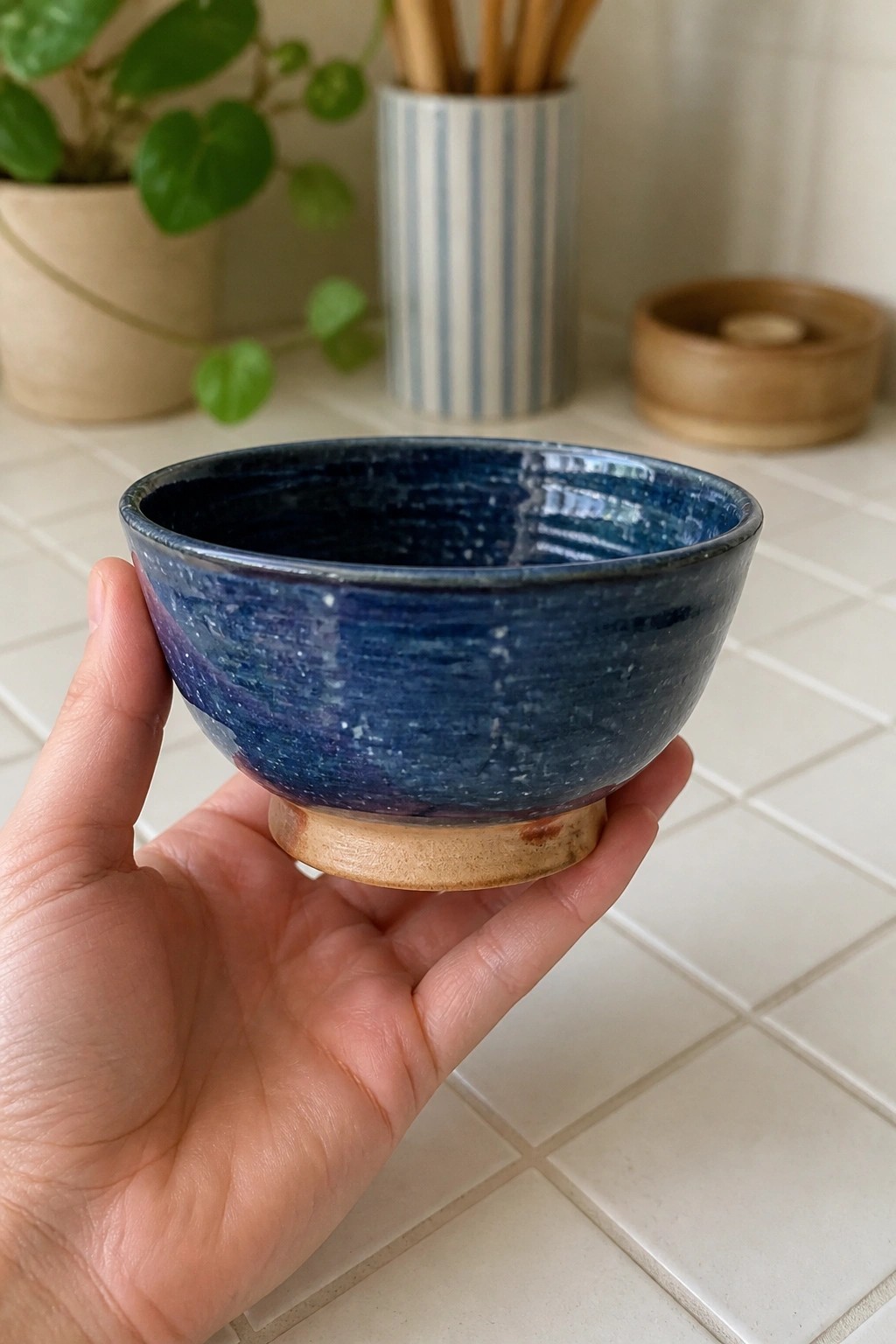
A compact ceramic bowl with gently curved sides and a deep well works well for holding dips, sauces, or small portions of sides at the table. The blue glaze shows natural variations and light speckling that add surface interest while staying simple enough for everyday use. The unglazed base keeps the form practical and stable on a countertop or tray. This type of project falls into the category of small functional bowls meant for repeated kitchen and dining use.
What makes this idea useful is the modest scale, which makes it easy to produce multiples for a matching set. You could change the glaze color or add a simple band at the rim without altering the overall shape. In a kitchen this kind of bowl fits neatly into a stack or on a charcuterie board. The same form could be widened slightly to become a cereal or dessert bowl if you want more capacity.
Nesting Bowls with Leaf Impressions
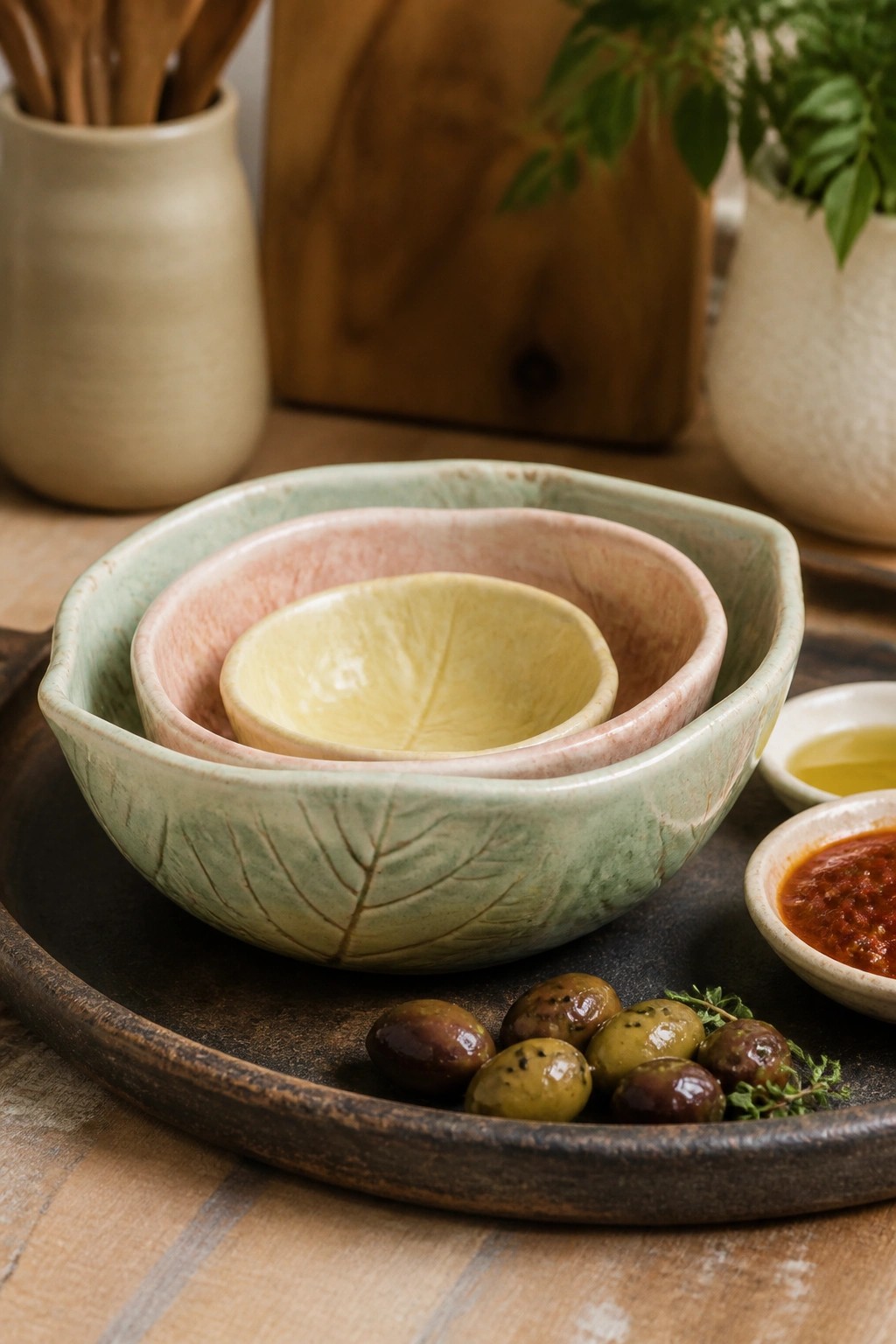
These nesting bowls feature impressed leaf textures on the exteriors paired with smooth interiors suited for food contact. The set includes three graduated sizes finished in soft glazes that move from muted green on the largest bowl to rose and pale yellow on the inner ones. The organic shapes and visible leaf veins give the surfaces enough detail to stand out without needing additional decoration. This approach fits the category of functional kitchen serving pieces that double as table styling.
What makes this idea useful is how the nesting format keeps multiple sizes together without taking up extra cabinet space. The leaf texture can be adapted by pressing different leaves or using simpler stamp patterns if you want less detail. In a kitchen, these bowls handle small servings like olives or sauces while still looking intentional on a tray. The same stacking idea works well scaled down to just two bowls for more compact setups.
Footed Ceramic Bowl for Fruit and Serving
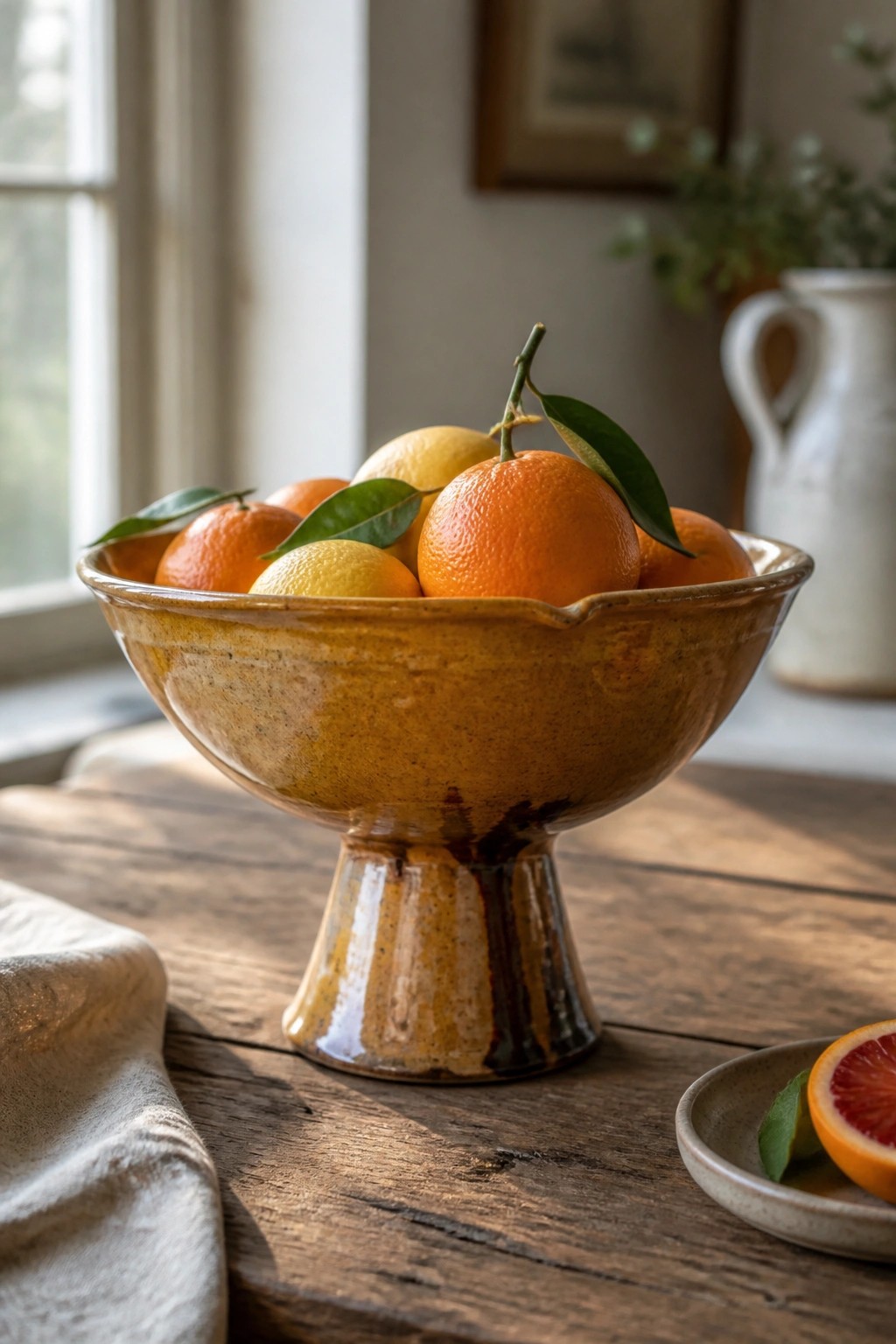
A wide, footed ceramic bowl with a sturdy pedestal base makes a practical choice for holding fruit or serving larger portions at the table. The variegated earthy glaze in warm browns and oranges creates visual interest without needing extra decoration, letting the natural form and texture carry the look. This project falls into the everyday serving bowl category, where the raised base adds height and presence while keeping the piece stable for regular use.
What makes this idea useful is how the pedestal shape keeps contents visible and easy to reach during meals. You could scale the same design down for a smaller dip bowl or rework the proportions into a shallow serving dish for bread or salads. In a kitchen or dining space, the durable form handles both display and function without looking overly delicate. For a gift, something like this stands out because the simple profile adapts easily to different glaze colors or rim treatments.
Swirled Blue Ceramic Serving Bowl
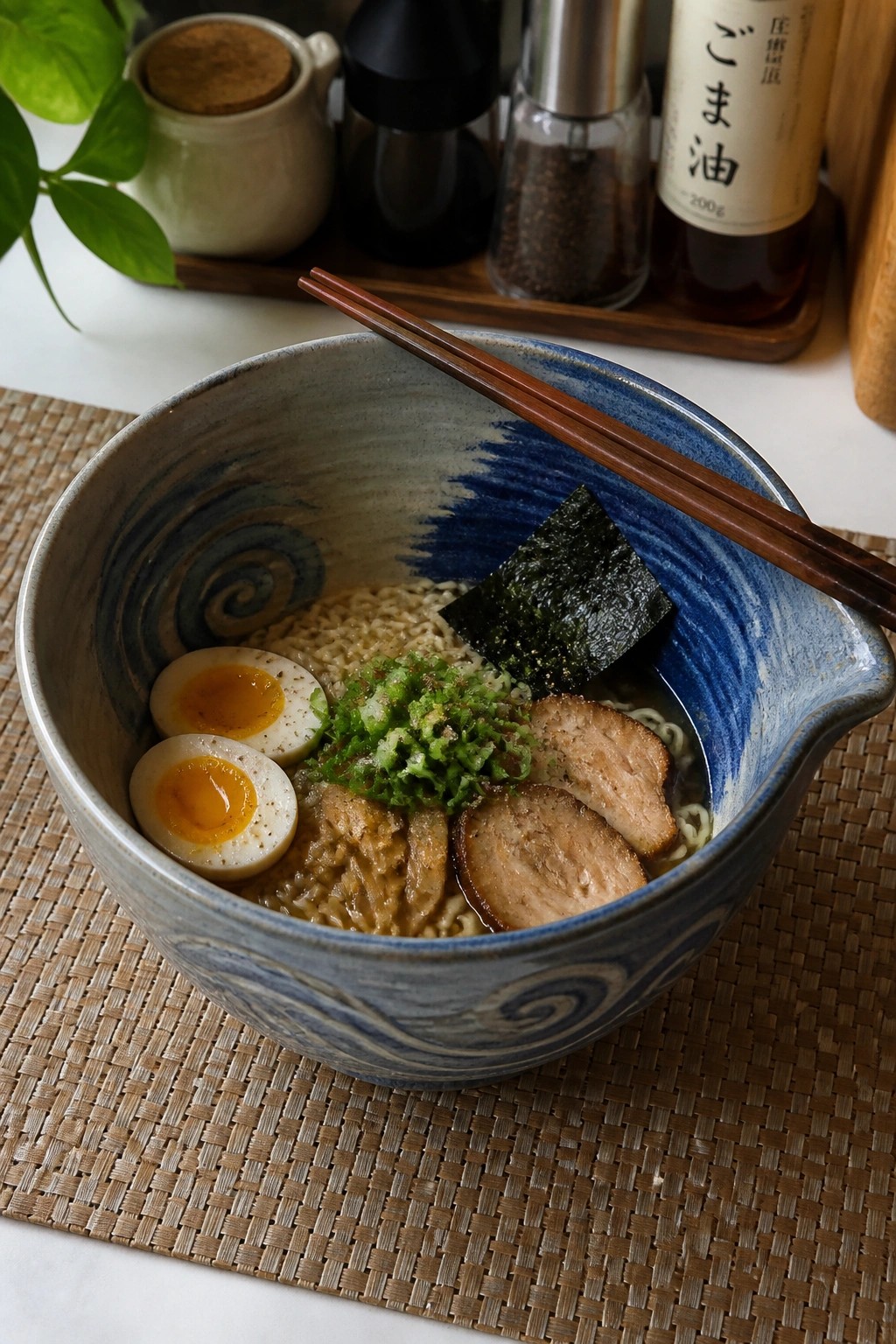
A wide, deep ceramic bowl with a fluid blue and gray glaze that creates a swirling wave pattern across the surface makes a strong everyday serving piece. The irregular rim and generous interior space suit noodle dishes, soups, or shared sides without feeling oversized. The contrast between the cool glaze tones and the earthy clay body gives the bowl visual weight while still reading as handmade rather than mass-produced.
What makes this idea useful is how the deep shape keeps broths and sauces contained during casual meals. You can adapt the same glaze flow on a slightly smaller scale to create a matching set of individual bowls or even a shallow serving plate. In a kitchen, the bold color stands out against neutral table linens and pairs easily with simple wooden or stoneware pieces. For a Pinterest board focused on functional tableware, the glaze movement alone gives the bowl enough interest to save without extra styling.
Dimpled Exterior Serving Bowl
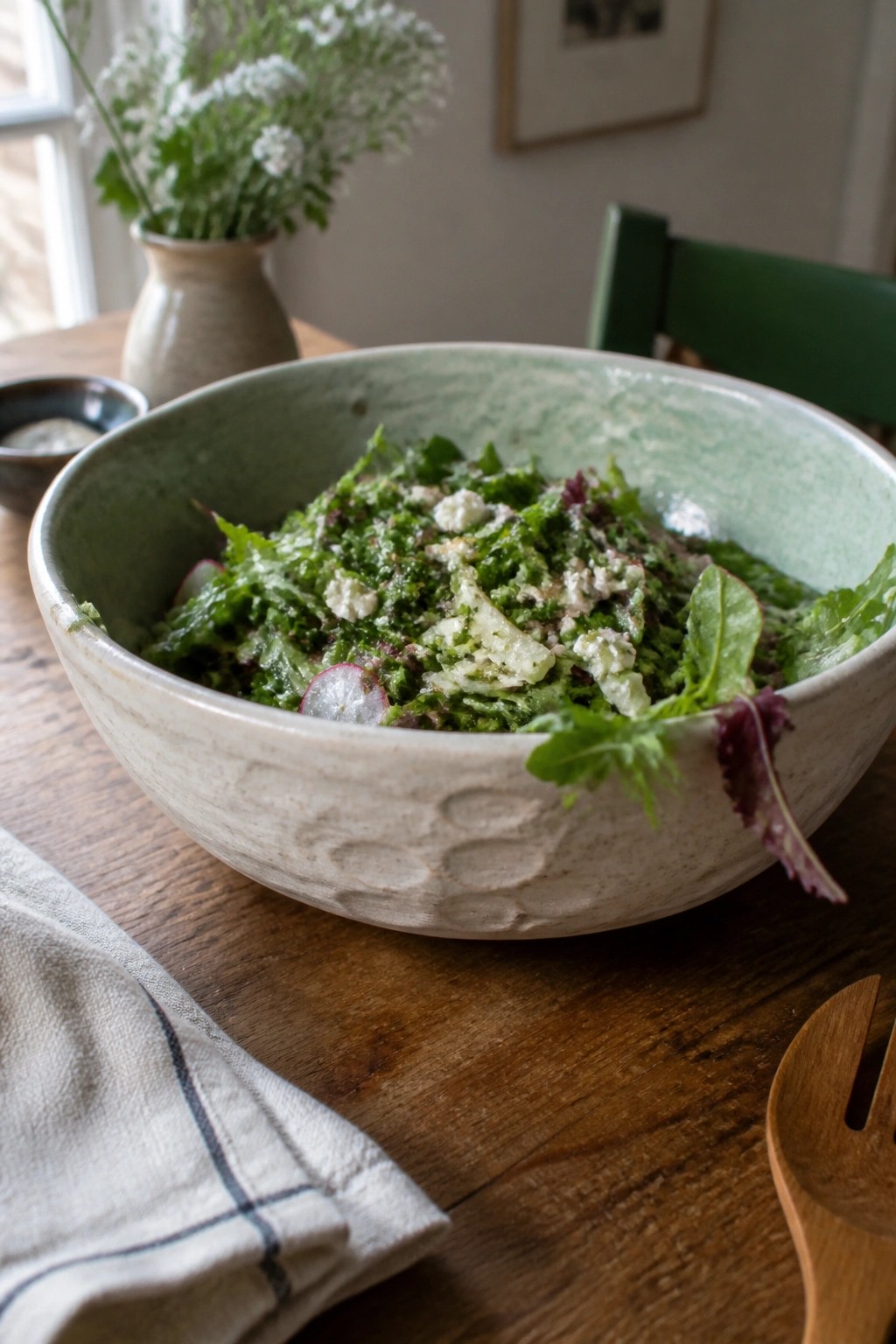
A wide, shallow ceramic bowl with a generous rim works well as a main serving piece for salads or shared sides. The exterior carries a matte off-white clay body marked with repeated circular impressions that create a dimpled surface, while the interior shows a speckled green glaze that stops short of the rim. This combination keeps the form simple yet gives the bowl enough surface detail to stand out on a table without added painting or carving.
What makes this idea useful is the practical scale that fits both everyday meals and casual entertaining. The dimpled texture can be recreated by pressing a rounded tool or stamp into the leather-hard clay, and the two-tone glaze approach lets you keep the outside neutral while adding color inside. You could scale the same shape down for individual bowls or adapt the dimple pattern to just the lower half of the form for a quicker making session. In a kitchen, this kind of piece holds up to frequent use and still looks intentional next to plain dishes.
Flower Petal Ceramic Bowl for Small Servings
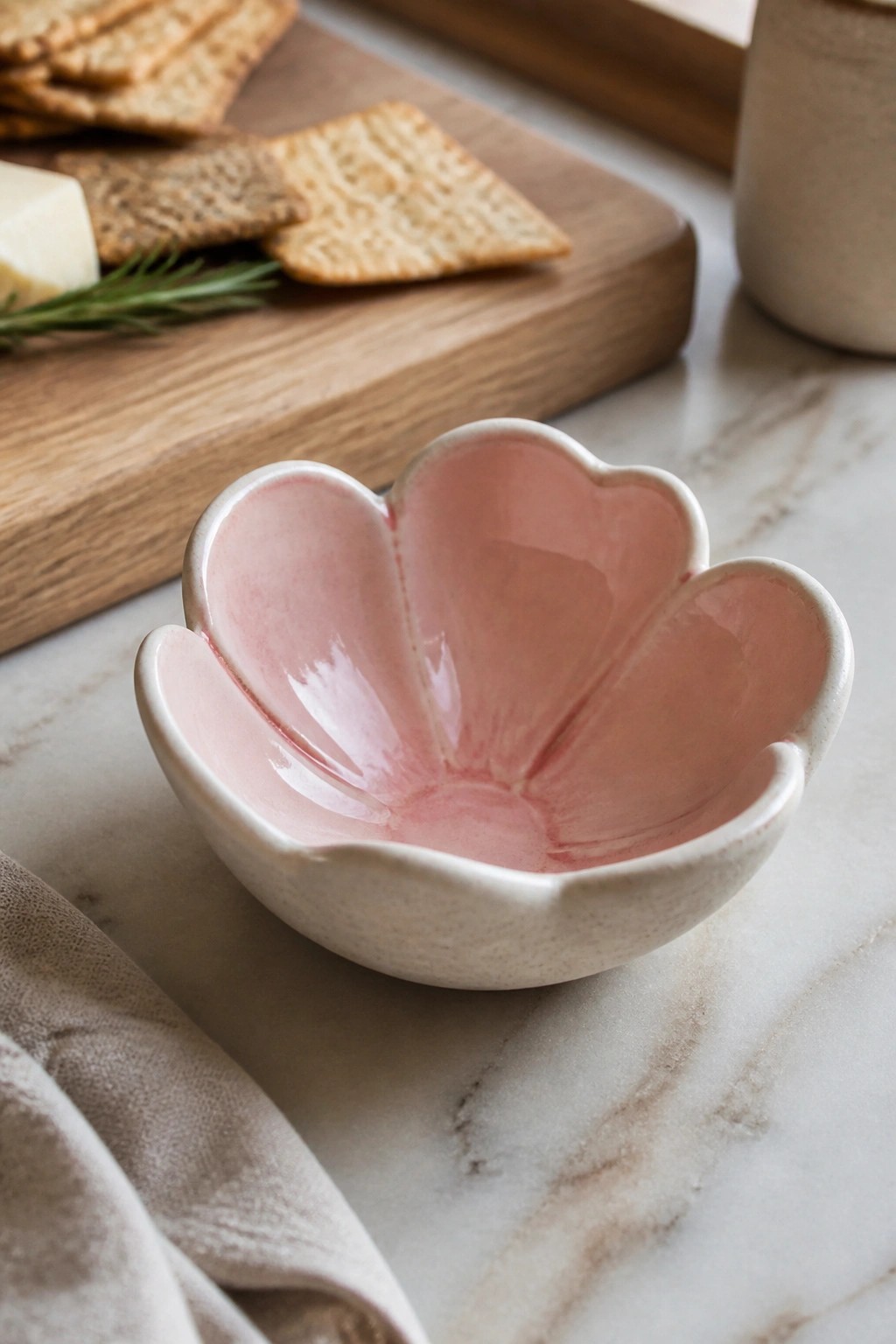
A small ceramic bowl shaped with overlapping scalloped edges forms a simple flower-like rim that still functions as a standard dip or snack dish. The glossy pink glaze covers the interior while the exterior stays matte white, letting the sculpted edges stand out without added decoration. This approach fits the category of a compact serving bowl meant for table use rather than display only. The handmade clay construction shows through the slightly irregular rim and soft texture.
What makes this idea useful is how the petal shape adds detail without changing how the bowl actually holds food. It works especially well on a cheese board or appetizer setup where you need several small portions in one area. You could scale the same rim design up for a larger salad bowl or repeat it in different glaze colors to build a matching set. For a quick variation, keep the form but switch to a single solid color so it blends with everyday dishes.
Sunflower Painted Serving Bowl
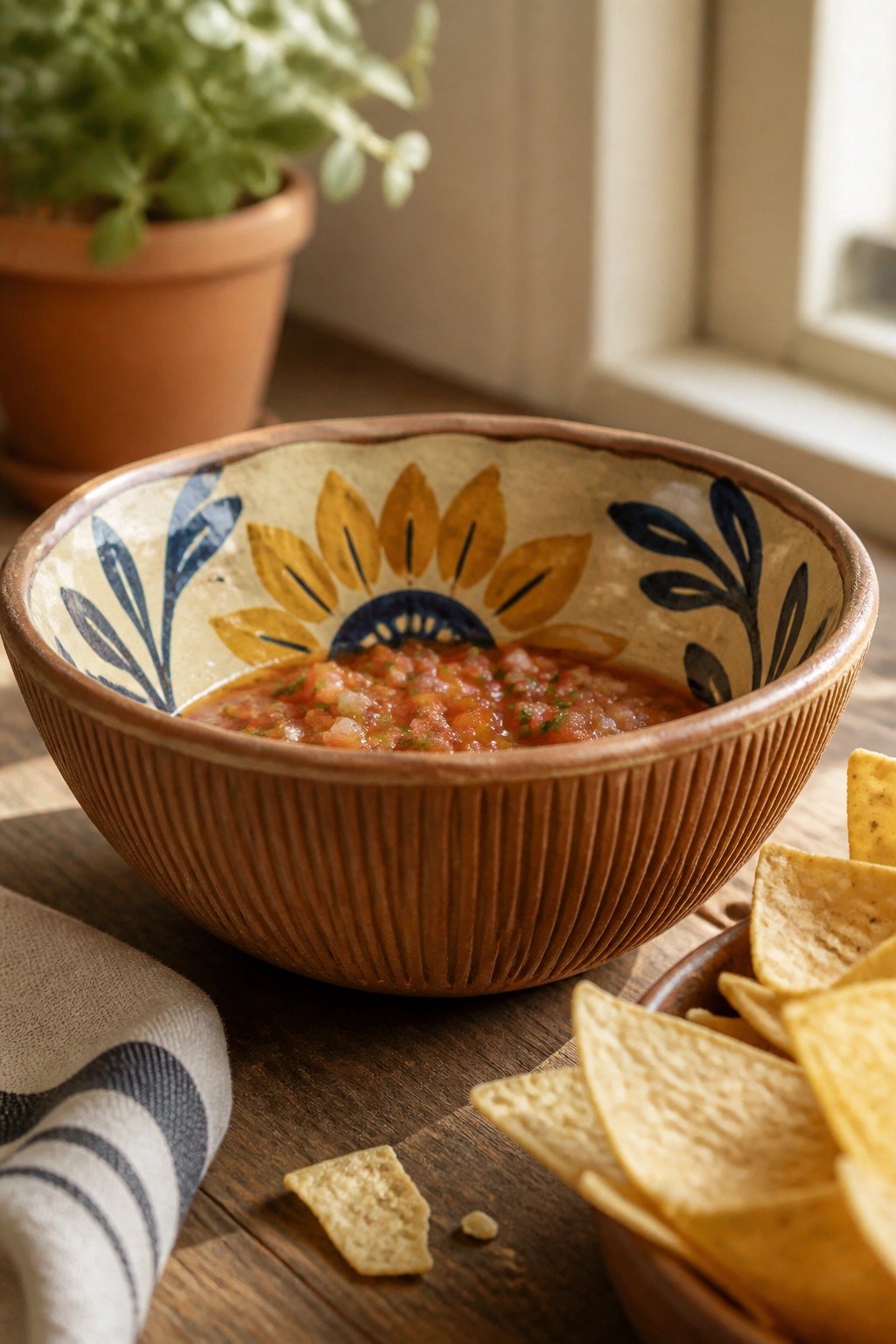
A handmade ceramic serving bowl with a painted sunflower motif makes a straightforward option for dips and snacks. The design uses bold blue and yellow brushwork on a light background inside the rim, paired with a ribbed exterior that adds texture while keeping the shape simple and functional. This approach fits the category of everyday kitchen pottery where the painted detail provides interest without interfering with food use.
What makes this idea useful is how the painted motif can be adapted to smaller ramekins or repeated across a set of bowls for a coordinated look. The ribbed surface adds grip and catches light, so you could recreate it by carving or stamping similar lines on wheel-thrown or slab-built forms. In a kitchen, this kind of piece works especially well on a wooden table or near a window because the colors stay visible even when the bowl holds food. For a gift, something like this translates easily to a larger salad bowl or a shallow tray using the same color palette.
Speckled Ceramic Bowl with Blue Dotted Rim
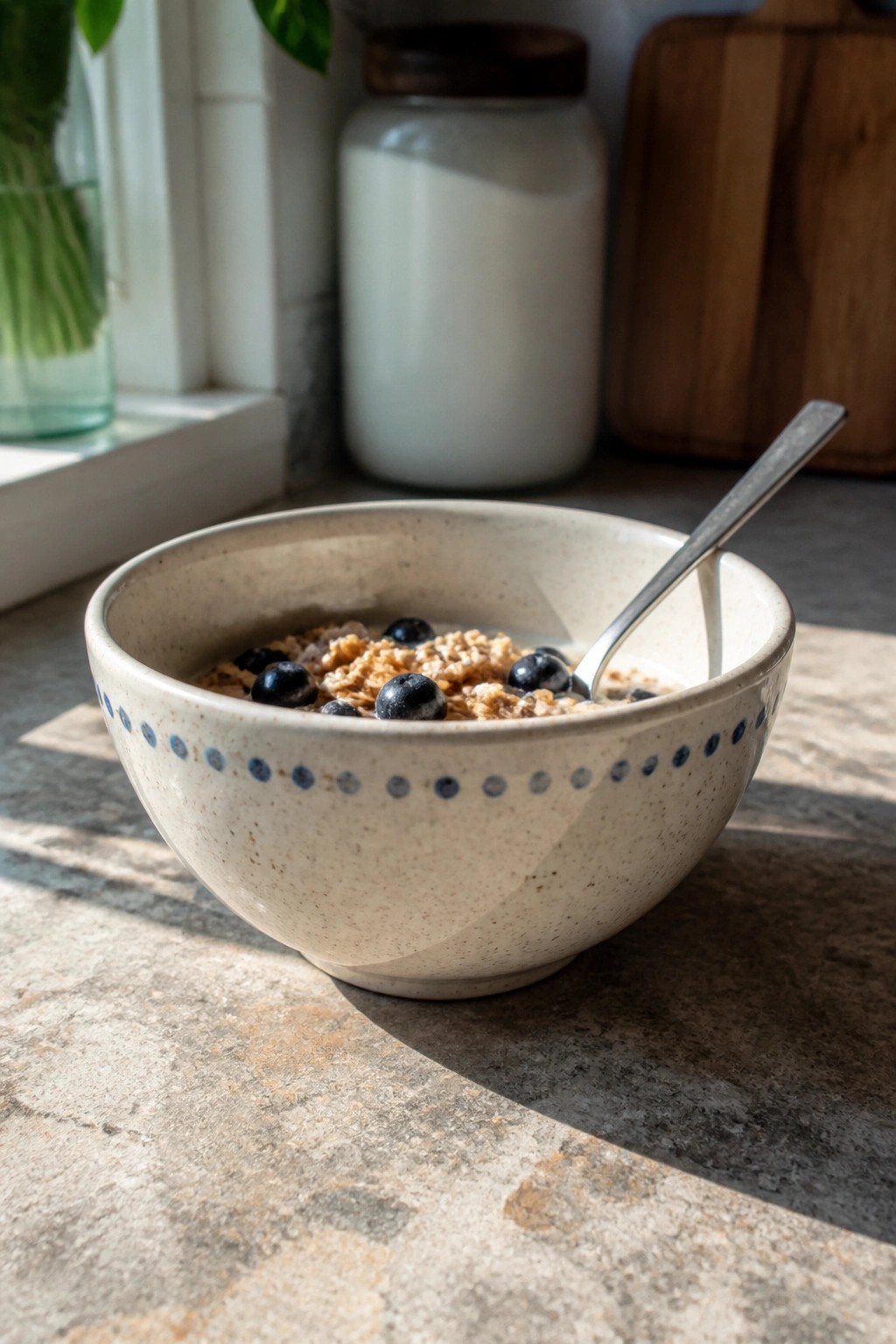
A handmade ceramic bowl with a light speckled glaze and a single row of blue dots along the rim gives a straightforward option for everyday serving. The shape stays wide and shallow enough for cereal, salads, or side dishes. The dotted border supplies a simple contrast against the matte surface without adding extra layers or patterns.
What makes this idea useful is how the rim detail works on a basic wheel-thrown form that most potters already make. You can keep the speckled glaze and swap the dot color to match other kitchen pieces or leave the rim plain for a faster finish. This bowl style stacks easily and holds up to daily use while still looking intentional on the table. The same rim treatment translates directly to plates or smaller prep bowls if you want a matching set.
Earthy Green Glaze Serving Bowl
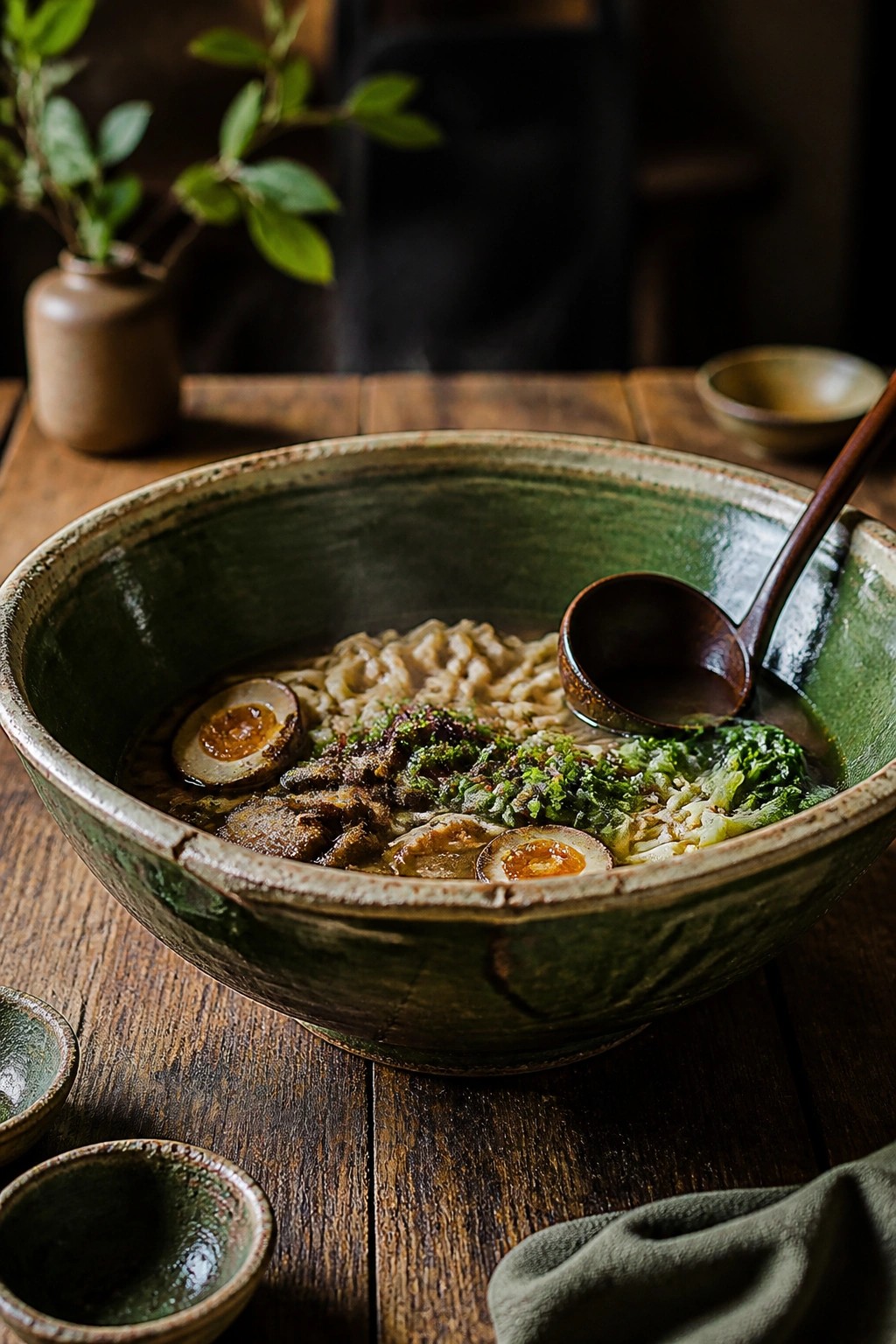
A wide, deep ceramic bowl with a mottled green glaze and irregular rim gives you a sturdy option for serving hot soups, stews, or noodle dishes. The thick walls and generous scale help keep food warm while the textured surface adds subtle contrast against the food inside. This style works as a main serving piece rather than a side dish bowl.
What makes this idea useful is the oversized shape that handles family portions without crowding the table. You could scale the same form down for individual bowls or repeat the glaze on a set of smaller matching pieces. In a kitchen, the green tone sits well next to wood and linen without needing extra decoration. The same idea adapts easily to a salad bowl by widening the rim slightly and keeping the glaze matte.
Small Bowl with Matte Clay Exterior and Blue Glazed Interior
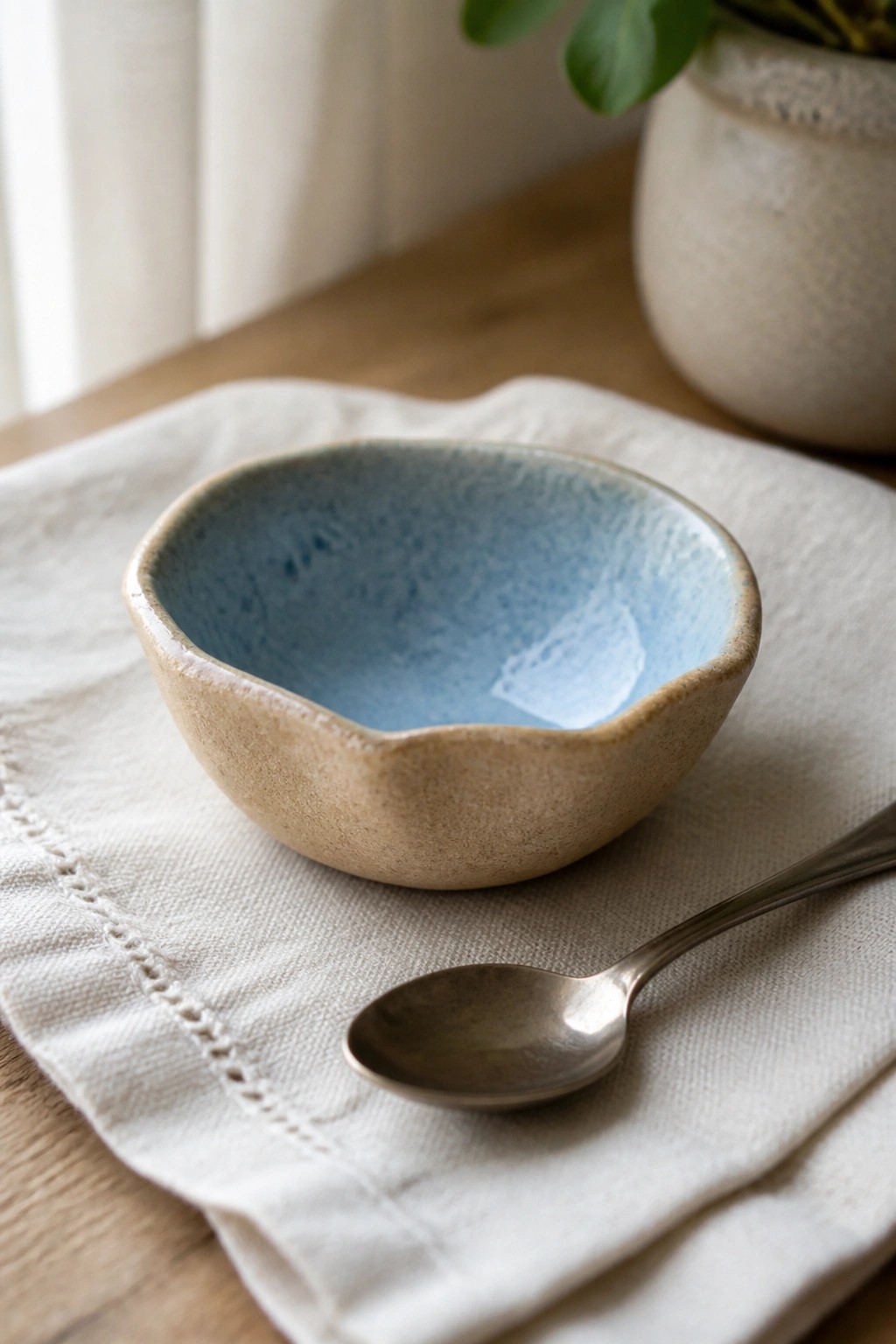
A small ceramic bowl made from a natural clay body with an unglazed matte exterior and a bright blue speckled glaze on the inside creates an easy contrast for table use. The irregular rim and simple rounded form keep the piece functional while letting the interior color stand out against food. This approach works as a dip bowl, sauce dish, or small side serving piece that pairs with everyday meals.
The shape does a lot of the work here because the compact size makes it simple to produce in batches or adapt for different uses. You could repeat the same two-tone glazing on a slightly wider version for yogurt or oatmeal or shrink it further for spice holders. In a kitchen setting this kind of bowl photographs cleanly for table styling ideas and holds up well next to linen and metal utensils without competing.
Oval Butter Dish with Pressed Chevron Rim
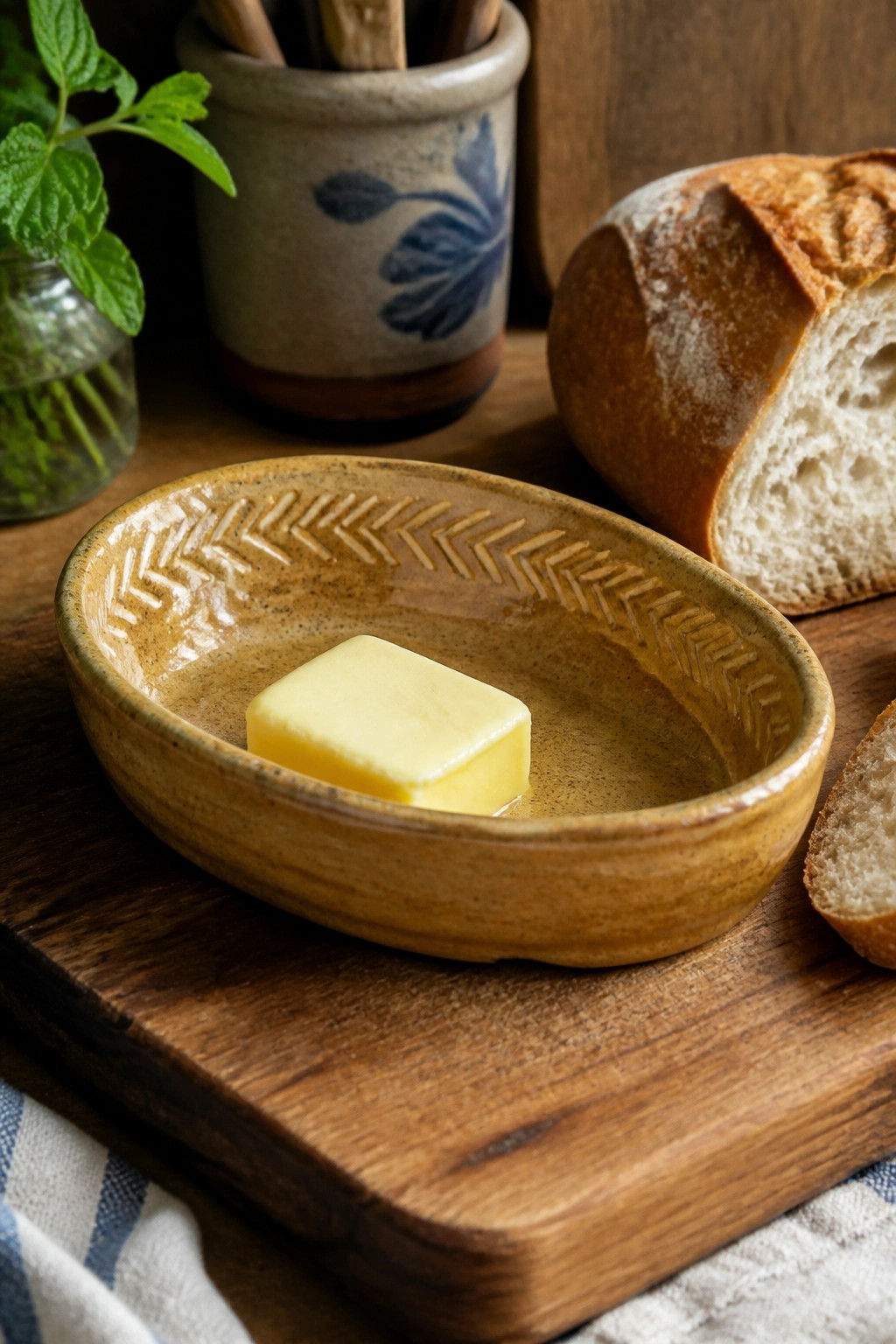
A small oval ceramic dish makes a practical kitchen piece for serving butter or small condiments. The repeating chevron pattern stamped along the rim creates visual interest through simple texture rather than color. An earthy tan glaze covers the form evenly and highlights the handmade surface without competing with the carved detail.
What makes this idea useful is the compact oval shape that sits flat on a board or table without taking much space. You could stamp a similar border on a round bowl or a shallow tray to match different table settings. The size works for daily use with butter, dips, or nuts, and the carved rim gives it enough detail to photograph well for recipe posts or boards.
Green Striped Ceramic Gravy Boat
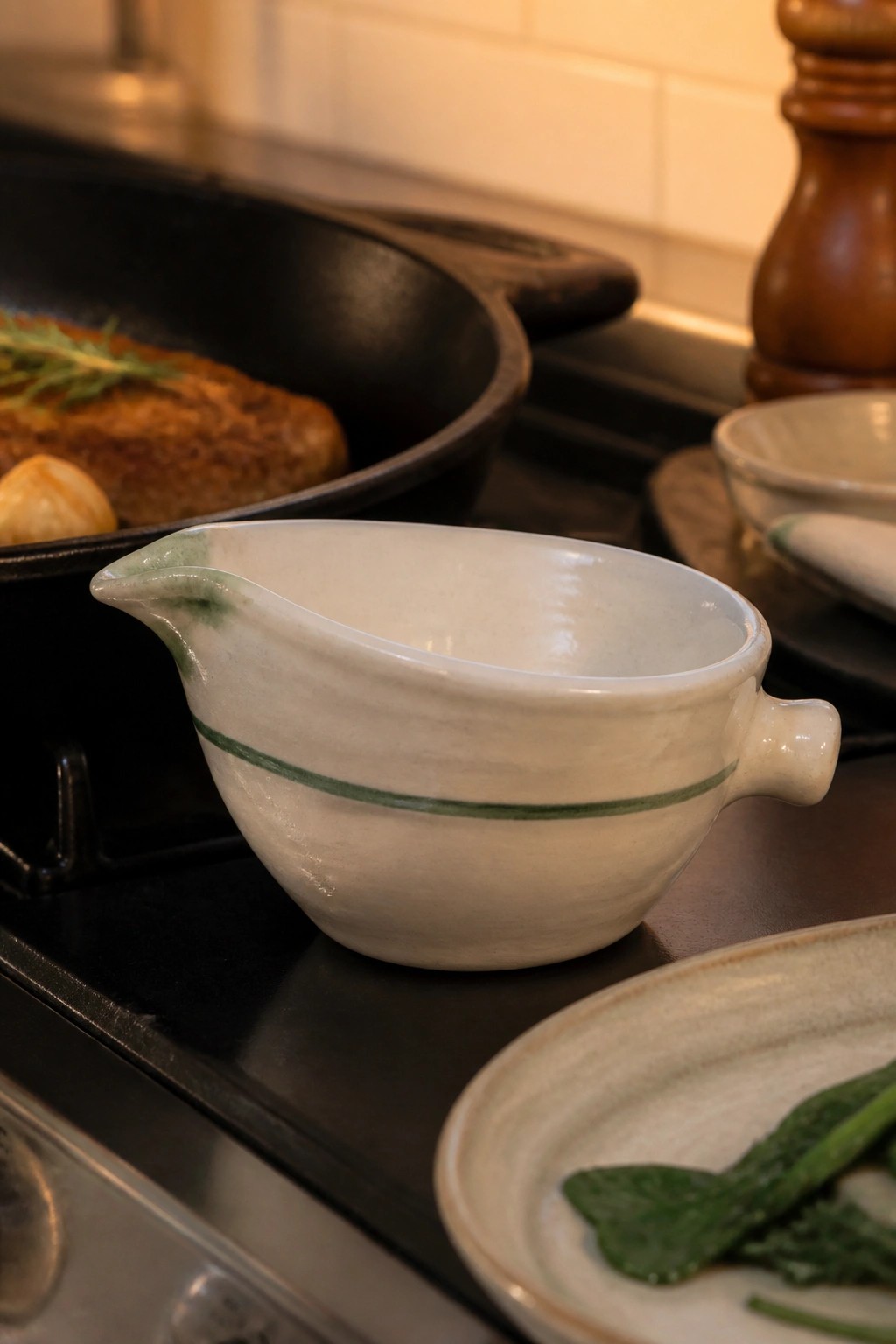
A small ceramic gravy boat with a spout and side handle works well as a kitchen serving piece. The white clay body carries one thin green line that runs around the form and stops near the handle, giving the piece a clear but understated detail. This shape belongs in the kitchen item category and shows how a simple stripe can emphasize the handmade contours without extra decoration.
What makes this idea useful is how the spout and handle turn a basic bowl into something that pours cleanly at the table. The compact size suits small amounts of sauce or dressing, and the stripe could be changed to other colors to match plates or linens already in use. In a kitchen, this kind of piece fits next to cast iron pans or everyday dishes without taking up much space. You could adapt the same stripe and spout idea to a taller creamer or a set of small jugs for oil and vinegar.
Textured Ceramic Serving Bowl with Reactive Blue Interior
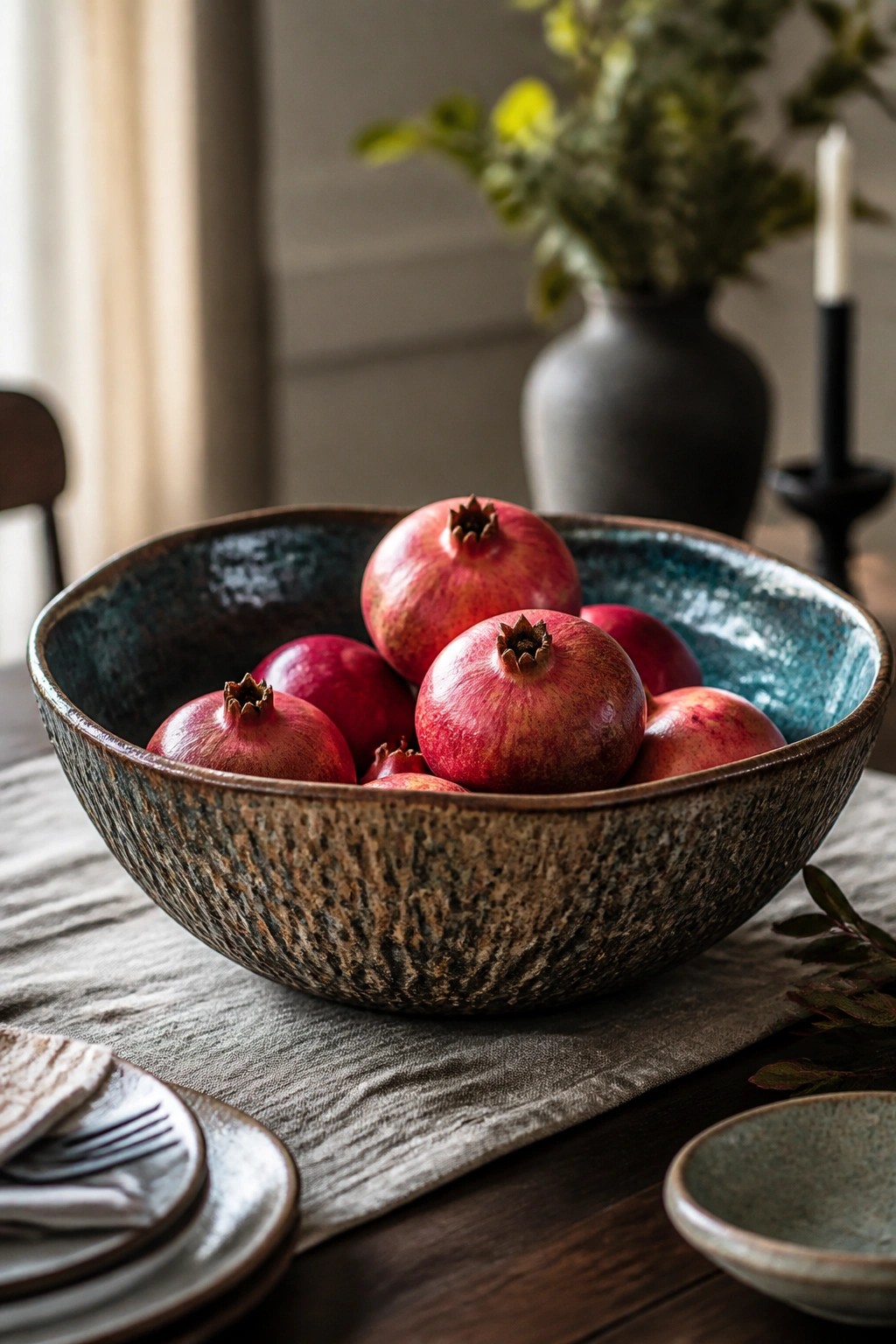
A large, wide ceramic bowl with a heavily textured brown and gray exterior and a glossy blue-green interior makes a strong choice for serving fruit or salads. The rough, speckled surface on the outside contrasts with the smooth, pooled glaze inside, giving the piece visual weight without added patterns or carvings. This approach works as a straightforward tableware idea because the form stays simple while the surface treatment provides interest.
What makes this idea useful is how the texture hides wear from daily use and the bright interior keeps contents looking fresh. You could adapt the same shape into a set of smaller bowls for individual portions or a lower version for bread. In a dining space, the dark exterior helps the bowl sit well on neutral linens or wood, and the glaze catches light without needing extra styling. For a variation, swap the interior color to a warmer tone and keep the textured exterior the same.
Citrus Painted Scalloped Bowl for Serving Garnishes
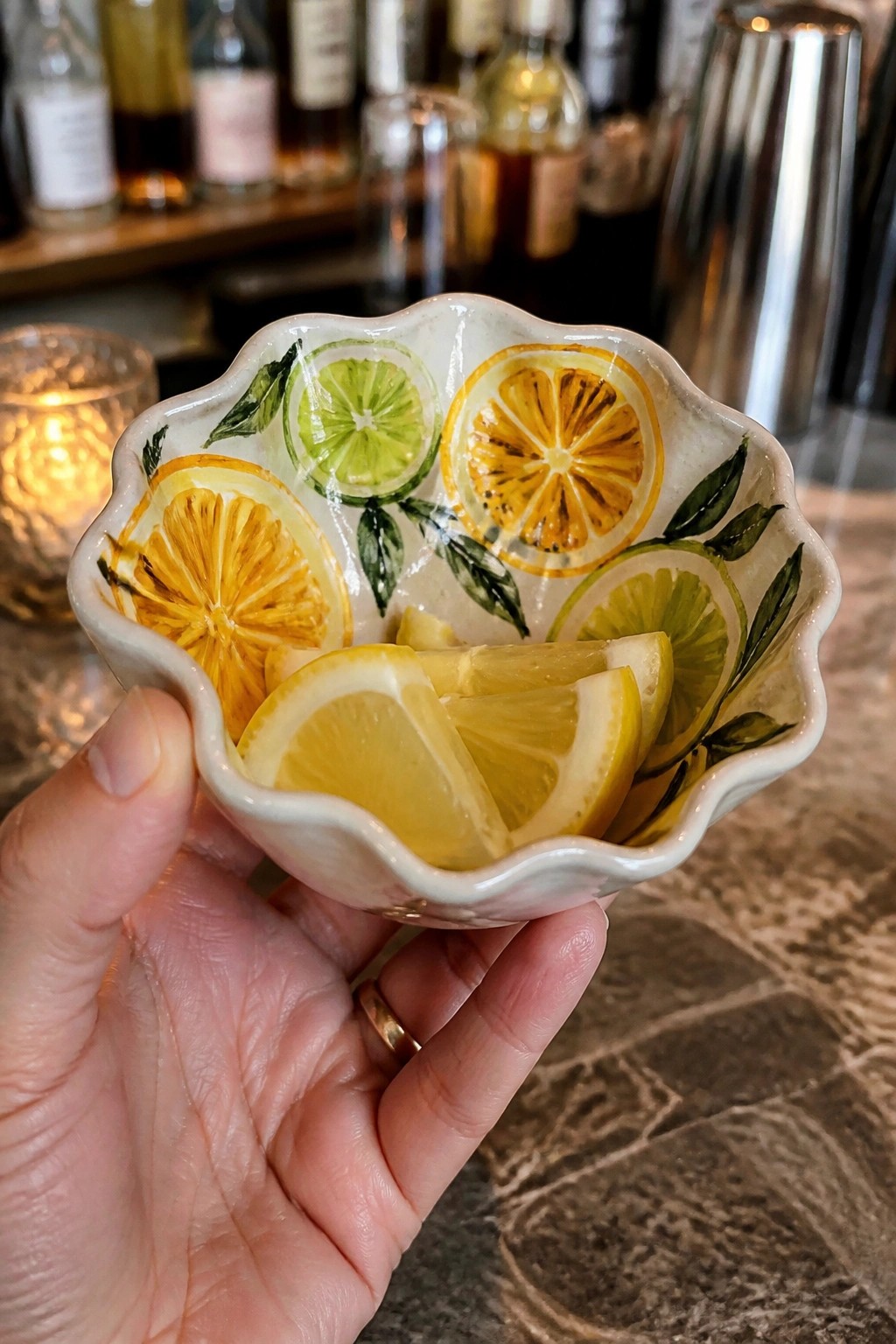
A small ceramic bowl with a scalloped rim makes a practical server for lemon or lime wedges at the table. Hand-painted slices of citrus in yellow and green tones cover the interior, so the design itself signals what the bowl holds. The light base keeps the painted fruit clear and readable while the compact size fits easily among other dishes.
What makes this idea useful is how the painted motif turns a plain bowl into something specific for garnishes or small prep items. You could repeat the same citrus pattern on a set of ramekins or scale it up to a larger mixing bowl for fruit salad. In a kitchen this shape stays handy on the counter during cooking or cocktail making. The small size also means you can start with an inexpensive blank and add the fruit details using basic underglaze colors.
Ribbed Serving Bowl with Spiral Center
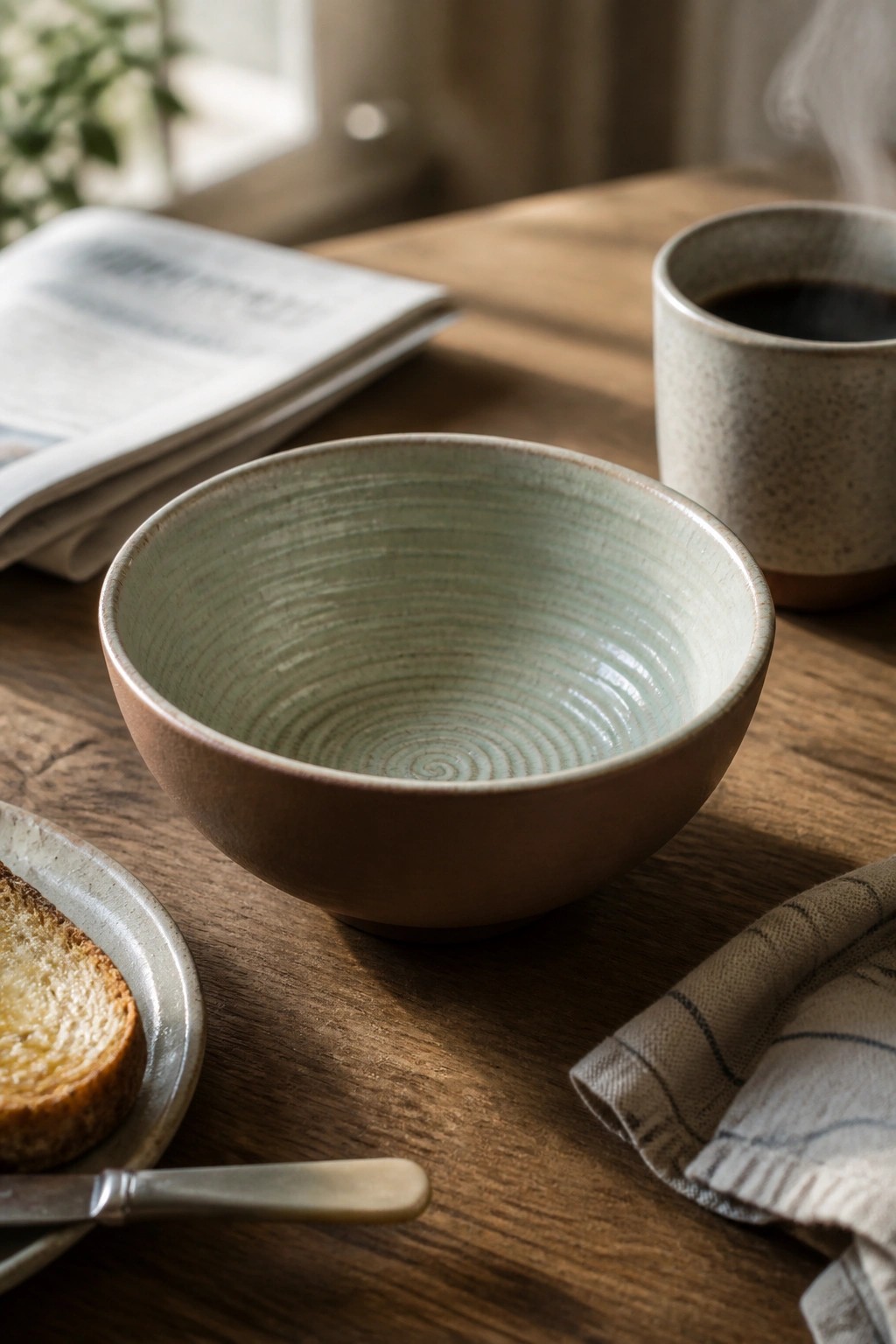
A wide, shallow bowl formed on the wheel shows evenly spaced horizontal ridges across the interior that tighten into a small spiral at the base. The inside carries a soft green glaze while the outside stays a natural brown, creating a clean contrast that still feels simple enough for daily use. This approach keeps the focus on the surface texture rather than added decoration, so the bowl works equally well for soup, salad, or fruit.
What makes this idea useful is how the ridges give the piece visual interest while the shape stays practical for stacking and serving. You could repeat the same ridged interior on smaller bowls or change the glaze color to match existing dinnerware. The two-tone finish also makes the bowl easy to style next to neutral linens or wooden tables without competing with other items. For a quick variation, try the ridges on a slightly deeper form to turn it into a pasta or cereal bowl.
Divided Two-Section Bowl for Snacks and Seasonings
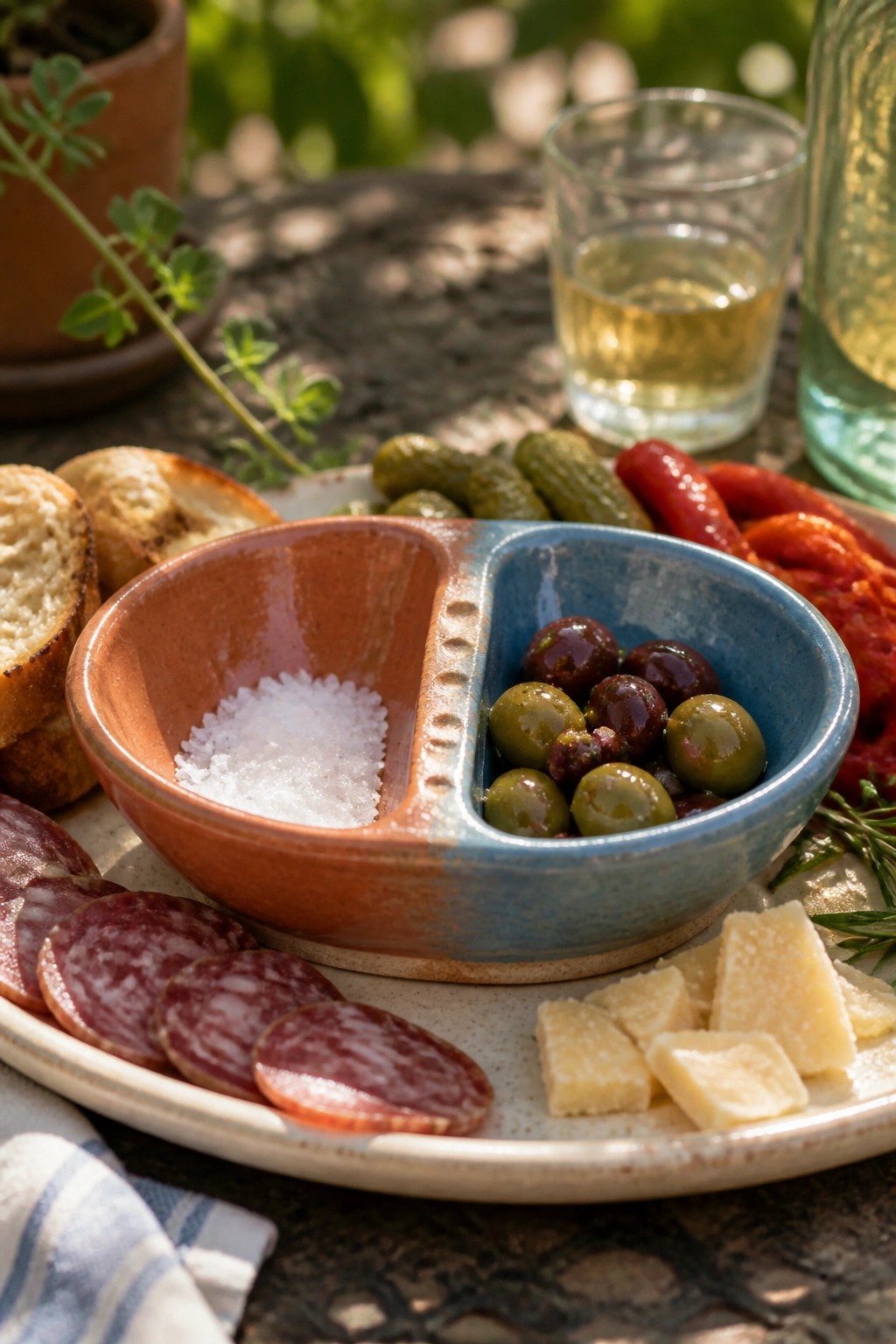
A divided ceramic bowl with two separate compartments works well for keeping different items organized during serving. One section holds olives while the other contains salt, and the split glaze in earthy orange and blue makes the sections easy to tell apart at a glance. The low, wide shape keeps everything accessible without taking up much table space.
What makes this idea useful is how it handles two foods in a single piece instead of multiple small dishes. You could adapt the same divided layout for nuts and dried fruit or for separate dips at a gathering. The compact size fits neatly on a larger platter or charcuterie board, and swapping the glaze colors lets you match it to other dishes you already use.
Flower-Shaped Ceramic Snack Bowl
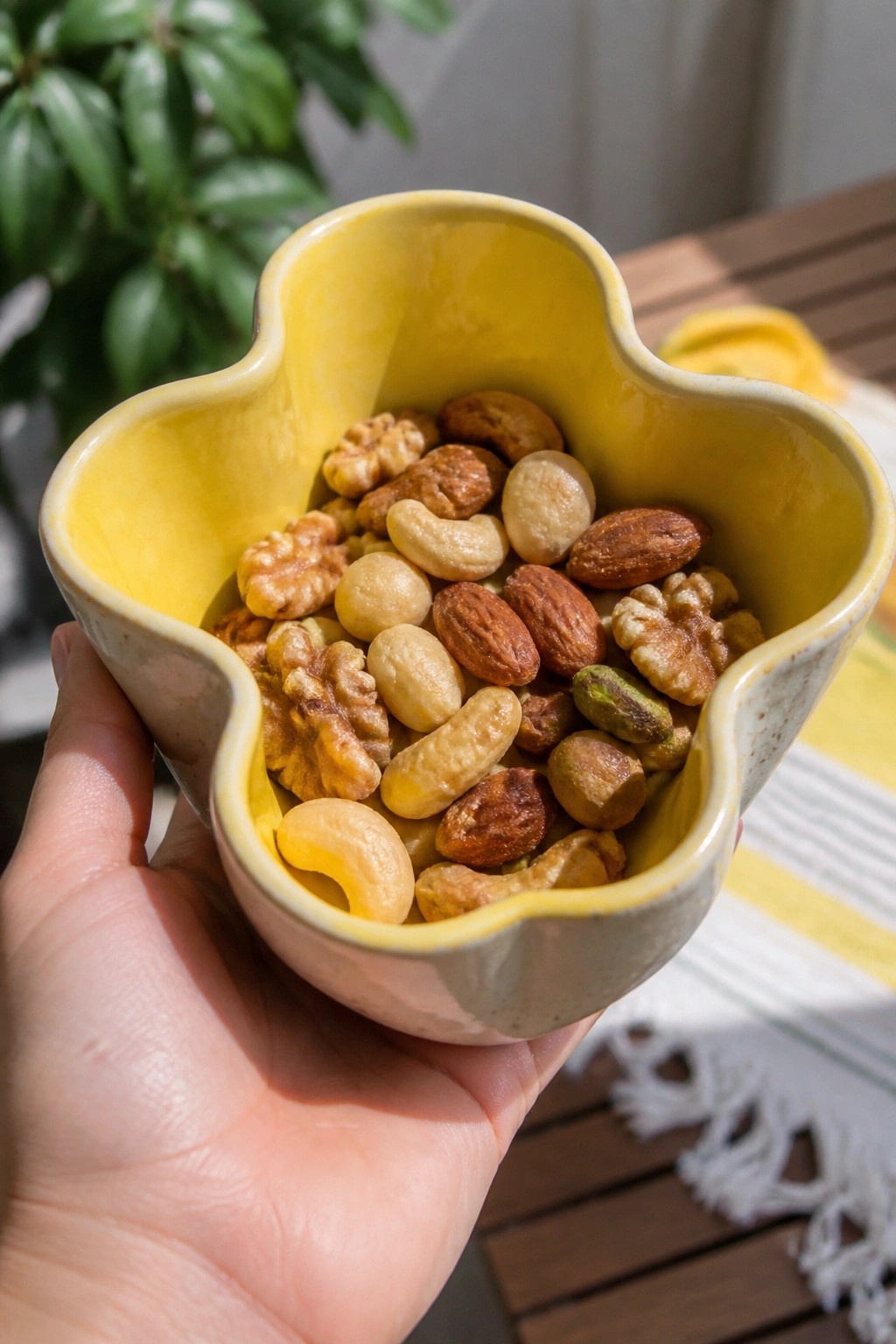
A small ceramic bowl formed with five rounded lobes creates a simple flower outline that works as a snack server. The bright yellow interior glaze contrasts with the light speckled exterior, helping the contents show up clearly. This shape stays compact enough for individual portions of nuts, seeds, or small appetizers on a table. It belongs in the everyday serving bowl category rather than a large mixing or display piece.
The lobed rim gives the bowl a finished look without added carving or painting. You could repeat the same outline in different glaze colors to make a set for snacks or dips. The size also works as a small holder for keys or loose change on a desk. Scaling the form slightly larger turns it into a side dish for olives or pickles while keeping the same petal edge.
Rustic Dark Brown Ceramic Bowl for Casual Serving
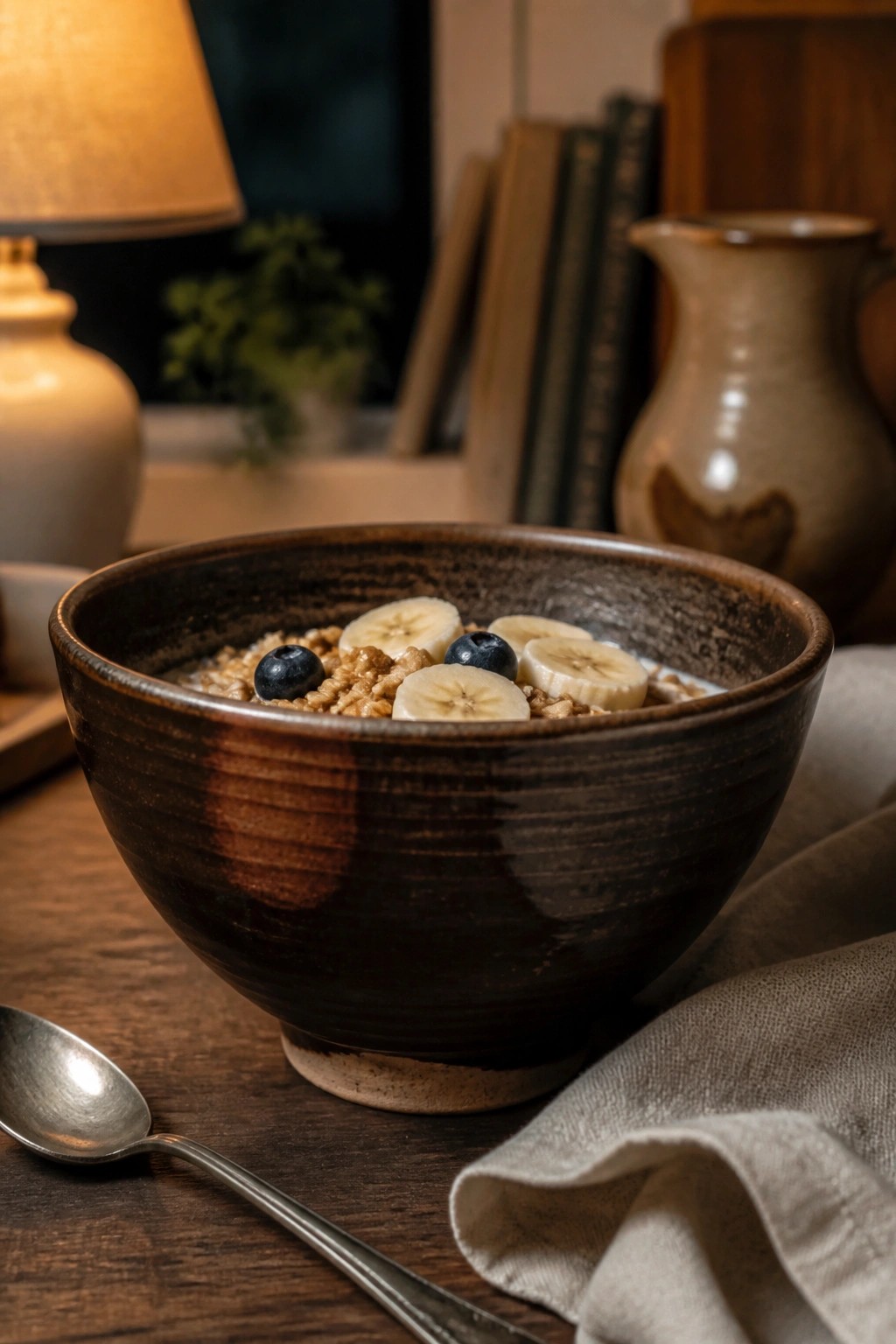
A wide ceramic bowl with a deep brown matte glaze and visible texture makes a solid choice for everyday breakfasts or simple side dishes. The slightly irregular rim and earthy tone come from a handmade process that keeps the form grounded and functional. This kind of bowl pairs easily with neutral table settings and works well when you want the food itself to stand out.
What makes this idea useful is how the dark glaze lets lighter foods like oatmeal or fruit pop without needing extra decoration. The shape translates well to smaller versions for dips or larger ones for salads, and the textured surface forgives small throwing marks during making. In a kitchen, this style holds up to daily use while still looking intentional on a wooden table or linen napkin.
Frequently Asked Questions
What size pottery bowls are ideal for everyday serving of meals like soups or salads? Medium bowls measuring 6 to 8 inches across offer the best balance for daily use. They hold generous portions without overwhelming small tables and work well for both individual servings and shared dishes.
How can I create an attractive table setting with pottery bowls as the focus? Place bowls of different heights and colors down the center of the table to form a simple runner effect. Fill some with fresh fruit or herbs while leaving others empty to hold utensils or napkins for a layered yet practical look.
Are pottery bowls safe to use in the microwave or dishwasher? Many glazed pottery bowls handle microwave use well for reheating but check the maker label first. Dishwasher safety varies so hand washing with mild soap preserves the finish longer and prevents chipping on delicate pieces.
How do I mix pottery bowls with my existing plates and glassware? Choose bowls in neutral tones like cream or terracotta to complement most dinnerware sets. Add one or two accent colors that echo elements already in your collection such as a blue rim that matches your glasses for a coordinated appearance.
What steps help pottery bowls last through regular daily handling? Store bowls on lower shelves to reduce the chance of drops and stack them with soft cloths between each one. Avoid sudden temperature shifts like moving from fridge to oven and wipe them dry right after washing to keep the surface in good condition.

Pottery Path is my cozy corner of the internet where I share clay ideas, pottery inspiration, and simple projects you can recreate at home. I love exploring everything from air dry clay to handbuilt pottery to cute minis that brighten your day. My goal is to make clay crafting feel easy, fun, and welcoming for anyone who wants to try it.
You will find beginner friendly tutorials, creative pottery painting ideas, and lots of warm inspiration for slow and happy crafting. If you enjoy hands on creativity, this space will feel like home.