
I have been making pottery planters for my succulents and small plants for a few years now.
They seem to suit these kinds of plants because the clay helps with drainage and keeps things simple.
I have tried different shapes and sizes along the way and kept track of what actually works in my space.
Some of the ideas came from my own experiments while others were things I picked up from local craft groups.
Here are twenty of them that might be worth trying if you want to make a few for yourself.
Compact Rounded Planter with Horizontal Texture Ridges
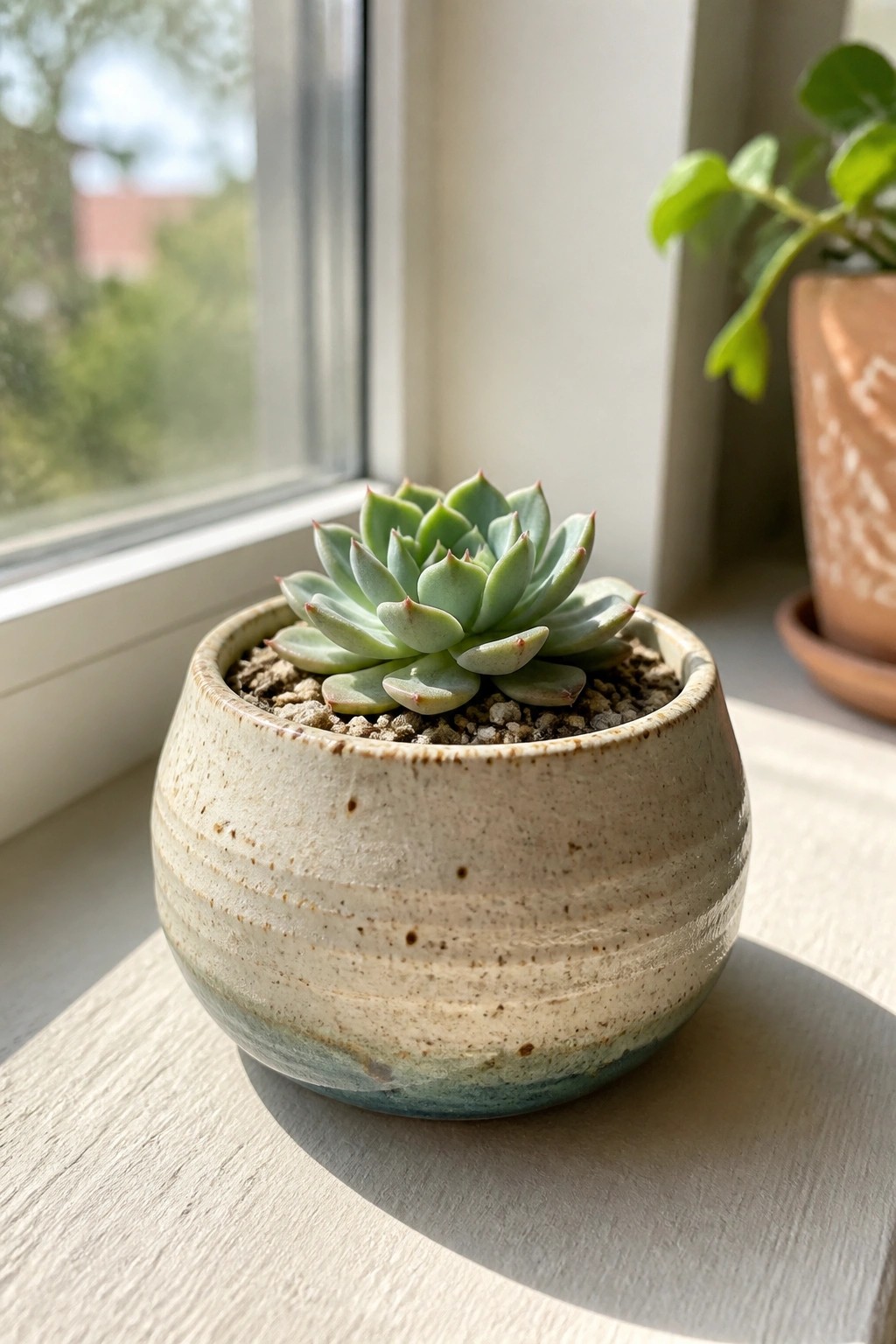
A small handmade ceramic planter shaped like a low, wide bowl works well for succulents because the rounded form keeps the focus on the plant while the horizontal ridges add subtle surface variation. The speckled glaze layers move from warm beige at the top through brown tones into a soft blue-green base, giving the piece depth without busy patterns. This style fits the simple planter category and suits small houseplants that need good drainage and a stable base.
What makes this idea useful is the neutral color range that blends into most rooms without competing with the plant. The small scale means it fits easily on a windowsill or shelf, and the same shape could be reworked with different glaze combinations or left unglazed for a more matte look. For a gift, this kind of planter pairs nicely with a single succulent and requires no extra wrapping. The ridged texture also gives you a starting point to experiment with carving or stamping on future versions.
Hanging Planter with Integrated Clay Straps
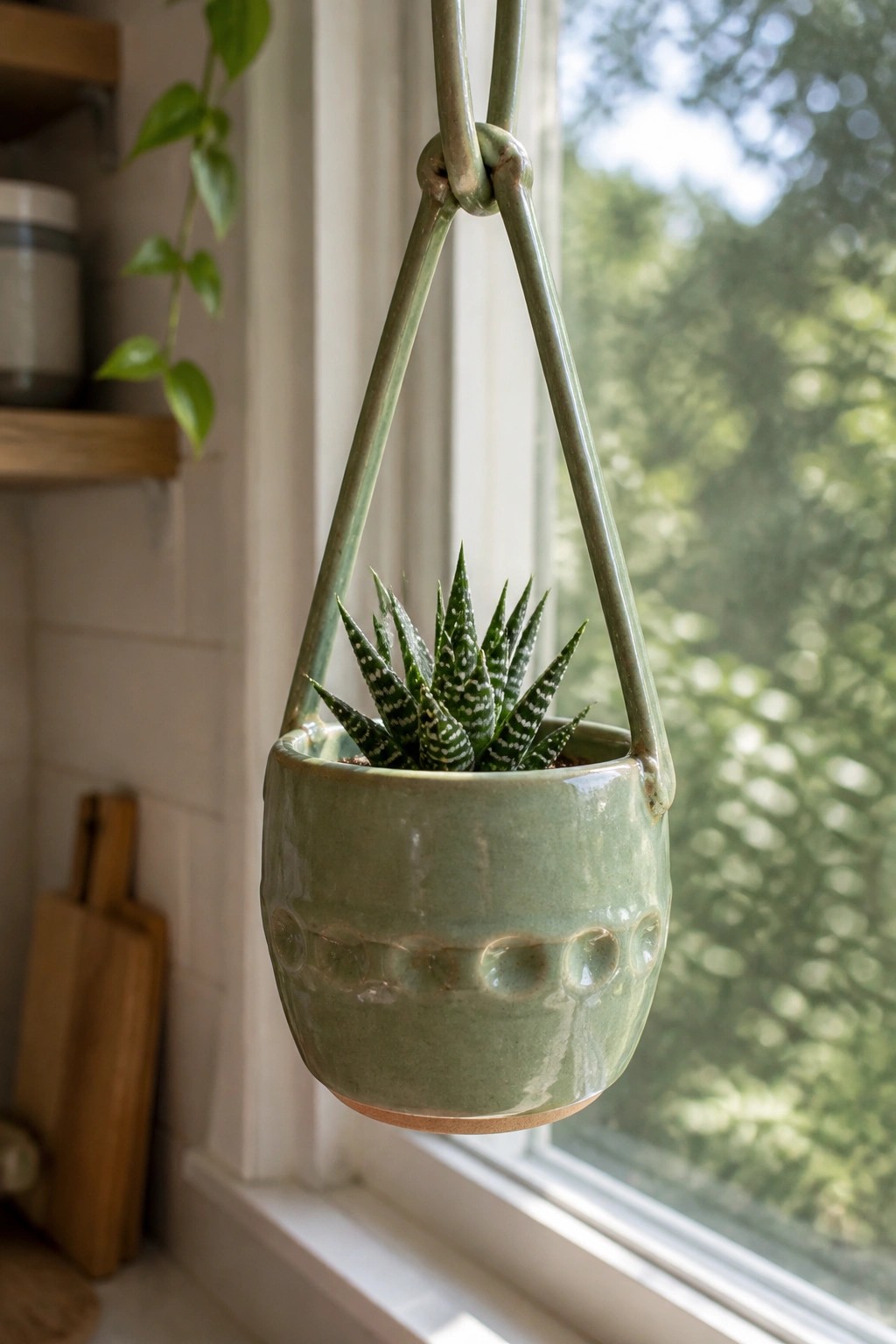
A hanging planter made entirely from glazed ceramics uses three molded straps that join at the top to create the suspension system. The rounded pot body includes a band of impressed circles around the middle for added surface detail while keeping the overall shape simple. A single sage green glaze covers both the pot and the straps so the piece reads as one object rather than separate parts. This keeps the design compact and suitable for small succulents that need bright light but limited root space.
The shape does a lot of the work here because the built-in hanger removes the need for separate hardware that can rust or look mismatched. You could adapt the impressed circle band by changing the spacing or size to suit a taller or wider pot. In a kitchen or bathroom this style works well for trailing plants since the straps keep everything off the counter. For a gift the matching clay hanger makes the piece feel more finished than versions that rely on cord or wire.
Two-Tone Wall Pocket Planter
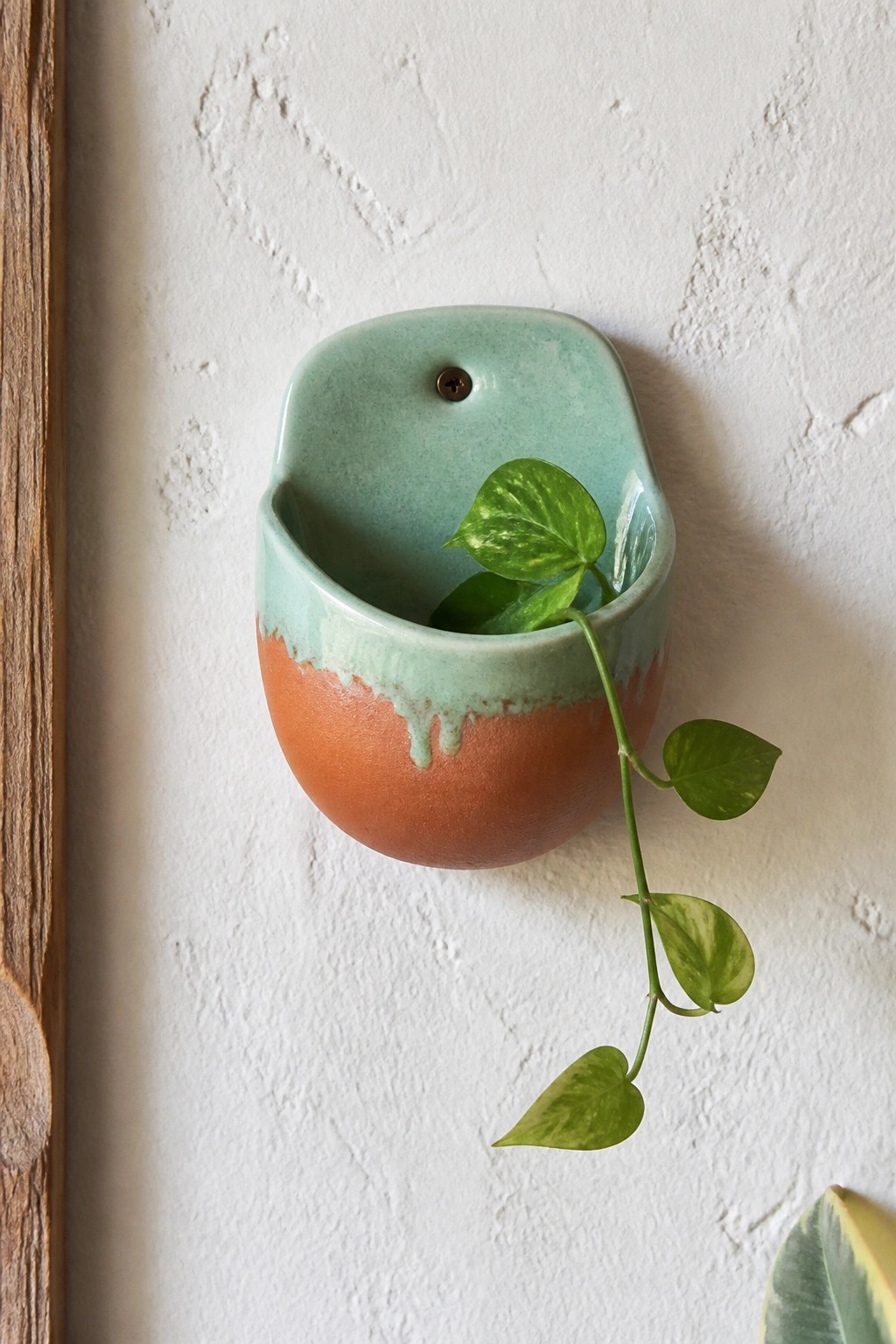
A wall pocket planter gives you a simple way to hang small plants directly on a vertical surface. This version uses a rounded ceramic form with a flat back and one hole at the top for a screw or hook. The glaze covers the upper half in a soft green that drips down over the terracotta lower section, so the color change itself becomes the main design element without extra carving or handles.
The compact shape works well in narrow hallways or above a desk where a regular pot would not fit. You can adapt the same pocket style by changing the glaze colors or making the opening slightly wider for different plant sizes. A piece like this stands out on Pinterest because the hanging method is built into the form rather than added later.
Sculpted Cat Face Ceramic Planter

A small ceramic planter formed as a cat head gives a simple way to display succulents. The shape includes upright ears, a rounded body, and short feet that lift it off the surface. Painted eyes, whiskers, and soft pink cheeks on the clay surface add detail while keeping the overall form compact. This turns a basic planter into a figurine that still functions for soil and a small plant.
The compact scale works on narrow shelves or grouped with other pots. You can adapt the same idea by changing the animal or reducing the face to just ears and eyes for quicker work. Painted whiskers help the piece stand out among plain planters without needing complex glazing. For gifts, repeat the form in two sizes or swap the cheek color to fit different rooms.
Scalloped Bowl Planter for Small Succulents

A low ceramic bowl with a wavy scalloped rim works well as a succulent planter when the interior is finished in a solid yellow glaze. The wide opening and shallow depth let you pack several small rosette plants together while still leaving room for gravel or top dressing. The bright interior color stands out against the softer gray exterior and keeps the plants as the main visual focus.
What makes this idea useful is how the scalloped edge gives the bowl personality without extra carving or stamping. You could repeat the same shape in other glaze colors to create a matching set for a windowsill or shelf. The small scale makes it simple to throw or hand-build a few at once, and the basic form adapts easily if you want to turn it into a slightly deeper version for a different plant type.
Three-Section Color-Blocked Ceramic Planter

A divided ceramic planter with three compartments lets you grow several small succulents together without crowding them into one pot. The low rectangular form keeps the piece stable on a flat surface while each section gets its own glaze color, which keeps the plants visually distinct. The handmade clay construction and simple straight walls make this a straightforward shape to form by hand or with basic molds.
What makes this idea useful is how the connected sections reduce the number of individual pots needed on a narrow windowsill or shelf. You could adapt the same layout with just two compartments for tighter spaces or change the glaze colors to match different rooms. The divided design also works for testing different soil mixes side by side without buying extra containers.
Three-Section Ceramic Planter for Small Succulents

A handmade ceramic planter with three joined cylindrical sections creates separate planting spots in one compact unit. Each chamber holds a different small succulent while the connected base keeps the whole piece stable on a flat surface. The matte speckled finish and straightforward forms keep the design simple so the plants remain the main focus.
What makes this idea useful is how it groups several plants together without needing multiple separate pots. You can adapt the layout by changing the number of sections or adjusting their widths to fit different plant sizes. This shape works especially well on a windowsill or desk where space is limited and you want easy movement of the entire group. For a gift, the same connected form can be scaled down or made with just two sections.
Scalloped Rim Planter for Small Succulents

A small ceramic planter with an irregular scalloped rim gives succulents room to cluster without taking up much space. The turquoise glaze on the upper half blends into a brown base, creating a simple two-tone finish that highlights the plant rather than competing with it. This type of handmade planter works as a basic container for tiny houseplants that need good drainage and minimal soil depth. The wavy edge adds shape while keeping the overall form compact and easy to move.
What makes this idea useful is the small scale that fits on narrow windowsills or shelves where larger pots would not work. You could repeat the scalloped rim on a slightly wider version to hold three or four more plants in a row. The earthy glaze colors make it easy to match with wood or stone surfaces without extra decoration. For a different take, the same rim style could be applied to a shallow tray for cuttings instead of a full pot.
Donut-Shaped Ceramic Planter with Side Opening

A ring-shaped ceramic planter places the plant in a side pocket so the main body forms a continuous loop that rests flat on a surface. The blue glaze shows a slightly textured finish across the curved form, and the opening is sized to hold a small succulent without extra hardware or drainage adjustments. This approach turns a basic wheel-thrown or hand-built ring into a functional planter by shifting the planting area off center.
The shape does a lot of the work here because the loop creates instant visual contrast against ordinary round pots. You could scale the same ring down for a windowsill grouping or change the glaze to matte black for a different look. In a small apartment, this style fits where a tall pot would crowd the space, and the side opening keeps the plant accessible for watering. A version with two openings on opposite sides would let you grow more than one plant while keeping the same overall form.
Goblet-Shaped Ceramic Planter with Gradient Glaze

A small ceramic planter formed like a goblet gives succulents a raised position while keeping the overall size compact. The wide upper bowl holds the soil and plant, and the narrow stem with a footed base lifts it off the surface without adding bulk. The glaze moves from a pale cream at the rim down to a reddish-brown at the base, creating a simple color shift that pairs with the plant rather than competing with it.
What makes this idea useful is the way the pedestal shape adds height without needing extra table space. The same form works on a shelf, desk, or windowsill where a flat pot would sit too low. You can adapt the proportions for different small plants by widening the bowl slightly or shortening the stem, and the two-tone glaze effect comes from layering a lighter glaze over a darker one before firing.
Painted Face Mug Planter for Succulents
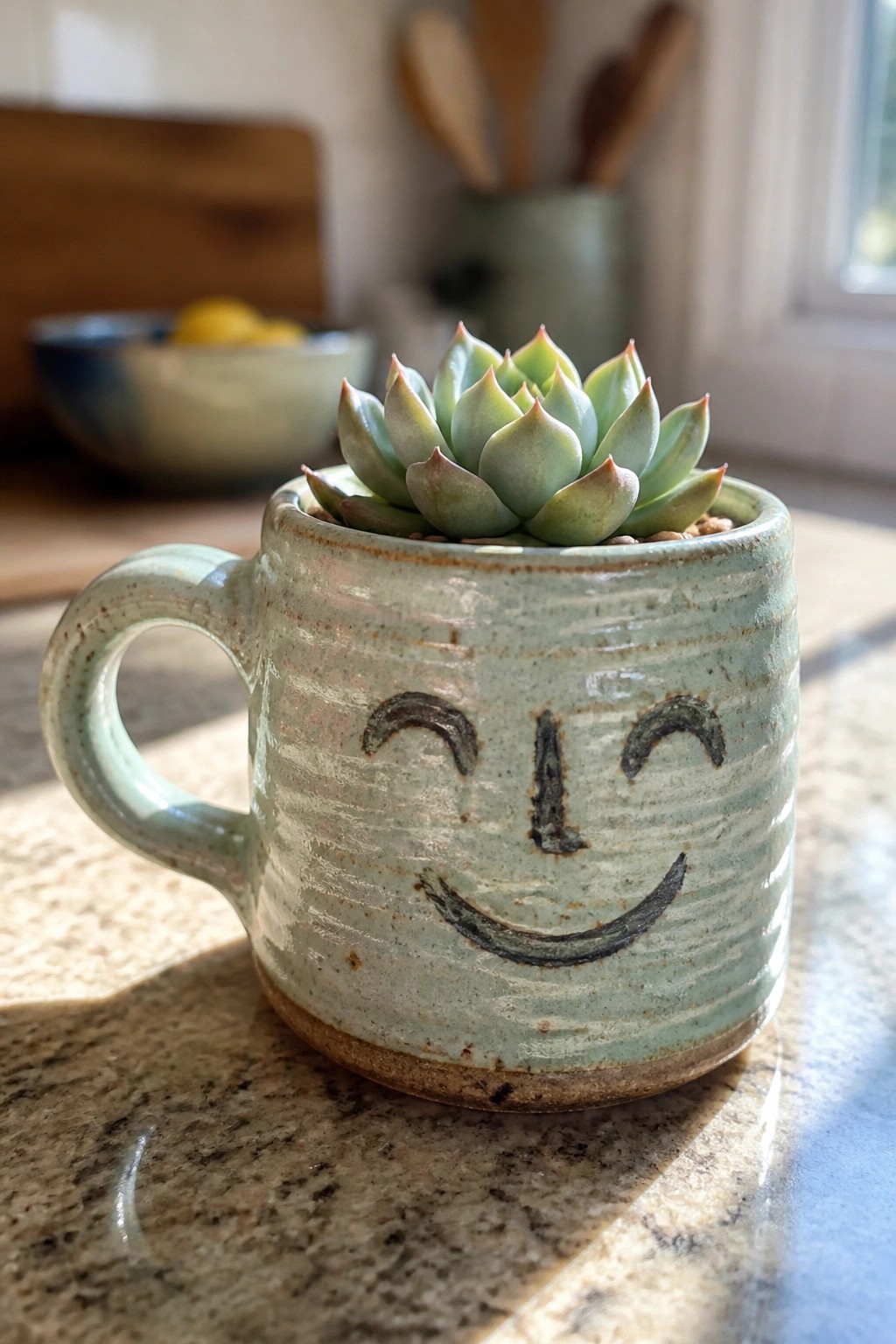
A small ceramic mug finished with a light green glaze and brown speckles works well as a planter when you add a simple painted face on the front. The round form already gives the right scale for a compact succulent, and the handle stays out of the way while adding an easy grip for moving the plant. Painting the eyes and mouth in a dark slip or underglaze keeps the decoration quick and lets the glaze texture show through.
What makes this idea useful is how the mug shape holds a small amount of soil without needing extra drainage work if you use a liner or drill a hole. The painted face stands out on a kitchen counter or shelf without competing with other decor. You could repeat the same mug form in different glaze colors and swap the face style to match other rooms. This approach also turns leftover or secondhand mugs into planters instead of starting from scratch.
Stacked Ceramic Blocks for Tiered Succulents
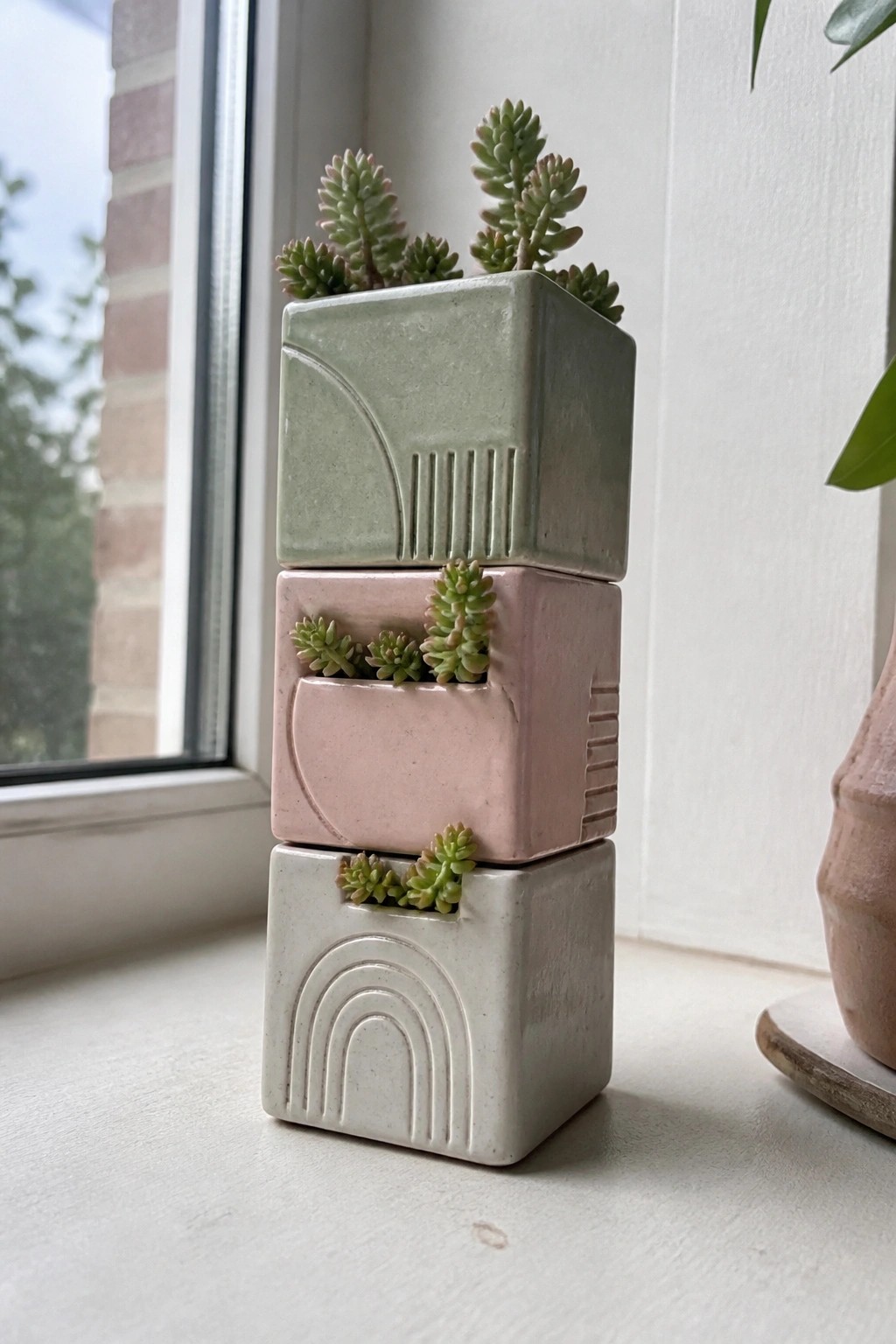
Three square ceramic blocks stack to create a compact vertical planter. Each block uses a different soft matte glaze and has simple geometric shapes carved into the sides, with openings that let small succulents grow out at staggered heights. The bottom block sits flat while the others rest on top, keeping the structure stable without extra hardware. This approach turns basic cube forms into a multi-level plant holder using only the clay shape and surface cuts.
What makes this idea useful is that the blocks can be rearranged or used separately if you want shorter versions. The carved details give visual interest without extra color or decals, so the same shapes work in different glaze combinations. You could adapt the idea by making just the top two blocks for a desk or by adding drainage holes to each one for outdoor use. The clean lines and small scale make it easy to repeat as a set for gifts.
Hexagonal Ceramic Tray for Trailing Succulents

A hexagonal ceramic tray with a ridged rim and green glaze works as a shallow dish planter for small trailing plants. The flat interior holds a thin layer of water or pebbles while stems drape over the sides, letting the plant spread naturally. This form keeps the container low and wide so the focus stays on the growth rather than the pot itself.
The compact hexagon shape fits narrow windowsills or grouped displays without taking much space. You could repeat the same rim texture on round or rectangular versions to match different plant sizes. The glaze color also helps hide mineral deposits from water changes, which makes it practical for ongoing use with plants like string of pearls.
Rectangular Clay Planter for Grouping Succulents

A long, narrow rectangular planter made from clay gives you a single container that can hold several small succulents side by side. The form stays low and shallow, so the plants sit close to the rim without looking buried, and the speckled light glaze over a darker foot keeps the surface simple while still showing the handmade texture. This style works as a basic tray shape with just enough depth for soil and drainage.
What makes this idea useful is how the elongated shape turns a few plants into one neat arrangement on a windowsill or shelf. You could shorten the same form for a single plant or make a wider version if you want more room for different varieties. The plain glaze and brown base add contrast without extra carving or painting, so the piece stays straightforward to throw or hand-build.
Face-Shaped Wall Planter

A wall-mounted planter formed as a simple human face gives small houseplants a vertical home without taking up shelf space. The clay piece has a rounded open top where stems emerge and trail downward while the face details sit below as the main visual element. A matte clay surface covers most of the form with a glossy finish only on the lips to create a quiet contrast. This approach fits the category of sculptural wall planters that turn a basic container into a hanging display.
What makes this idea useful is the vertical profile that works on narrow walls or beside windows where table space is limited. You could adapt the same face shape into a shorter version for a bathroom or add a drainage hole at the base if you want to use it for succulents. The neutral clay tone pairs easily with different leaf colors and room styles. For a gift this form stands out because it reads more like wall art than a typical pot.
House Shaped Ceramic Planter with Removable Roof
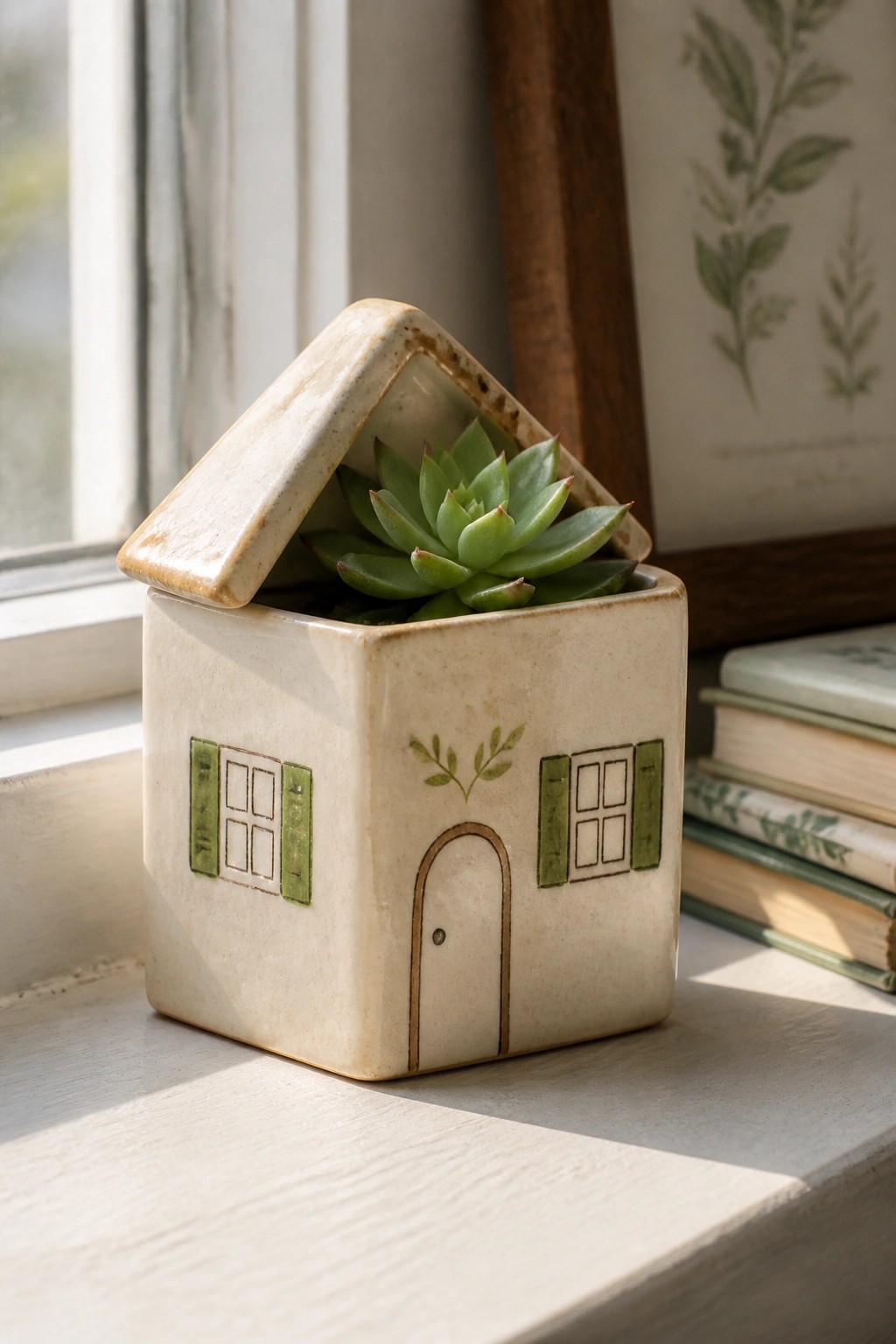
A square ceramic planter formed like a small house uses a lift-off roof section to create an opening for the plant. Painted details include side windows with green shutters, an arched front door, and a simple leafy branch motif above the door. The off-white glaze covers the main body while the roof shows a slightly different tone from use. This keeps the house shape clear even when a succulent is growing inside.
The square form sits steady on narrow ledges or shelves where round pots might tip. You can adapt the idea by swapping the shutter color or adding different painted trim to match other decor. For gifts the house shape gives a clear theme that still works as a functional planter. The same roof detail could be added to a rectangular version if you want space for a slightly larger plant.
Ring-Shaped Planter with Marbled Glaze

A ring-shaped ceramic planter gives small air plants or succulents a low, stable home without needing much depth. The wide, flat form sits securely on shelves while the central hole lets the plant sit nestled in the middle. The blue-green marbled glaze creates soft color variation across the surface that contrasts nicely with the green foliage. This approach fits the category of sculptural planters that also serve as simple decor objects.
What makes this idea useful is how the ring shape keeps the focus on the plant while adding an interesting outline from any angle. You could adapt the same marbled glaze technique to a plain oval or rectangular tray if making a full ring feels complicated on the wheel. The small scale works well for grouping several pieces together on a windowsill or desk. For Pinterest, the hole in the center creates a clean silhouette that photographs distinctly against wood or neutral backgrounds.
Mottled Green Ceramic Planter with Matching Saucer

A small rounded ceramic planter paired with a shallow saucer gives succulents a stable base while letting excess water drain away from the roots. The handmade piece uses a glossy green glaze that shifts in tone across the surface, creating visual interest without added decoration. The wide opening and low profile keep the focus on the plant while the separate saucer completes the functional set.
The compact size fits easily on a kitchen counter or narrow shelf where larger pots would crowd the space. You can adapt the same shape by changing the glaze to a matte finish or testing a slightly taller rim for plants that need more root room. Keeping the saucer as part of the design prevents water rings on furniture and makes the whole piece feel more finished.
Connected Three-Section Ceramic Planter

A handmade ceramic planter formed by joining three small rounded sections into one continuous shape works well for grouping several succulents together. The piece uses a speckled glaze that moves from green on the left through a pale middle tone to a warmer pinkish section on the right, giving each planting area its own color without added decoration. The low, wide profile keeps the focus on the plants while the connected form holds everything in a single object.
What makes this idea useful is the way the joined shape creates multiple planting spots without taking up extra shelf space. You can adapt the same layout by making just two sections or scaling the overall size up or down depending on the plants you want to use. This type of planter fits well on a narrow windowsill or desk where separate pots would crowd the surface. For Pinterest, the combination of the organic outline and the shifting glaze colors gives it a clear visual hook that stands out from plain round pots.
Sculpted Hands Planter for Small Houseplants
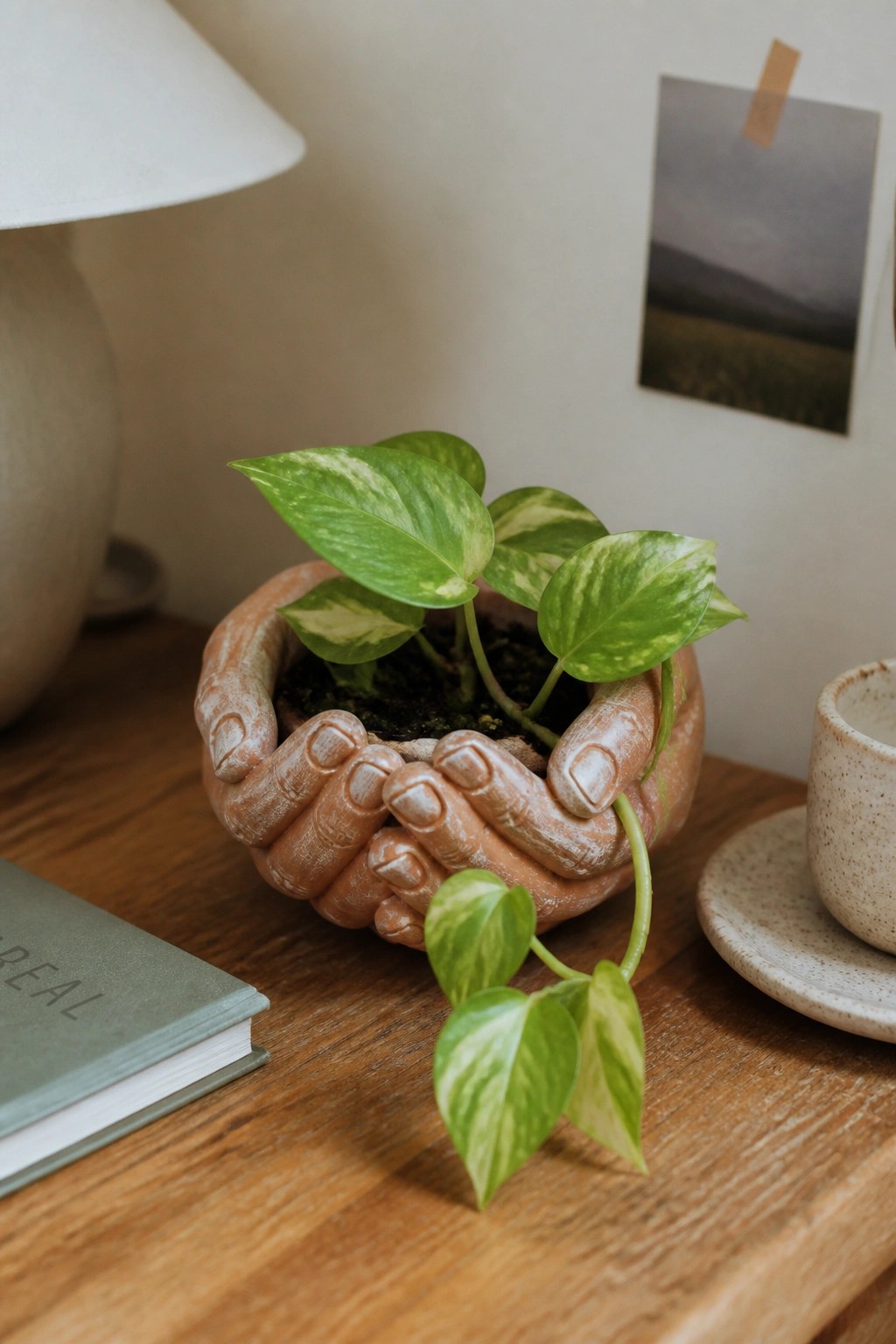
A hand-sculpted clay planter made from two cupped hands forms the container for a small houseplant. The fingers are modeled with visible knuckles and nails, and the hands are positioned to create an open bowl shape that holds soil. The terracotta clay is left mostly matte with light surface highlights on the fingertips. This approach turns a basic planter into a figurative clay object that still functions as a pot.
What makes this idea useful is the cupped hand shape that already provides a stable, rounded interior for roots. You could rework the same form by changing the hand position or scaling it down for succulents on a windowsill. The neutral clay color keeps the focus on the sculpture rather than bright glaze, so it pairs easily with most plant varieties. For a gift, the same hand motif could be simplified to just the palms without the detailed fingers.
Frequently Asked Questions
What pottery types work best for succulents and small houseplants? Unglazed terracotta is a top choice because its porous surface allows air to reach the roots and helps excess moisture evaporate quickly. Ceramic or stoneware options also work well if they include drainage holes, but avoid plastic or sealed pots that trap water and lead to root rot.
How do I add drainage to a pottery planter without holes? Drill a hole in the bottom with a masonry bit designed for ceramic or clay. If drilling is not possible, place a layer of coarse gravel or broken pottery shards at the base before adding soil. This setup helps prevent water from pooling around the roots of succulents and small houseplants.
How often should I water plants in these pottery ideas? Check the soil with your finger and water only when the top inch feels dry. Pottery like terracotta dries out faster than glazed pieces, so succulents may need watering every one to two weeks while small houseplants might require more frequent checks depending on light and temperature.
Where can I find or create unique pottery planters for these designs? Look at local thrift stores, pottery studios, or online marketplaces for affordable secondhand options. For custom looks, try painting plain pots with non-toxic outdoor paint or wrapping them in natural materials like jute to match the fresh ideas in the article.
What size pottery planter is ideal for starting small houseplants? Choose a container that is one to two inches wider than the current root ball. This size gives room for growth without leaving too much empty soil that stays wet and harms succulents or delicate houseplants.

Pottery Path is my cozy corner of the internet where I share clay ideas, pottery inspiration, and simple projects you can recreate at home. I love exploring everything from air dry clay to handbuilt pottery to cute minis that brighten your day. My goal is to make clay crafting feel easy, fun, and welcoming for anyone who wants to try it.
You will find beginner friendly tutorials, creative pottery painting ideas, and lots of warm inspiration for slow and happy crafting. If you enjoy hands on creativity, this space will feel like home.