
I started out with pottery by making small things because they were easier to handle as a beginner.
My first few pieces were basic shapes that didn’t take long to complete.
I think those manageable forms are a good way to build skills without getting discouraged.
I’ve gathered 17 project ideas that stay simple from start to finish.
They focus on everyday items you can actually use around the house.
Polka Dot Mini Mug

A small ceramic mug with a rounded body and pulled handle gives beginners a manageable form that still includes basic shaping and attachment skills. The green glaze with scattered white dots adds a simple painted motif that reads clearly even on a compact surface. This idea falls into the mug category and works as a low-risk way to practice even walls and a functional spout area without needing a full-size piece.
The small scale makes this easy to adapt into an espresso cup or a small creamer by adjusting the height slightly during throwing. You could swap the dots for stripes or leave the surface plain and change only the glaze color to match different kitchen themes. In a kitchen, this kind of piece fits well for single servings or as a small holder for spoons and tea bags. For a gift, the same shape and dot layout can be repeated quickly once the basic form is learned.
Leaf-Shaped Ring Dish

A leaf-shaped ring dish gives you a compact tray for keeping rings or small jewelry in one spot. The form uses a simple leaf outline with slightly raised edges and faint vein lines that add texture and help contain items. Soft pink glaze with light green accents on the veins keeps the surface smooth while giving the piece a subtle natural look. This fits the ring dish category and stays small enough to place on a dresser, bathroom counter, or windowsill.
What makes this idea useful is its small footprint that works in tight spaces where a full bowl would feel too big. You could rework the same leaf form into a plain oval or rectangle if you want something quicker to shape. The vein details are easy to press in with a tool before glazing, so the design stays simple for early projects. In a bathroom this kind of piece keeps rings off wet surfaces, and the shape scales down well for earrings or a single necklace too.
Hedgehog Planter

A hedgehog planter is a small clay form shaped like an animal with a hollow back that holds soil and a tiny plant. The body uses a rounded slab or pinched base with a pinched snout, small feet, and incised lines across the back to create texture before a brown glaze is applied. This approach keeps the project compact and focused on one main form plus simple surface marks rather than complex construction. It belongs in the small planter or desk decor category because the open top and low profile suit succulents or small herbs.
What makes this idea useful is that the same basic animal body can be changed into a different creature by swapping the head shape and leg placement. The small size lets it sit on a narrow shelf or windowsill while still giving a plant room to grow. You could skip the carved lines for a smoother finish or add a drainage hole in the base if you want to use it for plants that need drier soil. For a gift, pair the finished piece with a succulent cutting so the recipient has everything ready to plant.
Citrus Slice Pinch Bowl

A small ceramic bowl shaped like a halved citrus fruit gives you a compact holder that works for spices, salt, or small snacks in the kitchen. The form uses a scalloped rim and a painted interior divided into wedge sections with yellow and orange tones to suggest fruit segments. This turns a basic round bowl into a recognizable kitchen item without adding extra parts or complex construction. The design stays functional while keeping the overall size easy to manage on a counter or stovetop.
The small scale makes this easy to adapt into other fruit themes by swapping the glaze colors for lime or grapefruit versions. You could also simplify the painting to just a few lines if you want a quicker version for gifts or daily use. In a kitchen, this kind of piece keeps measuring spoons or loose tea handy without taking up much space. The painted segments help the bowl show up well in photos for project sharing.
Mini Ceramic Salt Bowl With Resting Spoon

A small wheel-thrown bowl in a light speckled glaze pairs with a simple wooden spoon that rests across the rim. The compact size and low profile make it work as a salt cellar, spice holder, or small condiment dish in the kitchen. The smooth interior and slightly irregular rim keep the form functional while the natural wood spoon adds a practical contrast without extra decoration.
What makes this idea useful is how the spoon turns a basic bowl into a self-contained set. The small scale fits easily on a countertop or table, and the same shape can be adapted into a tiny dip bowl or herb server by adjusting the depth. For a gift, you can repeat the form in different glaze colors while keeping the spoon style consistent.
Painted Ceramic Cat Figurine

A small sitting cat figurine gives beginners a compact form to shape by hand with minimal clay. The rounded body and simple head keep the structure stable while the legs tuck naturally underneath. Painted stripes and facial lines on a light base create the tabby pattern without requiring multiple glaze layers.
What makes this idea useful is how the small scale fits on a desk, shelf, or plant display without crowding the space. The same body shape adapts quickly to other animals by swapping ear angles or tail positions and changing the painted markings. For a gift, something like this combines easily with a candle or small dish set.
Divided Seasoning Dish

A small divided dish formed from two connected bowls gives you separate sections for holding different seasonings or condiments at once. The shape stays compact with one side glazed in teal and the other kept in a lighter clay tone, which helps keep the two areas visually distinct while using only basic pinching techniques. This kind of piece works as a straightforward kitchen item that keeps salt, pepper, or spices within easy reach during cooking.
The small scale makes this easy to adapt by changing the glaze colors or adjusting the size of each section to match what you store most often. It fits well on a counter or table without taking up space and works just as well for serving small amounts of dips or nuts. You could also simplify the form further by making both sides the same size or try it as a starting point for a two-part tray.
Flower Petal Tea Light Holder

A flower-shaped tea light holder uses a simple lobed form where several rounded petals curve upward around a flat center to contain a standard tea light. The petals are pinched and shaped by hand to create an open, slightly irregular bloom that sits low on the table. A glossy glaze in pink with subtle color shifts across the surface catches the light from the flame and emphasizes the edges of each petal.
What makes this idea useful is that the compact size fits easily on a desk, nightstand, or bathroom counter without needing much room. You could rework the same petal layout into a ring dish by keeping the center shallower or turn it into a small soap rest by adding a bit more depth. The shape also translates well to different glaze colors or a matte finish if you want to test surface options on a small piece.
Hanging Moon and Stars Tile
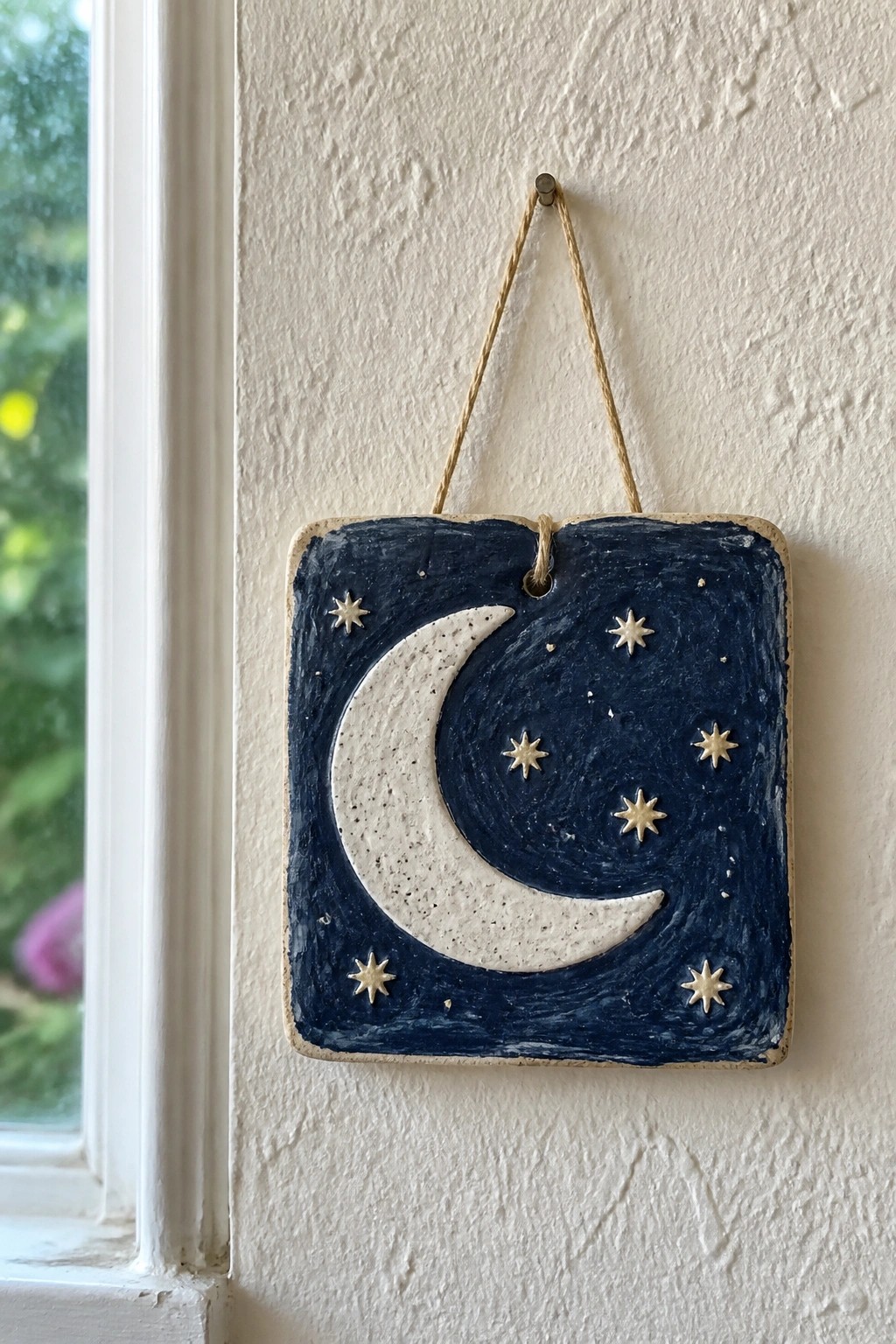
A square ceramic tile works as a compact wall hanging when painted with a solid dark blue background and a white crescent moon. Small stars in a lighter shade are placed around the moon to create a simple night sky pattern. A hole drilled near the top edge lets cord run through for easy hanging on a nail or hook. This decor object stays flat so it needs no extra forming beyond the initial slab.
What makes this idea useful is how the square format fits narrow spots like a window frame or narrow shelf. You could rework the same painted motif onto a round tile or a small coaster set by adjusting star placement to match the new shape. For a gift this takes little material yet still gives a clear finished piece once the colors are set. The contrast between the dark background and light moon makes the design readable from a distance without extra detail.
Rectangular Ring Dish With Incised Leaves

A small rectangular tray makes a practical ring dish when the sides stay low and the surface includes a few carved leaf shapes. The light base glaze lets the incised lines show up through shadow and slight texture while the blue rim adds a simple border without extra painting. This form stays flat enough for rings to sit steady yet shallow enough to keep the whole piece compact on a dresser or shelf.
The shape does a lot of the work here because the rectangular proportions fit neatly in a drawer or on a nightstand without taking much space. You could adapt the leaf pattern to a single stem down the center or replace it with straight score lines if you want a faster version. For a gift this size works well since it needs only a small amount of clay and still looks finished once glazed.
Mini Bud Vase

A small handmade ceramic bud vase with a rounded body that narrows into a short neck works well for holding single flower stems or small cuttings. The gradient glaze shifts from a deeper orange at the base to a lighter tone near the rim, giving the surface some visual movement while staying simple. This compact shape keeps the piece functional as a holder without competing with whatever stem you place in it.
The small scale makes this easy to adapt by changing the glaze colors or making a set in different sizes for a windowsill or desk. It fits nicely in tight spaces like bathroom counters or kitchen ledges where a full bouquet would feel too big. For a gift, something like this pairs well with a few fresh stems from the garden and requires only basic wheel or hand-building skills to recreate.
Scalloped Soap Dish with Drainage Slots

A scalloped soap dish is a small ceramic tray built with a wavy rim and several long drainage slots down the center. The slots lift the bar slightly so water runs off instead of sitting under the soap. The speckled turquoise glaze adds subtle color variation across the surface while keeping the overall look simple. This project falls into the bathroom item category and stays compact enough to sit on a sink edge or shelf.
What makes this idea useful is the drainage feature, which keeps soap from turning mushy. You could change the rim shape to a plain circle or try a different glaze color to match your tiles. In a bathroom, the tray takes up little counter space and handles daily use without extra hardware. The same basic form could be lengthened slightly to hold a razor or small bottle as well.
Smiling Face Toothbrush Holder

A three compartment ceramic holder makes a practical bathroom item for storing toothbrushes or small brushes. Each opening is surrounded by a simple face detail that adds a repeated pattern across the surface without extra steps. The rounded block shape and drip glaze finish keep the form easy to form while giving the clay some surface interest.
What makes this idea useful is that the same cylinder layout can be adapted for pens on a desk or small kitchen tools. You could change the face details to different expressions or leave them off for a faster version. The compact size fits on a sink edge or shelf without taking much space, and the idea translates well to other small storage needs like a makeup brush caddy.
Small Ceramic Shapes as Table Rests

Small ceramic pieces cut into basic outlines such as a fish, leaf, or star make practical table rests. Each form receives a single glaze coat that highlights the low-relief details like fins or veins while keeping production simple. The compact size and flat backs allow the pieces to sit steadily on a tabletop without tipping. This approach belongs in the kitchen-item category and works especially well for chopstick or utensil rests.
The small scale makes this easy to adapt because you can press the same shapes from a single slab and fire them together. You could enlarge the forms slightly to create drawer knobs or key holders while keeping the same outlines and glaze choices. In a kitchen these rests keep utensils off the table surface and add a quick handmade accent to place settings. For a gift, something like this takes minimal clay yet still feels considered because the shapes are clear and the colors stay soft.
Ceramic Ring Cone

A cone-shaped ceramic ring holder keeps rings neatly stacked and easy to grab on a dresser or nightstand. The tapered form lets multiple rings rest at different heights while the subtle ridges prevent them from sliding down too far. A single glossy glaze in deep blue tones gives the piece a clean finish without extra decoration. This project belongs in the small holder category and stays compact enough for quick making and firing.
What makes this idea useful is how the basic cone can be adjusted in height or width to suit different ring collections. A shorter version works on a bathroom counter for everyday pieces while a taller one fits a jewelry tray. Change the glaze color or skip the ridges for a smoother look if you want something simpler. The small scale also makes it straightforward to batch out a few at once for gifts.
Crescent Moon Incense Holder
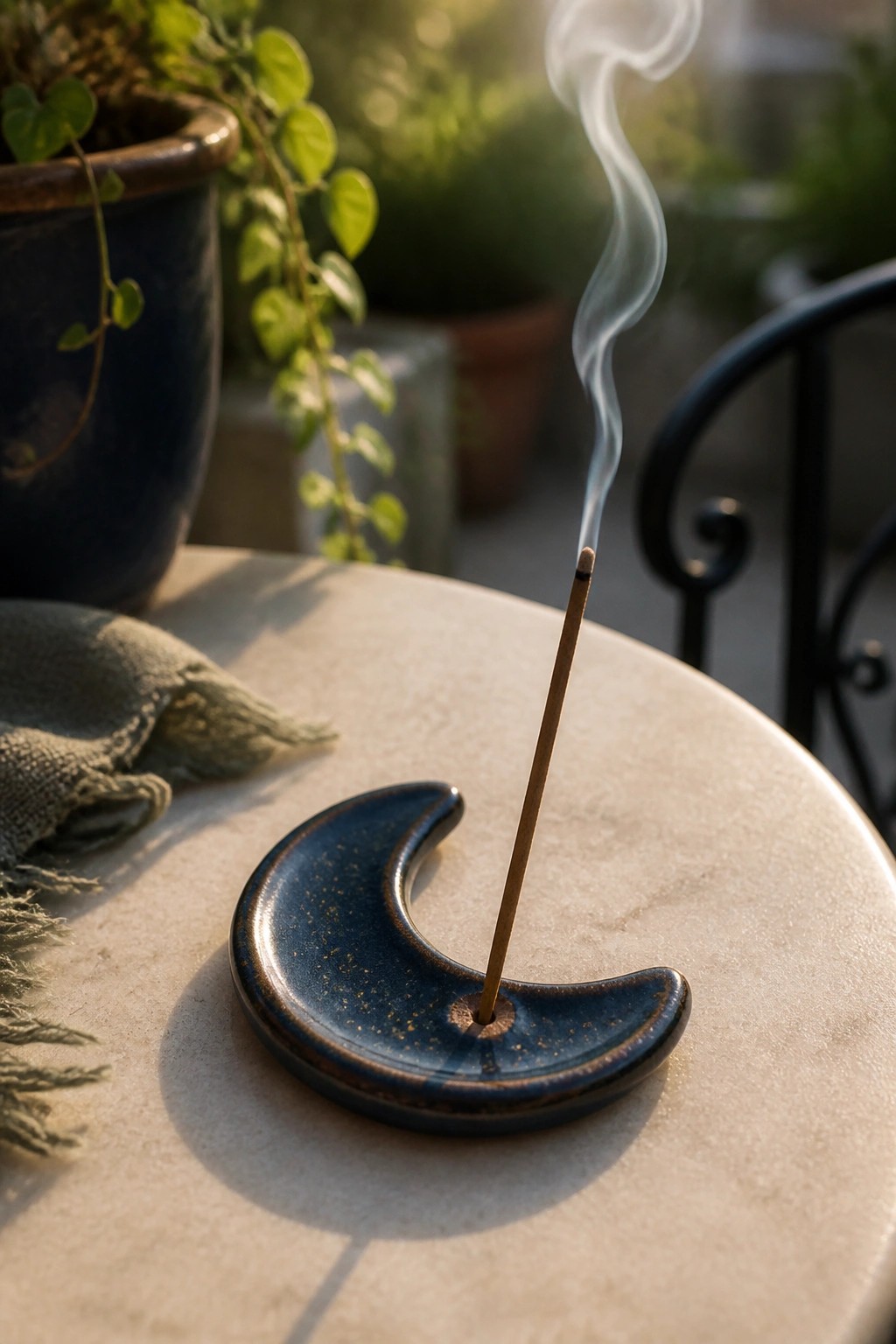
A crescent moon incense holder is a compact ceramic piece designed to keep a single stick upright. The curved body has a small drilled hole near one end that supports the stick while the rest of the form catches falling ash. A deep blue glaze with fine gold flecks covers the surface and gives the piece its finished look without added patterns. This project falls into the small holder category and stays simple enough for a beginner to shape by hand or on a wheel.
The curved shape does most of the visual work, so you can keep the form basic and still end up with something distinct. It fits on a narrow shelf or nightstand where a taller burner would feel too big. You could swap the moon curve for a plain arc or oval and use the same hole placement. For a gift, the small scale and speckled glaze make it easy to personalize with different colors while keeping the same footprint.
Pear and Peach Bud Vases

These small bud vases are formed in the shape of pears and a peach, each with a narrow neck opening and rounded body. A simple face is carved into the front of each piece and a clay leaf is attached to the side before glazing. The yellow-green and peachy glazes reinforce the fruit theme while the compact scale keeps them easy to place on a tray or shelf.
The small size works well for single stems or as tiny desk holders, and the same rounded form can be reworked into other fruits like apples or lemons. You can skip the faces for a simpler version or add them with just a few tool marks before the bisque firing. A set of three like this takes up little shelf space yet gives you multiple options for small arrangements or gifts.
Frequently Asked Questions
1. What type of clay works best for these beginner pottery projects? Air dry clay offers an easy starting point for those without access to a kiln while still allowing you to create sturdy small forms. For more permanent results opt for low fire earthenware that can be bisque fired and glazed later. Always wedge the clay thoroughly to remove air bubbles before beginning any project.
2. How long does it typically take to complete one of these small projects? Most manageable forms can be built in a single session of one to two hours. Drying time adds several days depending on humidity levels so plan to work on multiple pieces at once. Firing and glazing extend the total timeline to a few weeks if you use a kiln.
3. What common mistakes should beginners avoid when shaping these forms? Uneven wall thickness often leads to cracks so aim for consistent thin layers throughout. Avoid overworking the clay as this can weaken the structure. Keep your workspace clean to prevent debris from embedding in the surface.
4. Do I need special tools or can household items suffice for these projects? Basic household items like a rolling pin for slabs, a butter knife for cutting, and a sponge for smoothing work well for most small forms. A dedicated pottery tool kit with ribs and loop tools can speed up the process once you gain confidence.
5. How should I care for my finished pieces after they are complete? Allow full drying before any firing to prevent damage. Once glazed and fired store items away from direct sunlight to preserve colors. Handle gently since small pottery can be fragile even after proper processing.

Pottery Path is my cozy corner of the internet where I share clay ideas, pottery inspiration, and simple projects you can recreate at home. I love exploring everything from air dry clay to handbuilt pottery to cute minis that brighten your day. My goal is to make clay crafting feel easy, fun, and welcoming for anyone who wants to try it.
You will find beginner friendly tutorials, creative pottery painting ideas, and lots of warm inspiration for slow and happy crafting. If you enjoy hands on creativity, this space will feel like home.