
I started doing pottery projects with kids because they really respond to hands on activities like this.
Over time I found that sticking to simple shapes makes everything go more smoothly.
Kids can handle making basic bowls or little figures without getting frustrated.
I have collected sixteen of these easy ideas that use everyday forms.
They fit well into a regular afternoon without needing special tools.
Polka Dot Smiley Mug
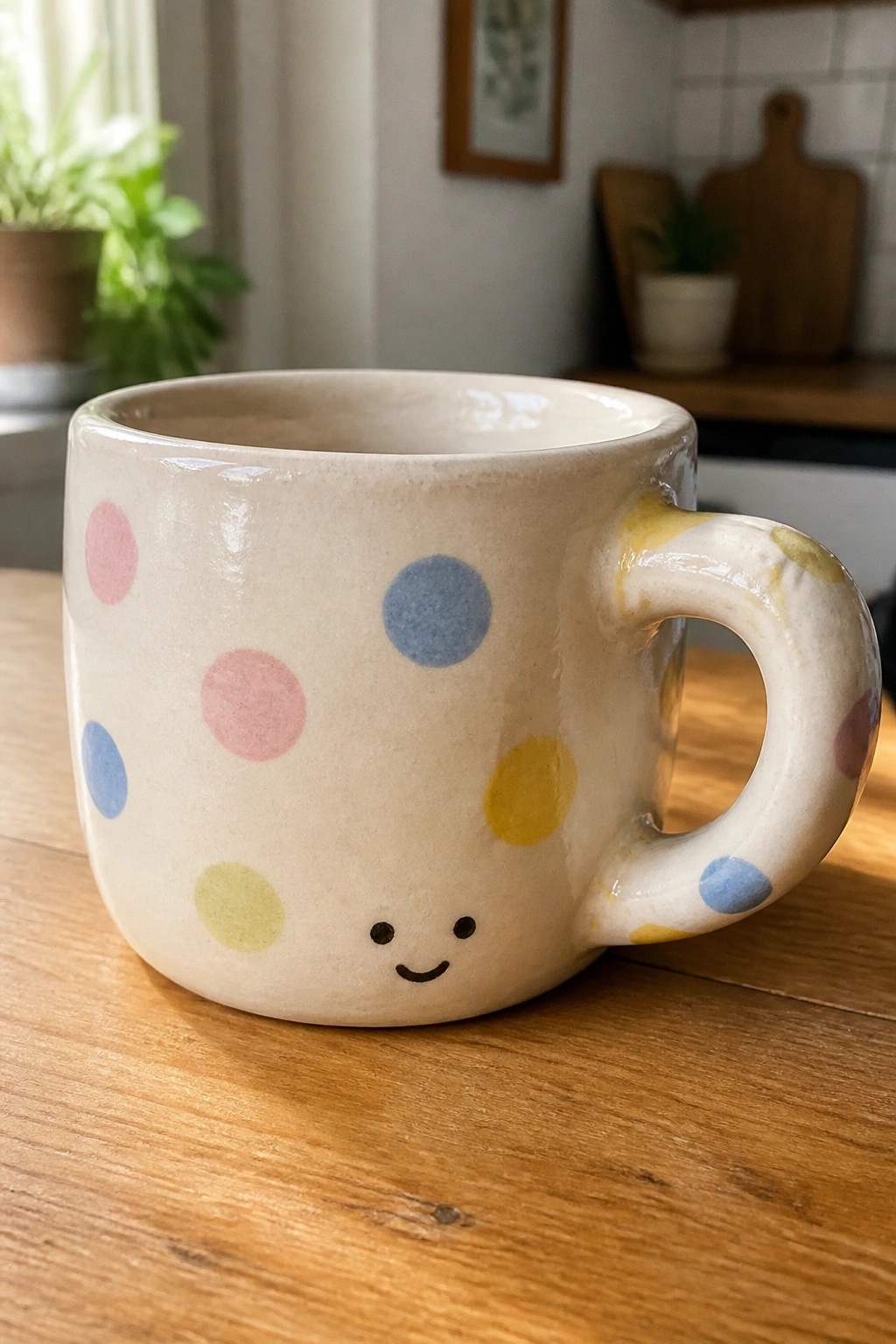
A basic ceramic mug gets its look from scattered dots in several colors plus a simple smiley face painted near the bottom. The round shape keeps the form easy to throw or hand-build while the dots break up the surface without requiring fine detail work. This project falls into the mug category and works as a small drinking cup or a desk holder.
What makes this idea useful is how the dot pattern can be changed to any color set or repeated on a bowl instead. The small size fits well on a child’s bedside table or in a lunchbox setup. You could simplify the face further or skip it entirely and just use the dots to finish a quick batch for gifts.
Simple Striped Snack Bowl
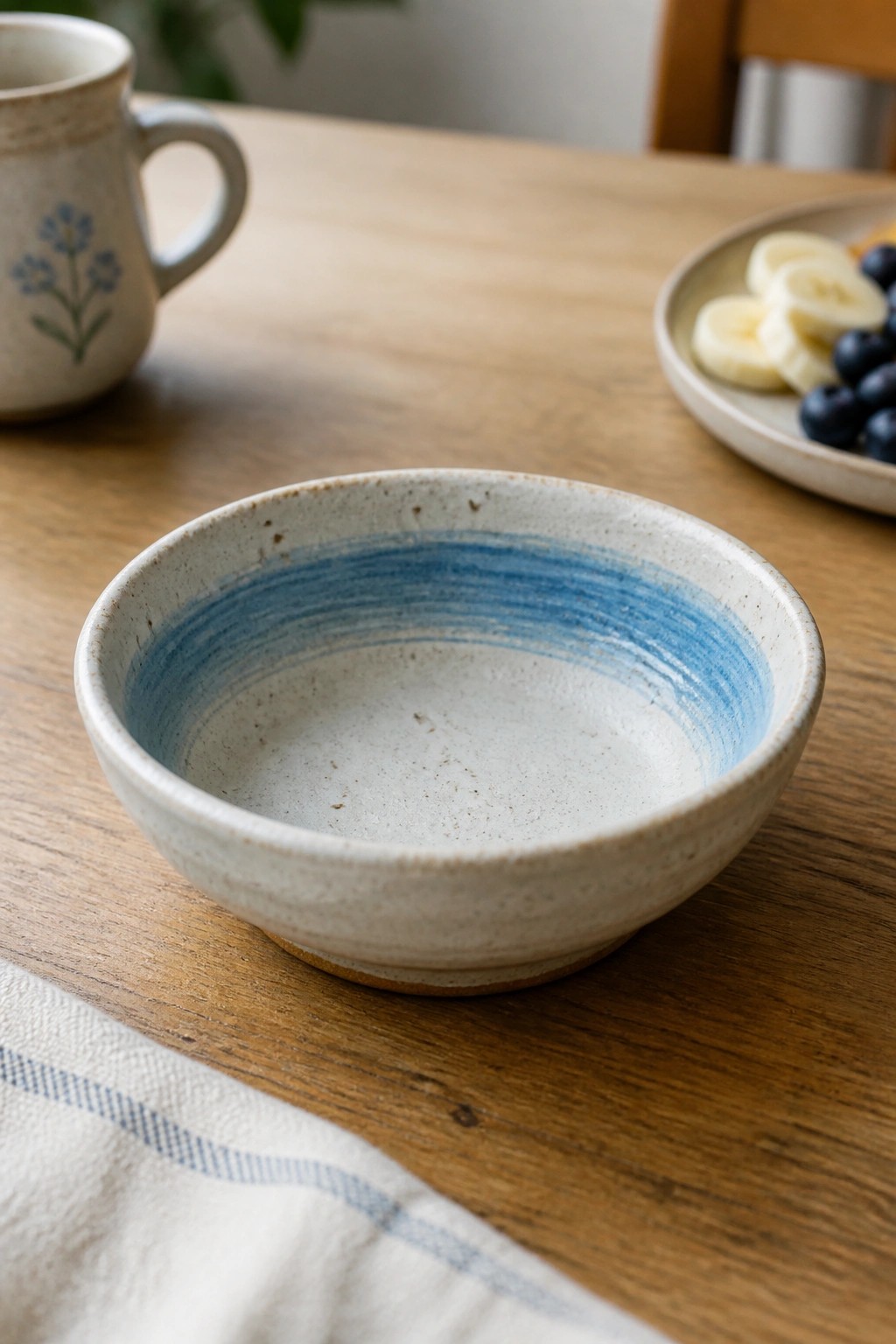
A shallow ceramic bowl uses a band of blue brush strokes around the inner rim to create a clean decorative line against the speckled clay surface. The rest of the bowl stays plain so the stripes stand out without extra detail. This keeps the form basic while giving kids an easy way to add color with a brush.
What makes this idea useful is how the stripe pattern can be swapped for other colors or made wider or narrower to change the look. The shallow shape works well for fruit, snacks, or small sides on a table. The same bowl form can be made slightly deeper for different uses, and the simple stripe method transfers easily to plates or cups.
Strawberry Painted Tray
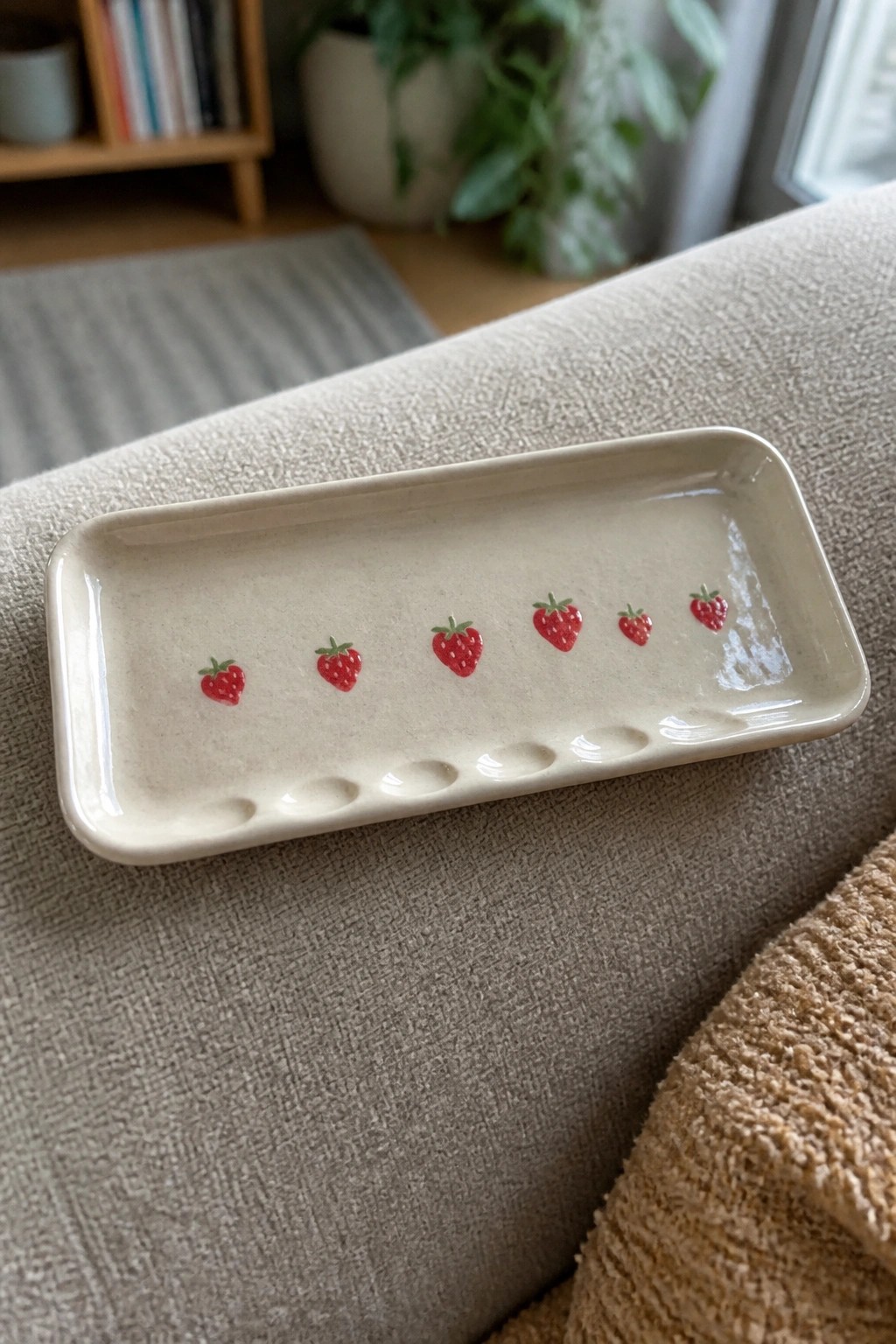
A handmade rectangular ceramic tray with a soft matte glaze forms the base for this project. Small red strawberries with green tops are painted in a straight line across the center surface. Oval indentations run along one long edge, turning the piece into a functional holder for spoons or small utensils. The simple painted motif keeps the focus on the shape and color rather than complicated sculpting.
What makes this idea useful is how the painted detail works on any flat tray shape without needing extra tools. You could repeat the same strawberry pattern on a square butter dish or stretch it across a longer serving plate. In a kitchen this kind of piece keeps utensils from rolling while staying easy to clean. For a gift the small size means less clay to roll out and faster drying time before painting.
Animal Face Planter
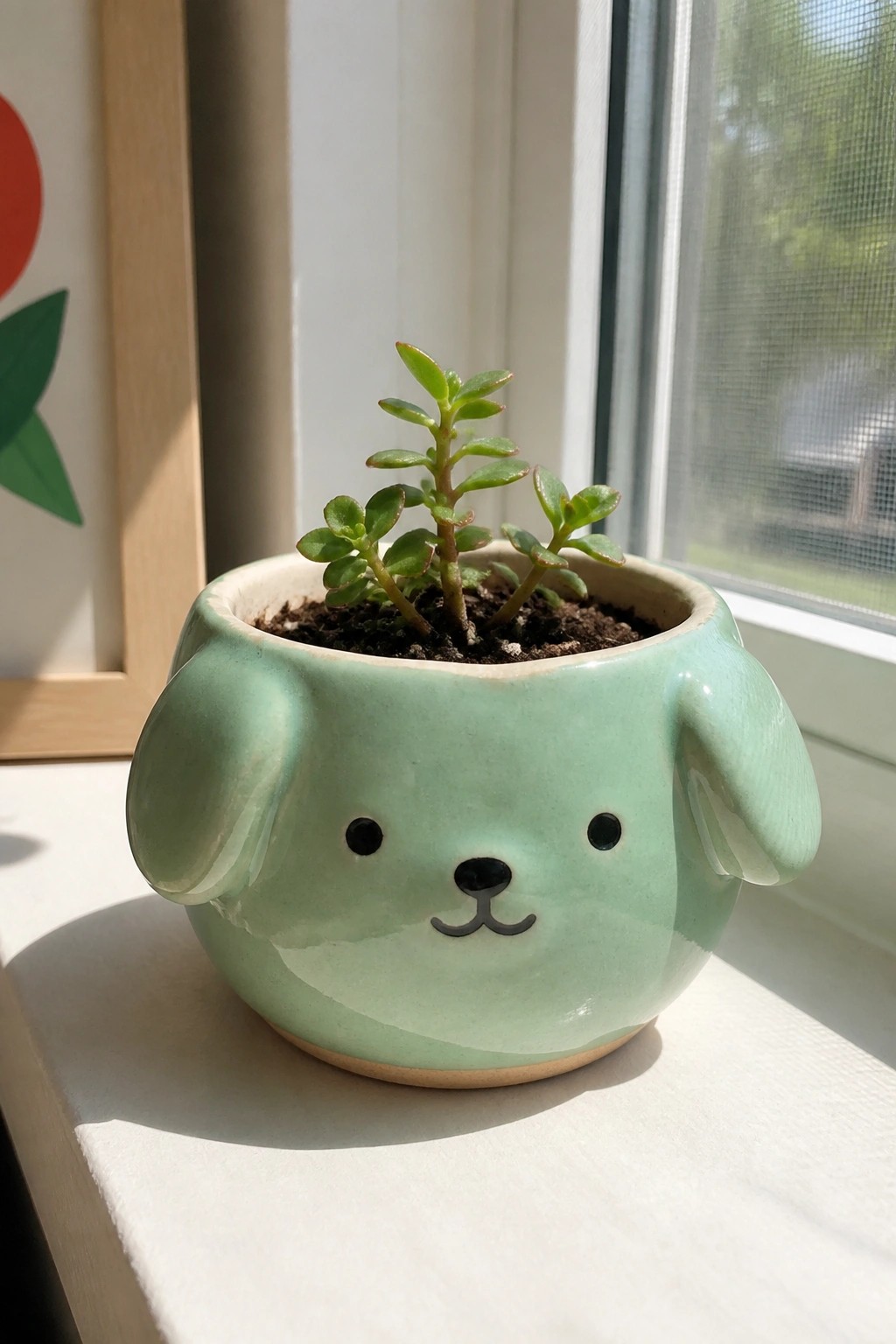
A small clay bowl formed with two side ears creates an animal face planter that holds one or two small plants. The ears are pinched or attached at the rim, and the face is added with simple underglaze dots and lines for eyes, nose, and mouth before a clear glaze is applied. This keeps the build to basic pinching and scoring while the rounded shape gives enough soil depth for root growth.
The shape does a lot of the work here because the wide opening supports a plant without extra trimming. You can swap the ear style or face colors to make a cat, bear, or rabbit version using the same bowl form. For a desk or shelf, this size stays compact and works with a single succulent or small herb cutting. The same base can be pinched taller to hold pens or turned into a small trinket dish by flattening the bottom slightly before firing.
Clay Snail Figurine
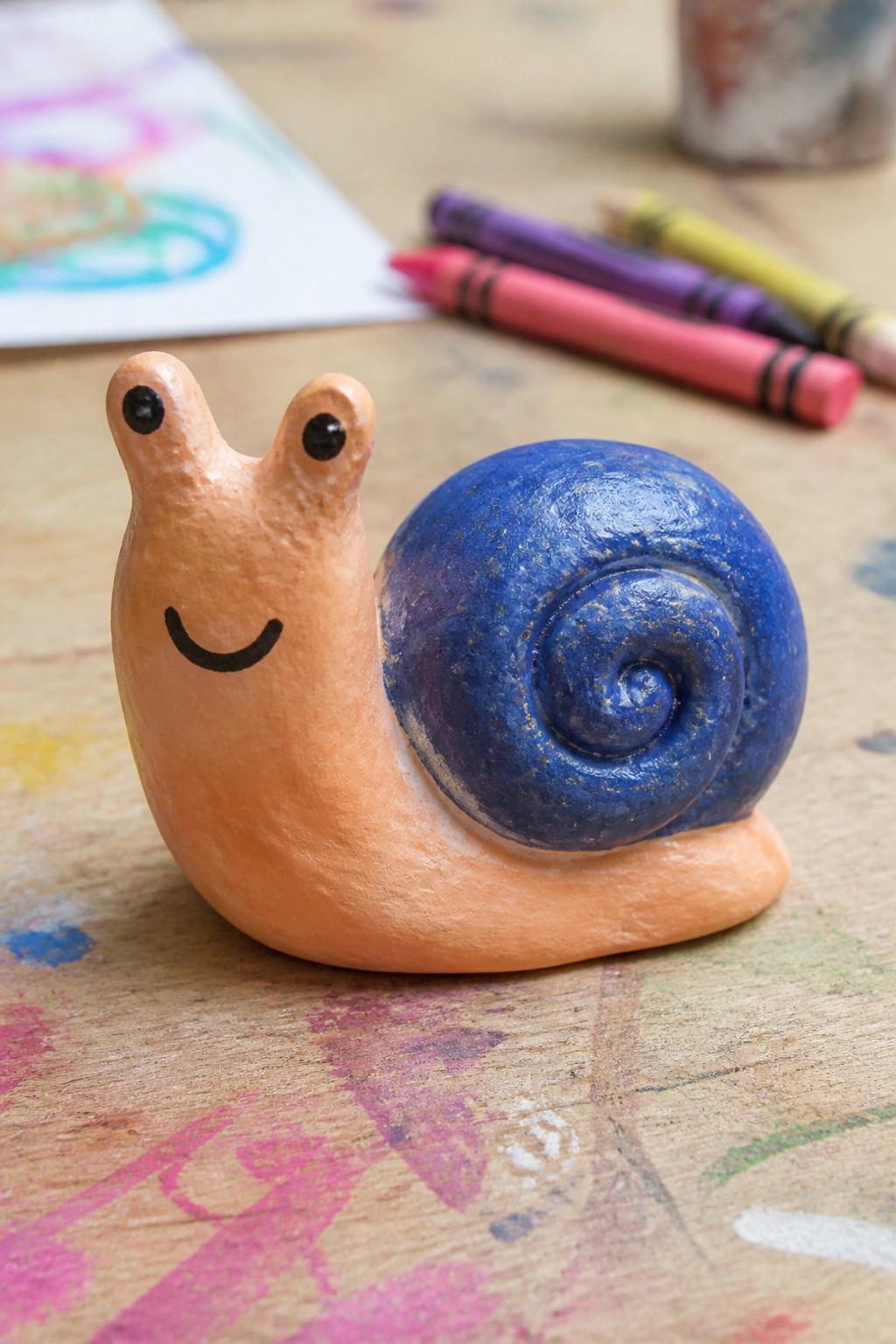
A clay snail figurine starts with a single sculpted body that includes a rounded head, two short eyestalks, and a curved base. The shell is added as a separate coiled form that sits on the back and can be built up in layers for depth. Simple painted details like solid color blocks on the shell and face give the piece clear definition without extra carving.
What makes this idea useful is how the compact shape stands on its own and takes up little space on a desk or shelf. You can swap the shell color or add dots and stripes to match other room decor. The same body works as a starting point for other small animals by changing the back detail into wings or ears. For kids, the project stays manageable because it relies on rolling and stacking rather than precise wheel work.
Lemon Slice Ring Dish
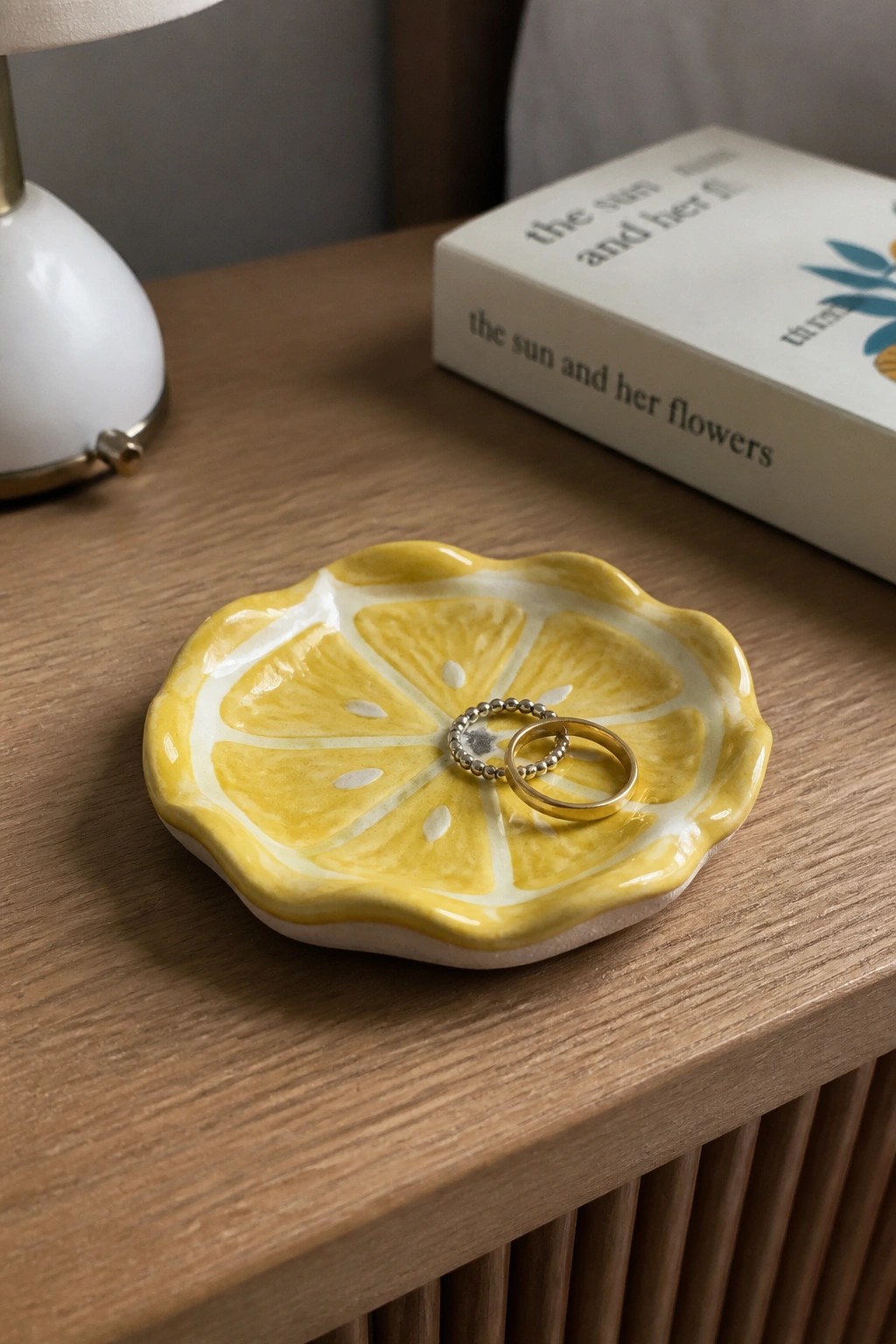
A small clay ring dish shaped like a lemon slice works well as an easy beginner project. Form a flat oval base with a slightly raised scalloped edge, then paint bold yellow sections with white lines and dots to suggest the inside of a citrus fruit. The glossy glaze seals the colors and gives the surface a smooth finish that holds up to daily handling.
What makes this idea useful is that the shallow shape and small size keep it practical for a nightstand or desk where rings and small jewelry collect. You could adapt the same base form with different fruit colors or skip the detailed painting and just use a solid glaze for a quicker version. The painted citrus motif also translates easily to a matching set of dishes if you want to make more than one.
Smiley Banana Tray
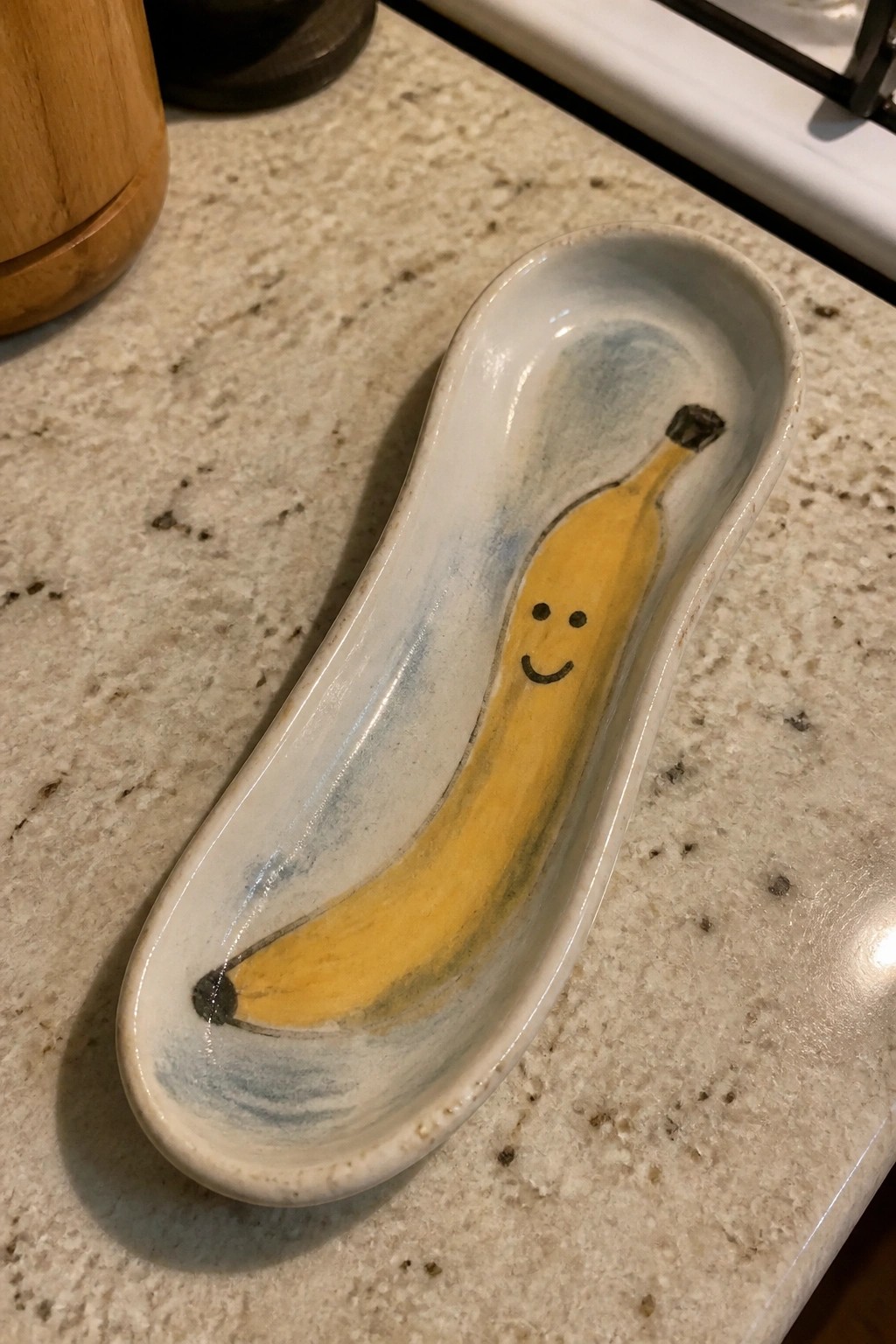
A long, narrow ceramic tray makes a good base for a painted banana design because the shape already matches the fruit. The yellow banana sits centered on the white surface with simple black dots for eyes and a curved line for the mouth, keeping the whole motif bold and easy to paint. This approach fits the small tray category and works as a kitchen item for holding spoons or small utensils.
What makes this idea useful is how the tray shape itself directs the layout so kids do not need to sculpt anything. The same form can be adapted with other fruits or vegetables and different face styles to match what a child wants to paint. In a kitchen, this kind of piece stays handy on the counter without taking much space. The painted detail helps the tray stand out on a shelf or when given as a small gift.
Heart Pocket Wall Plaque
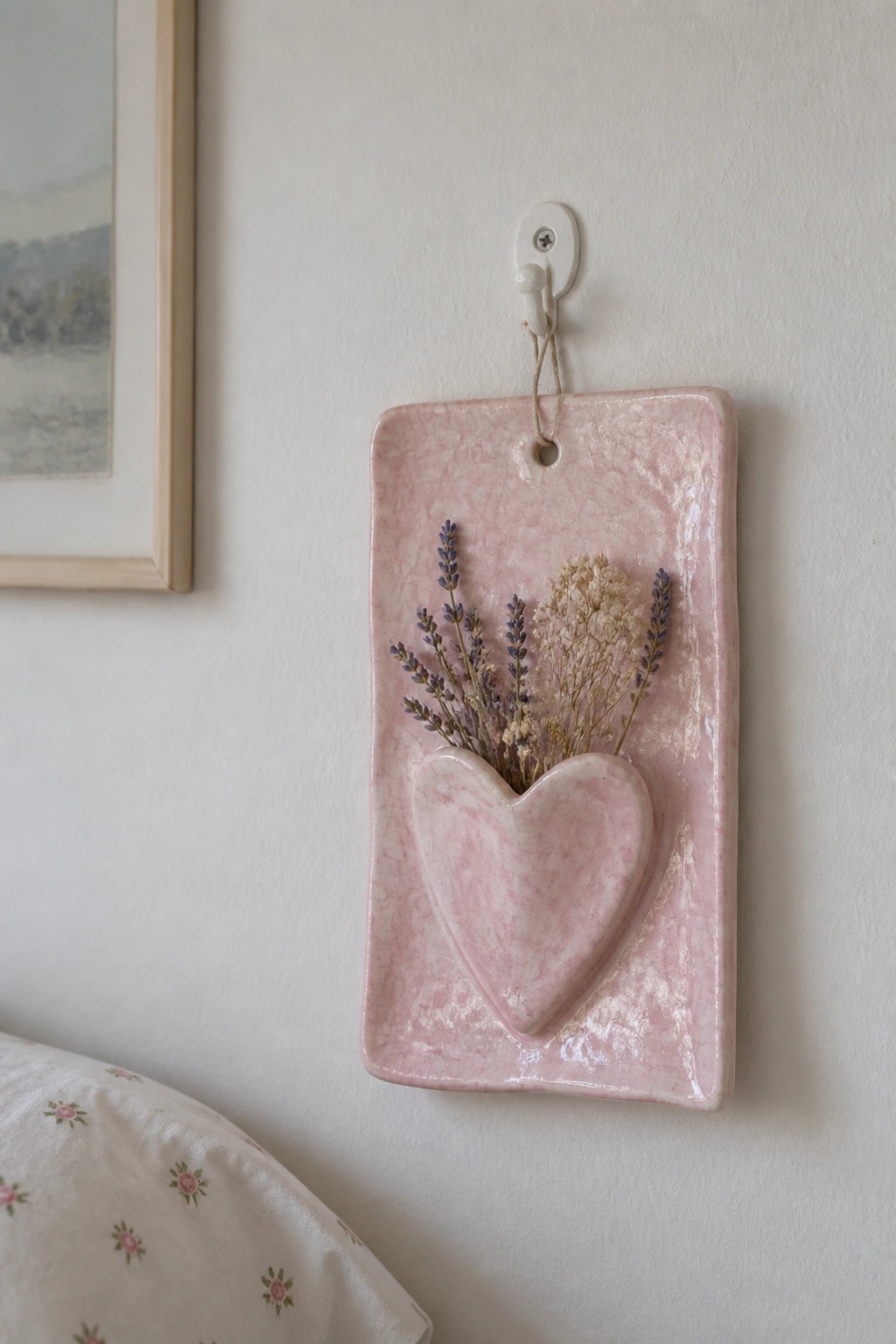
A flat rectangular slab of clay with a heart-shaped pocket attached to the front creates a simple wall holder for dried stems or small flowers. The pink crackle glaze covers both the slab and the pocket, giving the surface texture while the hole at the top allows it to hang from a basic hook. This project uses a basic slab form plus one added sculptural detail to turn plain clay into a functional decor piece.
What makes this idea useful is how the flat back and single hanging hole keep the build quick and the finished size small enough for a bedroom wall or narrow shelf. You could swap the heart for a circle or leaf shape and change the glaze color to match different rooms without changing the construction steps. For gifts, the same slab and pocket method works in a smaller scale or with a plain matte glaze if crackle effects feel too involved. The pocket depth also lets kids test how much clay to add before attaching so the holder stays open and usable.
Scalloped Tea Light Bowl
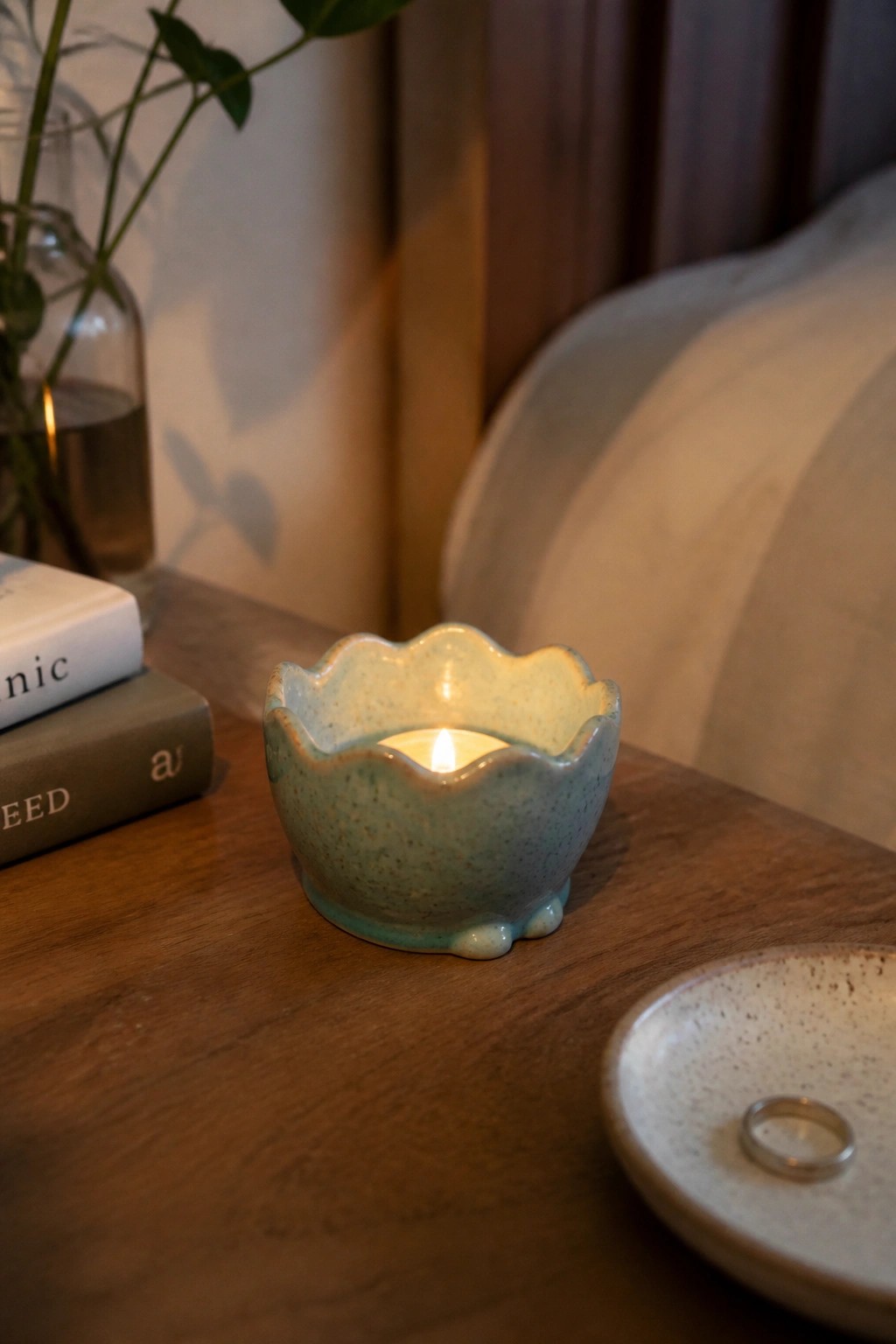
A small ceramic bowl with a scalloped rim makes a simple tea light holder. The wavy edge gives the form a gentle shape while the speckled glaze adds surface interest without extra steps. Kids can start with a basic pinch pot or slab bowl, then shape the rim into scallops and add small feet before glazing.
The small size keeps the project quick and manageable for beginners. It works on a nightstand or desk and can be adapted by altering the rim pattern or switching the glaze color. The same bowl shape can also be used as a ring dish if the candle idea does not fit.
Flower Petal Ring Dish
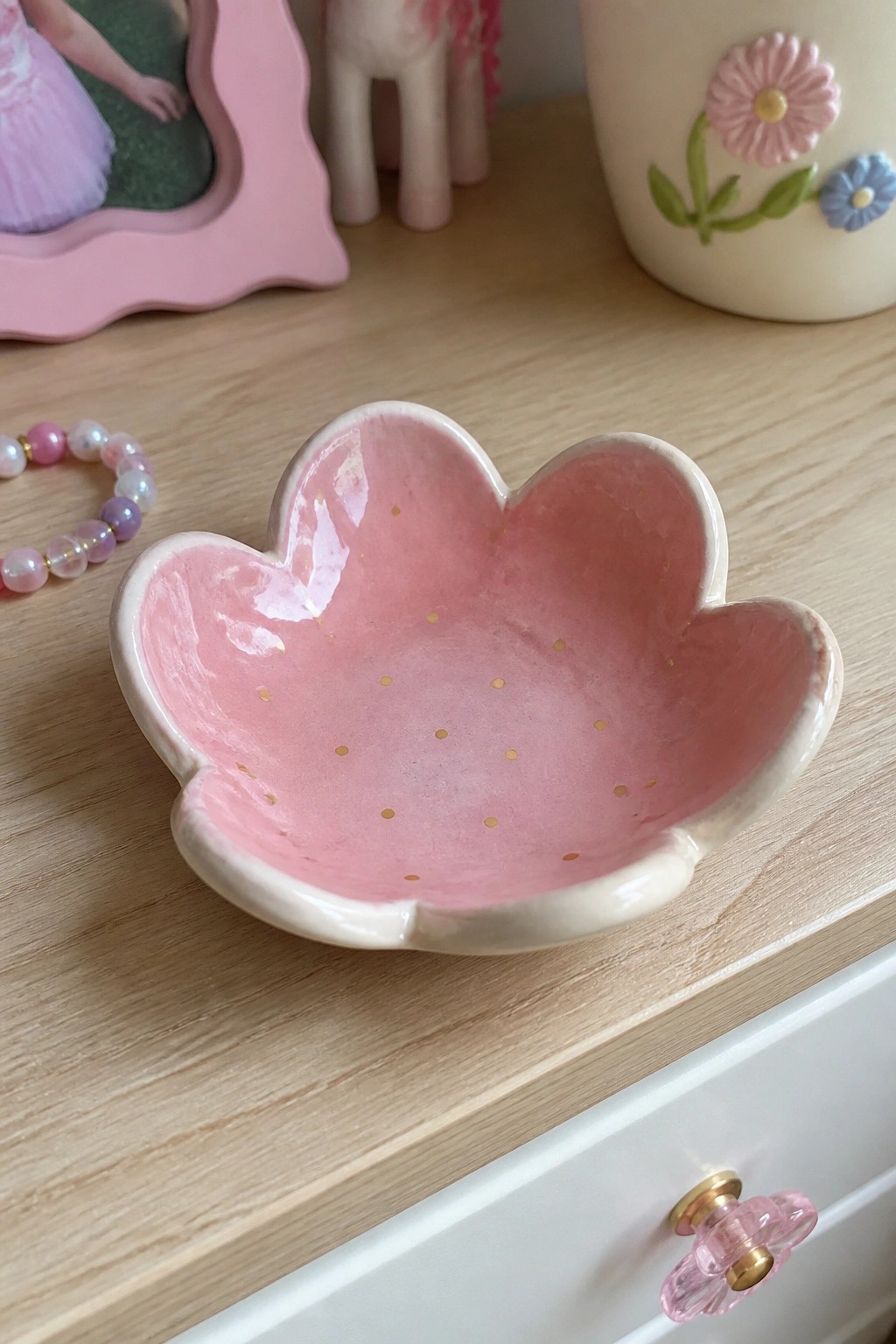
A small ceramic dish shaped with rounded petal edges forms a simple ring holder or trinket bowl. The interior is glazed in soft pink with scattered gold dots that add subtle pattern without extra tools. This project fits the ring dish or small decor category and stays beginner friendly because the form comes from pinching or pressing clay into a basic mold before adding the edge details.
What makes this idea useful is its small scale that takes little clay and fits on a nightstand or desk. The petal outline can be adapted by pressing different sized cutters around the rim or switching the gold dots for underglaze lines in another color. For a gift, something like this works well when made in sets with matching but varied glazes. The same shape can be reworked into a soap rest or tiny plant saucer by making the walls slightly thicker.
Two-Section Salt Cellar
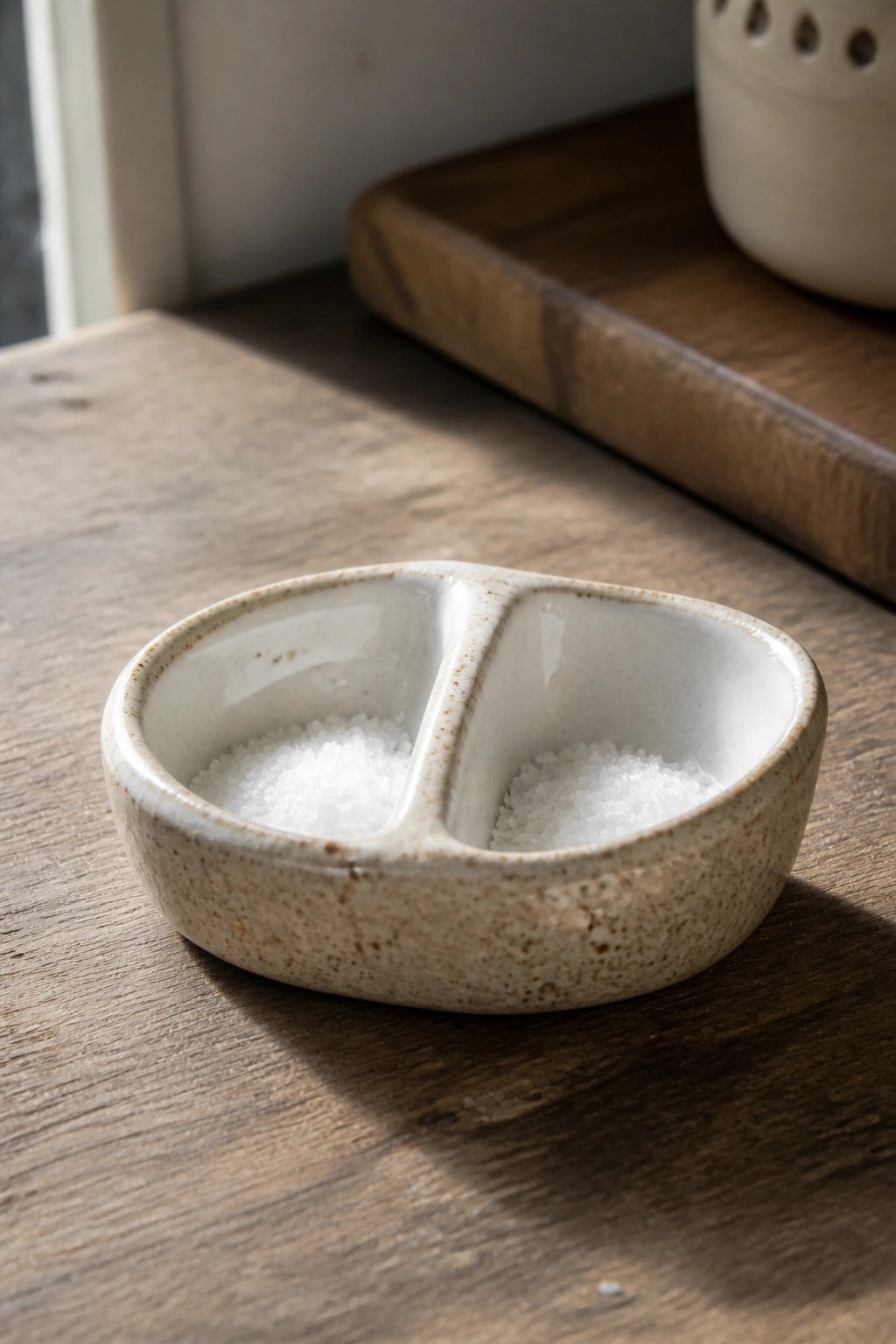
A small divided dish made from clay creates two separate sections in one compact form. The rounded outer shape and straight center wall keep the compartments distinct while keeping the whole piece easy to hold or pass around. A light speckled glaze adds subtle texture without extra decoration. This project relies on simple pinching or slab work to make a practical kitchen item that stays small enough for quick sessions.
What makes this idea useful is how the same divided layout can store salt and pepper, two spices, or even small snacks on a table. You can adjust the divider height or add a third section if you want more compartments later. The compact size works well on a countertop or near the stove without taking up much room. For a variation, change the glaze color or make a matching set with slightly different depths.
Star Toothbrush Holder
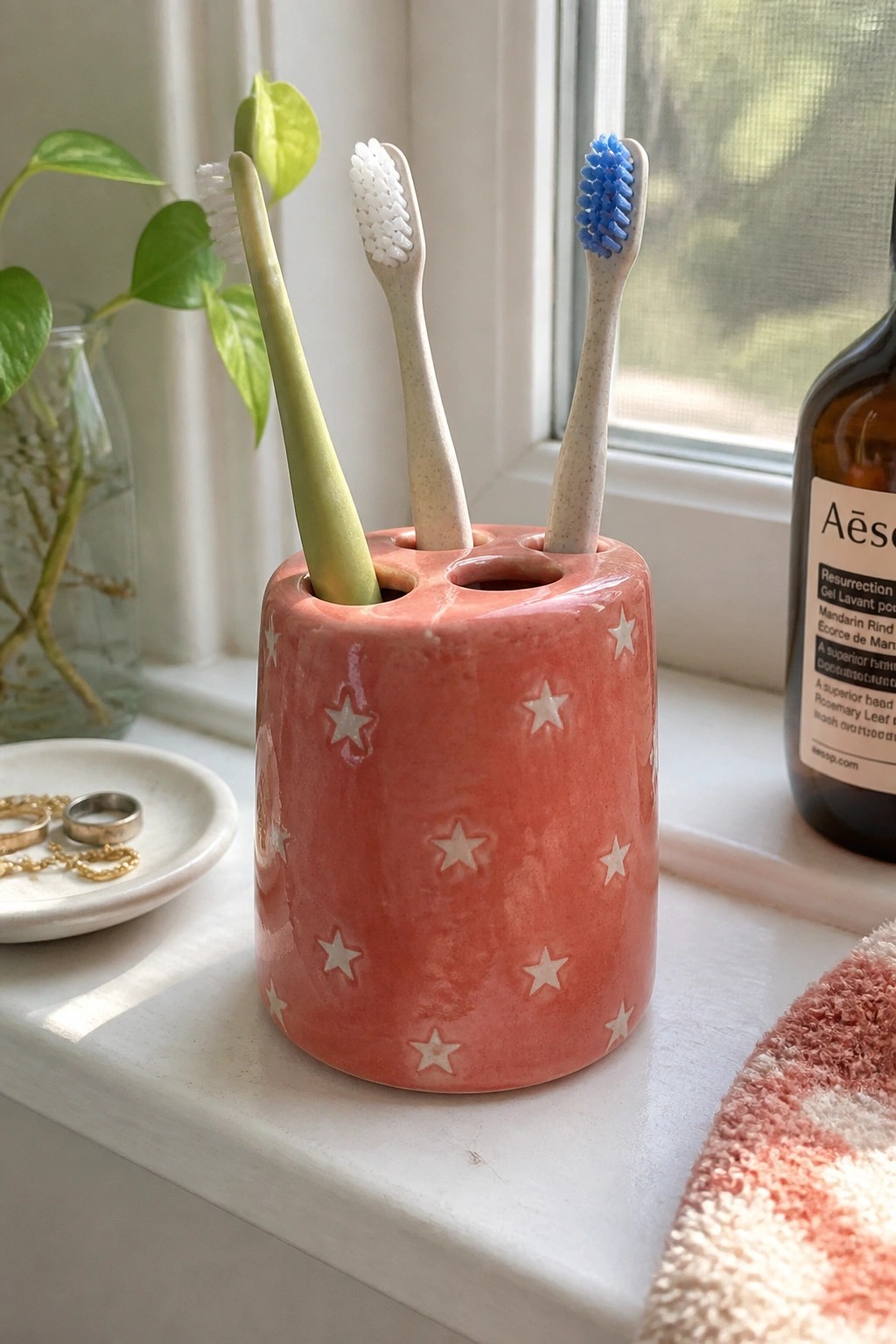
A simple cylindrical toothbrush holder made from clay fits the bathroom item category. The form uses a thick wall with three or four drilled holes to keep brushes upright and separated. White stars pressed or painted into the pink glazed surface create contrast and repeat evenly around the sides without crowding the shape.
What makes this idea useful is that the cylinder is quick to roll or throw and the star pattern can be made with cookie cutters or stamps. A piece like this works especially well on a narrow windowsill or sink ledge where space is limited. The same shape can be reworked into a pencil cup by skipping the holes or turned into a single-hole vase by adjusting the height and leaving the top open.
Two-Tone Crayon Holder With Sun Motif
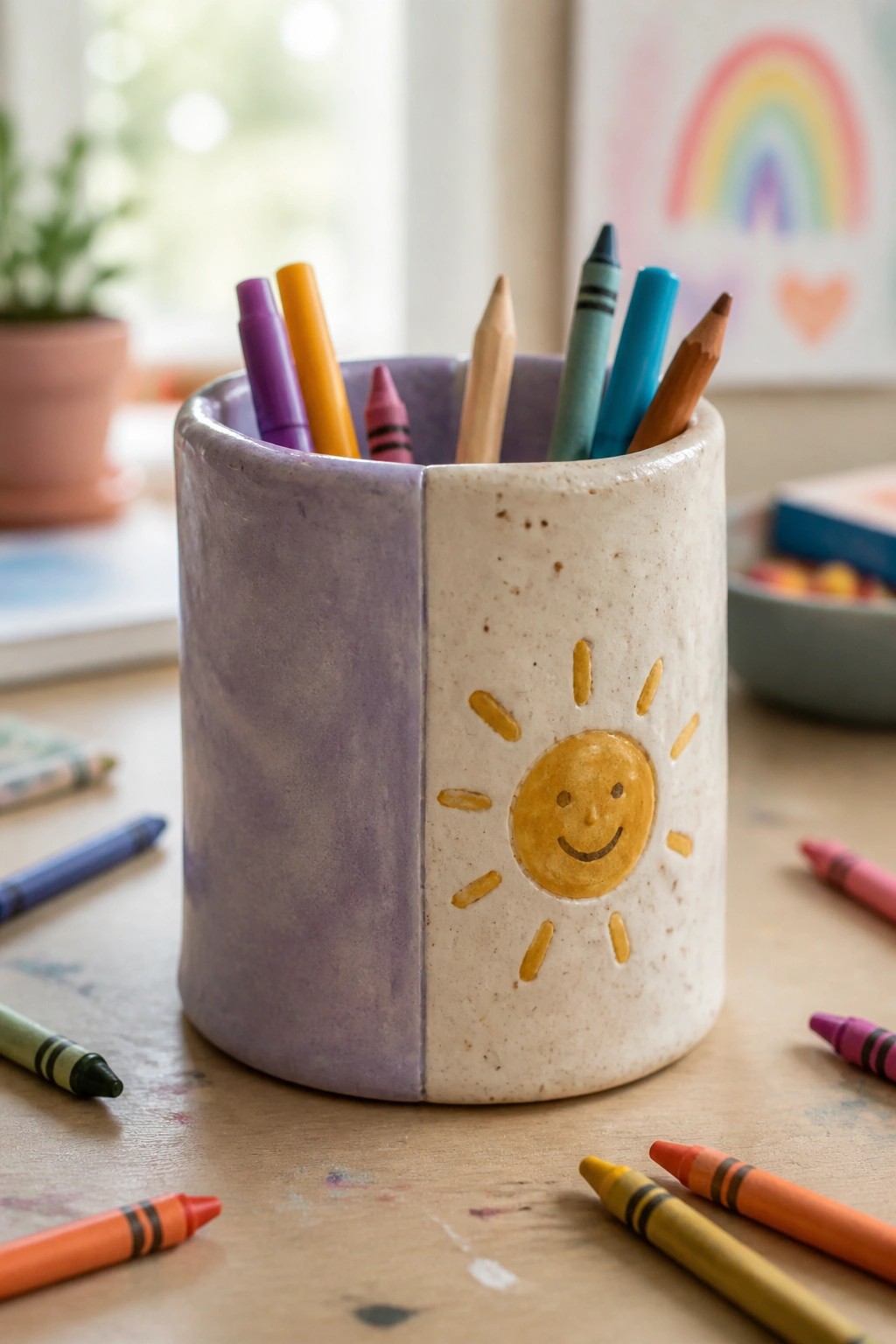
A basic cylinder shape made from clay works well as a crayon or pencil holder when split into two glaze sections. One side uses a solid purple glaze while the other remains light with a simple sun face and rays added through carving or underglaze. The clean division and single motif keep the surface from feeling crowded. This approach fits the holder category and gives kids a functional desk piece without complicated forms.
The shape does a lot of the work here since the cylinder is straightforward to throw or hand-build. You could swap the sun for a name, stars, or simple pattern to match different themes or ages. The same idea scales down for a small brush cup or up slightly for markers. For a classroom or playroom, this holder keeps supplies organized while the two-tone finish makes it easy to photograph for sharing.
Oval Ceramic Soap Dish
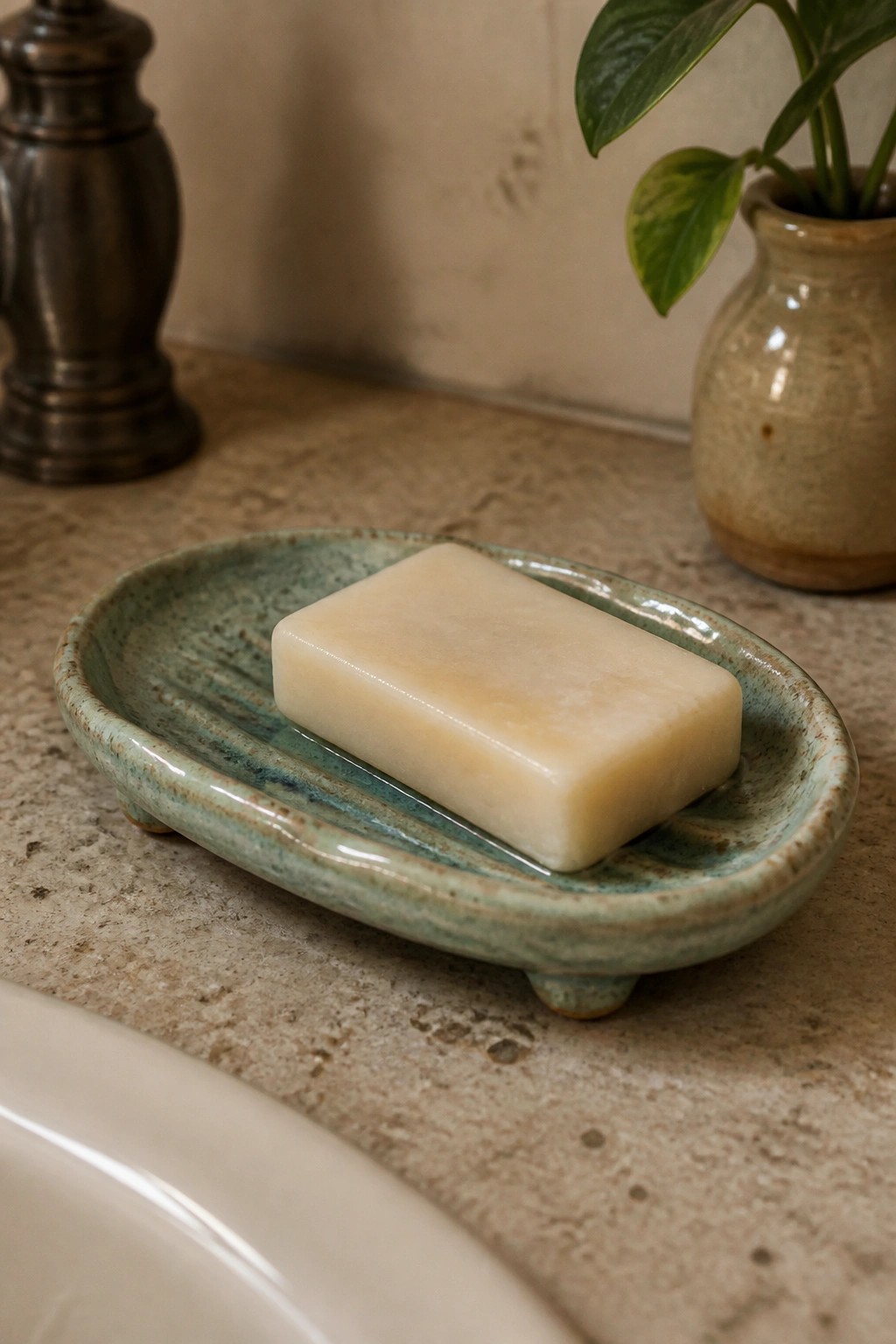
A handmade clay soap dish in an oval tray shape makes a practical bathroom item for holding a bar of soap. The form uses a shallow base with raised edges and a few simple ridges to let water drain away from the soap. A mottled green glaze covers the surface and gives the piece a finished appearance without needing complex decoration.
What makes this idea useful is how the oval shape can be formed from a single slab or pinched by hand in just a few steps. Kids can adjust the size to fit different sinks or add small feet underneath for better drainage. The same basic tray works as a ring holder or small trinket dish if the ridges are left off. A piece like this stands out on Pinterest because the function is clear and the form stays simple enough to repeat in different colors.
Mini Glazed Pinch Bowls
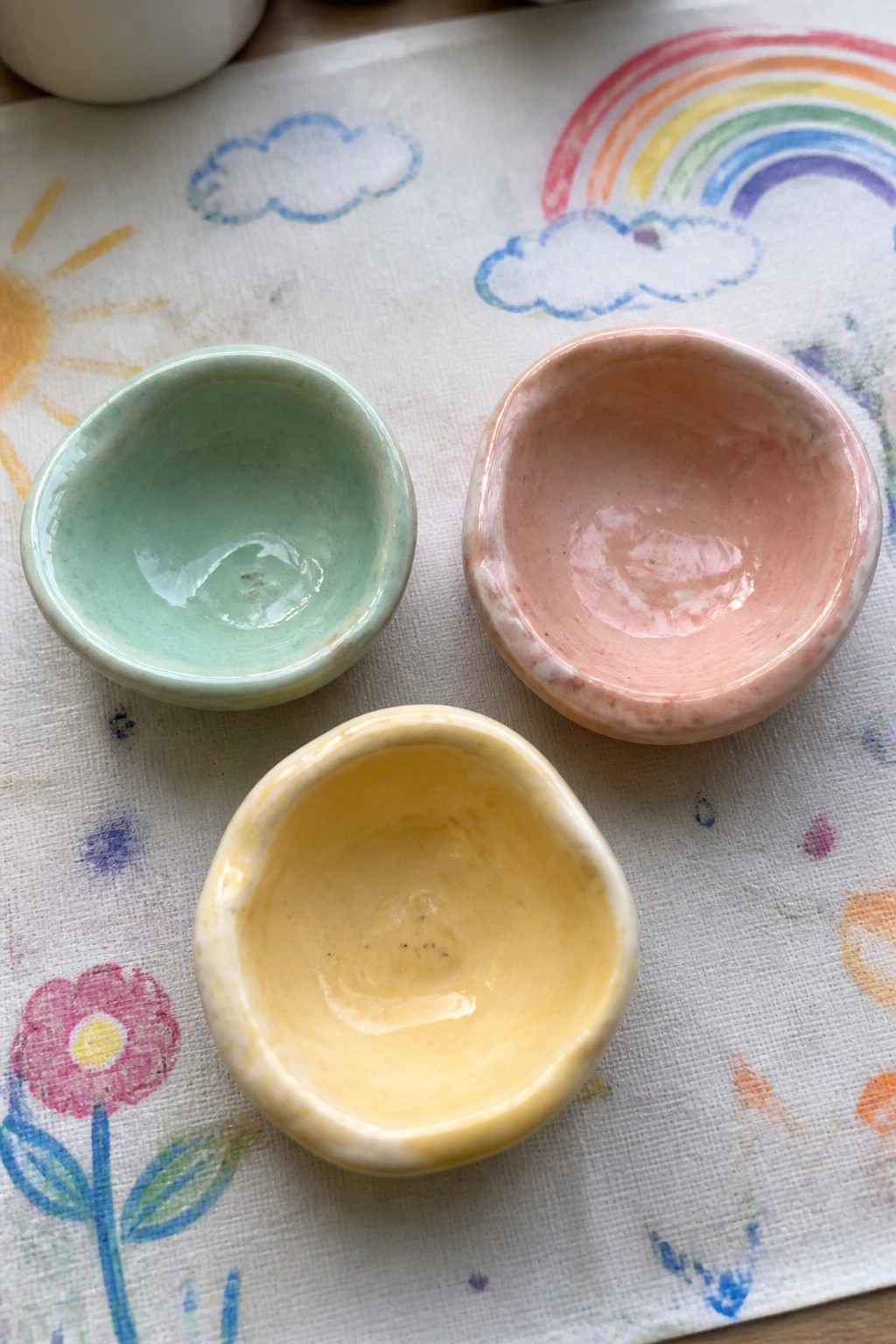
Small bowls formed from basic pinch pots make an easy project when the goal is a simple shape that still looks finished. The rounded form holds a thin layer of glaze that pools slightly in the center, giving each piece a soft color without extra carving or handles. These work as ring dishes, tiny catchalls, or small condiment bowls depending on the size you roll out.
What makes this idea useful is how little clay and time each one takes, so kids can finish several in one session. The same shape can be adapted into a set of different colors or sized up slightly for plant saucers. In a kitchen they sit neatly on a counter for salt or tea bags, and the small scale makes them quick to pack as gifts.
Bird-Shaped Seed Holder
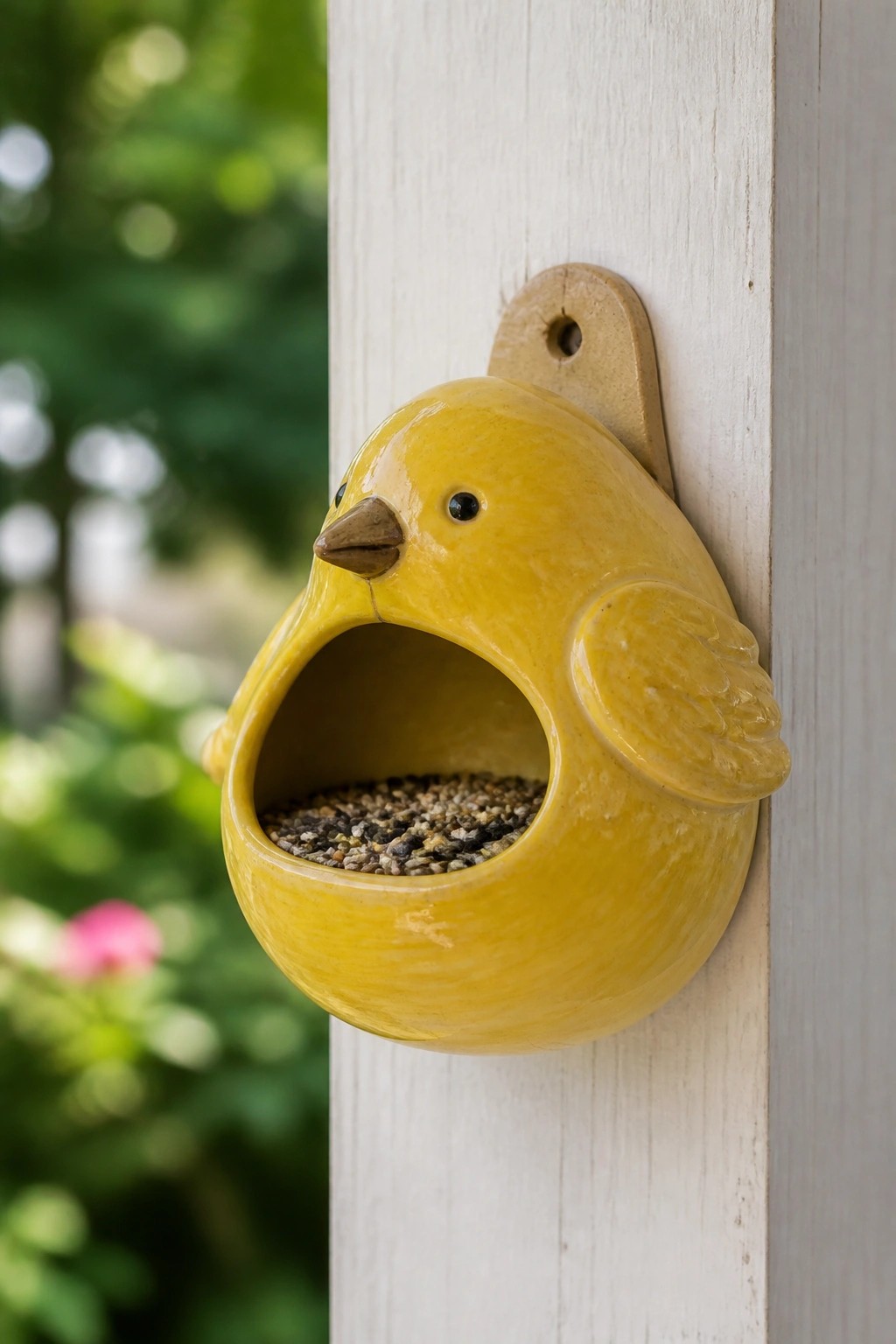
A wall-mounted ceramic seed holder shaped like a round bird makes a straightforward project. The body is formed as a hollow container with a wide opening in the front to hold seed, while the head, beak, and one wing are added as basic sculpted pieces. A solid yellow glaze covers the surface and creates a smooth finish that shows the simple curves clearly.
What makes this idea useful is how the oval body serves as both the container and the main shape, so kids only need to add a few details. The attached tab at the top lets it hang on a fence or post without extra hardware. The same form can be reworked into a different animal or painted with multiple colors to change the look.
Frequently Asked Questions
What supplies do I need to start these pottery projects with kids? Gather basic items like air dry clay or oven bake clay for no kiln options, along with simple tools such as rolling pins, cookie cutters, plastic knives, and water bowls for smoothing. Many projects use household items like jars for shaping coils or leaves for texture, keeping costs low and setups quick.
How can I ensure these projects work without access to a pottery kiln? Opt for air dry clay or polymer clay that hardens at room temperature or in a home oven. Focus on the simple forms like pinch pots or coiled bowls that do not require firing, and seal finished pieces with acrylic paint or varnish for durability.
What age range works best for these easy pottery ideas? Children ages 4 and up can handle most projects with adult help for younger ones, while kids 7 and older often manage independently. Adjust complexity by starting with basic shapes like spheres or slabs and adding details only as skills grow.
How do I handle cleanup and prevent messes during kid pottery sessions? Cover work surfaces with plastic tablecloths or old newspapers, and keep a bucket of water nearby for hand rinsing. Have kids wear smocks and work in small batches to limit clay spread, then wipe tools immediately after use to avoid drying and cracking.
What if a project does not turn out as planned or the clay cracks? Encourage kids to reshape pieces while the clay is still moist, or use extra clay to patch issues. For air dry versions, mist lightly with water to fix minor cracks before drying fully, and view imperfections as part of the creative process to build confidence.

Pottery Path is my cozy corner of the internet where I share clay ideas, pottery inspiration, and simple projects you can recreate at home. I love exploring everything from air dry clay to handbuilt pottery to cute minis that brighten your day. My goal is to make clay crafting feel easy, fun, and welcoming for anyone who wants to try it.
You will find beginner friendly tutorials, creative pottery painting ideas, and lots of warm inspiration for slow and happy crafting. If you enjoy hands on creativity, this space will feel like home.