
I’ve been trying sgraffito on some of my own pottery lately and it turns out to be a pretty simple way to add patterns.
Carving through a layer of slip lets the clay color show through and it works fine even if your lines are not perfect.
I gathered these ideas because they seemed doable for someone who is just getting started with carving.
Most of them use basic shapes and tools I already had around my workspace.
They might give you a place to begin if you want to try something similar on your next piece.
Carved Leaf Sgraffito Mug

A basic ceramic mug can carry a sgraffito leaf pattern carved around the body in branching lines. The design uses the exposed clay color in the grooves to contrast with the light glaze, keeping the motif visible after firing. The leaves wrap the form without crowding it, so the handle and rim stay clean and usable. This approach fits the sgraffito category of simple, repeatable plant motifs on functional ware.
The small scale makes the carving quick to finish in one session. You could repeat the same leaf layout on a taller tumbler or shorten the branches for a set of espresso cups. In a kitchen the pattern reads clearly on open shelves and pairs with plain dishes. If you want to test the idea first, try the carving on a test tile before committing to a full mug shape.
Arched Sgraffito Lines on a Wide Ceramic Bowl

A wide, low bowl uses a repeating set of curved sgraffito lines cut through a soft blue glaze to create bands of exposed clay. The lines follow the bowl’s curve and stay limited to the lower half, so the pattern stays simple while still giving the surface clear movement. This keeps the focus on the carving rather than complex glazing or added color.
The shape does a lot of the work here because the open form makes the carved area easy to reach and repeat without crowding. You could scale the same arched pattern down for small dishes or stretch it vertically on a taller cylinder by widening the spacing. In a kitchen or on a side table the bowl works for holding fruit, keys, or small items without extra pieces. The clean contrast between the blue glaze and the carved lines also shows up well in photos, which helps when saving project ideas for later reference.
Carved Botanical Sprig Plate

A small round ceramic plate makes an easy surface for a single sgraffito branch design. The motif consists of one main stem with side shoots and buds carved into the clay, then covered with a light glaze that leaves the lines visible. The shallow form keeps the carving centered and readable without extra decoration around the edges. This type of project works as a simple plate or small tray.
What makes this idea useful is how the single motif fills the space without crowding. You could adapt the same branch style to a larger platter or repeat it around the rim of a bowl. In a bathroom it serves as a soap dish or jewelry holder, and the neutral color makes it easy to match different decor styles. For Pinterest, the clean botanical carving stands out because it looks finished with just one main element.
Geometric Sgraffito Tray

A rectangular tray works well for sgraffito because the flat surface lets you lay out a large repeating pattern of triangles and radiating lines. The design is carved through the clay so the lines stay crisp after the mustard yellow glaze is applied, creating contrast between the raised areas and the recessed cuts. This approach turns a simple tray into a strong example of how basic geometric shapes can fill a space without needing fine detail work.
What makes this idea useful is the flat rectangle gives you room to practice even spacing and straight cuts before moving on to curved forms. You could repeat the same triangle layout on a smaller scale for coasters or a desk tray, or stretch it into a longer version for a plant stand. The bold lines still read clearly if you vary the carving depth slightly, so the pattern stays visible even on a first try.
Sgraffito Citrus Slice Dish

A small round ceramic dish with a sgraffito carved citrus slice makes a simple ring dish or trinket tray. The design uses incised lines to divide the fruit into segments, then fills those lines with a contrasting color before glazing over the pink surface. This keeps the motif bold and readable even on a compact form that sits flat on a table.
What makes this idea useful is how the round shape works for holding jewelry or small bathroom items without taking much space. You could change the citrus to another fruit or repeat the same carving on a larger plate for soap. The gold lines give contrast that stands out against the glaze, so the same pattern adapts easily to different colors or sizes. For a gift, something like this stays practical while showing the carved detail clearly.
Sgraffito Fern Pattern on a Small Round Planter

A compact round planter gives beginners a straightforward surface for sgraffito carving. Fern leaves are incised into the clay in a repeating band, then covered with a light green speckled glaze that leaves the carved lines visible as a lighter tone. The shape stays simple so the carved motif becomes the main feature while still leaving room for a small plant. This approach works as a basic planter project that focuses on one carved element rather than complex layering.
The small scale makes this easy to adapt for different plants or as a set of three with varying leaf spacing. You could repeat the same fern carving on a slightly taller cylinder for a different plant size or shift the motif lower on the form to change the balance. In a kitchen or on a desk, the finished piece holds a single succulent without taking up much room. The carved detail also shows up clearly in photos, which helps when sharing the project online.
Sgraffito Fish Spoon Rest Tray

A narrow oval ceramic tray makes a practical spoon rest when you carve a single fish moving through stylized waves with sgraffito. The design relies on the contrast between the dark clay body and the lighter incised lines to keep the image readable from a distance. This shape holds a wooden spoon or spatula flat while the carved motif stays visible on the counter. It works as a simple kitchen item that combines everyday function with one clear carved subject.
The elongated form takes up little space beside the stove yet gives enough room for the full fish design. You could repeat the same wave and fish layout on a shorter tray for chopstick rests or shrink it to a small dish for a salt cellar. In a kitchen this piece keeps utensils off the surface while adding a carved detail that photographs cleanly for sharing. Beginners can try the idea by tracing a basic fish outline first, then adding only a few wave lines to avoid crowding the surface.
Sgraffito Moon and Star Tea Light Bowl

A small bowl with a scalloped rim makes a simple tea light holder when you carve crescent moons and stars into the clay using sgraffito. The carved lines stand out against the light speckled glaze and let the candlelight highlight the edges of each shape. This approach keeps the project focused on basic carving rather than complex forms or multiple glazes.
The small scale means you can finish it quickly on a wheel or with slabs and it sits easily on a nightstand or shelf. You could replace the moons with other basic outlines like suns or waves while keeping the same rim shape and single glaze. For a gift this idea works because it uses common carving tools and needs only one firing after glazing.
Sgraffito Mountain Landscape Tile

A rectangular clay tile carved with a mountain scene gives you a flat wall piece that relies on sgraffito lines for the design. The carving shows overlapping peaks with hatched texture in some sections and plain lines in others, all set against a light mint glaze. The tile has a single hole at the top so it hangs from cord or wire. This approach works as a decor object because the carved lines stay visible even after glazing.
What makes this idea useful is how the flat rectangle fits into small wall spaces where a three-dimensional piece would not. You could scale the same mountain layout down for a set of tiles or stretch the carving across a longer rectangular tray. The light glaze keeps the focus on the sgraffito work so the pattern reads clearly without extra color. In a kitchen or hallway this shape stays out of the way while still adding a carved detail that stands out on a plain wall.
Sgraffito Honeycomb Salt Cellar
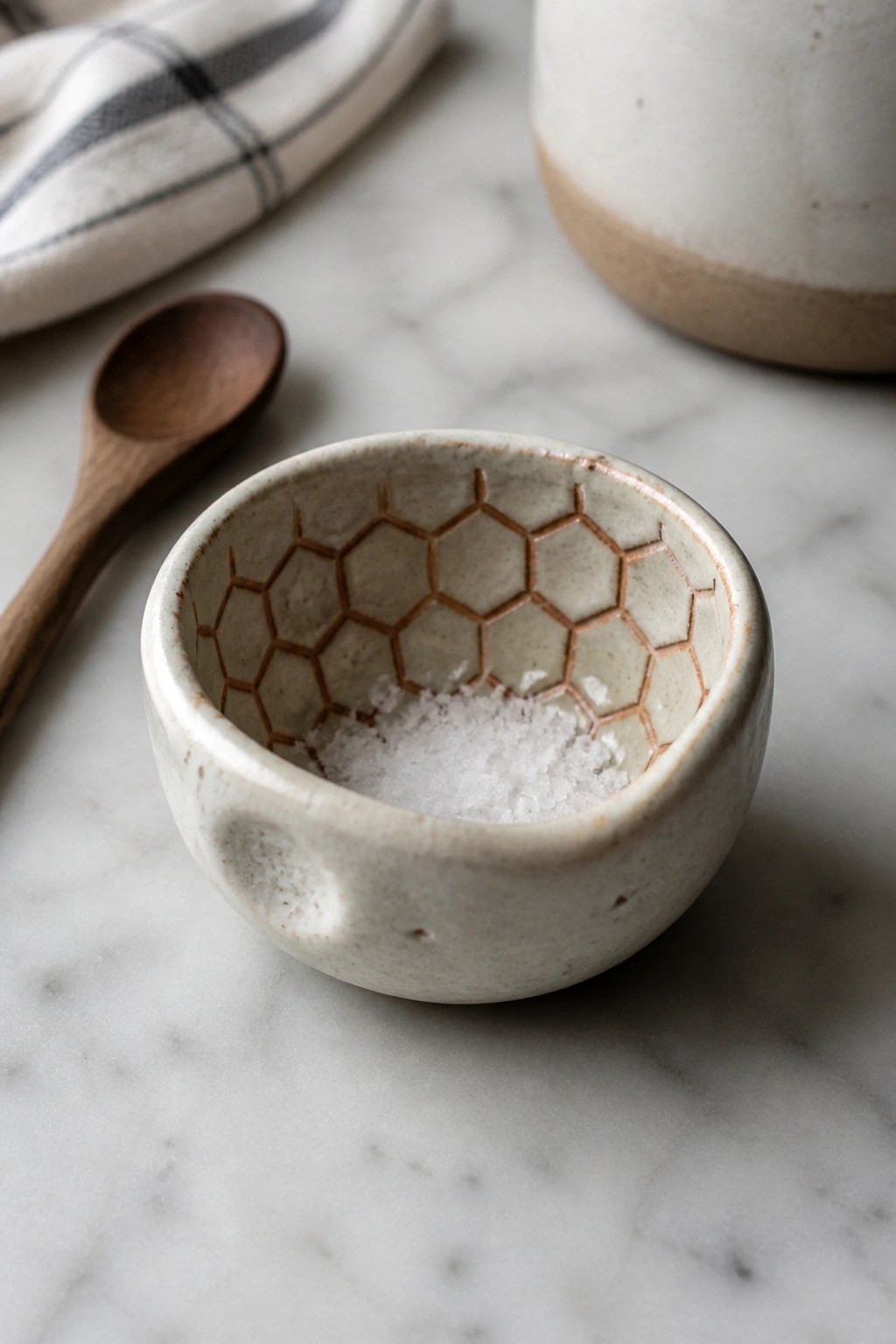
A small ceramic bowl works well for this sgraffito idea. The interior features a repeating hexagon pattern carved through the light glaze to expose the clay underneath, creating clear contrast without needing extra color. The compact round shape keeps the focus on the carved design while still functioning as a practical kitchen piece for holding salt or spices.
What makes this idea useful is how the small size reduces the time spent carving while still showing off the pattern. You can adapt the same hexagon layout to a larger pinch bowl or switch the motif to squares or triangles if the grid feels repetitive. In a kitchen, the piece sits neatly next to a stove or on a countertop for daily use. For a gift, the same interior carving could be applied to a set of two or three matching dishes in different sizes.
Sgraffito Leaf Pattern on a Yarn Bowl

A yarn bowl with a rim notch keeps a ball of yarn contained while the strand feeds out cleanly through the cutout. The sgraffito work here uses a simple repeating leaf-and-vine line carved through the glaze to show the clay beneath, creating contrast without crowding the surface. The pattern runs around the outside of a rounded bowl form finished in a muted gray glaze.
What makes this idea useful is that the notch turns an ordinary bowl into a working tool for knitters or crocheters. The vine motif can be shortened or lengthened to fit a smaller ring dish or a taller cup shape with the same carving approach. Changing the glaze color keeps the design fresh while the basic layout stays easy to copy. In a craft room this kind of piece holds yarn without taking up much space.
Sgraffito Whale Toothbrush Holder

A round pottery toothbrush holder uses sgraffito to show whale shapes cut through a pale yellow glaze down to the clay body underneath. The design places several whales around the cylinder so the lighter carved areas stand out against the speckled glaze. Three holes in the top keep brushes upright and spaced apart. This keeps the piece simple while the carved outlines give it a clear pattern without extra color.
What makes this idea useful is how the holder takes up little counter space yet still holds multiple brushes. You can change the carved shapes to fish, waves, or leaves while keeping the same cylinder form and glaze color. The same sgraffito approach works on a soap dish or a small cup for cotton swabs if you want matching pieces. The strong contrast between the glaze and the carved clay helps the pattern read clearly in photos.
Heart-Shaped Trinket Dish With Grid Sgraffito

A small heart-shaped ceramic dish makes a simple project for practicing sgraffito on a curved surface. The interior shows a carved grid pattern created by scratching through a colored slip or glaze layer to reveal the clay beneath. The soft pink finish keeps the focus on the texture while the heart outline gives the piece a clear finished shape. This style works as a ring dish or small holder for everyday items like keys or hair ties.
What makes this idea useful is the small scale, which lets you test sgraffito without committing to a large piece. The grid pattern adapts easily to round or oval dishes if you want to change the outer form. You could also apply the same carving to the inside of a shallow soap dish or a small tray for bathroom use. The compact size makes it quick to fire and easy to fit into a gift set with other handmade items.
Fox Figurine with Sgraffito Fur Texture

A small seated fox made from clay serves as a straightforward decor object when you apply sgraffito to create the fur pattern. The white surface with carved reddish lines follows the body curves, tail, and head to define the animal without extra painting. This keeps the project focused on the carved texture and the simple pinched or sculpted form that beginners can shape by hand.
What makes this idea useful is how the compact size fits on a shelf, desk, or plant stand without taking up space. You can adapt the same carving approach to other small animals by adjusting the ear and tail shapes while keeping the sitting pose. For a first sgraffito project, the single-color slip layer reduces the risk of mistakes and still produces clear lines. The finished piece also photographs well for sharing because the texture shows up clearly against the plain background.
Sgraffito Tulip Bud Vase
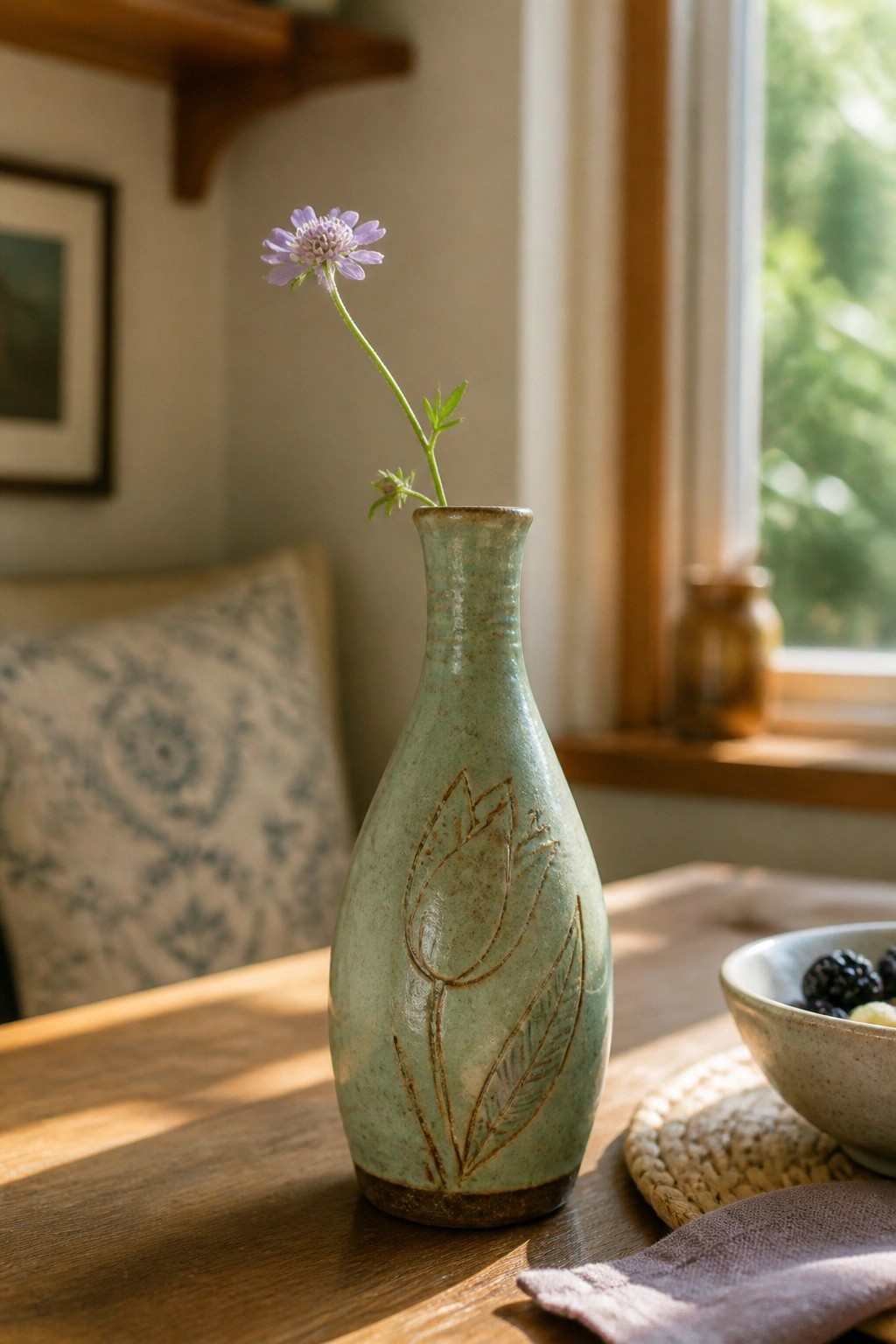
A small bud vase with a sgraffito tulip and leaf design offers a straightforward way to practice carving on a simple curved surface. The motif is etched through a light green glaze to reveal the clay underneath, creating clear lines that stand out without needing extra color. The rounded body gives enough room for the full flower and stem while the narrow neck keeps the focus on the carving. This approach works as a decor object that can hold one or two stems.
What makes this idea useful is how the sgraffito carving stays visible even on a soft glaze color, so the design reads clearly from a distance. You could repeat the same tulip layout on a taller cylinder or shorten it for a small cup. The compact size means less surface to cover if you want to test different carving depths or line weights. In a kitchen or on a desk this shape takes up little space but still shows the handmade pattern.
Frequently Asked Questions
What tools do beginners need to start carving sgraffito designs on pottery? Basic tools include a sgraffito stylus or loop tool for carving, a soft brush for cleaning away slip, and a rib tool to smooth surfaces. Start with affordable sets from craft stores and practice on small test tiles before moving to full pieces. These allow precise control when revealing the clay body through layered slip.
How do you choose clay and slip that work well together for carved designs? Select a smooth stoneware or earthenware clay that contrasts in color with your slip, such as white slip on dark clay for clear lines. Apply two to three thin layers of slip and let each dry slightly before the next to prevent lifting. This setup ensures clean carving without chipping during the process.
What simple design ideas help beginners avoid frustration with sgraffito carving? Focus on geometric patterns like repeating triangles or wavy lines, or nature motifs such as leaves and stars that use basic shapes. Sketch designs on paper first and transfer them lightly with a pencil to guide carving. These build confidence while teaching control over depth and line width.
How can you prevent common issues like cracking when drying sgraffito pottery? Cover finished pieces loosely with plastic for the first day or two to slow drying evenly, then uncover gradually over several days. Avoid carving too deeply into thin walls and keep the studio humidity consistent. Proper drying reduces stress on the carved areas before bisque firing.
What steps follow carving to prepare sgraffito pieces for firing? Once carved, let the piece dry completely to leather hard or bone dry, then bisque fire at the clay’s recommended temperature. Apply clear glaze if desired after bisque and glaze fire to seal the design. Always test fire schedules on small samples to match your clay and kiln type.

Pottery Path is my cozy corner of the internet where I share clay ideas, pottery inspiration, and simple projects you can recreate at home. I love exploring everything from air dry clay to handbuilt pottery to cute minis that brighten your day. My goal is to make clay crafting feel easy, fun, and welcoming for anyone who wants to try it.
You will find beginner friendly tutorials, creative pottery painting ideas, and lots of warm inspiration for slow and happy crafting. If you enjoy hands on creativity, this space will feel like home.