
I’ve been playing around with pottery glazing for a few years now and I still find it tricky sometimes.
When I first started I stuck to basic colors and simple dips but over time I picked up some easy ways to add more interest to my pieces.
These ideas are ones that worked well for me as a beginner and they don’t require fancy tools or advanced skills.
I think they can help make your surfaces look a bit more finished without feeling overwhelming.
Maybe give one of them a try on your next batch of pots.
Gradient Glaze on a Ceramic Mug

A ceramic mug finished with a smooth gradient glaze that moves from blue at the top into a warm terracotta orange at the base gives a simple way to add color without extra decoration. The slight horizontal texture from the glaze application shows through the thinner areas and keeps the surface from looking flat. This style fits a rounded mug shape because the curve helps the two colors meet in a natural transition rather than a hard line.
A piece like this works especially well as a kitchen mug since the earthy palette pairs with most tableware. You could repeat the same two-tone blend on a smaller cup or a cereal bowl by swapping the blue for a different neutral. The shape stays easy to throw on the wheel and the glaze covers most of the surface so you get a finished look with one dip or pour.
Painted Daisy Glaze on a Small Dish
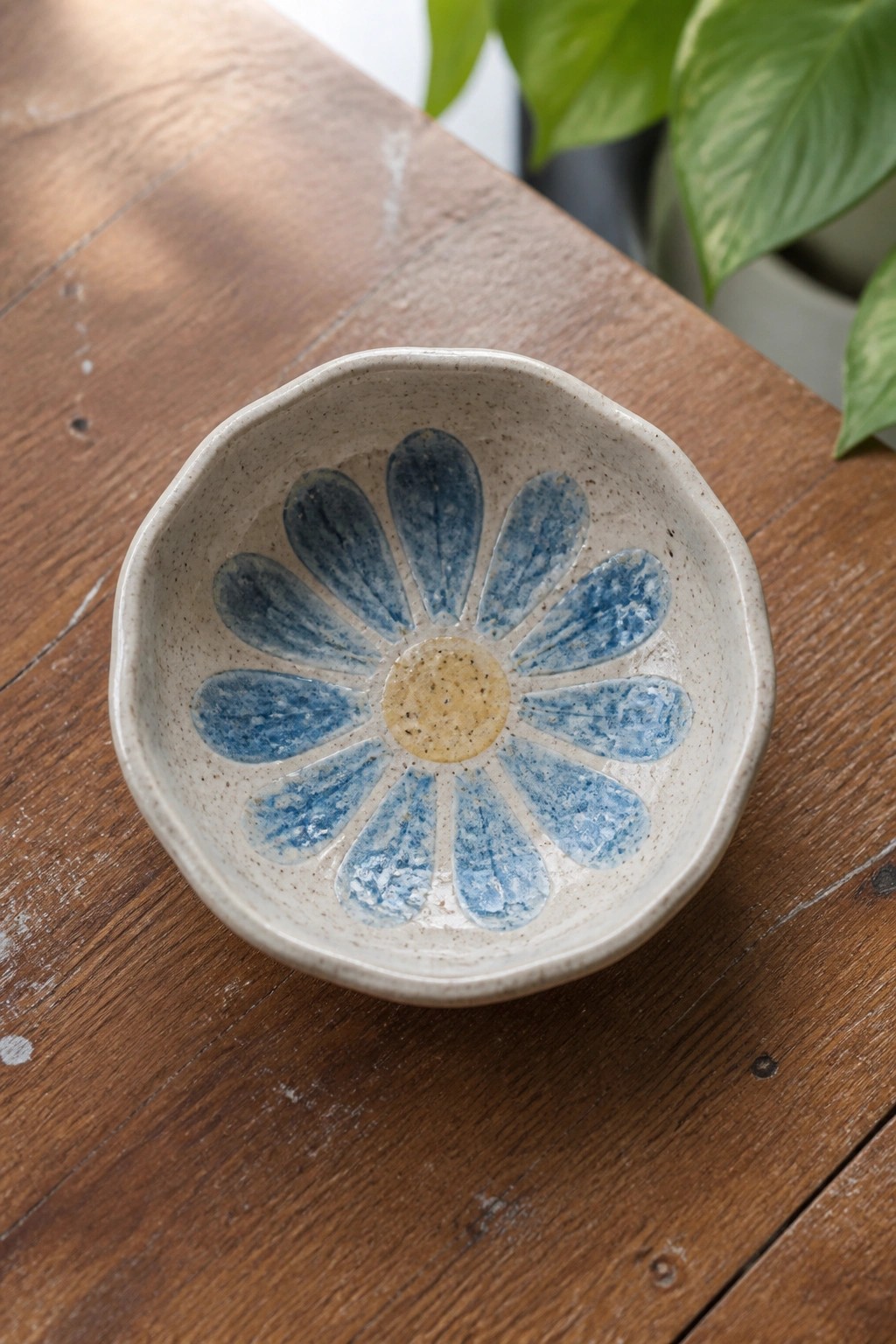
A small ceramic bowl gets its main decoration from a hand-painted daisy motif. Blue teardrop petals radiate around a yellow center on a speckled off-white surface. The simple radial layout keeps the design balanced even on an irregular rim shape. This approach works as a basic glazing idea because it relies on a single repeated petal shape rather than complicated layering.
The shape does a lot of the work here because the shallow form suits jewelry storage, spice serving, or a desk catch-all. You could repeat the same daisy on a larger plate or shorten the petals into a smaller version for the inside of a mug. The strong color contrast against the neutral clay makes the pattern readable from a distance, which helps it stand out in photos for Pinterest boards. For a first glazing project, the motif is easy to adjust by changing petal count or swapping the center color.
Polka Dot Cat Planter

A cat-shaped ceramic planter gives a basic plant holder extra character through its rounded body and simple sculpted tail. The light base glaze lets the hand-painted dots in blue, teal, pink, and brown stand out clearly across the surface. Face details like closed eyes and whiskers are kept minimal so the pattern remains the main focus. This fits the category of small decorative planters where shape and painted accents create the interest.
What makes this idea useful is how the cat form turns an ordinary pot into something that works on a windowsill or desk without taking much space. The dots can be adapted by switching colors or making them larger or smaller to fit different glaze tests. For a gift, something like this pairs easily with a plant cutting and needs only a few brushstrokes to finish. The compact size also makes it simple to test new glaze combinations without using a lot of clay.
Leaf Relief on a Rectangular Ceramic Tray

A shallow rectangular tray made from clay features a raised leaf branch sculpted into the base before glazing. The leaf stands proud of the surface so the glaze settles into the veins and edges, creating natural contrast between the green field and the warmer brown highlights. This method keeps the design simple while letting the form and glaze do the work of adding pattern. It fits the category of a kitchen or serving tray that can also function as a small decorative piece.
What makes this idea useful is how the raised motif turns a plain tray shape into something more interesting with minimal extra steps. The same leaf relief could be scaled down for a soap dish or pressed into the side of a mug instead. In a kitchen this kind of tray holds utensils or small produce nicely and still looks good sitting out. You could try the same approach on a round plate or a lidded butter dish by keeping the leaf placement off-center for better balance.
Striped Glaze on a Small Irregular Dish
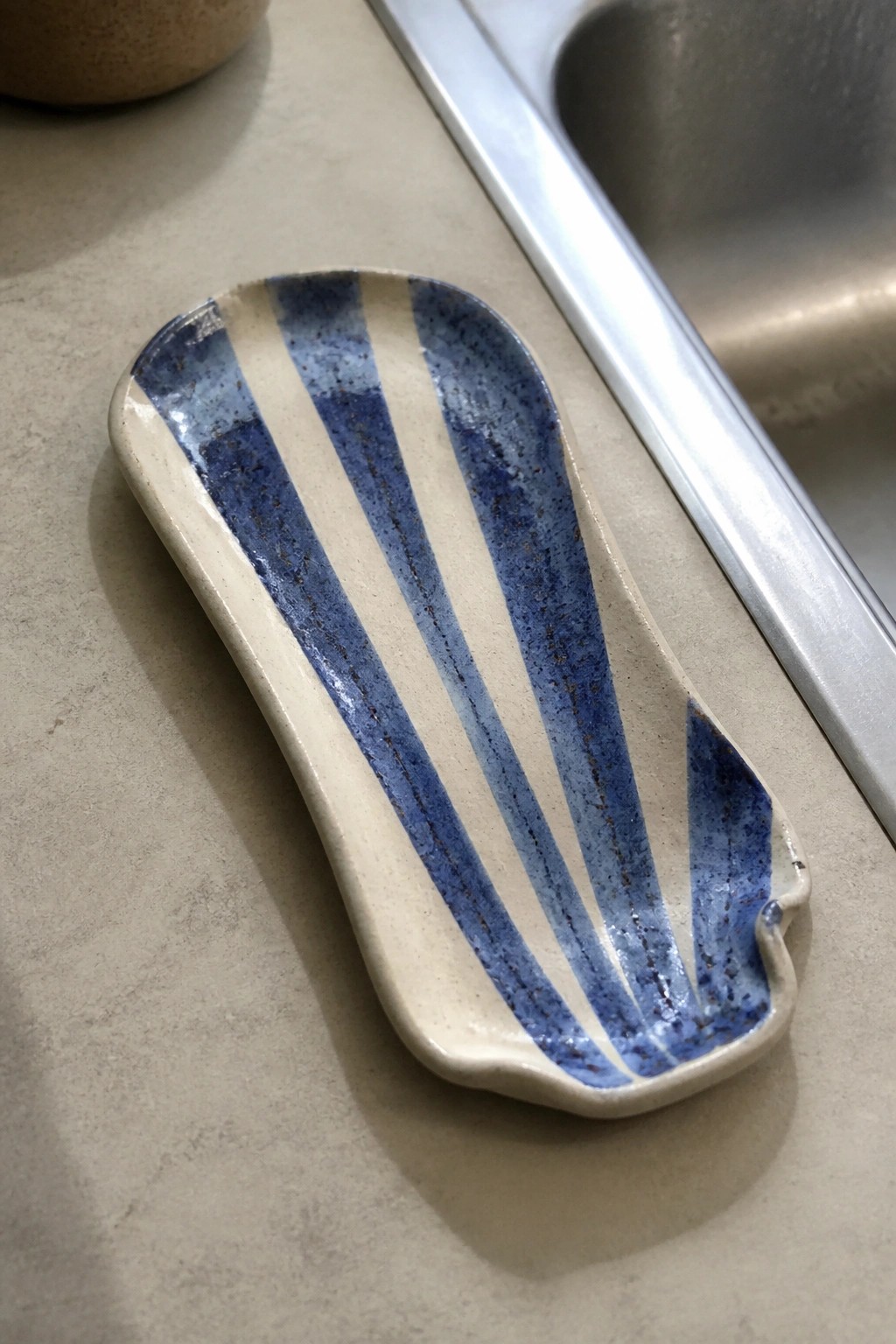
A small handmade ceramic tray with an elongated, slightly curved shape makes a practical soap dish or spoon rest. Vertical blue stripes applied in a flowing pattern create strong contrast against the lighter base while following the form’s natural taper at one end. This glazing approach uses simple repetition to add interest without requiring precise lines or extra layers.
What makes this idea useful is how the striped motif adapts quickly to other small functional pieces like ring dishes or coaster sets. The elongated form fits neatly beside a sink or on a bathroom counter for everyday use. You could rework the same stripe layout on a round plate or shorten the shape into a square version for a desk organizer.
Marbled Glaze Ring Dish

A small, shallow ceramic dish with a blue and white marbled glaze works well as a ring dish for holding jewelry on a dresser or nightstand. The rounded form stays compact while the flowing glaze pattern adds visual interest across the surface without extra carving or painting. This approach fits the ring dish category because the low sides and wide base keep small items contained without needing a lid or extra compartments.
What makes this idea useful is how the glaze application itself creates the pattern, so you can focus on a simple pinched or wheel-thrown shape. The same marbled technique can be scaled to a soap dish or small tray by widening the base and adjusting the rim thickness. In a bathroom it keeps earrings from sliding into the sink, and the color mix can be swapped for other tones to match different rooms or gift themes.
Dimpled Green Candle Holder
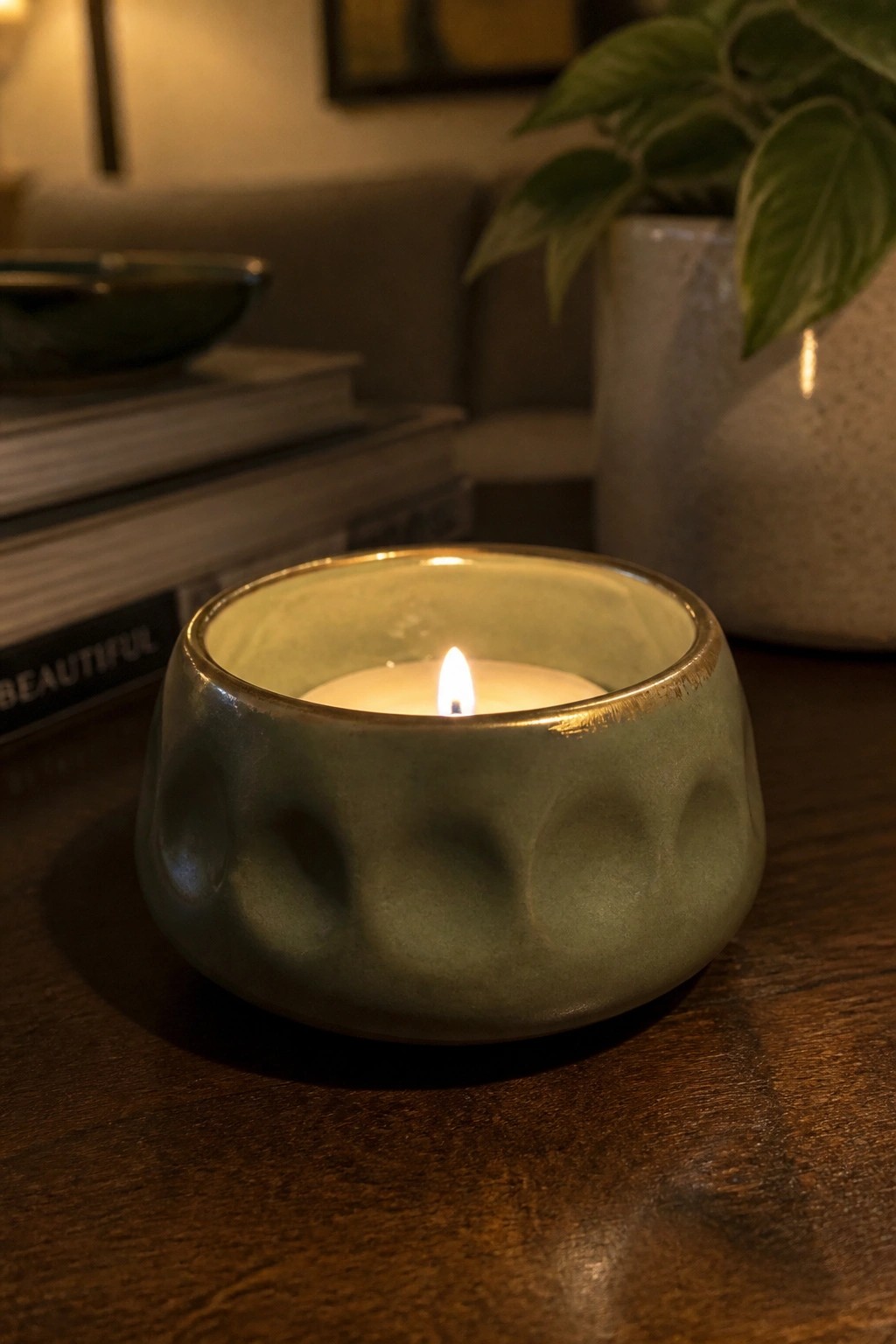
A small ceramic bowl becomes a candle holder when the exterior gets a repeated dimple texture and the interior receives a soft green glaze that stops at a thin gold rim. The low rounded shape keeps the flame stable while the texture catches light without competing with the glow. This idea fits the candle piece category and works with basic handbuilding or wheel throwing followed by simple glazing.
The small scale makes this easy to adapt into a ring dish or small tray using the same dimple pattern and glaze. You could swap the green for a matte white or deeper blue if you want it to match different room colors. In a living room or on a desk this holder keeps wax contained while adding a textured surface that stands out in photos.
Speckled Glaze with Color Splatters on a Bud Vase

A small bud vase covered in a light speckled glaze and finished with scattered orange and yellow splatters creates a lively surface without any precise patterning. The rounded form keeps the piece compact while giving the glaze plenty of room to show variation in color and texture. This approach works as a straightforward decorative vase where the glaze application itself supplies the main interest.
The small size makes it simple to form and fire even in a basic studio setup. You can repeat the same speckled base and random color bursts on other small forms like pinch pots or short cylinders by keeping the splatters loose and uneven. It fits well on a desk or shelf for holding a single stem or dried flowers. The glaze effect also photographs clearly for sharing since the contrast between the light base and the bright spots reads quickly.
Dip Glazed Toothbrush Holder

A simple cylindrical holder gets its look from a partial dip glaze that covers the upper half in white while the bottom stays in raw terracotta. The straight walls let the glaze line stay level and sharp without extra tools or masking. This approach suits a bathroom item meant for toothbrushes or small grooming tools.
What makes this idea useful is how the dip depth can be changed on the next piece to shift the color balance. The shape fits a bathroom counter or windowsill where the unglazed section adds texture against typical tile. You could use the same glaze stop on a soap dish or small cup to keep the contrast while changing the function.
Small Salt Cellar with Matching Spoon

A small ceramic salt cellar with a matching spoon works as a kitchen item that keeps seasoning handy during cooking or at the table. The bowl has a simple rounded form with a low foot that keeps it stable, while the spoon is scaled to fit the opening for easy scooping. The speckled glaze in warm brown tones adds texture and contrast that shows up well against the white salt inside. This approach focuses on pairing two related pieces so the set functions together without needing extra tools.
What makes this idea useful is the compact size that fits on a narrow counter or cutting board without taking up space. You could rework the same shape into a sugar bowl for coffee or a small dish for loose herbs. The spoon detail turns a basic bowl into a complete set, which helps the piece stand out when shared on Pinterest boards for kitchen projects. For another version, try the same form in a lighter glaze so it reads as a ring dish or mini pinch pot instead.
Cloud-Shaped Ring Dish with Painted Face

A small ceramic dish formed with an irregular cloud outline serves as a ring dish or trinket holder. The white glazed surface carries a simple blue painted cloud motif that includes two dots for eyes and a curved line for a smile. The scalloped rim follows the cloud shape and keeps the overall piece compact for tabletop use.
What makes this idea useful is how the cloud form gives you a built-in border for any painted design without needing extra lines. You could swap the face for stars, dots, or a single initial while using the same rim shape. The small scale works well on a nightstand for rings or on a desk for paper clips and earrings. The same outline can be repeated on a slightly larger tray or turned into a set of matching dishes in different sizes.
Single Glaze on a Sculpted Bird Figurine

A small bird figurine is a straightforward way to practice even glazing on a compact form. Cover the entire piece with one light green glaze that pools slightly in the recessed wing lines and leaves the beak and feet in a contrasting clay color. The simple rounded shape keeps the focus on how the glaze settles and highlights the carved feather texture without extra layers or brushwork.
What makes this idea useful is how the compact size lets you test a new glaze on a low-risk piece that still reads as finished decor. You can repeat the same bird mold in different glazes to create a small collection for a shelf or plant grouping. The incised wing detail works just as well on other animal shapes if you want to adapt the approach to a cat, rabbit, or fish form instead.
Swirl Glaze Coasters

Coasters make a good starting point for testing how glazes interact on a flat surface. These round pieces use several layers of blue-green and neutral glazes that drip and settle into rings, forming a clear spiral pattern from the center outward. The shape stays simple so the glaze movement becomes the main detail, and the stacked edges reveal how each layer covers the one below.
What makes this idea useful is that a small batch of coasters lets you try different glaze thicknesses without using much clay or kiln space. The same ring effect can be repeated on tiles for a trivet or on the inside of a low bowl. You can change the color order or add one extra drip line to create a new pattern for the next set. In a kitchen or on a coffee table, the finished stack gives a quick way to use up test glazes while making something people reach for daily.
Pastel Arched Border on a Small Ceramic Dish

A small ceramic dish uses a simple border of overlapping curved strokes in soft pink, yellow, blue, and green to create a decorative rim. The center stays plain with a light speckled glaze that lets the painted arches stand out. This approach keeps the focus on the painted pattern rather than the form itself and works on any basic wheel-thrown or hand-built plate shape.
The small size makes it practical as a ring dish, jewelry holder, or desk tray for paper clips and coins. You can adapt the same arched strokes to the foot of a mug, the inside rim of a bowl, or the edge of a soap dish without changing the color palette. The loose overlapping lines hide small brush mistakes, so the pattern stays easy to repeat across multiple pieces for a matching set.
Leaf Vein Soap Dish
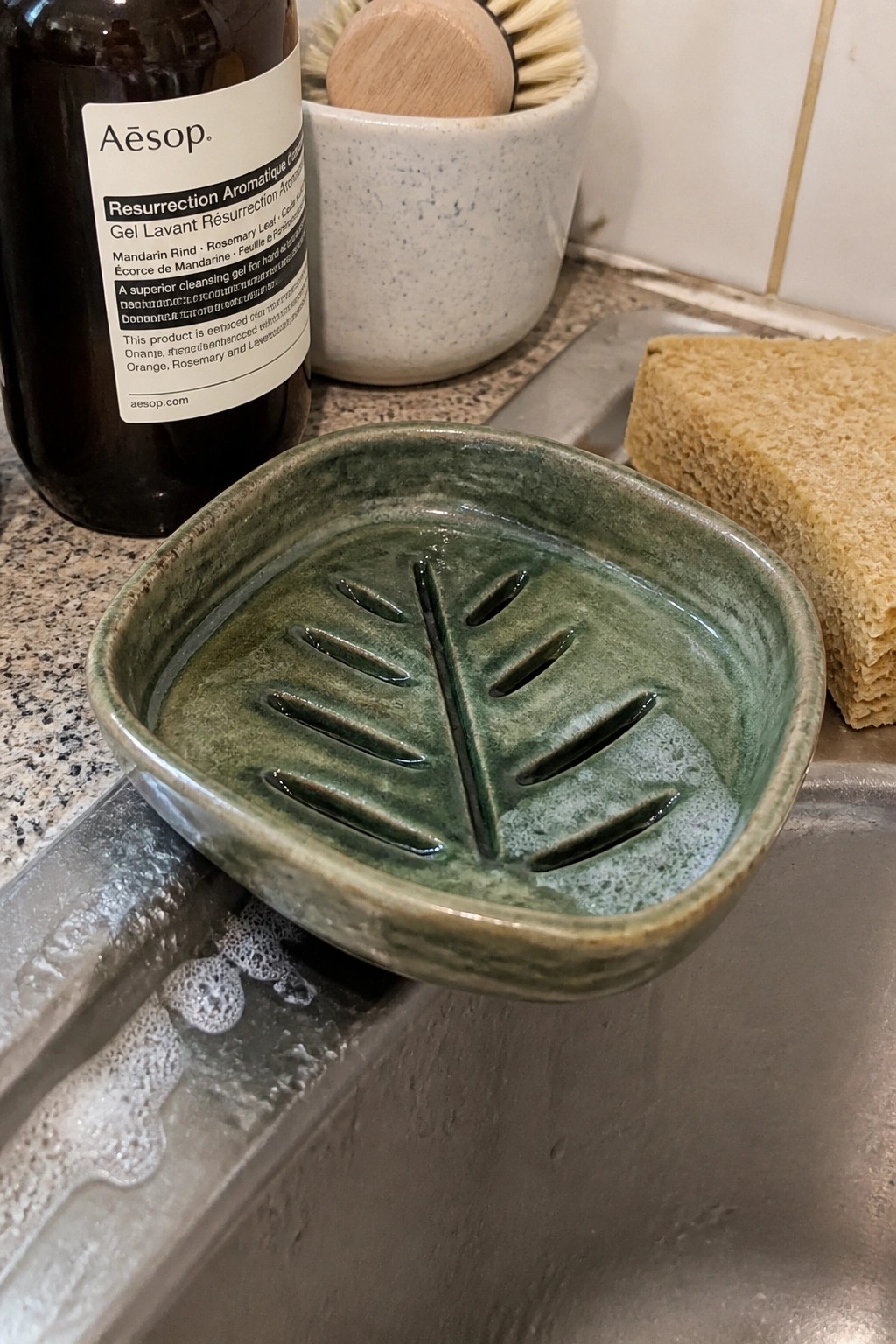
A small ceramic soap dish with a raised leaf design gives water a place to drain while the soap stays supported. The leaf veins are cut as narrow slots that run from the center outward, creating both the pattern and the function in one step. A single green glaze covers the surface and settles into the grooves to emphasize the shape. This turns a plain tray into a bathroom item that handles daily use without extra parts.
The shape does a lot of the work here because the drainage is built into the leaf itself. You could scale the same pattern down for a ring dish or widen it slightly for a sponge rest by adjusting the clay slab before carving. In a bathroom the slots keep soap from staying wet and the simple motif works with most sink styles. The idea also transfers easily to a kitchen scrub holder if you keep the same vein layout and glaze.
Speckled Blue Glaze on a Yarn Bowl

A yarn bowl formed from clay uses a deep blue speckled glaze across its curved surface to create a glossy finish with visible texture. The bowl includes two crescent-shaped cutouts on the rim that allow yarn to feed out while holding the ball in place. This glazing choice works because the dark color and speckles provide contrast against light yarn without competing with the functional openings.
What makes this idea useful is that the same speckled glaze can be applied to any rounded bowl shape where you want a simple decorative surface. You could scale it down for a small desk holder or swap the cutouts for a single notch if you want to simplify the form. The dark glaze also shows up well in photos, which helps when sharing finished pieces online.
Embossed Floral Hanging Plaque
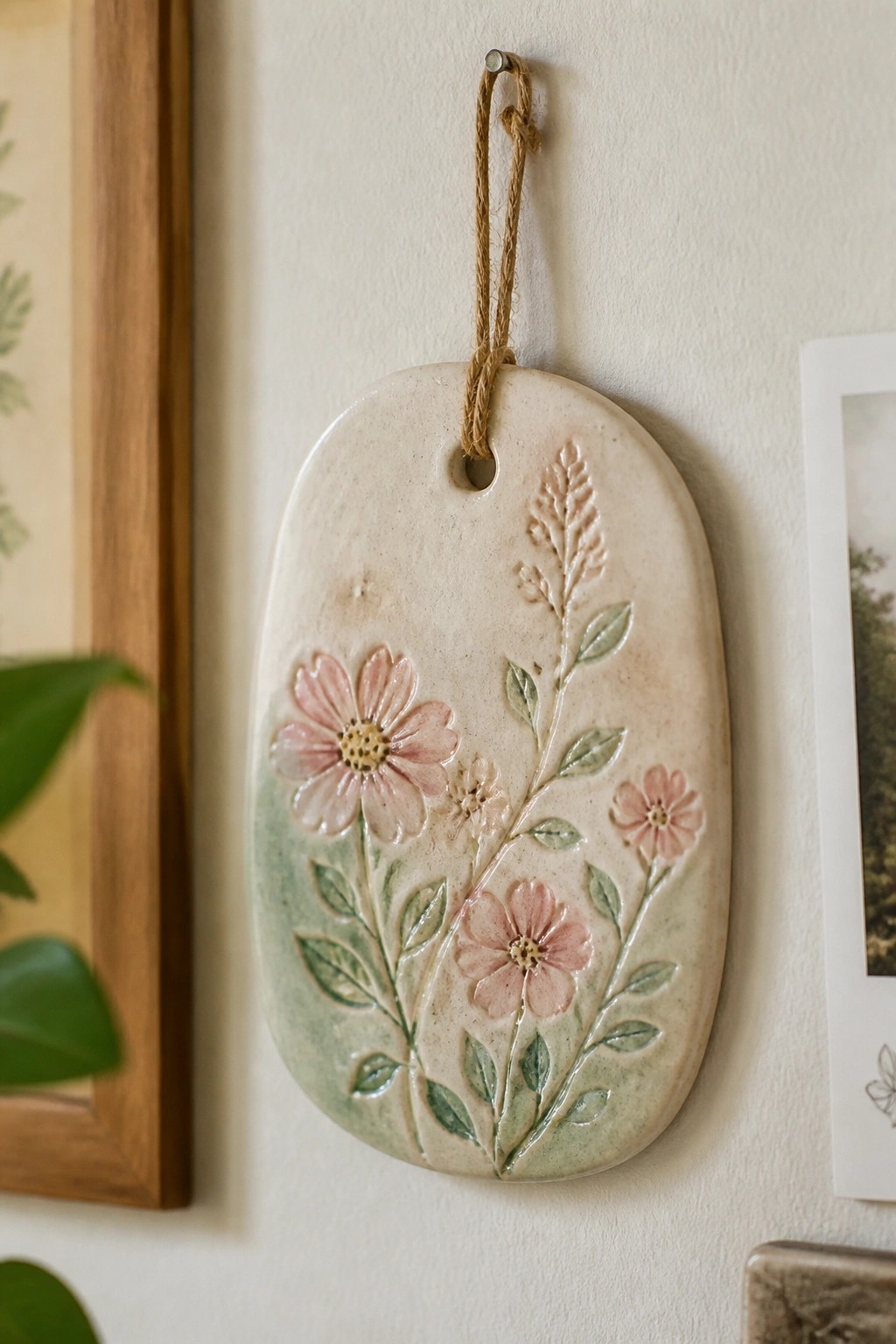
An oval ceramic plaque with a single hole at the top makes a straightforward wall decor project. The surface features raised flower and leaf details that are glazed in soft pink and muted green over a cream base, allowing the texture to stand out once fired. This style fits the decor object category and keeps the focus on simple sculpting rather than freehand painting.
What makes this idea useful is that the same raised motif approach can be scaled down for ring dishes or adapted onto a flat tile for a kitchen backsplash accent. The oval shape and twine hanger let it fit narrow wall spaces like a bathroom or hallway without taking up shelf room. You could swap the flower layout for leaves only or test different wash colors on test tiles to match existing room tones.
Ridged Square Tray with Two-Tone Glaze

A small square tray becomes more practical as a soap dish when you press parallel ridges into the base before glazing. The ridges create channels that help water drain, while the terracotta clay body with turquoise glaze pooling in the grooves produces a clear color contrast. This combination keeps the form simple yet gives the surface enough texture to hold interest without extra carving or added pieces.
What makes this idea useful is how the ridged pattern can be scaled down for a ring dish or widened for a sponge holder. The two-tone glaze works especially well in bathrooms where moisture shows up against the clay, and the same lines could be adapted with different glaze colors for kitchen use. A piece like this stands out on Pinterest because the functional detail is easy to replicate with basic tools.
Frequently Asked Questions
What safety steps should beginners follow when trying different glazing ideas for decorative pottery surfaces?
Always work in a well ventilated area and wear gloves to avoid skin contact with glazes. Read the labels on all products for specific handling instructions and wash your hands thoroughly after each session. Keep a damp sponge nearby to clean up spills right away so dust does not become airborne.
How many layers of glaze are recommended when following ideas that create decorative effects on beginner pottery pieces?
Start with two thin coats for most decorative surfaces and let each layer dry fully before adding the next. This approach helps prevent running or bubbling during firing while building depth in colors and patterns. Test a small sample piece first to see how your chosen glazes interact at different thicknesses.
Which tools work best for applying the 18 beginner glazing ideas without making a mess?
Soft brushes and sponges give good control for detailed decorative work on curved surfaces. Dip your piece into a glaze bucket for even coverage on simpler forms or use a spray bottle for light misting effects. Always clean tools between colors to avoid unwanted mixing that could dull your final results.
How can I make sure my glazed pottery remains food safe after using decorative techniques?
Choose glazes that are labeled food safe and fire them to the correct temperature range listed by the manufacturer. Avoid applying any decorative elements near food contact areas if the glaze contains metallic elements. Run a test firing with a small tile to confirm the finished surface does not leach when exposed to liquids.
What should I do if my glaze application looks uneven after trying one of the decorative ideas?
Sand the dry surface lightly with fine grit sandpaper to smooth out thick spots then reapply a thin coat in those areas. Fire the piece as planned and check the results because some glazes level out during the kiln cycle. Keep notes on which ideas produced the best coverage so you can adjust your technique next time.

Pottery Path is my cozy corner of the internet where I share clay ideas, pottery inspiration, and simple projects you can recreate at home. I love exploring everything from air dry clay to handbuilt pottery to cute minis that brighten your day. My goal is to make clay crafting feel easy, fun, and welcoming for anyone who wants to try it.
You will find beginner friendly tutorials, creative pottery painting ideas, and lots of warm inspiration for slow and happy crafting. If you enjoy hands on creativity, this space will feel like home.