I enjoy painting pottery in my spare time and botanical motifs have become something I reach for often.
They feel approachable even if you are new to it and do not need fancy techniques to look decent.
I gathered some ideas here that focus on leaves flowers and simple stems.
Most use just a few colors and basic brush strokes so they stay easy to manage.
You can try them on everyday pieces like mugs or small vases without much pressure.
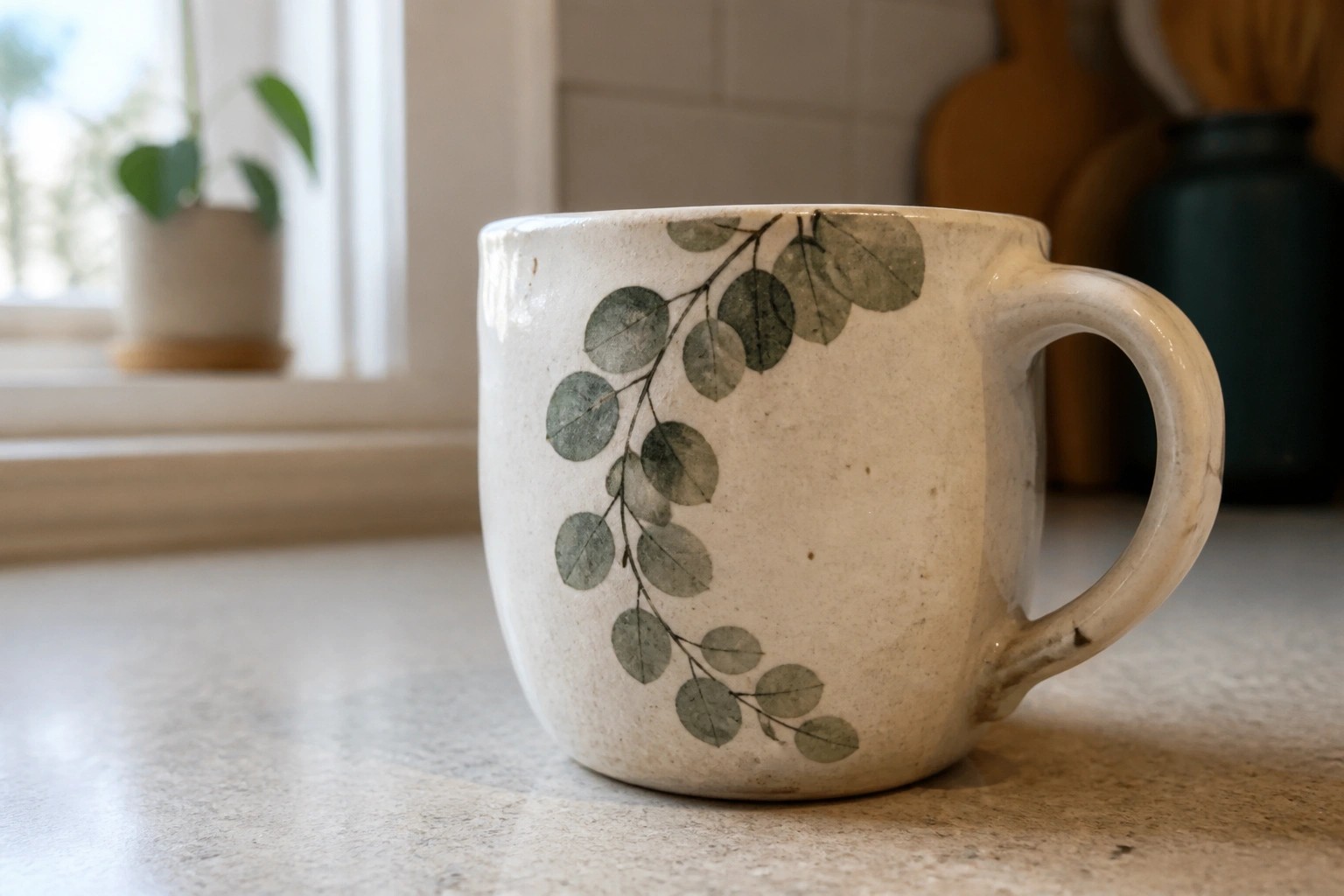
Painted Green Leaf Branch on a Speckled Mug

A ceramic mug finished with a light speckled glaze offers a good surface for a simple botanical painting. The design shows a curving stem with leaves in several green tones placed at different angles and overlaps. The leaves vary slightly in size and value, which keeps the motif from looking stiff while still reading clearly from a short distance.
What makes this idea useful is how the branch layout can be stretched or shortened to fit taller or wider mugs without redrawing the whole thing. The same leaf shapes work on a small pitcher or a set of matching bowls if you want a coordinated set. In a kitchen the muted greens sit nicely against the speckled background and do not clash with other dishware. You can simplify the motif further by using just two greens or add more stems if you want a denser look.
Daisy Motifs on a Functional Ceramic Bowl

A round ceramic bowl features a repeating daisy pattern painted around the exterior in white and yellow. Some flowers show white petals with orange centers while others are filled in solid yellow, all spaced loosely against the pale clay body. The design stays simple so the bowl shape remains the main focus and the motif reads clearly from a short distance.
What makes this idea useful is how the same daisy layout can be adjusted to fit smaller or taller bowls without crowding the surface. The pattern works on everyday pieces that go on a kitchen counter or dining table and can be copied onto matching plates or mugs for a set. For a gift, the same motif transfers easily to a smaller dish or even a lidded jar.
Rim Wreath with Mixed Florals

A shallow ceramic plate works well for this idea because the painted border stays confined to the rim and leaves the center open for food or display. Clusters of small orange flowers paired with blue and green leaf sprigs form a loose continuous wreath that circles the edge without crowding the surface. The light clay background keeps the colors soft while the simple repeat pattern makes the motif easy to paint evenly all the way around.
What makes this idea useful is that the same border can be shortened or spaced out to fit smaller dishes or bowls without needing new drawings. You can change the flower colors to match existing kitchenware or drop the orange blooms and keep only the leaf sprigs for a faster version. This style also transfers directly to a set of four plates since the motif repeats without much variation.
Pressed Leaf Square Tray

A square ceramic tray uses real leaves pressed directly into the clay to form overlapping botanical impressions. The design mixes soft green and gold tones across the surface, with a clear glaze that highlights the vein details from the leaves. This creates a small dish suited for holding rings, keys, or loose change. The method relies on simple stamping rather than drawing, making the motif repeatable on different forms.
What makes this idea useful is that leaf impressions require minimal drawing skill while still producing varied natural patterns. The small square shape works especially well as a desk or nightstand tray that stays compact. You could adapt the same stamping approach to round coasters, a soap dish, or a larger serving plate by changing leaf sizes and placement. For a gift, this kind of tray adds a personal touch through the specific leaves chosen.
Monstera Leaf Motif on a Light Green Planter

A small cylindrical ceramic planter uses a pale green glaze as the base for a band of painted Monstera leaves. The leaves are rendered in darker green with lighter sections to show the natural splits and veins, placed below a narrow textured strip that breaks up the surface. This keeps the botanical pattern simple and readable on a compact form that suits small plants.
What makes this idea useful is how the leaf motif directly echoes the plants it will hold, so the pot blends into a windowsill or shelf arrangement without extra decoration. The round shape and mid-height band make it easy to repeat the same painting approach on a different size or on a set of matching pots. You could swap the glaze color or shrink the leaves to fit a ring dish or small tray while keeping the same motif. The contrast between the light background and the dark leaves also helps the design show up clearly in photos for sharing.
Herb Sprig Spoon Rest
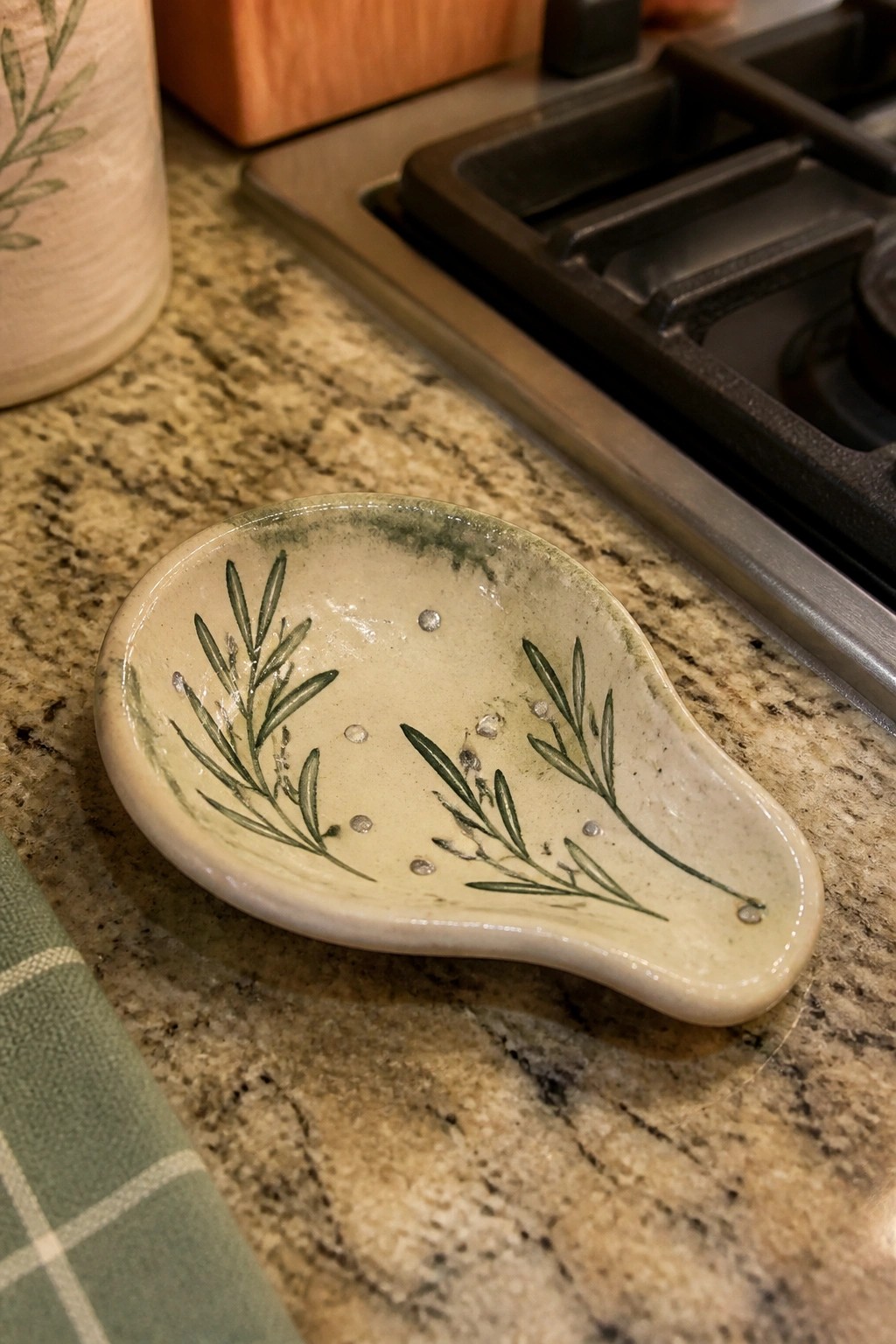
A small ceramic spoon rest painted with scattered herb sprigs gives a simple kitchen item a clear botanical focus. The light base glaze lets the green leaves and small dot accents read cleanly across the curved surface. This shape stays compact while giving enough flat area for a few overlapping branches to balance without feeling crowded.
What makes this idea useful is how well it serves as a practical kitchen piece that still shows off painted detail. You could repeat the same leaf pattern on a set of matching small dishes or scale it up slightly for a butter dish. The limited color palette and loose branch layout make it straightforward to personalize with different herbs like thyme or lavender.
Cherry Blossom Ring Dish

A small ceramic ring dish with a scalloped rim gives you a compact spot to drop rings or earrings. The idea centers on a soft pink interior glaze paired with simple brush-painted branches and blossoms in black, pink, and white, plus a few gold flecks for contrast. The speckled clay exterior keeps the piece grounded while the floral motif stays light and uncluttered. This approach turns a basic pinched or slab-built dish into a jewelry holder that still reads as decorative.
What makes this idea useful is the small scale that fits on a bedside table or bathroom counter without crowding the surface. You can swap the cherry blossom motif for any simple branch or leaf pattern and still keep the same color scheme. The shape works just as well as a tiny catch-all for keys or loose change if jewelry is not the main need. For a gift, the same painting style transfers easily to a matching soap dish or small tray.
Lavender Stalks Painted on a Rounded Ceramic Vase

A small ceramic bud vase with a rounded body and narrow opening gives a clean surface for repeating a lavender motif. Several vertical stalks are painted around the form using soft purple for the flower heads and muted green for the stems and leaves. The light speckled glaze provides enough contrast to make the botanical details visible while keeping the overall look simple. This kind of painted decor object works as a straightforward way to add a single motif without needing complex layering.
What makes this idea useful is how the curved shape lets the stalks sit evenly without much planning. You could adapt the same spacing and colors to a small bowl or a low planter by shortening the stems to fit the lower profile. For desk use or a windowsill, the narrow neck holds one or two stems without taking up much room. The motif itself translates easily to other neutral-glazed pieces if you want to test the design on a test tile first.
Scalloped Tea Light Dish with Fern Painting

A small ceramic dish with a scalloped rim makes a simple tea light holder when the inside is painted with green fern fronds. The leaves are spaced evenly across the surface so the pattern follows the curve of the bowl without crowding. This keeps the piece functional while turning a basic form into a botanical accent that sits on a table or shelf.
The small scale means you can finish and fire it quickly even in a home studio setup. Try the same fern motif on a flat coaster or shallow ring dish by using the same loose brushwork and limited color range. It works well grouped with other small painted pieces for a consistent look on a mantel or desk, and the scalloped edge gives the design a clear boundary that helps the pattern stand out.
Ivy Vine on a Crackle Glaze Tile

A flat rectangular ceramic tile with a drilled hole at the top works as a hanging decor piece when covered in an ivy branch motif. The design uses layered green leaves of varying shades along a thin stem, with small gold dots marking the flowers or buds. The light crackled glaze underneath keeps the focus on the plant details while adding subtle texture across the surface. This fits the category of a simple wall or shelf decor object that relies on painted or applied botanical elements rather than form or function.
What makes this idea useful is how the vertical vine layout can be shortened or extended to fit different tile sizes or even transferred to a round plate shape. The crackled background pairs with the green leaves so the piece reads as a natural accent without competing patterns. You could adapt the same leaf arrangement for a set of smaller tiles to use as coasters or a kitchen backsplash insert. For a gift, the hanging format and single motif keep the project quick while still looking intentional.
Divided Dish with Leaf and Berry Motifs

A small two-compartment ceramic dish gives you separate spaces for spices, salt, or small garnishes. One side shows a simple painted branch with leaves while the other holds a cluster of round dots that read as berries, both done in one muted red-brown tone against the light speckled glaze. The connected shape stays compact on a counter and keeps the two sections stable without extra hardware. This fits the category of basic kitchen painting projects where a single botanical motif is repeated across sections.
The small scale makes this easy to adapt for different kitchen needs like holding salt and pepper or loose tea. You could paint similar motifs on individual small bowls or even a larger tray by adjusting the size of the leaf and berry clusters. A piece like this stands out on Pinterest because the paired botanical designs give it a cohesive look without needing many colors. For a gift, something like this pairs nicely with a jar of homemade seasoning.
Embossed Succulent Design on a Toothbrush Holder

A ceramic toothbrush holder with raised botanical motifs gives a bathroom a functional piece that also serves as decor. The succulents are formed in low relief around the cylinder and colored with glazes in green, pink, and yellow that sit against a light mint base glaze. This method keeps the painting simple because the sculpted shapes guide where the color goes and create contrast without fine detail work.
What makes this idea useful is how the same cylinder shape works for toothbrushes, makeup brushes, or small tools. You can adapt the relief succulents to a soap dish or small planter by adjusting the height and skipping the holes. The soft background color prevents the brighter motifs from overwhelming the piece, which makes it easier to match with existing bathroom items. For a first attempt, press the flowers into the clay with a stamp or mold before glazing so the design stays consistent.
Botanical Sponge Holder

A small rectangular ceramic dish painted with green leaves and clusters of yellow berries makes a practical sponge holder for the kitchen sink. The botanical motifs run along the inner and outer walls while the ribbed base helps water drain away from the sponge. This kitchen item keeps the sponge elevated and visible, so the painted pattern remains part of the daily setup rather than hidden.
The compact shape fits neatly on a sink ledge and takes little counter space. You could repeat the same leaf and berry motif on a matching soap dish or small tray to create a set. In a kitchen this holder stays useful while the painted detail connects it to other botanical pieces without needing extra decoration. For a simple change, use the same colors on a square coaster or a small ring dish.
Ceramic Bird Figurine with Ivy Leaves

A small ceramic bird figurine takes on a botanical look when painted with a simple ivy vine that runs along one side. The green leaves are spaced to follow the curve of the body, sitting cleanly against the pale matte glaze. Sculpted wing lines add just enough texture to keep the piece from looking flat. This turns a basic figurine into a lightweight decor object that works on a shelf or desk.
The small size keeps the project quick to finish and easy to place anywhere near real plants. You can repeat the same vine pattern on other small shapes such as a tray edge or the side of a tiny vase. The painted leaves stand out because they use only a few colors and follow the form instead of fighting it. For a beginner trying botanical motifs, this shape gives you a clear surface to practice on without needing perfect symmetry.
Leaf-Shaped Ring Dish

A leaf-shaped ceramic tray makes a simple ring dish or small jewelry holder. The form follows the outline and vein pattern of a real leaf, created either by pressing a leaf into the clay or using a mold, then covered with a glossy green glaze that pools in the details. This keeps the piece small and shallow so it sits flat on a surface while still catching rings and chains.
What makes this idea useful is how the leaf shape already provides both the motif and the function without extra painting. You can scale the same form down for a single ring or up slightly for a soap rest. The green glaze works with other botanical pieces, or you could swap it for a different color if you want it to match a specific room. For a gift, the tray shape keeps the project quick while still looking finished.
Botanical Yarn Bowl with Spiral Notch

A yarn bowl gives knitters and crocheters a simple way to keep yarn from rolling away while they work. The ceramic form includes a spiral notch cut into the rim that guides the strand outward without tangling. Hand-painted vines and small flowers wrap around the outside in soft colors over a speckled white surface, turning the functional shape into a botanical project. The idea fits the beginner category because it uses basic painting on a ready-made or wheel-thrown bowl rather than complex sculpting.
What makes this idea useful is that the notch turns a plain bowl into a specialized tool many crafters actually need. You could paint the same vine pattern on a smaller ring dish or a lidded jar for cotton balls. The scale stays manageable for a first painted piece, and the motif can be simplified to fewer flowers or changed to different colors without losing the effect. For a gift, this kind of bowl works especially well because it combines a clear purpose with light botanical decoration that photographs cleanly for sharing.
Bluebell Motif Teacup and Saucer

A hand-painted ceramic teacup and saucer uses a bluebell motif in blue with green leaves on a light clay base. The flowers are clustered inside the cup and spaced evenly around the saucer edge. This keeps the design focused on a single repeated element that fits the round shapes without crowding them.
What makes this idea useful is how the small scale of the flowers lets the same motif move easily from the curved cup wall to the flat saucer surface. You could adapt the pattern to a set of side plates or a small pitcher using the same colors and spacing. In a kitchen, this kind of piece works well on a tray or shelf because the blue stands out against the pale background. For a gift, something like this stays simple if you limit the flowers to one cluster on the cup and a few on the saucer.
Leaf Carved Soap Dish

A square soap dish gives you a flat surface for pressing or carving a simple leaf motif directly into the clay. The turquoise glaze pools in the recessed lines to make the botanical pattern stand out while the three drainage holes keep the design functional. This approach turns a basic bathroom item into a painted and textured project without needing advanced wheel work.
The compact size makes it easy to try on a weekend and still produce something useful. You can repeat the same leaf stamp or carving on a matching toothbrush holder or small tray later. For a gift, the drainage holes and neutral glaze color keep the piece practical rather than purely decorative.
Tulip Wall Pocket Holder

A small ceramic wall pocket works well as a holder for single flower stems. The tulip motif is painted in a solid orange with green leaves on a light clay surface, keeping the design simple and centered on the front. The organic pouch shape includes a small hole at the top for hanging, and the rim is left unglazed to show the natural clay edge. This fits the category of decorative wall holder rather than a tabletop vase.
What makes this idea useful is the pocket form that lets you add fresh stems without taking up shelf space. The painted tulip could be swapped for other botanical outlines like leaves or daisies on the same shape. You could scale the design down for a set of matching tiles or up for a larger planter. In a narrow hallway or above a workspace, this kind of piece adds a plant accent that stays out of the way.
Botanical Sprigs on a Small Ceramic Pitcher

A small ceramic pitcher works well for simple botanical painting because its curved surface gives you space to place a few leaf sprigs without crowding. The design uses two different plant motifs, one with broader leaves and another with narrow stems, both painted in green tones that sit cleanly against the light speckled glaze. This keeps the piece functional as a creamer or small serving jug while adding a clear botanical pattern. The idea fits any beginner project that needs a kitchen item with light painted detail rather than heavy coverage.
The compact shape makes it easy to paint in one session and still leaves room to adjust the placement of the sprigs. You could use the same leaf and stem layout on a matching sugar bowl or try the pattern along the rim of a larger serving dish. For kitchen use the pitcher holds up well for milk or cream, and the design translates directly to other small functional pieces like butter dishes or salt cellars. The painted details stand out enough on Pinterest without needing extra color layers or texture work.
Mini Ceramic Planters with Matching Botanical Paintings

Small handmade ceramic pots painted with simple botanical motifs make a direct connection between the container and the plant inside. One pot shows a fern frond, another has two daisies, and the third features a succulent rosette, each painted in muted green on a light speckled surface. The designs stay minimal so the shape of the pot and the plant itself remain the focus. This fits the planter category and works especially well for beginners who want to practice painting without needing advanced techniques.
What makes this idea useful is the small scale, which fits easily on a windowsill or narrow shelf for herbs or succulents. You could swap the daisy motif for another flower or repeat the same leaf shape across a set of three different sizes. The painted detail helps the pots look intentional even when the clay form stays basic, and the same approach translates quickly to a larger herb pot or a single statement planter. For a gift, something like this stands out because the motif ties into the plant without extra decoration.
Frequently Asked Questions
1. What paints work best for botanical pottery painting projects? Acrylic paints formulated for ceramics or multi-surface use are ideal because they adhere well and come in a wide range of colors suitable for leaves and flowers. Look for brands that offer both matte and gloss finishes to match the style of your chosen motifs.
2. How long should I let the paint dry between layers when creating detailed motifs? Allow at least 30 minutes to an hour for each layer to dry, depending on the thickness of the paint and humidity levels in your workspace. This prevents colors from blending unintentionally and helps build clean details like veins on leaves.
3. Can beginners use stencils for the botanical designs mentioned in the ideas? Yes, stencils can be very helpful for achieving consistent shapes like leaves and petals. Trace around them lightly with a pencil and then fill in with paint for clean results that still allow room for personal touches such as added shading.
4. How do I fix mistakes when painting on pottery? Wipe away wet paint immediately with a damp cloth. For dried mistakes, carefully sand the area or paint over it with a background color once it has fully dried, then reapply your motif in thin layers to blend it smoothly.
5. What are some ways to display or use the finished botanical painted pottery? Display your pieces on shelves as decorative items, use them as planters for real plants to complement the motifs, or gift them to friends and family for special occasions after applying a protective sealant.

Pottery Path is my cozy corner of the internet where I share clay ideas, pottery inspiration, and simple projects you can recreate at home. I love exploring everything from air dry clay to handbuilt pottery to cute minis that brighten your day. My goal is to make clay crafting feel easy, fun, and welcoming for anyone who wants to try it.
You will find beginner friendly tutorials, creative pottery painting ideas, and lots of warm inspiration for slow and happy crafting. If you enjoy hands on creativity, this space will feel like home.