I like to make pottery plates with a rustic feel.
Folk patterns from different cultures give me ideas for the designs.
My own attempts have included simple motifs like flowers and birds.
I wanted to share some of the patterns that worked well for me.
Here are twenty ideas based on what I have learned.
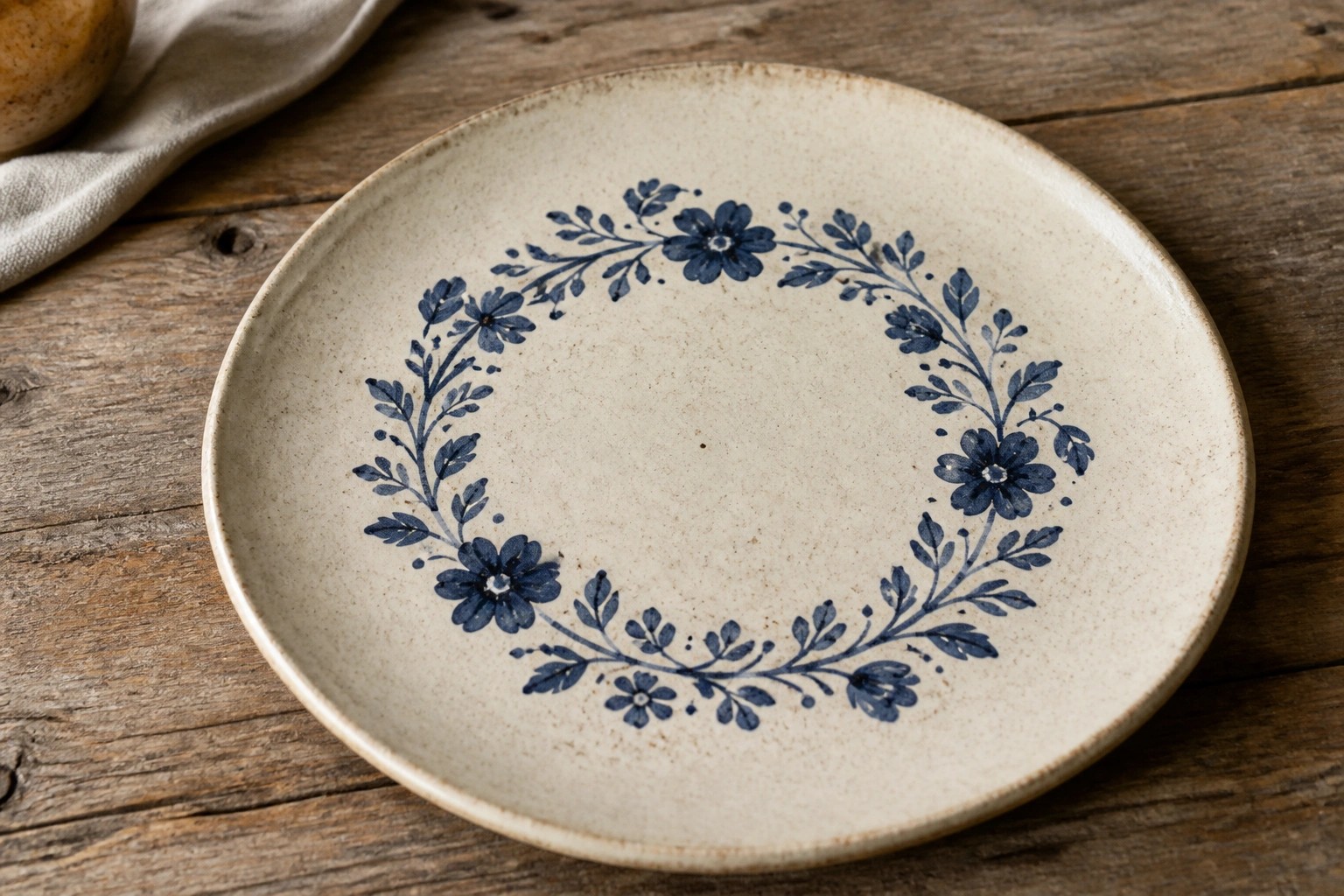
Blue Floral Wreath Plate

A round ceramic plate finished in an off-white glaze carries a hand-painted blue floral wreath that runs along the rim. The motif uses simple five-petal flowers, leaves, and thin connecting vines, with the center left plain. This layout keeps the decoration contained to the border so the plate remains practical for food while still showing the pattern clearly. It works as a dinner plate or display piece in a folk-inspired set.
What makes this idea useful is the wreath format that scales to other plate sizes without much adjustment. The same blue motif could be repeated on a set of smaller side plates or a shallow bowl for visual continuity. In a kitchen this kind of plate mixes easily with wooden boards and neutral linens. You could shorten the vine sections and paint only the flowers if you want to finish the design faster on multiple pieces.
Sunflower Plate with Scrolling Vines
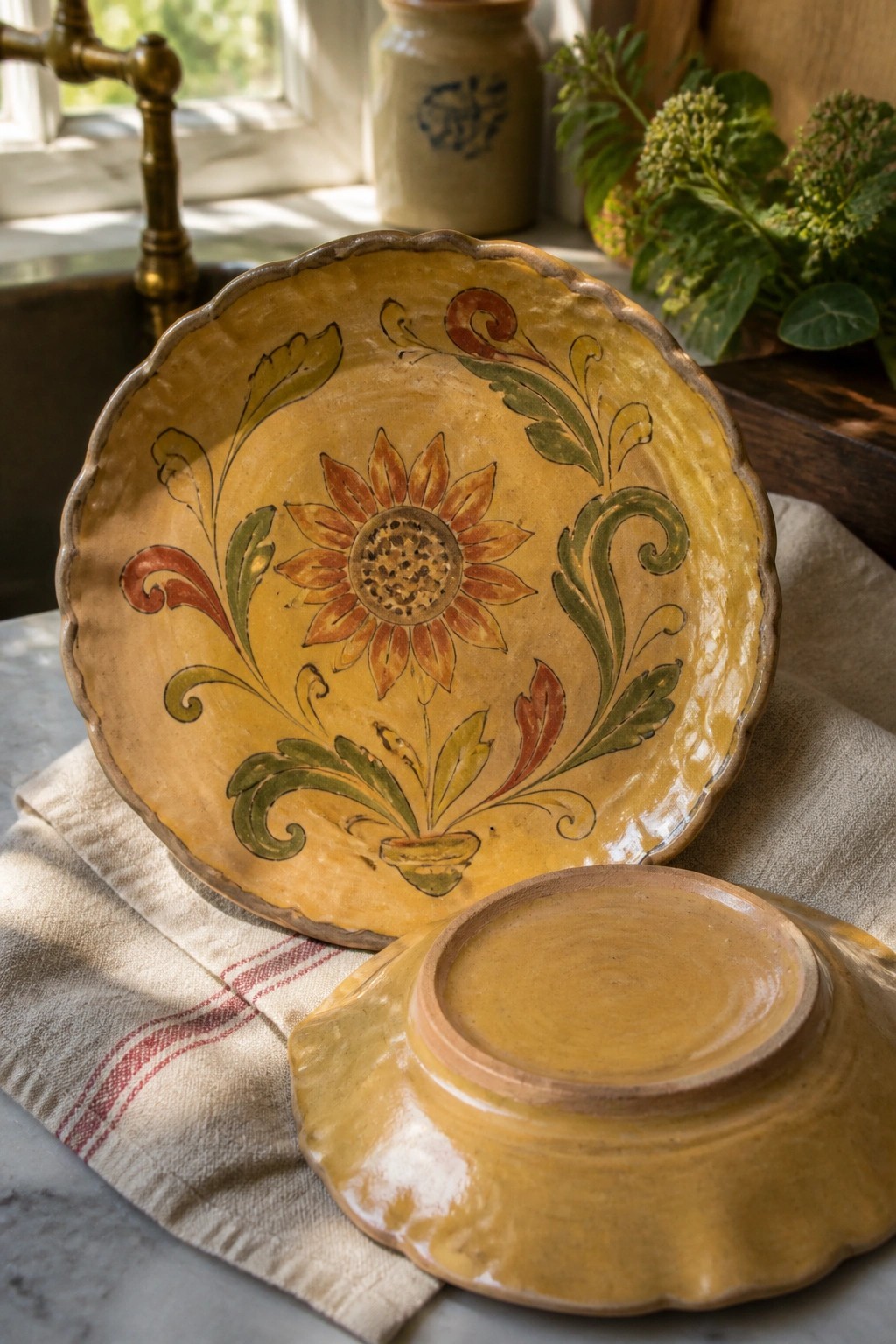
A shallow ceramic plate with a scalloped rim carries this folk pattern well. The design places a central sunflower in the middle with curving green stems and red leaf accents painted across a mustard yellow surface. The layout keeps the main flower clear while the vines spread out to use the full width of the plate. This approach works for both functional serving pieces and decorative kitchen display.
The wide rim gives room for the painted details without making the center feel crowded. You could repeat the same sunflower and vine layout on a set of smaller plates or stretch it across a larger platter. The yellow base with green and rust tones pairs easily with other rustic dishes already in most kitchens. For a simpler version, keep the central flower but reduce the vines to just a few strokes on each side.
Folk Rooster Plate with Wavy Border

A ceramic dinner plate painted with a central rooster in blue and brown tones. The design uses a repeating wavy border with small dots along the rim to frame the motif. This approach keeps the folk pattern simple while making the plate suitable for both wall display and table use.
The shape does a lot of the work here because a full-size plate gives the rooster enough room to read clearly without crowding. You could scale the same border and bird down onto smaller dessert plates or turn the rooster into a matching set of four. In a kitchen this kind of piece works well on open shelves where the painted detail stands out against plain dishes.
Folk Pattern Plate With Carved Rim

A handmade dinner plate works well when the center stays plain and smooth while the wide rim carries a repeating set of carved geometric shapes. The maker used simple line cuts and crosshatching to create triangles, grids, and a central star motif that read clearly even after the matte green-gray glaze was applied. This approach keeps the plate functional for food while turning the border into the main visual element.
The shape does a lot of the work here because a standard plate size lets the carved border sit at eye level when the plate is on the table. You can adapt the same rim treatment to smaller dessert plates or larger serving platters by repeating just two or three of the motifs instead of the full set. The carved detail also photographs clearly, which helps the piece stand out if you share finished work online. For everyday use the smooth center makes wiping easy while the textured edge adds interest without getting in the way.
Scalloped Dish With Folk Border Motifs

A small scalloped dish like this serves as a ring holder or trinket plate for jewelry and loose items on a dresser or nightstand. The wavy edge creates a distinct outline while the painted border uses simple repeating red and blue motifs to frame the center without filling the whole surface. The light glaze keeps the focus on the rim pattern and gives the piece a clean rustic look that fits the folk style. This approach works for any small plate or shallow bowl where the border becomes the main detail.
What makes this idea useful is how the compact size makes it easy to paint in one session and display without crowding a surface. You could repeat the same border on a set of coasters or scale the motif up for a larger serving plate. The scalloped shape already adds visual interest so the pattern can stay simple and still read as intentional. In a kitchen or entryway this kind of piece holds keys or small tools while the folk border keeps it from looking plain.
Hanging Plate with Potted Tree and Birds

A round ceramic plate makes a straightforward wall piece when it has a small hole drilled near the rim for hanging. The design centers on a tree rising from a pot, with raised leaves and branches in blue and brown against the light clay body, plus two birds placed on lower branches for balance. The border uses dotted lines in the same colors to frame the main motif without crowding it. This approach keeps the plate in the decor object category while using simple color contrast to make the pattern stand out.
What makes this idea useful is the vertical tree shape that fits nicely on a standard dinner-plate size without needing extra space. You can adapt the same layout to a smaller plate for a bathroom or entryway hook, or drop the hanging hole and use it as a tray on a shelf. The two-color scheme on an unglazed background is easy to recreate with underglazes if you want to change the palette. In a kitchen, this kind of piece adds a focal point on an open wall while staying flat enough to store when not displayed.
Painted Wreath Border on a Terracotta Plate

A shallow terracotta plate takes on a folk look when you paint a repeating wreath of leaves and flowers around the inner rim. The design uses a muted mix of green and reddish-brown tones that sit softly on the unglazed clay surface. This border style leaves the center open for food or small objects while keeping the overall pattern balanced and simple.
What makes this idea useful is how the circular motif can be adjusted in size to fit different plate diameters or repeated across a set. The earthy color scheme matches other kitchen pieces like canisters or bowls without needing extra glaze layers. You could rework the same painted wreath onto a larger tray or a set of small side plates for a coordinated collection.
Oval Plate with Blue Wave Bands
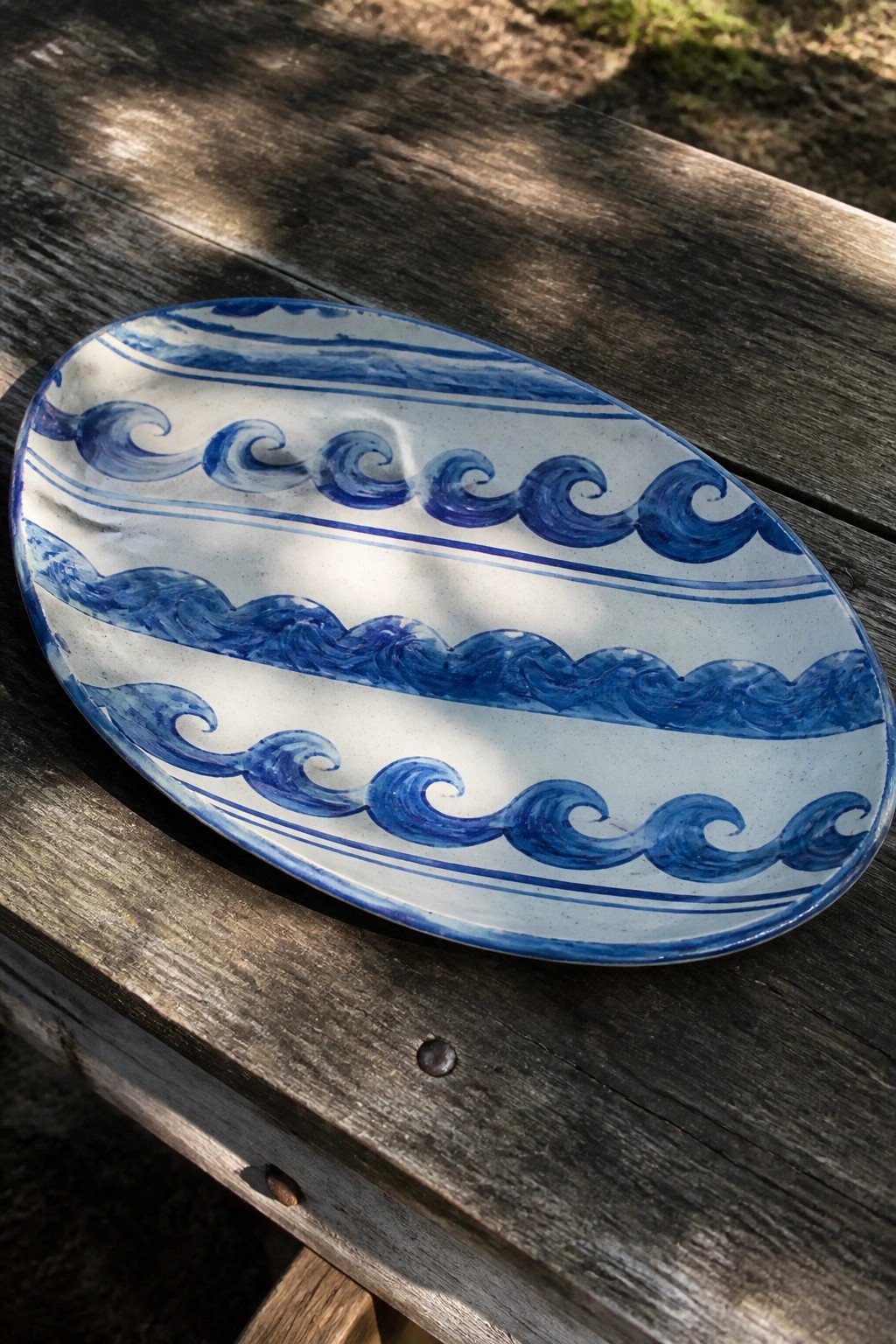
An oval ceramic plate uses horizontal bands of hand-painted blue waves to create a simple repeating pattern across the surface. Thin blue lines separate the wave sections and frame the edges, leaving most of the white clay visible between the motifs. The elongated shape gives the waves room to flow without looking cramped. This style works as a serving plate or decorative piece in a folk-inspired collection.
What makes this idea useful is how the wave motif can be stretched or shortened to fit different oval or round plates. You could adapt the same bands for a matching set of smaller dishes or a rectangular tray by changing the spacing. The blue-on-white approach keeps the design readable even on a rustic table setting. For a gift, paint just two wave rows on a bread plate instead of covering the full surface.
Heart Wreath Nesting Plates
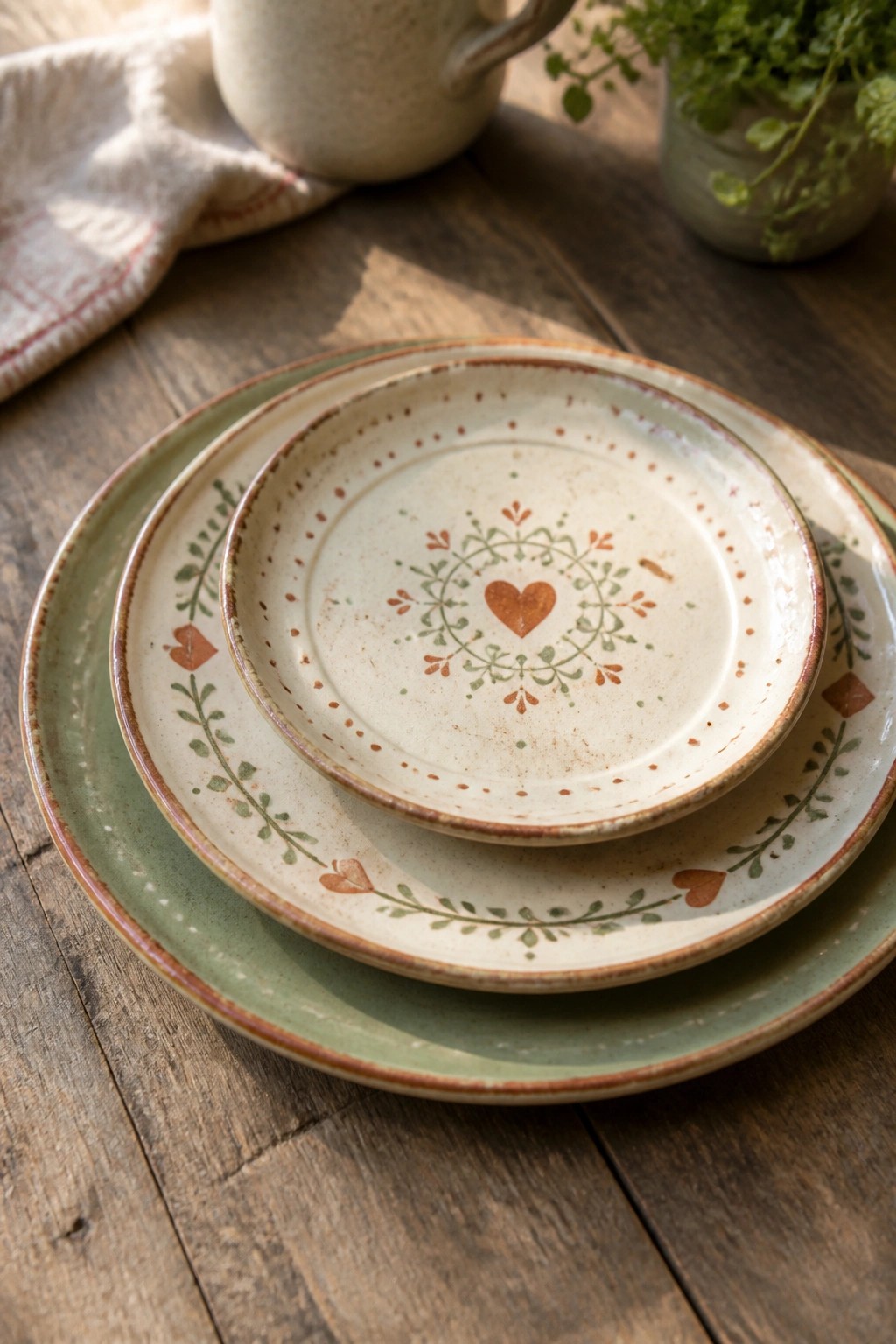
These are handmade ceramic plates made as a nesting set for table use. The smaller top plate carries a central terracotta heart inside a ring of painted leaves and dots, while the larger plate underneath shows a green rim with a continuous border of leaves and small hearts. The design uses limited colors and a matte speckled surface that keeps the patterns readable even when the plates are stacked or holding food.
What makes this idea useful is how the central motif stays visible on the top plate even in a stack. You could repeat just the wreath on smaller side plates or stretch the leaf border across a serving bowl. In a kitchen this kind of painted set works for everyday meals without clashing with other dishes. The same elements can be simplified to a single line of hearts on the rim if you want a faster project for a gift set.
Peacock Motif Plate with Curved Tail Details

A shallow ceramic plate works as the base for this folk pattern, with a central peacock painted in teal and accented in warm brown on the body and tail feathers. The tail extends into curved shapes that follow the plate’s rim, while smaller flowers and leaves fill the remaining space in the same two colors. The off-white speckled surface keeps the painted elements clear and prevents the design from feeling crowded. This layout suits a decorative plate meant for display rather than heavy daily use.
The round form lets the tail curves sit evenly without extra planning. You can copy the same peacock placement on a dinner plate or shrink the whole design to fit a smaller dessert plate. Limiting the palette to two main colors plus the base glaze keeps the project simple to test on test tiles first. In a kitchen or dining area, this plate stands out on open shelves where the pattern shows from above.
Mushroom Border Plate
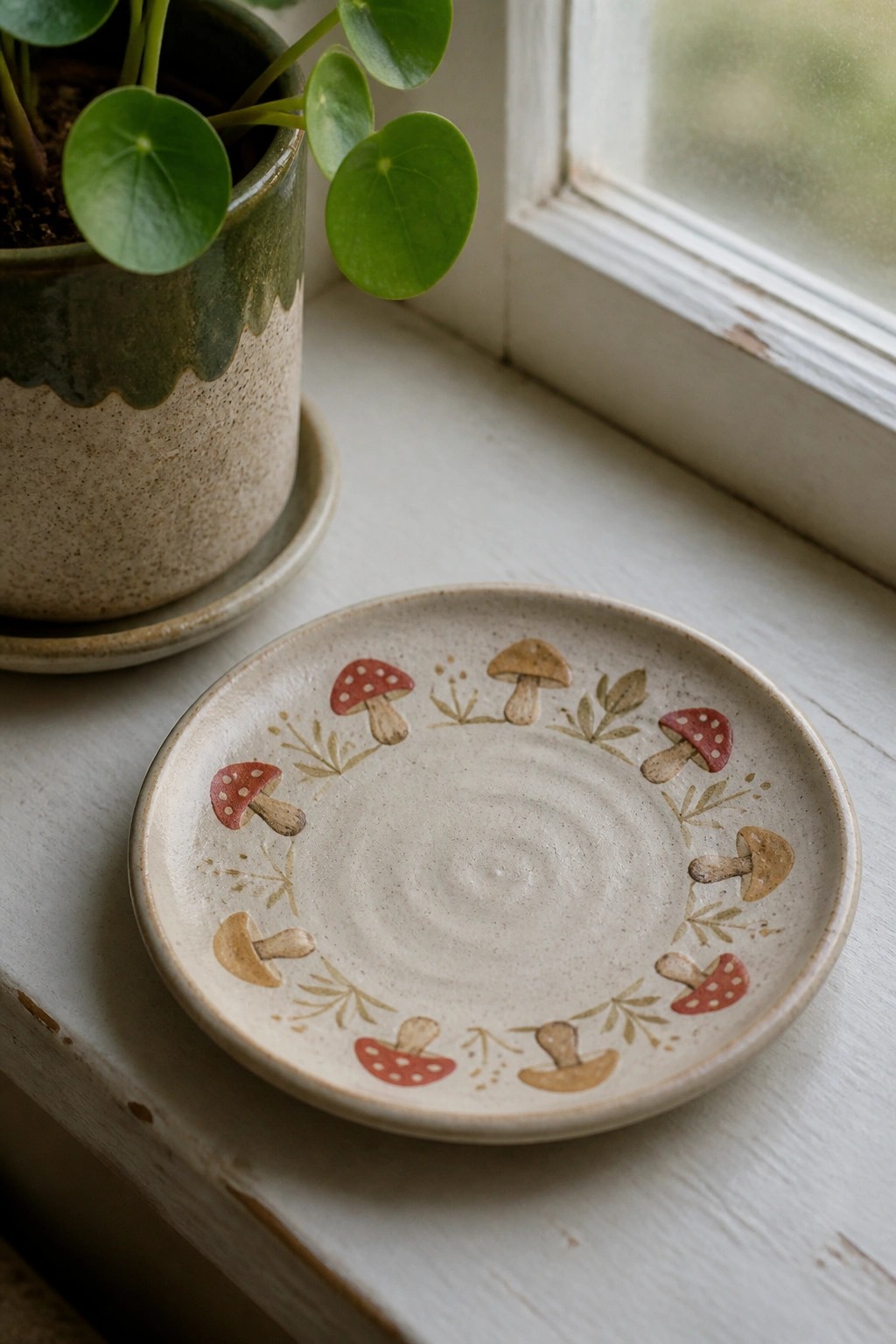
A small round plate finished with a light speckled glaze gets its main interest from a painted ring of mushrooms and leaf sprigs. Red-capped and brown mushrooms alternate with simple foliage clusters, spaced evenly around the rim so the center stays mostly plain except for a light spiral texture. The low, flat shape and muted palette keep the focus on the folk pattern without crowding the surface.
What makes this idea useful is how well the compact size works as a plant saucer, candle base, or jewelry dish on a windowsill or dresser. You can repeat the same border on a larger plate or swap the mushrooms for other simple stamps like acorns or berries to change the theme. The even spacing and limited color range make the pattern easy to adapt with underglaze or transfers if you want faster repeats. In a kitchen or gift setting, the natural motif pairs cleanly with other rustic pieces without needing extra decoration.
Plate With Carved Fan Border in Two Tone Glaze

A shallow plate gains strong visual interest when the wide rim carries a repeating carved pattern. The maker pressed a fan or scallop stamp around the edge to create raised texture, then applied a dark brown glaze that pools in the recesses and highlights the detail. The center stays plain with a thin wash of green that reveals the wheel marks from throwing. This keeps the plate usable for food while the border supplies the folk pattern.
The shape does a lot of the work here because the wide rim gives plenty of room for the stamped design without crowding the food area. You could repeat the same stamp on a set of salad plates or scale it up for a large serving platter by adjusting the spacing. The brown and green glaze pairing is easy to recreate with basic studio glazes and works in both modern and traditional kitchens. For a gift, this plate stands out on its own without needing extra wrapping or packaging.
Deep Bowl with Radiating Terracotta Petals

A wide, deep ceramic bowl finished in a dark matte glaze carries a simple folk pattern of repeated terracotta petal shapes that fan out from the center. Small dots line the rim and add quiet rhythm to the design without crowding the surface. The radiating layout keeps the motif visible even when the bowl holds food, and the warm color contrast makes the pattern read clearly against the dark background.
The shape does a lot of the work here because the depth contains sauces while the wide opening shows off the pattern. You could repeat the same petal motif on a set of dinner plates or scale it down for small side bowls to create a matching collection. In a kitchen this style works well for everyday pasta or grain bowls and still looks finished when stacked on open shelves. The idea adapts easily if you want to try the pattern on a flatter serving platter instead.
Leaf-Shaped Dishes With Pressed Veins
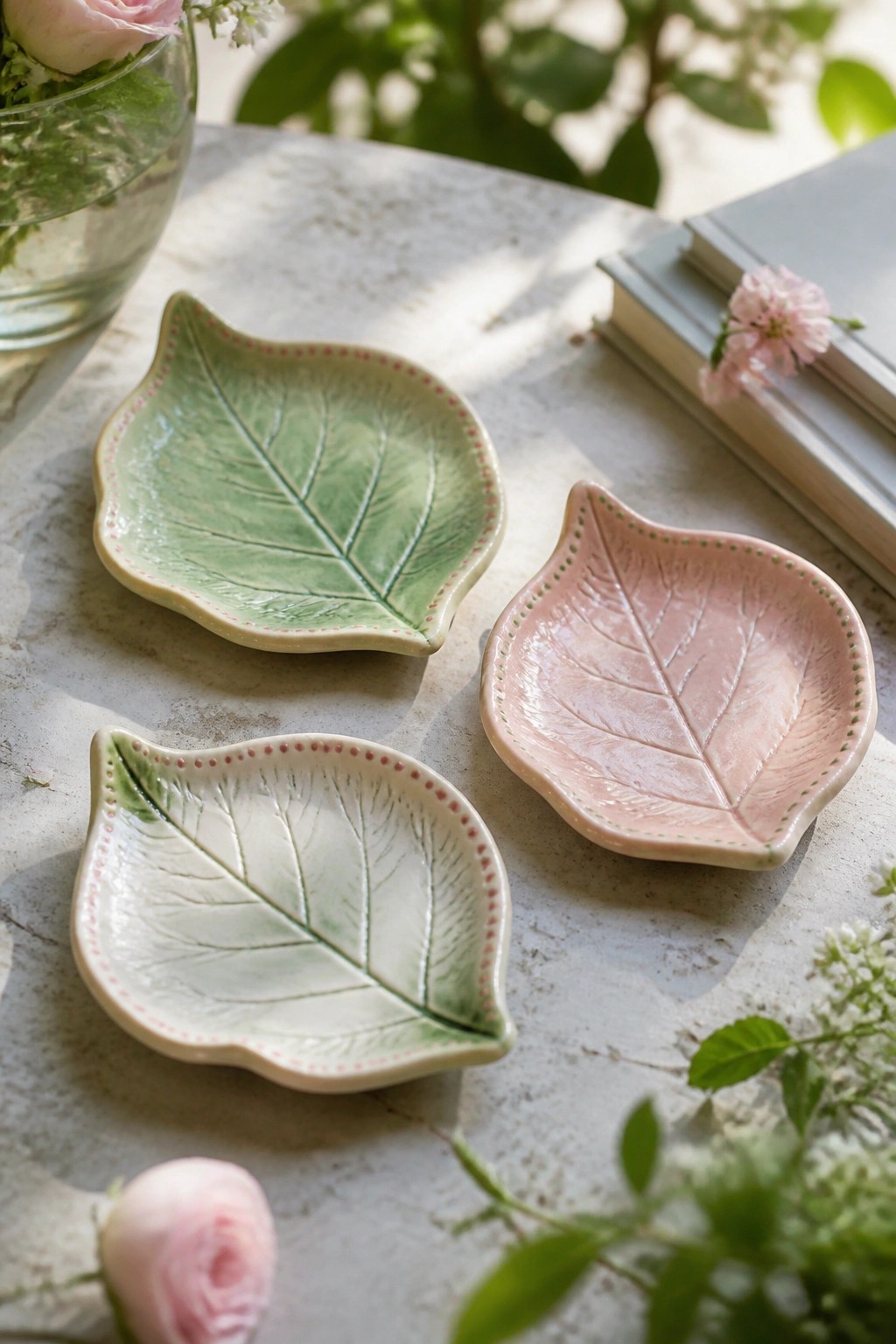
These small ceramic dishes take the form of leaves, with the surface pressed to show clear vein lines and a border of raised dots along the edge. The design works as ring dishes or tiny trays because the leaf shape provides the main visual interest while the glaze adds soft color variation across the three pieces. Using a simple press technique on the clay keeps the pattern consistent and gives the finished items a clear handmade quality without extra painting.
The small scale lets you place them on a dresser or bathroom counter for everyday small items. You could rework the same leaf press on a larger slab to make serving plates or skip the dots and try a plain rim instead. A set like this in different glaze tones gives options for mixing colors on a shelf. The pressed detail stands out on Pinterest because it reads clearly even in small photos.
Paired Folk Birds on a Notched Plate
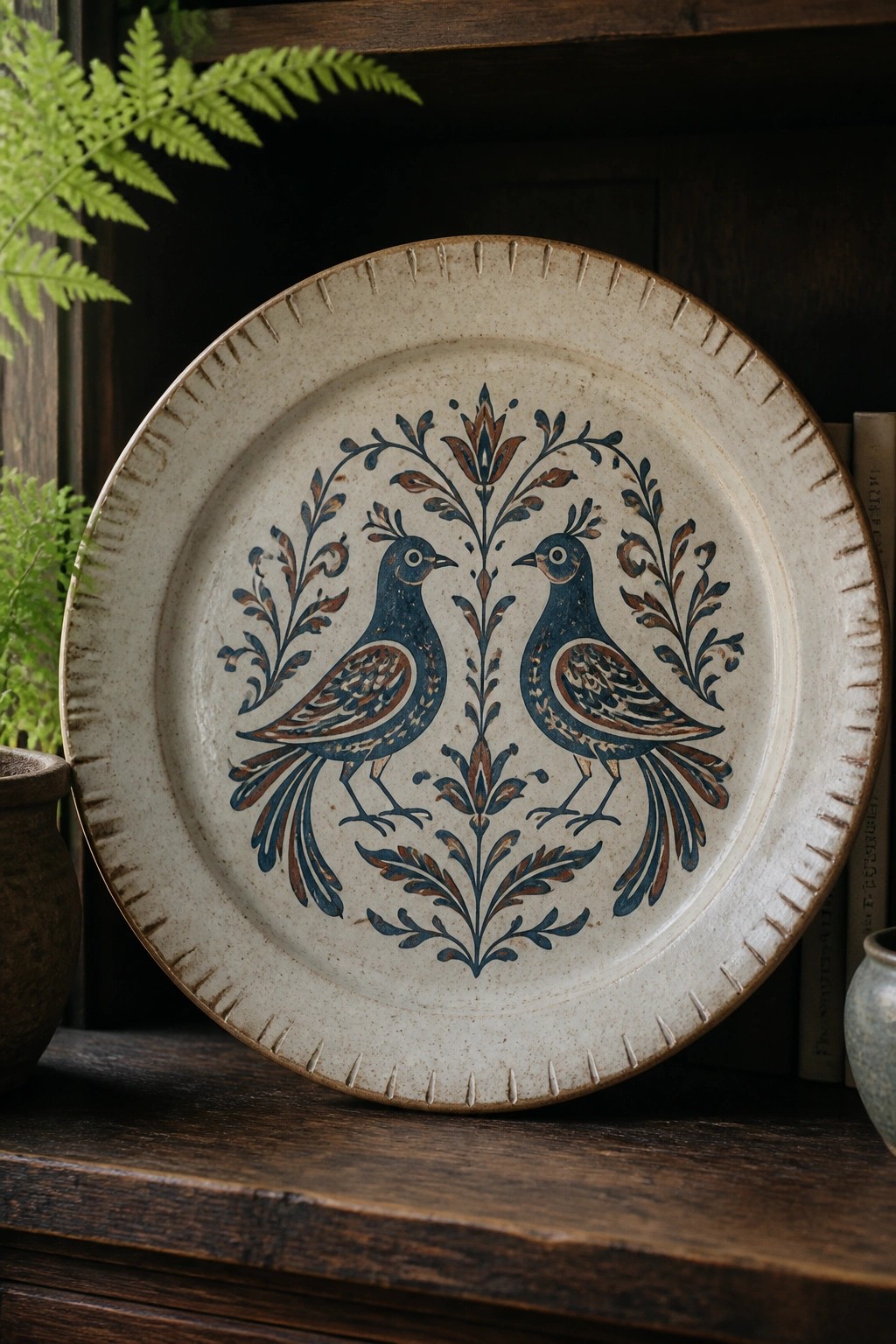
A round ceramic plate uses a central motif of two mirrored blue birds with brown wing details, framed by matching leafy vines in the same two tones. The design sits on a light speckled surface, and the rim carries a series of small notches that break up the edge without adding extra color. This layout keeps the pattern balanced and readable from a distance while staying within the folk-inspired plate category.
The shape works especially well as a wall piece or large charger in a dining room. You can simplify the idea by painting just the birds on smaller plates or by using only one color for quicker versions. The symmetrical arrangement makes it straightforward to adapt with stencils or by tracing half the design and flipping it. In a kitchen setting this kind of plate stands out on open shelving because the dark motifs read clearly against the light background.
Folk Animal Procession Plate
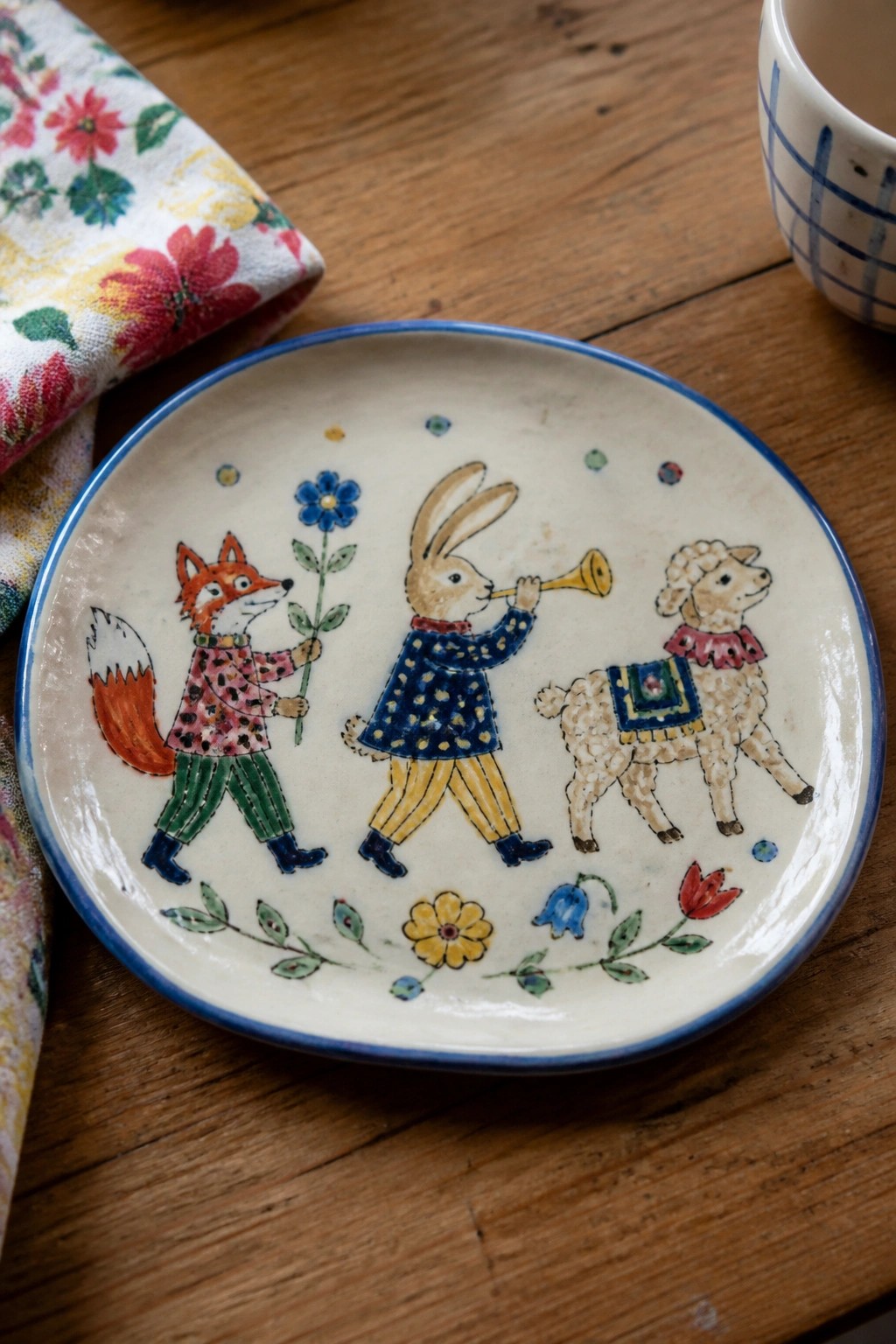
A small round ceramic plate makes a good base for a folk pattern when the surface is painted with a line of dressed animals walking across the center. The fox in a spotted jacket, the rabbit in blue holding a horn, and the sheep with a saddle create a clear procession on the cream glaze, framed by a blue rim and scattered dots. Simple flower clusters along the lower edge balance the main figures without crowding the space. This approach turns an ordinary plate into a decor object that still functions for light serving or display.
What makes this idea useful is that the round shape naturally guides the eye along the row of figures while leaving room for a simple border. You could adapt the same procession onto a larger dinner plate by spacing the animals farther apart or reduce it to two figures for a smaller ring dish. In a kitchen this kind of piece works as a spoon rest or butter dish, and the painted scene gives it enough detail to stand out in a photo without extra texture or carving.
Oval Ceramic Tray with Repeating Blue Circles
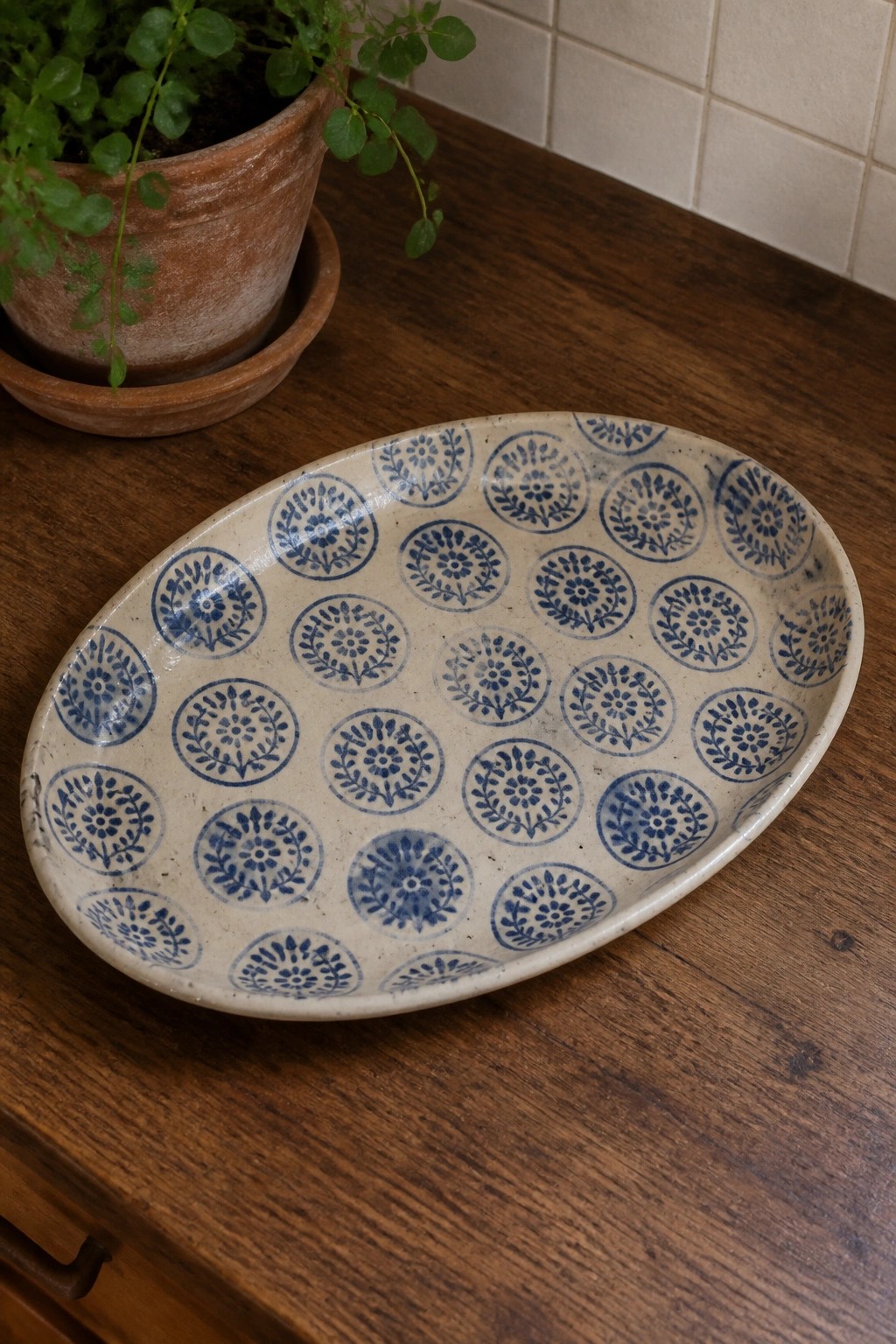
An oval ceramic tray in a matte off-white glaze uses rows of blue circular stamps to cover the surface. Each circle holds a simple flower or star center with small leaf marks around the edge. This layout works as a kitchen serving piece or table accent because the repeating pattern fills the space evenly and stays readable from a distance.
What makes this idea useful is how the oval form sits flat on a table without taking much room while the stamped circles keep the pattern easy to repeat by hand. You could scale the same motif down for dessert plates or shorten the rows to fit a rectangular butter dish. In a kitchen the neutral background pairs with most linens and food, and the design can be simplified to just the outer rings if you want fewer steps.
Speckled Plate With Scattered Folk Motifs
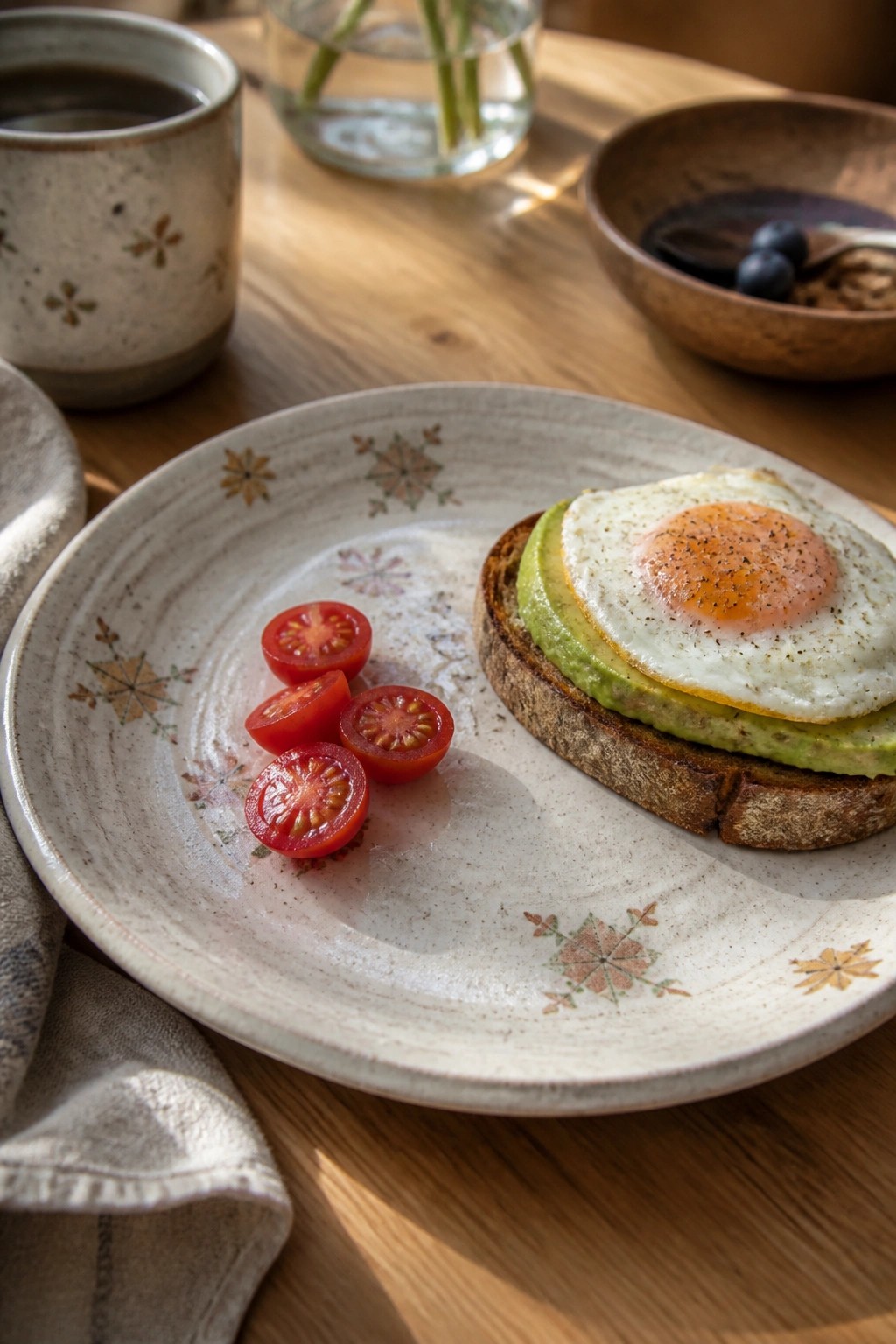
A round ceramic plate finished in a light speckled glaze and decorated with small painted star motifs makes a practical serving piece for meals. The motifs sit in earthy tones along the rim and center, leaving most of the surface open for food. This approach keeps the plate firmly in the kitchen item category while adding a simple folk pattern that does not compete with what is served on it.
What makes this idea useful is the loose placement of the motifs, which lets you copy the layout on plates of different sizes without needing precise measuring. The same star shapes could be repeated on a set of salad plates or adapted into a shallow tray for bread or fruit. In a kitchen, the neutral glaze background works with both colorful meals and plain wooden tableware. You can simplify the pattern further by using fewer motifs if you want a quicker project on your next batch of plates.
Sunburst Spiral Plate for Everyday Serving

A wide ceramic dinner plate with a hand-drawn sunburst pattern makes an effective base for casual meals. Dark radiating lines and concentric circles create a strong visual frame that draws the eye inward without crowding the surface. The matte, light clay body and slightly irregular rim keep the overall look grounded in folk pottery traditions. This style works as a straightforward kitchen item that still feels intentional on the table.
What makes this idea useful is how the bold center motif can highlight simple dishes like pasta or grain bowls. You could scale the same spiral down for salad plates or switch the dark slip to a deeper brown for a different contrast. In a kitchen, this kind of plate mixes easily with plain stoneware and stands out in photos for sharing ideas. For a gift, repeat the pattern across a small set using the same brushwork to keep the handmade feel consistent.
Folk Patterned Plates With Wreaths Stars and Suns

Hand-painted plates offer a direct way to add folk motifs to everyday clay forms. A circular wreath of small flowers and leaves works well on a larger plate because the design follows the rim and leaves the center open. Smaller plates can carry scattered stars or a full sun face with simple rays, all applied in earthy tones over a light speckled clay body. The matte surface and visible brush marks keep the look rustic and handmade.
What makes this idea useful is how easily the same plate shape can hold different motifs without needing new molds. You could paint just the wreath on a set of four or mix the sun and stars across a shelf display. The small scale of the middle plate also makes it simple to turn into a ring dish or spoon rest. For anyone trying painted pottery, these designs stay flat so the focus stays on the pattern rather than carving or glazing layers.
Frequently Asked Questions
What are some easy folk-inspired patterns suitable for beginners making rustic pottery plates?
Start with simple repeating motifs like basic flowers, leaves, or geometric shapes drawn from Scandinavian or Mexican folk art. Sketch the design lightly on the leather-hard clay using a pencil, then carve or paint with underglazes in earthy tones such as ochre, terracotta, and sage green. Practice on small test tiles first to build confidence before applying to full plates.
What type of clay works best for rustic pottery plates with folk patterns?
Choose a stoneware or earthenware clay body that contains grog for added texture and strength, as these create the natural, imperfect surface typical of rustic ware. Avoid porcelain, which fires too smooth and white. Wedge the clay thoroughly to remove air bubbles, then form plates on a wheel or using slab techniques before adding patterns.
How should I glaze rustic pottery plates to preserve the folk-inspired look?
Apply a transparent or matte glaze over the painted patterns after bisque firing, which allows the designs to show through while adding durability. Test glazes in advance because some can run or alter colors during the final firing. Fire at the clay’s recommended cone temperature, usually cone 6 for stoneware, to achieve that aged, handmade appearance without a glossy finish.
What safety steps are important when creating or using these pottery plates?
Always use food-safe clays and glazes labeled as lead-free and non-toxic, especially for plates meant for serving food. Fire pieces to the proper temperature to ensure the glaze matures fully and seals the surface. After making them, wash new plates by hand initially and avoid microwave use if the patterns include metallic accents that could cause issues.
How can I adapt these plate ideas for different home decor styles?
Pair the rustic plates with natural wood tables or woven placemats to highlight their folk charm in a farmhouse setting. For a more modern twist, group several plates on a gallery wall using plate hangers in neutral colors. Consider scaling patterns smaller for smaller plates or mixing in subtle color variations to match existing room palettes.

Pottery Path is my cozy corner of the internet where I share clay ideas, pottery inspiration, and simple projects you can recreate at home. I love exploring everything from air dry clay to handbuilt pottery to cute minis that brighten your day. My goal is to make clay crafting feel easy, fun, and welcoming for anyone who wants to try it.
You will find beginner friendly tutorials, creative pottery painting ideas, and lots of warm inspiration for slow and happy crafting. If you enjoy hands on creativity, this space will feel like home.