I have been trying out blue and green glazes on my pottery for a while now.
These colors seem to work together on a lot of different pieces without needing anything fancy.
I collected twenty ideas that use this mix in ways that are pretty straightforward to try.
Some turned out better than others but they all gave me something useful to build on.
Blended Blue and Green Glaze Mug

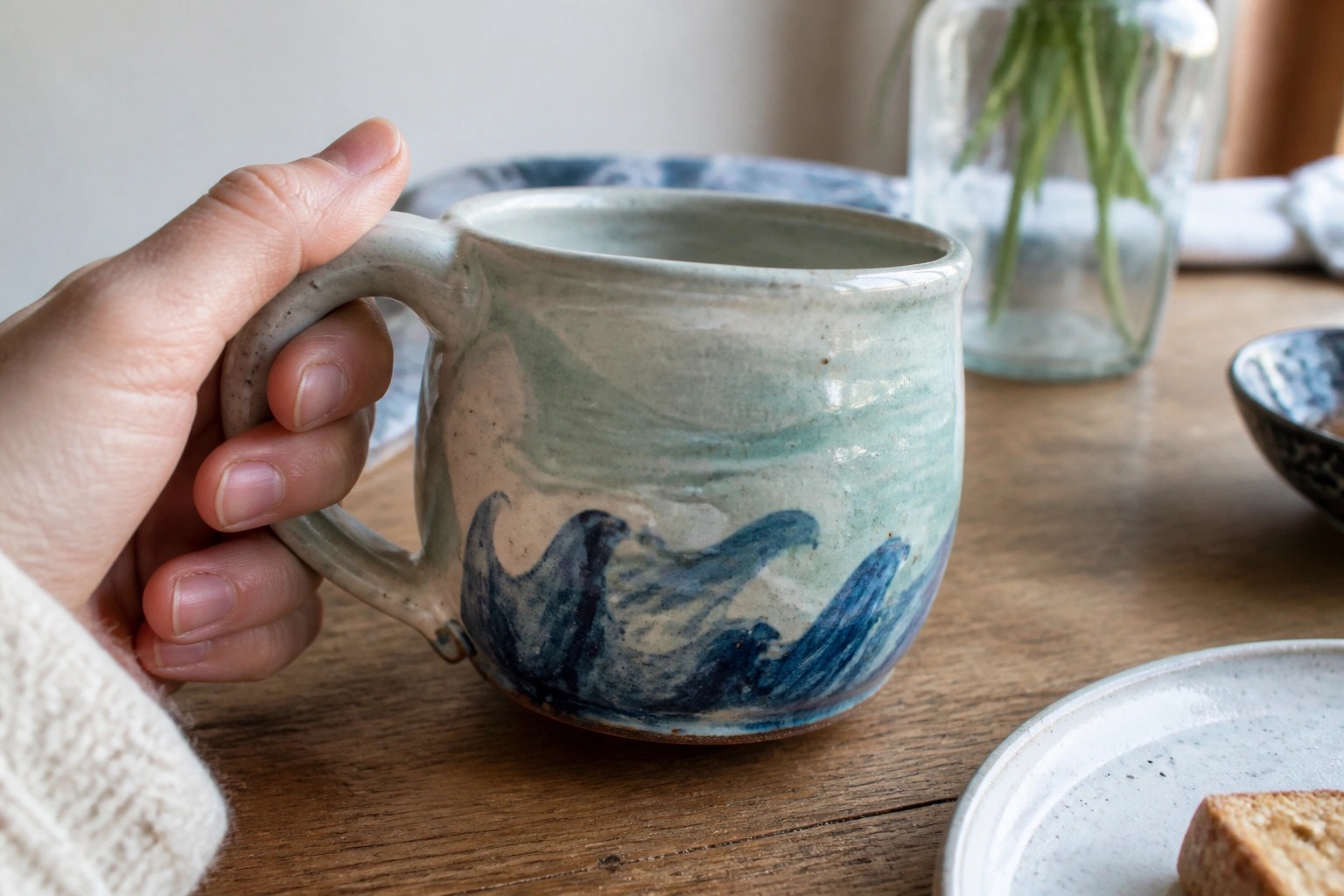
A ceramic mug with a rounded body and pulled handle features layered blue and green glazes applied in loose horizontal strokes that blend into soft transitions. The glaze shifts from lighter turquoise near the top through deeper blues at the base, with hints of purple where the colors overlap. This creates a simple way to show movement and depth on a functional piece without needing precise patterns or additional decoration.
What makes this idea useful is how the same glaze layering can be repeated on different mug shapes or even small bowls by changing the brush direction or number of layers. The shape works especially well for daily coffee or tea since the wide opening and sturdy handle make it comfortable to hold. This would be easy to turn into a matching set by making several mugs with slight variations in the blue-to-green ratio. The painted detail helps this stand out in a kitchen without requiring extra carving or texture work.
Whale-Shaped Ceramic Planter

A whale-shaped ceramic planter gives a compact way to display small succulents or air plants. The rounded body creates a stable base while the tail and fin add sculpted detail that keeps the form recognizable without extra pieces. The blue glaze on the upper half transitions into a lighter green lower section, which echoes the plant color and fits the blue-and-green theme. This type of project falls into the small decorative planter category and stays simple enough to make from a single molded or hand-built form.
What makes this idea useful is the animal shape turns an ordinary pot into something that stands out on a shelf or desk without needing paint or extra decoration. You could adapt the same whale body for a pencil holder or ring dish by changing the opening size and skipping the drainage hole. The two-tone glaze approach works especially well if you want to try other sea animal forms like turtles or fish using the same color palette. For a gift, something like this fits easily into a small box and pairs naturally with a plant cutting.
Green Bowl with Blue Speckled Rim

A wide ceramic bowl finished in a soft green glaze and topped with a dark blue speckled rim creates a clean kitchen piece that pairs well with blue and green color schemes. The rim treatment uses small blue flecks to add texture and definition without covering the entire surface. This approach keeps the focus on the simple rounded form while still delivering the requested color combination in a functional serving size.
What makes this idea useful is how the rim detail can be repeated on plates or smaller bowls to build a set. The shape works for salad, soup, or fruit and fits on open shelves or a wooden counter where the green and blue tones blend with natural materials. You could scale the same rim treatment down for dessert bowls or try a narrower band if you want less contrast on the finished piece.
Leaf-Shaped Ceramic Spoon Rest
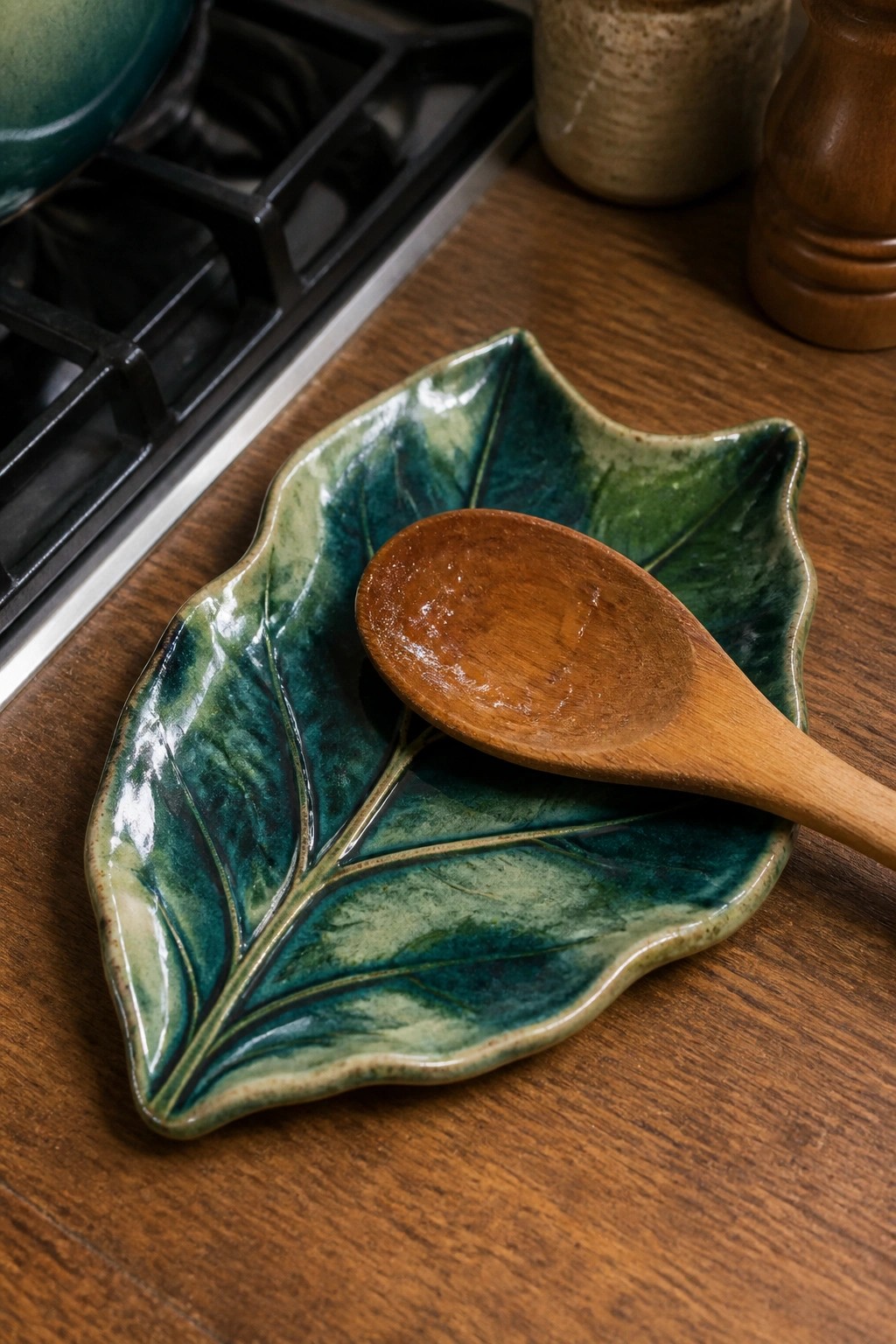
A leaf-shaped ceramic spoon rest uses blended blue and green glazes over a sculpted leaf form to create a simple kitchen item that holds utensils during cooking. The glaze pools in the veins and along the edges to give the surface depth while keeping the overall shape easy to recognize. This approach works well for a small, functional tray that sits on a counter without taking up much space.
What makes this idea useful is how the leaf outline gives the piece a clear purpose as a spoon rest while the blue-green glaze keeps it tied to a natural color scheme. You could scale the same shape down for a ring dish or stretch it into a longer tray for multiple utensils. In a kitchen, this kind of piece stays practical for daily use and pairs easily with other blue and green pottery like mugs or small bowls.
Wall Pocket Holder with Running Blue Green Glaze

A square ceramic wall pocket creates a compact hanging holder for small plants or everyday items. The design uses layered turquoise and green glazes that run down the front, leaving a lighter base visible near the bottom edge. The wavy lower rim adds a soft break to the straight square form while the shallow pocket keeps the piece slim against the wall.
What makes this idea useful is how the flat back and small size let it fit on narrow walls without taking up shelf space. You can adapt the running glaze by testing different blue and green mixes until the colors pool the way you want, or change the pocket depth for keys instead of plants. In a kitchen or bathroom, this shape gives you quick access to small objects while the color combo keeps it from blending into plain tile.
Leaf-Shaped Ring Dish
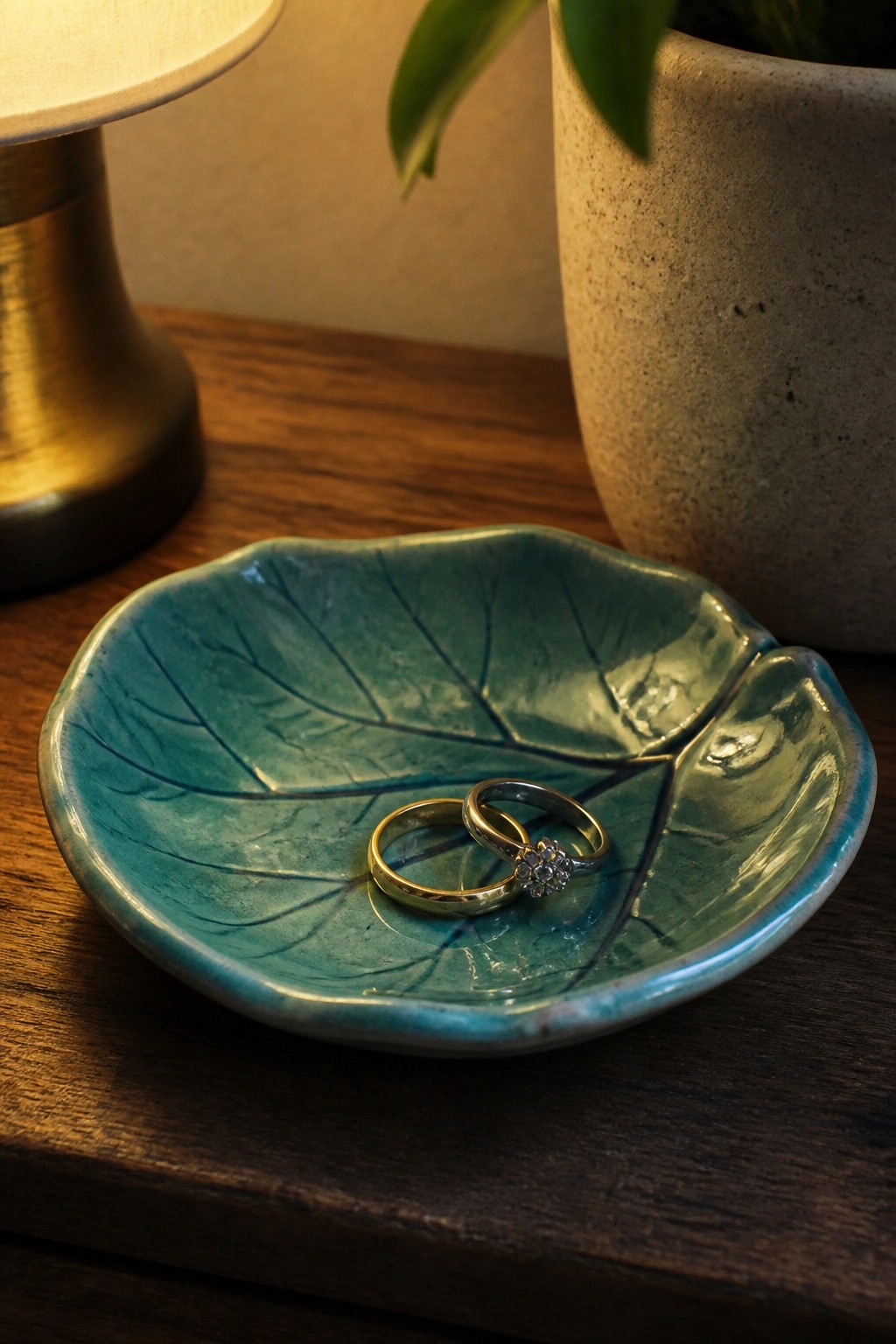
A small ceramic dish formed in the shape of a leaf works as a ring holder. The blue-green glaze covers the surface with raised veins that catch the light and add texture without extra carving. The irregular rim and glossy finish keep the piece simple while making it clear it is handmade pottery rather than a mass-produced tray.
What makes this idea useful is the compact size that fits on a bedside table or bathroom counter for daily jewelry. The leaf shape can be scaled up into a soap dish or adapted with different blue and green glaze blends for variety. A piece like this photographs cleanly for project sharing and requires only basic slab or press-mold forming before glazing.
Ombre Glazed Bud Vase

A small handmade ceramic vase with a rounded body and short neck holds a single stem or branch easily. The glaze moves from deep blue at the base through teal into green at the rim, giving a clear blue and green combination without extra decoration. This shape works as a simple decor object that fits on a narrow ledge or shelf.
What makes this idea useful is the narrow neck that keeps stems from tipping. You could repeat the same glaze blend on a taller version for larger arrangements or shrink the form into a set of three for a group display. In a kitchen or bathroom, the compact size leaves room for other items while still showing the color shift. The same glaze approach could move to a low bowl or small tray if you want to try the colors on a different shape.
Blue-Green Shell Dish as a Tea Light Holder

A small shell-shaped ceramic dish makes a simple tea light holder. The ridged interior and scalloped edges hold the glaze in streaked layers of turquoise, teal, and green that catch the light. The compact form keeps the piece focused on function while the blended colors tie directly into a blue and green theme.
What makes this idea useful is how the shallow bowl shape works for more than candles. You could flatten the ridges slightly to turn the same form into a ring dish or small soap rest. The glaze combination stays effective on other small objects like a coaster set or a tiny tray, and the shell outline gives the finished piece a clear silhouette that reads well in photos.
Swirled Blue and Green Jewelry Tray

A small rectangular ceramic tray with a marbled blue and green glaze creates a simple catch-all for rings and necklaces. The raised sides keep items contained while the flowing glaze pattern adds color without needing extra decoration. This shape works well as a dedicated ring dish or bedside tray because the light base lets the blue and green streaks stay visible.
The compact size makes it easy to fit on a dresser or bathroom counter without taking up much space. You could adapt the same marbling to a longer soap dish or a set of smaller square coasters. For a gift, this kind of tray pairs nicely with a few pieces of jewelry and stands out on Pinterest because the glaze colors read clearly in photos.
Divided Blue and Green Salt Cellar

A small divided ceramic dish works as a kitchen salt cellar when one compartment is glazed in green and the other in blue. The two sections keep separate seasonings organized while the color split creates a clear visual break between the glazes. The compact oval shape and glossy surfaces make it easy to reach for while cooking.
What makes this idea useful is the divided form that holds two different salts or spices without needing extra jars. You could scale the same shape down for a ring dish or widen it slightly for a double dip server. In a kitchen this kind of piece keeps the counter tidy and gives you a ready-made blue and green project that photographs well for sharing.
Blue Wave Toothbrush Holder

A multi-hole ceramic cylinder makes a straightforward toothbrush holder that keeps brushes separated and upright on a bathroom surface. The light green base glaze pairs with bold blue wave brushstrokes that wrap around the body, giving the piece its main visual interest without extra sculpting or texture. The round form and even glaze coverage keep the focus on the color combination while still functioning as a practical bathroom item.
The shape does a lot of the work here because a simple cylinder is easy to form and the holes can be cut before the final firing. This kind of holder works especially well on a bathroom counter or near a window where it can sit beside a soap dish or cup in matching colors. You could adapt the same wave motif and glaze palette to a small soap tray or a narrow vase by keeping the brushstroke style loose and the base glaze consistent. The clear functional shape plus the repeating wave pattern makes the idea easy to photograph and save for later reference.
Yarn Bowl with Blue Green Glaze and Swirl Cutout

A yarn bowl gives knitters and crocheters a stable place to keep a ball of yarn while working. The rim features a sculpted swirl opening that lets the strand feed out smoothly without tangling. The inside carries a speckled blue green glaze that stands out against the lighter clay exterior, creating a simple color contrast that fits the blue and green theme.
What makes this idea useful is how the cutout solves a common problem without adding separate hardware. You could repeat the same swirl on a smaller bowl for lace weight yarn or stretch the form into a larger version for bulky projects. The shape also works as a general small storage bowl once the yarn is gone. In a craft space the blue green interior keeps the piece from blending into neutral decor while staying practical.
Blue and Green Ceramic Fish Figurine

A small ceramic fish figurine can be formed from a basic pinched or slab shape and finished with a deep blue glaze on the body and a lime green glaze on the fins, tail, and gill plate. The strong color contrast highlights the sculpted details on the fins without extra carving or painting. This approach keeps the project in the simple decor object category and works with standard cone 6 glazes that cover evenly on curved surfaces.
The small scale makes this easy to adapt into other fish or sea creature shapes if you want to vary the silhouette. It fits well on a shelf, windowsill, or desk as a single accent piece. You could reduce the fin detail for a quicker version or repeat the same blue and green combo on a matching set of smaller fish to test consistent glazing results.
Swirl Pattern Plate
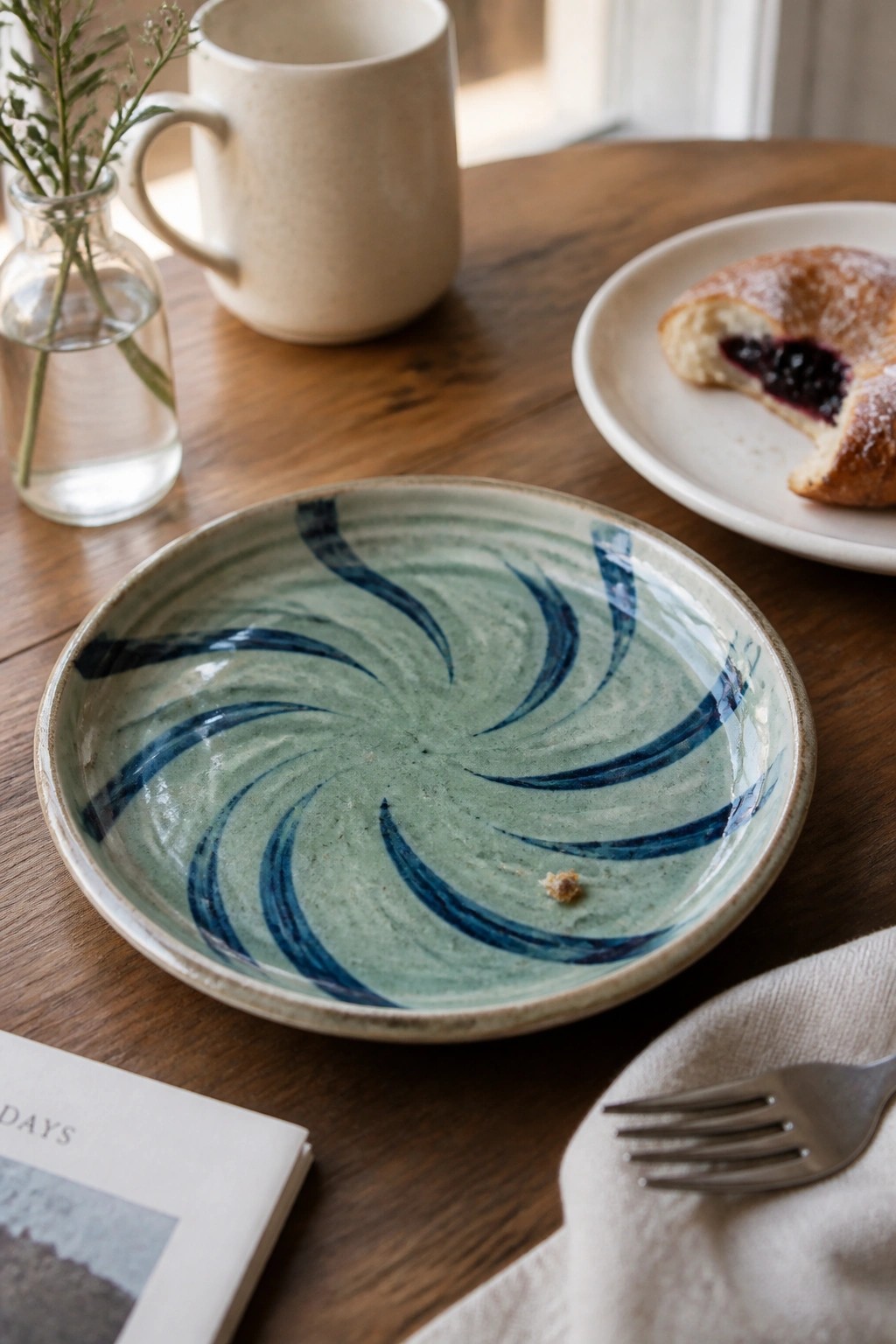
A shallow ceramic plate finished with a green base glaze and bold blue brushstrokes that curve outward in a repeating spiral. The strokes vary in width and overlap slightly, creating a simple but dynamic pattern that stays contained within the plate’s rim. This approach turns a basic plate shape into a blue and green project that relies on brushwork instead of multiple colored glazes or added texture.
The shape does a lot of the work here since the wide, flat surface gives the swirl room to show without crowding. You could repeat the same strokes on smaller plates or bowls to build a set, or scale the design down for a ring dish or butter pat. The idea works well for pieces that sit on a table where the pattern can be seen from above, and it adapts easily if you want to change the blue shade or tighten the curves for a tighter look.
Blue Drip Glaze Ceramic Pitcher
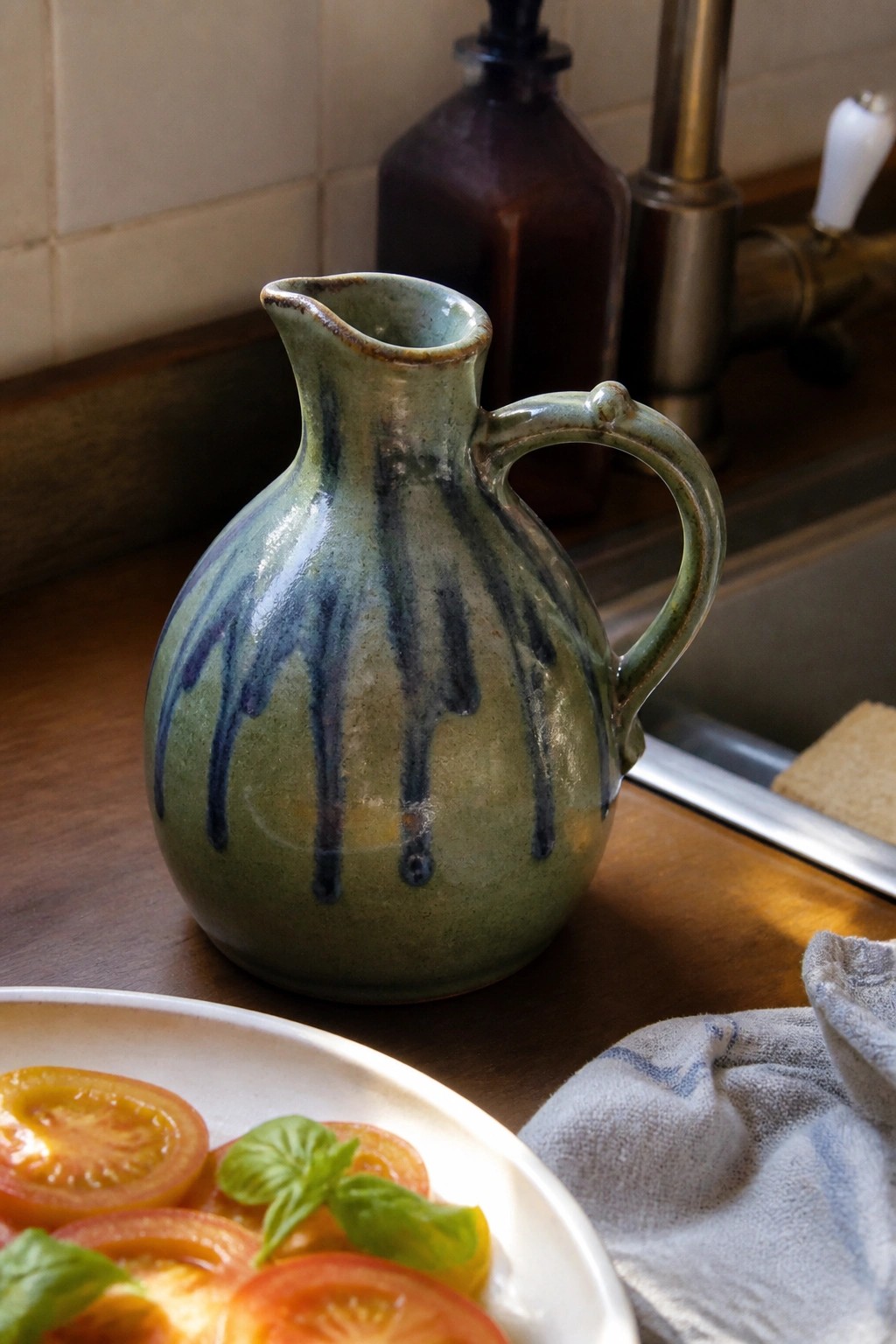
A wheel-thrown ceramic pitcher with a rounded body, narrow neck, and simple pulled handle makes a solid kitchen serving piece. The base gets covered in a green glaze that then receives vertical blue drips applied near the rim so they run downward in uneven streaks. This creates contrast through the glaze movement itself rather than added decoration or carving.
What makes this idea useful is how the pitcher shape handles both liquids and small arrangements without taking up much counter space. The drip pattern can be adjusted by changing the blue glaze thickness or spacing to suit a taller jug or a matching creamer. In a kitchen this kind of piece works for daily use or as a gift because the blue and green stay visible even after repeated washes.
Grooved Soap Dish with Drainage Notch
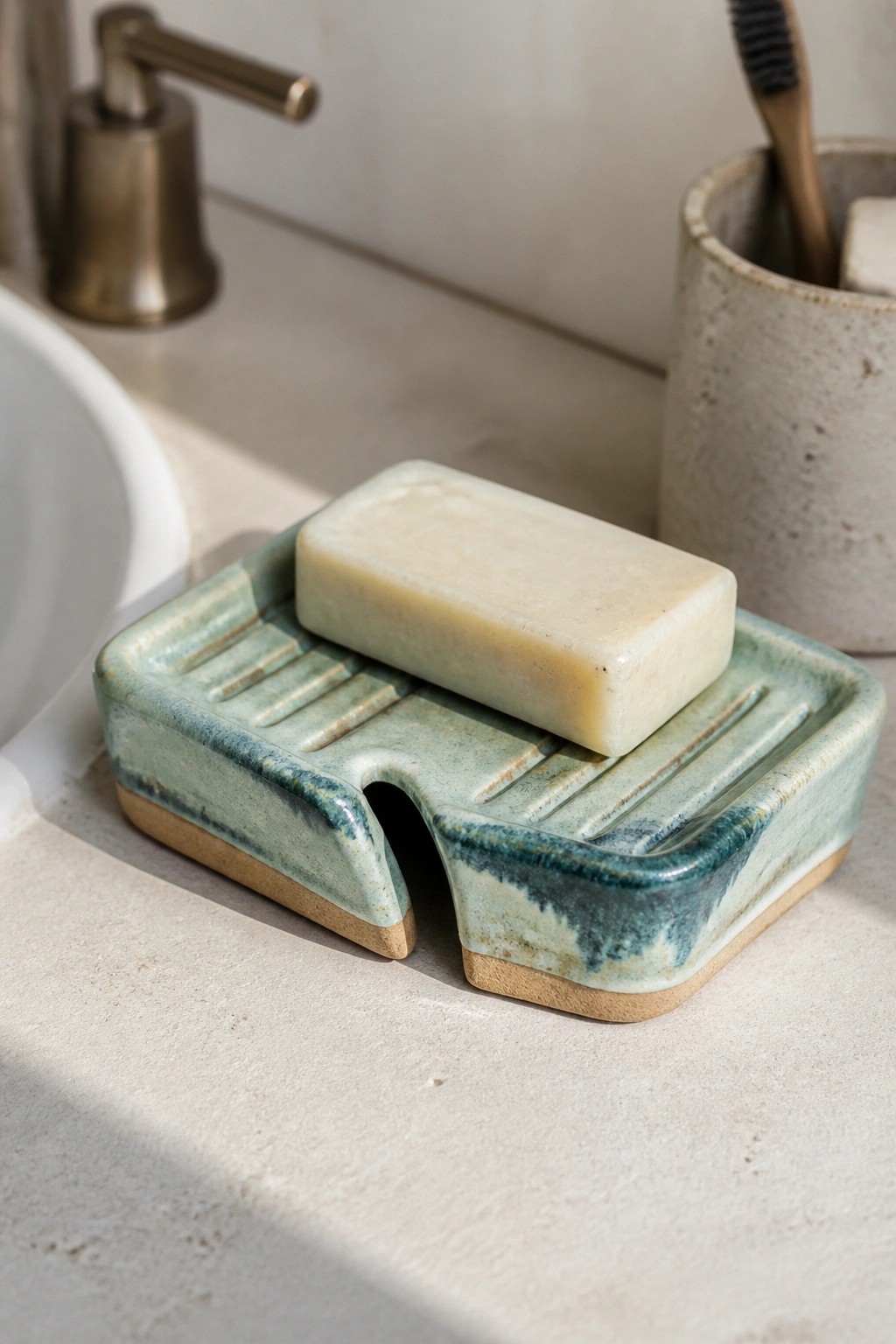
A rectangular ceramic soap dish uses raised ridges across the base to lift the bar and allow water to drain. The design includes a notch cut into one side for extra airflow underneath, and the piece is finished with layered blue and green glazes that leave the lower edge in raw clay. This setup turns a basic bathroom item into something that actually helps the soap last longer between uses.
What makes this idea useful is how the ridges and notch solve the problem of soggy soap without needing extra parts. You can adapt the same form to different sink depths or swap the glaze colors to match existing tiles or towels. For a gift, something like this works well when paired with a simple bar of soap. The compact size also makes it easy to produce a few at once for a small bathroom refresh.
Mini Ceramic Planters with Blue and Green Glaze Patterns

Small handmade planters work well for succulents when you combine blue and green glazes on simple rounded forms. One uses a marbled blue and white surface, another a speckled light green, and the third a striped mix of blues and greens. The color pairings stay consistent across the set while the different application methods add variety without extra shapes or details. This approach keeps the focus on the glaze as the main design element for a planter project.
What makes this idea useful is the compact size that fits on windowsills or narrow shelves without crowding the space. You could repeat the striped glaze on a matching set of small trays or switch the marbled pattern to a larger bowl shape for a different plant. These work well as quick gifts since they need only basic cylinder forms and two or three glaze colors. The same blue and green palette can be simplified to one solid color with a single accent stripe if you want fewer steps.
Green Utensil Crock with Vertical Blue Stripes

A tall cylindrical crock glazed in a textured green makes a solid kitchen utensil holder when paired with bold vertical blue brushstrokes. The stripes run the full height of the piece and break up the surface without adding extra shapes or patterns. This keeps the project simple while still delivering a clear blue and green combination that works on a countertop.
What makes this idea useful is how the straight-sided shape holds spoons, spatulas, and forks upright without tipping. You can repeat the same stripe layout on a shorter canister or a wider storage jar and still keep the color scheme consistent. The brushstroke style also lets you adjust width or spacing if you want a looser look or tighter repeats. In a kitchen this kind of holder doubles as both storage and a quick way to bring the blue and green palette into daily use.
Hanging Ceramic Disc Chain

Three flat circular discs made from clay are strung vertically on twine to form a hanging piece. Each disc is glazed in either blue or green with a mottled texture that shows through the finish. The holes are drilled before firing so the pieces can be linked without extra hardware. This approach keeps the project focused on simple shapes and color contrast rather than complex forms.
What makes this idea useful is how easily the length and color order can be adjusted. A shorter version works as a small wall accent while a longer one suits an outdoor porch or covered patio. You could swap in different blue and green glaze combinations or change the disc sizes to fit the space. The basic stringing method also translates to other flat shapes if you want to try rectangles or ovals instead.
Sponge Holder with Green and Blue Glaze Drainage Base

A small square ceramic dish makes a practical kitchen item for holding a sponge right by the sink. The interior ridges along the bottom keep the sponge lifted so water can drain, while the outer green glaze and inner teal rim create a simple two-color combination. The slightly irregular handmade shape and glossy finish help the piece feel finished without extra surface details.
What makes this idea useful is the drainage feature, which turns a basic tray shape into something more functional. You can adapt the same ridges and color split to a longer soap dish or a small bathroom tray. The compact size also works for holding jewelry or small tools on a desk. For Pinterest, the clear kitchen use and straightforward blue-green pairing make it easy to recreate or resize.
Frequently Asked Questions
What types of clay bodies work best with blue and green glazes for the pottery ideas in the article?
Stoneware and porcelain clays provide a smooth surface that allows blue and green glazes to develop rich depth after firing. Earthenware can also work well but may require a white slip underneath to make the colors pop more vibrantly. Test small tiles first to see how your chosen clay interacts with the specific glazes you plan to use.
How can I prevent blue and green glazes from running together during the firing process?
Apply the glazes in thin layers and allow each one to dry completely before adding the next. Use wax resist to create barriers between color sections on your piece. Fire at the recommended temperature for your glazes and avoid stacking pieces too closely in the kiln to reduce the chance of unwanted blending.
Which pottery shapes from the 20 ideas suit blue and green combinations the most?
Vases and bowls offer large surfaces for flowing blue and green patterns like ocean waves or forest scenes. Mugs and plates work well for smaller accents such as leaf motifs or geometric designs. Choose forms with gentle curves to let the colors blend naturally without sharp edges interrupting the flow.
What beginner tips help when starting with blue and green color schemes on pottery?
Begin with simple underglaze techniques to sketch designs before applying clear glazes on top. Practice on test pieces to learn how different blue and green shades interact when layered. Start with ready-made glazes rather than mixing your own until you gain more experience with color results after firing.
How do I make blue and green colors stay vibrant after multiple firings?
Choose glazes labeled as stable at your firing temperature and apply them over a white base if needed for brighter results. Avoid overfiring which can dull the tones. Store finished pieces away from direct sunlight to preserve the color intensity over time.

Pottery Path is my cozy corner of the internet where I share clay ideas, pottery inspiration, and simple projects you can recreate at home. I love exploring everything from air dry clay to handbuilt pottery to cute minis that brighten your day. My goal is to make clay crafting feel easy, fun, and welcoming for anyone who wants to try it.
You will find beginner friendly tutorials, creative pottery painting ideas, and lots of warm inspiration for slow and happy crafting. If you enjoy hands on creativity, this space will feel like home.