I’ve been working with clay for a while now and slab building has become one of my go to methods for making simple pieces at home.
It doesn’t require a pottery wheel which makes it easier to start with just some basic tools and a bit of space.
Over time I’ve come up with several projects that turn out well even if you’re not super experienced.
These ideas focus on practical things like trays or planters that you can actually use.
I hope some of them give you a starting point for your own creations.
Slab-Built Square Bowl with Two-Tone Finish
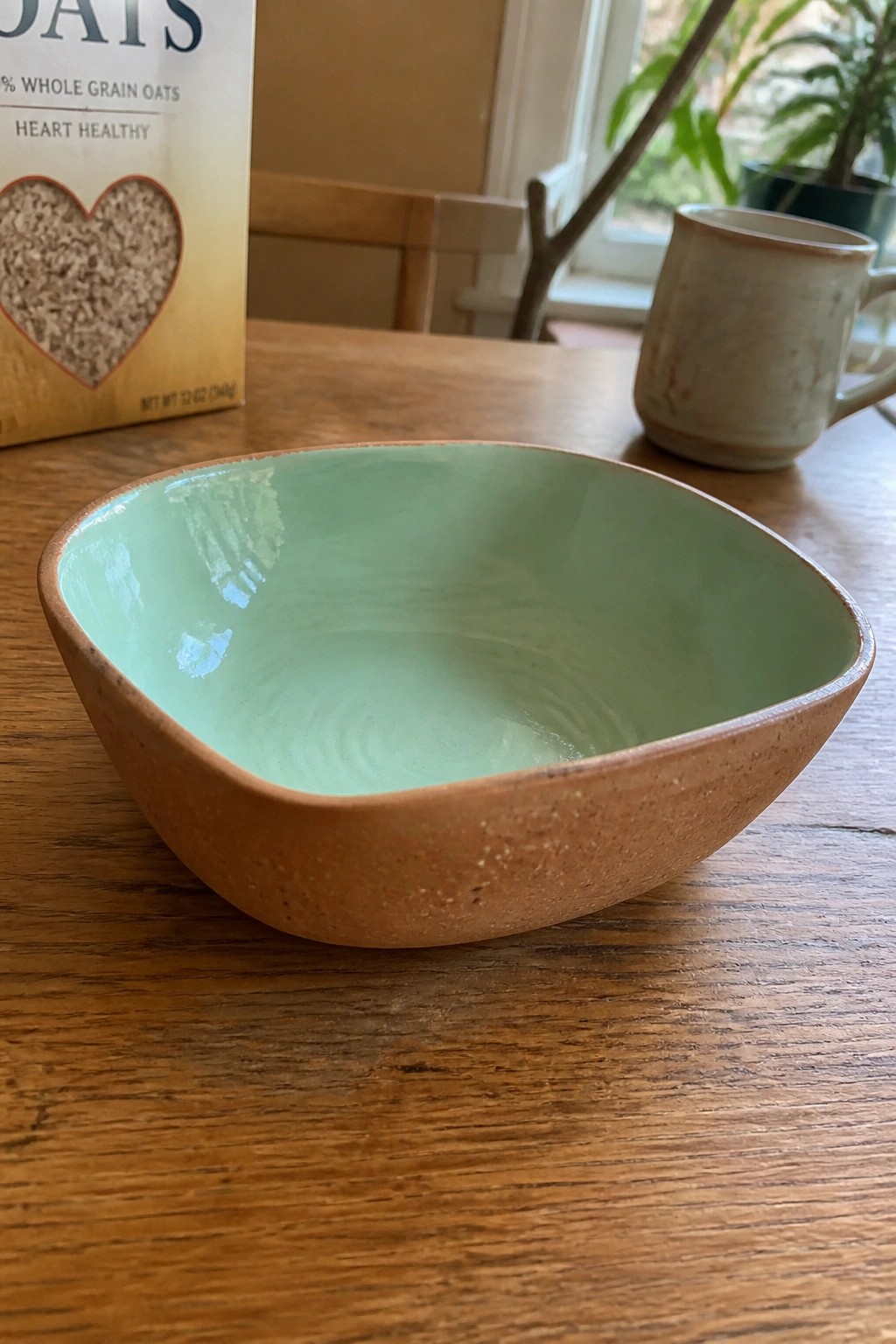
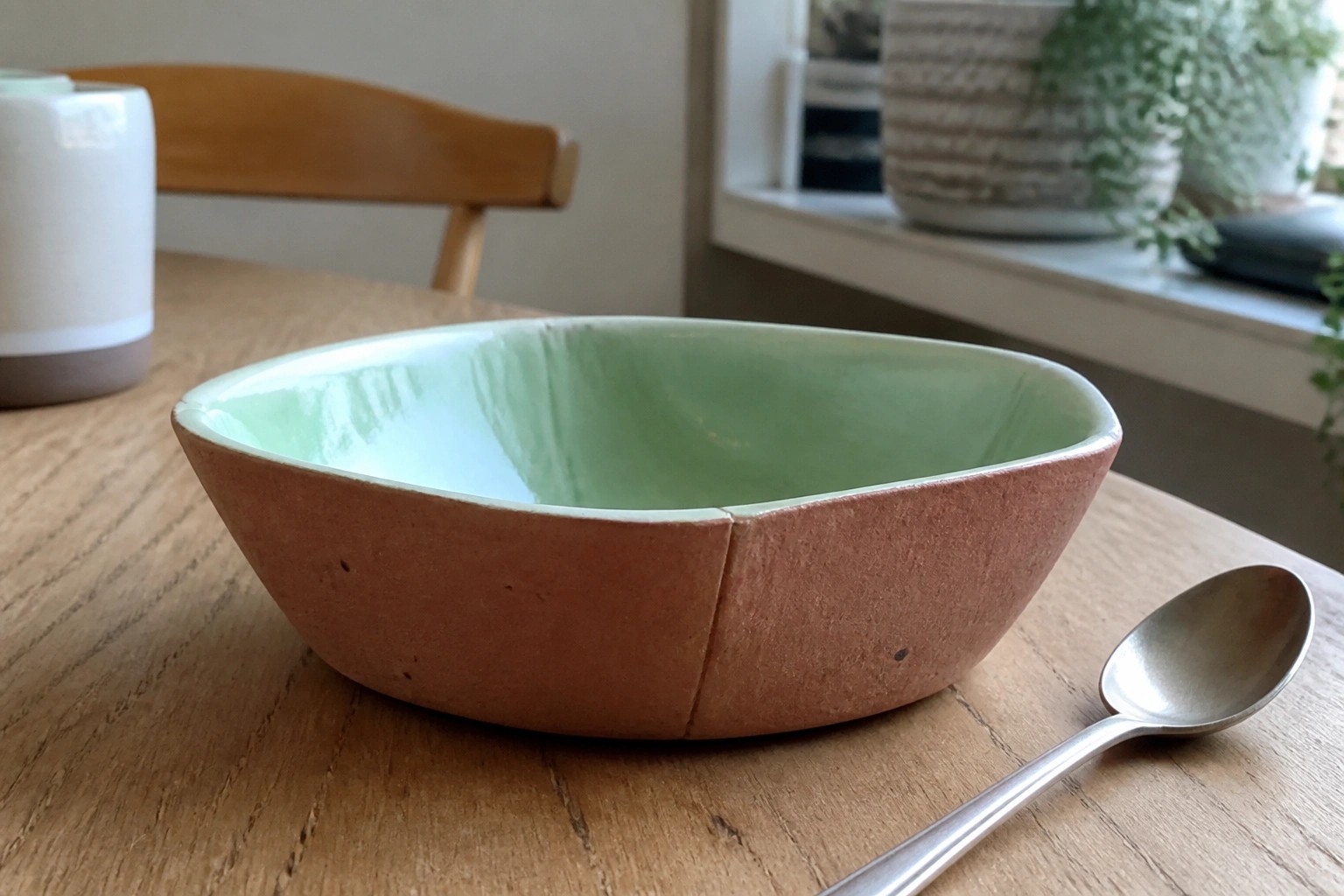
A square bowl made from clay slabs gives you a simple way to build functional tableware without a wheel. The form stays low and wide with softly rounded corners that keep the shape from feeling too rigid. Leaving the outside in its natural clay color while glazing only the interior in a solid light green creates a clear contrast that shows off the slab texture and the handmade edges.
What makes this idea useful is how the same square template can be resized for different uses like a cereal bowl or a side dish. The two-tone approach keeps the piece versatile for everyday kitchen use without needing extra decoration. You could rework the same slabs into a shallower tray version or adjust the depth for a catch-all on a desk.
Slab-Built Floral Wall Tile
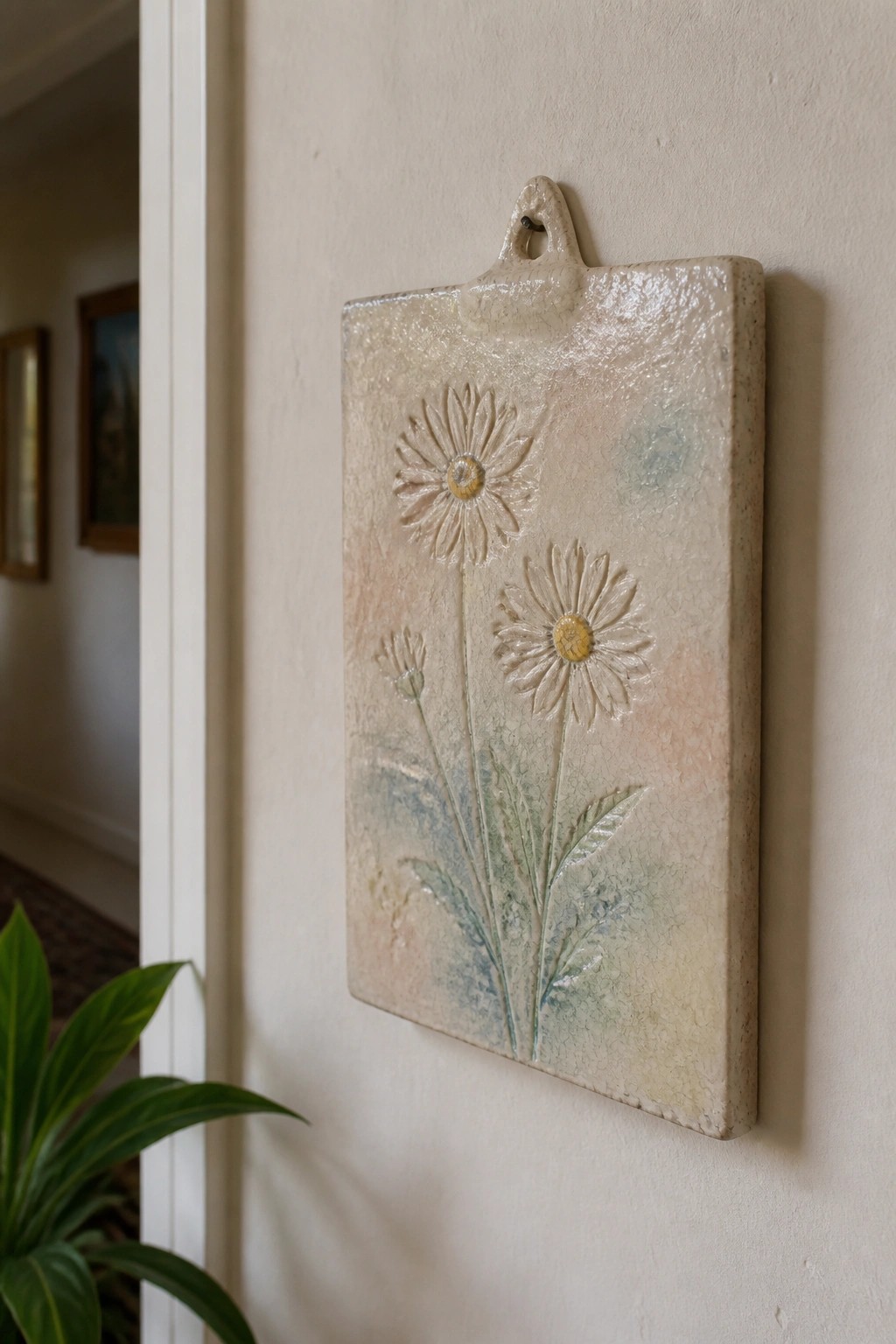
A rectangular slab of clay serves as the base for this wall plaque, with three daisy-style flowers and their stems raised in relief through simple pressing or carving. The crackled glaze in muted beige, soft pink, and pale blue settles into the recessed areas and highlights the texture of the leaves and petals. Small yellow centers give the flowers a focal point while the overall palette stays quiet. A hole at the top turns the finished piece into an easy hanging decor item.
What makes this idea useful is how the flat slab shape keeps construction simple while the raised flowers do most of the visual work. You can swap the daisies for other garden flowers or even abstract shapes without changing the basic process. The same size works well in a narrow hallway or above a desk, and shrinking the slab lets you make matching smaller tiles for a grouping. For gifts, change the flower type and keep the glaze soft so the piece fits different rooms.
Square Slab Planter with Glaze Drip
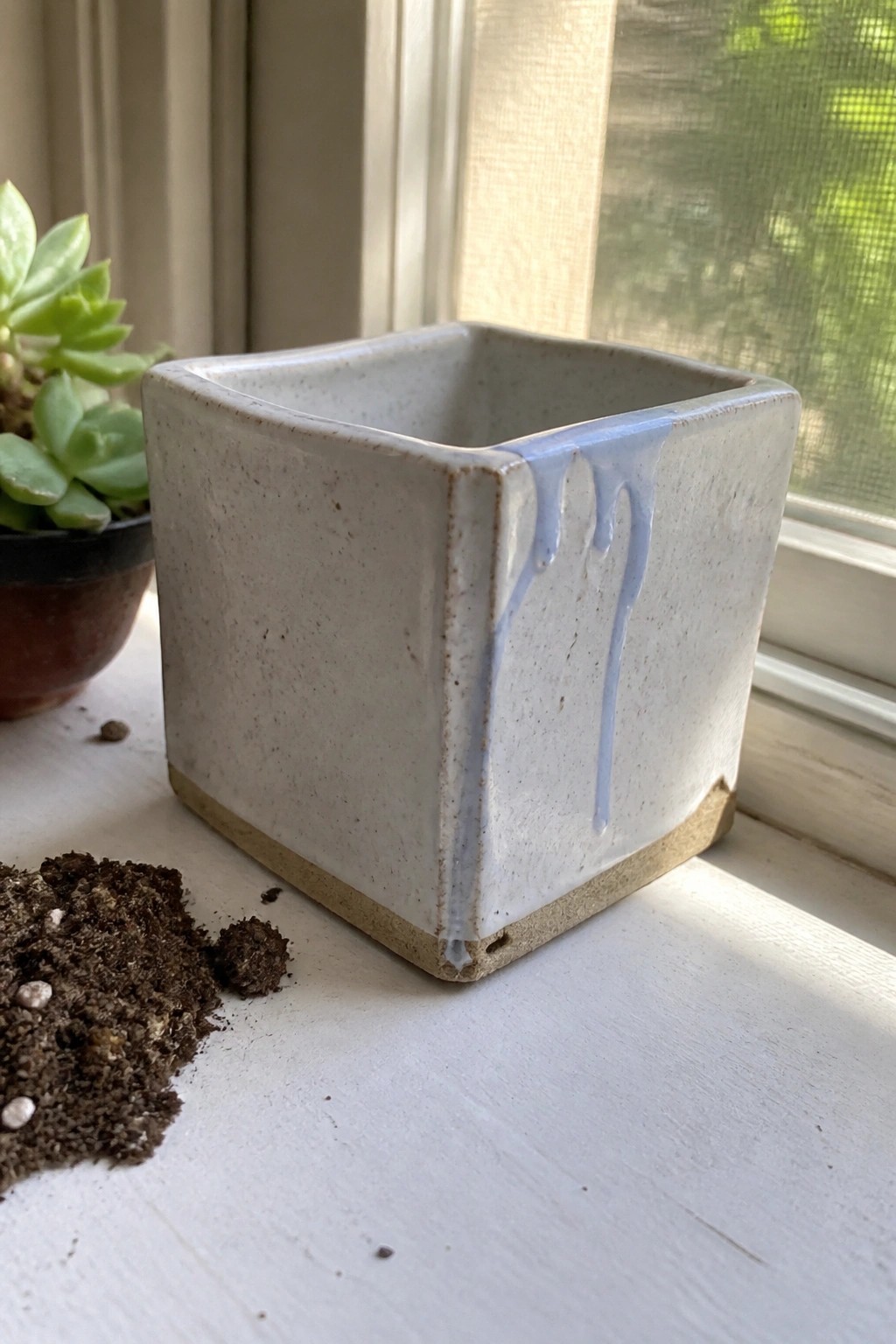
A square planter built from clay slabs gives you straight sides and sharp corners that are simple to cut and join. The light blue glaze applied along one top edge creates controlled drips that run down the surface and stop before reaching the base. This leaves most of the speckled clay visible while still adding a single accent color. The unglazed lower section and foot keep the piece grounded and prevent the glaze from interfering with the resting surface.
The shape does a lot of the work here because the flat sides stack or line up easily on a shelf or windowsill. You can change the drip color to match different plant pots or room colors, or reduce the glaze to just one small area if you want a more understated result. The same slab template can be used again to make a matching tray or a shorter version for succulents. A piece like this stands out on Pinterest when the drip is kept minimal and the clay texture is left mostly exposed.
Painted Citrus Slab Tray
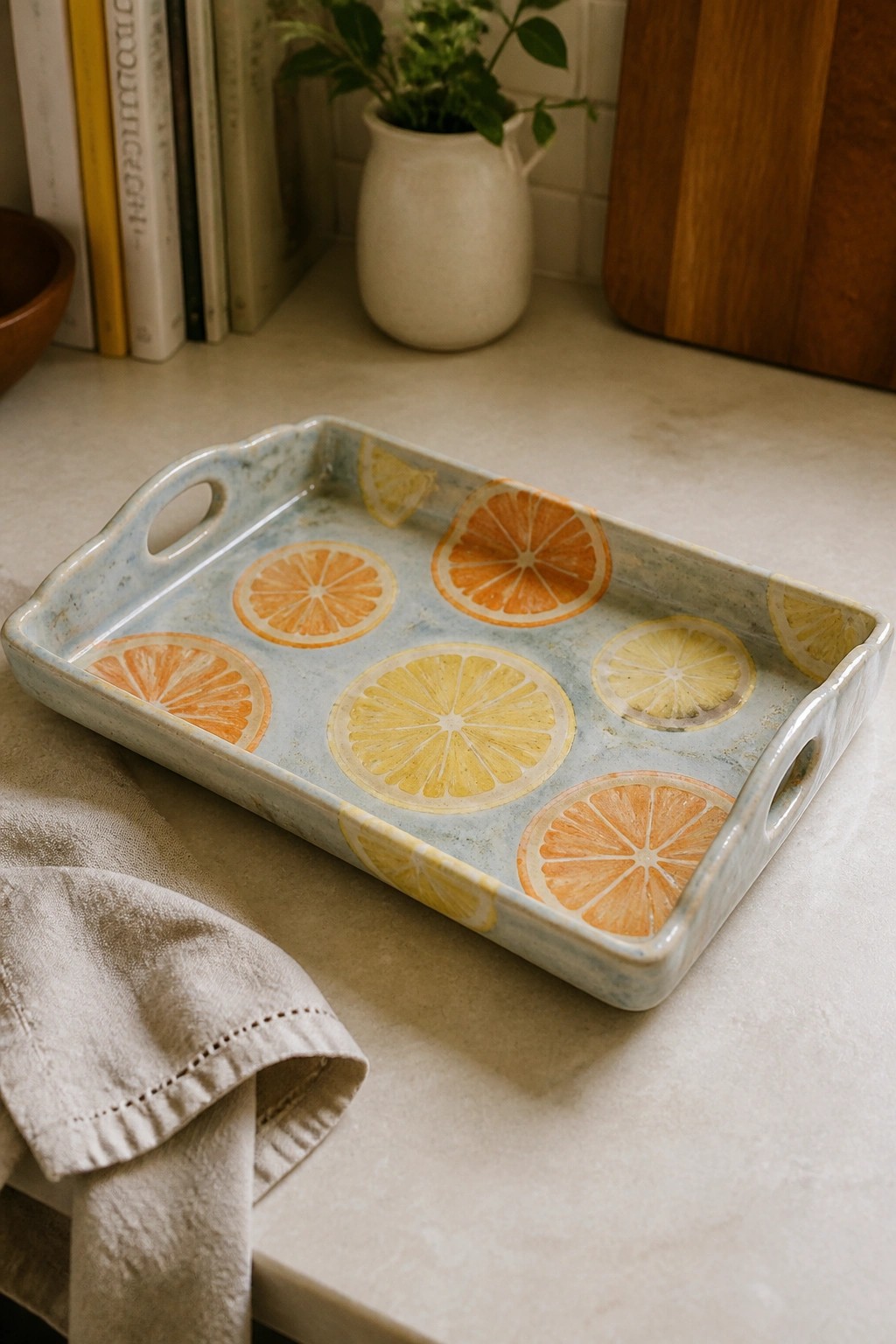
A flat slab of clay rolled to an even thickness forms the base of this rectangular tray. Simple oval cutouts on the short sides create built-in handles before the piece is dried and fired. Citrus slices in orange, yellow, and pale lemon tones are painted across the surface in a loose grid on a soft blue ground, giving the tray a clear kitchen or table function.
The shape does a lot of the work here because the same slab method can be scaled up for a larger serving piece or cut down for a smaller desk tray. You can swap the citrus slices for other simple motifs like leaves or geometric shapes using the same underglaze approach. In a kitchen this kind of tray keeps small items organized while staying easy to wipe clean after use.
Polka Dot Cylinder Mug
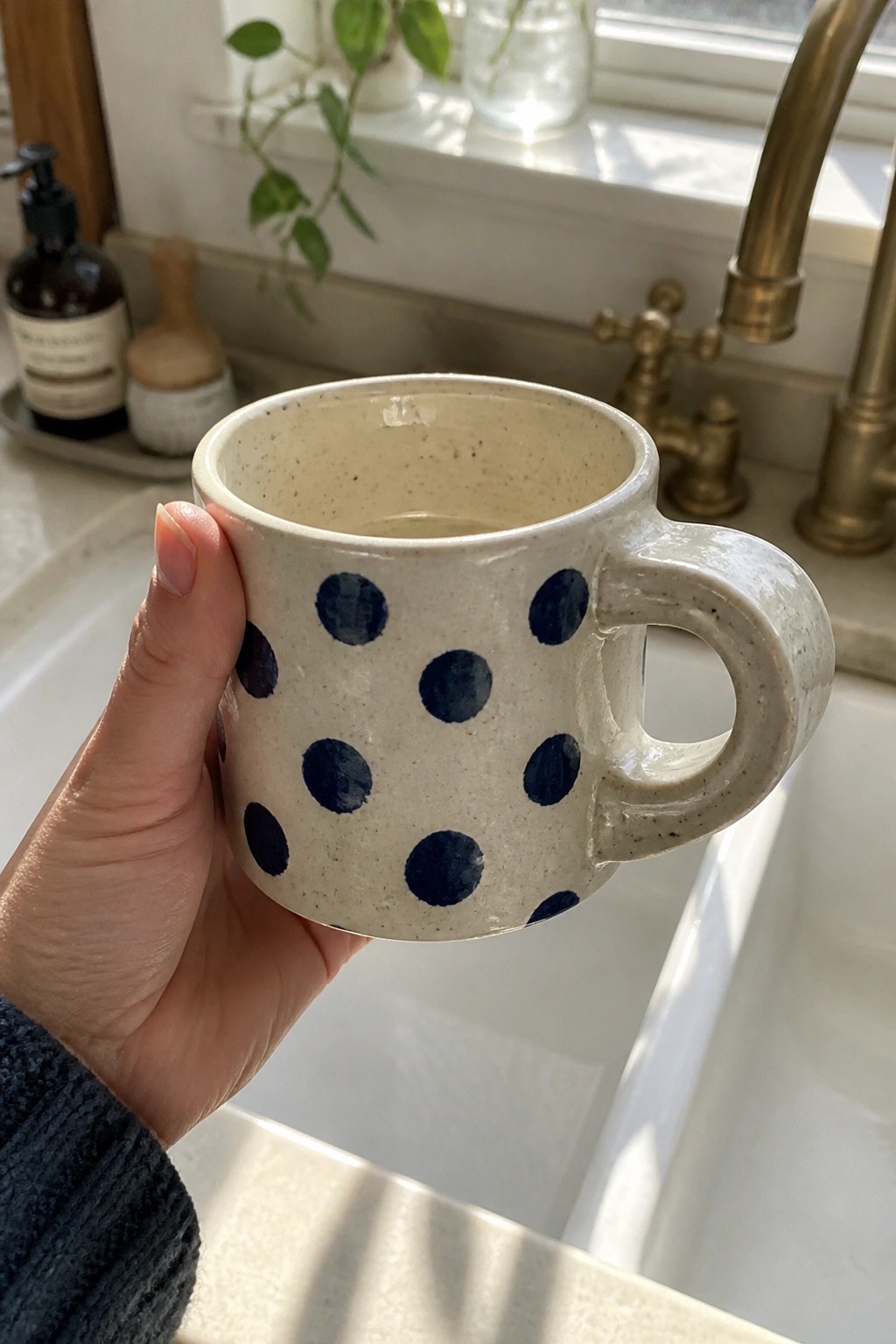
A slab-built mug starts with a flat rectangle of clay rolled into a simple cylinder and seamed at the back. The finished piece gets a light speckled base glaze, then large navy circles are added by hand before the glaze firing. This approach keeps the form straightforward while letting the painted pattern carry the visual interest. The result is a functional kitchen mug sized for everyday coffee or tea.
What makes this idea useful is how the dot pattern can be adjusted for different mug heights without changing the building method. You could repeat the same spacing on a wider breakfast mug or tighten the circles for a smaller cup. In a kitchen this shape stacks easily and the painted detail shows up clearly on open shelves. For a gift the design works well because you can swap the dot color to match someone’s dishes or keep the same size and just change the glaze base.
Slab-Built Leaf Spoon Rest
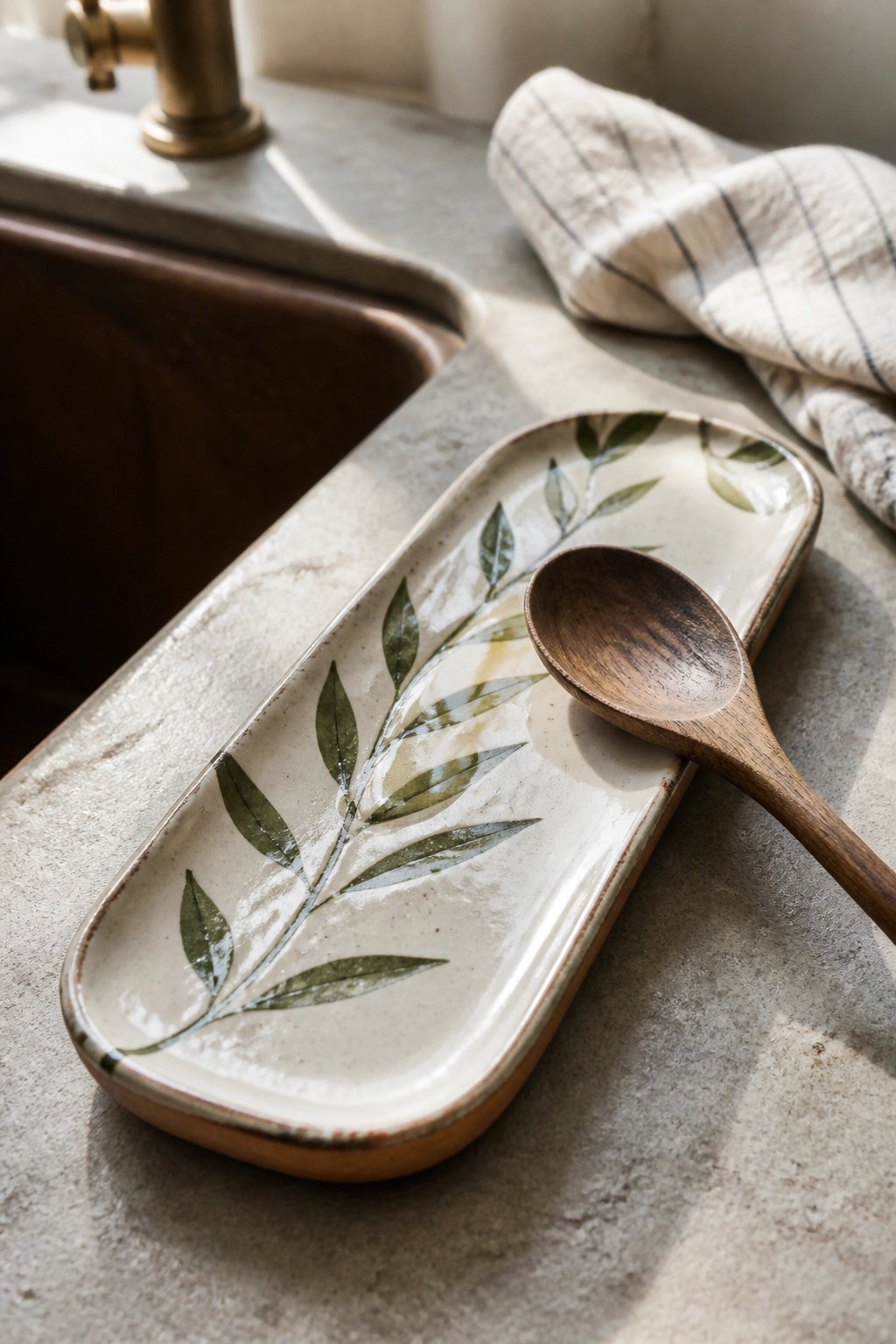
A slab-built tray formed into a long oval shape makes a practical spoon rest for kitchen use. The surface carries a simple branch of overlapping leaves painted in green tones over a light base, which keeps the design clear without crowding the form. This project starts with a rolled slab cut to size, then the motif is added before glazing to create contrast between the leaves and the background.
What makes this idea useful is how the narrow proportions fit neatly beside a sink or stove without taking up much space. The leaf motif can be swapped for other simple plants or left off entirely if you want a plainer version. You could easily lengthen the slab for a larger serving tray or shorten it for a smaller version meant for desk items. The same construction works well as a gift because it stays both functional and easy to customize.
Slab-Built Vase with Folded Rim
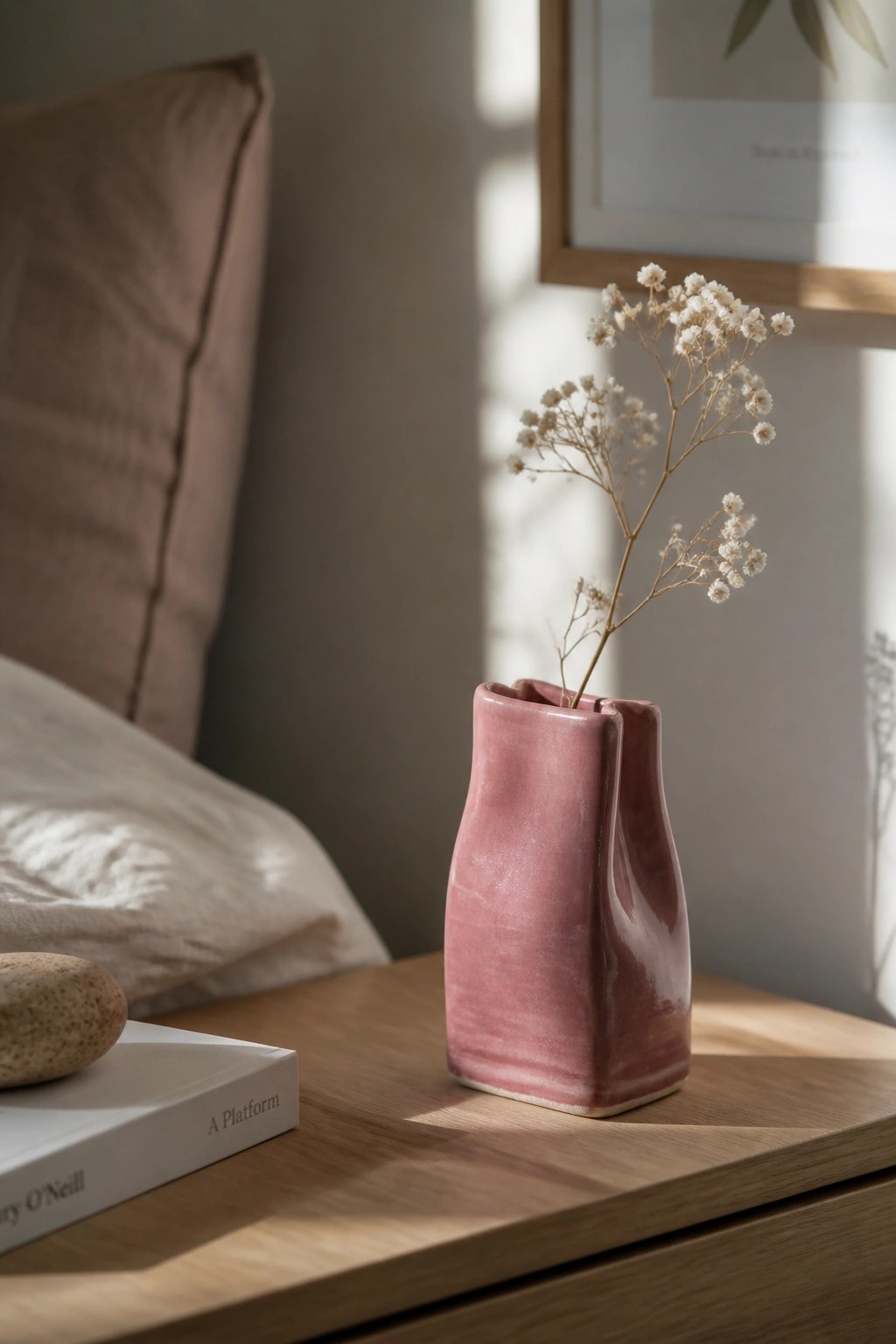
A small vase built from clay slabs forms an angular body that tapers upward into a pinched, split rim. The slabs create clean edges and a slightly squared base, while the top is shaped by hand to produce two narrow openings side by side. A single pink glaze covers the surface with soft variations in tone that highlight the form rather than hide it. This type of piece works as a simple holder for dried stems or a few short flowers.
The compact size fits easily on a shelf or nightstand without crowding the surface. You can repeat the same slab construction but adjust the rim to a single wide opening or add a foot ring for extra height. Keeping the glaze to one color makes the build faster while the folded detail still gives the piece a distinct profile. The same basic shape can be scaled down further into a small bud vase or widened into a low planter.
House Tea Light Holder

A slab-built house tea light holder turns basic clay sheets into a small shelter shape with a pitched roof and chimney. The front stays open so the flame shows clearly while small square windows cut into the side let light escape in spots. A blue glaze on the roof gives a clean contrast against the matte body and keeps the form simple to assemble.
What makes this idea useful is how the house shape works on a shelf or mantel without taking much space. You can swap the roof color or add more window cutouts to match different rooms. For a variation, close the front and use the same form as a tiny planter or change the scale to hold a votive instead. The cutout design also makes the piece stand out in photos for sharing.
Crescent Moon Ring Dish
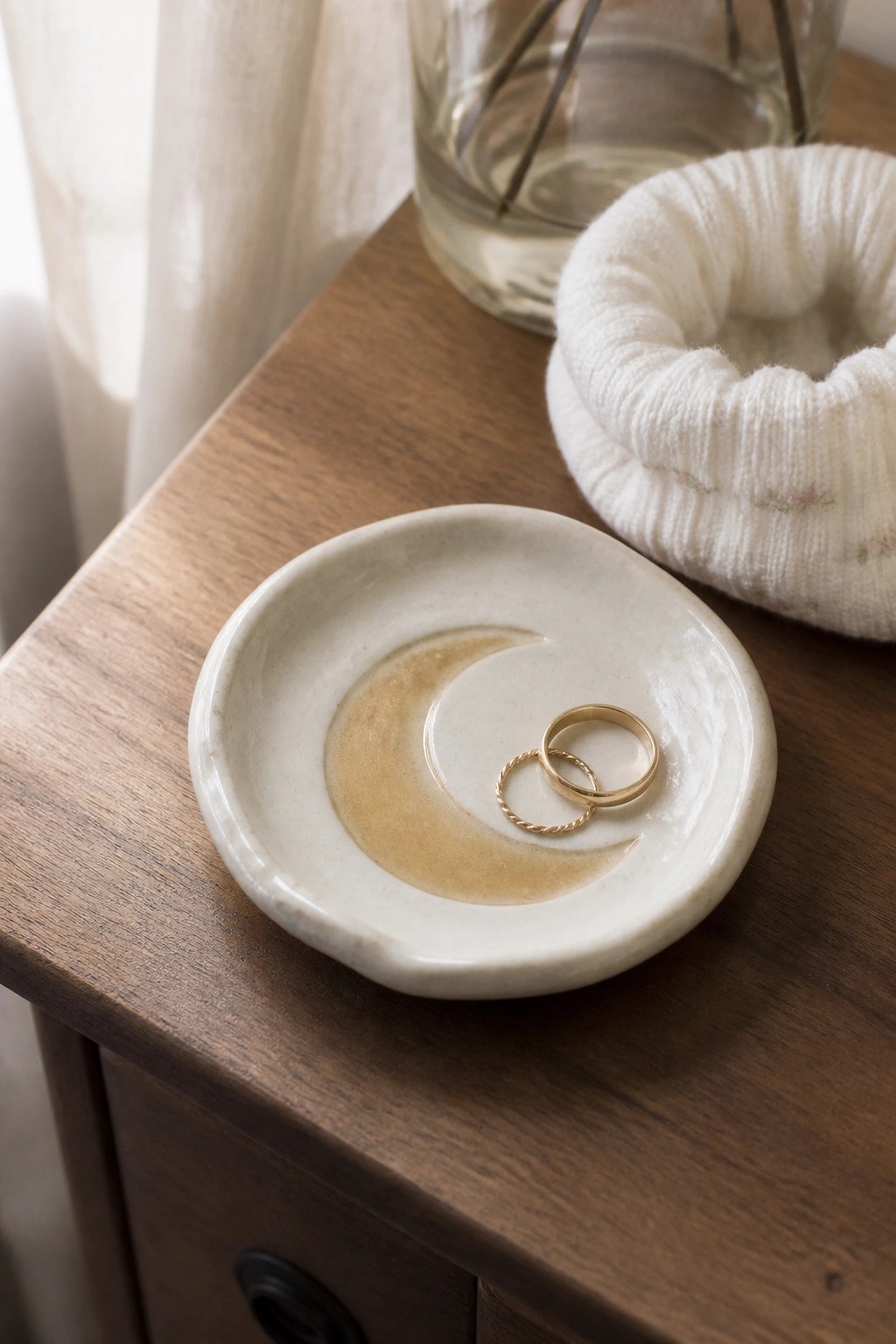
A small slab built ring dish starts with a thin sheet of clay cut into an irregular circle and gently pressed into a shallow curve. The crescent moon shape is added with a second layer or slip in a contrasting glaze that pools slightly in the middle. This keeps the dish low and wide enough for rings to sit flat inside the curve while the organic rim gives it a relaxed handmade look.
The small scale makes this easy to adapt by swapping the moon for a simple line, dot pattern, or initial in any glaze color. It works well on a nightstand or dresser as a dedicated spot for rings and small jewelry. You could also widen the base slightly to turn the same idea into a soap dish or desk catch-all without changing the slab process.
Rectangular Soap Dish with Draining Slots
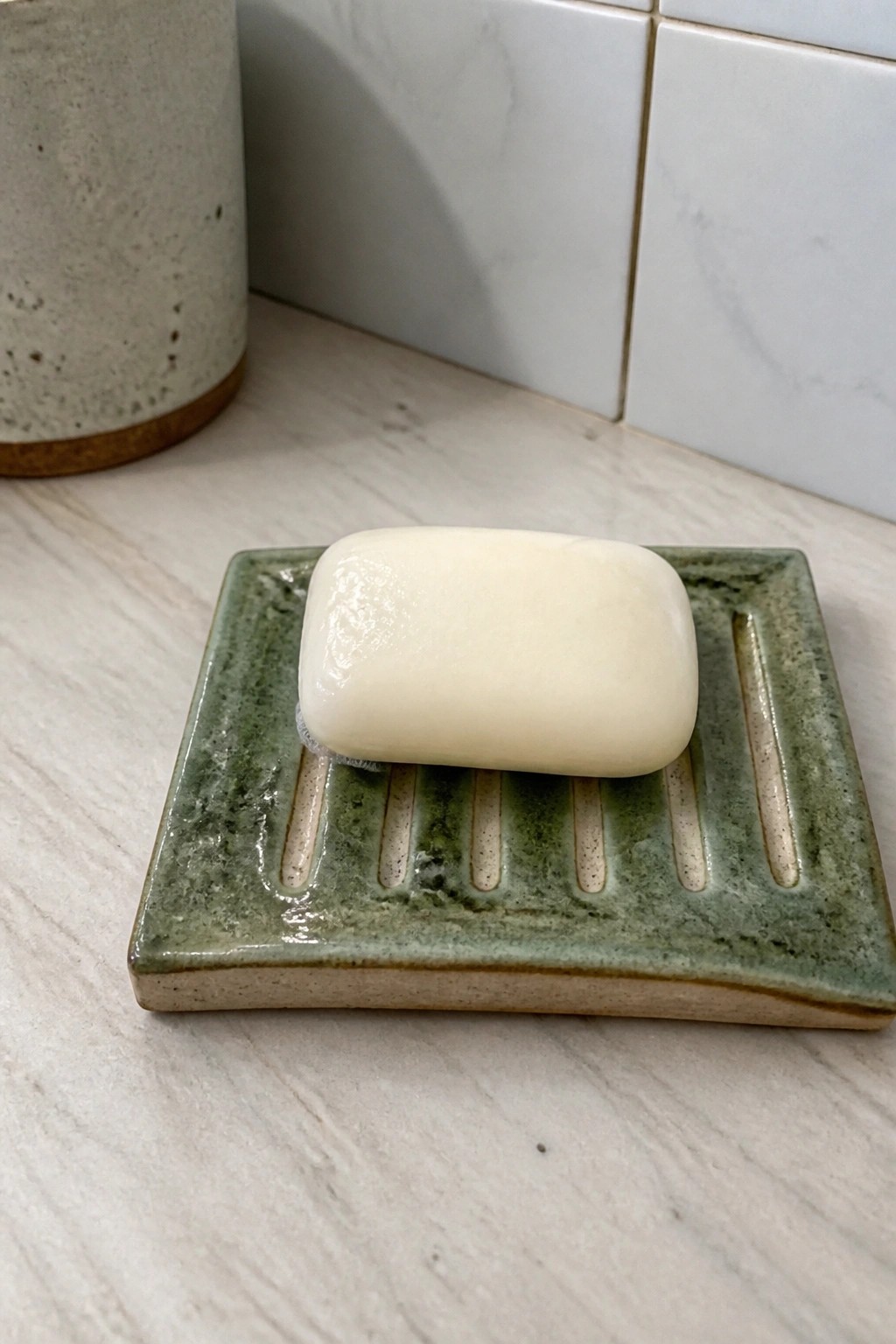
A soap dish formed from flat clay slabs creates a simple tray that holds a bar of soap above standing water. Parallel slots cut through the base let moisture drain away, while low walls keep the soap from sliding off. The green glaze covers the surface evenly and shows the slight texture left from the slab work.
This shape works well on a bathroom counter or inside a shower niche because it stays compact and functional. You can scale the rectangle larger or smaller depending on the size of soap you use most often. The same slab layout could be adapted into a small tray for rings or a holder for small kitchen tools by skipping the drainage slots and adjusting the depth.
Square Slab-Built Toothbrush Holder
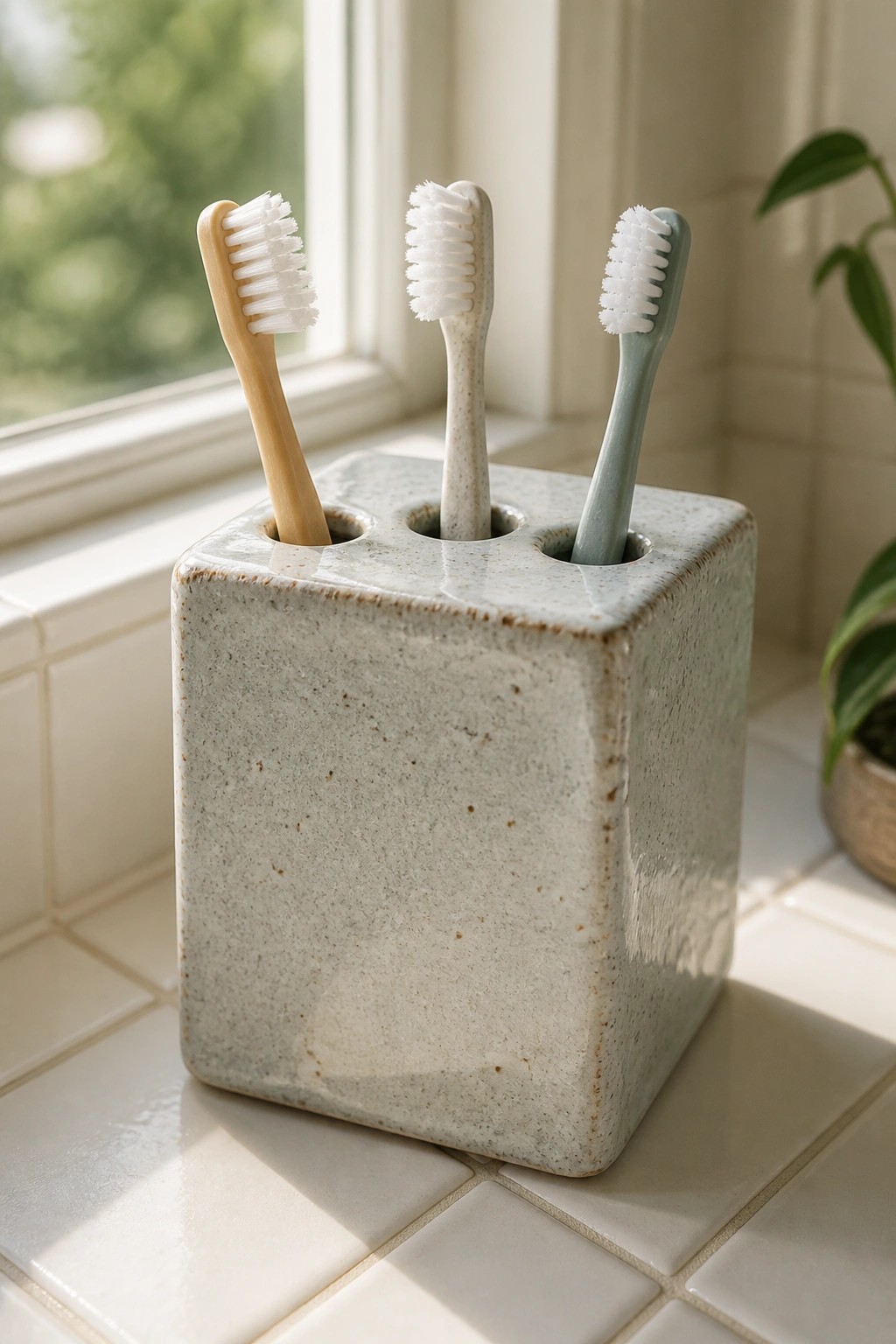
A square toothbrush holder built from slabs creates a compact bathroom organizer with three vertical holes sized for standard brush handles. The form stays simple and geometric, with a flat top and straight sides that come together easily from rolled clay sheets. A light speckled glaze adds subtle texture without hiding the clay surface, keeping the piece practical for daily use on a counter or shelf.
What makes this idea useful is how the slab method lets you cut the base and sides to whatever width fits your space. You can adjust the number of holes or make the block taller to hold more items like razors or small combs. The same shape works as a desk organizer for pens or a vanity tray for makeup brushes if you skip the holes. A neutral glaze like this blends into most bathrooms, but changing the color or leaving parts unglazed gives you quick ways to match different rooms.
Mini Cat Planter Insert
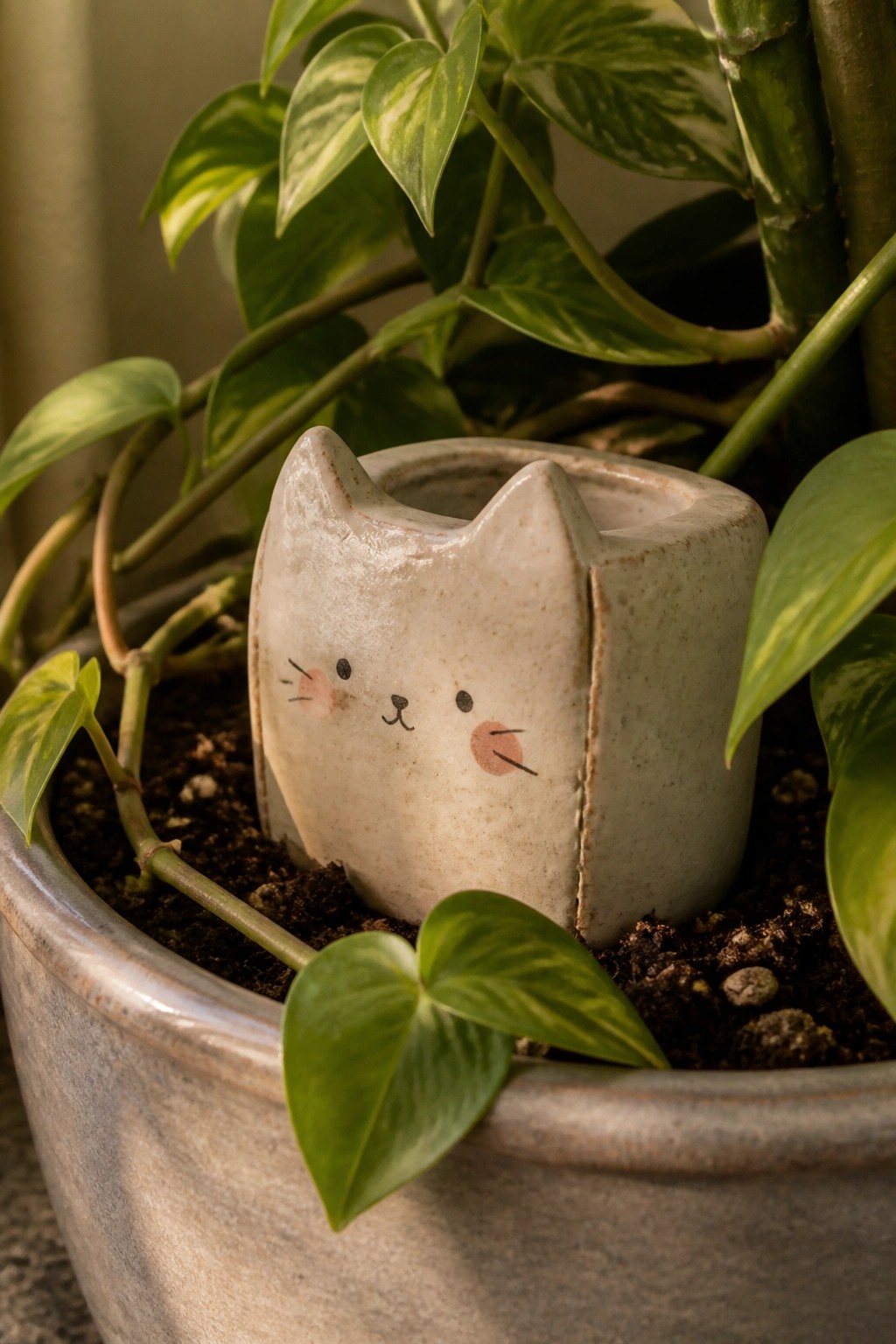
A small slab-built cylinder forms the base of this cat planter, with two pinched triangular ears attached at the rim. The piece sits low in the soil so only the face shows among the leaves. Simple painted details in black and peach create the eyes, nose, whiskers, and cheeks on a matte off-white surface.
The shape does a lot of the work here. You can drop the same cylinder form into any existing plant pot without repotting the whole plant. Scale the ears down or skip them to turn the idea into a plain holder for small tools or brushes. A set of these with different face colors would photograph well for plant styling boards.
Striped Utensil Holder
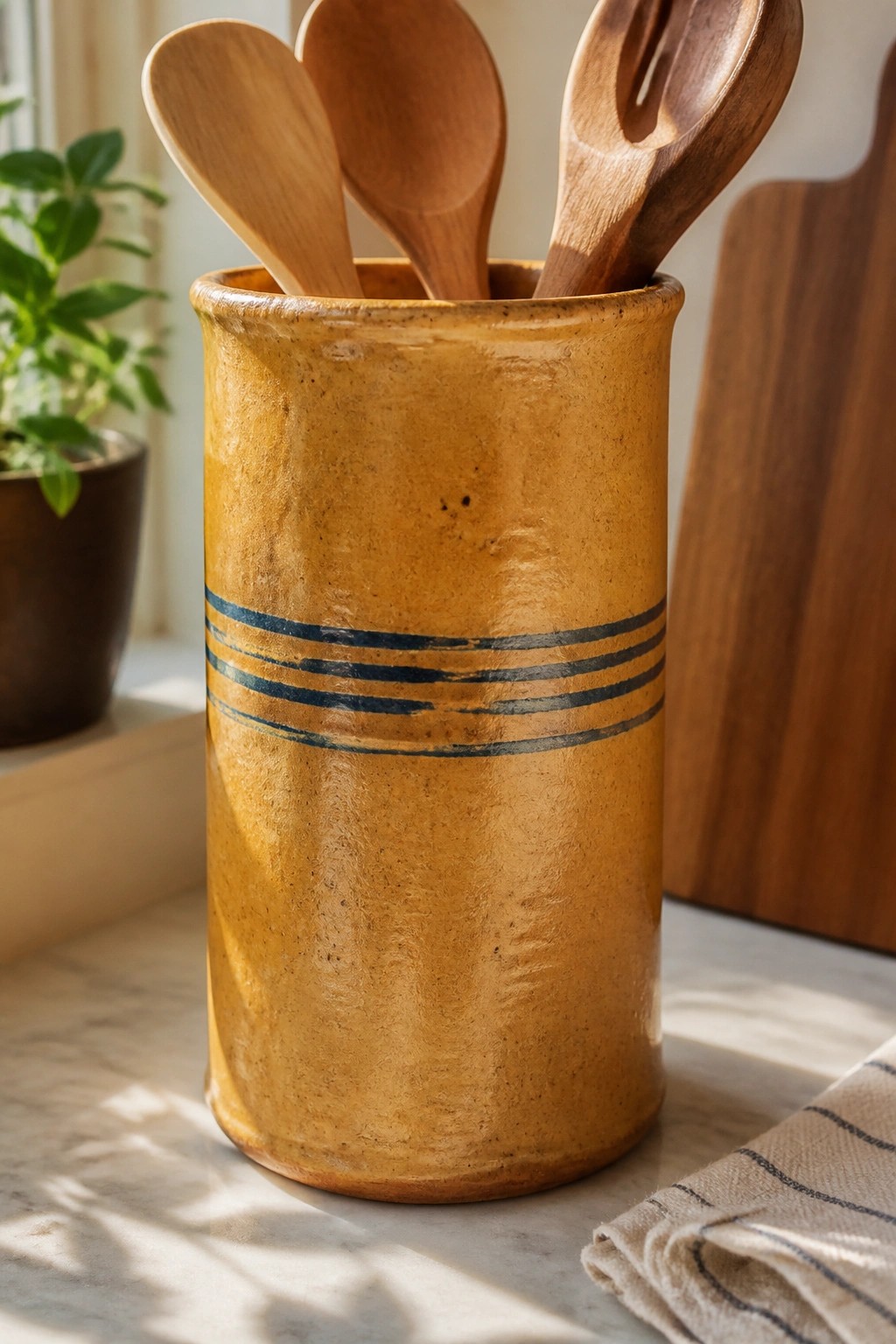
A tall cylinder made from clay works well as a kitchen utensil holder. The form is rolled into a tube and joined at the seam, then finished with a matte ochre glaze and three horizontal blue bands around the middle. The stripes give the piece clear visual structure while keeping the surface simple to paint. This approach fits the kitchen item category and keeps the focus on storage rather than decoration.
The shape does a lot of the work here because the height and diameter fit most wooden spoons and spatulas without tipping. You can adapt the same cylinder by changing the stripe color or spacing, or shorten it into a smaller tool caddy for a desk. In a kitchen, this kind of piece keeps tools within reach on a counter while staying easy to wipe clean. The painted bands also make the holder easy to spot in a photo, which helps if you want to share the finished result.
Speckled Lidded Trinket Box
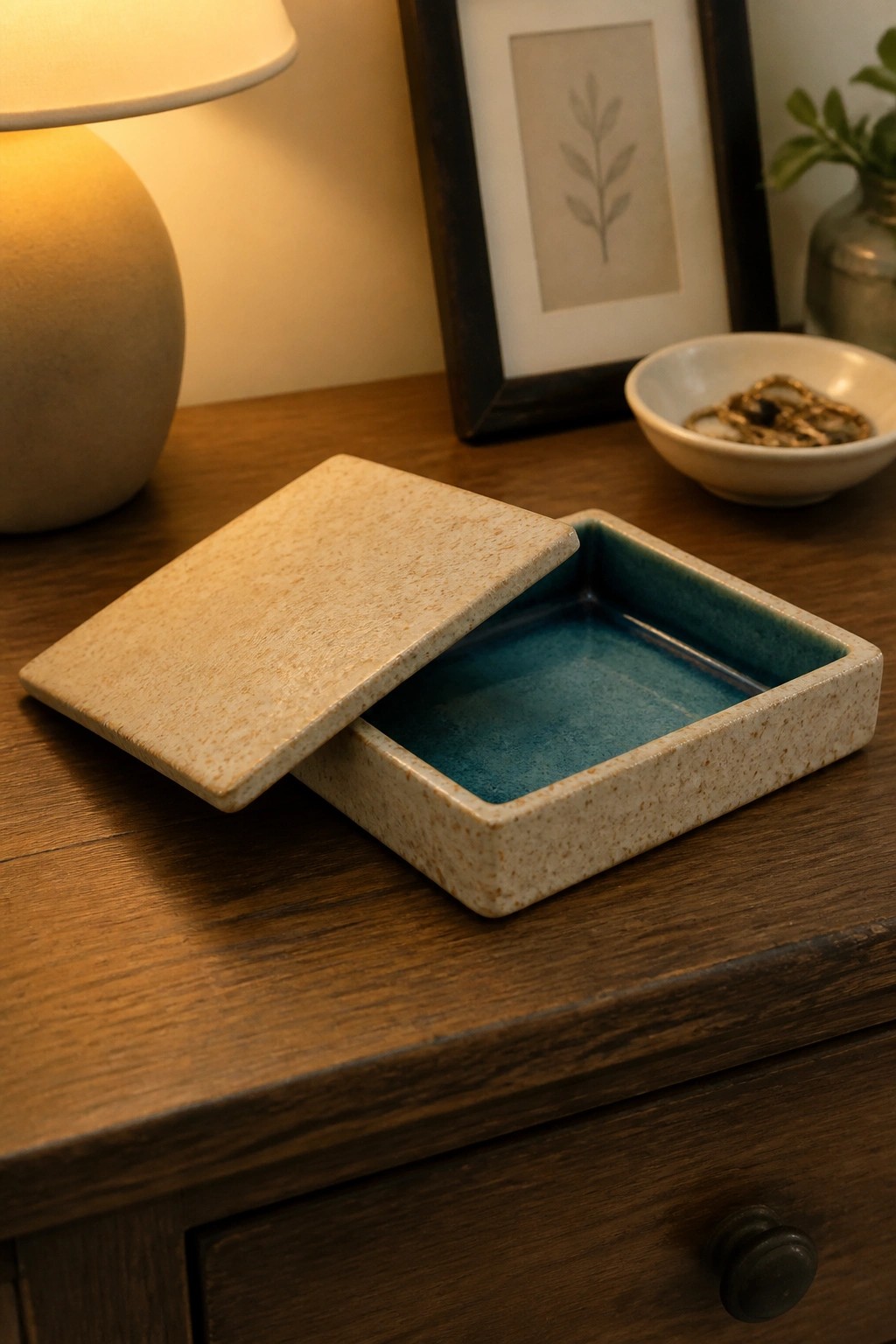
A square slab-built box with a flat lid creates a compact storage piece for rings or small jewelry. The exterior keeps a speckled matte finish while the interior uses a solid teal glaze for contrast and easy cleaning. This simple two-tone treatment works well because the neutral outside blends with most surfaces and the bright inside makes the contents easy to see.
The small scale lets the box sit on a dresser or nightstand without taking up much space. You could swap the interior color to match a bathroom or use the same shape without the lid to make an open tray. Slab building also makes it simple to adjust the size or add a small handle on top for a different version.
Rectangular Incense Holder Tray

A long rectangular tray built from a single slab of clay works as a simple incense holder. One end has a small hole to keep the stick upright, while a dark wavy line runs down the center as decoration. The flat shape and low sides make it stable on any surface and easy to clean after use.
What makes this idea useful is how the basic slab rectangle can be cut to any length you need. You could swap the single wave for dots, stripes, or a repeating pattern in a different color to change the look without extra steps. This kind of holder takes up little space on a desk or shelf and works just as well for short sticks as for longer ones. For a quick variation, roll a second thin slab and attach a small lip along the back edge to catch ash.
Slab-Built Yarn Bowl with Feeding Slot

A yarn bowl keeps a skein contained while letting the strand feed out smoothly during knitting or crochet. This version is a low, wide cylinder formed from a slab, with a U-shaped notch cut into the rim so the yarn can pull through without catching. The matte clay surface and thick walls add stability so the bowl stays in place on a couch or table. Slab construction makes the basic tube shape straightforward to assemble and join at the base.
What makes this idea useful is that the notch size can be adjusted to suit different yarn weights. A piece like this works especially well as a small project that uses leftover clay and turns into a functional gift for knitters. You could scale the same slab method into a taller form for bulkier skeins or add a second notch for holding scissors. The clean profile also photographs clearly for project sharing.
Divided Slab Dish for Seasonings

A small rectangular dish divided down the middle makes a practical project for anyone working with slab building. Each half can hold a different item like salt or sugar, and the central wall keeps them from mixing. Using two glazes on the same piece with a repeated dot pattern keeps the design simple while still giving each side its own color.
The shape does a lot of the work here because the flat base and straight sides come together quickly from a few cut slabs. You could adapt the same layout for a larger tray meant for olive oil and balsamic or turn the sections into shallow holders for jewelry or desk supplies. In a kitchen this kind of piece stays handy on the counter without taking up much space, and the two-color split makes it easy to match different kitchen styles.
Oval Cherry Slab Tray

A slab-built oval tray gives you a flat, wide surface that works as a serving piece or decorative platter for the table. The light glaze keeps the focus on the painted cherries and leaves clustered in one corner, creating a simple but clear motif without covering the whole piece. This approach uses the slab’s natural flatness to hold the design while keeping the overall form easy to roll out and shape by hand.
What makes this idea useful is how the wide oval shape adapts well to different slab sizes for snacks, bread, or small sides. You could change the fruit motif to apples, leaves, or abstract marks depending on the season or your kitchen colors. For a gift, the painted detail on one side makes the tray feel finished without needing extra carving or handles.
Hanging Wall Pocket Planter
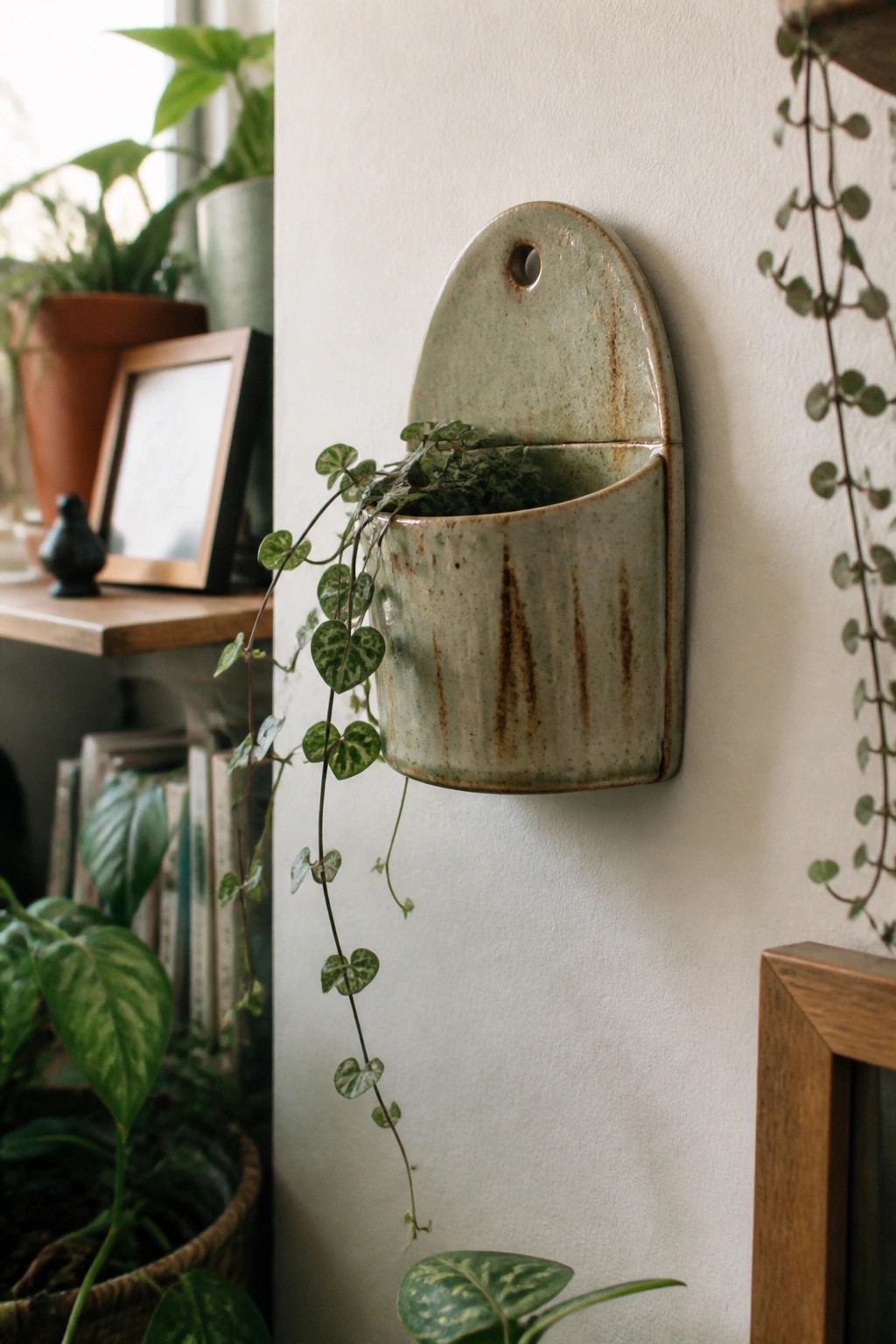
A slab-built wall pocket gives you a simple hanging planter that sits flat against any surface. The form uses a flat back panel joined to a curved front pouch, with a rounded top and drilled hole for easy mounting. Vertical glaze streaks add light texture and color variation while the open front lets trailing plants spill out naturally.
What makes this idea useful is how it frees up shelf space in tight rooms. You can adjust the pocket depth or width when cutting the slabs to fit different plant sizes or even turn the same pattern into a mail holder. In a bathroom or entryway, this shape keeps plants visible without cluttering counters. The basic construction also works for making several pockets at once in matching glazes.
Nesting Square Trays for Jewelry
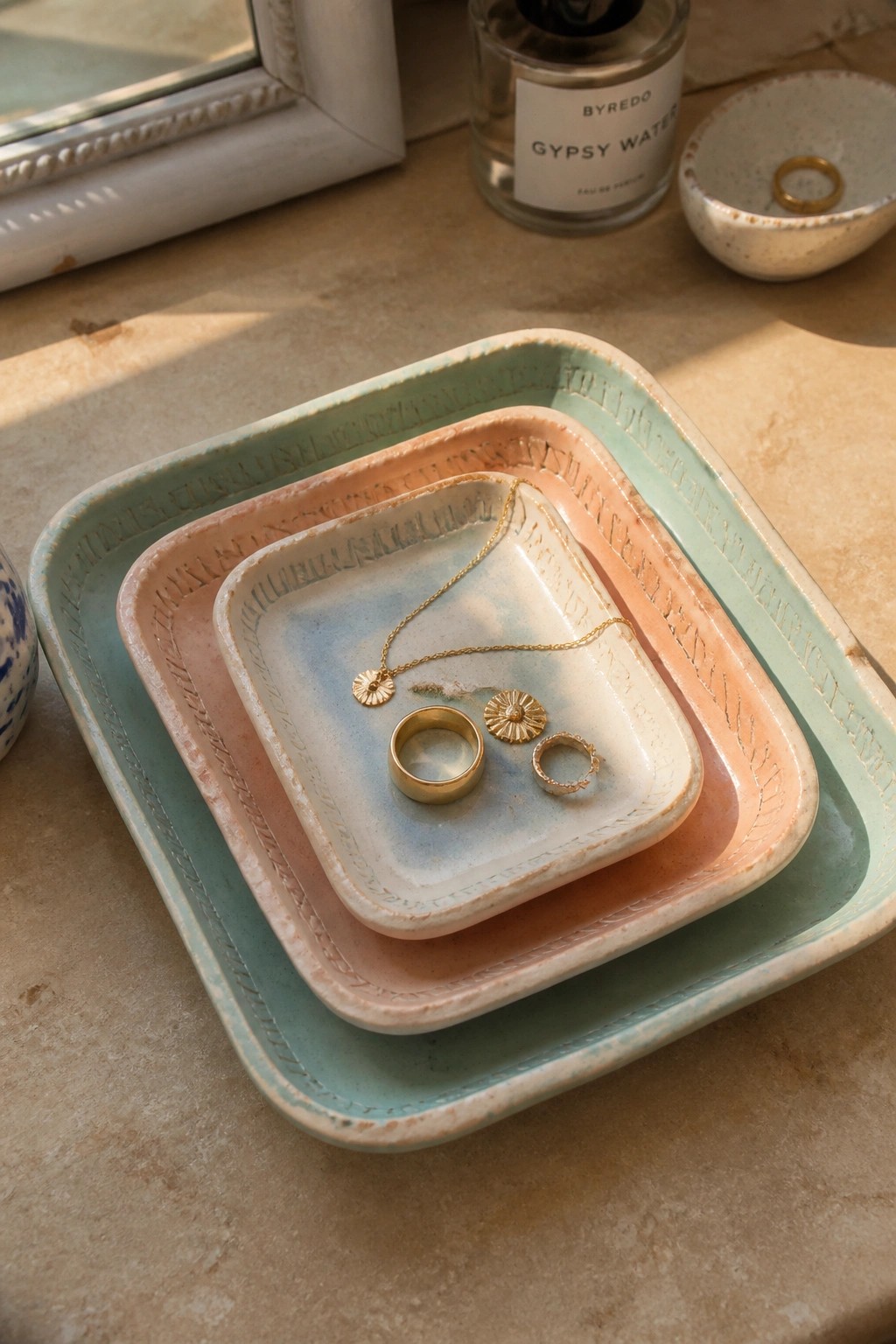
Slab-built nesting trays in three graduated sizes create a simple stacked jewelry holder. Each tray is formed from flat clay slabs with low sides and an impressed repeating pattern along the rim. Soft pastel glazes in mint, peach, and blue are applied so the colors layer visibly when the trays sit together. The flat bases keep rings and small necklaces in place without tipping or sliding.
What makes this idea useful is that the nesting shape lets you pull out one tray at a time or keep the whole set together on a dresser or bathroom counter. You can change the sizes to make a single small ring dish or a wider version for keys and mail. The stamped rim detail comes from a simple tool pressed into the slab edge before assembly, and swapping the glaze colors keeps the same form working in different rooms.
House-Shaped Candle Holder
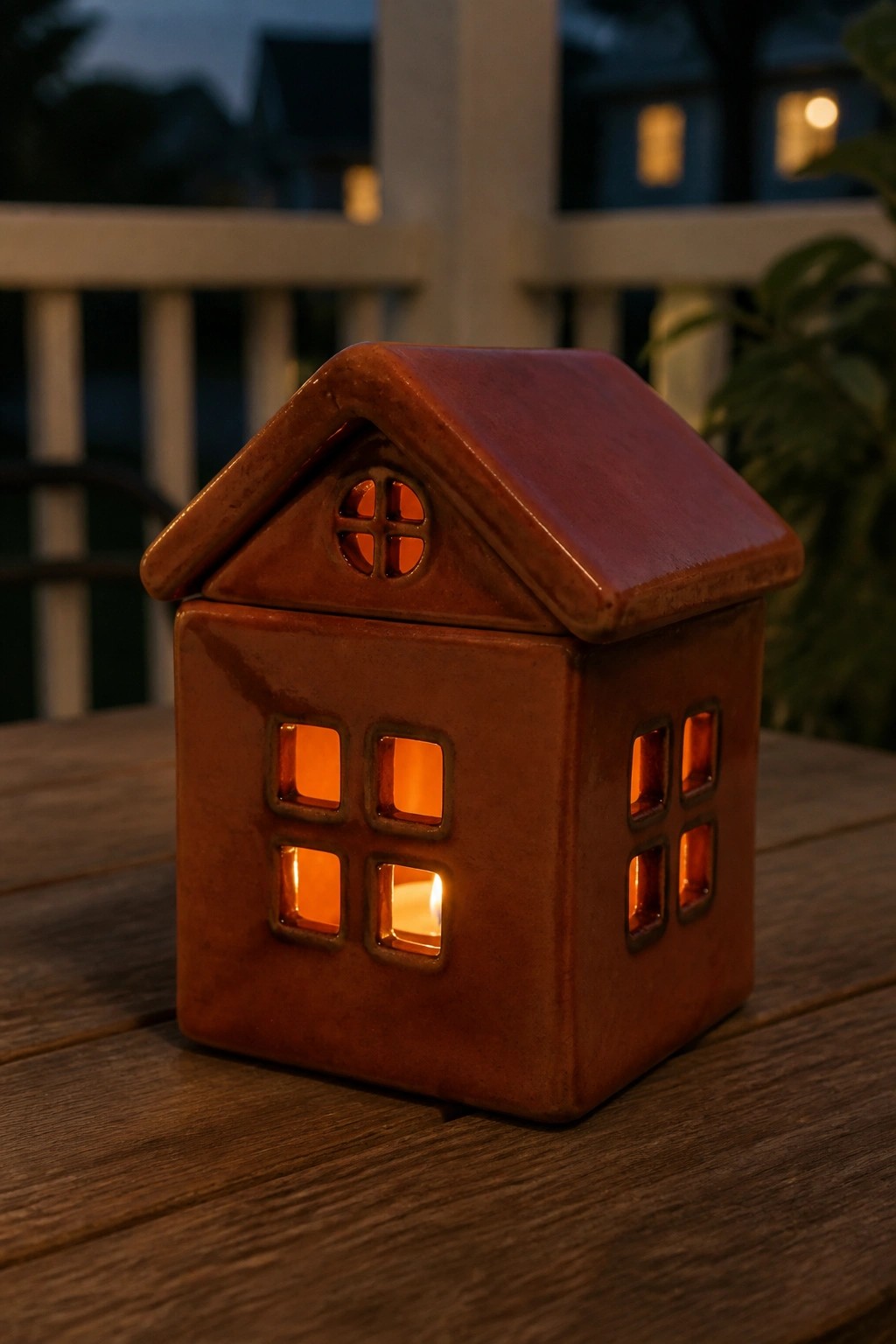
A slab-built ceramic house makes a simple candle holder by forming a box body with a separate pitched roof slab on top. Windows are cut into the walls in a grid pattern so light from a tea light inside can shine through, while a smaller cross-shaped opening in the gable adds another light source. The warm brown glaze keeps the surface smooth and even without extra decoration.
What makes this idea useful is how the basic box form can be resized or grouped into a small village set for a shelf. You could change the window cuts to circles or leave some walls solid for a different look, and the same method works for a slightly taller version that holds a battery candle. This shape stays compact on a table or windowsill and needs only basic slab rolling and scoring to build.
Frequently Asked Questions
What tools are essential for starting slab building pottery projects? You will need a rolling pin or slab roller for creating even sheets of clay, a sharp knife or wire cutter for shaping, a sponge for smoothing seams, and a canvas-covered work surface to prevent sticking. These items allow you to handle the 21 ideas efficiently while keeping your workspace organized.
How thick should slabs be when making functional items like trays or boxes? Aim for slabs between one quarter and one half inch thick to provide enough strength without becoming too heavy. Roll the clay evenly and check the thickness with a ruler before cutting shapes. This approach helps your pieces hold up during drying and firing for everyday use.
How can I join slabs securely to avoid cracks in projects like vases or frames? Score the edges where slabs meet with a tool, apply slip made from the same clay mixed with water, and press the pieces together firmly. Wipe away excess slip with a sponge and let the joins set slightly before handling. This method creates strong bonds that support the structure of your finished pottery.
What steps help prevent warping during the drying stage of slab projects? Dry your pieces slowly by covering them with plastic sheeting for the first day or two, then gradually expose them to air on a flat surface. Rotate the items periodically and keep them away from direct heat or drafts. Even drying reduces stress on the clay and preserves the shapes from your chosen ideas.
Which clay types work best for beginners trying these slab techniques? Earthenware or stoneware with added grog offers good plasticity and strength for easy handling. Start with a mid-range firing clay that matches your kiln if you plan to glaze the pieces. Test small samples first to see how the clay behaves with your tools and assembly methods.

Pottery Path is my cozy corner of the internet where I share clay ideas, pottery inspiration, and simple projects you can recreate at home. I love exploring everything from air dry clay to handbuilt pottery to cute minis that brighten your day. My goal is to make clay crafting feel easy, fun, and welcoming for anyone who wants to try it.
You will find beginner friendly tutorials, creative pottery painting ideas, and lots of warm inspiration for slow and happy crafting. If you enjoy hands on creativity, this space will feel like home.