
I have always preferred ceramic vases with straightforward shapes over anything too fussy.
My own attempts at pottery often end up with soft curves and simple profiles that feel easy to live with.
These 22 ideas focus on clean lines paired with organic forms that do not need much decoration.
I put them together from pieces I have made and others I have spotted in studios or online.
They might work as starting points if you want to try something similar in your own space.
Rounded Vase with Matte Glaze and Raw Clay Base

A wheel-thrown vase with a full rounded body that tapers into a narrow neck gives a simple organic shape that still feels balanced. The matte white glaze stops short of the foot, leaving a band of exposed clay that adds subtle contrast without extra decoration. This style works well for displaying single stems or airy flower heads because the neck opening keeps everything upright.
The shape does a lot of the work here since the proportions let you use it for both tall branches and short cuttings without looking empty. You can adapt the same idea by changing the neck height or making a slightly flatter body for a wider opening. The raw base detail is straightforward to copy by wiping glaze before the final firing, and the form would scale easily into a group of three vases in different heights for a shelf arrangement.
Speckled Tall Vase with Clean Tapered Lines

A tall ceramic vase with a narrow neck that widens gradually into a rounded body offers a simple silhouette that works as a single statement piece. The visible throwing lines and speckled matte glaze in soft gray with a warmer base add subtle texture without extra decoration. This approach fits the modern vase category where the form itself carries the interest through proportion and surface rather than added color or pattern.
The shape does a lot of the work here by keeping the profile balanced enough to hold a few stems or stand empty on a shelf. You could scale the same narrow-to-wide transition down for a smaller version that fits a desk or windowsill. The neutral speckled glaze makes it simple to adapt by changing the clay body or testing a matte white version instead, which would still read as handmade but shift the overall tone.
Organic Pinch-Rim Vase in Soft Green Glaze

A small ceramic vase with a rounded body and a pinched, asymmetrical opening at the top creates an organic silhouette that emphasizes handmade form. The light mint glaze covers the surface with soft tonal shifts and a glossy finish that highlights the curves and subtle texture. This idea falls into the category of modern decorative vases that use simple shaping to produce an irregular rim instead of a uniform opening.
What makes this idea useful is how the low, compact shape works well for a few stems on a table or shelf without overwhelming the space. You could adapt the pinched rim on a taller cylinder or repeat the same glaze across a set of three different sizes for a grouped display. The small scale also makes it easy to try in a single afternoon session if you already have a basic wheel or handbuilding setup.
Wall-Mounted Pocket Vase

A wall pocket vase gives you a simple way to hang flowers directly on a wall instead of using a tabletop piece. This version has a rounded organic body that narrows toward the base, with a small hole at the top for hanging and a narrow green band for subtle contrast. The matte off-white surface keeps the shape clean while the flat back lets it sit flush against the wall. It fits the category of a hanging vase or wall holder meant for small bunches or single stems.
What makes this idea useful is how little space it needs while still showing off flowers. The hanging hole and compact size make it easy to group several together or move around without rearranging furniture. You could adapt the same shape with different band colors or stretch it into a taller version for longer stems. In a kitchen or entryway, this style stands out on Pinterest because it turns a basic form into vertical decor without extra hardware.
Twin Neck Vase with Split Glaze

A ceramic vase with two separate necks rising from one rounded body creates a simple way to display different stem lengths in a single piece. The lower half stays in a matte white glaze while the upper section and necks shift to a warmer brown tone, giving clear visual separation without added decoration. This shape keeps the form organic yet balanced, so it reads as one object rather than two separate vases placed together.
What makes this idea useful is how the dual necks let you mix tall and short flowers without extra containers. The split glaze line draws attention to the necks, so the same shape could be reworked with a single color or a third tone along the base. In a living room or entry table, the form stands out on its own while still functioning as a standard vase. You could scale the idea down for a smaller bud version or adapt the neck split into a pitcher shape for kitchen use.
Organic Bulb Vase in Speckled Clay

This handmade ceramic vase features a rounded bulb body that narrows into a short neck, creating a balanced organic silhouette. The matte, lightly speckled surface keeps the form simple while adding subtle texture that catches light without any glaze shine. Its shape works well for holding a single dried stem or a small bunch without needing extra support inside the opening.
What makes this idea useful is how the wide base gives stability for taller stems or branches. You could scale the same form down for a smaller version on a desk or shelf, or stretch the neck slightly for a different proportion. The neutral tone makes it easy to pair with whatever dried material is in season. In a kitchen or entryway, this shape stays practical because it does not compete with other objects around it.
Tall Hourglass Vase with Raw Clay Base

A tall ceramic vase with a narrow waist that flares at the top and widens into a rounded foot creates a simple elongated form. The upper section uses a light gray glaze applied in horizontal strokes that add faint texture, while the lower portion stays unglazed to expose the natural clay. This two-part surface keeps the piece visually light even though the overall height is substantial.
What makes this idea useful is how the narrow middle section lets it hold just a few long stems without looking crowded. The unglazed base can be repeated on other vase shapes to add contrast without extra decoration. In a hallway or entry table this profile gives height while taking up little floor space, and the same silhouette works scaled down for a smaller version that fits on a mantel.
Mini Vases with Varied Organic Forms

Small ceramic bud vases like these work well when the goal is to explore different silhouettes in one batch. The set uses three distinct shapes: a tall cylinder with a simple rim, a low rounded body, and a pear form that narrows at the top. Each piece keeps the walls relatively thin and shows light throwing lines under soft, semi-translucent glazes in muted tones. This keeps the focus on the form rather than heavy decoration.
What makes this idea useful is how the compact size lets you test multiple profiles without using much clay or shelf space. You could scale the rounded shape up slightly for a small planter or flatten the cylinder base to make a shallow ring dish instead. The soft glaze palette helps the group read as a modern set on a shelf or table, which also makes the pieces easier to style in photos. For gifts, pairing two or three of these together gives more visual interest than a single matching vase.
Crescent Loop Vase with Matte Speckled Surface

A crescent-shaped ceramic vase uses a continuous curved form with a wide central opening to hold stems in place. The design lets branches thread through the middle while the rounded body keeps the piece balanced on a surface. Its speckled matte finish gives the clay a soft, stone-like texture that pairs with the clean silhouette.
The shape does a lot of the work here by creating negative space that makes even a single stem look intentional. This kind of vase works especially well on nightstands or shelves where you want height without bulk. You could scale it down for a desk version or try the same curve in a taller, narrower profile for larger arrangements. The idea stands out in photos because the loop draws the eye without added decoration.
Bottle Vase with a Single Circular Indent
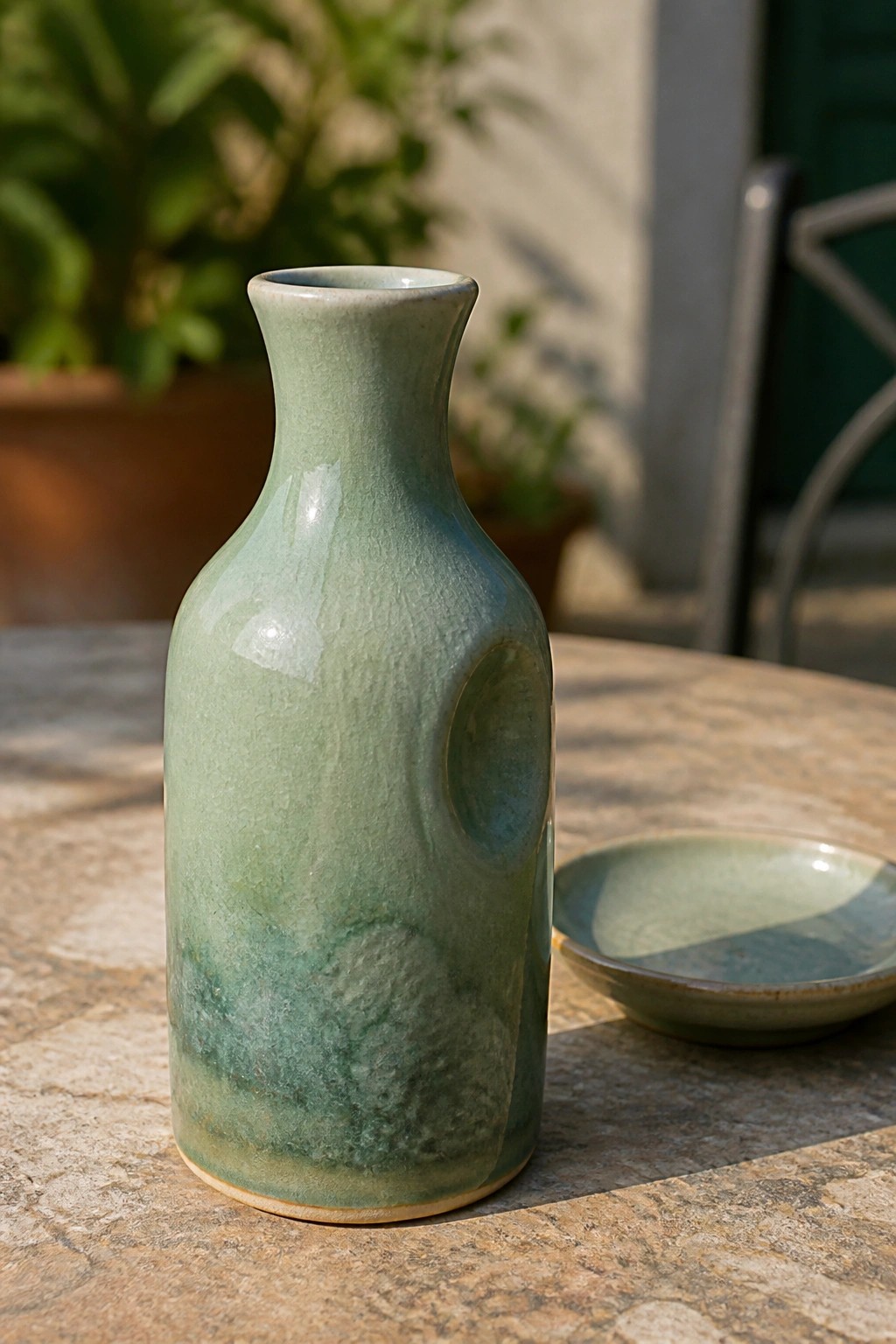
A narrow-necked ceramic vase with a gently rounded body and a small circular indent pressed into one side creates a simple focal point. The glaze shifts from light mint near the rim through patchy teal and green tones lower down, leaving a slightly rough texture where the colors overlap. This shape keeps the overall profile clean while the indent adds a subtle break in the surface without adding extra volume or handles.
What makes this idea useful is how the indent works as a built-in detail that catches light and shadow, so the vase reads as more intentional than a plain bottle form. You could repeat the same indent on the opposite side for balance or skip it entirely on a taller version meant for branches. In a living room or entryway this scale sits comfortably on a console or shelf, and the glaze layering is straightforward to test on test tiles before committing to a full piece.
Organic Vase with Sculpted Folds and Streaked Finish

A handbuilt ceramic vase with an irregular, ruffled rim gives this project an organic silhouette that feels current without relying on perfect symmetry. Sculpted vertical folds around the body create soft movement and shadow play on the surface. The streaked terracotta and off-white finish comes from simple slip or glaze application that highlights the form rather than covering it.
This shape works especially well as a single statement piece on a console or dining table. You can scale the same ruffled rim down for smaller bud vases or repeat the fold detail on a wider bowl form. The marbled surface treatment adapts easily to different clay bodies if you want to change the color palette while keeping the silhouette intact.
Ribbed Ceramic Vase with Vertical Fluting

A ceramic vase formed with deep vertical ribs gives the surface strong linear texture while the overall shape stays rounded and organic. The bulbous body narrows at the base and opens slightly at the rim, and a soft blue glaze settles into the grooves to accent the ridges without adding pattern. This approach belongs to the vase category and relies on simple hand-built or wheel-thrown texture rather than added decoration.
The shape works especially well on a windowsill or low shelf where side light brings out the ridges. You can repeat the same vertical fluting on a taller cylinder or a smaller bud vase using the same glaze for a matching set. The idea adapts easily to different clay bodies and stands out in a modern interior because the texture replaces the need for extra color or motifs.
Rounded Vase with Sweeping Brown Stripe

A handmade ceramic vase with a full rounded body and a slightly tilted rim creates an organic silhouette that feels balanced and natural. The off-white speckled surface keeps the focus on the form while a single flowing brown stripe adds a simple line of contrast across the curve. This approach fits the modern organic vase category where minimal surface detail supports rather than competes with the shape.
The shape does a lot of the work here because the rounded profile stands out even without extra decoration. You could adapt the stripe by varying its width, color, or placement to match different room palettes or repeat the idea on a taller or narrower version. This kind of vase works especially well as a single accent on a console or coffee table and makes a straightforward gift that still looks considered. For a simpler project the same body could be left plain or finished with a matte clear glaze instead.
Cylinder Vase with Glazed Upper Half and Raw Clay Base

A tall cylindrical vase combines a glossy white glazed top section with an unglazed matte lower portion that retains the natural clay texture. The glaze line sits roughly halfway down and shows a slight drip edge where it meets the raw surface. This creates a simple two-part finish that emphasizes the contrast between smooth glazed ceramic and the rough, porous clay body without additional carving or patterns.
What makes this idea useful is how the divided finish works on a basic wheel-thrown shape that requires no complex sculpting. You can adapt the same approach to medium-height cylinders for bathroom cups or desk pencil holders by adjusting the glaze height. In a living room or on a windowsill, the raw lower section gives the piece enough visual weight to stand alone while the white top keeps it bright. For variation, try moving the glaze line lower or testing a matte white on top to change how light hits the surface.
Footed Vase with Incised Fan Pattern
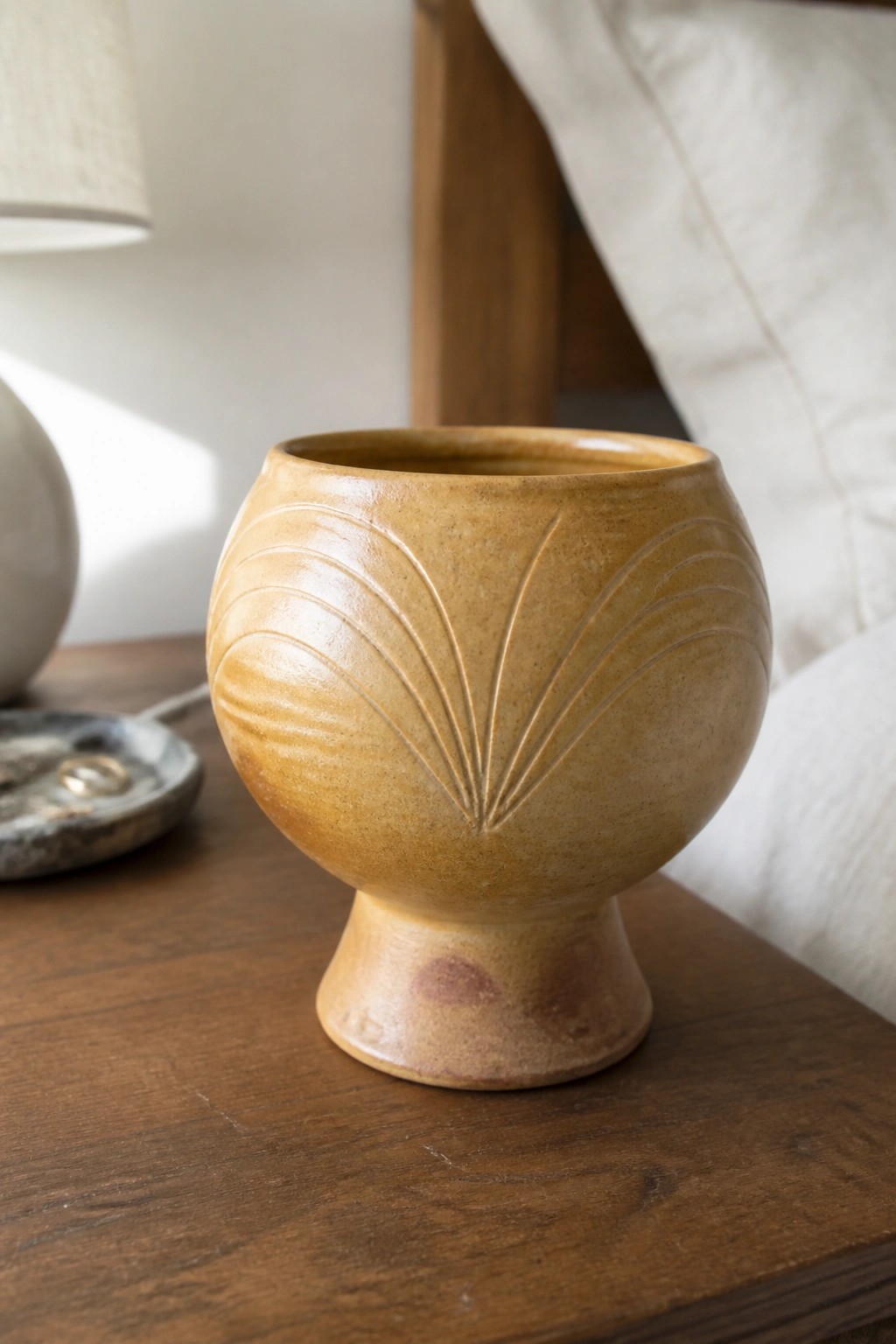
A footed ceramic vase takes a simple rounded body and sets it on a narrow pedestal base to create lift and balance. The incised lines form a fan shape that radiates from the lower center, adding surface texture while keeping the overall form clean. This idea belongs to the category of decorative vases that use carving for visual interest instead of added color or complex silhouettes.
The shape does a lot of the work here because the raised base prevents the piece from looking flat on a surface. You could repeat the same radiating lines on a taller cylinder or a low bowl if you want to change the scale for different flowers or small plants. In a living room or on a nightstand, the warm tone and carved detail give the vase enough presence to stand alone without competing with other objects.
Double-Bulb Ceramic Vase with Organic Curves

A double-bulb ceramic vase builds its form from two stacked rounded sections joined at a narrow waist. The larger base supports the structure while the smaller upper bulb leads into a short neck. A soft sage green glaze with a light gloss finish covers the surface and accentuates the handmade contours without added decoration.
This shape works especially well as a centerpiece on a dining table or sideboard where dried grasses or single stems can extend the height. You can adapt the idea by adjusting the size of the top bulb to change the balance or by testing the same form in a matte clay body for a different surface feel. The simple silhouette makes it easy to scale down for a smaller bud vase version or to repeat in a set with slight variations in the waist width.
Spouted Vase with Impressed Clay Lid

A wheel-thrown stoneware vase with a pinched spout and soft rounded body gives this piece a simple pitcher profile. Horizontal throwing ridges show through the speckled matte glaze, while the separate flat lid in a warmer clay body carries a single pressed leaf motif. The lid sits beside the vase rather than on top, turning the form into a covered container that can hold small stems or dry goods.
What makes this idea useful is how the lid doubles as a coaster or small tray once removed. You can repeat the same impressed leaf on a set of coasters or a soap dish to match. The spout shape works at a smaller scale for bud vases or at a larger scale for kitchen counter storage. For Pinterest, the contrast between the speckled body and the plain impressed lid gives the project a clean, recognizable thumbnail without extra color or pattern.
Multi-Neck Vase with Color-Blocked Glazes

A handbuilt ceramic vase with three separate necks rising from one rounded body gives a simple way to hold multiple stems in one piece. The necks sit close together but stay distinct, and the base stays low and wide so the form feels balanced. Different glazes on each section keep the necks readable while the overall shape stays soft and organic.
What makes this idea useful is the way the multiple openings let you arrange small bunches without extra containers. You could rework the same clustered-neck shape with just two openings for a smaller table version or stretch it taller for floor use. The color blocks also make it easy to match different rooms by swapping which glaze gets the most space. In a living room or entry, this kind of vase handles both fresh flowers and dried stems without looking crowded.
Bulbous Ceramic Vase with Scalloped Rim and Side Indent

A ceramic vase with a rounded body and narrow neck gives an organic silhouette that feels balanced without being perfectly symmetrical. The scalloped rim adds a soft, irregular edge while a single indented area on the side creates a subtle sculptural detail. The matte off-white surface shows light texture from the making process, keeping the focus on form rather than color or pattern. This fits the category of a standalone decorative vase meant for display rather than heavy functional use.
What makes this idea useful is the way the indent breaks up an otherwise simple curve and gives the piece a distinct profile from different angles. The shape works especially well on a bedside table or shelf where it can be seen in the round. You could adapt the same form by changing the depth or placement of the indent or by making the rim more or less wavy for a different look. A taller or narrower version of this vase would also translate easily to a mantel grouping.
Ribbed Ceramic Vase with Horizontal Texture

A wheel-thrown vase with evenly spaced horizontal ridges that run from base to neck gives the surface strong linear texture. The form stays rounded and slightly tapered at both ends while the middle section widens for balance. A glossy deep green glaze sits in the grooves and reflects light along the ridges, making the texture the main visual feature. This style works as a vase because the ridges add interest without needing extra color or pattern.
The shape does a lot of the work here by keeping the outline simple so the ridges can carry the detail. You could adapt the same ribbing on a shorter, wider bowl form or stretch it taller for a different shelf height. The green glaze would also translate well to a matte finish if you want less shine. In a living room or entryway, this size and texture stands out on its own without competing with other objects.
Organic Vase Shape with a Single Gold Curve

A handmade ceramic vase with a rounded body and narrow neck uses a thin gold line that arcs across the surface as its only decoration. The matte white glaze highlights the clean silhouette and keeps the overall look simple. This idea belongs to the category of modern vases that rely on one painted element instead of patterns or added texture.
The shape does a lot of the work here by creating a soft profile that sits comfortably on a mantel or side table. You could repeat the same gold curve on a taller bottle form or a low bowl to change the scale without losing the minimal effect. For a gift this kind of piece works well because the detail feels finished yet easy to reproduce. In a neutral room the gold line catches light without competing with other objects.
Rounded Ceramic Vase with a Single Blue Glaze Band
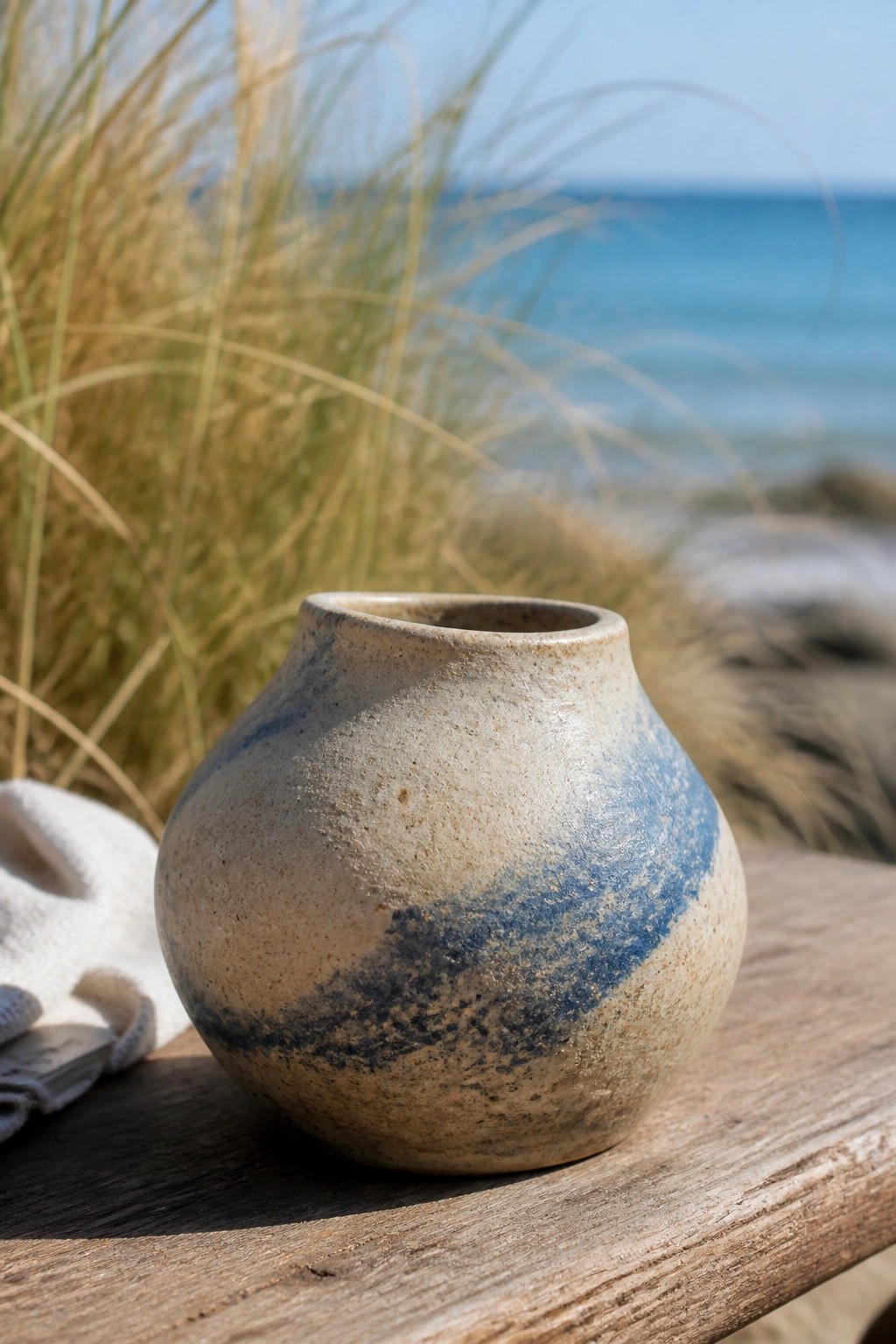
A compact ceramic vase with a bulbous body and short tapered neck gets its visual interest from a single horizontal streak of blue glaze over a speckled beige clay body. The rounded form stays simple while the glaze band adds movement without extra carving or patterns. This approach keeps the piece in the modern organic category by letting the natural clay texture and limited color do the work.
The small scale makes this vase practical for a desk, bathroom counter, or narrow shelf where larger pieces would crowd the space. You could rework the same shape using a different glaze color or stretch the form taller for dried stems. The single band of color is easy to replicate on other objects like a small bowl or planter by brushing glaze in one pass before firing. A piece like this stands out in searches because the clean silhouette and minimal decoration read clearly in photos.
Frequently Asked Questions
What flowers work best with modern ceramic vases that emphasize clean lines and organic silhouettes?
Simple single stem arrangements or small clusters of greenery highlight the shapes without overwhelming them. Opt for tall thin blooms like calla lilies or delicate branches in vases with elongated forms to accentuate the organic curves. Avoid dense bouquets that could hide the minimalist design.
How do I style multiple ceramic vases together in one room while keeping the look cohesive?
Group vases of varying heights but similar neutral tones on a shelf or table to create visual interest through their silhouettes. Position them in odd numbers and leave space between each to let the clean lines stand out. This approach works well in minimalist settings where the focus stays on form rather than color.
What is the best way to clean and maintain ceramic vases with smooth organic shapes?
Wipe the exterior regularly with a soft damp cloth to remove dust and preserve the finish. For interior cleaning after use with water or flowers add a mild soap solution and rinse thoroughly before drying upside down. Avoid abrasive scrubbers that could scratch the surface and diminish the modern aesthetic over time.
Can these types of ceramic vases be placed outdoors or are they meant for indoor use only?
Most ceramic vases designed with clean lines suit indoor environments best since outdoor exposure to extreme temperatures or moisture can lead to cracking. If you want an outdoor option look for glazed versions rated for weather resistance and bring them inside during harsh conditions. Always check the specific material details before placing any vase outside.
Where can I find affordable versions of modern ceramic vases inspired by organic silhouettes?
Search home decor retailers or online marketplaces for handmade or mass produced options in neutral colors that match the described styles. Many stores offer budget friendly lines with similar minimal forms often priced under fifty dollars. Consider checking local pottery studios for unique pieces that capture the essence without high costs.

Pottery Path is my cozy corner of the internet where I share clay ideas, pottery inspiration, and simple projects you can recreate at home. I love exploring everything from air dry clay to handbuilt pottery to cute minis that brighten your day. My goal is to make clay crafting feel easy, fun, and welcoming for anyone who wants to try it.
You will find beginner friendly tutorials, creative pottery painting ideas, and lots of warm inspiration for slow and happy crafting. If you enjoy hands on creativity, this space will feel like home.