
I have spent quite a bit of time in my studio trying out vase shapes that go beyond the usual round ones.
It is surprising how much a slight change in form can affect the way a piece sits in a room.
I gathered some designs here that center on those different shapes and forms.
A few come from things I have tried myself while others are based on simple ideas I have seen around.
They are the kind of options that might be useful if you want to experiment a little with clay.
Fluted Ceramic Vase with Scalloped Rim

A tall ceramic vase shaped with vertical flutes that run from base to top and finished with an undulating scalloped rim. The form narrows slightly toward the foot and carries a speckled green glaze that settles into the grooves. This approach uses repeated ridges and an uneven rim to create a distinct silhouette that stands out among smoother vase shapes.
What makes this idea useful is how the fluting adds texture while still leaving the piece simple to throw on the wheel before carving. You can adapt the same rim treatment to a straight cylinder or a shorter bulb shape for variety. The vase works well on a dining table or shelf where its profile shows from multiple angles. Scaling the flutes down makes the design easier to repeat for a set of smaller vessels.
Bulbous Vase with Loose White Brushwork

A rounded ceramic vase with a full, low-slung body and a short pinched neck gives the form its main impact. The warm terracotta clay shows visible texture from the wheel or handbuilding, while a few wide white brushstrokes wrap across the middle to break up the surface without adding pattern. This keeps the design simple and lets the shape carry the interest rather than relying on complex carving or glazing.
The shape does a lot of the work here by creating a stable base that holds dried stems or a single flower without tipping. You could adapt the white strokes to a different color or repeat them in a thinner band for a more subtle look. In a kitchen or entryway, this size works well on a windowsill or shelf next to wooden boards or stoneware bowls. For another version, try the same rounded body but leave the surface plain and add the brushwork only on one side to change the balance quickly.
Teardrop Wall Pocket Vase
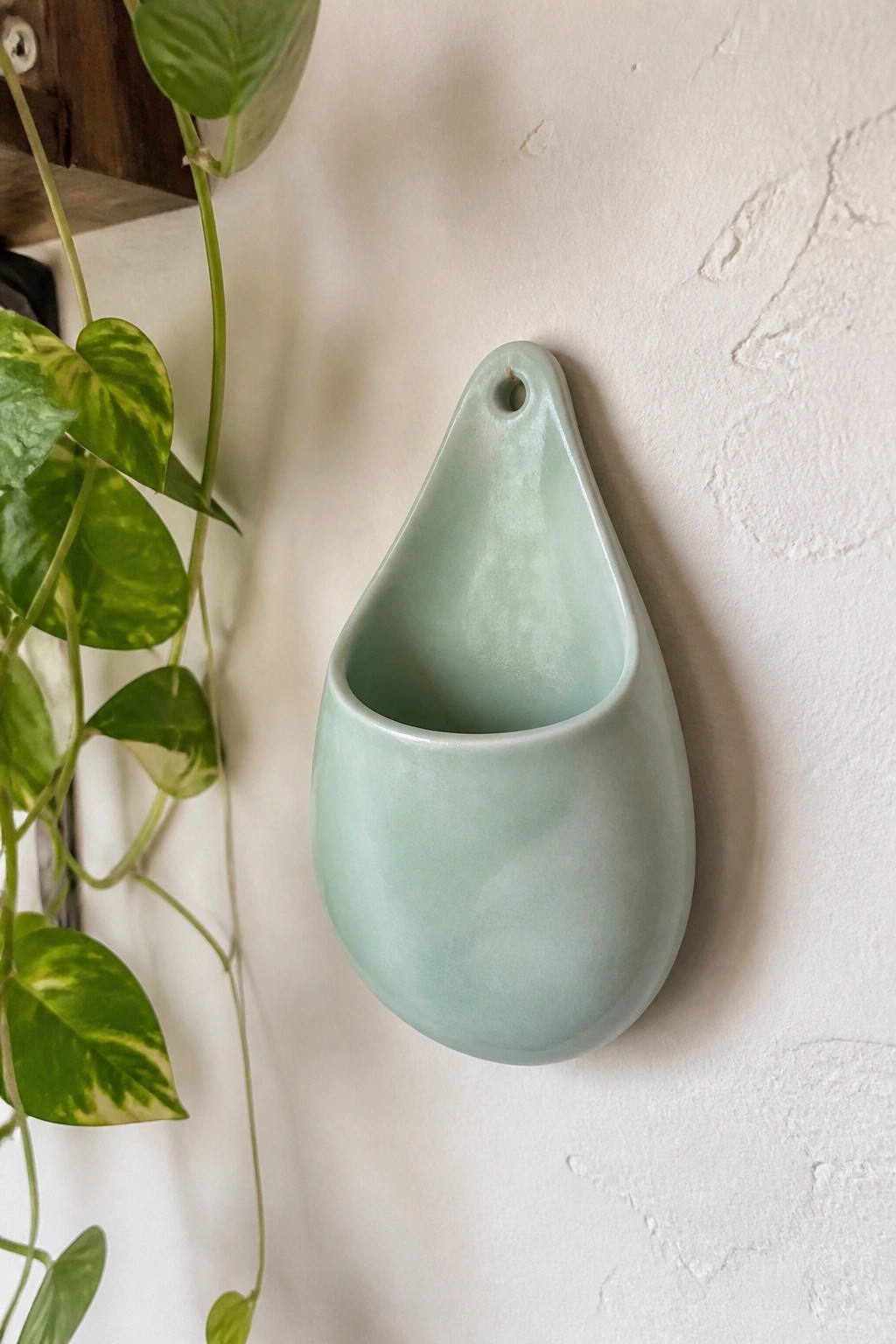
A wall-mounted ceramic vase shaped like a teardrop gives you a compact holder that hangs from a single nail or hook. The narrow top section includes a small hole for hanging while the wider lower half forms an open pocket that can hold water and a few stems. The smooth matte glaze in a soft green color keeps attention on the curved form rather than added decoration. This type of piece works as a space-saving vase that sits flat against the wall instead of taking up shelf room.
The shape does a lot of the work here because the tapering silhouette stays stable when hung and still leaves room inside for flowers or a small plant. You could repeat the same form in a row of different colors for a simple vertical arrangement. For a gift, something like this needs little packaging and works in small apartments where floor space is limited. The same pocket idea could be widened slightly to hold kitchen utensils or turned into a narrow version for dried herbs.
Split Glaze Dual Neck Vase

This project is a handmade ceramic vase that joins two different neck heights into one shared body. A glossy black glaze covers the taller neck and half the form while a saturated orange covers the shorter neck and remaining side. Horizontal ridges wrap the entire surface to create repeating lines that break up the color split. The idea fits the vase category but uses an asymmetrical shape to stand out from standard single opening forms.
What makes this idea useful is the clean color division that makes the shape read clearly without added carving. You could rework the same split glaze on a simpler rounded body or scale it down for a pair of smaller bud vases. The ridged texture catches light on a shelf or mantel so the piece reads well from a distance. Try swapping the black and orange for any two glazes that contrast strongly to test the effect on your own forms.
Organic Mini Vases with Pinched Forms

These small ceramic vases rely on a simple bulbous body that tapers into a short neck, with the sides gently pinched or shaped by hand to create soft asymmetry. The matte glazes sit thin enough to let the clay texture show through, giving each piece a quiet surface variation in warm pink, off-white, and pale blue. The scale stays compact so the forms read as individual objects rather than a matched set, which keeps the focus on the silhouette.
What makes this idea useful is how easily the same shape can be adjusted by changing the pinch locations or rim angle while keeping the same basic profile. A set like this works well on a narrow windowsill or beside a sink where larger pieces would crowd the space. You could repeat the form in one glaze color for a more uniform look or swap in different clay bodies to shift the final tone. The small size also means they use less material and kiln space if you want to test new glaze combinations.
Sculpted Profile Face Vase

A tall cylindrical ceramic vase can be turned into a stronger decorative piece by adding a sculpted human face in profile directly onto the side wall. The face is built up from the clay surface so the eye, nose, and lips stand out in low relief, then covered with a single soft green glaze that pools slightly in the recessed areas. This approach keeps the overall form simple while making the vase function as both a container and a standalone sculptural object.
The shape does a lot of the work here because the smooth cylinder gives the face a clean backdrop without extra carving or handles. A piece like this works especially well on a bedside table or bookshelf where the side view is visible. You could adapt the same idea by using a different glaze color, changing the face angle, or scaling it down for a smaller bud vase. For a gift, something like this stands out because it combines a usable vessel with a clear handmade detail that feels more personal than a plain cylinder.
Two-Handled Vase with Horizontal Stripes and Tree Motif

A two-handled ceramic vase gains visual balance from a rounded body paired with a narrow neck and simple painted details. Brown horizontal stripes circle the lower half while a vertical tree-like motif sits centered on the upper section. The speckled off-white glaze provides a neutral base that lets the brown lines stand out clearly without competing with the form.
The shape does a lot of the work here because the handles make the vase easy to reposition once filled. You can adapt the stripe pattern to a taller pitcher or shorten the body into a smaller jug while keeping the same surface treatment. The tree motif could be swapped for any basic repeated line or left off entirely if you prefer a cleaner look. This kind of vase fits well on a mantel or dining table where the handles add function without extra bulk.
Stacked Rounded Sections with Gradient Glaze

A ceramic vase made from three separate rounded forms stacked directly on top of each other creates a tall, sculptural silhouette without needing complex carving. The top section stays narrow and mustard yellow, the middle widens into a green transition zone, and the bottom widens further into a deep blue base, letting the glaze do the work of connecting the parts visually. This approach keeps the vessel functional for stems while giving it a modular, built-up structure that reads as one continuous piece.
The stacked method lets you control height and balance easily by adjusting each section’s diameter before firing. You can simplify it to two sections for a shorter version or repeat the same shape in different glaze colors to make a set. The gradient works especially well on outdoor tables or shelves where strong light makes the color shift stand out. The same stacking technique could be reworked into a small utensil holder or a narrow planter for a windowsill.
Angular Folded Vase with Asymmetrical Opening

A ceramic vase built from a tall rectangular body that gets pinched and folded at the top to create an angled slit opening. The form uses flat planes and sharp edges instead of curves, with a speckled matte gray glaze that emphasizes the handmade surface texture. This approach fits the category of decorative vase shapes that rely on geometry rather than surface decoration to stand out.
The shape does a lot of the work here by turning a simple slab-built or thrown cylinder into a sculptural object without extra tools. It works especially well on a mantel or low shelf where the profile can be viewed from the side. The same folding technique could be scaled down for a small bud vase or widened for a wider planter base, and switching the glaze to a glossy black or warm terracotta would change the mood completely while keeping the core form intact.
Bubble Cluster Ceramic Vase

A ceramic vase built from multiple joined spheres creates a clustered, three-dimensional surface that stands out through simple repetition of rounded forms. The light green glaze settles into the seams between the spheres, emphasizing the handbuilt construction and giving each curve more definition. This approach turns a basic vessel into a sculptural object while still functioning as a planter or vase for houseplants.
What makes this idea useful is how the stacked spheres add visual weight and texture without needing extra carving or painting. You could scale the same cluster method down for smaller bud vases or adapt the rounded shapes into a lidded jar by flattening the top section. The form works well on a windowsill or side table where the plant can trail over the bumpy exterior. For Pinterest, this shape photographs strongly because the repeating curves create instant depth and catch light differently from every angle.
Spiral-Twisted Ceramic Vase

A ceramic vase shaped into a continuous spiral twist creates the main design through its flowing helical form. The piece starts narrow at the base, expands through several turns, and returns to a rounded rim. A light glossy glaze with subtle sheen covers the entire surface and highlights the ridges formed by the twist.
The shape does a lot of the work here, so the focus stays on forming rather than added decoration. This vase works well as a standalone table piece or paired with simple stems where the twist shows from multiple sides. You could scale the same spiral down for a bud vase or use a similar twist on a wider cylinder to make a small planter. The neutral glaze keeps the idea flexible for different color schemes or room styles.
Cylinder Vase with Rim of Clay Discs
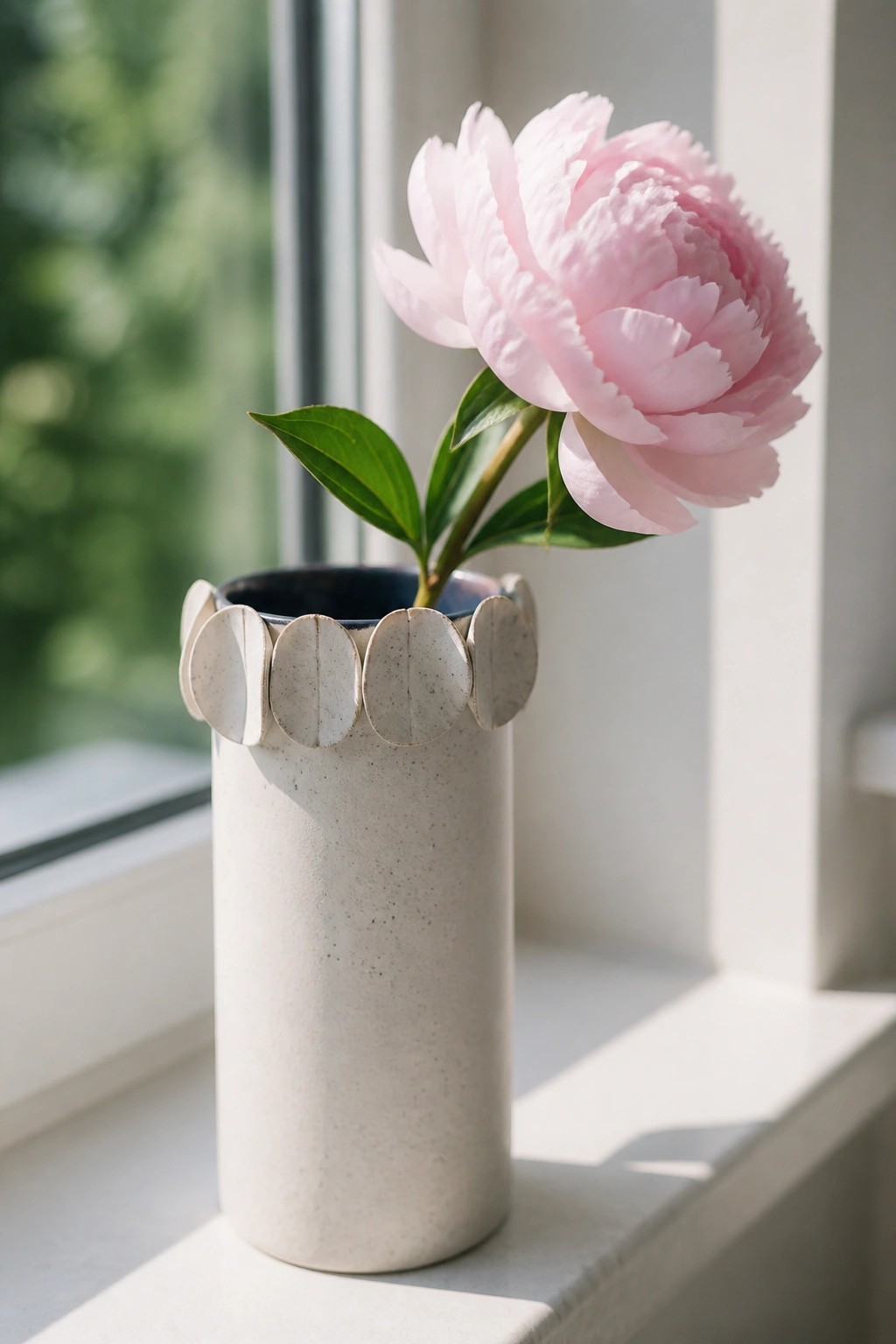
A simple cylinder vase becomes more distinctive when small oval clay discs are attached around the top rim to form a repeating edge detail. The discs sit slightly proud of the surface and create a scalloped silhouette that adds visual weight without changing the overall tall, narrow shape. Speckled clay on the body keeps the finish understated while the rim treatment supplies the main point of interest. This approach works as a decorative vase idea that emphasizes form through added sculptural elements rather than surface patterns.
What makes this idea useful is that the disc size and spacing can be varied to match different vase diameters or heights. The same rim technique could be applied to shorter cylinders to make matching candle holders or small planters. A piece like this works especially well in a grouping of several vases where the repeated rim detail ties them together. For a gift, something like this can be adapted by using contrasting clay for the discs or spacing them farther apart for a lighter effect.
Vase with Scattered Teal Patches on Textured Dark Clay

A ceramic vase can be finished with a heavily pitted dark surface that holds irregular teal glazed patches of different sizes. The patches sit flush or slightly recessed, creating contrast through color and texture without changing the basic rounded form. This surface treatment gives the vase visual weight while keeping the shape simple and functional for holding flowers or branches.
What makes this idea useful is how the color placement can be adjusted easily during glazing to suit different spaces. The shape works well on a mantel or side table where the dark background lets the teal stand out against neutral surroundings. You could repeat the same spotting method on a taller cylinder or a low bowl using a different accent color to match existing decor. The approach also photographs clearly, which helps when sharing variations online.
Polka Dot Mini Vases in a Matching Tray

This project uses three small rounded vases, each thrown or hand-built with a narrow neck and wider body, then glazed in soft pastel tones. Blue, red, and green dots are painted across the surfaces before a final clear glaze, and the same dot pattern repeats on the shallow tray that holds all three pieces. The simple shapes keep the focus on the color accents while the tray turns separate vases into one compact unit for holding single stems or small bunches.
What makes this idea useful is that the tray solves the problem of arranging multiple small vases so they stay together on a narrow ledge or table. You could rework the same dot pattern on a single larger vase or switch to stripes if you want less repetition. The small scale makes it easy to fit into a kitchen window or bathroom shelf without taking up much room. For a gift, something like this gives you a ready set instead of one lone piece.
Rabbit Shaped Ceramic Vase

A ceramic vase formed as a seated rabbit creates a compact holder for small stems or cuttings. The design uses upright ears as the rim, a rounded body to contain water, and minimal painted lines for the eyes, nose, and whiskers. The white glaze covers the entire piece with a slight texture from hand forming, keeping the shape as the main feature. This approach belongs to the animal form vase category.
What makes this idea useful is how the rabbit silhouette adds interest to a narrow shelf or mantel without taking up much space. You could rework the same shape with different animals or shorten the ears to create a wider opening for larger bunches. For a gift, something like this pairs well with a small packet of seeds. The form also works as a template you can stretch taller or compress into a shorter bud vase.
Faceted Polygon Vase with Split Glaze

A ceramic vase built from flat angular planes creates a strong geometric shape instead of a smooth curve. The upper section carries a light blue-green glaze while the lower half stays in a matte natural tone, letting the facets stand out clearly. Each plane meets at sharp edges that catch light and shadow across the surface. This approach turns a basic vase form into a sculptural object that still holds flowers or branches.
The shape does a lot of the work here because the facets give instant structure without extra decoration. A piece like this works especially well on a shelf or desk where the angles show from different sides. You could adapt the idea by using fewer facets for a simpler build or changing the glaze split to create more contrast. The same faceted method could be reworked into a smaller planter or a candle holder with the same two-tone finish.
Cylinder Vase with Carved Landscape Scene

A tall cylindrical ceramic vase uses a dark glossy glaze as the base for an incised design that shows houses, trees, a moon, birds, and flowers. The carving removes the top layer to reveal lighter clay underneath, creating strong contrast on the smooth surface. The vertical shape gives the full scene room to wrap around without crowding. This approach works as a decor vase where the simple form supports the detailed surface work.
What makes this idea useful is that the cylinder lets the carved motif read clearly from any side. The same dark background and line carving could be scaled down for smaller bud vases or adapted to a set of matching pieces with different sections of the scene. It stands out on a shelf or mantel because the graphic style reads well from a distance. You could swap the landscape for abstract lines or repeating patterns if you want a faster version on the same shape.
Hanging Spherical Ceramic Vase

A round ceramic vase with a built-in hanging loop turns a simple sphere into a suspended planter or flower holder. The form has a narrow opening set slightly off center and a small area of green glaze that breaks up the speckled surface. The loop is part of the clay body itself so the piece needs only a cord or rope to hang.
The compact shape works well in small rooms or near windows where a standard vase would take up surface space. You can resize the sphere for different plant sizes or move the opening placement to change how the flowers sit. This approach keeps the whole object as one piece instead of adding a separate hanger later.
Spouted Vase with Bulbous Body and Ribbed Neck
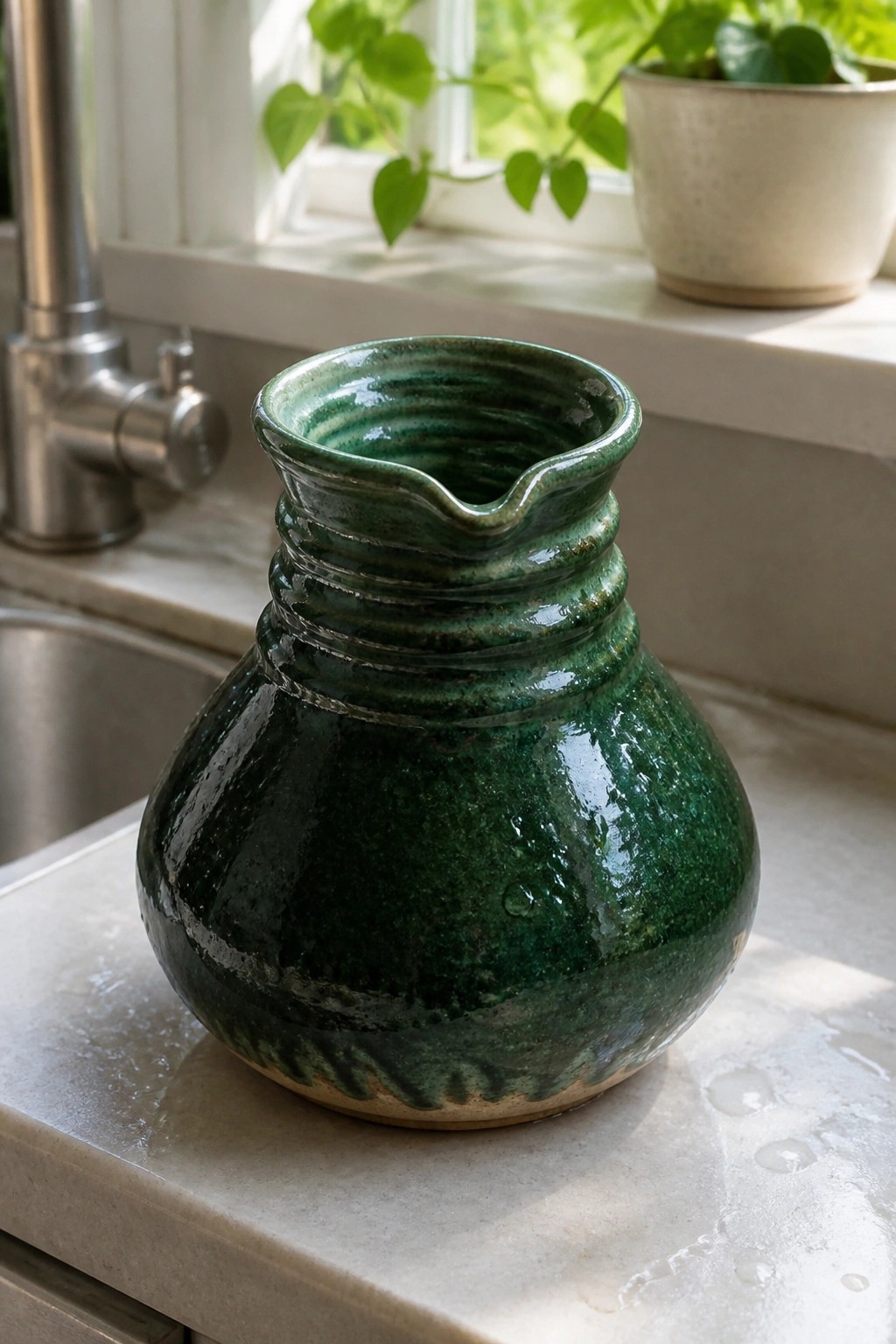
A wheel-thrown ceramic vase takes the basic pitcher shape and widens it into a full, rounded body before pulling the clay upward into a series of horizontal ridges that form the neck. The form ends in a short, functional spout that breaks the symmetry without turning the piece into a serving vessel. The deep green glaze sits glossy on the ridges and slightly thinner on the curves, letting the thrown lines show through.
The wide base keeps the vase stable on a counter or windowsill while the neck and spout add height without extra width. You could repeat the ribbed section on a taller cylinder or drop the spout entirely to make a standard vase. The same shape works in a matte glaze or a lighter color if you want it to blend with existing kitchenware. The form stands out in photos because the curve and ridges catch light differently from straight-sided vases.
Mosaic Glaze Vase with Raised Dividers

A ceramic vase covered in irregular raised lines that divide the surface into many-sided sections, each filled with a different bright glaze. The lines create clear boundaries so colors like deep blue, teal, yellow, purple, and red sit next to each other without blending. This surface treatment turns a standard rounded vase shape into a more graphic object that still keeps its functional form for holding flowers or branches.
What makes this idea useful is how the raised lines let you apply multiple glazes in one firing without them running together. The shape works especially well as a standalone decor piece on a console or coffee table where the color blocks can catch light from different angles. You could simplify the pattern by using fewer sections or rework the same divider method on a wider bowl or a tall cylindrical vase. The high-contrast lines also make the finished piece easier to photograph for project shares.
Tilted Rim Vase with Vertical Drip Glaze

A ceramic vase with a sharply slanted rim creates an asymmetrical profile that stands out from standard symmetrical forms. The body remains rounded while the top edge is pulled and shaped to one side during construction, giving the piece its distinctive lean. The blue glaze applied over a lighter base runs downward in controlled drips that follow the contours of the clay and reinforce the vertical movement.
This shape works especially well on a low table or shelf where the tilt can be seen clearly from the side. You can adapt the idea by throwing a basic cylinder first, then altering only the rim while the clay stays workable. The same drip technique can be used on taller or narrower versions to change the overall scale without changing the core concept.
Two-Tone Vase with Vertical Glaze Split

A ceramic vase split vertically into two glazes gives a straightforward way to play with color contrast on a classic form. One half stays matte off-white while the other takes a glossy terracotta finish, and the division follows a rough seam that keeps the surface from looking too perfect. This kind of treatment works because the shape remains simple and functional while the surface treatment supplies the visual interest.
What makes this idea useful is how the same split can be adapted to taller or narrower vases without changing the overall profile. The color break draws the eye on a shelf or mantel without needing extra carving or handles. You could swap the glaze colors, shift the seam slightly off-center, or carry the idea over to a pitcher or bottle shape for a matching set.
Miniature Rounded Vases with Speckled Glazes

Miniature ceramic vases like these use a compact, bulbous body that narrows at the base and opens into a simple rim. The design relies on subtle variations in speckled glazes across neutral tones to create visual interest without added decoration. This approach fits the small vase category, where the handmade scale and soft curves keep the focus on form and surface texture.
What makes this idea useful is how the small size works for holding single stems, dried flowers, or plant cuttings on a desk or shelf. The rounded shape can be adapted by stretching the proportions slightly taller or using the same glaze on a matching set of three or five pieces. For a gift, something like this stands out because the understated finish pairs easily with different interiors without needing extra details.
Multi-Neck Vase Built from One Base

A multi-neck ceramic vase formed as one connected piece gives you several openings without needing separate containers. The low, rounded body spreads into four short spouts of slightly different heights, each wide enough for a small bunch or single stem. The speckled surface with soft blue drips adds texture without competing with the shape itself. This approach fits the vase category by turning a simple container into a sculptural holder for mixed flowers.
What makes this idea useful is how the shared base keeps the whole arrangement stable even when the stems vary in height and weight. You could rework the same form with only two or three necks for a smaller table version or stretch it into a longer shape for a windowsill. In a kitchen or entryway, the multiple openings let you use whatever garden cuttings or market flowers you have on hand without extra jars. Scaling the piece down and keeping the glaze simple makes it easier to repeat or gift.
Frequently Asked Questions
What materials work best for achieving the unusual shapes featured in these ceramic vase ideas?
For unique forms like twisted spirals or asymmetrical bases, start with a pliable stoneware or porcelain clay that holds detail well during shaping. Use techniques such as coiling for organic curves or slab construction for geometric angles. These clays fire reliably at mid-range temperatures and accept glazes that highlight the forms without cracking on complex surfaces.
How can beginners adapt the 24 design ideas into simple DIY projects at home?
Focus on hand-building methods rather than a wheel to replicate ideas like stacked modular shapes or nature-inspired contours. Begin with small test pieces using air-dry clay for practice, then progress to kiln-fired versions. Sketch the form first, build in sections for stability, and experiment with carving or adding handles to match the creative concepts without needing professional tools initially.
Do vases with irregular shapes from these ideas hold water effectively for fresh flowers?
Many of the designs incorporate a smooth inner liner or glazed interior to make them watertight even with unconventional exteriors. Choose or create forms with a stable neck opening that supports stems. Test by filling with water overnight before use, and opt for low-fired ceramics sealed with a waterproof coating if the original design prioritizes aesthetics over function.
What steps ensure stability for ceramic vases with unbalanced or abstract forms?
Balance the base by widening it slightly during construction or adding a flat foot. Distribute weight evenly when building taller elements like elongated necks or protruding sections. After firing, place the vase on a level surface and adjust with felt pads if needed. These adjustments keep the piece secure while preserving the artistic shapes described.
How do I maintain and clean ceramic vases that feature intricate or textured surfaces?
Dust textured areas gently with a soft brush to avoid damaging details. For deeper cleaning, use mild soap and warm water, rinsing thoroughly to prevent residue in crevices. Avoid harsh abrasives or dishwashers, as they can wear glazes on unique forms. Store away from direct sunlight to prevent fading and handle with care to protect delicate contours.

Pottery Path is my cozy corner of the internet where I share clay ideas, pottery inspiration, and simple projects you can recreate at home. I love exploring everything from air dry clay to handbuilt pottery to cute minis that brighten your day. My goal is to make clay crafting feel easy, fun, and welcoming for anyone who wants to try it.
You will find beginner friendly tutorials, creative pottery painting ideas, and lots of warm inspiration for slow and happy crafting. If you enjoy hands on creativity, this space will feel like home.