
I’ve been making pottery for a few years and I often end up with vases that look interesting even without flowers in them.
These pieces tend to sit on a shelf or table and add a bit of form to the space.
I gathered some ideas that show how different shapes and finishes can turn a basic vase into something more like a small sculpture.
Most of them use techniques I have tried myself and they do not require special tools.
They are the kind of projects that fit into regular making time without too much fuss.
Slim Yellow Ceramic Vase for Single Flower Stems

A tall ceramic vase with a narrow neck that widens into a rounded body makes a good choice for holding one or two stems without extra support. The yellow glaze with light speckling adds warmth while the smooth surface keeps the look clean. This shape belongs in the simple decor vase category where the form itself creates the main visual interest.
What makes this idea useful is how the tapered neck holds flowers upright with minimal arrangement. A piece like this works especially well on a windowsill or narrow shelf where larger pieces would crowd the space. You could rework the same proportions in a smaller size for a desk or try a matte glaze to change the light reflection. The small scale also makes it simple to repeat in different colors for a grouped display.
Abstract Face Painted Jug Vase

A ceramic jug vase works well here because the rounded body gives plenty of surface area for an abstract face made from bold blue lines and simple terracotta shapes. The design uses curved strokes for eyes and brows, a solid circle for one cheek, and minimal lines for the mouth and nose so the motif reads clearly without overcrowding the form. Glazed sections on the neck and handle add contrast against the matte speckled clay, keeping the piece functional as a vase while turning it into sculptural decor.
What makes this idea useful is how the painted motif can be scaled down or simplified on any thrown or hand-built shape. The same face layout could be repeated on a shorter cylinder or a wider bowl to create a matching set for a shelf or table. Because the design relies on flat color blocks and line work rather than carving, it stays approachable for someone who wants to add decoration after a basic form is complete. In a living room or entryway this kind of piece draws attention without needing fresh flowers every week.
Stacked Wavy Rim Ceramic Forms

Make several individual bowls or small vases with freeform wavy rims, then stack them offset to create one tall sculptural piece. The uneven edges and soft green glaze create shifting shadows and movement as the forms rise. This turns basic vessel shapes into a single vertical decor object that works as a vase or standalone sculpture. The idea fits the category of sculptural decor rather than everyday functional ware.
What makes this idea useful is the flexibility to change the total height by adding or removing sections. You can adapt the same rims and stacking method to smaller clusters for shelves or use contrasting glazes on each layer for more color variation. The irregular silhouette stands out in photos, which helps the finished piece perform well on Pinterest boards focused on modern ceramics. For a simpler version, try three bowls in a single neutral glaze instead of five.
Double-Neck Vase for Separate Arrangements
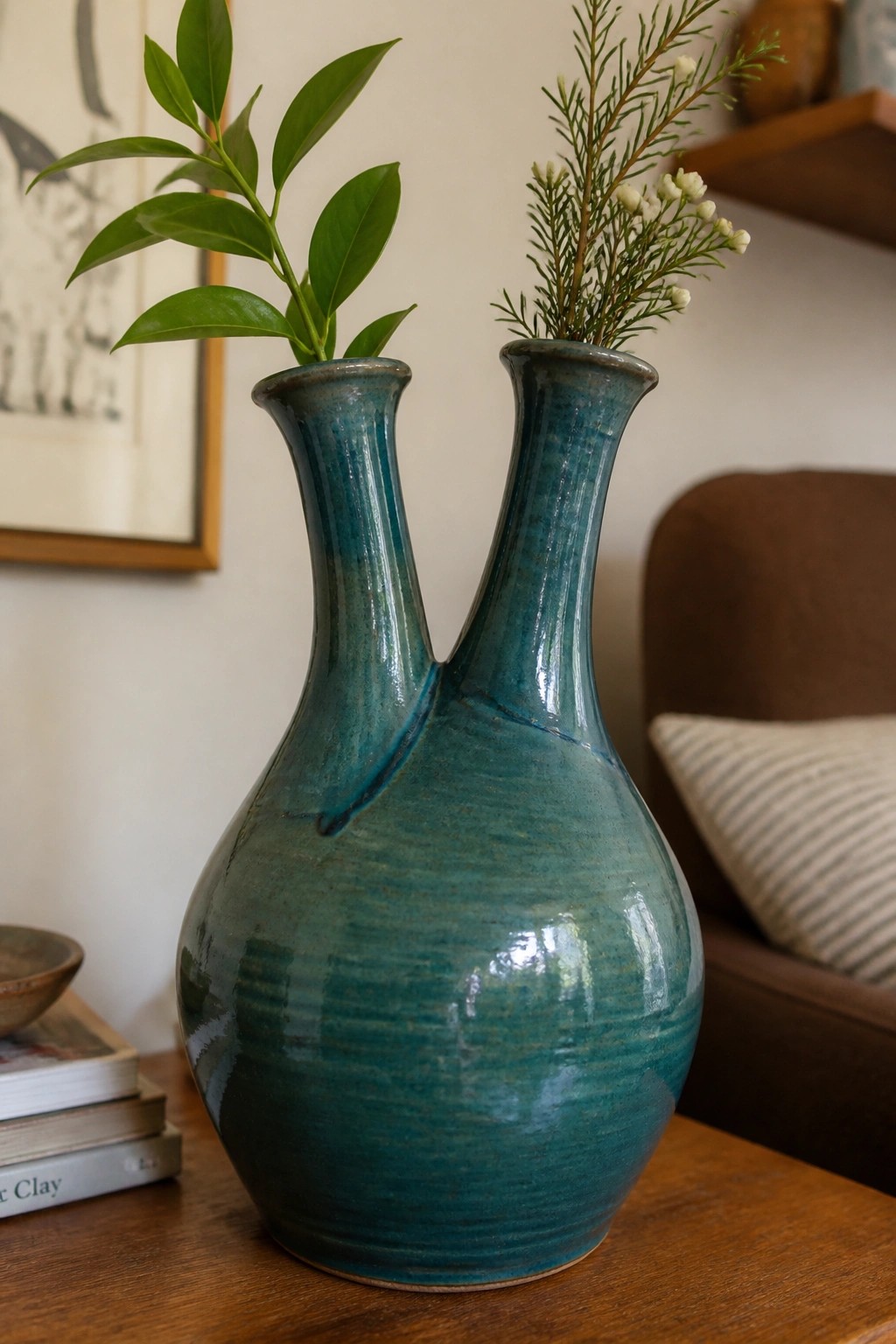
A double-neck vase formed from clay creates two distinct openings that rise from a single rounded body. The necks join partway down so each side can support its own group of stems without the flowers mixing together. The teal glaze with visible horizontal texture emphasizes the wheel-thrown lines and gives the form a finished surface. This type of piece belongs in the sculptural vase category where the shape itself becomes the main feature.
What makes this idea useful is how it solves the problem of displaying two different plant types in one stable object. You could scale the same joined-neck design down for a smaller table version or try it with a matte glaze for a different look. The wide base handles the weight of water and stems without tipping, and the concept adapts easily to other color combinations. A shape like this stands out in searches because most vases only offer one opening.
Terracotta Wall Pocket Vase with Painted Botanicals

A wall-mounted clay vase in a simple pouch shape sits flat against the surface and holds a few stems upright. The warm terracotta body carries white painted leaves and flower clusters that create contrast without added texture or layers. This approach turns an ordinary vessel into a compact hanging piece that doubles as wall decor.
The narrow vertical form fits tight spaces like hallways or above furniture where a standard vase would not work. You can copy the painted motif onto other clay forms or change the plant drawings to match the room. For a variation, make a smaller version and add a wire loop so it hangs from a single nail.
Rustic Double-Handled Ceramic Vase
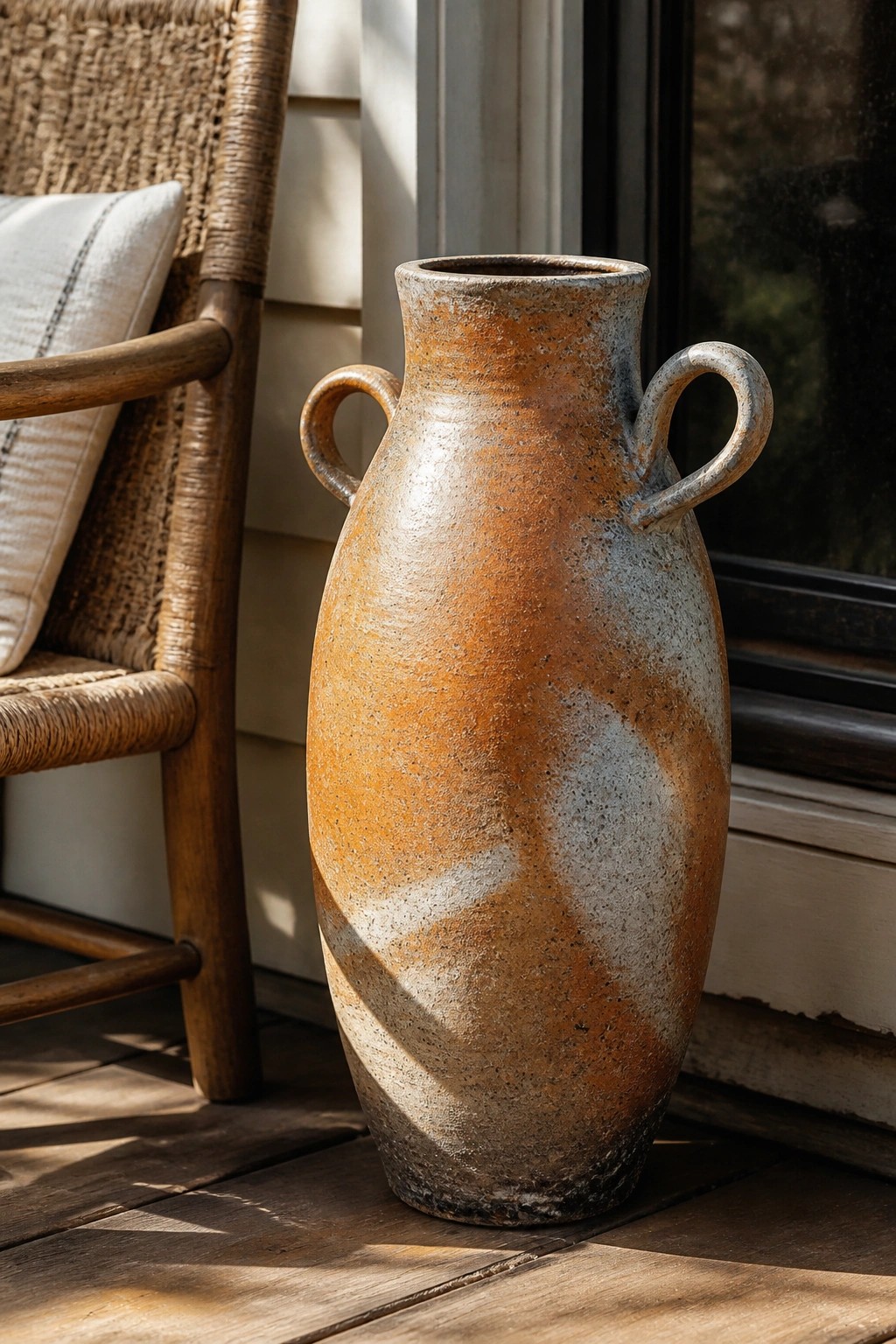
A tall ceramic vase with two looped side handles creates a strong vertical form that doubles as both container and standalone sculpture. The mottled orange and gray glaze with visible texture gives the surface depth while keeping the overall look simple and grounded. This approach fits the large-scale decor vase category, where the shape and finish carry the design without extra carving or patterns.
What makes this idea useful is the generous proportions that let the piece occupy floor space without needing flowers or filler. You could scale the same shape down for a shelf version or switch to a matte single-tone glaze to change the mood. The handles add grip points during making and firing while giving the finished piece clear visual structure that photographs cleanly for sharing.
Donut-Shaped Vase with Exposed Clay Base
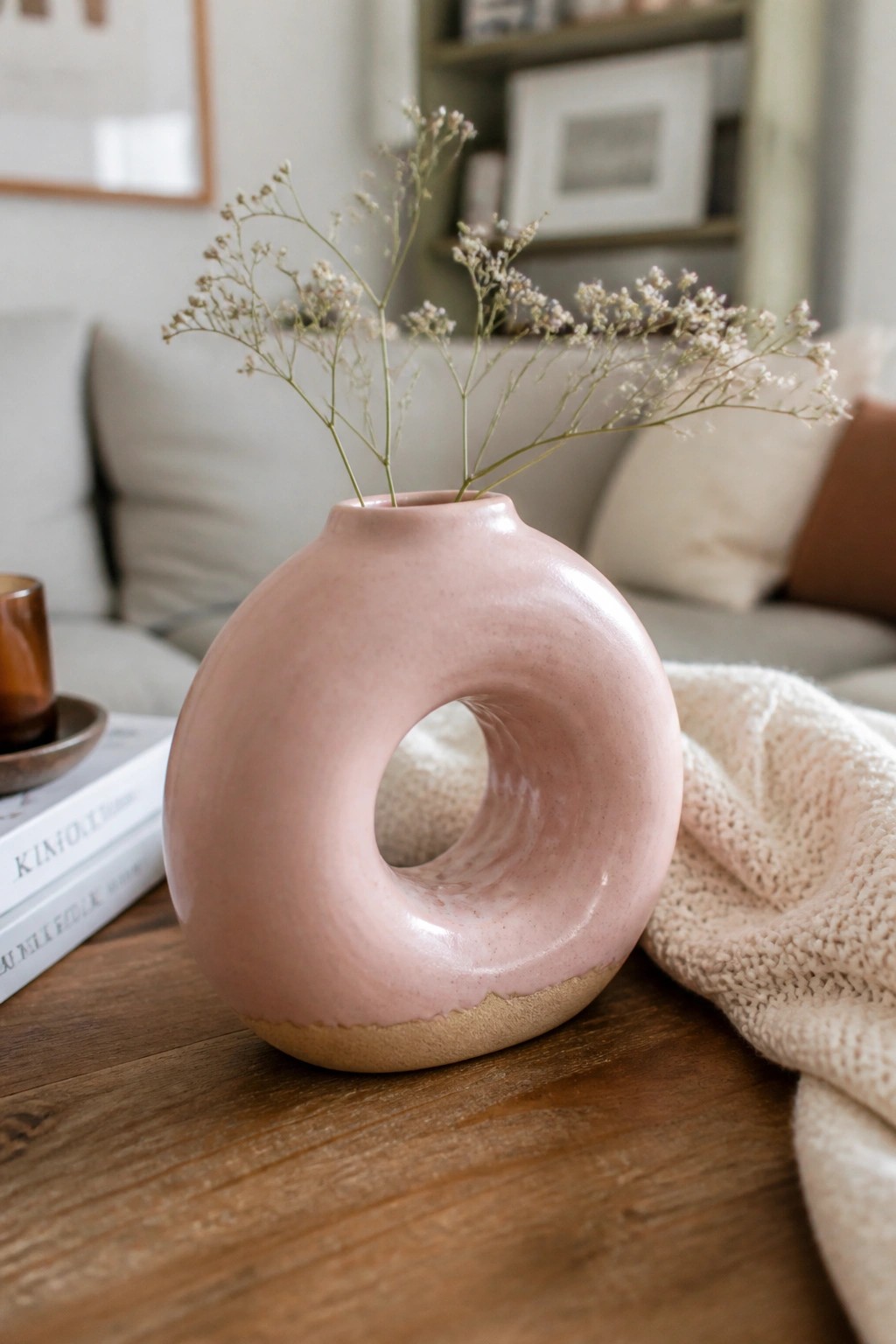
A ring-shaped ceramic vase uses a simple torus form that lets stems sit in the narrow top opening while the central hole stays empty. The glossy pink glaze covers the upper portion and stops short of the base, leaving the lower section in raw clay for a clear two-tone effect. This approach keeps the piece low and wide, so it works as a tabletop vase without taking up much vertical space.
The round profile fits well on coffee tables or mantels where a taller vase would crowd the area. You could rework the same shape in a smaller size for a desk or try a matte glaze all over to change the look. The central opening also gives you room to arrange a few stems in a loose circle instead of bunching them together. This style stands out in searches for sculptural vases because the form is easy to recognize even in small photos.
Stacked Ring Ceramic Planter with Speckled Glaze Bands

A stacked ring planter is built by forming separate rounded ceramic sections and stacking them to create height and a sculptural profile. Alternating solid white bands with speckled sage green ones keeps the shape readable while adding visual breaks that prevent it from looking like a plain cylinder. The glossy finish on the rings reflects light and emphasizes the rounded edges, making the form stand out even when used as a simple plant holder.
What makes this idea useful is that the separate rings let you experiment with color placement and proportions without carving or complex joins. It works especially well on a shelf or side table where the stacked silhouette can be viewed from the side. You could adapt the same approach by reducing it to three rings for a shorter version or swapping the green for a matte black to change the mood. For Pinterest, the clear color contrast and rounded repeats make the shape easy to recognize in a thumbnail.
Sleeping Fox Ceramic Vase

A ceramic vase formed as a curled sleeping fox uses the animal’s body as the main container volume with the opening placed at the top. The head, ears, and tail are modeled directly in clay, and the orange and white glaze pattern follows the natural markings of a fox while the black nose detail finishes the face. This approach belongs to the sculptural vase category where the object functions as both a flower holder and a standalone decor piece.
The compact curled shape lets the vase sit on narrow ledges or windowsills without tipping. You can adapt the same form by changing the animal or adjusting the glaze colors to fit different rooms. It works especially well for small seasonal bouquets and photographs clearly because of the strong silhouette. For a gift, this style combines a usable vase with an animal shape that feels more distinctive than a standard cylinder.
Bulbous Vase with Gradient Glaze and Wavy Rim

A rounded ceramic vase with a wide, irregular rim rests on a matching shallow saucer. The glaze moves from a stronger coral tone near the top through lighter peach into a warm cream at the base, giving the form a soft color shift without added patterns. This approach works as a vase idea because the undulating edge adds visual interest to a simple shape while the saucer keeps the whole piece stable on a surface.
What makes this idea useful is how the low, wide body supports fuller arrangements without needing extra filler. The gradient glaze can be recreated on a taller cylinder or a narrower neck if you want the same color effect in a different scale. For a kitchen counter or entry table, this shape keeps the focus on the flowers while the saucer handles any water spills. You could simplify it further by skipping the saucer and just using the wavy rim on a plain round body.
Cutout Star and Leaf Lantern Vase
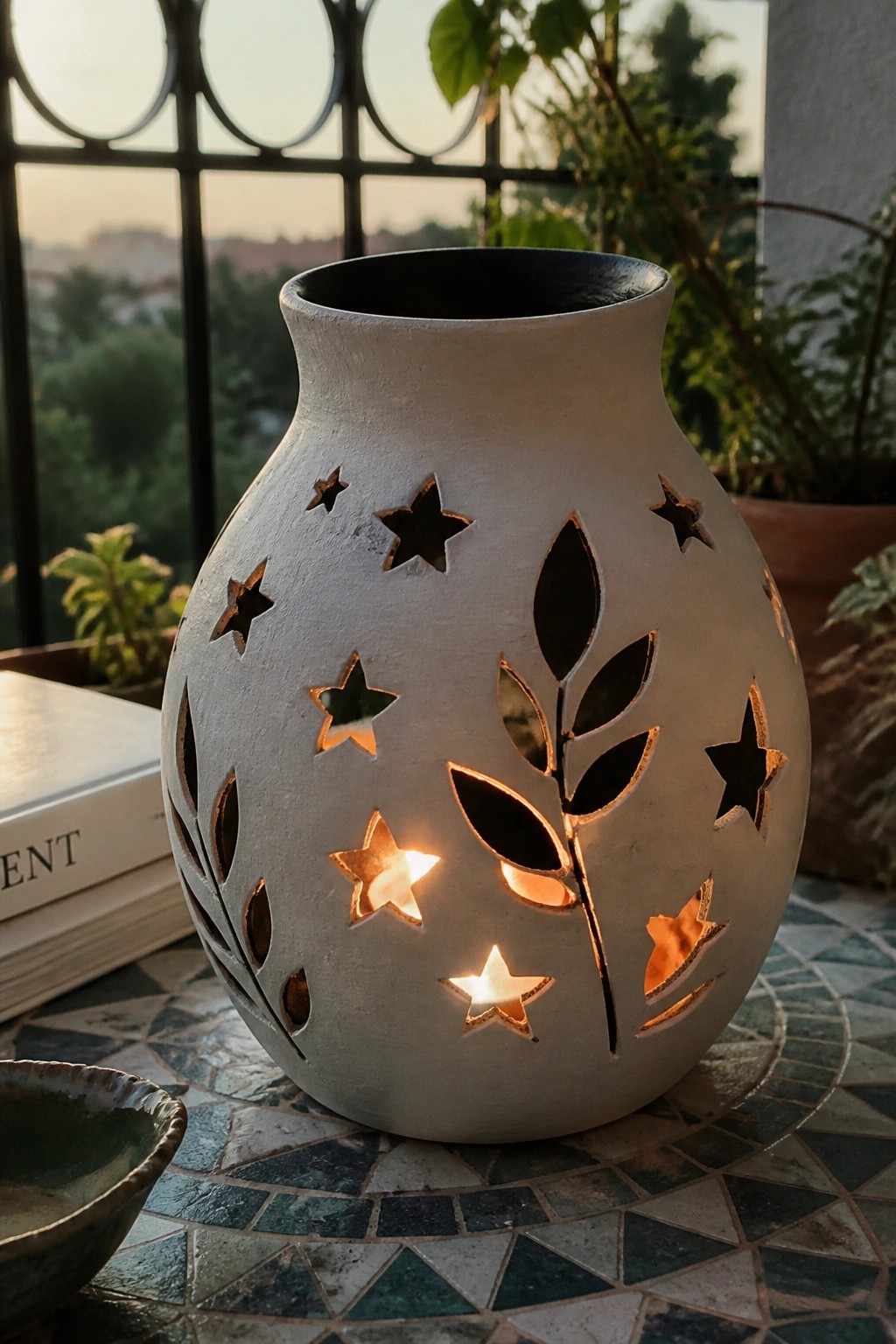
A hand-built ceramic vase with star and leaf cutouts turns a standard vessel into a light-diffusing decor piece. The rounded body is formed first, then the shapes are carved through the wall before firing so light can pass cleanly through the openings. This keeps the surface smooth and the cut edges crisp while the white finish reflects the glow evenly.
What makes this idea useful is how the cutouts let the vase function as both a holder and a night light without needing extra hardware. It works well on a low shelf or beside a window where a small bulb or candle can activate the pattern. You could swap the leaf motif for other simple outlines or reduce the number of cutouts to make the carving faster on a first try. The same form also translates directly to a shorter candle holder if you want to test the technique on a smaller scale.
Etched Marine Motifs on a Handled Ceramic Vase

A thrown or handbuilt ceramic vase with two side handles and a cut rim gives you a sturdy form that stands on its own or holds a few stems. The design uses simple incised lines to show an octopus, fish, starfish, shell, and seaweed, then fills those lines with a darker slip so the images read clearly against the matte blue surface. This keeps the decoration flat and integrated into the clay rather than raised or painted on top.
The shape does a lot of the work here because the wide body and handles make the piece feel balanced even when the surface carries busy line work. You can adapt the same carving method to smaller jars or taller pitchers and change the sea creatures for leaves or geometric shapes if the room calls for it. In a bathroom or entry table this size sits well without taking over the space, and the etched approach stays visible even if you keep the glaze simple.
Folded Clay Vase with Asymmetric Opening

A tall hand-built ceramic vase uses a single folded section of clay near the top to create an offset opening and visible seam line. The soft sage green glaze sits over a lightly textured surface that shows the marks from shaping the form by hand. This turns a simple vertical shape into a sculptural vase that still holds stems upright without needing extra surface decoration.
The folded detail does most of the visual work here, so the same idea can be adapted by changing where the fold sits or how far it overlaps. A smaller version would fit on a desk or shelf as a bud vase, while keeping the same height and glaze color makes it easy to repeat for matching sets. This type of piece shows up well in photos because the shadow along the fold adds depth without any added color or pattern.
Overlapping Scale Vase

A tall ceramic vase built with rows of overlapping scalloped forms that create a raised scale texture across the surface. The design uses a mustard yellow glaze on the edges of each scale against a muted gray-green ground, so the pattern reads clearly without extra carving or paint. This approach works as a sculptural vase idea that stays functional for single stems or small dried branches.
The shape does a lot of the work here because the gradual taper keeps the piece balanced on a shelf while the raised scales catch light and shadow. You could repeat the same scale pattern on a shorter cylinder to make matching bud vases or adapt the height into a wider planter by spacing the rows farther apart. The two-tone glaze effect makes each piece look different even when the same colors are used, so it photographs well for sharing.
Painted Face Vase with Raised Nose

A hand-built ceramic vase works here by turning the standard rounded body into a face through a protruding nose, painted eye details, and blocks of blue, yellow, and red color on the surface. The design uses simple underglaze or paint application over a white base to create the features without needing complex carving or multiple firings. This idea sits in the sculptural vase category and relies on the contrast between the smooth raised nose and the flat painted areas to hold visual interest.
The shape does a lot of the work here because the tall oval form already gives room for the full face layout. Try this on a windowsill or mantel where it can hold dried stems or a single branch. You could adapt the same painted face approach to a shorter cylinder vase or even a lidded jar by keeping the nose but simplifying the eye and lip lines. For a gift, something like this stands out because it stays functional while adding a clear handmade element that feels different from plain glazed pieces.
Sculpted Ceramic Vase with Wavy Folds

This idea uses a pinched and folded clay form to build a vase with soft, irregular curves that rise and dip along the sides. The off-white speckled glaze sits thin enough to let the clay texture show through while still giving the surface a slight sheen. The result is a standalone decor piece that works as both a vessel and a sculptural object.
What makes this idea useful is how the uneven silhouette stands out on a shelf or table without extra styling. You could rework the same folding approach on a shorter base to create a low planter or try a deeper fold pattern for a taller version. The neutral color keeps it easy to mix with existing decor, and the shape translates well into different sizes for grouping multiple pieces.
Painted Bird Motif on a Tall Ceramic Vase

A tall ceramic vase with a narrow neck and rounded body works well when decorated with a single blue bird motif painted directly onto the white speckled surface. The design uses simple brushstrokes to show the bird perched among leaves and branches. This approach turns a basic vase shape into a decorative piece that stands out without needing complex sculpting. The matte finish and understated color keep the focus on the painted element.
What makes this idea useful is how the painted bird can be adapted to different vase heights or repeated on a set of matching pieces. The shape suits narrow windowsills or shelves where space is limited. You could simplify the motif to just the bird outline or add similar birds to a matching pitcher or tray for a coordinated look. This style stands out on Pinterest because the clean illustration contrasts nicely with the organic form of the vase.
Organic Mini Vases with Rounded Bodies and Soft Glazes

Small handmade ceramic vases with bulbous lower sections and narrow necks work well as sculptural decor when grouped together. The design relies on simple wheel-thrown forms, subtle rim variations like the wavy edge on one piece, and glazes that shift from light color on top to earthy tone at the base. These fit the category of bud vases meant for single stems or small wildflower bunches rather than large arrangements.
What makes this idea useful is the compact size that lets you place them on a windowsill, desk, or kitchen counter without crowding the surface. You could adapt the same shape by stretching it taller for different flowers or switching to bolder glaze colors for a different look. For gifting, these pair easily with whatever is blooming in the yard. The rounded form also translates well to other small objects like tiny planters if you want to rework the idea.
Sculptural Vase with Multiple Tube Openings

This is a handbuilt ceramic vase that combines a tall tapered neck with a rounded body and several small tube-like spouts plus ring details attached around the form. The glaze in muted blues and greens pools unevenly across the surface, emphasizing the added sculptural pieces and the slightly irregular handmade texture. It belongs to the category of decorative vases meant more for visual interest than everyday flower arranging.
The shape does a lot of the work here because the extra tubes and rings create depth and shadow without needing complex carving. You could adapt the idea by adding just two small spouts to a simpler wheel-thrown body if you want less construction time. This kind of piece works especially well on a windowsill or bookshelf where the silhouette stands out against a plain wall. For a gift, something like this gives more visual impact than a standard vase while still functioning as a basic container.
Sculptural Vase with Exposed Mineral Interior

A handbuilt ceramic vase combines a thick matte stoneware body with a large open section that exposes a glossy, textured interior in teal and aqua tones accented with metallic specks. The design treats the vase as a sculptural form by leaving part of the wall broken away and finishing the edges with a ridged pattern that frames the glazed area. This creates a strong visual contrast between the raw clay surface and the vibrant crystalline-looking interior while still functioning as a container for flowers or branches.
What makes this idea useful is the way the side opening becomes the main focal point, so the piece reads as decor even when empty. The shape works especially well on a low shelf or console where the interior detail is visible from multiple angles. You could adapt the same approach by changing the glaze colors to match a specific room or by making a smaller version as a desk piece. For a gift, this style stands out because the exposed section gives it a custom look without requiring complex carving or painting.
Frequently Asked Questions
How do I choose which of these artistic pottery vase ideas will work best in my living space?
Start by assessing your room’s color palette, scale, and existing furniture. Tall, slender sculptural forms suit minimalist corners while rounded or textured pieces add warmth to modern or eclectic rooms. Consider placing a few samples in the space first to see how light interacts with their surfaces before committing.
Are these handmade vases functional enough to hold fresh flowers or are they mainly for display?
Many of the ideas include interior glazing that makes them waterproof so they can safely hold water and blooms. Unglazed or highly textured designs may need a separate glass liner to prevent seepage. Always check the maker’s description for firing details to confirm usability.
Where can I find similar handmade pottery vases if the article ideas inspire me to buy or commission one?
Search platforms such as Etsy or local craft fairs for artisans who specialize in sculptural ceramics. Pottery studios and university art departments often host sales or accept custom orders. Visiting galleries that feature contemporary craft can also connect you directly with makers whose styles match the ideas you liked.
How should I group several of these sculptural vases together without the arrangement looking cluttered?
Select pieces that share a common material or color family but vary in height and silhouette. Place them on a low table or shelf with breathing room between each one, using odd numbers for visual interest. Rotate the group seasonally so the strongest sculptural element faces the main viewing angle.
What care steps keep artistic handmade pottery looking fresh over time?
Dust gently with a soft cloth and avoid harsh cleaners that could dull the surface. Keep pieces away from direct heat sources or freezing temperatures to prevent cracking. If a vase holds flowers regularly, empty and rinse it after use to reduce mineral buildup on the interior.

Pottery Path is my cozy corner of the internet where I share clay ideas, pottery inspiration, and simple projects you can recreate at home. I love exploring everything from air dry clay to handbuilt pottery to cute minis that brighten your day. My goal is to make clay crafting feel easy, fun, and welcoming for anyone who wants to try it.
You will find beginner friendly tutorials, creative pottery painting ideas, and lots of warm inspiration for slow and happy crafting. If you enjoy hands on creativity, this space will feel like home.