
I enjoy making small clay pieces because they’re a relaxed way to try new shapes and details.
Miniature houses are especially fun to make for a fairy garden, and each one can have its own simple style.
I’ve gathered 18 ideas to help you choose a little house to make with the clay and tools you have.
I hope you find a design that feels right for your next crafting afternoon.
A Ceramic Cottage for a Fairy Garden

A small handmade ceramic cottage makes a sturdy focal point for a fairy garden. Its rounded walls, arched door, tiny window, and layered green-and-brown roof give the miniature house clear details that stand out against moss and plants.
Place the cottage among moss, in a sheltered planter, or on a windowsill display, and keep it mainly decorative rather than treating it as a functional shelter. To adapt the idea, simplify the roof tiles or change the door and window colors to match your garden; a flatter, less detailed version could also work as a small garden marker.
A Glazed Clay House Candle Lantern

A miniature ceramic house can double as a candle lantern, with window and door cutouts that let the candlelight shine through. Its simple house shape and blue-green glazed roof make it a decorative fairy-garden piece that also works as a small candle holder.
Set it on a sheltered patio table or use it indoors as a seasonal centerpiece, keeping the candle safely contained and away from anything flammable. You could adapt the idea with a painted roof, fewer window openings, or a battery-operated light for a version that is easier to display.
A Miniature Cottage Planter for a Fairy Garden
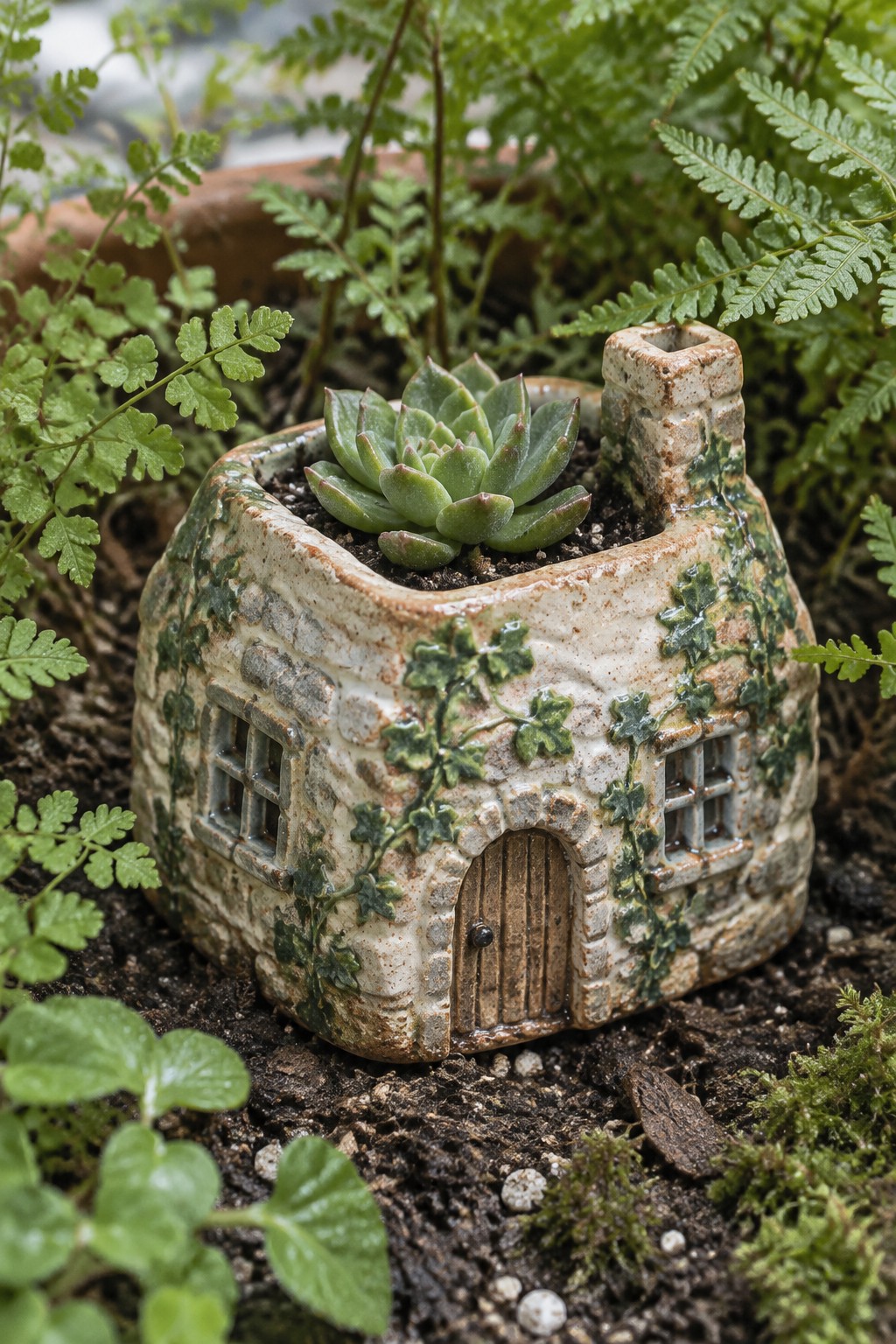
A miniature ceramic cottage planter makes a small succulent part of the house design, with the plant growing from the open roof. Its squat, rounded shape, tiny door and windows, and mottled stone-like finish give it the look of a miniature garden building, so it fits naturally among fairy-garden house ideas.
The open top makes this design useful for a small succulent or other compact plant, while the cottage shape can also be adapted into a dry decorative display if you do not want to use it as a planter. Keep the details simple with a small arched door and painted windows, or personalize the walls with mossy green accents to suit the surrounding garden. Its combination of a miniature house and a real plant gives the idea a clear focal point for a garden inspiration board.
Make a Miniature House Ring Dish

Turn a row of tiny clay houses into a ceramic ring dish by shaping the houses as a raised backdrop behind a shallow bowl. Painted windows, doors, flowers, and roof details make the miniature village recognizable, while a blue interior gives the dish a clear place to hold small jewelry. This decorative pottery idea fits naturally among miniature clay houses for a fairy garden, with the added use of a ring or trinket holder.
A piece like this works well on a bedside table or dresser, and the village backdrop makes it stand out in craft photos. Adapt the idea by painting the houses in a different palette, simplifying the building details, or making a smaller version for a single ring or a few earrings. Keep the bowl shallow and smooth so small items are easy to place and retrieve.
A Hanging Clay Fairy Door
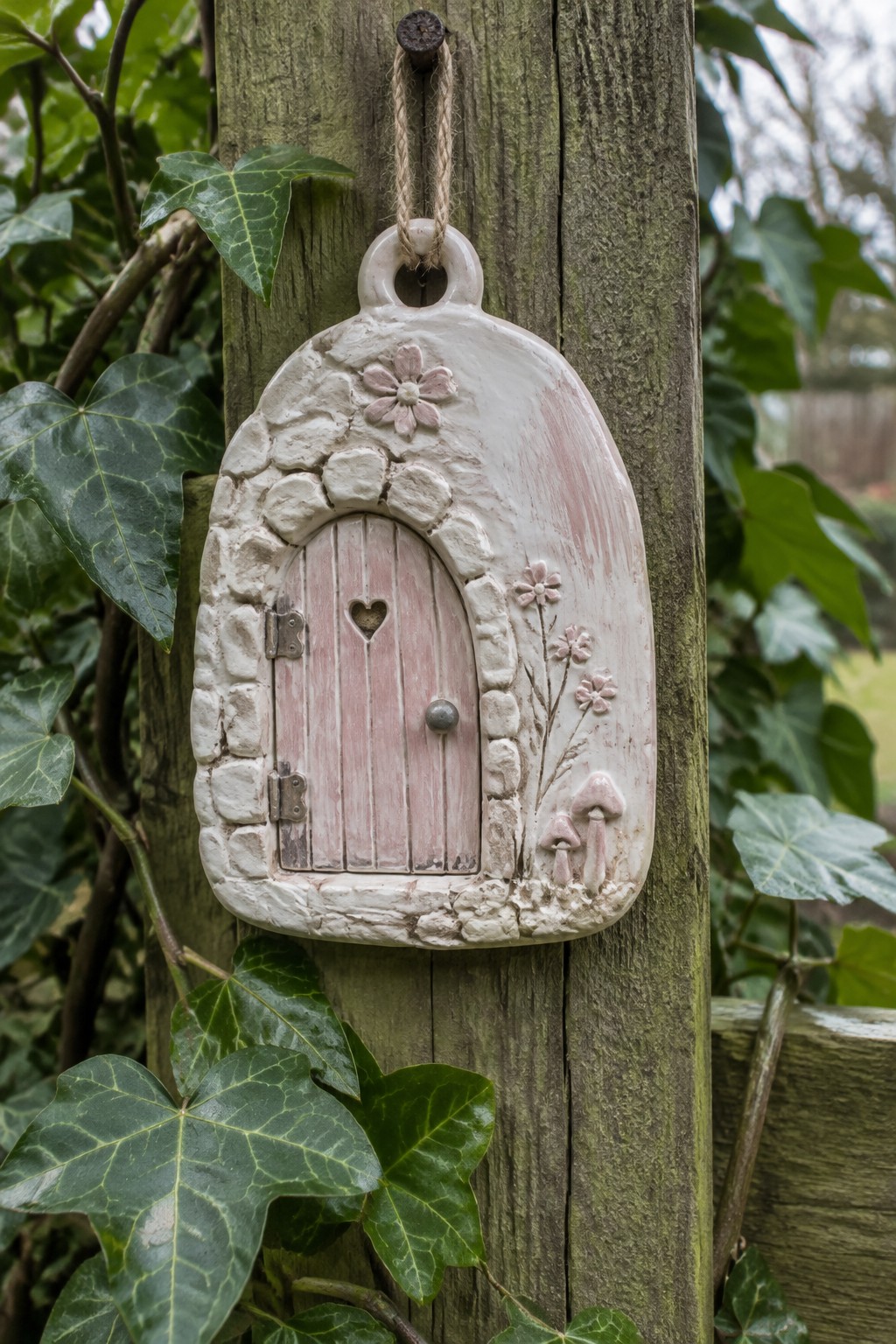
A hanging clay fairy door turns a simple arched plaque into a miniature house detail for a fairy garden. Its pale pink door, raised stone-like border, and small flowers give the handmade pottery enough dimension to read clearly without needing a large display.
Hang it on a garden fence or tuck it among plants as a small decorative accent. You could simplify the design to a painted door and a few raised stones, or personalize it with different door colors and plant details; a small hanging plaque also makes an easy gift for someone who enjoys miniature garden decor.
A Miniature Fairy House Pot with a Separate Roof
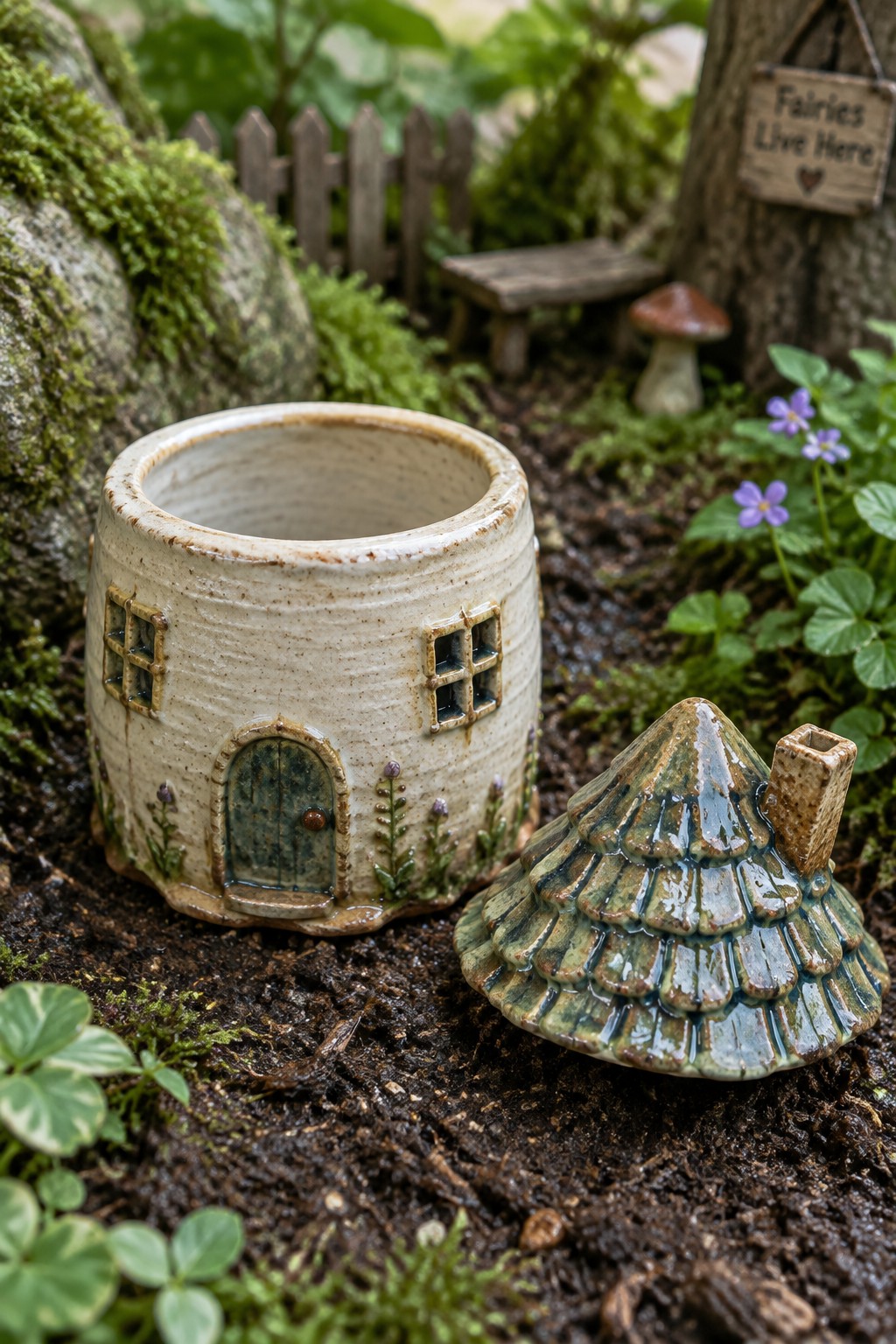
A handmade ceramic fairy house pot turns a simple open vessel into a miniature cottage, with small windows and an arched door sculpted onto its sides. Its rounded shape and cream glaze keep the house easy to read, while the separate, layered roof beside it makes the design feel like a tiny building rather than an ordinary planter.
Use the pot to hold a small plant, or leave it empty as a focal point in a fairy garden; the opening is practical for arranging greenery, while the roof can sit nearby as a decorative detail. To adapt the idea, keep the vessel plain and add just a door and two windows, or change the glaze colors to match the garden. The recognizable house shape and removable roof also make this a useful design to save for miniature garden inspiration.
A Hanging Ceramic Birdhouse for a Fairy Garden
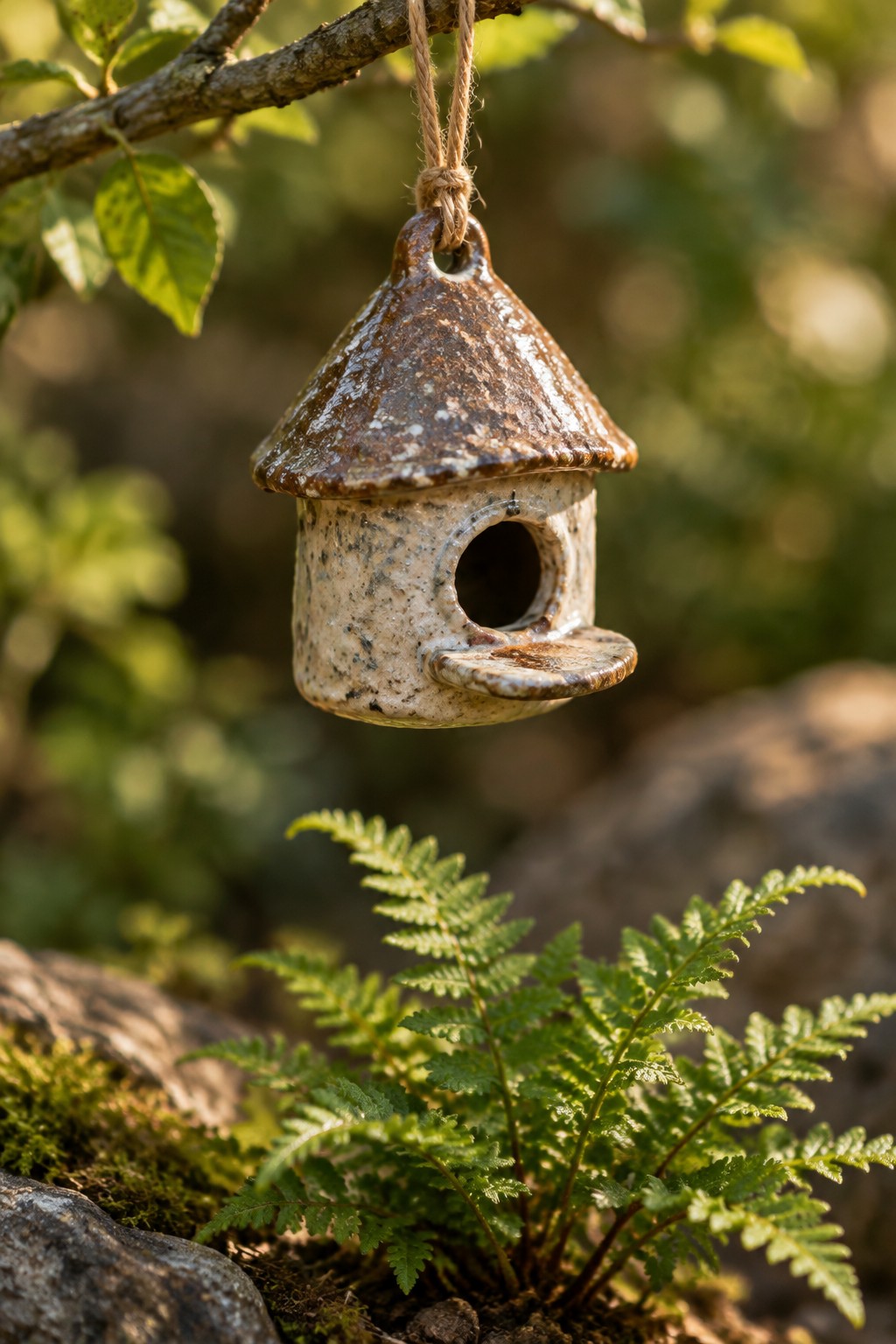
A miniature ceramic birdhouse makes a distinctive hanging accent for a fairy garden. Its rounded body, open entrance, small landing ledge, and speckled roof give the handmade pottery the familiar shape of a real birdhouse while keeping it decorative and compact.
Hang one from a sturdy branch above ferns or tuck it into a sheltered garden nook, where the suspended shape adds height without taking up ground space. Adapt the design with a simpler roof, painted details, or a small loop for hanging, and use it as a garden ornament rather than a functional bird feeder.
A Tiny Ceramic House Salt Cellar

A miniature ceramic house can double as a salt cellar, with an open roofline serving as the bowl and small house details shaped into the sides. The speckled cream clay and earthy brown accents make this a useful kitchen piece that also fits naturally into a fairy garden collection.
Use it beside the stove or on a dining table for flaky salt, or leave it empty as a small garden accent. For a simpler version, make a round open bowl and add just a tiny door or window; changing the opening size can also turn the design into a holder for beads or other small craft supplies.
A Brick Clay House Fairy Garden Ornament
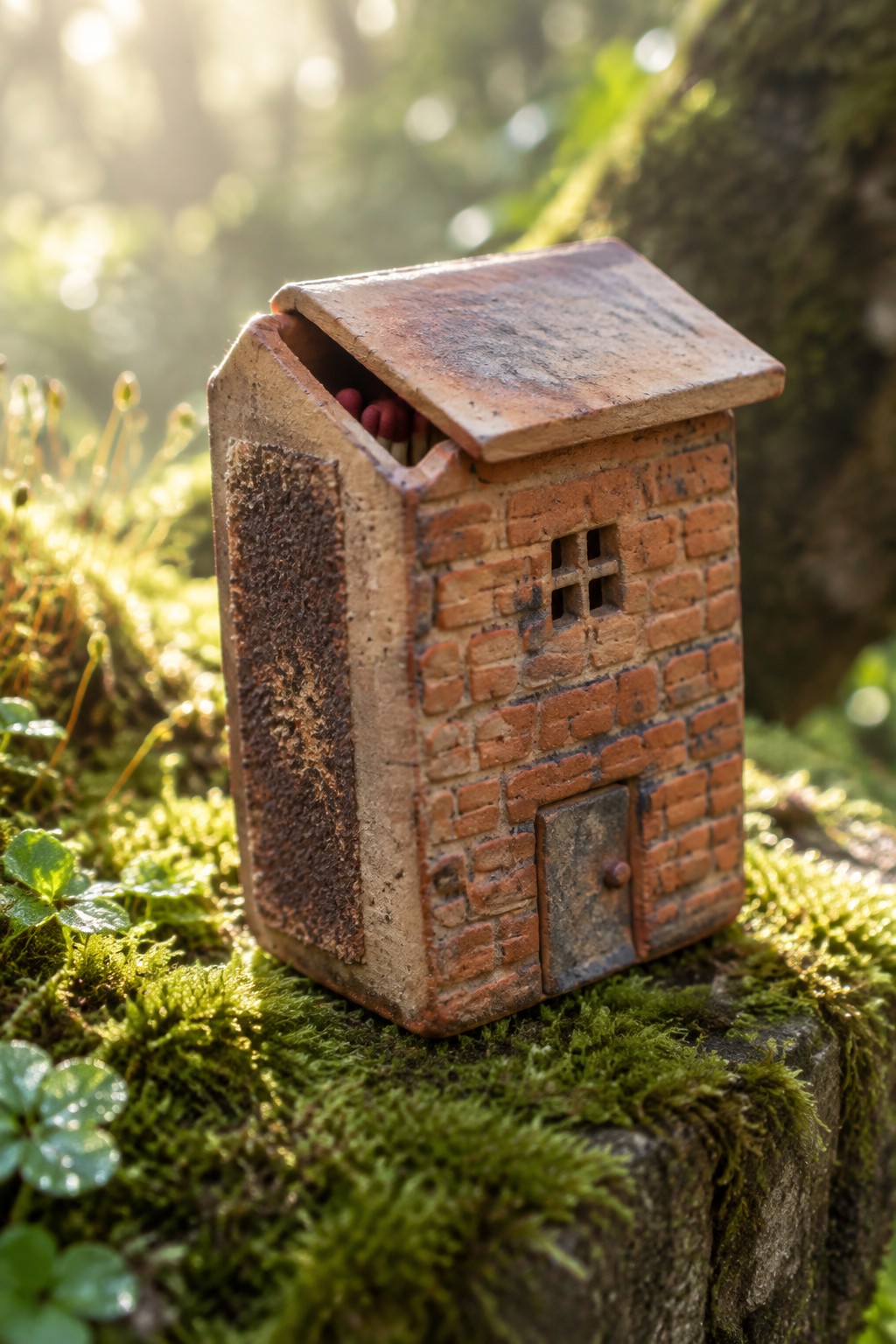
A miniature brick cottage is a decorative clay house designed to sit among plants in a fairy garden. Its sloped roof, tiny door, and small window give the handmade form a recognizable house shape, while the uneven brick texture and earthy colors help it blend into a mossy setting.
The solid house shape makes this a useful accent for a garden bed, a large planter, or a moss-covered display, rather than a functional container. Adapt the idea with simpler brick lines, a different roof color, or a small opening sized for a fairy-garden figure, and keep the details bold enough to read at miniature scale.
A Ceramic Incense Burner Shaped Like a Tiny House

A miniature house can also be shaped into a ceramic incense burner, with a shallow roof that catches ash and a small opening that gives the piece its cottage form. The handmade, softly glazed design fits the decorative pottery category while giving the incense cone a stable place to sit.
The roof needs enough depth to catch falling ash, so this idea can be adapted with a wider dish-like top or a small removable tray for easier cleaning. For a fairy garden theme, sculpt window and door details into the house, or keep the surfaces simple and let a muted glaze do the work.
A Miniature Ceramic House Vase for a Fairy Garden
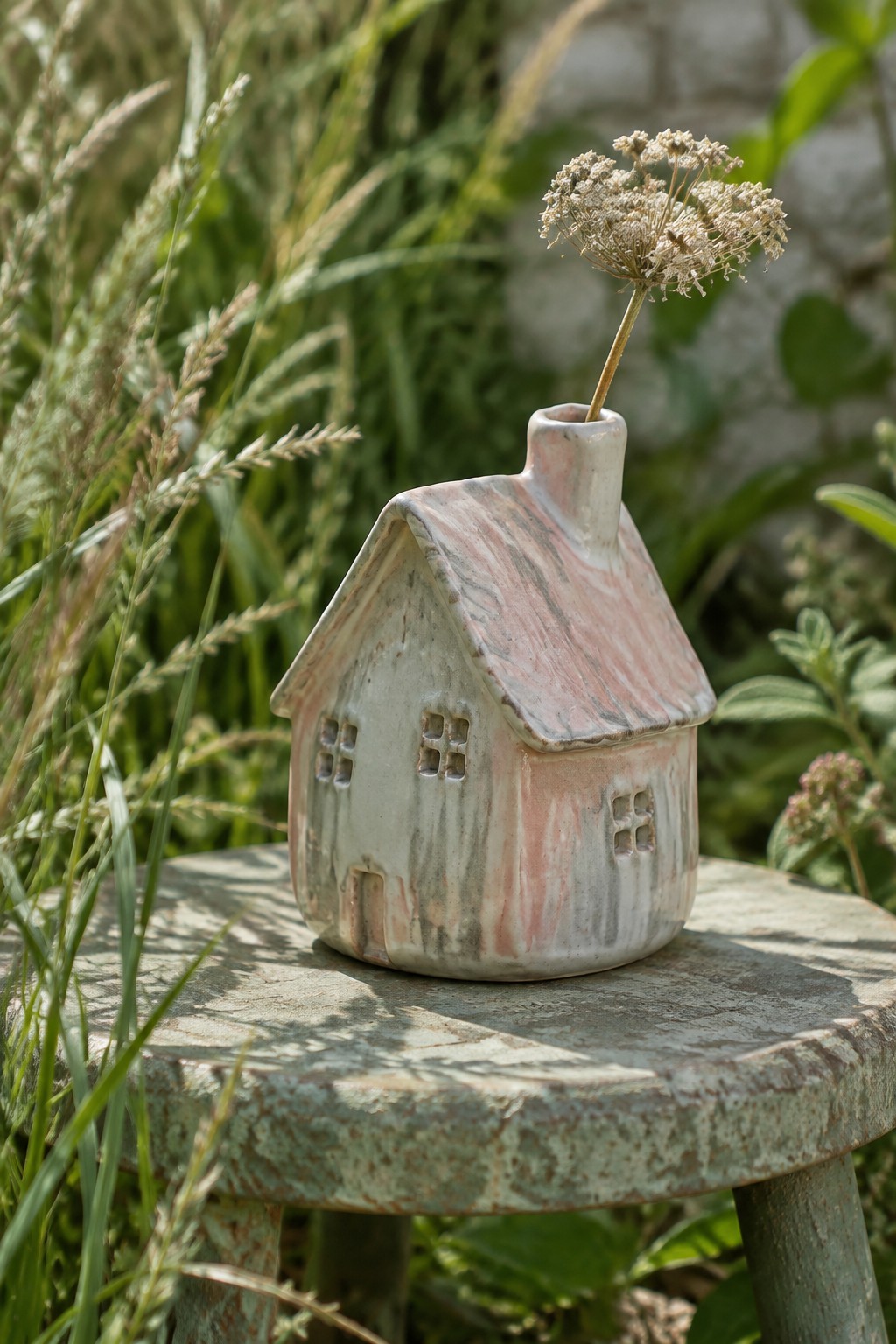
A small handmade ceramic house can double as a vase when its chimney opening is sized to hold a single dried flower or slender stem. The cottage shape, tiny windows, and softly streaked pink-and-cream finish make it a decorative pottery piece that fits naturally into a fairy garden display.
The narrow opening keeps the arrangement simple, so a dried flower can add height without hiding the house details. Adapt the idea with a different roof color or fewer windows, or make the opening wider to hold a small bunch of stems; it could sit on a garden table, shelf, or desk.
A Pebble-Textured Clay House for a Fairy Garden

A miniature clay cottage makes a small focal point for a fairy garden, especially when its simple house shape is picked out with raised window frames, a front door, and a chimney. The earthy finish and slightly irregular surface help it sit naturally among soil, stones, and moss, making this a decorative miniature rather than a functional house.
The compact form is easy to adapt with different window layouts, a painted door, or a roof made in a contrasting color. Place one beside a path or tuck it into a mossy planter, and use the same cottage design as a flat garden marker if you want a simpler project.
A Ceramic Fairy Garden Gate with Stone Path

A miniature ceramic gateway makes a distinctive focal point for a fairy garden, with two tower-like posts supporting an arched entrance. Speckled earth-tone surfaces and roof details give the handmade clay structure a weathered stone-and-tile look, while the pebble path leads the eye through the opening.
Use the arch to mark the entrance to a tiny garden scene, then adapt the post shape or roof color to match other miniature buildings. A line of small stones can extend the path, and simple window cutouts add detail without needing extra figures or accessories. The clear gate-and-path layout also makes this kind of garden decor easy to photograph and save for Pinterest.
A Tall Ceramic Cottage for a Fairy Garden
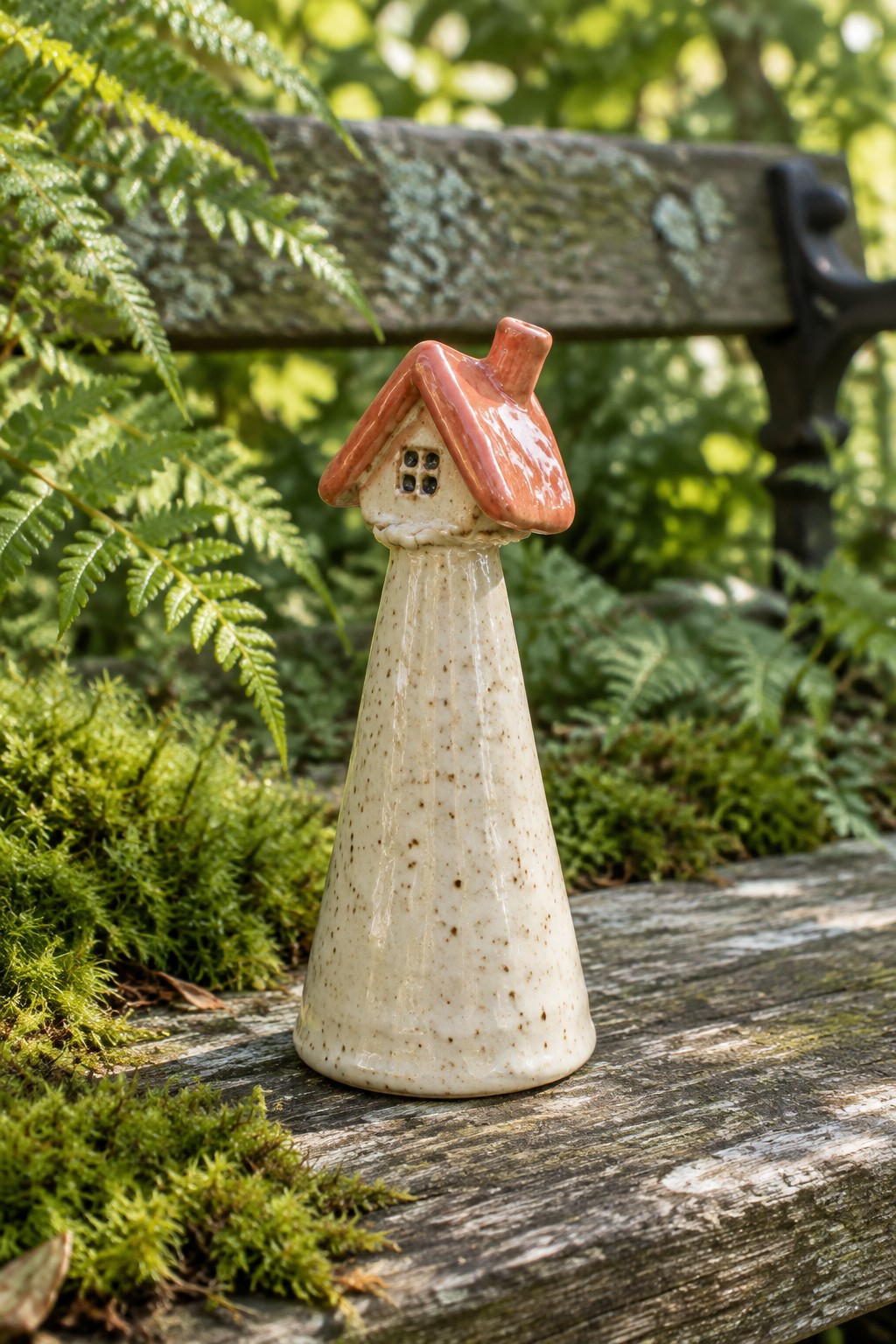
A miniature ceramic cottage can take an unusual form: a small house with a steep, glossy terracotta roof perched on a tall, tapered base. The speckled cream finish and simple dark windows make the handmade pottery read clearly as a tiny house, while its height helps it stand out among low-growing plants.
Place a piece like this on a garden bench or among moss and ferns as a decorative focal point. To adapt the idea, keep the tall base but change the roof color, window pattern, or surface texture to suit your garden; a shorter, wider version could also work as a small display piece indoors.
A Hanging Clay Cottage Planter for a Fairy Garden
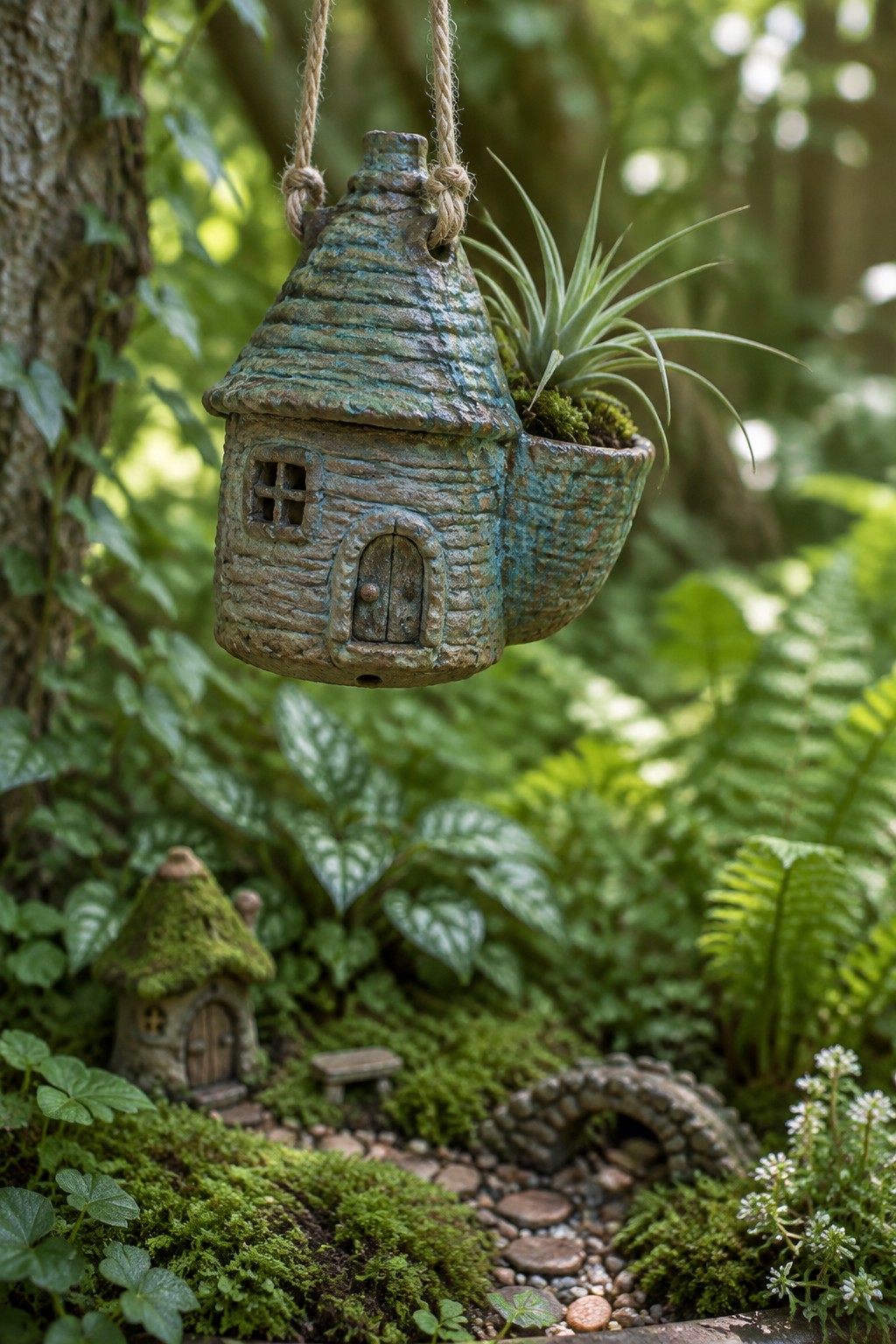
A hanging miniature clay cottage combines a small house ornament with a side planter, making it a distinctive piece of fairy-garden decor. Its layered roof and textured, weathered finish give the cottage a handmade look, while the attached pocket provides room for moss or a small air plant.
Hang it from a sturdy branch to add height above a miniature garden path, or adapt the design as a wall-mounted planter for a covered outdoor space. You could simplify the house details or change the pocket’s size to suit a different plant, but keep the hanging cords securely attached so the finished piece stays balanced.
A Miniature Clay House Drawer for Fairy Garden Trinkets

A miniature ceramic cottage can double as a small storage box, with a house-shaped body and a pull-out drawer built into the base. The worn cream finish, painted blue windows, and raised terracotta roof tiles make the drawer feel like part of the cottage rather than an added container, so it fits both fairy garden decor and tiny keepsake storage.
The drawer could hold small fairy garden accessories, beads, or jewelry on a desk or shelf, though this decorative piece is best kept somewhere dry and sheltered. To adapt the idea, make the drawer deeper for storage or simplify the painted details while keeping the tiled roof and cottage shape as the main features.
A Hanging Ceramic Cottage Bell for a Fairy Garden
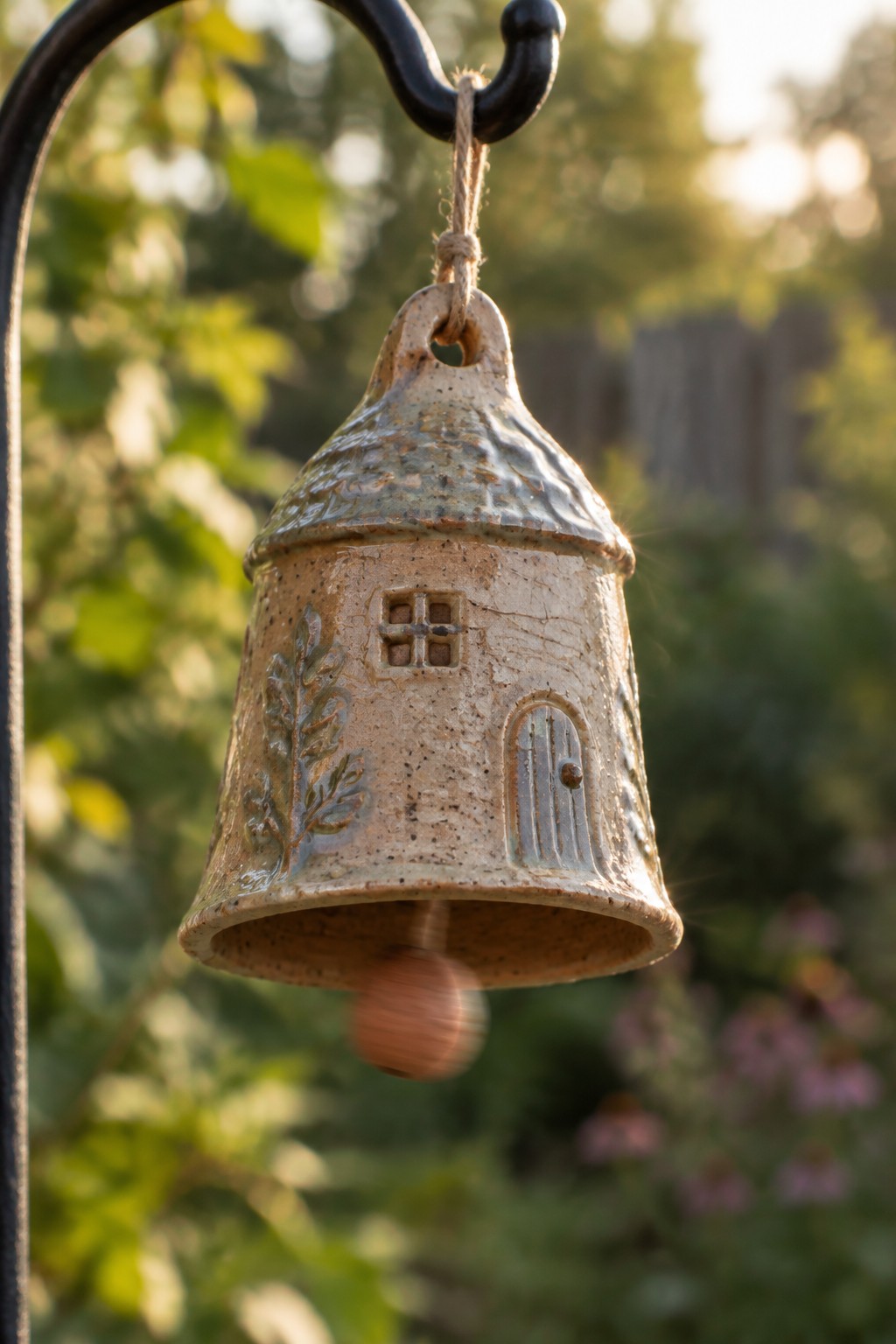
A small handmade ceramic cottage can double as a hanging garden bell, with its rounded house shape, raised roof, tiny window, and arched door giving it the look of a miniature home. The open base and suspended clapper make it a decorative piece that can also chime when it moves.
Hang it from a sturdy garden hook or a sheltered branch, and use the sculpted details as a starting point for your own windows, door, or plant motifs. For a simpler version, keep the cottage silhouette and add just one small window; the hanging format also makes this a distinctive fairy garden idea to save on Pinterest.
A Miniature Ceramic Well for a Fairy Garden
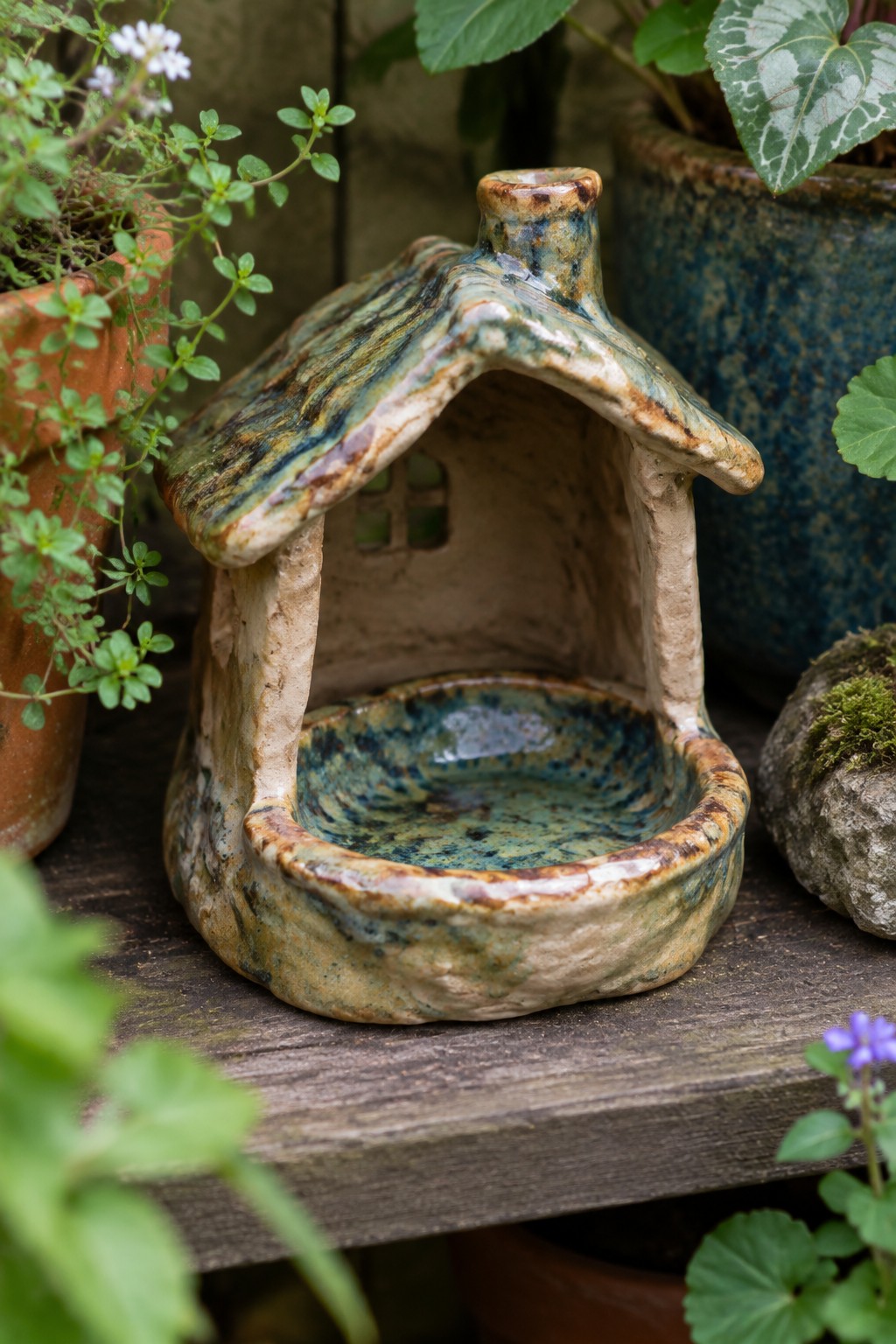
A small handmade ceramic well makes a distinctive water-feature ornament for a fairy garden. Its arched roof, open center, and shallow basin create the recognizable shape of a courtyard well, while the mottled blue-green glaze gives the piece a stone-like, weathered look.
Set it among moss, pebbles, and miniature plants, or use the basin as a tiny water dish outdoors in a sheltered spot. You could simplify the design by making a plain round basin with a simple roof, then personalize it with a different glaze or small sculpted stones.
Frequently Asked Questions
Air-dry clay is a good choice for beginners because it needs no oven and is easy to shape. Polymer clay is more durable after baking and works well for small details, but it must be baked according to its package directions. For houses that will stay outdoors, choose a weather-resistant clay or seal the finished piece with an outdoor-rated sealant. Always check that the clay and sealant are suitable for your intended use.
Build the walls and roof at a fairly even thickness, and avoid adding thick pieces to thin ones. Let the house dry slowly in a spot away from direct sun, heaters, and strong drafts. If you’re using air-dry clay, cover the piece loosely with plastic at first and uncover it gradually. Small cracks can often be filled with a little fresh clay or clay slip, then smoothed before the house dries completely.
Choose a few shared details, such as a common color palette, matching window shapes, or similar stone and moss textures. Then vary the silhouettes and themes: make some houses round, some tall, and others tucked into a mushroom, tree stump, or rock. Repeating a few details creates a coordinated village, while changing the shapes keeps each house distinctive.
Sketch the details lightly on the clay before it firms up. Use simple tools such as a toothpick, craft knife, straw, or ball-ended sculpting tool to press in window frames, brick lines, and roof patterns. For raised details, attach small clay shapes with a little water or clay slip, pressing the joins gently. Keep details slightly exaggerated so they remain visible at miniature scale.
They can, but untreated clay may soften, crack, or break after exposure to rain, frost, and repeated temperature changes. For the best chance of lasting outdoors, use a suitable weather-resistant clay, allow it to cure fully, and apply a compatible outdoor sealant. Place the houses in a sheltered spot, such as under a porch or dense foliage, and bring them indoors during harsh weather.

Pottery Path is my cozy corner of the internet where I share clay ideas, pottery inspiration, and simple projects you can recreate at home. I love exploring everything from air dry clay to handbuilt pottery to cute minis that brighten your day. My goal is to make clay crafting feel easy, fun, and welcoming for anyone who wants to try it.
You will find beginner friendly tutorials, creative pottery painting ideas, and lots of warm inspiration for slow and happy crafting. If you enjoy hands on creativity, this space will feel like home.