
I like using garden pottery to add a little height and variety to my outdoor spaces.
A few pots at different levels can make a corner feel more finished without much fuss.
I’ve gathered ideas that work with simple stands, shelves, and things you may already have at home.
I hope you find an arrangement that feels right for your garden.
Weathered Ceramic Planters on a Tiered Ladder

Arrange handmade ceramic planters on a sturdy wooden ladder to create a garden display with clear height changes. The mix of rounded pots, earthy terracotta, and muted glaze gives this planter arrangement visual variety while keeping the plants as the focus.
A ladder-style stand is useful when garden space is limited, and it lets trailing plants spill over the edges without crowding the other pots. Adapt the look with planters in a consistent color family, or vary their shapes and sizes while keeping the stand simple; check that each shelf is stable and suited to the pot’s weight.
Glazed Hanging Ceramic Planters at Different Heights
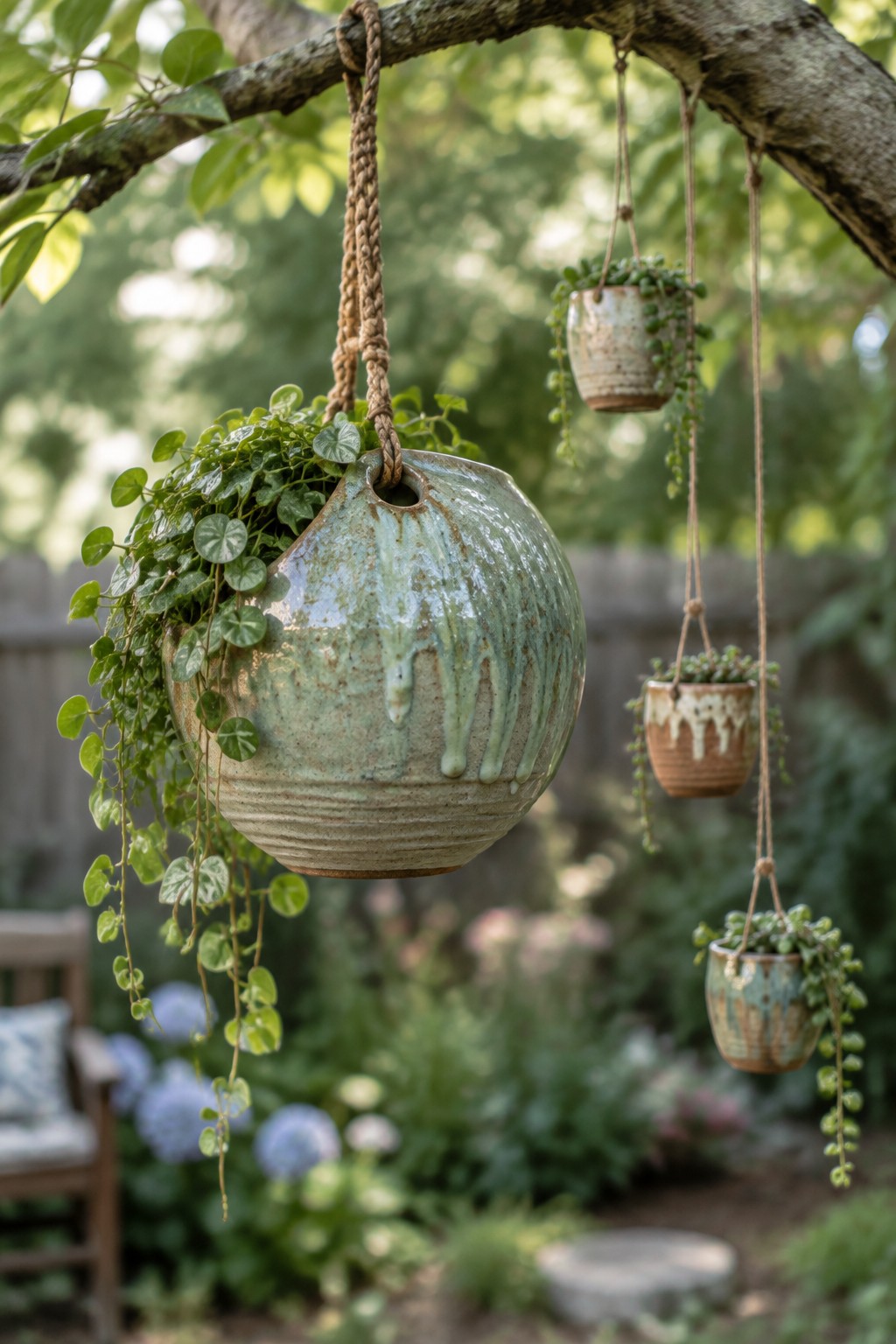
A large rounded ceramic hanging planter makes a useful focal point in a garden display, especially when smaller pots are suspended nearby at staggered heights. Its mottled blue-green glaze and trailing foliage add color and texture without taking up ground space.
Hang a larger planter where it has room to spread, then use smaller ceramic pots along the same branch or pergola beam to build a layered arrangement. You can adapt the idea with matching pots for a coordinated look or mix glazes and shapes for more variety, while checking that the supports can safely hold the planted pots.
Use a Carved Ceramic Bowl as a Raised Garden Accent

A wide, footed ceramic bowl can serve as a decorative focal point in a garden pottery arrangement, lifting its patterned rim above nearby pots and trays. Its carved floral band and muted, weathered glaze give the planter display texture without relying on bright colors.
Place a bowl like this on a sturdy stone block or low pedestal to create a higher level in a grouping of garden pots. The same idea can be adapted with a simpler incised pattern or a coordinating glaze, while shallow ceramic dishes below it help repeat the colors and balance the height.
Wall-Mounted Ceramic Planters for Vertical Garden Height
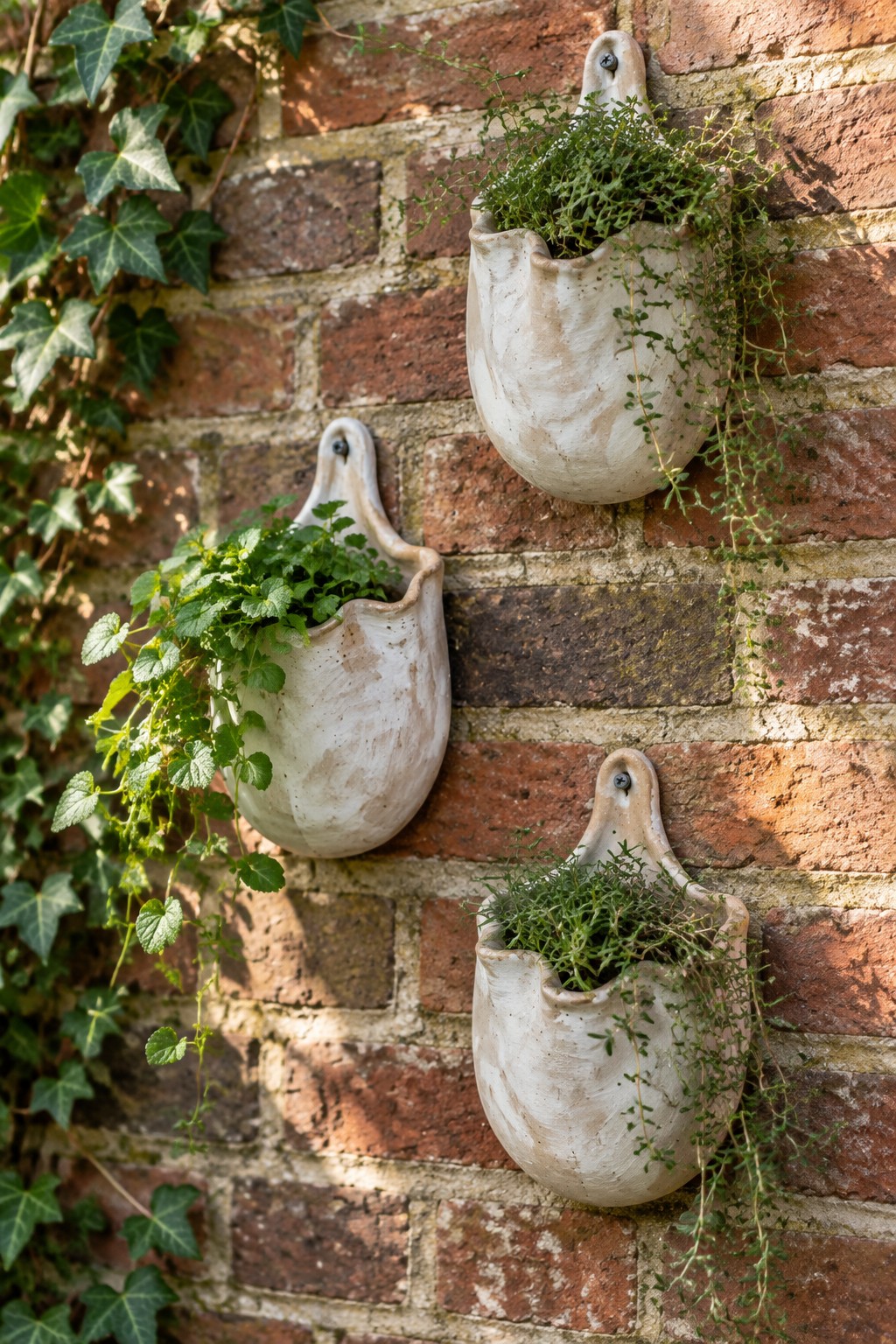
Handmade ceramic wall pockets turn a brick wall into a vertical planter display, with each pot holding trailing or leafy plants at a different height. Their irregular, rounded forms and pale, lightly speckled finish stand out against the rough brick without competing with the greenery.
Use this idea on a sunny patio wall or in a narrow garden where floor space is limited, checking that the wall anchors can support the planters when filled with damp soil. Staggering the pockets creates height variation, and you can adapt the design with smaller holders for herbs or a deeper shape for compact plants; matching the pots keeps the arrangement cohesive while different plant shapes add variety.
Stack Terracotta Pots into a Vertical Garden Accent

A stacked terracotta planter tower uses inverted clay pots to create height in a small garden space. The repeating tapered shapes and weathered orange-brown surfaces make it a rustic garden decor feature, while a small planted pot at the top gives the arrangement a focal point.
Set the stack on a stable stone or brick base in a patio corner, then adjust the number of pots to suit the space. Keep the top planter compact, or add trailing succulents between levels for more greenery, and check that the pots sit securely before planting.
Stack Rustic Ceramic Pots Around a Raised Pitcher

A tall, two-handled ceramic pitcher can serve as the center of a garden-pot display, with smaller planted pots arranged below it at ground level. Its tapered body and mottled brown glaze give the arrangement a strong vertical focal point without needing a purpose-built plant stand.
Set the pitcher on a sturdy crate or low table, then place smaller pots around its base to create height changes while keeping the plants easy to reach. For a coordinated look, choose planters with varied shapes but similar earthy finishes, or use a contrasting glaze on the smaller pots to make the grouping stand out.
Long Ceramic Troughs on Cinder Block Risers
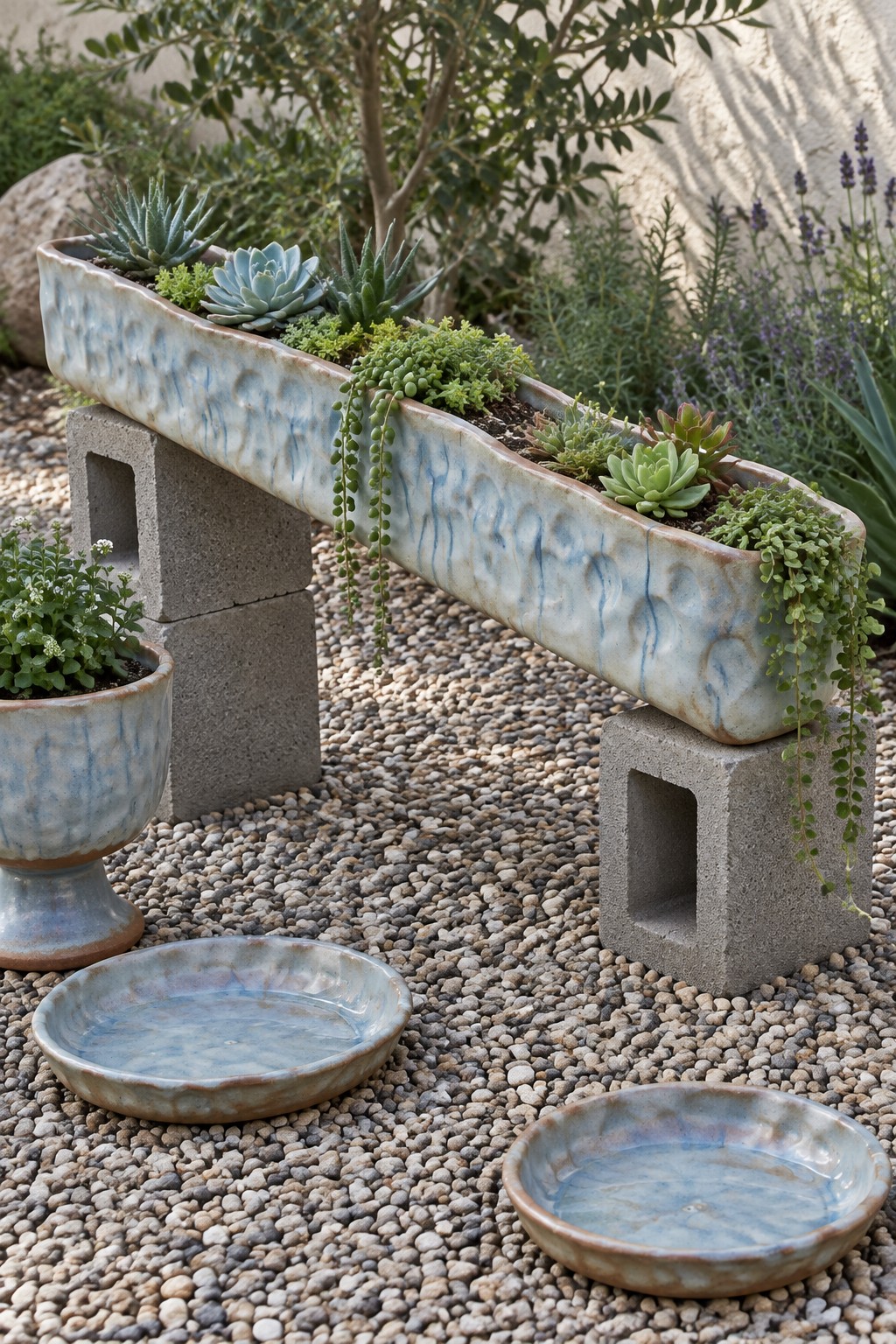
A handmade ceramic trough planter can turn a long, narrow succulent arrangement into a raised garden feature. Its blue-and-cream glaze gives the elongated shape definition, while the mix of upright and trailing plants creates texture along the length of the planter.
Cinder blocks make a simple, adjustable base for lifting a trough above gravel or ground-level pots, and you can change the height by stacking them carefully. Try the same setup with a shorter ceramic planter or coordinate the supports with matching shallow dishes to create a layered display; keep the planter stable and check that it has suitable drainage for outdoor use.
Arrange Ceramic Planters Around a Garden Stool

A tall glazed ceramic garden stool can serve as a sturdy stand for a handmade bowl planter, creating a raised focal point among pots at ground level. The mottled blue-green finish and cutout details give the stool visual interest, while trailing heartleaf foliage softens its solid shape.
Place a stool like this where a taller plant can be seen above smaller containers, such as beside a path or in a sheltered patio corner. Pair it with a bowl planter in a coordinating glaze, or adapt the idea with a simpler ceramic stool and a contrasting pot to create height without adding a shelf.
Pair a Ceramic Birdbath with Colorful Garden Pots

A handmade ceramic birdbath can serve as the tallest focal point in a garden pot arrangement, while smaller glazed planters create lower layers around its base. The broad, scalloped basin contrasts with the straight pedestal and the rounded pots, making this a useful garden decor idea for mixing heights and shapes.
Place the birdbath among pots of varied sizes to build a layered display without needing shelves or stands. Repeat a few glaze colors in the surrounding planters, or simplify the arrangement with small pots in one color for a more unified look; leave enough room to reach the basin for cleaning and refilling.
Hang Bell-Shaped Ceramic Planters from a Pergola
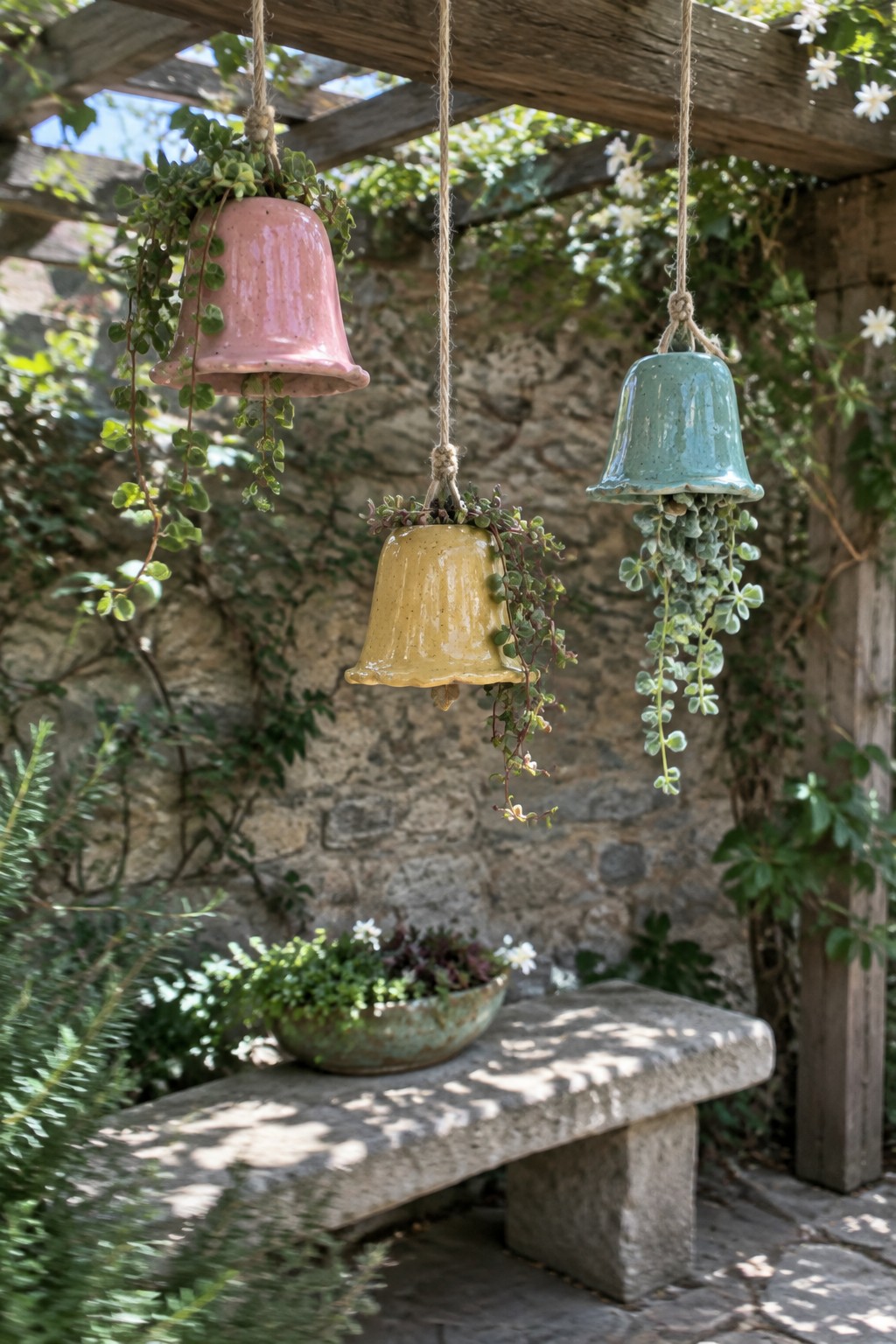
Bell-shaped hanging ceramic planters bring plant height into a garden without taking up bench or ground space. Their flared rims and glossy colored glazes make each pot easy to notice, while trailing plants soften the ceramic shape and create a layered vertical display.
Hang a few at staggered heights beneath a pergola or porch, leaving enough room for the foliage to grow freely. Coordinate the glaze colors for a tidy look, or mix shades to make the planters stand out against a stone wall; smaller versions could also work as decorative indoor planters near a bright window.
Hand-Painted Ceramic Plate Shelves for Small Succulents
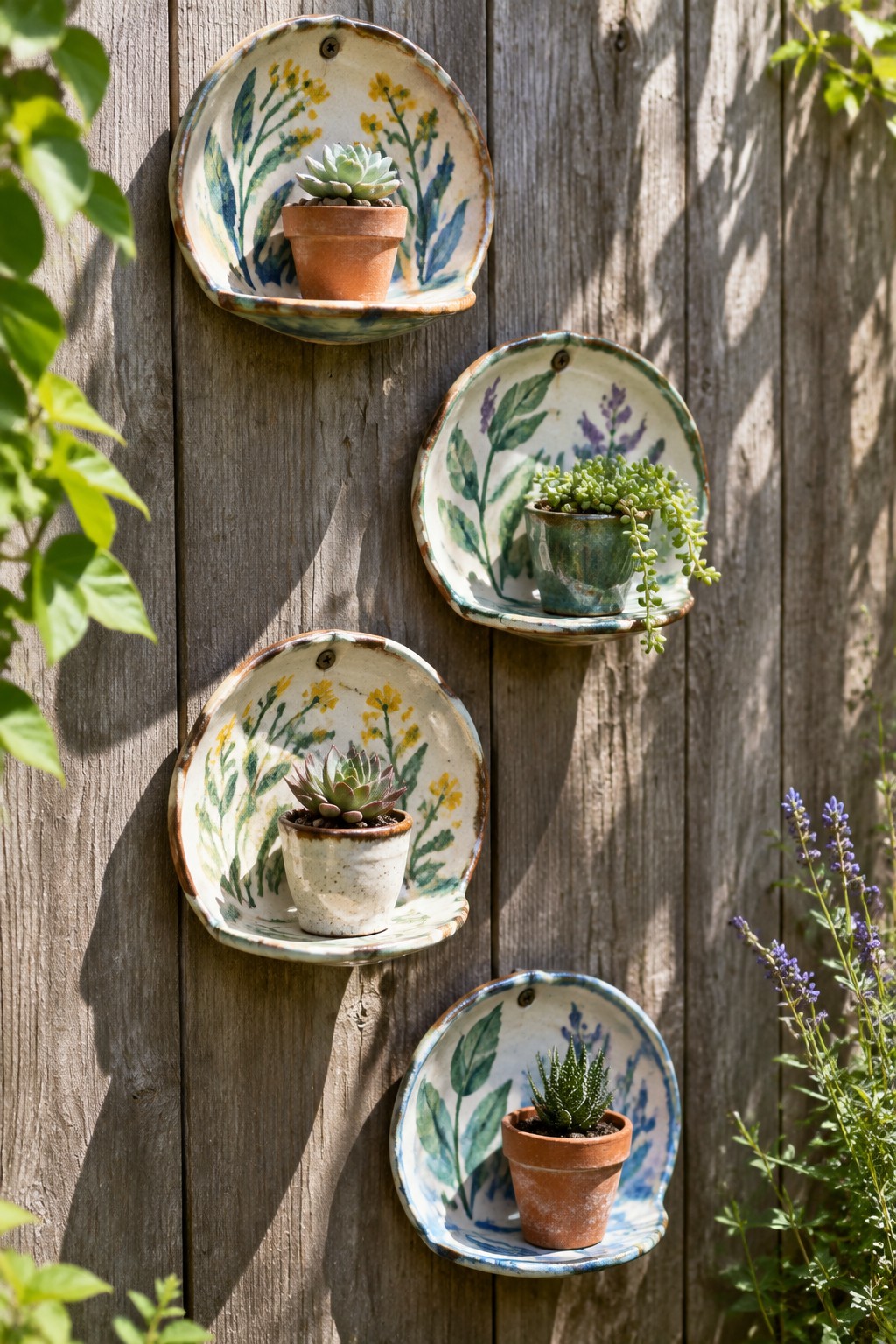
Shallow handmade ceramic plates can double as small wall shelves for individual succulent pots, adding vertical height without taking up ground space. Their raised rims help define each display spot, while botanical brushwork makes the plates decorative even when the plants are small.
Use this idea on a sunny fence or garden wall, fastening each plate securely and choosing compact plants that fit its shallow surface. Vary the painted motifs and plate heights to suit your space, or use simpler colors if you want the greenery to stand out.
Set a Face-Shaped Planter on a Stack of Tiles

A handmade ceramic face planter turns a small trailing plant into a garden accent, while a stack of square tiles raises it above the surrounding pots. Its pale, textured surface and painted facial details stand out against the green leaves, making this a decorative planter idea that also adds height to a compact arrangement.
The tile stack is a simple way to lift a planter without adding another large pot, and you can adjust the height by using fewer or more tiles. Try the same setup with a plain face pot, a small bowl planter, or a colorful handmade tile to suit your garden’s style. The unusual planter shape and clear height contrast also make this arrangement easy to save as inspiration for a patio or courtyard.
Build a Three-Tier Succulent Display with Ceramic Bowls
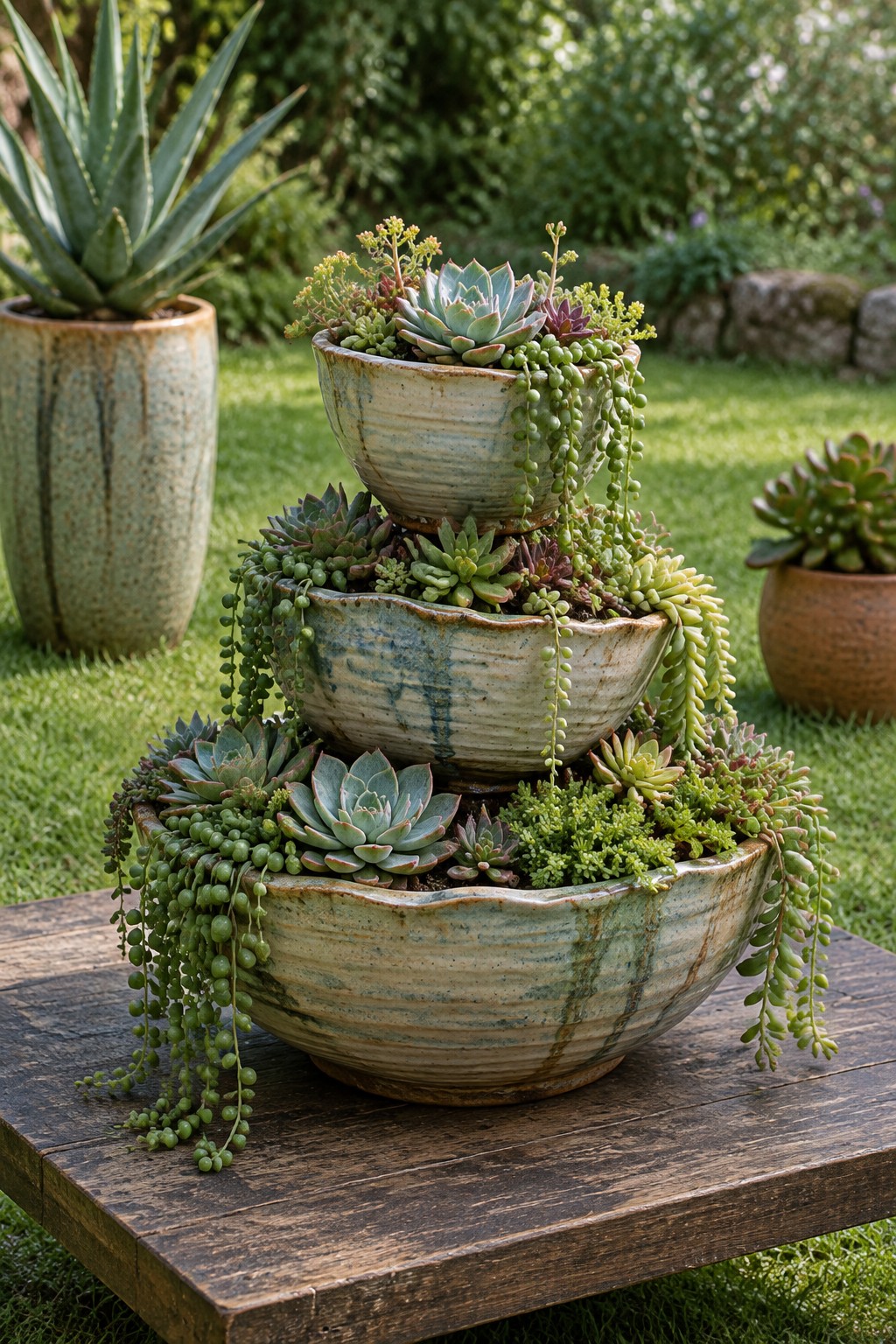
A handmade ceramic tiered planter turns several shallow bowls into a compact display for arranging succulents at different heights. The broad, irregular rims and muted blue-green glaze give the stack a unified look, while trailing plants soften the edges and contrast with the upright rosette shapes.
This setup suits a patio table or garden corner where you want a mix of plants without spreading pots across the ground. Use bowls in coordinating finishes, and vary the arrangement with trailing sedum, compact rosettes, or small flowering succulents; make sure each planted bowl has suitable drainage and a stable base. The layered silhouette is easy to adapt to a smaller space, which also makes it a useful reference for Pinterest garden styling.
Use a Cutout Ceramic Lantern as a Raised Garden Accent

A pierced ceramic lantern is a decorative pottery holder that adds height when placed on a rock, stump, or sturdy garden pedestal. Its warm brown glaze and leaf-shaped openings let candlelight show through, making the cutout pattern useful both as surface decoration and as a source of light.
Set one on a broad stone among lower planters to create a clear focal point without taking up much ground space. You could adapt the idea with simpler geometric cutouts, a different glaze color, or a shorter form, and use an LED candle outdoors where an open flame is unsuitable.
Paint a Daisy Motif on a Raised Ceramic Planter

A footed ceramic planter brings a pot of daisies up above the surrounding containers, while its painted flower design ties the blooms to the vessel. The wide bowl gives the plants room to spread, and the pedestal base makes this decorative planter a natural fit for arranging pots at different heights.
Place one on a sturdy outdoor table or low garden stand, then pair it with plain terracotta or glazed pots so the painted motif can stand out. You could adapt the idea with a simpler leaf pattern, a single flower, or colors that match your garden, and use a smaller version for herbs or compact plants.
Group Glazed Ceramic Planters on Wooden Crates

Handmade ceramic planters with glossy, softly mottled tops and rough-textured clay-colored bases bring contrast to a tiered garden display. Their tall, simple shapes suit herbs and leafy plants, while sturdy wooden crates raise each pot to a different height.
Use this arrangement on a patio or beside a garden wall, adjusting the crate heights to keep each plant visible and easy to reach. Pairing similar two-tone pots creates a cohesive look, and smaller planters can be grouped on blocks or shelves if you have limited space.
Hang Handmade Ceramic Pocket Planters on a Garden Post
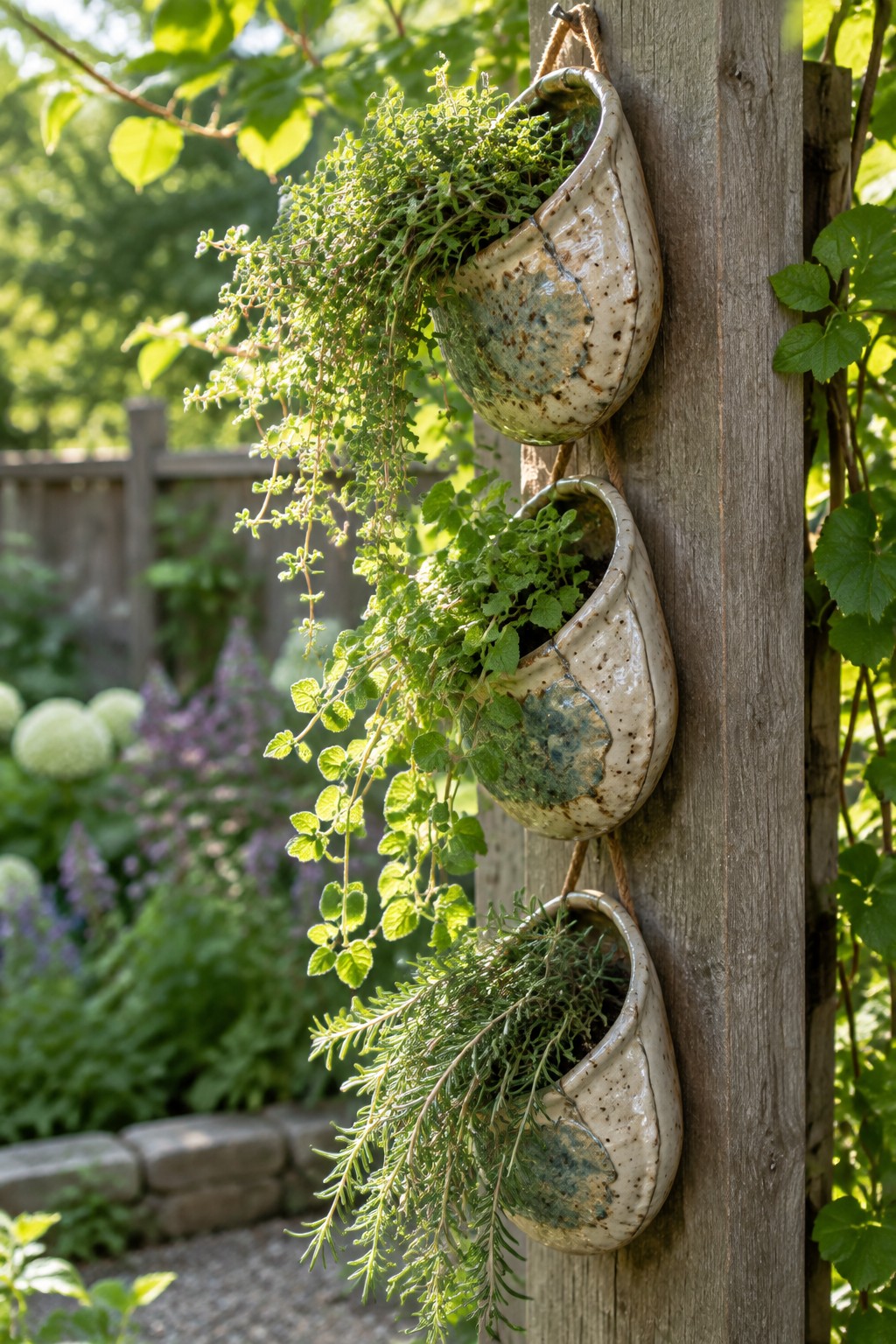
Handmade ceramic pocket planters turn a fence post or garden support into a vertical planting display. Their rounded, open-front shape holds compact greenery while the mottled cream-and-blue glaze gives the wall arrangement color without competing with the plants.
A set like this works well for trailing herbs or small foliage where ground space is limited. Hang the pockets at staggered heights, and adapt the idea with different glaze colors or a simpler single planter for a narrow fence section.
Set a Hedgehog Planter on a Stone Garden Riser
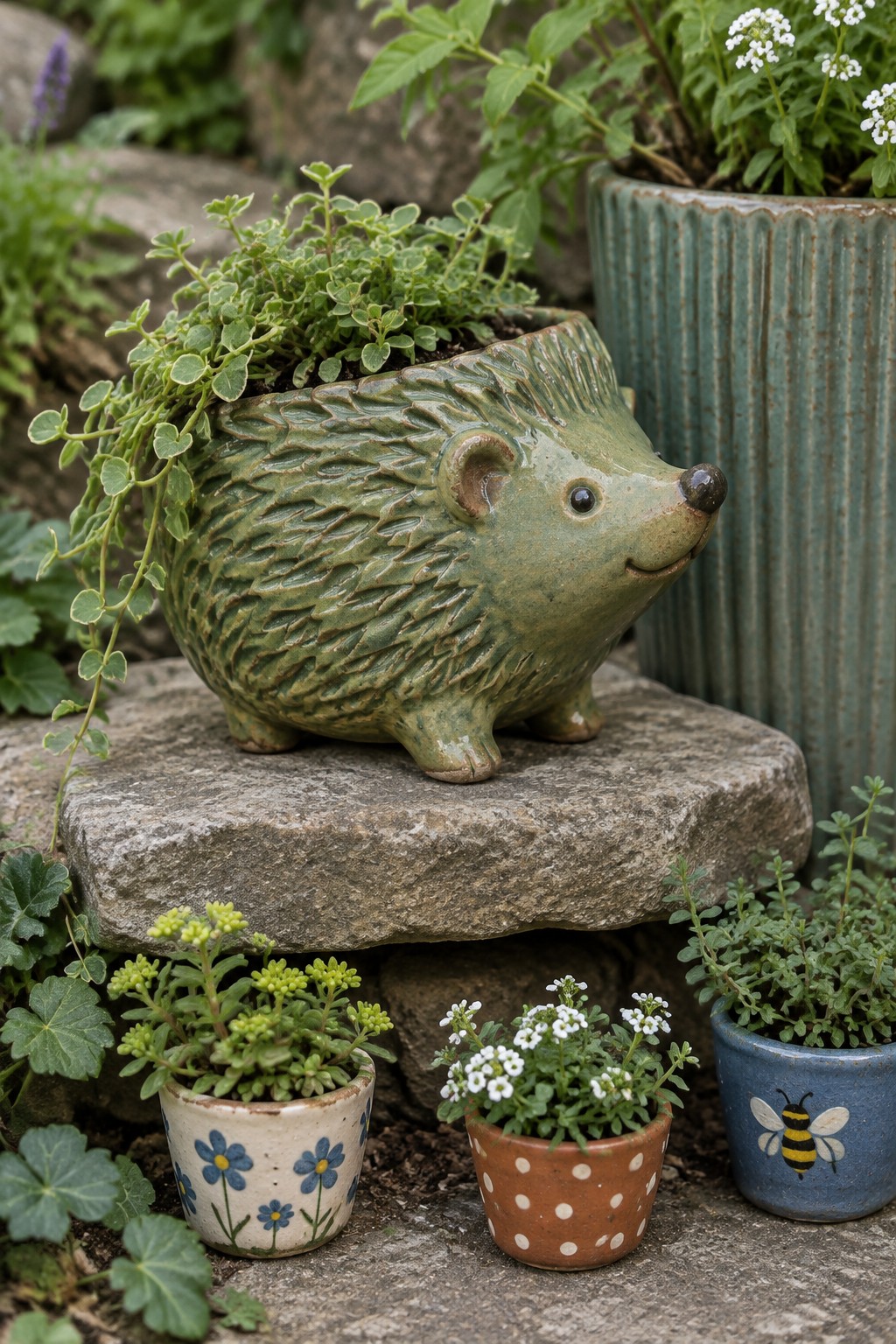
A sculpted ceramic hedgehog planter turns a small planting into a garden focal point, with its textured back doubling as a distinctive container for trailing greenery. Setting the figurine on a broad stone riser gives it extra height and helps separate it visually from the smaller pots below.
The raised position suits a sheltered patio corner or a mixed pot display, while trailing plants soften the sculpted shape without hiding it. For a simpler version, use a small animal-shaped planter on a brick or sturdy tile, and choose compact plants that won’t cover the face.
Arrange a Ceramic Pedestal Planter in Three Tiers
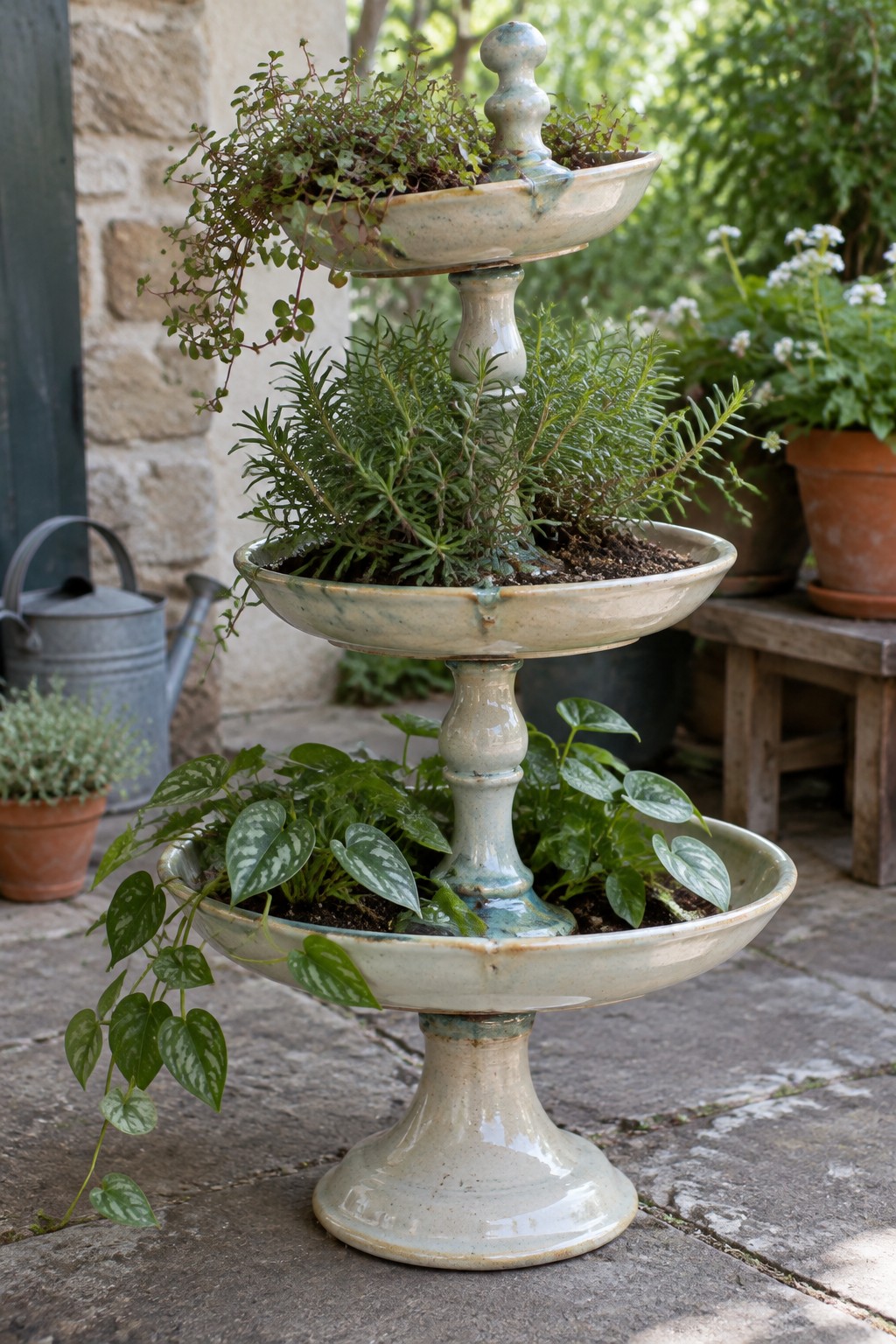
A handmade ceramic tiered planter uses shallow bowl-shaped dishes on a central pedestal to display plants at several heights in one compact arrangement. Its softly glazed, neutral finish keeps the stand cohesive while trailing and upright plants create different shapes across the tiers.
Place it on a patio or in a courtyard where a single vertical display can make use of limited floor space. Try different bowl sizes or glaze colors, and choose plants with varied growth habits so each level stays distinct; a simpler version could use two tiers or bowls in a matching set.
Arrange Herb Planters at Mixed Heights

Handmade ceramic herb pots can turn a small patio corner into a layered garden display. Give the tallest plants a raised spot, then use shorter pots and low stacks of saucers to vary the height without crowding the herbs.
The mix of cream-colored pottery and small painted motifs keeps the arrangement coordinated while letting the greenery stand out. Try the same setup with a few matching pots on sturdy, level risers, and leave room around each plant for light and watering.
Arrange Handmade Ceramic Planters Along a Garden Bench

A row of handmade ceramic planters can turn a garden bench into a simple display for herbs and small ornamentals. Their varied rounded shapes, earthy glazes, and different heights keep the arrangement from looking too uniform while tying the pots together as a group.
The bench raises the plants off the ground and gives you a handy surface to rearrange as they grow or come into bloom. Try mixing glazed and speckled finishes, or vary the pot sizes while keeping to a shared color palette; leave enough room between pots for watering and light to reach each plant.
Hang Small Ceramic Planters in a Vertical Garden

A handmade hanging planter strand uses small glazed ceramic pots to display air plants at staggered heights. The rounded forms and varied glaze colors give the arrangement visual interest, while the vertical layout makes this a useful pottery idea for compact garden spaces.
Hang a strand from a sturdy tree branch, pergola, or covered patio beam, leaving enough space between pots for the plants to spread. You could adapt the idea with matching pots for a simpler look or vary the colors and lengths of the cords to suit your garden; lightweight air plants are a practical choice for small hanging containers.
Stack Handmade Ceramic Bowls into a Garden Sculpture
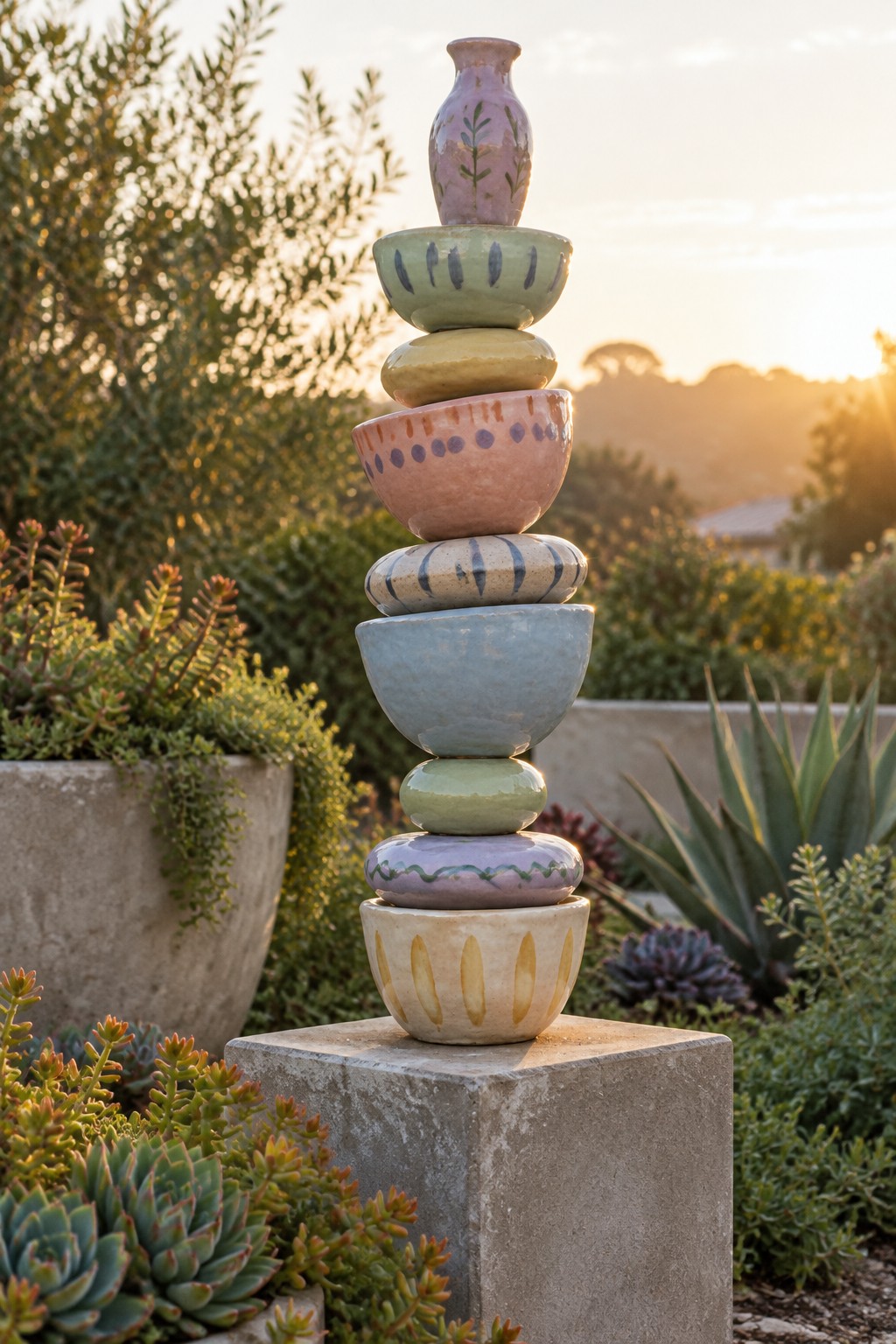
A stacked ceramic garden sculpture turns bowls and rounded pottery forms into a vertical decor feature rather than a functional planter. Its varied silhouettes and hand-painted patterns keep the tower interesting from top to bottom, while the mix of pastel glazes gives it a coordinated look.
Use a stack like this on a sturdy stone or concrete plinth where it can add height without taking up much planting space. For your own version, vary the bowl shapes but keep a few colors or painted marks consistent, and secure the pieces so they stay stable outdoors; simpler forms can be stacked into a shorter accent.
Arrange Handmade Ceramic Pocket Planters on a Wooden Trellis

Handmade ceramic wall pockets turn a wooden trellis into a vertical display for small succulents. Their shallow, square backs sit flat against the support, while varied glazes and simple painted marks give each planter its own look without making the arrangement feel busy.
This setup is useful when ground space is limited, or when you want to bring plants up to eye level on a patio wall. Mix pocket sizes and colors, but keep the spacing open enough for each plant to grow; the same design could also be adapted into a few matching herb or trailing-plant holders.
Combine a Hanging Ceramic Feeder with Low Garden Planters
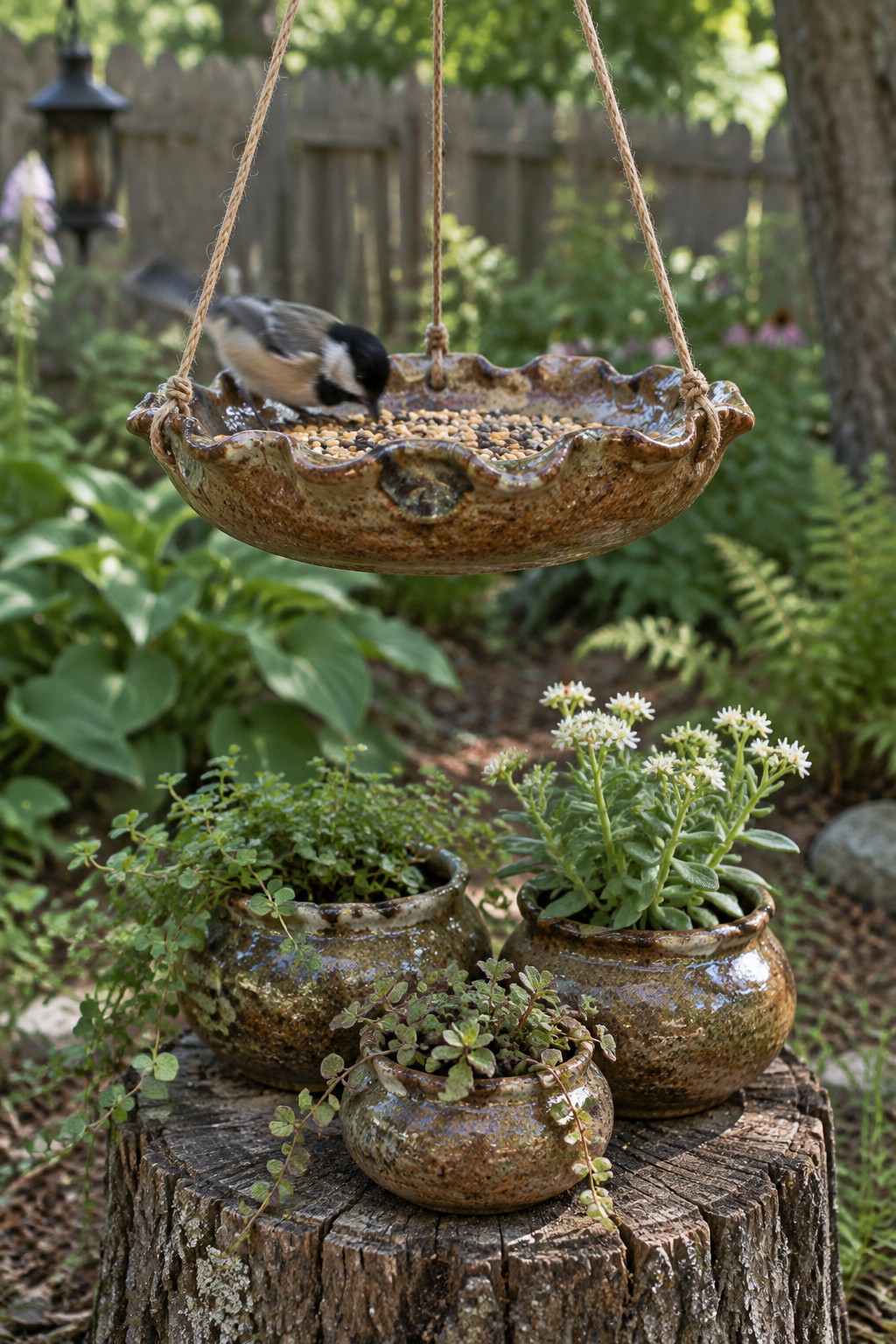
A shallow, scalloped ceramic bowl makes a useful hanging bird feeder, while matching glazed pots below create a second level of garden display. The bowl’s broad rim holds seed and its three-point rope suspension keeps it raised above the smaller planters, making this a mixed-height arrangement of functional pottery and plant containers.
Use the hanging bowl where birds can reach it easily, then group small herb or flowering plant pots on a sturdy stump beneath it. Similar earthy glazes help the pieces feel coordinated, but you can vary the pot sizes or swap in different plants to suit your space.
Frequently Asked Questions
Start with one taller focal point, such as a large planter, pedestal, or obelisk, then group medium and smaller pots around it. Vary the heights in gradual steps rather than creating a straight line of equal-sized pots. Leave a little breathing room between containers so each plant can be seen, and repeat a few colors or materials to make the arrangement feel intentional.
Sturdy plant stands, masonry blocks, weather-resistant benches, tiered shelves, and purpose-made pot risers can all add height. Choose supports that can handle the weight of a full pot and remain stable on your surface. Set each pot on a level base, and avoid stacking containers directly on top of one another, especially in windy or busy areas.
Combine plants with contrasting shapes and habits. Upright grasses, small shrubs, or compact trees add height; mounding flowers soften the edges; and trailing plants spill over the sides of elevated pots. Check that each plant has similar light and watering needs to the plants grouped nearby, or arrange containers by care requirements so they are easier to maintain.
Use broad, stable supports and place heavier pots on lower levels. Make sure containers have drainage holes, and use pot feet or trays to help water drain without leaving stains. On windy patios, avoid raising tall, top-heavy plants, and move lightweight pots to a sheltered spot. Check the arrangement after heavy rain, strong wind, or seasonal changes.
Use vertical space with a narrow plant stand, wall-mounted shelves, or a compact tiered rack. Keep the largest or tallest container at the back or in a corner, with smaller pots in front where they will still receive light. Choose a limited color palette and containers of different shapes but compatible finishes to create variety without overwhelming the space.

Pottery Path is my cozy corner of the internet where I share clay ideas, pottery inspiration, and simple projects you can recreate at home. I love exploring everything from air dry clay to handbuilt pottery to cute minis that brighten your day. My goal is to make clay crafting feel easy, fun, and welcoming for anyone who wants to try it.
You will find beginner friendly tutorials, creative pottery painting ideas, and lots of warm inspiration for slow and happy crafting. If you enjoy hands on creativity, this space will feel like home.