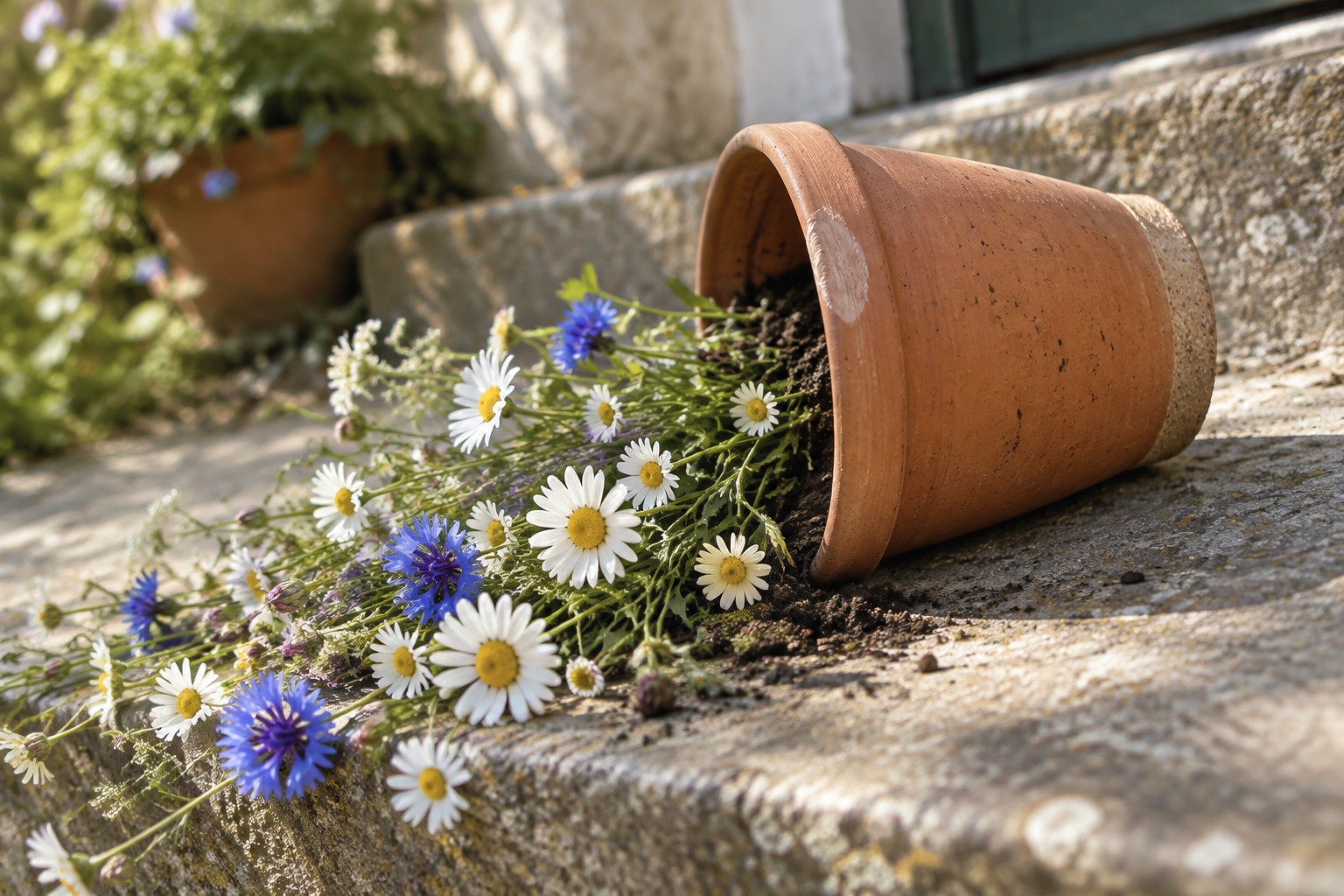
I’ve always liked finding simple ways to bring a little more color into the garden.
A tipped clay pot makes a fun starting point because it can look as though the flowers have spilled right onto the ground.
I’ve put together 20 ideas that use this simple setup in different ways.
I hope you find one that feels right for your own space.
Let a Tipped Terracotta Pot Spill Out a Flower Trail
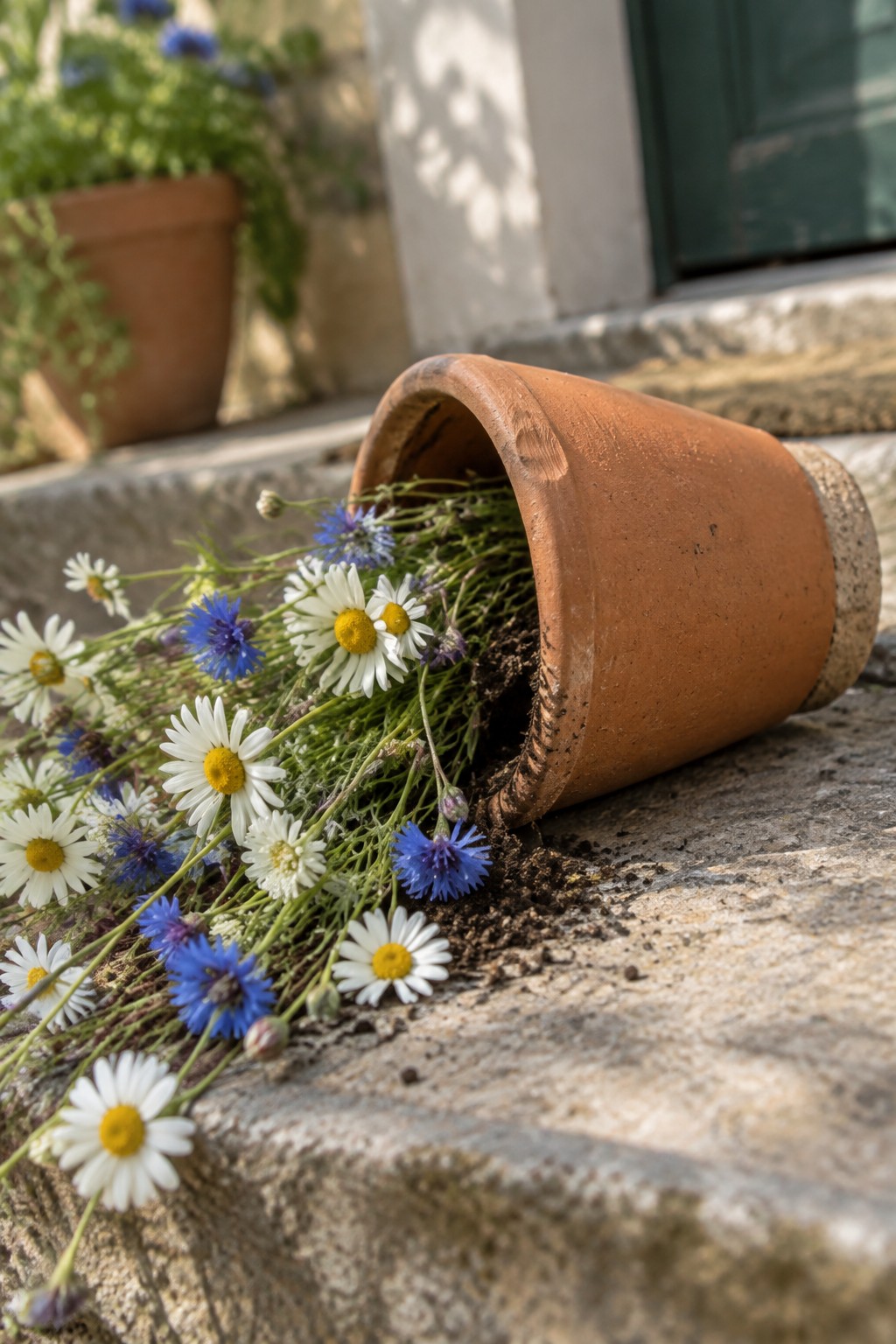
A tipped terracotta planter can become the starting point for a spilled-flower display, with daisies and blue blooms arranged to look as if they’re flowing from its opening. The warm, unglazed clay gives the floral colors contrast, making this a garden decor idea that feels more grounded than flowers arranged on their own.
Set the pot on a stone step, beside a path, or in a garden bed, and let the stems spread outward in a loose trail. Use cut flowers for a temporary display, or adapt the idea with low-growing plants that can take root nearby; a smaller pot and a shorter arrangement can fit on a patio or balcony. The strong color contrast and clear spill shape also make this an easy garden feature to photograph and save for inspiration.
A Tipped Ceramic Vase for a Spilled Flower Display

A rounded handmade ceramic vase tipped onto its side turns a bouquet into a spilled-flower arrangement. Its wide body and flared opening make the vase easy to recognize as the source of the flowers, while the mottled pale green glaze keeps the pottery distinct from the bright blooms. This is a decorative vase idea suited to a tabletop display.
The broad shape gives you room to arrange stems so they fan out naturally, making the setup useful as a centerpiece on a dining table or console. Adapt the idea with a smaller vase and a few short stems, or choose a contrasting glaze to suit your room; the tipped vessel and scattered flowers also make a clear, eye-catching Pinterest composition.
Tip a Glazed Ceramic Pitcher to Spill Out Garden Flowers

A tipped handmade ceramic pitcher makes a sturdy base for a spilled-flower display, with its open mouth giving the arrangement a clear starting point. The rounded body, loop handle, and pale ridged glaze keep the pottery recognizable while letting the bright orange and white flowers stand out.
Set the pitcher on a garden bench or patio surface, then arrange flower stems outward from its opening to create the look of a casual spill. A smaller pot or a different glaze color can change the style, and the same setup works with seasonal flowers or greenery for an easy-to-refresh outdoor decoration.
Use a Scalloped Clay Bowl for a Spilled Flower Display

A tipped handmade pottery bowl can act as the starting point for a spilled flower arrangement, with the blooms and greenery arranged to look as if they are flowing over the rim. The warm, scalloped edge frames the flowers and helps the bowl read as a decorative planter rather than just a container.
This setup suits a table centerpiece or a protected spot on a covered porch, especially with compact flowers that can trail across the surface. A shallower bowl or a simpler rim would give the same effect on a smaller scale, and changing the flower colors makes it easy to match seasonal decor; the clear tipped-pot shape also makes the idea easy to save and recreate.
Pair a Tipped Rabbit Planter with a Spilled Flower Trail

A handmade ceramic rabbit planter can turn a tipped-pot flower display into a playful garden accent. Its rounded body and sculpted ears give the arrangement a clear focal point, while the loose trail of colorful flowers makes it look as if they’re spilling out from beneath the rabbit.
Set a piece like this beside a garden path, on a patio, or among low-growing plants where its details can be seen up close. For an easier version, use a simple animal-shaped planter or small ceramic figurine and arrange cut flowers or hardy groundcover around its opening; choosing flowers that echo painted accents helps tie the display together.
Spill Lavender and Rosemary from a Speckled Ceramic Jug

A handmade ceramic jug can serve as the base for a spilled flower display, with lavender and rosemary arranged to look as though they are flowing from its opening. Its rounded body, loop handle, and neutral speckled glaze give the arrangement a clear focal point without competing with the purple blooms and green stems.
This works well as a kitchen counter or dining table centerpiece, especially where fresh-cut herbs fit the setting. Use dried lavender for a longer-lasting display, or adapt the idea with seasonal flowers and a small handmade pitcher in a different glaze; the contrast between the tipped vessel and trailing stems makes the arrangement easy to spot and save for inspiration.
Spill Flowers from a Handmade Ceramic Teapot

A tipped ceramic teapot can serve as the vessel for a spilled flower display, with its wide opening letting blooms and greenery trail onto a windowsill. The rounded body, curved handle, and marbled gray-and-cream finish make it read clearly as a teapot while giving the arrangement a decorative focal point.
A piece like this works best on a deep sill, console, or shelf where the flowers have room to spread; use a thrifted pot or a handmade ceramic version, and arrange cut stems so they appear to flow from the opening. The same idea can be adapted with a smaller teapot and fewer blooms for a tabletop centerpiece, or with dried flowers for a display that needs less upkeep. The recognizable shape paired with the spilling arrangement makes a strong Pinterest reference for repurposing ceramic kitchenware as decor.
Tip a Corrugated Ceramic Trough for a Spilled Flower Display

A long, handmade ceramic trough can become the source of a spilled-flower arrangement when it is set on its side and filled with blooms that trail onto a surface. Its ribbed gray finish gives the planter a sturdy, weathered look, while vivid poppies, blue cornflowers, and pale snapdragons make the spill easy to read as a deliberate display. This is a decorative planter idea suited to a garden table or patio.
The trough’s elongated shape gives you room to mix upright stems with flowers that spread outward, and you can change the planting to suit the season or your color scheme. For a simpler version, use a smaller ribbed planter and a few trailing flowers, or arrange cut blooms around an empty pot for a temporary display. It’s a useful idea to save for styling a potting bench, patio corner, or garden party centerpiece.
Spill Hydrangeas from a Rustic Clay Pot
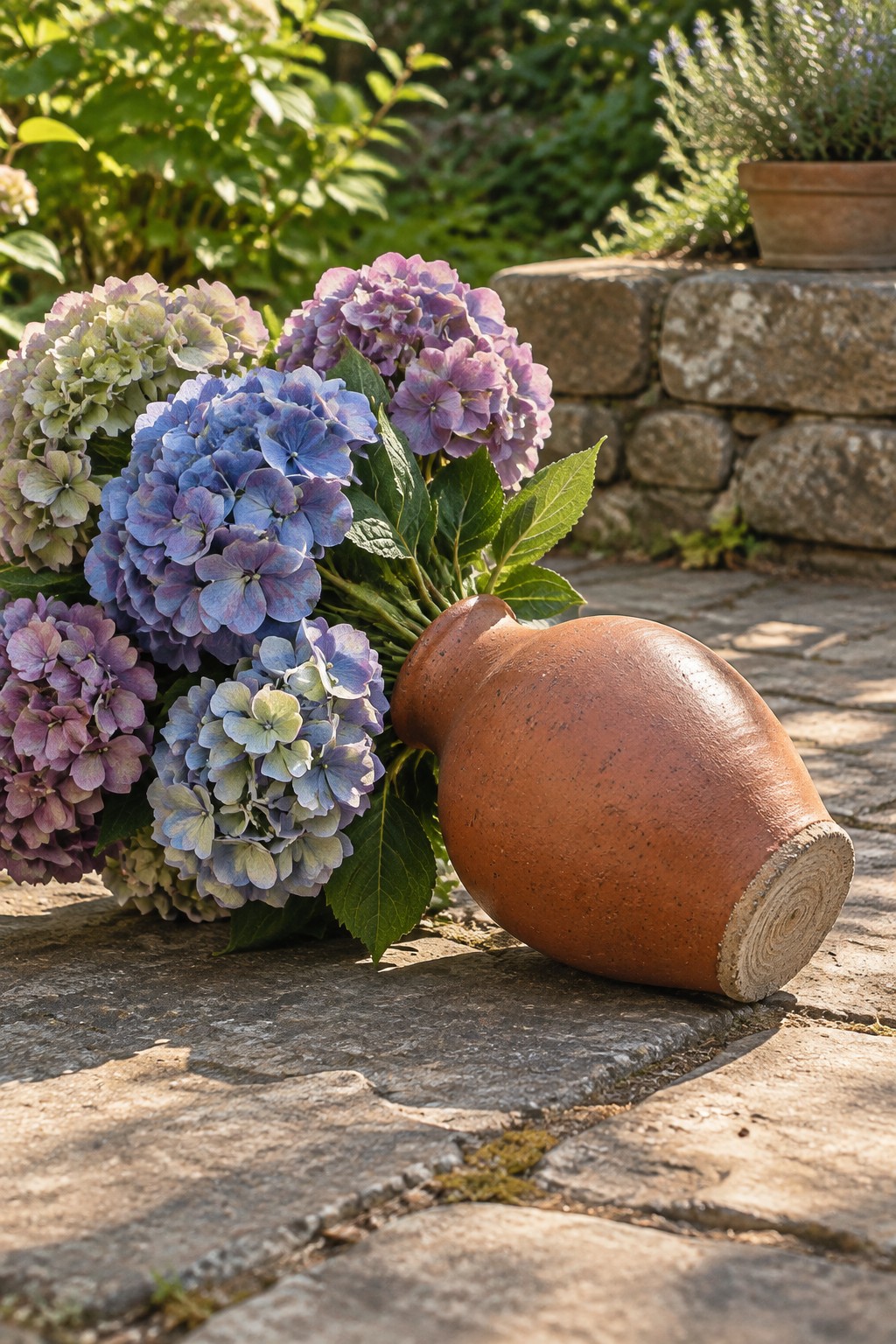
A tipped, rounded clay planter can turn hydrangeas into a spilled-flower display, with the blooms arranged as if they are flowing out of its wide opening. The warm, textured terracotta gives the arrangement a clear focal point and makes this a garden decor idea rather than a conventional upright planter.
The broad pot shape is easy to position on a stone path, patio, or garden bed, where the flowers can spread naturally around its mouth. Try the same setup with seasonal blooms or trailing greenery, and choose a smaller pot if you want a compact arrangement for a step or outdoor table.
Hang a Handmade Ceramic Pocket for a Nasturtium Spill

A wall-mounted ceramic planter can turn a small pocket into the starting point for a spilled-flower display. Its rounded, ribbed body and loop handle give it the look of a handmade pottery vessel, while the side opening lets trailing nasturtiums and their round leaves appear to flow out across the wall.
This setup is useful where floor or table space is limited, such as beside a doorway or along a garden wall. Choose a pocket with a wide enough opening for a small plant, and adapt the idea with different glaze colors or trailing flowers to suit the setting; the contrast between the vessel and bright blooms also makes the arrangement easy to save for wall-planter inspiration.
Spill Bright Zinnias from a Leaf-Patterned Ceramic Planter
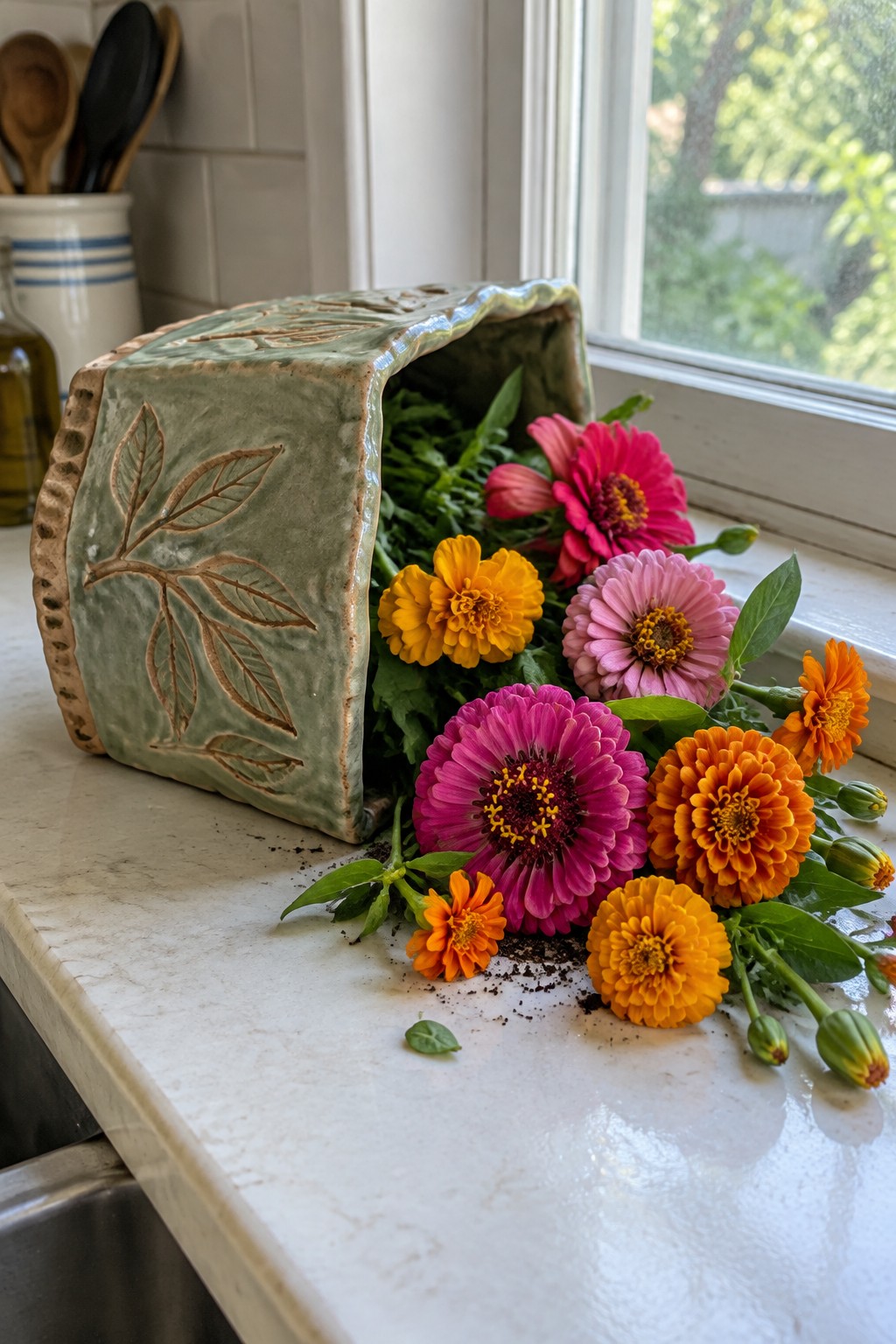
A handmade ceramic planter can create a spilled-flower display by lying on its side, with blooms and greenery arranged as if they are tumbling from the opening. The muted green glaze and raised leaf motif give this version a decorative focal point while letting the pink, yellow, and orange flowers stand out.
The broad opening makes it easy to tuck in cut flowers, while the sturdy form helps anchor the arrangement on a kitchen counter or windowsill. Adapt the idea with a smaller pot and a single color of blooms, or use a simple painted leaf pattern to personalize a planter for a seasonal centerpiece.
Use a Tipped Shell-Shaped Ceramic Planter for Pansies

A tipped, shell-shaped ceramic planter turns a small patch of soil into a spilled flower display, with pansies and fern foliage spreading out from its open rim. Its pale blue-green glaze and sculpted, wavy edge make the pot itself part of the garden decor, so this idea fits both planter styling and decorative pottery.
The wide opening gives flowers room to trail outward, making this a good fit beside a garden path or on a patio. Adapt the display with other compact flowers, or use a simpler tipped bowl if you want the same effect with an easier-to-make form; the unusual shell silhouette also gives the arrangement a clear focal point for Pinterest.
Let a Weathered Rectangular Planter Spill White Flowers
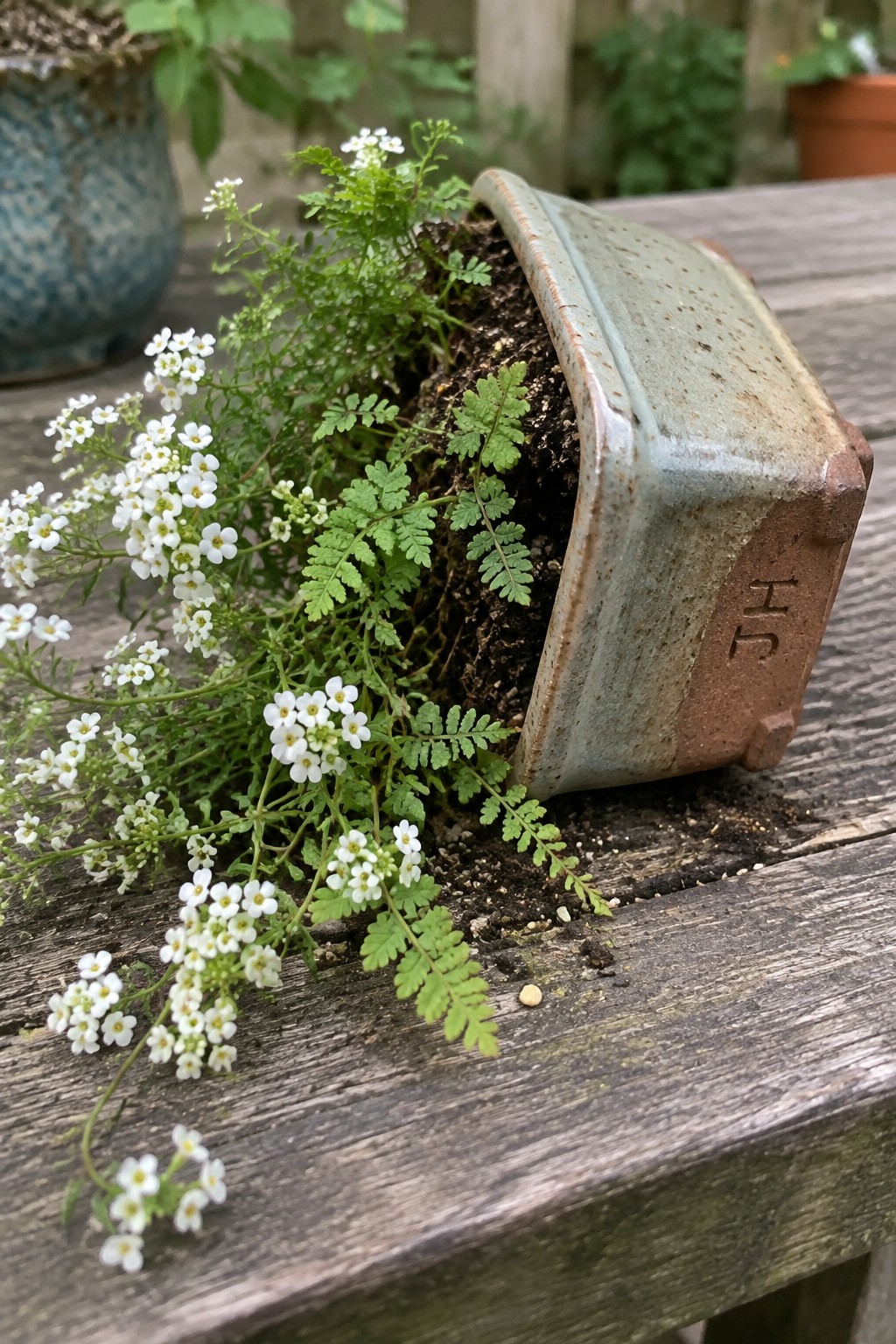
A tipped rectangular ceramic planter can turn a small planting into a spilled-flower display, with trailing stems arranged to spread out across a bench or garden bed. Its long, sturdy shape gives the arrangement a clear starting point, while fernlike greenery and clusters of tiny white flowers soften the pot’s weathered finish.
This setup suits a patio bench, low garden border, or wide container where the flowers have room to trail. Use another low, open planter and mix small white blooms with delicate foliage, or swap in one flower color to make the spill easier to plan and maintain.
Arrange Ranunculus as a Spill from a Footed Ceramic Bowl

A rounded, handmade ceramic bowl can serve as the anchor for a spilled-flower display when its opening is wide enough to let stems and foliage fan outward onto a counter or table. Here, the pale, speckled glaze and raised feet give the vessel a sturdy, low profile that balances the layered ranunculus and trailing eucalyptus. It’s a decorative bowl idea that works especially well for loose, informal arrangements.
The wide shape makes it easy to reposition stems, while the neutral glaze can pair with flowers in different colors through the seasons. To adapt the arrangement, use fewer blooms and more greenery for a simple everyday display, or choose a smaller bowl for a centerpiece on a narrow table. The contrast between the sculptural vessel and the flowers spilling over its rim also makes this an easy arrangement to save as inspiration for seasonal styling.
Spill Wildflowers from a Ribbed Terracotta Pot

A large, handmade terracotta pot can become the focal point of a spilled flower display when it is tipped on its side and filled with loose wildflowers. Its deep, ribbed body gives the arrangement a clear starting point, while the warm clay color stands out against the white, yellow, purple, and pink blooms. This is a decorative planter idea rather than a pot meant to hold soil and a growing plant.
The wide opening makes it easy to arrange flowers in a flowing trail across a tabletop, porch bench, or garden display, and dried stems can help the arrangement last longer indoors. For a simpler version, use fewer flower colors or a smaller ribbed pot, then adjust the spill to suit the space. The contrast between the textured clay and colorful blooms also makes the idea easy to save and adapt for seasonal centerpieces.
Spill Golden Daffodils from a Speckled Ceramic Jug

A tipped handmade ceramic jug can act as a planter, with golden daffodils arranged to look as though they are flowing from its mouth. Its rounded body and raised handle make the vessel easy to recognize, while the speckled cream surface keeps the focus on the flowers. This is a simple spilled-flower display idea for a porch or garden step.
The jug’s wide opening gives stems room to spread, and its pale finish pairs easily with spring flowers in other colors. Arrange the blooms over a small patch of soil or moss, then add a few loose petals to extend the trail; a smaller jug could make a similar centerpiece for a patio table. This setup also photographs clearly for Pinterest because the tipped vessel and flower path create an easy-to-read focal point.
Spill Peas and Nasturtiums from a Scalloped Ceramic Bowl

A tipped, scallop-edged ceramic bowl can anchor a spilled flower display, with pea pods, loose peas, and nasturtiums arranged as if they have tumbled out onto the surface. Its warm, mottled glaze gives the arrangement a handmade pottery focal point while the bright edible plants carry the spill outward.
Use the idea on a dining table or kitchen counter, choosing a stable bowl with a broad rim so it can rest securely on its side. Swap in other garden produce or flowers to suit the season, and keep the arrangement loose so the spill looks natural; the contrast between the sculptural bowl and vivid plants makes a clear, easy-to-read Pinterest focal point.
Spill Garden Roses from a Blue-Glazed Ceramic Jar

A wide-mouthed handmade ceramic jar can anchor a spilled flower display, with cut roses arranged to look as though they are flowing from its opening. The rounded form and deep blue glaze give the arrangement a strong focal point, while the loose stems soften the jar’s solid shape.
Place the jar and flowers on a windowsill, mantel, or sturdy table where the arrangement can spread out without being disturbed. You can adapt the idea with seasonal cut flowers and a different glazed vessel, or use fewer stems for a simpler display; the contrast between a finished ceramic piece and an informal flower trail also makes a clear, eye-catching Pinterest image.
Tip a Divided Ceramic Planter to Spill Out Pansies

A handmade ceramic planter with several small planting pockets can create a layered flower spill when tipped onto its side. The rustic, speckled finish suits the mixed purple, yellow, and white blooms, while the separate compartments keep the arrangement looking full and varied.
Use a divided planter like this on a patio table or garden workbench, and tuck a few loose flowers around the opening to extend the spill. You could adapt the idea with one large pocket, different seasonal plants, or a simpler solid glaze; the unusual multi-compartment form gives the display a distinctive shape for Pinterest.
Frequently Asked Questions
A spilled flower display makes it look as if blooms are tumbling out of a tipped container and spreading across the ground. A clay pot is a popular choice because its earthy color and rustic texture suit gardens, patios, and cottage-style spaces. Arrange flowers in a loose, widening trail from the pot’s opening to create the spilling effect.
Set the pot on firm, level ground, and partially bury its base or wedge it between stones if it is outdoors. For a display on a patio or indoors, use a flat, stable surface and secure the pot with hidden bricks, gravel, or floral foam. Check that the opening stays in place before adding flowers or soil.
Choose flowers with spreading or trailing growth, such as petunias, creeping phlox, lobelia, alyssum, or calibrachoa. For a fuller look, combine a few upright blooms with trailing plants and leafy ground cover. Match plants to the display’s light conditions, and use varieties with similar water needs if planting them together.
Yes. Artificial flowers are useful for shaded spots, indoor arrangements, or displays that need little upkeep. Use a lightweight base, such as floral foam or a small piece of wire mesh, to hold stems in place. Angle the stems away from the pot and vary their lengths so the arrangement looks like a natural spill rather than a flat fan.
Start with a narrow cluster at the pot’s mouth, then spread flowers outward in an irregular trail. Mix colors, flower sizes, and foliage, leaving a few small gaps so the arrangement does not look too uniform. Use soil, moss, or low-growing greenery to disguise the stems and connect the pot visually to the flowers.

Pottery Path is my cozy corner of the internet where I share clay ideas, pottery inspiration, and simple projects you can recreate at home. I love exploring everything from air dry clay to handbuilt pottery to cute minis that brighten your day. My goal is to make clay crafting feel easy, fun, and welcoming for anyone who wants to try it.
You will find beginner friendly tutorials, creative pottery painting ideas, and lots of warm inspiration for slow and happy crafting. If you enjoy hands on creativity, this space will feel like home.