
I like using Talavera pots to add color to my garden without making everything feel too busy.
The painted patterns give me lots of options, from pairing similar designs to mixing a few different styles.
I’ve gathered 24 ways to arrange them by pattern, with ideas for beds, patios, and small corners.
I hope a few of these help you find a combination that feels right for your space.
Pair Floral Talavera Planters in Two Sizes

Hand-painted Talavera-style ceramic planters pair a large rounded pot with a smaller matching one, using blue flowers and yellow accents against a white ground. The repeated pattern ties the different sizes together, while the larger planter provides space for trailing ivy and the smaller pot can hold a compact plant.
Use a pair like this on a porch step or patio to create a coordinated planting display without making every pot the same size. For a simpler version, repeat one flower motif around plain ceramic pots, or choose different plant varieties while keeping the painted pattern consistent.
Pair Fruit Motifs With Blue Floral Talavera Patterns

Hand-painted Talavera garden pots can be paired by giving each planter a different pattern while repeating colors such as cobalt blue, cream, and warm yellow. A rounded hanging pot with pomegranates and leafy details can sit alongside a second planter decorated with blue scrolls and flowers, creating contrast without making the display feel mismatched.
Use this pairing on a covered porch or patio where the painted surfaces can be seen together, and choose plants with foliage that complements the pot designs without covering them. To adapt the idea, repeat one small motif or accent color across both pots, or use a fruit pattern on one planter and a simpler geometric or floral design on the other.
Pair Talavera Patterns in a Long Herb Planter

A rectangular ceramic planter with a painted Talavera-style pattern gives several herbs room to grow while making the container part of the display. Repeating floral medallions and geometric borders in blue, green, and orange make the long shape feel balanced rather than plain, fitting this idea into both garden pottery and useful plant styling.
The narrow footprint suits a patio table, balcony ledge, or sunny kitchen spot, and the divided planting area can hold basil alongside other herbs. Keep the repeating pattern for a coordinated look, or simplify it to one floral motif and a colored rim; matching the planter to a drip tray makes the setup tidier and gives the design a clear Pinterest-ready outline.
Pairing Talavera Wall Planters by Painted Pattern

Handmade ceramic wall planters can be paired by repeating a painted motif while varying the background color. Here, blue flowers and birds link a warm ochre planter with a deep navy one, so the two pieces coordinate without looking identical. The curved, pocket-like shape keeps the painted designs visible while holding trailing or compact plants.
For a garden wall, patio, or sunny entry, matching motifs help separate planters read as a planned set. Adapt the idea with the same flower or leaf pattern in two complementary colors, or use one patterned planter beside a simpler one to keep the display from feeling too busy. The contrasting colors and recognizable motifs also make a clear Pinterest reference for pairing Talavera pots by pattern.
Pair a Painted Talavera Planter With a Matching Catch Saucer

A hand-painted ceramic planter and its shallow saucer make a useful pairing for a trailing houseplant. The rounded pot gives the leafy plant room to grow, while repeating blue, orange, and green floral patterns connect the two pieces without competing with the foliage.
The saucer helps catch excess water on a sunny windowsill, and the coordinated pattern makes the planter set look intentional on its own. Adapt the idea with a simpler painted border, or choose a different plant and color palette to match your kitchen or living space.
Pair a Tall Talavera Planter With a Matching Watering Jug

A painted Talavera-style planter on a pedestal paired with a rounded ceramic jug creates a coordinated garden set without using identical shapes. The repeating blue, yellow, and green floral patterns tie the handmade pottery together, while the red flowers add contrast. This pairing fits a decorative planter and garden-vessel category.
The height of the pedestal planter makes it a natural focal point on a patio, while the jug can sit beside it as a companion accent or be used for watering if its form allows. Adapt the pairing with smaller pots, a matching cachepot, or a simpler painted motif repeated across different vessel shapes. The combination of bold pattern and varied silhouettes also gives a garden styling idea a clear, easy-to-save Pinterest look.
Pair Painted Talavera Patterns on Small Succulent Pots

Handmade ceramic planters pair different Talavera-inspired patterns with compact rosette succulents. The blue dotted, orange floral, and green checkerboard designs feel coordinated through their cream backgrounds while giving each pot its own look.
Group small planters on a balcony ledge or windowsill, or separate them to add color to different spots. You can adapt the idea by repeating one paint color across varied patterns, or use the same designs on pots in a single size for a tidier arrangement.
Pair Nested Talavera Planters by Pattern Scale

A coordinated set of handmade ceramic planters can use different painted patterns while keeping a shared color palette. Here, bold blue-and-yellow flowers and borders link the three rounded pots, while the designs vary from large central motifs to smaller repeating details.
Use a grouping like this on a tiled patio or beside an outdoor seating area, and vary the pot sizes to suit plants with different root needs. To adapt the idea, keep the blue-and-yellow palette but simplify the smallest planter’s pattern, or repeat one flower motif across all three for a more uniform set.
Pair Rooster and Bluebird Talavera Planters
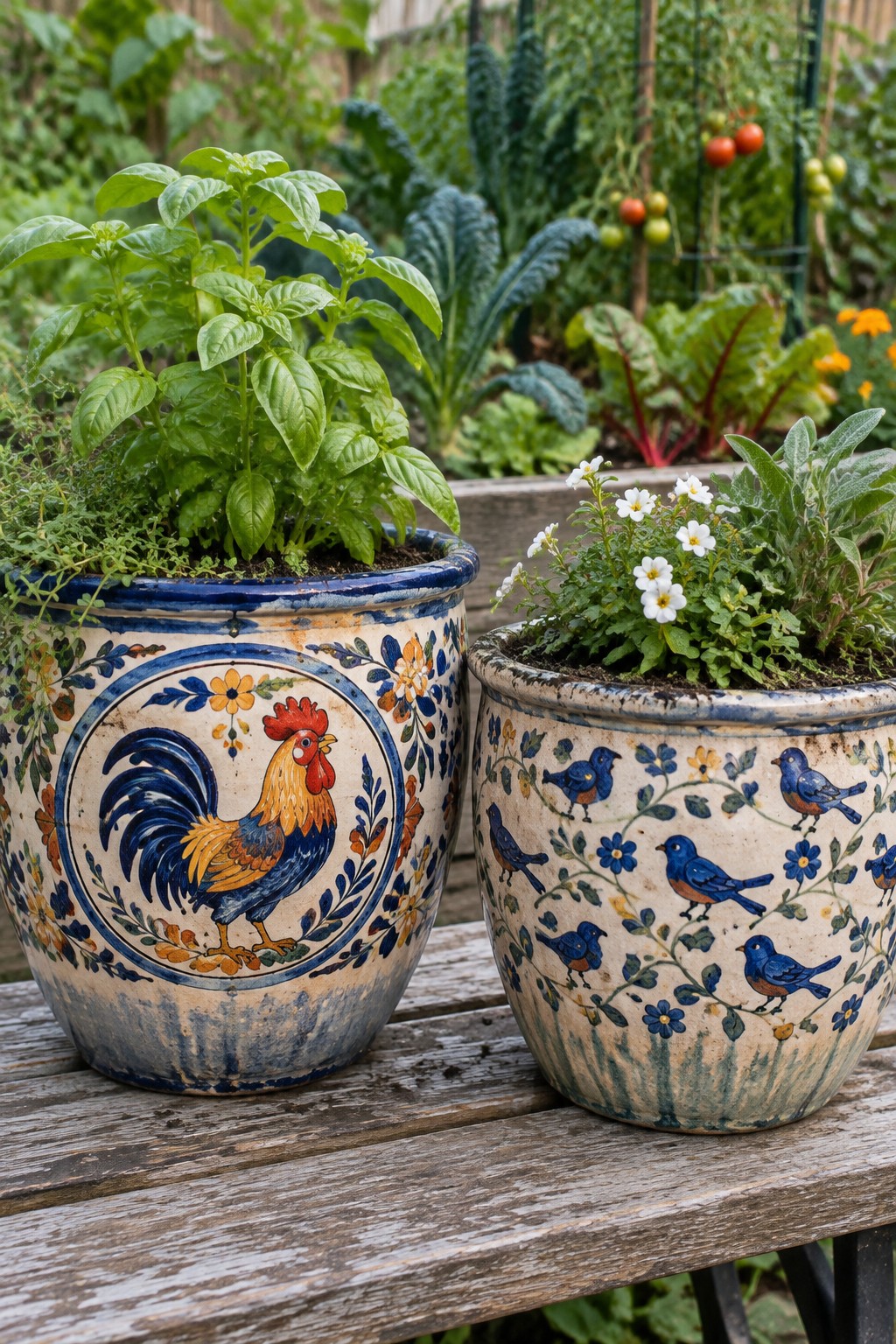
Pair a large rooster-pattern Talavera planter with a smaller pot covered in repeating bluebirds for a coordinated garden display. The different motifs feel connected through their blue, yellow, and cream palette, while the medallion design on one pot balances the smaller all-over pattern on the other.
Use the taller planter for basil or another leafy herb, and fill the shorter one with compact flowering plants or silver-leaved foliage. To adapt the pairing, keep the colors consistent but vary the painted subjects, or repeat one bird motif at different scales for a more uniform set.
Pair Bold Talavera Planters With Trailing String of Pearls

Pair two rounded Talavera ceramic planters with different painted patterns and matching blue rims. Their contrasting medallion designs keep the set from looking too uniform, while the trailing string of pearls softens the pots’ rounded shapes. This pairing fits a garden planter display where patterned ceramics are part of the decor.
Use the larger pot behind the smaller one on steps or a patio ledge, and let the cascading stems help connect the two patterns. To adapt the idea, repeat one paint color across both pots while changing the central motif, or use a single patterned planter with another trailing succulent. The mix of vivid hand-painted surfaces and cascading greenery makes a clear, easy-to-save styling idea for Pinterest.
Pair Talavera Herb Pots With Hand-Painted Plant Markers

A wide, hand-painted Talavera planter can hold kitchen herbs while its floral pattern pairs with small ceramic markers for basil and thyme. The blue, orange, and green decoration gives the planter a lively look, while the simple marker shapes keep the herb labels easy to read.
This setup suits a sunny kitchen windowsill or outdoor potting table, and the markers make it easier to keep similar herbs straight. Match the markers to the planter’s colors, or use plain painted labels if you want the pot’s pattern to take the lead.
Pair a Talavera Herb Trough With Matching Small Pots
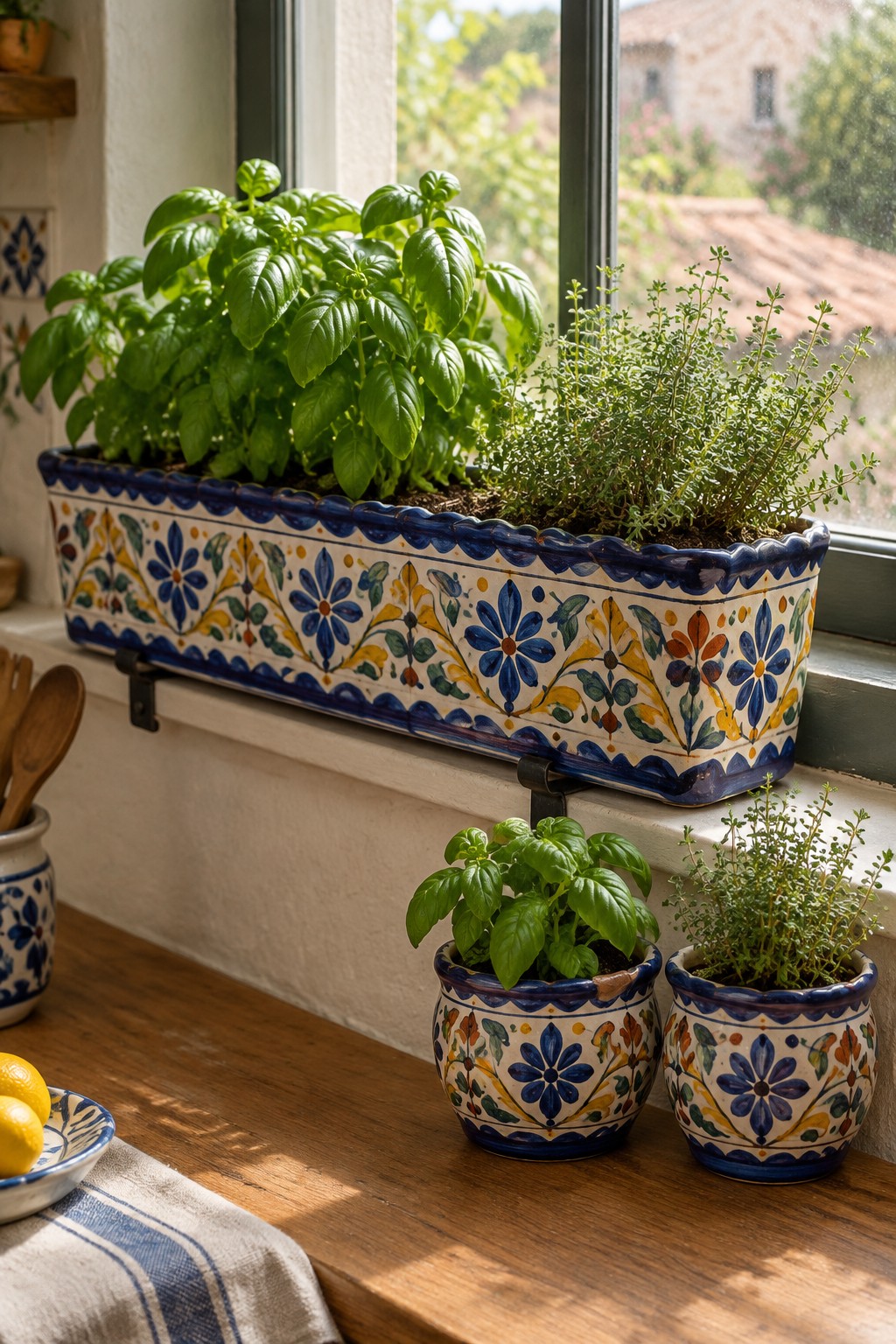
A long, hand-painted Talavera trough makes a practical home for herbs that need to grow side by side, while smaller pots can repeat its floral pattern nearby. The blue, yellow, and green motifs tie the different planter sizes together without making them look like a matching set.
For a windowsill or kitchen counter, plant basil and thyme in the trough and use the smaller pots for extra cuttings or herbs you reach for often. Repeating one or two colors across the pots is an easy way to adapt the idea to a different Talavera pattern or a smaller collection.
Pair a Scenic Talavera Urn With a Floral Succulent Pot

A tall, hand-painted Talavera urn paired with a smaller matching planter creates a coordinated garden-pot display through shared blue, yellow, and cream colors. The urn’s landscape scene gives it a focal point, while the smaller pot repeats the floral border without competing for attention.
Set the pair on a tiled patio or beside an outdoor seat, keeping the larger urn as the anchor and using the smaller one for succulents or another compact plant. To adapt the idea, repeat one flower or color on both pots, or simplify the scenic painting to a small painted panel on the larger piece. The contrast in scale and pattern makes the grouping easy to use as a visual reference for a Talavera-inspired patio arrangement.
Pair a Painted Talavera Wall Planter With a Matching Catch Plate
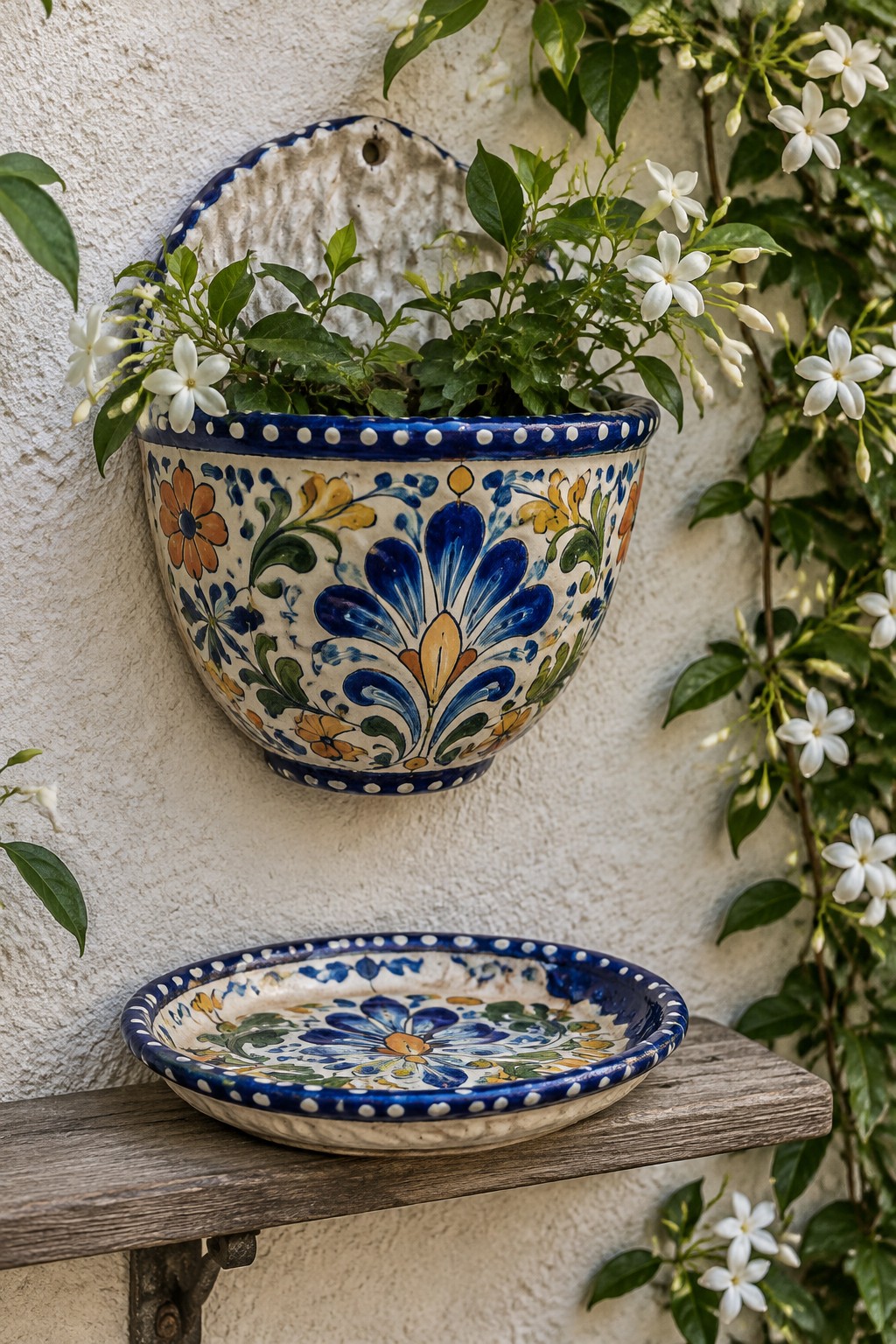
A hand-painted Talavera wall planter paired with a shallow matching plate makes a coordinated garden display. The planter’s curved bowl shape suits flowering vines, while the blue, green, and ochre floral pattern carries across both pieces without needing identical designs.
Use the plate beneath the planter as a catch saucer, or place it on a nearby shelf to echo the painted pattern at a lower level. The same pairing could be adapted with smaller pots or a compact herb planter, keeping the colors consistent while varying the shapes.
Pair Rosemary and Thyme in Floral Talavera Planters

Hand-painted Talavera planters can be paired by using different painted patterns on pots that share a similar blue-and-cream palette. Here, a larger floral planter and a smaller scalloped pot hold upright rosemary and a low-growing herb, making the pair a decorative container idea for a porch or patio.
The size contrast gives herbs room to grow while keeping a smaller pot close at hand for a second variety. Try matching the blue trim while changing the main motif, or repeat one flower on both pots for a more coordinated set; this approach also works with leafy patio plants.
Pair Geometric and Floral Talavera Wall Planters
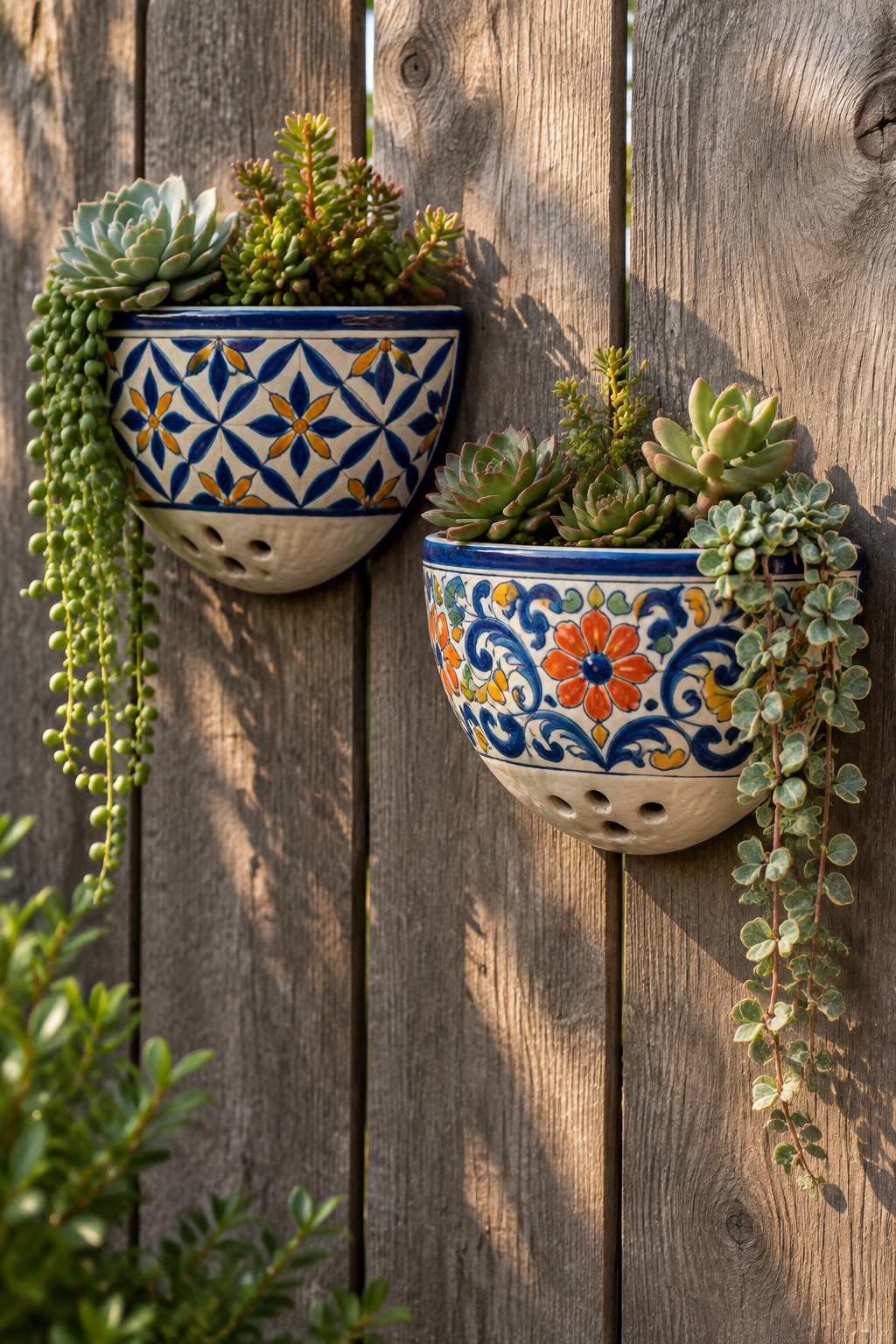
Handmade Talavera-style ceramic wall planters pair painted patterns with a practical hanging form for succulents. The smaller planter’s repeating blue-and-yellow geometry balances the larger planter’s scrolling blue vines and orange flower, so the two designs feel coordinated without matching exactly.
Use this pairing on a sunny fence or patio wall, choosing plants with different shapes so rosettes and trailing stems each have room to stand out. To adapt the idea, repeat one color across both pots while varying the motifs, or use a simpler painted pattern if you are making a single planter.
Pair a Fruit-Pattern Talavera Watering Jug With a Matching Planter

A hand-painted Talavera watering jug can double as a decorative planter when its open top holds a leafy herb or succulent. Pairing its fruit motif and blue floral details with a round planter in a related painted pattern makes the two pieces feel connected without requiring identical designs.
Use the jug for a compact plant display on a patio step or windowsill, and choose a matching planter for a flowering plant nearby. To adapt the pairing, repeat one fruit or flower motif across both pots, or keep the jug patterned and use a simpler blue-rimmed planter so the designs do not compete.
Pair Hanging Talavera Baskets by Floral and Geometric Pattern

Hanging ceramic planters pair a densely painted floral pattern with a simpler blue-and-yellow geometric design. Their rounded bowl shapes and rope hangers suit trailing flowers and foliage, while the different patterns keep the pots distinct without competing for attention.
Hang a pair beneath a porch beam or along a covered patio, and vary the flowers to complement each pot’s colors. For a simpler version, use one painted motif across both planters and change only the pattern scale; a matching pair also makes a useful way to bring color overhead where floor space is limited.
Pair Variegated Foliage With a Rosemary Talavera Pot

A pair of handmade ceramic planters can link different plants through a shared painted pattern. Here, matching green bodies and blue, yellow, and green floral bands bring a leafy pothos and upright rosemary together, making this a useful example of pairing Talavera pots by color and motif.
Use the larger pot for a leafy houseplant and the other for a compact herb, adjusting the sizes to suit their roots and growing needs. Repeating one painted pattern across different planter shapes or sizes is an easy way to coordinate a windowsill or patio without making every plant display look identical.
Pair a Medallion Talavera Planter With a Repeating Floral Cylinder

A rounded Talavera planter with a large painted medallion makes a strong partner for a taller, straight-sided pot covered in a smaller repeating flower pattern. The shared blue, yellow, and green palette ties the handmade ceramic planters together, while the different shapes and pattern scales keep the pairing from looking too matched.
Use the pair on a sunny patio step or by an entry, with a leafy trailing plant in the rounded pot and a compact plant or spare gardening tools in the taller one. To adapt the look, repeat one color across both pots and vary the painted motifs, or simplify the medallion into a single floral design. The contrast between a bold centerpiece pattern and an all-over repeat also makes this combination easy to save as inspiration for arranging mismatched Talavera pots.
Pair Rosemary, Mint, and Parsley in Botanical Talavera Pots

Hand-painted Talavera planters with botanical motifs make a coordinated set for growing kitchen herbs. The different leaf designs help distinguish each pot, while the shared cream, blue, and floral palette keeps the group visually connected.
A balcony rail or sunny patio is a practical spot for arranging herbs this way, with each plant kept in its own pot for easy harvesting and care. Adapt the idea by matching pot patterns to herb labels, or use just two planters with contrasting motifs if space is limited.
Pair Stacked Talavera Planters With Succulents
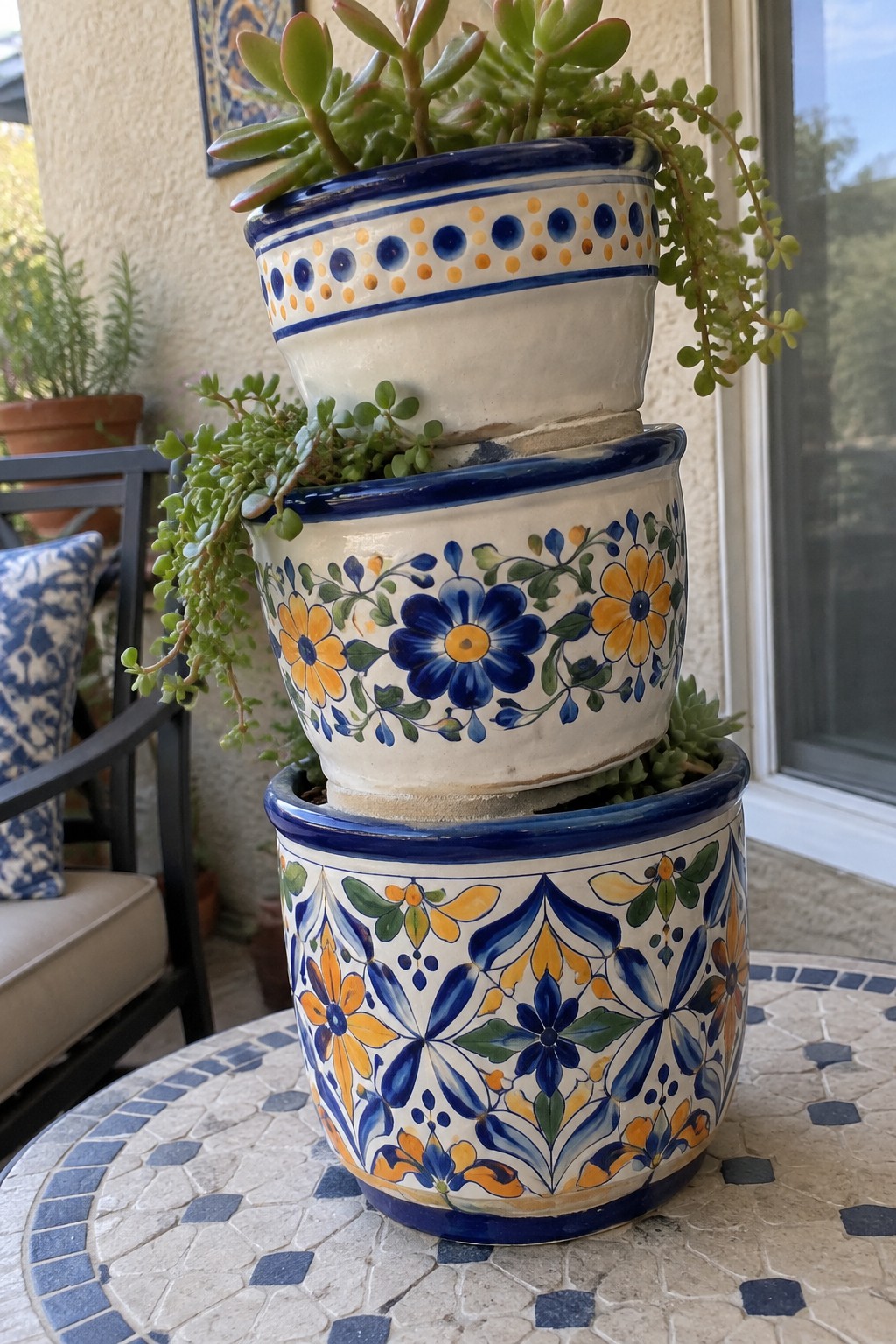
A tiered arrangement of handmade Talavera ceramic planters pairs different painted patterns with succulents in contrasting shapes. The small upper pot has a dotted blue-and-ochre band, while the larger pots below use floral designs, so the stack feels coordinated without repeating one motif throughout.
This setup makes good use of a patio corner or a sunny spot beside a door, especially when trailing succulents can spill over the rims. Keep the patterns in a shared blue, yellow, and green palette, or simplify the look with plain pots between decorated ones; varying the planter sizes also gives the stack more visual rhythm.
Pair Pine-Motif Talavera Bowls With a Matching Bonsai

Hand-painted Talavera-style bowls make distinctive shallow planters for bonsai or other compact plants. Their low, rounded shape gives roots room to spread, while a repeating blue-and-yellow border ties the pair together and the pine-tree painting echoes the bonsai form.
Use the bowls together on a patio table or garden bench, or separate them to make small trees stand out in different spots. You could adapt the design with a simpler painted border or a different tree motif, keeping the pattern consistent across two sizes for a coordinated display that photographs well.
Pair Floral Talavera Planters With Candlelit Table Decor
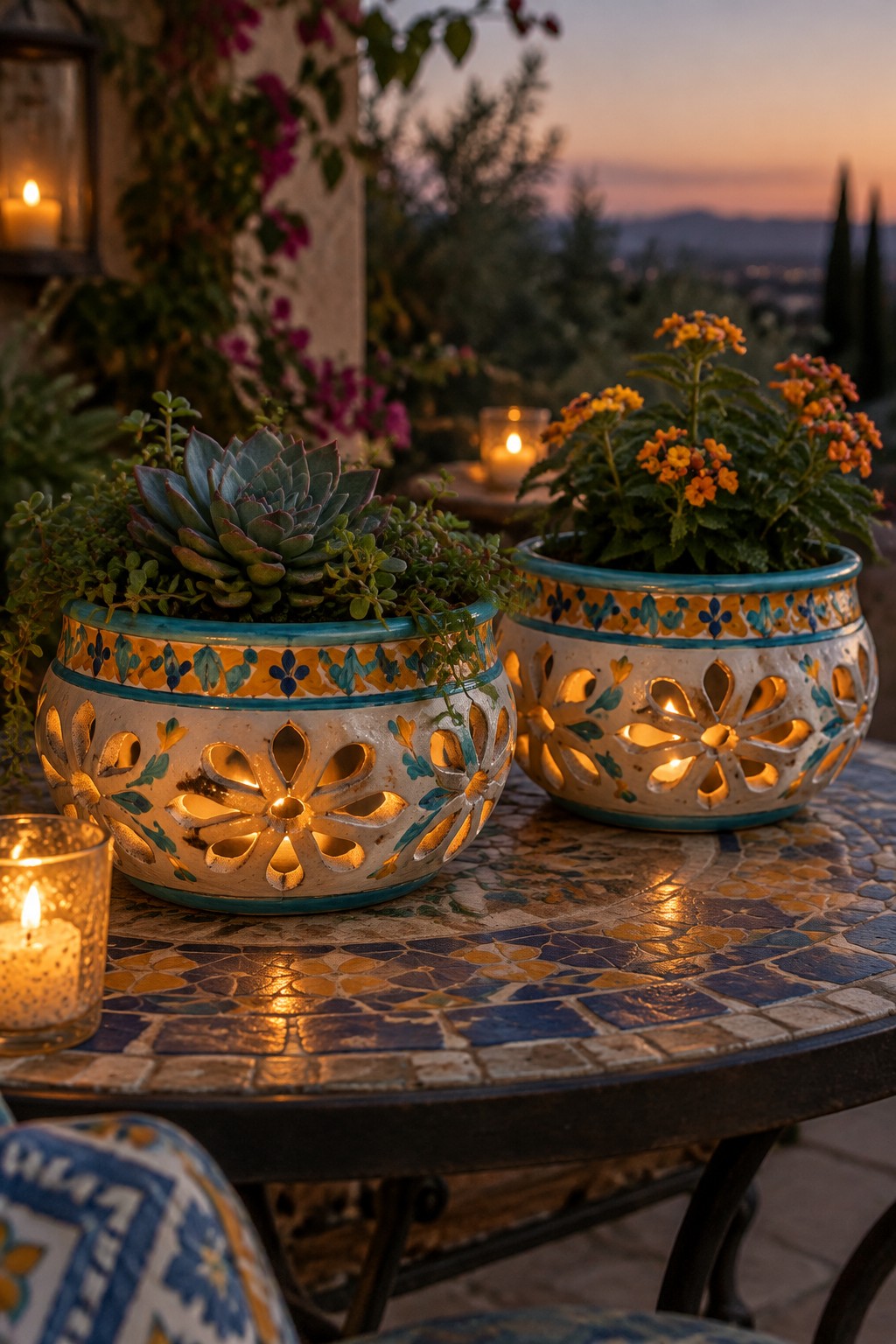
Hand-painted Talavera planters can anchor a patio table when their floral patterns and colors are echoed in nearby decor. The rounded ceramic pots pair leafy succulents and flowering plants with a patterned mosaic tabletop, while candle holders add warm light around them.
For a similar arrangement, group planters in two sizes and vary the plants so their shapes do not compete with the painted designs. Keep the palette coordinated with the table, then add a few candle holders for evening use; the same setup can be adapted to a balcony or outdoor dining area.
Frequently Asked Questions
Choose pots that share at least one visual feature, such as a color, motif, or border style. For example, combine several patterns that use cobalt blue and yellow, or pair floral designs with pots that have similar geometric borders. Varying the patterns while repeating a few colors makes a collection feel intentional rather than overly uniform.
Floral patterns pair naturally with leafy or vine-inspired designs. Geometric patterns, such as diamonds, stripes, and checkerboards, can balance more detailed illustrations. If you want to mix bold patterns, choose one pot with a large, prominent design and pair it with pots featuring smaller or simpler motifs.
There is no fixed limit, but three to five patterns often create a balanced grouping. For a smaller area, use two or three patterns and repeat them across different pot sizes. In a larger display, you can introduce more patterns, but keep a few colors consistent so the arrangement does not feel scattered.
Vary the height, size, and placement of the pots. Put larger pots toward the back or at the center, then use smaller ones around them. Leave a little space between intricate patterns, and place a simpler design next to a particularly colorful pot. This gives each pattern room to be noticed.
No. The plants do not need to match, but their colors and shapes can help balance the display. Green foliage works with nearly any Talavera design, while flowering plants can echo a color in the pot. For a busy pattern, choose a plant with a simple shape; for a plain or less detailed pot, a fuller or more colorful plant can add interest.

Pottery Path is my cozy corner of the internet where I share clay ideas, pottery inspiration, and simple projects you can recreate at home. I love exploring everything from air dry clay to handbuilt pottery to cute minis that brighten your day. My goal is to make clay crafting feel easy, fun, and welcoming for anyone who wants to try it.
You will find beginner friendly tutorials, creative pottery painting ideas, and lots of warm inspiration for slow and happy crafting. If you enjoy hands on creativity, this space will feel like home.