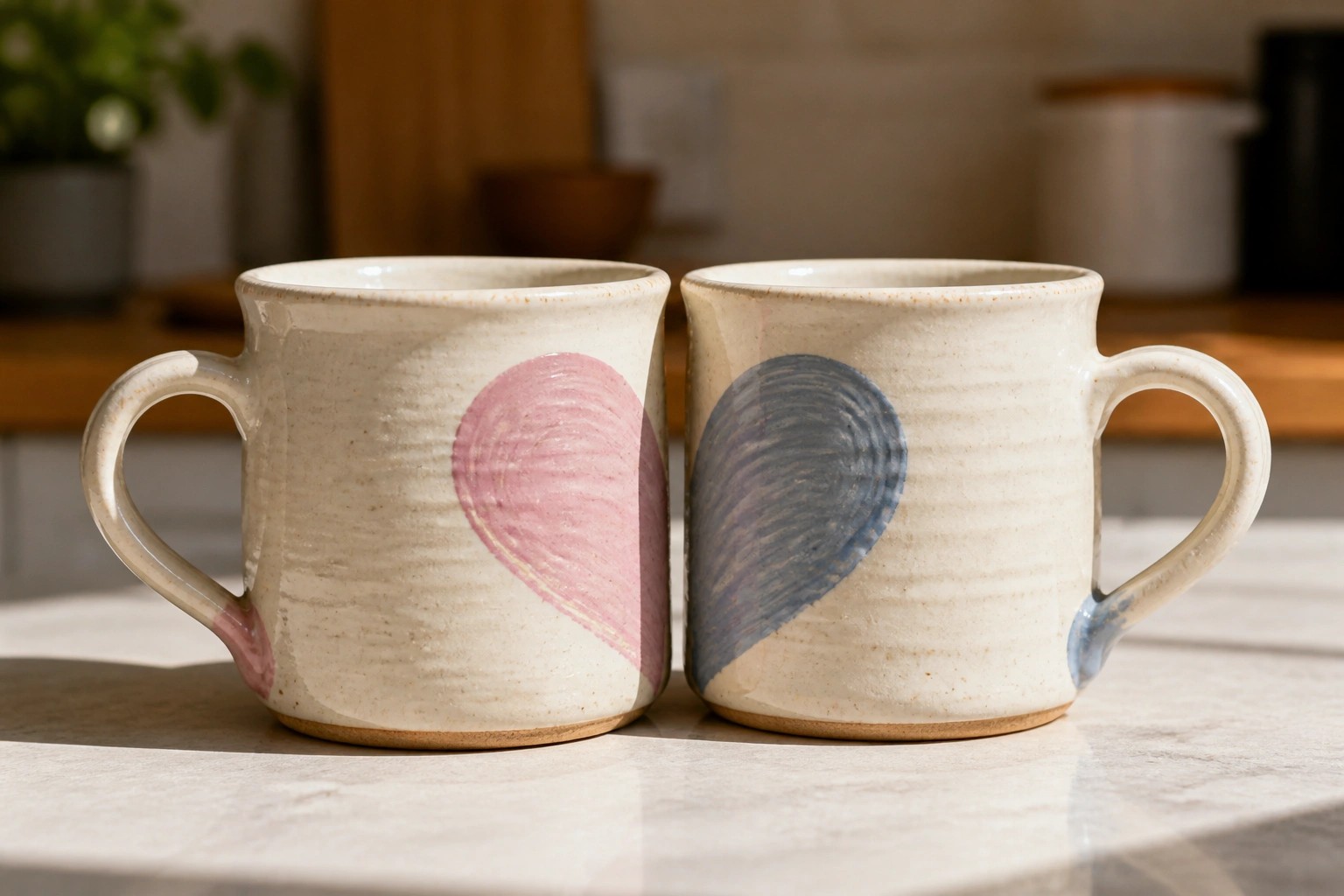
I’ve tried pottery painting with my partner a few times and it always turns into a relaxed afternoon.
My friends and I have done similar sessions too and we usually end up with pieces that match in some small way.
Family activities like this work well because everyone can pick their own design but still feel connected.
I put together these ideas after testing out a bunch of combinations myself.
Some of them are straightforward while others add a little twist without getting too complicated.
Split Heart Mugs
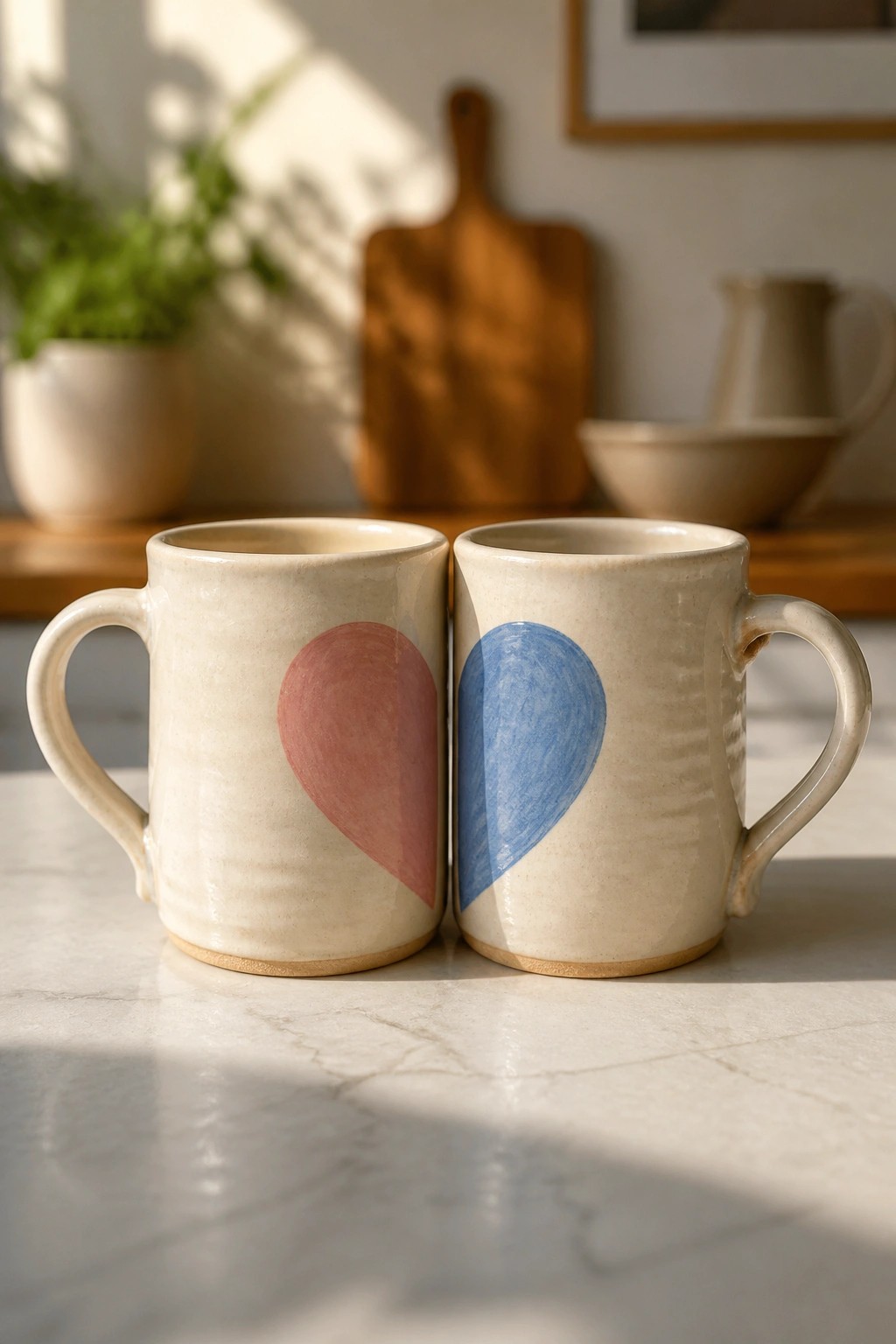
Two stoneware mugs carry simple painted hearts, one in pink and one in blue, sized and placed so the shapes meet when the mugs sit together. The design stays minimal, using only the heart motif on an otherwise plain clay surface with a light speckled finish. This approach keeps the project focused on the matching element rather than added patterns or layers.
What makes this idea useful is how the same split-heart layout transfers to other mug sizes or even small bowls without changing the core steps. You can swap the pink and blue for any two colors that fit a kitchen palette or a specific gift. The painted hearts also give the pair a clear visual link while still letting each piece stand alone on a shelf or in daily use. For a quick session with another person, the motif takes little time to paint once the base glaze is set.
Citrus Slice Bowls
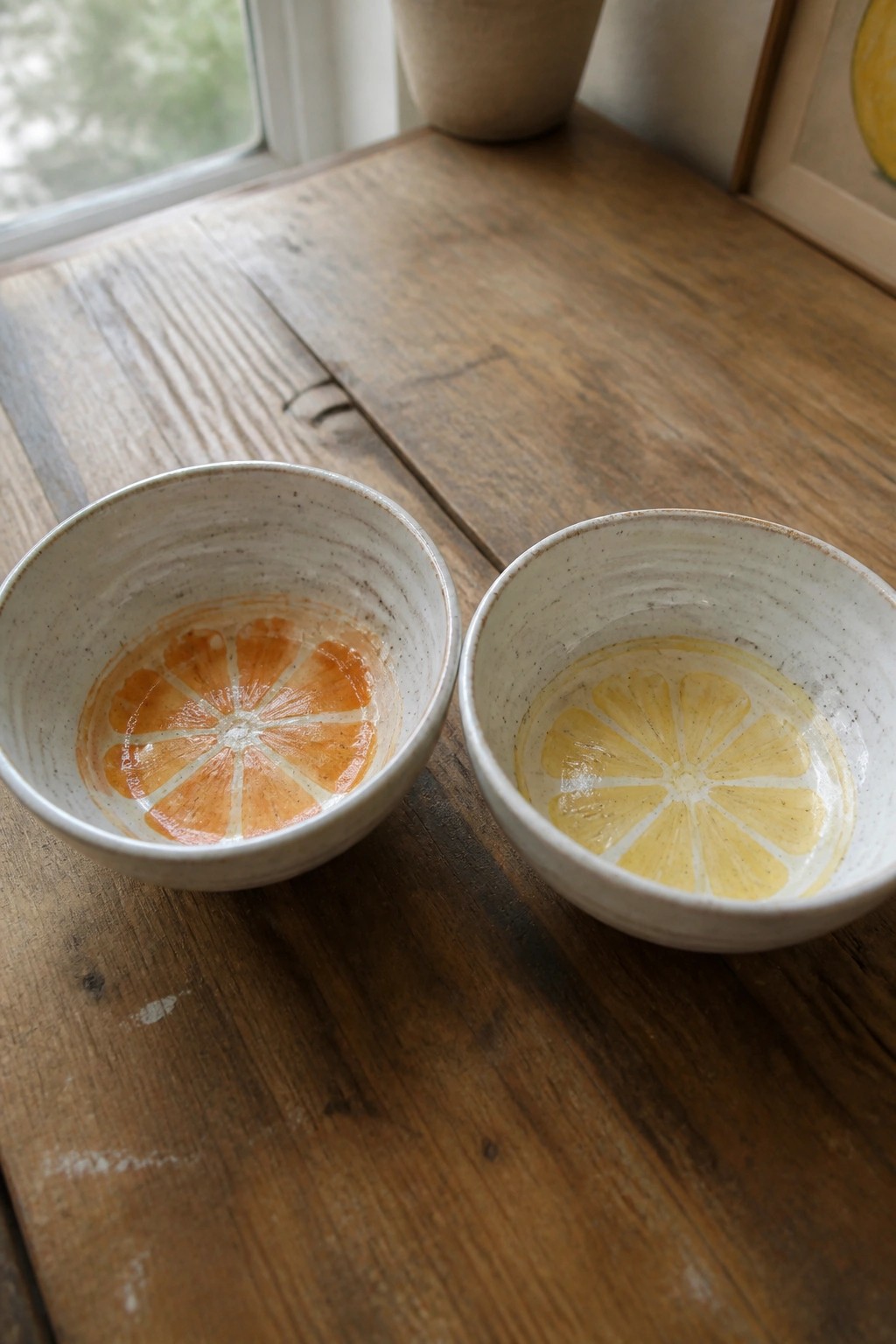
Small ceramic bowls work well for this project when you paint a citrus cross-section straight into the base. The design breaks the fruit into simple wedge shapes using orange or yellow tones against the white clay, with thin lines left to show the segments. A speckled clear glaze covers the rest of the piece so the fruit stays the main focus. This approach turns ordinary bowls into a matching set that fits the kitchen bowl category.
The shape does a lot of the work here because the curved interior already suggests a sliced fruit. You can swap the colors for lime or grapefruit without changing the layout, or scale the same motif down for small plates. These bowls suit breakfast tables or snack setups since the painted area stays protected from utensils. For a gift set, paint one bowl per person using their favorite citrus type.
Puzzle-Fit Plates with Spiral Dot Patterns
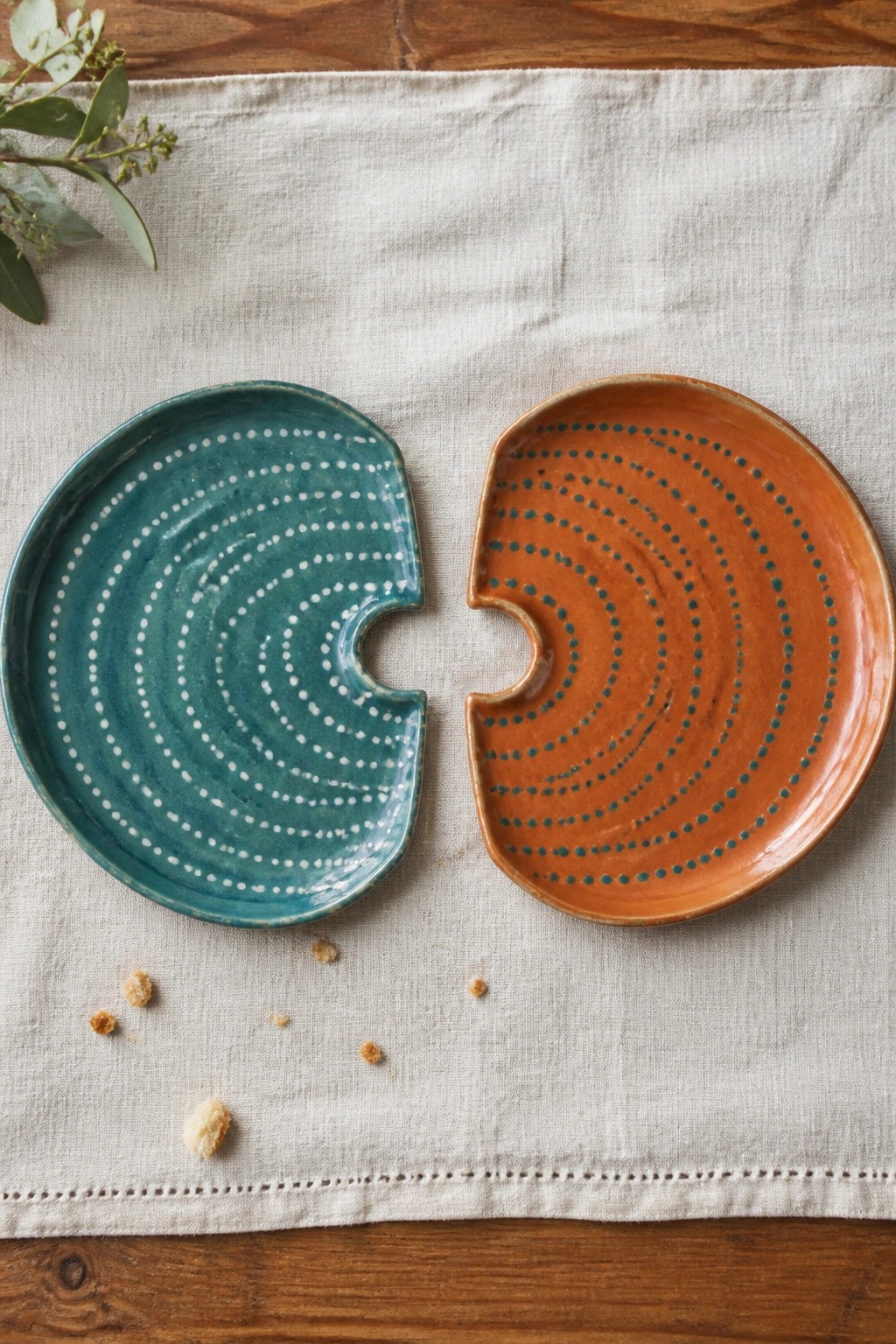
Two shallow ceramic plates are formed with matching notches so they sit side by side as one unit. Each plate carries a simple spiral of dots, one in white on teal glaze and the other in teal on orange glaze. The cutout shape and repeating dot layout turn two separate dishes into a single coordinated set that suits shared snacks or appetizers.
What makes this idea useful is the built-in pairing that lets two people paint their own plate during the same session while still ending up with matching pieces. The spiral dot layout is easy to repeat with a small brush and remains readable even when spacing is not perfectly even. The same notched shape could be scaled down for small dessert plates or expanded to larger serving platters, and the color pairing can be swapped for any two glazes that contrast well.
Matching Sun and Moon Face Planters
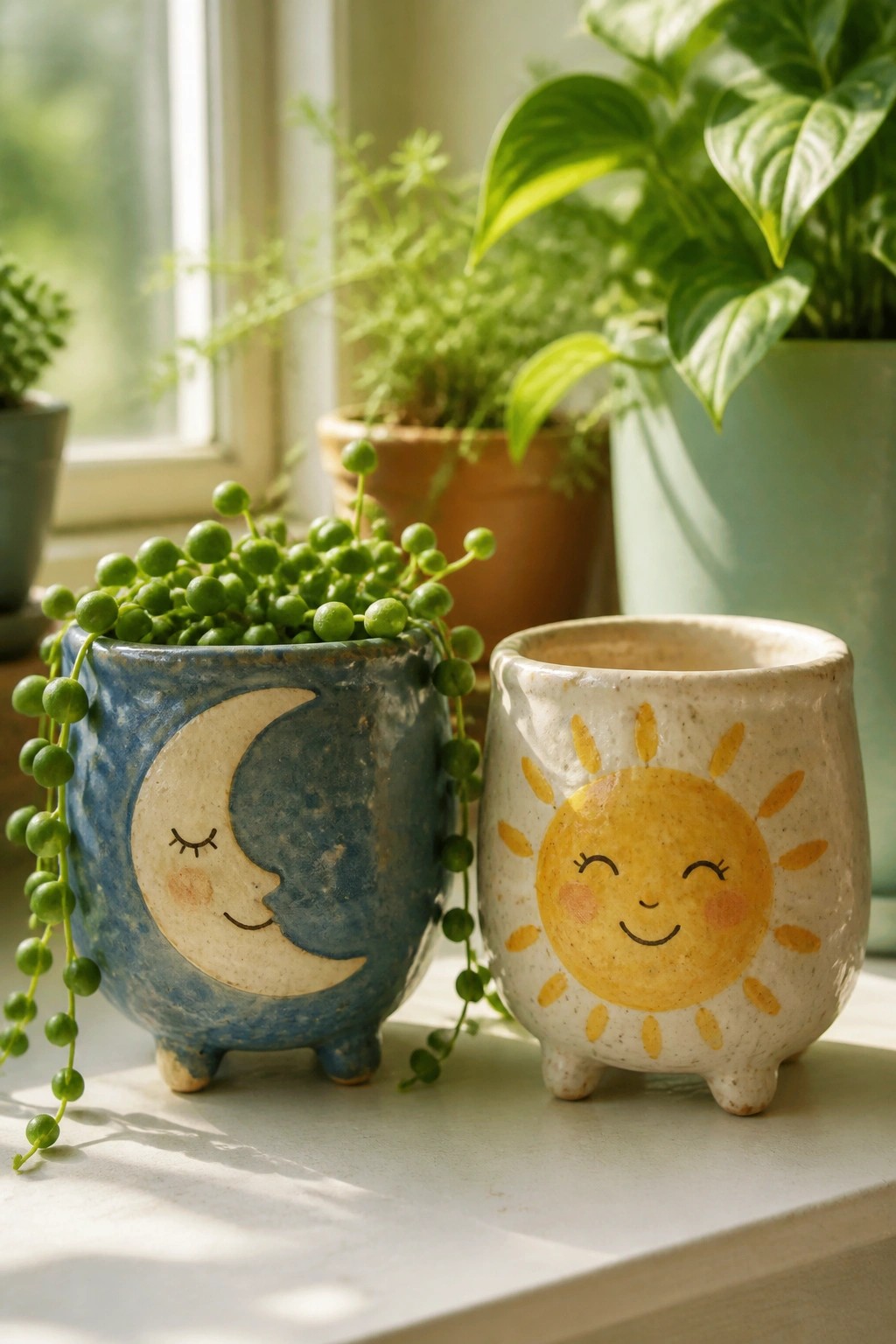
Small ceramic planters work well for this project because the rounded shape gives plenty of surface area for painting. One pot uses a blue glaze background with a white crescent moon and simple face details, while the other uses a light speckled clay body with a yellow sun, rays, and matching face. The contrast between the two color schemes makes the pair easy to match without needing identical glazes. These count as decorative planters suited for small trailing plants or succulents.
The round form and short feet keep the focus on the painted motifs while still holding soil. You could repeat the same sun and moon faces on matching mugs or small bowls if planters do not fit your space. Each person can paint one piece during a shared session, then swap or keep their own. The bold color blocks and clear outlines photograph cleanly, which helps the idea translate to other simple shapes like ring dishes or small trays.
Matching Landscape Painted Tiles
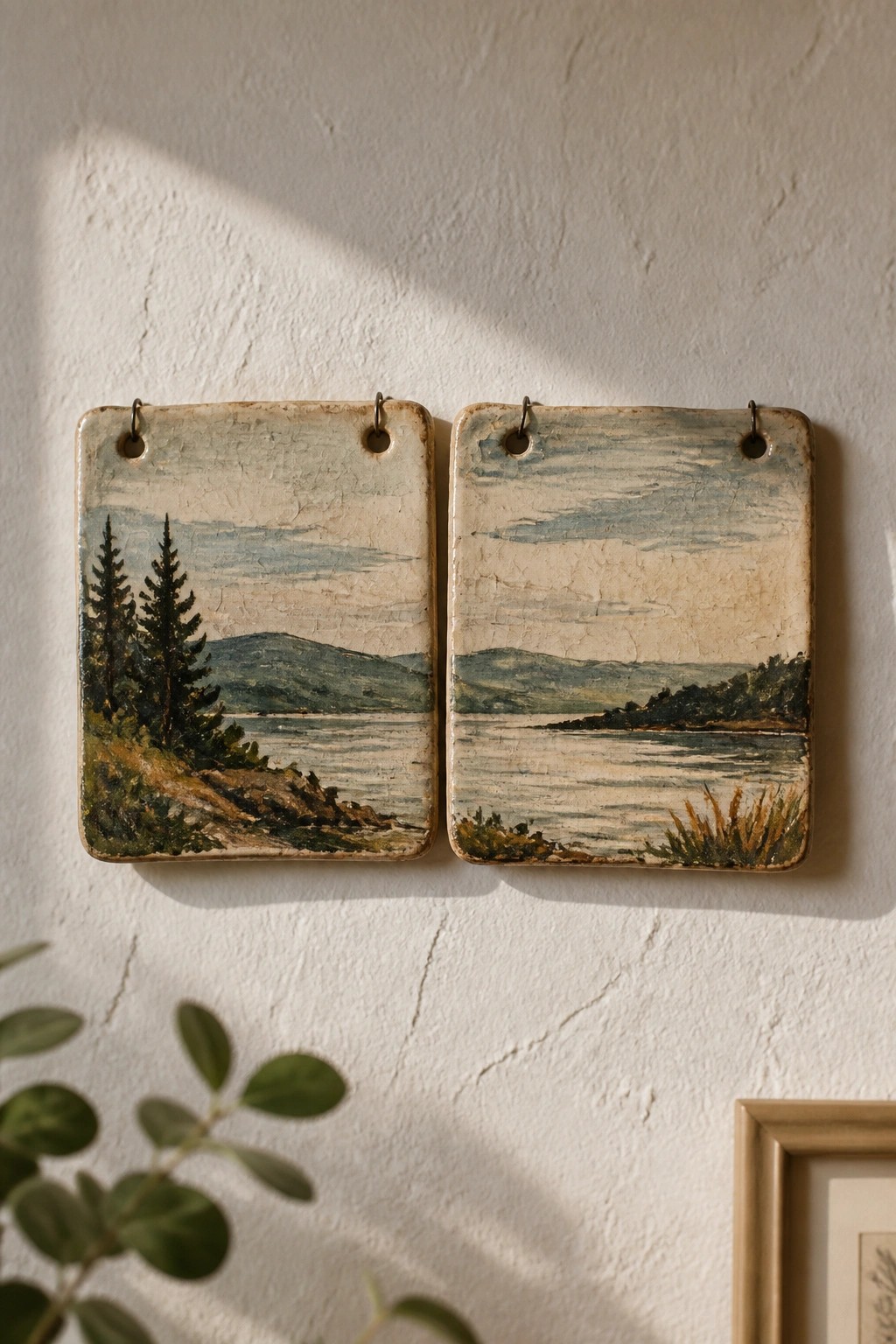
Rectangular ceramic tiles work well for this project because their flat surfaces give plenty of room for simple landscape scenes. Each tile shows a lake view with hills, trees, and sky painted in muted greens and blues, finished with a crackled surface that highlights the brushwork. Two holes drilled at the top of each tile make hanging straightforward with small hooks or wire. The matching compositions let two people divide the work while keeping the final result coordinated.
What makes this idea useful is the straightforward division of labor, where one person blocks in the sky and water while the other adds trees and foreground details. The shape adapts easily to different sizes, so the same layout could become smaller tiles for coasters or a single wider piece by joining two together. In a living room or hallway these tiles take up little space yet create a clear focal point above furniture. For a shared activity the pair format keeps both people involved without requiring advanced sculpting skills.
Rectangular Trays with Branch Motifs
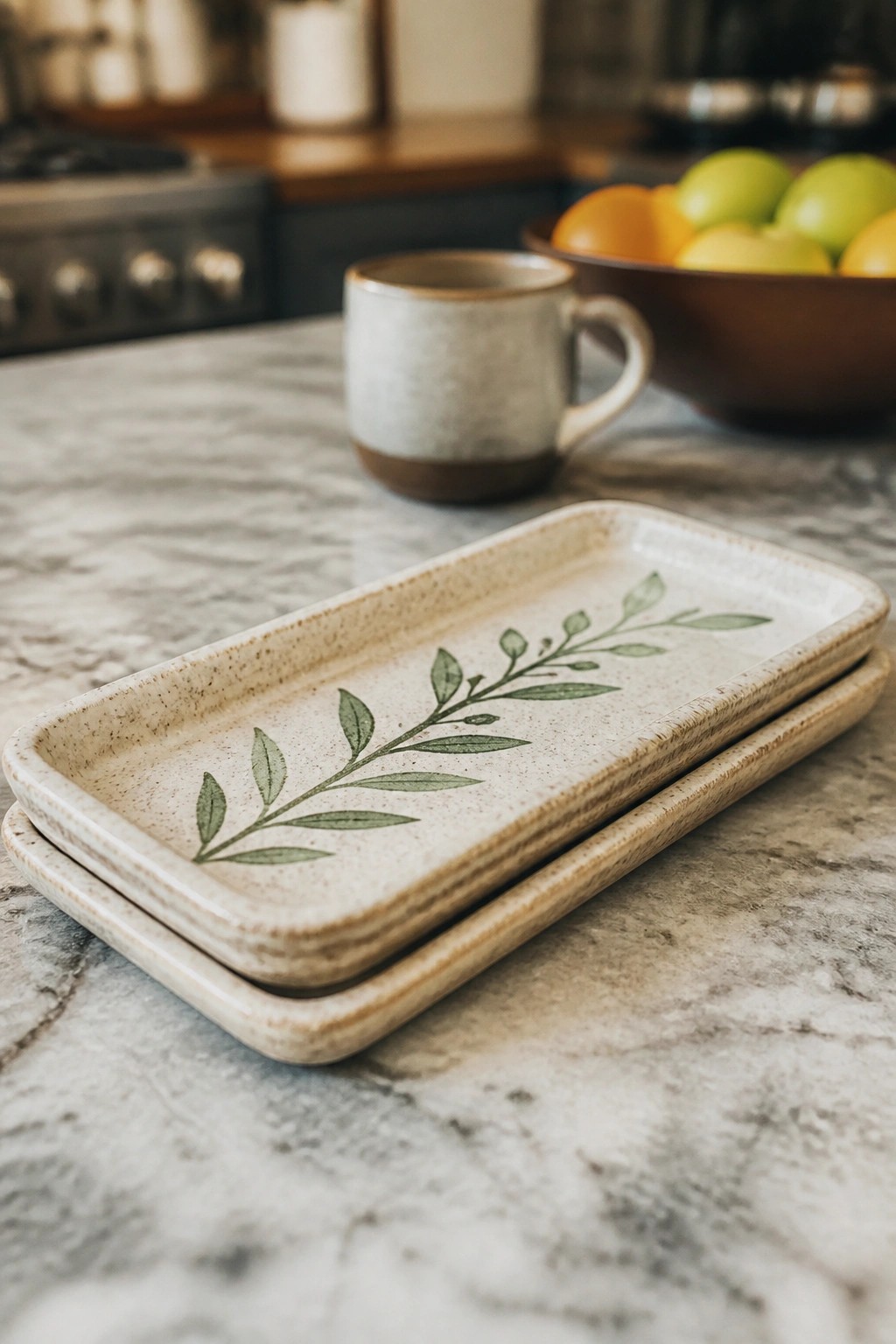
Rectangular ceramic trays painted with a single green leafy branch create a simple project that works well for couples or small groups. The design uses one continuous motif across the center of a speckled light glaze, which keeps the painting straightforward while still covering the surface. These trays function as both serving pieces and catch-all items because of their flat shape and low edges.
The shape does a lot of the work here since the long rectangle gives space for a horizontal branch without needing extra detail. You can adapt the idea by changing the plant to different leaves, adding initials, or shortening the motif to fit smaller trays or coasters. In a kitchen this kind of piece holds fruit, napkins, or small tools while staying easy to stack and store.
Coordinated Fruit Spoon Rests
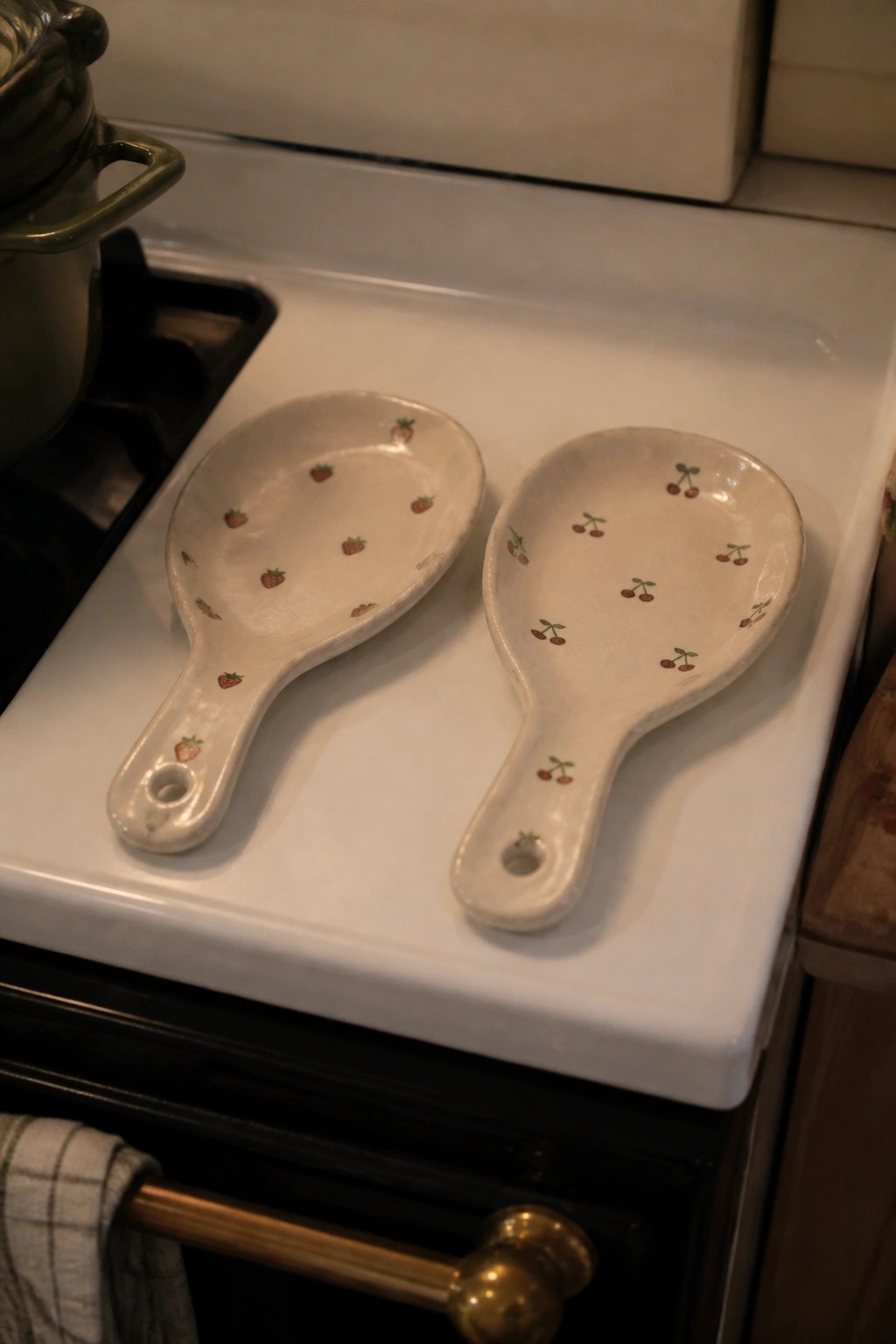
Ceramic spoon rests work well as a matching pottery project because the simple oval shape and short handle give a clear surface for painted details. Each piece is glazed white and finished with a scattering of small fruit motifs across the bowl area and handle. One rest uses strawberries while the other uses cherries, keeping the same layout and scale so the two pieces read as a set even though the designs differ.
The shape does a lot of the work here because the shallow bowl and hanging hole make the rests practical for stove or countertop use right away. You can easily adapt the idea by choosing any small repeating motif that fits the space, such as herbs, dots, or leaves, and still keep the pieces coordinated. For a group activity, each person can paint a different fruit or pattern on the same spoon rest form to create a full matching set. In a kitchen this kind of piece stays visible and useful without taking up much room.
Flower Petal Ring Dishes
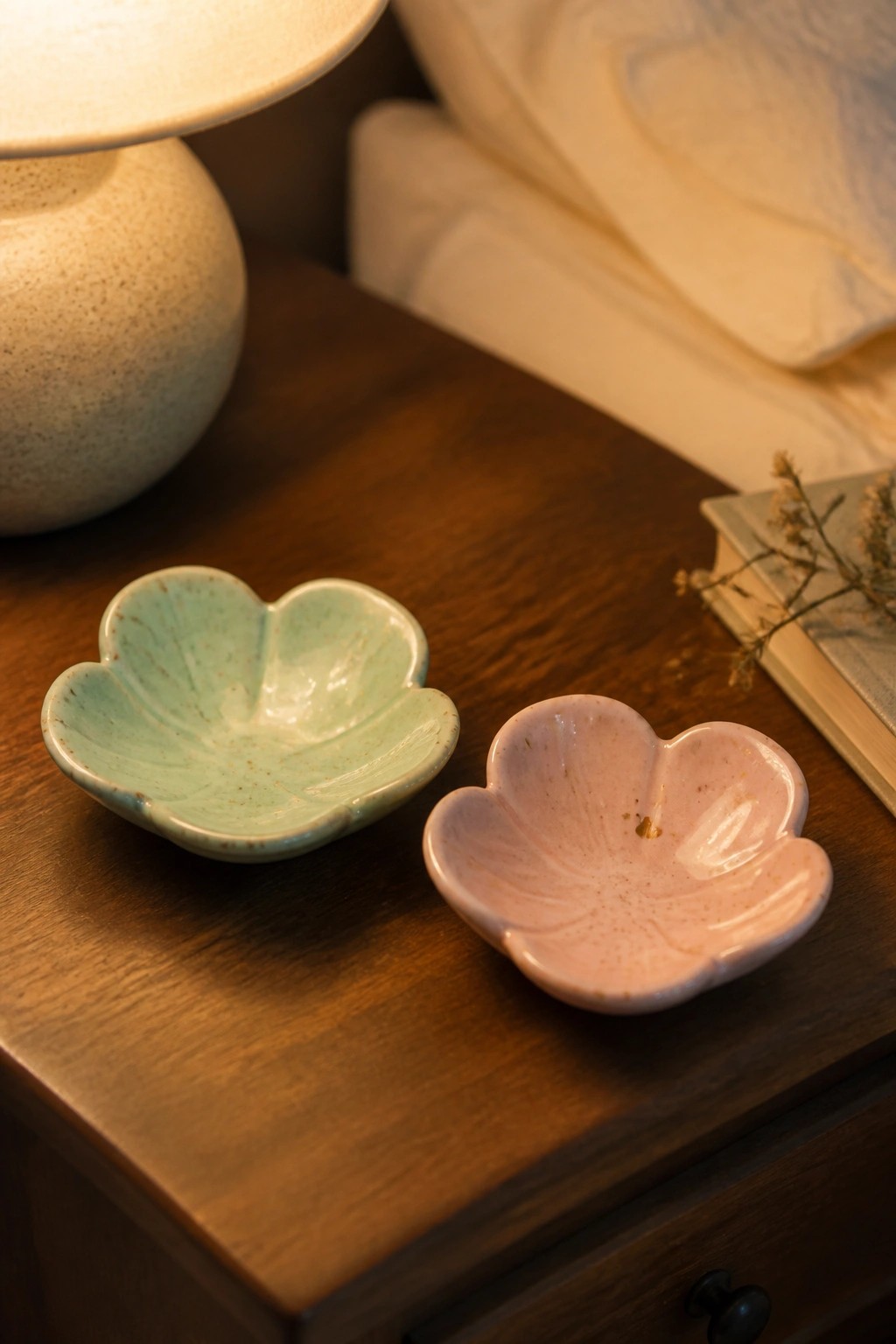
These small ceramic dishes use a simple flower shape with five rounded petals that form the rim and create a shallow bowl. The hand-formed edges and soft speckled glazes in mint and blush keep the design clean while the matching pair makes the project easy to repeat. The size stays compact enough to sit on a nightstand or vanity without taking up space.
What makes this idea useful is how the petal shape works as both a ring holder and a small catch-all without extra carving or handles. You can adapt the same form into soap dishes or small spoon rests by widening the center slightly. Painting matching sets in different color pairs gives couples or friends a quick shared project that still looks intentional on a dresser or shelf. The small scale also makes these pieces fast to bisque and glaze in one session.
Celestial Tea Light Bowls
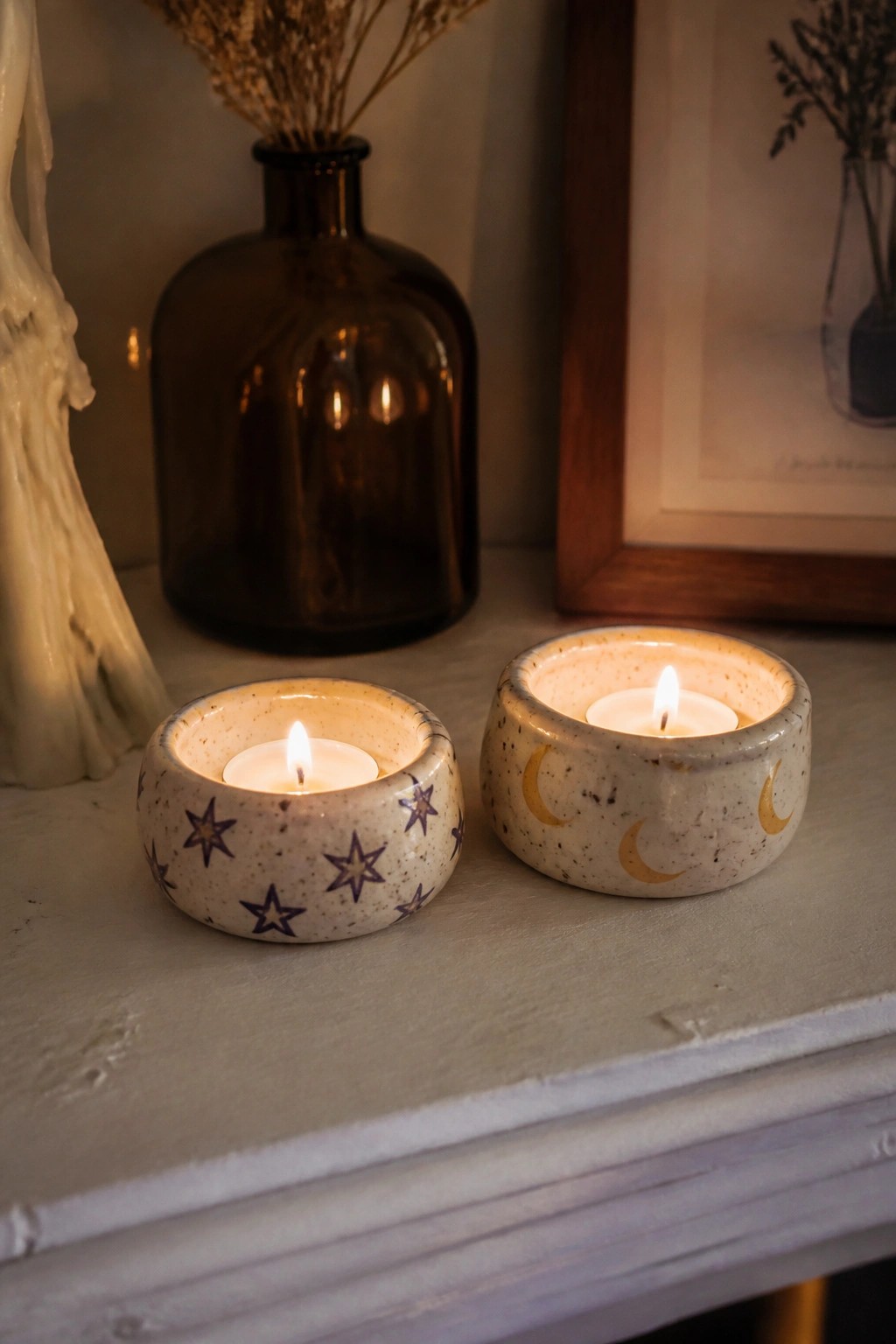
Small ceramic bowls work well as tea light holders when painted with repeating motifs around the outside. One bowl uses dark blue stars while the other features golden crescent moons, both applied over a speckled off-white clay surface. The low rounded form keeps the flame at a safe height and lets the painted pattern show clearly from most angles.
What makes this idea useful is how the compact shape fits on narrow shelves or mantels without crowding other objects. You can adapt the same bowls by switching to different simple repeat patterns like dots, lines, or leaves and still keep the same candle function. For a gift, make a set of four with two different motifs so the pieces coordinate without matching exactly. The painted detail helps the bowls remain decorative once the candles burn out.
Animal Figurine Salt and Pepper Shakers
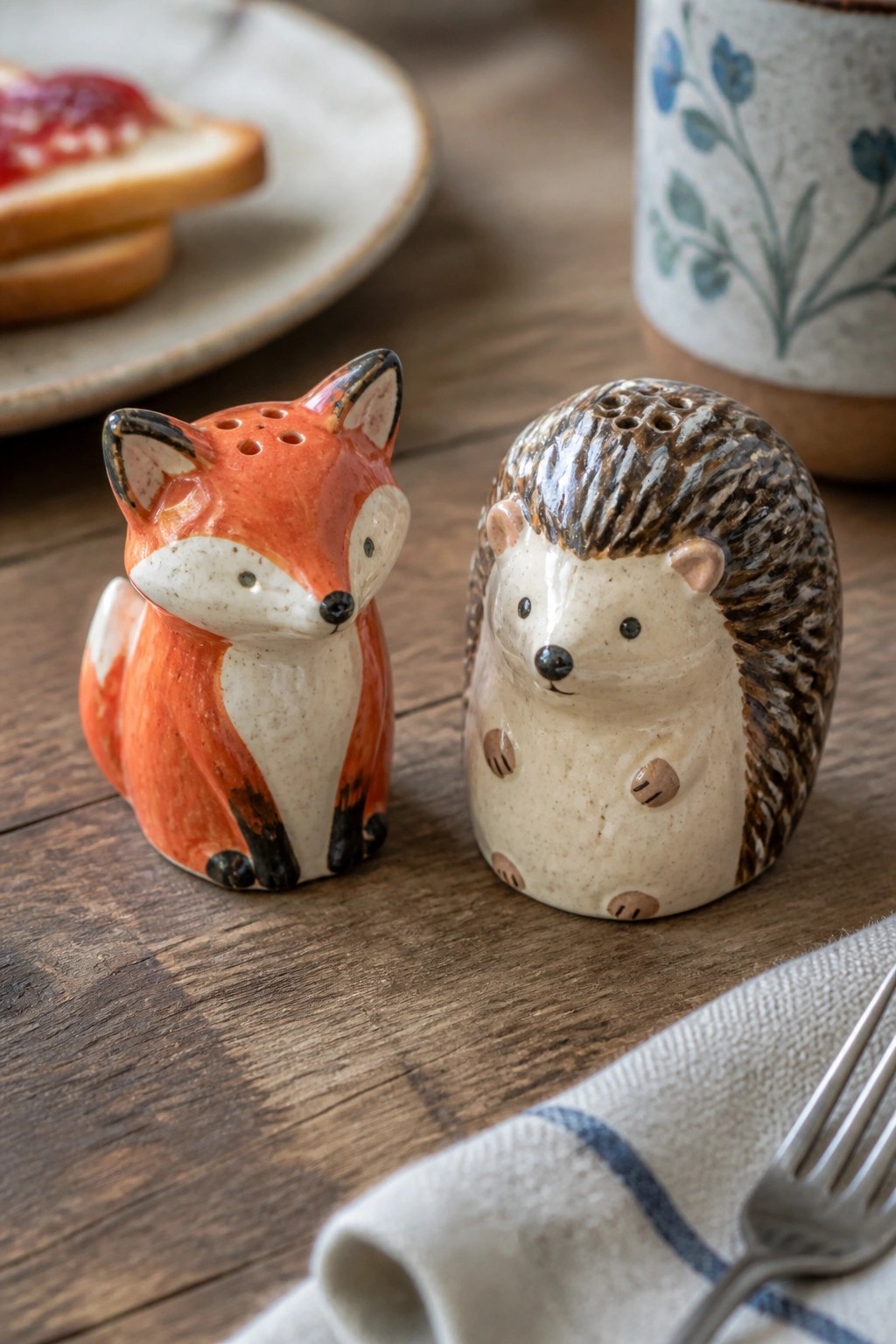
Ceramic animal figurines make simple salt and pepper shakers when the bodies are sculpted with flat bases and small holes are added on top. The fox uses an orange and white glaze split down the middle with black accents on the ears, paws, and tail tip, while the hedgehog relies on a textured brown spine area over a cream body with dotted feet. Both pieces stay small enough to sit together on a table without taking much space. This approach turns a standard pair of shakers into a matching set that works as a kitchen item or light decor piece.
The small scale makes these easy to paint in one session as a couple or family activity. You can swap the animals for any other pair and keep the same hole placement so the idea stays functional. A set like this fits well on a dining table or kitchen counter where the painted details stay visible during meals. For a different version, try the same shapes as small planters or just decorative figures without the holes.
Matching Penguin Figurines with Winter Accessories
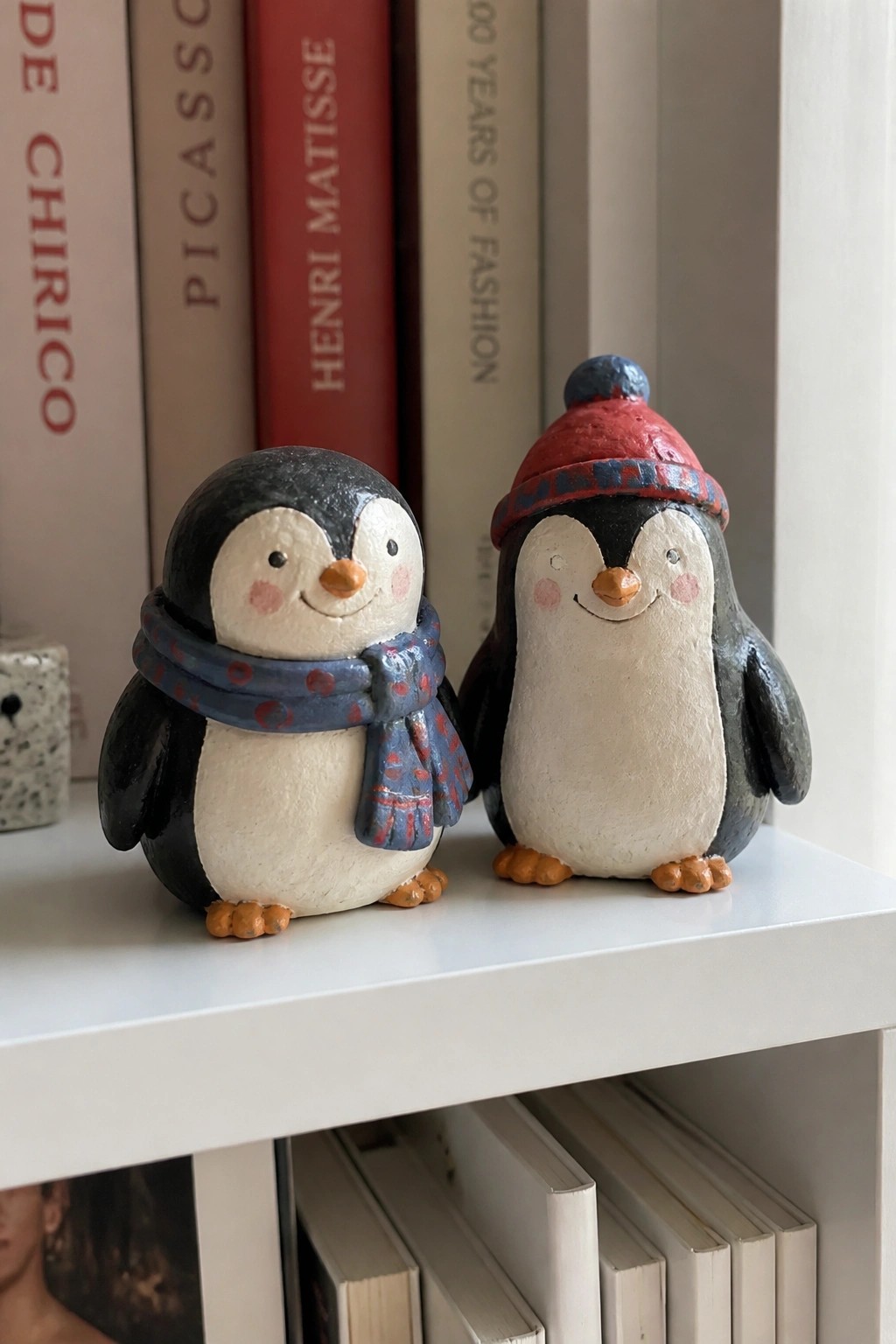
Penguin figurines work as a straightforward clay project where you shape two rounded bodies with simple heads, beaks, and feet, then add separate accessories like a draped scarf or a fitted hat. The black and white painting on the bodies stays minimal, while the blue scarf with red dots and the red-and-blue hat give each piece its own detail without complicating the forms. Orange paint on the beaks and feet plus small pink cheek marks finish the look. This type of project falls into the decor object category and suits anyone who wants to make a matching set.
What makes this idea useful is how the basic penguin shape can be repeated with different accessories to create pairs without starting over each time. A set like this fits on a shelf, mantel, or desk and stays small enough to store easily. You could adapt it by swapping the scarf for a different pattern or changing the hat color to match a season or shared interest. For a gift, the same form works as individual pieces instead of a pair if you only need one.
Matching Yarn Bowls with Spiral Notches
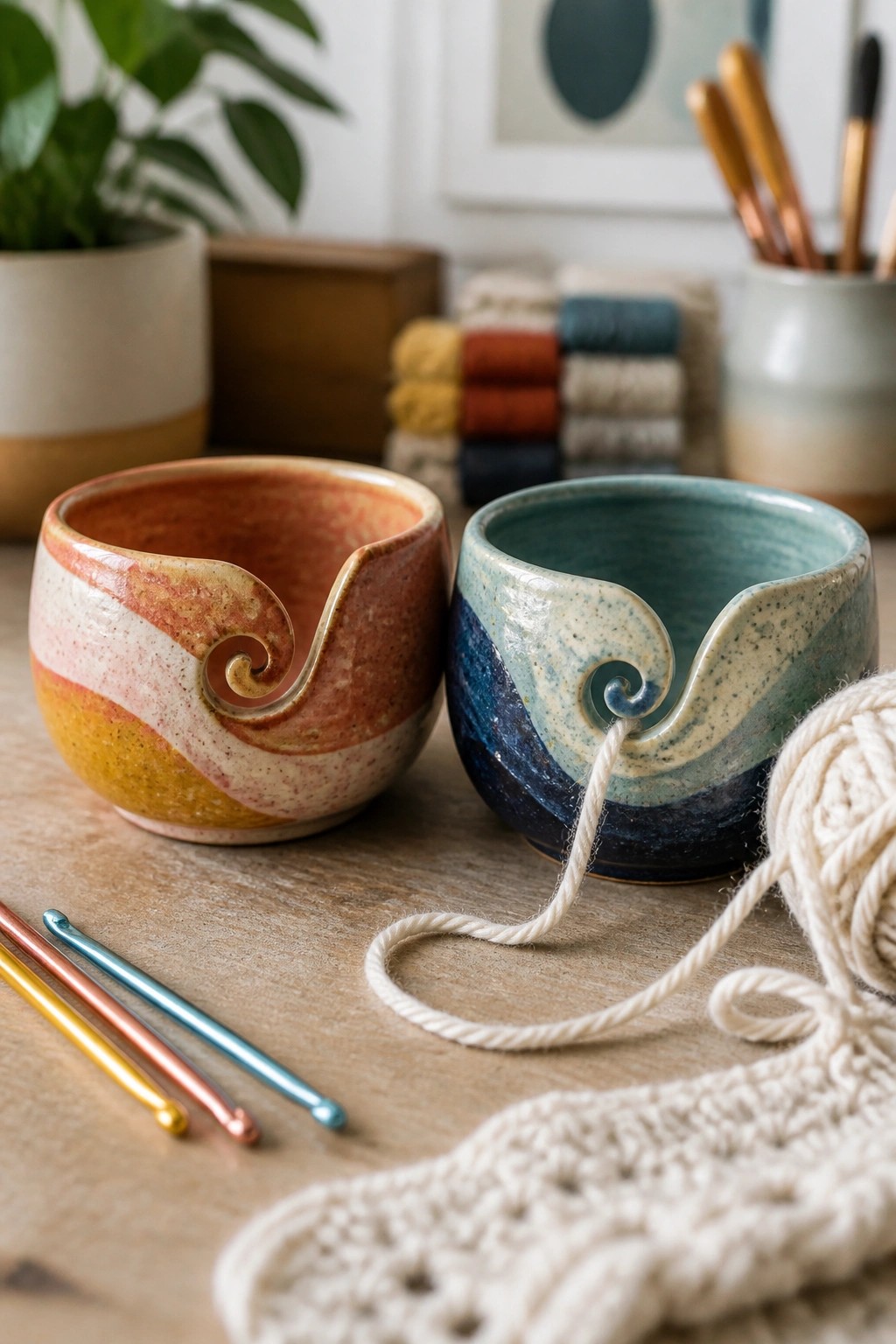
Yarn bowls are a straightforward pottery project that combines a simple rounded form with a functional notch cut into the rim. The notch is shaped into a tight spiral that catches the yarn strand and keeps it from rolling away during use. These two bowls use the same shape but apply different glaze palettes—one with warm horizontal stripes in yellow, orange, and cream, the other with cool streaky blues and greens—to create a coordinated pair without identical decoration. The handmade clay surface and visible glaze variation make the set clearly ceramic rather than mass-produced.
What makes this idea useful is how the same bowl shape works for both solo and paired making sessions. The notch detail can be adapted by making it deeper or shallower depending on the yarn weight you usually use. You could paint the pair in complementary colors for friends or add small initial stamps on the base for couples. In a craft space this size sits neatly beside a project without taking over the table, and the functional cutout gives it a clear purpose that stands out in project photos.
Daisy Painted Toothbrush Holders
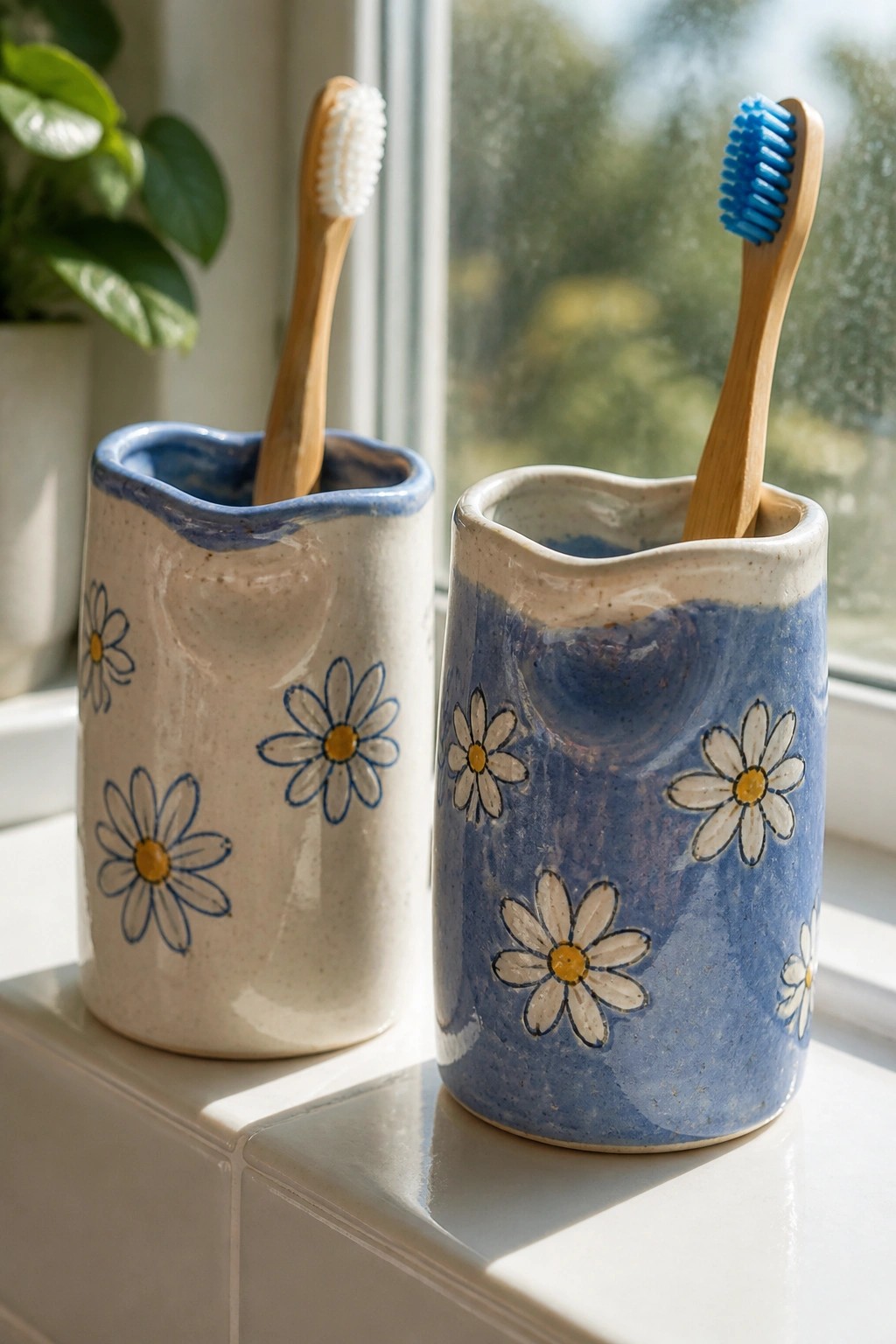
Ceramic toothbrush holders painted with daisy motifs give a simple way to make matching bathroom storage. The cylinders use a wavy rim and two-tone glaze approach, with one piece in blue carrying white flowers and the other in cream carrying blue flowers. The painted daisies sit at different heights and sizes so the design stays loose but still reads clearly from a distance. This turns plain holder shapes into a coordinated set without requiring advanced sculpting.
What makes this idea useful is how the same daisy layout works across swapped color schemes for easy matching. You could paint the motif on soap dishes or small cups to expand the set later. The small scale keeps the project quick to glaze and fire, and the flat sides give plenty of room for different flower placements if you want each piece to look slightly different. For a group activity this keeps the focus on painting rather than building complex forms.
Matching Ceramic Soap Dishes with Oval Glaze Patterns
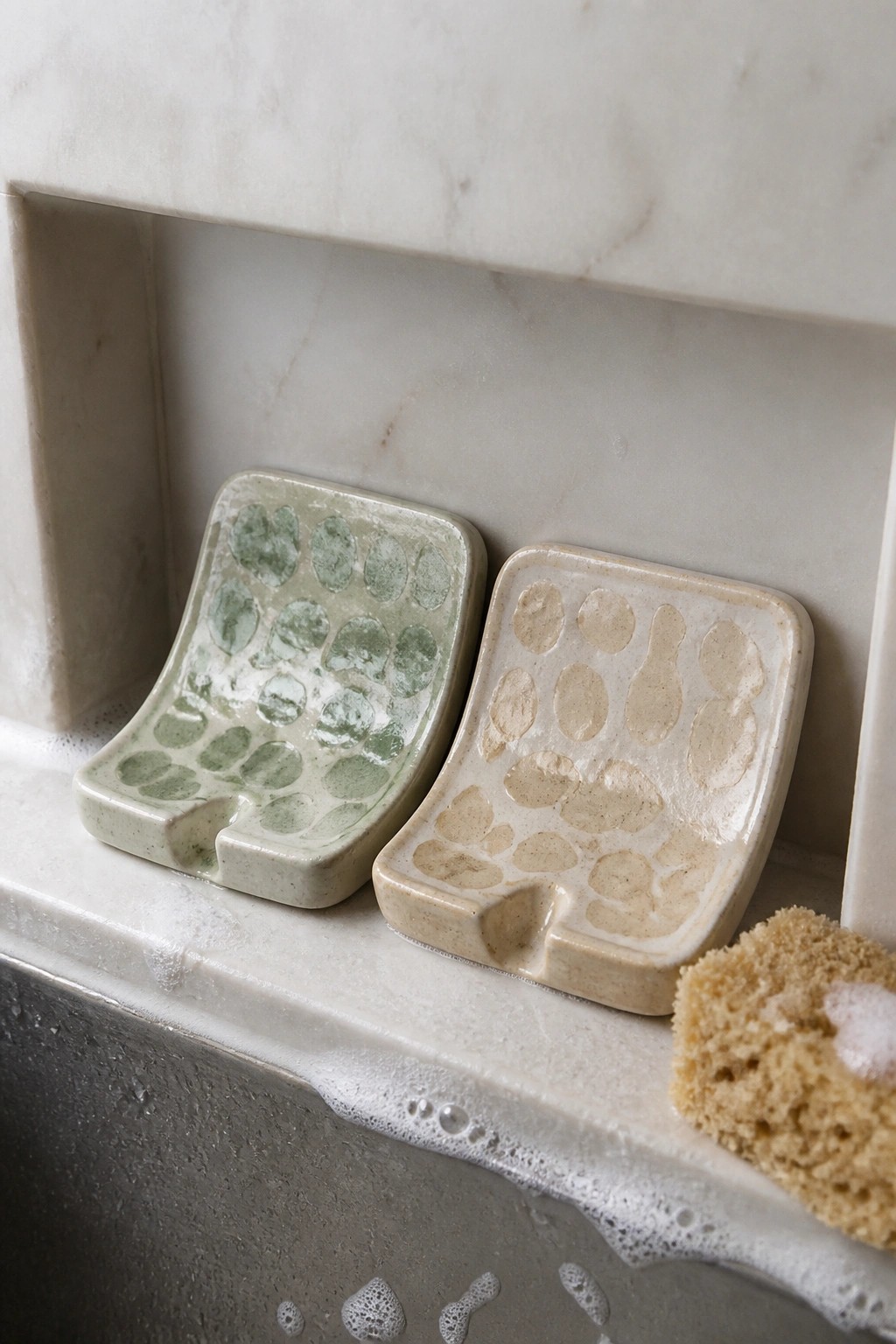
Ceramic soap dishes like these use a curved rectangular form with a drainage notch cut into the front edge to keep bar soap from sitting in water. The surface carries a repeated oval motif applied in the same glaze as the base, creating a tonal pattern that reads as one color from a distance but shows variation up close. This approach works as a bathroom item because the shape stays functional while the motif adds interest without extra colors or layers.
What makes this idea useful is how the oval pattern scales easily across different glaze tones for coordinated sets. The compact size fits on narrow sink ledges or shower niches where larger trays would crowd the space. You could adapt the same dish form with stripes or dots instead of ovals, or make one in each person’s preferred color for a shared bathroom. The drainage notch keeps the piece practical rather than purely decorative.
Matching Dash Pattern Bowls
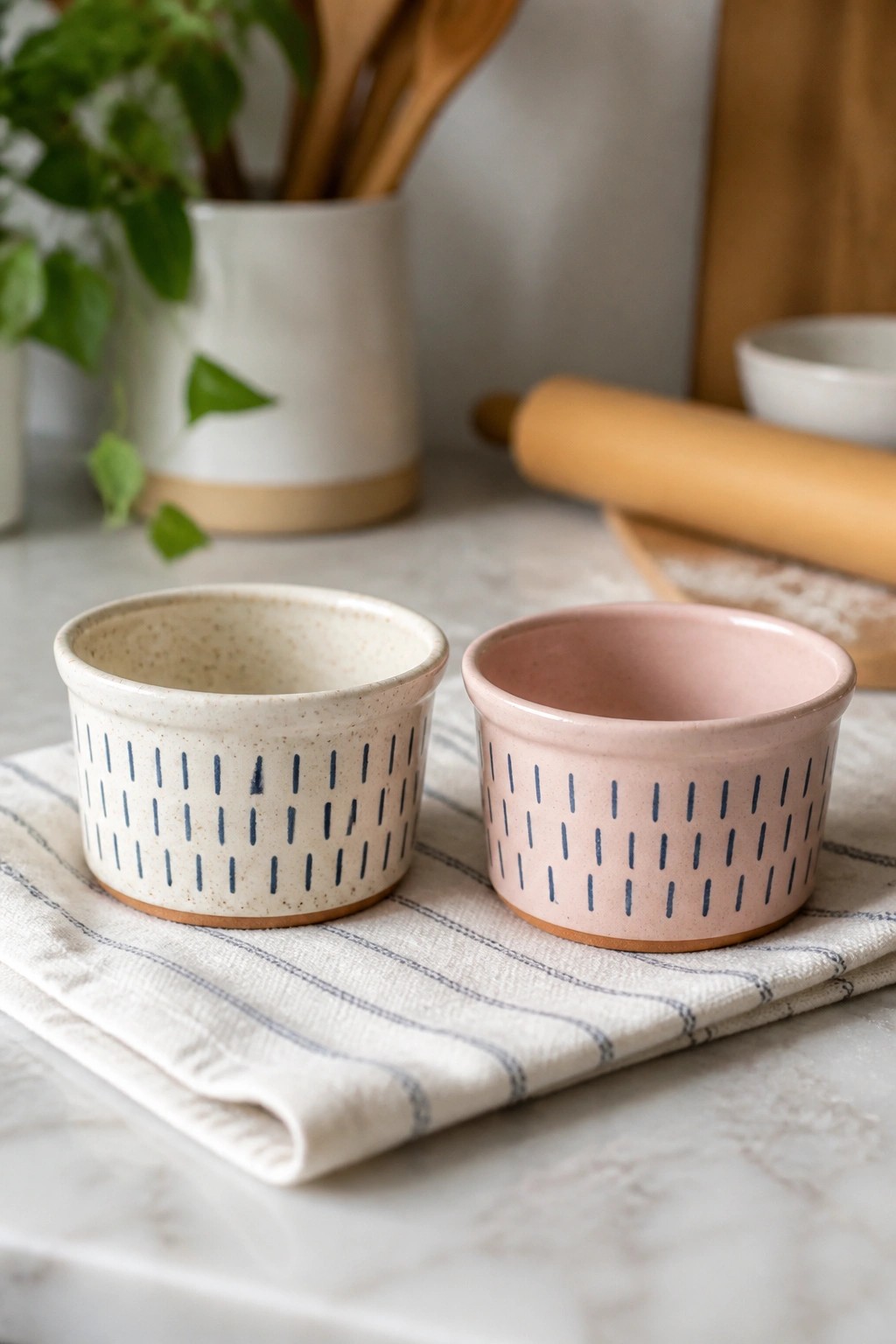
Two small ceramic bowls use the same vertical dash pattern painted in blue around the exterior. One bowl has a speckled cream glaze while the other uses a soft pink glaze, so the shared motif ties the set together even though the base colors differ. The simple line design repeats evenly and works on the rounded shape without needing extra detail or layers.
The small bowl size makes this easy to paint quickly during a group session while still producing usable kitchen pieces. You can repeat the same dash pattern on plates or mugs so each person ends up with a different color but a clear match. The idea works especially well when you want a coordinated look without forcing everyone to use the exact same glaze.
Complementary Glaze Bud Vases
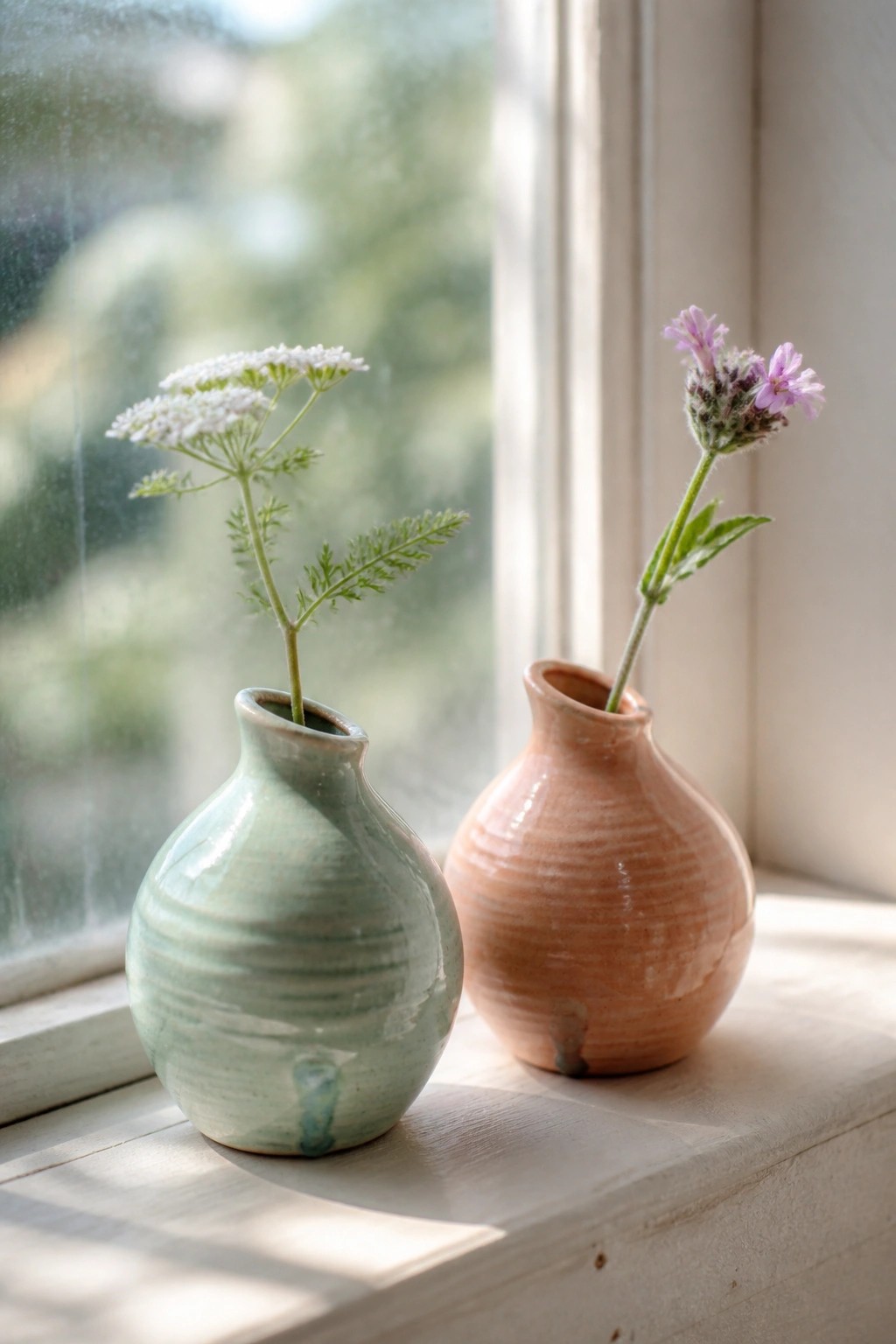
Two small ceramic bud vases make a simple matching project when one receives a soft green glaze and the other a warm terracotta finish. Both share the same rounded body and narrow neck that supports a single stem without extra support. The terracotta piece shows light horizontal ridges from the wheel, while the green one has a smoother surface. This keeps the focus on the form and glaze rather than added decoration.
What makes this idea useful is how the compact shape works on a windowsill, desk, or bathroom ledge without taking much space. You can throw or hand-build the same basic form in one session and let each person choose their own glaze color for a coordinated pair. The design adapts easily if you want to add a narrow band of underglaze around the neck or switch to a matte white for a different look. A set like this stands out on Pinterest because the natural tones and single-stem styling read as clean and intentional.
Painted Face Ceramic Coasters
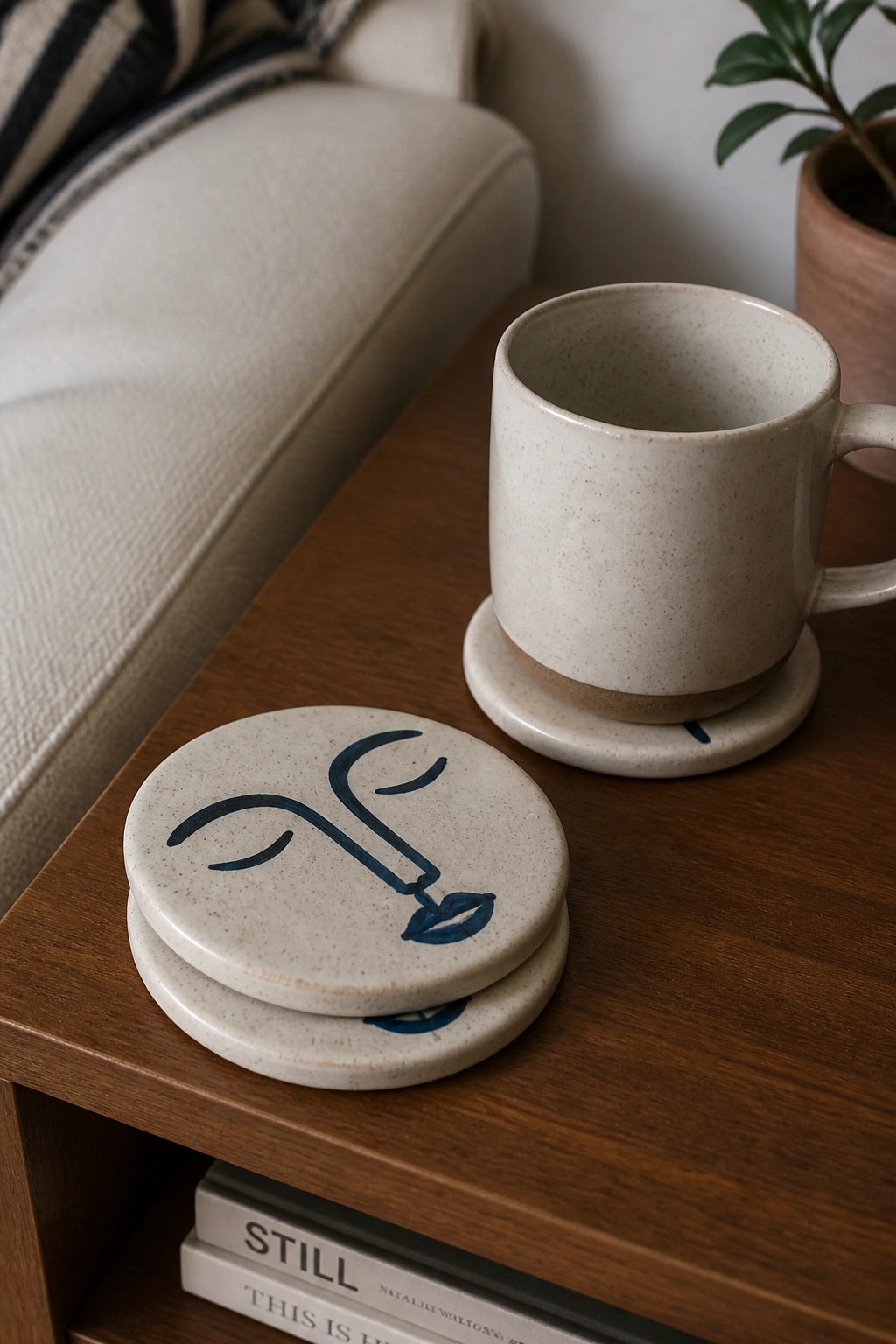
Round coasters formed from speckled clay receive a simple blue line drawing of a stylized face on the top surface. The design uses curved strokes for closed eyes, brows, a nose, and lips, leaving the rest of the light clay exposed. This approach keeps the project limited to flat forms that stack easily and pair with everyday mugs or cups.
What makes this idea useful is how quickly the same face motif can be repeated across a set for matching results. You could change the expression or color on each coaster to give everyone in a group their own version. These fit on side tables or bookshelves without taking much space, and the flat shape makes them straightforward to paint even if you only have basic brushes.
Coordinated Rain and Cloud Ceramic Set
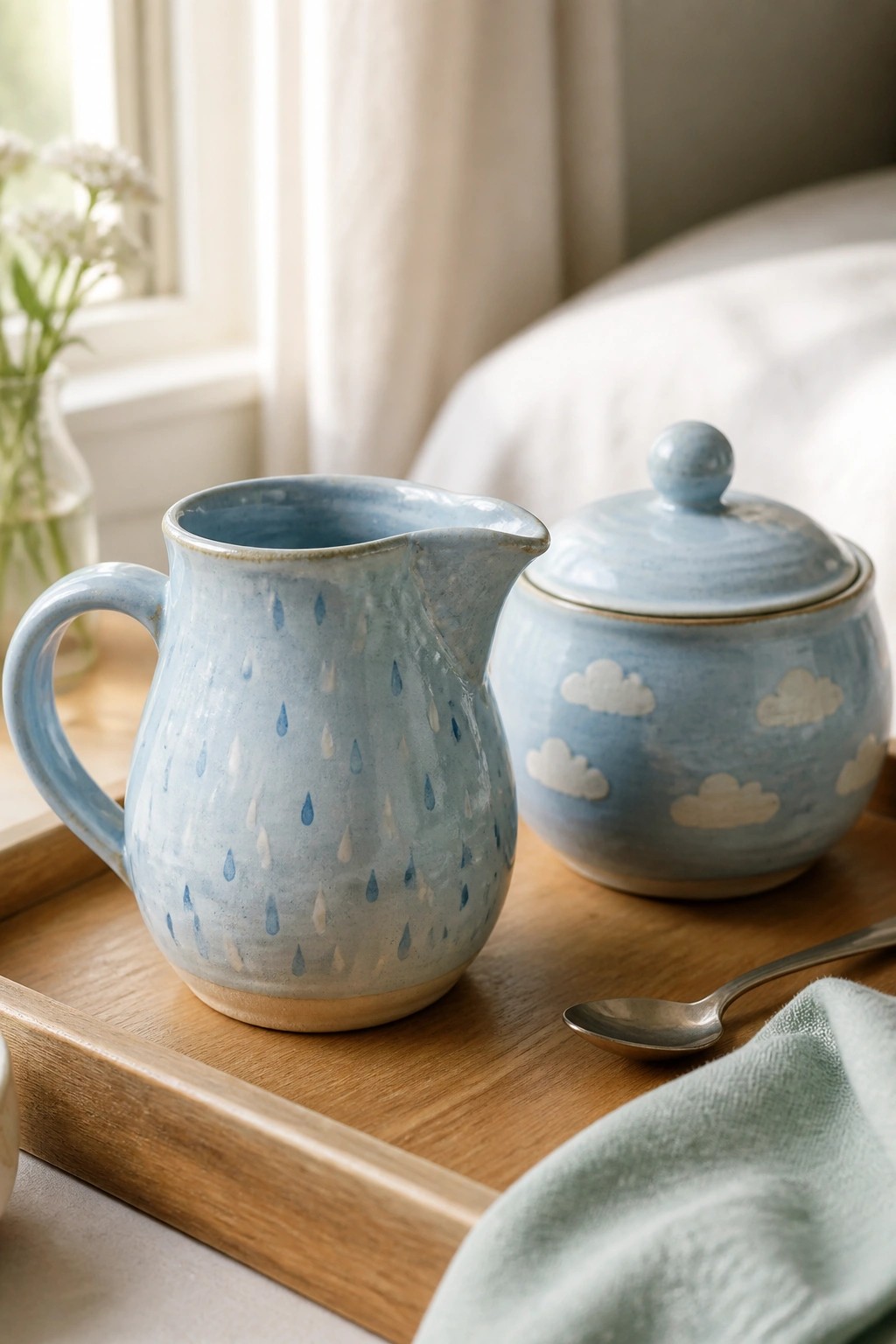
A pitcher and a lidded bowl form a matching pair when painted with simple weather motifs. One piece carries scattered blue raindrops while the other shows white clouds on the same blue glaze base. The shared color keeps the two objects connected even though the painted elements differ. This works as a two-person project where each maker handles one motif on their chosen shape.
What makes this idea useful is that the pitcher can hold cream or syrup while the bowl stores sugar or small snacks. You could swap the shapes for two mugs or a pair of small plates and keep the same rain-and-cloud split. The painted details stay easy to copy on a second round of pieces if you want to expand the set later. For gifts, the matching color and theme make the pair feel complete without extra decoration.
Ceramic Napkin Rings with Leaf Motifs
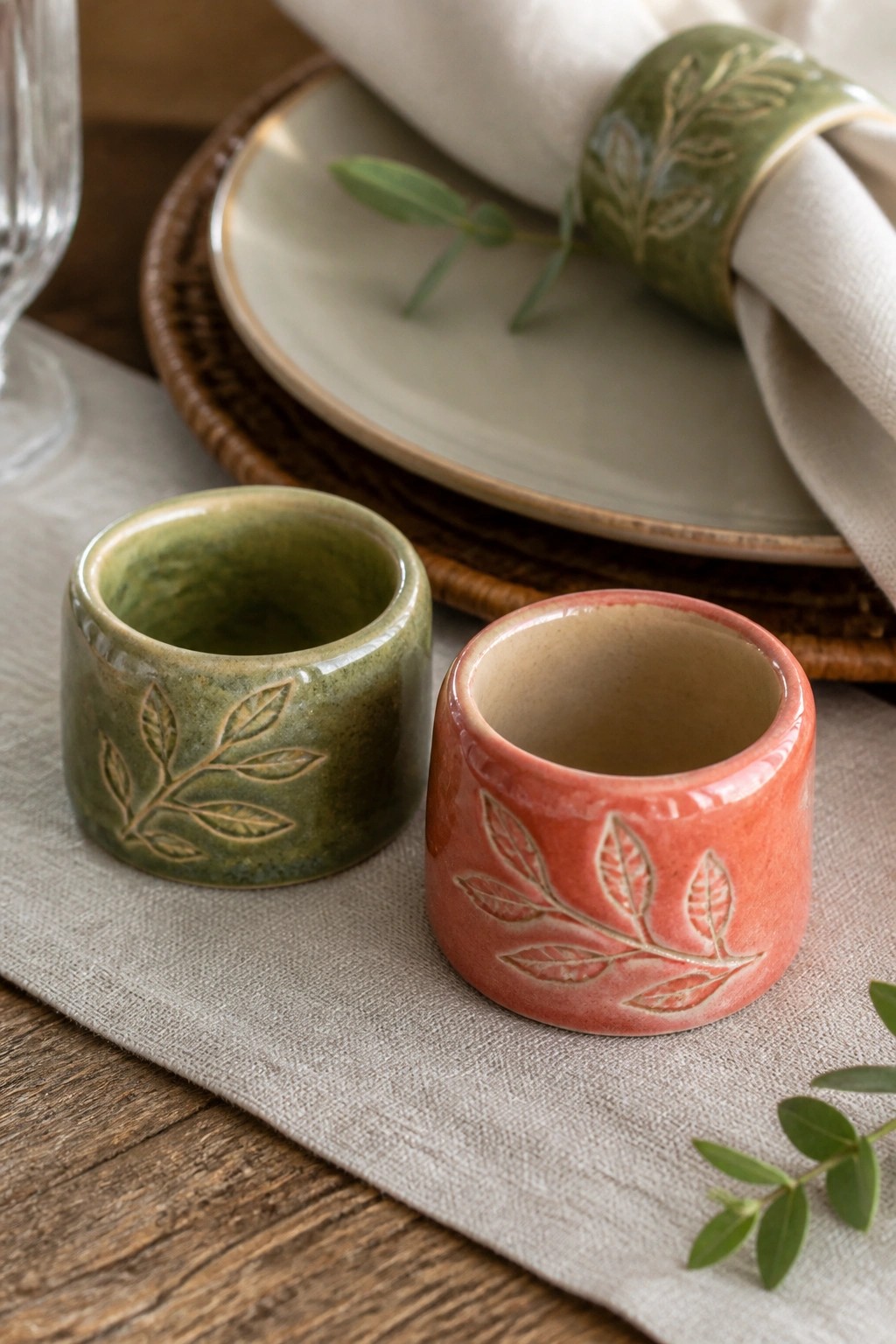
These small cylinders are made as napkin rings using a simple rolled or thrown form. A leaf branch pattern is pressed or carved into the surface before the pieces are glazed, with one finished in a green mottled glaze and the other in a coral tone that keeps the raised details visible. The approach fits the holder category and works because the compact size and textured surface create visual interest without needing complex painting.
What makes this idea useful is that the cylinder shape is quick to produce in batches for matching sets. You can adapt the same leaf impression to small candle holders or drawer pulls if you want to extend the theme. The two-tone glaze choice lets you coordinate with different table linens or seasons, and the finished rings take up little storage space when not in use. For a group activity this project stays manageable because each person can focus on one ring and still end up with a complete set.
Frequently Asked Questions
What supplies work best for creating matching pottery designs at home?
Start with plain ceramic pieces like mugs or plates from a craft store, along with ceramic-safe acrylic paints in complementary colors. Use fine brushes for details and stencils to ensure patterns align across items. Seal the finished work with a food-safe glaze or bake according to paint instructions for lasting results that survive daily use.
How can families adapt the ideas for different age groups and skill levels?
Select simple base designs such as shared color schemes or basic shapes that younger children can fill in while adults add matching accents. Break the session into steps like one person handles the outline and others contribute elements, keeping the focus on fun collaboration rather than perfection so everyone feels included.
What themes suit couples looking for romantic matching pottery projects?
Focus on shared interests like favorite travel spots or inside jokes by painting complementary scenes, such as two halves of a heart or matching landscapes on separate pieces. This turns the activity into a meaningful keepsake that reflects your bond and can be displayed together at home.
How should groups handle timing and coordination during a pottery painting session?
Plan for two to three hours and assign roles in advance, such as one person prepping surfaces while others sketch ideas. Work on pieces side by side to match colors and motifs in real time, and pause for snacks or discussion to maintain a relaxed atmosphere that strengthens connections.
Where can the finished matching pottery be used or displayed effectively?
Incorporate the pieces into daily routines, like using matching bowls for family meals or placing couple themed mugs on a shared shelf. For gifts, wrap them with notes explaining the designs to create sentimental presents for holidays or special occasions that highlight the group effort.

Pottery Path is my cozy corner of the internet where I share clay ideas, pottery inspiration, and simple projects you can recreate at home. I love exploring everything from air dry clay to handbuilt pottery to cute minis that brighten your day. My goal is to make clay crafting feel easy, fun, and welcoming for anyone who wants to try it.
You will find beginner friendly tutorials, creative pottery painting ideas, and lots of warm inspiration for slow and happy crafting. If you enjoy hands on creativity, this space will feel like home.