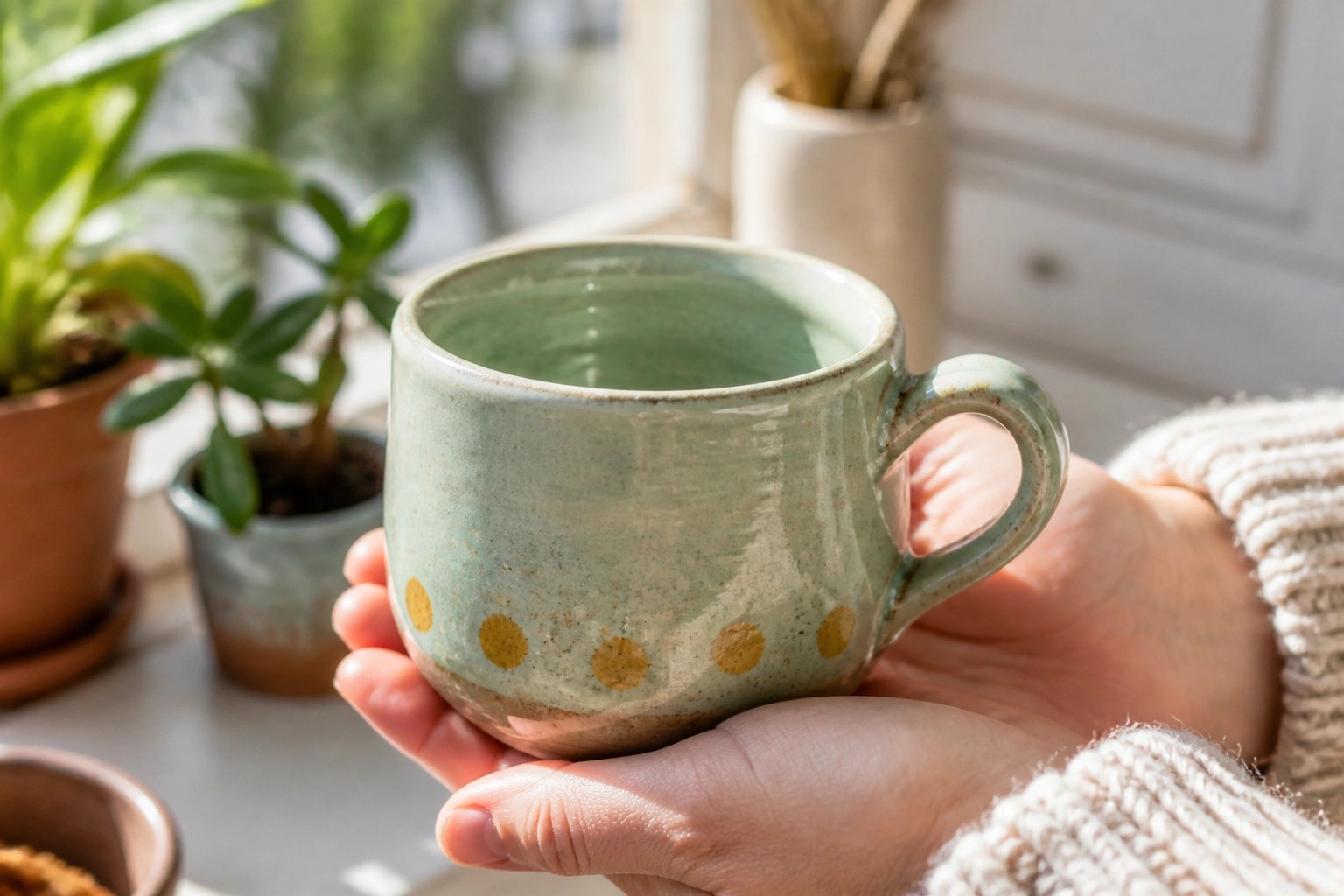
I’ve spent quite a bit of time at my wheel coming up with new shapes and forms.
Some of the pieces are things I use in the kitchen every day.
Others sit on shelves or tables as simple decorations.
I collected the ones that turned out best into this list of ideas.
They range from basic items to a few that have a bit more detail.
Speckled Green Mug with Gold Dots
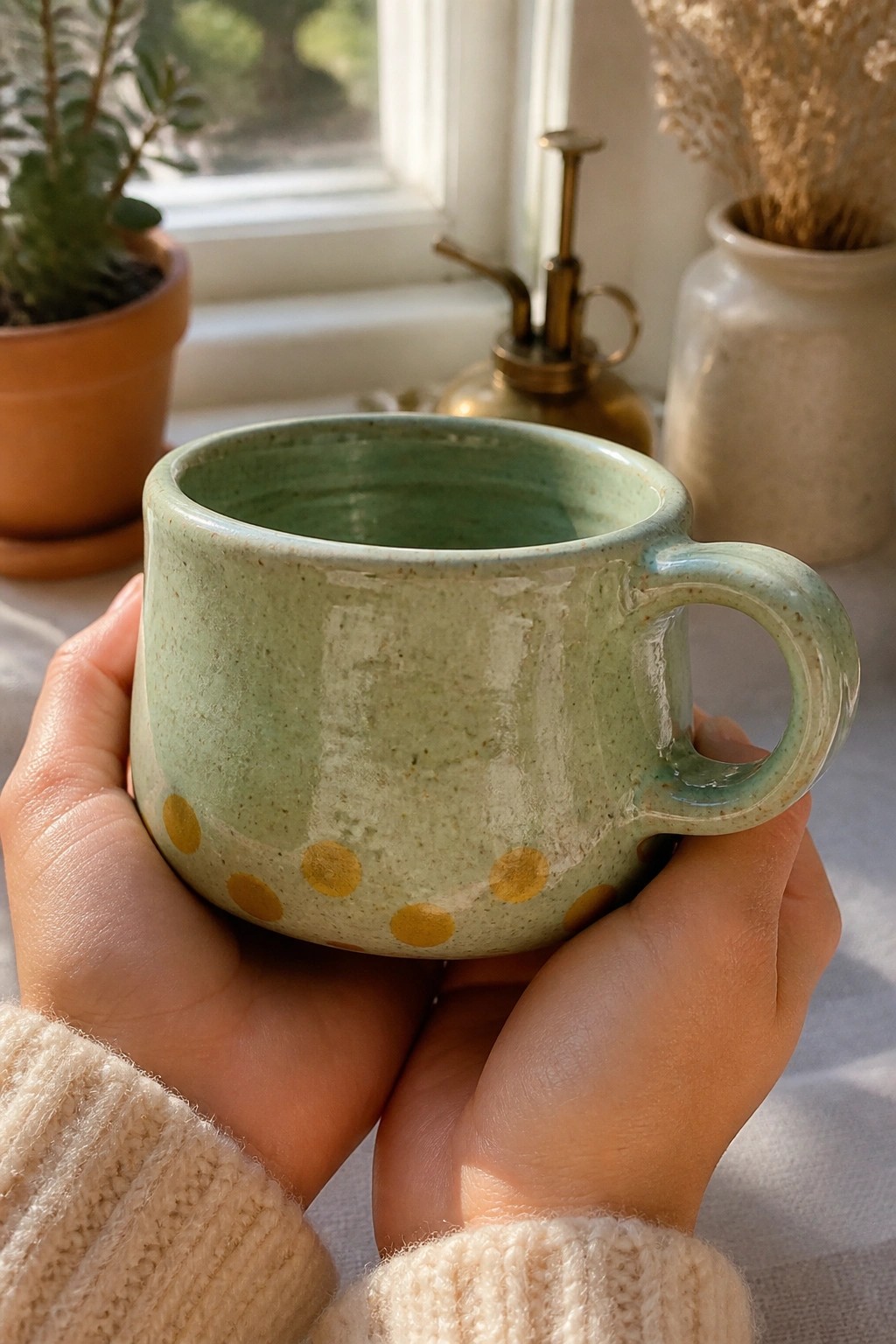
Throw a small mug on the wheel and finish it with a light green speckled glaze that shifts in tone from rim to base. Paint simple gold dots in a row around the lower half after the first firing to create a clean repeating pattern. The combination keeps the mug functional for daily drinks while the dots give the surface a distinct handmade look without extra carving or complex techniques.
The compact shape works well for coffee or tea and stacks easily for storage. Swap the gold dots for other underglaze colors or try the same pattern on a wider bowl form to create matching pieces. A design like this photographs clearly for sharing and adapts quickly if you want to test new glaze colors on future batches.
Swirled Glaze Serving Bowl

A wheel-thrown bowl finished with a marbled glaze that blends deep blue and warm orange across both the inside and outside surfaces. The flowing pattern comes from layering and manipulating the glazes so they mix during firing, creating streaks and soft edges without extra carving or painting. This style suits a mid-size bowl meant for serving bread, salads, or fruit while also working as a standalone table piece.
What makes this idea useful is how the bold color mix draws attention even on a simple wooden surface. You could scale the same glaze technique down to smaller bowls or plates to build a set, or swap the orange for a cooler tone if you want something more neutral. In a kitchen this shape holds up well for daily use and looks intentional next to plain linens or wood tones. The pattern also gives you room to experiment with different base colors on future pieces without changing the form.
Wildflower Wreath Plates
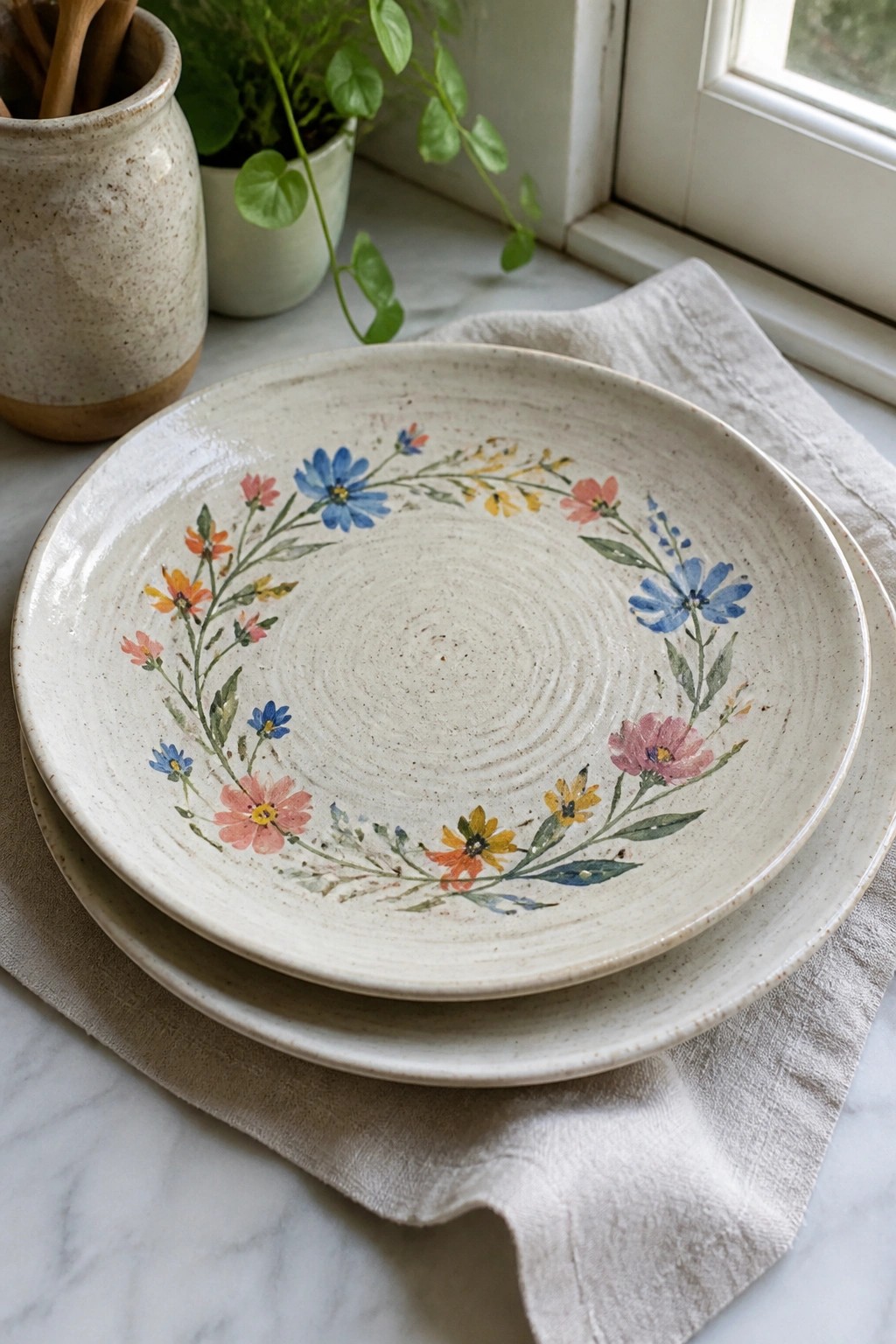
A set of wheel-thrown ceramic plates with a loose ring of hand-painted wildflowers around the rim creates an easy way to add color to everyday tableware. The design places small clusters of blue, pink, orange, and yellow flowers connected by thin green stems so the center stays plain for food. The speckled clay body shows through the clear glaze, giving the surface a soft texture that contrasts with the painted details. This approach works as a straightforward kitchen item that stays functional while looking finished.
What makes this idea useful is how the circular layout lets you scale the same motif down for smaller plates or bowls without redesigning it. The plates stack neatly for storage and still show the rim pattern when in use. You could swap the flower colors for a single palette or repeat the border on matching mugs to build a set. In a kitchen, the painted rim gives visual interest that holds up to daily use without competing with the meal.
Tall Gradient-Glazed Vase
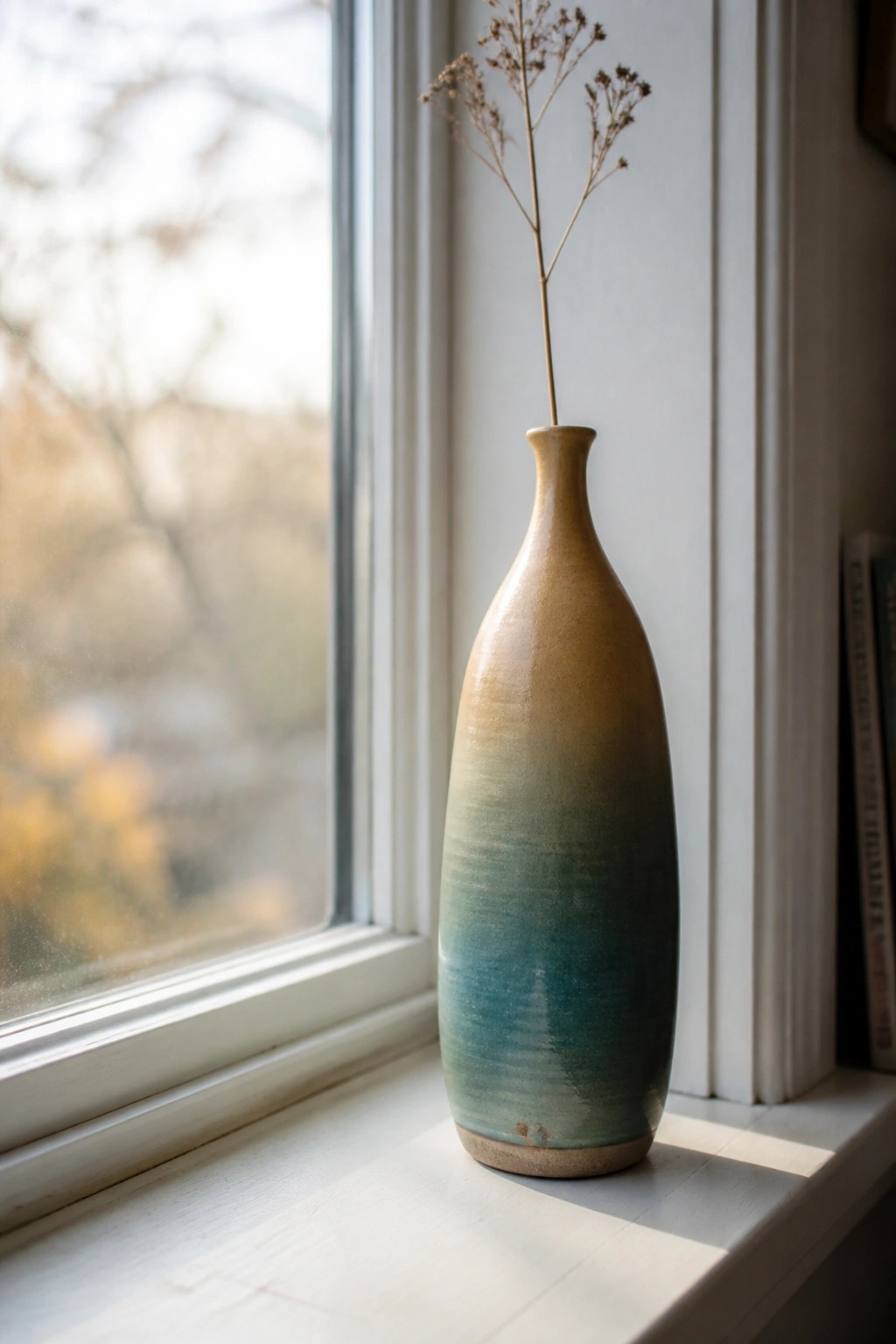
A tall vase with a narrow neck and elongated body gives a simple way to display single dried stems or small branches without needing a full bouquet. The glaze moves from a warm tan at the top into a deeper teal toward the base, letting the color shift become the main visual detail on an otherwise plain surface. This approach keeps the focus on the overall form while still adding interest through the glaze application.
What makes this idea useful is how the narrow opening naturally supports lightweight dried material without extra supports or foam. You can adapt the same shape in a shorter height for desk use or change the glaze colors to match different room palettes. The clean profile also makes it straightforward to repeat in a set of three different sizes for a grouped display. A piece like this stands out on Pinterest because the color transition draws attention even in a small thumbnail.
Climbing Frog Bowl for Small Plants

Throw a basic cylindrical bowl on the wheel and attach a frog figure so it looks like it is climbing over the rim. A single green glaze covers the ribbed walls and the sculpted frog, keeping the piece simple while giving the animal a clear role as the focal point. The open shape works as a small planter or a catch-all bowl, and the frog’s limbs and eyes are sized to match the bowl without crowding the form.
The shape does a lot of the work here because the wide opening and straight walls make it practical for holding a small plant or desk items. You can adapt the same idea by sculpting a different animal or switching the glaze color to fit another room. For a gift, something like this stands out on a shelf because the detail adds interest without turning the bowl into pure decoration.
Footed Bowl Tea Light Holder

A small footed bowl makes a straightforward tea light holder when the form is kept low and wide with three short feet added to the base. The rounded shape contains the flame safely while the feet raise the piece enough to protect surfaces underneath. An amber or honey glaze helps bounce light outward without overpowering the simple profile.
The shape does a lot of the work here because the wide opening fits standard tea lights without extra drilling or inserts. You can adapt the same footed bowl into a larger votive holder or a set of matching pieces for a table centerpiece. This style works especially well on mantels or nightstands where you want a low profile that still feels finished.
Elongated Ceramic Spoon Rest

A wheel-thrown spoon rest shaped into a long oval tray gives you a dedicated spot to rest cooking utensils without cluttering the counter. The piece uses a cream base glaze with a single soft green band down the center that adds color while keeping the surface easy to clean. This approach fits the kitchen item category and works especially well when paired with wooden spoons or utensils.
What makes this idea useful is how the elongated form keeps the spoon handle from touching the counter while the narrow width takes up little space next to the stove or sink. You can adapt the same shape by changing the glaze color, adding a small foot ring, or making a set in different lengths for gifts. In a kitchen this kind of piece stays practical because it handles daily use and still looks intentional when left out. The simple glaze treatment also makes it easy to repeat in different color combinations without needing new forms.
Speckled Pink Ring Dish

A small wheel-thrown ring dish gives you a simple way to keep rings and small jewelry in one spot. The shallow form with a slightly uneven rim works well for this purpose, while the soft pink glaze with light speckling adds subtle color without overpowering the piece. Visible throwing lines on the interior show the wheel work and keep the surface from looking too finished. This type of dish fits the category of small functional holders that sit easily on a dresser or bedside table.
The compact size makes it quick to throw and easy to fire in batches. You could change the glaze to a matte finish or try a different color to match another room. The same basic shape also works as a small holder for ear studs or loose keys. A piece like this photographs cleanly for sharing ideas online because the color and form stay straightforward.
Divided Ceramic Plate for Snacks and Meals

A divided ceramic plate creates separate compartments for different foods on one dish. Raised walls keep items from mixing while the bright yellow glaze gives the whole piece a clean, solid look. White dots along the dividers add a simple visual guide that makes each section easy to identify. This approach fits well as a kitchen serving piece for snacks or small meals.
What makes this idea useful is the way the sections handle multiple foods at once without extra dishes. You could adjust the number or size of compartments to suit appetizers, kids’ meals, or picnic spreads. Changing the glaze color or removing the dots would let you match it to other tableware you already own. The shape also works for small-batch serving without taking up much space in storage.
Ceramic Mugs with Painted Leaf Motifs

Handmade ceramic mugs like these pair a rounded form with a matching saucer and a simple leaf motif painted in soft green over a speckled cream glaze. The design uses negative space and repeated leaf shapes to keep the surface interesting without overcrowding the cup. This style works as a straightforward kitchenware project that stays functional while adding a clear decorative element.
The shape does a lot of the work here because the wide mouth and comfortable handle make the mug easy to use every day. You can adapt the leaf pattern by changing its color, size, or placement to create a whole set of cups or extend it to small bowls. In a kitchen, this kind of piece holds up well for coffee or tea and looks finished with the saucer underneath. A set of two also makes a practical gift that feels complete without needing extra pieces.
Yarn Bowl with Spiral Yarn Guide

A yarn bowl is a wheel-thrown ceramic piece made specifically for knitting and crochet. The rim has a large spiral opening that lets the yarn feed out steadily while keeping the ball contained inside. This version uses a light speckled glaze over a textured surface, which keeps the focus on the simple, functional form rather than bright color. The overall shape stays low and wide so it sits steady on a table or lap during use.
What makes this idea useful is how the spiral cutout solves a common problem without adding extra parts. You could adapt the same bowl shape for embroidery floss or thin cord by making the opening narrower. In a craft space the piece keeps yarn clean and untangled, and it works well as a gift because most knitters already know how these bowls function. Scaling the diameter up or down lets you match it to different yarn weights while keeping the same practical detail.
Multi-Hole Ceramic Toothbrush Holder

A wheel-thrown cylinder with three holes formed in the top serves as a toothbrush holder that keeps brushes upright and separated. The blue glaze covers the entire surface and rim, creating a durable, easy-to-clean finish suitable for a damp bathroom environment. This bathroom item uses a compact round shape that fits on a sink ledge without taking much space.
What makes this idea useful is the extra holes, which let you store more than the usual two brushes or add a razor or comb. The same form works well in different glaze colors to match tile or towels, and you can scale the height or hole count for a single user or a shared sink. For a gift, something like this takes little clay but solves a daily clutter issue that most people notice. In a small bathroom, the low profile keeps the counter clear while still looking intentional next to soap dispensers or cups.
Ceramic Pitcher with Earthy Green Glaze
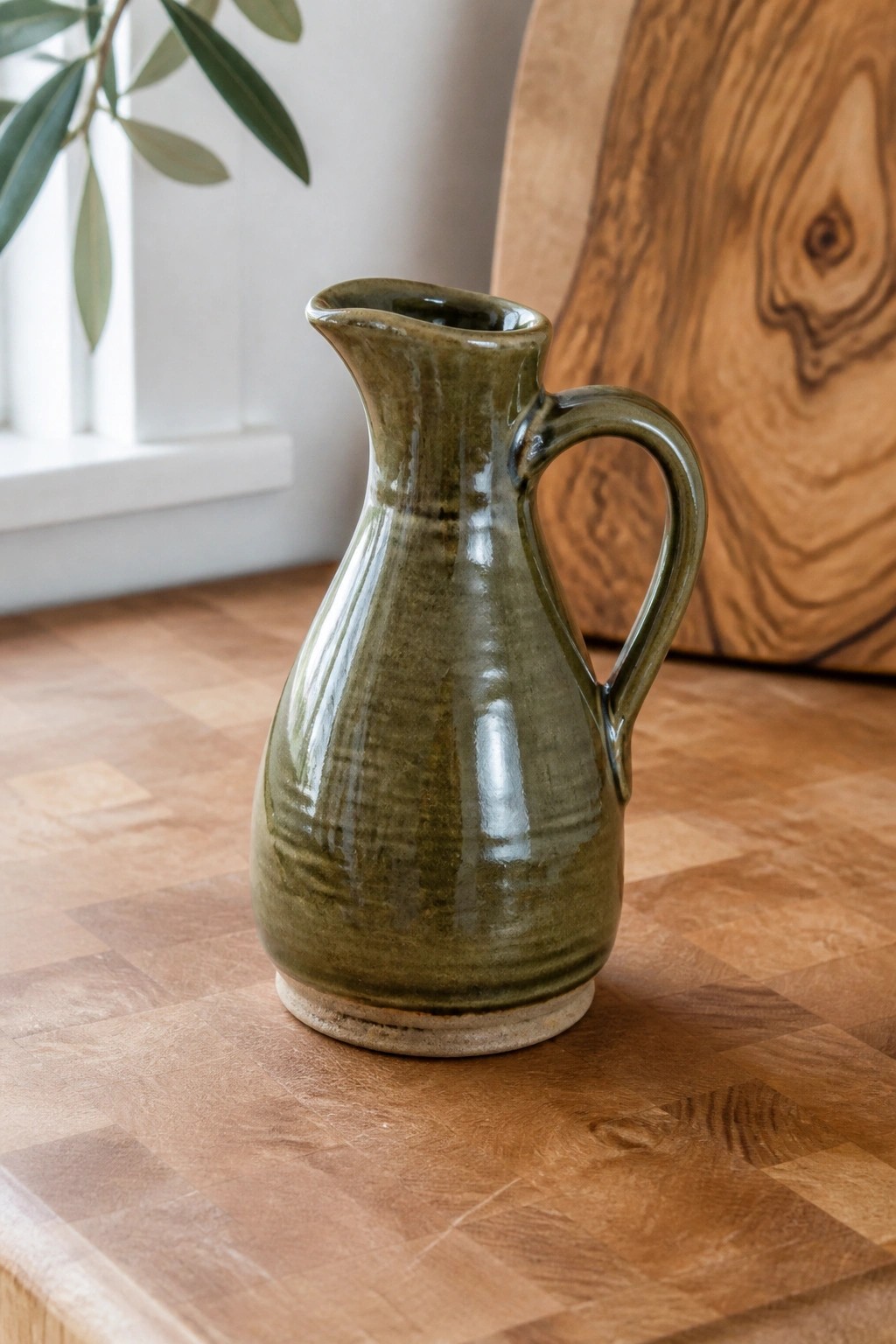
A wheel-thrown ceramic pitcher gives you a functional serving piece that works for water, juice, or even small flower arrangements. The tapered body and pulled handle keep the form balanced for easy pouring, while the glossy green glaze creates soft streaks and highlights that emphasize the curves without extra decoration. This approach fits the kitchen item category and stays useful on a table or counter.
What makes this idea useful is how the simple shape adapts to different sizes, from a small creamer to a full-size water jug. You could change the glaze to a matte finish or add a subtle rim detail to shift it toward a more modern look. In a kitchen, this kind of piece pairs well with wooden boards and everyday dishes, and the same profile works just as well as a vase for cut flowers. The clean lines also make it easy to repeat on the wheel without needing complex attachments.
Lidded Butter Dish with Banded Glaze
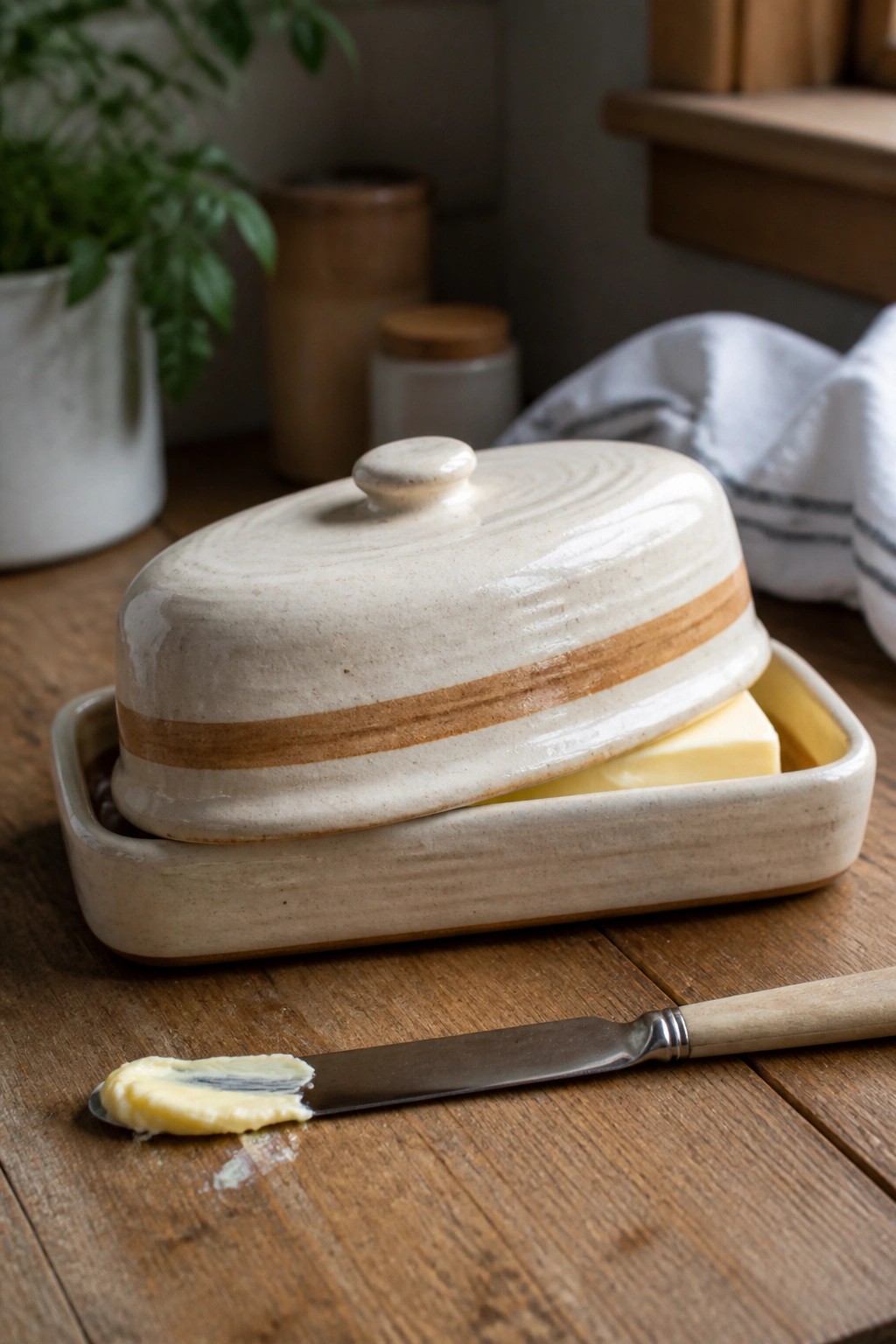
A lidded butter dish made on the wheel gives you a dedicated container that holds one stick of butter on the counter. The rectangular base and slightly domed lid keep the butter protected while the horizontal glaze bands create a clean, repeating pattern across the form. This project falls into the kitchen item category and works best when the lid fits loosely enough for easy lifting but still covers the contents.
What makes this idea useful is how the simple banded decoration can be repeated on matching pieces like a sugar bowl or creamer. You could adapt the same lid shape for a small cheese dome or shorten the base to hold a few pats of butter for a dinner table. In a kitchen this kind of piece sits well on open shelves or next to a toaster without taking much space. For a gift, change the band colors to match the recipient’s dishes or leave the stripes off for a more minimal version.
Wheel-Thrown Ceramic Utensil Crock
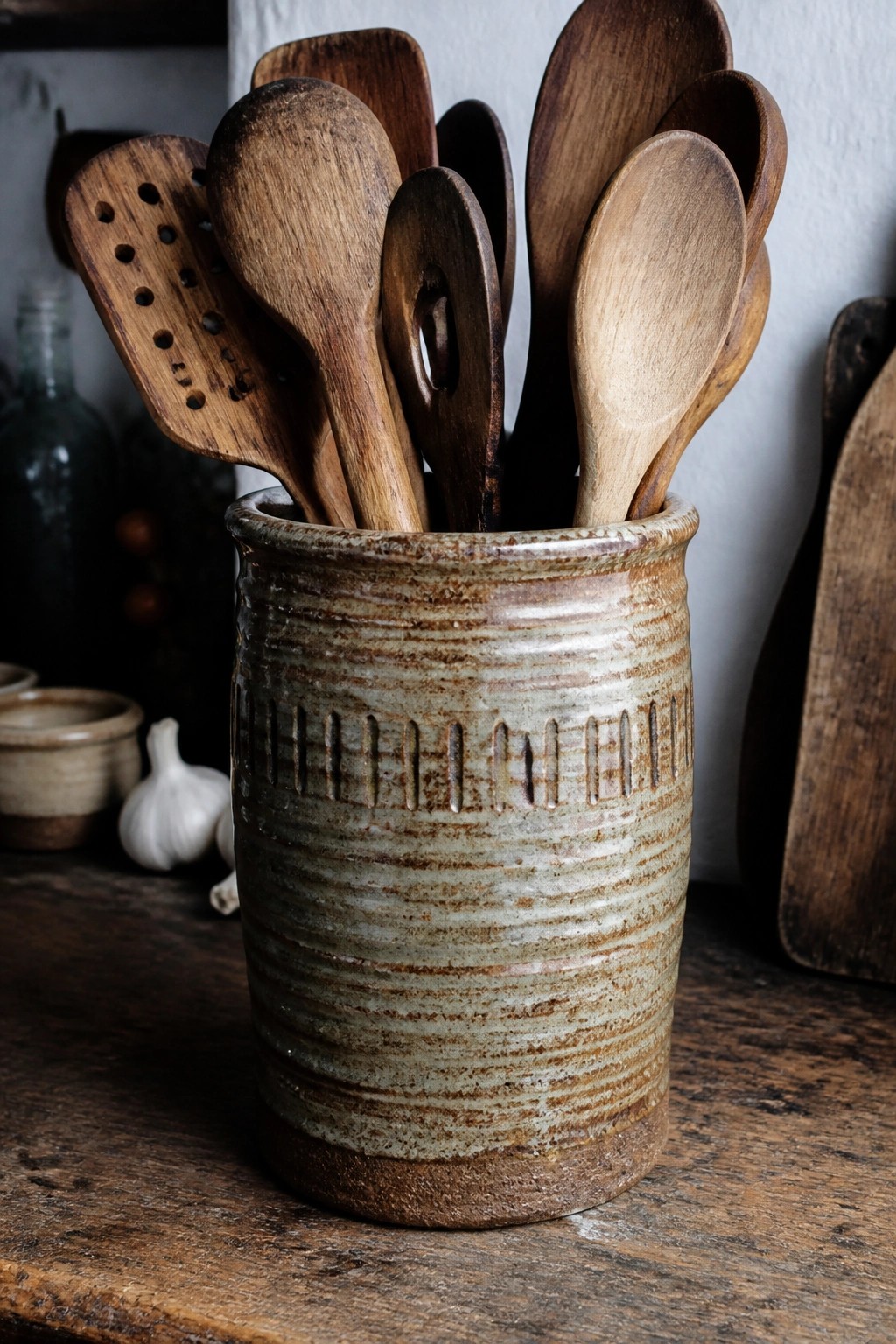
A wheel-thrown ceramic crock serves as a kitchen utensil holder. The tall cylindrical form keeps spoons, spatulas, and other tools upright and within reach on a counter. Throwing ridges around the body combine with a band of vertical incisions to create texture that shows off the clay surface. A muted green-brown glaze covers the piece and gives it a durable finish suited to daily use.
What makes this idea useful is the stable base and height that prevent tipping when loaded with heavy wooden tools. You could scale the same shape down for a smaller version to hold brushes or utensils in a different room. The carved band requires only a simple tool before glazing and adds detail without extra steps. In a kitchen this kind of holder keeps tools organized while matching wooden cutting boards and spoons already in use.
Pedestal Bowl with Scalloped Rim
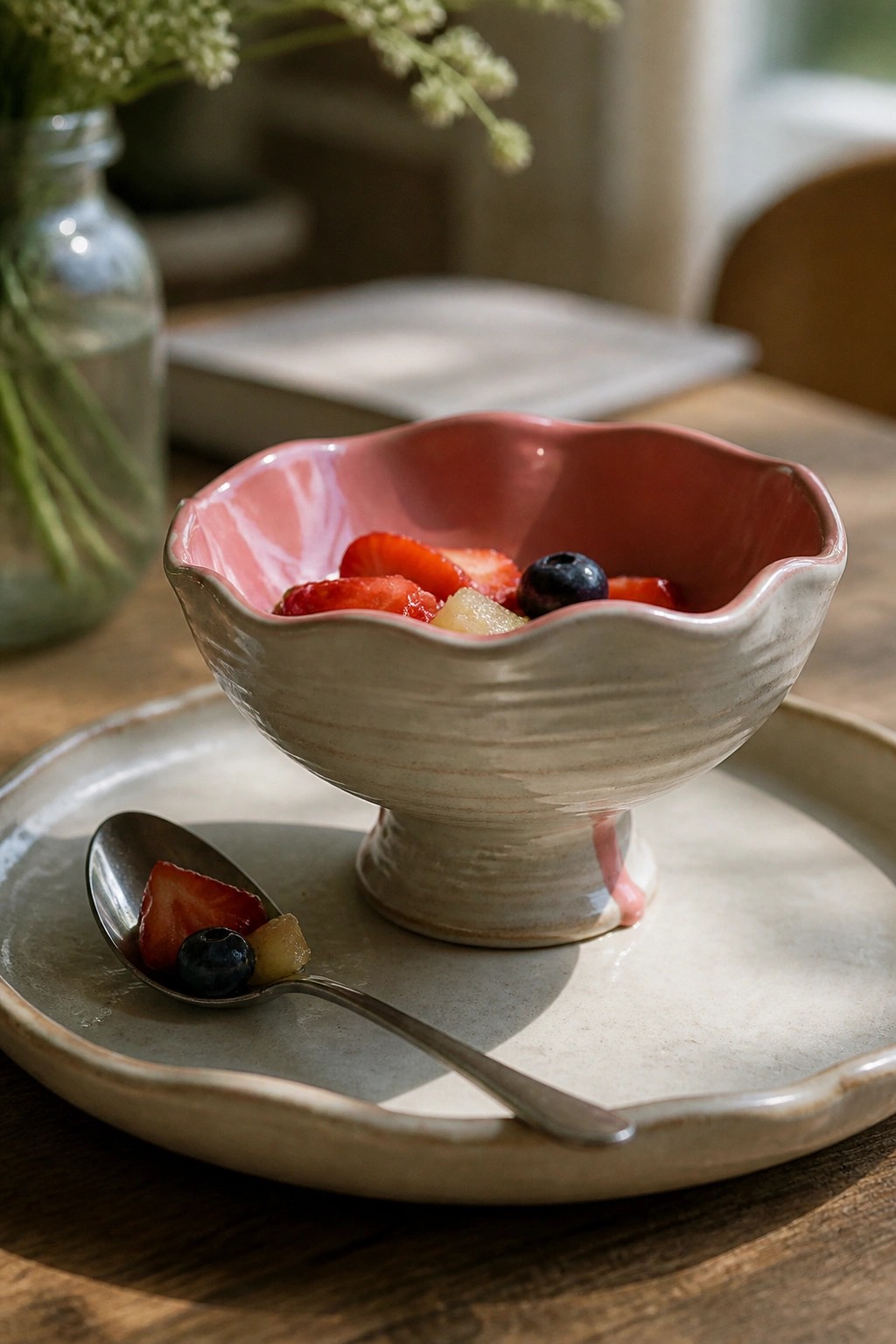
A small footed bowl like this works as an individual serving piece for fruit or desserts. The wheel-thrown form has a raised base and a wavy rim that gives the edge more visual interest than a straight bowl. The pink interior glaze contrasts with the lighter textured exterior, and the horizontal ridges show the throwing lines clearly. This type of bowl fits the serving dish category and stays simple enough to repeat in different sizes.
What makes this idea useful is how the footed base lifts the contents and keeps the piece from looking flat on a table. You could adapt the same rim shape for matching plates or a larger version for snacks. In a kitchen, the small scale works for single portions and makes it easy to store. The two-tone glaze approach also translates well to other wheel projects like small trays or sauce dishes.
Hanging Ceramic Planter
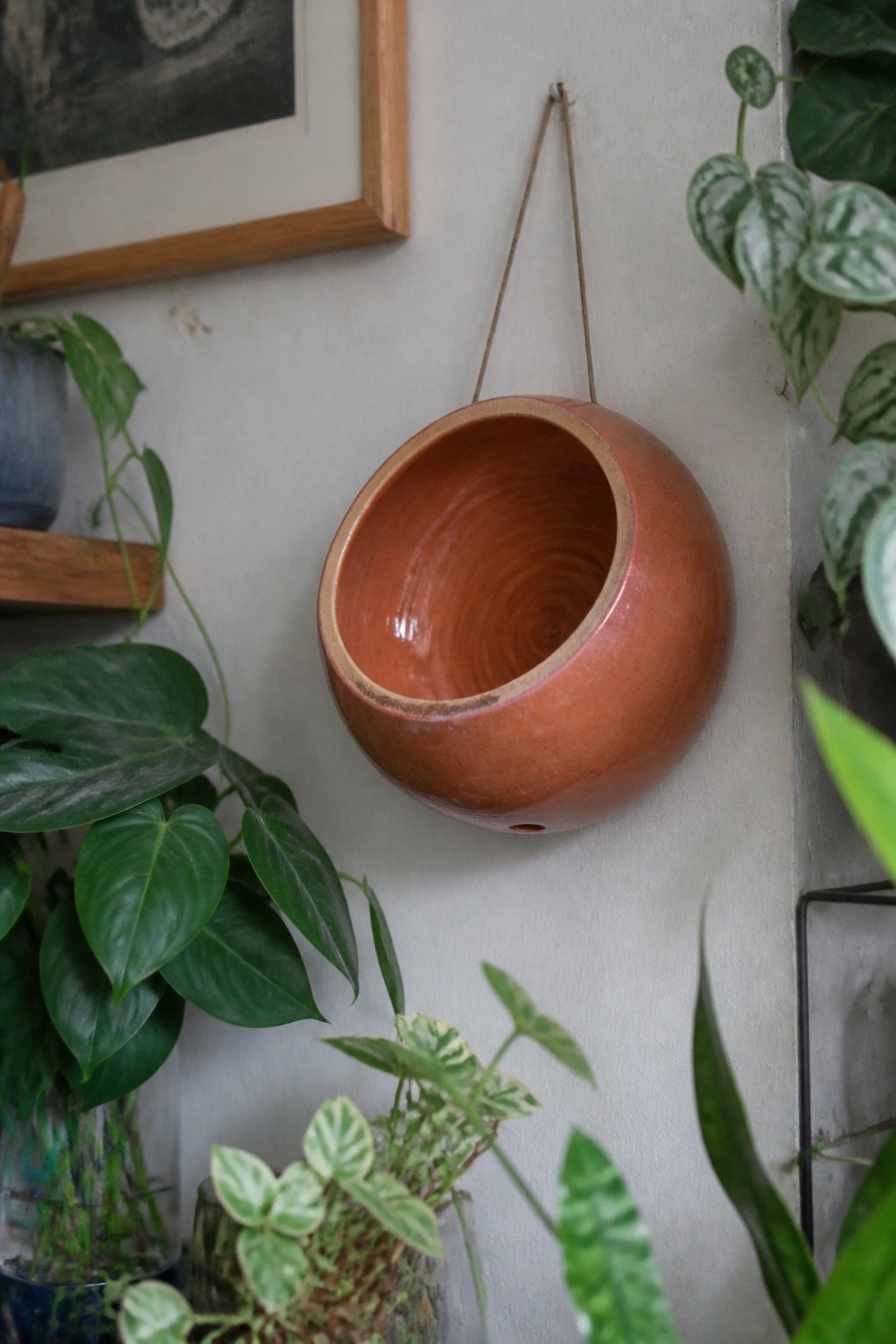
A round ceramic form with a wide open top and a small drainage hole near the base creates a hanging planter that mounts directly to the wall. The wheel-thrown shape stays simple and closed at the bottom until the opening is cut, then a hole is added for the cord before glazing and firing. The glossy terracotta glaze covers both the interior and exterior for a uniform finish that resists moisture. This approach fits the planter category and turns a basic sphere into a space-saving piece for indoor plants.
What makes this idea useful is how the rounded profile lets you hang multiple pots at different heights without crowding a shelf. The drainage hole keeps the design practical for live plants while the smooth glaze makes cleanup easy. You could throw a taller version for trailing vines or shorten the form to hold air plants instead. In a small apartment this shape works better than a flat tray because it keeps soil contained and adds height to a plain wall.
Wheel-Thrown Lidded Jars for Small Storage

These small lidded jars are wheel-thrown ceramics made for holding everyday items. Each has a low, rounded body, a fitted lid, and a simple knob on top. The visible throwing lines give the surface light texture, while the glazes in soft purple, green, and pink create gentle color shifts across the forms. This style works as a basic template for making sets of matching containers.
What makes this idea useful is the compact size and straightforward shape. You can scale the jars up or down depending on whether you want them for salt, spices, or desk supplies. Changing the glaze colors lets you match existing kitchenware or create a coordinated set for gifts. The same form can be adapted into lidless versions for small planters or catch-all dishes.
Salt Cellar with Matching Spoon

A small ceramic salt cellar with a built-in pouring lip and a separate matching spoon creates a compact set for keeping salt or other seasonings within reach on the counter. The bowl has a rounded form with a natural speckled glaze that gives it a simple, sturdy look suited to everyday kitchen use. This project fits the category of functional kitchen items and stays practical because of its size and the way the lip helps control pouring.
The small scale makes this easy to adapt into a sugar bowl or a holder for loose tea by adjusting the depth slightly. You can swap the glaze for a brighter color or add a basic band around the rim to change the look without much extra work. In a kitchen this kind of piece keeps salt handy during cooking and looks cleaner than a plastic container on the counter. For a gift it works well because the set is complete and ready to use right away.
Fish-Shaped Ceramic Dish
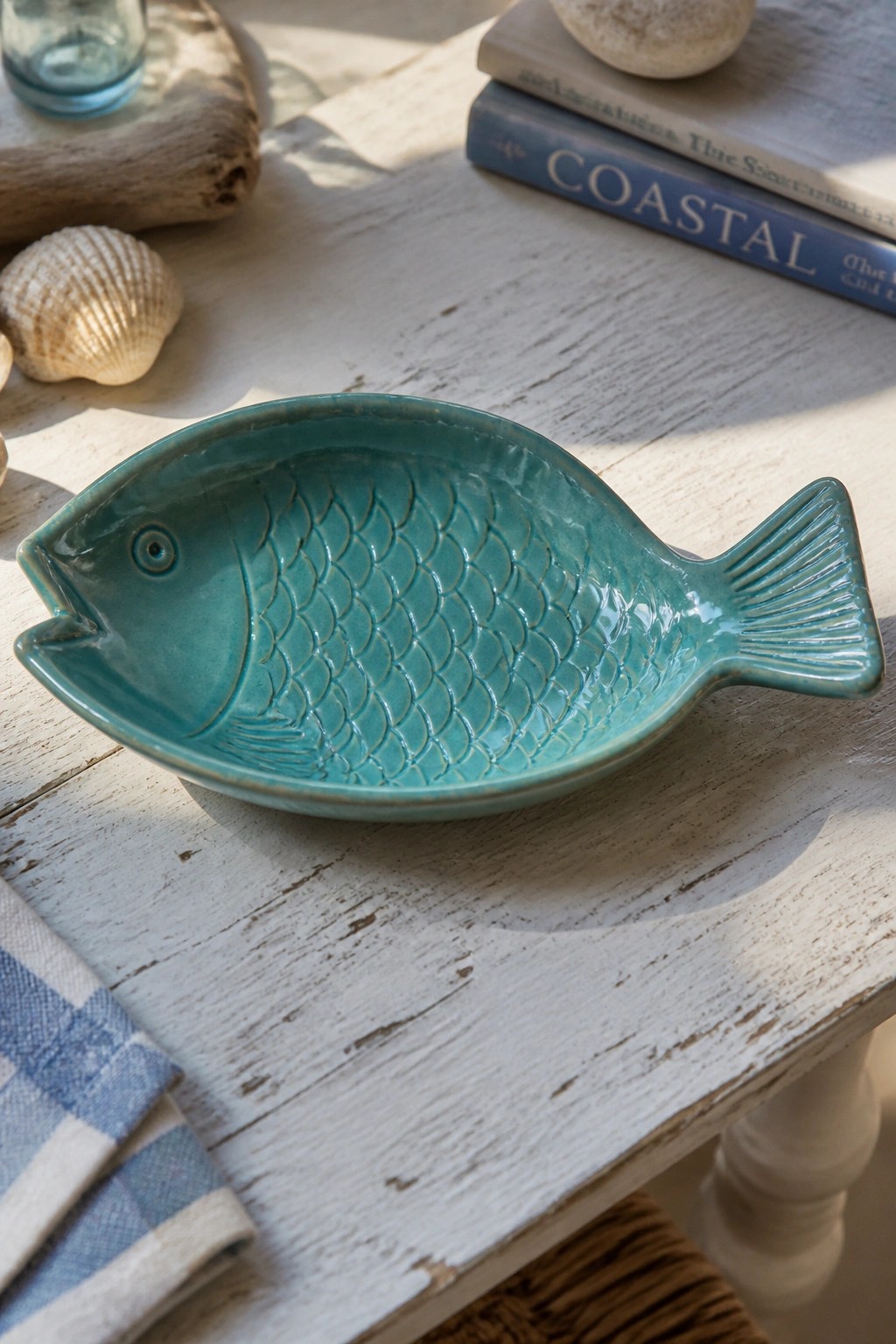
A fish-shaped dish gives you a straightforward way to turn a basic bowl form into a themed serving piece. The shallow oval body holds small portions of food or snacks while the head and tail sections define the overall shape. Raised scale patterns across the surface add texture that catches the glaze and makes the form more interesting. This approach works as a kitchen or tableware idea that stays functional without extra parts.
What makes this idea useful is the way the fish outline creates instant recognition while the scale texture stays simple to add during throwing or trimming. You could scale it down for individual appetizer plates or stretch the same shape into a longer platter by adjusting the wheel work. In a kitchen it fits coastal meals or everyday use where plain bowls feel too ordinary. The compact size also lets you test the design quickly and swap glaze colors for different rooms or seasons.
Two-Tone Shallow Match Dish

A small shallow ceramic bowl combines a glossy black glaze on the upper section with a wide band of raw textured clay along the lower half. The simple form stays functional as a catch-all while the two-surface treatment gives it clear visual separation. This idea falls into the small holder category and suits items like matches or loose change.
The small size keeps the project quick to throw and easy to fit into a single kiln load. You can adapt it by changing the width of the raw clay band or trying a different matte glaze in place of the exposed clay. A dish like this works well on a mantel or entry table where it keeps matches handy next to a candle. The clean two-tone finish also translates easily to other small shapes such as a ring dish or desk tray.
Face-Shaped Planter for Succulents
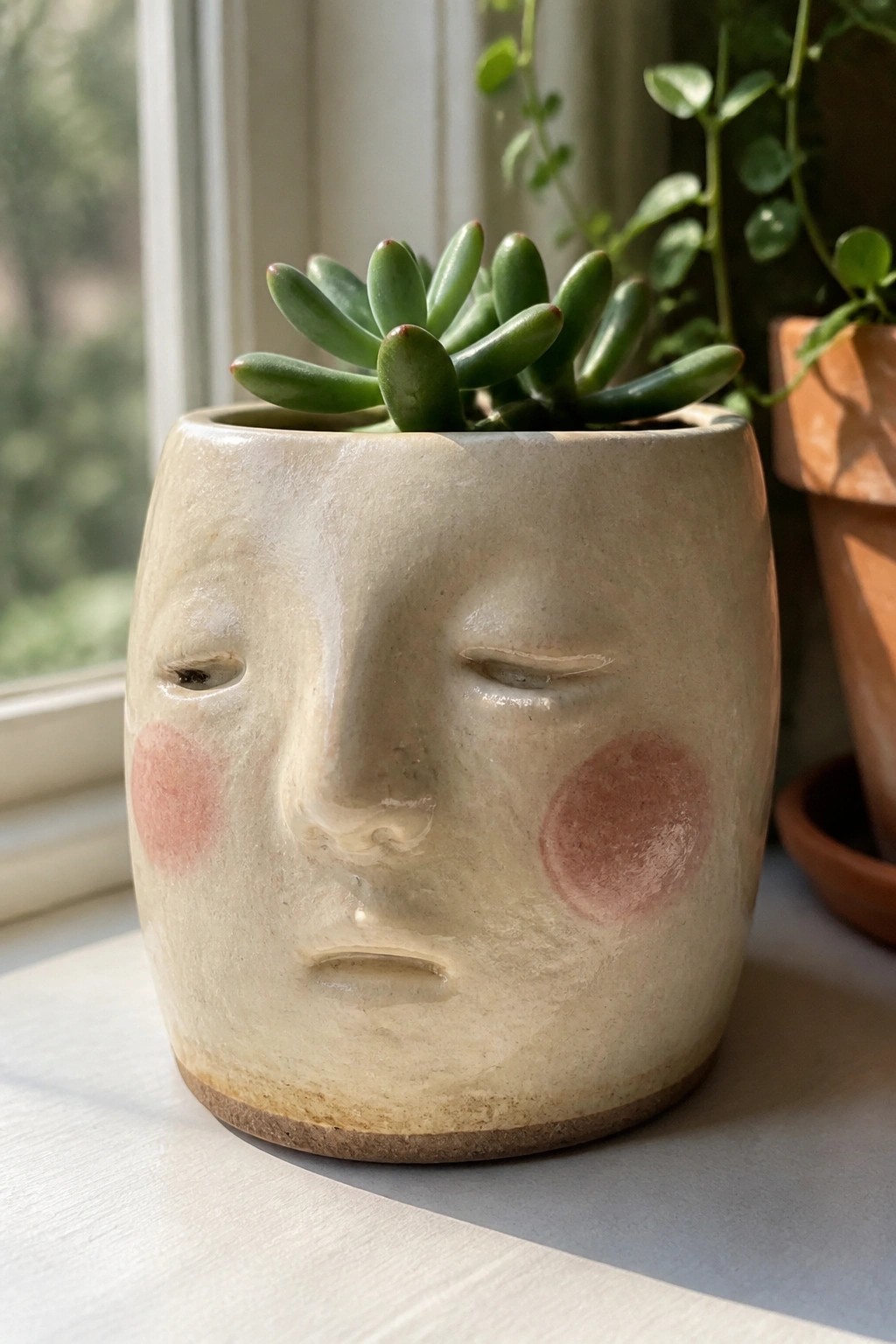
A face planter is a round ceramic pot with sculpted eyes, nose, mouth, and painted cheek details that turns a basic container into a decorative piece for small plants. The matte off-white glaze and simple pink circles keep the focus on the plant while the raised facial features add dimension without extra color or texture. This style fits the planter category and works best with compact succulents that sit neatly inside the opening.
What makes this idea useful is the way the rounded shape supports most small potted plants without needing drainage changes. The painted cheeks and sculpted face can be adapted by changing the expression, using different blush tones, or scaling the size up for a larger plant. A piece like this works especially well on a windowsill or shelf where the plant becomes the main color element. You could rework the same face into a small vase or candle holder if you want to use the idea for non-plant decor.
Frequently Asked Questions
What clay bodies are best suited for the creative functional and decorative ideas in the article?
Stoneware or porcelain clays offer good strength and workability for most wheel thrown pieces. Stoneware handles everyday use well for items like mugs or bowls while porcelain allows for finer details in decorative sculptures. Test small batches first to match your firing setup and avoid cracking during drying.
How can beginners adapt the more advanced pottery wheel ideas without getting frustrated?
Start with basic centering and pulling techniques before adding creative twists like added coils or carved patterns. Focus on one element at a time such as shaping a simple vase then experimenting with texture tools. Many of the listed ideas scale down to smaller practice pieces that build skills gradually.
What steps ensure functional ceramics from these ideas remain food safe and durable?
Use food safe glazes rated for high temperatures and apply them evenly after bisque firing. Keep walls consistent in thickness to prevent weak spots and fire to the clay’s full maturity. Always check local regulations for lead free options and test finished pieces with water absorption tests if needed.
How do I combine functional and decorative elements in a single pottery wheel project?
Begin by throwing a practical base shape like a bowl or plate then add decorative features such as stamped motifs or altered rims while the clay is still soft. Balance the two by keeping decorative additions subtle enough not to interfere with use like ergonomic handles that also feature unique designs.
Where can I source affordable tools and materials to try these 22 ideas at home?
Local pottery supply stores and online retailers offer starter kits with wheels ribs and basic glazes. Check community studios for shared equipment or secondhand markets for used tools. Experiment with household items like forks for texture before investing in specialized carving sets.

Pottery Path is my cozy corner of the internet where I share clay ideas, pottery inspiration, and simple projects you can recreate at home. I love exploring everything from air dry clay to handbuilt pottery to cute minis that brighten your day. My goal is to make clay crafting feel easy, fun, and welcoming for anyone who wants to try it.
You will find beginner friendly tutorials, creative pottery painting ideas, and lots of warm inspiration for slow and happy crafting. If you enjoy hands on creativity, this space will feel like home.