
I’ve been working on my pottery for a while now and carving has become one of my favorite parts of the process.
Relief patterns and textured surfaces can really change how a piece looks without needing a lot of extra tools.
Over time I’ve put together some carving ideas that focus on those details and they seem to work well on different forms.
These ideas range from simple repeats to more layered designs that build up slowly.
I hope sharing them helps if you’re looking for new ways to try on your own work.
Relief Carved Leaves on a Speckled Ceramic Mug

A ceramic mug with a series of raised leaf and stem motifs carved into the surface creates a repeating relief pattern around the body. The leaves sit slightly proud of the clay and are finished in a soft green glaze that contrasts with the speckled off-white base. This design suits a functional drinking mug because the carved details stay clear even after glazing and the pattern wraps evenly without crowding the handle area. It belongs to the category of kitchen pottery that combines carved texture with everyday use.
The shape does a lot of the work here because the straight-sided mug gives a good surface area for the branch layout to show without distortion. You could repeat the same leaf carving on a taller tumbler or shorten the motif for a small bowl. In a kitchen this kind of piece holds up well for daily coffee or tea since the raised texture is durable once fired. The idea also transfers easily to a matching creamer or sugar jar if you keep the leaf spacing consistent.
Wavy Carved Relief Inside a Ceramic Bowl
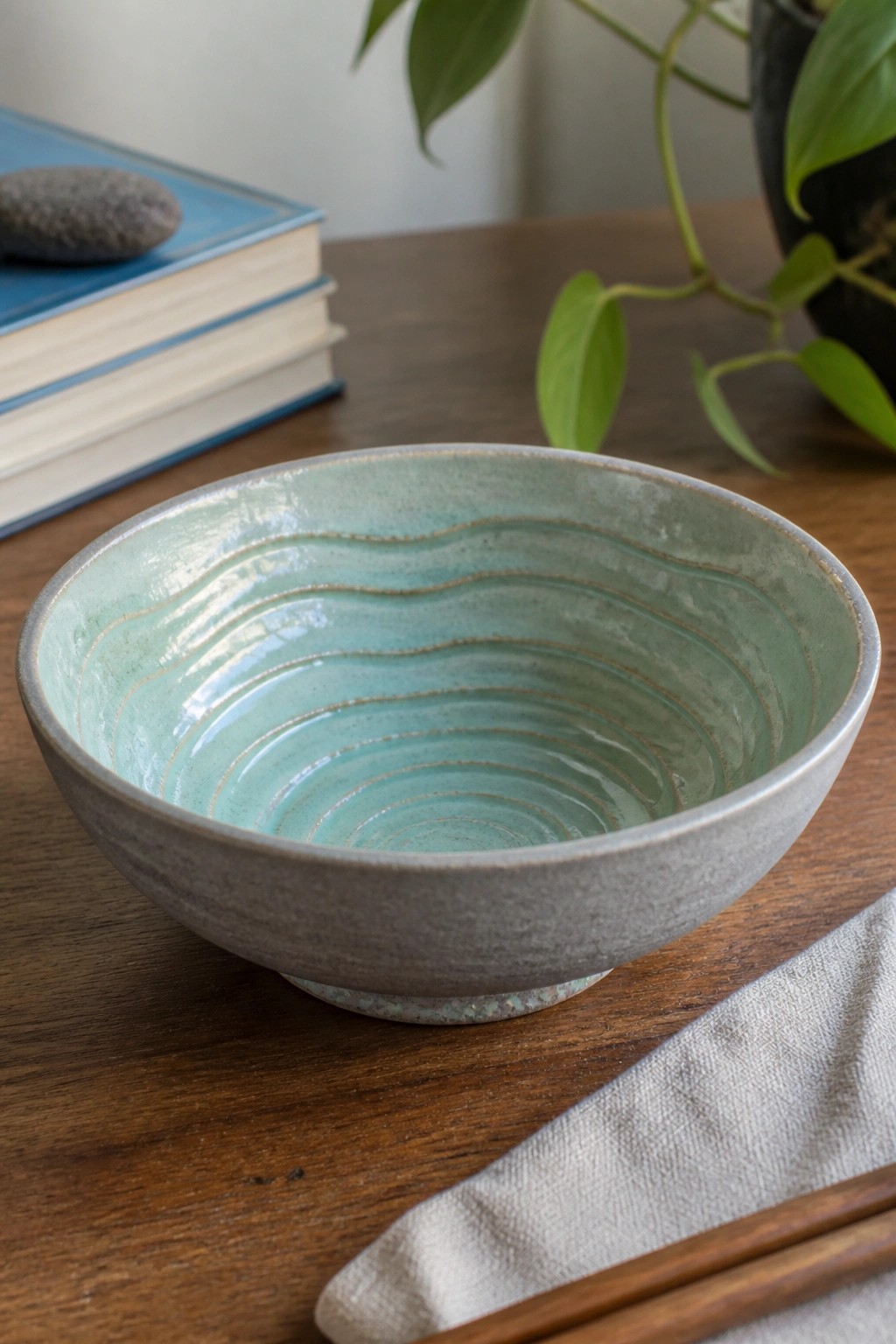
A round bowl with a series of concentric wavy lines carved into the interior creates a clear relief pattern that the glaze then accentuates. The turquoise glaze settles deeper in the grooves while sitting thinner on the raised ridges, which makes the carved lines stand out without needing extra colorwork. This approach keeps the outside simple and matte so the interior texture becomes the main focus. The result fits the relief pattern category because the carving itself does most of the visual work once the glaze is applied.
What makes this idea useful is that the same wavy carving can be scaled up or down depending on the size of the bowl you throw. You could repeat the pattern on a set of smaller bowls for a matching look or widen the spacing on a larger piece to change the rhythm. The contrast between the smooth exterior and the textured interior also gives you two different finishes on one object without extra steps. For a kitchen or table setting this kind of bowl works well because the carving stays functional while still catching light and shadow.
Monstera Leaf Relief on a Rounded Planter

A low, wide ceramic planter gains strong visual texture from repeated monstera leaf shapes carved in relief around the outside wall. The leaves are recessed into the clay so the surrounding surface stands higher, and a green glaze with brown highlights settles into the cuts to make the patterns read clearly. This style of carving works on a simple cylinder or bowl form because the curve lets the leaves wrap naturally without distortion. It belongs to the category of relief-carved planters where the motif itself creates the main surface interest.
What makes this idea useful is that the round shape lets the same leaf repeat evenly all the way around without awkward spacing. You could scale the leaf size down for a smaller pot or stretch it taller for a vase by adjusting how many rows fit. The carved depth also shows up well in most glazes, so you can test the pattern on a slab first and then apply it to different vessel shapes. For plant display, the design pairs directly with vining houseplants that share the same leaf style.
Raised Floral Relief Band on a Textured Vase

A tall rounded vase features a single horizontal band of raised flowers and leaves carved in low relief around the middle section. The rest of the surface carries fine horizontal ridges and a light green crackle glaze that settles into the texture and gives the piece an aged appearance. This approach uses the carved band as the main focal point while the crackle finish adds subtle surface variation without extra color.
What makes this idea useful is how the relief band breaks up the height of a simple form and draws the eye without needing multiple glazes. The same motif could be repeated lower on the body to turn the vase into a planter or scaled down for a smaller bud vase. In an entryway or on a bookshelf the shape holds dried stems or stands alone as a decorative object. You could simplify the carving to just the leaf shapes if the full flower pattern takes too much time.
Relief Carved Grid Tray for Kitchen Use
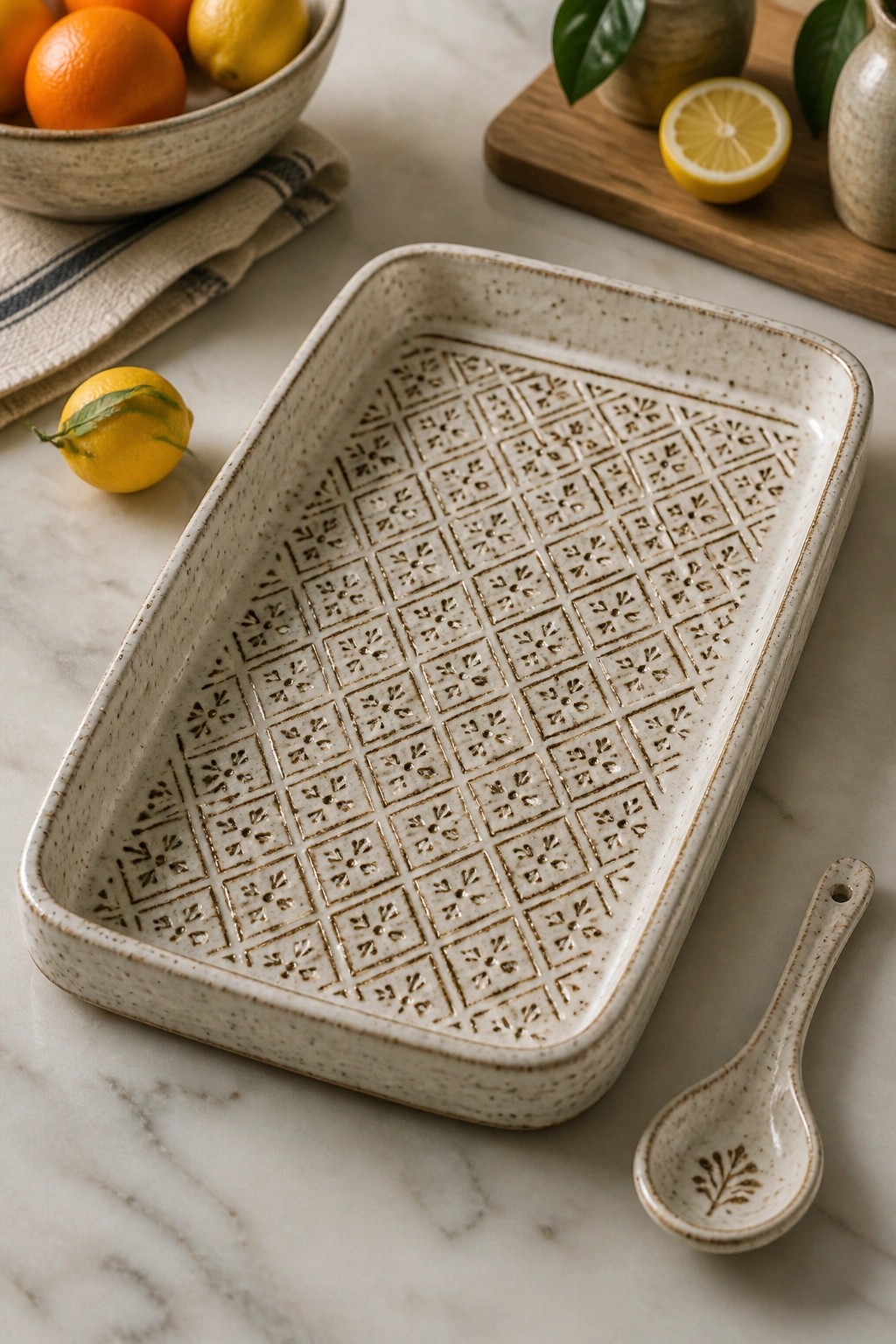
A rectangular ceramic tray like this uses a tight grid of carved squares, each filled with a small flower motif, to create a textured surface across the entire base. The carving is deep enough that the glaze pools in the lines and recesses, giving clear contrast against the lighter raised areas without needing extra color. This turns an everyday serving piece into something more interesting while keeping the flat interior practical for holding fruit or small dishes.
What makes this idea useful is how the repeating grid can be scaled up or down depending on the tray size, so the same motif works on a larger platter or a compact butter dish. The pattern also translates easily to other forms like square coasters or a lidded box lid if you want to reuse the stamp or template. In a kitchen, the carved texture adds grip for items without making the surface hard to clean, and the simple two-tone effect from the glaze keeps it from looking too busy on a countertop.
Openwork Floral Tealight Holder with Relief Carving

A small round ceramic tealight holder works well as a candle piece when the body is treated as a canvas for relief carving. The design uses repeated floral medallions and leaf-shaped cutouts that remove clay to create open areas around the form. A beaded rim adds a simple border while the mottled blue-green glaze settles into the carved lines to emphasize the raised and recessed surfaces. This approach turns a basic holder shape into a decorative object that relies on pattern and negative space rather than added color or paint.
The small scale keeps the project manageable for testing new carving tools or motifs. You could repeat just the floral element on a ring dish or shorten the cutout pattern to fit the side of a small vase. In a living room or bedroom this style works as soft lighting that still shows the carved detail once the candle is lit. The same openwork idea adapts easily to other simple thrown forms without requiring complex construction.
Sunburst Carved Wall Plaque

A flat circular clay disc becomes a strong decor piece when you carve straight lines that radiate outward from a small raised center circle. The lines are cut at varying depths so the relief catches light and creates clear contrast once glazed. An earthy yellow-brown glaze sits in the recesses while leaving the raised ridges lighter, which keeps the pattern readable from a distance. This style fits the decor object category and works especially well as a wall hanging.
The shape does a lot of the work here because the round form naturally supports a radial layout without extra framing. You can repeat the same carving on square tiles for a grouped wall display or scale the disc down to make matching coasters. The simple hanging hole means no extra hardware is needed, and the motif stays effective even if you switch to a matte or lighter glaze. A piece like this stands out on Pinterest because the bold lines read clearly in photos.
Scale Patterned Ceramic Spoon Rest
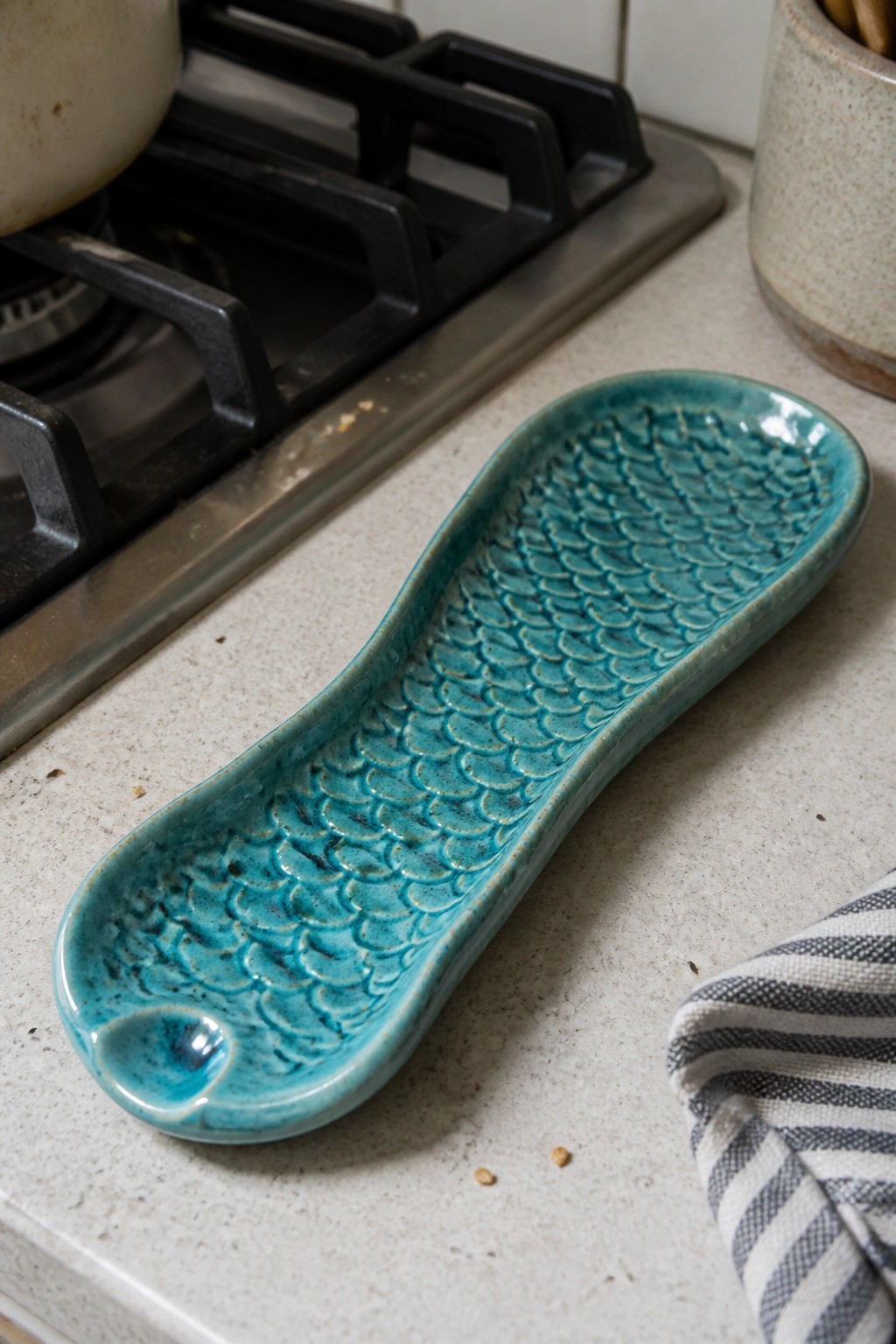
A long, narrow ceramic spoon rest gains visual interest from a carved scale pattern that runs the full length of the surface. The overlapping raised scales catch glaze in the recessed lines, creating contrast with the turquoise finish. A small circular well at one end gives the piece a functional spot to collect drips from spoons or spatulas. This fits the kitchen item category where simple forms benefit from strong surface texture.
The shape does a lot of the work here because the elongated form sits flat beside a stove without taking much space. You could shorten the same design into a smaller rest for a coffee station or adapt the scale carving to a square tray for holding tea bags. In a kitchen, this kind of piece stands out when the carved texture shows up clearly against smoother dishes on open shelving.
Floral Relief Ring Dish with Carved Center
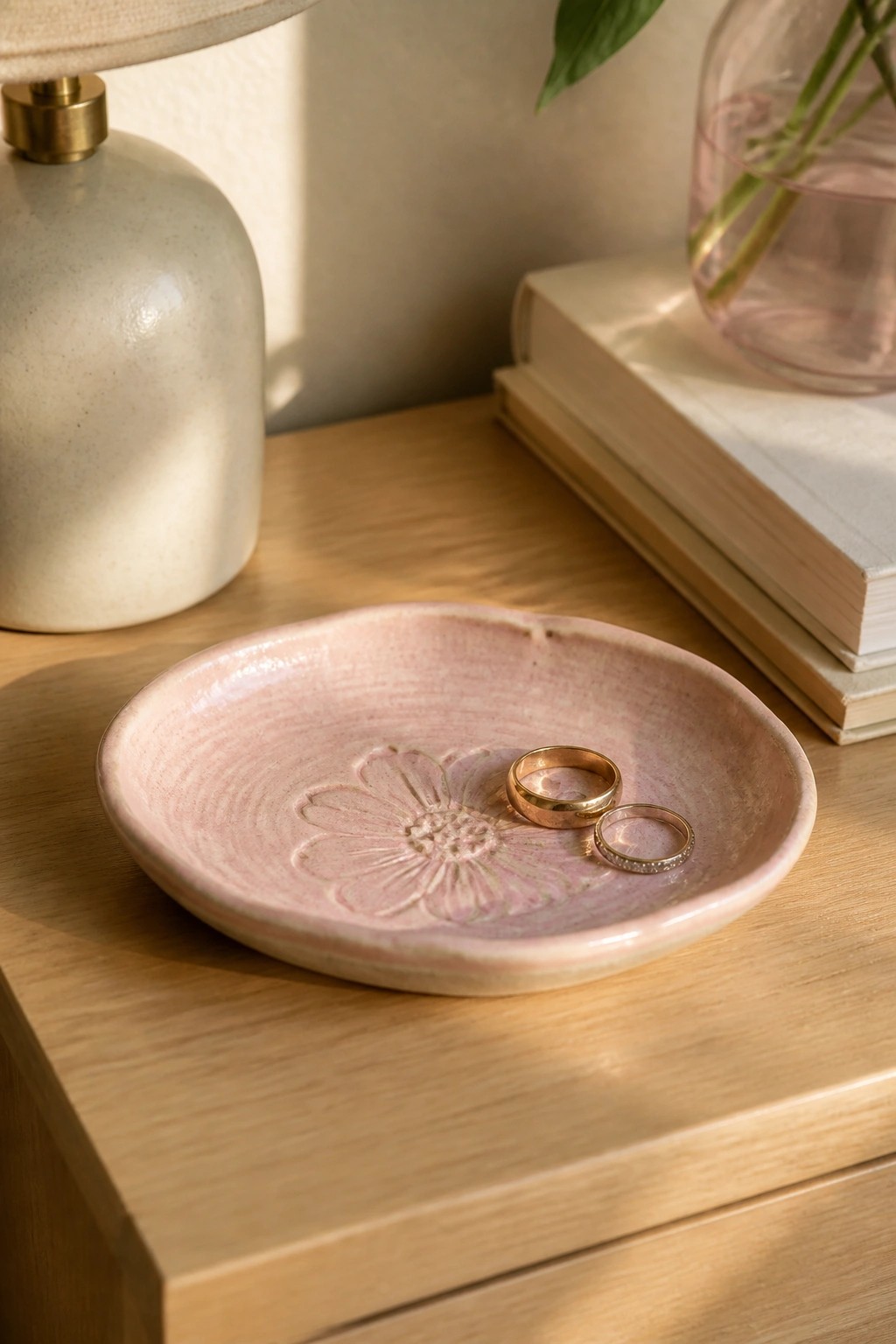
A small shallow ceramic dish works as a ring holder by placing a large daisy-style flower in raised relief at the base. The petals and textured center are carved directly into the clay before a soft pink glaze is applied, letting the design stand out through subtle shadows and shine. The rounded form stays simple so the carved flower becomes the main feature without adding height or bulk. This approach suits the ring dish category and shows how relief carving can turn a flat surface into a practical spot for small items.
What makes this idea useful is the shallow profile that keeps it stable on a dresser or nightstand while the carved flower gives it a clear purpose for jewelry. You could repeat the same relief technique on a rectangular tray or adapt the motif to leaves if you want something less floral. The soft glaze color pairs easily with different room styles without competing with other decor. For a gift version, keep the size compact and change the flower to match a favorite plant or simple geometric pattern.
Carved Vine Yarn Bowl for Knitting
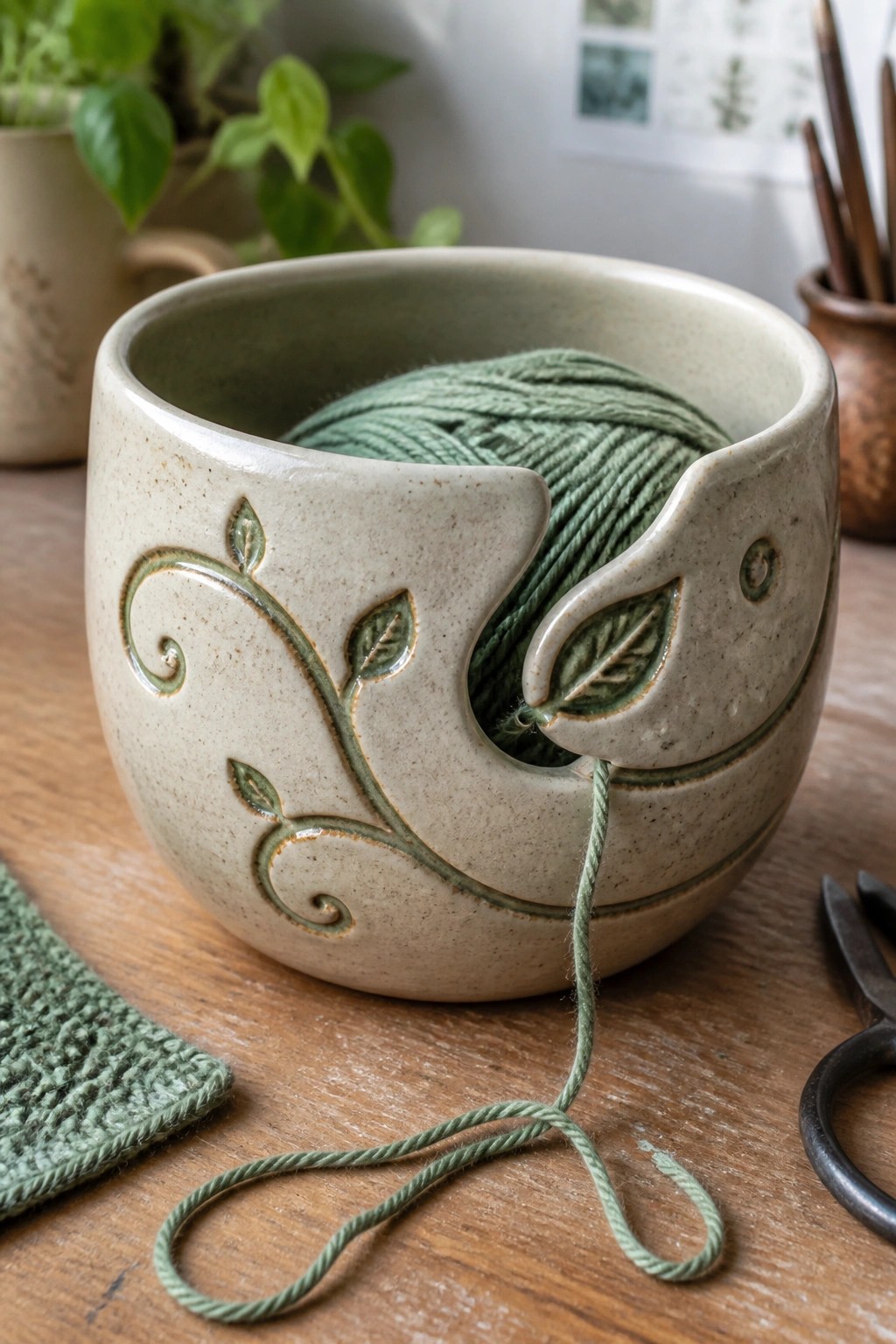
A yarn bowl made from clay keeps a ball of yarn contained while the strand feeds out through a side notch. The round shape includes a cutout rim that prevents tangling during use. A raised vine with leaves is carved into the surface and highlighted with green glaze on the speckled clay body.
What makes this idea useful is how the notch turns an ordinary bowl into a working tool for knitters and crocheters. You could swap the vine pattern for other simple plant motifs or change the glaze color to match different yarns. The compact size fits on a table without taking much space and works well as a gift when paired with a skein of yarn. The same bowl form could be made taller for larger projects or left plain for a quicker version.
Dot Relief Texture on a Divided Holder
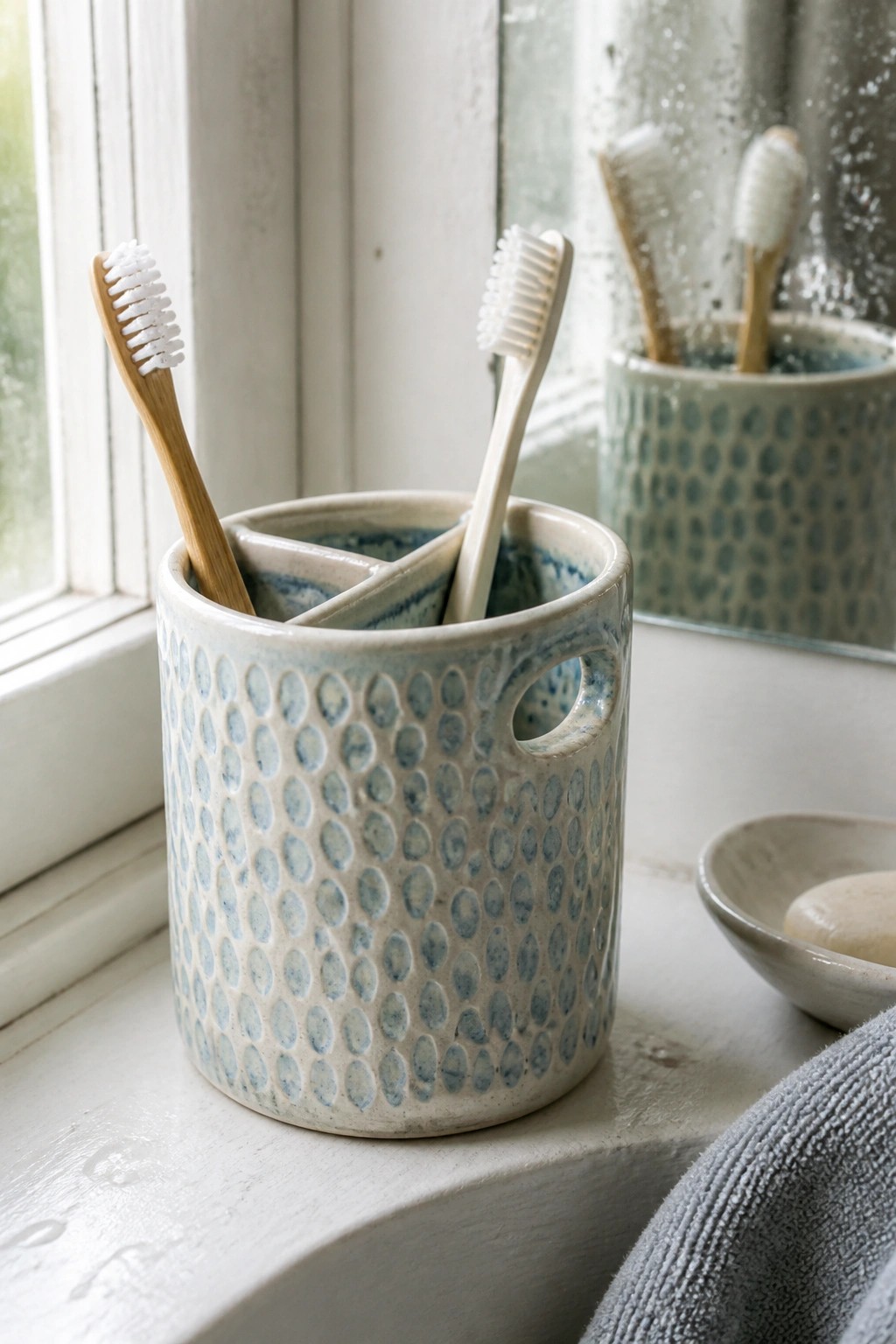
A divided ceramic holder works as a bathroom storage piece with its straight cylinder shape and internal walls that keep items like toothbrushes separate. The surface carries a repeating pattern of small circular impressions that form a raised dot texture across the whole exterior. A blue wash settles into the recessed dots while the raised areas stay lighter, giving clear contrast that emphasizes the carved or stamped pattern. This approach suits small storage projects where the form stays simple and the interest comes from the repeated surface detail.
What makes this idea useful is how the dot pattern scales easily to other basic shapes like a soap dish or pencil cup. You can keep the same stamping method but change the height or add a handle to turn it into a different bathroom or desk item. The divided interior keeps the piece functional for daily use without extra parts. The repeat texture also shows up clearly in photos, which helps it stand out when shared as a carving example.
Curved Relief Ridges on a Square Sink Tray
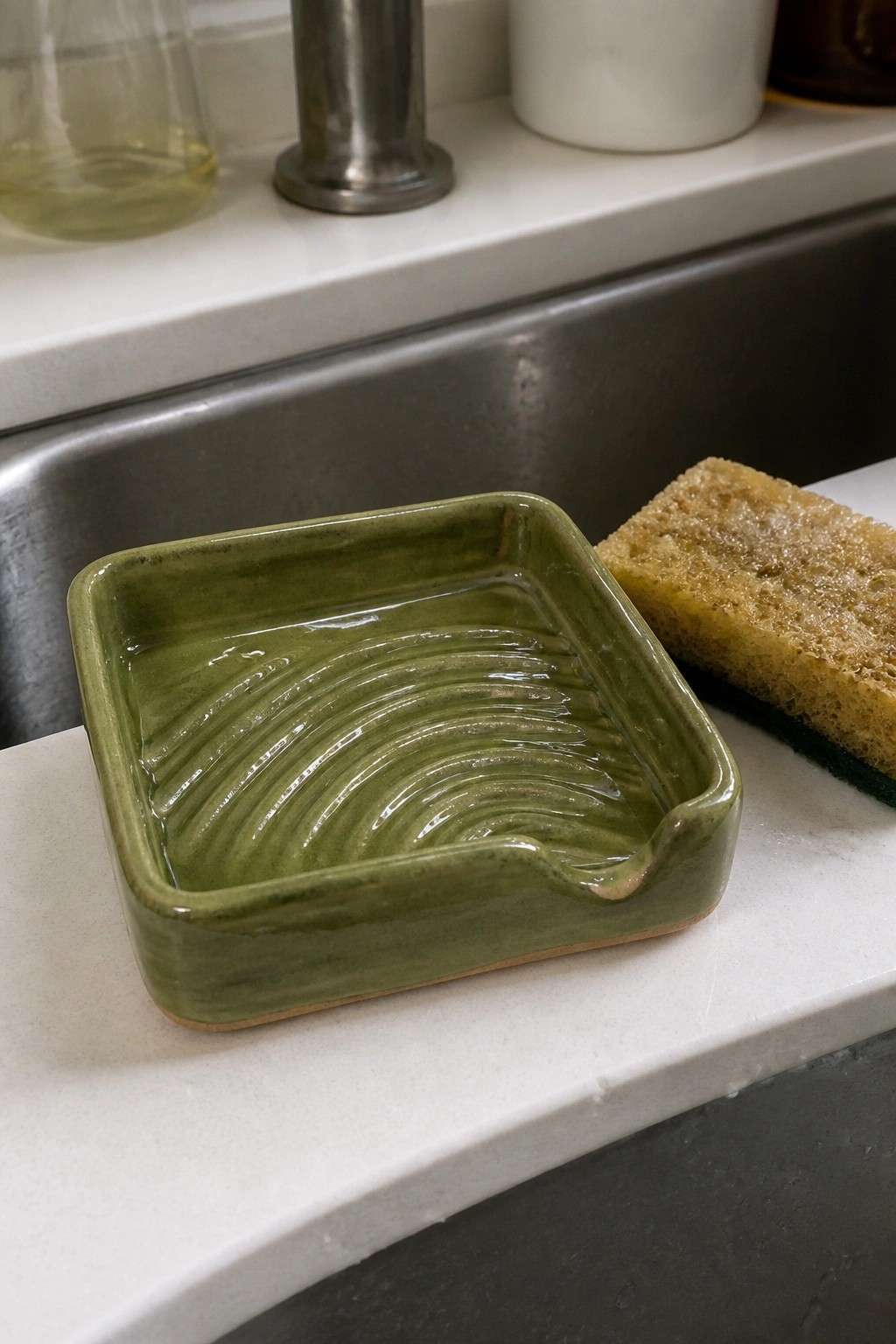
A small square ceramic tray makes a practical sink accessory when the base is carved with a repeating set of curved ridges. The ridges form a shallow relief pattern that creates texture and channels for water to move toward the built-in lip. Finished in a single green glaze, the piece keeps the focus on the carved lines while staying simple enough to sit beside a faucet or sponge.
What makes this idea useful is how the carved texture adds function without extra parts. The same ridge pattern could be scaled down for a soap dish or widened into a small tray for scrub brushes. In a kitchen or bathroom, the lip helps with draining so the piece stays useful rather than just decorative. The design also photographs clearly for reference when trying similar relief cuts on other flat forms.
Double Bowl Condiment Server with Carved Centers
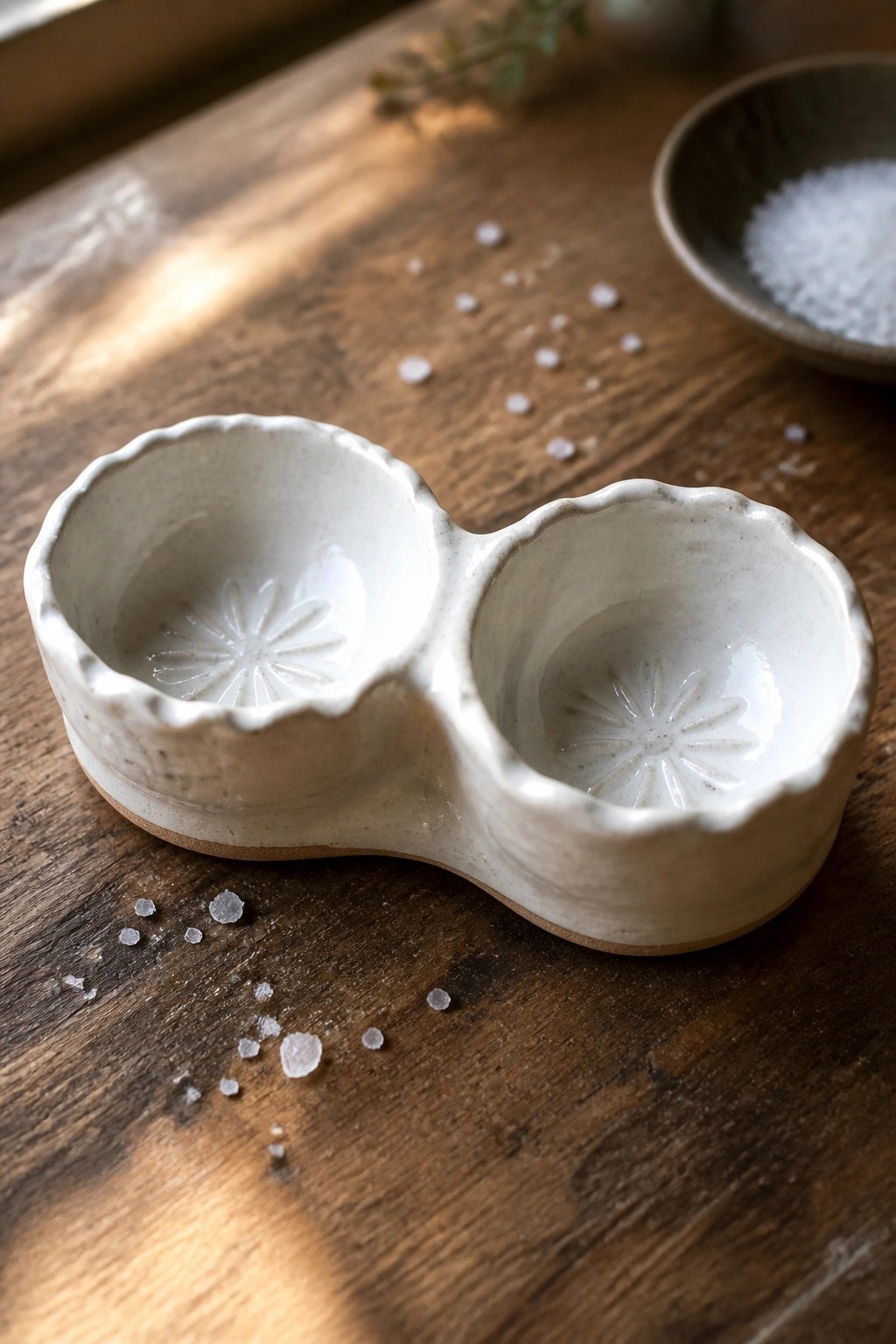
A divided ceramic dish like this works as a compact salt and pepper cellar or small condiment server. Each round section has a scalloped rim and a hand-carved radial pattern pressed into the base. The light glaze lets the carved lines show clearly while keeping the surface easy to wipe clean. The connected shape keeps both sections stable on a table without taking up much space.
The small scale makes this easy to adapt for a single-person table setting or as a set of two matching dishes. You could repeat the same carved base on a longer tray divided into three sections or simplify it to plain bowls with just the scalloped edge. In a kitchen it keeps coarse salt or spices within reach during cooking. The matching carved centers also create a clean, balanced look that works well in flat-lay photos for sharing the finished piece.
Carved Fox Figurine with Fur Texture
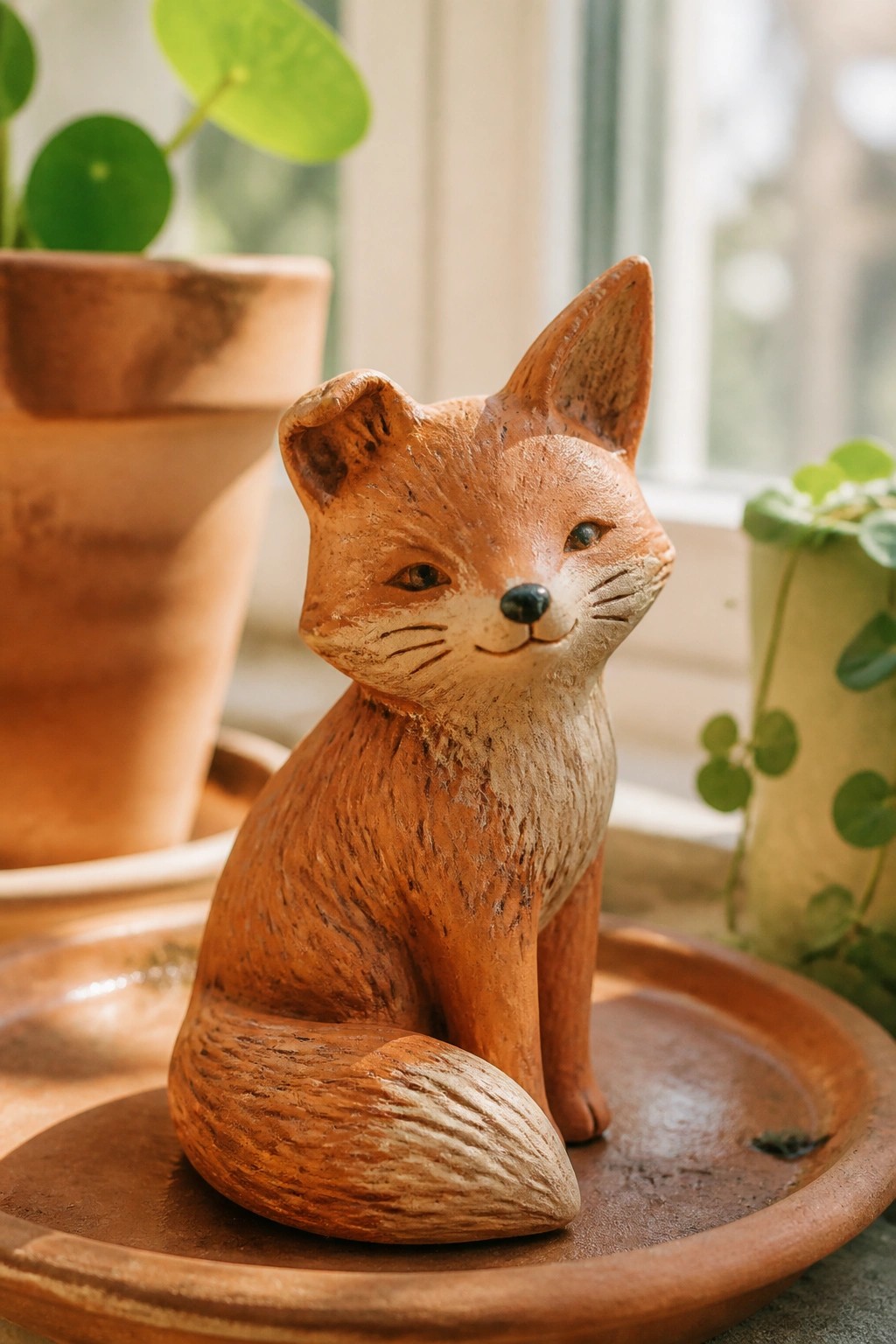
A small seated fox figurine makes an effective decor object when the body and tail receive carved lines that create a relief fur pattern. The face stays smoother with painted details on the eyes, nose, and whiskers so the sculpted texture does not compete with the facial features. This approach works as a simple animal figurine project where the carving supplies the main visual interest through raised and recessed lines rather than color changes.
The small scale makes this easy to adapt into other animal shapes like a rabbit or hedgehog using the same carving tool. You can place a piece like this on a windowsill tray or shelf without taking up much room. The carved texture also photographs well for sharing, since the lines create shadows that show up clearly in photos. For a variation, try the same fur pattern on a larger tray or low bowl to turn the idea into a functional item.
Carved Rim Plate with Raised Border Design

A wide ceramic plate with a detailed relief border gives you a clear way to feature carved or pressed patterns without covering the whole surface. The rim carries repeating motifs that create depth and shadow, while the center stays smooth and functional for serving. This setup fits the plate category and works especially well when you want texture to show up in photos or on a table.
The flat center and wide rim make it easy to adapt the same border treatment to smaller plates or a low tray. You could simplify the carving to basic lines if you want faster results or repeat the pattern on a set of four for a matching look. In a kitchen or dining space this shape stands out on Pinterest because the contrast between texture and plain glaze reads clearly even in small images.
Cloud Relief Carving on a Teapot
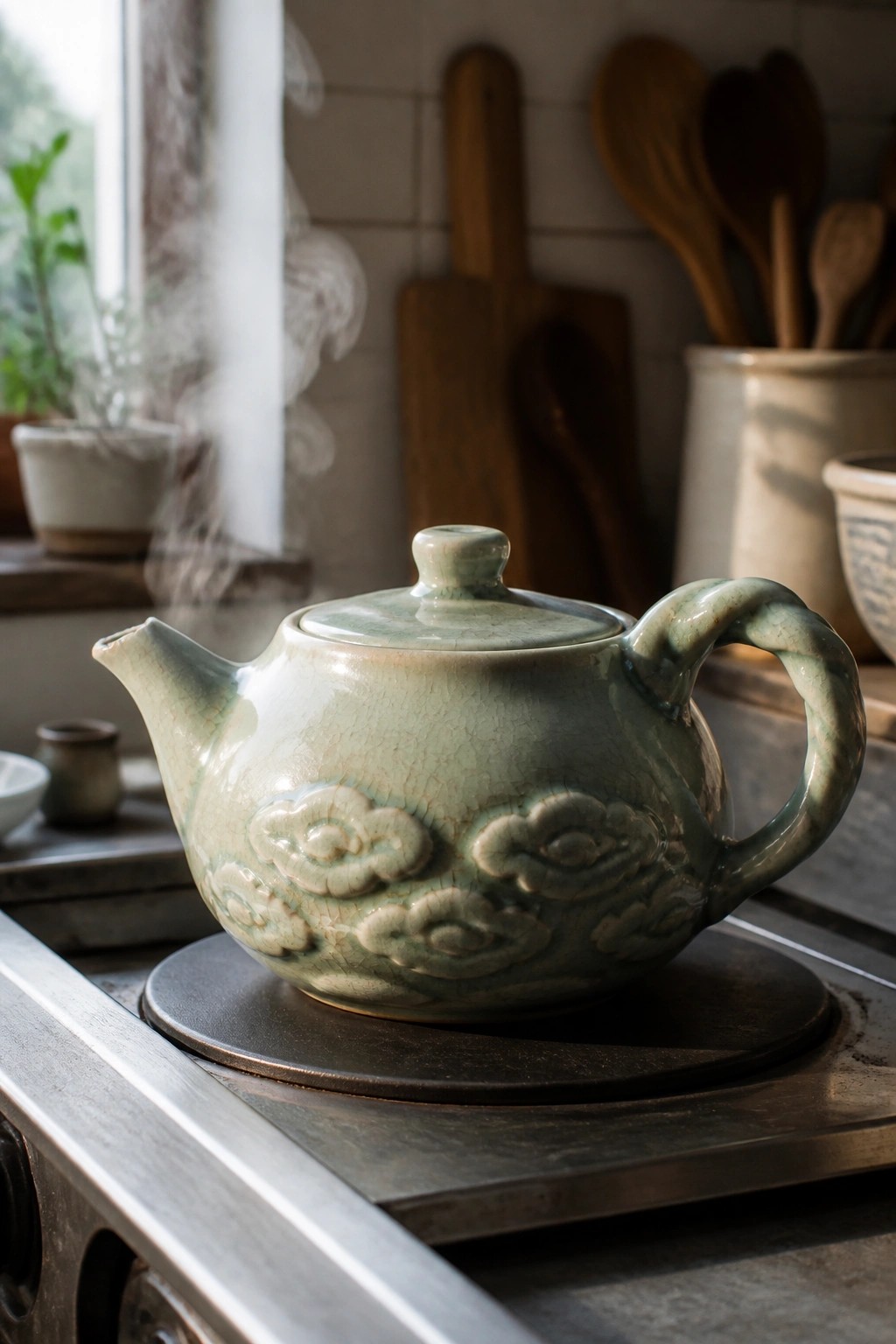
A teapot works well for this type of relief carving because its rounded body gives plenty of surface area for repeating motifs. The clouds are built up as raised shapes that follow the curve of the form, creating a consistent pattern around the middle section. A green crackle glaze settles into the recessed areas and highlights the edges of each carved shape, making the texture readable from a distance.
What makes this idea useful is how the same cloud motif can be scaled down for smaller pieces like creamers or sugar bowls to create a set. The rounded teapot shape supports the carving without needing extra space, and the crackle finish adds contrast that survives daily handling. You could simplify the pattern to fewer clouds if you want a quicker project or repeat it more densely on a larger vase. In a kitchen, this kind of carved teapot stands out on open shelving compared to plain glazed pieces.
Triangular Cutouts for a Small Tea Light Holder
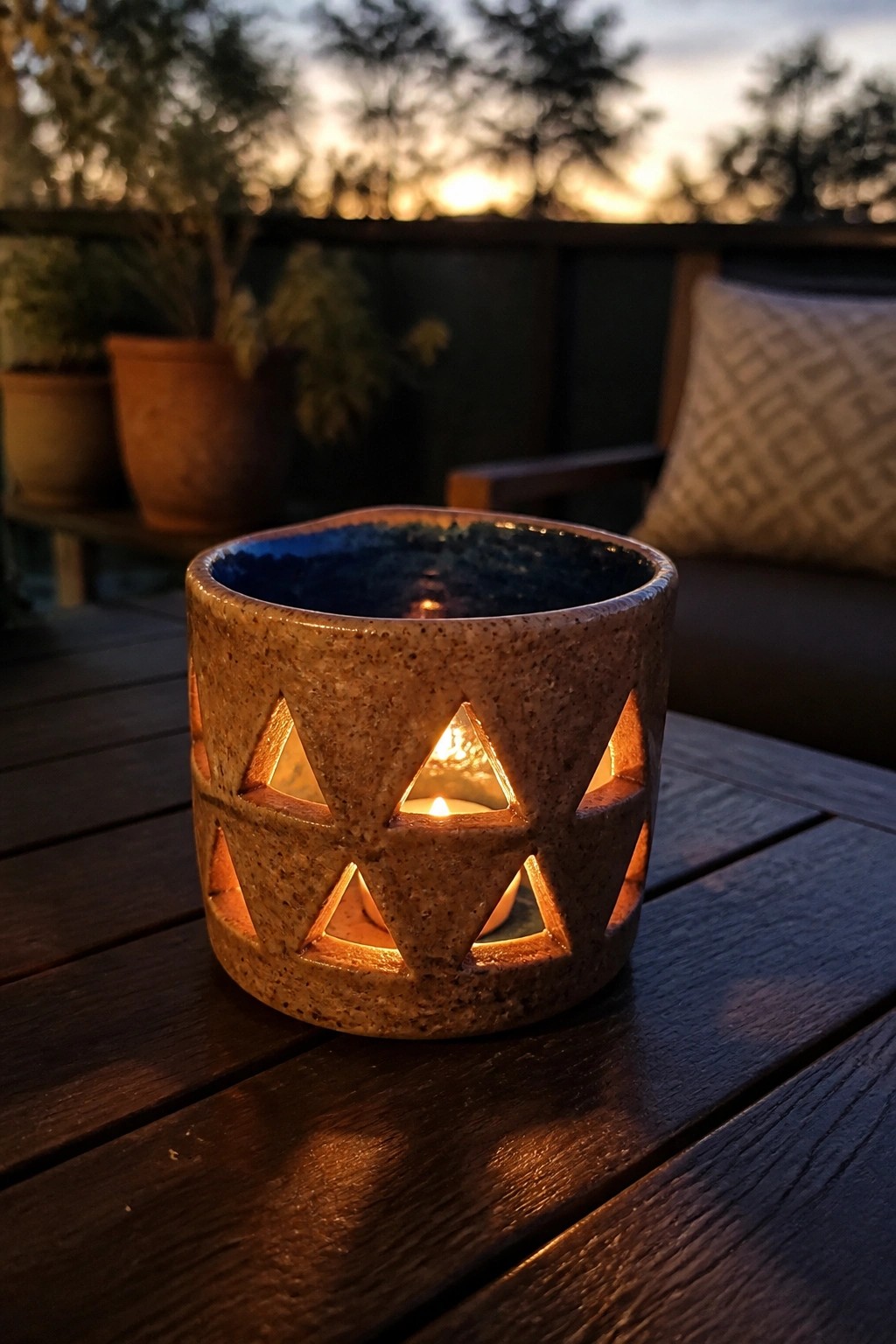
A simple cylinder of clay works well as a tea light holder when you carve rows of triangles through the wall. The cutouts let light pass through in a clean geometric pattern while the speckled matte surface keeps the focus on the carved shapes. Keeping the inside glazed in a contrasting color adds a bit of depth without complicating the overall form.
What makes this idea useful is how the repeated triangles create visual interest with very basic carving tools. You can scale the same pattern up for a taller votive or down for a set of small desk pieces. The shape also adapts easily if you want to try squares or diamonds instead. For gifts, this size finishes quickly and fits on shelves or tables without taking up much space.
Textured Ceramic Soap Dish with Drainage Grooves
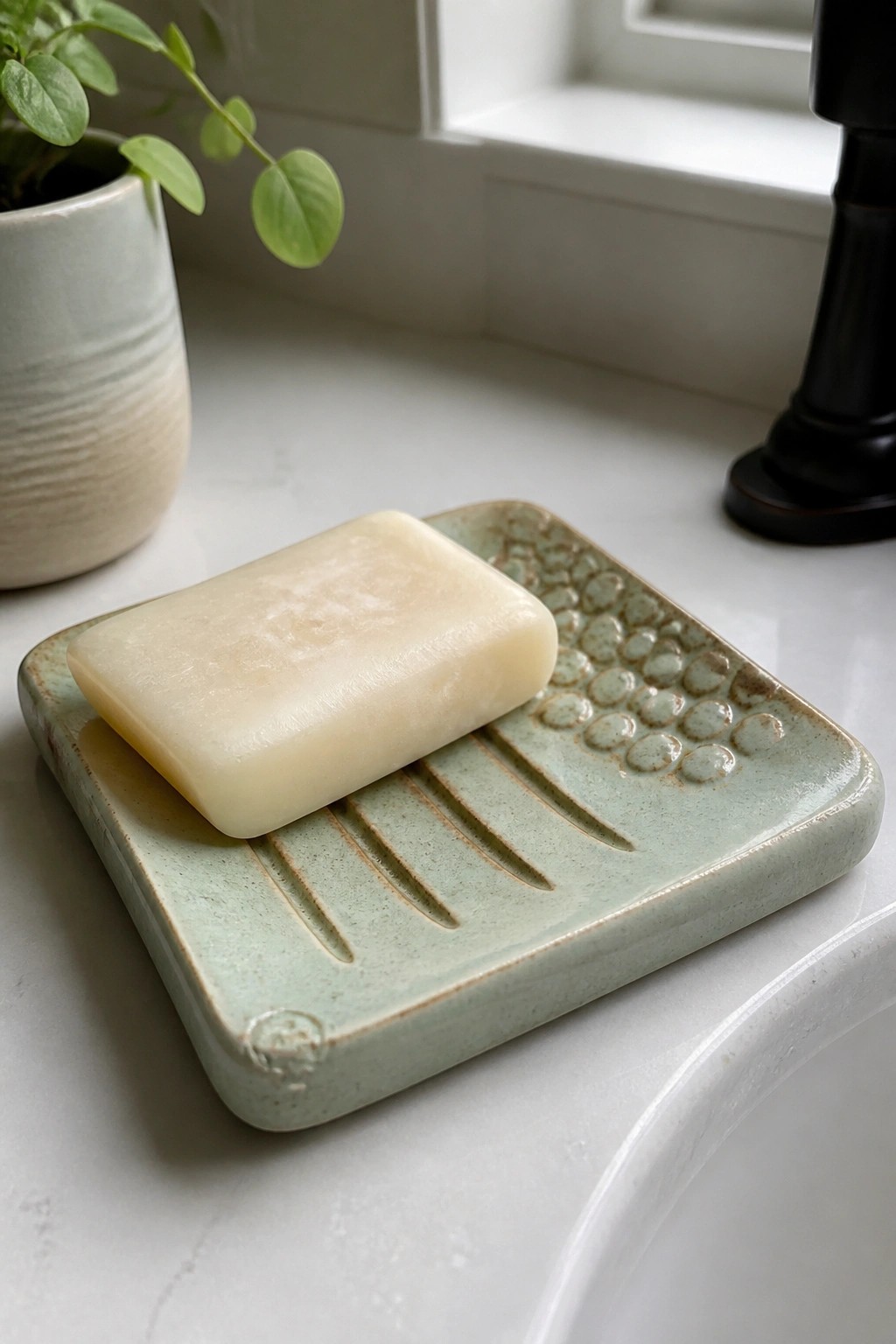
A rectangular ceramic soap dish uses one half covered in raised circular bumps and the other half carved with straight drainage grooves. The light green glaze brings out the difference between the bumpy texture and the incised lines while keeping the surface practical for wet soap. This setup holds a bar above pooled water and lets excess moisture run off through the grooves. It works as a simple bathroom item that combines texture with everyday function.
What makes this idea useful is the built-in drainage that keeps soap from softening too quickly. The compact shape fits on a sink ledge or narrow shelf without crowding other items. You could scale the same bump-and-groove layout down for a ring dish or use just the raised circles on a larger tray for keys. The pattern photographs clearly because the raised dots and cut lines create visible contrast under normal lighting.
Frequently Asked Questions
What clay types are best suited for creating detailed relief patterns and textured surfaces? Stoneware and porcelain bodies with fine particles hold sharp edges well during carving. These clays allow you to build raised relief without chipping or losing fine details like lines and dots. Avoid very coarse earthenware if your designs include intricate textures since it can crumble under pressure.
Which tools help achieve different depths in relief carvings? Loop tools and wire cutters work well for removing larger areas to create high relief. For finer textures add small carving knives and stamps to press or incise patterns. Start with shallow passes on leather hard clay and build layers gradually so the surface stays even and the patterns remain crisp.
How can I prevent cracks when carving textured ceramic pieces? Keep the clay at a consistent leather hard stage throughout the process and cover unfinished sections with plastic to control drying speed. Carve in small sections rather than large areas at once and avoid thin walls that might stress during shrinkage. This approach helps maintain the integrity of raised relief and textured surfaces.
What glazing methods highlight carved relief and textures effectively? Apply underglazes in contrasting colors before a clear top coat so the glaze pools in recessed areas and emphasizes depth. Matte glazes can accentuate rough textures while glossy ones make smooth relief stand out. Test on sample tiles first to see how the glaze interacts with your specific patterns.
How do I adapt the carving ideas for beginners versus more advanced work? Beginners can start with simple stamped textures and low relief lines on small forms like bowls to build control. Advanced artists might layer multiple carving stages on larger vessels adding complex patterns and undercuts for dramatic shadows. Practice on test pieces helps scale any of the 18 ideas to your skill level.

Pottery Path is my cozy corner of the internet where I share clay ideas, pottery inspiration, and simple projects you can recreate at home. I love exploring everything from air dry clay to handbuilt pottery to cute minis that brighten your day. My goal is to make clay crafting feel easy, fun, and welcoming for anyone who wants to try it.
You will find beginner friendly tutorials, creative pottery painting ideas, and lots of warm inspiration for slow and happy crafting. If you enjoy hands on creativity, this space will feel like home.