
I often spend time in my studio making a few pottery items before Christmas.
Handbuilding lets me create shapes without needing much equipment.
This year I came up with some projects that work well as decorations.
They are simple enough to try if you have basic clay tools.
Some of them make nice gifts for family too.
Snowflake Impressed Ceramic Ornament
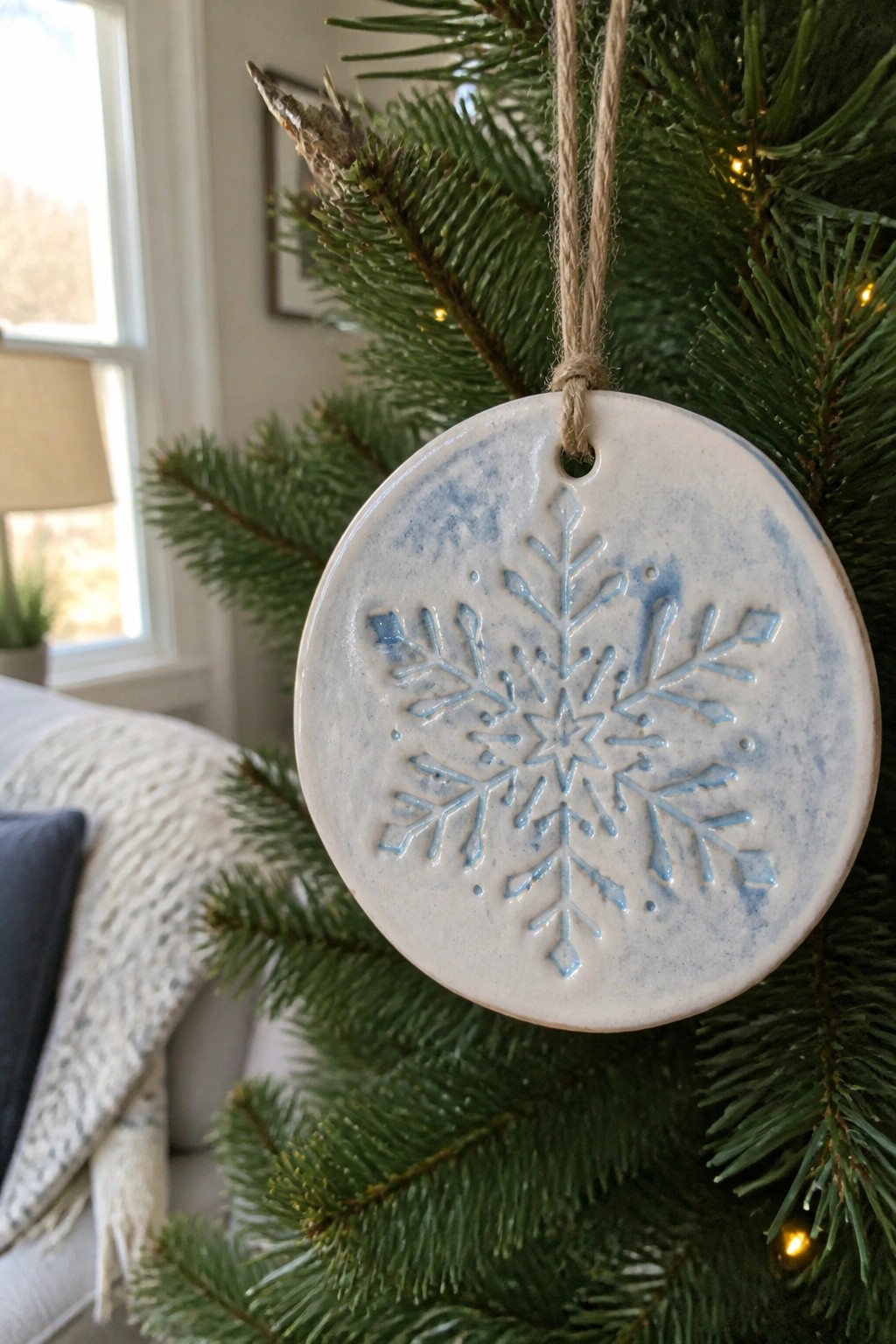
A round clay disk formed from a slab makes a straightforward base for this ornament. The snowflake is pressed or carved into the surface, then highlighted with a light blue glaze over a white or off-white base. A single hole near the rim lets you thread twine or ribbon for hanging. The simple round form and limited color palette keep the focus on the motif itself.
The small size means you can roll out and cut several at once on the same slab. You can change the stamp to a star, tree, or initial to match other holiday themes without changing the overall shape. These work as tree decorations, gift tags, or even place markers at a table. The blue-on-white contrast shows up clearly in photos, which helps if you want to share the finished pieces online.
Stacked Ceramic Christmas Tree Figurine

A small handbuilt ceramic Christmas tree works as a standalone holiday decoration. The form uses stacked tiers with impressed branch textures and a green glaze that runs slightly at the base over a lighter clay body. The rounded top and stable foot keep the piece balanced without extra supports.
What makes this idea useful is how easily the shape scales for different shelf sizes or gift sets. You can swap the green glaze for other colors or simplify the texture to basic ridges if you want faster results. A piece like this fits on a mantel, desk, or windowsill and pairs well with natural elements like branches or candles. The same tiered approach could be adapted into a candle holder or small salt cellar for year-round use.
Red Glazed Star Ornament
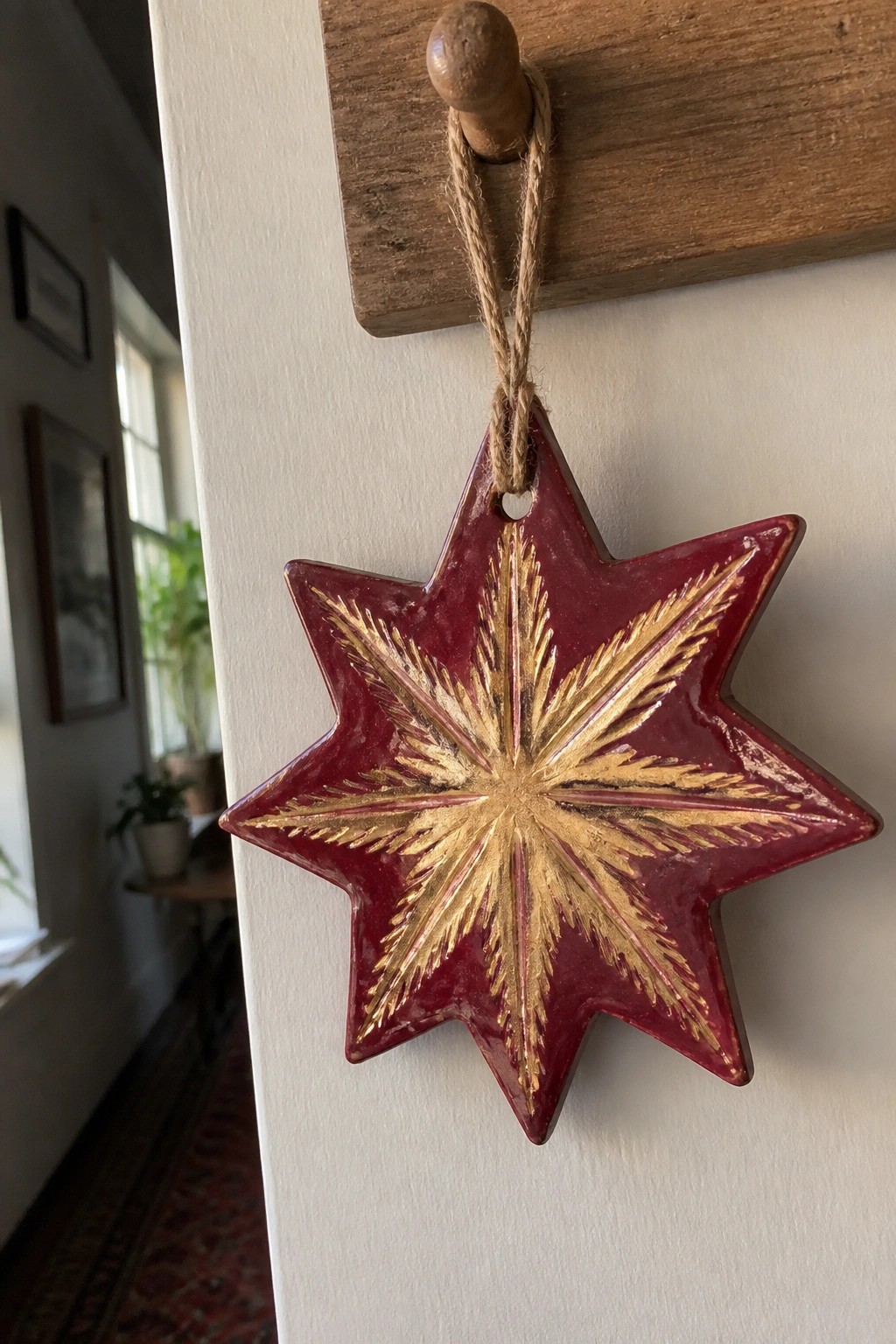
A handbuilt ceramic star ornament is formed as a flat, eight-pointed shape with a hole at the top for hanging. The surface is covered in a solid red glaze, and gold lines are added in a radiating pattern that follows the points outward from the center. This keeps the design simple while the contrast between the glaze and the metallic detail makes the shape stand out. The project fits into the decor object category and works as a lightweight hanging piece.
The small scale makes it easy to produce in batches or adjust the size for different uses. You can change the glaze color or replace the gold lines with underglaze patterns to match other decorations. For a gift, the same star shape can be made into a set or turned into a larger wall piece by adding a loop on the back. The painted lines give it enough detail to photograph well without extra sculpting steps.
Speckled Ceramic Tealight Holder
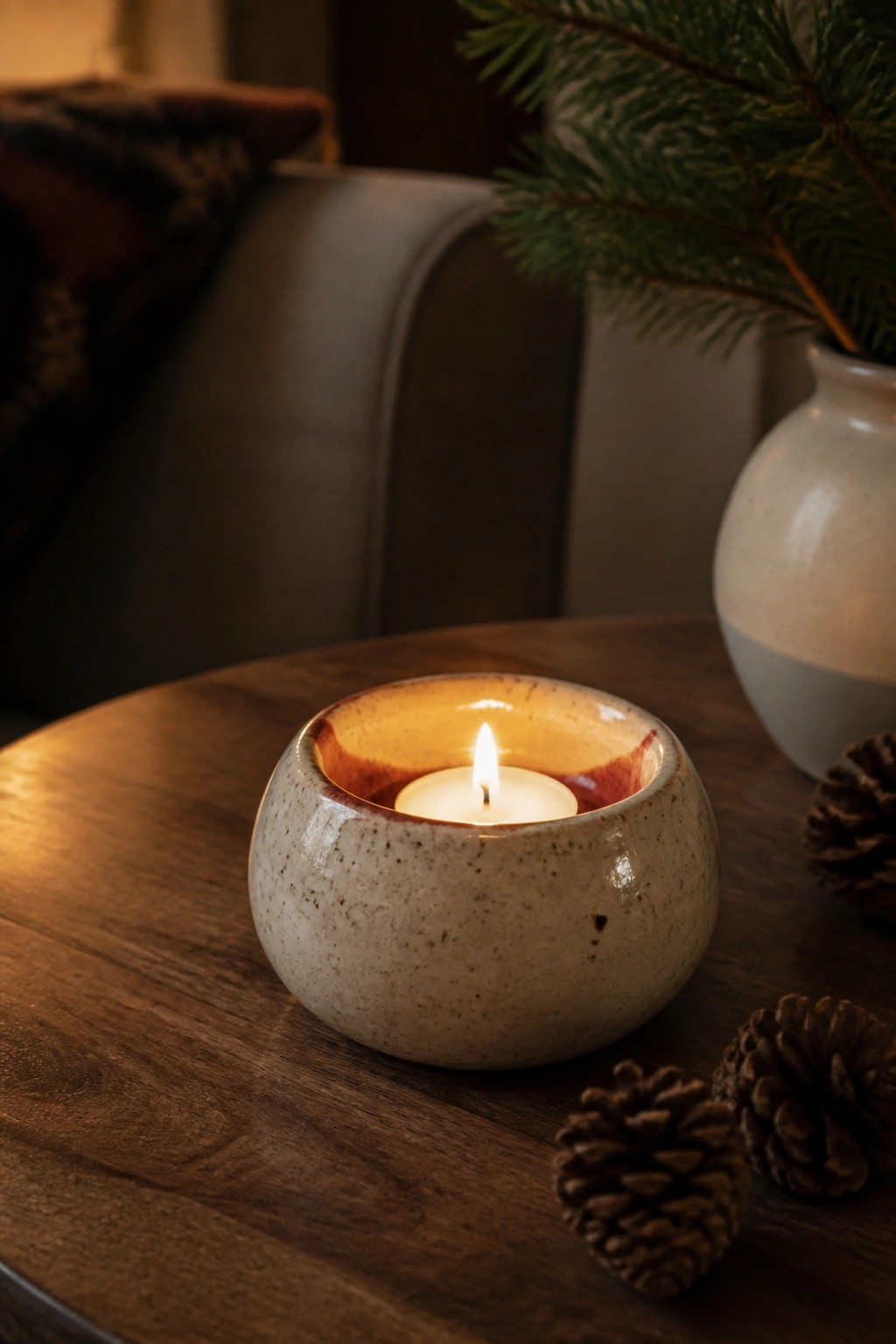
A small handbuilt bowl serves as a tealight holder when formed with a rounded body and open rim that cradles the candle securely. The speckled clay exterior keeps the piece simple while the warm interior glaze bounces light outward. This setup works because the bowl stays low and wide enough to contain the flame safely on a table surface.
The compact shape makes it easy to repeat for multiple table settings or mantel displays. You can adjust the rim height or switch to a darker clay body if you want more contrast with the flame. This style also adapts quickly into a small catch-all dish once the holidays end by skipping the candle altogether.
Leaf Wreath Ceramic Tray
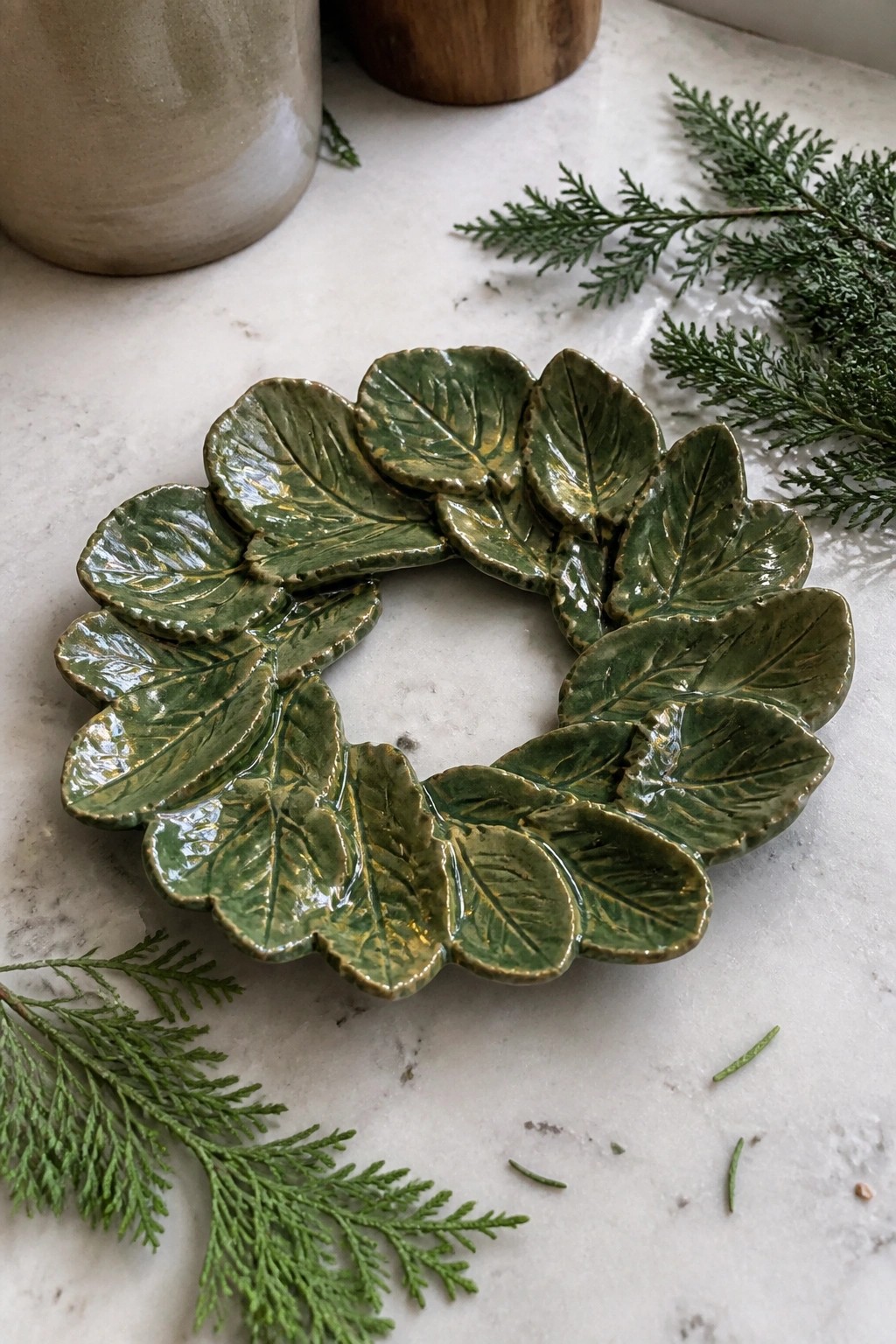
A wreath-shaped tray built from overlapping clay leaves creates a shallow ring dish that works as both decor and small storage. Each leaf is formed separately with visible veins and edges, then assembled into a circle and covered in layered green glazes that vary from deep forest to lighter olive tones. The glossy surface catches light on the raised details while the open center keeps the piece lightweight and easy to move.
What makes this idea useful is the way the circular form sits flat on a table or mantel without needing extra props. You can scale the same leaf layering down for a ring dish or candle base, or swap in different leaf shapes to match other seasons. The glaze variation adds interest without extra painting steps, so the project stays straightforward even if you want to make several at once. In a kitchen or entryway, a smaller version could hold keys or jewelry while still reading as holiday decor.
Santa Hat Painted Mug
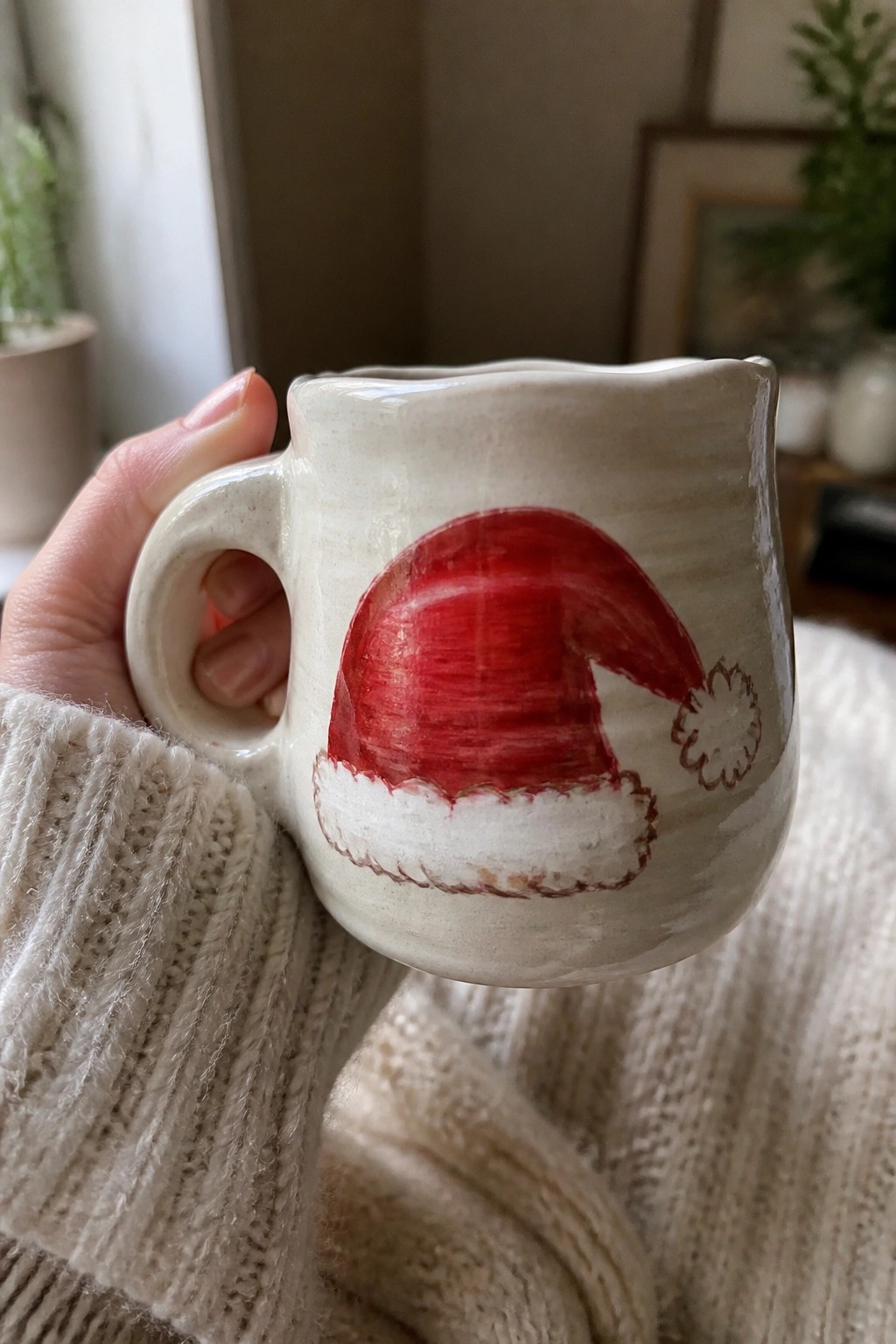
A handbuilt ceramic mug gets a direct holiday update from a large painted Santa hat motif. The red hat body sits on the side with a white brim and a small brown pom-pom detail, all applied over a neutral speckled glaze. This keeps the project focused on surface decoration rather than added sculptural elements, turning a basic mug form into seasonal tableware.
The painted detail helps this stand out as an easy way to refresh plain mugs for December use. You can repeat the same hat on different mug sizes or swap the red for other colors to match different themes. In a kitchen this kind of piece works well for daily drinks during the holidays or as quick gifts. For a gift, something like this can be made by starting with plain forms and adding the design before the final firing.
Leaf-Shaped Salt Cellar

A small handbuilt ceramic dish shaped like a pointed leaf serves as a salt cellar or pinch bowl. The clay is formed with raised edges and simple vein lines pressed into the surface, then covered in a glossy green glaze that pools in the details. This approach keeps the project in the kitchen item category while giving it a clear seasonal look through the leaf form and color choice.
What makes this idea useful is the compact size that lets you produce several at once for gifts or table settings. The same leaf shape can be reworked into a soap dish or ring holder by adjusting the depth and switching the glaze to a matte finish. A piece like this works especially well on a countertop or dining table where you need a small container that still looks intentional.
Reindeer Head Spoon Rest Tray

A narrow rectangular ceramic tray functions as a spoon rest when one end is formed into a reindeer head with raised antlers, ears, and simple face details. The beige crackle glaze covers the entire piece and keeps the sculpted elements visible without extra color. This kitchen item stays flat and elongated so a ladle or large spoon can rest across it during use.
What makes this idea useful is the way the long shape handles actual utensils while the head turns it into a clear holiday piece. You could swap the reindeer for another animal or simplify the antlers with a stamp instead of sculpting them by hand. In a kitchen this tray keeps counters clean and fits in a drawer when stored. For a gift the same basic tray works with different holiday motifs and stays small enough to make quickly.
Ceramic Bead Garland with Striped Patterns

Handbuilt ceramic beads strung into a garland create a simple way to add repeating color and shape along a mantel or shelf. The beads alternate between round forms with red and white stripes, solid green surfaces, and speckled white finishes, separated by small star-shaped pieces that keep the strand from looking too uniform. This project fits the decor object category and works because the painted stripes and glaze colors echo classic holiday motifs while the rounded forms stay easy to repeat.
What makes this idea useful is how the bead size and spacing let you adjust the total length for different surfaces without starting over. You could swap the stripes for solid colors or add smaller beads to make a shorter version for a side table. The garland takes up little storage space when not in use and gives a consistent handmade look that stands out in photos for projects like this.
Elf Head Planter

A handbuilt ceramic planter formed as an elf head works as a small holder for succulents or cuttings. The green glazed hat creates the rim while the face is painted directly onto the cream clay body with simple black eyes, a line mouth, and pink cheeks. Pointy ears extend from the sides to give the shape clear definition. This approach turns a basic pinch-pot form into a seasonal planter that sits on a shelf or windowsill.
What makes this idea useful is that the hat brim and ears already define the planting area and give the piece balance. The same head shape can be reworked into a small bowl by flattening the top or turned into a set of matching ornaments by adding a hanging hole before firing. Its compact size fits easily among other holiday pieces without taking up much space. You can change the colors on the hat or face to match different themes while keeping the basic construction the same.
Ceramic Bells for Holiday Hanging Decor
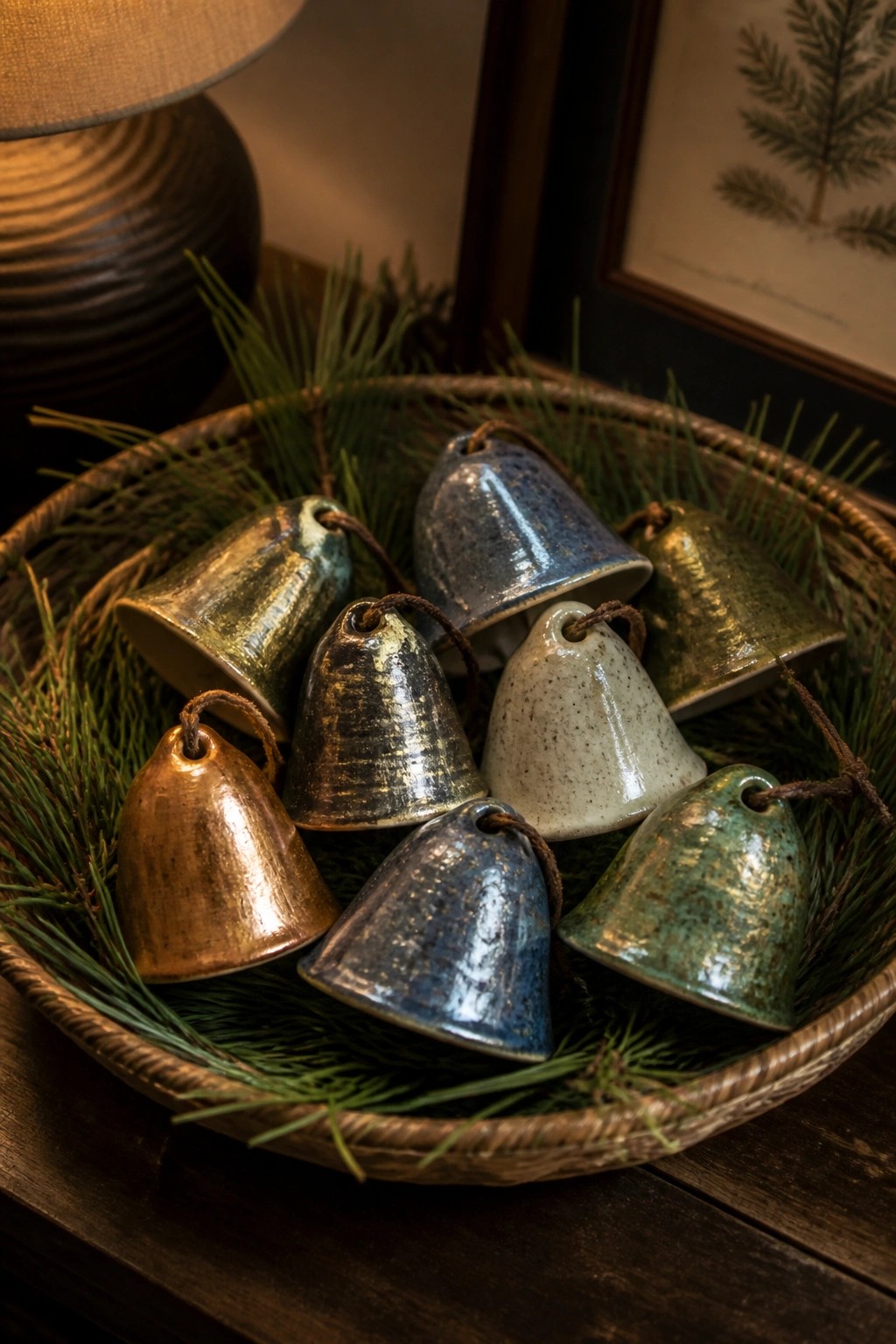
Small bell shapes formed from clay and topped with a simple loop create hanging ornaments that work well for seasonal displays. The bells receive a range of glossy glazes in blue, green, brown, and cream tones that give each one a distinct but coordinated look. A hole or pinched loop at the top lets you add string or cord for easy hanging, keeping the form basic and repeatable.
The small scale makes these quick to produce in multiples and simple to store. You can adapt the idea by changing the height slightly or swapping in matte glazes for a different surface effect while keeping the same basic shape. These bells suit a Christmas tree, a mantel garland, or a bowl of greenery as filler. A set of six or eight makes a straightforward gift that requires only twine and a tag to finish.
Striped Stocking Wall Planter

A handbuilt clay stocking works as a wall planter when formed with a wide top opening and a rounded foot that sits flat against the wall. The red and white horizontal stripes combined with a vertical ribbed texture create a knit-like surface that still reads clearly as a ceramic piece. This keeps the project in the category of seasonal planters rather than just holiday decor.
The shape does a lot of the work here because the stocking already has a built-in hanging angle and enough depth for small root balls. You can adapt the idea by shortening the foot for a more compact version or switching the stripes to solid red with white speckles for a different look. In a kitchen or hallway this size fits on a single hook without needing extra brackets, and the same form could be reworked as a small utensil holder once the season ends.
Knit Pattern Mitten Ornament

A mitten-shaped clay ornament gives you a simple holiday decor object that hangs easily from a tree branch. The white cuff section carries a ribbed surface while the pink body uses a repeating chevron texture to suggest knitted fabric. This combination of two surface finishes on one small piece creates contrast that reads clearly from a short distance. The project stays in the category of handbuilt seasonal ornaments rather than functional ware.
What makes this idea useful is how the basic mitten silhouette can be scaled up or down depending on the size of your tree. You could swap the pink for other glaze colors or press different stamps into the surface to change the texture pattern. The small scale keeps material use low so you can make several in one session for gifts or a full set of matching ornaments. The same cuff and body layout also works if you adapt the shape into a stocking or hat form.
Handbuilt Ceramic Nativity Figures

A set of handbuilt ceramic nativity figures uses simple slab and coil construction to create Mary, Joseph, and the infant in a manger. The forms stay basic with draped cloaks and minimal pinched details for faces and hands. Matte glazes in blue, brown, and cream keep the surfaces textured and the shapes easy to read from a short distance. This type of project falls into the holiday decor category rather than functional ware.
What makes this idea useful is how the compact size fits on a mantel, windowsill, or small table without crowding other items. You can adapt the same draped shapes and low-detail approach to create just two figures or expand later with additional pieces like shepherds. The earthy glaze palette works with many existing Christmas color schemes, so the set blends in rather than standing out as a separate craft project. For gifting, the basic construction lets you finish a small group in a weekend while still producing something clearly handmade.
Gingerbread House Painted Ceramic Bowl

A shallow handbuilt ceramic bowl with a gingerbread house scene offers a straightforward way to add a holiday motif to tableware. The design uses brown slip or underglaze for the house, trees, and candy details, then adds white accents for icing lines, windows, and stars. This keeps the focus on the flat interior surface where the illustration reads clearly without extra texture or sculpting.
What makes this idea useful is how easily the motif transfers to other flat or curved forms like plates, trays, or mugs. You could simplify the scene to just the house and one tree for quicker painting sessions or repeat it across a set of small dishes. In a kitchen, the bowl works for holding cookies or snacks during December, and the same brown-and-white palette pairs with existing neutral dinnerware.
Ceramic Deer Head Wall Hook for Hanging Accessories
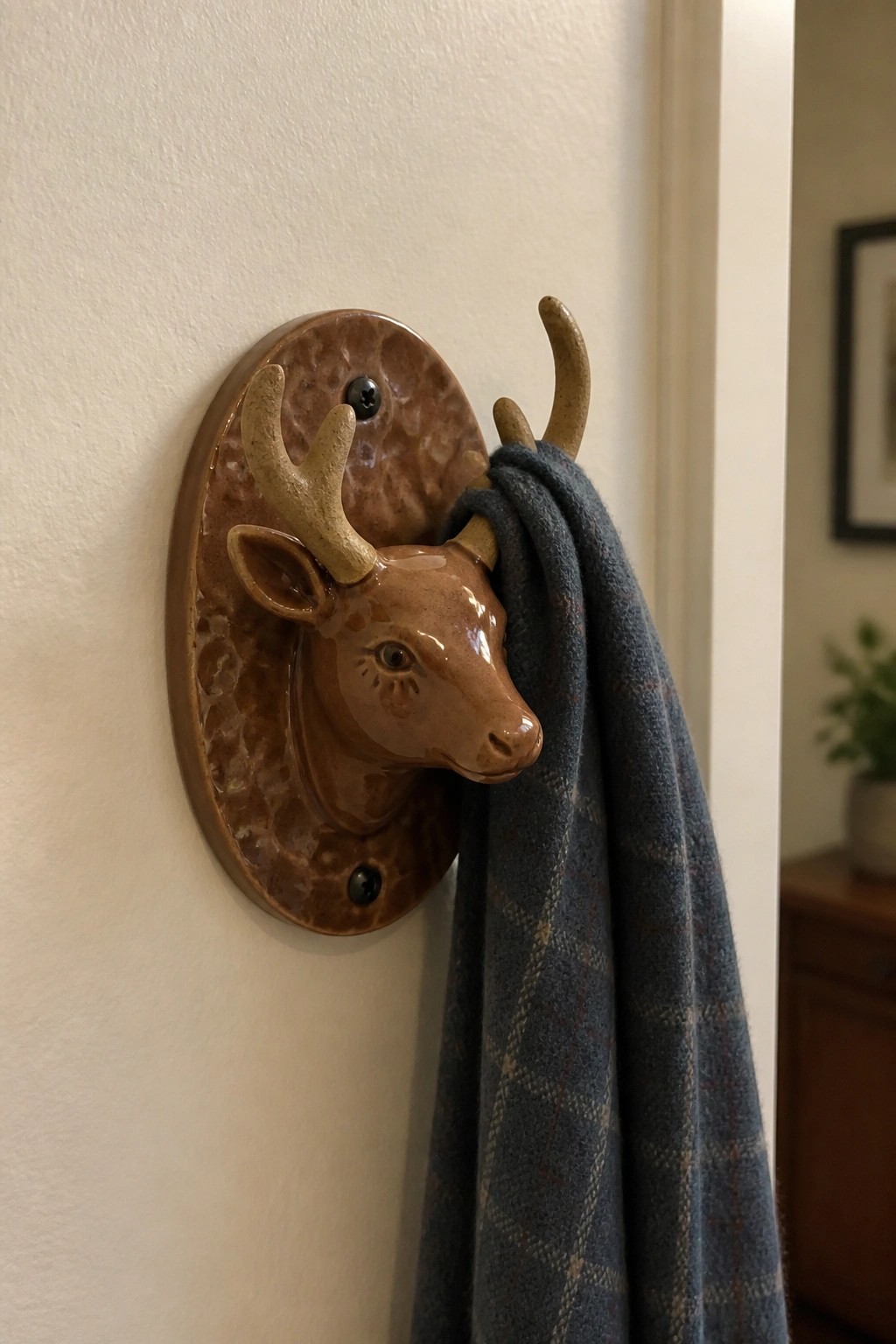
A handbuilt ceramic deer head forms a wall-mounted hook by sculpting the antlers into two upward curves that hold scarves, towels, or light coats. The oval backplate sits flush against the wall with two screw holes for mounting, while the head and ears add dimension without taking up much space. The mottled brown glaze covers the entire piece and highlights the simple sculpted details around the eyes and muzzle.
What makes this idea useful is how the antlers do double duty as both decoration and functional hooks. You could scale the same deer head down for a smaller key holder or stretch the antlers longer for heavier coats in an entryway. The brown tone pairs easily with plaid fabrics or natural wood trim, so the piece fits holiday setups without looking overly seasonal. For a different version, swap the deer for another animal with branching horns or ears that can serve the same purpose.
Gingerbread Man Ring Dish

A handbuilt ceramic ring dish shaped like a gingerbread man works well as a small holiday tray for jewelry or other tiny items. The brown glaze provides a warm base while the white details create a simple icing effect with a face, dots, and wavy lines along the edges. This keeps the piece compact and easy to place on a surface without taking up much room. The shape turns a basic dish into a seasonal object that still functions as everyday storage.
The shape does a lot of the work here because the outline stays recognizable even with minimal surface decoration. You could adapt the same form by switching the face details or using different glaze colors to match other holiday themes. It fits on a dresser, nightstand, or desk where small items tend to get lost. For gifts, the same idea scales down easily into a set of smaller dishes or gets reworked into a plain oval tray with just the icing lines added.
Ceramic Gift Box Ornaments
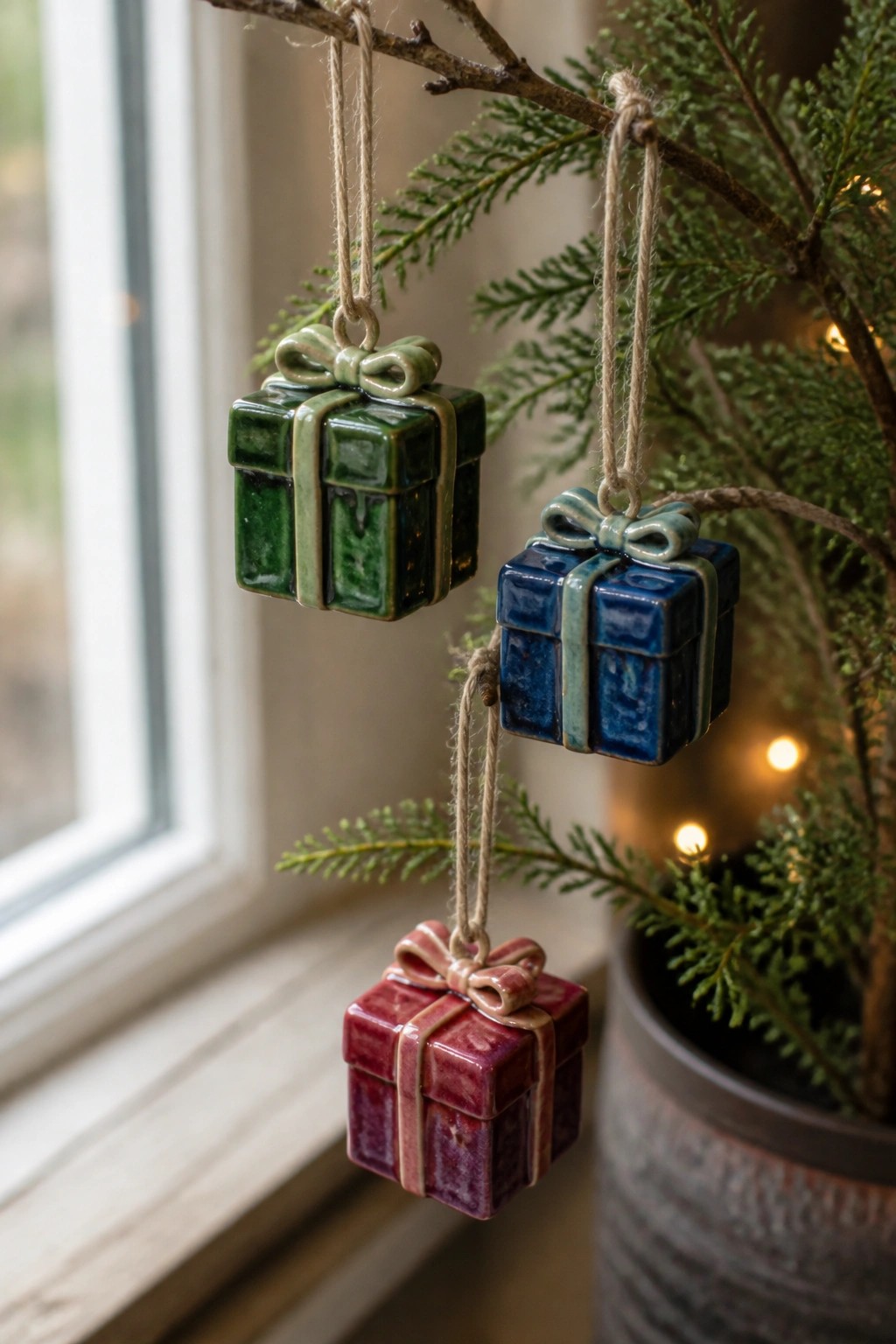
These ornaments are small cube-shaped ceramic pieces formed to look like wrapped gifts, with a simple bow added on top before firing. A glossy glaze covers the main body while a second color highlights the ribbon details, and a hole at the top holds the hanging string. The straightforward shape keeps production quick while the added bow gives enough detail to read as a present from a distance. They work as basic seasonal decor objects that hang easily on a tree or branch.
What makes this idea useful is how little clay each one needs, so you can batch out a dozen in one session. The cube form adapts well to different glaze combinations or by pressing a texture into the sides before the bow goes on. You could also scale them up slightly for use as package toppers or string several together as a garland. The small size makes them a fast project when you want multiple matching pieces without committing to larger forms.
Ceramic Trees with Star Cutouts
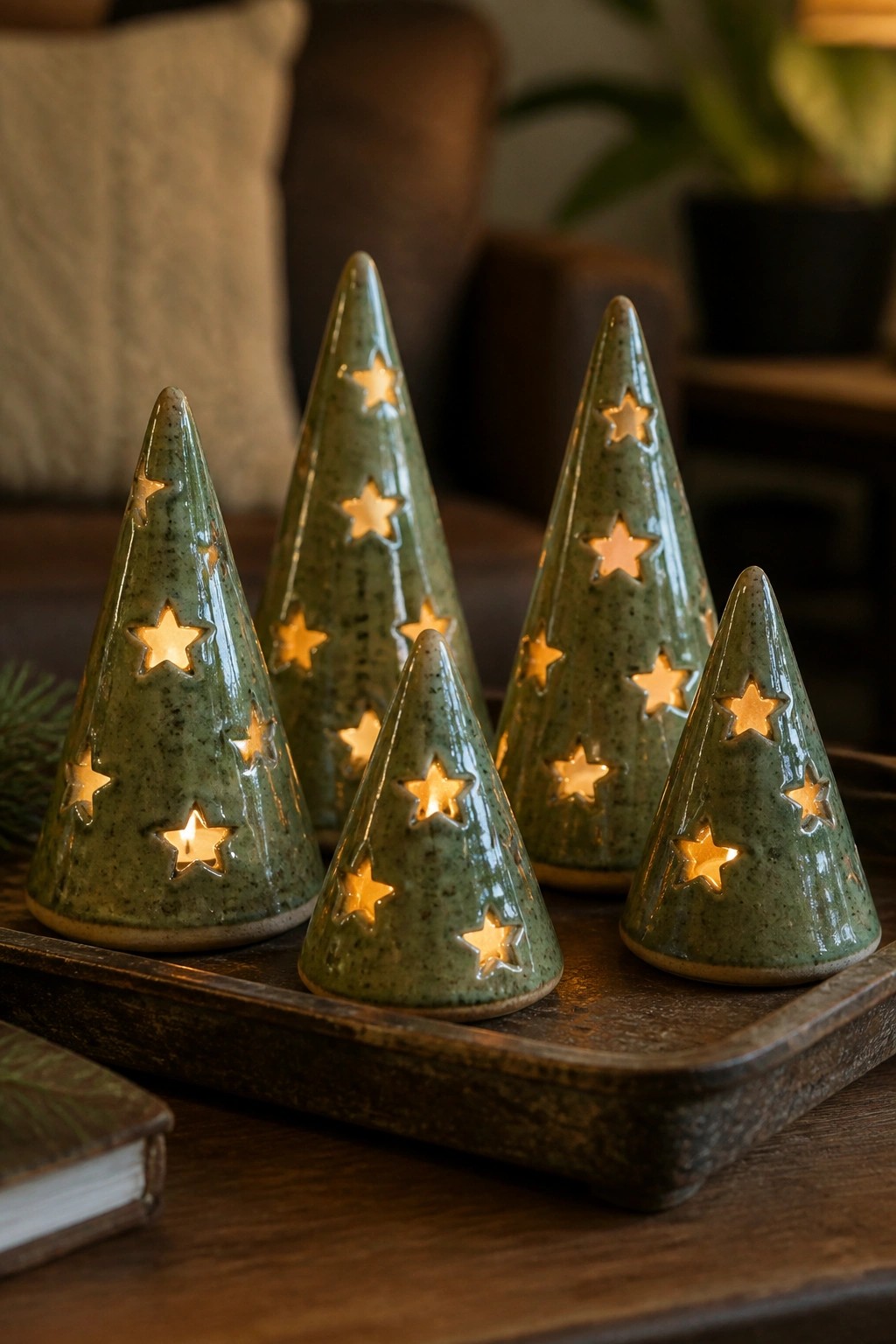
These cone-shaped ceramic pieces function as small holiday lanterns. Each one has star-shaped openings cut through the clay so light from a tea light or small candle can shine through. The green speckled glaze adds subtle texture without competing with the cutout pattern. They belong to the category of seasonal decor objects built specifically for tabletop light display.
What makes this idea useful is the simple cone form that stays stable on a tray or shelf while allowing easy variation in size. You can adapt the star cutouts to other shapes like moons or trees if you want a different seasonal look. A group of these works especially well on a mantel or entry table where multiple pieces can be lit together. For a gift version, make three or four in graduating heights so they nest neatly in a box.
Stocking Ring Dish
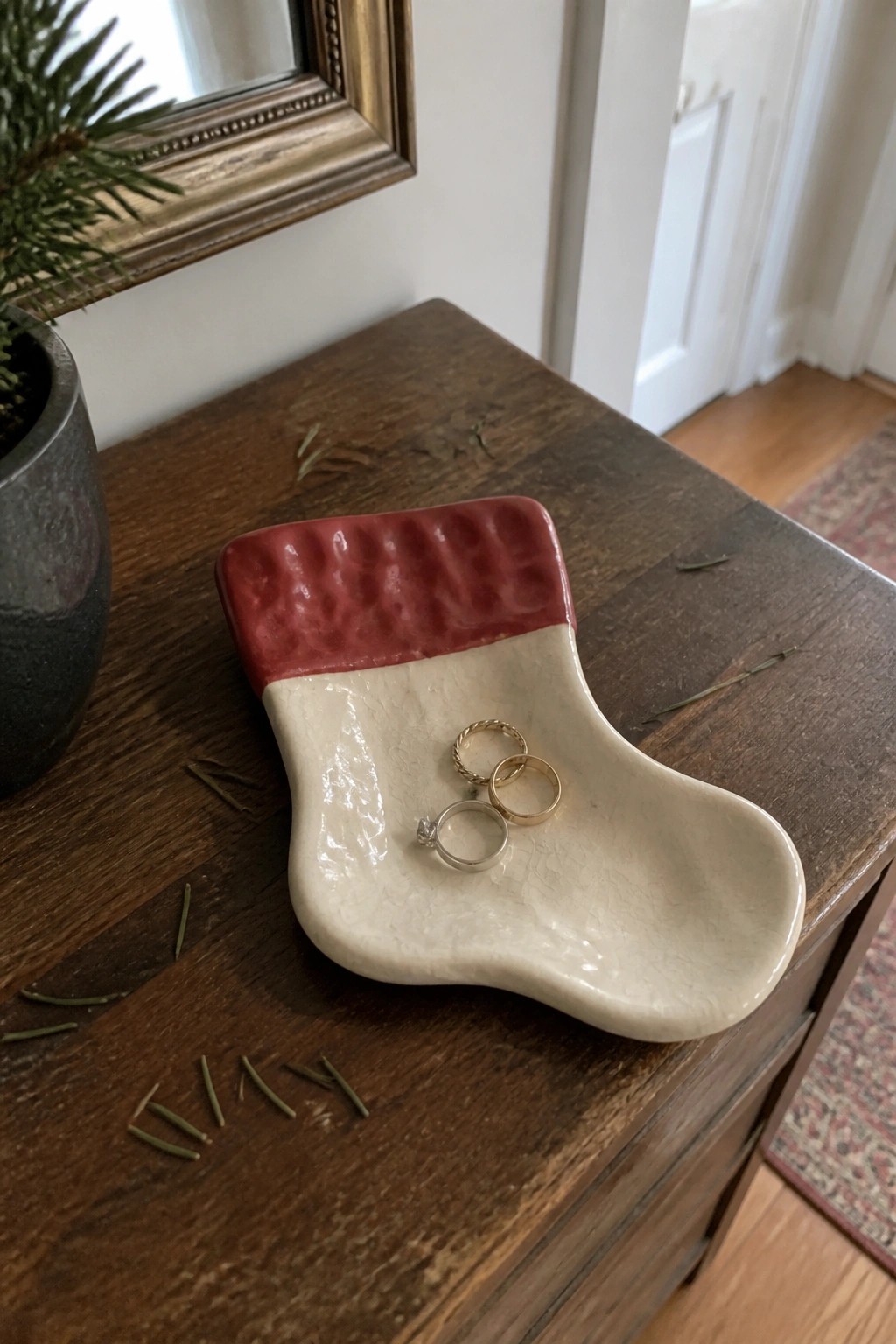
A handbuilt clay dish formed in the shape of a Christmas stocking makes a compact ring holder or small tray. The upper cuff section is covered in a red glaze with a bumpy texture while the lower part uses a white crackle glaze that shows some variation in finish. The simple outline and divided color treatment keep the form clear and easy to build from a flat slab or basic mold.
The small scale makes this easy to adapt for a bedside table or entryway catchall. You can swap the red for green or add a thin line of another color along the cuff edge without changing the overall shape. For gifts the stocking already signals the holiday so it needs little extra detail and several can be made from the same template in one session.
Holly Leaf Ceramic Napkin Rings

These handbuilt ceramic napkin rings feature a holly leaf texture wrapped around a simple cylindrical form with clusters of raised red berries attached to the top edge. The leaves are covered in a glossy green glaze while the berries receive a separate red glaze, giving the pieces a clear seasonal look without extra painting. The overall shape stays compact and functional so the rings sit flat on a table and hold folded napkins securely. This approach works as a small tableware accent that adds a repeating motif across place settings.
The compact size lets you make a full set of eight or more without needing a large workspace or kiln load. You can adapt the same leaf texture and berry clusters to candle rings or small jar lids by changing only the base diameter. The bright berry color against the green gives enough contrast to stand out in photos, which helps when pinning project ideas. For a faster version, roll out slabs, press real holly leaves into the surface for the veins, then cut and form them around a cardboard tube before adding the berries.
Ceramic Angel Ornament with Clasped Hands
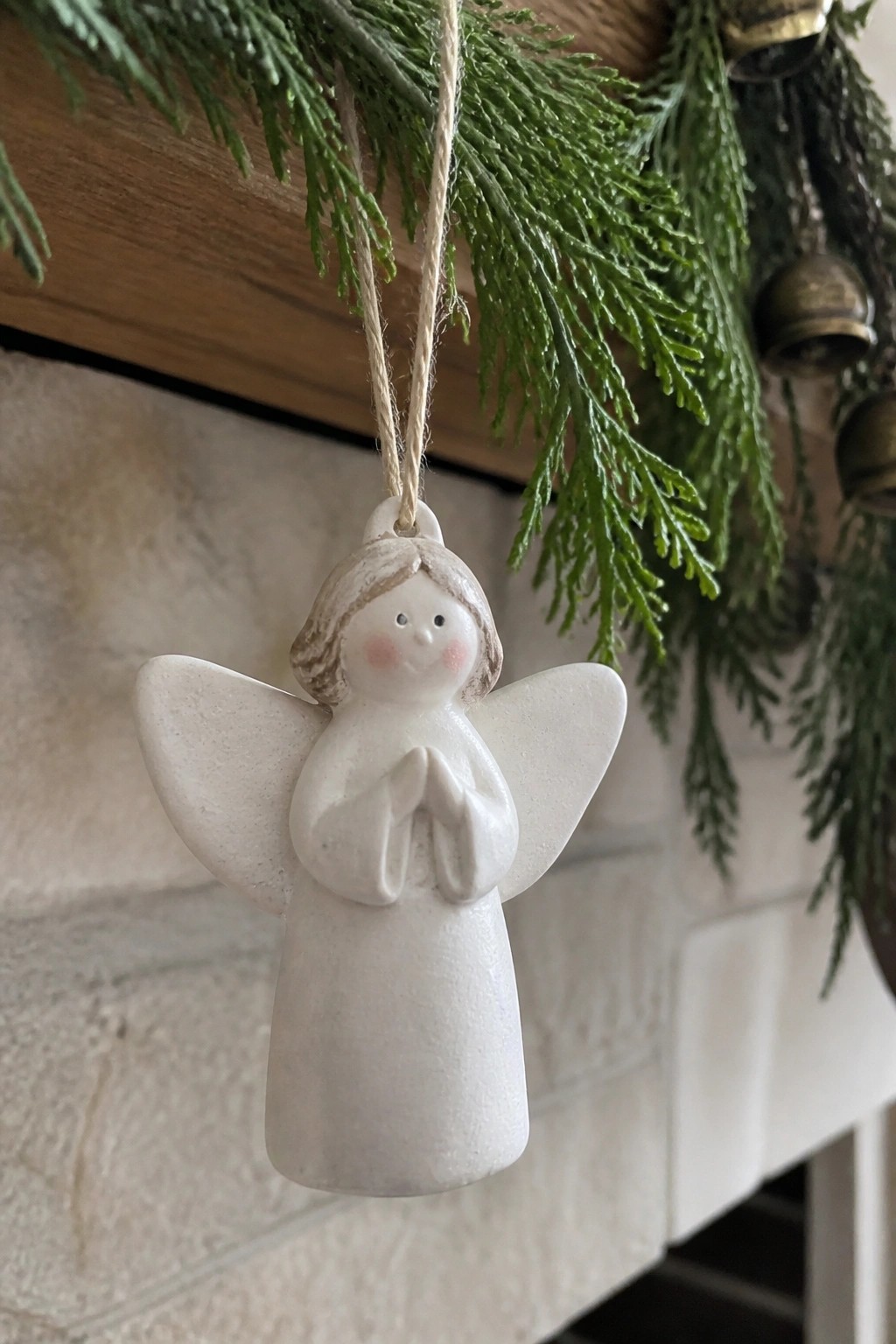
A small ceramic angel figurine works well as a hanging Christmas ornament. The tapered body, spread wings, and hands pressed together create a compact shape that hangs evenly from a single loop. A matte white finish with minimal face details keeps the focus on the sculpted form rather than surface decoration. This type of project falls into the category of simple figurine ornaments that require only basic handbuilding and one firing.
What makes this idea useful is the small scale that lets you make several pieces in one session. You could adapt the same body and wing shape into other figures by swapping the hand position or adding a hat. For a gift, something like this packs flat and needs no extra hardware beyond the hanging string. The plain surface also makes it easy to test different underglaze colors or leave it unglazed for a softer look.
Red Boot Planter for Holiday Windowsills
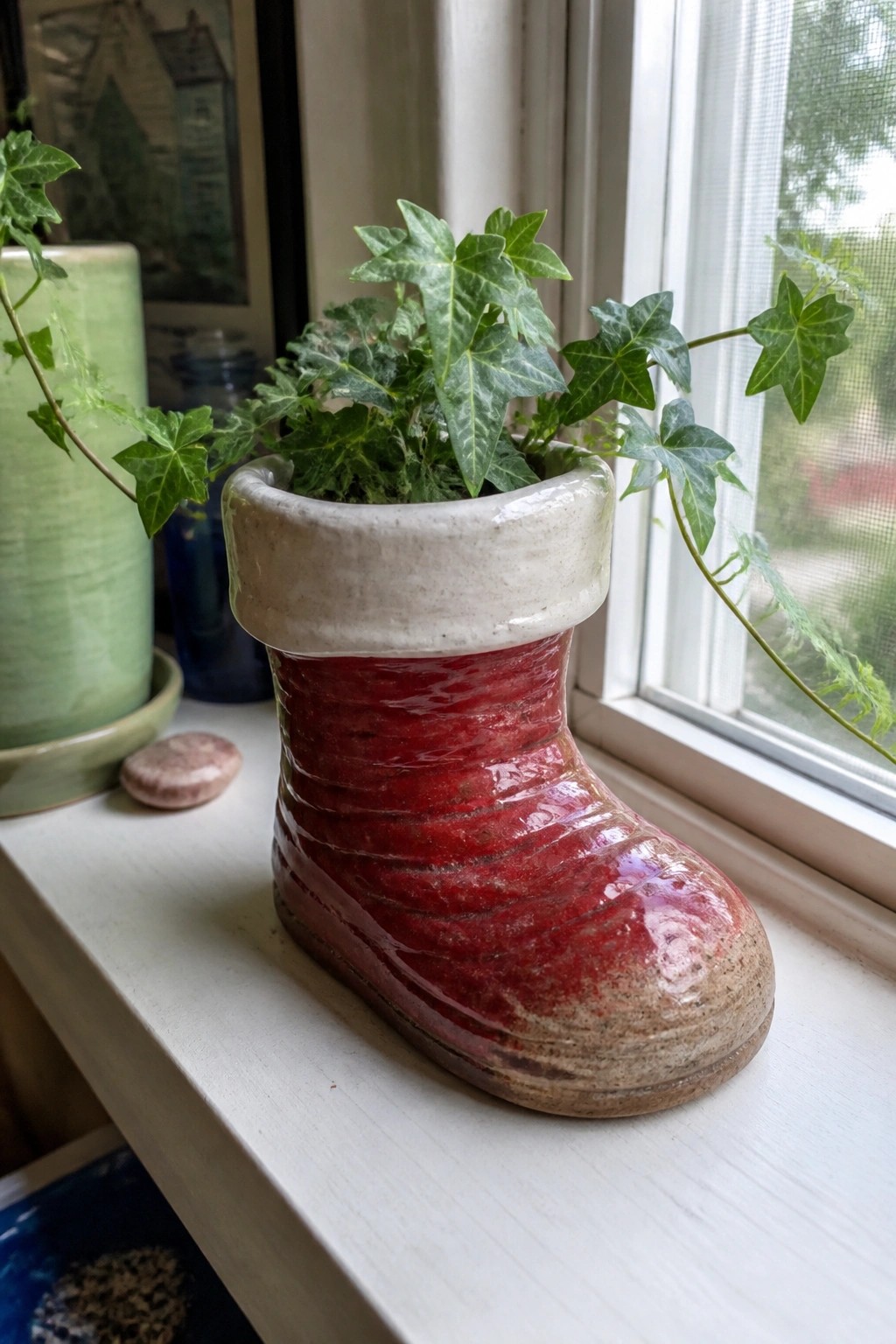
A handbuilt boot-shaped planter gives you a simple way to turn a basic clay form into a seasonal container. The red glaze on the body paired with a lighter rim creates the look of a winter boot while the open top holds soil and small plants. This shape works especially well for trailing ivy or similar greenery because the curved sides keep the plant centered without extra supports.
The small footprint makes it easy to move around a windowsill or shelf during the holidays. You could rework the same boot form into a votive holder by narrowing the opening or try different glaze colors for a set that matches various room styles. For gifts, this size keeps the project quick to finish and simple to wrap.
Ceramic Bell with Snowflake Cutouts

A bell shape formed from clay makes a straightforward holiday piece when snowflake patterns are cut through the walls before the final firing. The white speckled glaze reflects light while the open cutouts let it pass through, creating a simple contrast between solid and open areas. Scattered small holes around the snowflakes add texture without extra decoration. This fits the category of a seasonal decor object that can sit over a tea light or LED.
The rounded form stays stable on a flat surface and works in tight spots like a windowsill or shelf edge. You can repeat the same cutout method on a shorter cylinder or a wider bowl base if a bell does not fit your space. Changing the snowflake size or adding a different motif keeps the idea fresh across multiple pieces without starting from scratch each time. For a gift, the small scale means it packs easily and needs only basic glazing to finish.
Frequently Asked Questions
What basic tools and materials are required to complete the handbuilt pottery projects in this collection?
You will need clay suitable for handbuilding such as stoneware or earthenware, along with simple tools like a rolling pin for slabs, wooden modeling tools, a needle tool for scoring, and sponges for smoothing. Many projects also call for cookie cutters or templates for festive shapes, and access to a kiln for bisque and glaze firing. Start with a basic starter kit if you are new to pottery, and consider air dry clay alternatives for projects that do not require firing if a kiln is unavailable.
Are the 24 projects suitable for complete beginners without any pottery experience?
Yes, the collection includes a range of difficulty levels with many starting from basic pinching and coiling techniques that require no prior skills. Beginners can begin with simpler items like pinch pot ornaments or slab built stars before advancing to more detailed pieces such as coiled wreaths. Each project provides step by step guidance, and practicing on scrap clay first helps build confidence quickly.
How long does it typically take to make and finish one of these handmade Christmas decorations?
Most projects can be built in one to two hours depending on the complexity, followed by drying time of several days and firing schedules that add another week or two at a studio. Glazing and a final firing extend the process, so plan to work in batches if preparing multiple gifts. Air dry clay versions speed things up significantly for last minute decorations.
What safety considerations should I keep in mind when creating and using these pottery items around the home?
Always use food safe glazes if your decorations might come into contact with edibles, and ensure pieces are fully fired to avoid breakage. Keep sharp tools away from children during construction, and avoid lead based glazes entirely. For hanging ornaments, use strong wire or ribbon rated for the weight of the fired clay to prevent accidents.
Can I customize the projects with different colors or add personal touches for unique gifts?
Absolutely, experiment with underglazes in festive reds, greens, and golds before the final firing to match your holiday theme. Add textures using stamps or natural items like leaves for personalization, and incorporate initials or dates on the back of each piece. These adjustments keep the core handbuilding methods intact while making each decoration one of a kind.

Pottery Path is my cozy corner of the internet where I share clay ideas, pottery inspiration, and simple projects you can recreate at home. I love exploring everything from air dry clay to handbuilt pottery to cute minis that brighten your day. My goal is to make clay crafting feel easy, fun, and welcoming for anyone who wants to try it.
You will find beginner friendly tutorials, creative pottery painting ideas, and lots of warm inspiration for slow and happy crafting. If you enjoy hands on creativity, this space will feel like home.