I have made quite a few pottery items for my kitchen over the years.
Some turn out more useful than others and those are the ones I keep coming back to.
I like pieces that are sturdy and easy to clean since they get daily use.
These ideas cover things like plates bowls and storage jars that fit into regular routines.
I put together this list to share what has worked well for me.
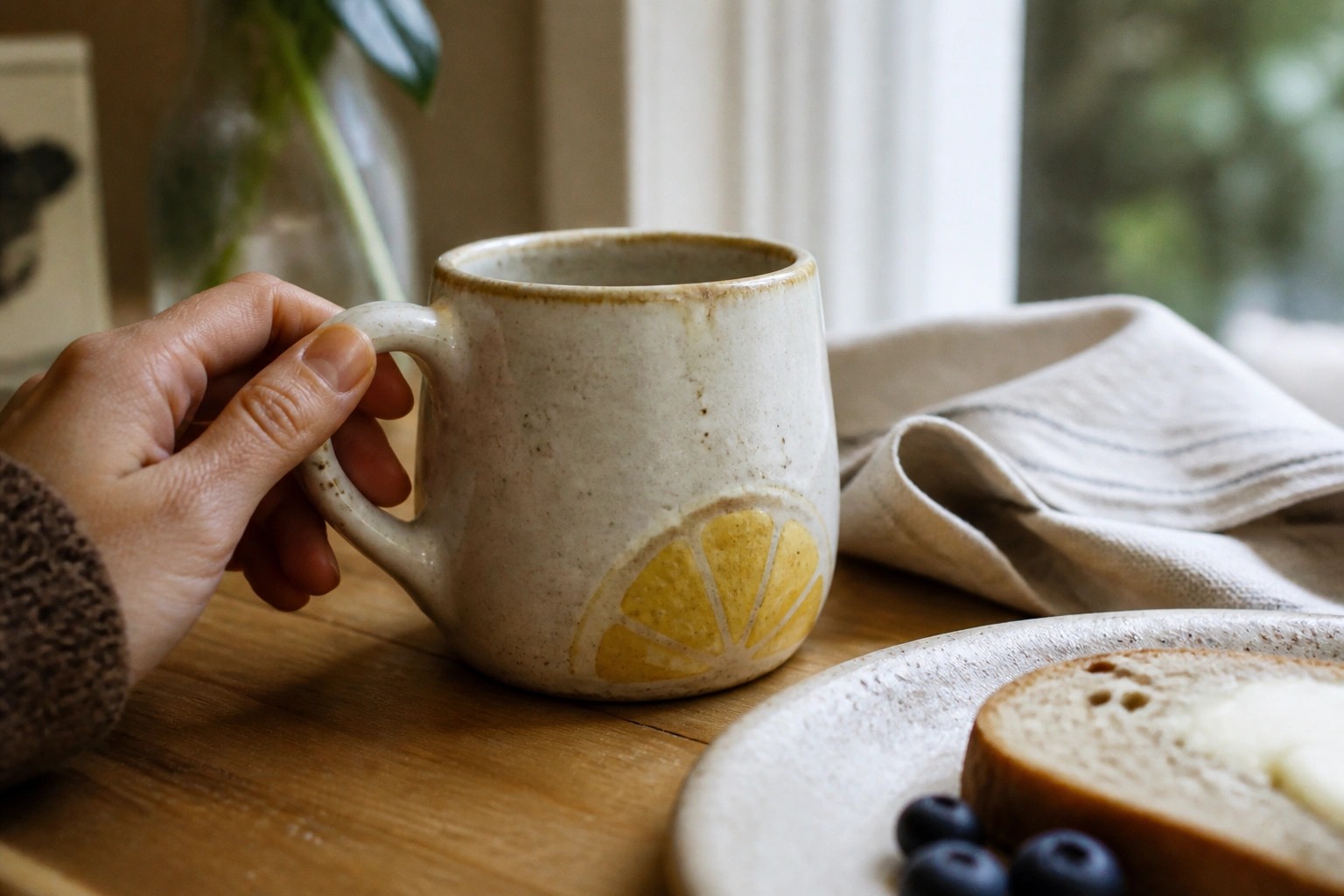
Lemon Motif Ceramic Mug
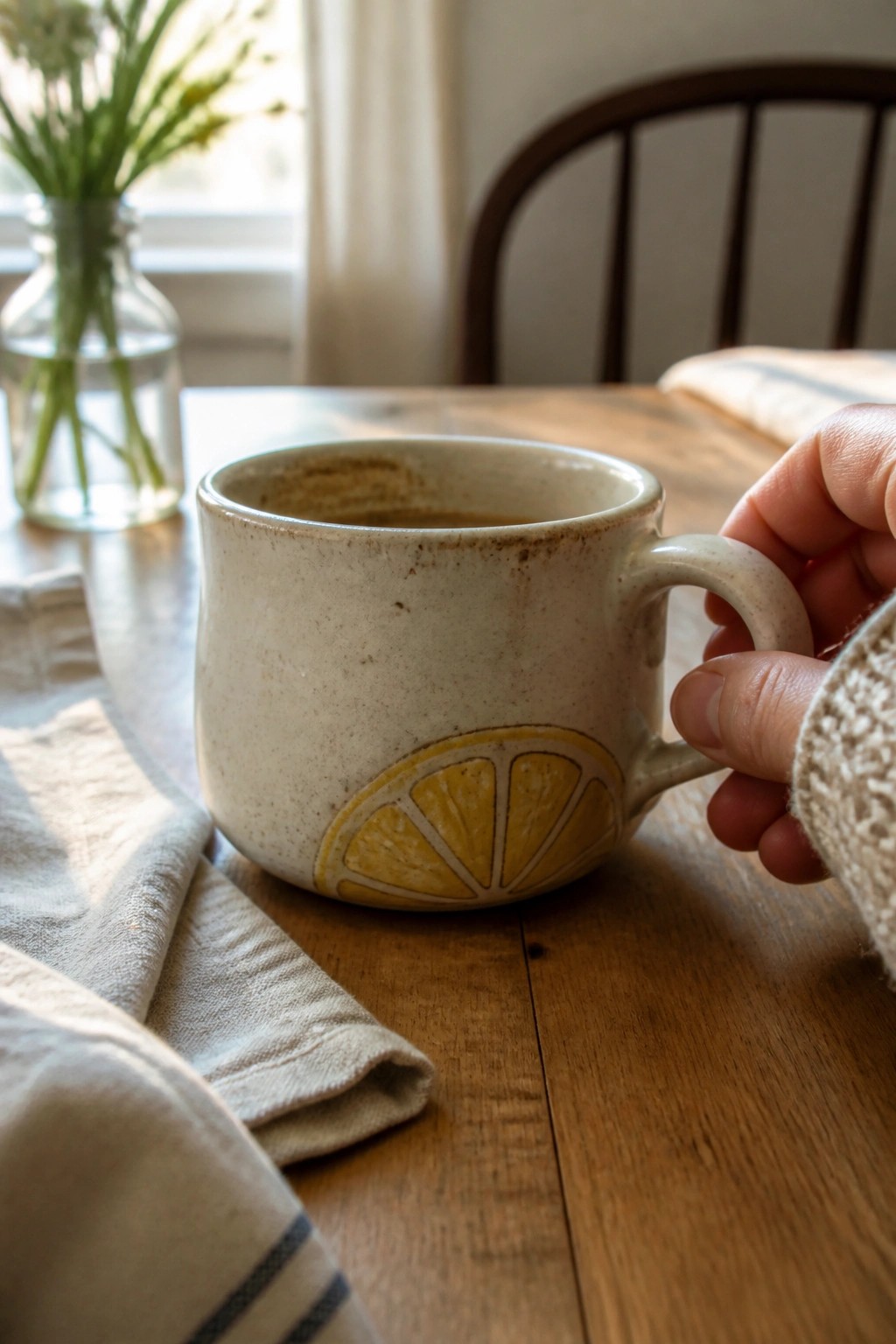
A ceramic mug with a hand-painted lemon slice makes a straightforward kitchen project. The design uses a simple yellow citrus wedge placed low on the body so it stays visible when the mug is full. The speckled glaze background gives the painted area enough contrast without extra layers. This approach fits the category of painted functional mugs that stay practical for daily use.
The painted detail works especially well because it stays small and does not cover the whole surface. You can repeat the same lemon motif on a matching sugar bowl or creamer set for a quick collection. In a kitchen, this shape pairs easily with neutral linens or wood tones. The idea adapts fast to other fruits or simple line drawings if you want to change the theme for gifts.
Spouted Ceramic Mixing Bowl
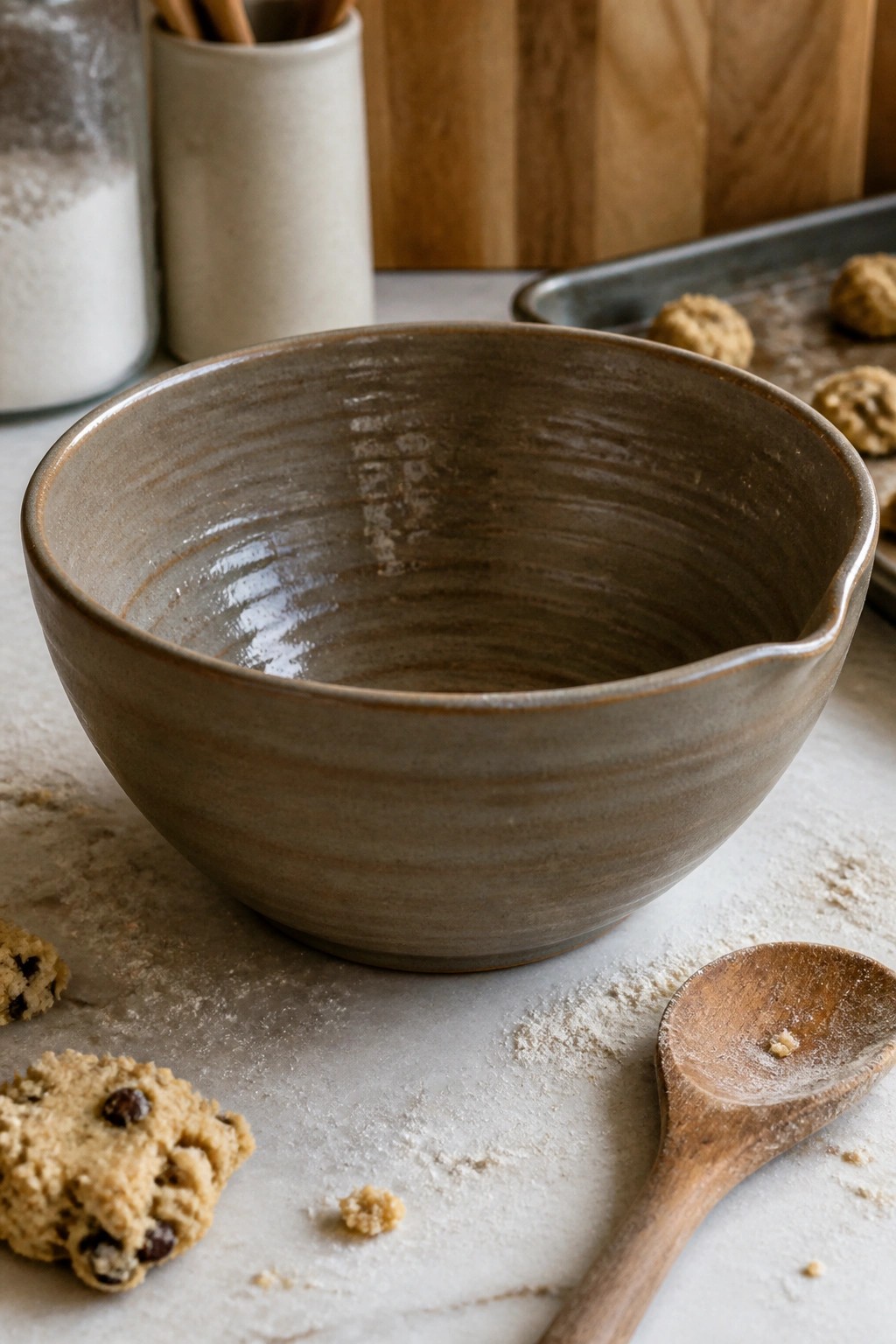
A large ceramic mixing bowl with a built-in pouring spout gives you a practical tool for handling batters, doughs, and other kitchen mixtures. The wide rounded shape holds plenty of volume while the spout lets you pour cleanly into pans or trays. Horizontal ridges on the interior add grip during mixing, and the earthy gray-brown glaze keeps the surface easy to clean after use. This project fits the kitchen essentials category and stays focused on daily function rather than decoration.
What makes this idea useful is the spout that reduces spills when transferring thick mixtures like cookie dough or pancake batter. You could scale the same form down for a smaller sauce bowl or add a lid groove if you want to adapt it for storage. In a kitchen, this kind of piece handles repeated counter use without chipping easily and pairs well with other neutral pottery items. For a gift, the straightforward shape and durable finish make it simple to personalize with a different glaze color while keeping the core design intact.
Leaf-Shaped Spoon Rest
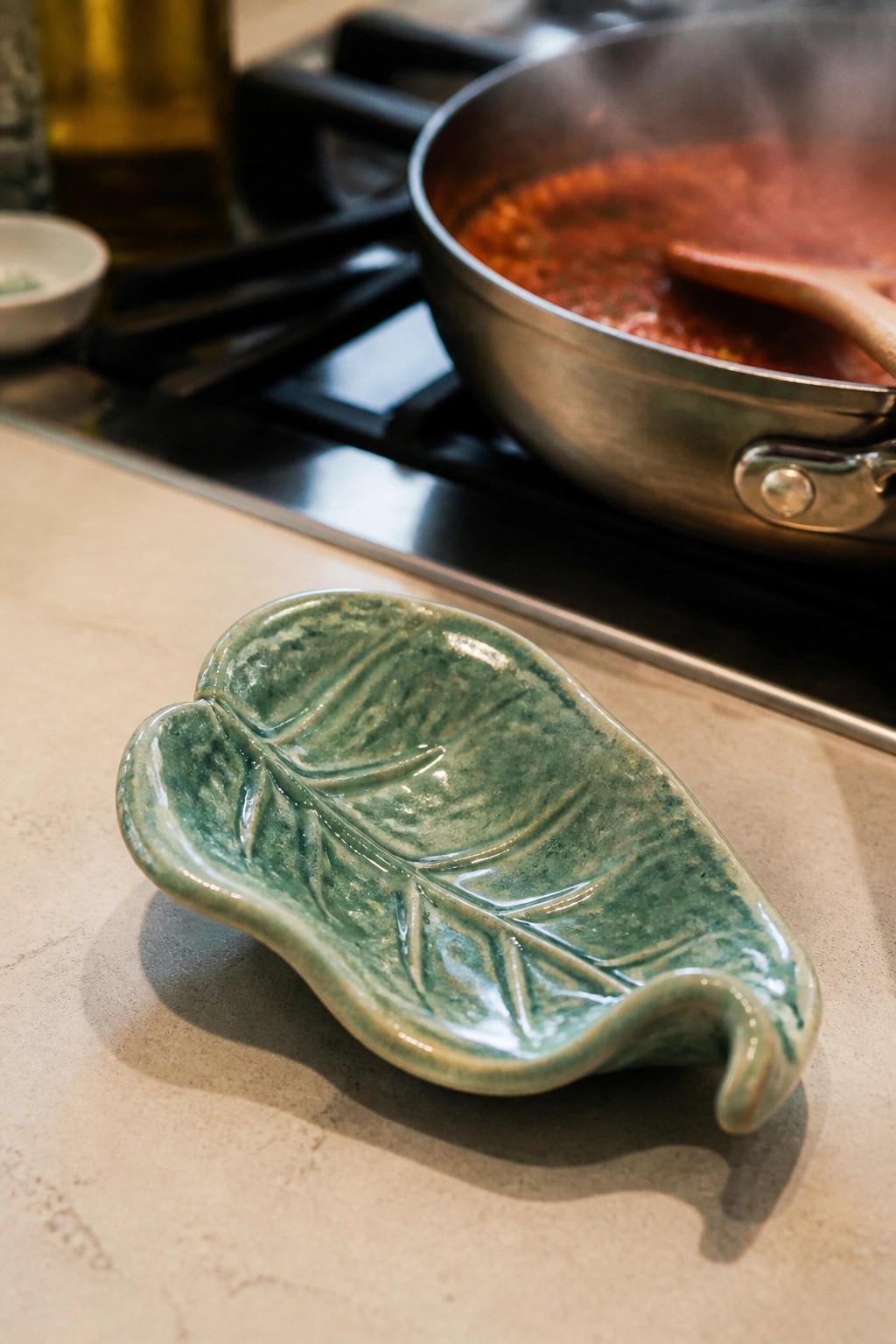
A leaf-shaped spoon rest made from clay gives you a dedicated spot to rest cooking spoons or ladles right next to the stove. The broad leaf form includes raised vein details that add grip and keep the utensil from sliding, while the curved tip creates a natural well for catching drips. A simple green glaze keeps the surface smooth and easy to wipe clean. This fits the category of small functional kitchen holders that stay useful during daily cooking.
What makes this idea useful is how it solves the common problem of spoons dripping on counters without needing much room. You could adapt the same leaf shape in different sizes to hold tasting spoons or small measuring tools, or change the glaze color to match existing kitchenware. In a kitchen, this kind of piece stays handy near the stove and can also hold loose herbs or garlic cloves during prep. For a gift, something like this works well bundled with a wooden spoon or a jar of homemade sauce.
Lidded Butter Dish for Countertop Storage
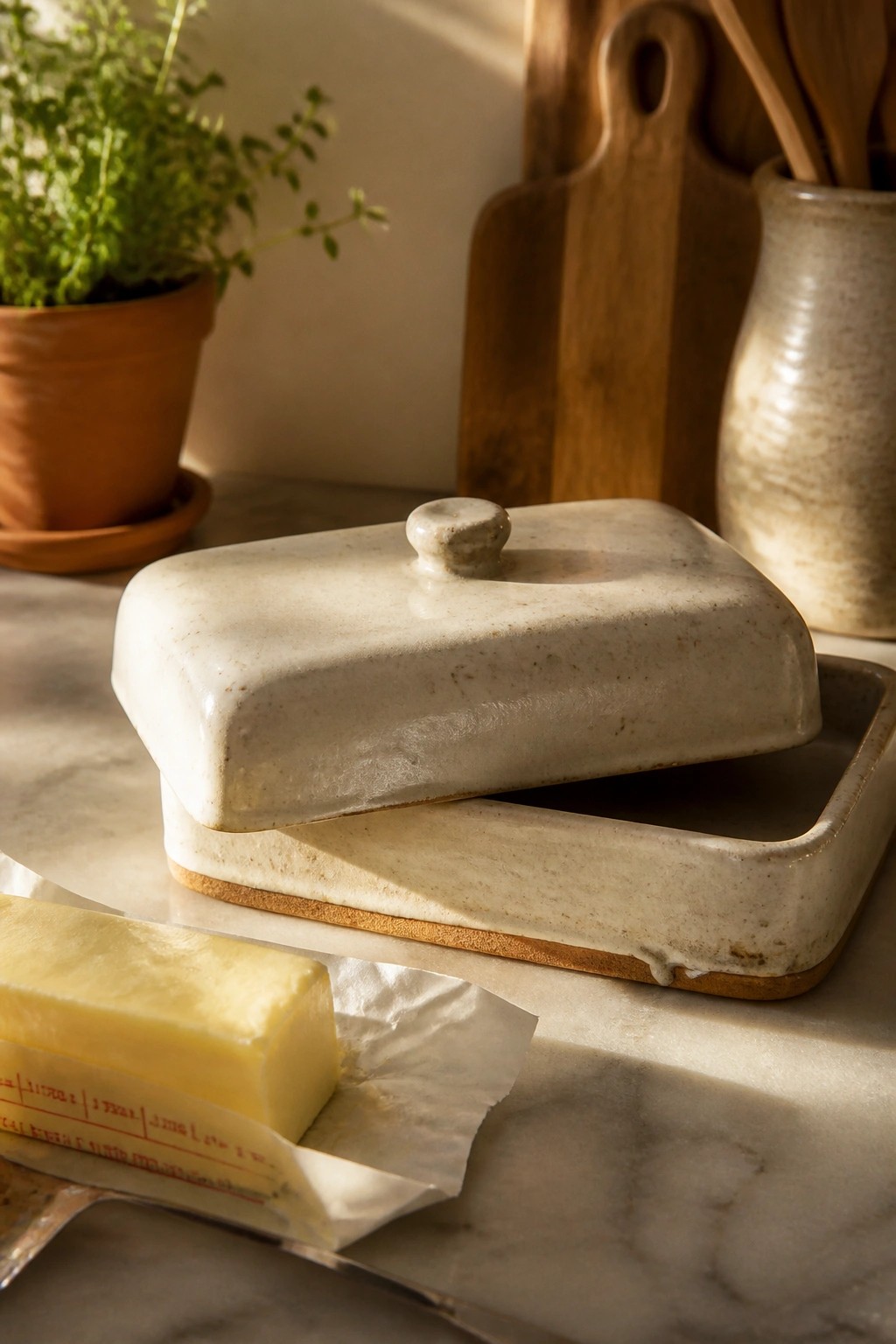
A rectangular butter dish with a fitted lid keeps a standard stick of butter covered and ready for daily use. The base holds the butter flat while the domed top creates enough clearance to avoid crushing the stick. A small knob on the lid makes it easy to lift, and the speckled glaze finish adds subtle texture without extra decoration. This form fits the kitchen item category and pairs naturally with other handmade serving pieces.
What makes this idea useful is the exact sizing that matches real butter packaging so you can slide a stick in without trimming. You could adapt the same proportions for a small cheese dome or a covered dish for leftovers by shortening the base. In a kitchen this shape stays practical on the counter without taking much room and works with both plain and patterned glazes. The design would also scale down into a mini version for single servings or travel.
Dot-Patterned Utensil Holder
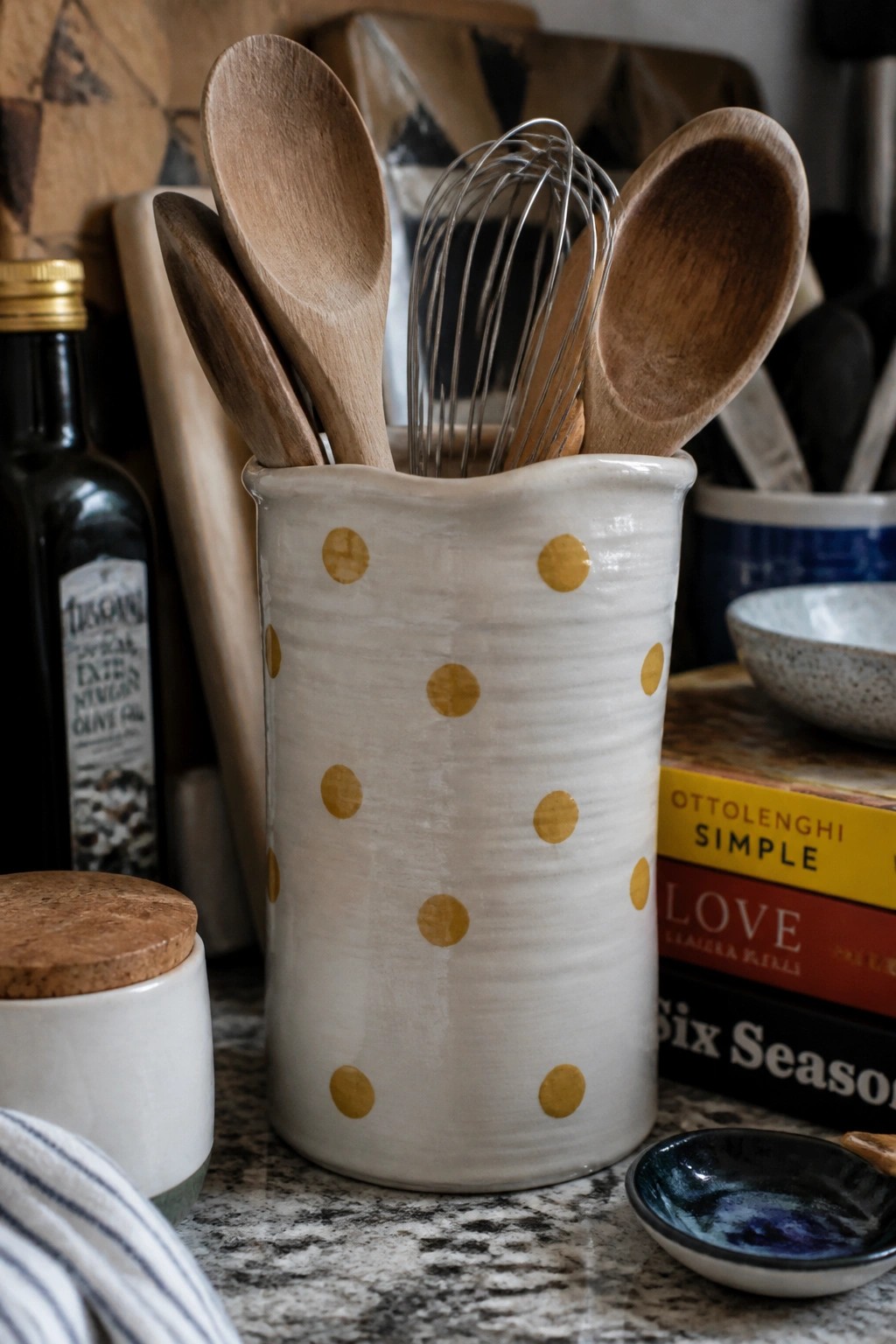
A tall cylindrical crock made from wheel-thrown or hand-built clay serves as a sturdy holder for kitchen tools like spoons and whisks. The light matte glaze provides a neutral base while the scattered gold dots create visual rhythm without overwhelming the form. This approach keeps the surface smooth for easy cleaning yet textured enough to hide minor firing variations.
What makes this idea useful is how the simple dot motif can be scaled up or down depending on the size of your tools. The straight sides and wide opening make it stable on a counter while still holding a full set of utensils upright. You could swap the gold for a single band of color or repeat the same shape in a shorter version to hold pastry brushes. The pattern also carries over easily to a matching spoon rest or small canister set.
Spouted Ceramic Salt Cellar
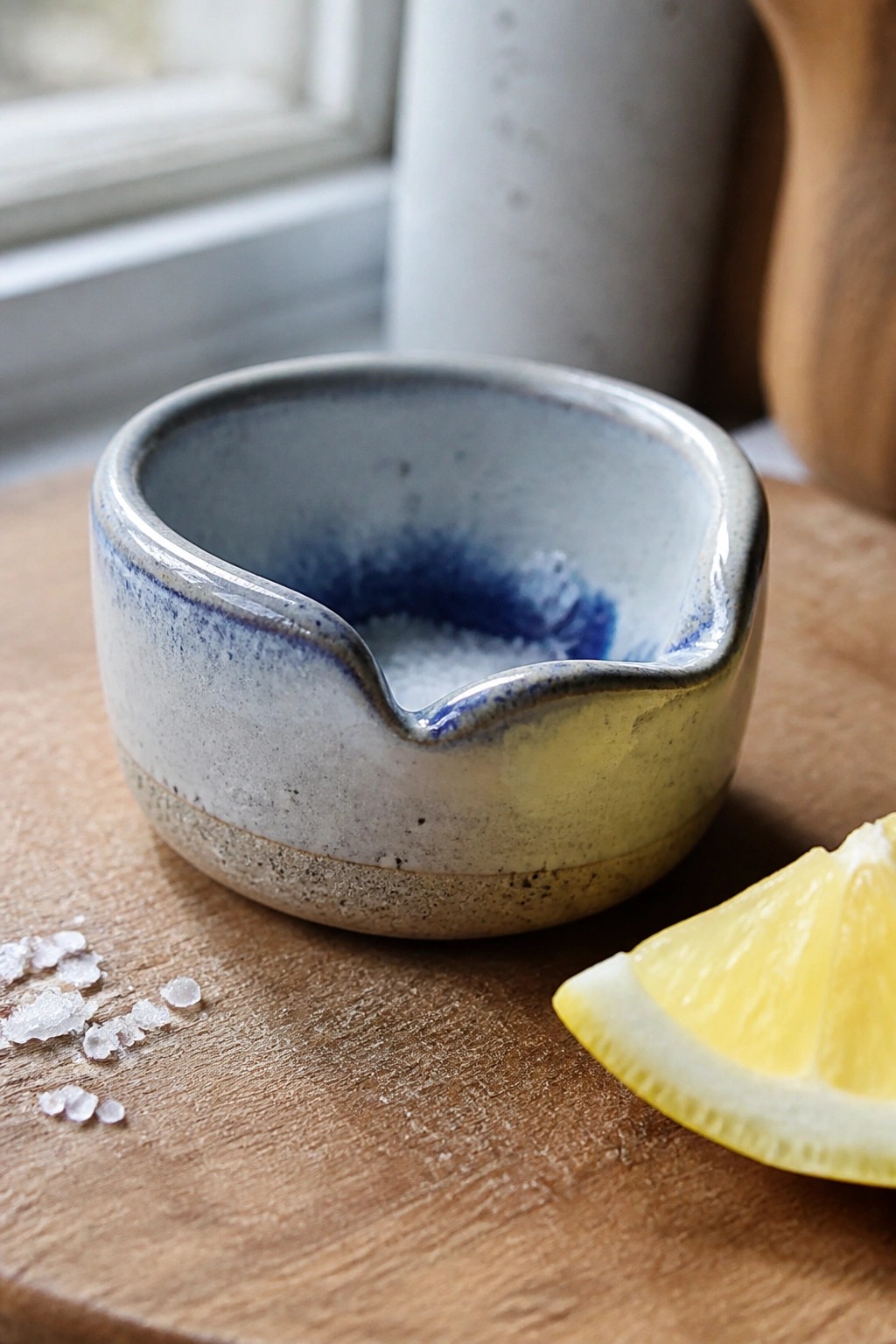
A small clay bowl with a pinched spout makes a practical salt cellar or condiment dish for the kitchen. The rim is shaped to pour easily while the interior stays wide enough to dip into or scoop from. Glazes in blue over a lighter base with a yellow band near the bottom create contrast without complicating the form. This fits the category of simple handmade kitchen items meant for daily use.
What makes this idea useful is how the spout turns a basic bowl into something more functional for salt, pepper flakes, or small portions of sauce. The compact size means it takes little space on a counter or table and could be scaled up slightly for oil or melted butter. You could rework the same shape with a handle added or switch to a single solid glaze color to match other dishes you already have. In a kitchen, this kind of piece keeps essentials close at hand while staying easy to clean.
Striped Ceramic Oil Cruet

A tall ceramic cruet with a tapered body, side handle, and narrow spout serves as a kitchen pourer for oil or vinegar. The vertical brown and amber stripes in the glaze follow the form and add visual texture without extra carving or painting. The narrow neck and wide base give it stability while making it easy to grip and tip for controlled pouring.
What makes this idea useful is how the shape turns a basic kitchen need into something that stays on the counter. You could scale the same proportions down for a smaller dressing server or swap the striped glaze for a solid matte finish to match other dishes. In a kitchen this kind of piece keeps oils handy during cooking and looks at home next to herb pots or cutting boards.
Stackable Ceramic Mixing Bowls
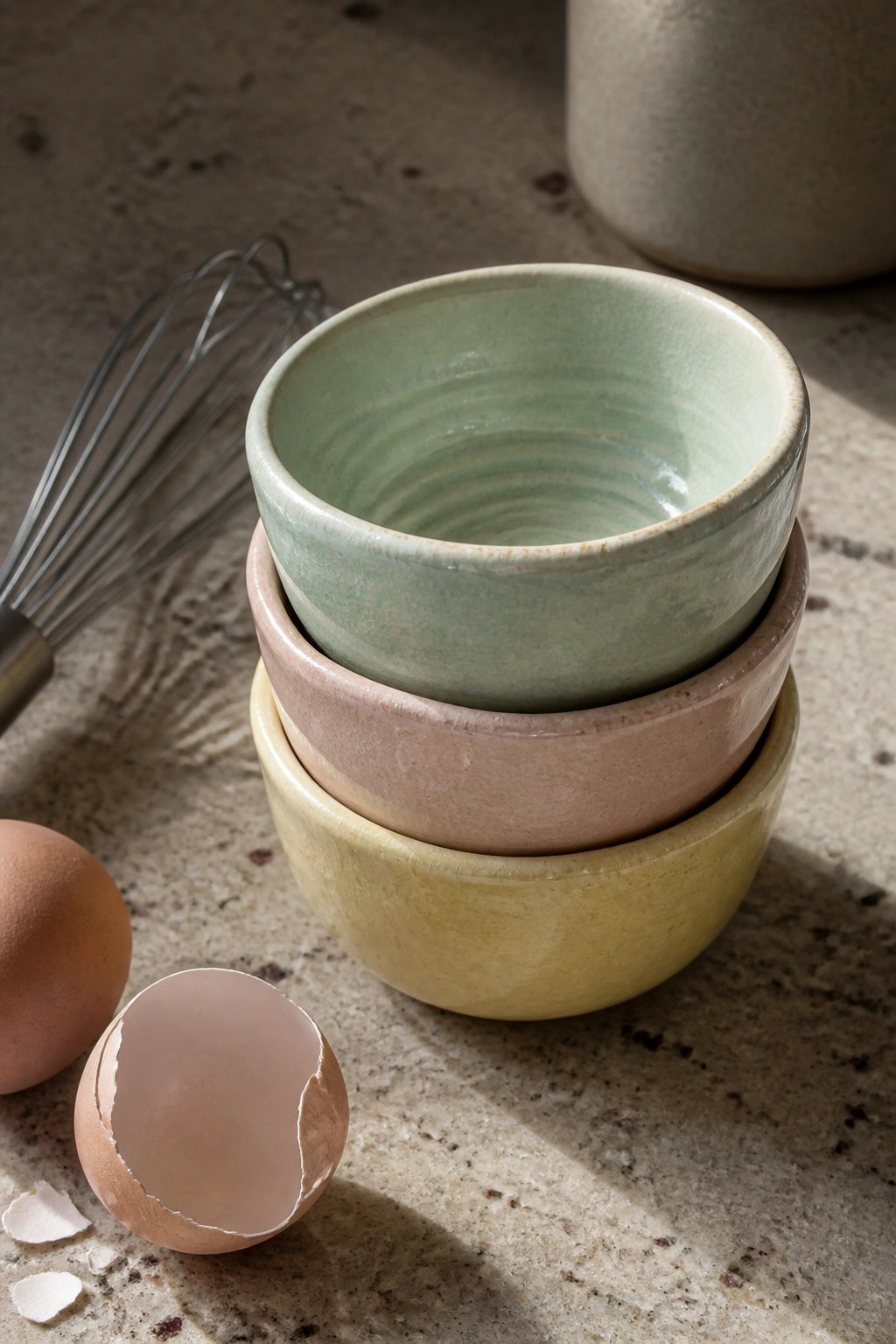
Handmade ceramic mixing bowls in three graduated sizes nest together for easy storage. Each bowl has a simple rounded form finished with a soft matte glaze in a different pastel tone. The idea centers on creating a practical kitchen set where the shapes fit inside one another and the colors stay subtle enough to work with most dishware.
What makes this idea useful is how the nesting shape keeps the set compact on a counter or in a cabinet. You could adapt it by making only two sizes for smaller kitchens or by choosing glazes that match your existing plates and mugs. In a kitchen this kind of piece handles daily tasks like whisking or serving without taking up much room when stored.
Leaf-Shaped Ceramic Trivet for Hot Cookware
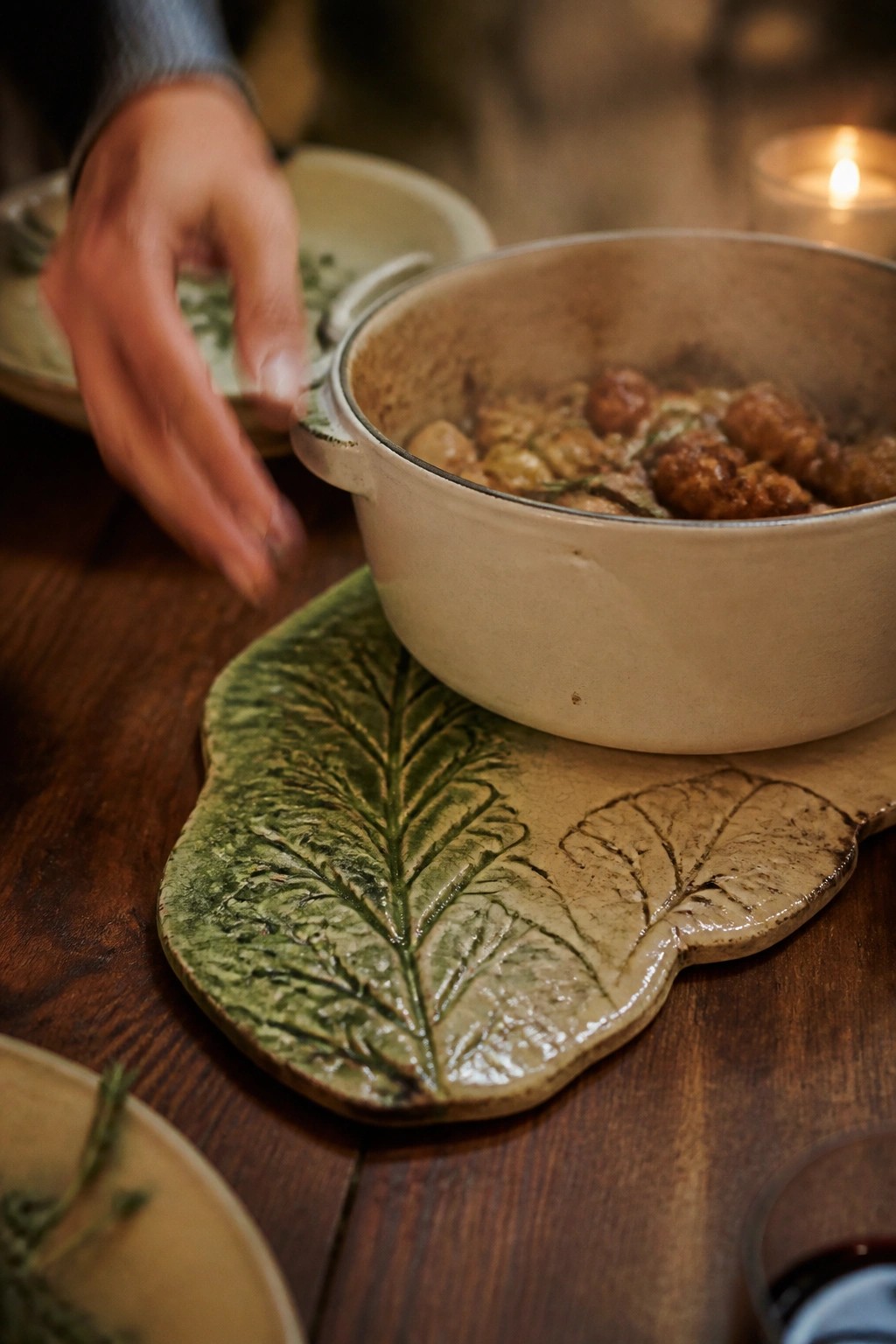
A leaf-shaped ceramic trivet serves as a practical kitchen piece for resting hot pots and pans on counters or tables. The design uses a flat slab form with pressed or carved vein details that create texture across the surface, and a split glaze application in green and tan tones emphasizes those details without covering the entire piece. This fits the functional kitchen pottery category because the wide, stable shape and heat-resistant clay body protect surfaces while the irregular outline keeps it distinct from standard round or square trivets.
What makes this idea useful is how the broad leaf form supports various pot sizes without sliding. You could adapt it by using a simpler vein stamp or switching to a single glaze color for faster production. In a kitchen, this kind of piece works especially well as a daily item that also photographs cleanly for sharing. For a gift, something like this can be made in multiples from the same template and sized to fit standard casserole dishes.
Lidded Ceramic Jar for Sugar or Spices
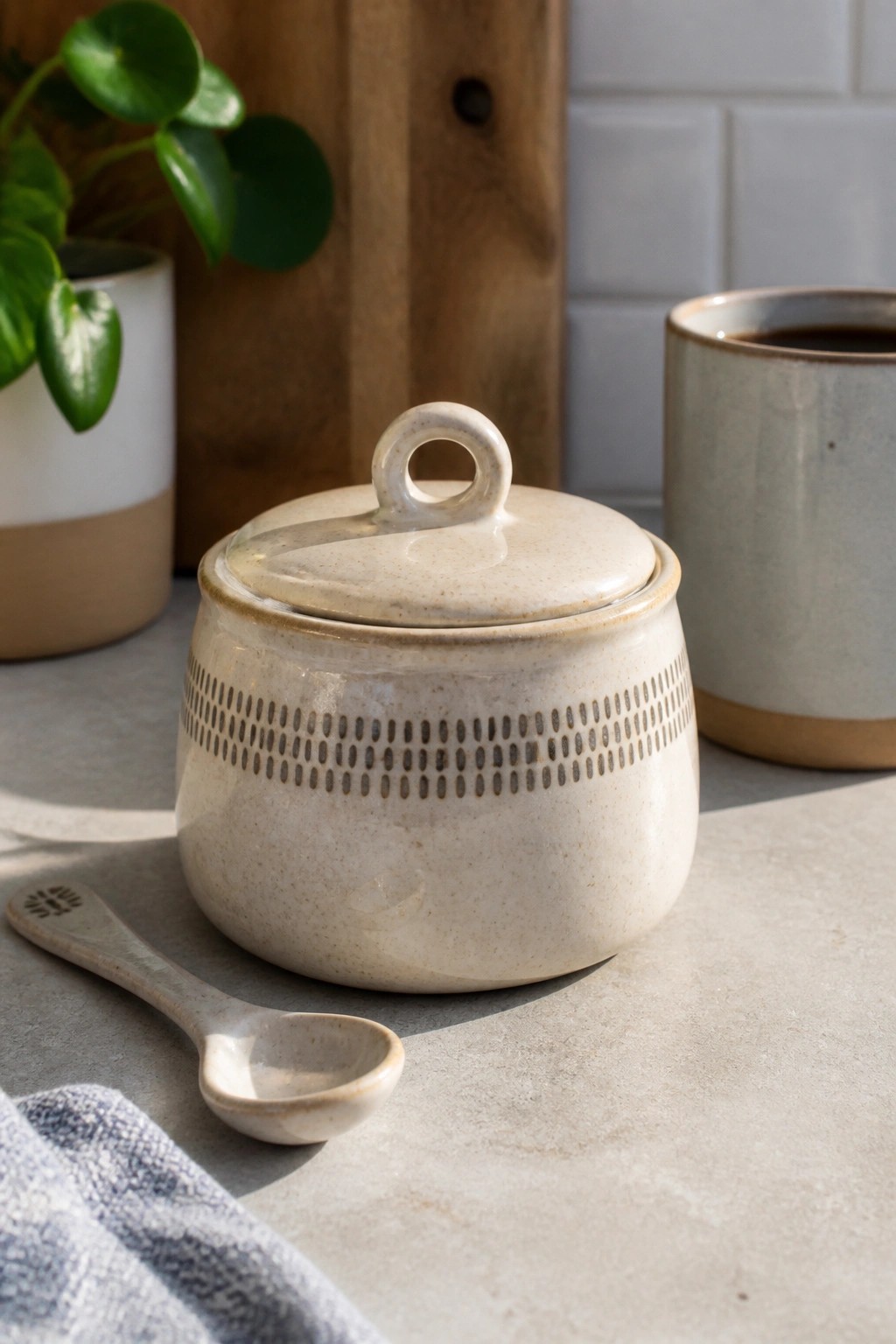
A small lidded ceramic jar like this serves as a practical container for sugar, salt, or spices on the counter. The looped handle on the lid gives a secure grip for lifting, while the band of repeated dots breaks up the surface with a simple pattern. The short matching spoon completes the set for scooping without reaching for utensils elsewhere. This setup keeps everyday kitchen staples accessible and contained in one handmade piece.
What makes this idea useful is the compact scale that fits on open shelves or beside a coffee maker without crowding the space. You could swap the dots for stripes or leave the surface plain if you want a faster project. In a kitchen, this kind of piece works well for items you reach for daily while matching other bowls or mugs you already use. For a gift, the jar and spoon together make a ready-to-use set that feels complete on its own.
Ceramic Pitcher for Kitchen Pouring Tasks
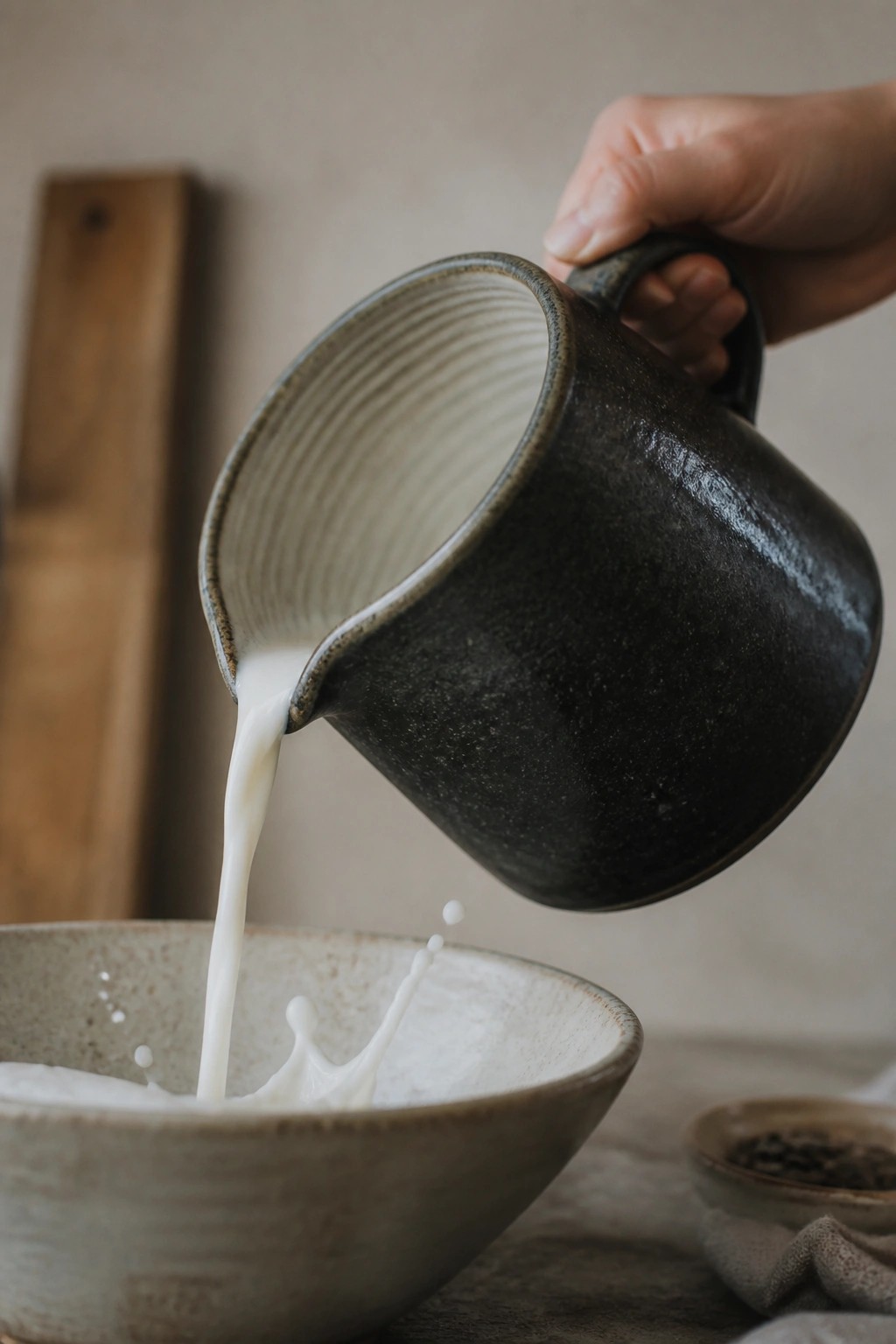
A handmade ceramic pitcher shaped for pouring works well as a creamer, milk jug, or small sauce server. The dark exterior glaze pairs with a lighter ribbed interior that makes the contents easy to monitor while the wide spout controls flow and reduces drips. The handle sits at a practical angle for steady tipping, and the overall form stays compact enough to fit on a countertop or table without taking much space.
What makes this idea useful is how the same pitcher shape can be scaled up for dressings or scaled down for syrup at breakfast. You could swap the dark glaze for a lighter one to match existing dishes or add a simple band at the rim for quick personalization. In a kitchen this piece keeps pouring tasks tidy and replaces plastic or glass options that chip or stain. For a gift, a set with one matching bowl gives someone a ready-to-use serving pair without extra pieces.
Ceramic Mortar and Pestle for Grinding Herbs
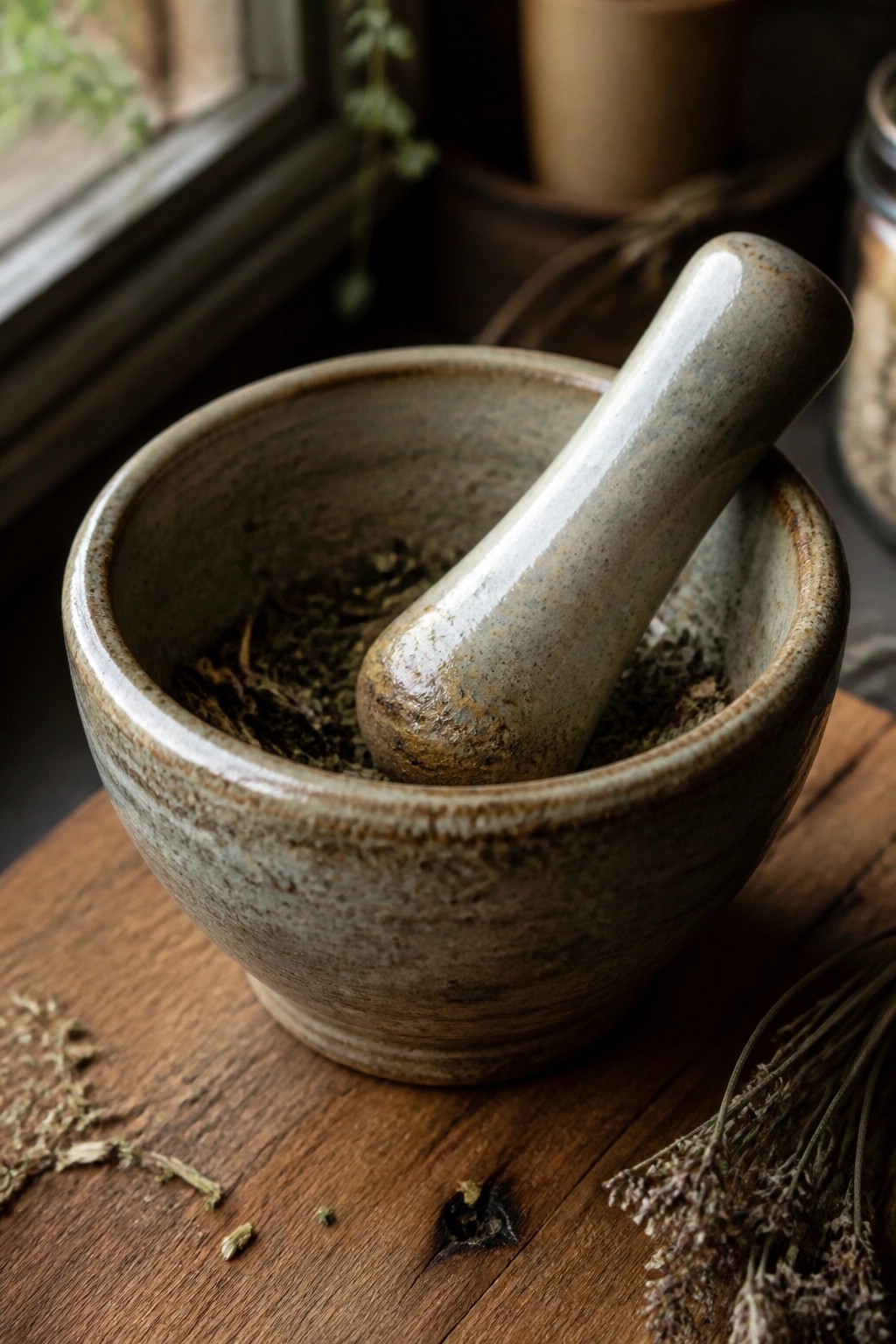
A mortar and pestle formed from stoneware gives you a solid kitchen tool for crushing dried herbs, spices, or garlic. The deep bowl shape keeps contents contained while the rounded pestle grinds evenly without slipping. A neutral matte glaze covers the surface and makes cleanup simple after use.
What makes this idea useful is how directly it solves a common cooking task without needing extra gadgets. You could scale the bowl smaller for quick single-spice mixes or widen the rim slightly to hold larger batches. In a kitchen, this piece stays out on the counter ready for daily use and pairs well with wooden spoons or glass jars. The same shape works as a small prep bowl if you skip the pestle.
Sculpted Bird Ceramic Egg Cup
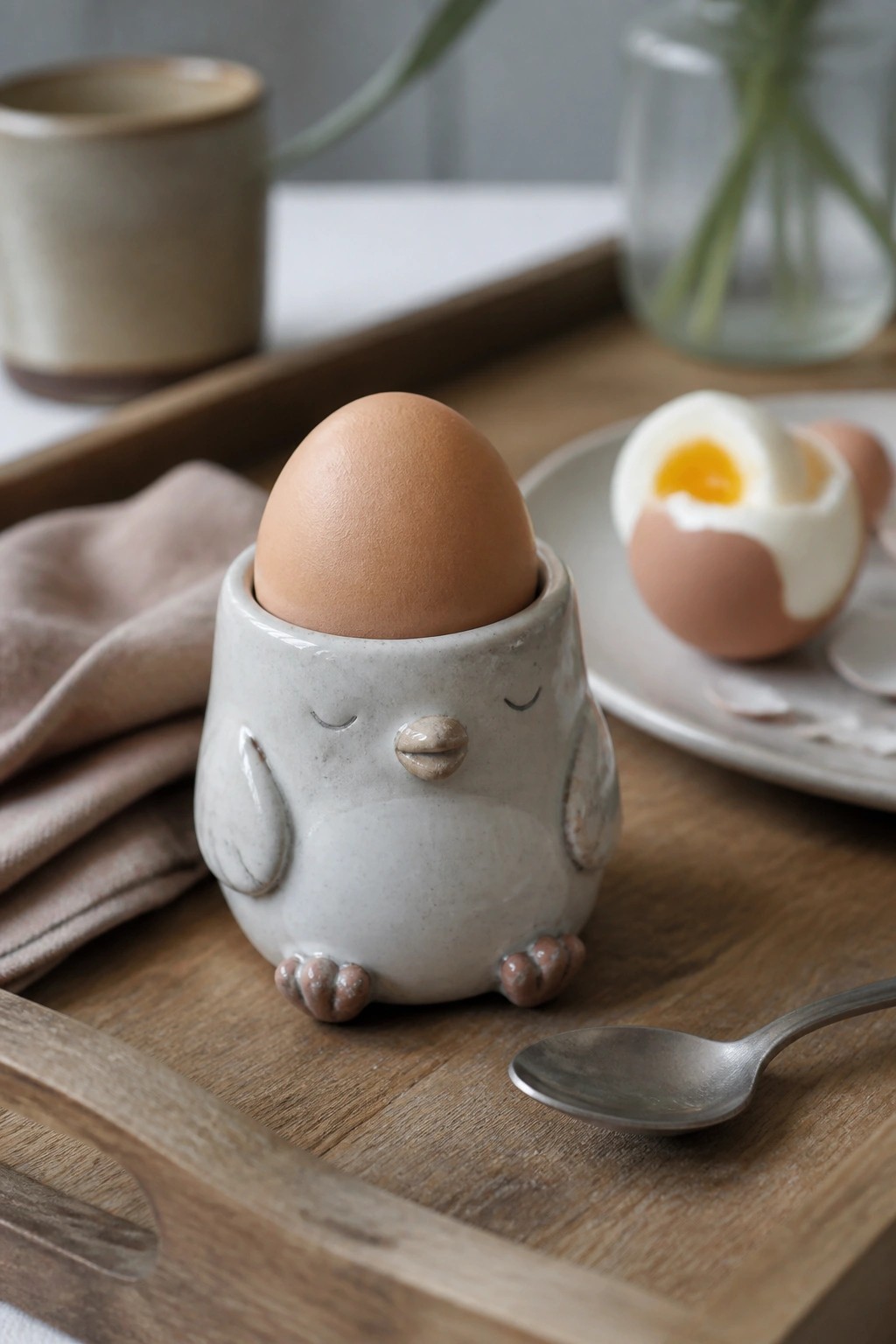
A ceramic egg cup formed as a small sitting bird works as a holder for soft-boiled eggs. The rounded body creates a stable seat for the egg while the added sculpted details of closed eyes, a beak, wings, and feet give the piece a clear animal shape. A matte light gray glaze with brown accents on the feet and beak keeps the surface simple and the focus on the form.
What makes this idea useful is how the basic egg-cup shape can be reworked into other animals or left plain for a cleaner look. In a kitchen, this kind of piece fits on a breakfast tray or beside toast without needing extra space. You could change the glaze color to match your dishes or simplify the feet and face details if you want a faster build.
Ceramic Citrus Juicer
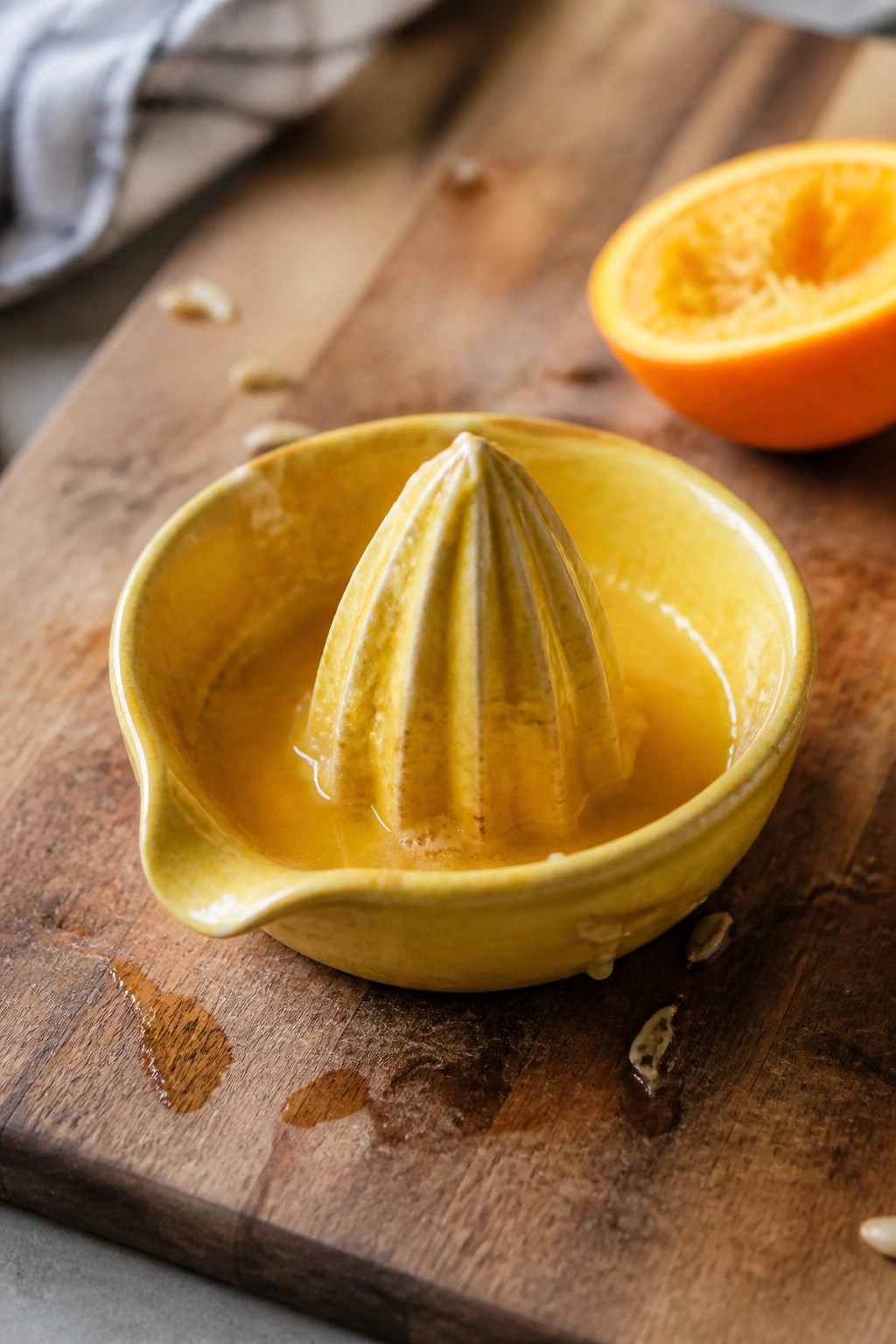
A ceramic citrus juicer is a bowl with a built-in ridged reamer cone and a short pouring spout on one side. The cone sits in the center so halved fruit can be pressed and twisted directly over it, letting juice collect in the bowl before it is poured out. The glossy yellow glaze covers the entire form and creates a smooth, wipe-clean surface that stands up to repeated kitchen use. This project fits squarely in the kitchen item category as a single-purpose tool rather than a decorative piece.
What makes this idea useful is the spout, which turns a basic reamer into a self-contained juicing station you can keep on the counter. You could make the same shape in a smaller size for limes or use a deeper bowl if you want to collect more juice at once. Different glaze colors let it match existing dishware, or you can leave the cone ridges unglazed for extra grip on the fruit. In a kitchen, this kind of piece stays handy for daily cooking instead of getting buried in a drawer.
Divided Ceramic Condiment Tray
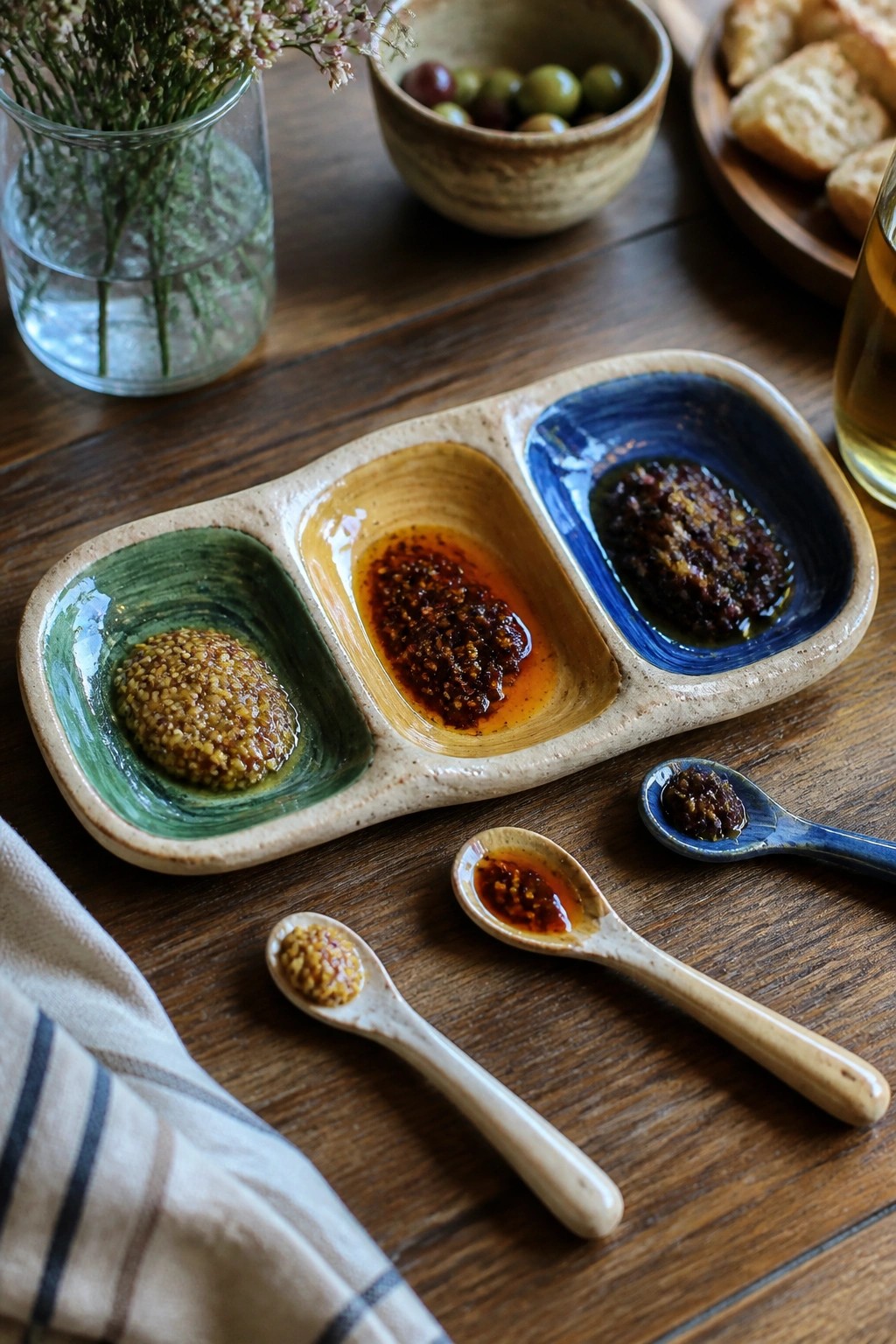
A three-compartment ceramic tray serves as a practical kitchen piece for holding multiple condiments or sauces in one object. The sections sit side by side in a single form, each finished in a different glaze color so the contents stay easy to tell apart. This setup works as a serving dish for dips, oils, and spreads without needing extra bowls scattered across the table.
What makes this idea useful is how the connected sections cut down on dishes while keeping flavors separate during meals. You could scale it down to two compartments for simpler setups or add a fourth for larger spreads. The matching small spoons turn it into a complete set that works well for appetizers or cheese boards. In a kitchen, this shape keeps things compact and ready to grab from the counter or fridge.
Nesting Bowls with Carved Surface Textures
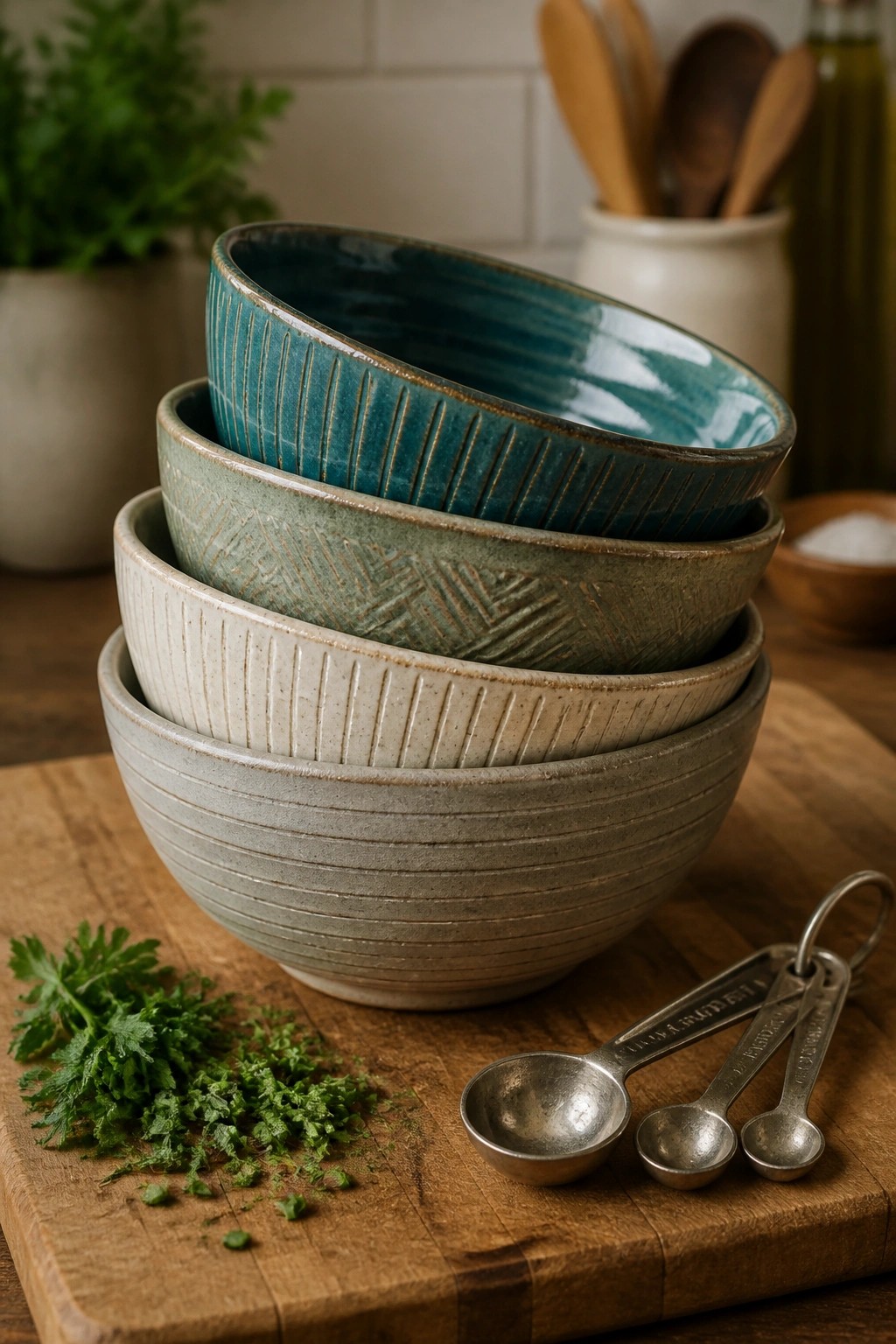
A set of four graduated ceramic bowls forms a practical kitchen staple that stacks neatly for storage. Each bowl carries a different carved or stamped pattern under a matte glaze in muted greens, grays, and off-white, with the textures running vertically, horizontally, or in herringbone layouts. The simple rounded forms and varied surface details keep the set visually organized even when nested. This approach belongs to the category of functional kitchen pottery meant for daily prep and serving.
What makes this idea useful is how the different textures let you tell the bowls apart at a glance without labels or color coding. The nesting shape saves cabinet space while the sizes work for everything from small sauce prep to larger mixing tasks. You can adapt the same idea by using one repeated texture across the whole set or by widening the rims slightly for better pouring control. In a kitchen these bowls stay practical for both cooking and table use, and the carved details make the project stand out when shared online.
Ceramic Sponge Caddy with Drainage Slits
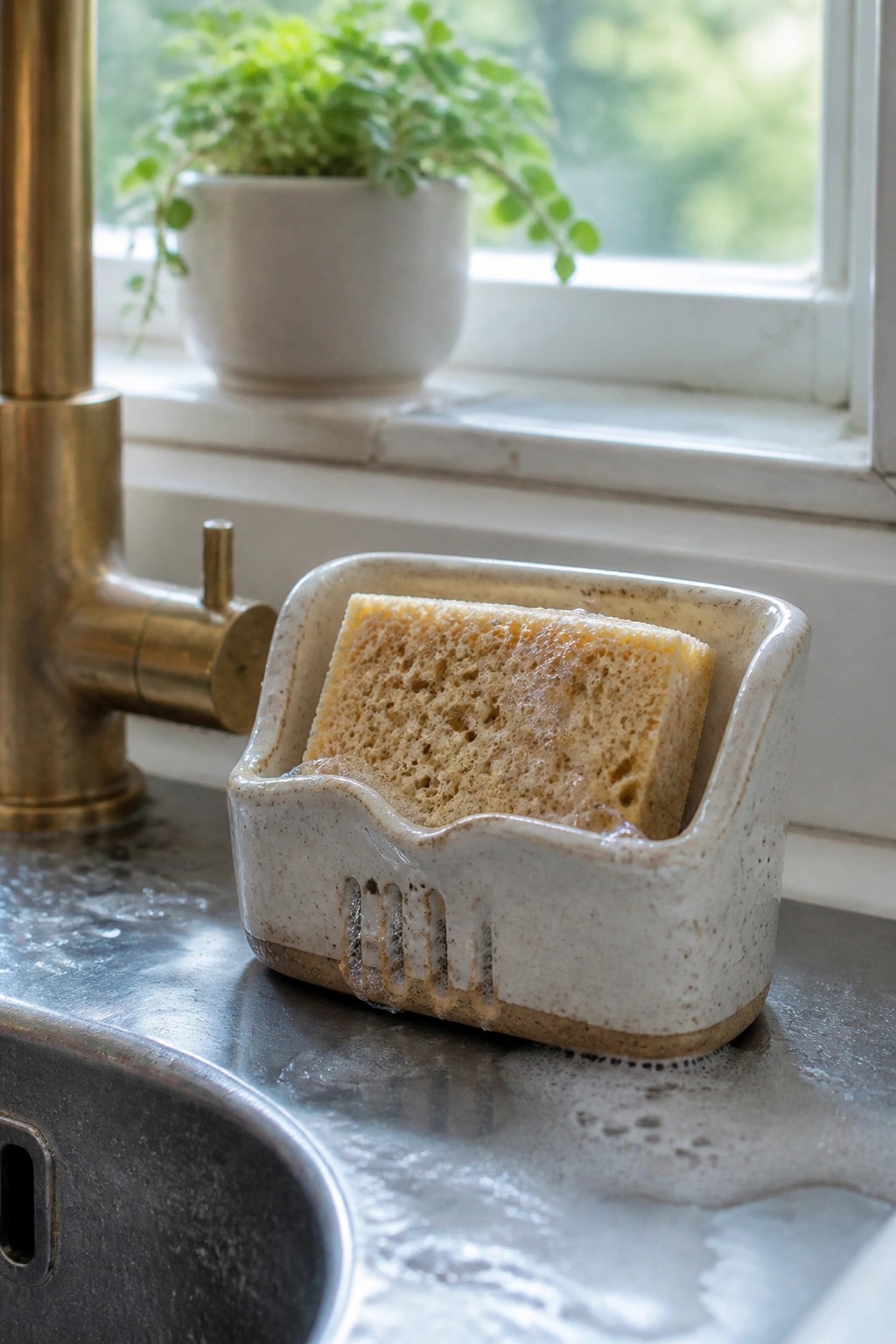
A rectangular ceramic sponge holder works as a simple sink-side caddy. The form includes a low front lip and vertical slits along one side so water drains straight into the sink instead of pooling underneath the sponge. The slightly wavy rim and speckled glaze give it a finished look without extra decoration. This type of piece fits the category of everyday kitchen pottery that solves a small daily problem.
What makes this idea useful is how the shape lets the holder sit right on the sink rim while the slits keep the sponge drier between uses. You could adapt the same basic tray by making it wider for scrub brushes or adding a small notch for a dishcloth. In a kitchen it stays practical because it takes up almost no counter space and can be thrown quickly in small batches. The drainage detail is easy to repeat on other sink accessories like a soap dish or brush rest.
Fish-Shaped Soy Sauce Dish
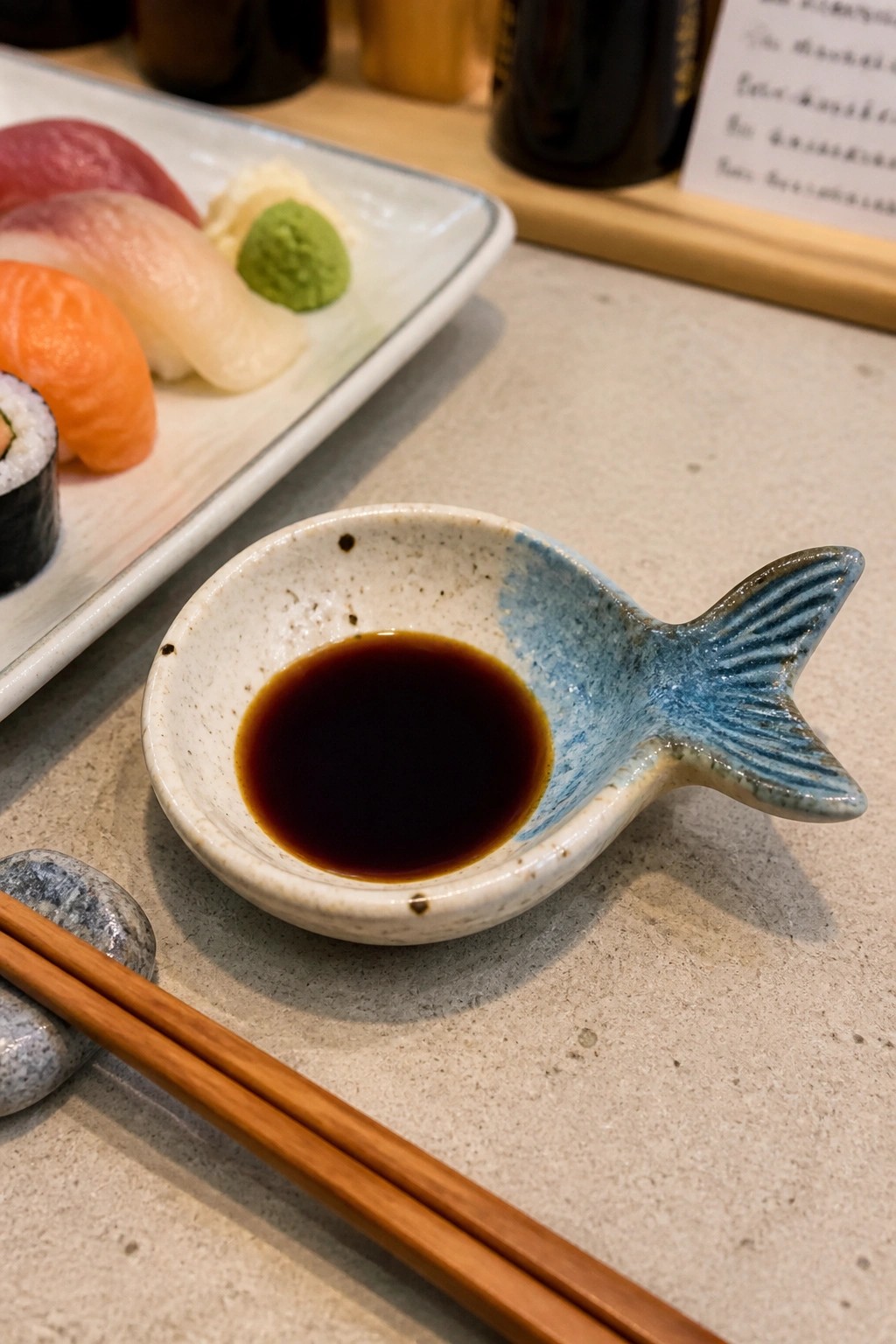
A small fish-shaped ceramic dish serves as a dedicated soy sauce bowl for sushi or other table dipping. The form combines a simple round well with a sculpted tail fin that extends to one side, and the glaze splits into a speckled cream body and a blue tail section to separate the functional area from the detail. This keeps the piece compact while giving it a clear kitchen purpose rather than turning it into pure decor. The design stays within the small bowl or dipping dish category for everyday use.
What makes this idea useful is the tail shape that adds a handle point without needing an extra rim or foot. You could scale the same form down for individual wasabi dishes or widen it slightly into a spoon rest for cooking. In a kitchen, this kind of piece works well alongside other handmade plates and bowls because the size stays practical for one or two servings. For a gift, something like this adapts easily by changing the tail color or keeping the body plain to match different table settings.
Leaf-Shaped Ceramic Spoon Rests
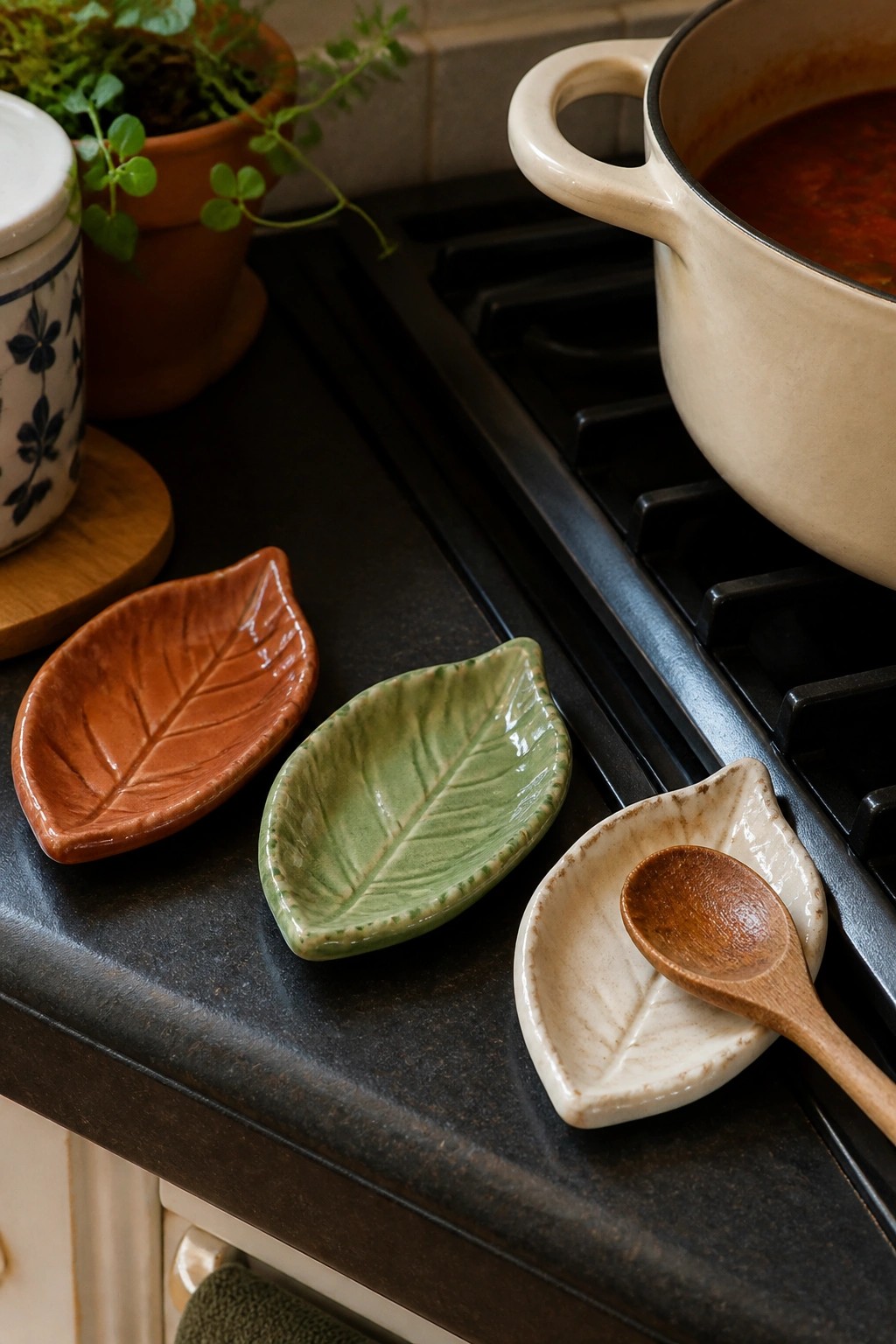
Leaf-shaped ceramic dishes make practical spoon rests or pinch bowls for spices and small ingredients. The sculpted leaf form with visible veins creates a simple, recognizable shape that works better than plain rounds for holding utensils steady. These pieces are finished in different glazes such as brown, green, and cream so they can match existing kitchenware. Their small size keeps them from crowding counter space while still serving a clear purpose.
The shape does a lot of the work here because the natural curve cradles a spoon without it rolling off. You could adapt the design by changing the glaze to match a specific color scheme or making a slightly larger version for tea bags. In a kitchen, this kind of piece stays useful next to the stove and looks intentional when left out. For a gift, something like this combines easily with a wooden spoon or small jar of seasoning.
Ceramic Salt Cellar for Kitchen Counters
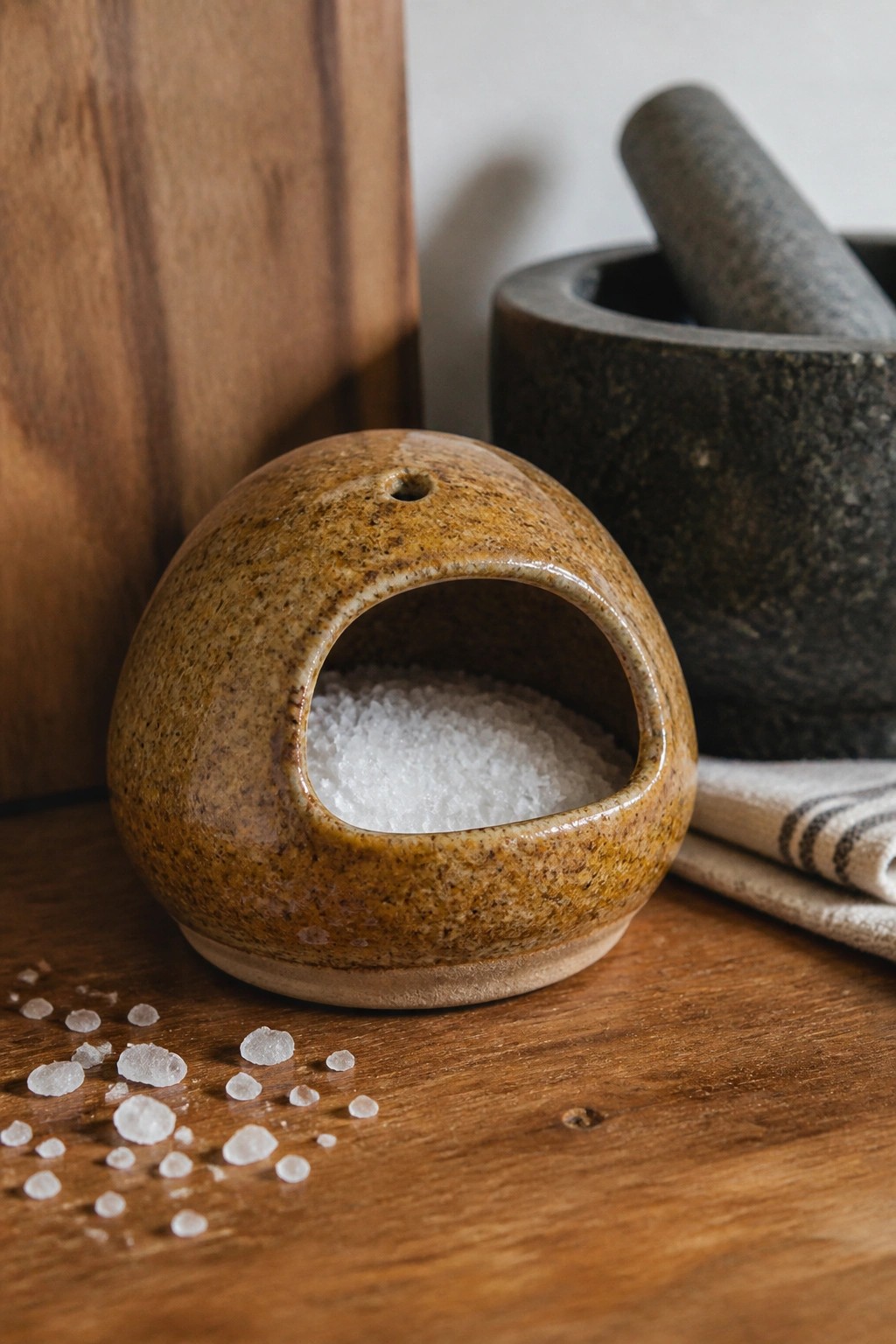
A small rounded ceramic salt cellar keeps coarse salt ready for cooking without needing a lid. The side opening is sized for easy scooping or pinching, while the top hole allows a small spoon to rest in place. The speckled brown glaze and simple form make it a straightforward kitchen item that blends with other stoneware pieces. This design works well for sea salt or finishing salts kept near the stove.
What makes this idea useful is the way the shape protects the salt from spills while keeping it within reach. You could scale the same form down for spice blends or up for larger salt batches. In a kitchen, this kind of piece fits on a wooden board or beside a mortar and pestle without taking much space. For a gift, something like this pairs easily with a striped towel or basic utensils.
Lidded Condiment Jar with Spoon Rest
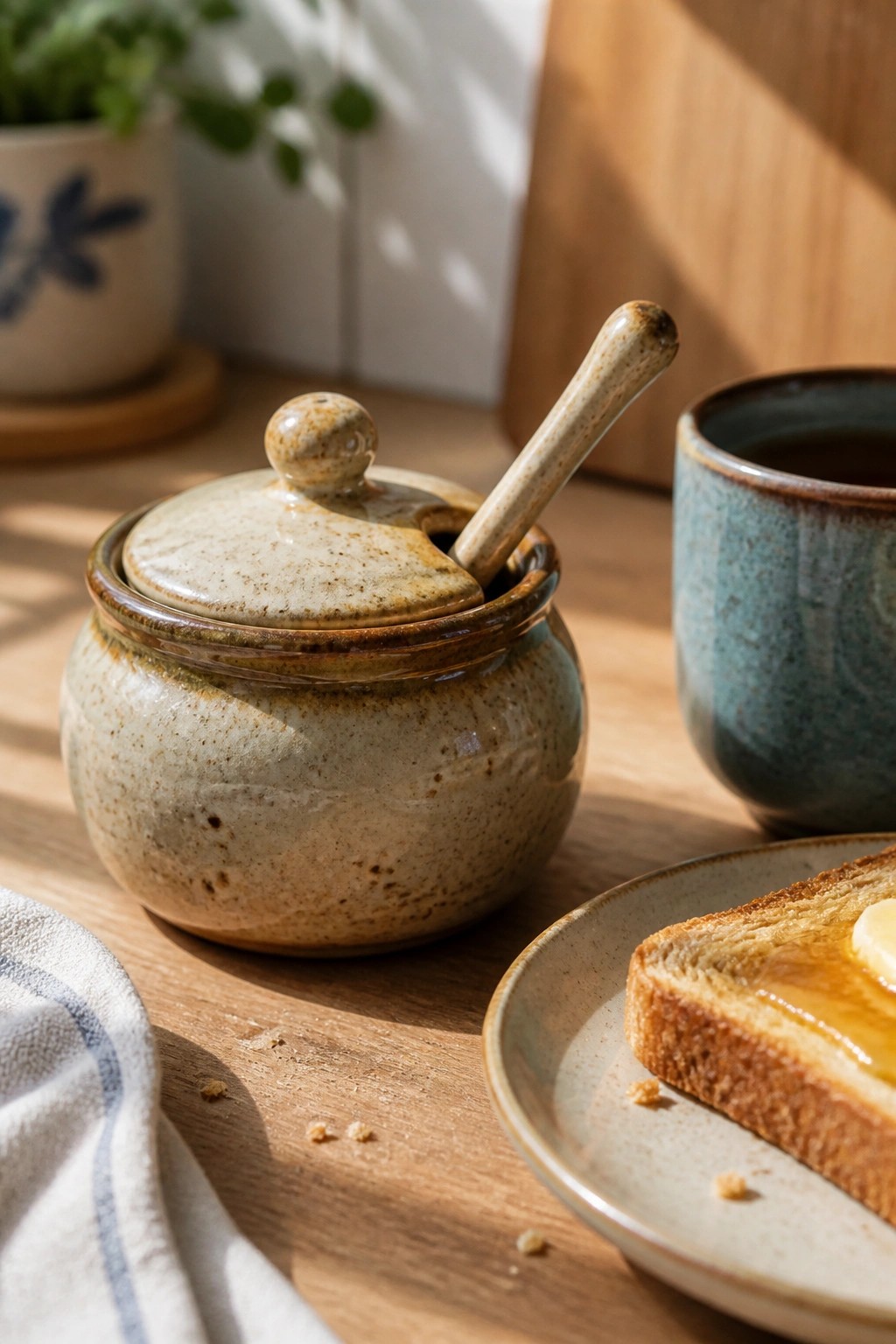
A small ceramic jar with a fitted lid and a cutout notch holds honey, jam, or soft butter while keeping its own spoon handy. The rounded body and speckled glaze create a simple, durable form that sits comfortably on a counter or table. The lid knob and spoon handle are sized to match the jar, so the whole set stays compact and easy to grab during meals.
What makes this idea useful is the built-in spoon rest that keeps drips off the table. The shape works well for breakfast setups or small-batch preserves and could be made taller for storing salt or spices. You could simplify the lid to a plain knob if you want to use the same base for dry ingredients instead.
Ceramic Tea Bowl with Built-In Strainer

A ceramic bowl for steeping loose leaf tea includes a perforated inner section that doubles as a strainer. The form has a small spout on one side and a simple foot, finished in a matte green glaze with visible texture from the making process. This keeps the piece compact and ready for direct pouring once the leaves have steeped. It fits the category of functional kitchen pottery meant for daily tea routines.
What makes this idea useful is how it removes the need for a separate strainer or teapot. The shape works well for small batches on a counter or near a window, and you could adjust the hole pattern or add a matching lid for different tea types. For a gift, something like this pairs easily with a small tray of loose leaves. The same approach could be reworked into a smaller version for single servings or a wider bowl for larger pours.
Ceramic Gravy Boat for Serving Sauces
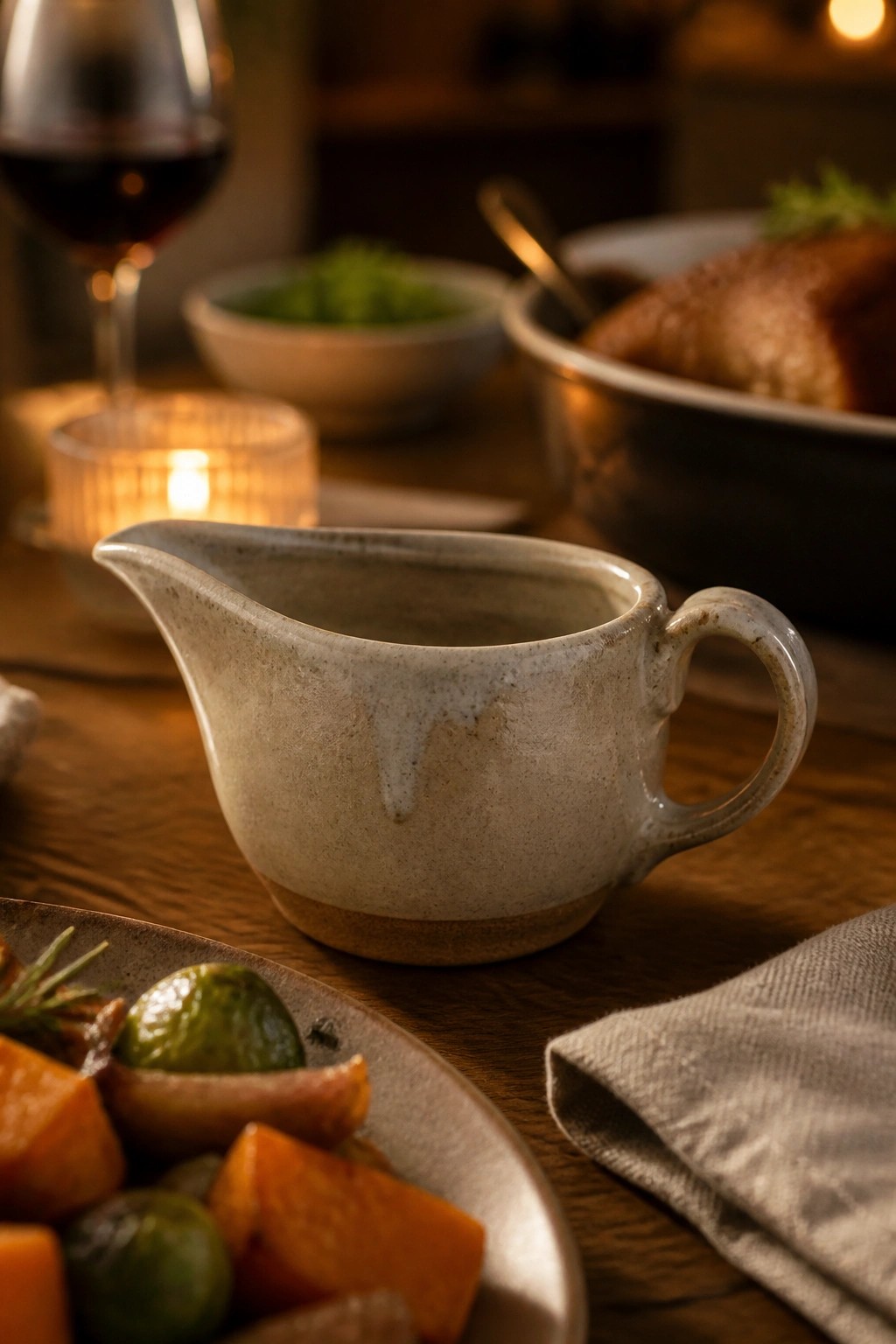
A handmade ceramic gravy boat works as a dedicated serving piece for gravies, sauces, and dressings. The form combines a tapered spout for controlled pouring with a side handle that stays balanced when full. A speckled matte glaze covers the surface and gives it enough texture to feel substantial without being slippery. This type of kitchen item fits into the category of functional tableware that moves easily between cooking and serving.
What makes this idea useful is how the spout and handle shape already solve the main problem of drips and awkward pouring. You can adapt the size down for smaller batches of sauce or stretch the body slightly wider if you want to double it as a small pitcher. In a kitchen this kind of piece replaces disposable containers and looks finished on the table without extra styling. The same basic form could be reworked into a creamer or small oil pourer by adjusting the spout angle.
Frequently Asked Questions
How do I choose the right clay for functional kitchen pottery? Stoneware or porcelain clays work best because they fire to high temperatures and create durable nonporous surfaces. These clays resist chipping and thermal shock better than earthenware so your mugs bowls and plates hold up to daily kitchen use.
What glazing techniques keep handmade kitchen items food safe? Select only glazes labeled food safe and apply them over a well vitrified clay body. Fire to cone 6 or higher for a strong glassy surface that prevents liquid absorption and keeps the piece safe for hot or cold foods and drinks.
How can beginners start making the practical pottery ideas without a wheel? Use hand building methods like pinching coiling or slab construction to create items such as bowls plates and spoon rests. These techniques need only basic tools and let you produce many of the listed functional pieces while building skill.
How should I care for handmade pottery to keep it lasting longer? Hand wash pieces with mild soap and avoid sudden temperature changes that could cause cracks. Store items on soft surfaces and limit dishwasher use since repeated cycles may dull glazes over time.
Where can I find step by step guidance for the specific kitchen pottery projects? Check local ceramic studios for classes or search online for tutorials on hand built mugs butter dishes and colanders. Pottery books and community forums also offer detailed tips on scaling the 23 ideas to your own workspace and tools.

Pottery Path is my cozy corner of the internet where I share clay ideas, pottery inspiration, and simple projects you can recreate at home. I love exploring everything from air dry clay to handbuilt pottery to cute minis that brighten your day. My goal is to make clay crafting feel easy, fun, and welcoming for anyone who wants to try it.
You will find beginner friendly tutorials, creative pottery painting ideas, and lots of warm inspiration for slow and happy crafting. If you enjoy hands on creativity, this space will feel like home.