
I enjoy making clay planters because each one can be shaped to suit my space and style.
Pressing leaves into the clay is a simple way to add texture and bring a little of the garden onto the pot.
I’ve gathered 19 ideas here, from small, simple planters to designs with more detailed imprints.
I hope you find a project that feels just right for your next afternoon of crafting.
Hanging Planter with Pressed Fern Imprints

A rounded hanging planter makes pressed fern leaves the main surface decoration, with their fronds repeated across the clay for a clear, botanical pattern. The warm, mottled finish keeps the relief visible without competing with the greenery, making this a decorative ceramic planter idea for a porch or covered patio.
The rounded form gives trailing plants room to spill over the rim, while the fern impressions tie the pot into a leafy garden setting. Adapt the pattern with smaller leaves or a single imprint, and try the same surface idea on a wall pocket planter if you want a more compact piece.
Pressed Leaf Imprint Bowl Planter

A shallow handmade ceramic planter gets its texture from overlapping pressed leaf imprints, with the raised edges left in a warm clay tone against a muted green surface. The rounded bowl shape gives the botanical pattern plenty of room and makes this a decorative planter for a small succulent.
Use it on a sunny windowsill or shelf where the leaf texture can be seen up close. The same idea could be adapted with smaller leaves, a simpler single-leaf pattern, or a different earthy color palette; for a plant that needs regular watering, make sure the finished planter has drainage or use it as a cover pot.
Pressed Oak Leaf Garden Planter

An oversized handmade ceramic planter can turn pressed leaf imprints into a raised band around the pot, giving the surface detail without covering its whole body. The tapered shape and mottled green glaze suit a garden planter, while the oak-like leaves create a clear botanical motif.
The wide opening can accommodate a leafy plant, and the earthy glaze fits naturally on a porch or patio. For a smaller version, use just one leaf imprint or repeat a few leaves around a tabletop pot; changing the leaf shapes can make the design suit different seasons or garden styles.
Wall-Mounted Ceramic Planter with a Leaf Motif

A handmade ceramic wall planter turns a small planting space into a vertical garden feature. Its tapered pocket shape holds a plant close to the wall, while a raised leaf design with blue lines gives the cream-and-blue surface a clear botanical detail that suits the greenery.
A planter like this works well on a garden fence or patio wall, especially where floor space is limited. Adapt the idea with a pressed-leaf impression or a simpler painted outline, and choose a compact plant that suits the planter’s size; the leaf detail also gives the piece a strong, easy-to-recognize Pinterest look.
Long Terracotta Herb Planter with Leaf Imprints

A long, rectangular clay planter with pressed leaf patterns turns a practical herb container into a decorative windowsill piece. The warm terracotta color and shallow, irregular leaf impressions give the handmade surface detail without competing with the plants.
Use this shape for a row of kitchen herbs on a sunny sill, or adapt the leaf pattern to match plants growing inside. Keep the form simple and vary the pressed leaves for an easy-to-personalize garden planter idea that stands out in plant-styling inspiration.
Footed Herb Planter with Fern Imprints

A wide, footed ceramic planter gives herbs room to spread while lifting the planting bowl above a patio table. Repeated pressed fern impressions around the rim create a leafy band that stands out against the muted green glaze, making this a garden planter idea that combines a useful form with a clear botanical detail.
The raised base helps the planter stand out among smaller pots, and the broad opening suits a compact herb grouping or a low mix of garden plants. Adapt the motif with leaves from your own garden, or simplify it to a few imprints on a smaller bowl-shaped planter for a windowsill or gift.
Hanging Monstera Leaf Imprint Planter

A handmade hanging ceramic planter uses a large monstera leaf imprint as its main decorative feature. The rounded bowl shape gives it room for trailing or leafy plants, while the green leaf detail contrasts with the pale clay-colored rim and body.
The hanging form makes this a useful choice for a balcony, sunroom, or bright indoor corner where floor and shelf space is limited. Adapt the idea with a smaller leaf imprint, a simpler painted vein pattern, or a different bowl shape, and check that the finished planter has suitable drainage for the plants you choose.
Nested Lavender Motif Planter

A nested ceramic planter set pairs a simple inner pot with a larger blue cachepot decorated with raised lavender sprigs. The contrasting natural clay and speckled blue glaze make this a decorative garden planter idea, with the repeated floral motif giving the two pieces a coordinated look.
The outer pot can hold a nursery container, making it easy to swap plants or bring them indoors without repotting. Adapt the design with pressed leaf impressions or hand-painted herbs, and use a smaller version for a windowsill or patio table; the layered shape and botanical detail make a clear Pinterest-ready project.
Handmade Clay Seedling Tray with Pennywort Imprints

A handmade clay seed-starting tray divides several planting spaces into a compact grid, with pressed leaf motifs decorating the empty wells. The shallow, irregular compartments make it useful for starting small seedlings while giving the planter a clear botanical look that suits a pressed-leaf garden project.
Use it on a potting bench or windowsill for seedlings, cuttings, or small herb starts, and press leaves from plants you grow into the clay before it dries. You could make fewer, deeper wells for larger starts or use a single leaf imprint in each compartment to keep the design simple; the combination of a useful planting form and visible botanical detail makes this an easy project to save for a gardening board.
Succulent-Filled Hedgehog Garden Planter

A handmade ceramic hedgehog planter turns a rounded animal figurine into a decorative home for succulents. Its leaf-like back pattern ties the sculpted body to the trailing plants, while the natural brown and green tones suit a garden setting.
The low, sturdy shape works well on a garden stump, patio table, or sheltered windowsill, where trailing succulents can spill over the sides. Adapt the idea with a simpler animal form, pressed leaf details, or a smaller planting opening, and choose compact plants that won’t quickly outgrow the container.
Terracotta Bulb Planter with a Carved Leaf Band

A rounded handmade terracotta planter with a low, wide opening suits bulbs such as tulips or hyacinths, which can sit close together for a full display. Its diagonal textured band adds a leaf-like detail against the plain clay, making it a decorative garden planter that doesn’t rely on a bright glaze or painted pattern.
The open top makes it easy to arrange several bulbs, while the warm clay color pairs well with leafy plants on a windowsill or patio table. For a pressed-leaf version, use a single broad leaf to create a band across the front, or simplify the design to one small imprint on a basic pot.
Faceted Planter with a Pressed Fern Imprint
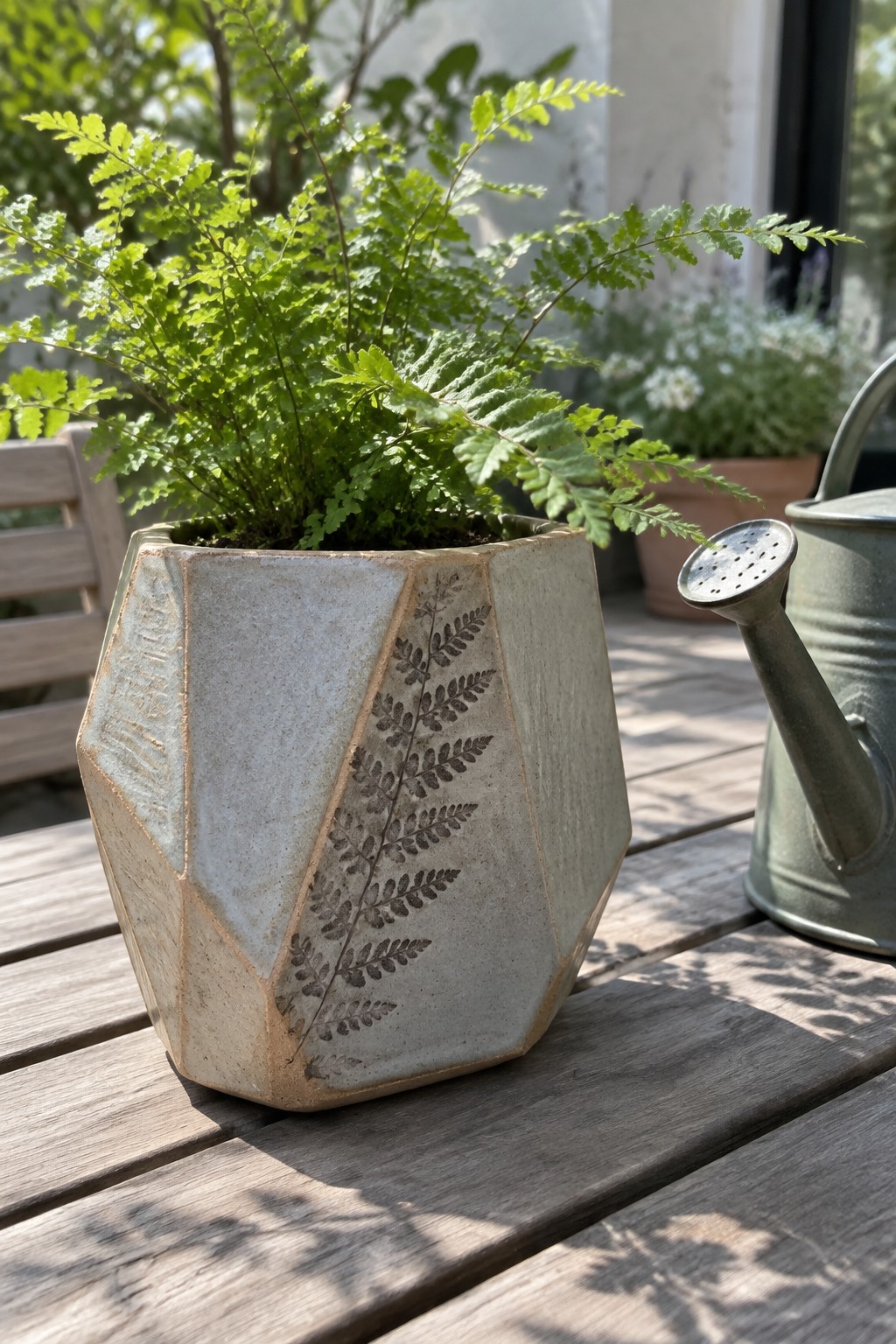
A handmade ceramic garden planter gets its decoration from a fern imprint across one broad, faceted side. The pale, earthy finish and angular shape keep the leaf detail clear without making the planter feel overly ornate, so it fits naturally into pressed-leaf garden decor.
The wide opening suits a leafy plant such as a fern, while the sturdy form looks at home on a patio table or sunny indoor shelf. For a variation, press a smaller leaf into one face and leave the others plain, or adapt the design for a shorter pot with a drainage hole if it will be used outdoors.
Shallow Ceramic Bonsai Planter with Leaf Imprints

A shallow, handmade ceramic planter gives a bonsai room to spread while keeping the tree and its moss-covered soil easy to see. The softly irregular oval shape and pressed leaf designs on the pale clay make it a decorative garden planter that suits a natural, woodland-inspired display.
The low profile works well on a garden bench or patio table, and the leaf pattern can be adapted with foliage gathered from your own garden. For a simpler version, press a single leaf into one side of the clay, or use the same motif on a small succulent dish. The contrast between the textured moss, branching tree, and patterned pot makes this planter idea easy to save for a compact outdoor display.
Nested Leaf-Imprint Ceramic Planters

A set of three handmade ceramic planters uses pressed leaf impressions to give each bowl a different garden-inspired pattern. Their rounded, open shapes and earthy glaze make them suited to small plants or grouped garden display, while the varied leaf forms keep the nested set from looking repetitive.
The bowls can be used together to display plants at different heights or separately on a patio, windowsill, or garden ledge. Adapt the idea with leaves from your own garden, or make a simpler version by imprinting one bold leaf on each planter; keep drainage needs in mind if planting directly into the bowls.
Ivy and Fern Imprint Jug Planter
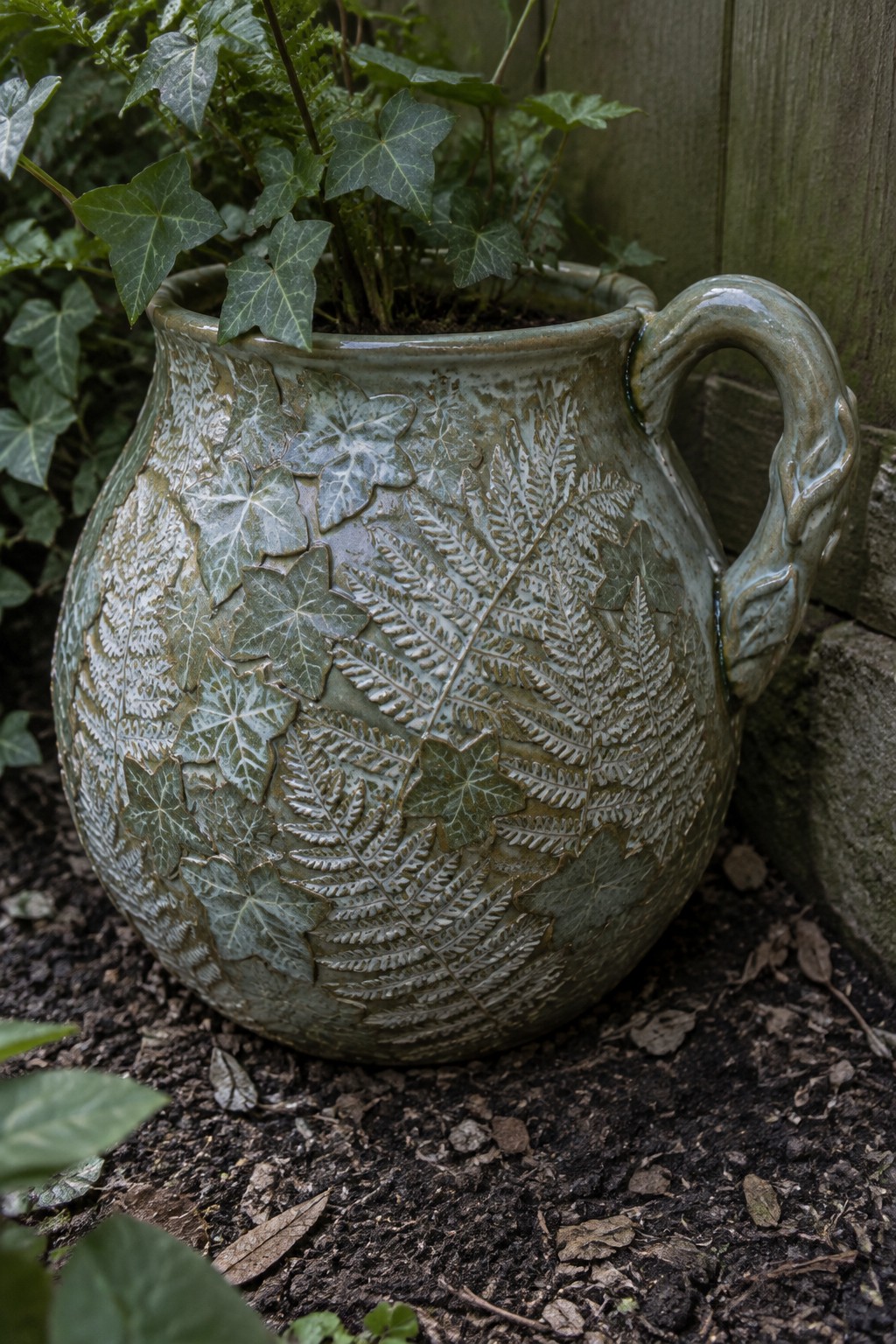
A rounded ceramic jug planter uses pressed ivy leaves and fern fronds to create a raised botanical pattern across its surface. The earthy green glaze lets the leaf details stand out, while the loop handle gives this garden planter a distinctive handmade shape.
Set it among groundcover or on a sheltered patio, where the leafy texture fits naturally with surrounding plants. You could adapt the idea for a smaller pot by pressing just one fern frond into the clay, or leave off the handle for a simpler planter shape; the combination of botanical relief and an unusual silhouette also makes it a useful Pinterest reference.
Stacked Wall Planter with Botanical Imprints

A vertical wall planter made from three handmade ceramic pockets keeps herbs or small plants off the ground while turning a bare wall into a planting spot. Each rounded pocket has a raised leaf detail, so the botanical motif ties the stack together without needing painted decoration.
The narrow footprint makes this a practical choice for a patio, balcony, or sunny kitchen wall where floor space is limited. Make the pockets deeper for leafy herbs, or change the pressed-leaf motifs to suit the plants or garden style; the stacked layout also makes a clear, appealing project to save on Pinterest.
Footed Botanical-Imprint Garden Planter

A long, handmade ceramic planter with short feet and a band of pressed leaf designs is a practical way to bring botanical detail into a garden arrangement. Its low rectangular shape gives several small plants room to grow, while the unglazed-looking surface and dark leaf impressions keep the decoration subtle.
Set it on a porch step or patio where the feet can lift the planter slightly above the ground, and use it for compact flowers, herbs, or mixed seasonal plants. You could press different leaves into the clay for a more personal border or simplify the design to a few imprints along the rim; the combination of a useful planter shape and clear botanical texture makes it easy to save for garden inspiration.
Pink Fern-Imprint Planter with a Trailing Vine
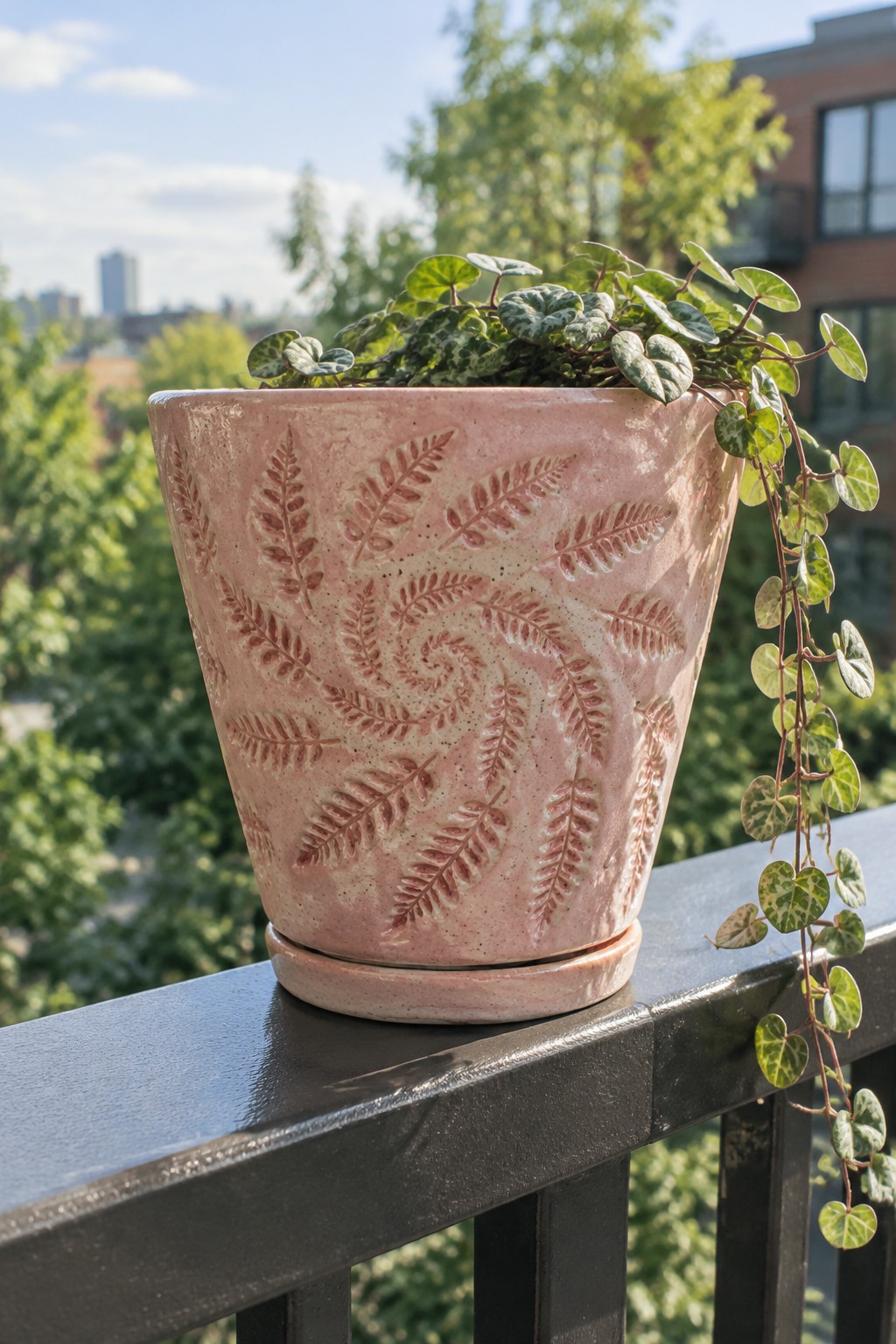
A tapered ceramic garden planter with pressed fern details turns a simple plant pot into a decorative accent. The soft pink glaze lets the raised botanical pattern stand out without competing with the foliage, making this a good fit for a leaf-imprint planter project.
Set it on a balcony railing, patio table, or sunny windowsill, and use a trailing plant to balance the planter’s broad shape. You could adapt the idea with local leaves, a different glaze color, or a smaller pot for herbs or succulents. The clear contrast between the botanical texture and the live greenery also makes it easy to feature in a garden craft collection.
Yellow-Rimmed Floral Footed Planter

A low, rounded handmade ceramic planter pairs a yellow-glazed rim with small dark floral motifs and short sculpted feet. The bowl shape gives a leafy plant room to spread, while the feet lift it slightly off the sill, making it a decorative planter with a clear botanical theme.
The wide opening suits compact, trailing plants on a bright windowsill, and the floral pattern can be adapted with pressed leaf impressions for a closer fit with a garden theme. Keep the feet and rim simple if you want the plant to stand out, or echo the foliage with a few leaf marks around the bowl. The contrast between the bright rim and patterned clay also makes the planter easy to spot in a Pinterest collection of plant projects.
Frequently Asked Questions
Air-dry clay is convenient for small decorative planters that will stay indoors or in a sheltered spot. For planters exposed to rain or regular watering, use a clay designed for outdoor use, such as kiln-fired clay with a suitable glaze, or a weather-resistant concrete or ceramic clay product. Check the package instructions: many air-dry clays are not waterproof, even after sealing.
Choose fresh, flexible leaves with strong veins and a fairly flat surface. Ferns, hosta, sage, and large herbs can create attractive patterns. Very thick, waxy, or brittle leaves may not transfer their details as easily. Test a few leaves on a small piece of clay first, and avoid poisonous plants or leaves that could irritate your skin.
Roll the clay to an even thickness, then place the leaf with its veined underside against the clay. Cover it with a piece of parchment or plastic wrap and gently roll over it, or press evenly with your fingertips. Lift the leaf slowly from one edge. If it sticks, use a toothpick or craft tool to ease it away rather than pulling sharply.
Yes, if you plan to plant directly in the planter. Make one or more drainage holes in the base while the clay is still workable, taking care not to make the bottom too thin. If the planter is decorative or made from clay that is not waterproof, use it as a cover pot instead: keep the plant in a nursery pot and remove it for watering so excess water can drain.
Start with a clay product rated for outdoor use, let it dry or fire fully according to the manufacturer’s directions, and apply a compatible outdoor sealer if recommended. Keep in mind that sealers can wear down over time, so inspect and reapply them as directed. In areas with freezing winters, bring fragile planters indoors or protect them from standing water, since moisture and freeze-thaw cycles can cause cracking.

Pottery Path is my cozy corner of the internet where I share clay ideas, pottery inspiration, and simple projects you can recreate at home. I love exploring everything from air dry clay to handbuilt pottery to cute minis that brighten your day. My goal is to make clay crafting feel easy, fun, and welcoming for anyone who wants to try it.
You will find beginner friendly tutorials, creative pottery painting ideas, and lots of warm inspiration for slow and happy crafting. If you enjoy hands on creativity, this space will feel like home.