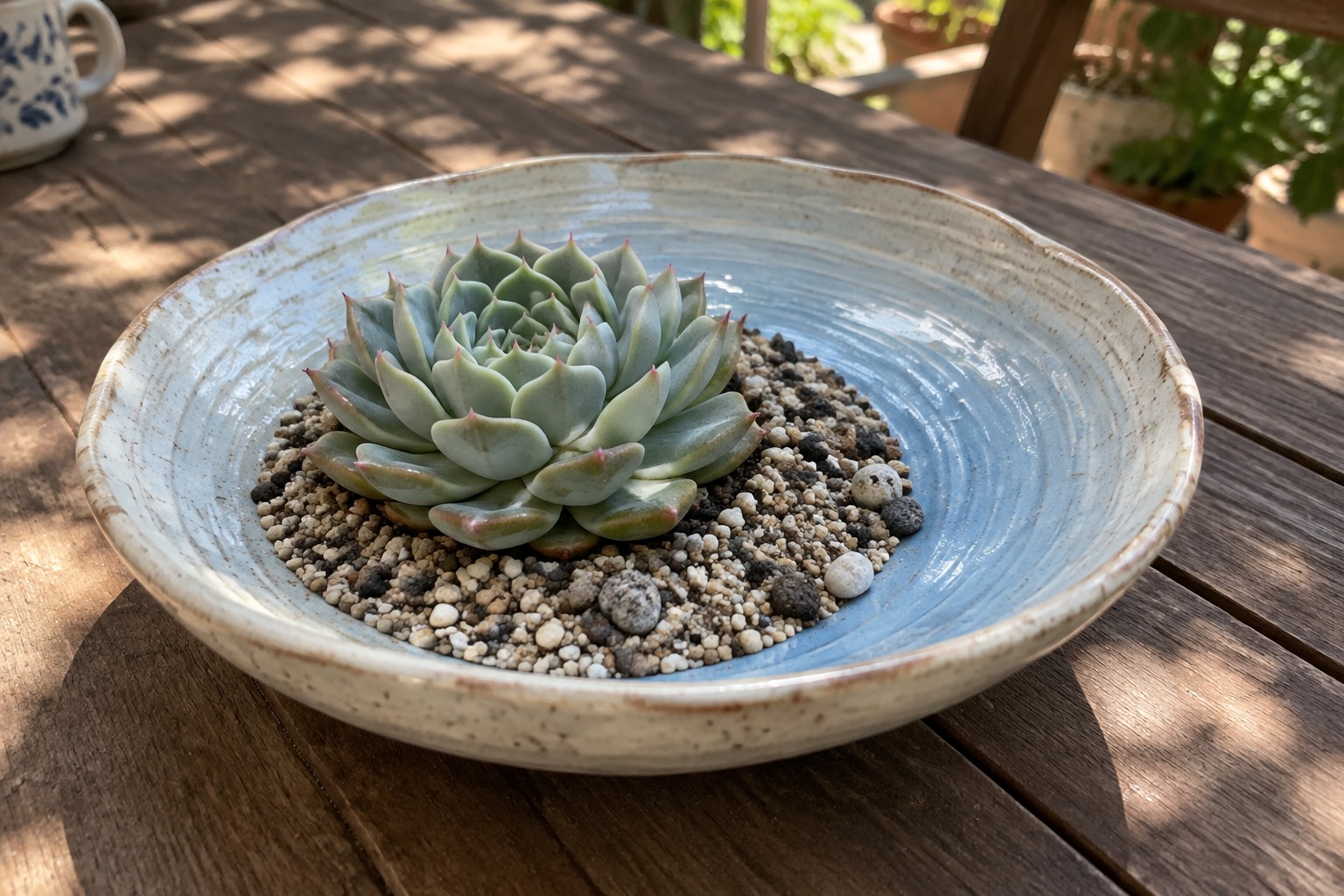
I like using shallow ceramic bowls for succulents because they fit nicely on a patio table without taking up too much room.
I usually look for pots with a bit of texture or an interesting glaze, while keeping the planting simple.
These bowls work well for small arrangements, and they’re easy to move around when I want to change things up.
Here are 21 ideas that might help you find a style that suits your patio.
A Wide Blue Glazed Bowl for a Succulent

A shallow ceramic bowl makes a roomy planter for a single rosette-shaped succulent. Its broad, gently sloped sides and pale blue glaze frame the plant, while the gravel top dressing keeps the arrangement neat and adds texture.
For a patio table, this low profile keeps the plant easy to see without blocking conversation, and the wide rim gives the arrangement a finished look. Adapt the idea with a different glaze color or mix of small stones, while keeping the bowl wide and shallow for succulents that prefer their roots near the surface.
A Leaf-Textured Ceramic Bowl for Succulent Arrangements

A shallow handmade ceramic planter makes a good home for several small succulents in one compact arrangement. Its wide opening leaves room to mix rosette-shaped and trailing plants, while the raised leaf pattern and earthy green glaze give the bowl visual interest even around the edges.
The low shape suits a patio table because it keeps the plants easy to see and doesn’t block conversation across the table. Adapt the idea with a simpler rim or a different leaf pattern, and choose a size that leaves enough space for each plant to grow; a drainage hole is useful if the bowl will hold live succulents.
Shallow Ceramic Bowl for a Patio Succulent Display

A shallow handmade ceramic planter gives several small succulents room to grow together while keeping the arrangement low enough for a patio table. Its softly scalloped rim and muted pink interior add color without competing with the plants, while the wide opening makes it easy to combine contrasting leaf shapes and gritty top dressing.
The broad bowl shape works well as a table centerpiece, especially when the plants stay compact and the container has proper drainage. Adapt the idea with a simpler rounded rim, a different glaze color, or a single focal succulent surrounded by smaller varieties; a handmade finish can help the planter stand out in garden styling pins without making the design overly busy.
A Divided Ceramic Bowl for Three Succulents
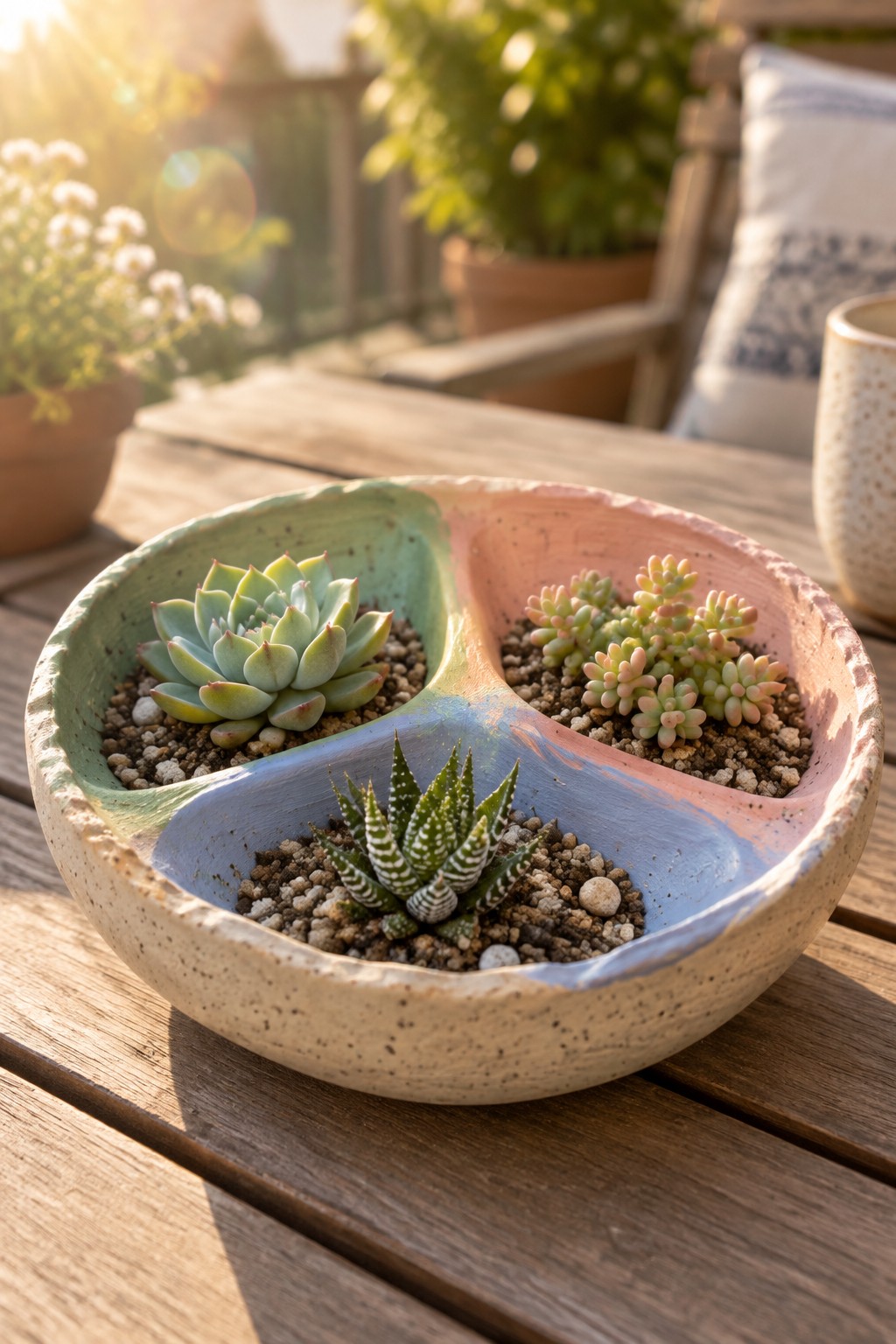
A shallow handmade ceramic planter with three separate planting sections gives a patio table a tidy way to display different succulents together. The rounded bowl shape keeps the arrangement compact, while the softly colored compartments make each plant stand out without needing separate pots.
The divided layout is useful when you want to group plants with different shapes or colors in one centerpiece, and the bowl can be adapted with fewer sections or a simple painted rim. For outdoor use, make sure the planter has drainage holes or keep the plants in removable nursery pots so water does not collect at the bottom.
A Speckled Footed Bowl for Succulent Rosettes
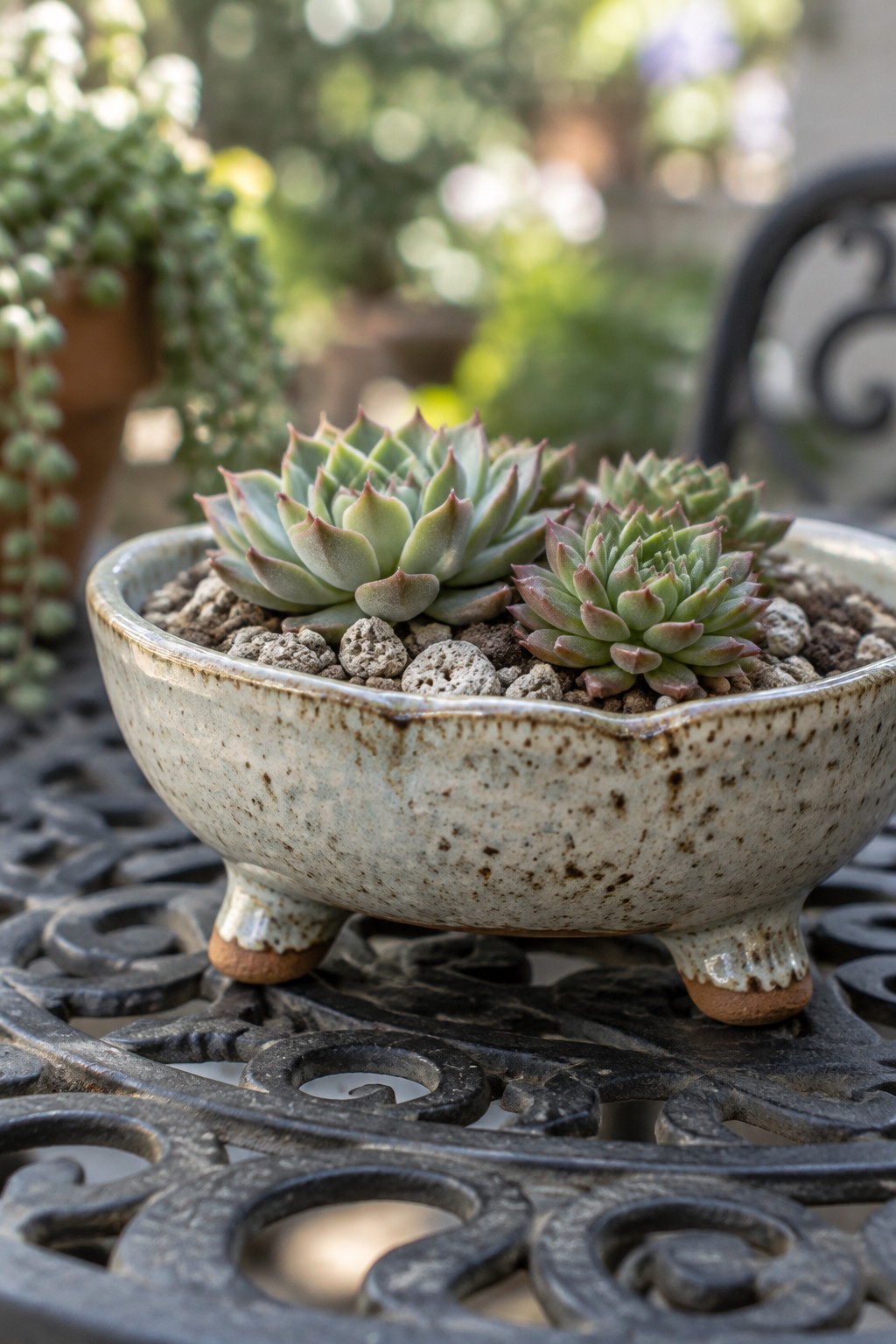
A shallow handmade ceramic planter gives several succulent rosettes room to spread while keeping them grouped as one patio-table arrangement. Its speckled neutral glaze and short feet add texture without competing with the plants, making it a useful bowl-style planter idea for a natural, understated display.
The raised feet lift the bowl slightly above the table, while the wide opening leaves space to arrange plants and decorative stones. Adapt the idea with a different glaze color or fewer rosettes, and check that the planter has suitable drainage before using it outdoors.
A Terracotta-Striped Ceramic Bowl for Patio Succulents
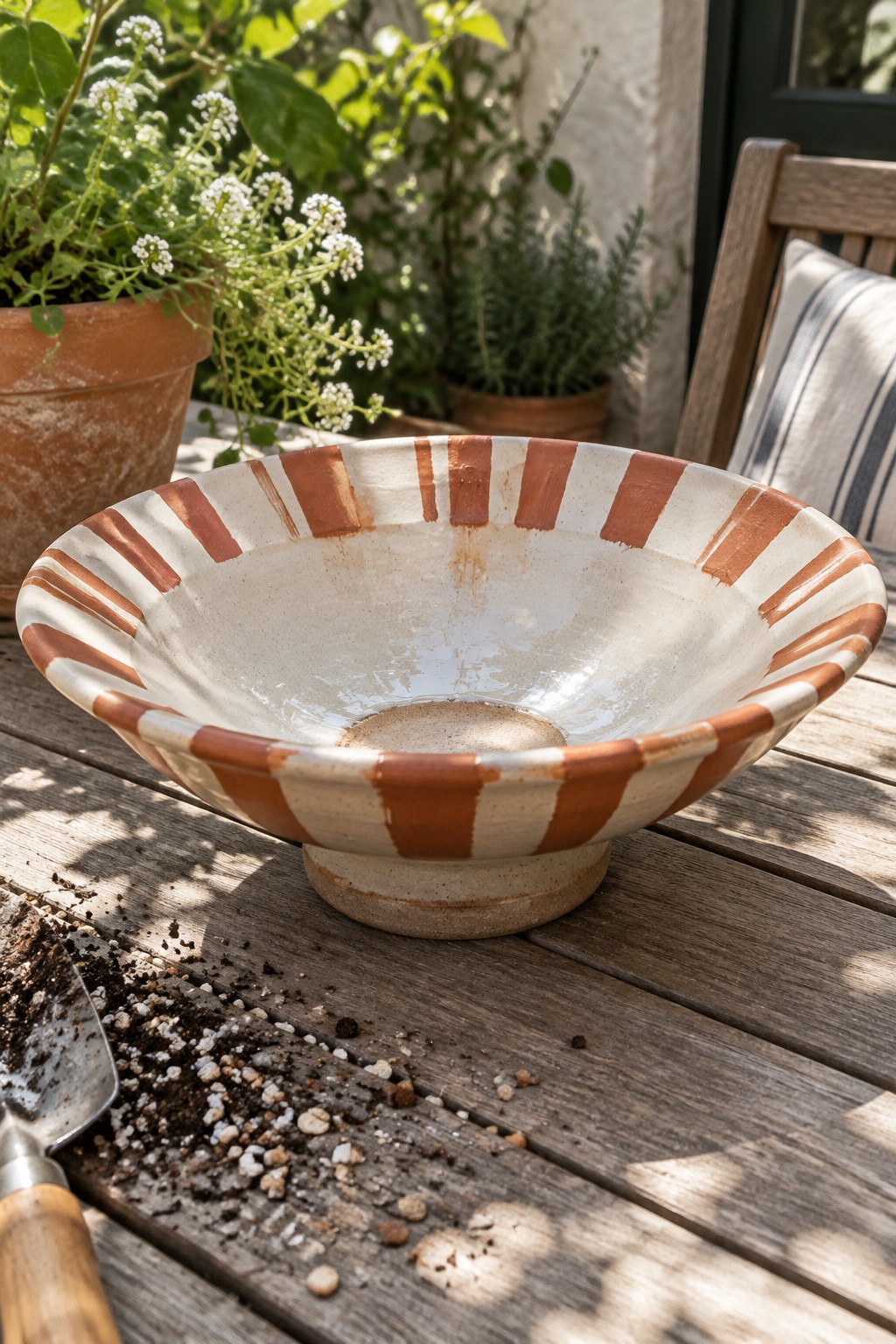
A wide, shallow ceramic bowl with hand-painted terracotta stripes makes a distinctive base for a small succulent arrangement. Its low profile leaves the plants visible, while the warm stripes around the rim and outside give the planter a clear pattern without crowding the greenery.
The broad opening gives several small succulents room to spread, making this a useful centerpiece for a patio table or sunny outdoor ledge. Keep the striped design as shown, or simplify it to a few broad bands in colors that match your outdoor pots; add drainage if the bowl will hold plants directly, or use it as a cachepot with a nursery pot inside.
A Rustic Ceramic Bowl for a Succulent Cluster
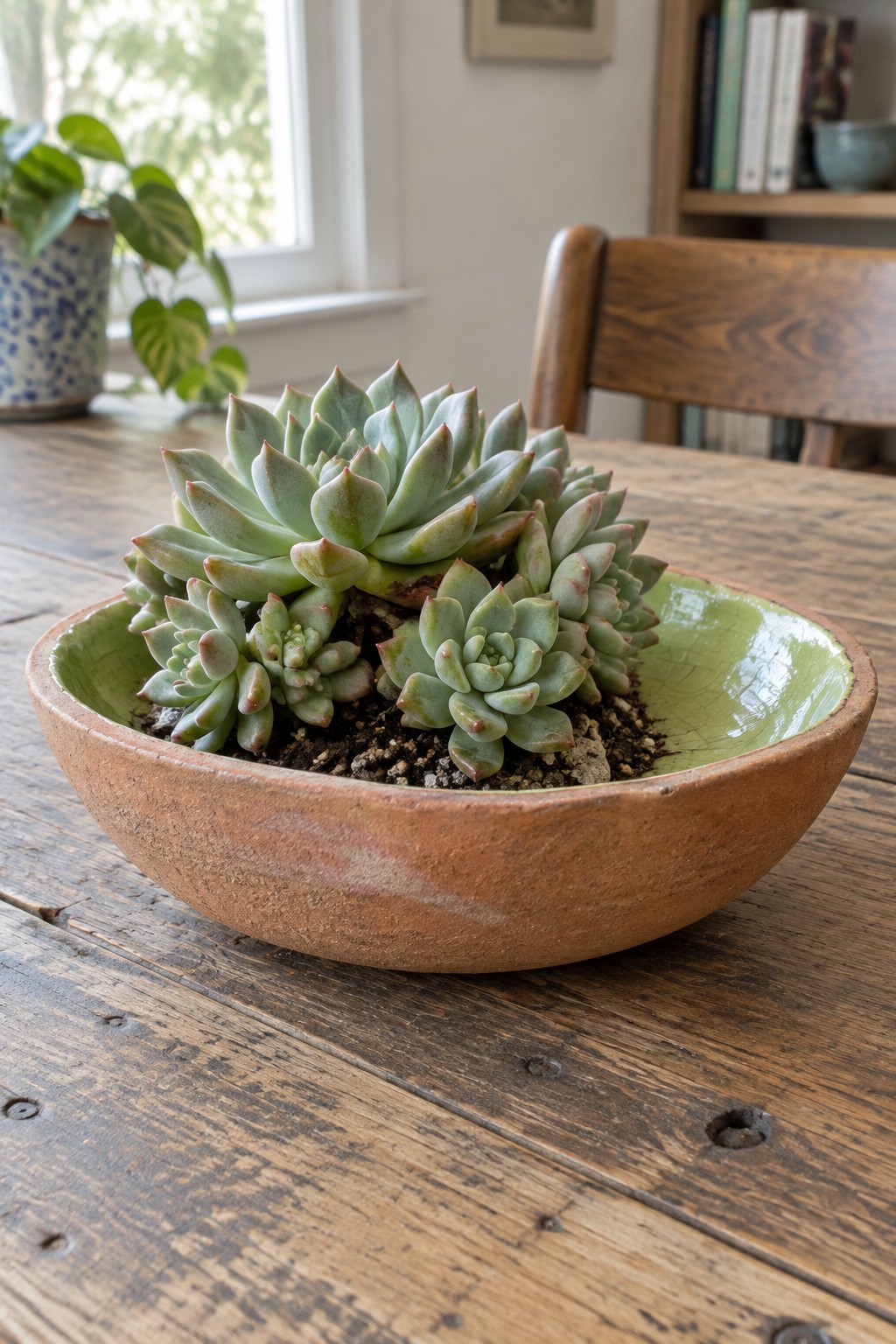
A shallow, wide ceramic bowl makes a useful planter for grouping succulents into one low arrangement. Its earthy terracotta-colored exterior and green glazed interior create a simple contrast that suits the layered shapes of rosette succulents.
The broad opening gives several plants room to spread, so this style works well as a centerpiece for a patio table or indoor dining table. You could adapt the idea with a different glaze color or a smaller cluster, while keeping enough space for the plants and adding drainage if the bowl will be used as a working planter.
A Long Rustic Trough Planter for Mixed Succulents

A shallow, elongated ceramic trough makes room for several succulents in one low arrangement, rather than giving each plant its own pot. Its charcoal surface and worn terracotta-colored rim create a rustic contrast with the fleshy rosettes and upright spiky plants, making it a distinctive planter idea for a patio table.
The narrow shape suits a long outdoor table or bench, where it can add greenery without taking up the space of several separate pots. Adapt the arrangement with plants of varied heights and colors, or use a shorter trough for a smaller surface; the mix of textures and the weathered-looking finish also give the design a clear focal point in a Pinterest garden board.
A Ceramic Bowl Planter with a Center Water Dish

A shallow handmade ceramic bowl can hold a ring of small succulents around a built-in central dish, creating a compact patio-table planter with a clear focal point. The contrast between the earthy bowl, pale gravel, and varied succulent shapes keeps the arrangement visually distinct without needing painted decoration.
The central dish can be used as a small water feature or left empty as a contrasting inset, while the surrounding planting area suits a mix of low-growing varieties. For a simpler version, make a plain shallow bowl and place a small ceramic cup in the middle, then choose plants and gravel to suit the table or outdoor space.
A Marbled Ceramic Bowl for a Mixed Succulent Garden

A shallow handmade ceramic bowl makes a roomy planter for combining succulents with different shapes and colors. Its broad opening keeps the plants visible as a group, while the blue-green and cream marbled finish gives the arrangement a coordinated base without competing with the foliage.
The wide shape suits a patio table or outdoor dining area, where a mixed planting can serve as a low centerpiece. For a similar project, choose succulents with contrasting forms and leave enough space between them for growth, then adapt the bowl’s glaze colors to match your table setting or garden. The mix of a handmade planter and varied plants also makes a useful Pinterest idea for anyone planning a small-space display.
A Turtle-Accented Ceramic Bowl for Succulents
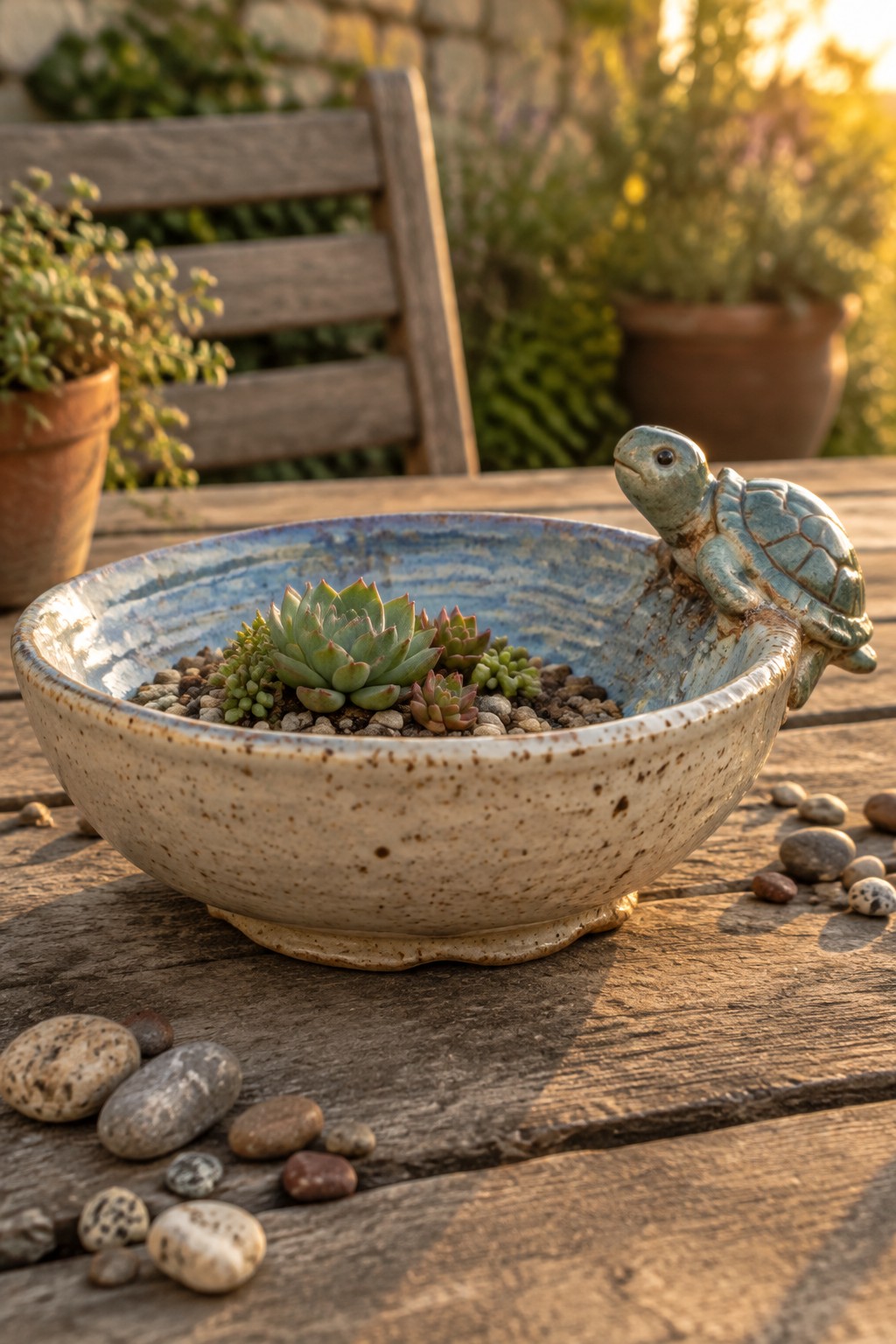
A shallow, speckled ceramic bowl makes a low-profile planter for a compact succulent arrangement, while its blue interior adds contrast to the green and reddish rosettes. A small sculpted turtle perched on the rim turns the handmade pottery into a decorative patio-table piece without taking attention away from the plants.
The broad opening gives several small succulents room to form a cluster, and the low sides keep the arrangement easy to see from a seated spot. Adapt the idea with a simple clay animal or a small leaf detail on the rim, or leave off the figure for a cleaner bowl suited to a balcony or outdoor dining table.
A Scalloped Ceramic Bowl with Painted Dots for Succulents
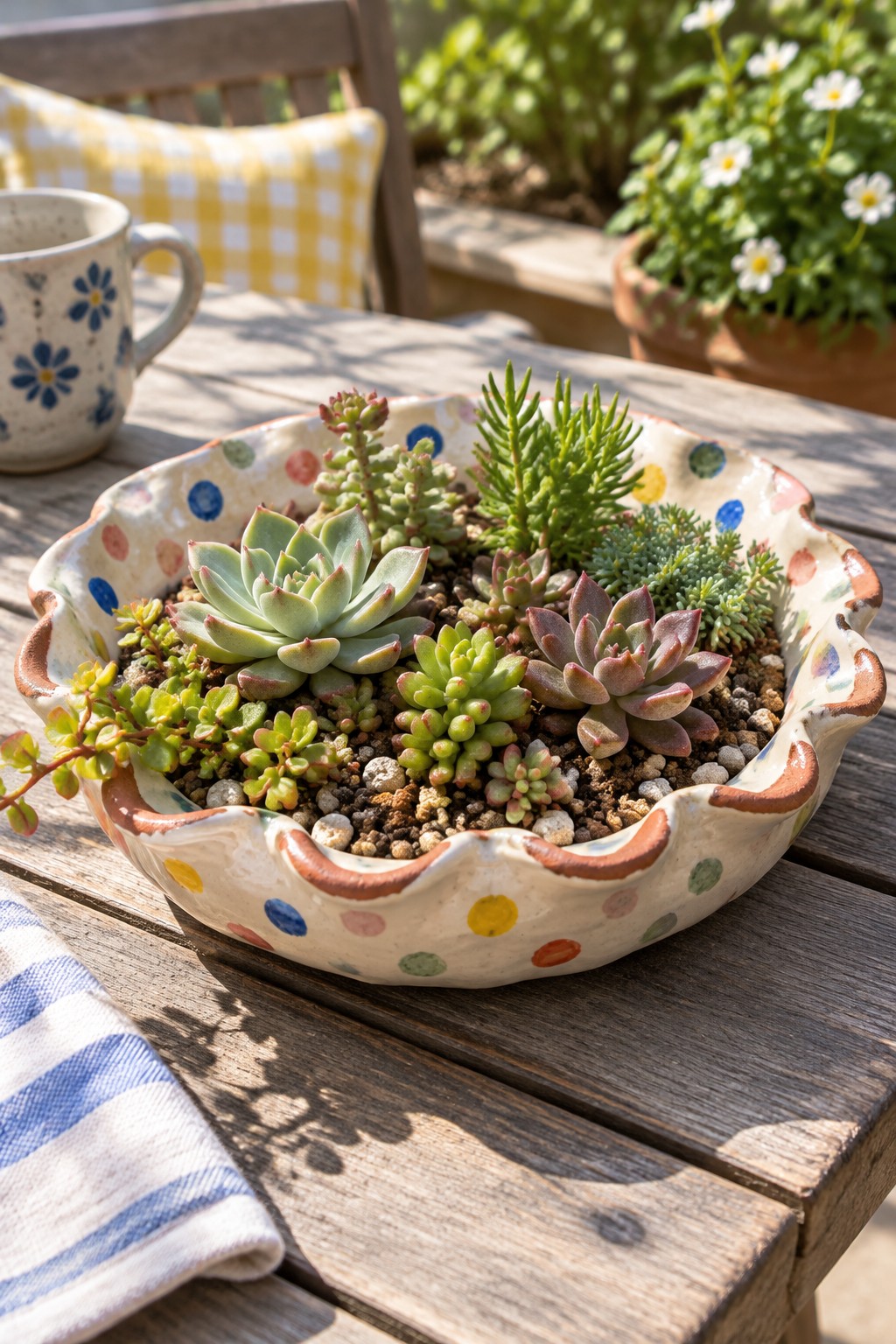
A shallow handmade ceramic planter with a wavy rim gives a mixed succulent arrangement room to spread while keeping it easy to see from above. Small painted dots in several colors echo the varied shapes and tones of the plants without competing with them, making this a decorative bowl idea for a patio table.
The broad opening suits a collection of small rosettes and trailing succulents, while the playful rim and dots could be adapted to match a patio’s colors or simplified to a single painted border. For planting, make sure the bowl has drainage or use it as a cachepot with a nursery pot inside; its distinctive outline also makes it a strong choice for a Pinterest-friendly centerpiece.
A Fern-Imprinted Ceramic Bowl for Succulents
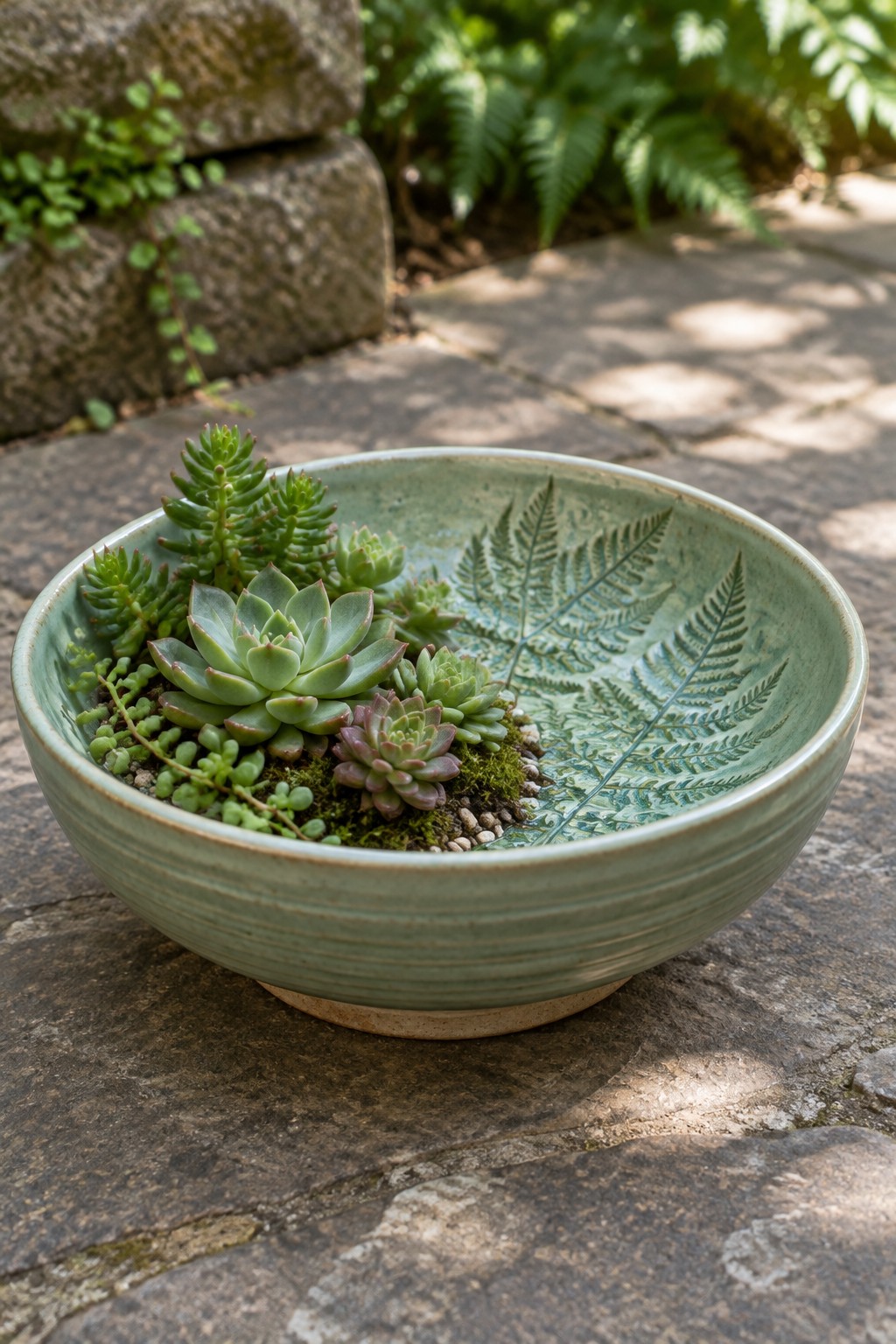
A shallow handmade ceramic bowl can serve as a low-profile planter for a mixed succulent arrangement. Its pale green glaze and raised fern motif leave part of the bowl visible beside the plants, making the surface decoration part of the display rather than hiding it beneath foliage.
The open shape suits a patio table, where the succulents can spread without needing a deep container. For a similar project, keep the arrangement small and leave a clear area for a pressed-leaf pattern, or adapt the idea with another botanical motif and a contrasting glaze; make sure the finished planter has suitable drainage or use a removable nursery pot inside.
A Pebble-Filled Ceramic Bowl for Mixed Succulents

A shallow handmade ceramic bowl makes a useful planter for combining succulents with different growth forms. Its wide opening leaves room for a leafy rosette, compact clusters, and upright stems, while the muted, rough-textured surface keeps attention on the plants.
The low profile suits a patio table because it gives the arrangement a broad footprint without taking up much vertical space. Use a similar neutral bowl with different succulent colors, or adapt the idea with fewer plants and more gravel for a simpler display; make sure the planter has drainage or use a removable nursery pot inside.
A Patterned Ceramic Bowl for Sunset Succulents

A wide, shallow ceramic bowl makes a practical base for grouping several succulents in one patio-table planter. Its blue-green glaze and raised geometric band give the arrangement a decorative edge, while the open shape leaves room for a rosette, upright spiky plants, and smaller trailing varieties.
The broad opening is useful for combining plants with different shapes, and the low profile keeps the display easy to place on an outdoor table. For a simpler version, use a plain bowl with a few contrasting succulents, or adapt the geometric band into painted lines or stamped marks; either approach can make the planter stand out in a Pinterest garden collection.
A Raised Ceramic Bowl for a Mixed Succulent Garden

A handmade ceramic bowl with a raised pedestal gives a mixed succulent arrangement a little height while keeping the planting area broad and shallow. The muted blue interior and sandy, textured exterior make a simple backdrop for contrasting rosette succulents, upright striped foliage, and low-growing plants.
The footed shape suits a patio table or garden bench, where it can serve as a compact centerpiece without taking up much space. For a similar planter, vary the glaze colors or group plants by height, and leave room for each succulent to grow; a plain low bowl is an easy alternative if you want a simpler form.
A Mosaic-Detailed Ceramic Bowl for Patio Succulents
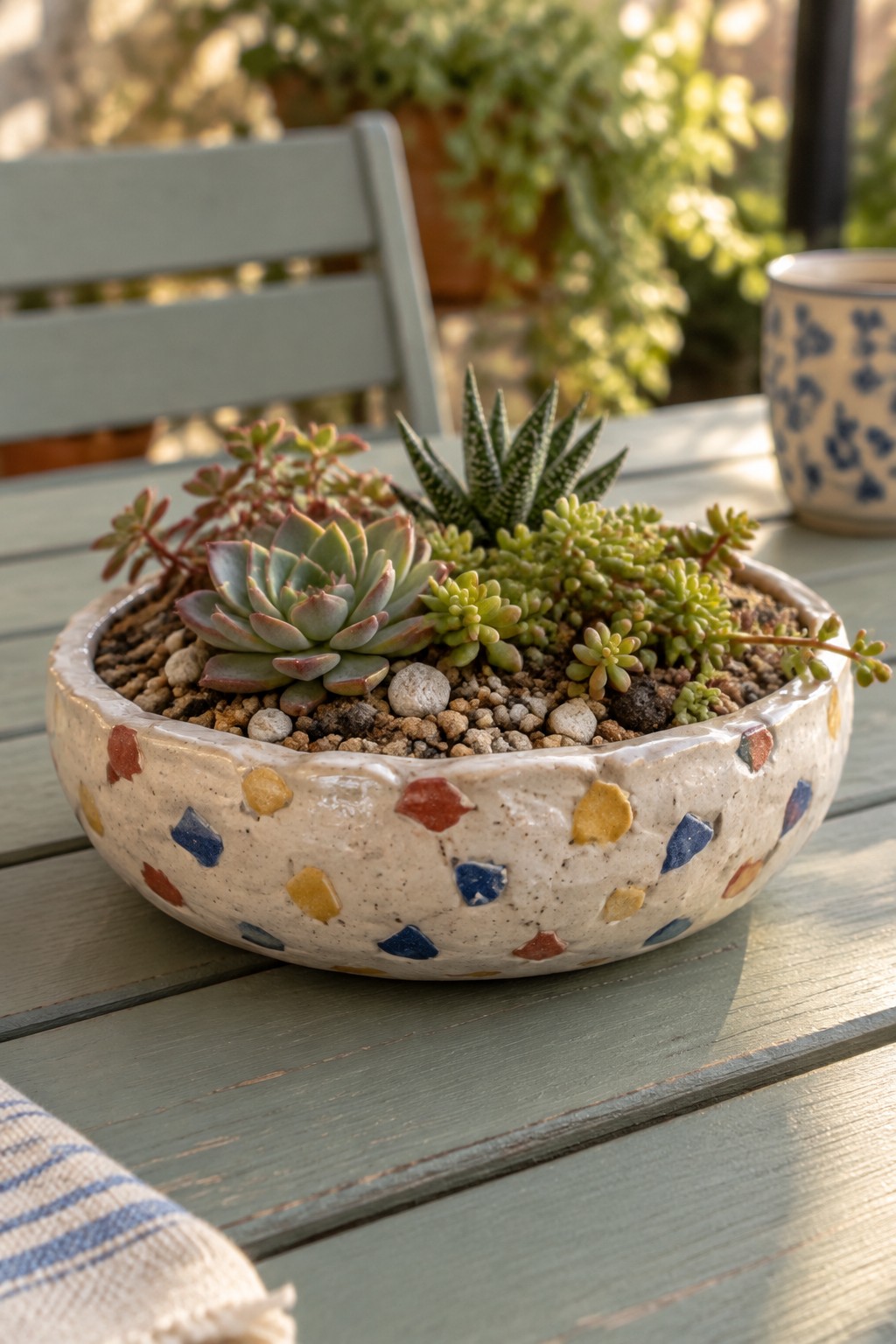
A shallow handmade ceramic bowl planter gives several succulents room to grow side by side while keeping the arrangement low enough for a patio table. The cream-colored surface is dotted with irregular blue, red, and yellow pieces, adding color without competing with the plants. Gravel top dressing and a mix of rosette, spiky, and trailing succulents make this a useful idea for a mixed planting.
The wide opening makes it easy to arrange plants with different shapes, and the colorful exterior can be adapted with a few painted patches or a simpler two-color pattern. Set the bowl on a patio table or windowsill, and check that it has drainage or use a separate nursery pot inside to avoid standing water. The handmade-looking pattern also gives the planter a clear visual hook for a Pinterest garden board.
A Blue-Green Ceramic Bowl for a Patio Succulent Mix
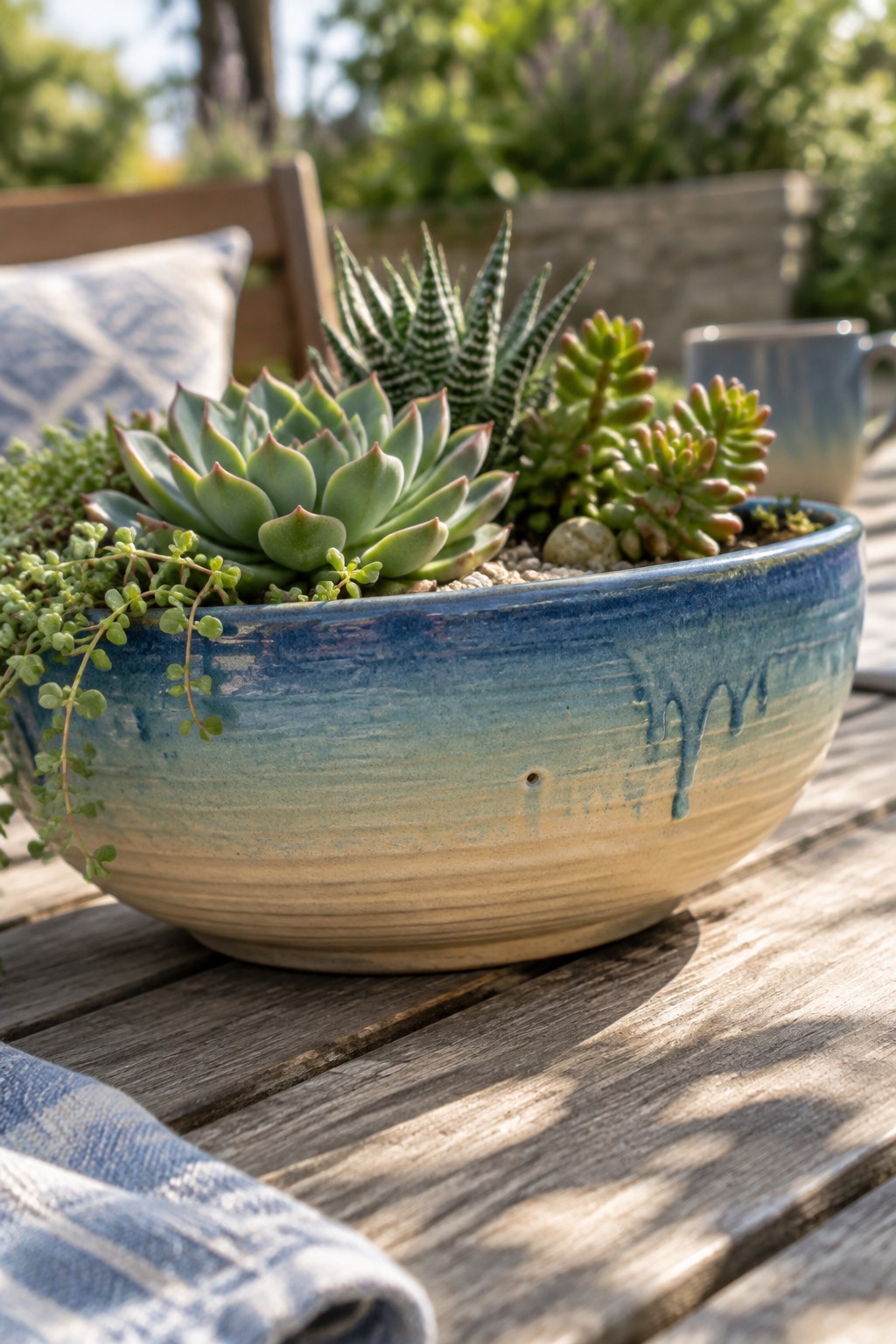
A shallow handmade ceramic bowl gives several succulents room to spread while keeping them together as one patio-table display. Its broad rounded form and blue-green glaze create a strong base for contrasting rosette, upright, and trailing plants.
The low profile suits an outdoor table or bench, where the arrangement can be viewed from above without taking up much visual space. For another version, keep the bowl shape and mix a rosette with upright succulents and a trailing plant, or choose a simpler glaze to let the plant forms stand out.
A Mushroom-Accented Ceramic Bowl for Succulents

A shallow, rustic ceramic bowl can hold a mixed succulent arrangement while sculpted mushrooms attached to the rim give the planter a distinctive focal detail. Rosette succulents, upright striped plants, and trailing varieties create contrast in shape and height, while the earthy bowl finish keeps the display grounded.
The mushroom detail makes this bowl stand out on a patio table, where it can serve as a compact centerpiece; keep the arrangement suited to the bowl’s shallow depth and provide drainage for the plants. To adapt the idea, attach a few small clay mushrooms to a plain bowl, or skip the figures and use a simple textured rim for a more understated planter.
A Hand-Formed Turquoise Bowl for Patio Succulents

A shallow handmade ceramic bowl can hold a mixed succulent arrangement while keeping the plants low enough for a patio table. Its softly uneven shape and mottled turquoise glaze give the planter visual interest without competing with the rosette succulents and trailing plants.
The broad opening leaves room to combine plants with different forms, while the low sides make the arrangement easy to view from a seated position. For a similar project, adapt the bowl’s glaze to suit your outdoor furniture or use a simpler, solid finish to let the plants stand out; just make sure the planter has drainage or use it as a decorative cover for a nursery pot.
An Amber Ceramic Bowl for a Mixed Succulent Display
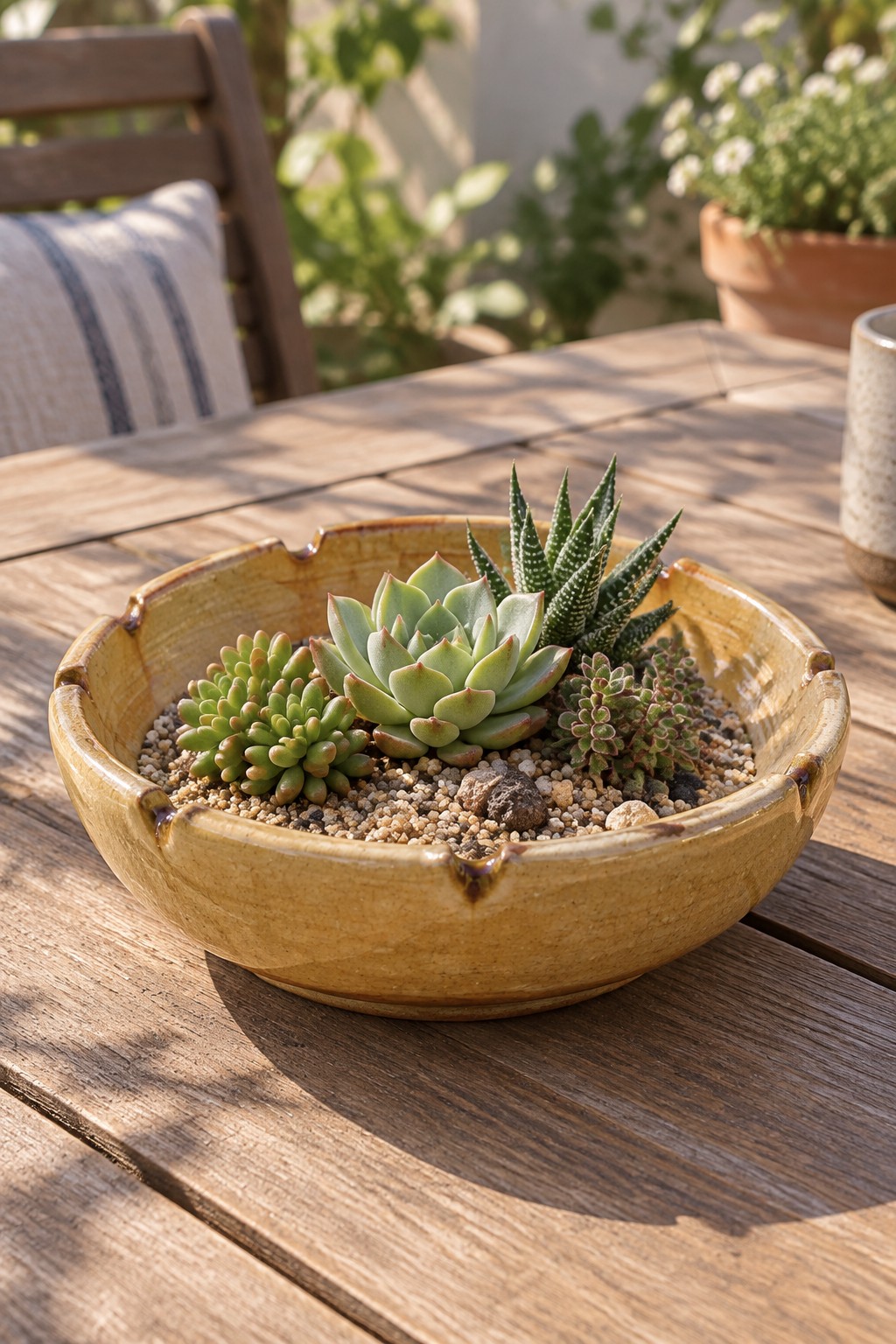
A shallow, wide ceramic bowl makes a useful planter for grouping several small succulents in one arrangement. Its warm amber glaze and irregular handmade rim give the planter visual interest without competing with the plants, while the open shape leaves room for gravel and varied plant forms.
The broad surface suits a patio table or outdoor dining area, where a low arrangement won’t block the view across the table. Try a similar bowl with fewer plants for a simpler look, or change the glaze color to coordinate with outdoor tableware; just make sure the planter has drainage or use it as a decorative cachepot around a nursery pot.
Frequently Asked Questions
Choose a bowl that leaves enough room for drinks, plates, and other table accessories. For a small bistro table, a bowl around 6 to 8 inches wide usually works well. Larger tables can accommodate bowls 10 inches or wider, especially if the arrangement is a centerpiece. Before buying, measure the space and check the bowl’s height as well as its diameter.
Drainage holes are helpful because they let excess water escape, reducing the risk of waterlogged soil and root rot. If your favorite bowl has no hole, use it as a decorative cachepot: keep the succulents in a smaller nursery pot inside, or add a layer of gravel and water very sparingly. Gravel alone does not replace a drainage hole.
Use a fast-draining cactus and succulent mix. For even better drainage, blend it with pumice or perlite according to the product directions. Fill the bowl with enough soil to support the roots, but leave a little space below the rim so water and soil are less likely to spill onto the table.
Compact, slow-growing varieties are easiest to manage. Echeverias, haworthias, small sedums, and some compact crassulas can work well, provided their light and watering needs are compatible. Avoid crowding the bowl. Give each plant room to grow and choose varieties suited to your patio’s actual conditions, such as full sun, partial shade, or strong afternoon heat.
Place the bowl where the plants get the amount of light they need, and protect it from harsh conditions that can damage either the plants or the ceramic. Water only when the soil has dried, then let excess water drain fully. In rainy weather, move the bowl under cover or shield it from prolonged downpours. Ceramic can be heavy when filled, so place it on a stable, level table and consider moving it indoors during freezing temperatures.

Pottery Path is my cozy corner of the internet where I share clay ideas, pottery inspiration, and simple projects you can recreate at home. I love exploring everything from air dry clay to handbuilt pottery to cute minis that brighten your day. My goal is to make clay crafting feel easy, fun, and welcoming for anyone who wants to try it.
You will find beginner friendly tutorials, creative pottery painting ideas, and lots of warm inspiration for slow and happy crafting. If you enjoy hands on creativity, this space will feel like home.