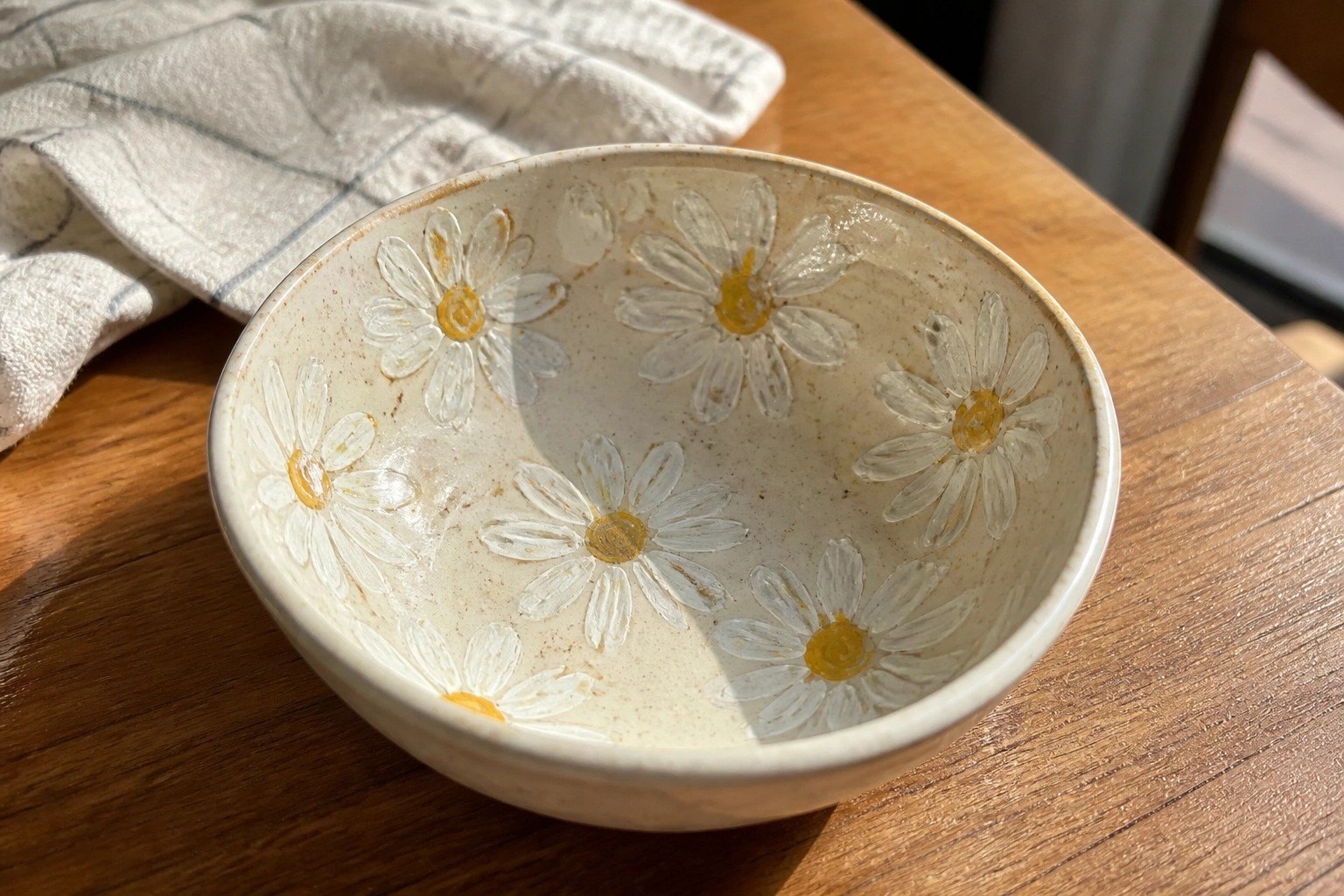
I have been experimenting with hand painting on my own ceramic bowls for a while now.
It is a straightforward way to give each one a bit of character without needing fancy techniques.
Some of my attempts have turned out better than expected while others needed a few adjustments.
I put together these ideas because they feel practical for anyone working with clay at home.
Keeping the designs simple helps them fit into regular use rather than just sitting on a shelf.
Daisy Motifs on Speckled Ceramic Bowls
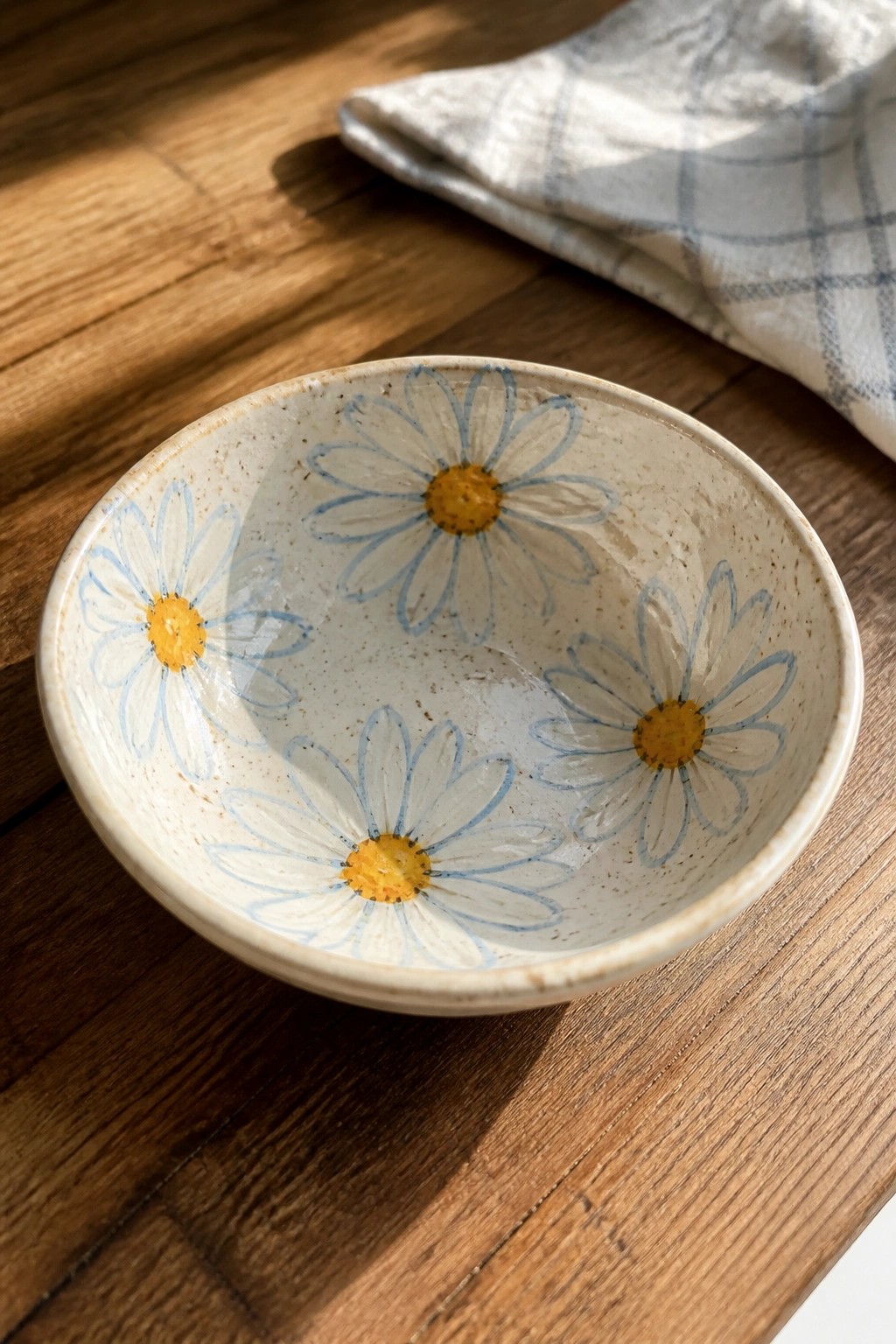
A small ceramic bowl gets its main visual interest from four evenly spaced daisies painted on the interior. Each flower has white petals with a light blue outline and a solid yellow center, set against a speckled off-white glaze that shows some natural variation in tone. The design stays simple by limiting the color palette and spacing the motifs so they do not overlap or crowd the curve of the bowl. This style works as a straightforward way to add painted detail to a basic wheel-thrown or hand-built form without needing complex layering.
The shape does a lot of the work here because the open interior gives the flowers clear space to read as a repeating pattern. You could scale the same motif down for small condiment dishes or spread it across a larger serving bowl by adding more flowers. In a kitchen setting the neutral background keeps it versatile next to other everyday dishes while the painted centers draw the eye. For a different version try swapping the blue outlines for green stems or testing the layout on a tray instead of a bowl.
Octopus Motifs for a Themed Ramen Bowl
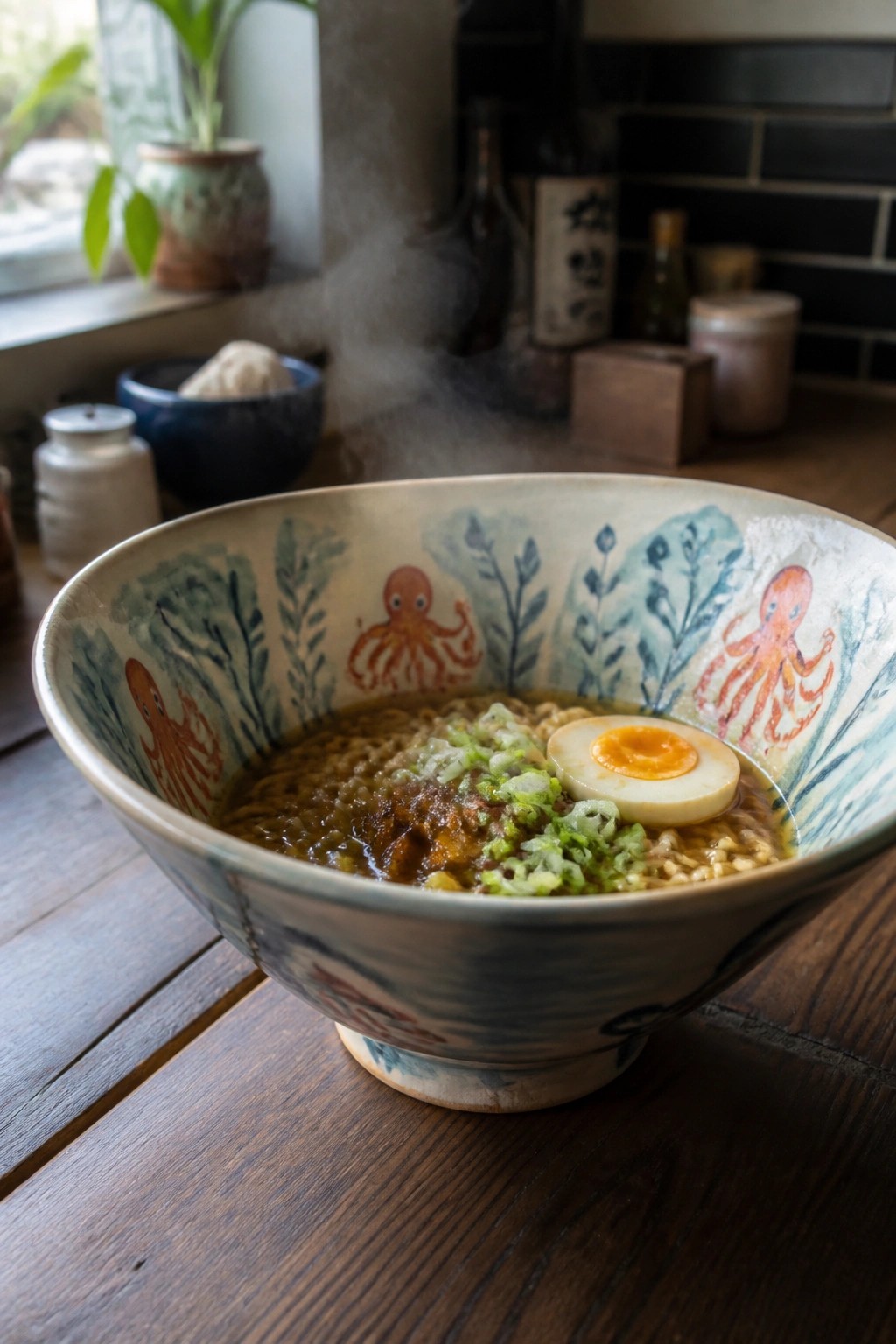
A wide ceramic bowl gains a clear theme when small octopuses are painted in a repeating ring around the upper interior. The octopuses sit in warm orange-red against a background of simple blue-green leaves and stems that fill the gaps between each figure. This layout keeps the decoration near the rim so it frames the food without competing with it. The approach works for any serving bowl where the pattern can connect to what gets served inside.
What makes this idea useful is how the motif matches the bowl’s main use for noodle dishes. You can swap the octopuses for other sea life or even vegetables while keeping the same spaced-out ring layout and color contrast. The pattern stays easy to adapt because it only needs a narrow band of surface and repeats the same shape several times. In a kitchen this kind of bowl stands out on open shelving because the repeated figures give it a consistent look without covering the whole surface.
Strawberry Ceramic Pinch Bowl
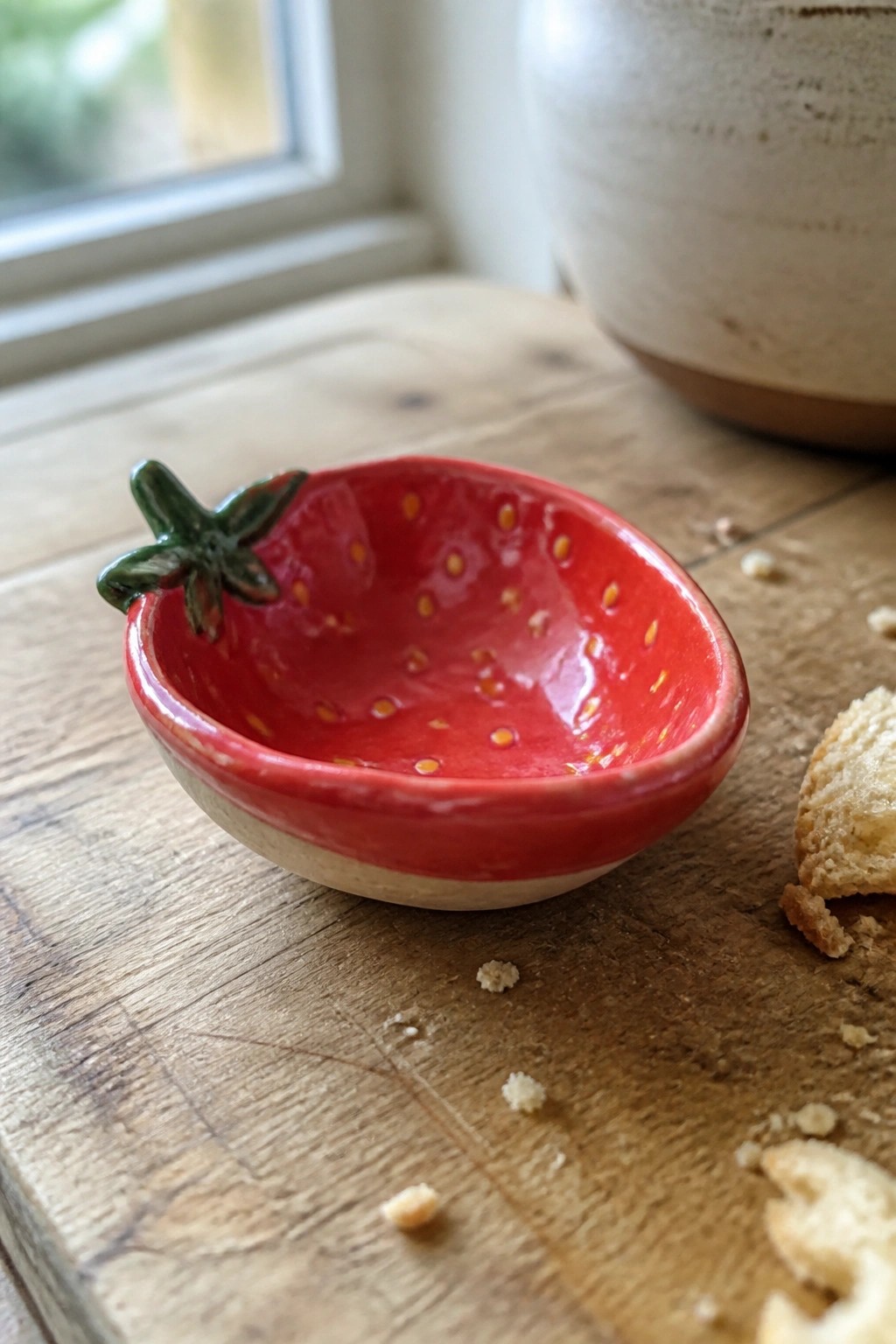
A small handmade ceramic bowl uses a strawberry shape with a glossy red interior dotted in yellow to mimic seeds. A sculpted green calyx attaches to one edge of the rim for a leafy accent. The outside stays in plain clay, which keeps the painted fruit detail as the main focus. This approach works as a ring dish or tiny kitchen bowl.
What makes this idea useful is its compact size that fits easily on a dresser or countertop for holding rings or spare change. The fruit motif can be reworked into other simple shapes like an apple or lemon by swapping the color and leaf style. In a kitchen this kind of piece stays practical for spices or loose tea while still looking distinct from plain bowls. The same design could scale up slightly for a set of matching dishes or stay small for gifts.
Soft Striped Nesting Bowls
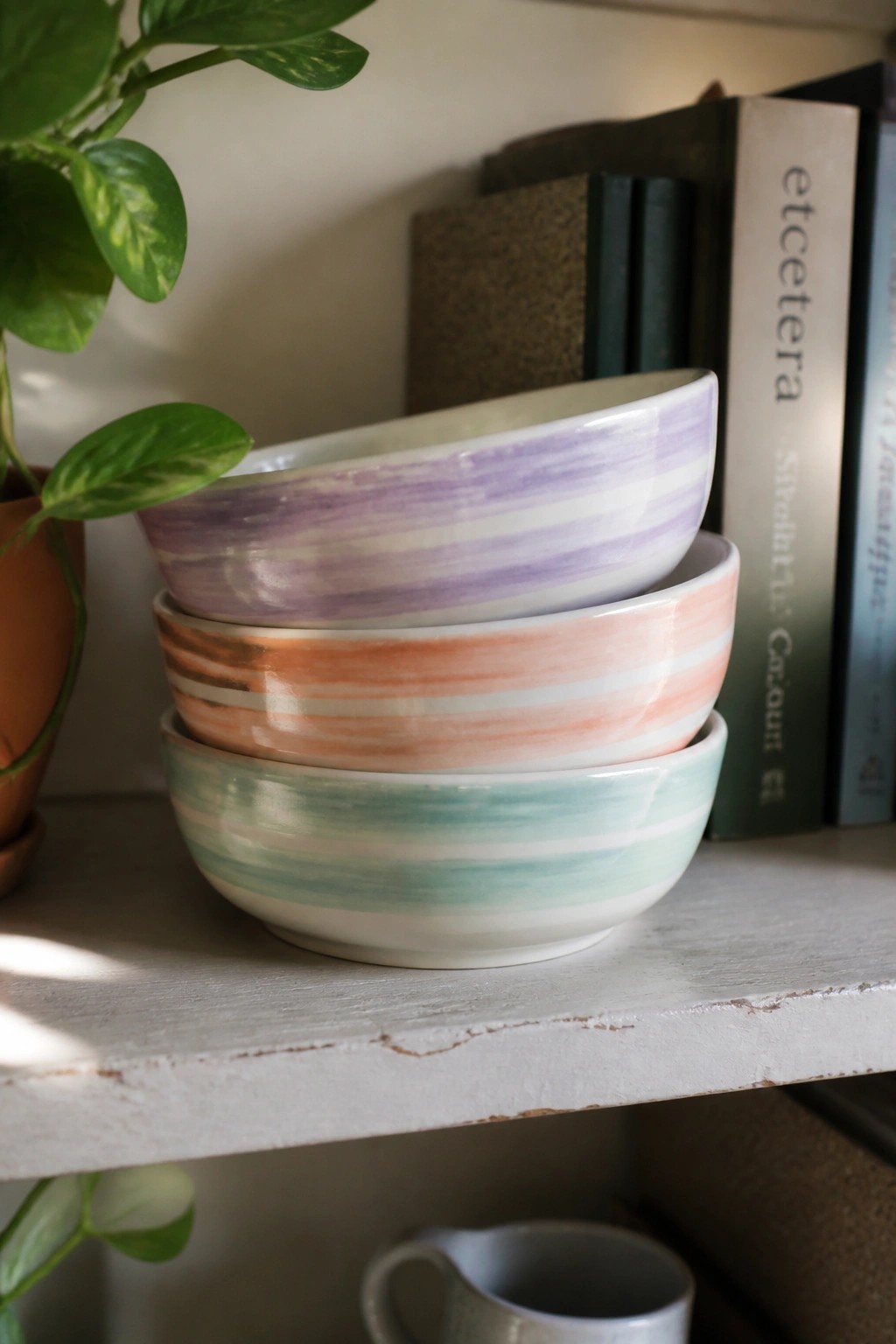
Apply wide horizontal stripes of underglaze or colored slip to plain ceramic bowls before the final glaze firing. The overlapping brush marks and soft pastel colors create a casual layered effect that still reads as coordinated across three different sizes. This works well on any round bowl form since the stripes follow the curve without needing tight registration.
What makes this idea useful is that the same stripe layout adapts quickly to different bowl diameters and can be repeated for a matching set. Swap the color order or widen the bands to change the look without learning new techniques. A set like this fits kitchen use for prep or serving and makes a straightforward gift because the pattern stays simple even on multiple pieces.
Cat Face Ceramic Pet Bowl
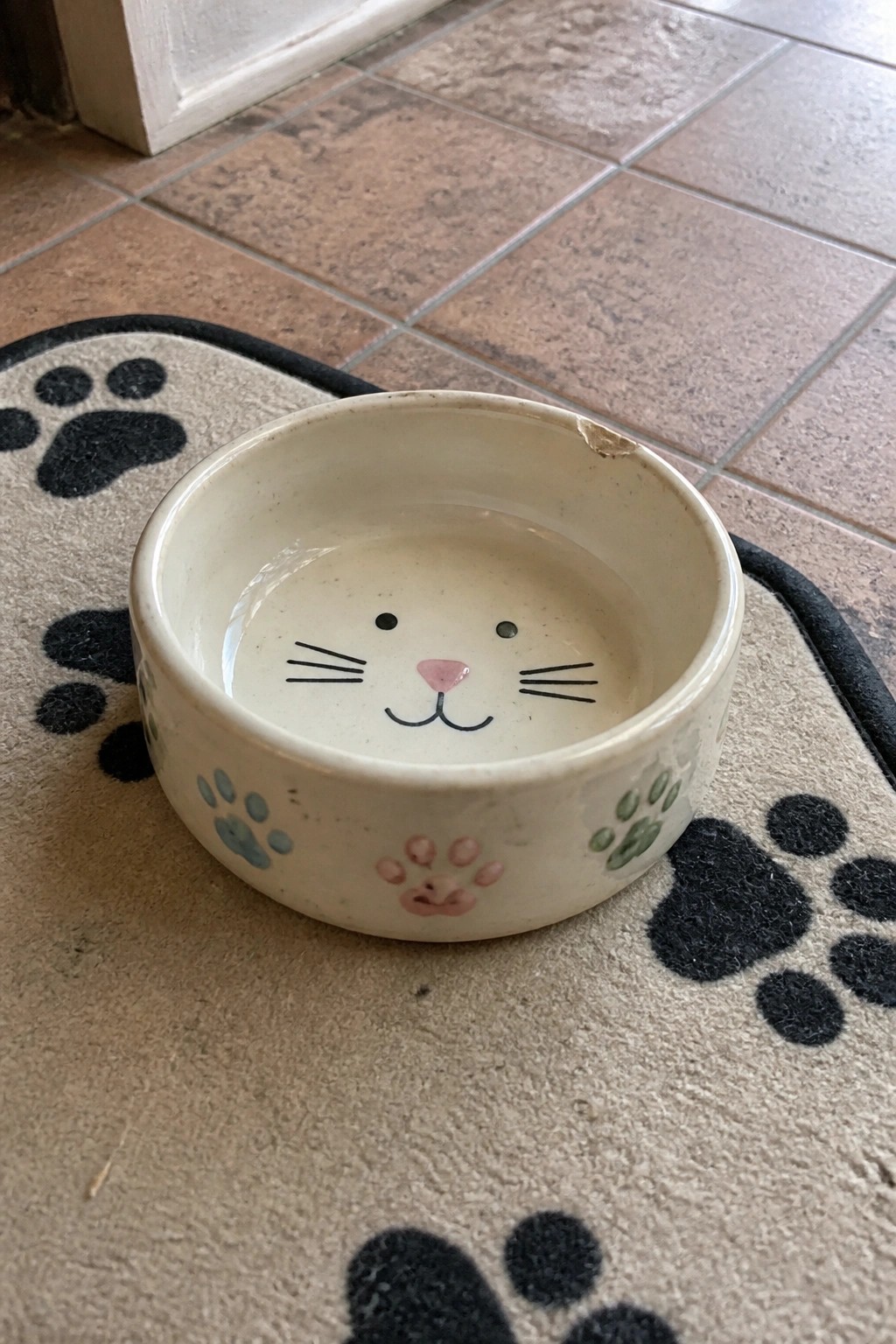
A small ceramic bowl gets a clear cat face painted on the inside bottom using simple black lines for eyes, whiskers, and mouth plus a pink nose. The paw prints in soft blue, green, and pink around the exterior keep the theme consistent while staying secondary to the main face. This approach turns an ordinary bowl shape into a themed pet dish that stays visible even when filled with water or food.
What makes this idea useful is how the interior placement keeps the design noticeable during daily use. The same face motif can be scaled to larger or smaller bowls or simplified to just whiskers and a nose for faster painting. In a kitchen or entry area it pairs easily with a matching mat, and the idea adapts well to other pets by swapping the face for a dog or rabbit version.
Ombre Petal Rim Bowl
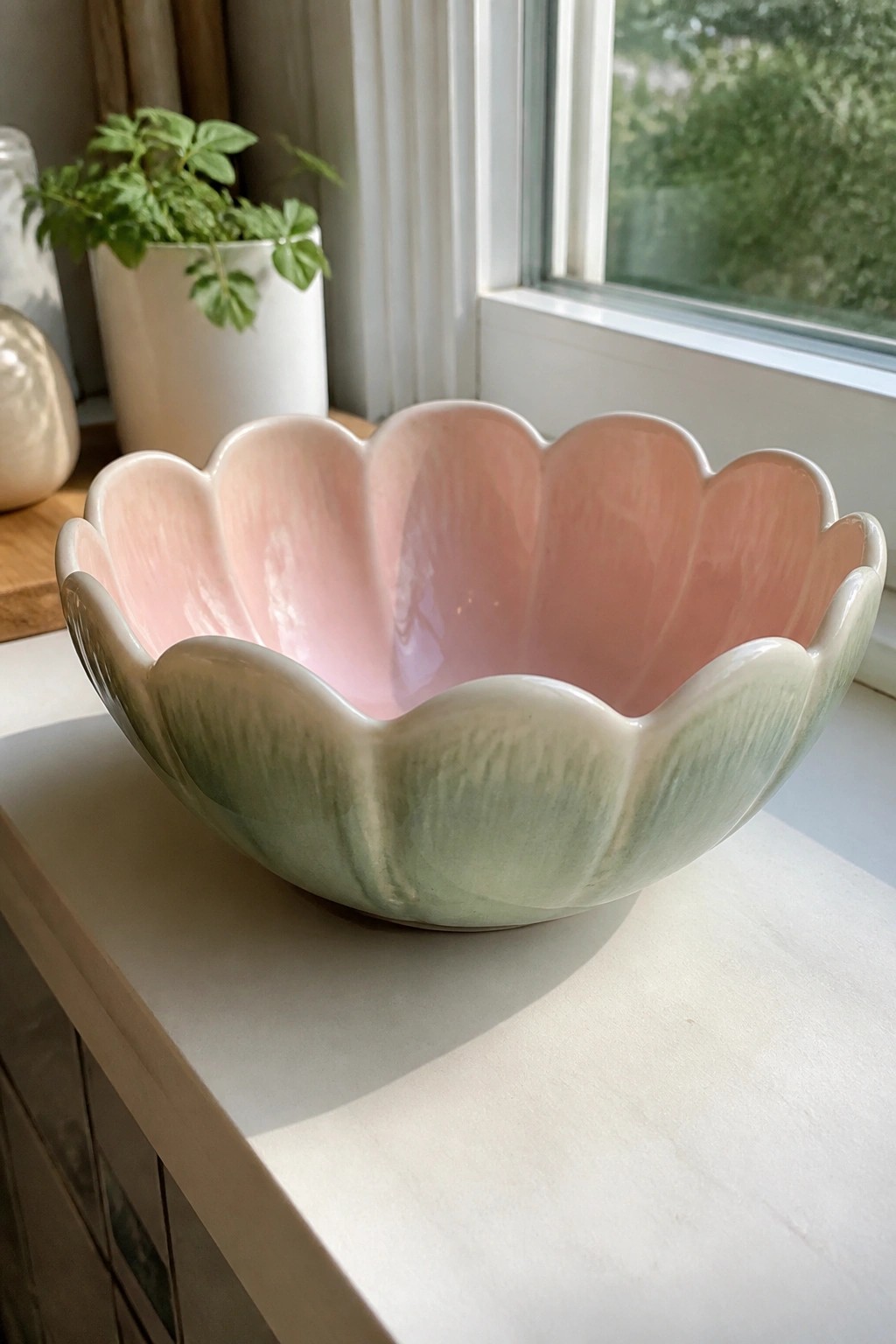
A ceramic bowl shaped with overlapping scalloped edges gives the rim a petal-like profile that stands out on its own. The interior uses a soft pink glaze while the exterior moves into a muted green, letting the two colors meet in a loose transition across the middle. This style works as a decorative or serving bowl where the form and glaze do the main work instead of added surface patterns.
What makes this idea useful is how the petal rim adds shape without extra carving or stamping. You could scale the same profile down for smaller catch-all dishes or try it on a wider, shallower tray. The gradient glaze is straightforward to adapt with any two colors that blend where they meet, and the overall look fits well on a kitchen counter or table without competing with other items. For a different take, the same rim shape could be used on a lidded jar or a small planter.
Scalloped Bowl with Radiating Blue Glaze
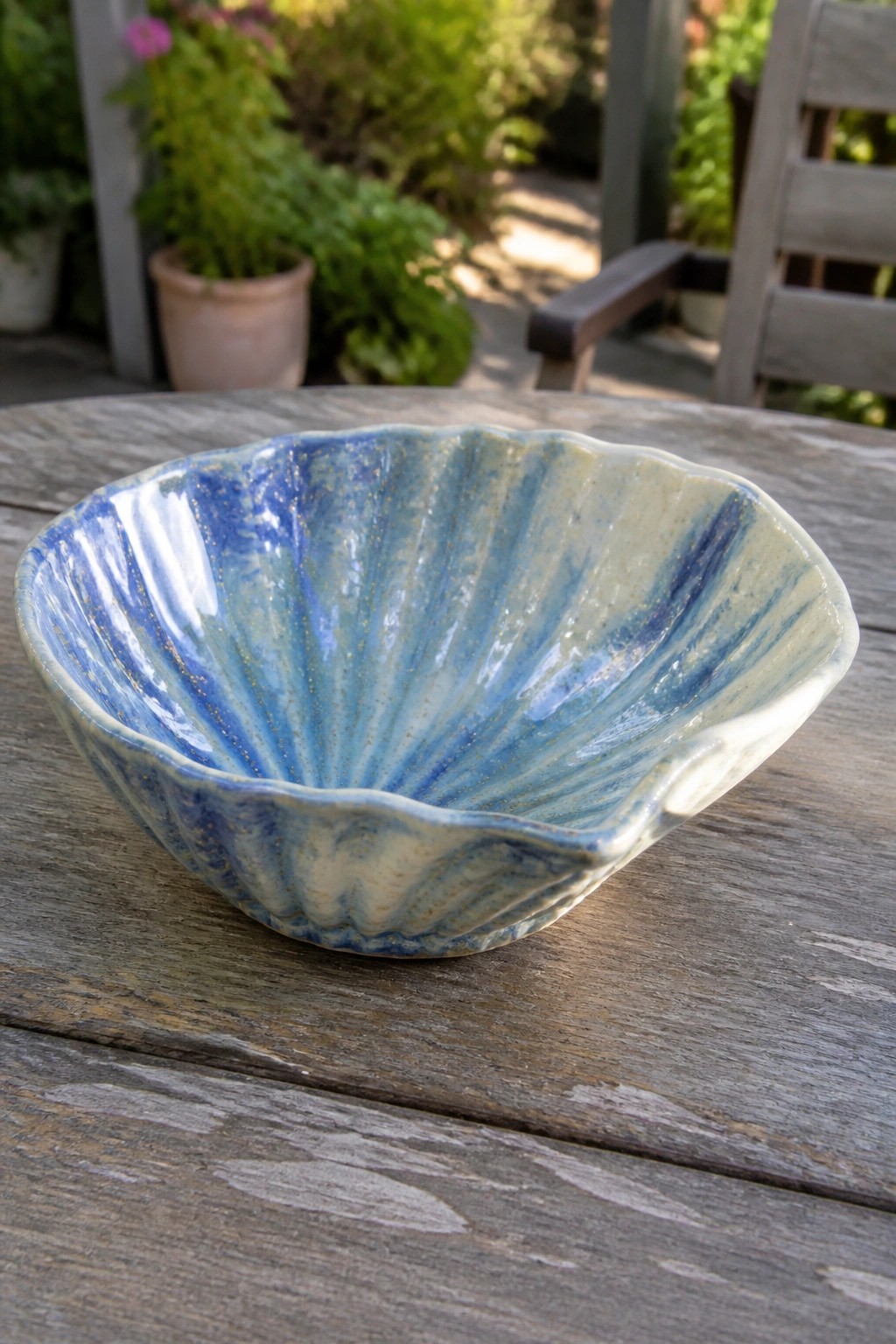
A small ceramic bowl shaped with a wavy scalloped rim gets its main visual pull from a blue glaze brushed in straight radiating lines from the center outward. The glaze varies in thickness so some areas stay lighter while others pool darker, creating a fan or shell effect without added carving. This approach works as a straightforward decorative bowl idea that highlights the form through simple glaze movement rather than complex surface work.
The shape does a lot of the work here since the rim detail pairs naturally with the radial pattern and keeps the piece compact enough for a desk or vanity tray. You could adapt the same glazing method on a deeper cereal bowl or try it in a single color family for a more subtle result. For a gift this size is easy to finish in one session and still looks intentional on a shelf or table.
Crescent Moon Painted Bowl
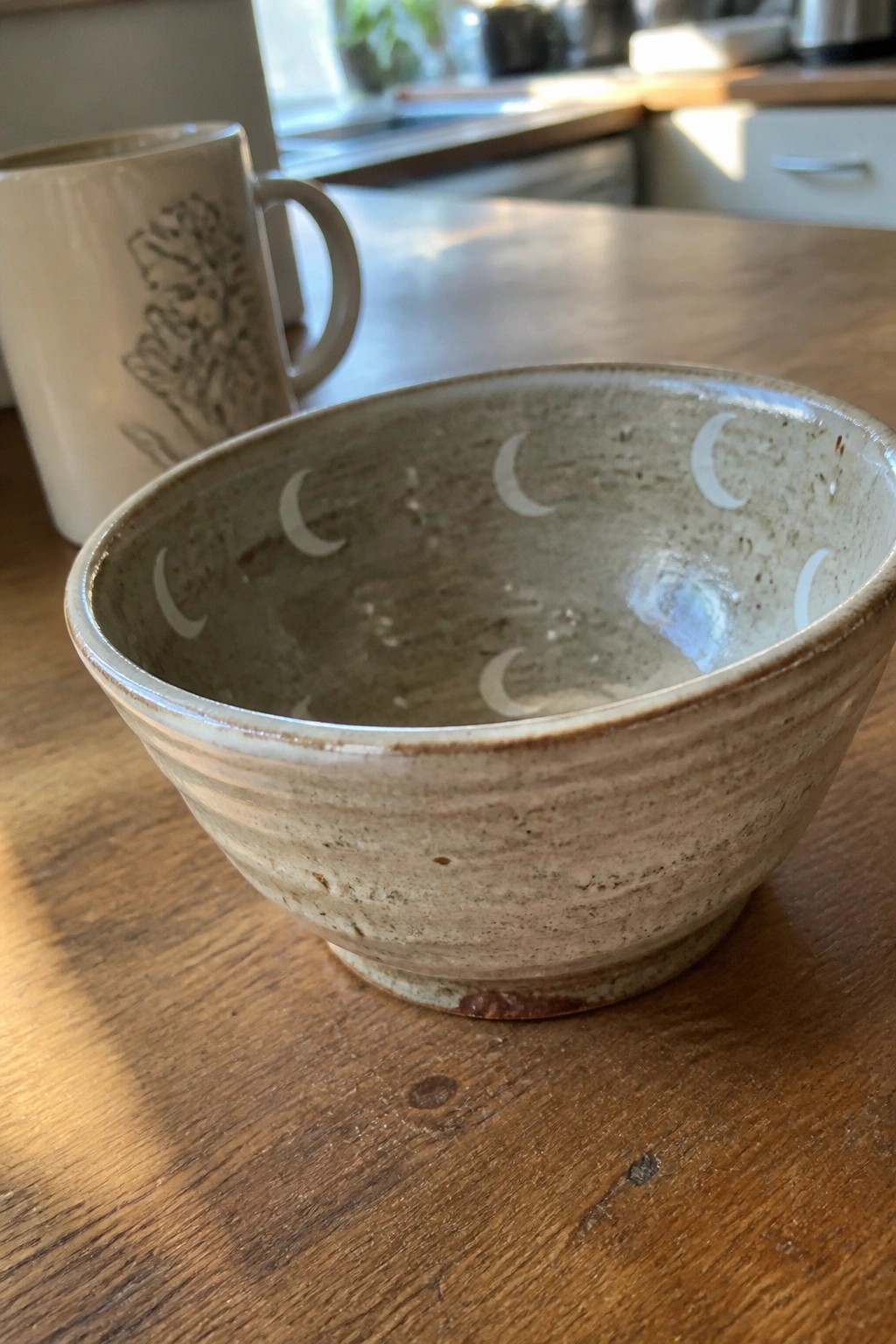
A hand-painted ceramic bowl uses repeating white crescent moons along the interior rim to create a simple repeating pattern. The bowl has a speckled beige glaze with horizontal ridges on the outside that add texture. This approach works well for bowls because the moons sit just below the lip where they catch the light during use.
What makes this idea useful is how easily the moon motif can be painted on other round forms like plates or mugs. The small scale of each moon keeps the design from overwhelming the piece. In a kitchen this kind of bowl works for everyday cereal or soup while still showing off the hand-painted detail. You could simplify it further by using only three moons spaced evenly instead of a full ring.
Constellation Painted Trinket Dish
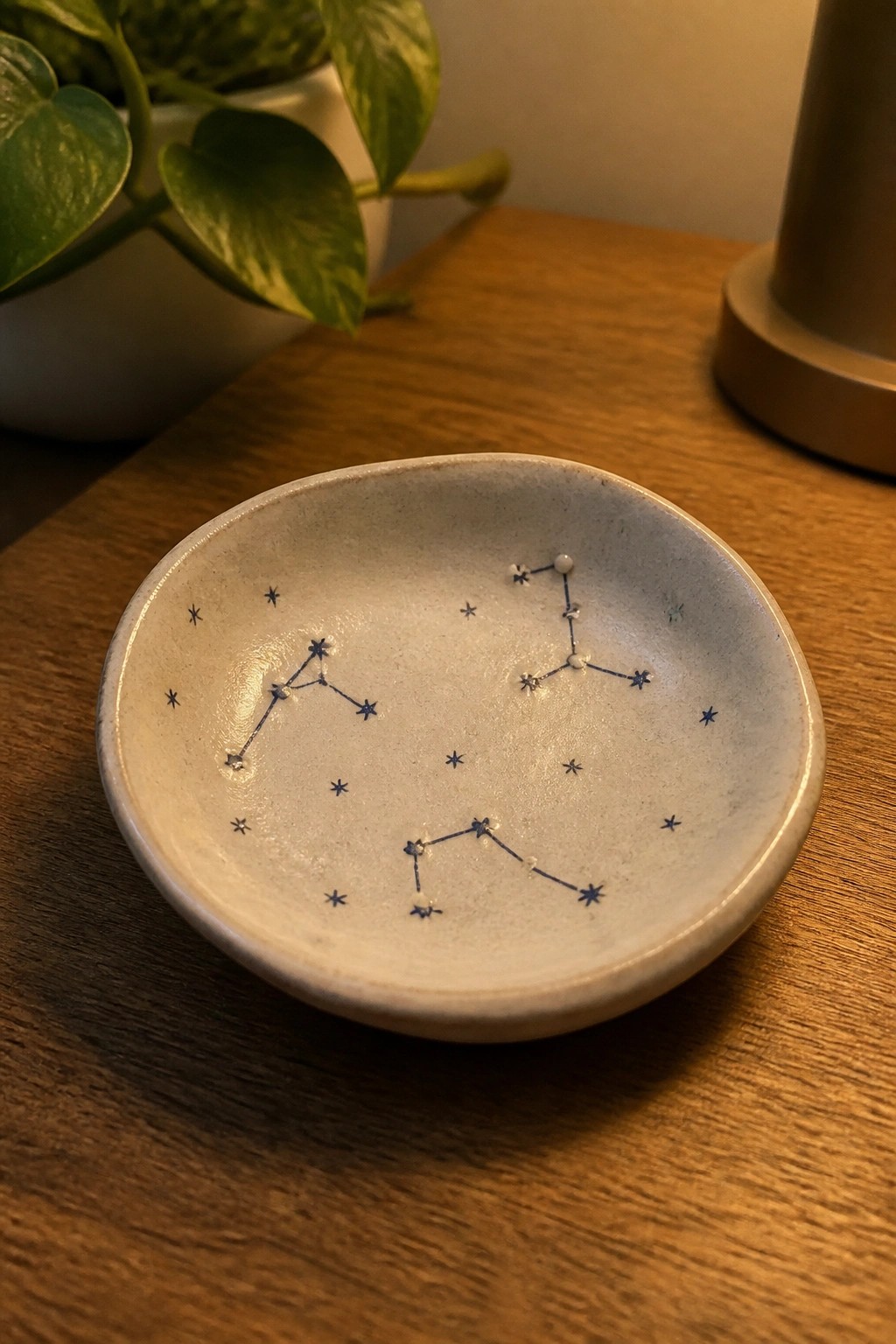
A small shallow ceramic dish works well as a ring holder or catch-all when painted with simple constellation patterns. The design uses thin blue lines and dots to form star maps across the light speckled surface, leaving plenty of empty space so the pattern stays balanced. The neutral glaze lets the painted stars stand out without competing elements. This approach fits the category of a decorative ring dish or small desktop bowl.
What makes this idea useful is the compact size that tucks neatly onto a nightstand or desk for everyday items like jewelry or coins. You could adapt the same star layout to a larger plate or switch the paint color to match a different room. The painted detail helps this stand out on a shelf because the astronomy theme feels current without requiring sculpting or complex forms. For a gift, something like this can be reworked with a birth constellation or favorite star cluster.
Speckled Terrazzo Ceramic Bowl
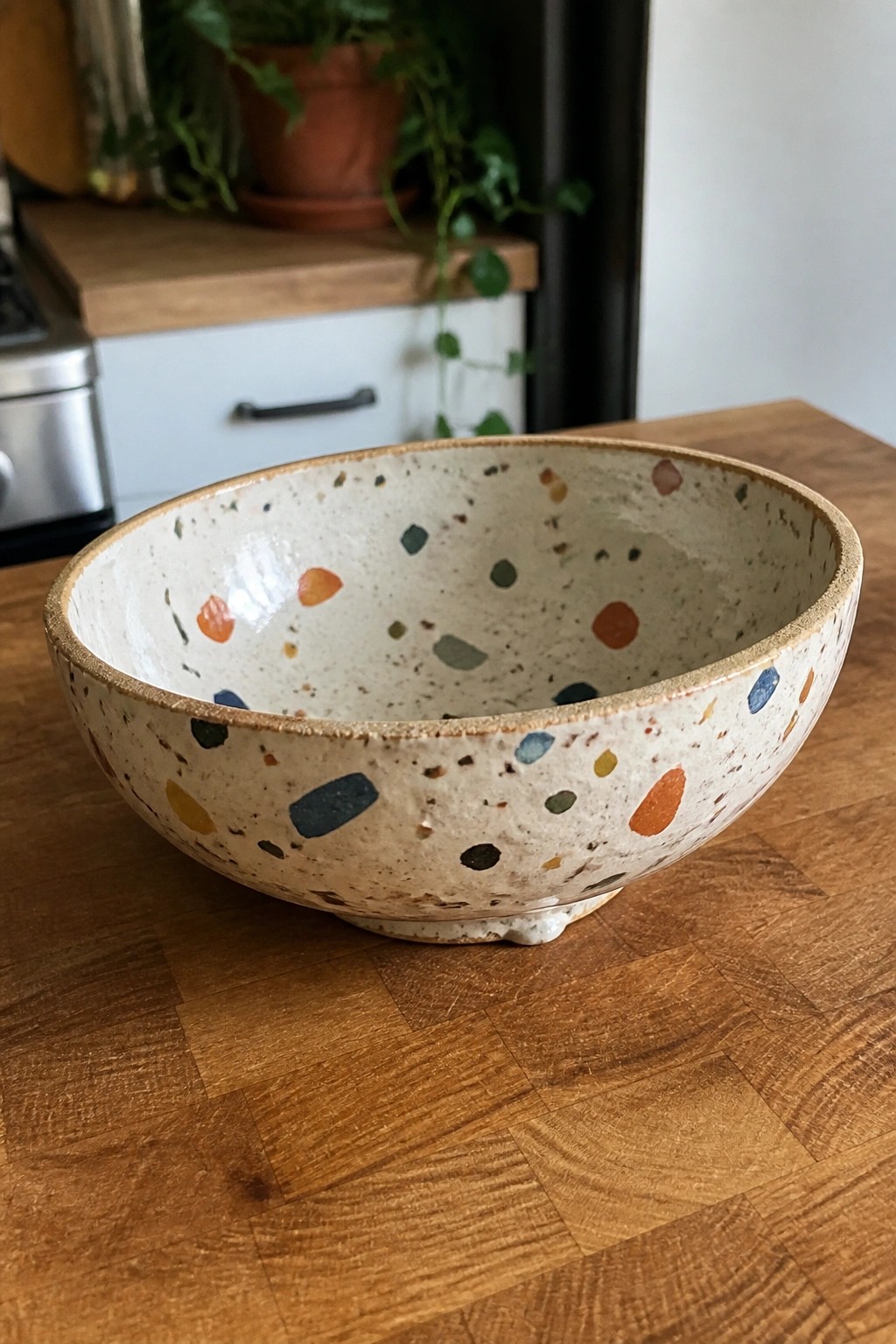
A handmade ceramic bowl with a light speckled base glaze gets its pattern from scattered irregular shapes in orange, teal, blue, yellow, and green. The marks vary in size and sit loosely across the surface so the design feels open rather than busy. This style works as a painted bowl project because the neutral background lets the color spots read clearly while the brown rim adds a simple edge detail.
What makes this idea useful is how the loose scatter pattern can be copied onto other forms without needing perfect spacing. The same marks would translate well to a smaller prep bowl or a shallow serving dish. A neutral base color keeps the piece versatile for everyday kitchen use or as a catch-all on a table. You could simplify it further by using fewer colors or larger shapes if you want a quicker version for gifts.
Blue Speckled Glaze Bowl with Organic Rim
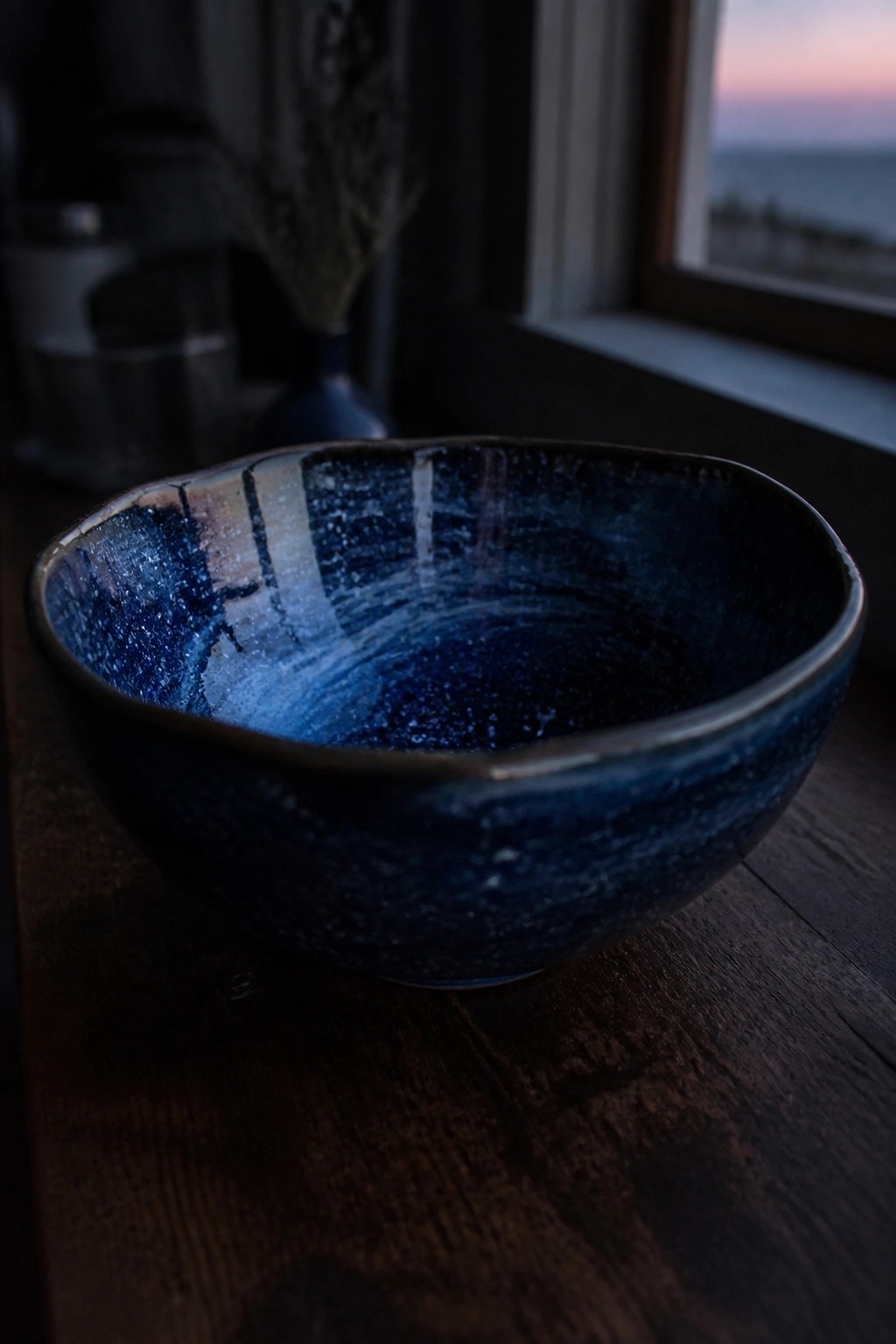
A wheel-thrown ceramic bowl finished in a deep blue reactive glaze that creates natural speckling and lighter flow marks across the interior. The slightly irregular rim and thick wall give the form a sturdy, organic shape that suits both serving and display. This type of bowl works as a kitchen or dining piece where the glaze variations provide visual interest without added painting.
The shape does a lot of the work here because the wide opening and stable base make it easy to use for fruit, snacks, or as a catch-all. You could adapt the same glaze to smaller bowls or plates to build a matching set without much extra effort. In a kitchen this kind of piece holds up well to daily use while still looking distinct from plain store-bought options.
Cat Face Painted Bowl
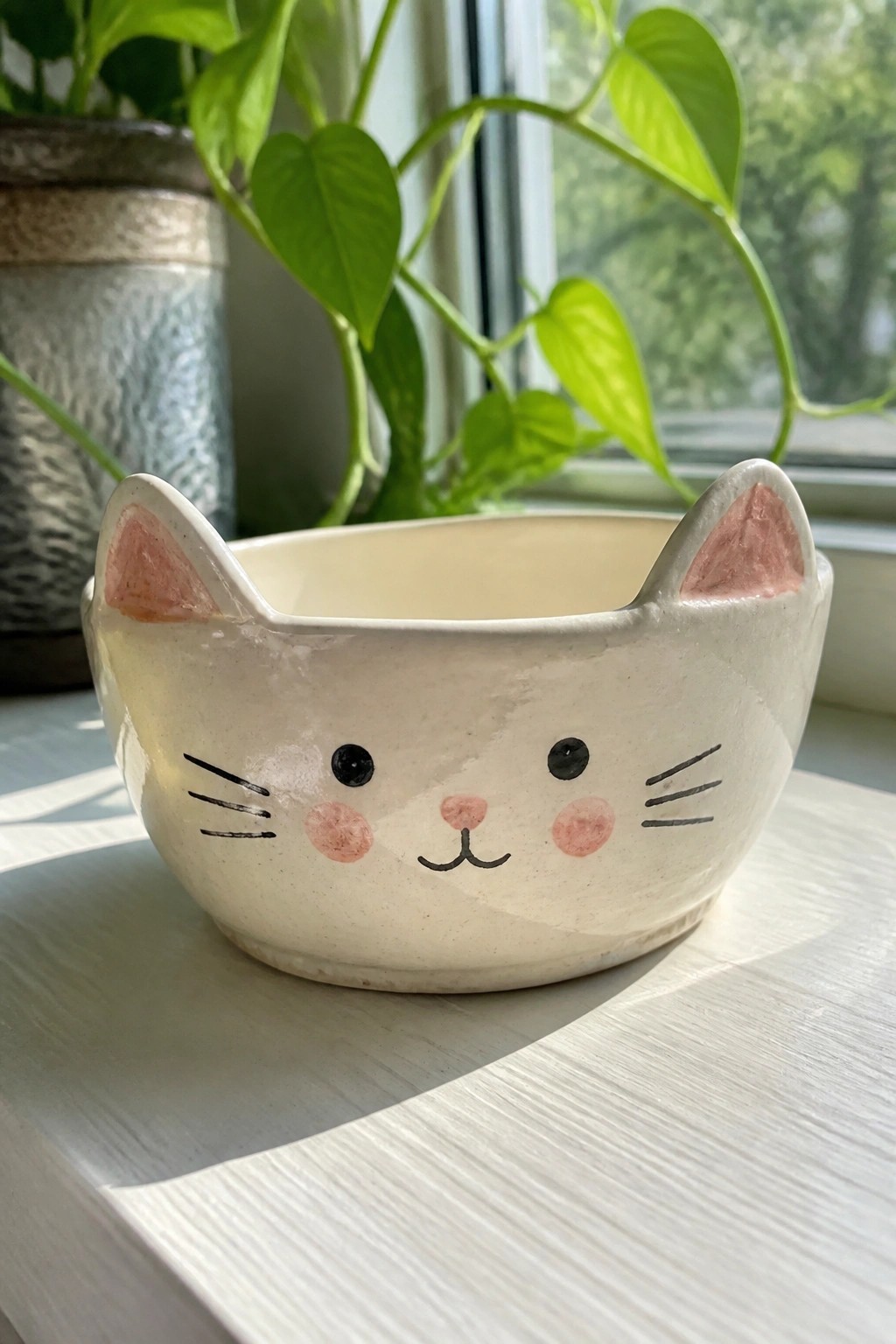
A small ceramic bowl with sculpted ears along the rim and a painted cat face on the front gives a simple way to turn a basic form into something distinctive. The design relies on black lines for the eyes, whiskers, and mouth plus soft pink for the inner ears, cheeks, and nose over a matte off-white surface. This keeps the shape functional while the painted details supply the main visual interest. It works as a small decorative bowl or plant saucer.
What makes this idea useful is how the ear placement and face layout can be copied onto other round forms like mugs or small trays without changing the overall profile. The painted elements need only basic underglaze or post-firing paint, so the same motif can be adjusted by changing the cheek color or whisker thickness to match different color schemes. In a bathroom or on a nightstand the compact size holds jewelry or cotton pads. You could also drop the sculpted ears and paint them flat if you want a faster version on a plain bowl.
Oval Dip Bowl with Glaze Pool Center
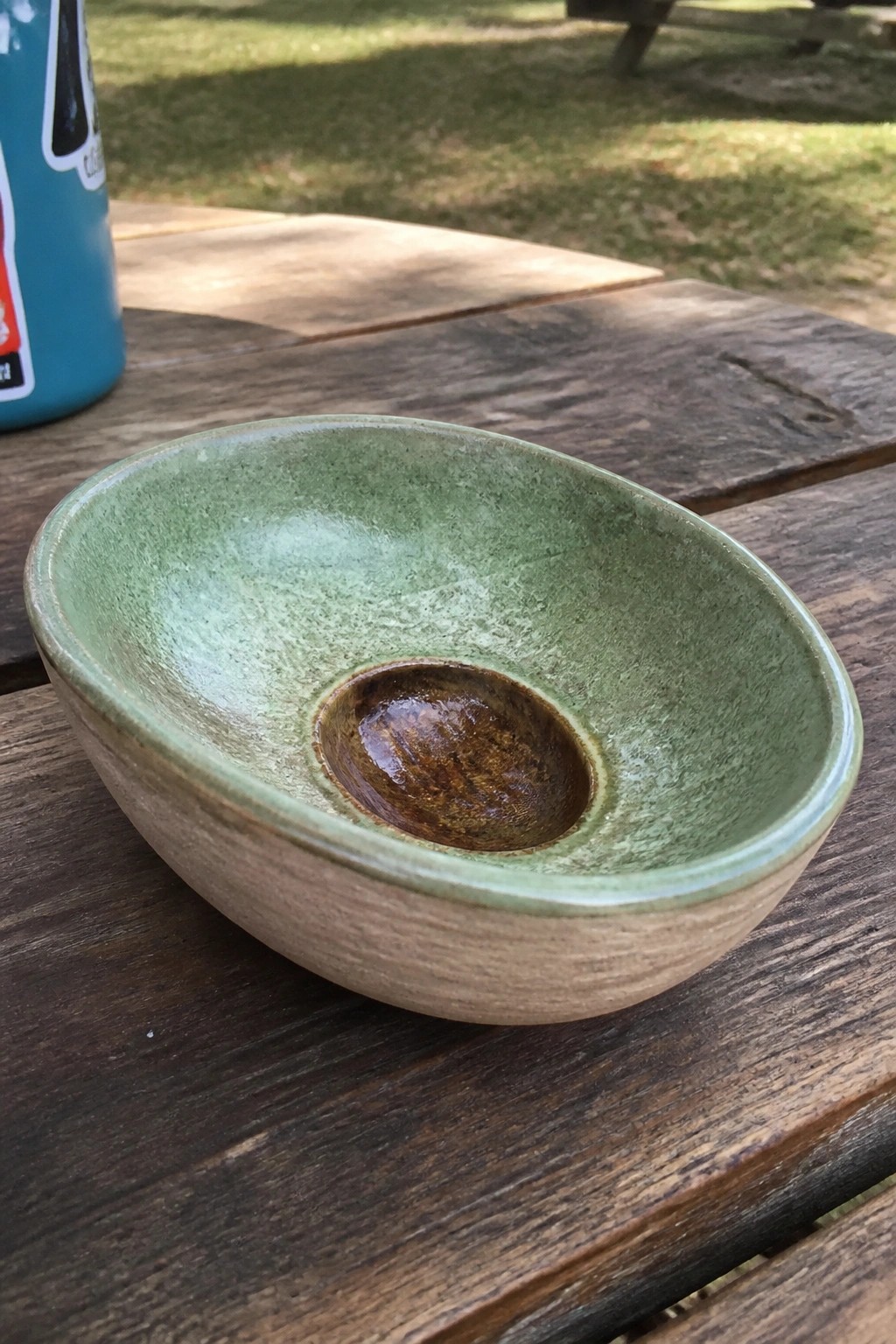
A small oval ceramic bowl makes a practical dip dish or condiment server when the glaze is applied to pool into a darker center. The low wide shape keeps the interior open so the contrast between the green surface and brown well reads clearly. This style relies on the natural way the glaze settles during firing to create the focal point without added decoration.
What makes this idea useful is how the oval shape fits neatly on a table for sauces or small snacks. You could rework the same pooled center on round bowls or shallow plates by brushing extra glaze in the middle before firing. In a kitchen this size works for daily use and pairs easily with other simple stoneware pieces.
Abstract Brushstroke Bowl
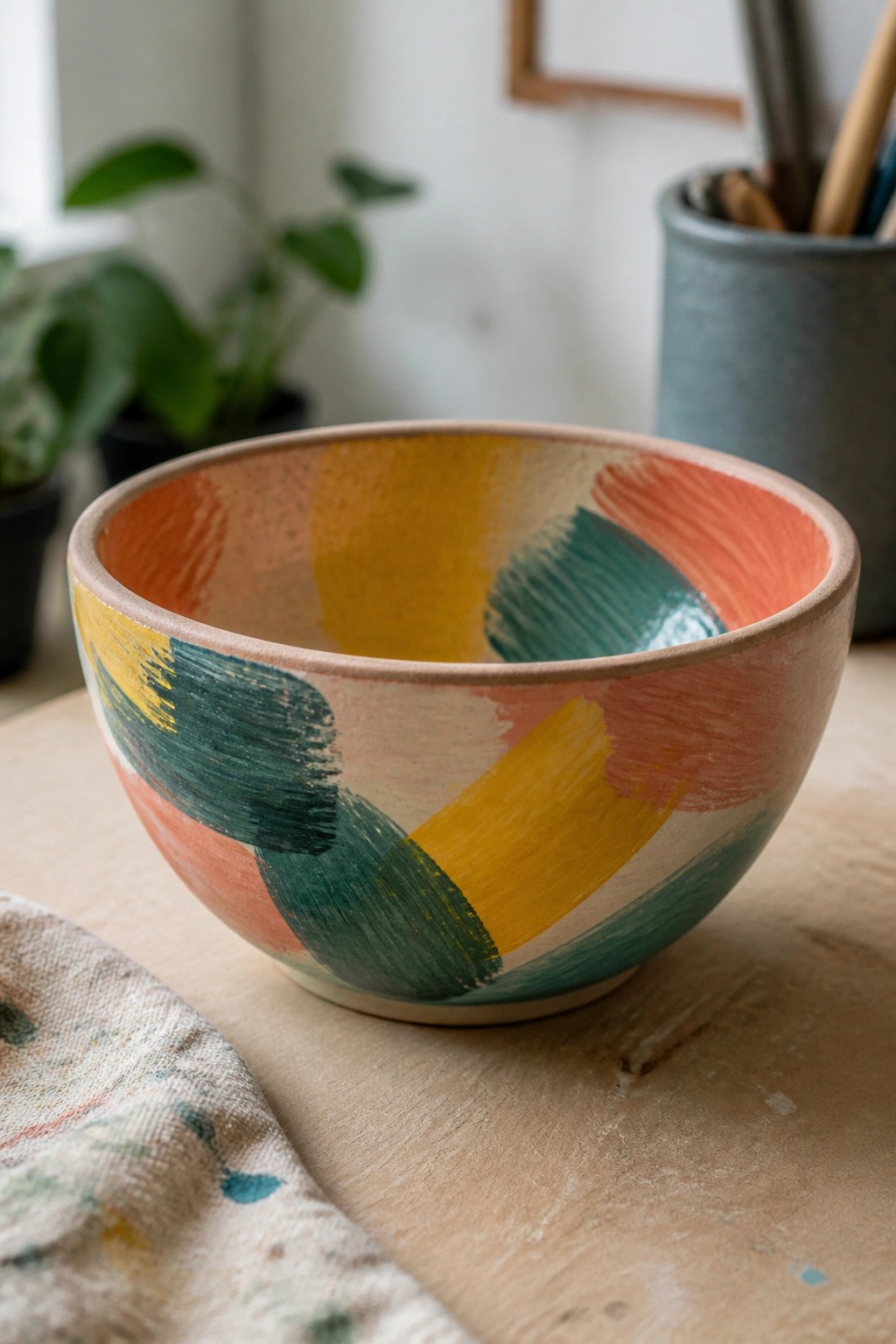
A hand-painted ceramic bowl covered in overlapping brushstrokes of orange, yellow, teal, and coral creates a loose, energetic pattern across the surface. The strokes vary in thickness and direction, leaving patches of the light clay body exposed so the colors feel layered rather than solid. This style suits a medium bowl meant for both everyday use and display.
What makes this idea useful is how the freehand painting hides minor inconsistencies and works on curved forms without needing precise lines. You could repeat the same stroke approach on smaller bowls for snacks or switch the palette to blues and greens for a bathroom soap dish. The design also translates easily to plates or a simple planter if you want to keep the same color energy across a set.
Leaf Vein Pattern on a Shallow Ceramic Bowl
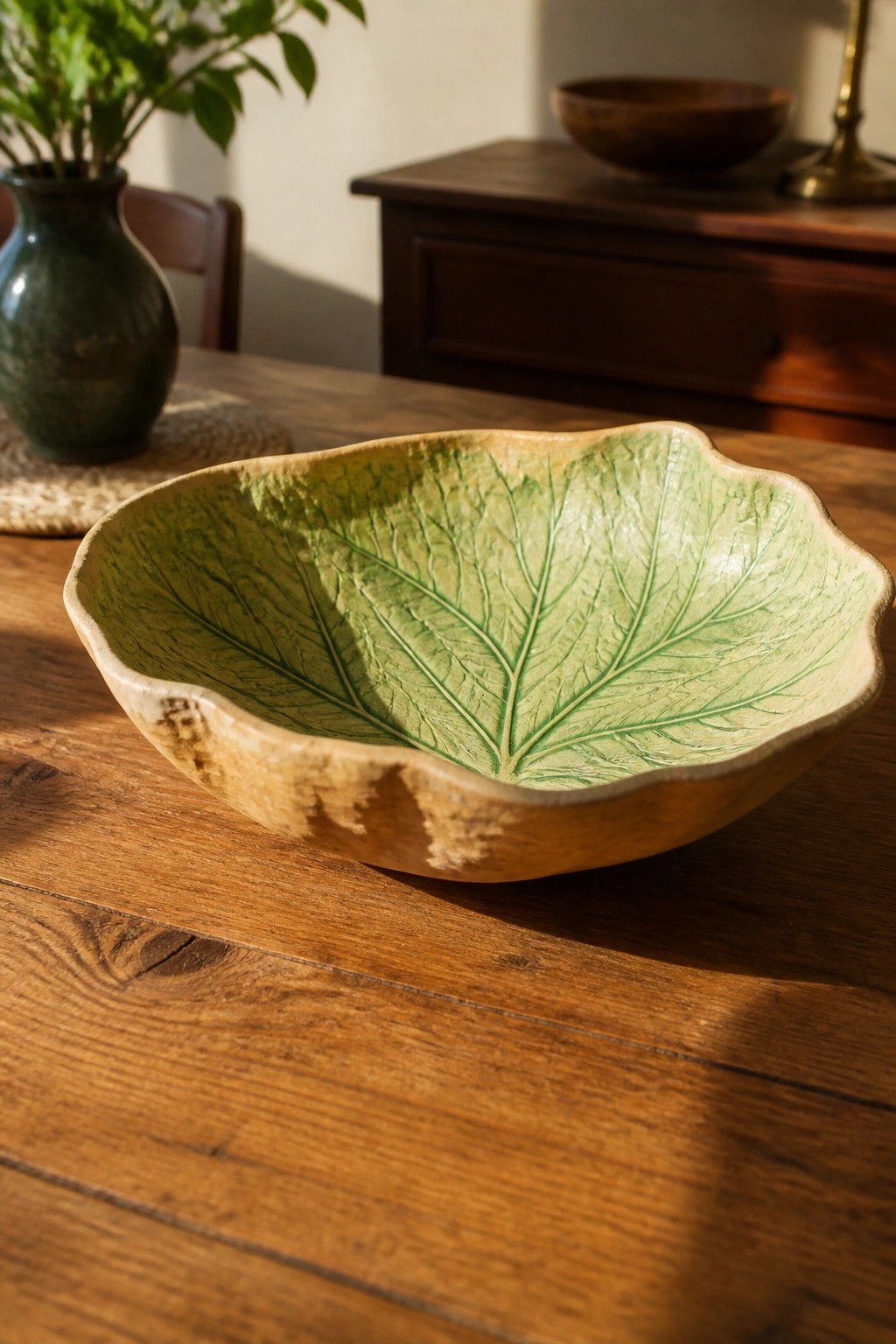
A shallow ceramic bowl with an irregular, scalloped rim uses a painted green vein network to mimic the underside of a large leaf. The interior receives a light base glaze that lets the veins read clearly, while the outer rim stays in a warmer clay tone for contrast. This turns a basic bowl into a nature-themed piece that still functions for serving or display.
What makes this idea useful is how the vein layout can be recreated with underglaze pencils, stamps, or simple brushwork on any round or oval form. It works well as a fruit bowl on a kitchen counter or a decorative catch-all on a side table. You could scale the same pattern down for smaller dishes or switch the green to another color to match different tableware sets. The organic rim shape also photographs distinctly, which helps the finished piece stand out if you share it online.
Citrus Slice Painted Bowls
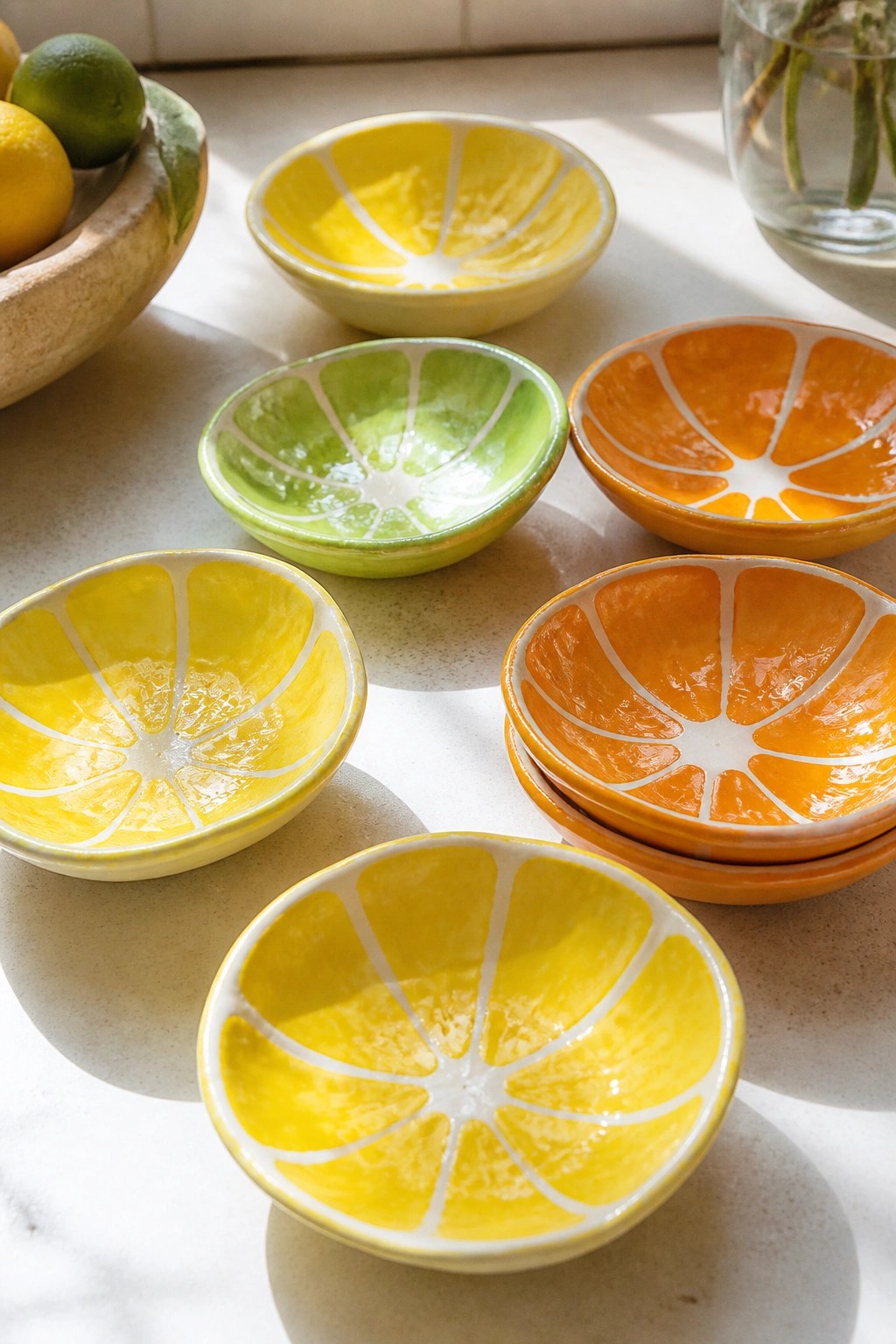
Small ceramic bowls get a direct citrus treatment through hand-painted segments in yellow, green, and orange. White lines divide each interior into wedge shapes that read clearly as lemon, lime, or orange halves once the glaze is applied. The glossy surface keeps the pattern bold while the simple round form stays easy to stack or store. This approach turns ordinary tableware into a kitchen item that relies on color blocks rather than sculpting or carving.
The painted segments make the bowls easy to repeat across a set without needing templates or complex layouts. You can adapt the same idea to different sizes or try it on plates and small dishes for a matching group. In a kitchen these work for holding dips, nuts, or cut fruit, and the bright color blocks help them stand out when mixed with plain dishes. The pattern also translates well to a single accent bowl if you want to test the technique before committing to more pieces.
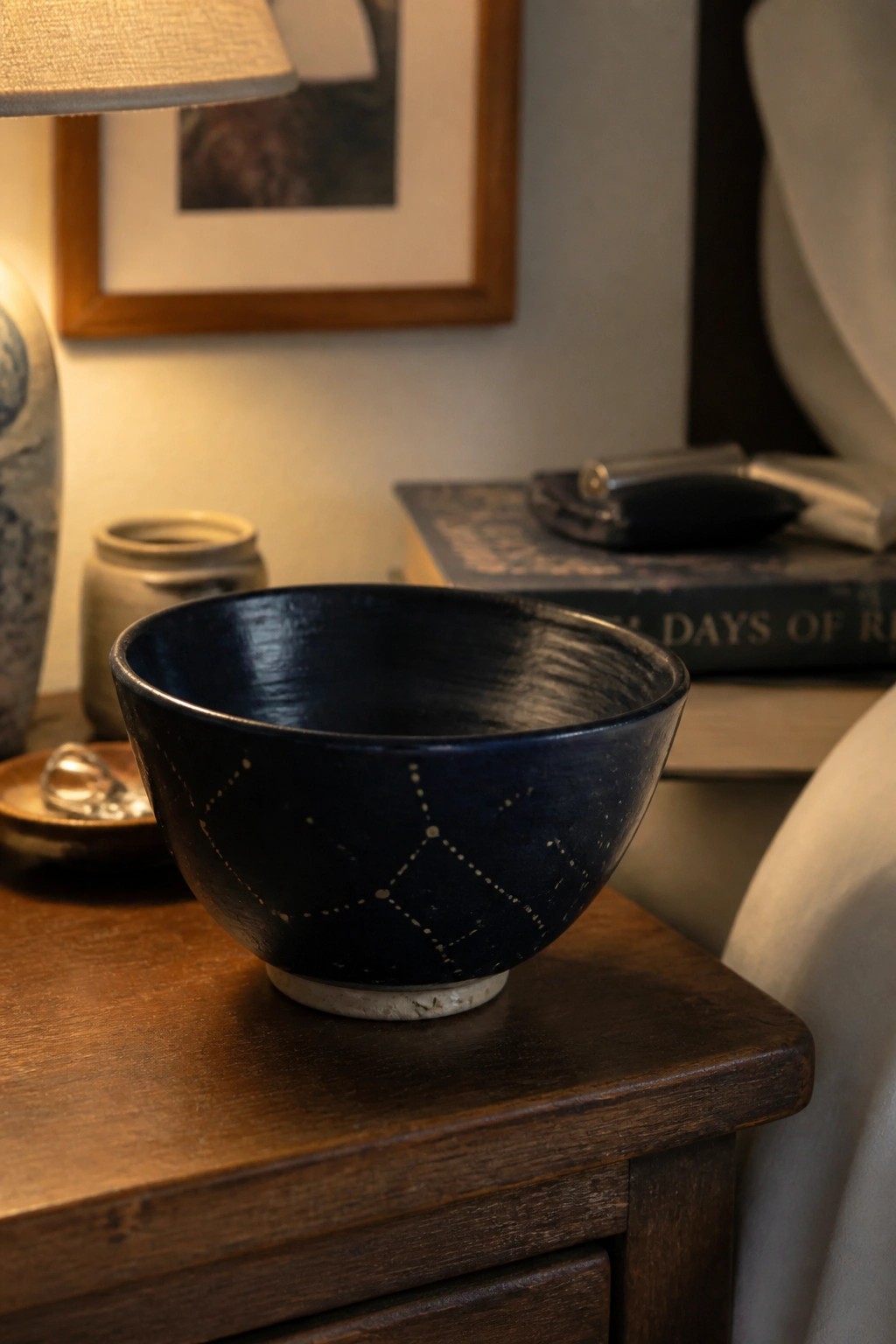
A handmade ceramic bowl in deep navy glaze carries a pattern of white dots linked by thin lines that form a centered geometric star shape. The dots sit evenly spaced across the curved surface, using the dark background to make the lines pop without filling the whole form. This keeps the design simple while turning an ordinary bowl into something with a clear night-sky reference.
The shape does a lot of the work here because the rounded walls let the constellation pattern curve naturally without extra effort. You could repeat the same connected-dot layout on a set of small plates or a mug by keeping the motif compact and off-center. For a gift this works well since the pattern stays abstract enough to match different styles while still looking intentional.
Frequently Asked Questions
What kinds of paint work best for adding personality to handmade ceramic bowls?
Acrylic paints designed for ceramics or porcelain offer vibrant colors and good adhesion on glazed surfaces. Start with a base coat if needed, apply thin layers to avoid cracking, and follow the manufacturer’s instructions for baking or air drying to set the design permanently. Test on a spare piece first to see how the color interacts with your specific clay body.
How can I make sure my hand painted bowl designs remain food safe after following one of the 18 ideas?
Select paints labeled as food safe or non toxic once cured, and always apply a clear food safe glaze over the painted areas before the final firing if your ceramics are kiln fired. For air dry projects, use a protective sealant rated for food contact, and avoid painting the interior eating surface if possible. Check local regulations for any additional requirements on handmade items.
What beginner friendly techniques help when painting on the curved surfaces of bowls?
Work in sections and use a turntable to rotate the bowl smoothly while painting. Dilute paints slightly for better flow on curves, and sketch your design lightly with a pencil first. Simple motifs like dots, lines, or abstract shapes from the article ideas adapt well to beginners because they require less precision than detailed scenes.
How do I add personal touches to the charming hand painted bowl ideas without overcomplicating the process?
Incorporate elements like initials, favorite colors, or meaningful symbols into the suggested patterns. Layer a base design from the list with small custom details using stencils or freehand accents. Keep the overall composition balanced by limiting custom elements to one or two focal points per bowl.
What steps should I take to properly care for and maintain my finished hand painted ceramics?
Hand wash with mild soap and avoid abrasive sponges to protect the painted surface. Store bowls away from direct sunlight to prevent fading, and never place them in the microwave or dishwasher unless the paints and sealants are explicitly rated for those uses. Regular gentle cleaning helps preserve the personality and vibrancy of the designs over time.

Pottery Path is my cozy corner of the internet where I share clay ideas, pottery inspiration, and simple projects you can recreate at home. I love exploring everything from air dry clay to handbuilt pottery to cute minis that brighten your day. My goal is to make clay crafting feel easy, fun, and welcoming for anyone who wants to try it.
You will find beginner friendly tutorials, creative pottery painting ideas, and lots of warm inspiration for slow and happy crafting. If you enjoy hands on creativity, this space will feel like home.