
I like to include little kitchen details in my pottery projects.
Things like fruits or baking tools make the pieces feel more personal.
I have put together some ideas that play with those motifs in simple ways.
Most of them are easy to try if you have basic clay skills.
They work well for gifts or just adding something cheerful to your own table.
Strawberry-Shaped Ceramic Mug

A strawberry-shaped ceramic mug turns a simple drinking vessel into a food-inspired kitchen piece. The rounded body uses a glossy red glaze dotted with small yellow marks to suggest seeds, while a sculpted green leaf sits at the rim where it meets the handle. The handle stays practical and attaches cleanly to the side without breaking the fruit form. This approach keeps the object functional while making the motif the main feature.
What makes this idea useful is how the basic mug shape already supports the strawberry look with minimal added parts. You could rework the same concept for other produce like a tomato or peach by swapping glaze colors and adjusting the leaf or stem detail. In a kitchen this mug works on a shelf or in a cabinet as an everyday item that still catches attention. For a gift it scales easily to smaller sizes or shifts into a small holder if the handle is left off.
Orange Slice Cereal Bowl

A ceramic bowl with an orange slice motif painted on the interior makes a simple kitchen project. The design uses radiating segments in bright orange with white lines to mimic the fruit’s natural sections, finished with a green rim that suggests the peel. This approach turns an everyday bowl into a food-inspired piece that fits the playful kitchen motif category.
The shape works well for breakfast use or as a small serving dish. You could adapt the same painted segments onto plates or mugs for a matching set. In a kitchen, this kind of piece stands out on open shelves without needing extra decoration. For a gift, scale the motif down to a smaller dip bowl.
Watermelon Slice Ceramic Dish

A shallow ceramic dish formed into a watermelon wedge gives a basic plate shape a clear food motif. The green glazed rim stands in for the rind while the pink interior carries scattered black marks that read as seeds. This painted detail keeps the idea simple to execute on a wheel-thrown or hand-built form without extra sculpting. The result works as a ring dish, small tray, or catch-all for jewelry and kitchen odds and ends.
The compact curved shape takes up little space on a dresser or counter while still holding small items. You can repeat the same wedge form with different glaze colors to make other fruit slices like citrus or kiwi. Hand-painting the seeds lets you adjust scale and placement easily if you want to change the size of the dish. A piece like this photographs clearly for project sharing because the color blocks and simple marks stand out without extra props.
Painted Macaron Ceramic Tray

A rectangular ceramic tray decorated with six macarons in soft pastel colors forms a straightforward kitchen accent. Each macaron is painted directly onto the glazed surface in watercolor style using shades of pink, yellow, lavender, mint green, blue, and orange. The simple layout places three macarons on top and three below, keeping the design balanced without extra details. This approach fits the food-motif category and turns a basic tray shape into a themed piece.
What makes this idea useful is how the tray form lets the painted motif serve both display and light serving purposes. You could adapt the same macaron layout to round coasters or a longer bread platter by adjusting spacing and scale. In a kitchen, this kind of piece works well as a spot for spoons or small jars while adding a clear food theme. For a gift, something like this stands out because the colors can be swapped to match different kitchen palettes without changing the overall shape.
Avocado Spoon Rest

A ceramic spoon rest shaped like an avocado half creates a simple kitchen accessory that keeps spoons off the counter. The form uses a wide rim and a recessed darker center that naturally cradles the bowl of a spoon. Glazed in two shades of green, the piece stays easy to clean while the shape makes the function obvious at a glance. This fits the category of small kitchen ceramics meant for daily use rather than display only.
What makes this idea useful is how little space it takes on a countertop next to the stove. You could rework the same recessed-center shape for other produce like a lemon or tomato to build a small set. For a gift, something like this works especially well because it stays functional while matching common kitchen themes. The compact size also makes it a quick project to repeat in different colors.
Lemon Half Ring Dish

A small ceramic ring dish formed as a halved lemon gives a clear kitchen motif for holding jewelry. The piece uses a bright yellow glaze on the inside with white lines to suggest segments and a lightly textured surface along the curved edge to stand in for rind. This keeps the shape simple while making the lemon form easy to recognize at a glance. It belongs to the category of small functional dishes meant for rings or other tiny items on a flat surface.
The compact oval shape fits neatly on a dresser, windowsill, or bathroom ledge without taking much room. You could rework the same basic form into a small spoon rest or a holder for loose change by adjusting the depth slightly. Keeping the painted lines minimal helps the design read well even after firing, and the yellow color makes it easy to spot in a room. This style shows up quickly in searches for food-themed pottery because the motif stays bold and direct.
Peach Planter with Leaf Handle
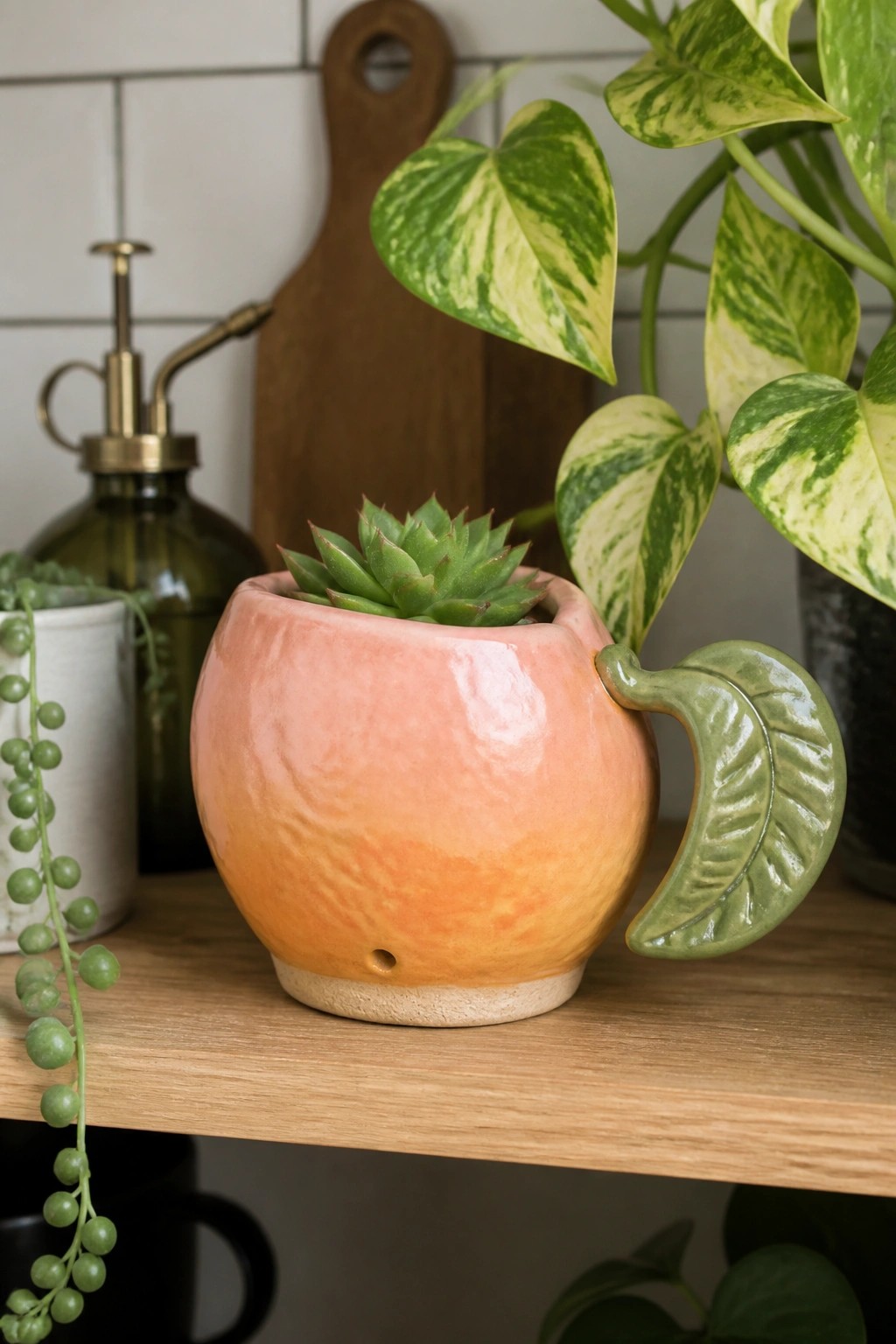
A small ceramic planter formed in the shape of a peach gives a clear food reference through its rounded body and drainage hole at the base. The glaze moves through a soft pink to orange gradient that mimics fruit skin, while a sculpted green leaf attaches to one side as a functional handle. This keeps the piece compact and easy to place on a shelf or windowsill without needing extra painted details.
What makes this idea useful is how the leaf handle reinforces the fruit shape while providing a place to grip when moving the pot. You could adapt the same form for a slightly larger version to hold herbs or swap the glaze to match an apple or apricot. In a kitchen setting the compact size and color read quickly as a playful accent next to other plants or tools. The motif also transfers well to a simple ring dish or small tray if you want to repeat the theme across multiple pieces.
Tomato Salt Cellar for Daily Kitchen Use
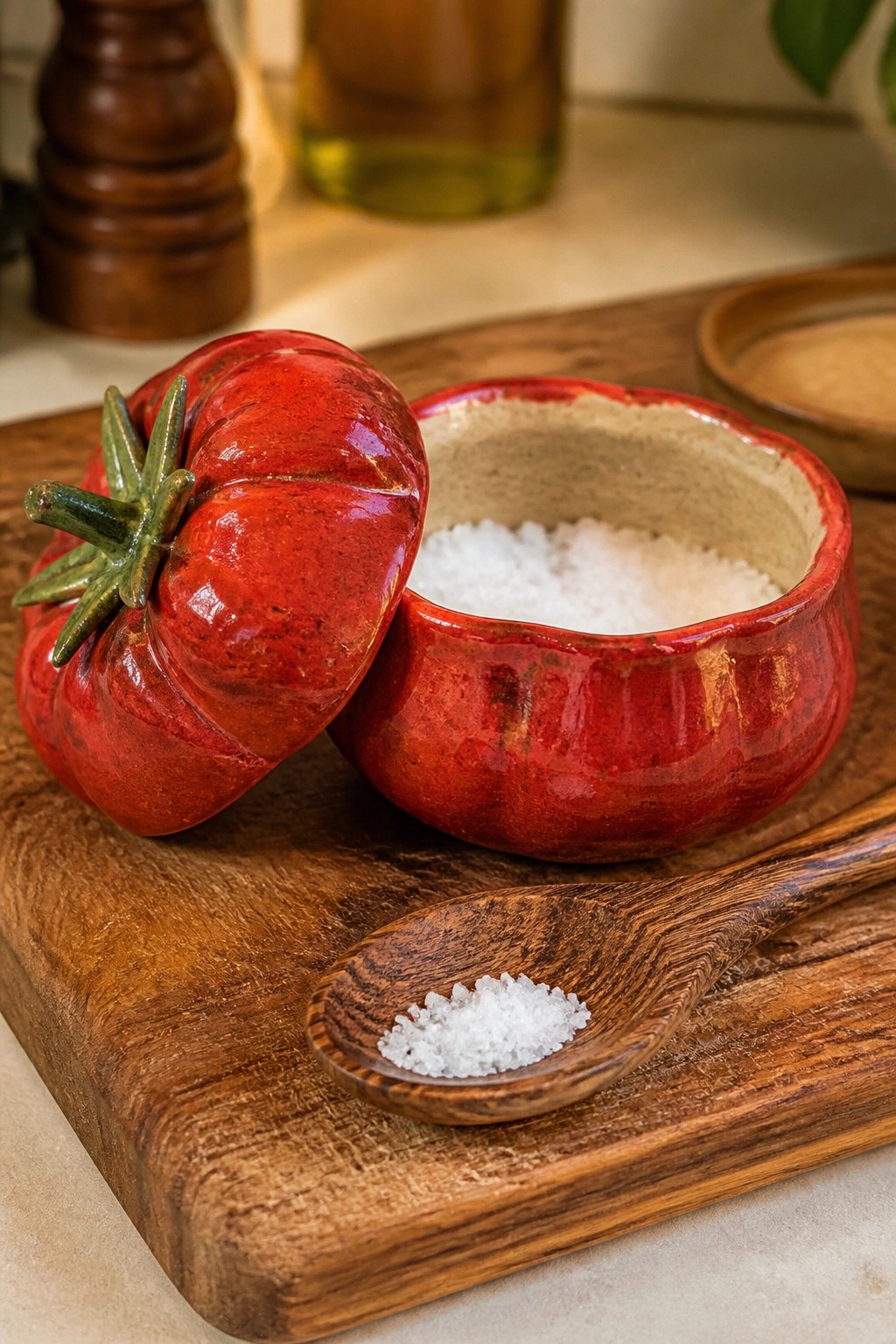
A lidded ceramic bowl formed as a tomato makes a practical salt or spice holder. The main body creates the open container with a glossy red glaze, while the separate lid is built with a sculpted green stem and calyx to sit flush on top. This approach keeps the piece compact and easy to handle on a counter while clearly signaling its contents through the food shape.
The shape does a lot of the work here because the tomato form already suggests a kitchen item without needing extra labels or tags. You could scale it down for a single-serve salt dish or widen it slightly for a sugar bowl, and the same lid technique transfers to other produce shapes like a pepper or onion. In a kitchen this kind of piece stays useful because it holds just enough for regular cooking while doubling as a visual cue next to the stove or prep area.
Cupcake Tea Light Holder

A small ceramic candle holder shaped like a cupcake works as a straightforward food-themed project. The base is formed with vertical ridges to suggest a paper liner while the top is built up with uneven, overlapping layers that stand in for frosting. A standard tea light sits in a shallow metal cup set into the center so the flame stays contained. The whole piece stays compact and uses only basic shaping and surface texture to read clearly as a baked good.
What makes this idea useful is how the same liner-and-frosting method can be adjusted for other small food shapes like muffins or donuts. The holder fits on a kitchen windowsill, dining table, or shelf without taking up much space and can be left out even when not in use. You could simplify the top texture for quicker builds or add a handle to turn the form into a tiny trinket dish. The small scale also makes it easy to test different clay colors or matte finishes before committing to larger pieces.
Pear Figurine with Painted Face
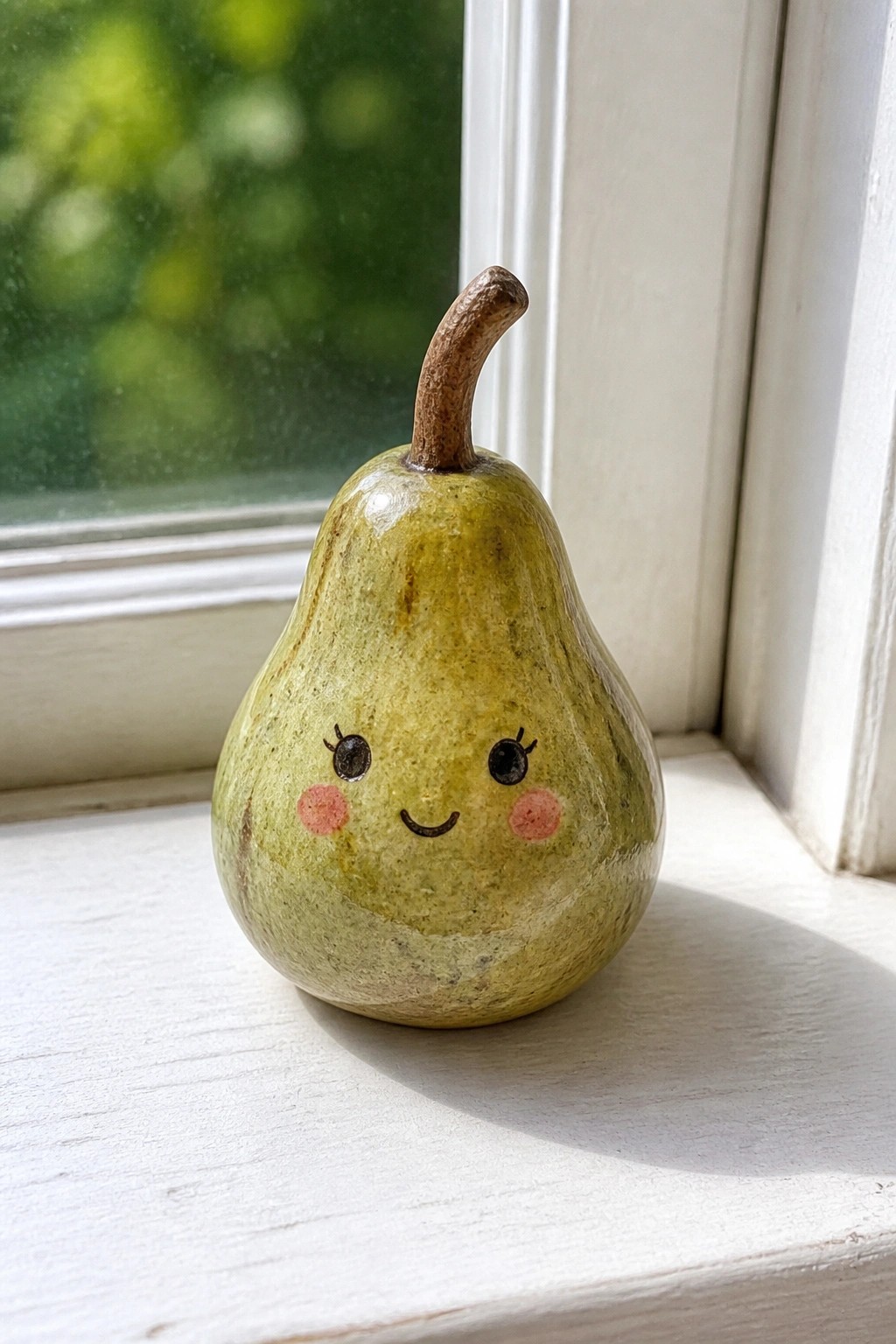
A small ceramic pear figurine serves as a compact decor object in food-inspired pottery projects. The pear shape is formed from clay with a short stem at the top, then covered in a mottled green glaze that suggests natural fruit skin. Painted black eyes with lashes, pink cheeks, and a thin curved mouth add the face details that turn the fruit form into a simple character. This approach fits the figurine category and works best when kept small so the shape stays recognizable.
The compact size lets you place it on a shelf, desk, or windowsill without taking much room. You could swap the green glaze for other fruit colors or adjust the face painting to create a set of matching pieces. For a gift this kind of object stands out because the form is easy to recognize while the painted details stay minimal. The same shape could be scaled up slightly and hollowed out to make a tiny holder for rings or loose change.
Butter Stick Ceramic Dish

A rectangular ceramic butter dish formed and glazed in solid yellow creates the look of a wrapped stick of butter resting on a matching low tray. The smooth, slightly contoured top surface and rounded edges give the piece a realistic block shape without extra decoration. This kitchen item works as both a covered butter keeper and a tabletop server.
The shape does a lot of the work here because the form alone makes the dish recognizable at a glance. You can scale the same rectangle to fit a standard butter stick or make a smaller version for individual servings. The solid glaze keeps production simple while the tray base adds stability for daily use. This idea adapts easily to other foods, such as a similar dish shaped like a block of cheese or a small tray for jam.
Honey Pot with Embossed Honeycomb Pattern
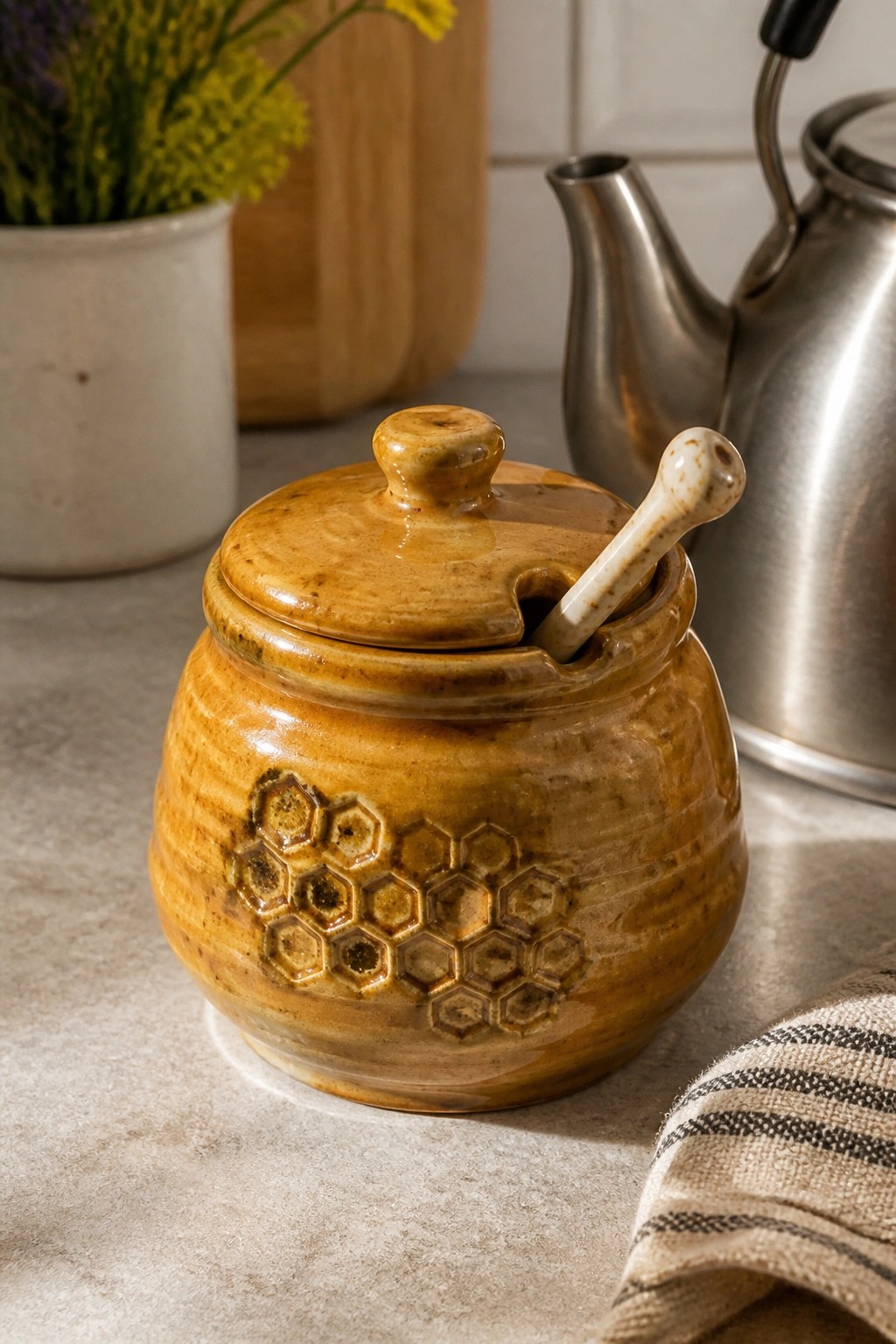
A small lidded jar shaped for honey storage uses a notch in the lid to hold a short ceramic dipper in place. The clay body carries an embossed honeycomb texture on one side and a glossy amber glaze that matches the color of honey. This keeps the piece clearly functional as a kitchen item while tying the form and surface directly to its contents.
What makes this idea useful is how the honeycomb stamp can be pressed into soft clay with almost no extra tools. The rounded shape and lid fit easily on a counter or open shelf without taking much space. You could rework the same jar into a sugar or spice container by swapping the texture for a different stamp and adjusting the dipper slot. The built-in dipper also makes the finished piece more practical than a plain jar for everyday use.
Pineapple Ceramic Utensil Holder
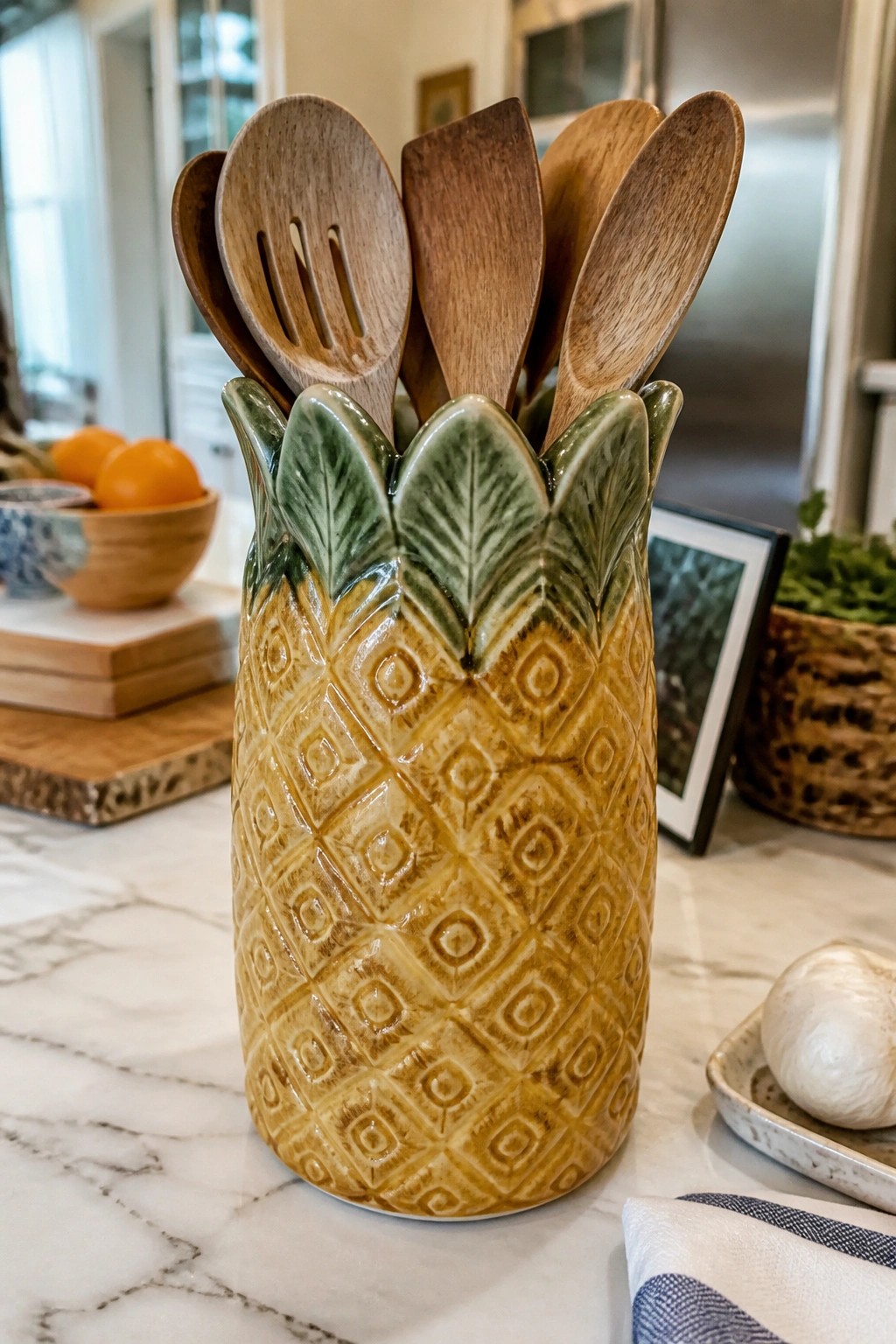
A ceramic utensil holder formed in the shape of a pineapple gives a clear kitchen storage option. The cylindrical body carries a raised diamond texture and a yellow-brown glaze that echoes pineapple skin, while the rim is built up with layered green leaves. This turns a basic holder into a functional piece that keeps wooden spoons and spatulas upright on a counter.
What makes this idea useful is how the sculpted leaves create a natural rim that helps tools stay in place. The same pineapple shape and glaze approach could be scaled down into a small desk cup or widened into a planter. In a kitchen this kind of holder keeps daily tools organized while fitting a fruit motif already present in the space. For a simpler version, drop the leaf detail and keep just the textured body on a standard cylinder.
Pizza Slice Napkin Holder
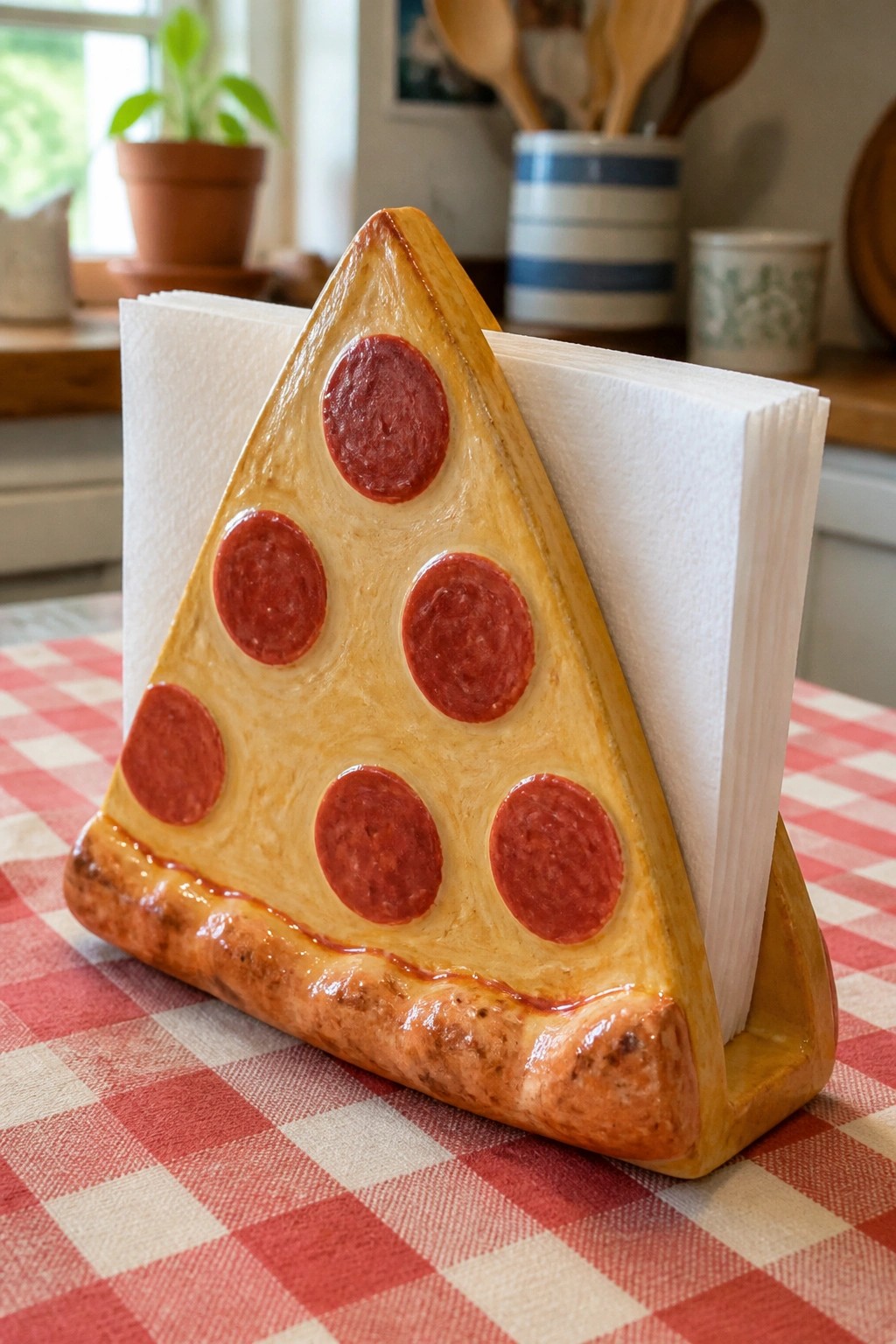
A ceramic napkin holder shaped like a pizza slice creates a functional kitchen item by using the wide triangular form to hold a stack of napkins upright between the base and the pointed top. The sculpted crust along the bottom edge and the glossy glaze over the cheese-colored surface give the piece clear food detail while keeping the overall shape simple. Scattered red circles across the surface read as pepperoni and add enough contrast to make the motif work without extra pieces.
What makes this idea useful is how the flat wedge shape supports napkins while taking up little table space. You could adapt the same triangle base to other slice-style foods like pie or cake by changing only the surface details. In a kitchen this kind of holder keeps napkins handy during meals and can be made in different sizes to match standard napkin packs. The small scale also makes it straightforward to try as a single piece before scaling up to a set.
Waffle Plate with Pooled Syrup Glaze

A round ceramic plate formed with a deep waffle grid makes the main design element here. The squares hold a glossy amber glaze that pools naturally and runs slightly over the rim to mimic syrup soaking into a breakfast waffle. The matte speckled clay body contrasts with the shiny glaze to keep the food reference clear without extra decoration. This idea sits in the kitchen motif category as a small serving or display piece rather than a standard flat plate.
The shape does most of the work, so you can recreate the effect on a simple wheel-thrown or slab-built round without needing perfect symmetry. A piece like this works well as a butter dish, small cheese plate, or decorative trivet next to the stove. You could swap the amber glaze for a darker chocolate tone or a berry red to suggest different toppings and still keep the same grid layout. For a gift set, make two or three in slightly different sizes so they stack neatly on a shelf.
Tuna Sashimi Toothpick Holder

A small lidded ceramic jar makes a practical toothpick holder when the lid is shaped and glazed to look like a slice of raw tuna. The pink surface with irregular white streaks mimics the fat marbling in otoro, while a single hole in the center lets toothpicks stand upright. The lower half stays plain with a lightly textured white finish, keeping the focus on the food detail on top. This turns a basic kitchen storage form into a direct reference to sushi ingredients without adding extra sculpted elements.
What makes this idea useful is how the compact size fits on a countertop or near a prep area without crowding other tools. The marbled lid pattern can be repeated on different base colors to suggest salmon or steak while keeping the same jar shape. For a gift, the same form works as a small salt or spice jar if the hole is left out or made larger. The contrast between the realistic food lid and the simple white body helps the piece read clearly in photos for project sharing.
Donut-Shaped Ceramic Candle Holder
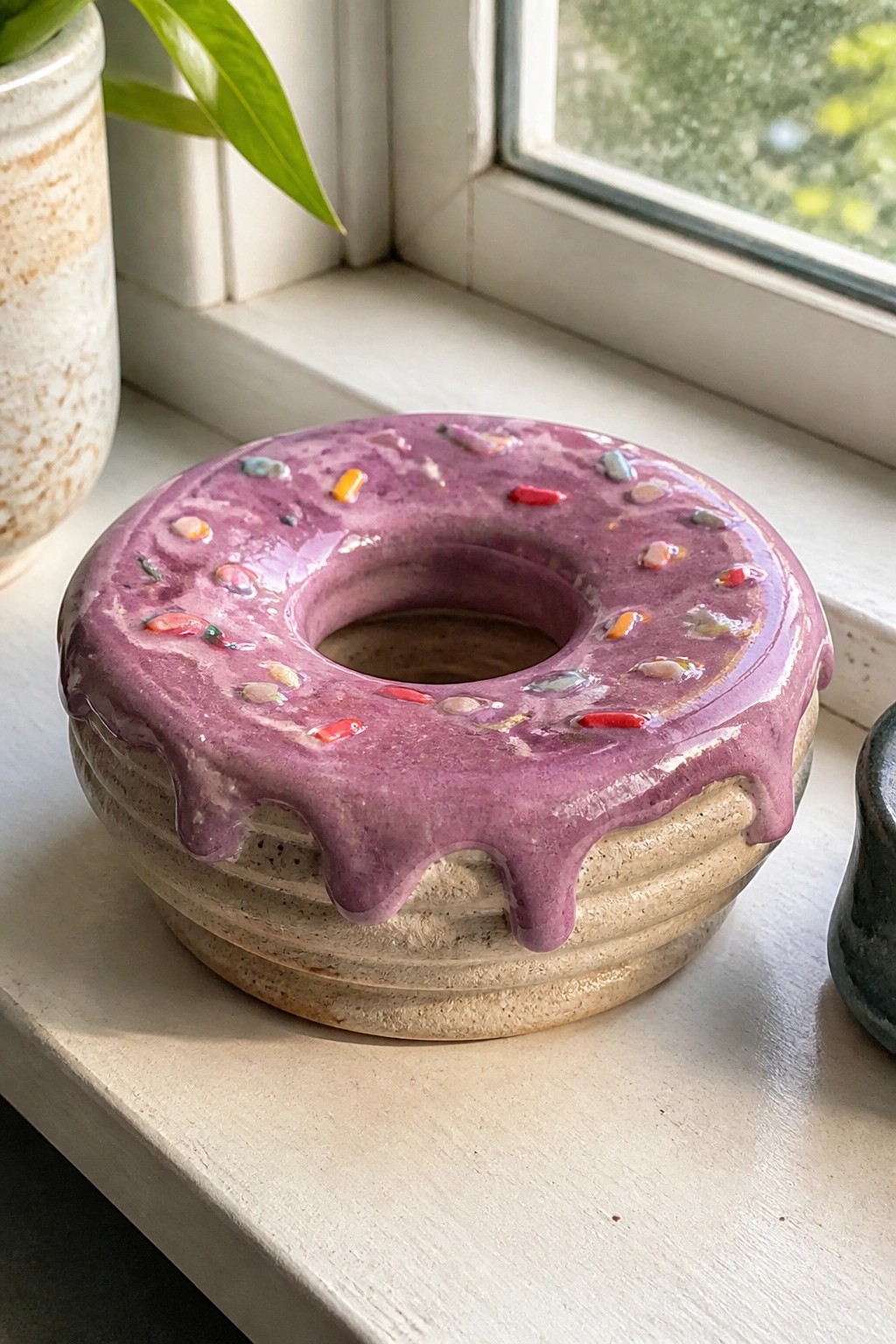
A small ceramic donut holder uses a ring form with a central opening to create a compact candle holder or small planter. The purple glaze is applied thickly so it drips down the sides over a ridged clay base, while scattered colorful dots across the top read as sprinkles. This keeps the food reference clear while turning the piece into a practical kitchen or windowsill object.
The compact ring shape works well on narrow surfaces like a sill or shelf where a full plate would not fit. You can adapt the same donut silhouette into a ring dish by flattening the top or shorten the drip length for a quicker glaze test. The sprinkle dots are simple to repeat on other forms, so the idea translates easily to mugs or trays without much extra effort.
Egg on Toast Hanging Plaque
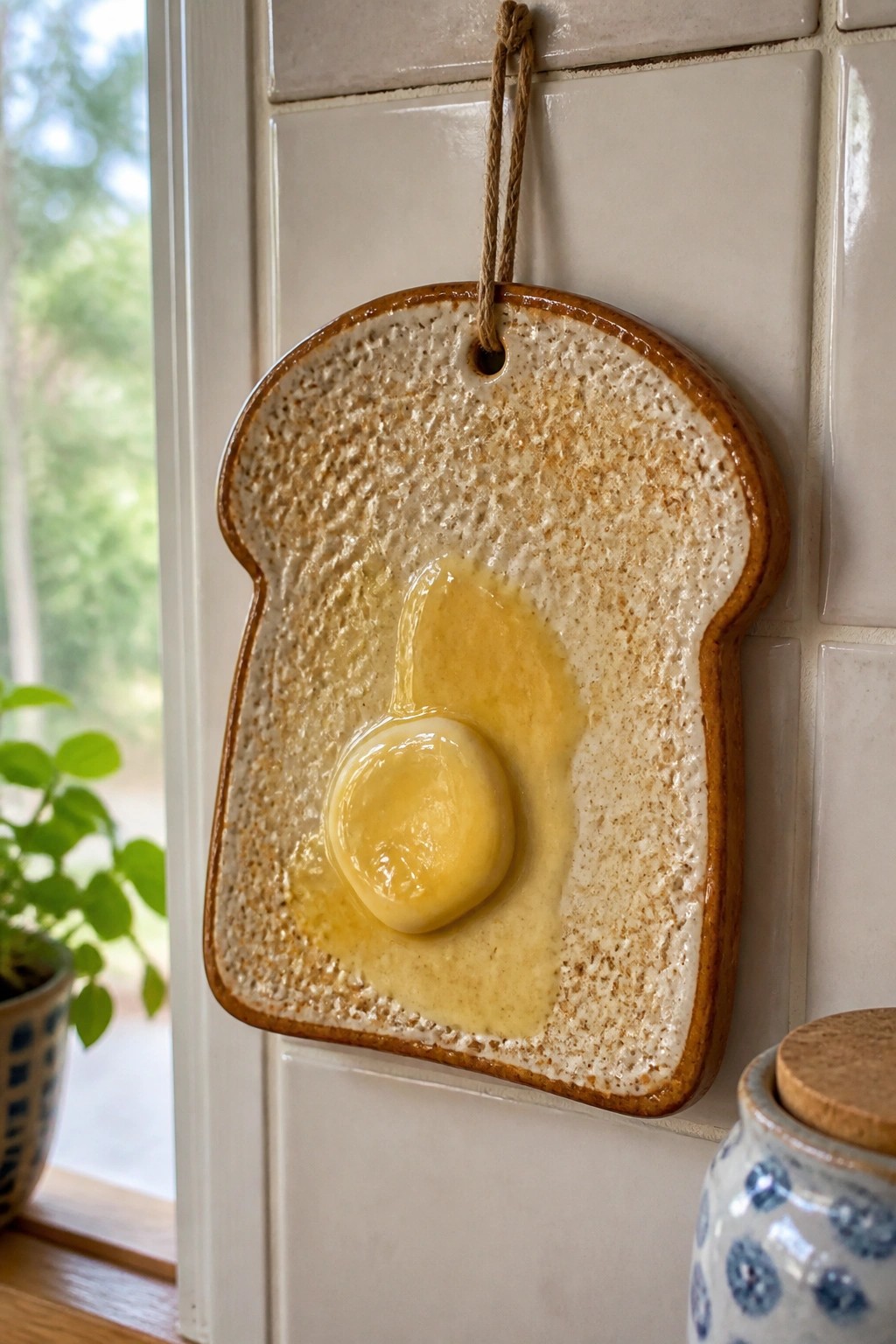
A ceramic plaque formed in the exact shape of a toast slice carries a raised fried egg at the center. The bread area uses a speckled matte glaze to suggest texture, while the egg yolk and white receive a glossy finish that catches light. A small hole drilled near the top edge allows the piece to hang from twine or wire. This approach fits the category of flat decorative kitchen items meant for wall display rather than daily use.
What makes this idea useful is the simple outline that can be cut from a slab and fired without complex assembly. The same toast shape could be reworked as a small cheese board or scaled down for fridge magnets. In a kitchen, this kind of piece stays visible on a tile wall without crowding counters. For a gift, something like this pairs easily with other breakfast-themed mugs or plates.
Spotted Creamer Pitcher for Milk Service

A small ceramic creamer pitcher shaped with a rounded body and short spout makes a practical kitchen item for serving milk or cream. The white speckled surface carries irregular black spots that create clear visual contrast without needing extra decoration. This approach keeps the form simple while using the glaze pattern to add interest that reads as a playful motif.
What makes this idea useful is the compact size that fits on a breakfast tray or next to a coffee setup without taking much space. You could repeat the same spotted glaze on matching mugs or a small sugar bowl to build a set. The shape works especially well for anyone who wants a functional piece that still feels distinct from plain whiteware. For a gift, something like this pairs easily with fresh baked goods or a bag of coffee beans.
Chick-Shaped Ceramic Egg Cups
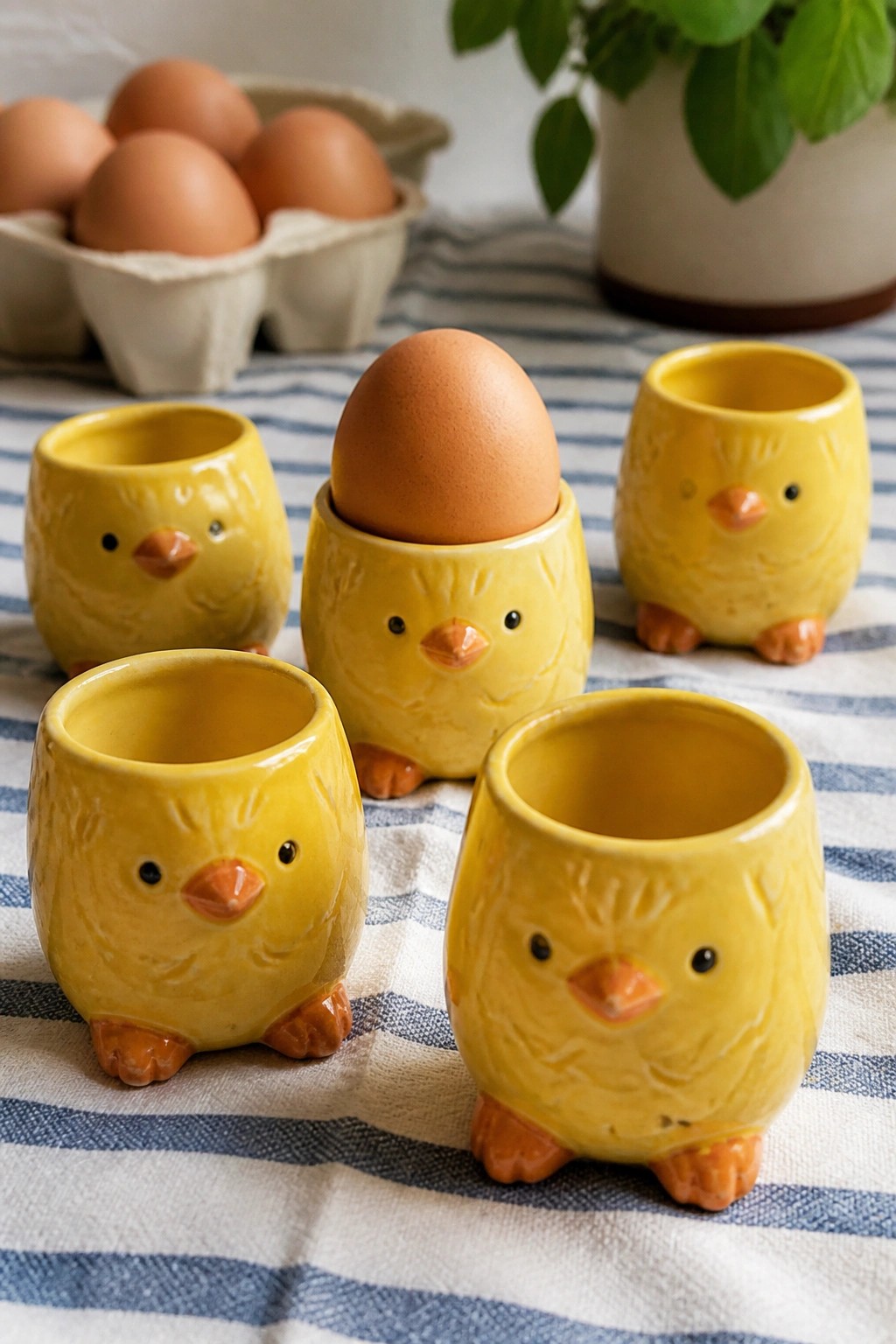
Small ceramic egg cups formed as chicks give a basic kitchen tool a clear food tie-in. Each piece has a rounded body glazed in solid yellow, with simple sculpted details for the beak, eyes, wings, and feet that let the cup cradle a standard egg. The shape stays compact so the egg sits securely on top while the chick form stays visible from the side. This approach fits the category of functional kitchen holders that double as light decor.
The rounded body does most of the work here, so you can change the face details to other birds or animals without altering the core form. These pieces fit easily on a breakfast table or in a small gift set for spring meals. You could scale the same idea down for salt holders or keep the size and swap the yellow glaze for another color to match different dishware. The small footprint also makes them quick to photograph for recipe posts or collection boards.
Garlic Bulb Lidded Jar
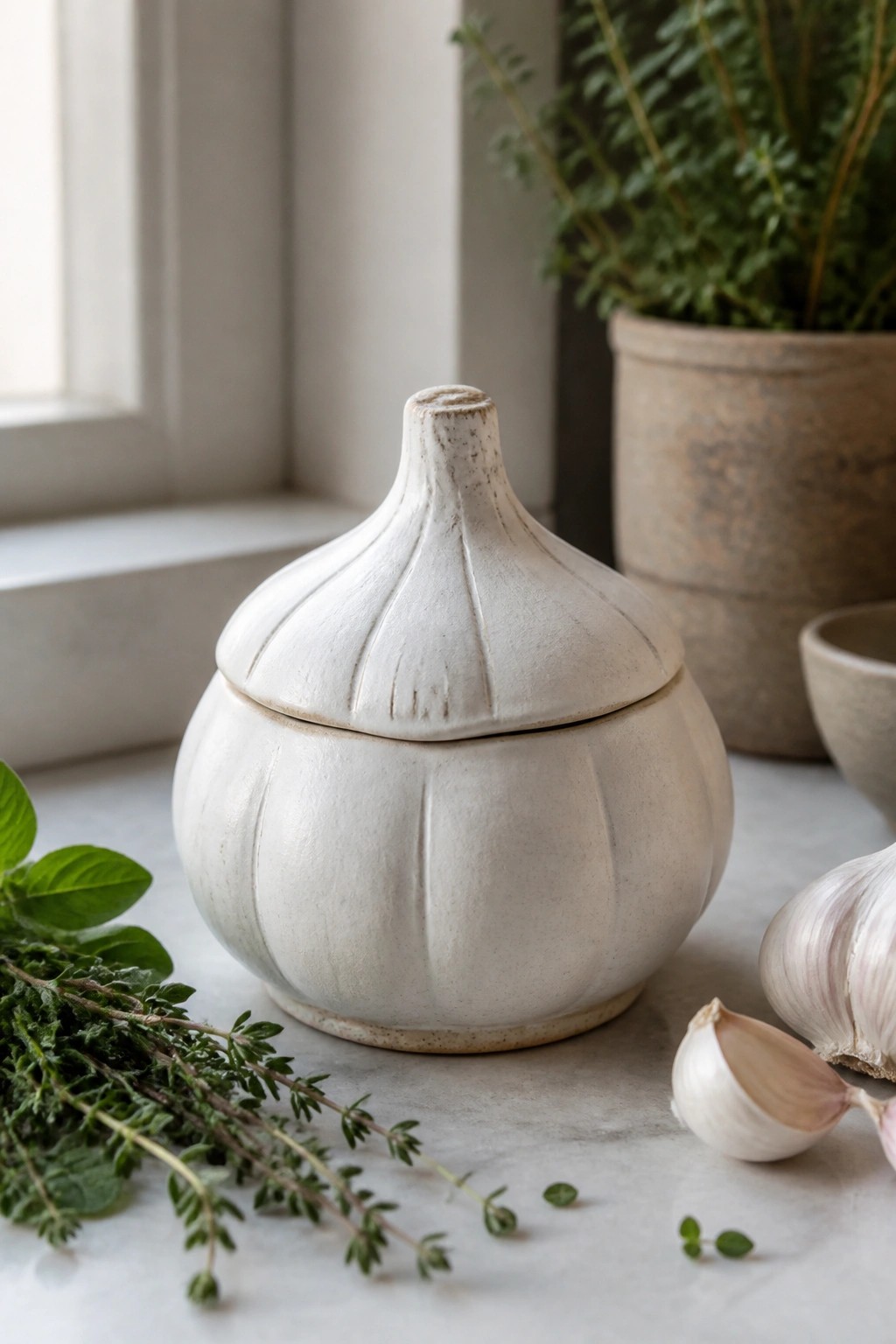
A garlic bulb lidded jar gives you a compact ceramic canister shaped like the vegetable itself. The body carries vertical ridges that divide the surface into clove-like sections, and the lid rises to a short stem knob. The matte off-white glaze keeps the surface quiet so the sculpted form reads clearly as the motif. This turns a standard kitchen storage piece into one that matches the food-inspired category without added decoration.
The small scale makes it simple to place on a counter for salt, tea, or loose herbs. You can rework the same ridged shape for an onion or shallot version by adjusting the knob and base curve. The clear food reference helps the piece photograph well for sharing or selling. In a kitchen it stays useful while still fitting the playful motif list.
Frequently Asked Questions
What clay types work best for creating durable food-inspired pottery pieces?
Earthenware or stoneware clays are excellent choices for beginners and experienced potters alike because they handle detailed shaping well and fire to a sturdy finish. Start with a low-fire clay if you want vibrant colors for motifs like strawberries or whisks, and always test small batches first to see how the clay responds to your kiln settings. This approach helps ensure your pieces last through regular kitchen use without cracking.
How can I make my food-inspired pottery safe for actual kitchen use?
Apply food-safe glazes that are labeled as lead-free and non-toxic, then fire them at the proper temperature according to the glaze instructions. Avoid using metallic lusters or certain underglazes on surfaces that will touch food, and consider a clear topcoat for extra protection. Testing a sample piece in the dishwasher and microwave before full production saves time and prevents disappointment with the final results.
What are some easy ways for beginners to start making these playful kitchen motifs?
Begin with simple hand-building techniques like pinching or slab rolling to form basic shapes such as bowls or mugs, then add details with stamps or carving tools for elements like avocado slices or rolling pins. Watch free online videos on pottery basics, practice on scrap clay first, and focus on one motif at a time to build confidence. Joining a local studio class can provide hands-on guidance and access to shared equipment without a big upfront investment.
Where can I find affordable supplies and inspiration for expanding on these pottery ideas?
Check craft stores or online retailers for bulk clay packs, basic tools, and non-toxic paints that suit food motifs, often at lower prices when bought in sets. Look to Pinterest boards or pottery blogs for free templates of kitchen themes, and adapt ideas from the article by mixing elements like combining fruit patterns with utensil handles. Local thrift shops sometimes carry inexpensive bisque ware ready for glazing, which lets you experiment without starting from raw clay.
How should I care for finished food-inspired pottery to keep the designs looking fresh?
Hand wash pieces gently with mild soap and avoid abrasive scrubbers that could wear down the glaze over time. Store them away from direct sunlight to prevent color fading, and inspect regularly for any chips that might need touch-up glazing. Rotating your collection and using protective padding in cabinets helps maintain the playful details on motifs like teapots or cookie cutters for years of enjoyment.

Pottery Path is my cozy corner of the internet where I share clay ideas, pottery inspiration, and simple projects you can recreate at home. I love exploring everything from air dry clay to handbuilt pottery to cute minis that brighten your day. My goal is to make clay crafting feel easy, fun, and welcoming for anyone who wants to try it.
You will find beginner friendly tutorials, creative pottery painting ideas, and lots of warm inspiration for slow and happy crafting. If you enjoy hands on creativity, this space will feel like home.