I got into pottery painting a few years ago when I was looking for a quiet hobby I could do at my kitchen table.
When I first started I kept my designs really basic since I did not have much practice with brushes or glazes.
These are the ideas I still use when I want something simple that does not take all day.
I have tried most of them on my own pieces and they turned out fine even with a few mistakes.
I thought it might help to share the ones that felt doable right from the beginning.
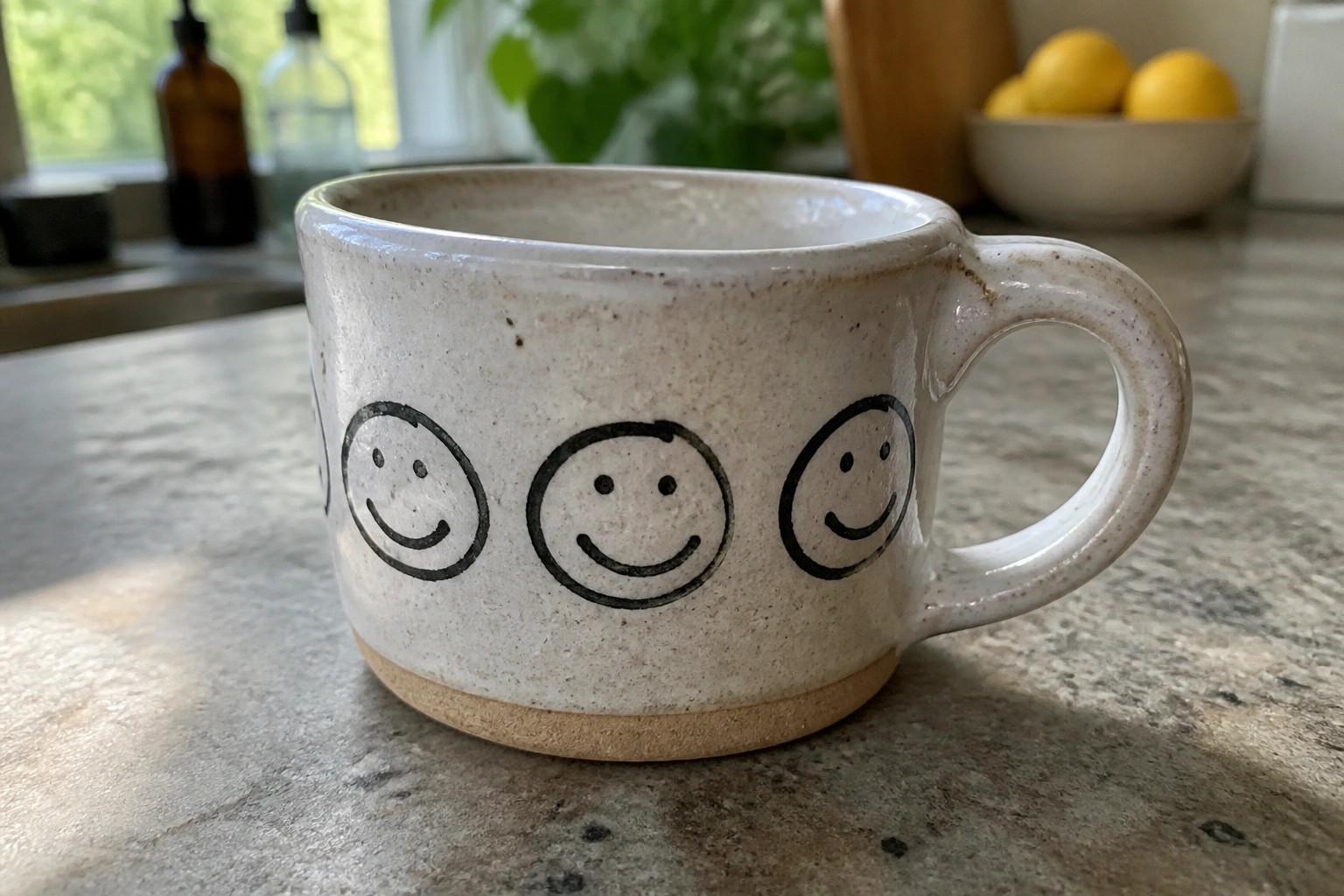
Smiley Face Painted Mug

A ceramic mug decorated with a row of simple black smiley faces offers an easy surface painting project. The design places three faces side by side around the exterior using basic circle outlines, dot eyes, and curved mouths. This approach works well in the mug category because the repeating motif stays legible even on a curved surface and requires only underglaze or paint plus a clear coat.
What makes this idea useful is that the pattern adapts quickly to any plain mug shape or size you have on hand. You can vary the number of faces, swap in different expressions, or shift the colors to match other kitchen items. For gifts this style stays functional while giving a clear handmade touch that still holds up to daily use.
Polka Dot Painted Ceramic Bowl
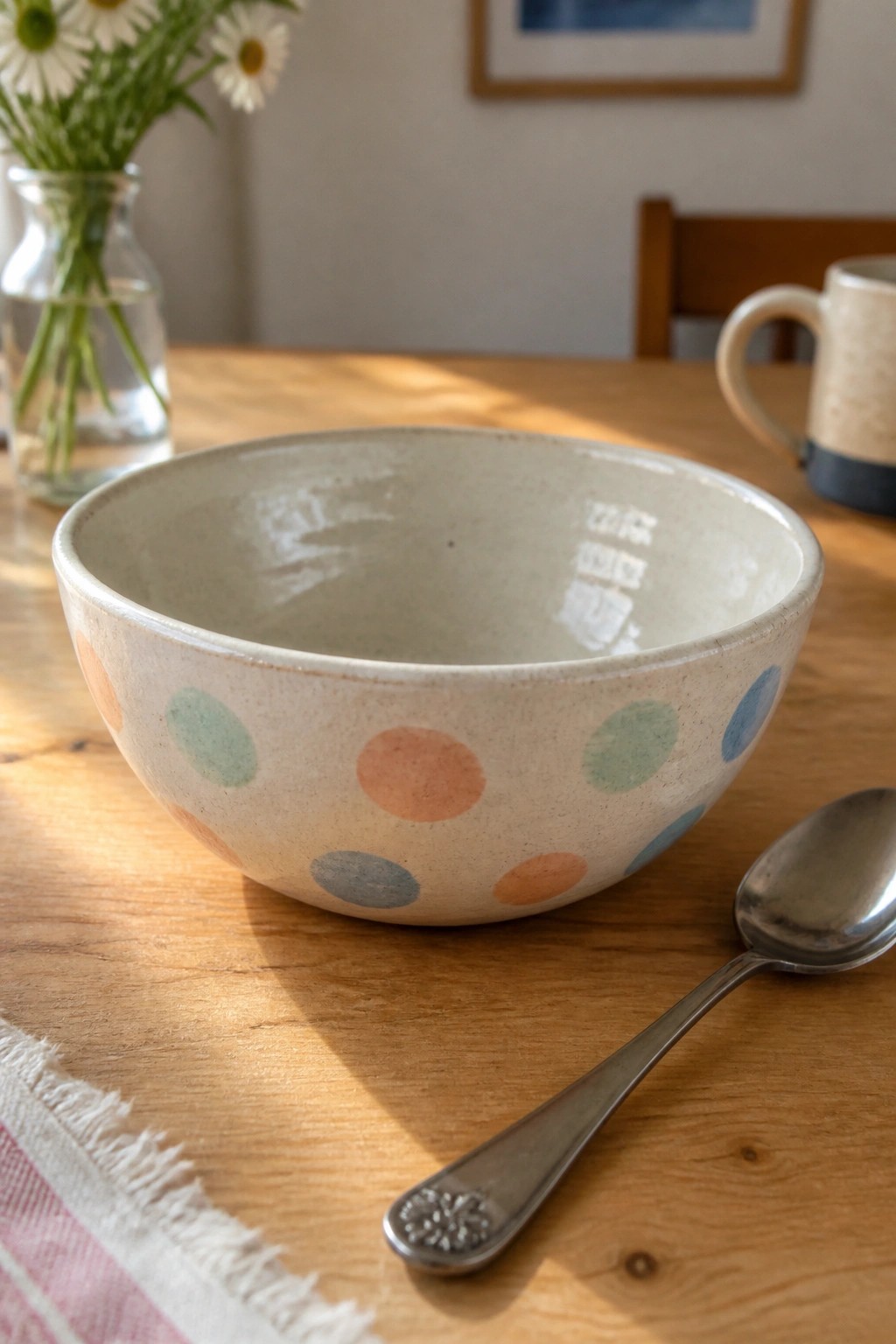
A ceramic bowl decorated with scattered polka dots in soft peach, mint green, blue, and gray offers a simple painting project that relies on basic shapes rather than detailed drawing. The dots sit on a light speckled surface and vary slightly in size, which helps the pattern feel relaxed instead of rigid. This style works especially well on bowls because the curved form lets the colors show from multiple angles without extra effort.
What makes this idea useful is how quickly the dot pattern can be adapted to different bowl sizes or leftover glaze colors. You could repeat the same dots on a set of small dishes for a matching set or shrink them for a ring dish. The approach also transfers easily to a tray or planter if you want to try the motif on another shape.
Citrus Slice Painted Dish
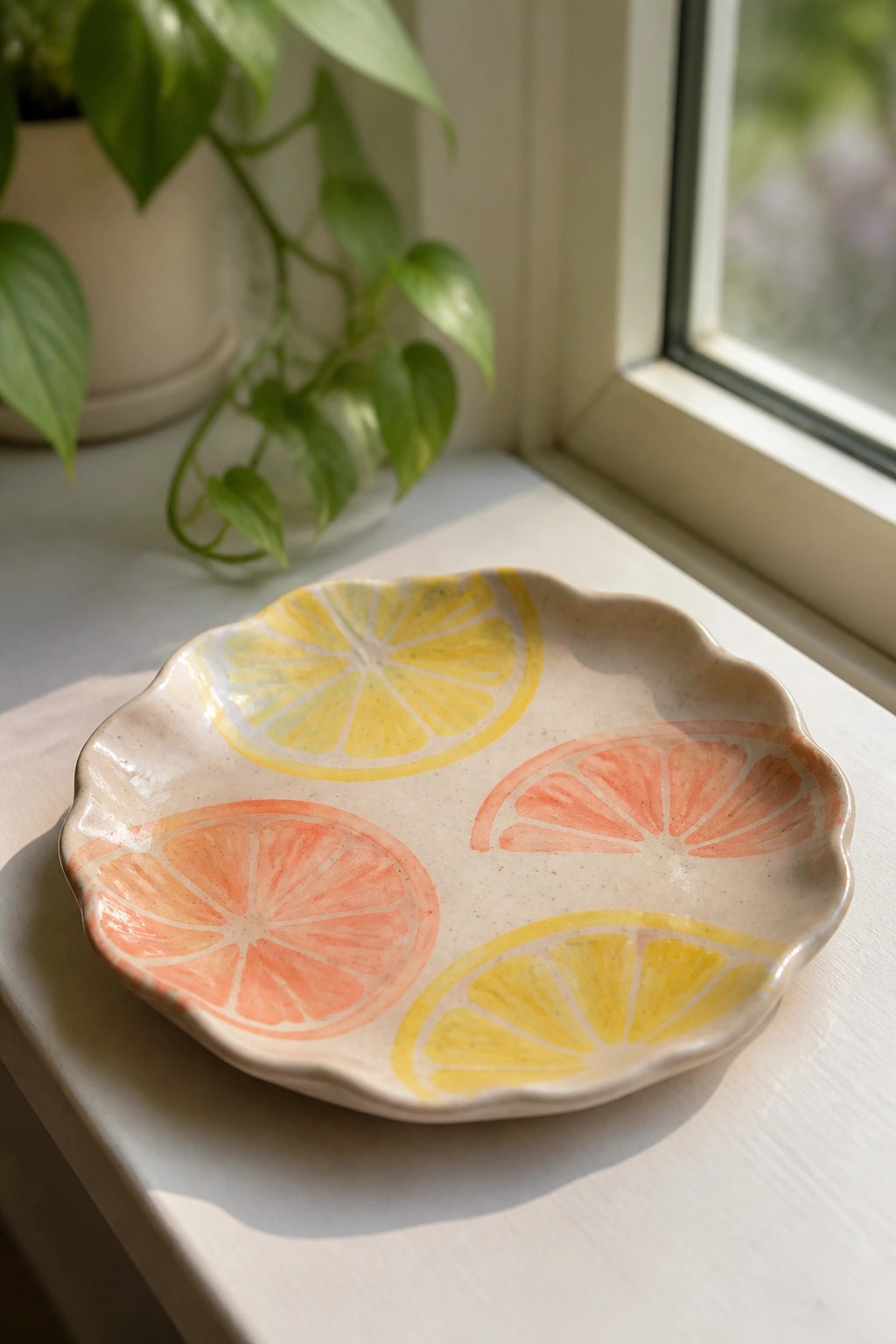
A small ceramic dish with a scalloped rim makes a simple base for painting citrus slices in yellow and coral tones. The fruit sections are spaced across the surface with enough negative space left between them so the light clay shows through. This approach turns a basic tray shape into a decorative kitchen or tabletop piece without requiring complex techniques.
The painted slices work well because they stay flat and readable even on a curved surface. You can copy the layout onto a larger platter or shrink it down for a set of small plates. This style also adapts easily if you want to swap in different fruits or limit the palette to just two colors. In a kitchen, the dish can hold cut fruit or serve as a spoon rest while still looking finished on its own.
Striped Ceramic Valet Tray

A rectangular ceramic tray with wide horizontal stripes in navy and terracotta creates a simple catchall for small daily items. The stripes run across the surface with uneven edges that show the handmade brushwork. A smaller round bowl rests inside the tray to keep rings separate from larger objects like keys on their leather strap. This setup turns a basic tray form into a functional entryway or desk organizer.
The shape does a lot of the work here because the flat tray area holds keys while the bowl keeps jewelry from sliding around. You could repeat the stripe idea on a square tray or shorten the design to fit a bathroom soap dish. Painting stripes like these takes little skill beyond steady brush strokes and works on any flat clay surface. For a gift version, swap the leather strap for a different cord color or add initials under the stripes.
Whale-Shaped Ceramic Planter
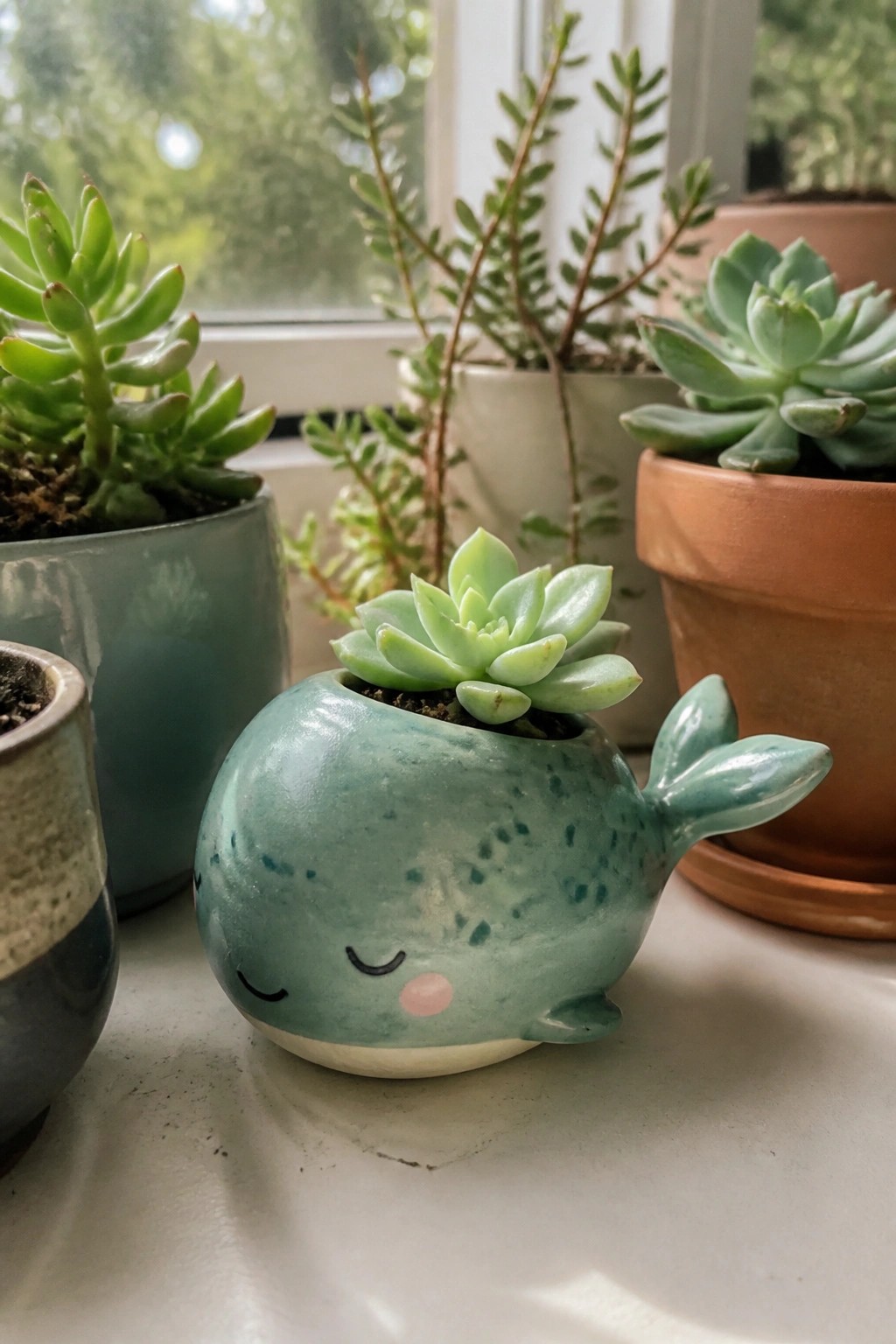
A small ceramic planter shaped like a whale gives a basic succulent pot a distinct form through sculpted fins and tail. The body uses a speckled teal glaze with simple painted details for closed eyes and a cheek, keeping the surface clean while making the shape easy to read. This type of project falls under decorative planters that work for small plants rather than larger houseplants.
What makes this idea useful is how the molded animal form does most of the visual work, so painting stays minimal. You can swap the whale for another sea creature or change the glaze color while keeping the same size and shape. The compact scale fits windowsills or desks without taking much room and makes a quick gift option. The same whale mold could also be turned into a small trinket holder by skipping the drainage hole.
Ceramic Leaf Spoon Rest

A leaf-shaped ceramic spoon rest gives you a simple kitchen item that holds a spoon steady during cooking or serving. The sculpted veins and glossy green glaze create clear texture that catches light while the wide form and stem handle keep the piece balanced on a counter. This project fits the tray or holder category and stays functional without needing complex assembly.
The small scale makes this easy to adapt by changing the glaze color or skipping the veins for a smoother surface. You could scale it up slightly for a larger utensil rest or shrink it into a tiny ring dish for a bathroom. In a kitchen this shape works especially well because it stays flat near the stove and gives you a clear botanical motif that reads well in photos.
Daisy Ring Dish

A small round ceramic dish glazed in soft pink makes an easy ring holder once a simple daisy is painted in the center. White petals radiate from a brown dot, creating a clear focal point that stays visible even on the curved surface. The shallow shape and wide base give plenty of room for the motif without needing precise brush control around edges. This approach turns a basic pinched or slab-built form into a finished piece that can sit on a dresser or bathroom counter.
What makes this idea useful is how the same daisy can be painted on other small flat items like soap dishes or spoon rests without changing the technique. The shape does a lot of the work here by keeping the painted area contained so the design reads clearly. For a gift, something like this fits in a jewelry box or beside a sink and takes little shelf space. You could switch the glaze color or add a second flower near the rim to change the look while keeping the same simple layout.
Marbled Glaze Candle Bowl

A small, low ceramic bowl works well as a candle holder when covered in a fluid blue and purple glaze that blends across the surface. The glaze settles into soft patches and streaks that reflect the flame without any added painting or carving. The rounded shape and single small hole near the rim keep the piece simple while still giving it a finished look. This turns an ordinary wheel-thrown or hand-built bowl into a working candle piece using only glaze variation.
What makes this idea useful is how the glaze itself creates the pattern with minimal extra steps. A piece like this works especially well on a side table or shelf where the light from the candle can highlight the glossy surface. You could adapt the same form into a small match holder or incense burner by adjusting the hole placement or size. The compact scale also makes it easy to test different glaze combinations without committing a lot of clay or kiln space.
Divided Salt and Pepper Dish

A small ceramic dish with a center divider creates two separate sections for salt and pepper in one compact form. The kidney shape keeps the sections distinct while the three indentations along the front give the piece a simple finished detail. A white speckled glaze with a blue rim keeps the focus on the function rather than busy decoration.
This layout works especially well on a kitchen counter or table because it stays compact yet holds enough for daily use. You could adapt the same shape for other dry spices or small condiments by changing only the rim color. The divided form also translates easily to a hand-built slab project if you want to skip the wheel.
Scalloped Soap Dish

A small ceramic soap dish with a scalloped rim and raised center ridges gives soap a place to sit above pooled water. The interior uses a turquoise glaze that settles into the grooves while the outer edge stays in a lighter clay tone with a few drips over the rim. This shape keeps the dish compact enough to fit beside a sink without crowding the counter.
The raised bars inside make the dish practical for daily use since they let water run off the soap. You can adapt the same scalloped edge and two-tone glaze approach to a ring dish or small catch-all tray by keeping the overall size similar. The form is simple enough to build from a slab and a few coils, so it works as a quick project when you want something functional for the bathroom.
Cloud-Painted Toothbrush Holder

A toothbrush holder formed from speckled blue clay uses three holes at the top to keep brushes upright and includes white painted cloud shapes spaced around the exterior. The matte surface and visible texture from the clay body give the piece a straightforward handmade look that suits a bathroom setting. This type of project fits the bathroom item category and relies on simple painted motifs rather than complex sculpting.
What makes this idea useful is how the painted clouds add interest without requiring advanced techniques or many colors. The same holder shape could be adapted into a cotton swab cup or a small soap tray by adjusting the opening layout while keeping the blue base and white motifs. It works well on a narrow ledge or counter because the compact size leaves room for other items, and the design can be simplified further by using stencils for the clouds if freehand painting feels tricky.
Ceramic Measuring Spoons
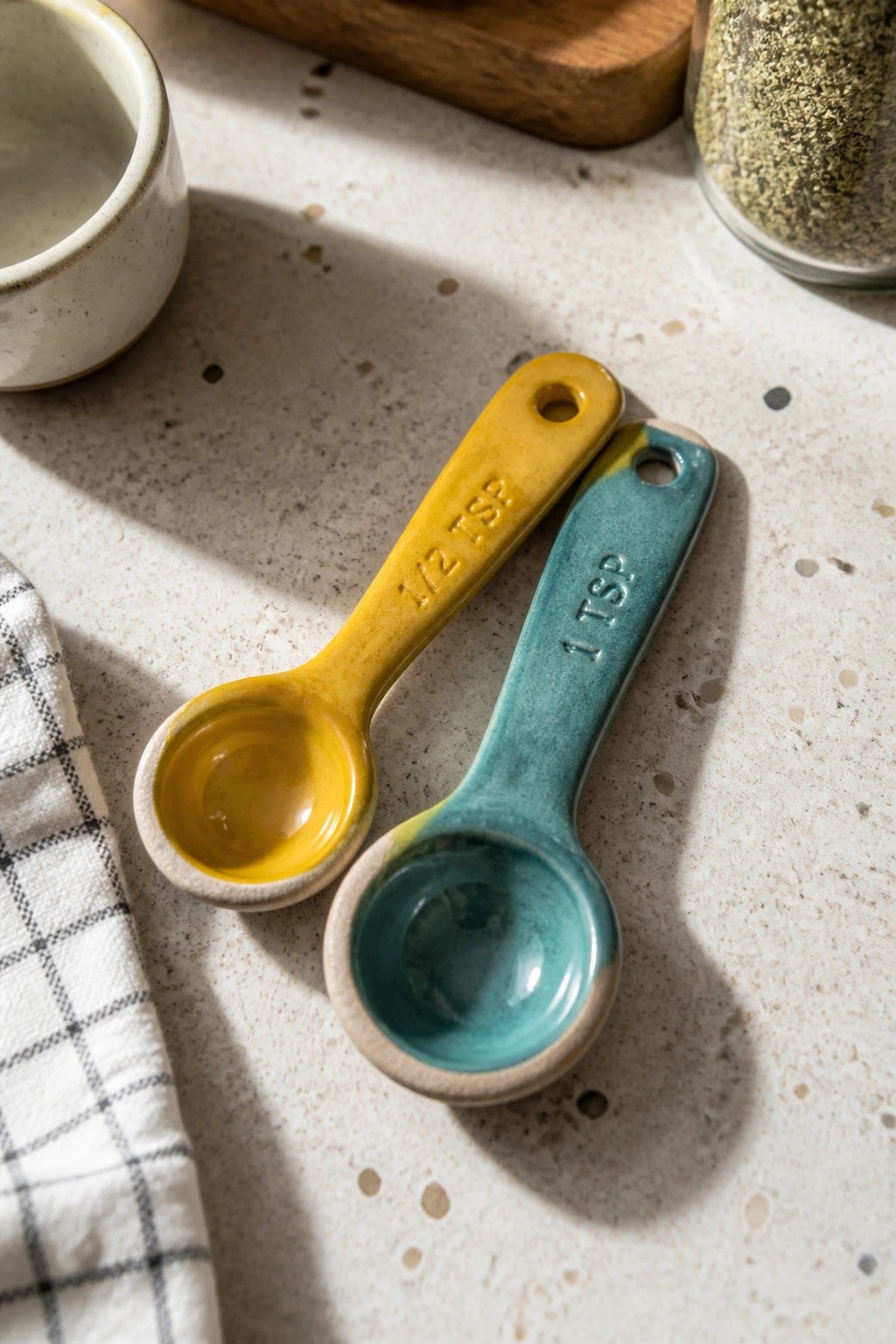
Handmade ceramic measuring spoons give a practical kitchen tool a personal touch through simple glazing and stamped markings. These spoons are shaped from clay, then glazed in solid colors with the measurement clearly impressed into the handle. The glossy finish on the bowls makes them easy to clean while the hole at the end of each handle allows hanging storage. This approach fits the kitchen item category and keeps the focus on clear function rather than heavy decoration.
What makes this idea useful is how the basic spoon form can be repeated for a full set with different measurements. You could swap in other glaze colors or keep the same two-tone style across the whole collection. In a kitchen these stand out next to metal spoons because the clay feels warmer and the markings stay legible after repeated washing. For a beginner project the small size means less clay and quicker drying times if you want to test the shape before making more.
Yarn Bowl with Spiral Notch

A yarn bowl is a simple ceramic form that holds a ball of yarn while a notch in the rim keeps the working strand from tangling. The example uses a light clay body with a wide swirling motif in reddish-brown glaze that leads the eye to the notch and makes the functional cutout part of the decoration. The rounded shape and low center of gravity keep the bowl stable on a table during use.
What makes this idea useful is how the same bowl profile can be made in different sizes for embroidery thread or thin cord. The spiral is straightforward to paint with underglaze before the final firing, and the notch can be cut into any rim shape you already throw. In a craft space this piece keeps supplies contained without taking much room, and the design translates easily to other neutral glaze combinations.
Painted Lavender Vase

A tall narrow vase painted with clusters of purple lavender, yellow accents, and green leaves creates a simple botanical motif on a light speckled surface. The design uses loose vertical stems that follow the shape of the piece without filling the entire area. This keeps the focus on the painted flowers while the matte glaze and visible clay texture stay understated.
What makes this idea useful is how the vertical form gives you space to repeat the same flower group at different heights. You could scale the motif down for a small pitcher or stretch it across a low tray by using just the leaf and stem lines. The limited color palette makes it easy to match existing decor and would translate well to a set of matching bud vases for a gift.
Mini Ceramic Bird with Speckled Wings

A small bird figurine makes a straightforward pottery project when you shape a rounded body, attach simple wings, and finish with a light neutral glaze. The wings get extra detail through a pattern of small dots in contrasting tones that break up the surface without requiring precise lines. This approach keeps the focus on the basic sculpted form while the paint adds texture and interest in a limited area.
What makes this idea useful is how the compact shape works on a shelf, desk, or windowsill without needing much room. The dotted wing pattern can be swapped for stripes, solid color blocks, or left plain if you want a faster version. You could also use the same body shape for other small animals and adjust only the added details. For a gift, this kind of piece adapts well because the size and neutral base make it easy to match different tastes.
Star Motif Ceramic Tile Hanging
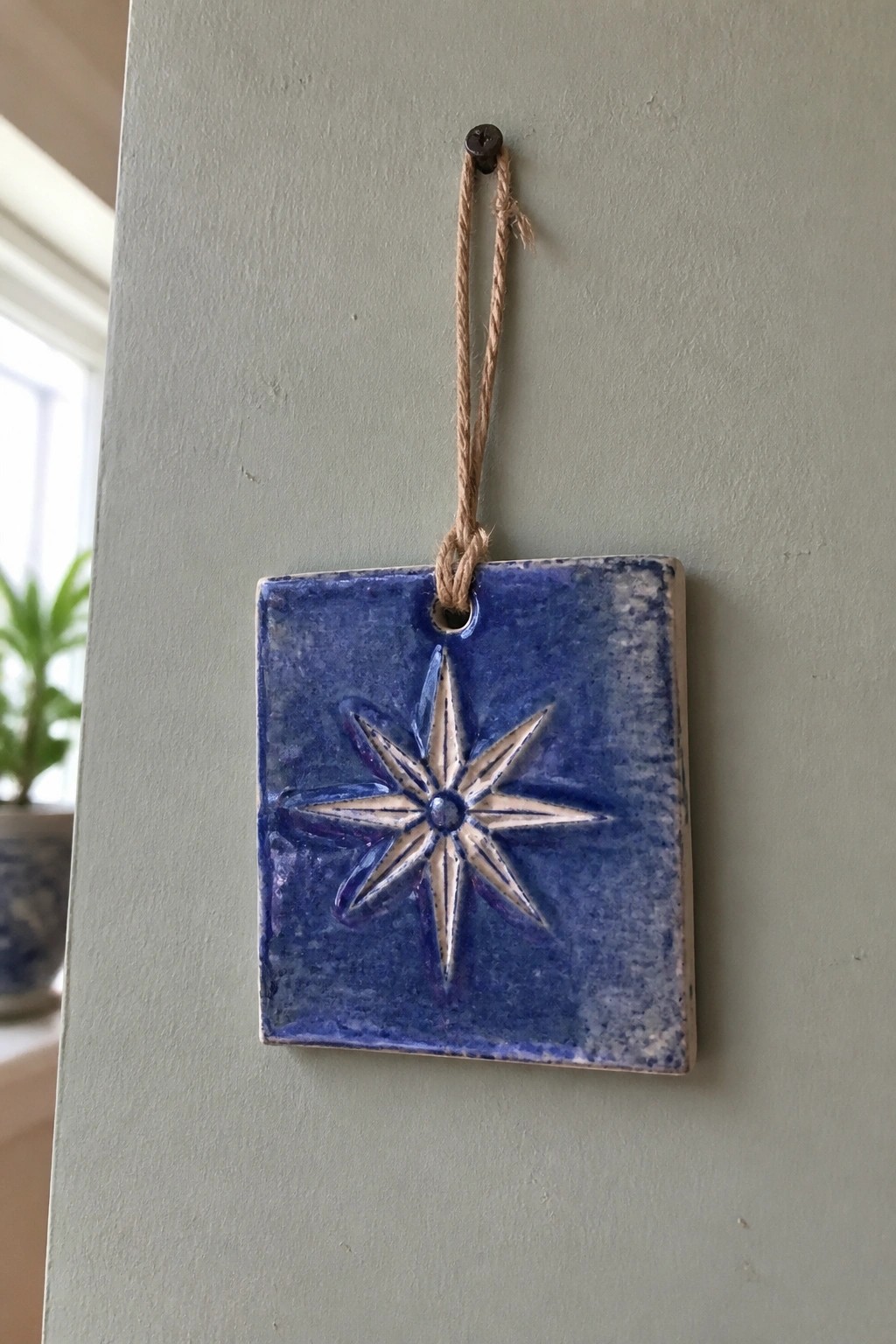
A square ceramic tile works as a hanging ornament when you add a top hole and loop twine through it. The idea centers on a single raised star pattern pressed into the clay before a solid blue glaze is applied, letting the lighter clay show through the raised edges. This keeps the surface simple while the embossed lines give the design clear shape and depth. It belongs in the decor object category for walls or small vertical spaces.
What makes this idea useful is how the tile shape lets you hang it alone or group several in a row without much planning. You could swap the star for other basic pressed motifs like circles or leaves and test different glaze colors on test tiles first. The small scale makes it easy to turn into a plant marker or a single accent near a window. For a gift, something like this takes little clay and still reads as intentional once the glaze settles.
Heart-Shaped Ceramic Ring Dish
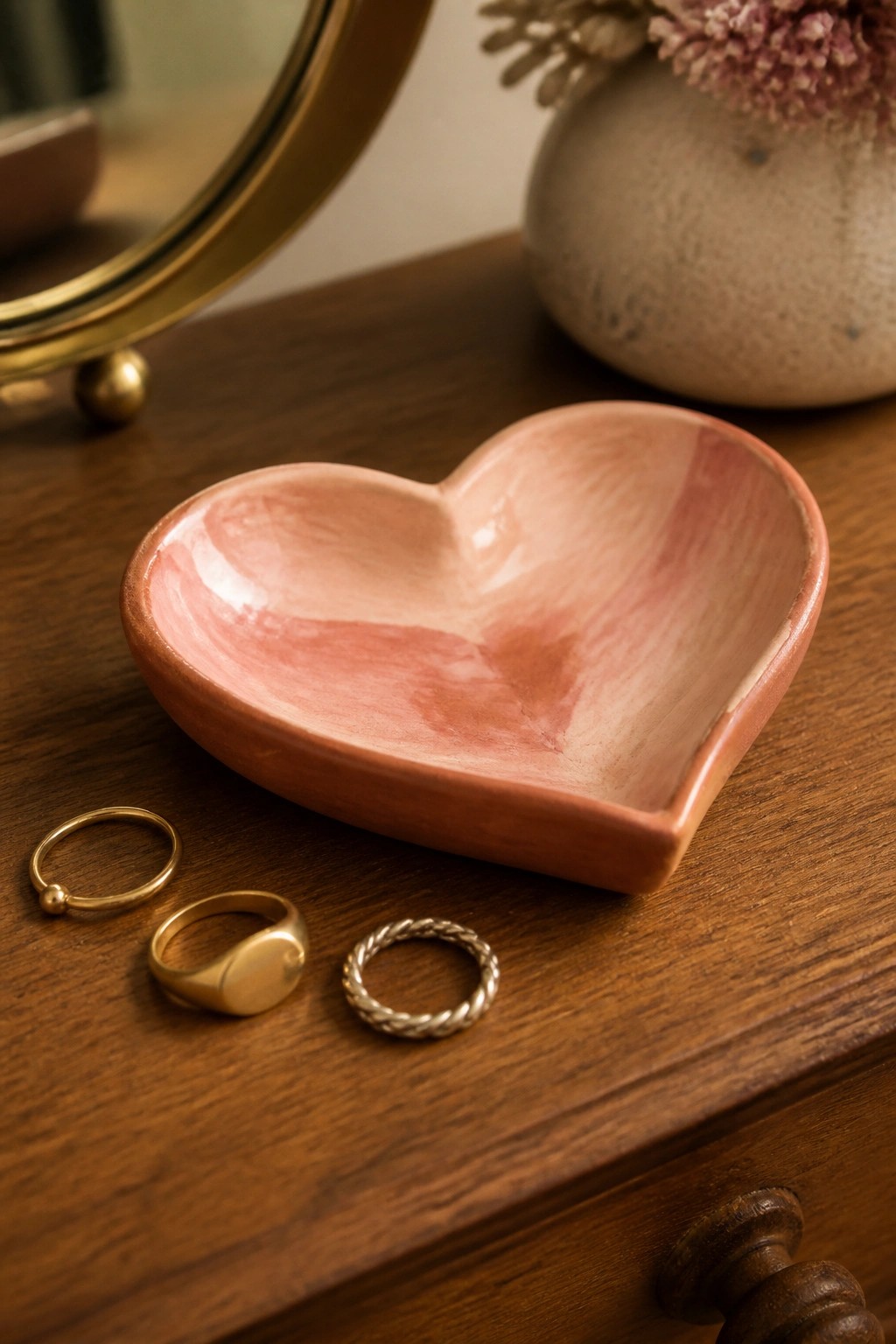
A heart-shaped clay dish makes a simple ring holder or small trinket bowl. The form is built shallow with a rounded rim, then covered in a pink glaze that varies from light to deeper coral where it pools during firing. This keeps the design focused on the clear heart outline and the smooth, glossy surface that catches light without added decoration.
What makes this idea useful is how the small scale fits easily on a nightstand or vanity for daily jewelry storage. You can adapt the shape by making the heart more rounded or elongated, or switch to a matte glaze in a single color for a different look. The same shallow form also works as a soap rest in a bathroom or a tiny catch-all near a sink. For Pinterest, the solid heart silhouette stands out in flat lays because it needs no extra props to read clearly.
Dot Pattern Napkin Rings
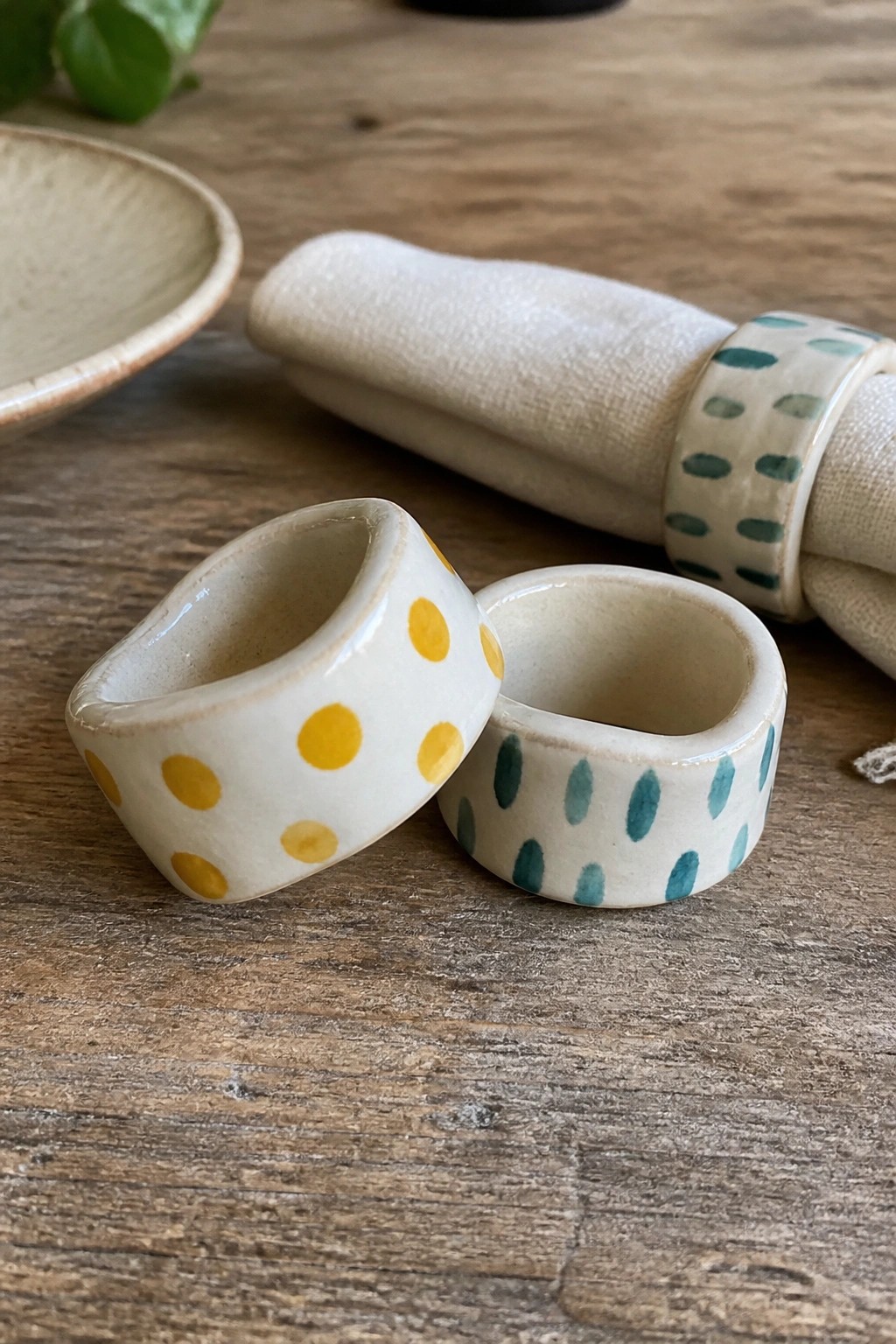
Napkin rings formed from clay offer a simple cylinder shape that is easy to paint with repeating motifs. The yellow and teal dots stand out clearly against the light clay surface and wrap evenly around the curve without needing precise lines. This style works as a basic tableware project because the motif repeats quickly and requires only a steady hand for spacing.
The small scale lets you produce a full set in one session and match them to existing plates or linens. Swap the dot colors or try a different motif like dashes if you want variety for the same shape. They also store flat in a drawer and double as small holders for rolled towels or desk items when not in use on the table.
Two-Tone Mini Cup

A small handmade ceramic cup with a narrow waist and flared base uses a simple two-tone approach by leaving the exterior in its natural clay color while coating the inside with a single teal glaze. The shape stays compact and balanced, which makes the color contrast stand out without any added patterns or surface decoration. This kind of project fits into the holder or small cup category and works as an easy way to practice glazing on a basic form.
What makes this idea useful is how the small size lets you test a new glaze on the interior while keeping the outside plain. You can adapt the same shape into an egg cup, a small plant holder, or a desk catch-all by changing the interior color or making a set in different glaze shades. The form is straightforward to throw or hand-build, so it is a practical choice when you want quick results that still look intentional on a shelf or table.
Frequently Asked Questions
What supplies do beginners need to try these pottery painting ideas?
Start with plain ceramic or terracotta pieces from a craft store. Use acrylic paints or ceramic-specific paints that do not require firing. Gather fine and medium brushes, a palette for mixing colors, water for cleaning, and paper towels. Add optional items like stencils, sponges for texture, and a sealant spray once the paint dries. These basics keep costs low while letting you explore all 19 ideas right away.
How should I prepare my pottery before starting to paint?
Wash each piece with mild soap and warm water to remove dust or oils. Let it dry completely, then wipe it with a damp cloth if needed. Lightly sand any rough spots with fine grit sandpaper for a smooth surface. This step helps paint stick evenly and prevents peeling later. Work in a well lit area with newspaper underneath to catch spills.
Which of the 19 ideas work best for someone with no prior experience?
Begin with simple designs like solid color dips, polka dots using the handle end of a brush, or basic stripes with painter tape. These require minimal skill and let you practice brush control. Move next to leaf prints or heart shapes before attempting more detailed patterns. The key is to practice on scrap tiles first so you build confidence without wasting main pieces.
How do I protect my finished painted pottery so it lasts?
Apply two thin coats of a clear acrylic sealant after the paint has dried for at least 24 hours. Choose a matte or glossy finish based on the look you want. For pieces that will hold water or food, check the paint label to confirm it is non toxic once sealed. Store finished items away from direct sunlight to keep colors bright over time.
What should I do if I make a mistake during painting?
Let the paint dry fully, then gently sand the error with fine grit sandpaper and wipe away dust. Repaint the area with the original base color if needed, then continue with your design. For wet mistakes, blot carefully with a damp cloth without smearing surrounding areas. Keep extra paint on hand to match colors exactly and work in thin layers to avoid buildup.

Pottery Path is my cozy corner of the internet where I share clay ideas, pottery inspiration, and simple projects you can recreate at home. I love exploring everything from air dry clay to handbuilt pottery to cute minis that brighten your day. My goal is to make clay crafting feel easy, fun, and welcoming for anyone who wants to try it.
You will find beginner friendly tutorials, creative pottery painting ideas, and lots of warm inspiration for slow and happy crafting. If you enjoy hands on creativity, this space will feel like home.