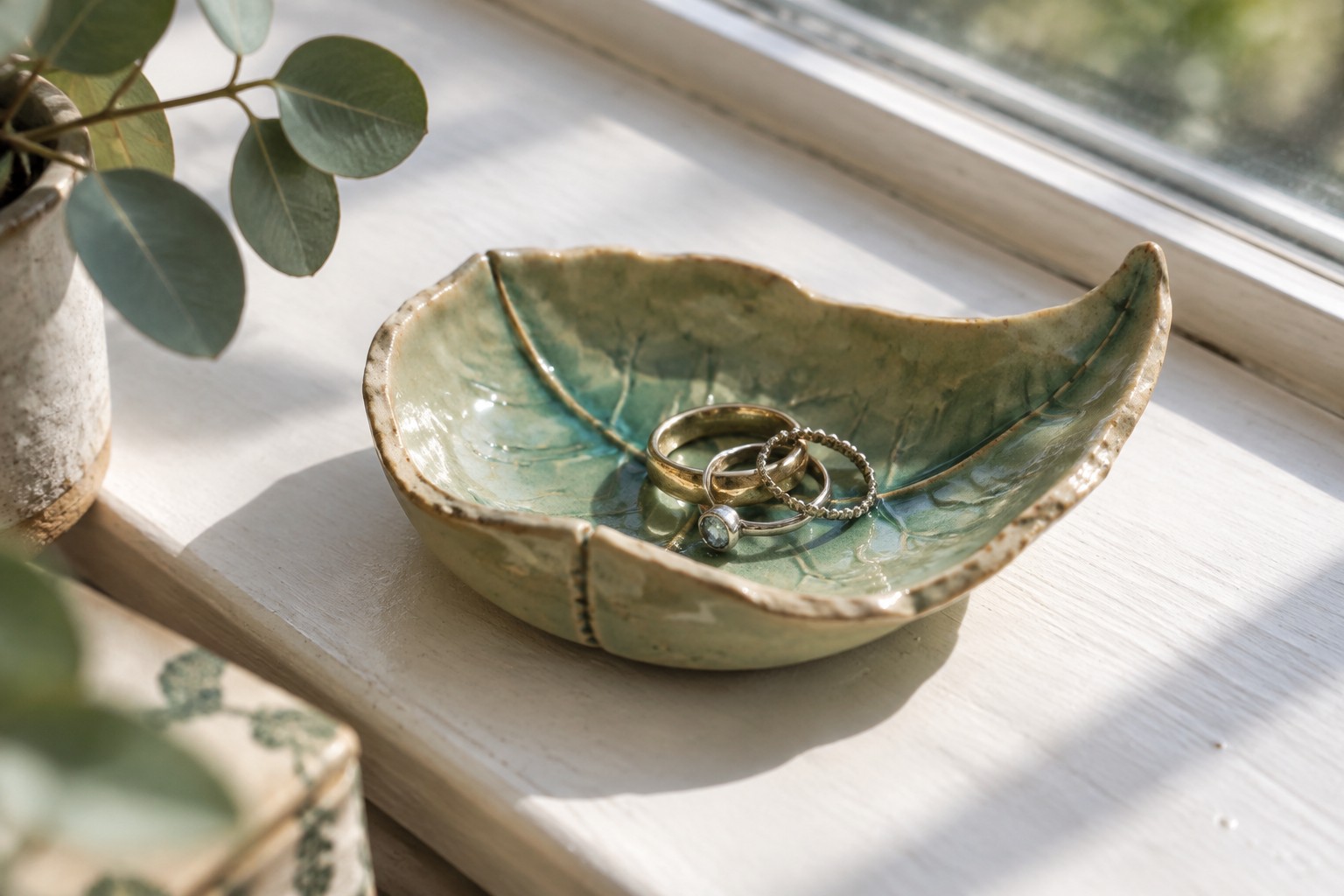
I have been working with slab pottery for a while now and it suits my small workspace well.
These projects do not require much equipment which makes them easy to try at home.
I put together some ideas that turned out nicely for me and might give you a starting point.
Each one uses simple techniques and everyday forms like trays or planters.
I focused on things that are useful around the house rather than just decorative.
Leaf Slab Ring Dish
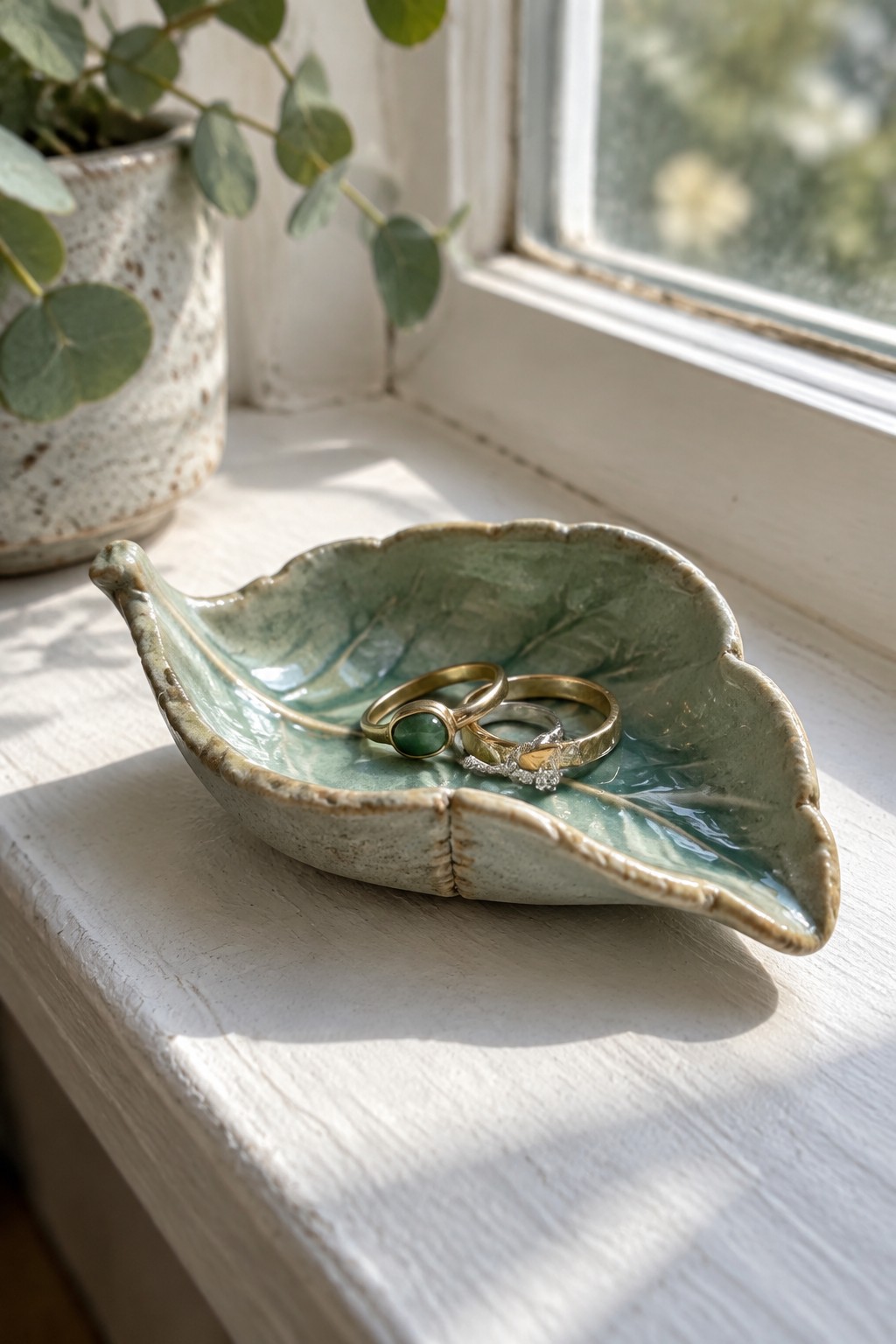
A slab-rolled leaf dish gives you a small, shallow tray shaped for holding rings or other tiny items. Cut a simple leaf outline from a flat piece of clay, press vein patterns into the surface, then lift and shape the edges to create a gentle curve. The green glaze settles into the texture and follows the natural contours without covering the handmade details.
What makes this idea useful is how the leaf form turns a basic slab into something that actually keeps jewelry organized on a nightstand or windowsill. You can change the leaf type or try a different glaze color to match whatever room it goes in. This works especially well as a fast project because it stays small and uses techniques that adapt easily to other shallow trays or catch-all dishes.
Marbled Slab Jewelry Tray
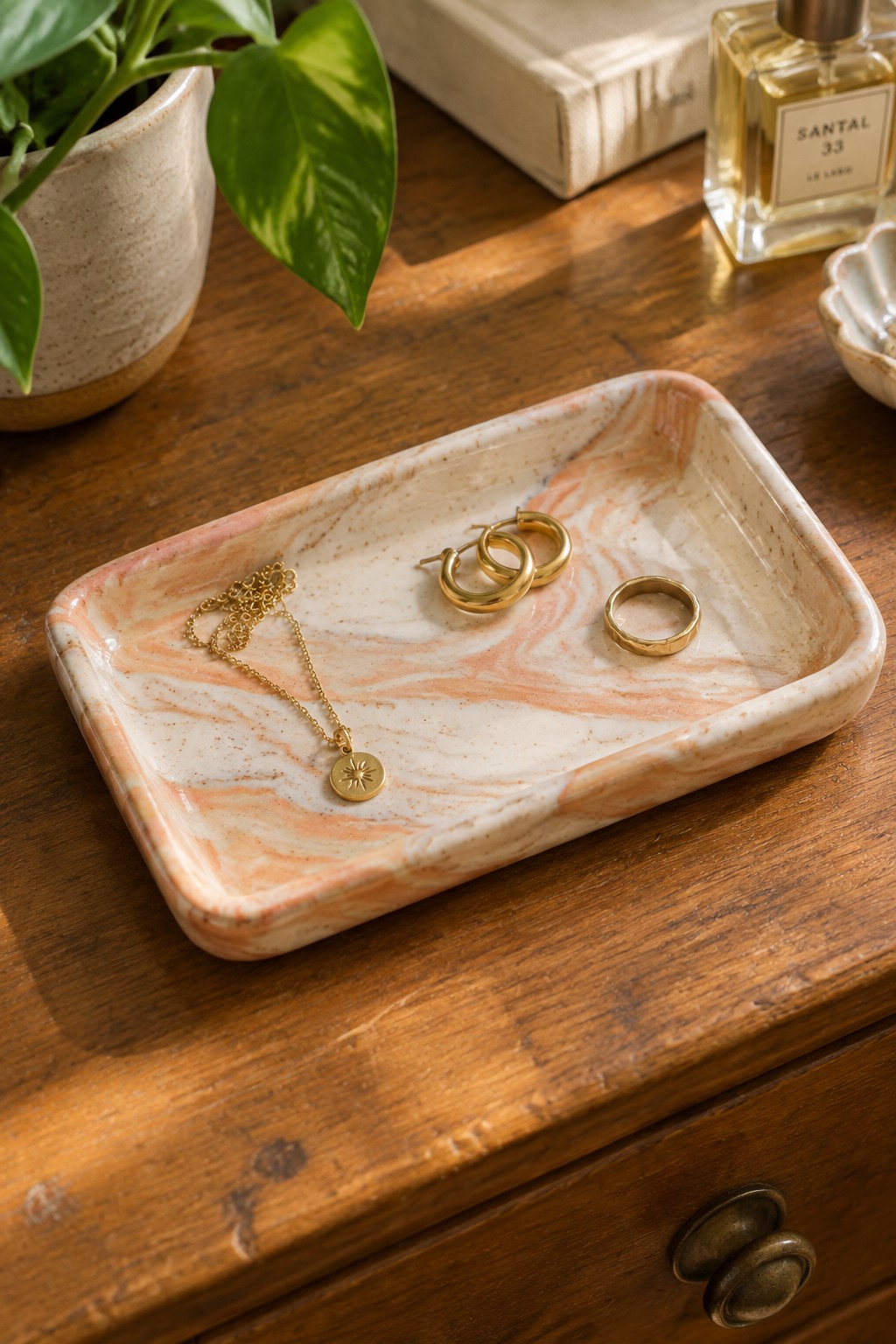
A rectangular slab tray with gently raised edges works well as a dedicated spot for rings, necklaces, and small everyday items. The marbled pink-orange and cream glaze covers the entire surface in soft, flowing patterns that come from blending two clay bodies or colored slips before rolling out the slab. This keeps the project simple while still giving it a finished, polished look that fits on a dresser, nightstand, or bathroom counter.
The shape does a lot of the work here because the shallow walls keep items contained without taking up much space. You can easily change the size to make a longer version for a vanity or scale it down into smaller square dishes for individual rings. A marbled surface like this also hides small rolling marks or uneven edges, which makes it a good choice when you want quick results that still look intentional.
Slab-Built Square Succulent Planter

A square planter formed from clay slabs creates a compact, structured container that suits small succulents. The stacked slabs form clean horizontal lines and a stable base, while the green glaze with controlled drips adds texture and variation across the surface. This approach keeps the focus on the plant rather than elaborate decoration and works for any space where a low-profile pot is needed.
The small scale makes this easy to adapt for different windowsill groupings or desk arrangements. You can swap the glaze for a matte finish or test a two-tone effect by glazing only the upper half. For gifts, the shape pairs well with a single succulent and travels without taking up much room. The same slab method can be adjusted to make a slightly taller version or a set of matching pots in different sizes.
Slab-Built Spoon Rest with Glazed Interior
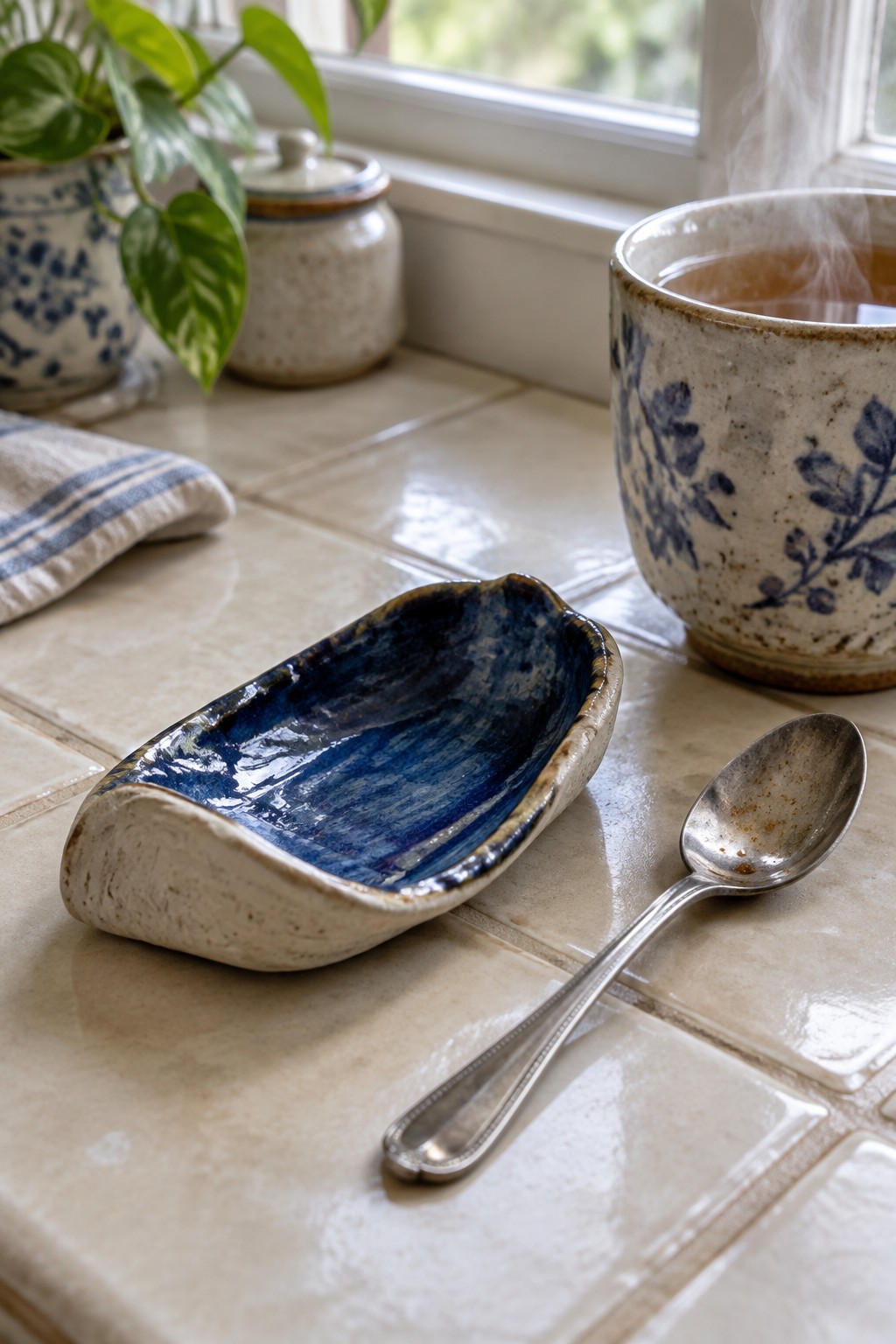
A small slab-formed dish works well as a spoon rest by keeping a shallow, elongated shape that catches drips without taking up much counter space. The piece uses a simple slab construction with an irregular rim and a smooth blue glaze on the inside that contrasts against the rough, unglazed exterior. This approach keeps the form functional while letting the glaze pool naturally in the center for visual interest. The small scale makes it a straightforward kitchen item that fits the slab pottery category without needing complex joins or molds.
The shape does a lot of the work here because the elongated curve holds a spoon steady while the low sides prevent liquid from spilling onto the counter. You could adapt the same slab method to make a tea bag rest, a small butter dish, or a holder for kitchen tools by changing the length or adding a slight curve at one end. In a kitchen setting this kind of piece stays useful without competing with larger dishes or mugs. For Pinterest, the strong glaze contrast and simple organic outline make it easy to photograph and recreate with different glaze colors.
Boat-Shaped Slab Tea Light Holder
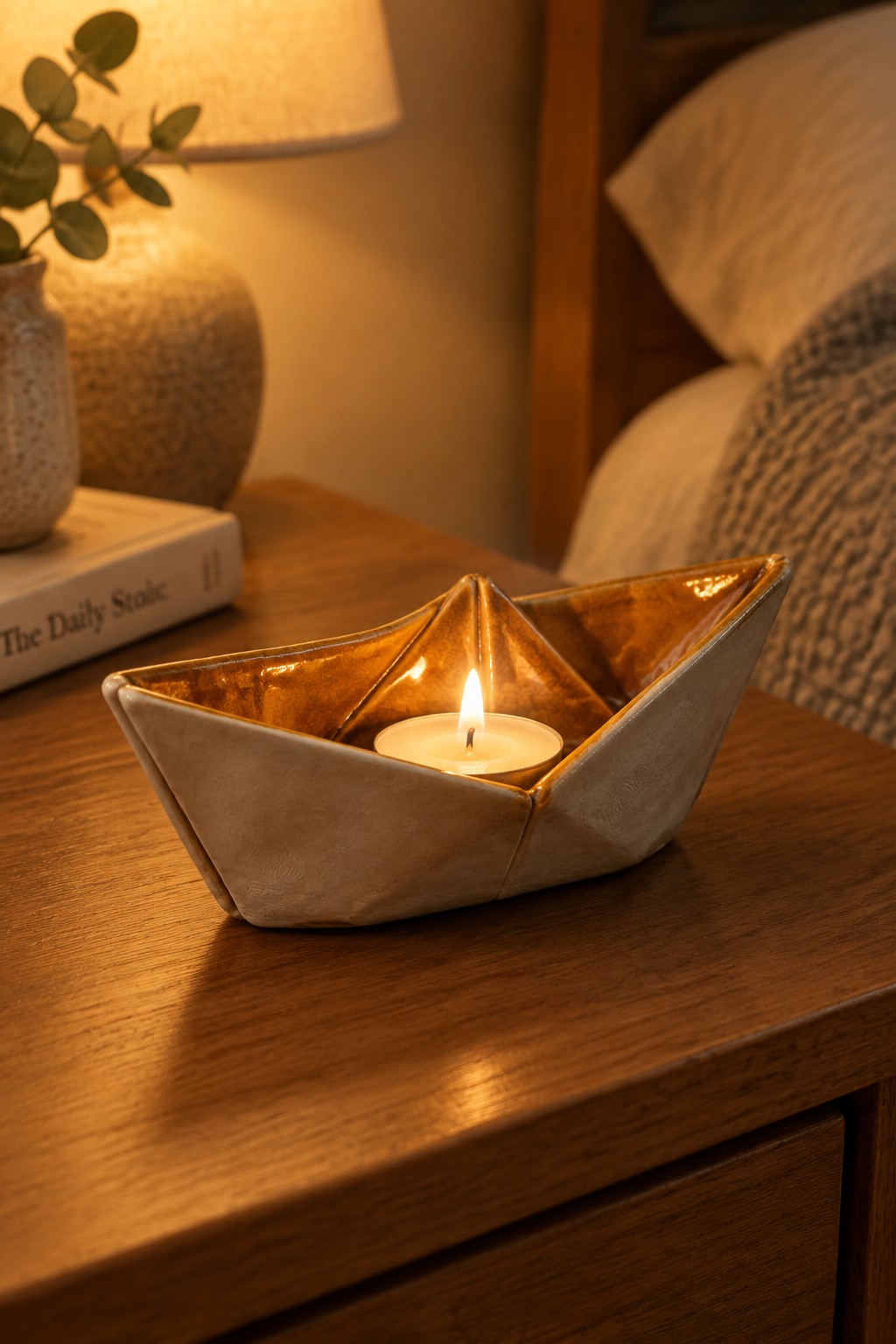
A slab-built tea light holder formed with sharp angular folds creates a low, open vessel that holds a single candle. The construction uses flat slabs joined at crisp angles to mimic a paper boat, giving the piece clean lines and an asymmetric profile. A matte exterior paired with a glossy interior glaze emphasizes the folds and helps reflect light from the flame. This approach works as a small decor object that highlights basic slab techniques without added handles or surface carving.
What makes this idea useful is how the folded shape keeps the candle contained while staying compact for a bedside table or desk. You could rework the same angles into a shallow tray for rings or change the interior glaze to a different color for seasonal use. The small size also means it requires little clay and space in the kiln, so it serves as a quick project for testing precise joins. In a living room or office, this kind of piece stands out on a shelf because the geometry reads clearly from a distance.
Botanical Relief Hanging Tile
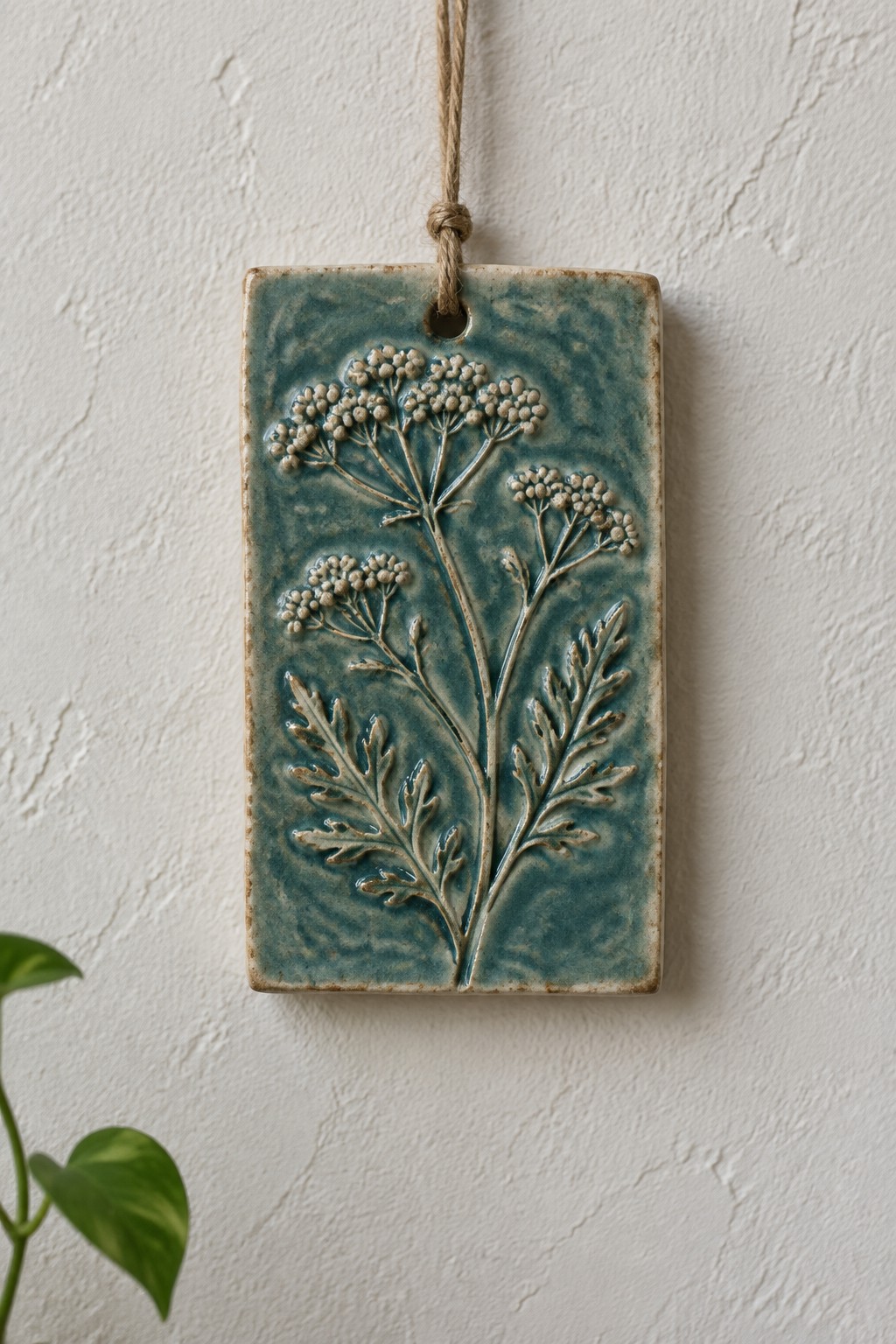
A flat rectangular slab serves as the base for this small hanging plaque, with a plant design pressed or carved in relief to create stems, feathery leaves, and clusters of tiny flower heads. The teal glaze pools in the recessed areas while the raised details stay lighter, giving the motif clear definition without extra painting or underglazes. This turns a basic slab into a finished decor piece that functions as wall art or a simple ornament.
What makes this idea useful is how the rectangular shape and single hanging hole keep construction straightforward while still producing something display-ready. The same slab method works with other plant motifs or even just leaf impressions if you want to vary the look. You could make several in different glaze colors and group them, or scale the size down for smaller versions to use as gift tags or shelf accents. The raised botanical detail photographs cleanly, which helps it stand out as a project worth trying.
Polka Dot Faceted Slab Mug
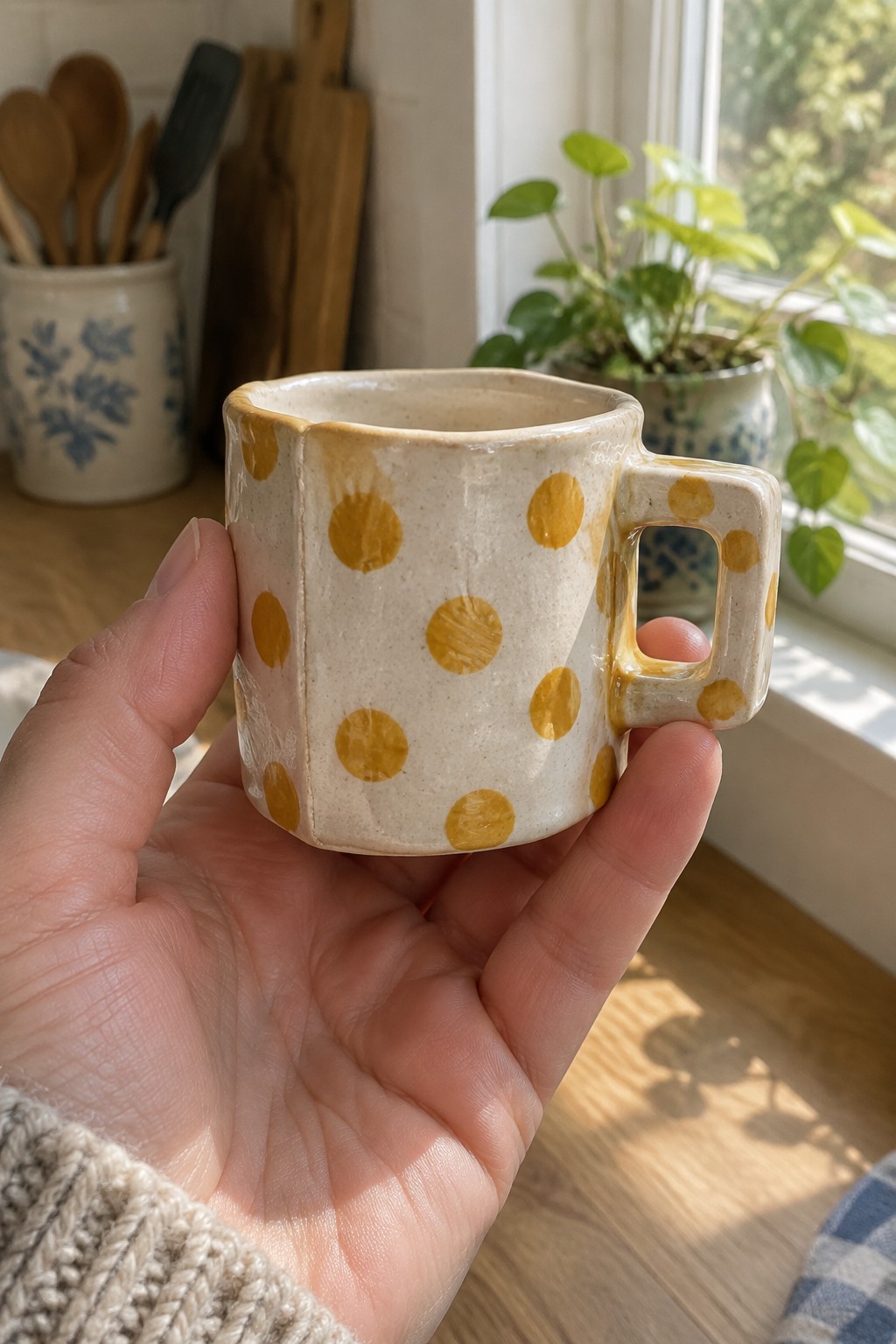
A small slab-built mug with flat angled sides works well when you want something more interesting than a standard round cylinder. The cream speckled glaze provides a neutral base while the scattered yellow dots add a simple repeating pattern that reads clearly even on a small form. The squared-off shape comes from rolling and joining slabs, then trimming the corners to create the faceted surface before adding a basic pulled or slab handle. This approach keeps the project quick since the decoration relies on basic stamping or brushwork rather than complex carving.
The small scale makes this easy to adapt for gifts or desk use without needing much clay or kiln space. You can change the dot color to match existing kitchenware or swap the pattern for stripes or simple shapes if you want a different look. The same faceted construction works for small planters or creamers if you adjust the height and rim. A piece like this stands out on Pinterest because the angular form and bold dots photograph cleanly against simple backgrounds.
Divided Pinch Bowl for Salt and Spices

A small hand-built ceramic dish with two connected oval compartments makes a practical server for coarse salt, pepper, or other seasonings. The irregular shape comes from soft slab or pinch construction, and the light blue speckled glaze keeps the surface easy to clean while adding subtle color variation. This format fits the kitchen item category and stays compact enough to sit beside a stove or on a dining table without taking much room.
What makes this idea useful is how the joined sections keep two ingredients separate yet close together in one piece. You could rework the same layout into a holder for cotton swabs and hair pins in a bathroom or for paper clips and rubber bands on a desk. The small scale means you can try different glaze combinations or add a simple foot ring without much extra clay. For Pinterest, the spilled-salt styling in photos helps the idea read as functional rather than purely decorative.
Slab-Built Soap Dish with Drainage Ridges
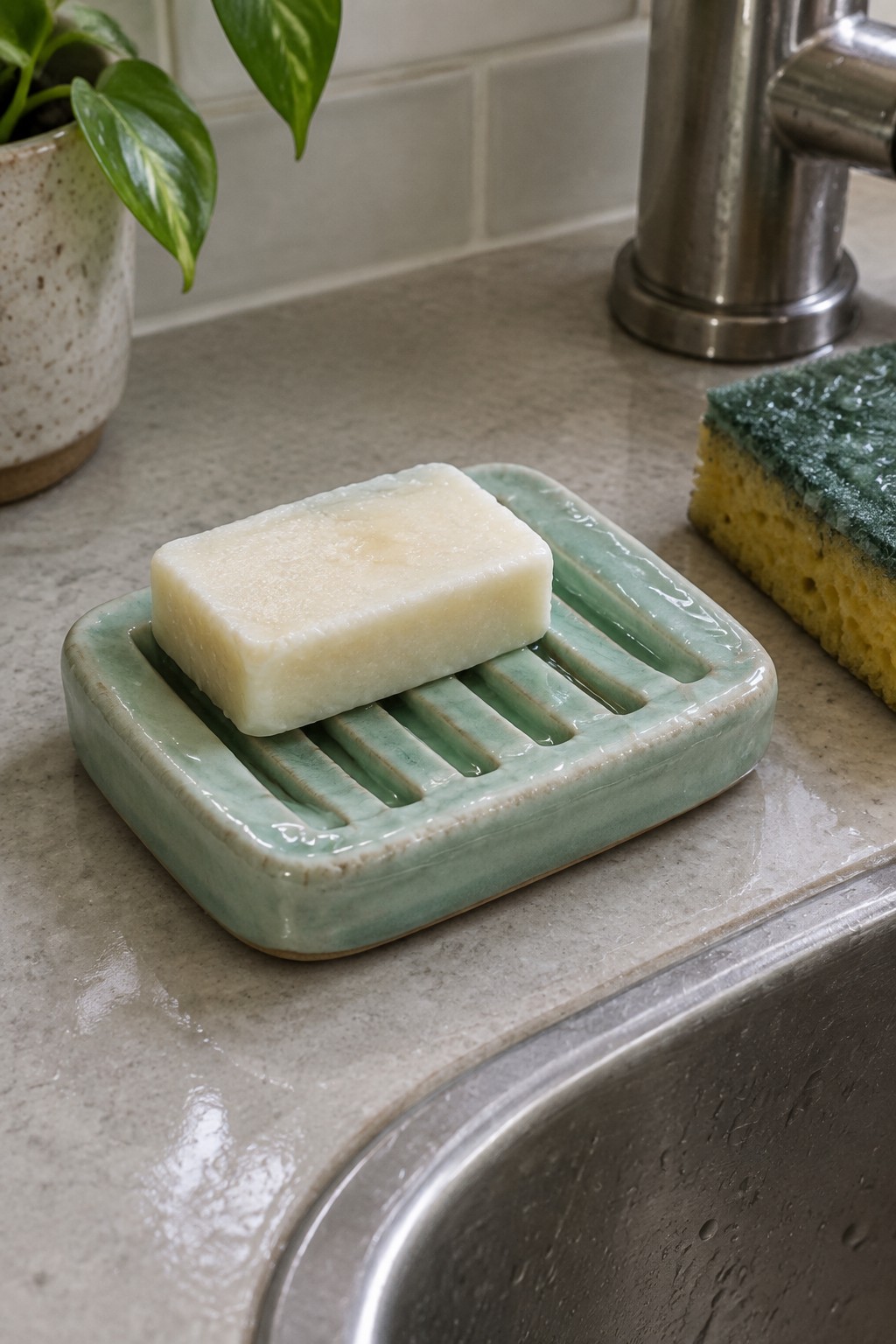
A slab pottery soap dish makes a practical bathroom or sink-side holder. The rectangular form has a series of parallel raised ridges that keep the bar elevated so water drains away instead of pooling underneath. A muted green glaze covers the clay and gives the piece a simple, finished surface that works with most sink areas. This project turns basic slab construction into a small, useful object that solves a common daily problem.
What makes this idea useful is how the ridges do the functional work without extra pieces or hardware. You could adapt the same layout into a slightly longer tray for a kitchen sponge or shrink the overall size for a ring dish. In a bathroom, the compact shape sits neatly beside the faucet and keeps the counter drier. The ridge pattern is also easy to vary by changing the spacing or number of bars if you want to try the idea again.
Bunny Slab Planter
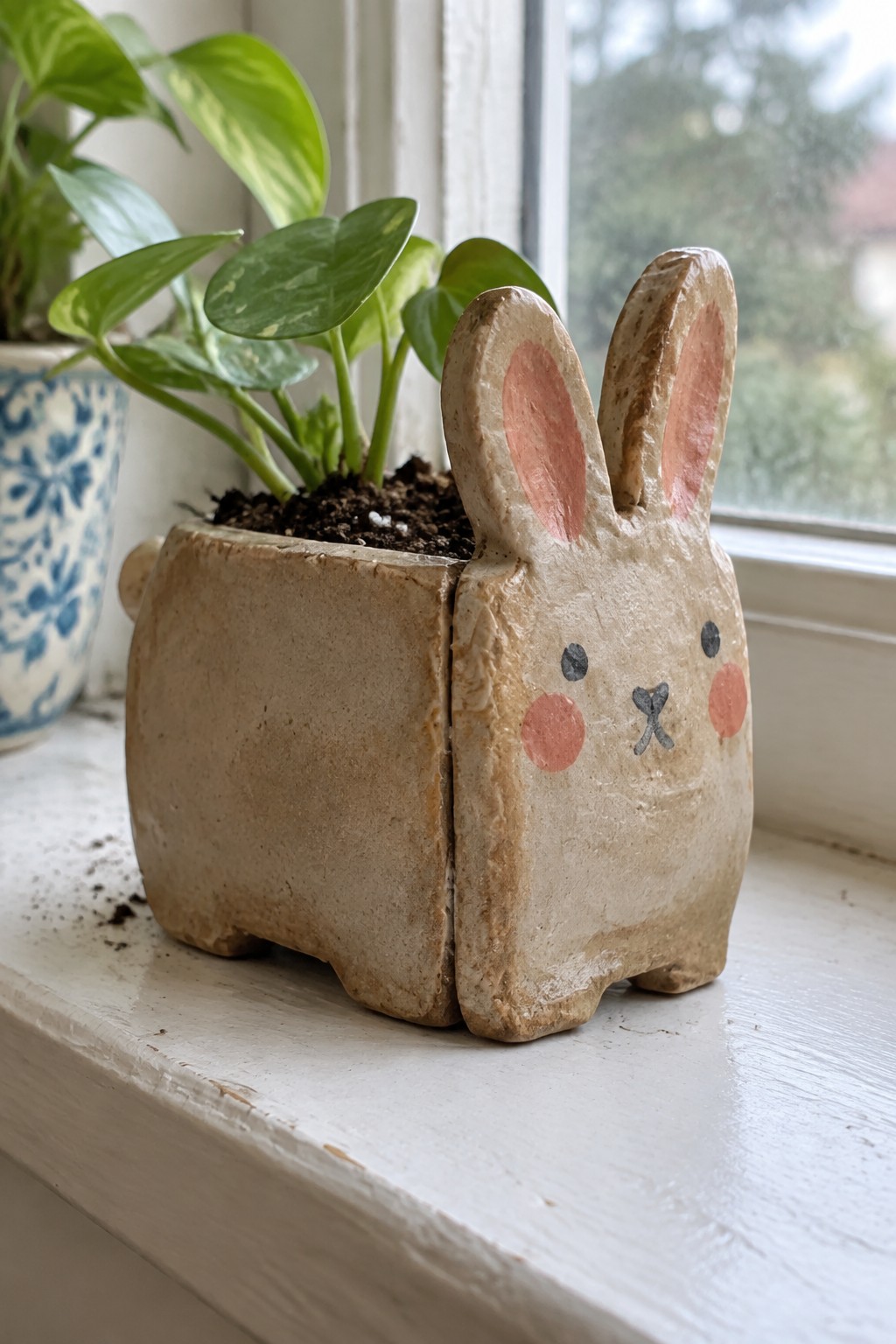
A slab-built planter formed into a simple box shape with upright ears added on top creates a small animal-themed container for houseplants. The flat sides come from rolling and joining slabs while the face uses basic painted marks for eyes, nose, and cheeks plus color on the inner ears. This keeps the construction straightforward and lets the silhouette carry the idea without extra surface texture or complex carving. The result lands in the small decorative planter category where the object doubles as both pot and accent piece.
The small footprint makes it practical for tight spots like windowsills or shelves where a round pot would crowd the area. You can adapt the same slab box by changing the ear shape or swapping the face for other simple motifs such as a cat or abstract pattern. Painted details instead of full glazing speed up the process and let you test color combinations quickly. For gifts the form works because it stays functional for a plant while the animal outline gives it a clear theme that photographs well for sharing.
Spiral Ceramic Ring Holder
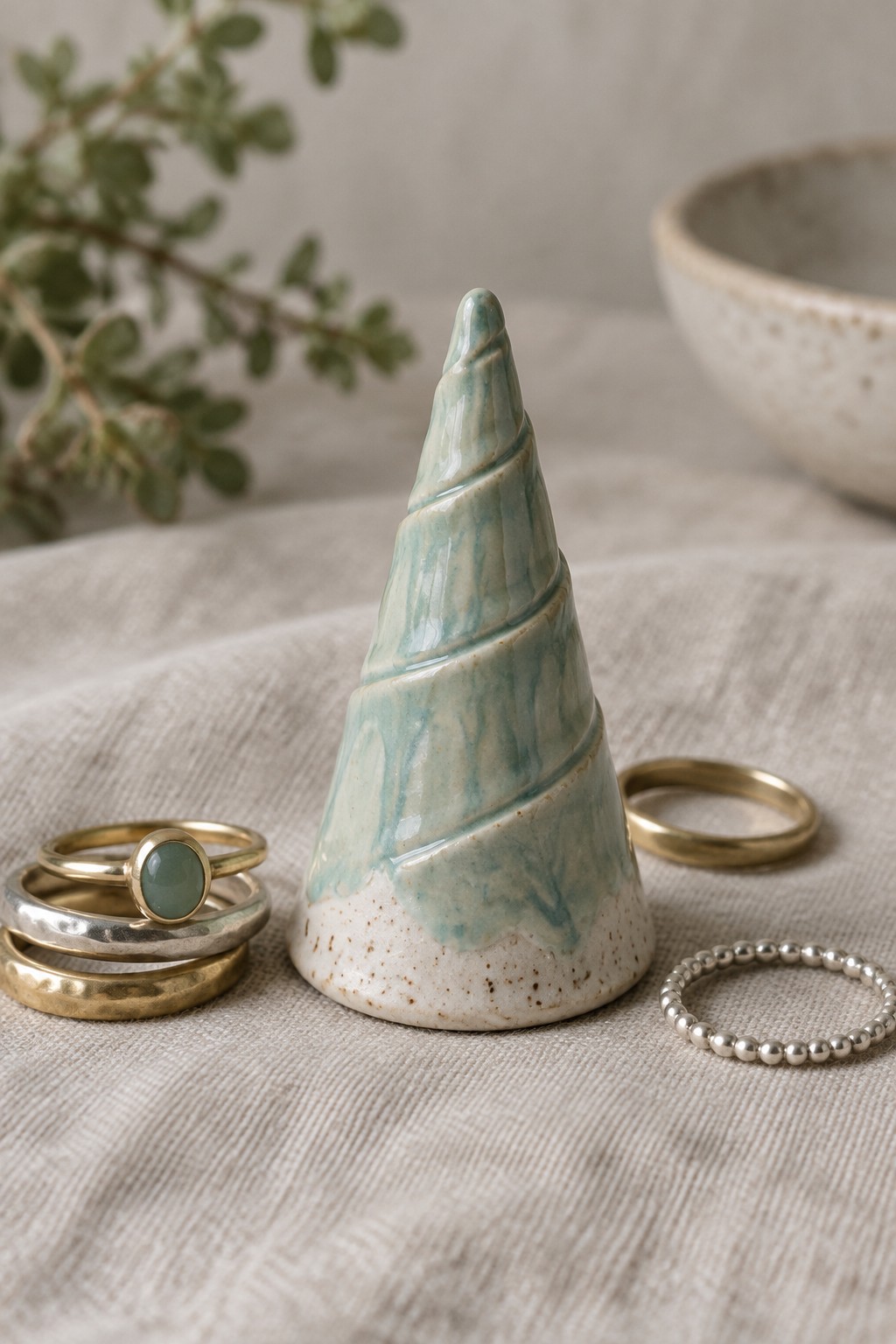
A spiral cone built from clay slabs works well as a ring holder because the twisting ridges give each ring its own resting spot at different heights. The form starts wider at the base and tapers upward, with the lower section left unglazed or lightly speckled while the upper spirals carry a flowing blue-green glaze. This contrast keeps the piece simple yet visually balanced, and the handmade surface shows the slight unevenness that comes from hand-building rather than a mold.
The shape does a lot of the work here since the spiral naturally prevents rings from sliding off without needing extra notches or grooves. A piece like this works especially well on a nightstand or bathroom counter where space is limited but a few rings need daily access. You can adapt the same idea by shortening the cone for a desk version or stretching the spiral wider to hold bracelets instead. For a gift, something like this stands out on Pinterest because the sculptural twist reads as intentional rather than just another flat dish.
Honeycomb-Textured Slab Box
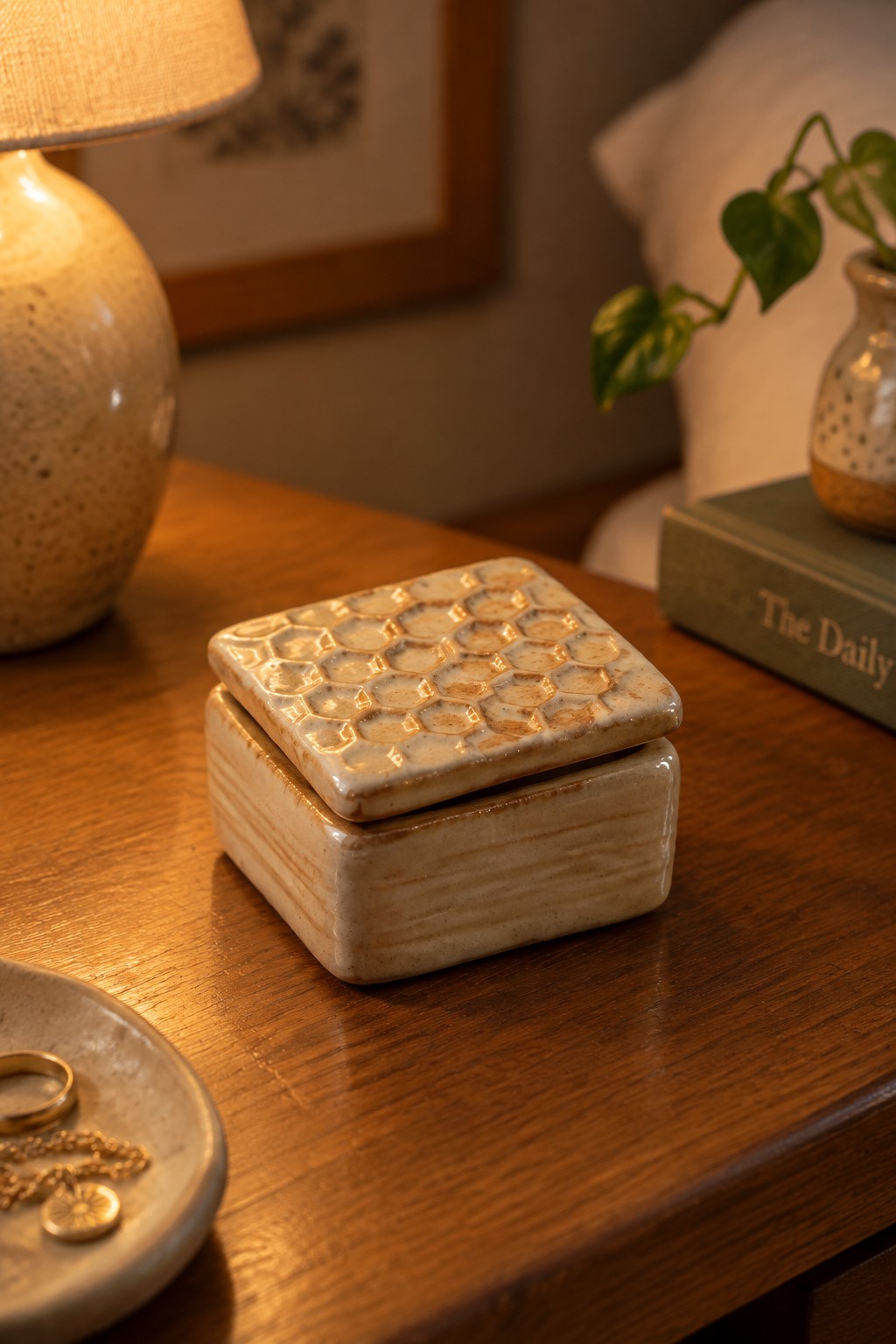
A small square lidded box made from slabs gives you a compact container for rings or other small items. The lid carries a repeated hexagonal stamp that creates a grid-like surface pattern, while the base shows simple horizontal ridges from the slab work. A light neutral glaze keeps the texture visible and lets the form stay the focus. This project stays within basic slab techniques yet produces a finished piece that reads as intentional rather than plain.
The small scale means you can make one in an afternoon and still have room to experiment with different stamps on future lids. The same construction works for a stack of boxes in varying heights if you want matching pieces. Swapping the honeycomb stamp for lines or dots changes the look without altering the build steps. A piece like this sits easily on a dresser or desk and still leaves surface space clear.
Rectangular Slab Pendants
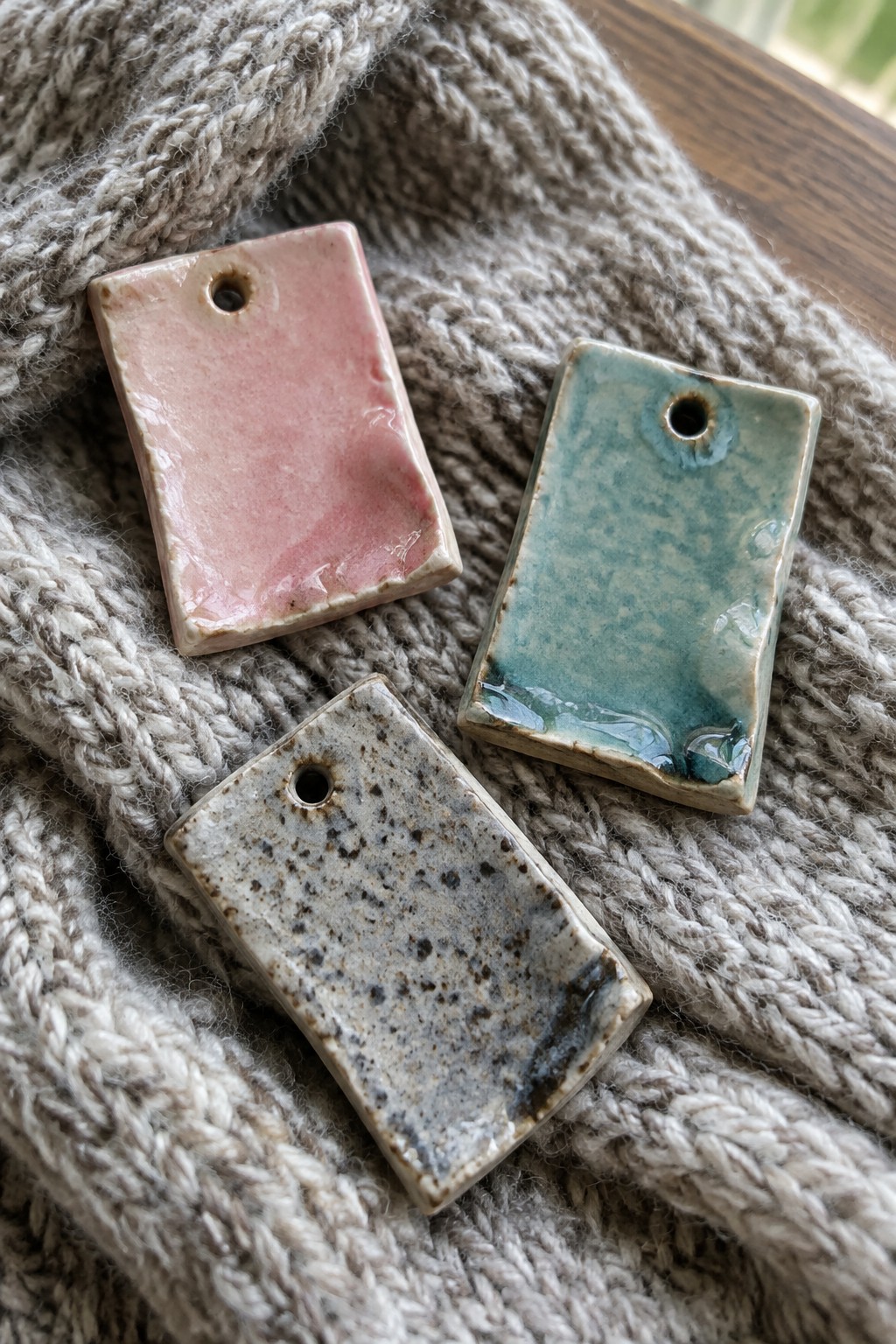
Rectangular slab pendants are cut from thin clay sheets into small flat rectangles and finished with a single hole near the top edge for hanging. Each piece receives a different glaze, producing solid pink, mottled turquoise, and speckled neutral surfaces that emphasize the simple shape. The slight variation in edge lines and the glossy finish keep the focus on color and proportion rather than added detail.
What makes this idea useful is how quickly the same template can be resized for plant markers, key tags, or necklace pendants. The flat form stacks easily for glazing and firing, and swapping glazes or adding a stamp changes the look without new tools. In a kitchen or craft room these tags stay visible on a hook or shelf while taking almost no space to store.
Small Contrasting Bowls on a Speckled Slab Plate
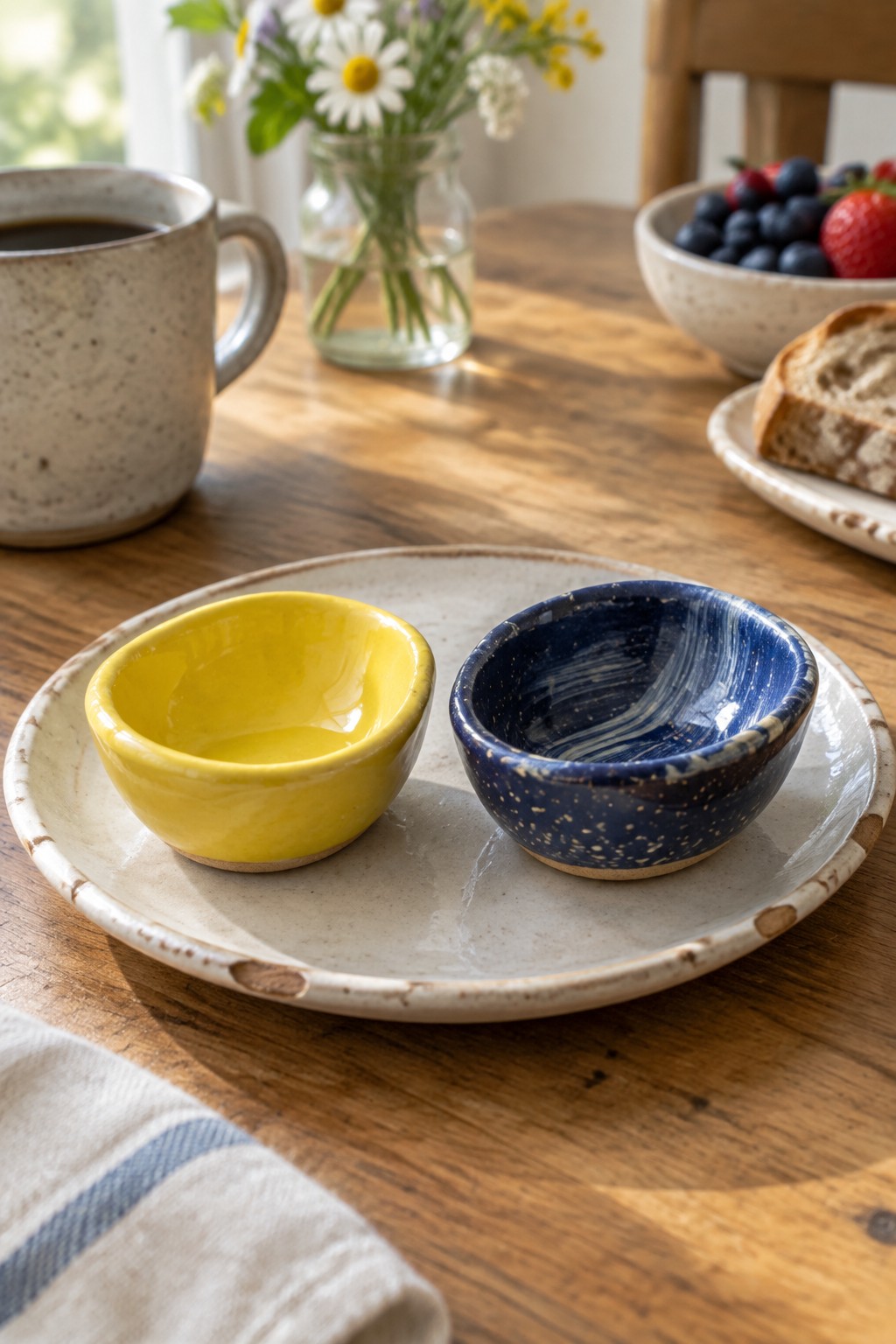
Two small bowls in solid yellow and blue swirled glaze rest on a larger speckled plate made from slab clay. The bright single-color bowl next to the fluid pattern creates clear visual contrast without needing extra decoration. This setup functions as a compact serving piece for dips, sauces, or snacks where the plate keeps everything together.
The small scale makes the bowls simple to form from slabs or basic pinched shapes while the plate can be rolled out flat and trimmed for a clean edge. You could change the glaze colors to match your dishes or add a stamped texture to the plate for more interest. This kind of set works well for kitchen use or as a gift because it stays practical and fits easily on a table.
Slab-Built Multi-Slot Toothbrush Holder
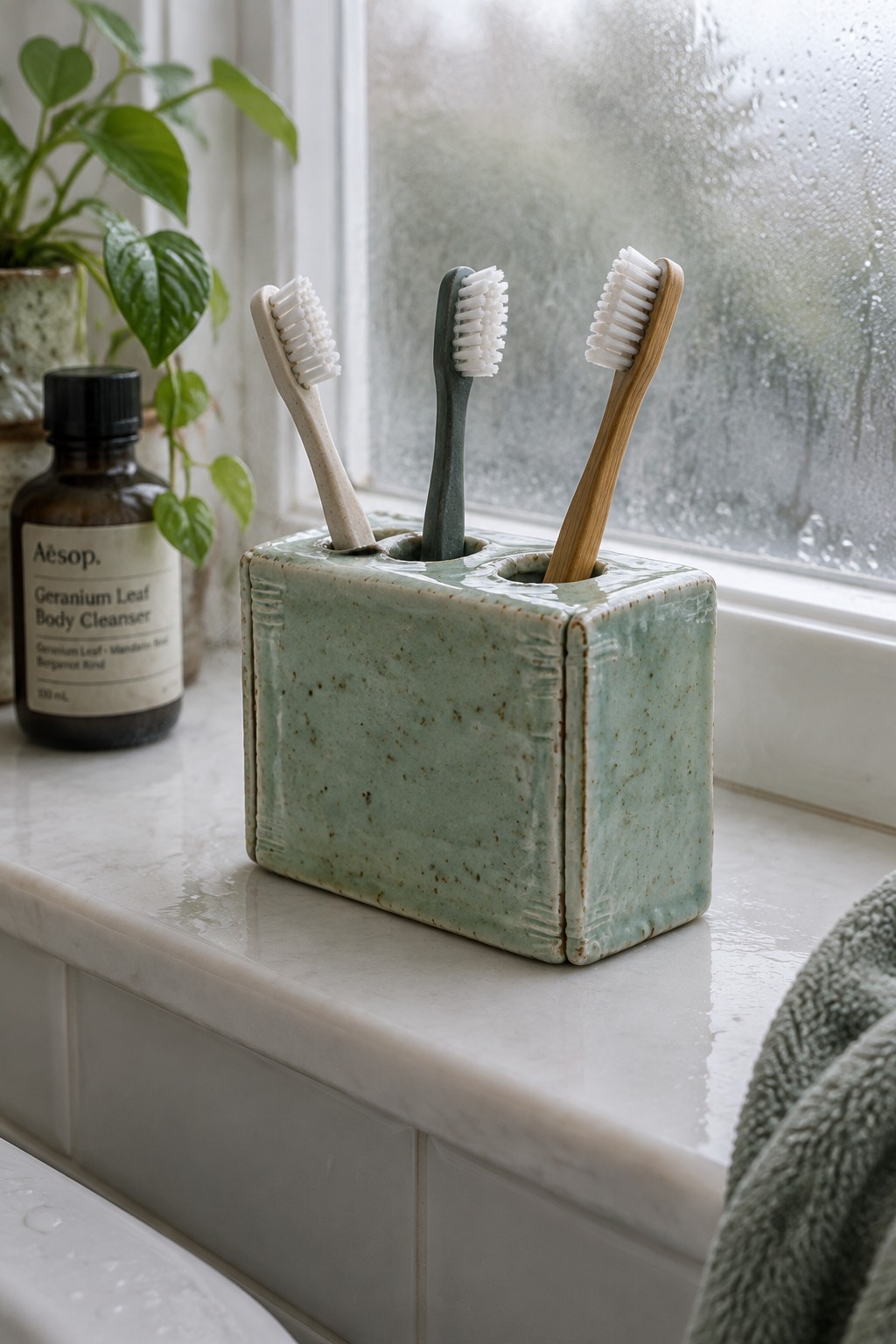
A rectangular ceramic caddy formed from joined slabs creates a stable bathroom holder with three evenly spaced openings for toothbrushes. The light green speckled glaze covers the exterior while leaving the clay texture visible, and the low, boxy shape keeps the piece compact on a counter or windowsill. This approach works as a bathroom item because the flat sides and drilled holes produce a functional grid without extra parts or hardware.
What makes this idea useful is that the slab method lets you change the length or add more holes to match the number of brushes in a household. The same base shape can be shortened into a two-hole version for a smaller sink or widened for a shared bathroom. You could also adapt the form into a desk pen holder or a small tool caddy by adjusting the hole size and depth. A piece like this shows up well in searches for practical ceramic bathroom storage because it solves an everyday need with simple construction.
Rectangular Slab Incense Holder
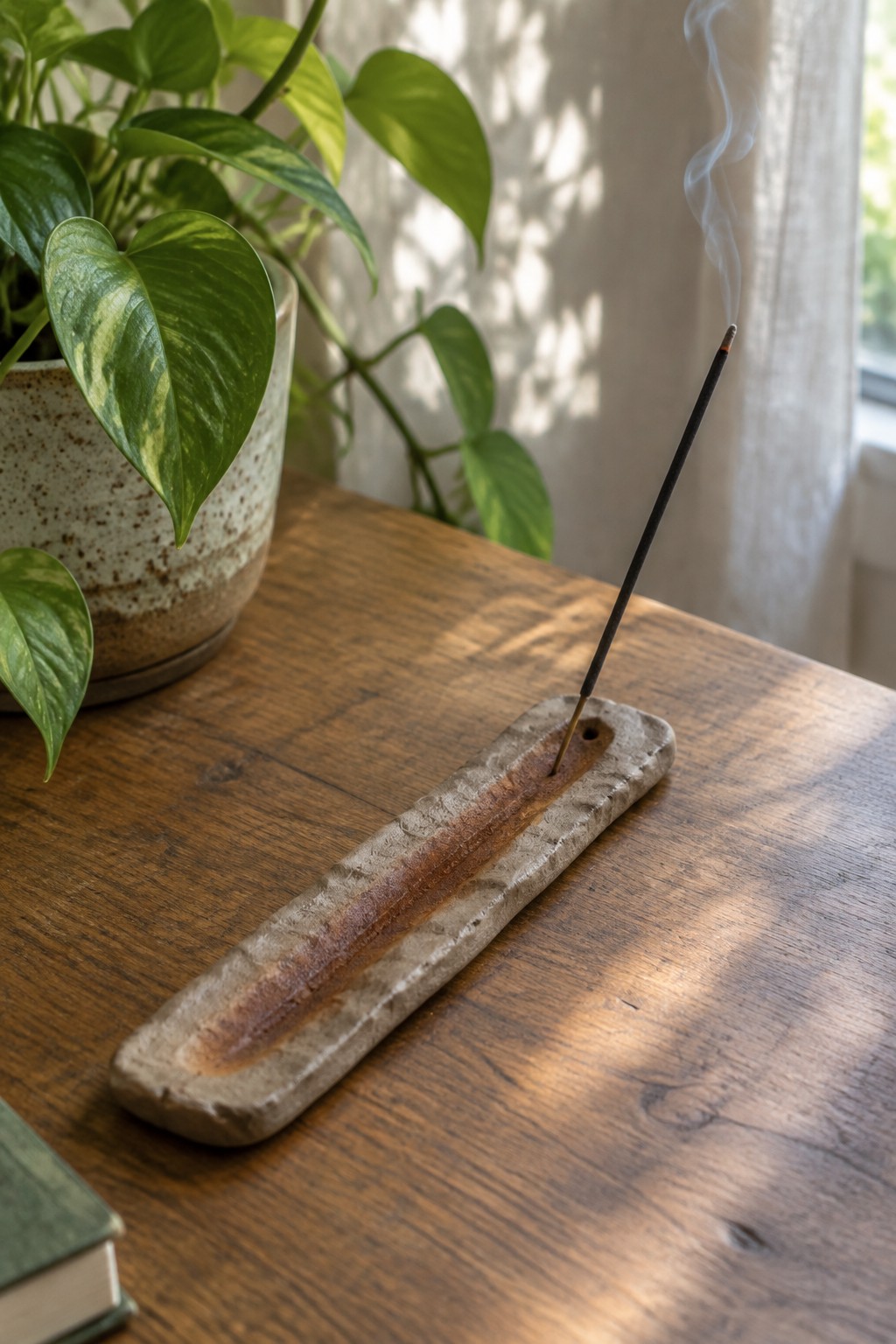
A long, narrow tray formed from a single slab of clay makes a practical holder for burning incense sticks. The maker rolled out a flat piece, cut it to shape, and added a small hole near one end so the stick stands upright while ash falls along the surface. A shallow channel or textured area down the center keeps residue contained, and the simple rectangular form keeps the piece compact.
This shape works especially well on a desk or shelf where space is limited. You can easily change the length, press in different textures, or add a second hole if you want to burn two sticks at once. The same slab method could be shortened into a ring dish or lengthened into a narrow plant saucer. Its clean lines also make it a straightforward project to photograph and share.
Slab-Built Wall Pocket Planter
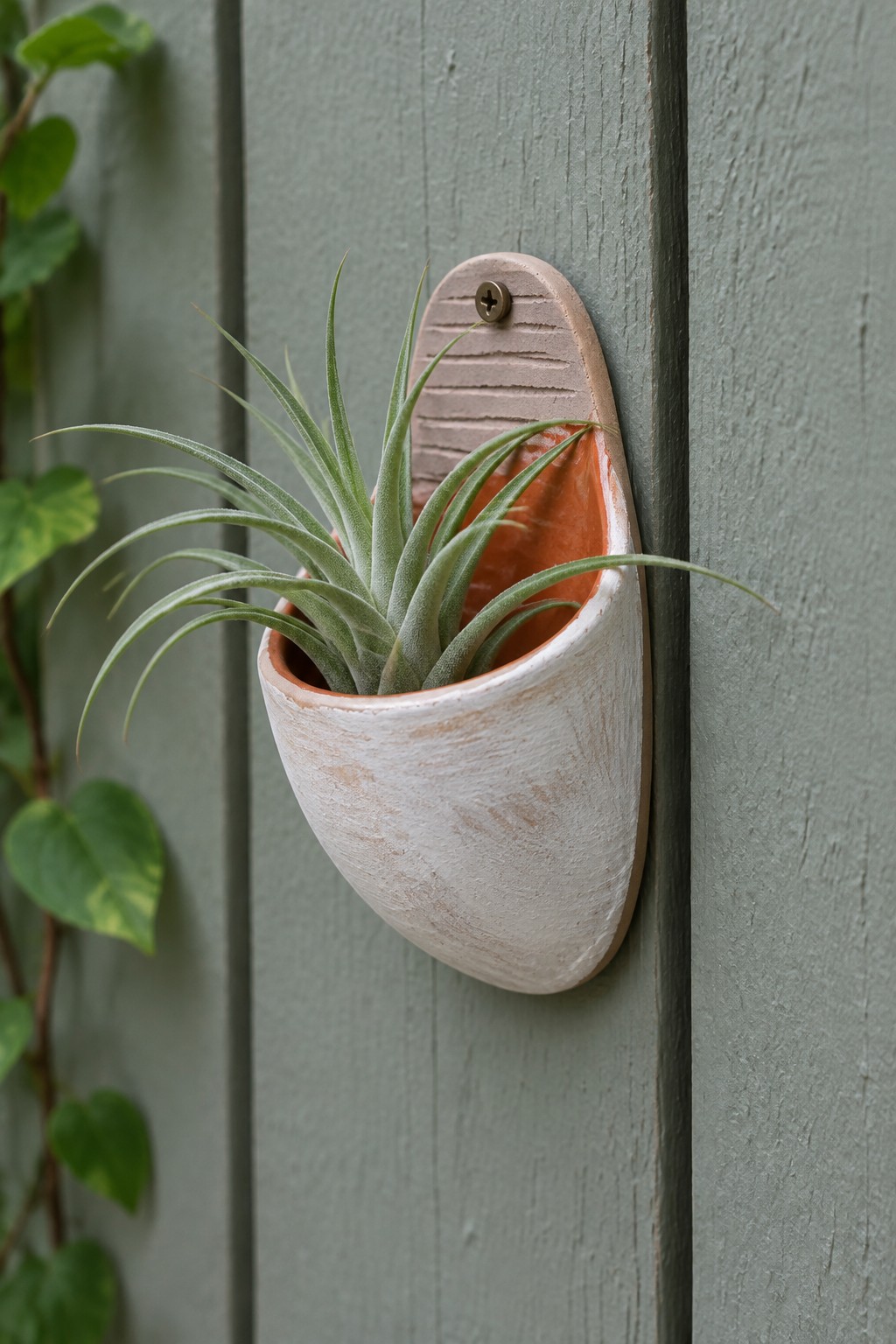
A slab-built wall pocket planter creates a compact holder for air plants or small succulents that hangs directly on a wall. Flat clay slabs are joined and shaped into an asymmetrical curved pouch with an open top and a flat tab at the back for mounting. The white exterior finish pairs with the unglazed terracotta interior to keep the focus on the plant while adding subtle contrast. This project works as a small decorative planter that fits into tight vertical spaces where a traditional pot would not.
What makes this idea useful is how the single-screw mounting tab keeps installation simple and lets you group several pockets together. You could adapt the shape by widening the opening or adjusting the curve to fit different plant sizes, or switch the exterior color to blend with your wall. For a gift, something like this stands out because it requires almost no maintenance once the plant is placed. The small scale also makes it easy to turn the same slab method into a set of matching pockets with varied heights.
Three-Section Divided Tray
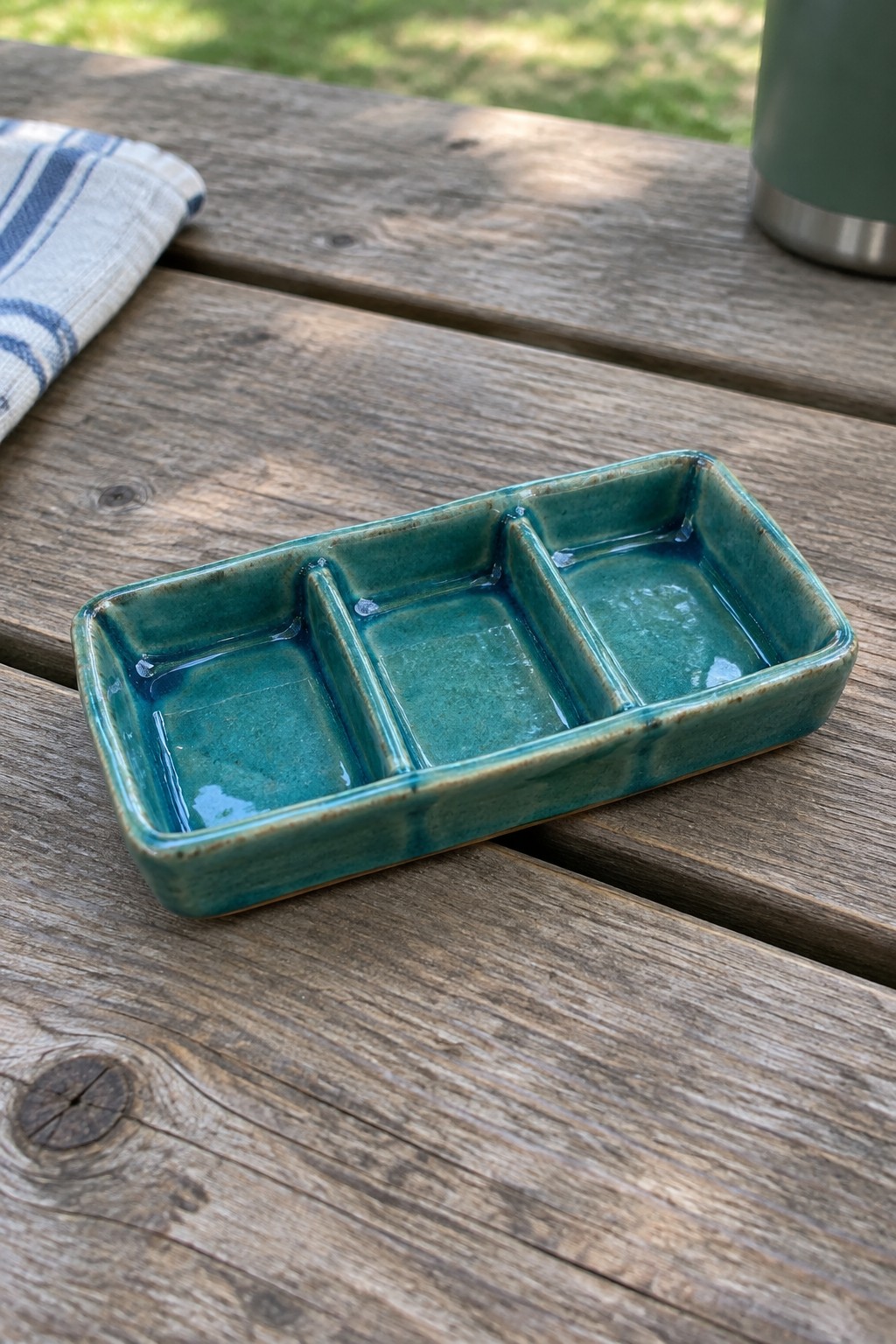
A hand-built rectangular tray with two internal walls creates three separate compartments in one compact piece. The slab construction keeps the walls straight and the base flat, while the glossy teal glaze highlights the clean edges without adding extra decoration. This style works as a small serving dish for sauces, snacks, or condiments that need to stay separated.
What makes this idea useful is how easily the same slab layout can be adjusted for different uses. You can shorten the dividers to make two larger sections instead of three, or stretch the overall shape for a longer desk organizer. The small size means it fires quickly and takes up little shelf space, which helps when making several as gifts. Changing the glaze to a matte finish or adding a simple stamped pattern on the base gives you a quick variation without changing the build.
Triangular Corner Jewelry Dish
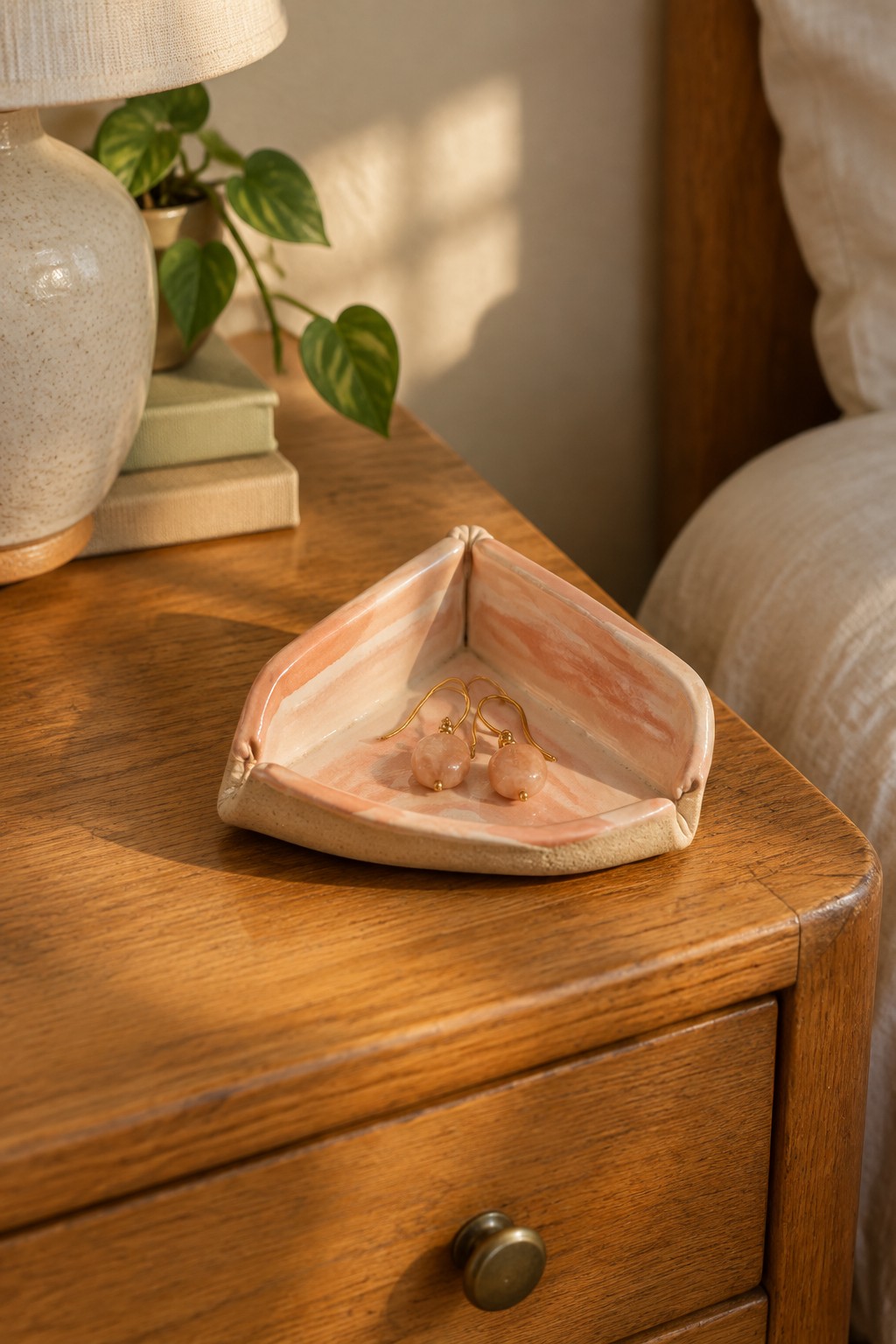
A small triangular dish built from clay slabs creates a compact holder that fits neatly into corners on dressers or nightstands. The marbled pink and white glaze produces a soft streaked surface that highlights the handmade form without added decoration. This shape works as a simple jewelry tray for earrings, rings, or small items that need a contained spot.
The compact size makes it practical for tight surfaces like bedside tables or bathroom counters. You could adapt the same corner fold in different glaze colors to match existing decor or stretch the shape slightly longer for a soap rest. For gifts, the tray holds a pair of earrings inside so it is ready to give without extra packaging.
Square Slab Ring Dish with Two Tone Glaze
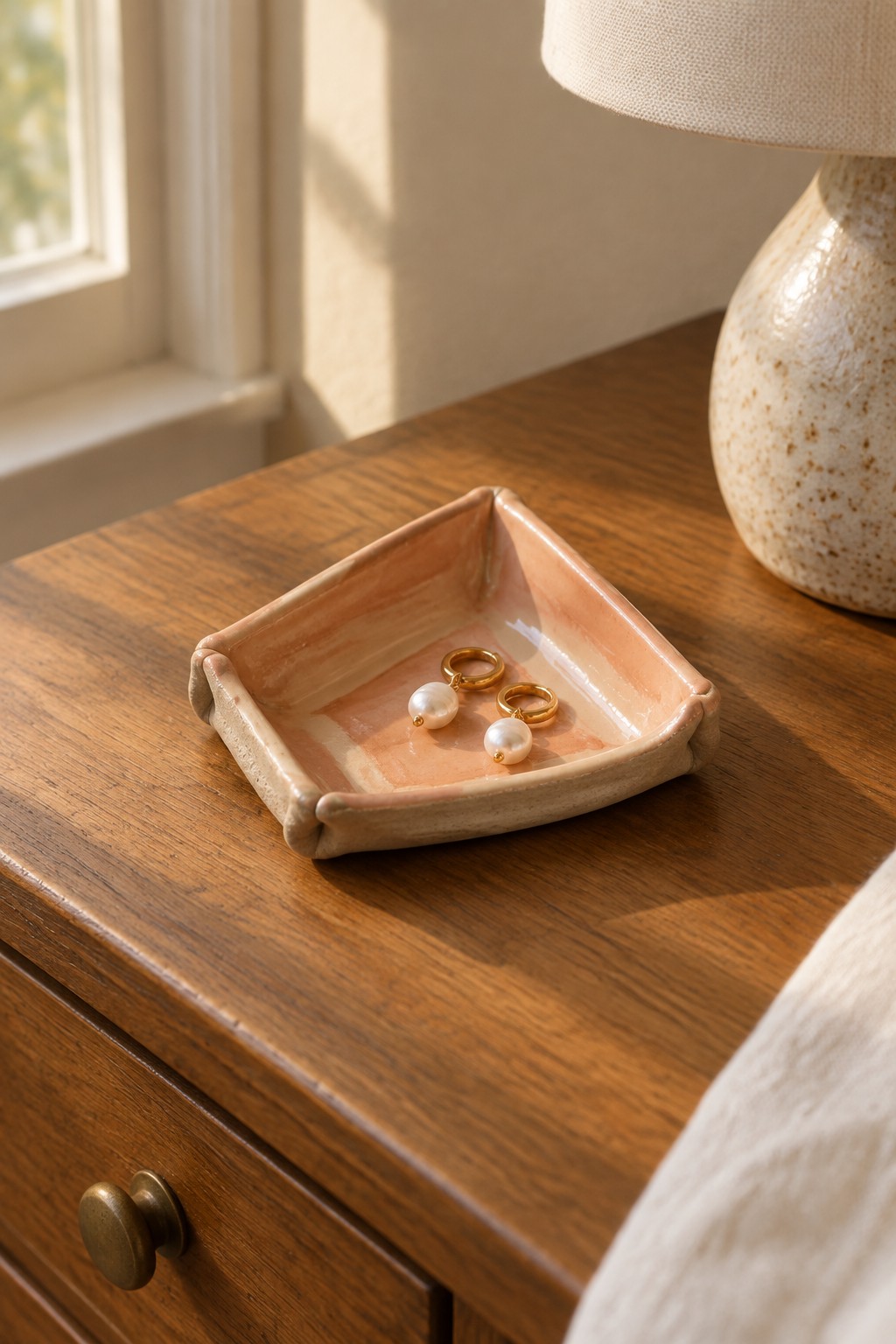
A small square tray rolled from a slab of clay works well as a ring dish or jewelry catchall. The shallow form has softly folded corners and a simple rim that stays unglazed on the outside. A warm peach glaze covers just the interior, leaving the natural clay visible along the edges for a clean contrast. This approach keeps the project quick while still producing a finished piece that fits on a nightstand or dresser.
What makes this idea useful is how easily the size and proportions can be adjusted from one slab. You can make a wider version for bracelets or shrink it down for travel use. The two-tone glaze treatment translates to other colors without extra carving or texture work. In a bathroom this same shape works as a small soap rest or a place to keep hair ties.
Frequently Asked Questions
What basic tools are required to create the slab pottery ideas mentioned? A rolling pin or slab roller, a set of wooden guides for even thickness, a scoring tool, a sponge, and basic cutting wires or knives are essential starters. These allow you to roll consistent slabs, cut shapes accurately, and join pieces without distortion. Start with a work surface covered in canvas to prevent sticking, and keep a spray bottle handy for moisture control during assembly.
How long should I let my slab projects dry before firing them? Allow small slab pieces to dry slowly over several days to a week depending on thickness and humidity levels. Check for leather hard stage after 24 to 48 hours, then cover loosely with plastic to even out moisture. Once bone dry with no cool spots when touched to your cheek, they are ready for bisque firing. Rushing this step often leads to cracks.
Can I use these ideas with air dry clay instead of kiln fired clay? Yes, many of the small slab ideas adapt well to air dry clay for quick decorative items like trays or ornaments. Roll slabs to about quarter inch thickness, assemble with slip made from the same clay, and let dry completely over a few days. Seal finished pieces with a waterproof varnish to improve durability since they will not be fired.
What are common mistakes to avoid when making small slab pottery items? Avoid rolling slabs too thin which causes warping or joining edges without proper scoring and slipping which leads to separation. Do not let pieces dry unevenly by exposing one side to direct air, and always support forms with props during drying to maintain shape. Test your clay consistency first on a sample slab to prevent surprises in larger batches.
How can I personalize the 20 distinctive ideas for my own style? Incorporate textures from household items like lace or leaves pressed into the slab surface before cutting. Add unique handles or feet using coils, or experiment with underglaze colors and patterns that reflect your theme. Scale dimensions slightly or combine two ideas such as a textured box with a tiled lid to create something entirely new while keeping the project small and manageable.

Pottery Path is my cozy corner of the internet where I share clay ideas, pottery inspiration, and simple projects you can recreate at home. I love exploring everything from air dry clay to handbuilt pottery to cute minis that brighten your day. My goal is to make clay crafting feel easy, fun, and welcoming for anyone who wants to try it.
You will find beginner friendly tutorials, creative pottery painting ideas, and lots of warm inspiration for slow and happy crafting. If you enjoy hands on creativity, this space will feel like home.