
I like working with clay to create bowls that I can actually use every day.
Floral motifs add a bit of interest to the surface without overwhelming the shape.
I have experimented with different techniques over time to get the look I want.
Some of the ideas in this list are ones I came up with myself and others are variations I have seen.
They might help if you are looking for something new to try in your own pottery.
Impressed Daisy Motif on a Small Speckled Bowl

A small ceramic bowl with a single large flower pressed into the base gives the design a clear focal point. The motif is created by stamping or carving the clay so the petals sit lower than the surrounding surface, then applying a light speckled glaze that pools slightly in the recessed areas. This keeps the piece simple while making the flower stand out through texture rather than added color. The shallow form works as a ring dish, spice bowl, or small catch-all.
The small scale makes this easy to adapt for different uses without needing much clay. You could press the same flower into the bottom of a larger plate or repeat it on a set of four small dishes for a consistent look. In a kitchen or bathroom, the neutral glaze lets it blend with other items while the central motif keeps it from feeling plain. For a gift, something like this can be finished quickly once you have a stamp made.
Cherry Blossom Branch Bowl

A wide ceramic bowl with a light speckled glaze carries hand-painted cherry blossom branches in soft pink. Thin dark lines form the branches while small clusters of five-petaled flowers and a few loose petals follow the interior curve. The horizontal ridges from the wheel add quiet texture beneath the glaze. This painted motif approach keeps the bowl shape simple while letting the floral design do the visual work.
What makes this idea useful is how the branches wrap naturally around the bowl without filling every space. You could scale the same motif down for smaller bowls or stretch it across a larger serving dish by adding more length to the stems. In a kitchen this piece works well for holding fruit or bread because the light background stays neutral while the pink flowers give it seasonal interest. The design also translates easily to mugs or plates if you repeat just one short branch instead of a full spread.
Flower Petal Pedestal Bowl

A footed ceramic bowl shaped like an open flower gives a clear way to add a floral motif without relying on surface painting alone. The petals are built up around the rim with visible ridges and folds, then covered in a red-to-orange glaze that pools in the crevices. The short pedestal base lifts the bowl off the surface and keeps the petal form as the main feature.
What makes this idea useful is the way the sculpted rim does most of the visual work. You could adapt the same petal construction to a low plate or a small catch-all dish by shortening the base. The color gradient works on any clay body, so the shape stays readable even if you change the glaze. For a gift version, keep the size similar and use a single glaze color to speed up the process while still keeping the flower outline.
Wildflower Impressed Green Bowl

A wide ceramic bowl carries pressed botanical patterns around the exterior made from flower and stem stamps. The designs sit just below the rim in a repeating band that shows different wildflower shapes without overlapping. A soft green glaze covers the upper portion while the lower section stays unglazed to show the clay body.
What makes this idea useful is how the impressed band can be changed by swapping in different plant stamps or pressing real dried stems. The wide shape works for holding fruit, bread, or as a catchall on a table. You could scale the same motif down for smaller bowls or apply it vertically on a taller vase to create a coordinated set.
Nested Pastel Bowls with a Painted Daisy

A set of three nesting ceramic bowls uses soft blue, mint green, and pink glazes to create a compact stack that still shows each color layer. The smallest pink bowl carries a single hand-painted daisy centered on its base, keeping the floral motif small and contained. This idea fits the bowl category well because the nesting form gives everyday function while the simple flower provides a clear focal point without covering the whole surface.
What makes this idea useful is that the graduated sizes let you store the bowls together yet pull out just one when needed. You could repeat the same color sequence on a set of ramekins or move the daisy to the rim of the middle bowl for a different look. In a kitchen, this kind of piece works for prep, snacks, or small sides, and the painted detail makes it easy to personalize by swapping in other small flowers.
Blue Floral Motif on a Handmade Ceramic Bowl

A wide ceramic bowl with a soft, speckled glaze holds a loose arrangement of blue flowers and leaves painted across the interior. The design uses broad brush strokes to fill the space with layered blooms and stems without overcrowding the surface. The contrast between the deep blue pigment and the light clay body makes the pattern stand out while the simple shape keeps attention on the painting itself. This approach works as a straightforward way to add a floral motif to a functional bowl.
The wide opening lets the painted design show clearly when the bowl sits on a table or shelf. You could scale the same loose brushwork down for smaller bowls or repeat it on the outside of a taller form. In a kitchen, this kind of piece serves well for holding fruit or bread because the interior pattern stays visible. The blue and white palette also translates easily if you want to try the idea on plates or a shallow tray instead.
Sunflower Relief Mixing Bowl

A wide ceramic mixing bowl with raised sunflower motifs sculpted around the exterior creates a practical kitchen piece. The flowers are formed with layered petals and textured centers that catch light against the matte off-white glaze. This approach keeps the floral detail on the outside so it does not interfere with the smooth interior surface used for dough or salads.
What makes this idea useful is the deep shape that supports actual mixing while the sunflowers add enough detail to stand out on open shelving. You could scale the same relief pattern down for a set of smaller prep bowls or stretch it into a longer band on a serving platter. The neutral glaze makes it easy to match with existing kitchenware, and the carved motif would still read clearly even if simplified to two flowers instead of three.
Petal Rim Bowl with Radiating Brush Strokes
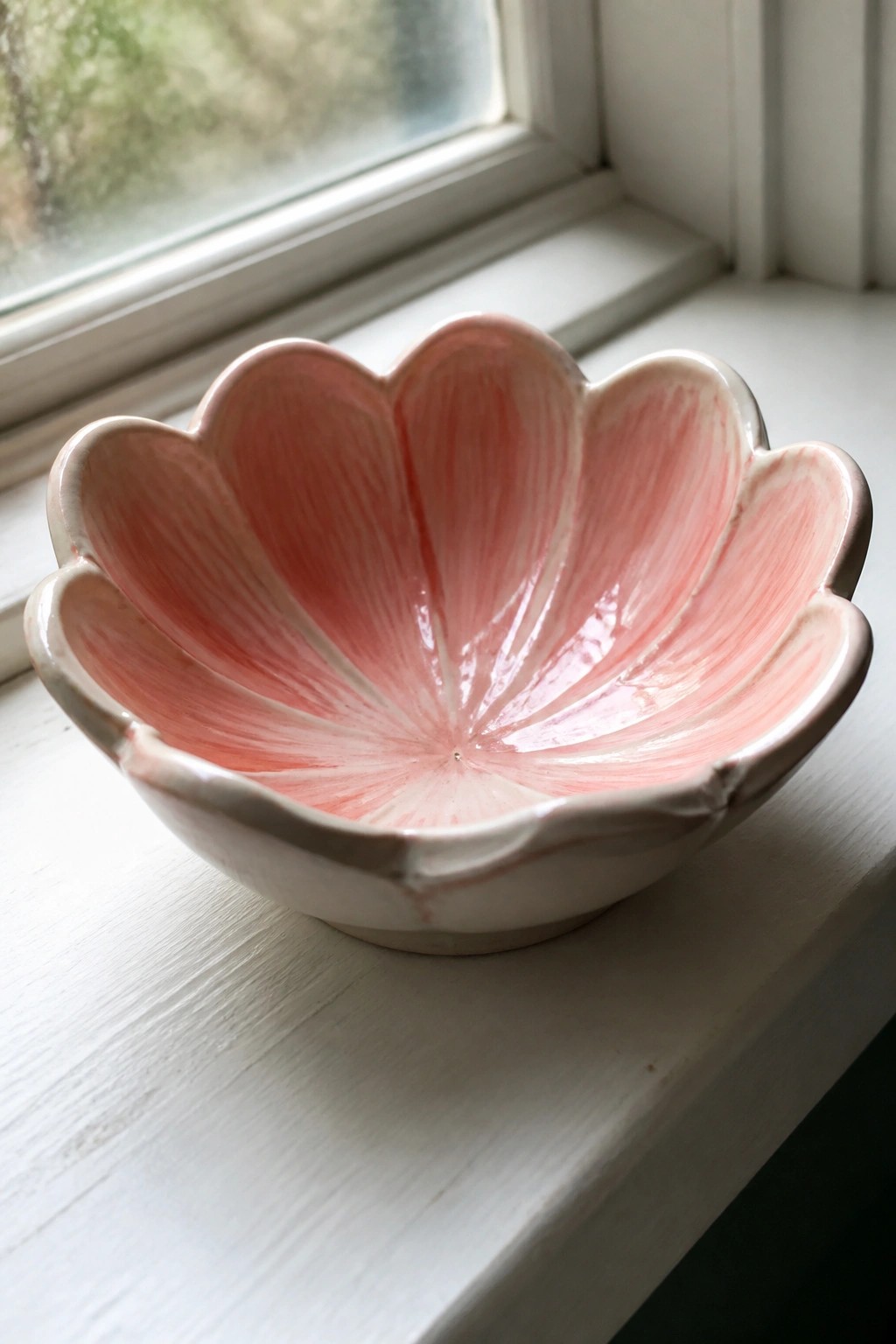
A small ceramic bowl shaped with a scalloped rim that forms overlapping petals gives this piece its floral motif. The pink glaze is brushed in short strokes that fan out from the center, leaving lighter streaks that suggest natural petal veins. This approach keeps the bowl functional while making the flower shape the main feature rather than an added decoration.
What makes this idea useful is how the petal rim can be pinched on any small thrown bowl without needing special molds. The radiating brush marks work on both glossy and matte glazes, so the same look can be tried in different colors for a set of ring dishes or spice bowls. For a gift, this shape stands out on a dresser or vanity because it reads as both decorative and practical at once. The small scale also makes it simple to adapt into a soap dish or pinch pot version for beginners.
Scalloped Edge Dish with Centered Tulip
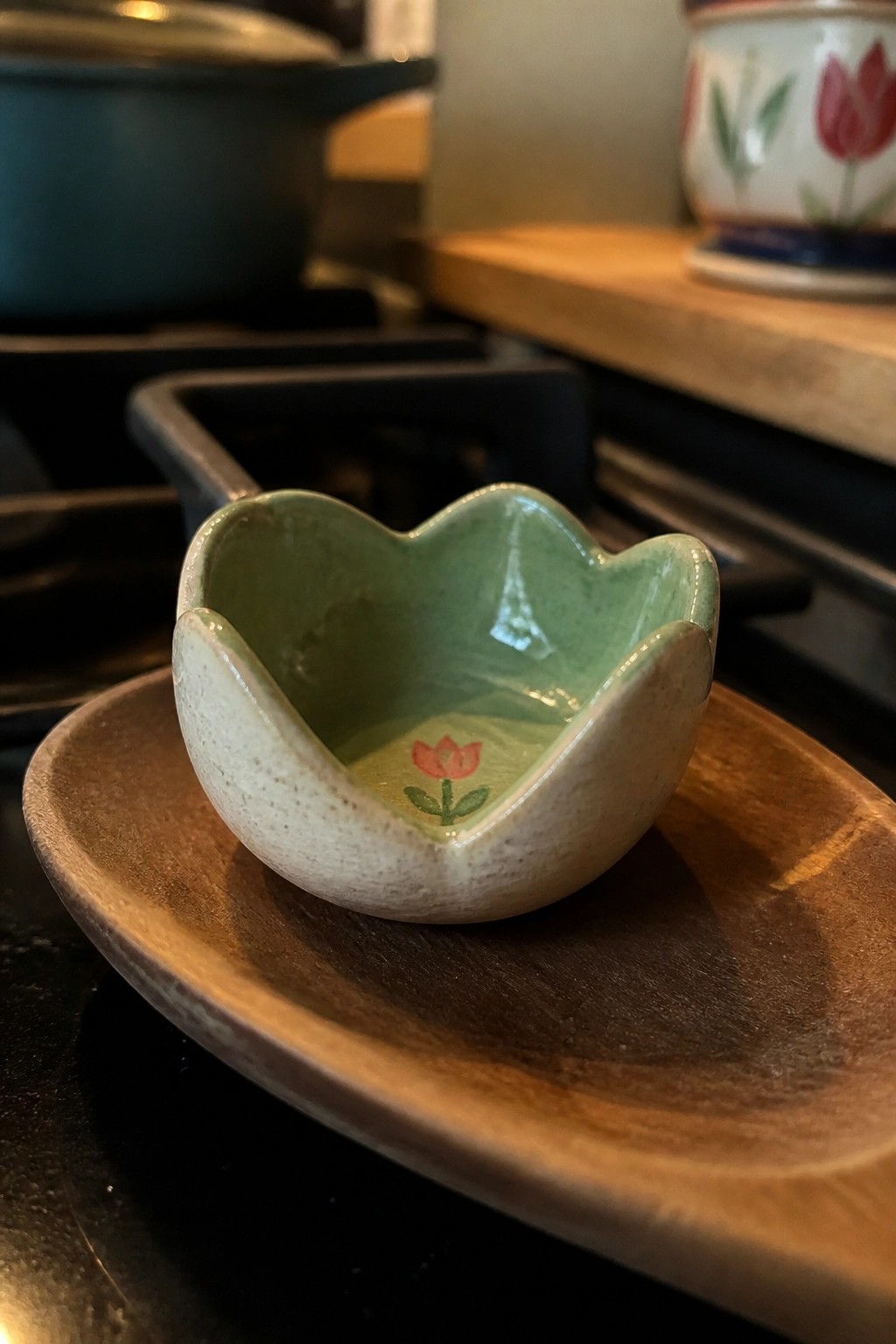
A small handmade ceramic bowl with a wavy rim makes a practical ring dish or pinch bowl for kitchen use. The interior green glaze creates a soft background for the single painted tulip at the base while the speckled beige exterior stays unglazed. The compact size and simple floral motif keep the focus on the painted detail without overcrowding the surface. This style fits the category of small decorative bowls that double as functional storage for jewelry or loose tea.
What makes this idea useful is how the scalloped rim gives shape without extra carving work. You could scale the same rim treatment up for a larger dessert bowl or swap the tulip for other single-stem flowers to match different color schemes. The painted motif stays visible even when the dish holds small objects so it works in both kitchen and bathroom settings. For a gift set you can repeat the tulip on a matching tray or soap dish using the same glaze combination.
Magnolia Painted Serving Bowl with Crackle Glaze

A wide, shallow ceramic bowl finished with a crackle glaze carries large hand-painted magnolia blooms across its interior. Soft pink and cream petals with dark centers sit against a light background, while green and brown leaves fill the remaining space. The scale of the flowers matches the bowl’s generous size, letting the motif read clearly from across a table. This style fits the category of decorative serving bowls that stay out between meals.
The shape does a lot of the work here because the wide rim gives plenty of room for a few big flowers instead of many small ones. You could repeat the same layout on a set of smaller bowls or swap the magnolias for another open-faced bloom. In a kitchen this piece works as a salad or bread bowl while the neutral tones keep it from clashing with everyday dishes. For a gift, painting just two or three flowers on a simpler form keeps the idea intact but cuts down on time.
Sunflower Rim Bowl With Speckled Glaze
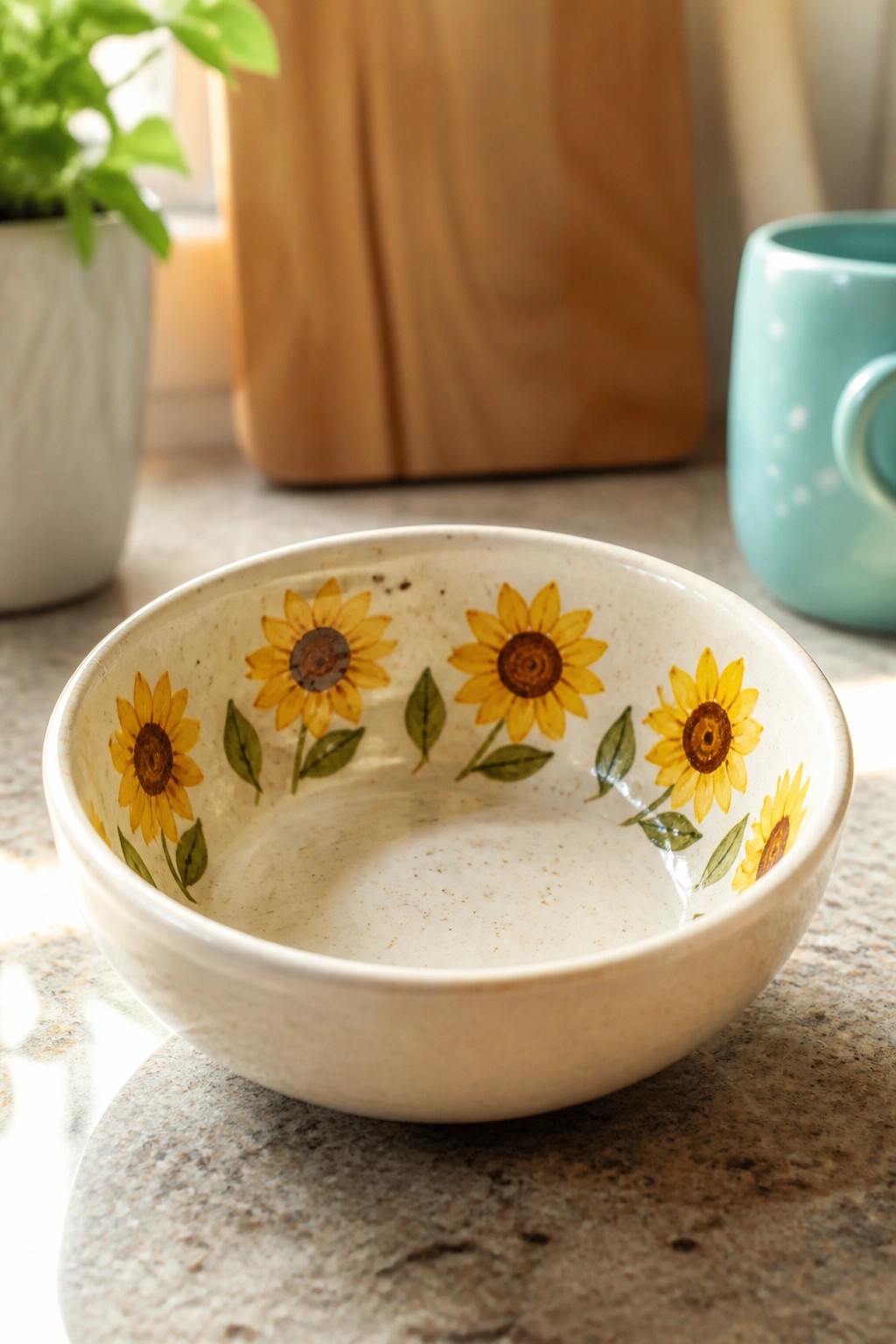
A ceramic bowl with a band of hand-painted sunflowers and leaves placed around the interior rim creates a simple floral motif that stays clear of the center. The design uses yellow petals, brown centers, and small green leaves spaced evenly on a light speckled base glaze. This layout keeps the bowl functional while turning the rim into the main decorative element.
What makes this idea useful is how the motif stays contained to the rim, so the bowl works for both serving and display without the pattern getting covered. You could adapt the same sunflower band to plates or smaller prep bowls by reducing the size and number of flowers. In a kitchen this kind of piece stands out on open shelving because the yellow reads clearly against the neutral glaze. The painted detail also translates easily to other neutral glazes if you want to match existing dishware.
Fern-Impressed Footed Bowl

A small footed bowl made from pottery gains its main visual interest from fern leaves pressed into the clay while it is still soft. The impressions create a repeating pattern that covers most of the exterior, and a single green glaze is applied so it settles into the recessed areas and brings out the leaf shapes. This style works as a compact serving or decorative bowl that stays simple while still carrying a clear botanical motif.
What makes this idea useful is that the pressing step happens early and needs only actual leaves or a stamp, so the same method can be tried on a taller cup or a low planter. The foot raises the piece slightly and keeps the focus on the leaf texture rather than the base. For a gift or a kitchen counter bowl, the small scale and single-color glaze make it quick to repeat with different leaf varieties.
Scalloped Bowl with Daisy Cutouts

A handmade ceramic bowl with a wavy rim and daisy-shaped cutouts spaced evenly around the sides creates an openwork pattern that lets light and color show through. The soft green glaze sits matte on the surface and keeps the focus on the repeated flower shapes rather than on bright color. This design turns a basic round bowl into a serving piece that works for fruit or snacks while the perforations add the floral motif directly into the form.
What makes this idea useful is how the cutouts serve double duty as decoration and ventilation when holding fresh produce. The same rim shape and cutout pattern could be made smaller for individual dessert bowls or widened for a shallow salad server. In a kitchen this style keeps things simple yet distinct on a table or counter without needing extra painted details. You could rework the cutouts into a different flower shape or adjust the scallop depth to change the look while keeping the overall structure intact.
Impressed Leaves on a Shallow Oval Bowl

This project uses a low, oval-shaped bowl formed from clay with several different leaf shapes pressed directly into the interior surface before glazing. The leaves create raised vein details that catch the light once covered in a soft green glaze with a warmer brown edge. The idea fits into the category of small decorative bowls meant for jewelry, keys, or simple table use rather than deep serving pieces.
What makes this idea useful is how the impressed leaves turn an ordinary small dish into something with clear botanical interest without needing painted details or extra color layers. The oval shape works well on a dresser or entry table where a round bowl might feel too formal. You could adapt the same pressing technique to a square tray or a set of small ring dishes using whatever leaves are in season. The muted glaze keeps the focus on the texture so the design still reads clearly even if you simplify it to just two or three leaves.
Floral Band Painted Around a Speckled Bowl

A wide ceramic bowl with a neutral speckled glaze forms the base for this project. The main idea is a single row of small painted flowers that circle the exterior just under the rim. Purple blooms with yellow centers sit alongside smaller blue leaf accents, all spaced evenly on the light surface. The inside stays plain so the bowl remains practical for mixing or serving.
The painted band uses the bowl’s natural curve to keep the pattern visible from most angles without covering the whole piece. This approach works especially well for a set of mixing bowls where you want some color but still need the interior to stay easy to clean. You could repeat the same flower spacing on a smaller ramekin or a shallow serving dish by adjusting the scale of the blooms. The limited color palette also makes it simple to match with existing kitchen linens or other neutral pottery.
Sculpted Rose on a Matte Bowl Exterior

A ceramic bowl with a single rose sculpted onto the side offers a direct way to add a floral motif without covering the whole surface. The rose is built up from clay and attached low on the exterior, giving it real dimension while the rest of the bowl stays plain. An amber glaze lines the inside and the outside keeps a dry, textured finish so the rose reads clearly in its own color. This keeps the idea simple and focused on one strong sculpted detail.
The shape does a lot of the work here because the same rose can be added to bowls of different sizes or wall thicknesses. Scale the flower larger for a serving bowl or keep it small for a dessert dish. In a kitchen or on a table the contrast between the glossy interior and the raised rose makes the piece easy to spot without extra patterns. You could also press a rose from a mold and attach it instead of sculpting from scratch if you want to repeat the idea quickly.
Blue Chrysanthemum Motif on Textured Ceramic Bowl

A wheel-thrown ceramic bowl with a large blue chrysanthemum and leaf motif painted on the interior surface. The design uses underglaze to create clear petal details and stems that stand out against the light clay. The exterior carries a speckled matte glaze that shows natural variations and a slightly rough finish from the throwing process. This approach works as a straightforward way to add a single strong floral element to a basic bowl form.
What makes this idea useful is the way the painted motif draws attention while the textured glaze keeps the overall look simple. You could scale the same flower down to fit smaller bowls or repeat it around the rim of a plate. In a kitchen this shape holds up well for serving sides or snacks. The painted detail helps the piece photograph clearly for sharing, and the same layout could be reworked onto a taller mug or a shallow tray by adjusting the flower size and placement.
Wall Pocket Planter with Painted Blossoms
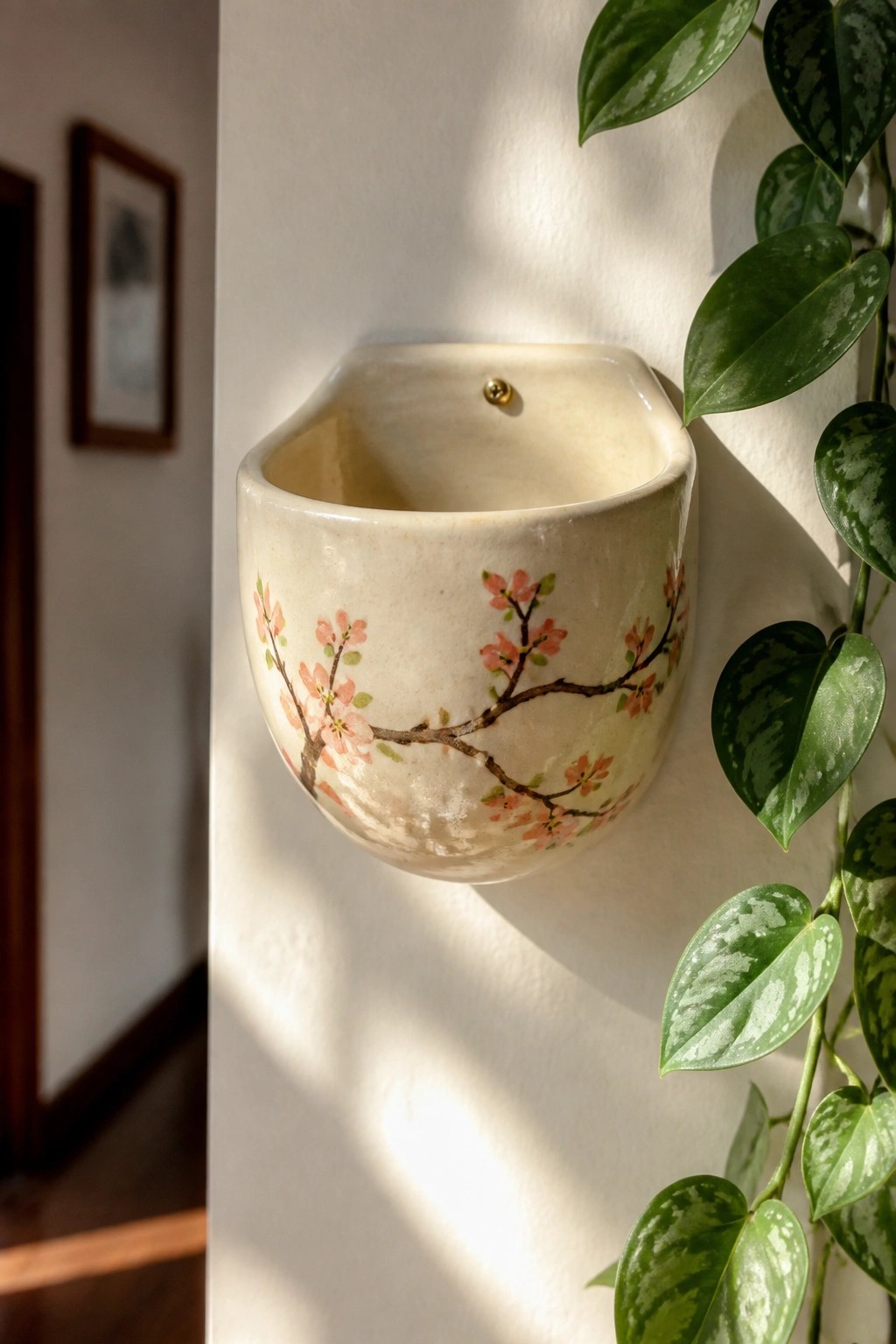
A wall-mounted ceramic pocket bowl gives you a compact planter that hangs flat against a surface. The form is a rounded open vessel with a flattened back and a small hole near the rim so it can be hung from a single screw or hook. The cream glaze provides a clean base for the branch and pink blossom motif painted across the front, keeping the floral design as the main visual element.
The shape does a lot of the work here because the curved front and flat back let it sit flush against a wall without taking up shelf space. You could adapt the same idea for a bathroom by using it to hold small items or swap the blossoms for a different flower to match another room. For a gift, something like this stands out when the painting stays simple and the overall size stays small enough to ship easily.
Celadon Bowl with Incised Lotus Motif

A shallow ceramic bowl with a large lotus flower incised into the center creates a clean floral motif option. The design relies on carved lines for the petals and seed pod, which fill with the pale green glaze to add subtle texture and contrast. This approach keeps the bowl functional while making the botanical element the clear focus.
What makes this idea useful is the open shape that lets the lotus read clearly from above. You could adapt the same carving style to a set of smaller dishes or shift the motif to the exterior of a taller bowl. For a gift, this kind of piece works well as a simple catch-all or plant saucer without needing extra decoration.
Scalloped Petal Bowl With Painted Stems

A wheel thrown or handbuilt bowl can be trimmed with a scalloped rim that forms soft petals around the top edge. The exterior uses a simple two tone glaze that blends pink into yellow, then gets finished with small clusters of hand painted green stems and leaves spaced around the sides. This keeps the floral idea focused on shape and light surface detail rather than heavy carving or added clay pieces.
The petal rim makes the bowl easy to spot on a table and works well for serving oatmeal, fruit, or salads without extra styling. You can scale the same leaf painting down for smaller dessert bowls or swap the gradient for a single solid color if you want a quicker version. For gifts this shape stands out in photos because the edge creates a clear silhouette against most backgrounds.
Incised Branch Motif on a Cream Bowl

A wheel-thrown ceramic bowl finished in a matte off-white glaze carries a repeating pattern of slender branches incised around the exterior. The lines are shallow and fine, showing small leaves or buds along each stem. This style of surface decoration works because the carved details create contrast through shadow rather than added color or slip.
What makes this idea useful is how the simple carving turns an ordinary bowl into something more distinctive without extra layers of glaze. The same motif could be scaled down for a set of small prep bowls or lengthened into a taller cylinder for a utensil holder. In a kitchen this shape stays practical for serving while the pattern keeps it from looking plain. For a gift the design is easy to personalize by choosing different local plants or adjusting the spacing of the branches.
Frequently Asked Questions
What clay types work best for creating pottery bowls with floral motifs?
Stoneware and porcelain offer excellent durability and a smooth surface that highlights carved or painted flowers. Beginners may prefer earthenware because it fires at lower temperatures and accepts underglaze colors easily. Always test small samples first to see how your chosen clay interacts with the floral designs after firing.
How can I add floral motifs if I lack advanced carving skills?
Start with simple stamping using household items like cookie cutters or leaves pressed into soft clay. Apply underglaze with fine brushes for painted details or use stencils for repeated patterns such as daisies or vines. Practice on test tiles before working on finished bowls to refine pressure and color layering.
Are these floral pottery bowls safe for serving food?
Yes, provided you use food-safe glazes certified lead-free and follow the manufacturer’s firing instructions. Avoid metallic lusters or certain colored underglazes that may contain toxins. After firing, check the finished piece by running a clean cloth over the interior to ensure no residue remains.
What glazing methods best preserve the detail in floral motifs?
Apply a clear or semi-transparent glaze over the motifs in thin, even coats to avoid blurring lines. Dip or spray techniques work well for uniform coverage while brushing allows more control around raised floral elements. Fire at the clay’s recommended cone temperature to achieve a glossy finish that protects the designs without obscuring them.
How do I adapt the 21 ideas to fit my available workspace or tools?
Scale down intricate designs by focusing on one motif per bowl instead of combining several. Use hand-building methods like pinch pots if a wheel is unavailable, and substitute commercial stamps for custom carving. Experiment with air-dry clay for quick prototypes before committing to kiln-fired versions.

Pottery Path is my cozy corner of the internet where I share clay ideas, pottery inspiration, and simple projects you can recreate at home. I love exploring everything from air dry clay to handbuilt pottery to cute minis that brighten your day. My goal is to make clay crafting feel easy, fun, and welcoming for anyone who wants to try it.
You will find beginner friendly tutorials, creative pottery painting ideas, and lots of warm inspiration for slow and happy crafting. If you enjoy hands on creativity, this space will feel like home.