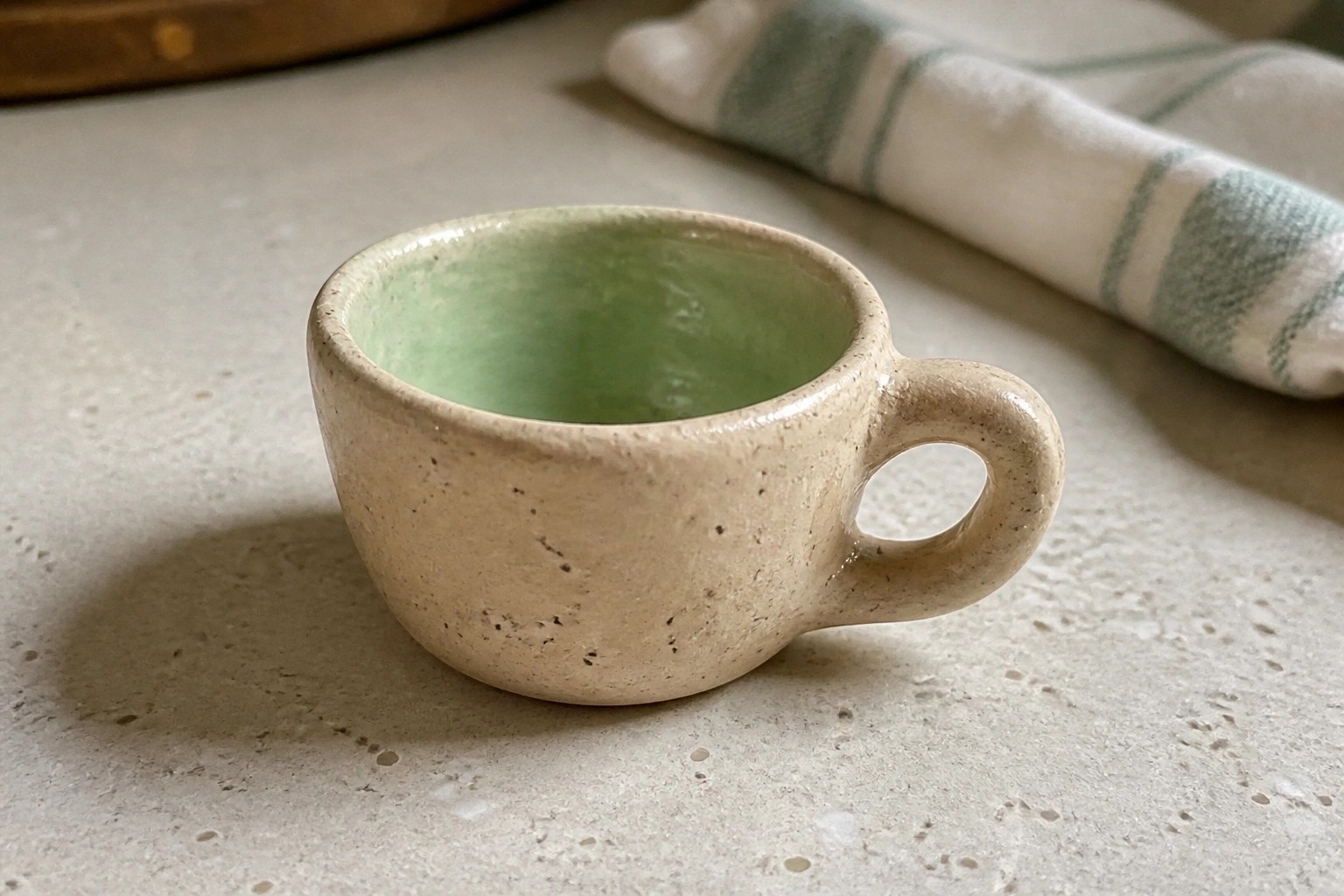
I have been making pinch pots for years because they are one of the easiest ways to start working with clay.
They only need a bit of clay and your hands so I keep coming back to them when I want something simple.
Over time I have tried out different shapes and uses that all start from the same basic pinch pot form.
Here are twenty ideas I have collected that stay close to that starting point.
Some turned out more useful than others but they all feel doable even if you are new to pottery.
Mini Two-Tone Pinch Pot Mug
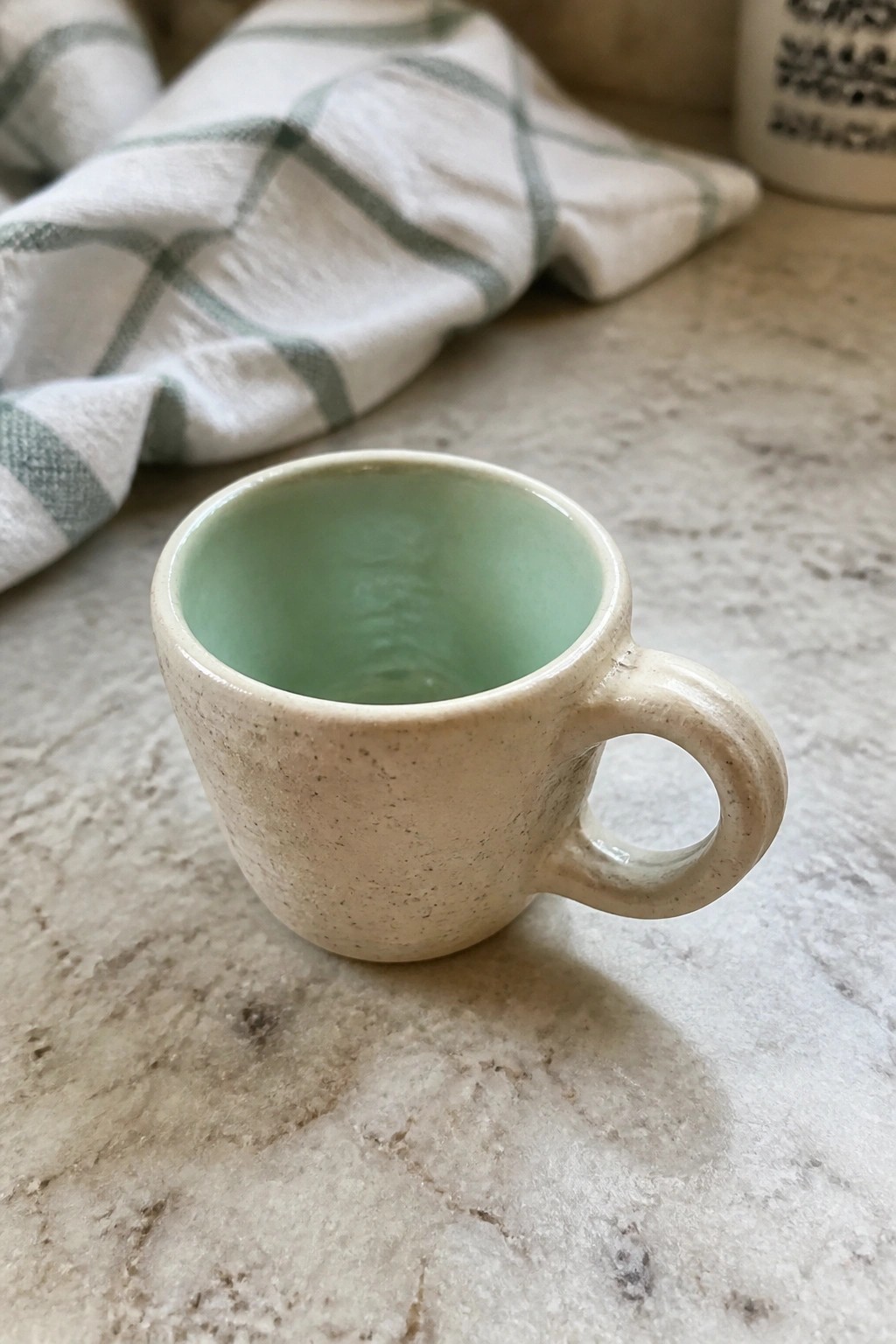
A small pinch pot mug keeps the process simple by starting with a pinched ball of clay and adding a basic pulled handle. The outside stays matte and speckled while the inside gets a solid light green glaze that creates a clear color contrast. This approach fits the mug category and works because the shape stays compact and the glaze choice highlights the form instead of covering it with extra detail.
What makes this idea useful is the small size that suits espresso shots or a small creamer at the table. You can adapt the same base into a slightly wider version for a sauce cup or swap the interior color for something bolder. The two-tone finish also photographs cleanly for sharing, and the pinch pot method means you can make several in one session without needing extra tools.
Flower Shaped Ring Dish

A pinch pot can be flattened and pinched outward into six or seven rounded petals to form a shallow dish. The edges stay slightly raised to keep small items contained while the center stays flat for a simple dot pattern. A soft speckled glaze in one color keeps the focus on the shape rather than on surface detail. This approach turns a basic pinch pot into a compact ring dish that fits on a dresser or desk.
The petal edges create the bowl form without needing extra tools or trimming. You could repeat the same shape in different sizes for earrings or loose change or switch the dot pattern to stripes for a fresh look. A piece this size uses little clay and fires quickly so it works well for making several at once. In a small bathroom or entryway it keeps rings from getting lost while adding a clear handmade object to the surface.
Small Pinch Pot Succulent Planter

A pinch pot planter gives you a compact, rounded shape that works well for small succulents or cacti. The basic form is made by pinching the clay into a shallow bowl, then adding a simple leaf imprint on the side before the final firing. The matte, light clay surface keeps the focus on the plant while the imprint adds texture without extra color or glaze layers.
What makes this idea useful is how little clay and time it takes to produce a finished piece that fits on a narrow shelf or windowsill. The same pinched shape can be made slightly taller for a different plant or left plain if you want a quicker version without the stamp. For gifts, you can repeat the leaf imprint on several pots at once and vary the plant inside each one.
Star Cutout Candle Holder

A pinch pot candle holder starts with a low, rounded bowl form that is pinched thin enough for light to pass through. Star shapes are cut into the walls while the clay is still soft, then the piece is glazed in a deep blue that contrasts with the warm glow once a tea light is added. The even spacing of the stars keeps the design balanced on the small scale, and the glossy surface helps reflect light outward. This approach fits the candle piece category and stays simple enough for a single afternoon of work.
What makes this idea useful is how the cutout pattern can be swapped for other shapes without changing the base form. The small size works well on a desk, shelf, or windowsill where a larger piece would feel out of place. You could repeat the same holder in a set of three with different glaze colors or turn the shape into a small ring dish by leaving the walls solid. For a gift, something like this stands out because the light effect is easy to test before firing and requires very little extra material.
Crescent Pinch Pot Ring Dish

A small crescent ring dish comes from pinching a ball of clay into a thin, curved form that stays open on one side. The shape creates a natural dip for holding rings or tiny items without needing extra tools or attachments. A soft pink glaze with light gold flecks adds subtle color and shine while keeping the surface simple. This project stays in the small holder category and works as a quick pinch pot variation.
What makes this idea useful is how the curved base lets it sit flat on any surface without extra feet. It works especially well on a nightstand or bathroom ledge where space is tight. You could rework the same pinch technique into a longer tray shape or change the glaze to a solid matte color for a different look. The small scale also means it uses little clay, so it is easy to make several at once for gifts.
Pinch Pot Spoon Rest
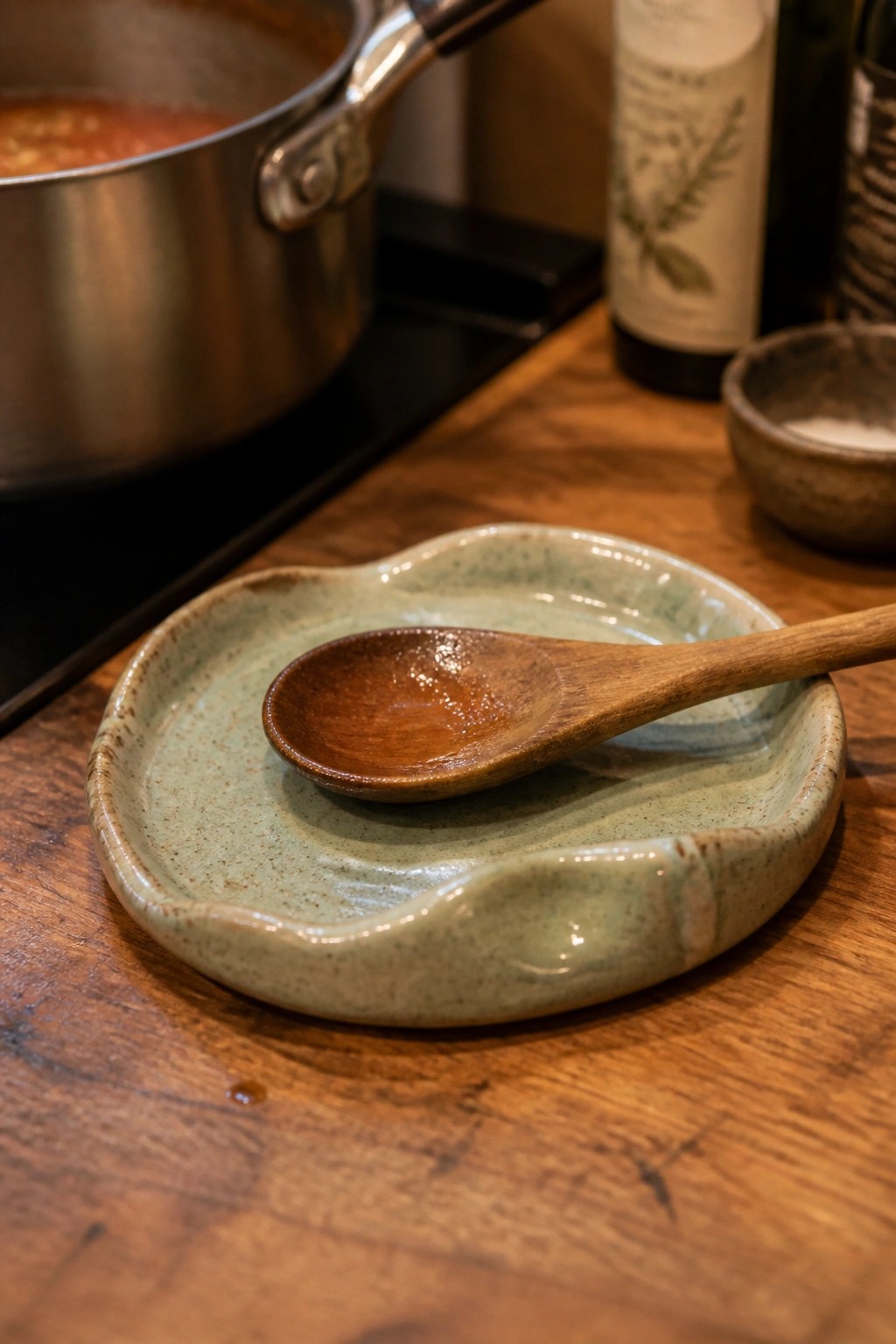
A pinch pot spoon rest starts as a small ball of clay that you flatten and pinch outward into a low, irregular oval dish. The center stays shallow enough to cradle a wooden spoon while the uneven rim keeps it from rolling. A speckled green glaze adds texture and makes the surface easy to wipe clean after kitchen use.
What makes this idea useful is how fast it forms from basic pinch pot steps and how little space it takes on a counter. You can adapt the same shape into a small salt dish or garlic holder by adjusting the depth and switching to a matte white glaze. In a kitchen this kind of piece stops spoons from dripping on surfaces and turns leftover clay into something you reach for daily.
Pinch Pot Bird Figurine

A small bird made from pinch pots works as a simple decor object. Two pinched clay halves form the rounded body while extra clay shapes the head, beak, and tail. Horizontal blue stripes painted across the body add contrast against the matte white surface and keep the design quick to finish. The result stays clearly handmade without needing molds or advanced tools.
The small scale makes this easy to adapt into other animals by swapping the head and tail shapes. You can place the finished piece on a desk, shelf, or windowsill where it takes little room. Try the same base form for a set of matching birds in different stripe colors or turn the body shape into a tiny holder by leaving an opening on top. The painted stripes stand out on Pinterest because they read clearly even in small photos.
Pinch Pot Salt Cellar

A basic pinch pot forms this small, shallow dish that works as a salt cellar or condiment holder. The clay is pinched into a wide, low shape with an organic rim, then finished with a light blue interior glaze that stops short of the rim to leave the speckled beige clay exposed on the outside. The simple two-tone approach keeps the focus on the form while the textured exterior adds visual interest without extra carving or handles.
What makes this idea useful is how the compact size fits on a countertop or table without taking up space. You can repeat the same pinch and glaze method with different interior colors to match other kitchen pieces or swap the shape slightly for a soy sauce dish. The unglazed outside stays practical for gripping and shows off the natural clay surface. This style also translates directly into a small ring holder or a pinch pot for holding tea bag tags.
Three-Hole Toothbrush Holder

A basic pinch pot shape can be turned into a toothbrush holder by adding several vertical openings across the top while the clay is still workable. The form stays compact and rounded, with a soft green glaze that shows the slight unevenness from handbuilding. This creates a stable bathroom item that keeps brushes separated and upright on a counter or ledge.
The shape does a lot of the work here since the same cylinder can be pinched with two holes for a couple or four for a larger family. A piece like this works especially well as a quick gift because it stays small and uses little clay. You could rework the idea with a different glaze color to match existing bathroom fixtures or flatten the base slightly if you want it to sit even steadier on tile.
Tulip-Shaped Wall Pocket Planter
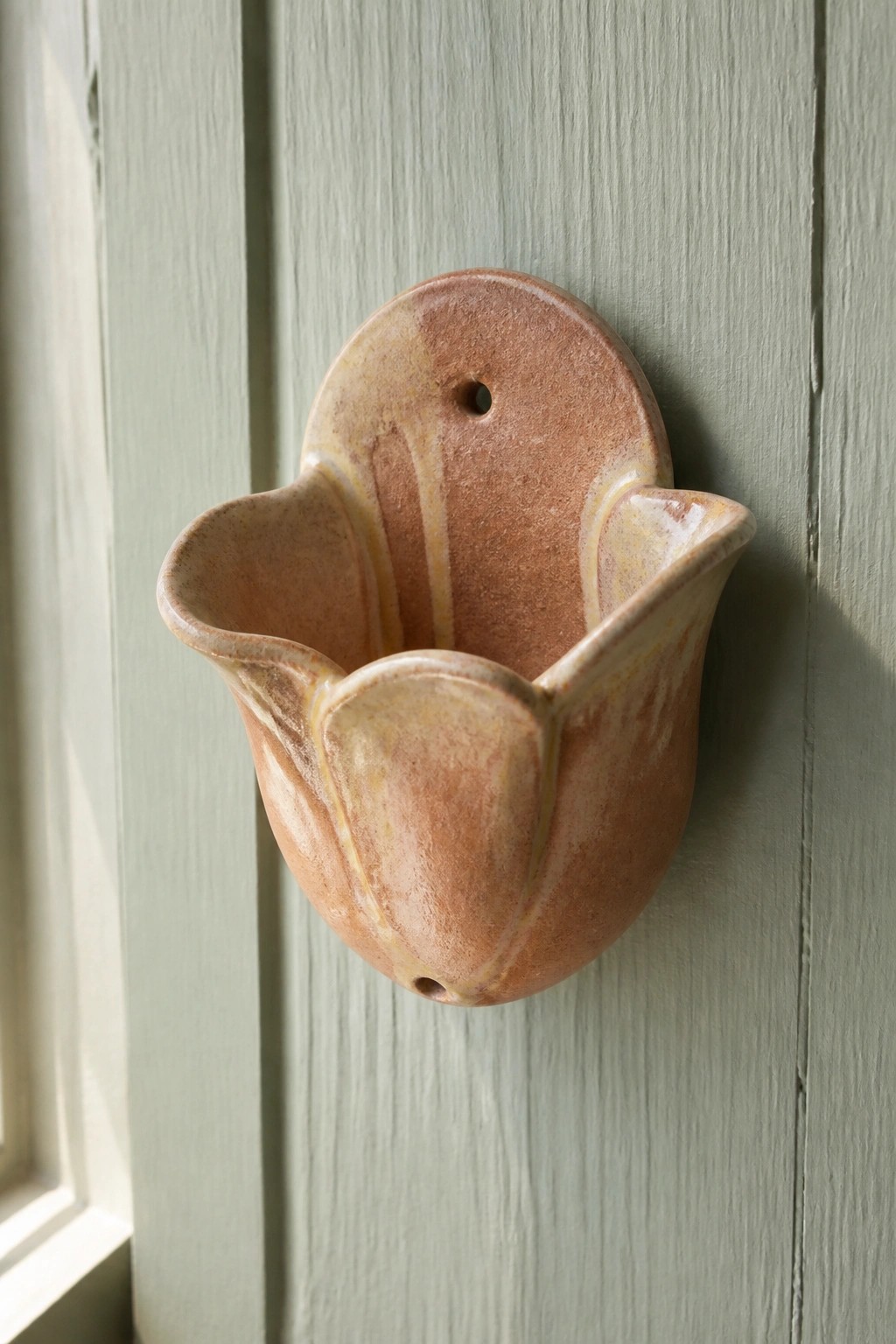
A wall pocket made from pinch pots can be shaped into a tulip form by pinching the clay into layered petals that create an open cup. The back is formed as a flat round plate with a hole for hanging, and a small drainage hole is added at the base of the pocket. Warm brown and cream glazes accent the petal ridges and give the surface a textured, earthy finish. This approach turns basic pinch pot techniques into a compact wall holder for plants or small items.
What makes this idea useful is how the petal shape gives the piece a clear function as a wall planter while keeping the overall size small. It works especially well in kitchens or entryways for herbs or succulents, and the same form could be adapted into a key holder by leaving out the drainage hole. For a gift version, try a brighter glaze on the inside petals or make two or three in different sizes to hang together. The flower outline makes the project easy to spot in searches for simple wall decor ideas.
Pinch Pot Egg Cup

A pinch pot egg cup starts with a small ball of clay opened into a simple bowl shape, then pinched narrower near the base to form a stable foot. The result is a compact kitchen holder sized exactly for a soft-boiled egg. The matte outside surface keeps the handmade look while a thin band of blue glaze inside the rim gives a finished edge without extra decoration.
What makes this idea useful is how quickly the same pinch pot shape can be adjusted for different egg sizes or turned into a small salt cellar. The foot keeps it from tipping on a tray, and the narrow opening prevents the egg from sliding around. You could skip the foot entirely to make a flatter version for holding rings on a nightstand or swap the blue rim for a single color that matches your plates.
Pinch Pot Soap Dish

A simple oval soap dish makes a practical bathroom item when shaped from clay with a low rim and a flat base. Parallel ridges pressed into the center keep the bar elevated so water can drain underneath. The speckled glaze finish adds light texture without complicating the form. This project stays easy to form by starting with a flattened slab or wide pinch pot and then adding the ridges with a tool or fingertip.
What makes this idea useful is how the drainage ridges turn a basic tray into something actually functional on a wet sink. The oval shape takes up little counter space while still holding a full bar of soap. You can adapt it by making a shorter version for travel or switching to a matte glaze in a different color to match your bathroom. The same ridge pattern also works on a round or square base if you want to try a second shape.
Crescent Moon Incense Holder

A pinch pot formed into a small shallow bowl makes a practical incense holder when you add a crescent moon motif on the exterior. The dark speckled glaze sets off the lighter moon shape and keeps the focus on the simple painted detail. Shape the clay by pinching it into a rounded form, then add a small raised center point while the clay is soft to catch the incense cone. This approach keeps the project quick and centers on the surface design rather than complex construction.
What makes this idea useful is that the bowl catches ash cleanly and the moon detail gives it a clear theme without extra steps. The small scale works well on a nightstand or desk beside books or a lamp. You could skip the center point and use the same bowl shape as a ring dish or tiny catch-all. For a different version, change the moon to a few dots or a line pattern to match whatever else is already in the room.
Color-Blocked Nesting Bowls
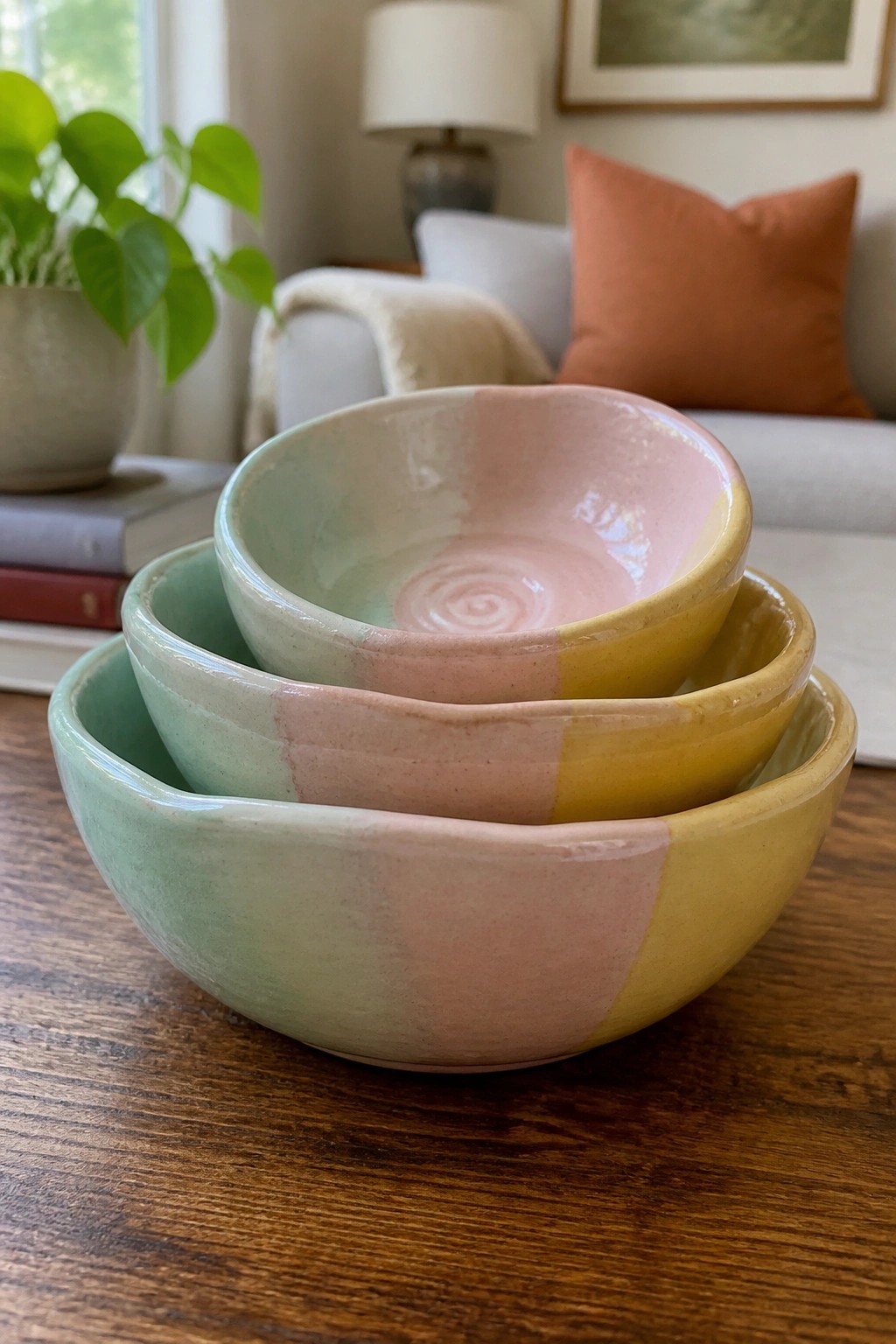
Pinch pots work well as a set of bowls in graduated sizes that stack neatly inside each other. Divide the surface into three large sections and apply glaze in mint green, soft pink, and yellow so the colors meet in clean lines around the form. The simple bowl shape stays functional while the color blocks create a clear pattern that reads well from a distance.
What makes this idea useful is that the bowls double as small serving dishes or catchalls on a table or shelf. You can repeat the same blocking method with any three colors or switch to two tones for a quicker version. The small scale makes it easy to turn the idea into individual pinch bowls instead of a full set. In a kitchen this kind of piece stands out on a shelf because the solid color areas catch the light without needing extra decoration.
Pinch Pots for Plant Cuttings

Small pinch pots make effective holders for rooting plant cuttings in water. The irregular rims and varied glazes keep the set interesting while the shallow tray underneath contains any spills and makes the group easy to move. Different glaze colors on each pot add contrast without extra surface decoration. This project uses basic pinch pot forms to create a practical propagation station instead of a single large planter.
What makes this idea useful is the small scale that fits on a windowsill or shelf without crowding other plants. You can adapt it by changing the pot heights slightly so some hold longer stems while others stay wide and shallow. Grouping several pots on one tray turns the project into a complete gift set rather than separate pieces. The same pinch pot shapes could also be reworked into tiny herb holders or desk organizers by skipping the water and using soil instead.
Small Pinch Pot Creamer
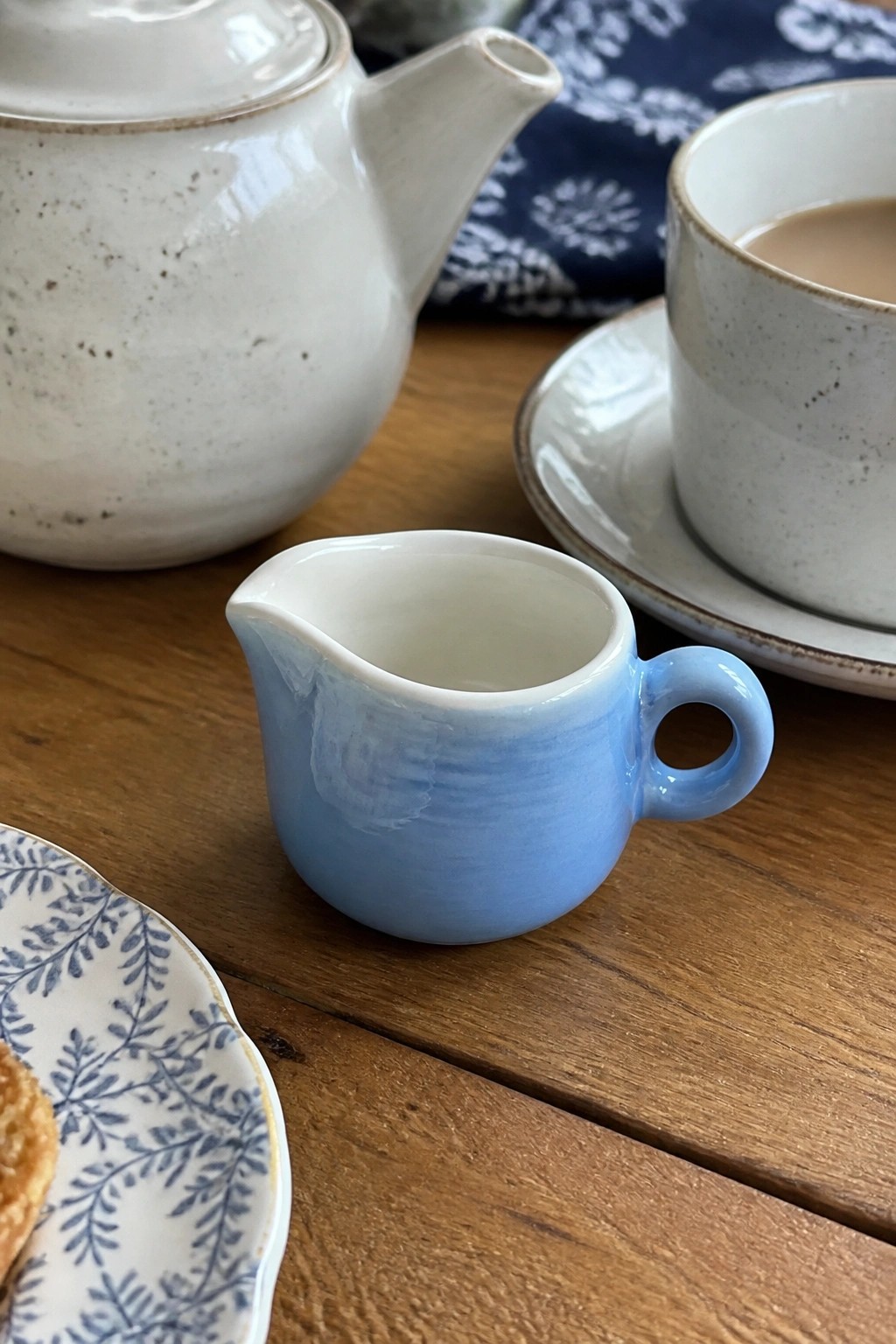
A small creamer made from a pinch pot serves as a practical kitchen item for pouring milk or cream. The basic rounded form comes from pinching a ball of clay into a bowl shape, then adding a simple spout on one side and a small looped handle on the other. The blue exterior glaze contrasts with the plain white interior, which keeps the piece easy to clean and visually balanced.
What makes this idea useful is the compact size that fits on a breakfast tray or beside a teapot without crowding the table. You could rework the same pinched shape into a tiny syrup pitcher or a holder for honey sticks by adjusting the spout angle. In a kitchen, this kind of piece stands out on Pinterest because the handle and spout turn a basic form into something immediately functional.
Hanging Wall Pocket Planter

A pinched wall pocket starts as a simple pouch shape formed from a slab or ball of clay with a flat back and a hole added at the top for hanging. The wavy rim and small drainage holes near the bottom keep it functional as a planter while the soft green glaze gives a clean base for the painted face. Eyes, a smile, and light speckles are added with underglaze after the first firing so the design stays sharp under the final clear coat. This approach keeps the project small and focused on basic pinching and surface decoration rather than complex assembly.
What makes this idea useful is how the flat back and single hanging point let it go on pegboards, walls, or hooks without taking up shelf space. The face can be swapped for other quick motifs like dots or leaves, and the same pinched form works just as well for holding paintbrushes or small tools. You could make a row of these in different glaze colors to group together or shrink the size further for a desk version. The shape also translates easily into a kitchen herb holder if you add a slightly wider opening.
Pinch Pot Bead Necklace

Roll small pieces of clay into beads and use a skewer or needle tool to pinch a hole through the center of each one. Once fired, apply soft glazes in blue, green, peach, and white so the finished beads show slight color variations and speckling. String the beads together on cord or wire to form a simple necklace with an uneven, organic pattern.
What makes this idea useful is that you can produce a large batch of beads in one session and then assemble them into necklaces, bracelets, or even curtain ties by adjusting the length and spacing. The small size keeps the project quick to form and fire, and the mixed pastel colors work across different outfits without needing exact matches. For a different version, try making some beads slightly larger or add a single contrasting bead at the center.
Crescent Moon Pinch Pot Candle Holder
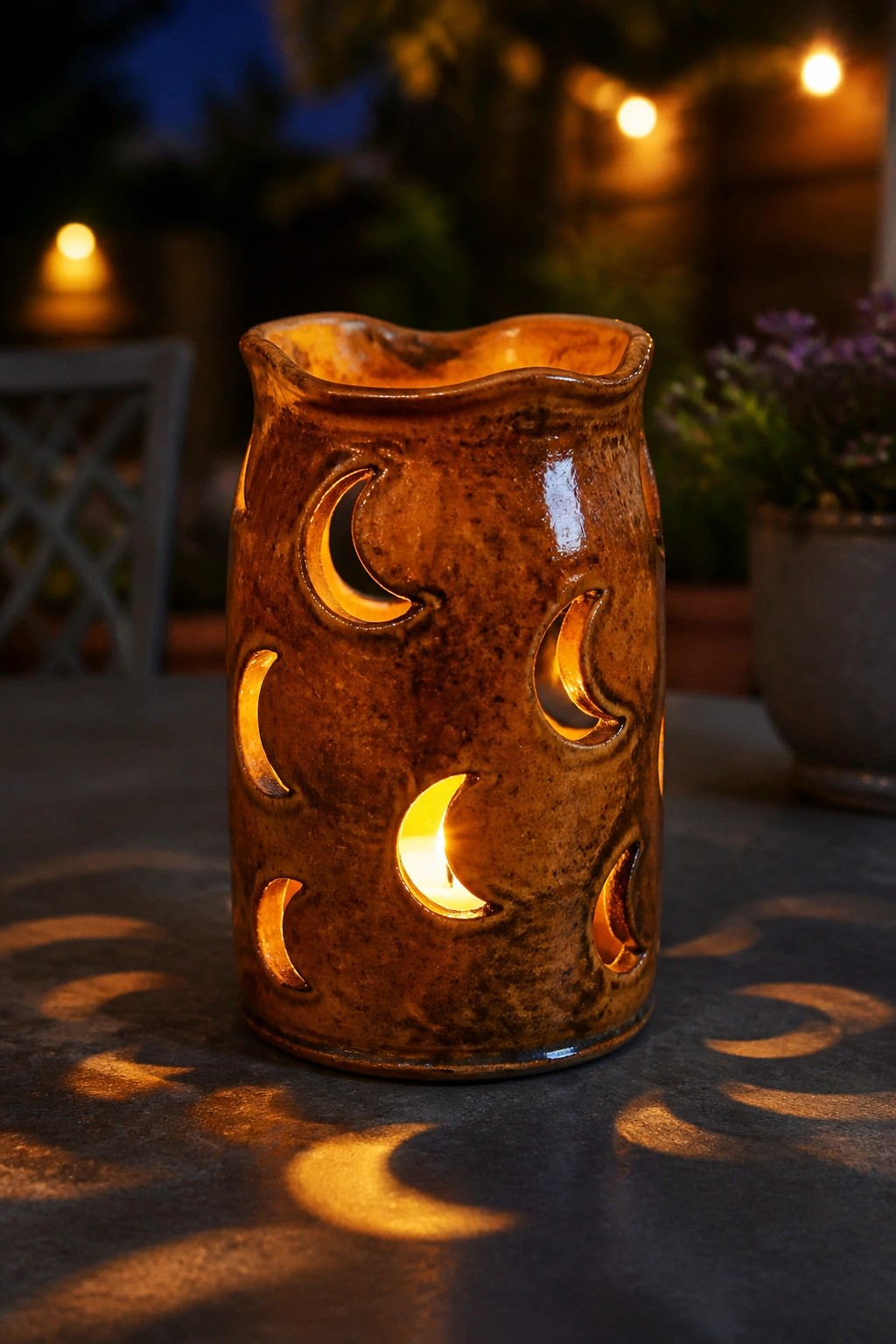
A simple pinch pot can become a candle holder when you shape it into a short cylinder and cut crescent moon openings through the walls while the clay is still soft. The wavy rim gives the piece a finished look without extra trimming, and a warm brown glaze lets the light pass through the cutouts in clear shapes once a tea light is placed inside. This approach keeps the project focused on form and negative space rather than complicated surface decoration.
What makes this idea useful is how the cutout pattern can be swapped for stars, leaves, or simple geometric windows on future versions. The compact size works on a windowsill, nightstand, or outdoor table without taking up much room. You could also stretch the same pinch pot base into a taller version for a small plant or turn the moon shapes into a matching set of three for a gift.
Leaf Shaped Pinch Pot Dish
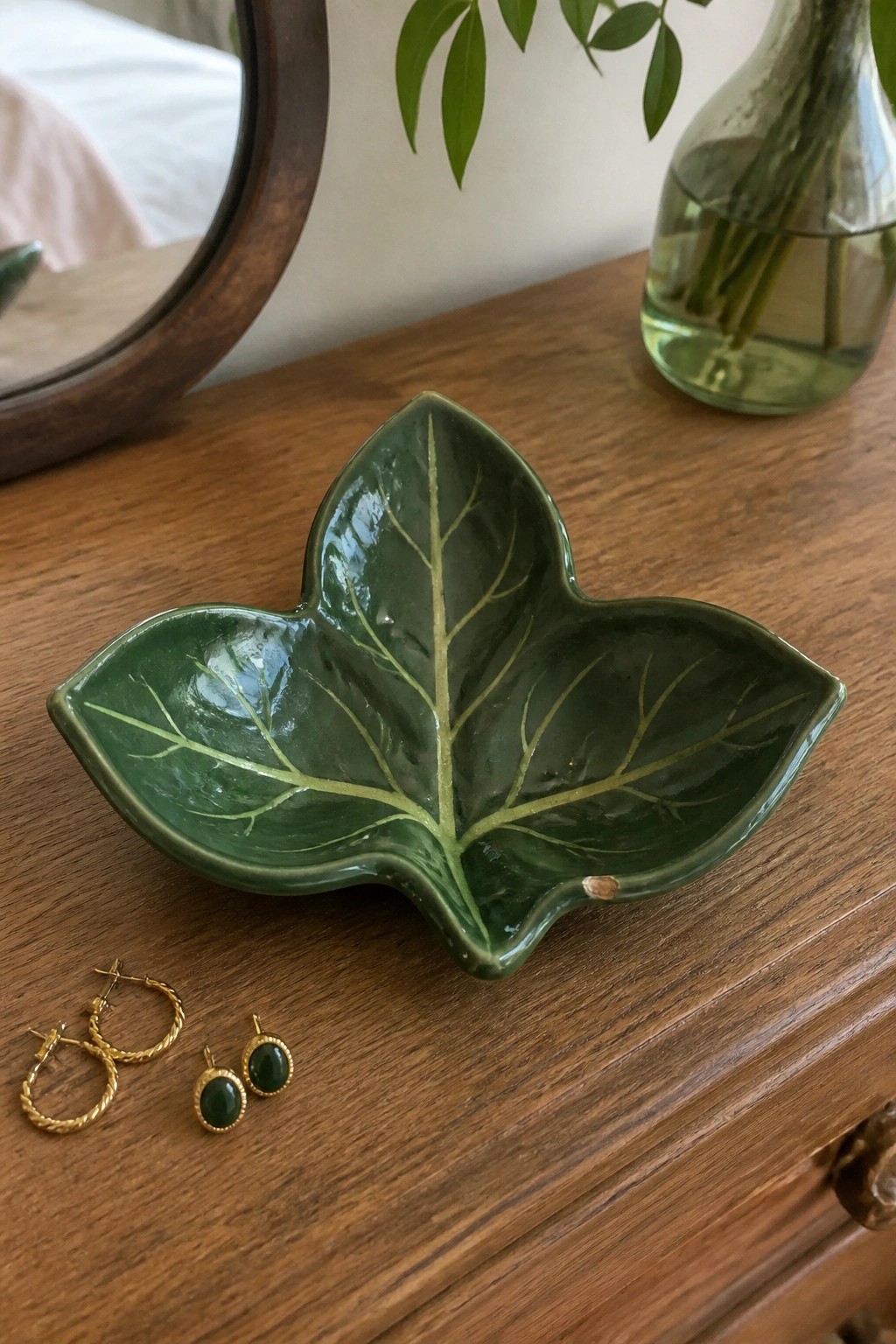
A basic pinch pot can be opened wide and shaped into a three-lobed leaf to make a shallow dish. Veins pressed into the clay before glazing create the leaf pattern, and a solid green glaze makes the lines stand out. The result is a small tray that works as a ring dish or earring holder.
The shape does a lot of the work here by giving the dish natural edges that keep small items in place. You could adapt the same pinch pot by trying different leaf outlines or switching to a matte glaze for a different look. In a bathroom or entryway, this kind of piece keeps everyday items organized without taking up much space. The idea also scales easily if you want to make a larger version for keys or small desk supplies.
Frequently Asked Questions
What basic supplies do I need to begin making pinch pots at home?
You will need air-dry clay or oven-bake clay for no-kiln projects, a small bowl of water for smoothing, a rolling pin or dowel for flattening bases, and simple household items like toothpicks or plastic utensils for adding texture. Start with a one-pound block of clay to practice the pinching technique on several small forms before moving to the 20 ideas.
How do I keep my pinch pots from cracking while they dry?
Work with clay that has consistent moisture by covering finished pieces loosely with plastic wrap for the first 24 hours. Turn the pots every few hours so all sides dry evenly, and avoid placing them in direct sunlight or near heat vents. If cracks appear, smooth a small amount of slip, which is clay mixed with water, into the area and let it dry slowly over several days.
Which of the 20 ideas work best for complete beginners who have never used clay before?
The simpler shapes such as small bowls, candle holders, and spoon rests require only basic pinching and smoothing. These projects let you focus on even wall thickness without needing advanced sculpting skills. Practice the core pinch pot form first on three or four test pieces before trying any of the listed ideas that involve handles or added details.
How can I decorate pinch pots without using glaze or a kiln?
Paint the dried pieces with acrylic craft paint once they are fully hardened, then seal them with a clear matte or gloss varnish for light water resistance. You can also press textures into the wet clay using leaves, lace, or stamps before drying to create patterns that need no extra color. For food-safe items, choose air-dry clay labeled as such and limit decoration to the outside surfaces.
What steps should I follow to turn a basic pinch pot into one of the more detailed ideas in the list?
Begin by forming the main bowl shape, then let it firm up slightly for 30 minutes so added pieces stay in place. Score the attachment areas lightly with a toothpick, apply a little slip, and press on handles, feet, or decorative coils. Keep all additions thin and small to match the lightweight feel of pinch pottery, and check the overall balance before the clay dries completely.

Pottery Path is my cozy corner of the internet where I share clay ideas, pottery inspiration, and simple projects you can recreate at home. I love exploring everything from air dry clay to handbuilt pottery to cute minis that brighten your day. My goal is to make clay crafting feel easy, fun, and welcoming for anyone who wants to try it.
You will find beginner friendly tutorials, creative pottery painting ideas, and lots of warm inspiration for slow and happy crafting. If you enjoy hands on creativity, this space will feel like home.