
I enjoy painting minimalist designs on my mugs and bowls.
It is satisfying to use just a few lines or soft tones.
I came up with these ideas through trial and error in my own studio.
They work well for everyday use without being too busy.
You can adapt them easily with the paints you already have.
Diagonal Brushstroke Mug

A ceramic mug in a light speckled clay body uses one wide diagonal stroke of dark underglaze to create a simple graphic pattern. The brush mark runs from near the base up across the side, leaving most of the surface plain. This keeps the design minimal while the contrast between the pale background and the bold line makes the mug easy to spot.
What makes this idea useful is how little it takes to recreate. You can paint the stroke with underglaze before glazing or add it afterward with a ceramic paint, and the same mark works on bowls or small pitchers without needing extra planning. The shape stays practical for daily use because nothing interferes with the handle or rim. On a shelf or in photos, the single angled line gives enough visual weight to stand out next to plainer pieces.
Two Tone Split Glaze Bowl

A round ceramic bowl with a vertical split glaze uses one soft green glaze on half the interior and rim while the other half stays a natural beige tone. The division runs down the center with a slightly uneven edge that adds subtle interest without extra tools or carving. This approach keeps the project simple while the matte speckled surface on the beige side contrasts with the smoother green glaze.
What makes this idea useful is how the color split works on bowls of any size without needing fine painting skills. You could apply the same division to smaller dip bowls or scale it up for a larger serving piece in a kitchen. Neutral tones like these pair easily with everyday tableware, and swapping the green for another glaze color gives a quick way to match different rooms or seasons.
Coordinated Stripe Design Across Mug Bowl and Tray

A handmade ceramic set uses a light speckled glaze on a mug, bowl, and tray, with groups of three thin blue lines painted horizontally around each piece. The stripes sit at consistent heights and spacing so the separate shapes read as one collection. This painted motif category keeps the forms simple while adding a clear visual link between objects meant for table use.
What makes this idea useful is how the same stripe count and color can be repeated on different shapes without needing new tools or colors. You could apply the pattern to a single mug and bowl first, then add a tray later if you want the full set. The limited palette also photographs cleanly for sharing, and the spacing works just as well on wider or narrower pieces if you adjust the line placement slightly.
Crescent Moon Spoon Rest With Matching Mug
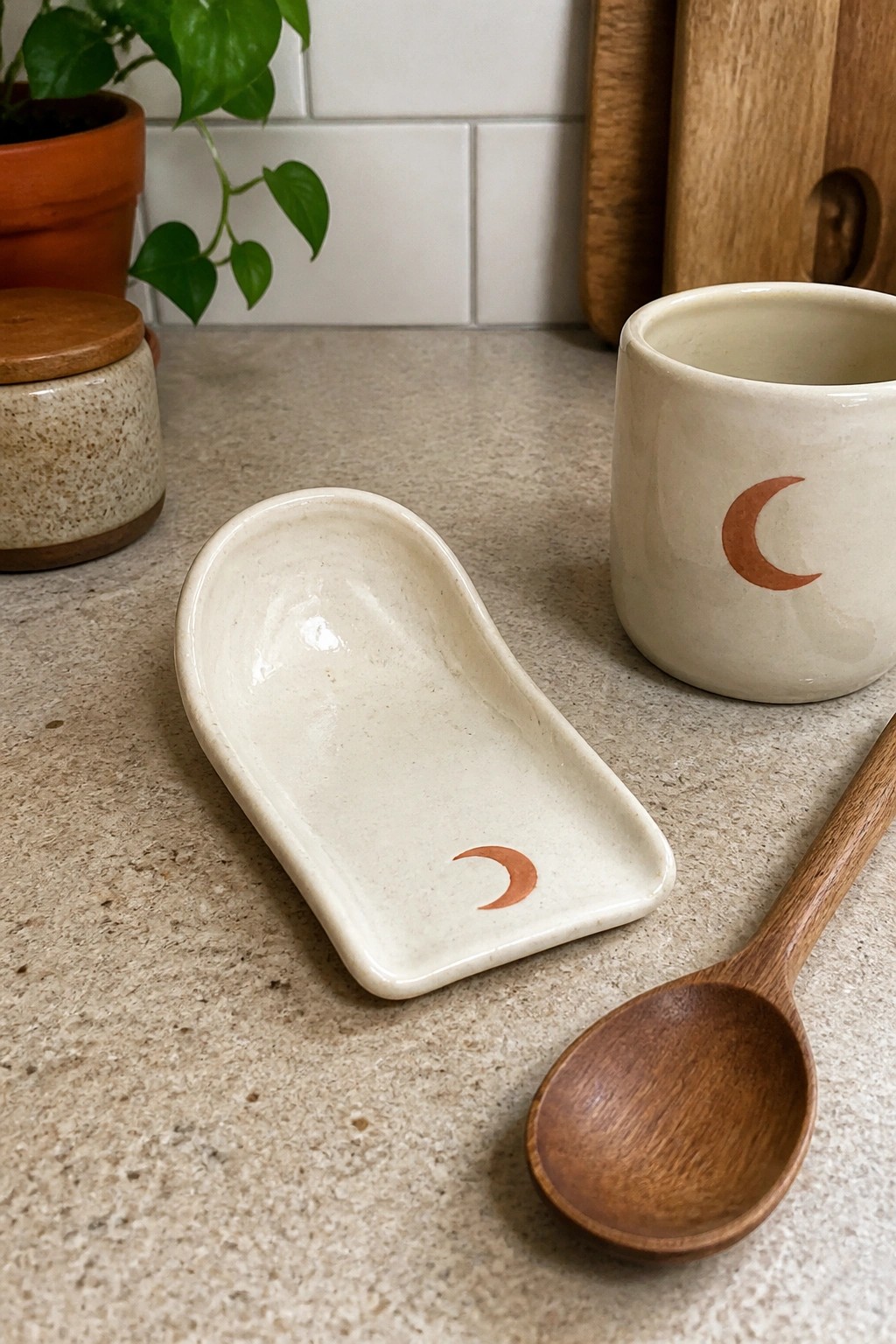
A small elongated spoon rest in cream clay carries a single terracotta crescent moon painted near one corner, while the matching mug uses the same motif on its side. The curved shape of the rest keeps a wooden spoon from rolling away, and the limited color palette keeps both pieces looking clean and simple. This approach works as a kitchen item that pairs a functional form with one repeated painted element rather than full-surface decoration.
The small scale makes this easy to adapt onto a butter dish or a set of small prep bowls using the same crescent. You can shift the moon placement slightly on each piece to create a loose set without extra work. In a kitchen this kind of piece stays useful on the counter while matching the mug for a coordinated look. For a gift it is quick to repeat across two or three items without needing complex patterns.
Wavy Line on a Matte Ceramic Planter

A simple round ceramic planter gets painted with one continuous black wavy line around the center. The matte light-colored glaze provides a clean background that lets the single hand-drawn line stand out. This keeps the overall look minimal while adding just enough pattern to hold interest on a plain surface.
What makes this idea useful is how easily the wavy line can be scaled up or down to fit different pot sizes. The same motif works on a matching saucer or can be repeated on a set of three planters for a windowsill grouping. For a gift, the single line keeps the project quick while still looking intentional on a kitchen counter or desk.
Speckled Mug with Minimal Blush Dots

A low, wide handmade ceramic mug uses a speckled off-white glaze as the main surface with just two small blush pink dots added near the base. The shape stays simple and functional while the dots provide a quiet accent that matches the natural texture of the clay. This approach fits the minimalist mug category where small painted marks replace larger patterns or full coverage.
What makes this idea useful is how the dots stay easy to paint on any basic mug form you already have. You can shift the color or move the placement to match other pieces in a set, or try the same mark on a bowl for a coordinated look. The small scale keeps the project quick and works well for gifts or everyday kitchen use without needing advanced painting skills.
Gold Dot Border on a Dark Matte Bowl

A handmade ceramic bowl in a matte dark glaze uses a single row of small gold dots painted around the outside just below the rim. The interior is finished in a glossy deep blue while the rim itself stays in the natural clay color. This keeps the overall form simple but adds a precise, repeating detail that draws the eye along the curve.
The shape does a lot of the work here because the wide, rounded profile gives the dots plenty of space to show without crowding. You could scale the same line of dots down for smaller bowls or try it in a different metallic color to match existing dishes. In a kitchen or on open shelving this kind of accent stands out in photos while still reading as understated. For a set, repeat the pattern on a few pieces but vary the dot spacing slightly so they feel coordinated rather than identical.
Soft Green Leaf Branch on Speckled Tableware

Handmade ceramic mugs, bowls, and small plates gain a quiet botanical detail from a single painted leaf sprig in soft green. The motif sits centered on the plate and bowl while appearing slightly offset on the mug, all against a matte speckled cream surface. This keeps the pieces looking simple while the painted branch gives them a consistent handmade identity across different shapes.
What makes this idea useful is how the same leaf branch can be resized or rotated to fit the curve of a mug or the flat center of a plate without extra work. In a kitchen these pieces mix easily with wooden trays and linen napkins for daily use. You could repeat the motif on a larger serving bowl or simplify it to just two leaves for a matching spoon rest. The neutral base also lets you swap the green for another color later if you want to expand the set.
Exposed Clay Band on White Ceramic Tableware

A wheel-thrown creamer and matching bowls finished in a matte white glaze with one exposed horizontal band of raw clay give a simple two-tone effect. The band sits at mid-height on each piece and creates contrast through texture rather than color. This treatment keeps the forms functional for pouring or serving while adding just enough visual break to the surface.
The shape does a lot of the work here because the rounded profiles stay easy to throw and trim. You can mask off the same band on mugs or larger bowls before applying glaze to get a matching set. In a kitchen these pieces sit well on open shelving or wooden counters without competing with other items. The idea also scales down easily for small pouring vessels or scales up for serving bowls if you want to expand the collection.
Concentric Line Ring Dish With Matching Striped Mug

A small ceramic dish painted with soft blue concentric circles creates a simple ring holder that keeps jewelry in one spot. The spiral pattern stays minimal while adding visual interest to an otherwise plain form. The same line motif carries over to a mug with horizontal stripes, showing how one basic painting idea can tie separate pieces together.
What makes this idea useful is the small scale that works on a nightstand or desk without taking up space. The painted circles make the dish easy to spot when you need to set rings down, and the design adapts quickly to other shapes like a shallow bowl or soap dish. You can change the line spacing or switch to a single color to match existing kitchenware.
Vertical Teal Stripe on a Matte White Mug

A handmade ceramic mug finished in matte white clay with a single wide vertical stripe of teal glaze brushed down one side. The glaze thins at the top and gathers into a small drip at the base, following the curve of the form without any additional pattern. This keeps the surface clean while the natural flow of the glaze creates the only variation.
What makes this idea useful is how the stripe can be widened, narrowed, or shifted to one side to change the balance without adding new colors. The same approach adapts easily to bowls by running the glaze from rim to foot or to a small pitcher by placing the stripe opposite the handle. In a kitchen it pairs with simple white dishes and stands out in photos because the contrast reads clearly even at small sizes.
Crescent Moon Motif on Speckled Ceramics
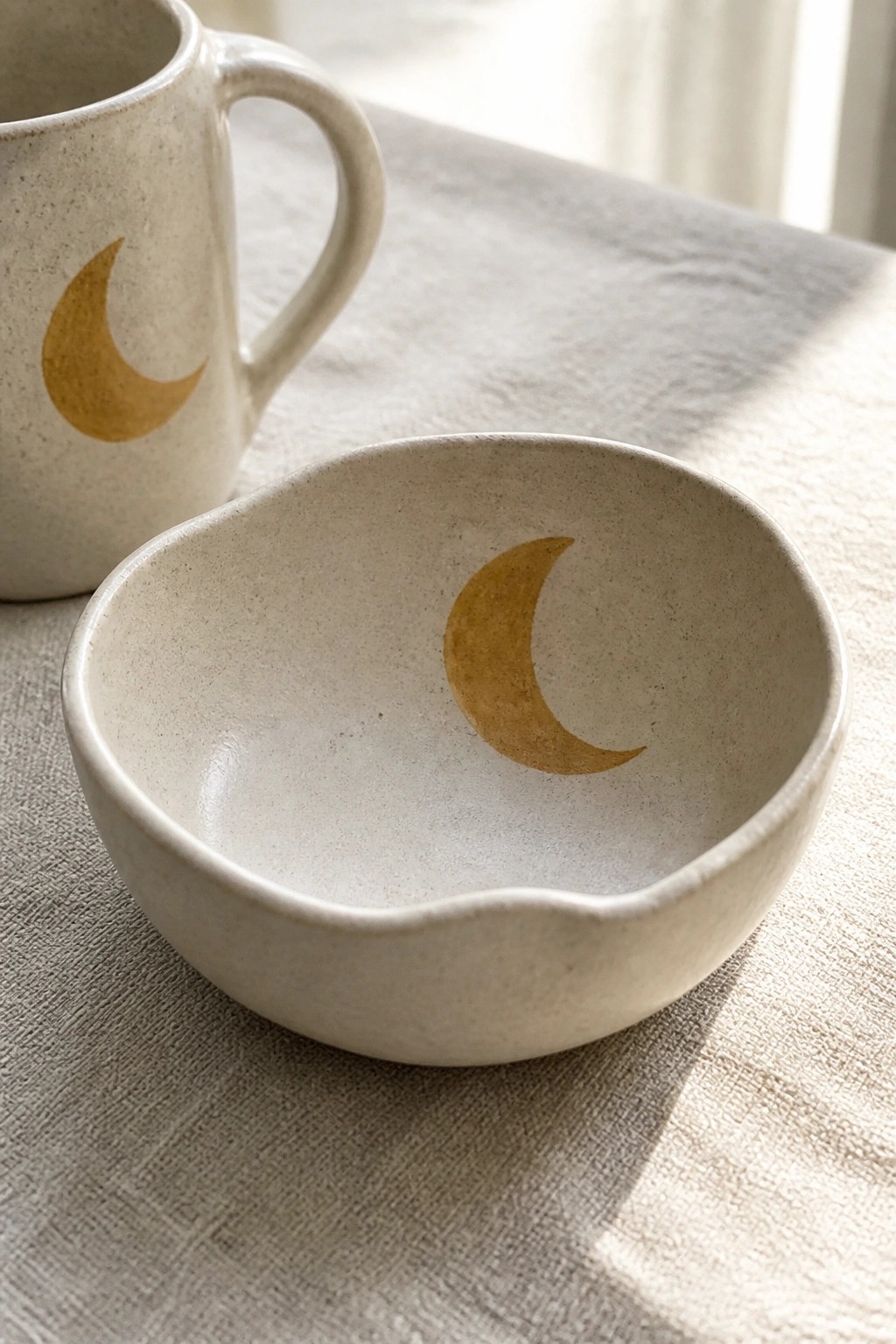
A handmade ceramic bowl with a slightly wavy rim receives one gold crescent moon painted on the inside surface. The same motif appears on the matching mug. The matte, speckled off-white clay provides a neutral background that lets the metallic shape stand out cleanly. This fits the painted motif category for basic kitchen bowls and mugs.
What makes this idea useful is how one small painted element works across multiple pieces without needing extra decoration. You could scale the crescent larger or smaller depending on the size of your bowl or mug. In a kitchen, this approach keeps the set looking coordinated while still leaving most of the surface plain. The same motif could be applied to a set of four bowls using a different metallic tone for variety.
Crossed Lines on a Speckled Catch-All Dish

A small handmade ceramic dish gets a simple painted treatment from four thin dark lines that cross at the center and divide the interior into four sections. The light speckled glaze provides a neutral base that lets the geometric lines stand out without overwhelming the shallow form. This kind of minimal pattern works on any round or oval shape where you want to add order while keeping the surface mostly open. The idea fits well for small bowls, trays, or ring dishes where the focus stays on clean division rather than dense decoration.
What makes this idea useful is how the crossed lines can be adjusted in thickness or spacing to suit different object sizes. The small scale makes it easy to turn into a nightstand ring dish, a desk catch-all, or a soap holder in the bathroom. You could repeat the same motif on a set of coasters or shorten the lines to just two for a quicker version on mugs. The painted detail helps the piece read as intentional even when the rest of the surface stays plain.
Thin Terracotta Arc on a White Lidded Jar and Pinch Bowl

A lidded ceramic jar paired with a small matching bowl uses one thin terracotta line painted in a gentle arc across the lid and rim. The white surface stays matte with a light handmade texture that keeps the focus on the single painted mark rather than busy detail. This fits the kitchen item category where the simple line adds contrast without competing with the rounded forms.
What makes this idea useful is how the arc can be repeated on other round lids or rims with minimal tools like a thin brush or masking tape. The small scale makes it easy to try on existing jars or bowls you already own, and the same line could shift to a straight band or double arc for variation. In a kitchen this kind of piece works well for sugar, salt, or spices while staying neutral enough to match other whiteware.
Minimalist Neutral Bowls with Subtle Clay Show Through

A wheel thrown bowl finished with a light matte glaze that thins at the rim and base lets some of the clay body show through for a simple two tone effect. This approach keeps the form clean while adding just enough variation to avoid a flat look. The matching mug uses the same glaze, making the pieces work as a loose set without matching exactly.
What makes this idea useful is how the shape handles both food and display without competing with other kitchen items. You can adapt the glaze application to create more or less clay exposure depending on the clay color you start with. In a kitchen this kind of bowl works for everyday meals or as a catch all when not in use. The same finish translates easily to plates or small trays if you want to expand the set.
Dotted Border Yarn Bowl with Matching Mug

A yarn bowl with a notched rim keeps a ball of yarn in place and feeds the strand smoothly while you work. This version pairs that shape with a light speckled glaze and a narrow band of small muted dots around the outside. The same glaze and dot pattern repeat on a simple handled mug to create a matching set.
What makes this idea useful is that the dot band is quick to paint and works on almost any round bowl or mug you already have. You can scale the same border down for smaller ring dishes or stretch it across a larger serving bowl. The notch turns an ordinary bowl into a practical tool for knitters without adding much extra work.
Minimalist Wavy Line Ring Dish

A small oval ceramic dish with a light pink glaze becomes a ring holder when finished with one flowing dark blue line. The line starts near one edge, curves across the center, and exits the opposite side, leaving most of the surface plain. This single-stroke approach keeps the piece simple while giving it a clear purpose as a place to drop rings or small items.
What makes this idea useful is how the painted line turns a basic slab or pinched form into a dedicated jewelry spot without extra decoration. The oval shape sits flat on a nightstand or dresser and takes up little room, so it works well for daily use. You could paint the same wavy line inside a shallow bowl or shorten it for a set of small soap dishes. The limited color and open space also make the design easy to repeat across different sizes.
Chevron Patterns on Minimalist Mugs and Small Bowls

Handmade mugs and small dishes gain a clean graphic look from a bold black chevron painted on the side. The motif sits centered on a speckled off-white surface that shows natural texture from the clay. This style fits the category of painted functional ware where the shape stays simple and the decoration does the visual work.
What makes this idea useful is how easily the chevron adapts to different sizes and shapes. You can paint the same arrow on larger bowls or scale it down for espresso cups. The high contrast makes the pieces easy to spot in a kitchen cabinet and gives them a modern edge that photographs well for sharing.
Two-Tone Glaze Split on Ridged Forms

A straightforward approach is to cover the upper half of a wheel-thrown bowl or mug with a solid sage green glaze while keeping the lower half in a light base that shows the horizontal throwing lines. The clean horizontal division creates contrast and lets the texture on the lower section stand out without any additional painting or carving. This works on both a small open bowl and a handled mug, keeping the overall shape simple and balanced.
What makes this idea useful is how the split point can be moved higher or lower to change the proportion of color. The ridged texture already provides visual detail, so the same glazing method can be repeated on plates or a larger serving bowl without extra steps. In a kitchen this kind of piece functions as everyday ware that still reads as intentional. You could adapt it by using a different color on the top half or leaving the ridges completely unglazed for a more neutral result.
Horizontal Brushstroke Sponge Bowl

A small rounded ceramic bowl finished in a matte white glaze carries three simple horizontal blue brushstrokes on one side. The strokes sit evenly spaced and vary slightly in length, giving the surface a quick, hand-applied look without any extra pattern. This turns the bowl into a practical holder meant to keep a natural sea sponge right beside the sink.
What makes this idea useful is how the painted lines stay minimal while clearly marking the bowl for a specific job in the bathroom or kitchen. The same three-stroke motif could move easily onto a set of mugs or a soap dish if you want matching pieces. Because the bowl stays small and the decoration takes only a few minutes, the design works well for quick weekend projects or as a low-key gift that still feels intentional.
Minimalist Ceramic Tea Light Holder with Painted Rim

A small, low-profile ceramic tea light holder uses a single blue line painted around the rim to keep the design simple and focused. The rounded form with a recessed center holds a standard tea light securely, and the matte clay surface lets the thin painted detail stand out without competing elements. This approach works as a basic decor object that adds a touch of color through minimal painting rather than complex patterns.
What makes this idea useful is that the same rim-painting technique transfers easily to small bowls or shallow dishes using the same brush width and color. The compact size fits on nightstands or desks without taking up much room, and you could swap the blue line for any accent color to coordinate with existing mugs or plates. For a gift, something like this turns a plain thrown piece into a finished item with one quick painting step.
Speckled Mug with Simple Horizon Line and Dot

A handmade ceramic mug gets its clean look from a rounded, low-profile shape covered in a light speckled glaze. The painted detail consists of one thin brown line running across the front and a small orange dot placed just above it. This combination keeps the surface mostly plain while adding a single focal point that draws the eye without clutter. The idea fits the minimalist mug category because the design uses limited color and shape to highlight the handmade form.
What makes this idea useful is how well the small painted elements translate to other mugs or bowls of similar size. You can swap the orange for a different accent color or stretch the line into a longer band to match your own glaze. The design works especially well for daily coffee use or as a quick gift since it requires only basic painting skills and stands out on a shelf next to plain pieces. Try the same line-and-dot layout on a matching set of two or three mugs to create a coordinated kitchen set.
Frequently Asked Questions
What paints are best suited for minimalist designs on mugs and bowls? Acrylic paints made specifically for ceramics work well because they bond to the surface and hold up after baking. Opt for matte finishes in neutral shades such as soft gray, beige, or white to keep the look clean and simple. Test a small area first and confirm the product is labeled food safe if the items will be used for eating or drinking.
How can I make the painted pieces durable for everyday use? Follow the paint instructions to bake the pottery at the recommended temperature, often around 350 degrees Fahrenheit for 30 minutes, which sets the color. Add a layer of clear ceramic glaze for added protection. Hand washing with mild soap helps the designs stay intact longer than machine cycles.
What techniques help achieve a polished minimalist appearance? Apply paint in thin, even coats using steady brush strokes and allow each layer to dry fully before adding more. Incorporate negative space by leaving large areas of the original clay visible. Simple elements like one thin line around the rim or a single small shape in the center keep the style refined without clutter.
Do beginners need special tools to try these ideas? Basic supplies like soft synthetic brushes in various sizes, a palette for mixing colors, and painter’s tape for crisp edges are enough to start. A pencil works for light planning marks that wipe away easily. No advanced equipment is required, though a turntable can help rotate pieces smoothly while painting.
How do I avoid common issues like smudging or uneven coverage? Work on a clean, dry surface and apply paint in multiple thin layers rather than one thick coat. Keep your hand steady by resting it on a stable surface and practice strokes on scrap paper. If a mistake occurs, wipe it off quickly with a damp cloth before it dries.

Pottery Path is my cozy corner of the internet where I share clay ideas, pottery inspiration, and simple projects you can recreate at home. I love exploring everything from air dry clay to handbuilt pottery to cute minis that brighten your day. My goal is to make clay crafting feel easy, fun, and welcoming for anyone who wants to try it.
You will find beginner friendly tutorials, creative pottery painting ideas, and lots of warm inspiration for slow and happy crafting. If you enjoy hands on creativity, this space will feel like home.