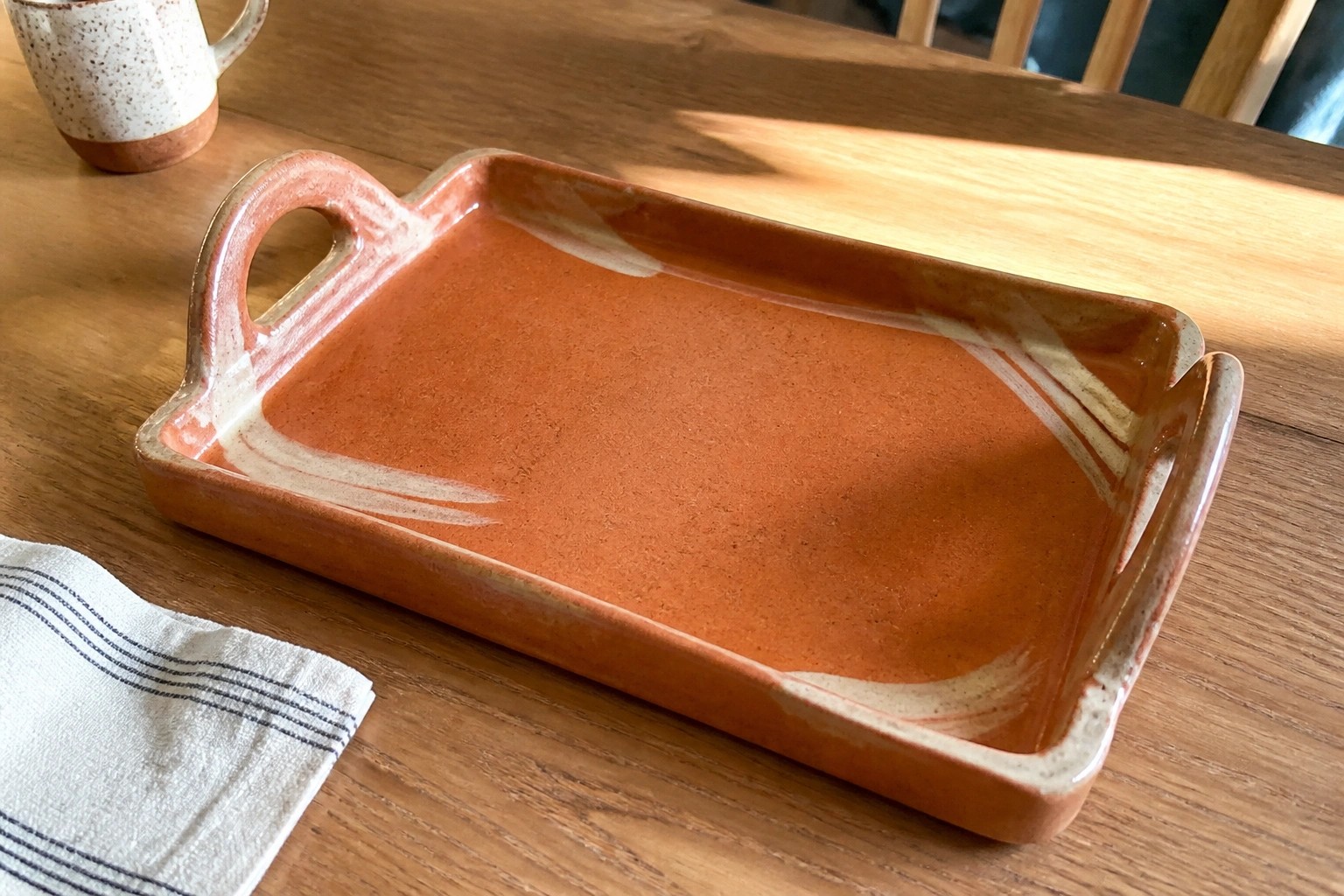
I’ve tried slab pottery a few times and it seems pretty approachable for someone just getting started.
Making handled serving trays was one of the first projects that felt doable without much equipment.
I collected 22 modern ideas around that theme for beginners who want to give it a go.
A few of them stick to basic forms while others include simple handles or patterns.
These are the kinds of things I keep in mind when I’m planning my next session at the table.
Rectangular Slab Tray with Loop Handles and Brushstroke Glaze
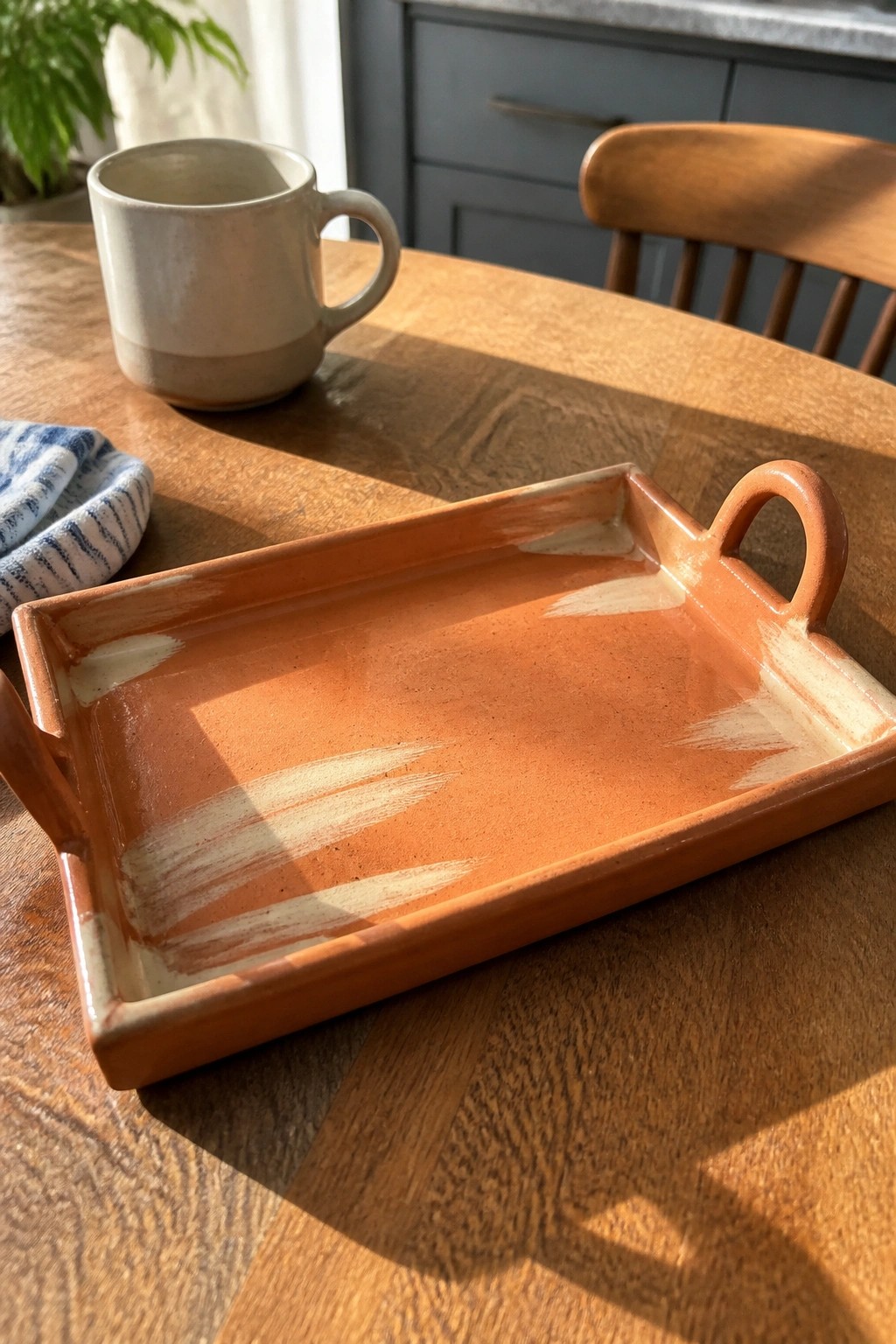
A slab-built rectangular tray with integrated loop handles on each end makes a simple but functional serving piece. The design uses a warm terracotta glaze base with loose white brush marks across the surface to add visual interest without much extra work. The low sides and flat base keep it easy to form from a single slab while the handles give it a practical lift for moving between table and counter. This approach fits well into the slab tray category and works for both everyday use and display.
The shape does a lot of the work here because the handles are cut directly from the same slab as the body, reducing extra assembly steps. A piece like this works especially well as a catch-all for kitchen items or a small serving tray for snacks and drinks. You could adapt the same dimensions into a longer version for bread or shorten it into a soap tray for the bathroom. The brushstroke detail is easy to personalize with different glaze colors or skip entirely for a solid finish.
Slab-Built Handled Tray with Square Mug
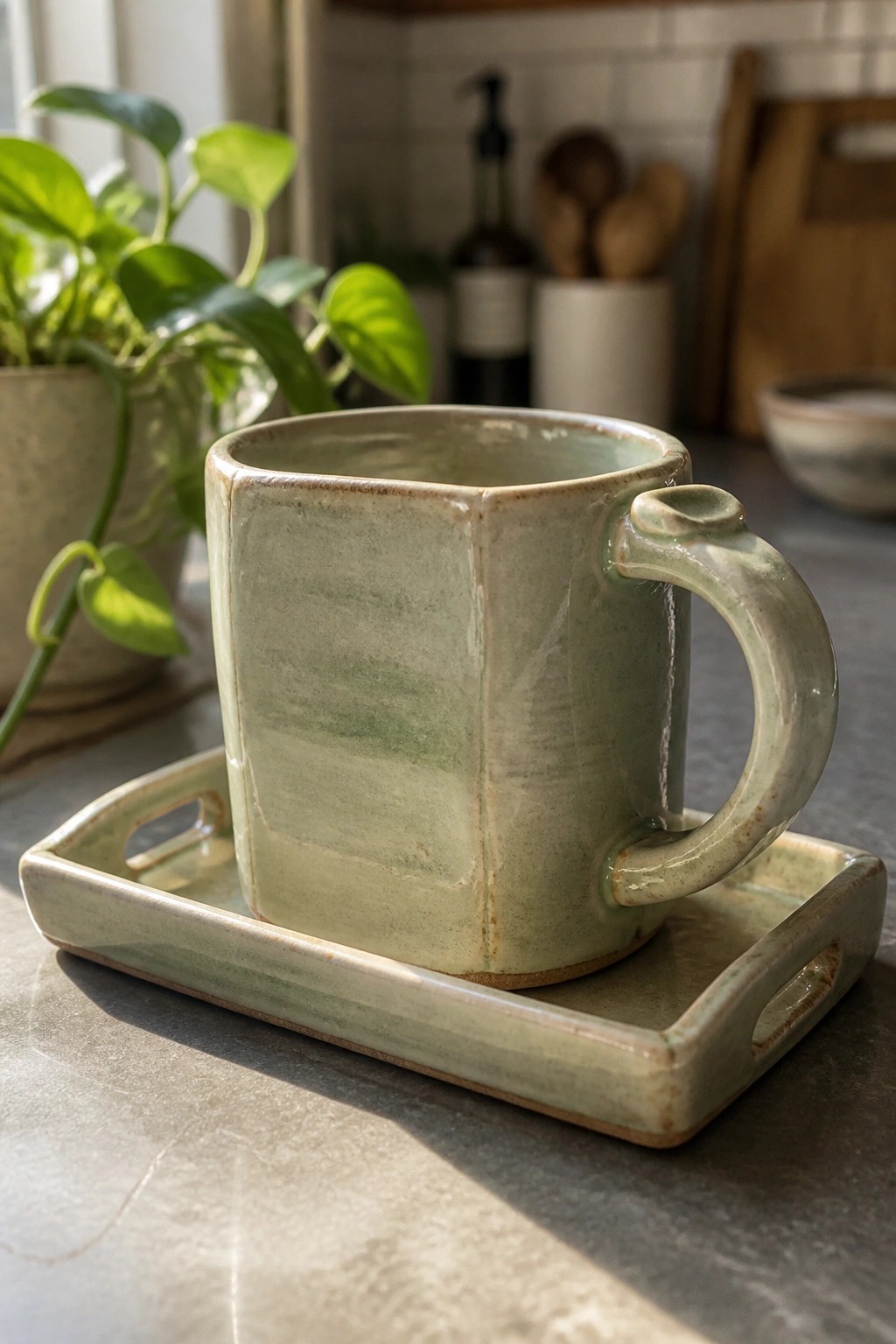
A slab pottery project like this produces a rectangular tray with cutout handles on the short sides that holds a matching square mug. Both pieces are built from flat clay slabs joined along the edges, which creates straight walls and a stable base without needing a wheel. The muted green glaze with light streaking keeps the focus on the clean forms while making the set easy to clean and use for small servings.
What makes this idea useful is how the tray’s handles turn a simple mug into a portable set for breakfast or snacks. You could scale the same construction down for a spoon rest or up for a larger cheese board, and switching the glaze color would let it match different kitchen styles. This approach stands out because the tray and mug are made together as one project, so they fit without extra planning.
Slab Built Handled Serving Dish
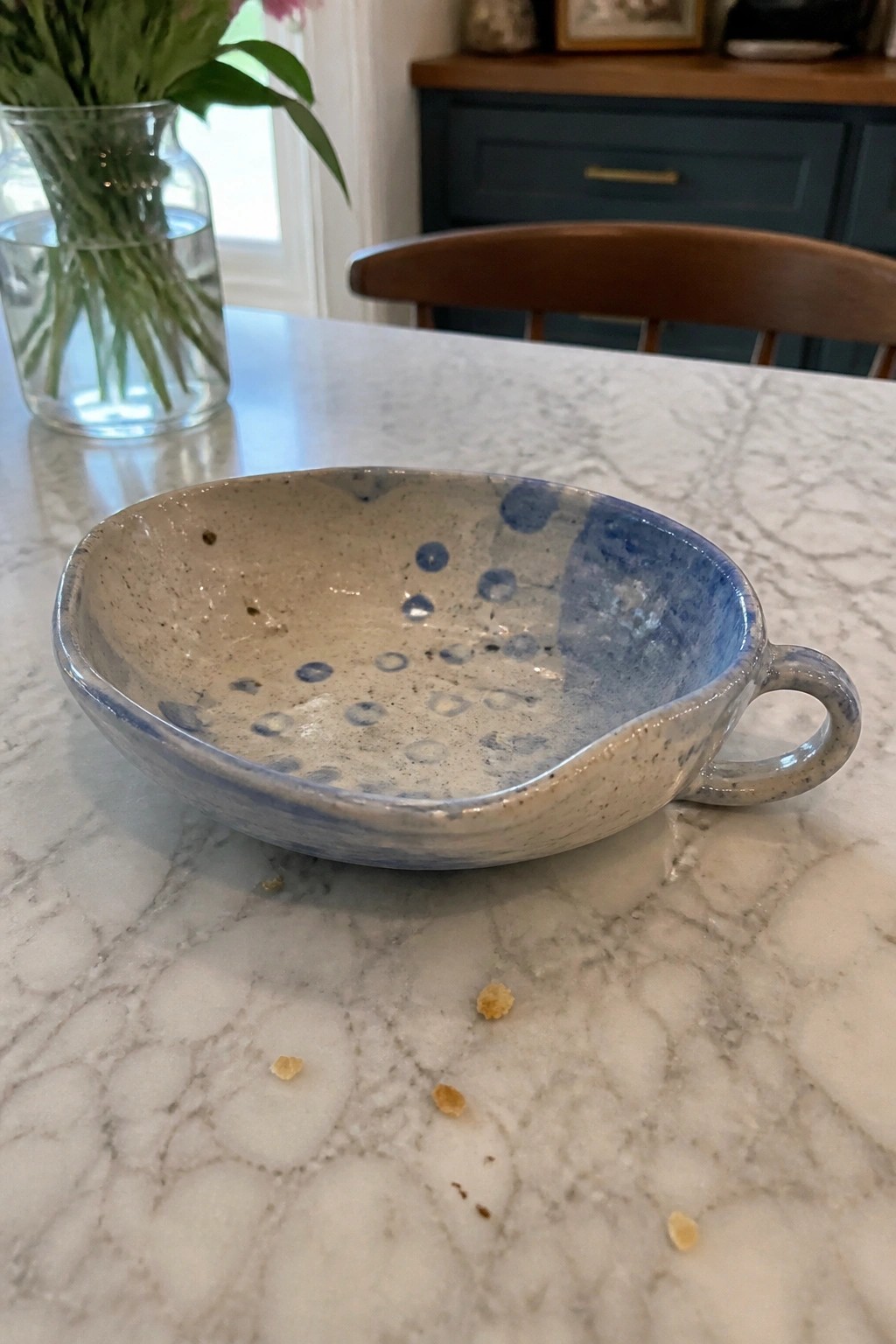
A small serving dish built from a single slab of clay takes shape when you cut an organic oval and attach a looped handle on one side before firing. The shallow walls and slightly uneven rim keep the form casual and functional for snacks or small sides. A light speckled glaze with blue pooling in the center creates contrast and highlights the handmade texture without extra carving or stamping.
The shape does a lot of the work here because the handle makes it easy to pass at the table while the compact size prevents it from taking over counter space. You can rework the same slab method into a longer tray by stretching the oval or add a second handle for larger portions. In a kitchen this kind of piece stands out on Pinterest when the glaze stays simple and the edges stay irregular.
Handled Rectangular Slab Tray
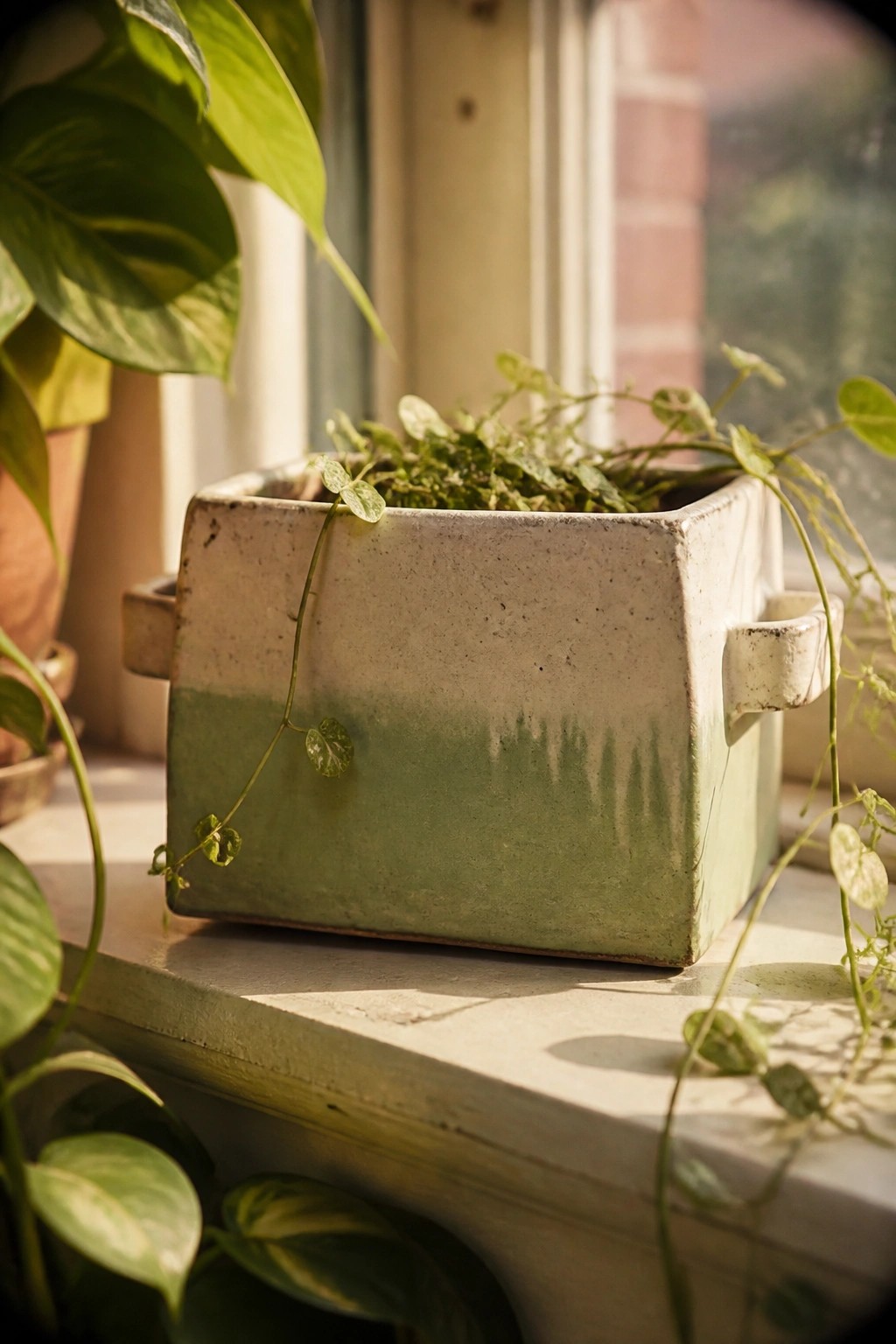
A slab-built rectangular tray with short side handles creates a low, stable container that works well for small plants or light serving. The flat walls and open top let trailing vines spill over naturally while the integrated handles make it simple to shift the piece from one spot to another. A two-tone green glaze applied in a single dip gives the sides clear contrast without added carving or painting.
What makes this idea useful is how the same basic tray shape can shift between plant use and kitchen tasks with almost no changes. Keep the walls low and the handles short if you want to try it as a small cheese board or appetizer tray instead. The solid construction also holds up if you decide to make a deeper version for herbs on a kitchen counter.
Wavy Lined Slab Tray with Handle

A slab-built tray with a simple looped handle makes a practical kitchen piece for resting spoons or small utensils. The white glazed surface carries loose blue brushstrokes that follow a wavy path across the form, giving the flat shape some visual movement. This approach fits the handled serving tray category and keeps the design minimal while still looking finished.
What makes this idea useful is how the handle lets you slide the tray across the counter without picking up the spoon. You can adapt the waves into straighter lines or switch the blue for a different color to match existing dishes. In a kitchen this kind of tray keeps cooking tools off the stove surface and catches drips. For another version, shorten the slab and use it as a small cheese board rest.
Handled Oval Tray with Gold Dot Rim

A small oval tray built from a slab of clay includes a short pulled handle on one end for easy lifting. The surface uses a light pink speckled glaze with evenly spaced gold dots along the rim to create a clean border. This shape works as a compact ring dish or catch-all that sits flat on a nightstand or entry table without taking much space.
What makes this idea useful is its simple slab construction that needs only basic rolling and trimming tools. The gold dots can be swapped for other underglaze colors or left off entirely if you want a faster finish. You could scale the same oval form into a soap dish or a small butter tray by adjusting the depth and handle size. The speckled glaze also hides minor surface marks, making it forgiving for early slab projects.
Two-Tone Split Slab Tray with Handles
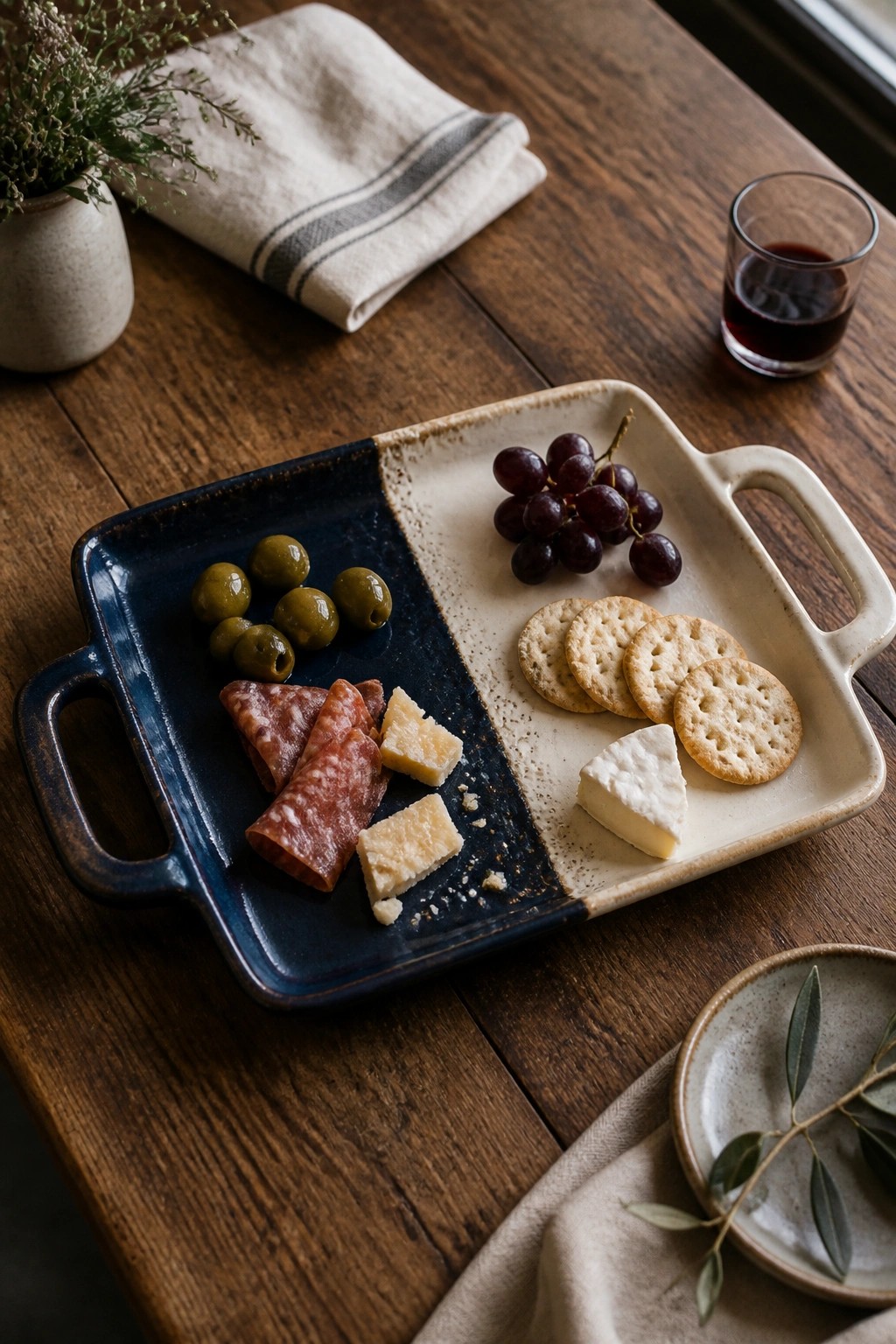
A rectangular slab tray built with low sides and attached handles divides cleanly into two sections using different glazes. One side takes a dark blue glaze while the other stays light with a speckled surface, creating a simple contrast that keeps the tray from looking plain. The handles sit at each end so the piece functions as a carryable serving surface rather than a flat board.
What makes this idea useful is the way the split glaze uses the tray’s natural division without extra carving or attachments. The shape works especially well for appetizers or cheese because the low edges keep items contained while the handles make transport easy. You can adapt it by changing the glaze colors, shortening one section, or scaling the whole tray down for individual plates. In a kitchen this kind of piece doubles as both a serving tool and a display item on open shelving.
Slab-Built Handled Serving Tray

A rectangular tray formed from a single slab of clay with low walls and integrated side handles creates a stable surface for carrying or displaying smaller items. The simple cutout handles make it easy to lift, while the mottled warm glaze covers both the interior and exterior evenly. This project fits the serving tray category and pairs naturally with smaller handmade pieces like a mug or pinch bowl made from the same clay batch.
What makes this idea useful is how the flat construction lets you adjust the overall size without changing the basic method. You can keep the tray plain or roll a subtle texture into the slab before shaping the walls. In a kitchen or on a picnic table it holds a few dishes without crowding the space. The same slab approach works for a smaller cheese board or a larger breakfast tray if you want to scale it later.
Pressed Leaf Handled Slab Tray with Matching Cup

A slab-rolled rectangular tray with a cutout handle at one end pairs with a small handled cup to create a simple serving set. Both pieces carry the same leaf motif, created by pressing foliage into the clay before a speckled glaze is applied. The flat tray surface keeps the cup stable while the handle makes it easy to move the whole set.
What makes this idea useful is how the integrated handle turns a flat slab into a functional tray without adding extra parts. You can change the leaf type or arrangement to match different seasons or swap in a single large leaf for a cleaner look. The same tray shape scales easily into a soap dish or small catchall, and the cup can stand alone if you want just one piece. A set like this works well for breakfast trays or as a gift because the handle adds clear function.
Oval Slab Tray with Integrated Handles

A slab-built oval tray with short side handles creates a simple serving piece that stays flat and stable. The soft sage green glaze covers a lightly speckled clay body, while the rim shows a slightly rough texture that contrasts with the smooth interior. Nesting the green tray on a larger neutral base tray adds visual layers without extra work. This approach fits the handled serving tray category for modern slab projects.
What makes this idea useful is the oval shape that adapts easily to food, candles, or small plants. You could change the glaze to matte black or keep the speckled clay exposed on the handles for more contrast. In a kitchen or on a coffee table, the size handles everyday items without taking much space. For another version, shorten the handles and reduce the overall scale to make a smaller tray for keys or jewelry.
Handled Slab Tray for Tea Light Candles

A flat slab of clay is rolled out and shaped into a simple rectangle to create this tray. Small handles are added to the short ends, and a shallow circular depression is pressed into the center to fit a standard tea light. The dark glossy glaze covers the entire surface and gives the piece a clean, contemporary finish that suits both everyday and special table settings.
What makes this idea useful is how the basic tray form can shift between candle use and small serving tasks. Skip the center well on your next version and you have a compact tray for butter, salt, or rings. The handles keep the piece easy to carry even when the clay is thin, and the overall size stays practical for small spaces like nightstands or dining tables. A beginner can start with one slab, cut the rectangle, and add the handles last to keep the process straightforward.
Abstract Brushstroke Slab Tray

A slab-built tray like this starts with a flat sheet of clay cut into a long, narrow shape with soft irregular edges that curve gently at each end. The surface uses a light speckled base glaze covered by loose overlapping brushstrokes in coral and teal to create simple movement across the piece. This style keeps the tray functional for serving while the painted marks give it a modern graphic quality that stands out without extra carving or texture.
What makes this idea useful is how the flat slab form can be cut to different lengths or widths depending on what you want to serve or display. The brushstroke pattern is easy to adapt by changing the colors or stroke direction to match existing kitchenware or home accents. You could repeat the same approach on a smaller scale for individual appetizer plates or turn the shape into a shallow rectangular tray with straighter sides for a cleaner look. The painted detail also photographs well for sharing project ideas online.
Slab Built Hanging Pocket With Impressed Leaves

This project uses basic slab construction to create a flat-backed wall pocket. Two side walls and a front panel join to form the pouch shape, while a top extension with a hole allows it to hang from a nail or hook. The front carries a large leaf motif pressed into the clay before assembly, giving texture that stands out against the matte white glaze.
What makes this idea useful is how easily the same slab layout can be resized for mail, recipe cards, or desk notes. The impressed leaves can be swapped for other stamps or skipped entirely if you want a smoother surface. A piece like this works especially well near a workspace or entry because it keeps small flat items visible and accessible without taking up shelf space. You could also shorten the height and add a tray base to turn the form into a shallow wall shelf.
Rolled-Handle Slab Tray in Swirled Glaze

A small oval tray built from a clay slab includes a handle formed by rolling one end back into a loose loop before firing. The turquoise glaze with white streaks creates a soft, moving pattern across the surface without covering the clay edges. This shape works as a ring dish or small catch-all for daily items like keys or earrings.
The compact size lets it sit on a dresser or bathroom counter without crowding other objects. You could simplify the handle to a flat tab or stretch the oval longer to hold more pieces if needed. A version in a single solid glaze color would still read as modern while taking less time to finish. The same basic slab cut scales easily into a slightly larger tray for holding small snacks or tea bags.
Handled Rectangular Soap Tray with Drainage Ridges
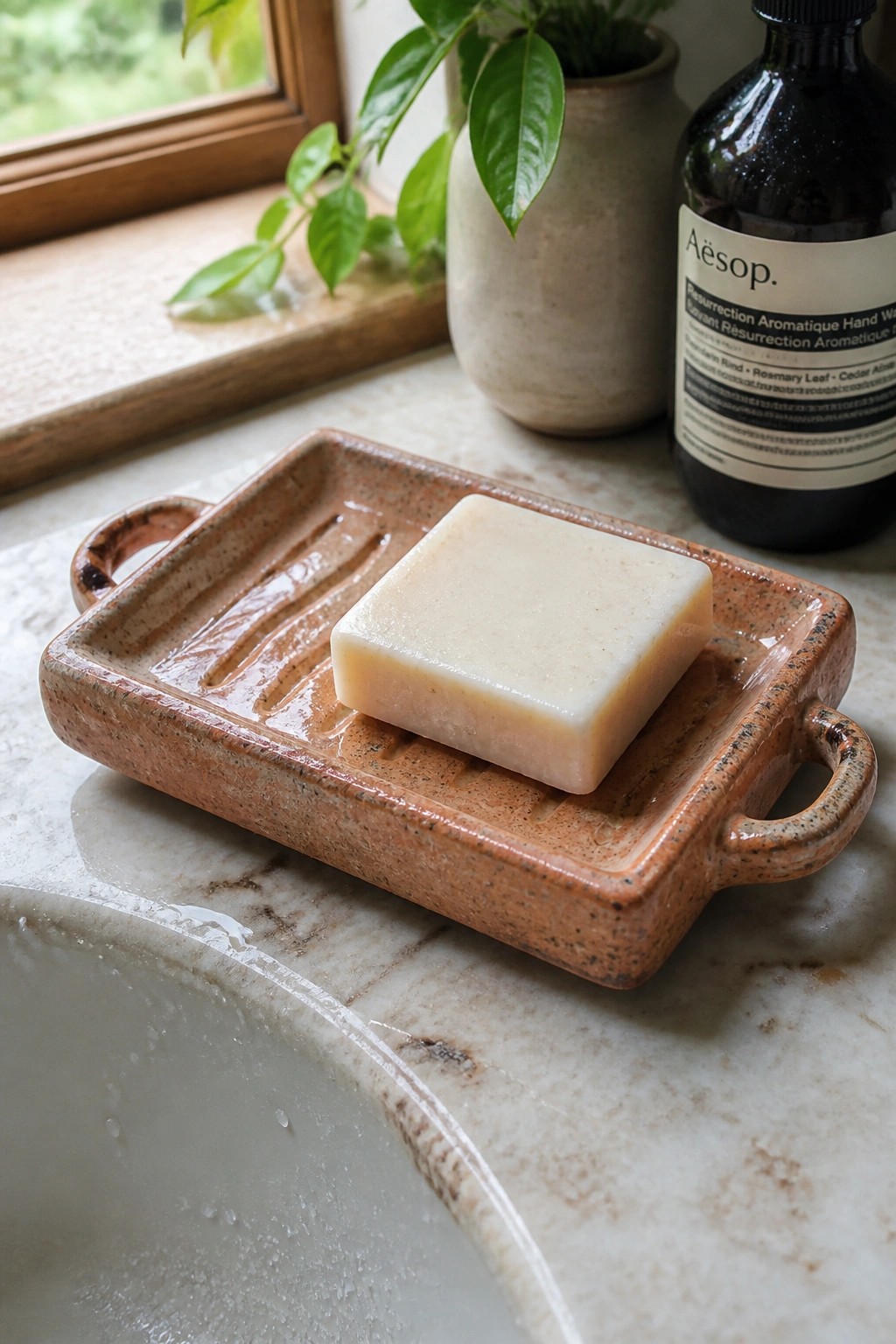
A slab-built rectangular tray with short handles on each end works well as a soap dish for a bathroom counter. Parallel ridges run along one half of the base to lift the bar and let water drain away. The speckled earthy glaze adds texture and a finished surface that holds up to daily moisture. This keeps the overall form simple while turning a basic tray shape into a dedicated bathroom piece.
The compact size and handles make it simple to lift and rinse off when needed. You can adapt the idea by changing the ridge layout, making the tray larger for kitchen use, or leaving the surface flat for a more general serving style. A piece like this fits easily on a sink edge without taking much space. For a beginner slab project, the shape gives you clear lines to follow while still producing something usable right away.
Slab Tray with Mini Handled Pots

A simple slab tray holds two small square containers, each formed with an upright tab handle on top. The containers sit side by side with enough room for salt, pepper, or other small kitchen staples, and the tray itself has short handles on either end for easy carrying. Different glazes on the pots keep the set visually balanced without needing extra decoration.
What makes this idea useful is that the tray turns two basic pots into one complete serving piece. The shape works well on a dining table or kitchen counter where small amounts of seasoning need to stay organized. You could easily adapt it by making the pots taller for sugar or by adding a third compartment for a spoon rest. For a beginner project the small scale keeps the slabs manageable while still producing something functional.
Slab Candle Holder with Tab Handle

This slab-built candle holder is a low, wide ceramic bowl with a flat tab extending from one side to create a built-in handle. The exterior shows a scraped texture from hand-forming, while the interior has a dark glaze that contrasts with the lighter clay body. The design keeps the form simple and functional so the piece works as both a candle vessel and a small handled tray.
What makes this idea useful is how the tab handle turns a basic bowl into something that can sit on a shelf edge or be moved easily without touching the wax. You can scale the same shape down for tea lights or widen it into a small serving tray for snacks. Try changing the texture to smooth or adding a second tab on the opposite side to create a balanced tray look. The form adapts quickly if you want to make matching sets in different sizes.
Handled Slab Tray with Concentric Circles

A slab-built serving tray with one attached handle gives a flat, stable surface for small food items like toast or snacks. The maker scored concentric rings into the clay before glazing to add simple linear texture that catches light and shadow. A speckled neutral glaze keeps the piece understated while highlighting the tray’s shape and the scored lines. This fits the handled tray category because the construction stays basic: roll a slab, cut the oval form, add the handle loop, and score the rings with a basic tool.
What makes this idea useful is how the concentric lines give visual structure without extra parts or complex joins. The tray works well on a breakfast table or beside a coffee setup because the handle makes it easy to move while the low profile keeps items from sliding. You could adapt the same base shape by changing the ring spacing, switching to a solid matte glaze, or skipping the scoring for a plain surface. For a different project the oval form and handle translate directly to a small cheese board or plant saucer.
Slab Tray with Matching Planters

A rectangular slab tray with short handles on each end holds two small cylindrical pots that sit side by side. The pots and tray share the same speckled clay body and simple horizontal lines cut near the base, giving the set a coordinated look without extra decoration. The design works as a compact plant display that can move easily from a windowsill to a shelf.
What makes this idea useful is how the tray keeps the pots together and catches any stray soil or water. The small overall size fits narrow surfaces where individual pots might get knocked over or lost. You could build the same tray shape and use it for candles, small bottles, or desk supplies instead of plants, or swap in different sized pots later. The clean lines and neutral finish make the set easy to photograph for reference when trying the project yourself.
Slab Tray with Three Handled Candle Cups

A flat slab tray fitted with end handles supports three small cups, each built with its own handle and sized exactly for a standard tea light. The cups rest freely on the tray so they can be moved or used on their own. Simple rolled edges and speckled glazes in three related tones keep the set cohesive without added surface detail. The project stays within basic slab techniques while producing both a tray and matching cups.
The small overall size lets you fit the finished piece on a side table or shelf without taking much space. You can easily change the cup count or swap the tea lights for small condiment bowls if you want a kitchen version instead. The looped handles on the tray and cups give a clear grip point that beginners can form quickly with a simple coil. This same layout works for a desk organizer or bathroom tray by adjusting the cup height slightly.
Rectangular Slab Tray with Integrated Chopstick Slot

A slab-built rectangular tray makes a straightforward serving piece for sushi or small appetizers. The maker rolled a flat slab, formed low sides, and left a narrow channel at one end to hold chopsticks in place. A dark textured glaze covers the surface while a single white brushstroke curve adds contrast without crowding the space. The result stays simple and functional for actual use at the table.
What makes this idea useful is how the chopstick channel turns a basic tray into a self-contained serving set. You can scale the same slab shape down for cheese or dessert boards or leave the motif off for a plainer version. The dark finish with one light accent keeps the focus on the food and works in both casual and modern kitchens. For a first attempt, roll the slab thicker so the channel stays stable after firing.
Compartmentalized Slab Tray for Small Portions

A handled serving tray formed from slabs gives you three separate wells in one piece for holding different foods at the same time. The long rectangular body includes a short handle at one end and three rounded compartments, each glazed in a soft pastel tone with a lightly textured surface. The irregular rim and mottled glaze finish keep the look casual while still making the divisions clear. This approach works as a simple slab project that turns a basic tray shape into a functional kitchen item.
The shape does a lot of the work here by letting you serve multiple items without extra plates. It fits easily on a countertop or small table for snacks, appetizers, or dessert flights. You could simplify the design to two sections or swap the glaze colors to match existing dishes. The same layout also adapts quickly into a tray for cheese and crackers or small plant starters.
Frequently Asked Questions
What basic supplies are required for slab pottery projects like handled serving trays?
For beginners starting with slab pottery, gather a few essential items including a block of clay suitable for hand building, a rolling pin or slab roller for flattening the clay, a sharp knife or pottery wire for cutting shapes, a sponge for smoothing surfaces, and basic measuring tools like a ruler. You will also need access to a kiln for firing unless you opt for air dry clay, along with underglazes or glazes for finishing. Start with a small amount of clay to practice forming flat slabs before attempting trays with handles.
How do beginners attach handles securely to slab pottery trays?
To attach handles firmly, score the areas where the handle will connect to the tray body using a tool to create texture, apply a small amount of slip made from clay and water, then press the handle pieces gently into place. Blend the joints smoothly with your fingers or a tool to eliminate gaps. Allow the piece to dry slowly under plastic to prevent stress at the attachment points. This method creates strong bonds that hold up after firing.
What techniques help prevent slabs from cracking during drying?
Keep slabs at an even thickness of about a quarter inch throughout the project to promote uniform drying. Cover the formed tray loosely with plastic wrap for the first day or two to slow moisture loss, then gradually uncover it over several days. Avoid placing pieces in direct sunlight or near heat sources. Scoring and slipping all joins properly also reduces weak spots that could lead to cracks.
Are there any tips for achieving a modern aesthetic in these pottery ideas?
Focus on clean geometric shapes and minimal surface details such as subtle textures from stamps or rollers rather than ornate carvings. Use neutral or bold color combinations in glazes like matte blacks paired with metallic accents for a contemporary look. Experiment with asymmetric handle placements or layered slab designs to add visual interest while keeping the overall form simple and functional for serving trays.
How should I prepare my clay slabs to ensure even thickness for professional results?
Roll out your clay between two guide sticks of equal height placed on either side of the clay block. This setup maintains consistent thickness as you roll back and forth with even pressure. Flip the slab occasionally and check for uniformity by feel or with a ruler. Trim edges neatly after rolling to avoid uneven areas that could affect the final tray shape.

Pottery Path is my cozy corner of the internet where I share clay ideas, pottery inspiration, and simple projects you can recreate at home. I love exploring everything from air dry clay to handbuilt pottery to cute minis that brighten your day. My goal is to make clay crafting feel easy, fun, and welcoming for anyone who wants to try it.
You will find beginner friendly tutorials, creative pottery painting ideas, and lots of warm inspiration for slow and happy crafting. If you enjoy hands on creativity, this space will feel like home.