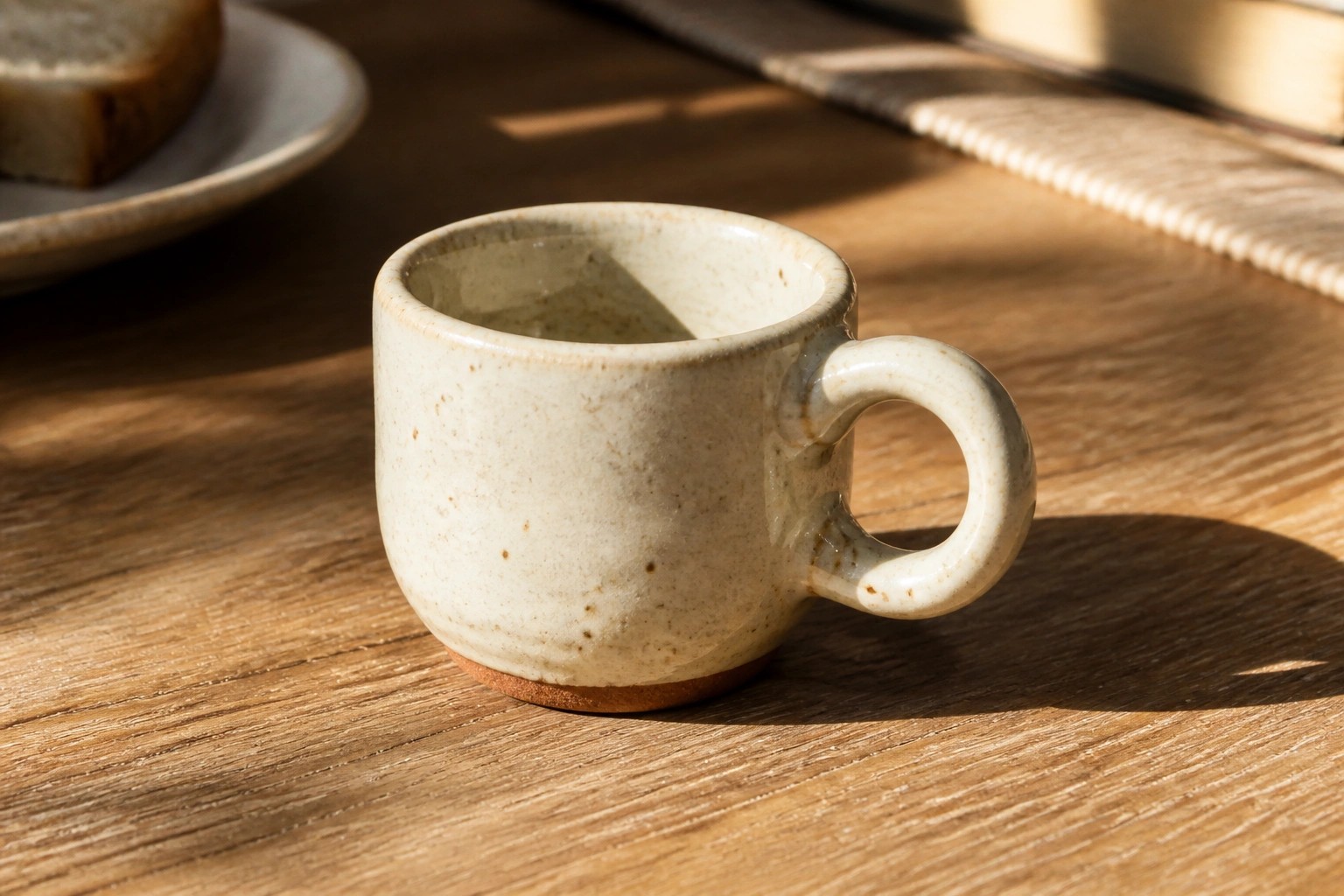
I started handbuilding ceramics a couple of years ago mainly because I wanted to make things I could actually use around the house.
Small pieces like mugs or trays turned out to be the easiest to start with since they do not take long to finish.
Here are some ideas I have gathered that focus on beginner friendly projects.
Each one is built around functional items so you can practice your skills while creating something practical.
I hope these suggestions give you a few options to try in your own space.
Mini Speckled Mug
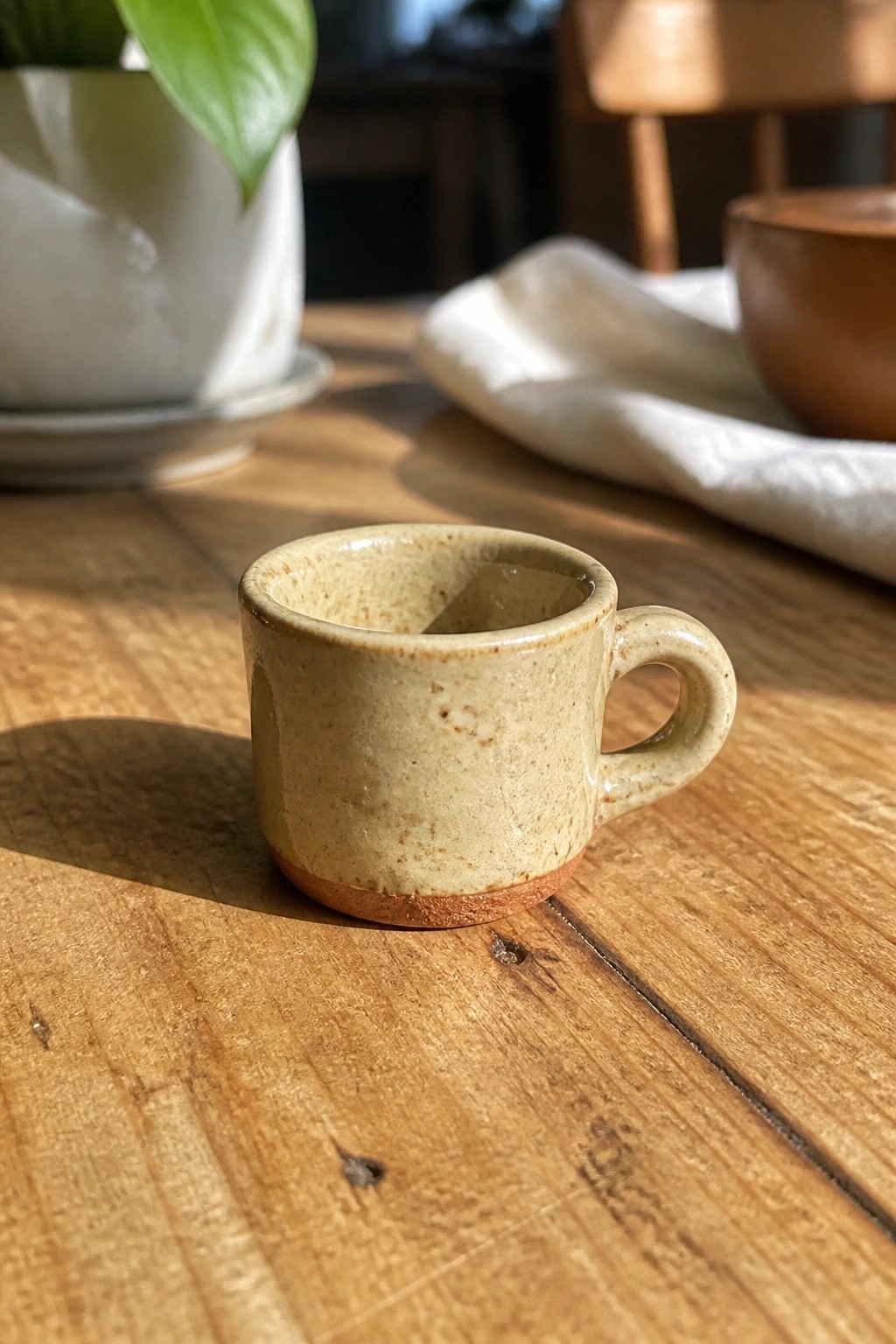
A small mug like this makes a straightforward beginner project because the compact cylinder shape requires less clay and simpler forming than a full-size cup. The design uses straight walls, a modest attached handle sized to match, and a speckled glaze that shows off the clay texture while leaving the foot in its natural fired color. This approach keeps the piece functional for espresso or small servings without added surface decoration. It belongs in the drinkware category of small kitchen items.
What makes this idea useful is the reduced drying and firing risk that comes with the small scale. You can repeat the same form to make a set or tweak the handle curve to turn it into a creamer or matcha cup. In daily use the size works for single portions and stores without taking much space. The speckled glaze treatment also gives each piece slight variation even when the shape stays the same.
Leaf-Shaped Ceramic Ring Dish
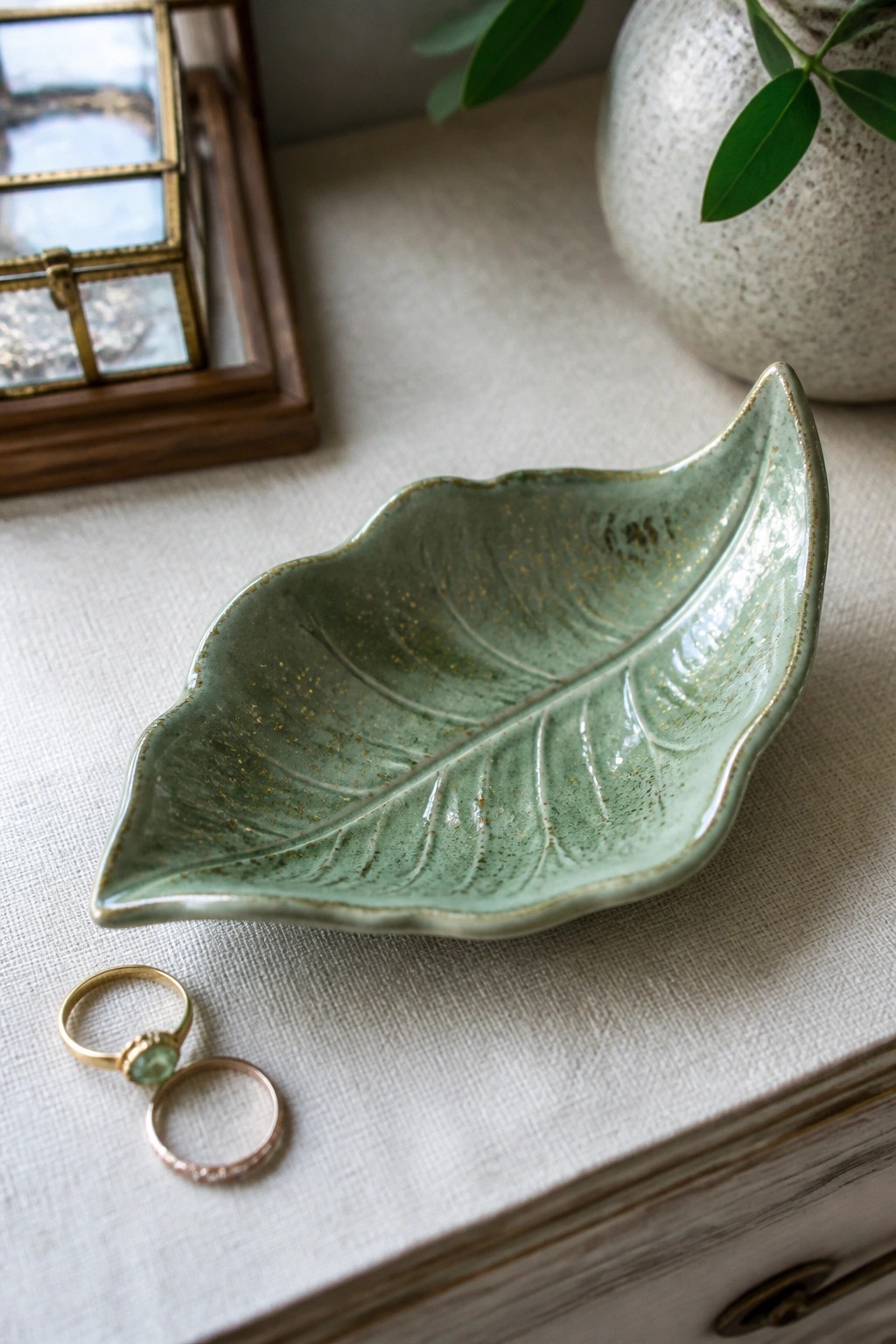
A handbuilt ceramic dish formed in the shape of a leaf makes a practical small tray for rings or other jewelry. The design uses a shallow curved base with edges that follow the leaf outline and raised vein lines pressed into the clay for texture. A muted green glaze with fine gold specks covers the surface and settles into the details to emphasize the form. This keeps the project focused on a single slab shape that stays functional on a nightstand or dresser.
The shape does a lot of the work here by creating natural edges that hold items in place without extra construction. You can roll out a similar slab and cut it to a different leaf or simple oval if you want a faster variation. The same size works well for a few pairs of earrings or loose change in a bathroom. For a gift, this kind of piece packs flat and needs only basic glazing to look finished.
Smiley Face Ceramic Planter
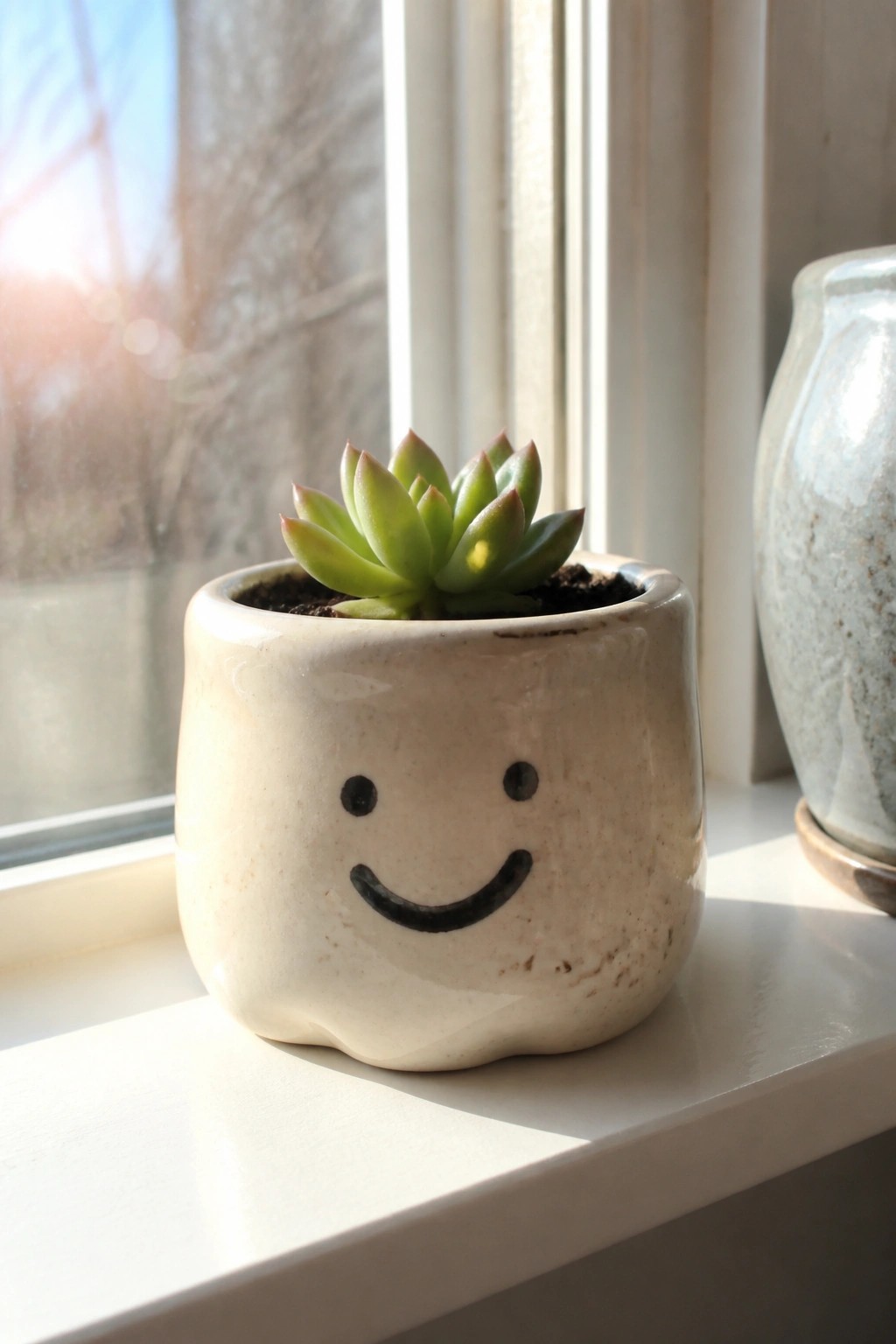
A small rounded clay planter gets its main decoration from a simple black painted smiley face applied after glazing. The cream matte surface gives the face clear contrast while the compact cylinder shape keeps the focus on the plant rather than the pot itself. This turns an ordinary functional planter into something that still holds soil and drains properly for succulents or small herbs.
The small scale makes this easy to adapt by changing the painted motif to initials, dots, or simple line patterns. It works especially well on narrow windowsills where larger pots would crowd the space. You could use the same base shape for a desk pencil holder or a small bathroom container by skipping the drainage hole. For a gift, the painted face adds a quick personal touch without requiring extra sculpting.
Fish-Shaped Spoon Rest
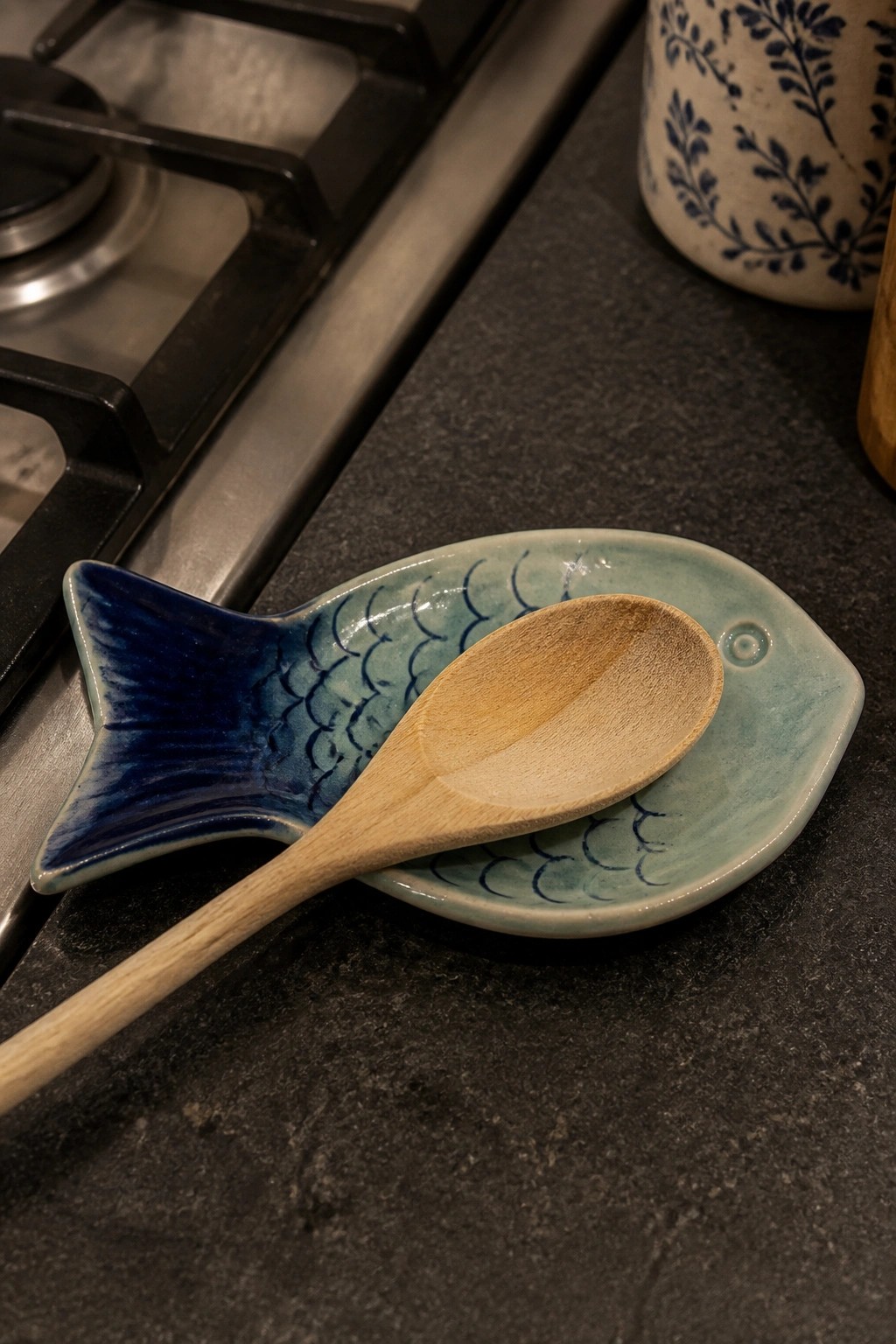
A fish-shaped spoon rest gives you a simple way to keep spoons off the counter during cooking. Form a flat oval base into a fish outline, then add a raised tail at one end and a small head detail at the other. Press or carve scale lines into the surface before glazing in a blue-to-turquoise gradient that follows the fish form. The result is a compact kitchen piece that holds spoons while staying easy to store in a drawer.
The shape does a lot of the work here because the tail creates a natural stop for the spoon handle. You can simplify the scales to just a few lines or swap the fish for another simple outline like a leaf or wave if you want a different look. In a kitchen, this kind of piece stays useful right next to the stove or prep area without taking much space. For gifts, the same base shape works well in other colors or with a plain glaze to match different styles.
Salt Cellar with Matching Spoon

A small handbuilt bowl with a rounded shape and a tiny matching spoon creates a simple salt cellar for kitchen use. The interior uses a soft green glaze while the exterior stays unglazed terracotta, giving the set a clean two-tone look that stays practical. The spoon fits neatly into the bowl so salt stays contained and easy to pinch or sprinkle during cooking.
What makes this idea useful is how the compact size works on a countertop or prep area without taking up space. You can rework the same form for sugar, dried herbs, or finishing salts by swapping the glaze or leaving the outside matte. The spoon adds function that turns a basic bowl into a complete set, and the small scale makes it a quick project that still feels finished.
Polka Dot Divided Jewelry Tray

A handbuilt ceramic tray with three shallow compartments works well as a jewelry holder for small items like rings, earrings, and necklaces. The soft pink glaze and scattered pink dots create a simple pattern that keeps the focus on the divisions rather than busy decoration. The rectangular shape with rounded corners and low sides makes it stable on a flat surface while still easy to pick up.
What makes this idea useful is the clear separation of sections, which helps keep different types of jewelry from tangling or getting lost. You could change the dot colors to match a room or swap the three sections for two longer ones if you mainly store bracelets. This kind of tray fits easily on a dresser, bathroom counter, or entry table, and the same base shape could be made longer to hold keys and mail instead.
Painted Sitting Cat Figurine

A small sitting cat is a straightforward handbuilt project that starts with a simple pinched or coiled body, then adds separate slabs for the ears and a rolled coil for the tail. The design relies on basic painted details such as black eyes and whiskers plus soft pink accents on the ears and cheeks to create the finished look. This approach fits the decor object category and stays small enough to shape and fire quickly.
The small scale makes this easy to adapt for a desk, shelf, or plant display where it takes up little room. You could swap the paint colors to match a real pet or simplify the face to just eyes and nose if you want fewer steps. For a different piece, use the same body shape but adjust the ears and tail to make a rabbit or fox instead.
Oval Tea Light Dish
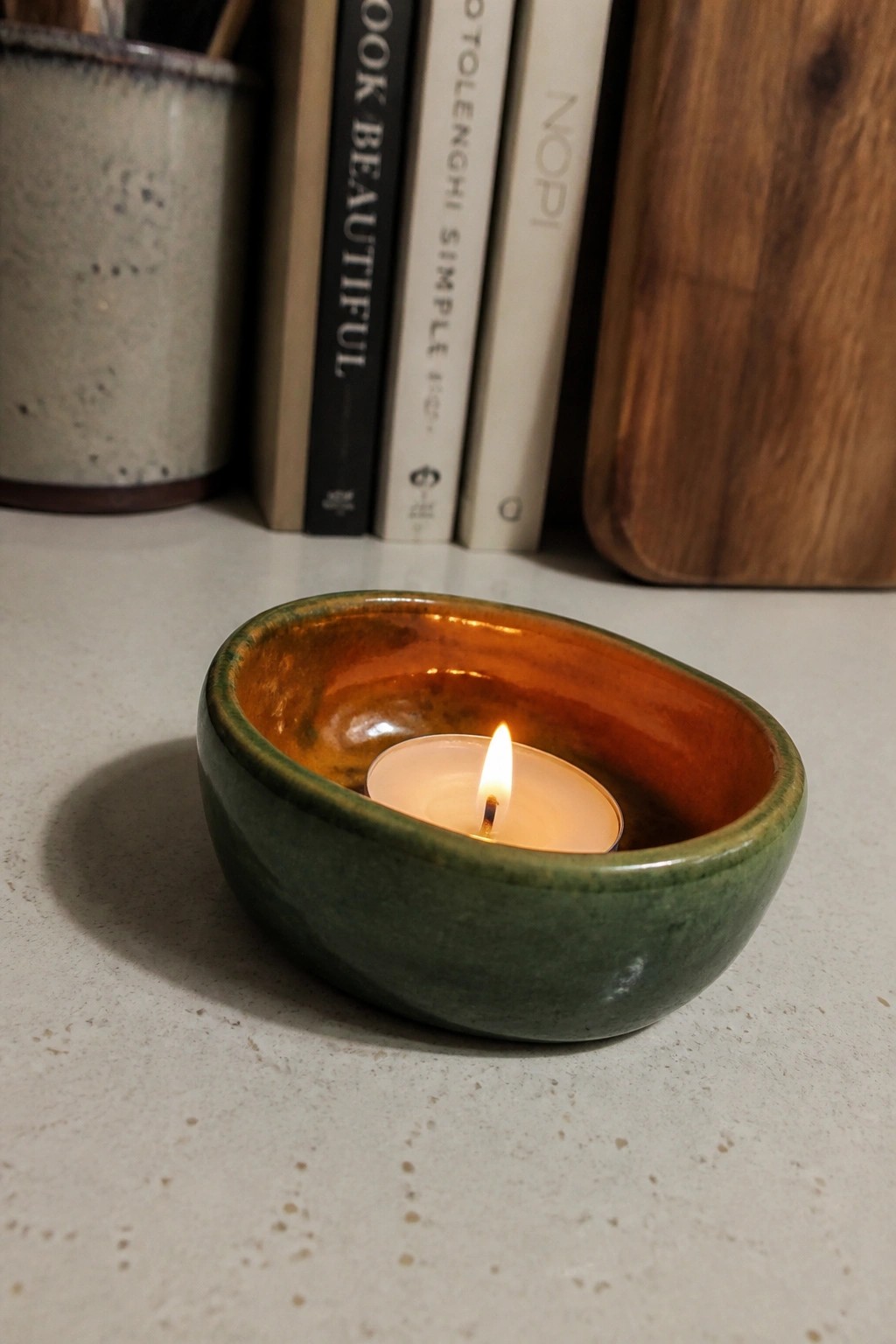
A small oval dish formed from clay serves as a simple tea light holder. The pinched or slab-built shape keeps the candle centered while the interior glaze in warm orange-brown contrasts with the green exterior. This project fits the candle piece category and stays compact for everyday surfaces.
What makes this idea useful is how the oval form can be made quickly by hand without a wheel. The same base shape adapts easily to different glaze colors or sizes depending on the tea light you want to use. On a desk or shelf it provides a contained spot for a small flame while taking up little space. You could also skip the candle and turn the dish into a ring holder or tiny trinket bowl with minimal changes.
Footed Toothbrush Holder

A handbuilt ceramic toothbrush holder gives you a compact bathroom item that keeps brushes upright and off damp counters. The straight-sided cylinder with a rounded base and three small feet provides stability while the blue speckled glaze over a lighter clay body creates a simple contrast. This shape works as a basic holder because the open top fits standard brush handles and the feet add just enough lift without complicating the form.
What makes this idea useful is that the feet solve a practical problem by keeping the base dry in humid bathrooms. You could rework the same cylinder into a small makeup brush cup or desk pencil holder by adjusting the height and skipping the feet. The small scale means it uses little clay and fits on narrow ledges or windowsills where larger pieces would not. In a kitchen this shape could hold cooking utensils if you use a more durable glaze.
Small Patterned Sauce Bowl
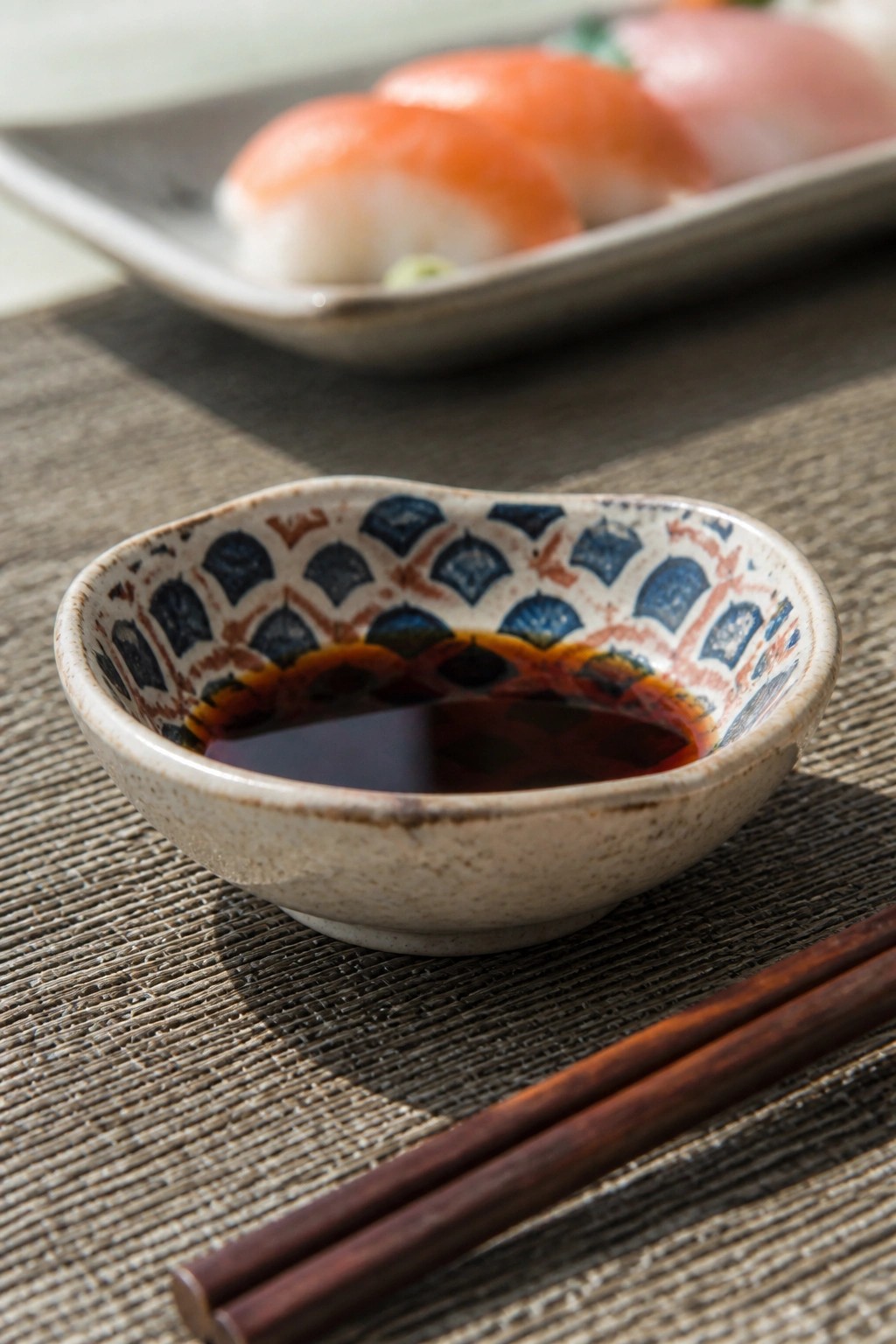
A small dipping bowl like this makes a practical project for serving soy sauce or other condiments at the table. The shallow, slightly irregular form keeps the piece compact while the repeating fan motif in blue and rust creates contrast against the light clay body. This type of kitchen item stays simple to handbuild from a small slab or pinch form and works well for beginners who want to focus on surface decoration rather than complex shaping.
What makes this idea useful is how the same size and pattern can be repeated to make a set for multiple diners. You can swap the fan design for other stamped or painted repeats, or change the clay color to shift the overall look. In a kitchen this kind of bowl keeps small amounts of sauce contained without crowding the table, and the compact scale makes it easy to turn the same idea into a spice pinch pot or a small butter dish.
Square Soap Dish with Drainage Grooves

A square ceramic soap dish built with three parallel drainage slots keeps a bar of soap elevated so it dries between uses. The raised rim contains water while the grooves prevent pooling, and the compact size fits easily on the edge of a sink. A light green glaze with light speckling gives the surface a soft finish without competing with other bathroom items. This handbuilt form works as a straightforward bathroom piece that requires only basic slab construction and trimming.
What makes this idea useful is how the slotted pattern can be lengthened or shortened to fit different soap sizes. The same base shape could be adapted into a sponge holder for a kitchen or a small tray for keys by skipping the grooves. Because the piece stays small, it uses minimal clay and fires quickly, which helps when testing new glazes. In a bathroom, the simple form blends with most sink styles while still looking clearly handmade.
Hanging Botanical Plaque

A small hanging plaque made from a rolled slab gives you a simple wall piece that uses pressed plants for texture. You flatten the clay, lay stems and flowers on top, and press them in to leave clear impressions before adding a loop at the top for hanging. Painting just one bloom with a soft wash of color creates a focal point while the rest of the design stays white against the matte surface.
What makes this idea useful is that it needs very little clay and works with whatever garden cuttings or dried stems you already have. The compact size slips into tight spots like a narrow hallway or above a shelf without taking up much room. You could repeat the same pressing method on round tiles for a grouping or skip the loop to make a flat trivet instead.
Speckled Creamer Pitcher for Daily Use

A small handbuilt creamer pitcher gives you a simple way to pour milk or cream without reaching for a carton. The compact rounded shape with a short spout and pulled handle fits comfortably in one hand and pours cleanly. Speckled clay covered in a light glaze with wide blue brushstrokes adds visual interest while keeping the surface easy to wipe clean. This fits the kitchen item category and stays small enough to store on a shelf or tray.
The small scale makes this easy to adapt into a sugar bowl or tiny jug by changing the spout width. You can widen the stripes, switch to a single accent color, or leave the glaze plain for faster production. In a kitchen, this kind of piece pairs well with existing mugs and keeps coffee setups tidy. For a gift, make two in matching glazes and nest them with a small bowl.
Small Lidded Storage Jar
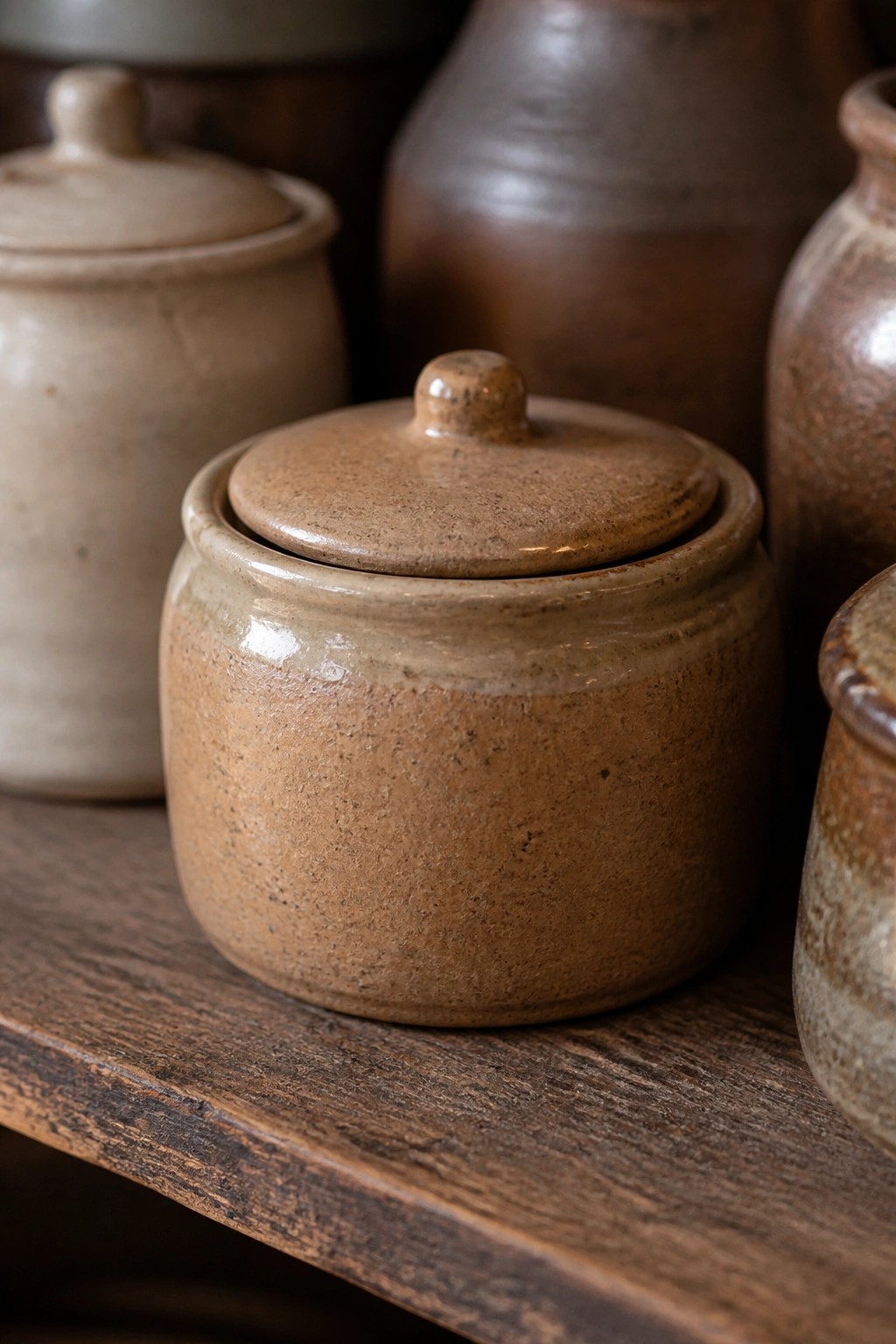
A small lidded jar like this serves as a simple storage piece for loose items such as tea, spices, or small bathroom supplies. The compact rounded body and fitted lid with a knob handle keep the form stable and practical for everyday use. An earthy brown glaze with visible texture adds subtle variation without complicating the build. This project falls into the small functional kitchen or desk item category that works well for handbuilding practice.
What makes this idea useful is how the lid and knob can be sized up or down to match whatever you want to store. You could make a set of three or four in similar tones for a shelf display or change the knob to a simple pull for a different look. The small scale keeps clay use low and makes it easy to fit into a kiln load with other pieces. In a kitchen, this shape works especially well for holding salt or sugar near the stove.
Narrow Clay Tray for Incense Cones

A handbuilt clay tray in a long narrow shape makes a practical incense holder by giving the cone room to burn while containing the ash. The dark matte glaze on this version keeps residue from showing and the slightly raised edges prevent spills. A small flat area at one end holds a pad of sand or clay so the cone stays upright. This fits the small functional holder category and works at a scale that fits easily on a shelf or nightstand.
The shape does a lot of the work here by catching ash along the full length instead of letting it scatter. You can shorten the same form for stick incense or widen one end slightly to hold multiple cones. In a bathroom or desk setup this kind of piece stays useful without taking up much space and uses up extra clay from larger projects. The plain profile also keeps the focus on the function rather than extra decoration.
Polka-Dotted Ceramic Egg Cup
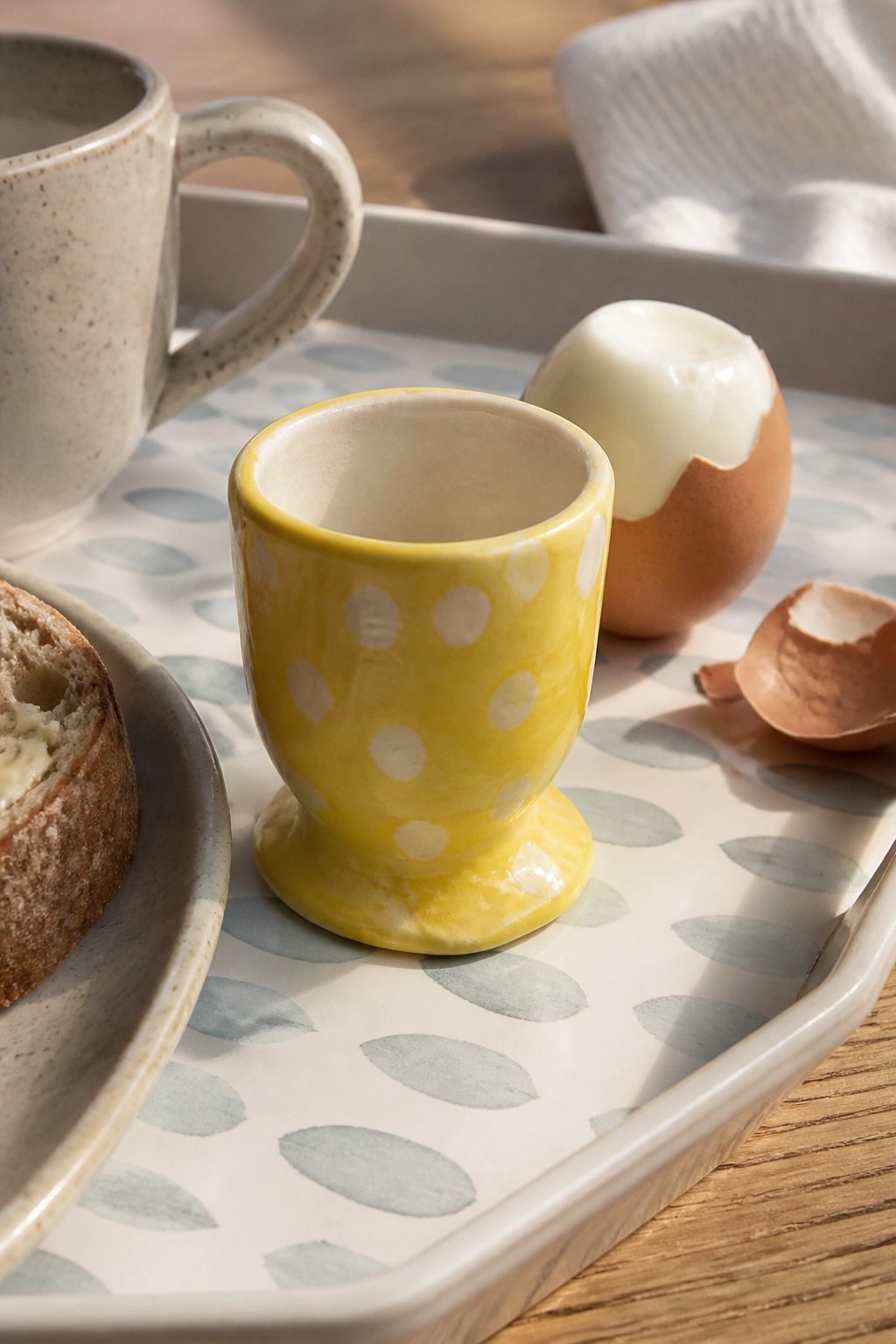
A small egg cup is an easy handbuilt project that stays functional and compact. Form a short cylinder with a wider foot so it sits steady on the table and holds a standard boiled egg. Cover the surface in a solid yellow glaze then add simple white dots before the final firing to give the piece clear contrast without needing complicated decoration.
What makes this idea useful is its small size that takes little clay and shelf space. You can change the dot pattern to stripes or try a different base color to match existing dishes. In a kitchen this shape keeps eggs upright during breakfast and works just as well for serving nuts or small snacks. The same basic form could be shortened into a ring dish or lengthened slightly into a small bud vase.
Chopstick Rests
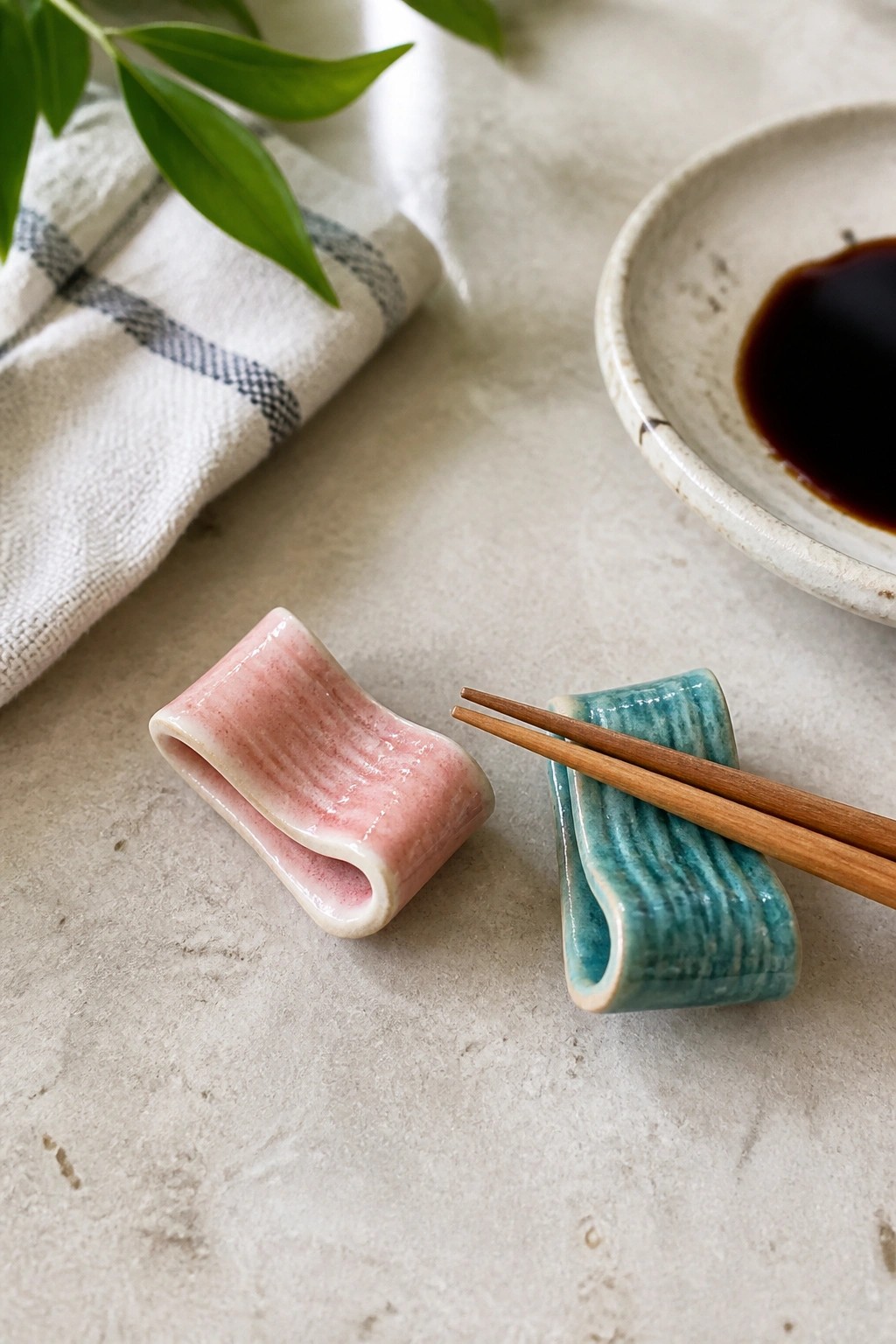
Chopstick rests are small arched slabs of clay formed into a gentle curve that props up chopsticks between bites. These versions use a simple rolled or folded shape with a glossy glaze that catches light on the textured surface. The pink and teal colors show how the same form can be repeated in different glazes to suit various tableware. This project falls into the kitchen item category and stays small enough to make from scraps.
What makes this idea useful is how little clay and time it requires. The curved shape does the work of keeping chopsticks clean and off the table surface. You could adapt the same form into a mini spoon rest or a holder for small tasting forks. In a kitchen setting these pieces pair well with sauce dishes and look finished even when left plain or lightly textured.
Ceramic Matchbox Holder with Striker Panel
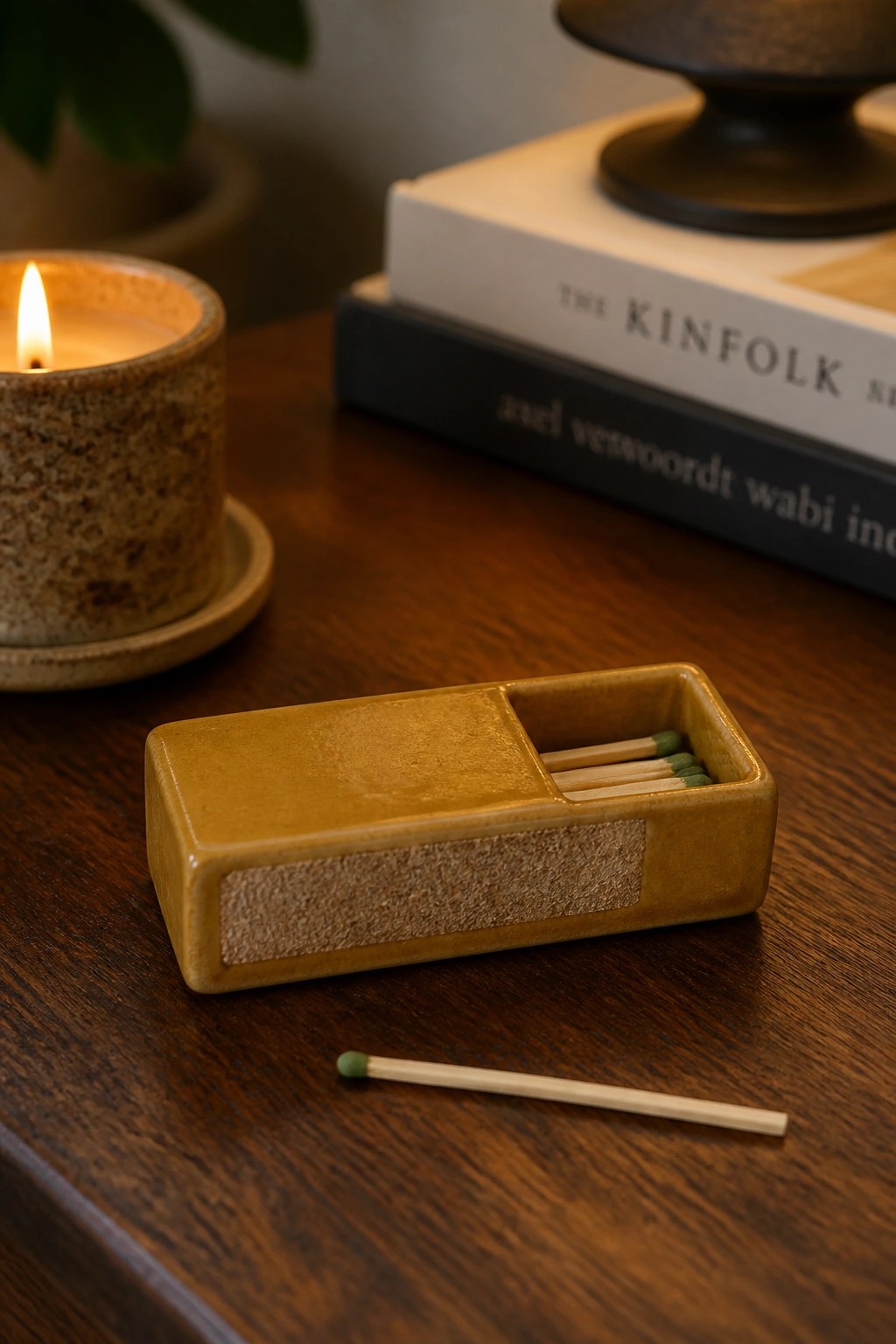
A small rectangular clay box with one covered section and one open compartment gives you a dedicated place to store matches while keeping a striker surface built in. The rough textured panel on the side and lid provides the friction needed to light matches, and the low profile keeps the whole piece compact enough to sit beside a candle or on a desk. Using a simple slab build, the form stays beginner-friendly while turning a common household item into something more permanent than a paper matchbook.
What makes this idea useful is how easily the striker texture can be added by pressing sand or grog into the clay before firing. The size works well on a kitchen counter or near a fireplace, and the same shape could be lengthened into a longer tray for incense sticks or shortened into a tiny version for travel candles. You could swap the glaze color to match your existing dishes or leave the striker area unglazed for better function. This kind of piece stands out on Pinterest because it solves a real daily need with very little material.
Frequently Asked Questions
What clay should I use for these small handbuilt functional pieces?
For beginners working on items like small dishes or spoons, start with a low-fire stoneware or earthenware clay that has some grog added for strength. This type handles well without cracking during handbuilding and fires at lower temperatures, making it more forgiving for home setups or community kilns. Test a small sample first to see how it feels in your hands.
How do I keep my pieces from warping or cracking as they dry?
Dry your small functional ceramics slowly and evenly by covering them loosely with plastic for the first day or two, then gradually exposing them to air. Place them on a porous surface like drywall or wood, and rotate them occasionally. For ideas such as coasters or tiny bowls, keep walls thin and consistent in thickness to reduce stress during the drying process.
What basic tools do I need beyond my hands to build these projects?
Gather a few affordable items including a rolling pin for slabs, a needle tool for scoring and cutting, a rib tool for smoothing surfaces, and some sponges for moisture control. These will help you execute most of the 18 ideas efficiently. Many can be improvised from kitchen items if you are just starting out.
How can I make sure the finished pieces are safe for food or drink use?
Select food-safe glazes that are labeled as such and follow the manufacturer’s firing instructions exactly. Avoid using pieces for acidic foods if the clay body is porous. For the small functional ideas in the list, apply glaze only to the interior surfaces where contact occurs and leave the base unglazed for better stability.
Where can I find more variations once I finish the 18 suggested projects?
Experiment by combining elements from different ideas, such as adding a simple handle to a basic tray or altering the shape of a pinch pot into a small vase. Join local ceramics groups or online forums to see what others create, and keep a sketchbook of daily observations to inspire your own adaptations.

Pottery Path is my cozy corner of the internet where I share clay ideas, pottery inspiration, and simple projects you can recreate at home. I love exploring everything from air dry clay to handbuilt pottery to cute minis that brighten your day. My goal is to make clay crafting feel easy, fun, and welcoming for anyone who wants to try it.
You will find beginner friendly tutorials, creative pottery painting ideas, and lots of warm inspiration for slow and happy crafting. If you enjoy hands on creativity, this space will feel like home.