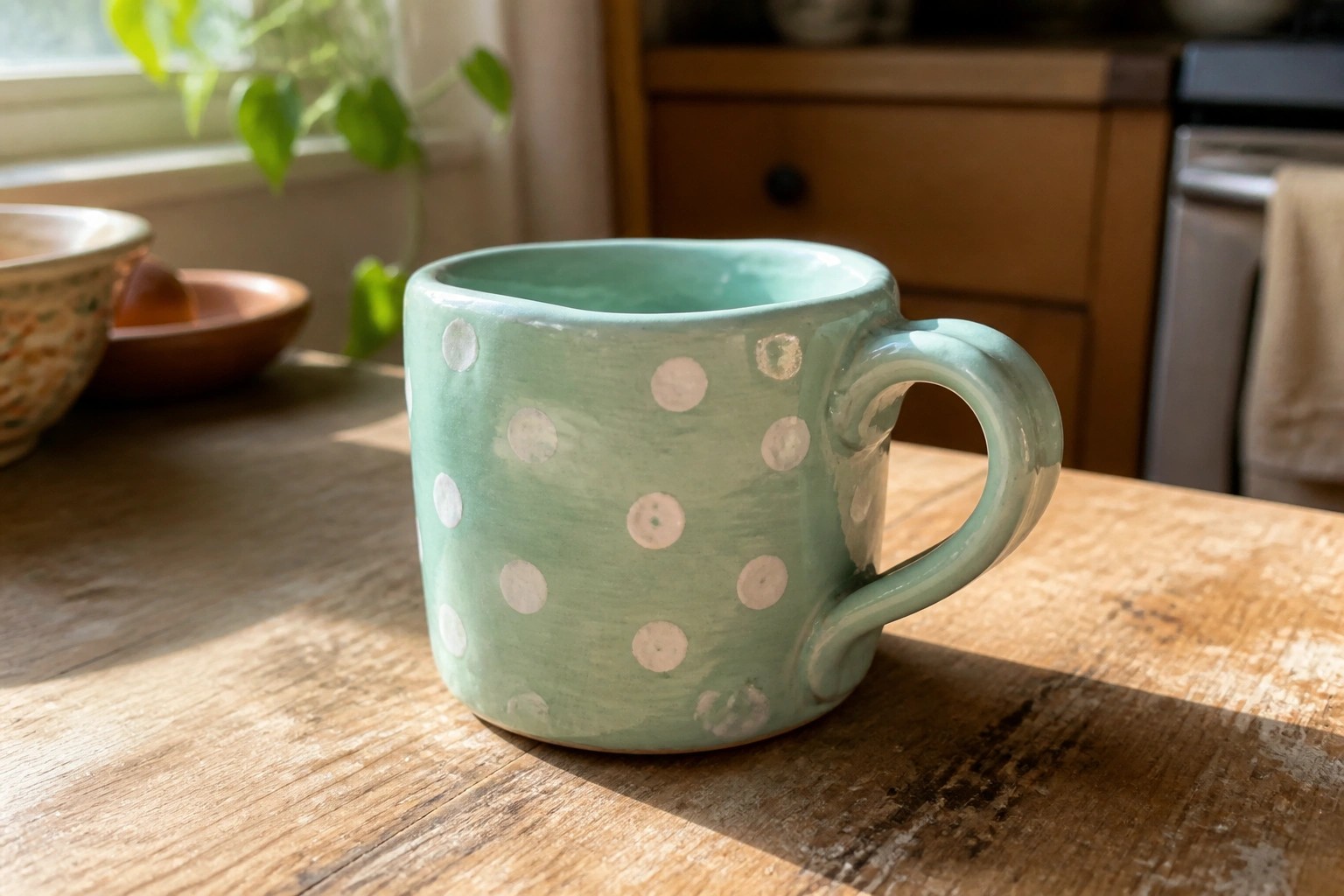
I’ve been working with slab pottery for a few years now and it has become my go to method when I want to make something useful without a lot of equipment.
These projects focus on everyday items like plates and containers that actually hold up in daily use.
I gathered 18 beginner friendly ideas here that stick to simple cuts and joins anyone can manage at home.
Most of them came from my own trial and error sessions in the studio.
I think they offer a good starting point if you want to build your skills gradually.
Slab-Built Polka Dot Mug
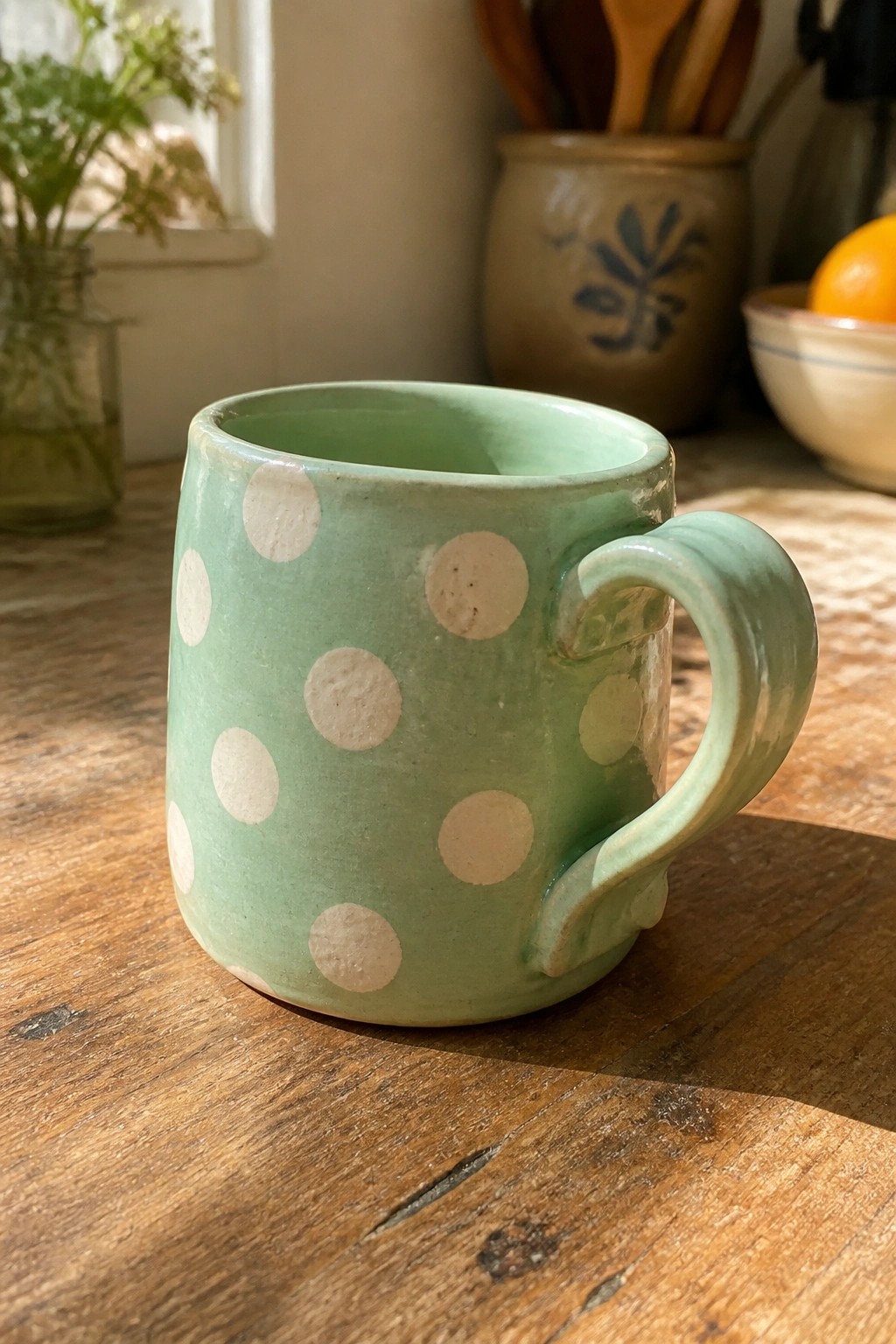
A slab mug starts with flat clay sheets joined into a cylinder, then fitted with a simple pulled or attached handle. The light green glaze provides a solid background while the white dots are added as slip or underglaze circles before the final firing. This keeps the surface pattern easy to repeat without carving or stencils, and the soft color contrast makes the form readable from a distance.
The shape works well for daily coffee or tea because the wide opening and sturdy handle feel balanced in the hand. You can adapt the dots by changing their size, spacing, or color to match existing kitchenware, or swap the base glaze for a different tone while keeping the same construction steps. For a gift, the pattern is quick to customize and the finished size fits neatly on open shelving or in a dish rack.
Shallow Bowl with Carved Floral Motif
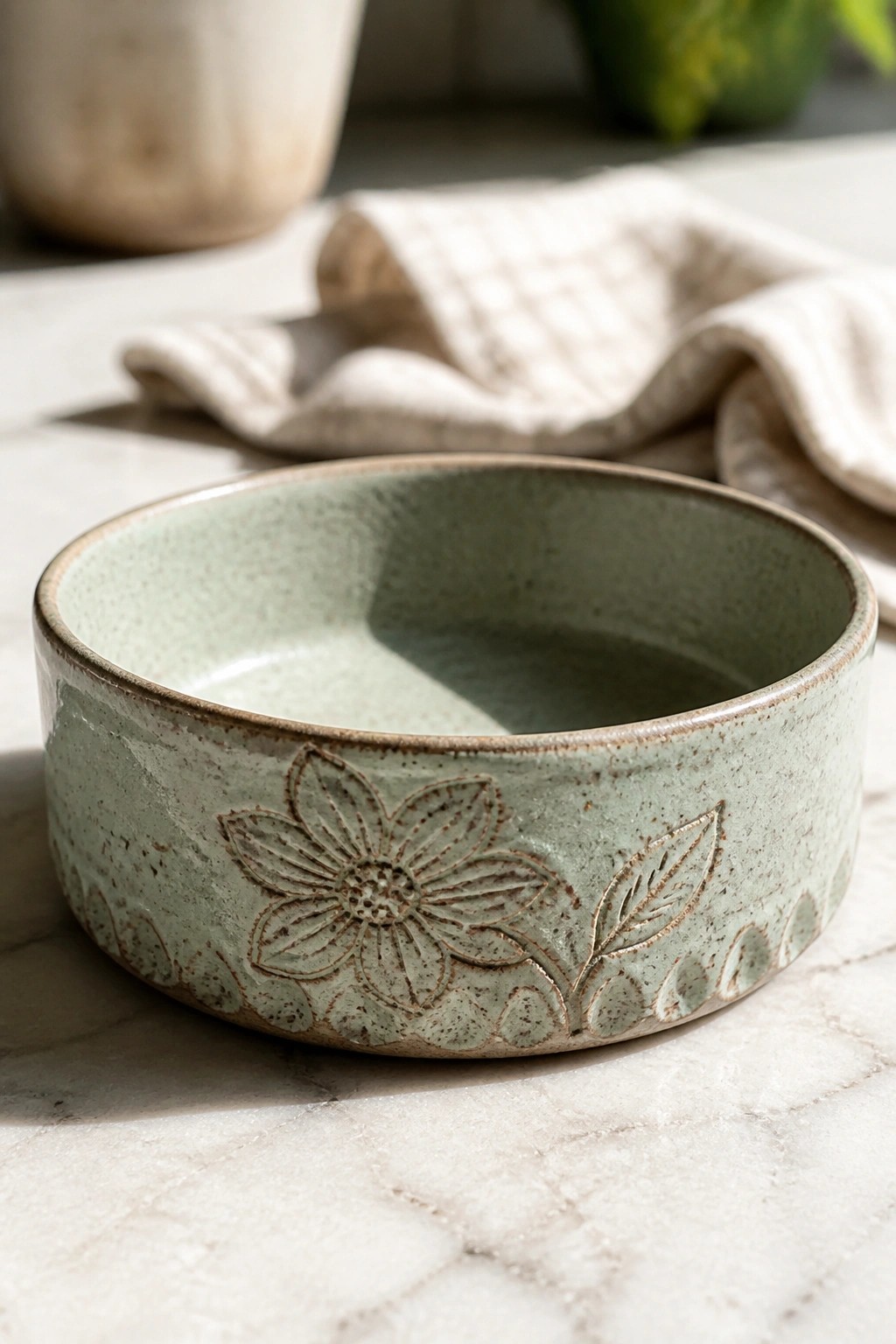
A low, wide ceramic bowl gives you a versatile form that works for serving snacks or holding small items on a table. The exterior carries a single large carved flower with leaves that creates raised texture through simple clay removal before glazing. A light green speckled glaze covers the surface and leaves the carved lines slightly darker, so the pattern reads clearly without extra color. This idea belongs in the category of basic bowls where the decoration stays limited to one or two carved elements on the side.
The compact height lets the bowl sit flat in a stack or on open shelving without tipping. You can repeat the same flower carving on a taller cylinder to make a matching utensil holder or scale the whole shape down for a butter dish. The single motif keeps the project quick while still giving the finished piece enough detail to photograph well for sharing. In a kitchen this shape holds up for daily use because the carved area stays mostly on the outside and avoids food contact.
Lemon Painted Slab Tray
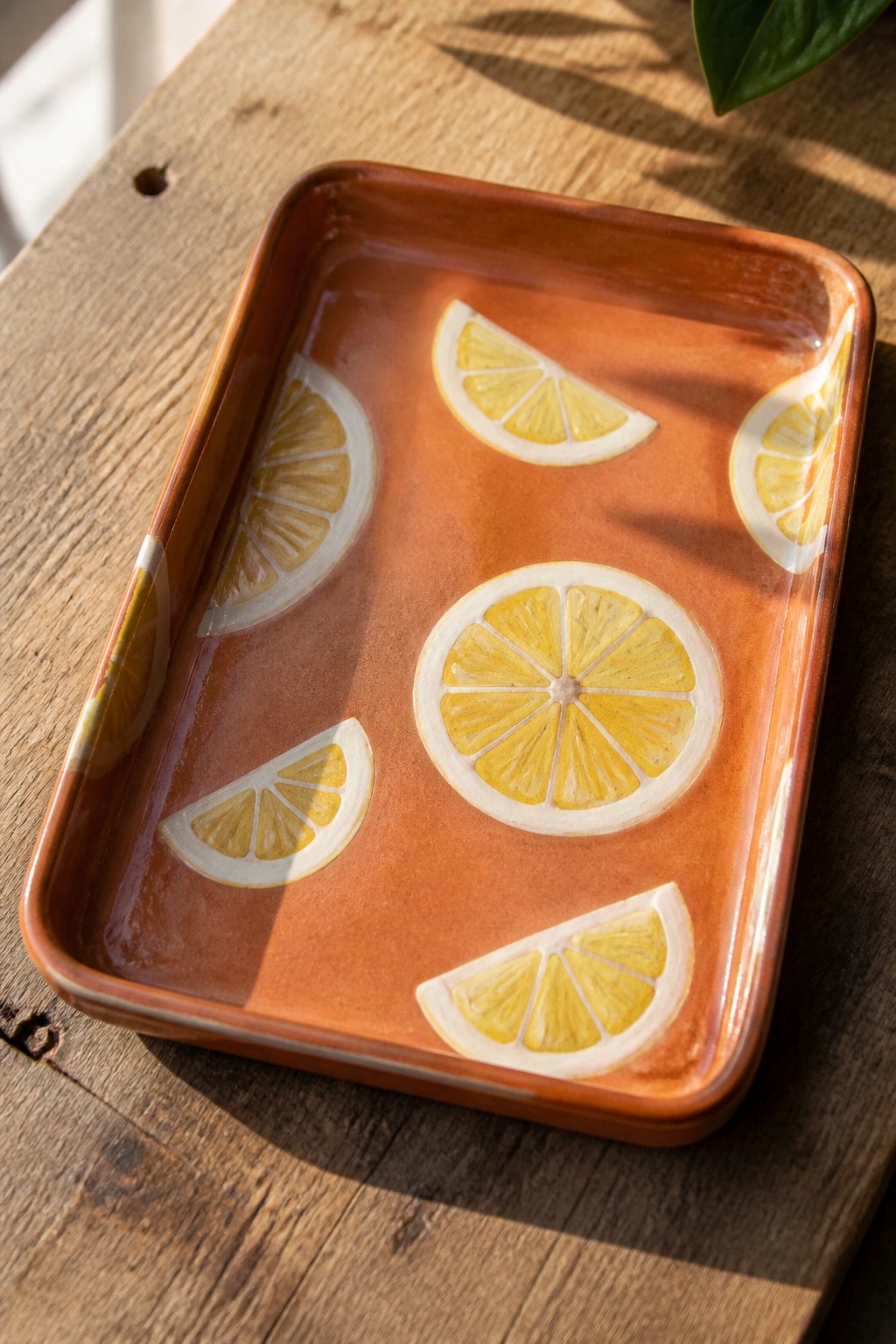
A rectangular slab tray built from clay and finished with a warm orange-brown glaze works well as a kitchen or serving piece. Hand-painted lemon slices in yellow and white are spaced across the surface to create a simple repeating motif. The flat form and bold fruit design keep the focus on the painted details while the tray remains easy to use for holding small items.
What makes this idea useful is how the painted slices turn an ordinary tray shape into something that photographs well for sharing. You could repeat the same lemon motif on a set of coasters or shorten the tray into a soap dish for a bathroom. The contrast between the bright fruit and the darker glaze helps the design stand out without needing extra texture or carving. For a gift, this kind of tray adapts easily by changing the fruit or swapping the glaze color.
Leaf-Shaped Spoon Rest
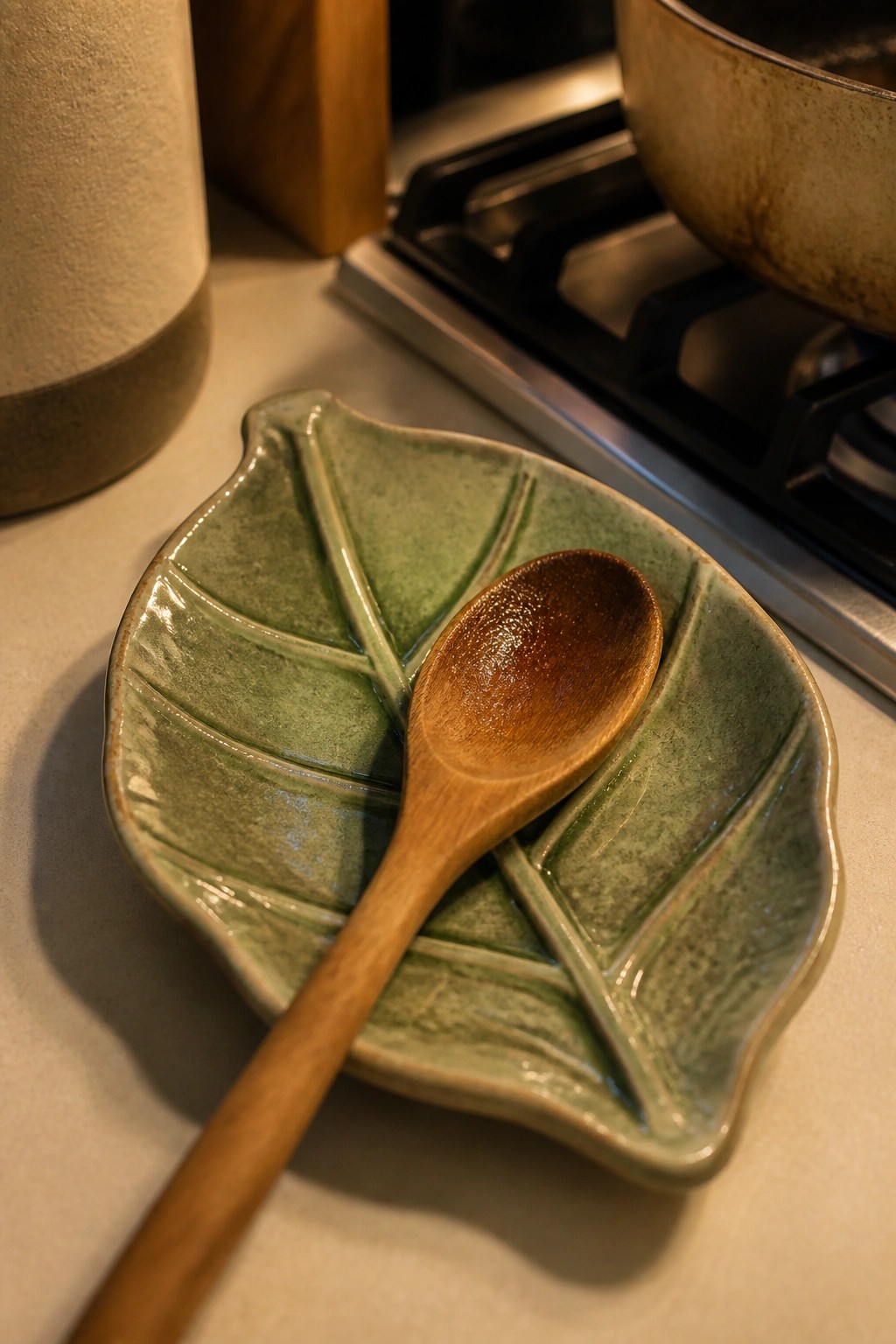
A slab-built leaf dish works as a simple spoon rest for the stove or counter. Cut a basic leaf outline from a rolled slab, add vein lines with a tool, and form slight edges so it holds a spoon without tipping. The green glaze keeps the surface easy to wipe clean while the natural shape pairs well with wooden kitchen tools.
What makes this idea useful is how it solves a small daily problem without taking up much space. You can reuse the same leaf template in different sizes or swap the glaze for one that matches your dishes. In a kitchen this kind of piece stays handy right by the stove and still looks intentional on open shelving. For a first slab project it requires only basic cutting and smoothing before firing.
Slab-Built Cat Planter
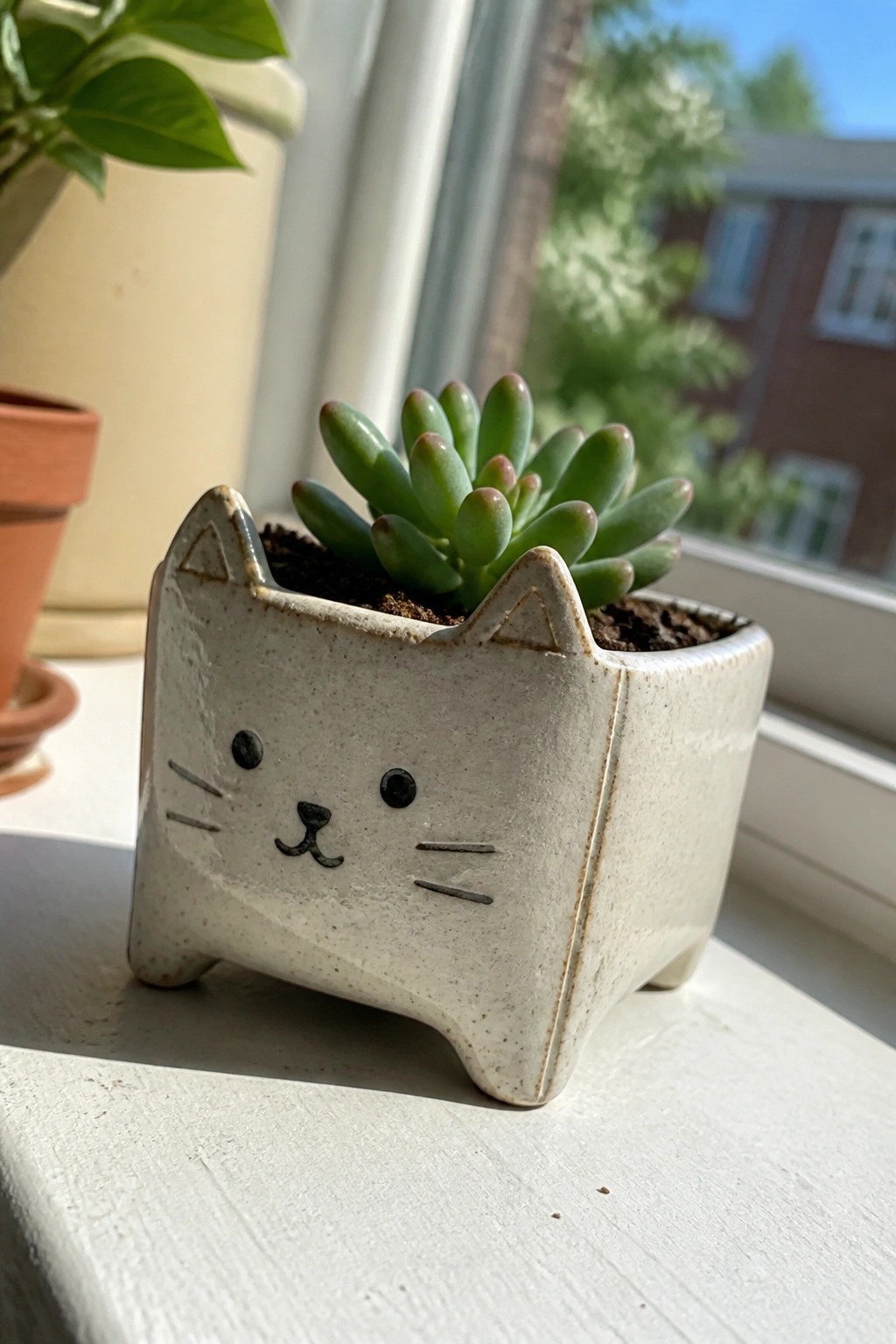
A slab-built ceramic planter shaped like a cat head gives a simple way to display small succulents or houseplants. Flat slabs form the main body while extra pieces create the ears and feet, and a basic face is added with underglaze before the final firing. The light speckled surface lets the sculpted details stay visible without competing colors or patterns. This fits the category of small decorative planters that combine plant care with animal shapes.
The square body gives decent soil volume while keeping the overall size compact for tight spaces like windowsills or shelves. You can adapt the same slabs into other animal faces or drop the painted features for a quicker version. For gifts the form works well because it is easy to customize the expression or scale up slightly for a different plant size. The painted face also helps the piece photograph clearly if you want to share the finished result online.
Rectangular Soap Dish with Draining Slots
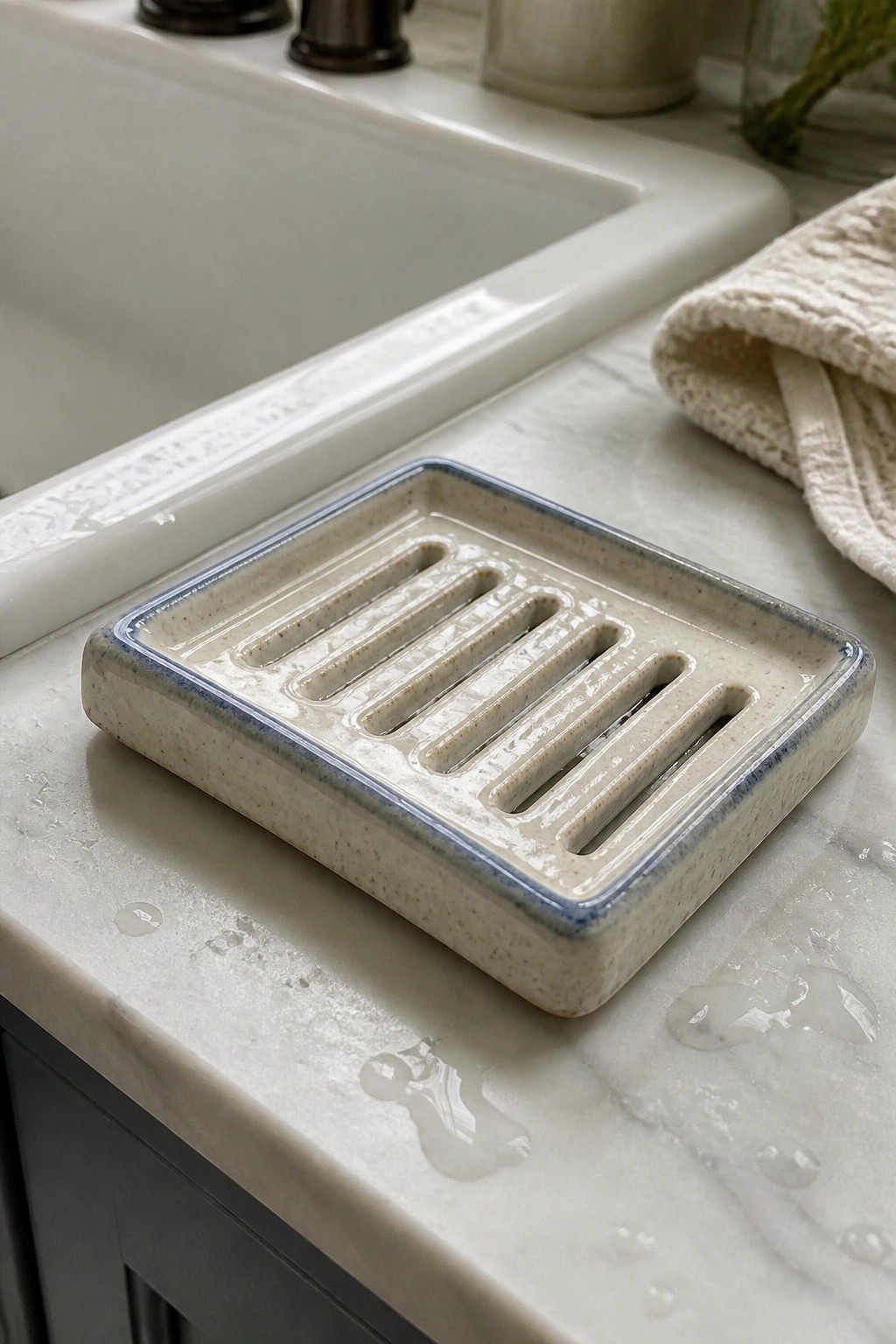
A slab-built soap dish gives you a flat rectangular tray with evenly spaced grooves that keep bar soap from sitting in water. The grooves run parallel across the surface and stop short of the edges so the piece stays sturdy. A narrow blue band along the rim frames the speckled clay body without adding extra height. This format works as a straightforward bathroom item that fits on a counter ledge or near the sink.
The shape does a lot of the work here because the grooves handle drainage while the low profile keeps the dish from taking up much space. You could adapt the same layout to make a longer version for a double sink or shorten it into a small tray for a single bar of soap. A piece like this stands out on Pinterest when the glaze shows light speckling and the rim stays narrow. For a gift, something like this pairs easily with a wrapped bar of soap.
Flower Shaped Ring Dish
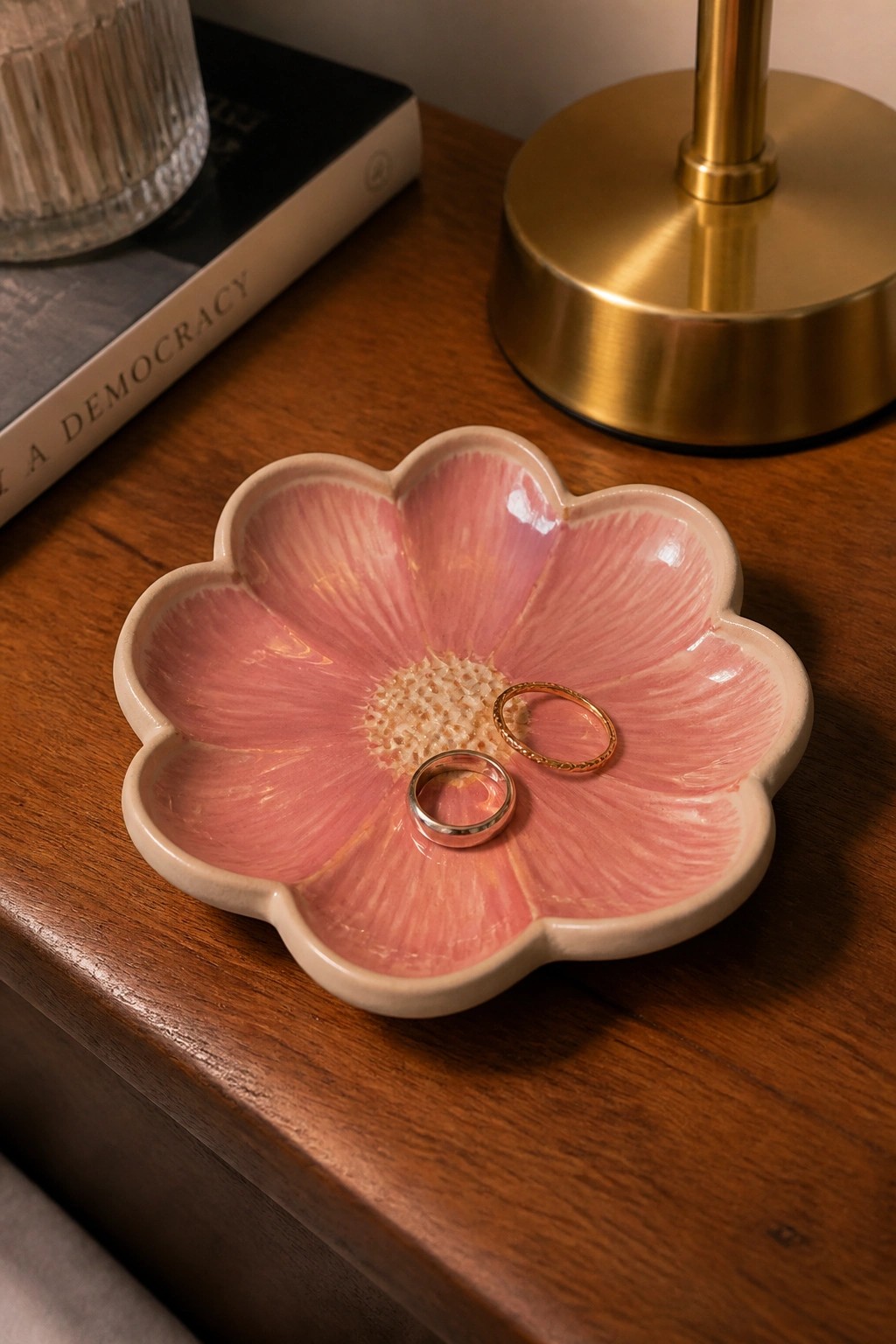
A simple slab project turns into a flower-shaped ring dish by rolling clay flat, cutting a scalloped edge to create petals, and pressing texture into the center before shaping up the sides. The soft pink glaze with a lighter speckled middle keeps the focus on the form while making the dish easy to spot on a surface. This type of piece fits the small catch-all category and stays shallow enough to hold rings or earrings without taking up much room.
The small scale makes this easy to adapt by changing the petal count or glaze color for a set of matching dishes. You could skip the center texture for a faster version or use the same slab shape to make a soap rest or key tray. In a bedroom or entryway, the form keeps small items contained while the slab method lets you adjust the depth or add a foot if needed.
Slab-Built Salt and Pepper Dish with Spoon Slot
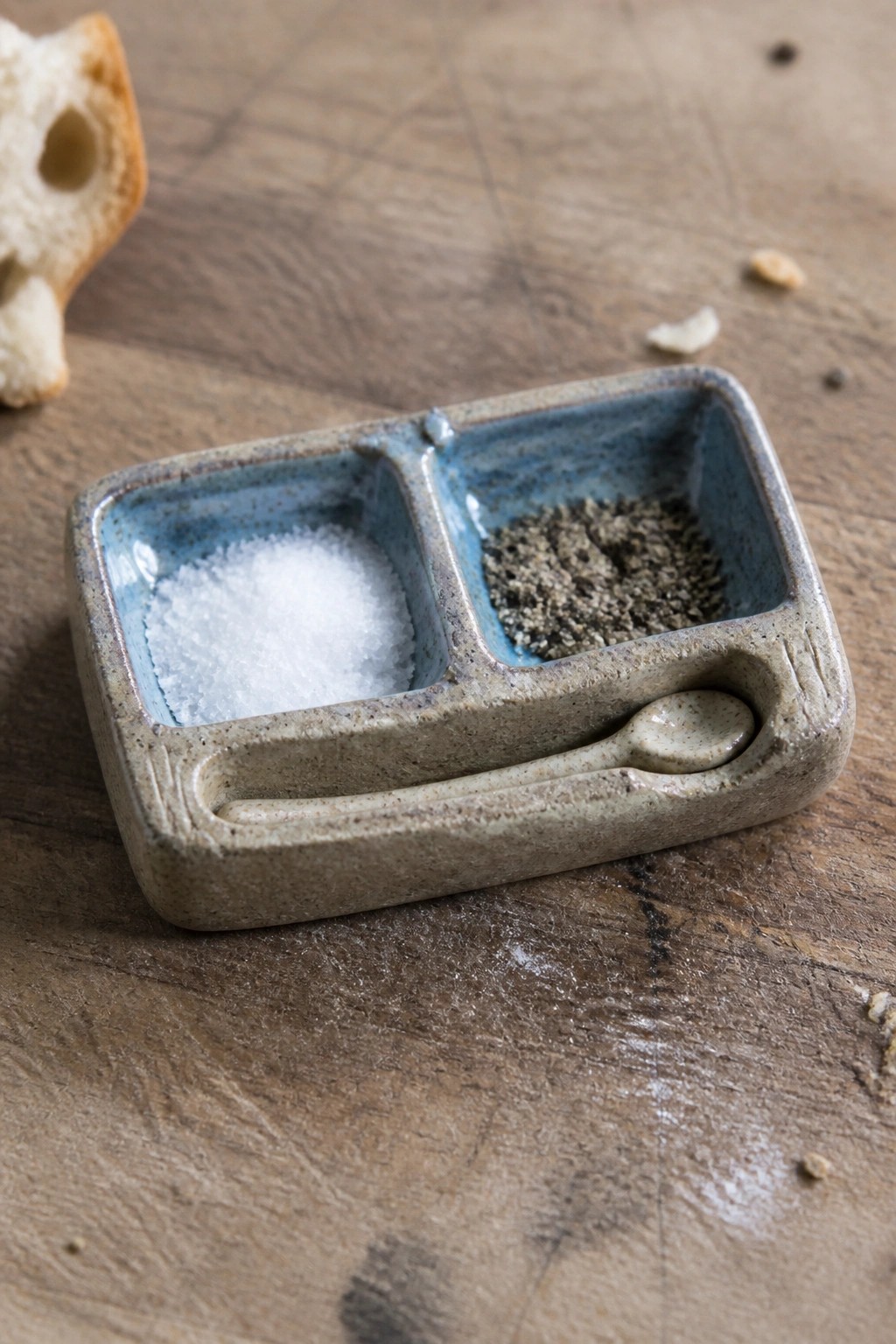
A small rectangular tray built from slabs creates a practical two-part container for salt and pepper. One compartment sits slightly lower and holds the salt while the other holds pepper, and a narrow channel along the front edge keeps a matching ceramic spoon in place. The simple division and added spoon slot turn a basic tray shape into a complete seasoning set that stays together on the table.
What makes this idea useful is how the built-in spoon holder keeps the whole set tidy without extra parts. The same slab layout can be adjusted to make compartments for other spices or scaled up for a larger shared dish. In a kitchen this kind of piece sits neatly between the stove and the table so seasoning stays within reach during cooking or meals. You can also rework the basic divided form into a small tray for oil and vinegar or a desktop holder for paper clips and pens.
Slab-Built Cylinder Vase with Painted Daisy
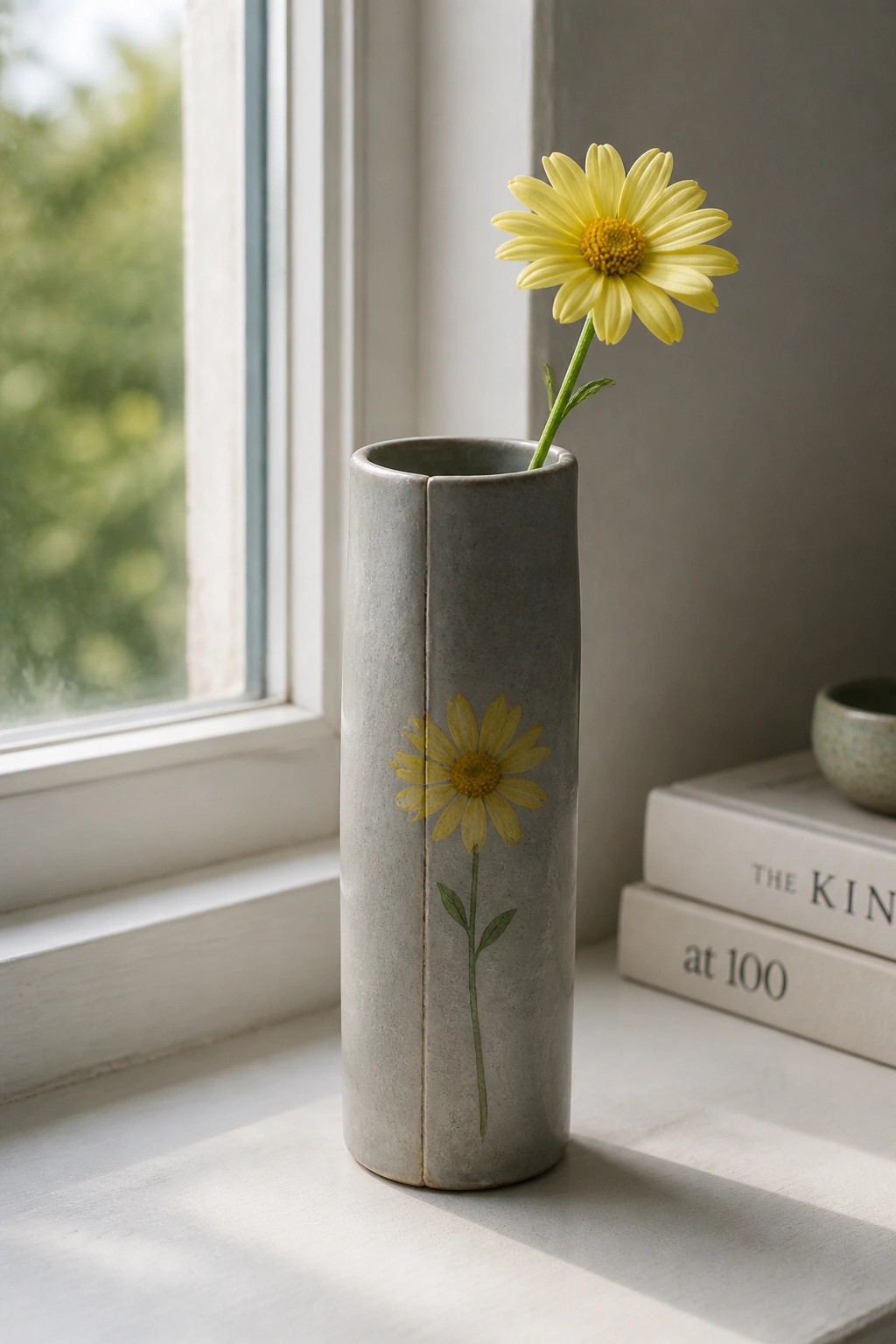
A tall cylindrical vase formed from slabs shows a matte gray surface and a vertical seam running its length. A single yellow daisy is painted directly onto the clay, positioned low on the body so it sits below the flower placed inside. The narrow opening suits single stems or small bunches. This approach keeps the form simple while using the painted detail to tie the vase to the flower it holds.
What makes this idea useful is how the painted motif can be swapped for other flowers or repeated in different colors without changing the slab template. The same cylinder shape works in shorter versions for toothbrushes or makeup brushes. You could scale the height up or down depending on the stems you want to display. In a small space like a windowsill or desk, the vertical form takes up little room while still looking intentional.
Round Tealight Holder
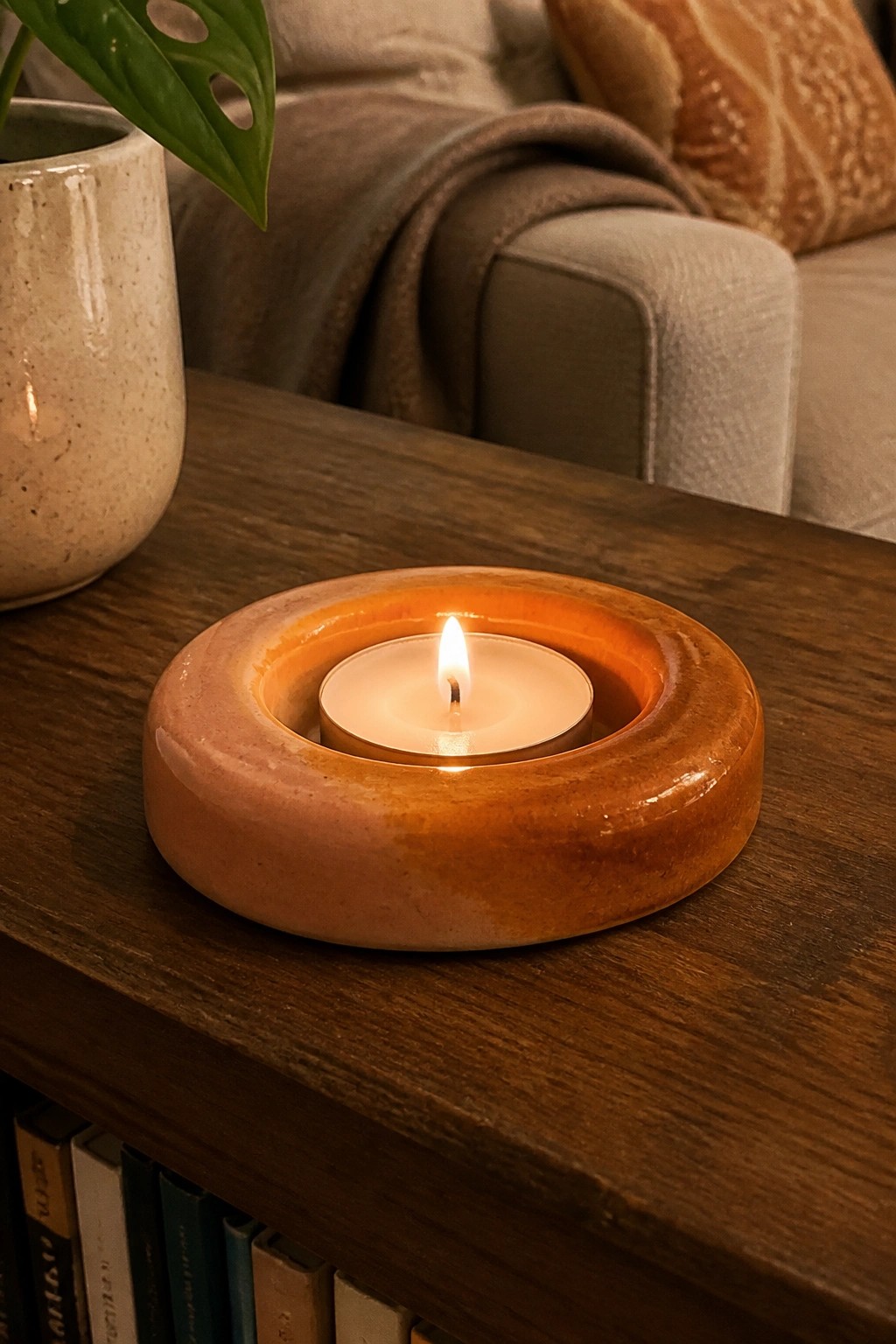
A round ceramic tealight holder is a simple slab project that creates a low, wide dish with a recessed center. The form keeps a standard tea light centered and stable while the outer edge stays thick enough to feel solid. A warm orange-brown glaze on the surface reflects light softly once the candle is lit and pairs easily with wood furniture or neutral textiles.
What makes this idea useful is how fast the same shape can be adjusted in size or depth to hold different candle types. You can make several at once from one slab and vary the rim width or switch to a matte glaze for a different look. The compact scale works well on side tables, mantels, or grouped with plants, and the basic circle is easy to cut with a template if you want to repeat the project quickly.
Dual Compartment Toothbrush Holder
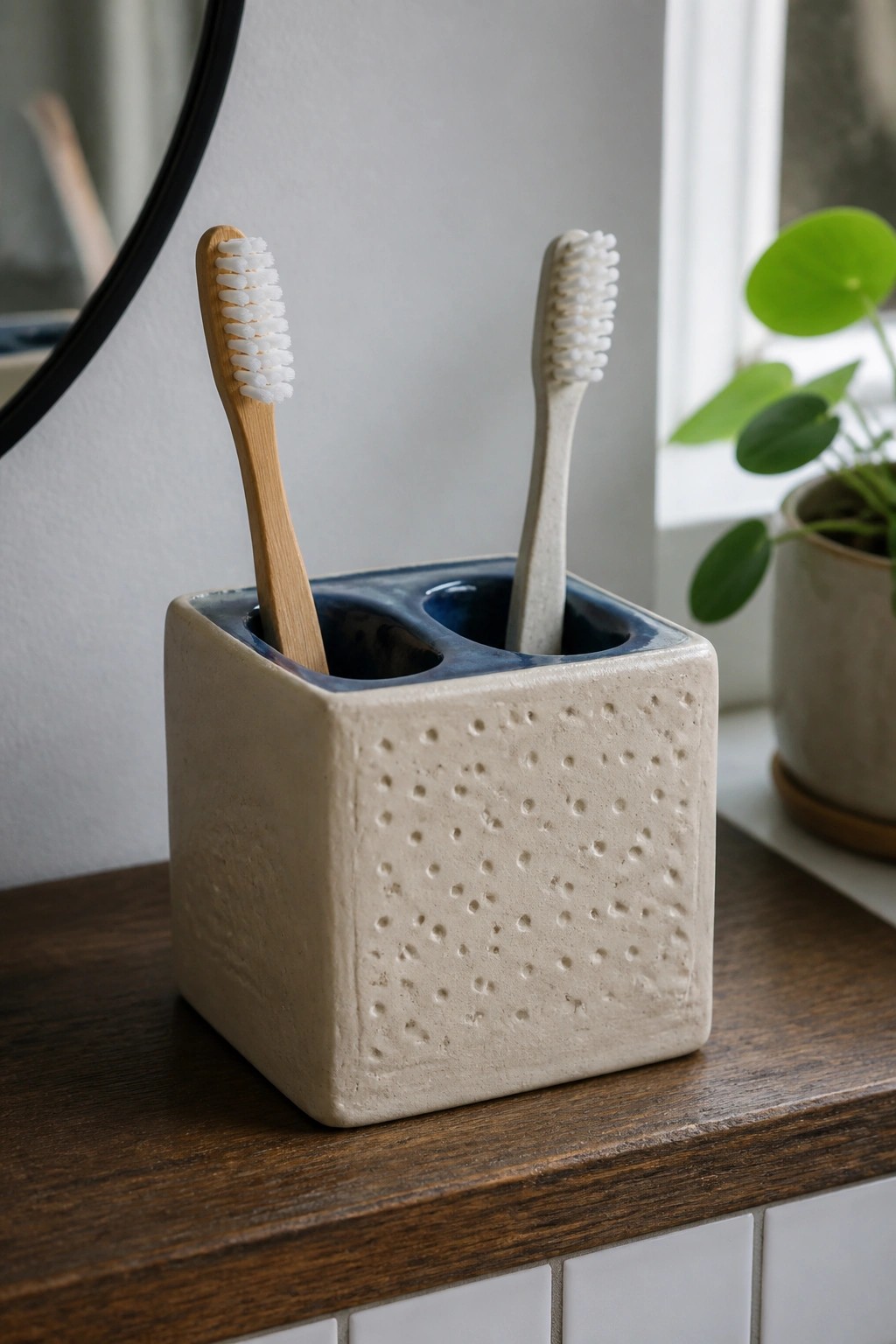
A square ceramic holder with two separate compartments makes a practical toothbrush caddy for a bathroom counter. The form is built from slabs so the walls stay straight and even, while the exterior keeps a matte speckled finish and the interior receives a dark blue glaze. This simple contrast between the rough outside and the glossy inside gives the piece enough detail without added decoration. The scale stays small enough to fit beside a sink yet large enough to keep brushes upright and separate.
What makes this idea useful is how the two slots solve a basic storage need without extra parts or hardware. You can change the glaze color to match existing tiles or swap the square shape for a rectangle if you want space for more brushes. The textured surface also forgives small uneven spots during building, which makes the project forgiving for early attempts at slab work. A piece like this turns up often in bathroom organization searches because it stays functional while still looking intentional.
Yarn Bowl with Heart Motifs
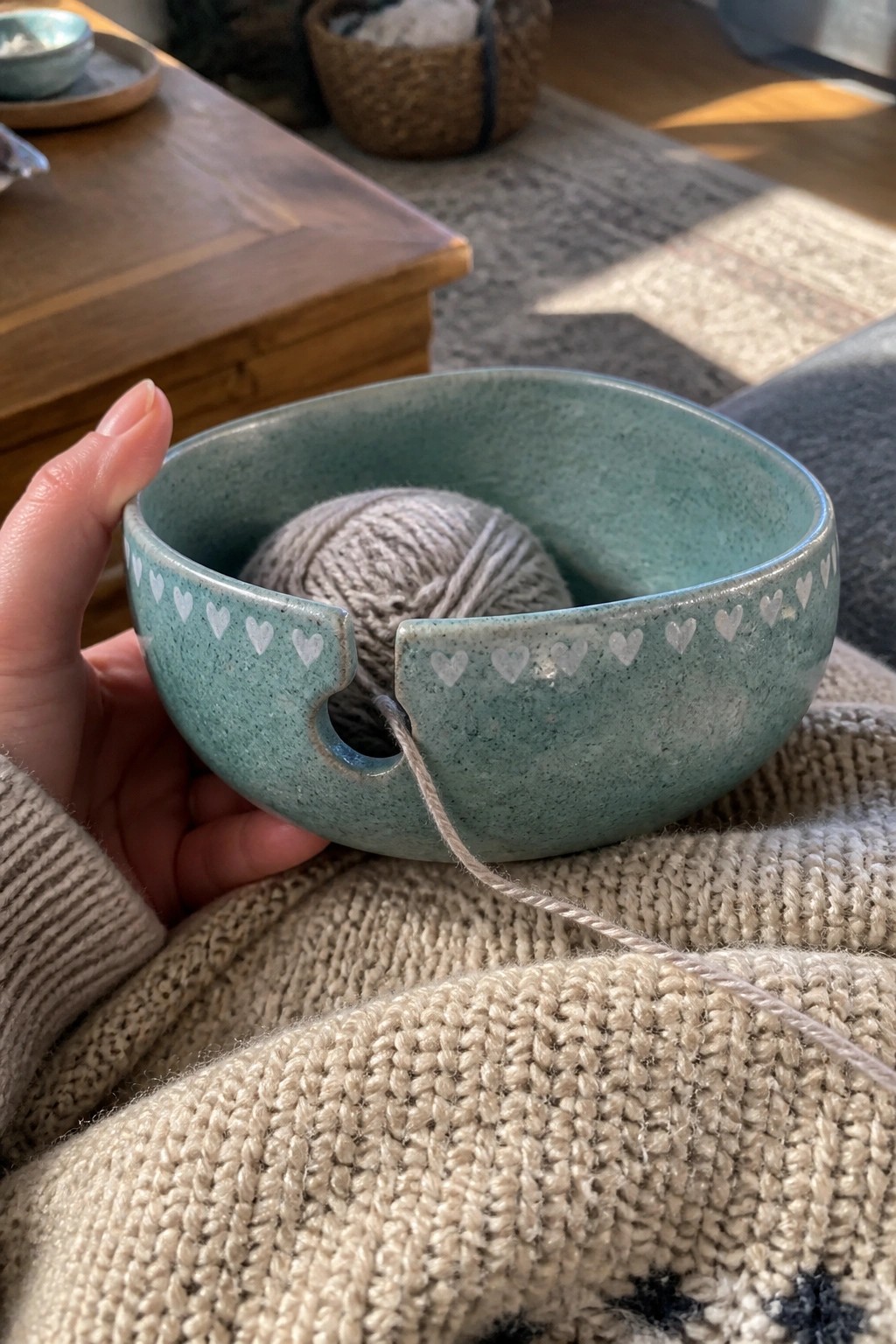
A yarn bowl is a round ceramic dish with two notches cut into the rim to hold a strand of yarn in place. The ball sits inside while the yarn feeds out cleanly through one of the notches. This version uses a speckled teal glaze and a simple band of white hearts painted just below the rim.
What makes this idea useful is that the notches turn an ordinary bowl into a practical tool for knitting or crochet. You can change the size, swap the hearts for lines or dots, or make a set in different colors. For a gift, something like this keeps yarn from rolling off surfaces and takes up little space on a table or shelf. The same basic shape works just as well without the hearts if you want a faster version.
Speckled Lidded Butter Dish
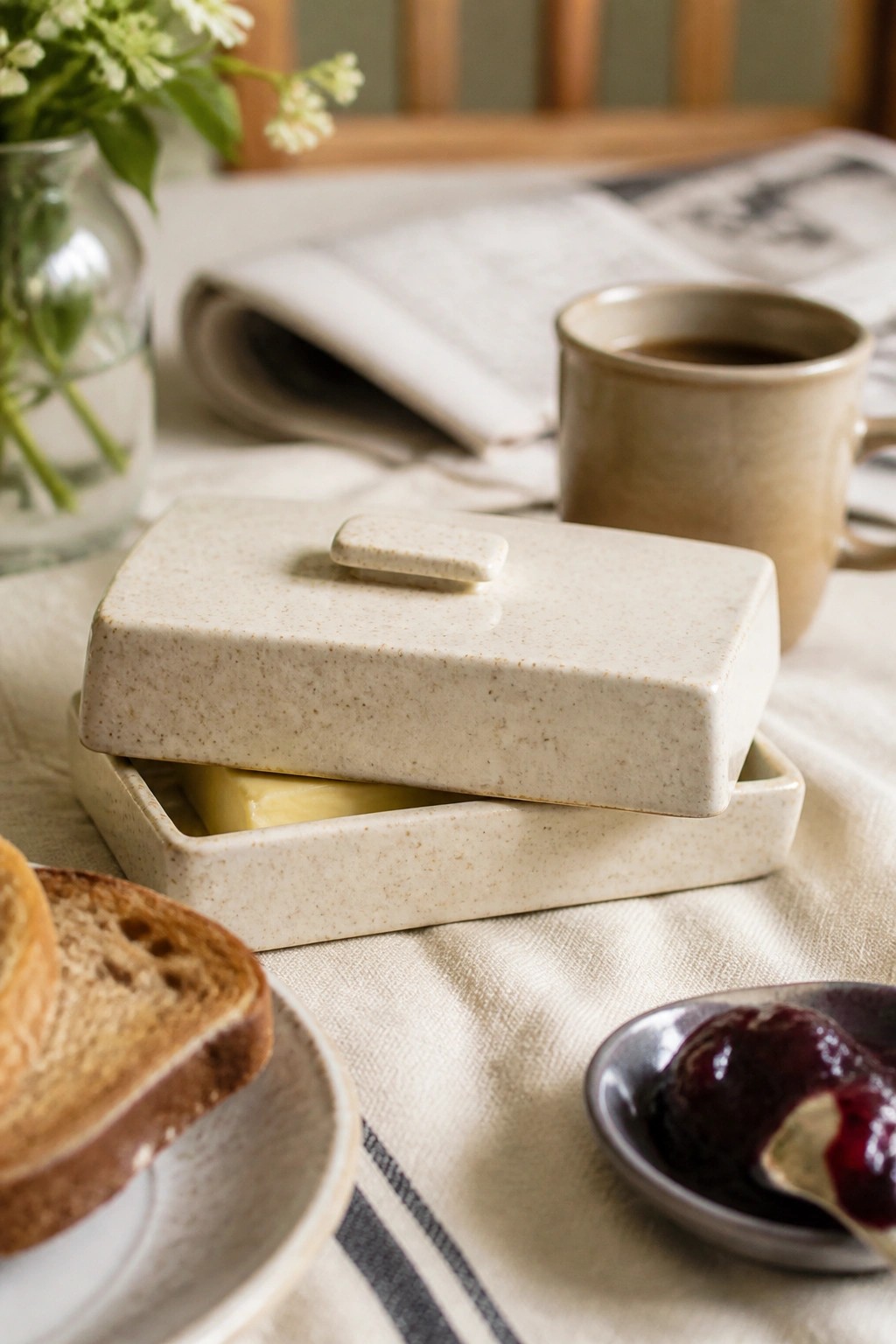
A rectangular butter dish built from slabs gives you a covered container that keeps butter soft on the counter while protecting it from dust. The speckled clay and matte glaze create a neutral surface that blends with most tableware without competing for attention. A small rectangular knob on the lid keeps the overall form simple yet functional for daily use.
What makes this idea useful is that the basic rectangle can be scaled up or down depending on how much butter you usually keep out. You could swap the speckled finish for a plain white glaze or add a shallow tray underneath to catch drips. The same lid and base construction works for a small cheese keeper if you adjust the height. For Pinterest, a clean shape like this photographs well next to toast or jam without extra styling.
Slab-Built Condiment Dishes
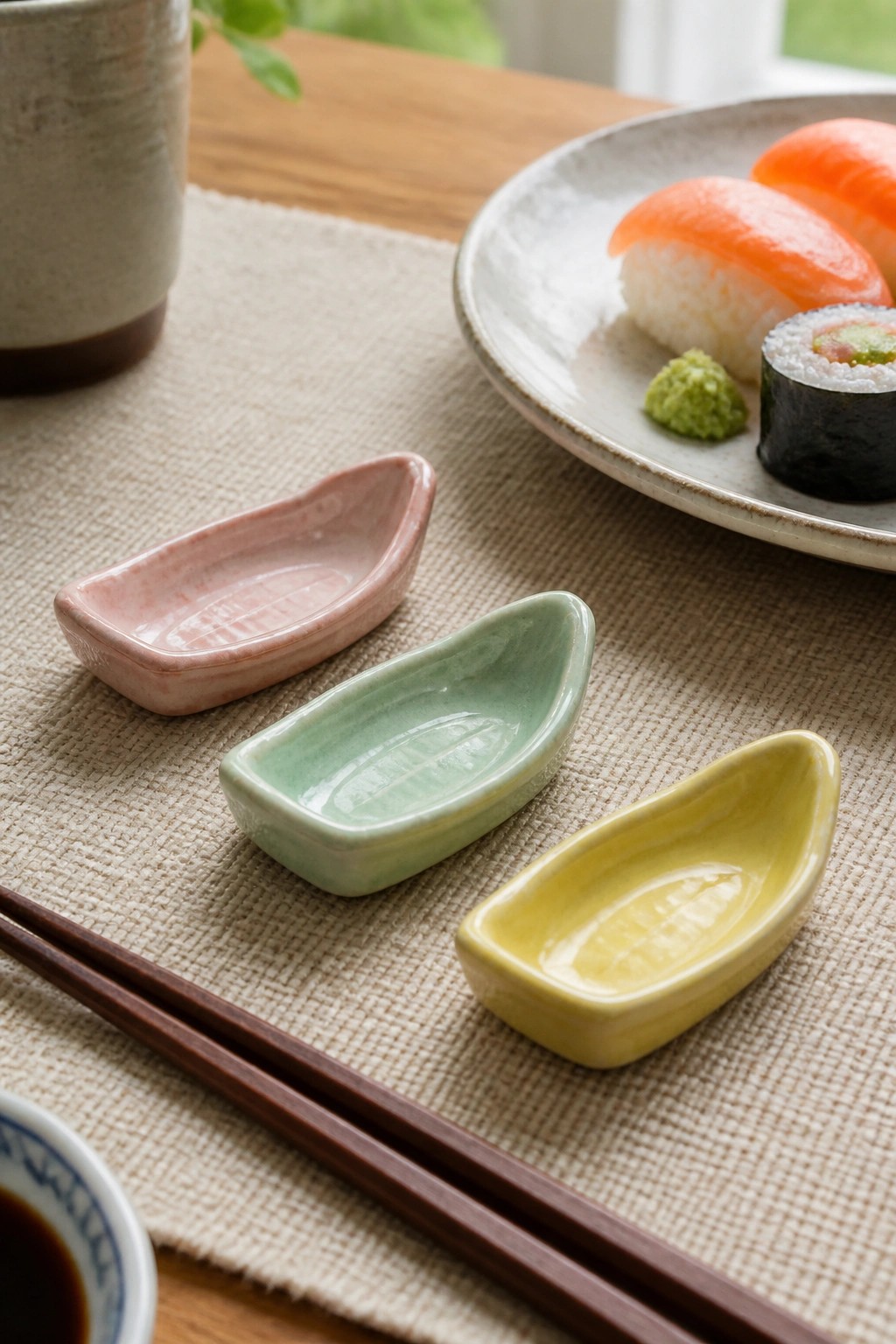
These small dishes are formed from flat slabs of clay that are cut into elongated shapes, then gently curved and pinched at the ends to create shallow, boat-like forms. A simple ribbed texture is pressed into the bottom before glazing, which gives each dish a finished surface that also helps with grip. The pastel glazes in soft pink, mint, and yellow keep the focus on the clean shape while making a matching set easy to produce.
What makes this idea useful is how well the compact size fits into a table setting for soy sauce, wasabi, or small dips. You can cut the initial slab template in several lengths to create a graduated set or swap the glaze colors for a different palette. The same basic form works for holding rings on a dresser or holding small snacks on a desk. Because the construction stays simple, it is easy to repeat and personalize without needing advanced tools.
Wall-Mounted Ceramic Plant Pocket
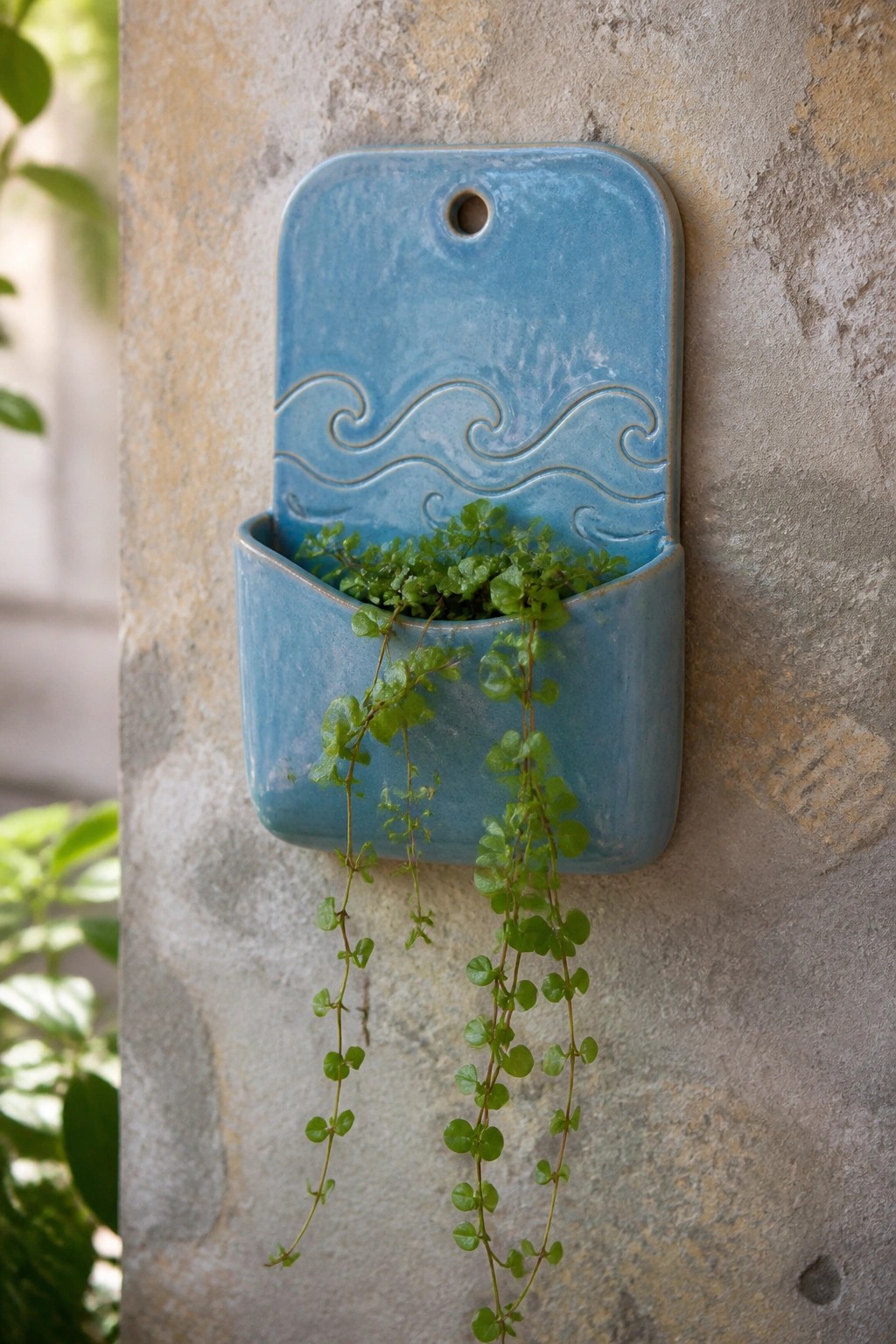
A wall pocket planter formed from clay slabs creates a shallow open pouch that holds soil and small plants while the flat back panel allows it to hang flush against a wall. The upper section carries a simple carved wave pattern that adds surface interest under a single blue glaze, keeping the overall form straightforward yet visually balanced. The hanging hole at the top makes installation easy without extra hardware.
What makes this idea useful is how the pocket depth controls soil while still letting vines trail downward naturally. You can swap the wave motif for other line carvings or skip the carving and rely on glaze variation instead. A smaller version fits well above a desk or sink for herbs or succulents, and the same slab layout could be repeated to make a row of matching pockets.
Striped Slab Utensil Holder
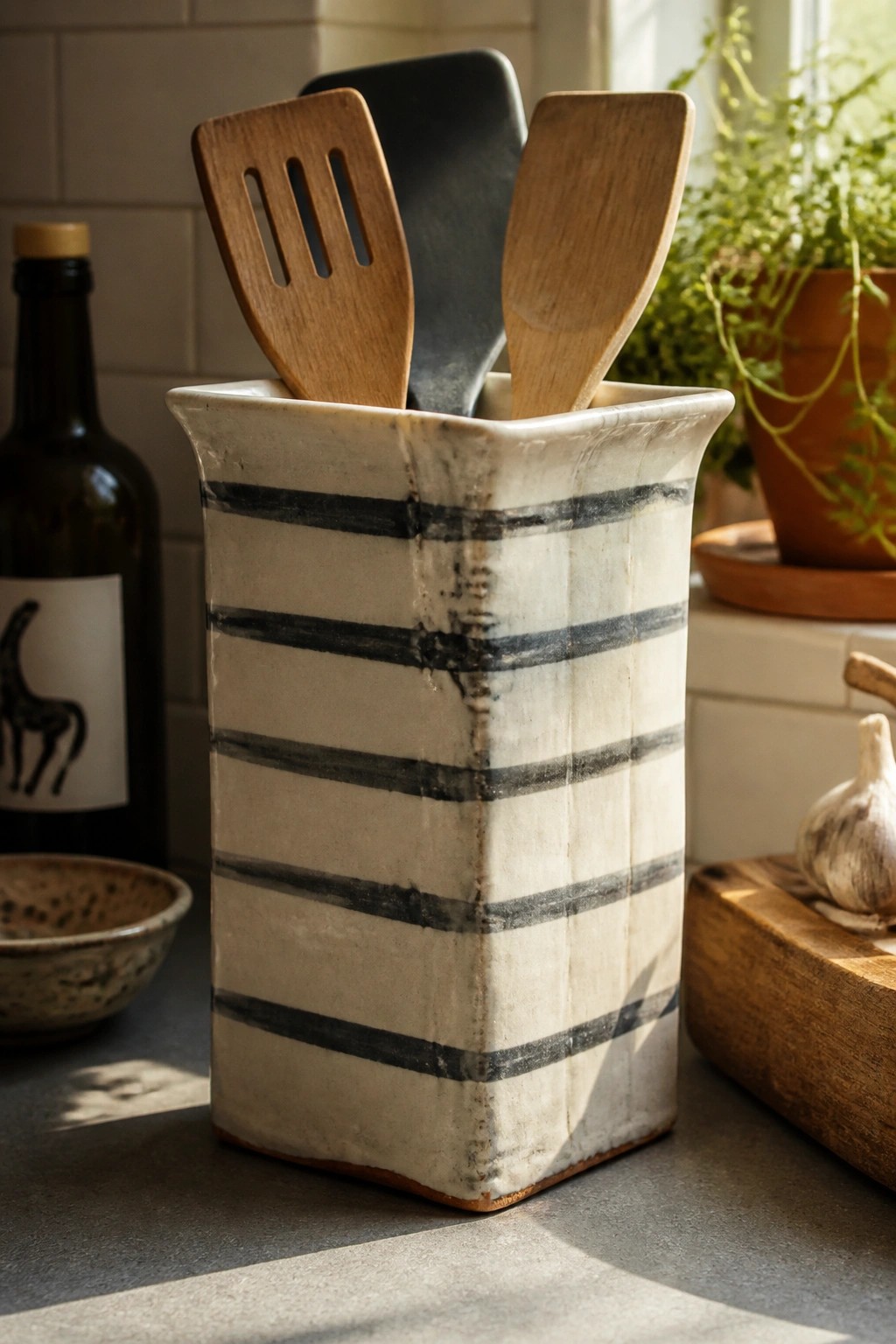
A square slab-built utensil holder gives you straight sides and a wide opening that keeps spatulas and spoons upright on the counter. The design uses simple horizontal stripes applied across the flat surfaces, which are easy to repeat with underglaze or slip on leather-hard clay. This shape fits neatly among other kitchen items without taking up much space and works as basic storage rather than a decorative accent.
What makes this idea useful is how the flat panels let you add stripes or other line patterns without fighting curves or slipping. You could scale the same slabs down for a smaller desk caddy or change the stripe direction to vertical for a different look. In a kitchen this kind of holder keeps tools within reach and gives you a quick way to practice even slab joins and surface decoration on one project.
Marbled Divided Serving Plate
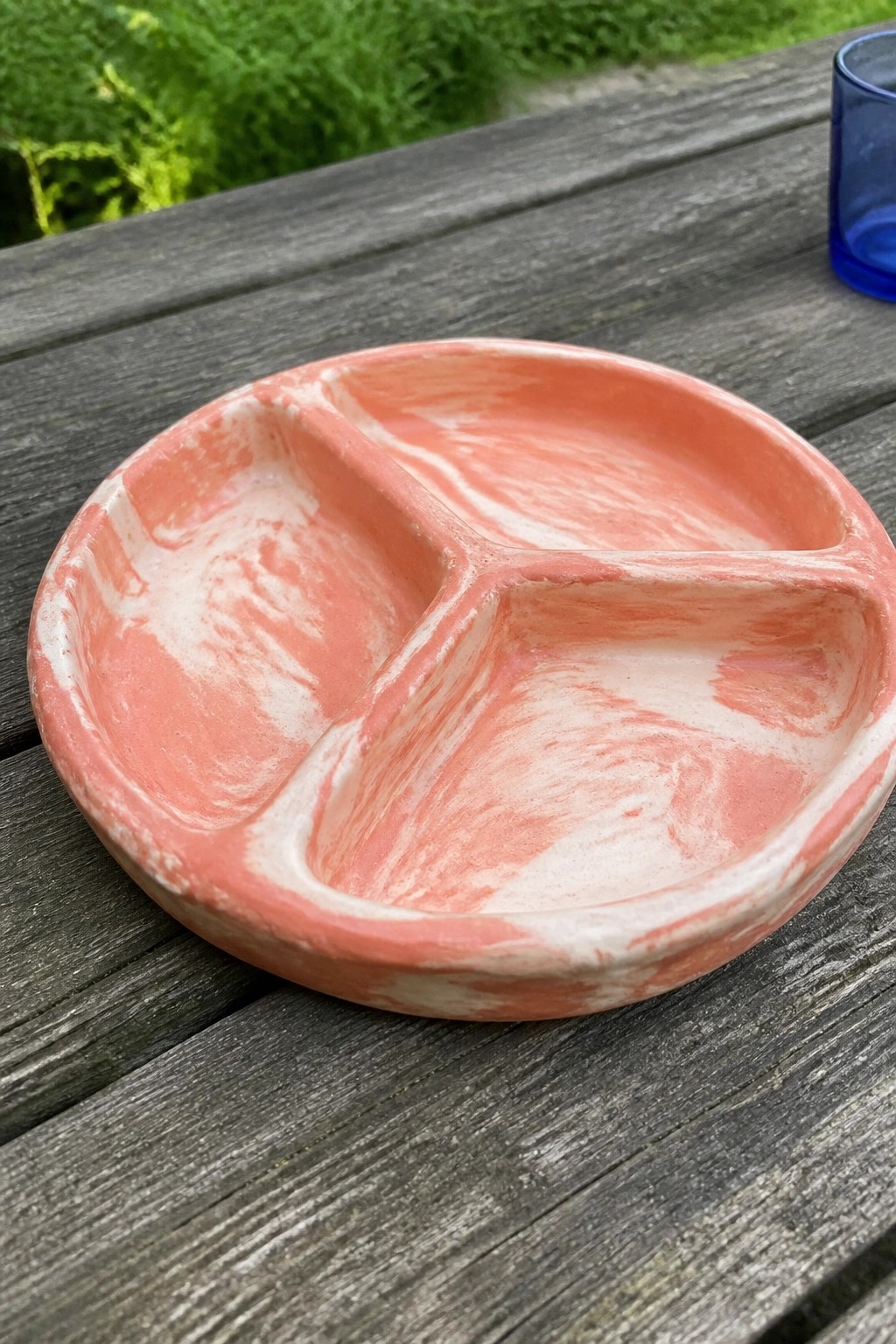
A slab-built divided plate uses low walls to create three separate sections in one round form. The pink and white marbled glaze covers the entire surface, giving a soft swirled pattern that shows the clay movement without added decoration. This layout keeps foods like snacks or dips from mixing while still functioning as a single serving piece.
What makes this idea useful is that the sections work well for small appetizers or cheese boards on a table. You could scale the same slab method up or down, swap the glaze colors, or adjust the divider angles to fit different foods. In a kitchen, this shape gives you a compact way to serve without needing multiple small dishes.
Small Ceramic Creamer with Dot Bands
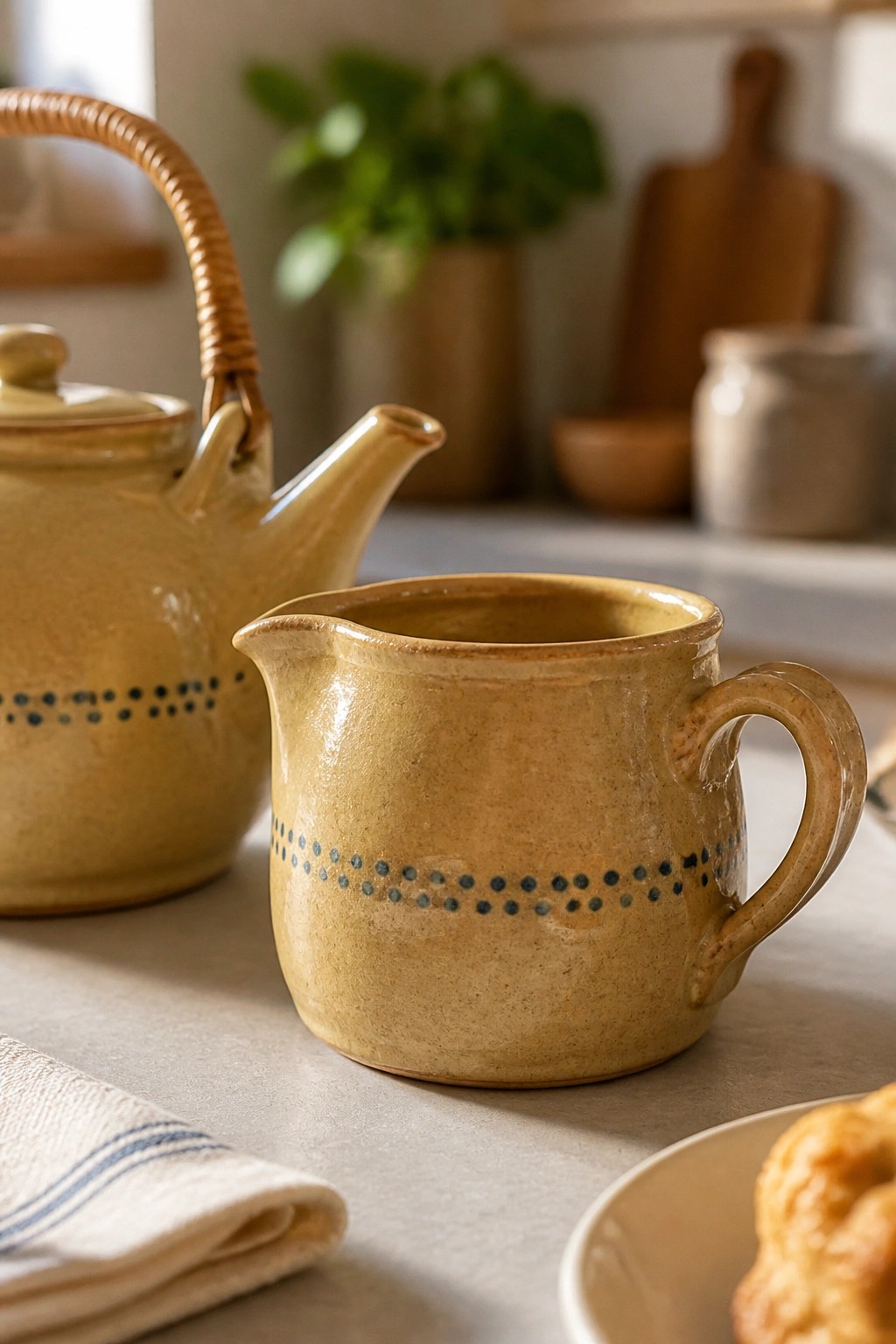
A small ceramic creamer pitcher gives you a straightforward functional piece for the table. It includes a spout for controlled pouring and a looped handle, built in a rounded form that sits low and stable. The warm tan glaze provides a neutral base while two horizontal bands of small blue dots create simple repeating lines around the body.
What makes this idea useful is the compact scale that works on a breakfast tray or beside a teapot without taking much space. The dot pattern can be adapted by changing the color, spacing, or adding a third band near the base. You could rework the same shape into a small milk jug or sauce server by widening the opening slightly. In a kitchen, this kind of piece stands out because the painted detail reads clearly even from across the room.
Frequently Asked Questions
1. What basic supplies do beginners need to try these slab pottery projects? You will need a smooth work surface such as canvas, a rolling pin for creating even slabs, a sharp knife or clay cutter, a ruler for straight edges, and suitable clay like earthenware or stoneware. Access to a kiln is required for firing, along with optional items like sponges and slip for joining pieces. Many of the listed projects can be completed with this simple set of tools.
2. How can I make sure the finished pieces are durable and functional for daily use? Select clay that fires to a strong temperature and apply food-safe glazes according to the product guidelines. Maintain consistent slab thickness around one quarter inch and score and slip all joins thoroughly. After firing, test pieces by hand washing them first to confirm they hold up without chipping or leaking.
3. What steps help prevent cracking during the drying process? Cover your completed projects loosely with plastic for the first day or two to slow drying, then gradually expose them to air over several days. Keep slab thickness uniform and avoid placing pieces in direct sunlight or near heat sources. For larger items from the list such as trays or vases, add gentle supports underneath during drying.
4. Which projects from the collection work best for someone with no prior experience? Start with flat items like coasters, simple plates, or spoon rests that require only rolling, cutting, and basic shaping. These avoid complex curves or multiple joins. Once comfortable, move to slightly more involved options such as small bowls or mugs that still use straightforward slab techniques.
5. How should I choose and apply glazes to enhance the look of these functional ceramics? Pick glazes labeled as food safe and test them on sample tiles made from your clay. Apply one or two thin coats with a brush, allowing each layer to dry before adding the next. Fire to the recommended temperature and consider matte finishes for a natural feel on items like serving dishes or planters.

Pottery Path is my cozy corner of the internet where I share clay ideas, pottery inspiration, and simple projects you can recreate at home. I love exploring everything from air dry clay to handbuilt pottery to cute minis that brighten your day. My goal is to make clay crafting feel easy, fun, and welcoming for anyone who wants to try it.
You will find beginner friendly tutorials, creative pottery painting ideas, and lots of warm inspiration for slow and happy crafting. If you enjoy hands on creativity, this space will feel like home.