
I have always enjoyed painting simple nature scenes on my pottery pieces.
Mountains oceans and forests come up often in my sketches because they feel familiar and calming to work with.
I started trying out these themes on mugs and bowls a few years ago when I wanted something easy to do on weekend afternoons.
Some of the designs turned out better than others but I kept the ones that felt natural and not too complicated.
These are the ideas that I still go back to when I sit down at my table with paints.
Sunset Mountain Mug
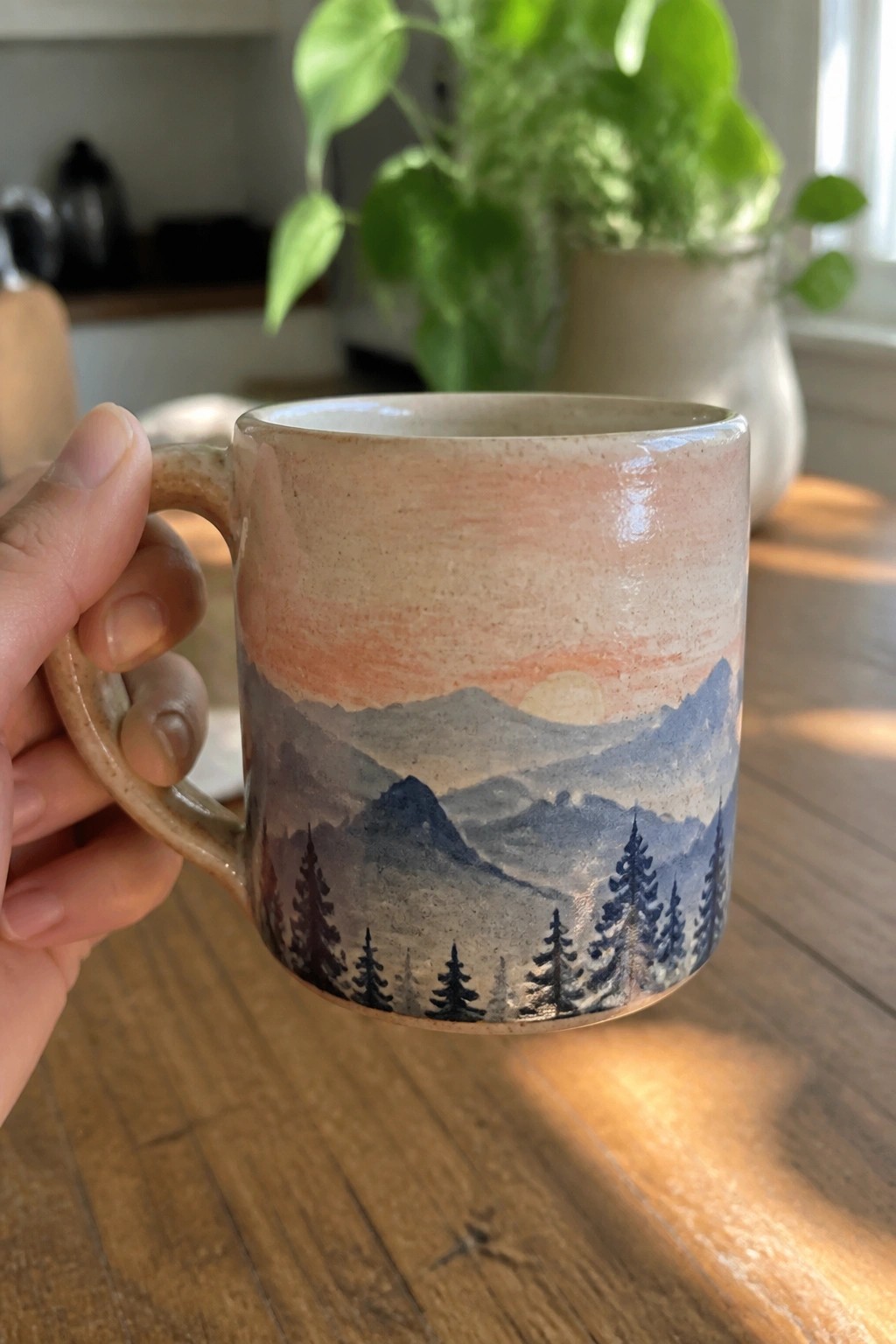
A ceramic mug works well for a wraparound painted landscape that uses the curved surface to show depth. The upper half features a soft peach and pink sky gradient with a pale sun, while the lower section layers blue-gray mountains that lead into a row of dark pine trees near the base. This keeps the design simple yet effective by relying on color bands and silhouettes rather than fine detail.
What makes this idea useful is how the finished mug fits everyday kitchen or desk use without taking up much space. You could shorten the tree band or swap the sky colors for a different time of day if you want a faster version on your next piece. The same layout adapts easily to a small planter or a wider bowl if you prefer something for plants or snacks.
Ocean Wave Painted Ceramic Bowl
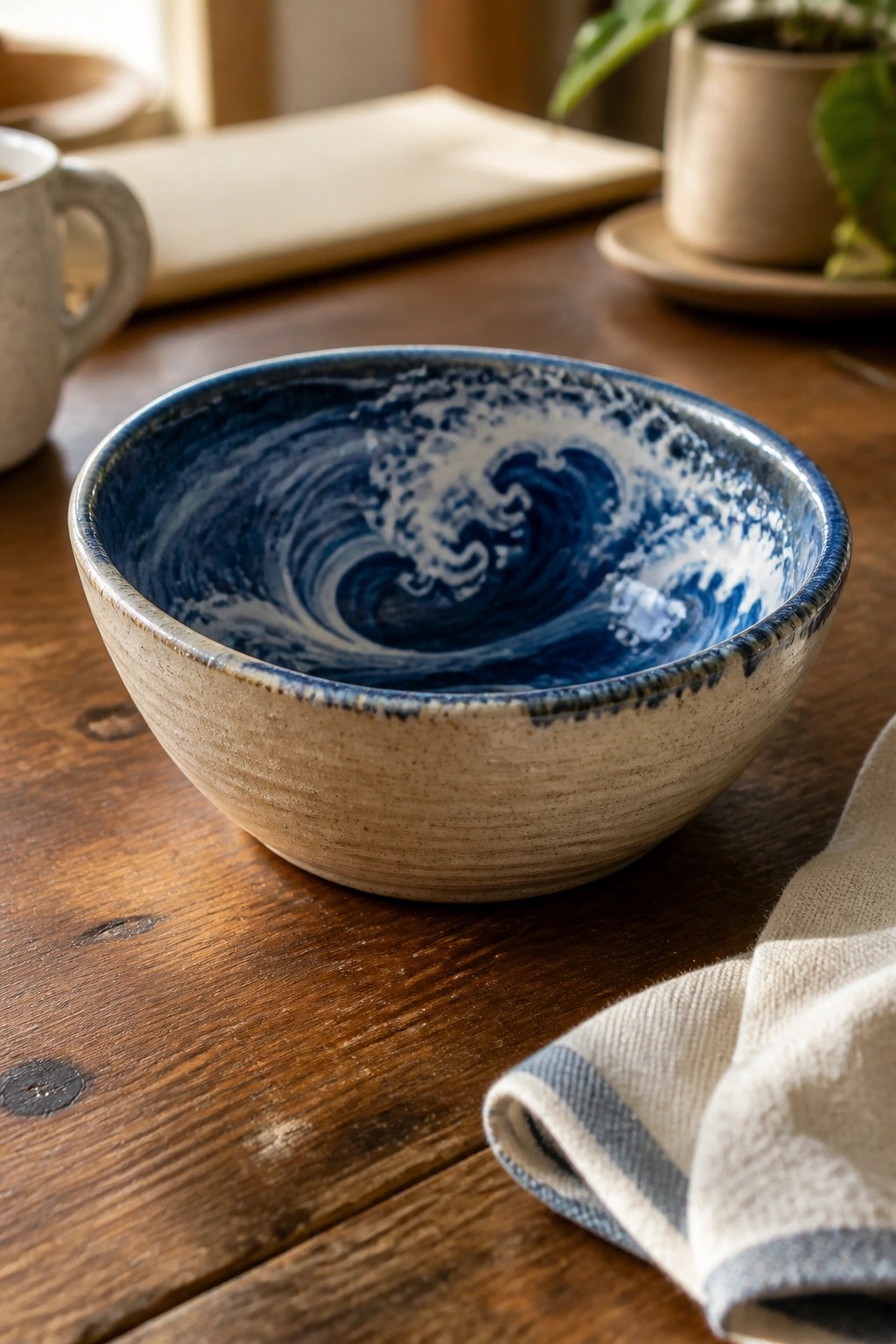
A medium-sized ceramic bowl becomes an ocean-themed piece when the interior is painted with swirling blue waves that start deep at the center and lighten toward the rim. The design uses layered shades of blue and white to create movement across the curved surface, while the outside stays in a simple unglazed clay finish. This keeps the focus on the painted motif and makes the bowl suitable for both everyday use and display.
What makes this idea useful is how the wave pattern scales easily to different bowl sizes without losing impact. You could adapt the same swirling design to smaller prep bowls or a larger serving dish for a coastal table setting. The high-contrast blue interior also stands out in photos, which helps the finished piece perform well as a Pinterest pin for ocean-themed pottery ideas.
Forest Border Plate
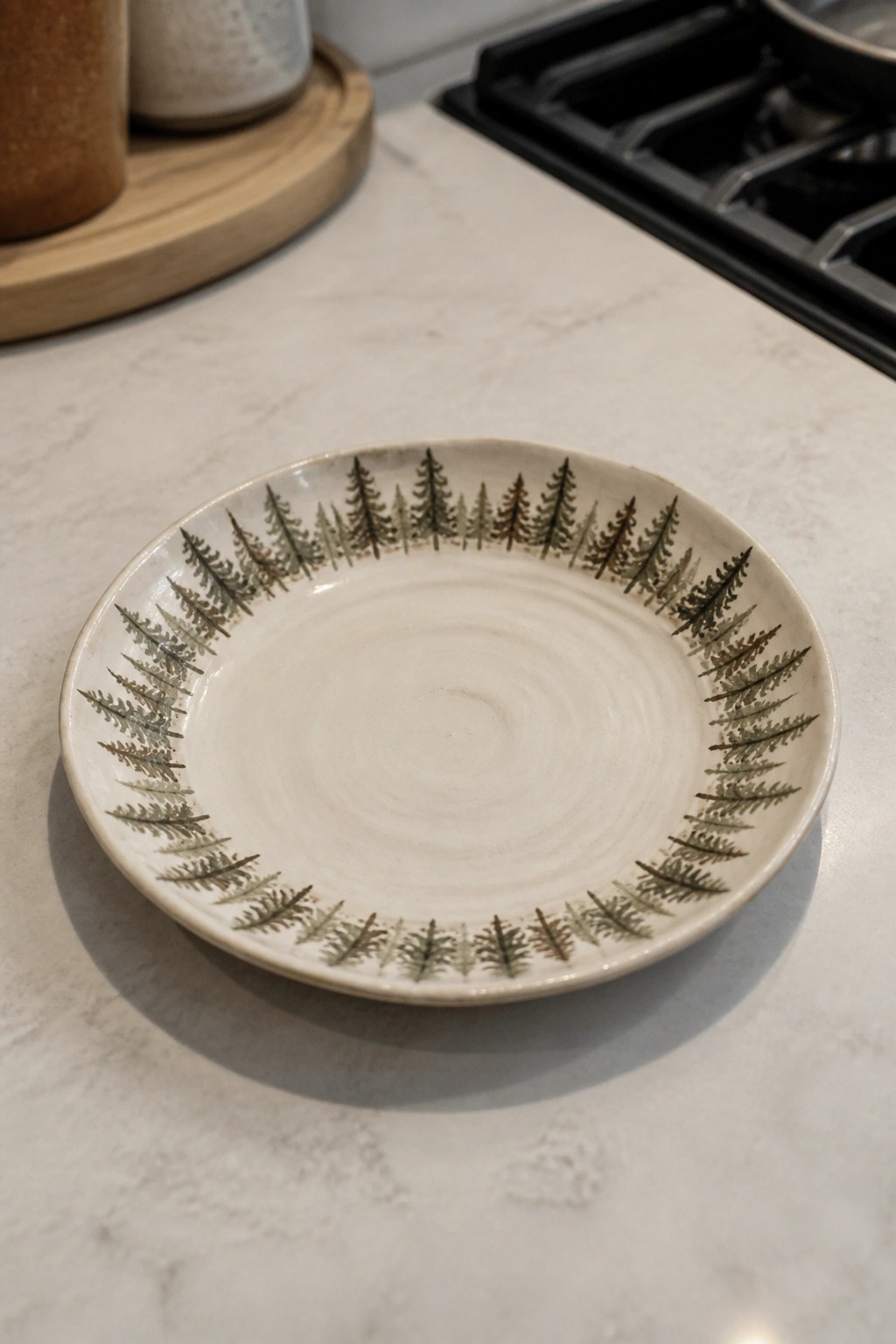
A round ceramic plate gets its nature theme from a continuous band of painted pine trees circling the rim. The trees use several shades of green and brown with slight variations in height and spacing so the line feels organic rather than mechanical. The plain center stays free of decoration, which keeps the plate practical for food while the outer motif supplies the forest detail.
What makes this idea useful is that the border format works on any round dish without crowding the usable surface. You could repeat the same tree band on salad plates, a larger serving platter, or even a shallow bowl. The motif scales down easily for a small ring dish or speeds up if you simplify the trees to single-stroke shapes. In a kitchen this style stands out on open shelving because the repeating trees read clearly from a distance.
Mountain Silhouette Planter
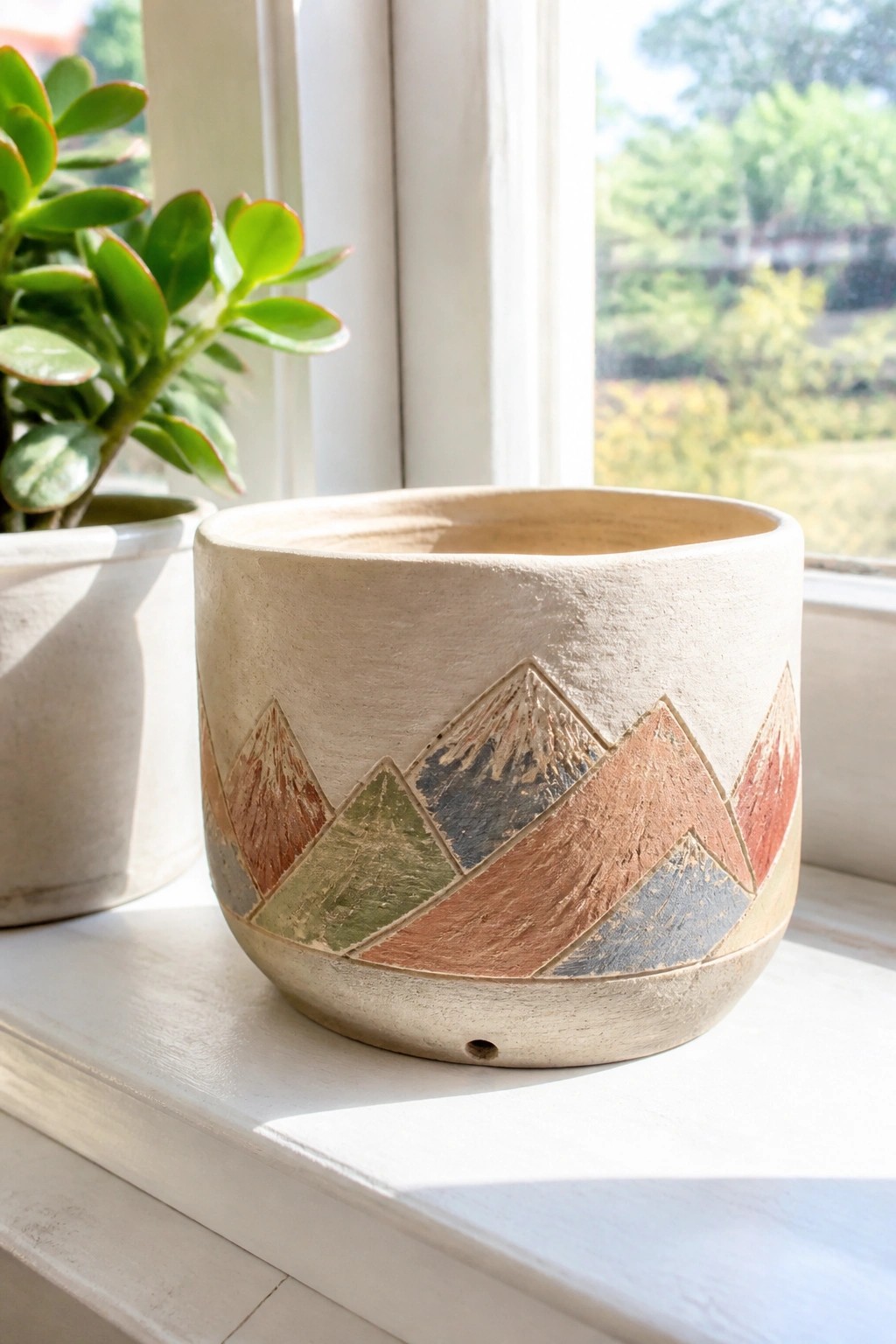
A round ceramic planter uses a horizontal band of overlapping mountain peaks painted around its middle. The peaks are filled with muted reds, greens, and blues applied in a rough, scraped texture that suggests rock faces. The design leaves the rim and lower base in plain clay, and a drainage hole at the bottom keeps the piece functional for plants.
What makes this idea useful is how the repeating mountain band fits any cylindrical pot without needing precise alignment. You can reduce it to fewer colors for faster painting or stretch the pattern around a taller vase instead. This style works especially well for windowsill plants since the earthy tones blend with real foliage and keep the focus on the greenery.
Ocean Wave Hanging Plaque with Sculpted Seagull
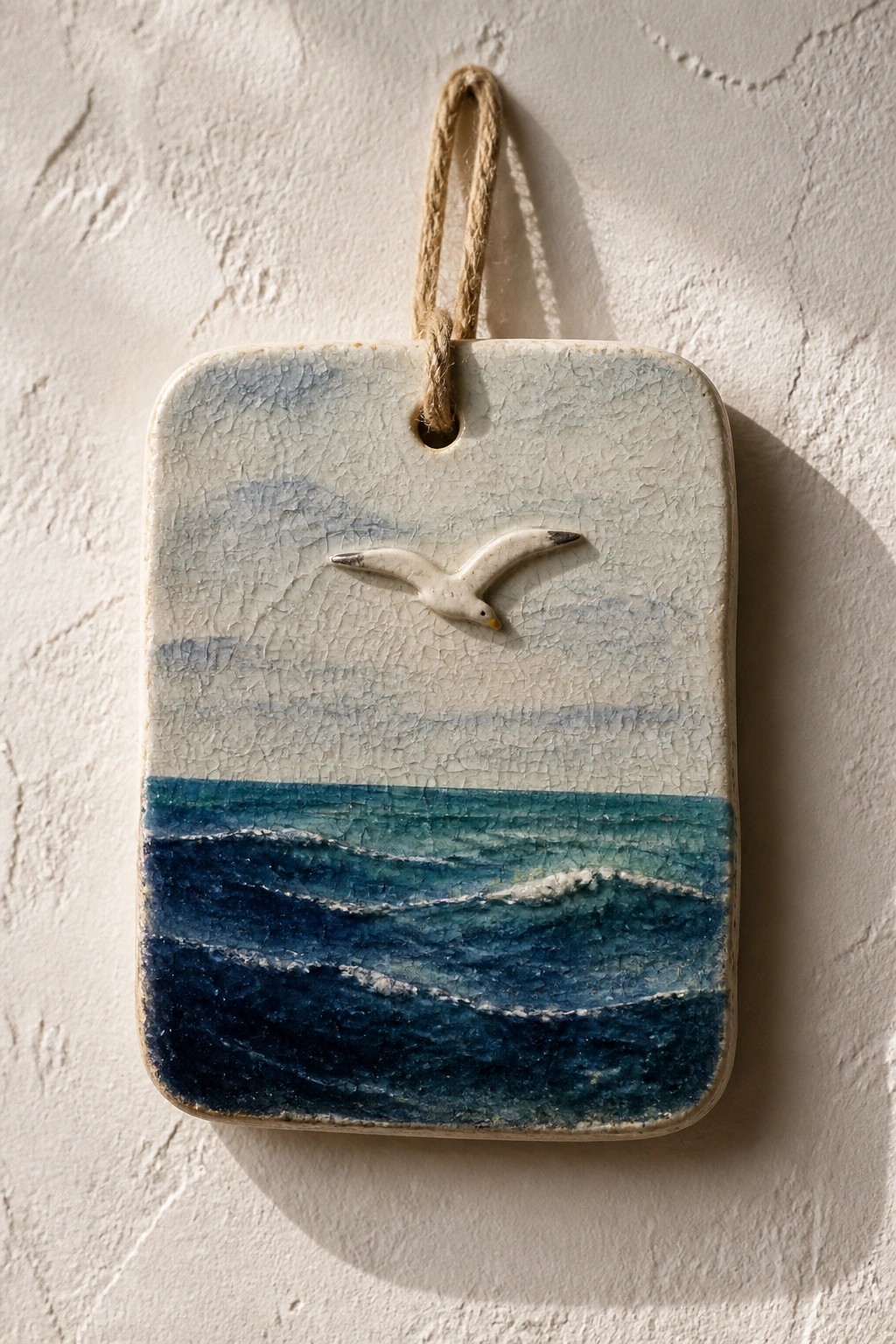
A rectangular ceramic plaque works well as a wall hanging when you divide the surface into sky and sea with simple glaze bands. The bottom half uses layered dark blues and white to build wave texture while a small raised seagull sits centered above the water line. The crackle effect on the upper section comes from the glaze itself and keeps the focus on the painted horizon. This approach combines flat painting with one low-relief element to create a compact ocean scene on a single tile.
What makes this idea useful is the flat rectangular shape that hangs easily from a single cord or stands on a shelf. You can shrink the same layout onto a smaller tile for a set of coasters or move the wave pattern onto a round plate for a different kitchen piece. The raised bird gives the surface a clear focal point that photographs cleanly for sharing. For a gift version, swap the rope for a thin leather cord and keep the color bands the same.
Mushroom and Fern Relief Tray
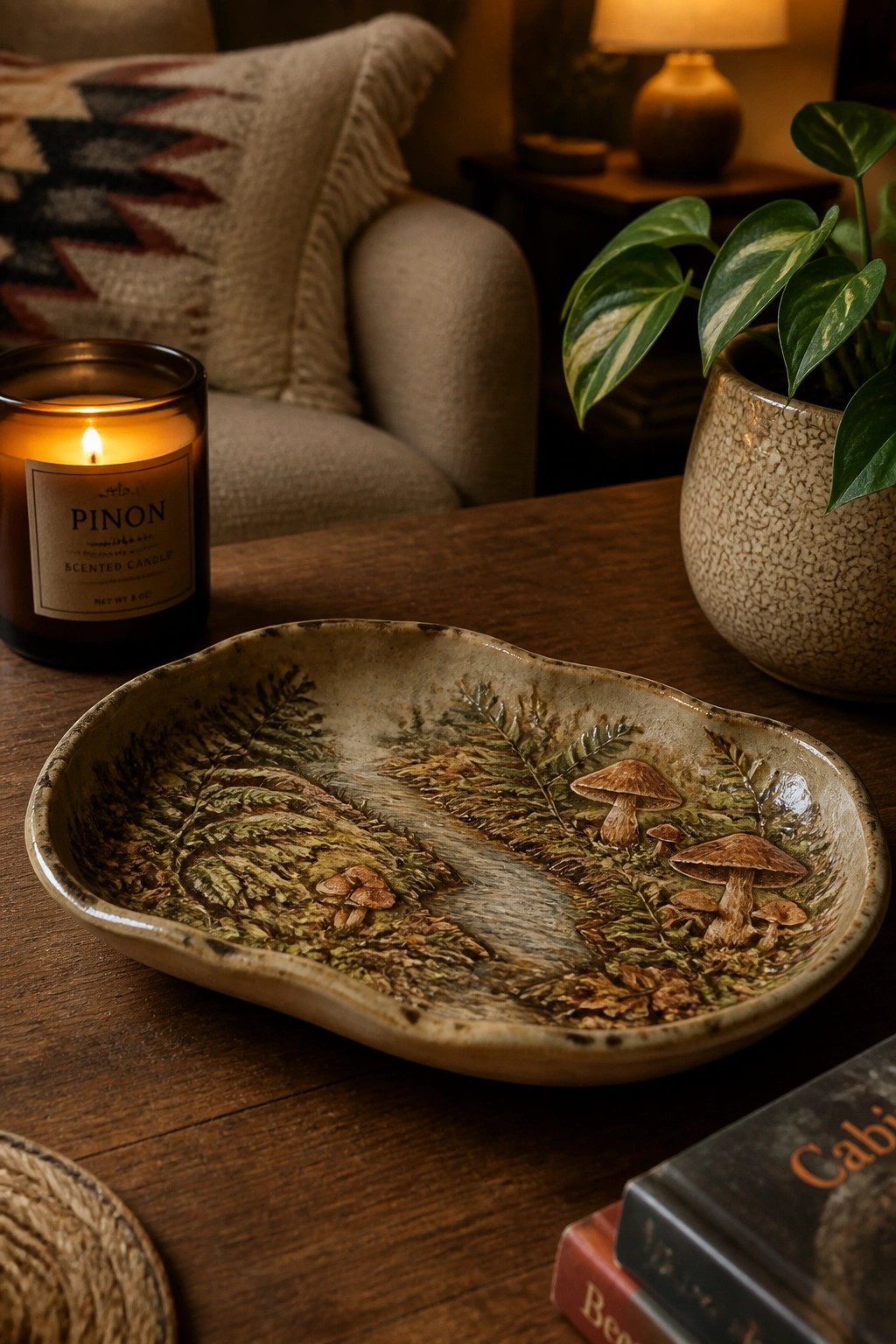
A shallow oval ceramic tray makes a strong base for this forest scene idea. The surface carries a raised relief of mushrooms, ferns, and a winding stream rendered in earthy greens and browns that follow the curve of the dish. The irregular rim and matte glaze keep the whole piece grounded in the woodland theme without competing with the motif. This approach suits the tray category for small surface decor or everyday catch-all use.
The shape does a lot of the work here because the wide, low profile gives the full scene room to read clearly. You could adapt the same relief elements to a set of smaller coasters or a ring dish if a larger tray feels oversized for your space. In a living room or on a nightstand the piece holds small items while keeping the nature detail visible from above. For a gift the motif translates easily to other flat forms like a soap dish or shallow planter saucer.
Curling Wave Ring Dish
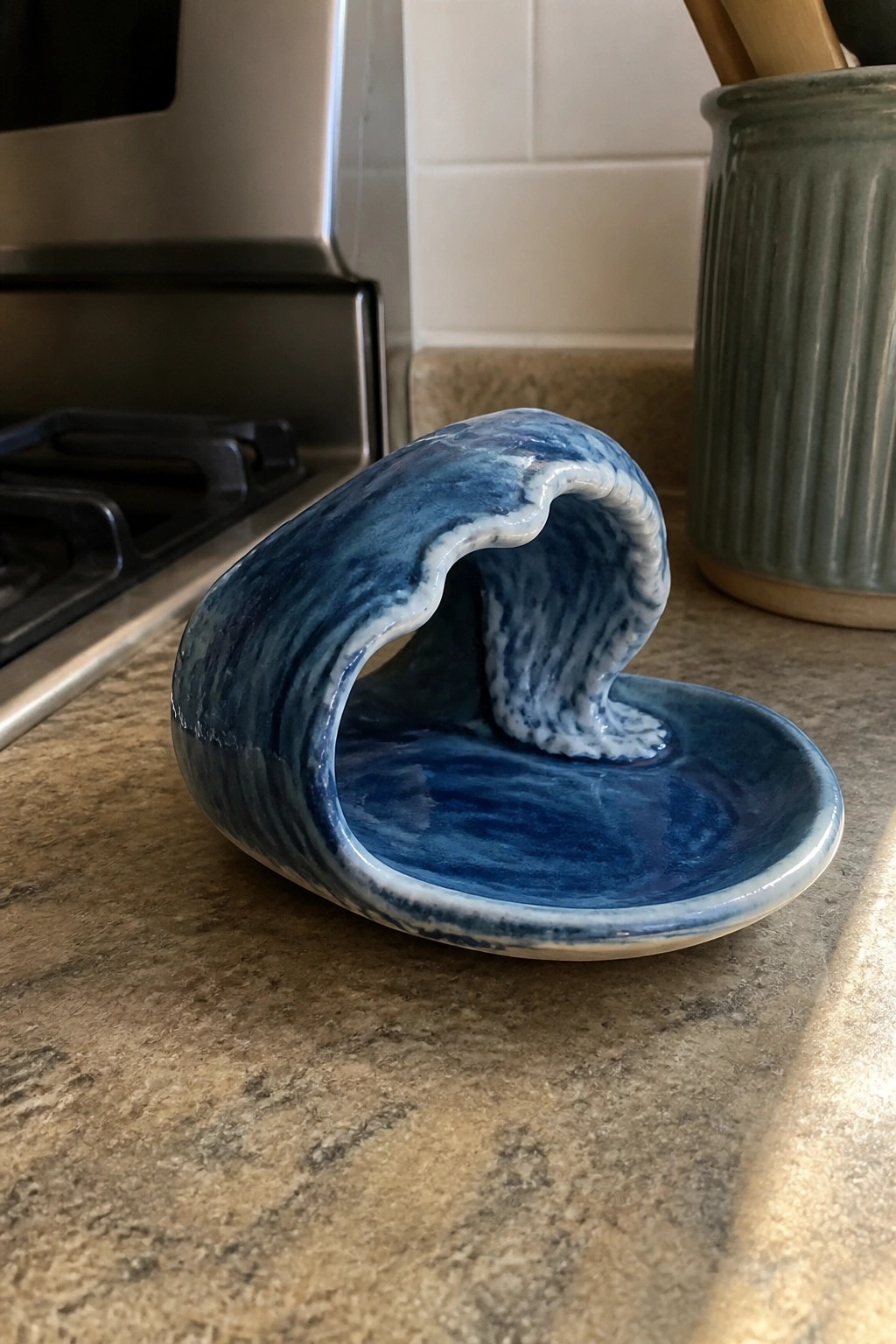
A small ceramic dish shaped like a curling ocean wave works as a compact ring holder or trinket tray. The form starts with a flat base that rises into a rounded wave, leaving an open space underneath the curl for storing small items. Blue and white streaked glaze gives the surface the look of moving water without extra painting steps. This idea fits the ocean category by using the actual shape of the piece rather than just surface decoration.
The shape does a lot of the work here because the curl creates both the visual and the functional area in one piece. You could adapt the same wave form into a spoon rest by making it slightly longer or turn the idea into a set of matching small dishes for a bathroom counter. The glazing technique stays simple on curved surfaces, so the same color blending works on a larger tray or a planter base. This kind of project stands out on Pinterest because the finished piece looks finished with just one glaze application.
Mountain Peak Ring Dish
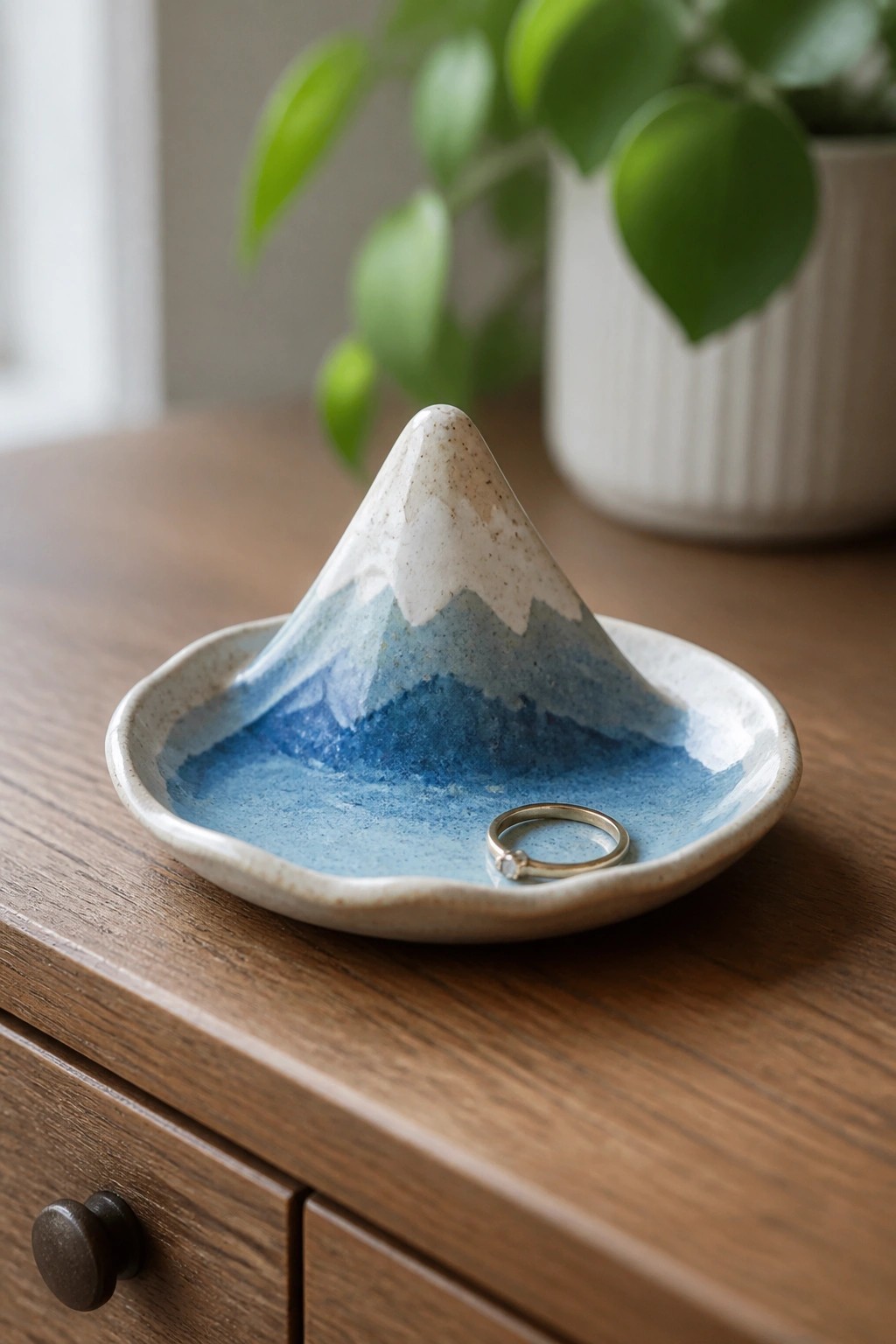
A small ceramic dish with a raised central peak creates a functional ring holder while keeping the design focused on a simple mountain form. The peak is painted in layered blues that fade into a white cap, giving the base of the dish a landscape effect without covering the entire surface. This approach keeps the piece practical as a jewelry holder while adding a clear nature element through the sculpted shape and glaze colors.
The compact size makes it easy to place on a nightstand or desk for daily ring storage. You can adapt the idea by using fewer colors or adding a second smaller peak to change the silhouette. For a gift, the raised form helps the dish stand out in photos and search results compared to flat ring dishes.
Bark Textured Tree Stump Candle Holder
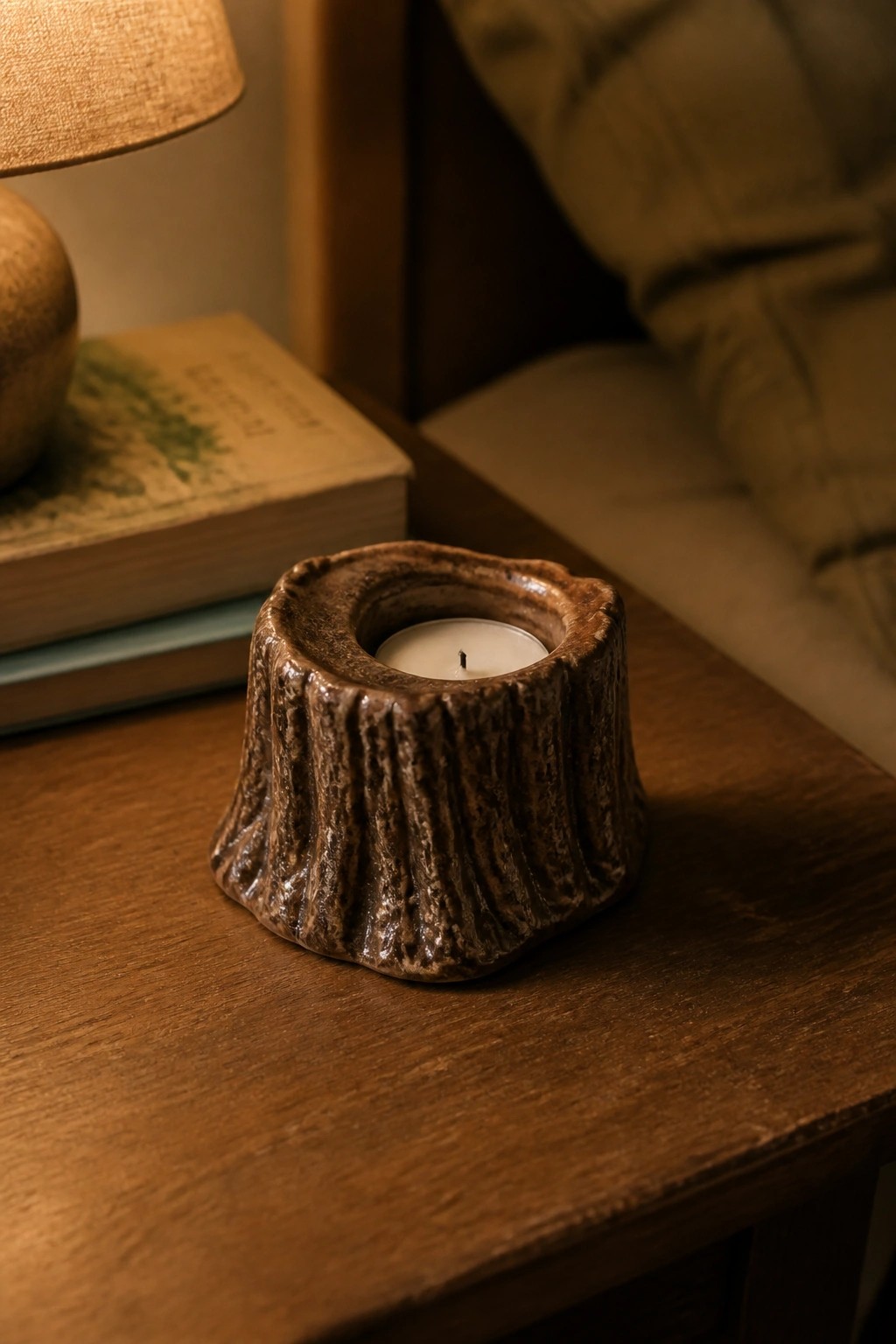
A small ceramic tea light holder formed as a tree stump gives a direct forest reference through its shape and surface. The clay is pinched and carved with vertical ridges and an uneven top edge to suggest bark and the cut face of a stump. A single earthy brown glaze settles into the grooves and keeps the focus on the texture rather than added color. This approach works as a simple candle piece that needs no further painting once the form is set.
What makes this idea useful is how the stump shape can be scaled up for a larger pillar candle or reworked as a tiny succulent planter. The rough texture stands out on its own against wood or stone surfaces without extra decoration. For a gift, something like this works especially well because the form does most of the visual work once glazed. The same carving method could be applied to a ring dish or small tray if you want a matching set.
Blue Glazed Whale Figurine
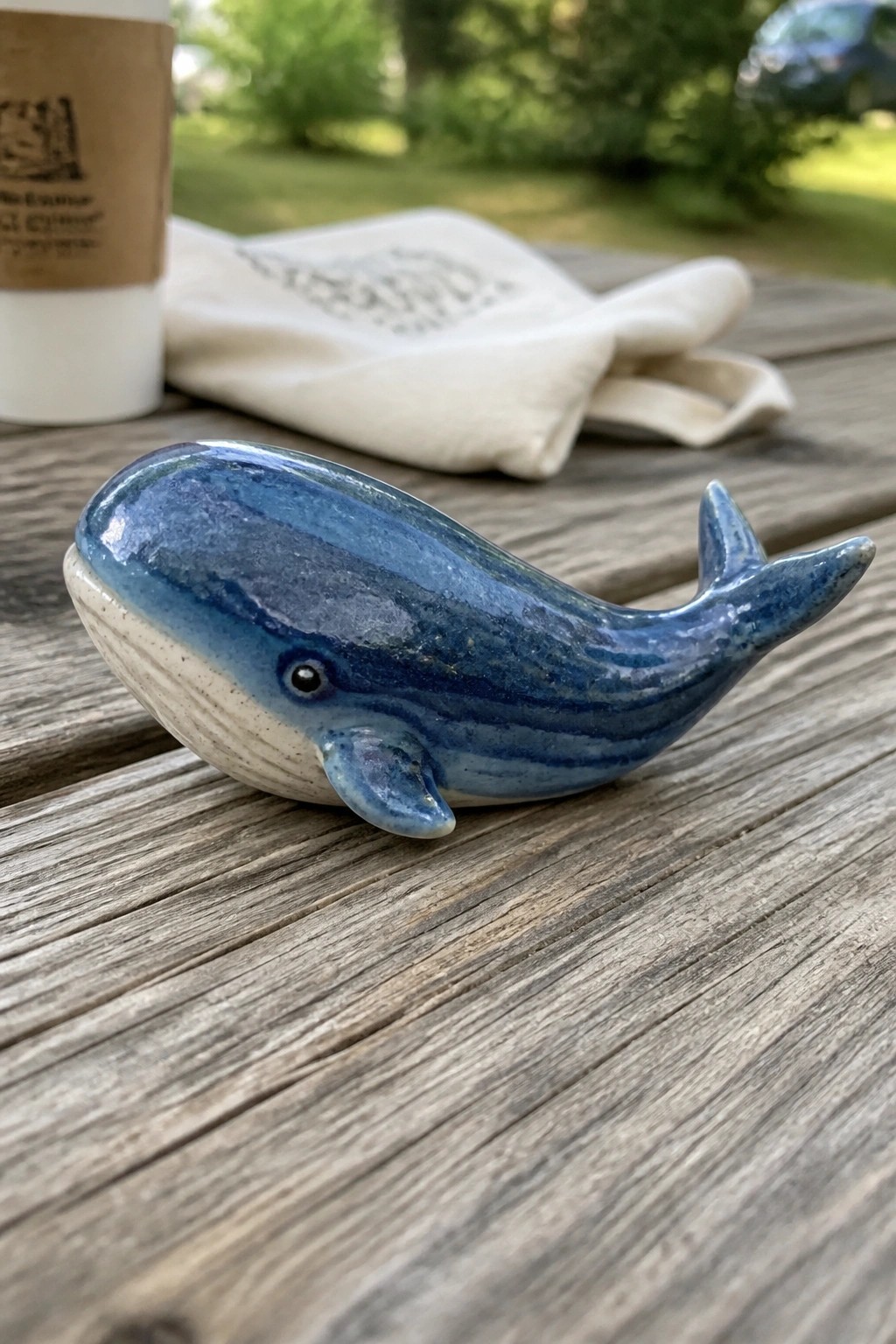
A small ceramic whale figurine works as a straightforward ocean-themed project using basic handbuilding to create a rounded body, tail fin, and side flipper. The glaze covers the top half in layered blues that run into a natural off-white base, giving the surface a simple striped effect without extra painting. This keeps the idea focused on the animal shape and color contrast rather than complex surface details.
The small scale makes the piece easy to display on a desk or shelf and quick to adapt into other sea creatures by swapping the tail shape. You can reuse the same blue-to-white glaze blend on a dolphin or seal form if you want to build a small set. For gifts, this style stands out because it needs minimal tools and fits into any ocean or nature collection without extra finishing steps.
Double Compartment Seasoning Dish with Split Mountain and Water Design
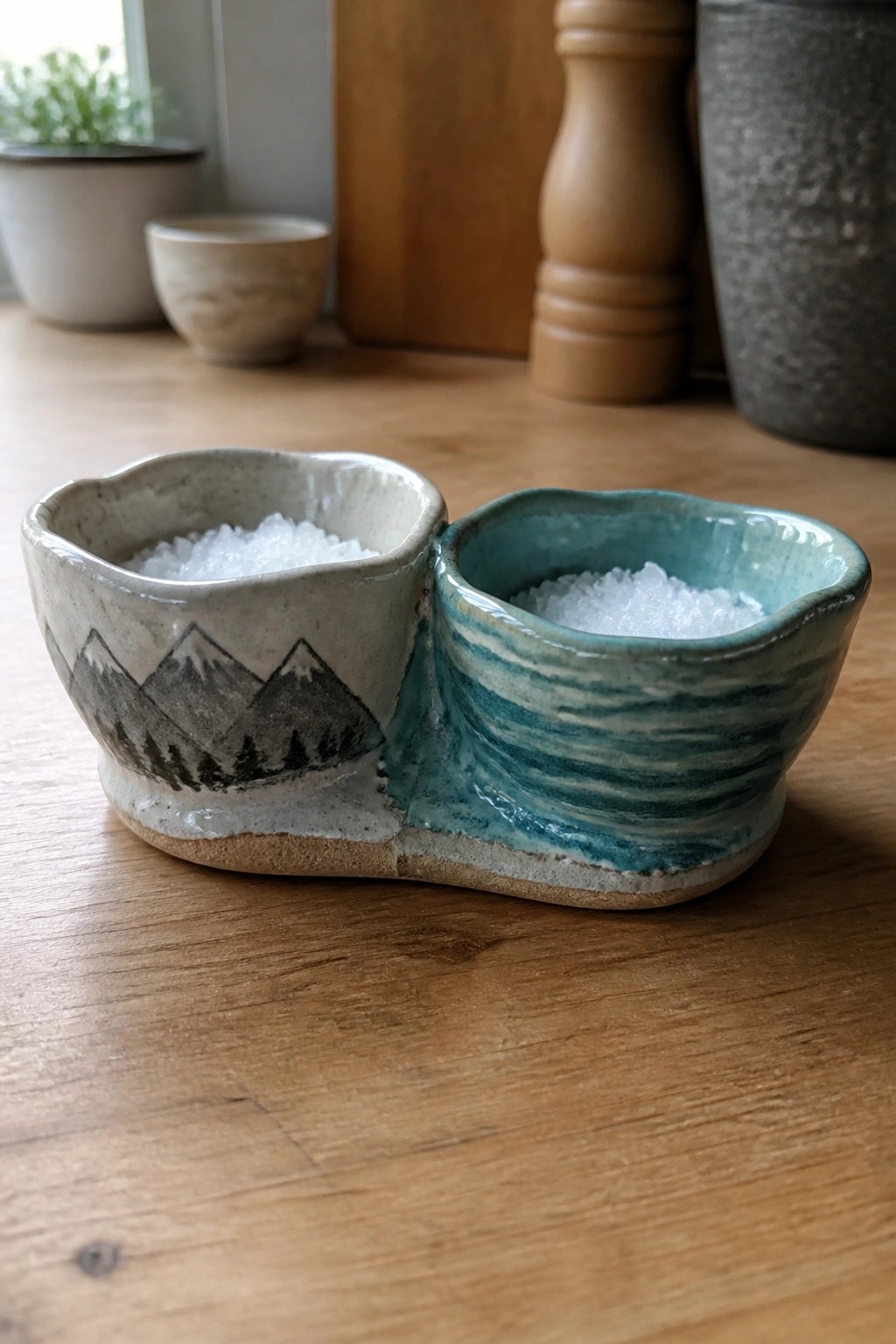
A connected two-part dish serves as a salt cellar or small seasoning holder for the table. One side uses black underglaze to show a simple mountain range and trees on a light clay surface, while the other side relies on horizontal turquoise glaze lines for contrast. The joined base keeps both compartments stable and easy to move together. This layout turns a basic kitchen item into a compact nature-themed piece without extra parts.
The small overall size makes it practical for daily table use or countertop storage of salt, pepper, or spices. You can adapt the idea by changing the right side to a forest pattern or using fewer glaze layers for quicker results. A piece like this stands out on Pinterest because the connected shape solves the common problem of separate tiny bowls sliding around. For gifts, the split design lets you keep one side neutral and the other more detailed depending on the recipient.
Forest Cutout Yarn Bowl
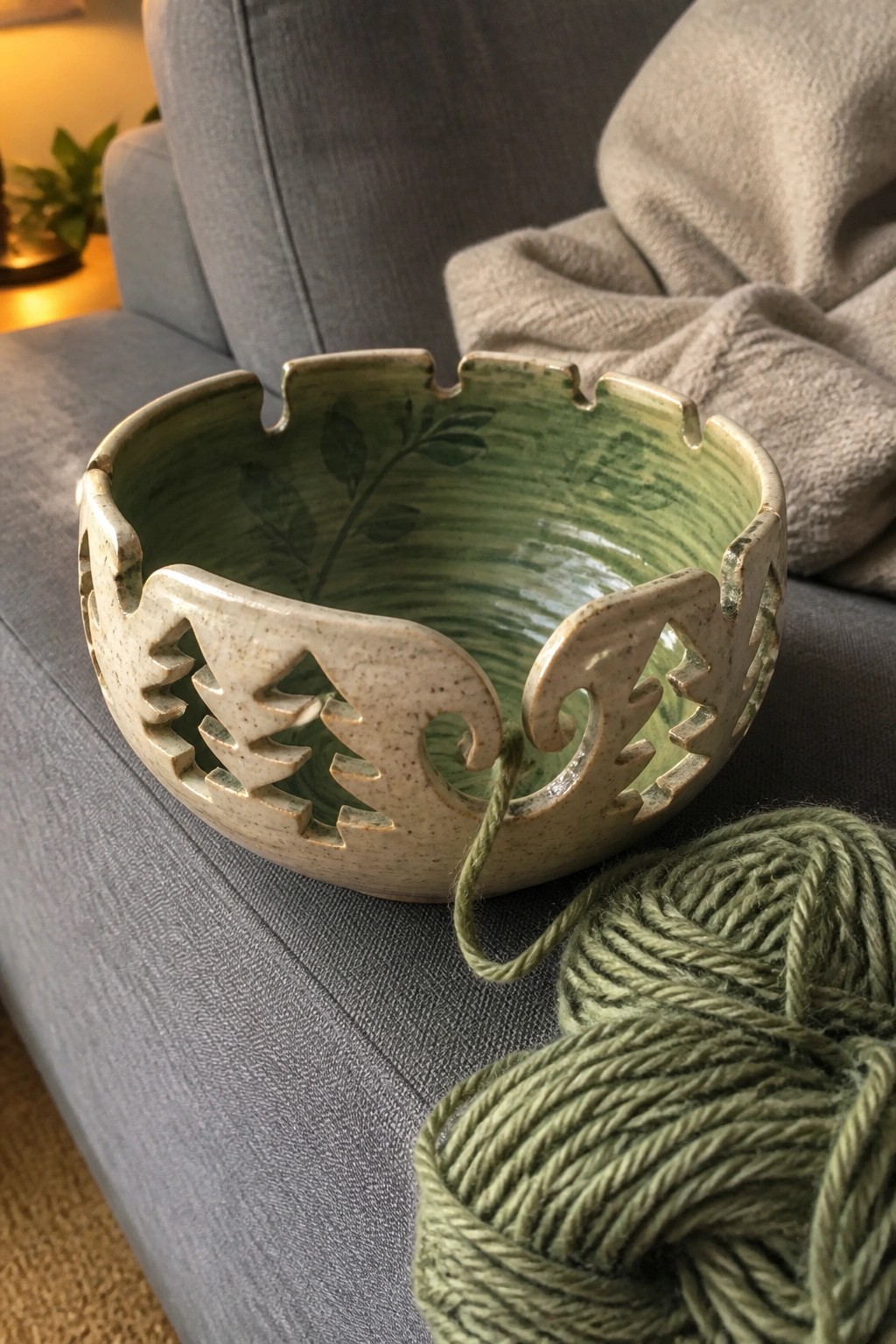
A yarn bowl with tree silhouettes and leaf details cut into the rim keeps yarn tidy during knitting or crocheting. The green glaze and interior leaf stamp create a simple forest look that works on a wheel-thrown or hand-built form. Notches along the top edge let the strand pull out without tangling, while the open sections reduce weight and add visual interest.
What makes this idea useful is how the cutouts serve both function and theme at once. You could swap the trees for mountain or wave shapes to fit the rest of the series without changing the bowl form. The compact size fits on a side table or in a project bag, and the same rim treatment would work on a smaller trinket dish or planter saucer if you want a quicker version.
Layered Ocean Toothbrush Holder
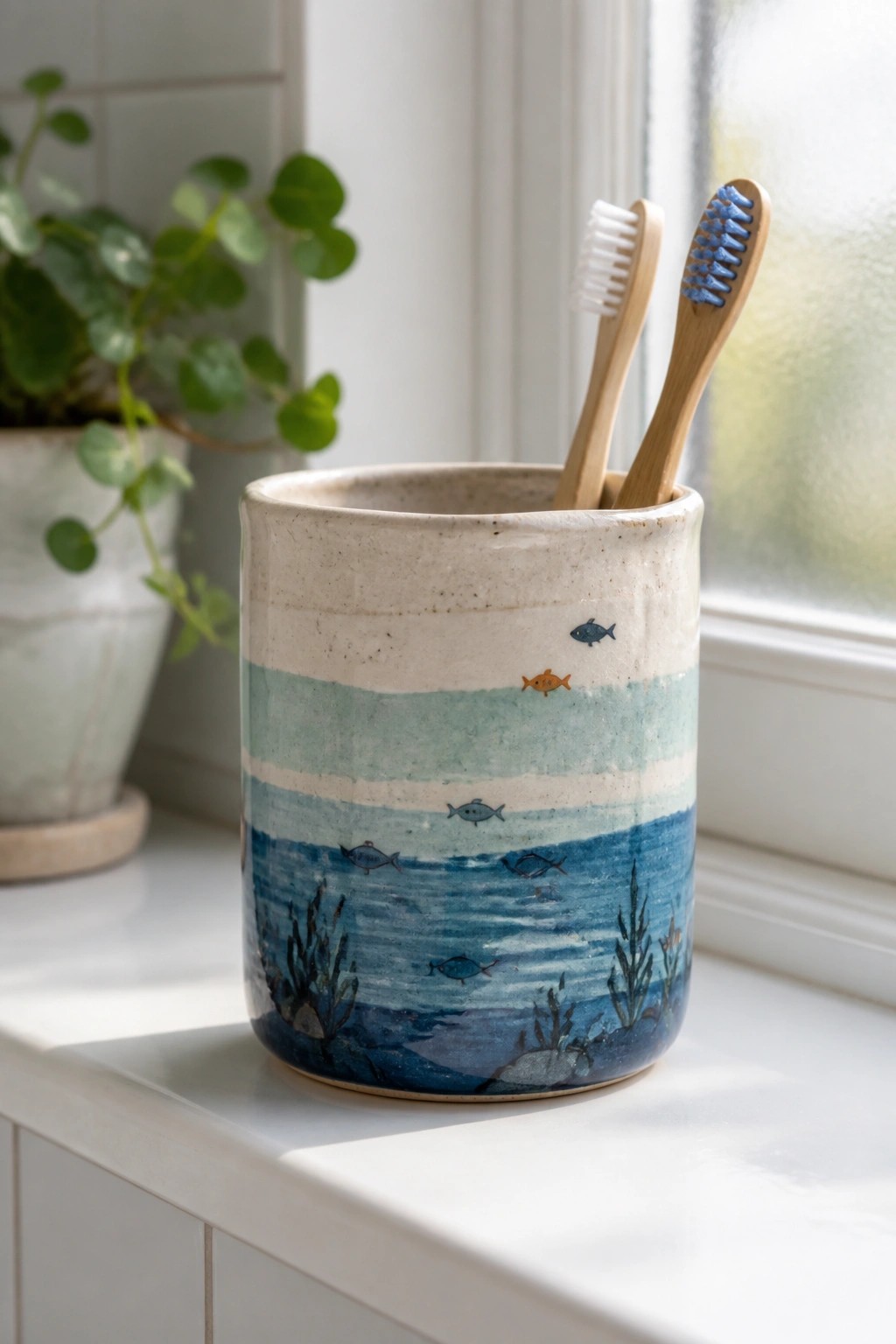
A simple cylindrical ceramic cup makes an effective toothbrush holder when painted with horizontal bands of blue and teal that shift from pale at the top to deep at the base. Small fish in contrasting colors swim across the bands while line-drawn seaweed and rocks sit along the bottom edge. The unglazed rim and lightly speckled clay body keep the focus on the painted water layers rather than a shiny finish.
This shape sits stably on a bathroom ledge or windowsill and holds two or three brushes without tipping. The same stripe-and-fish layout can be scaled down for a smaller makeup brush cup or repeated on a flat soap dish to make a matching set. Using only four or five tones keeps the painting quick and lets the design read clearly even from a distance, which helps it pin well for bathroom storage ideas.
Leaf-Shaped Trinket Dish with Vein Texture
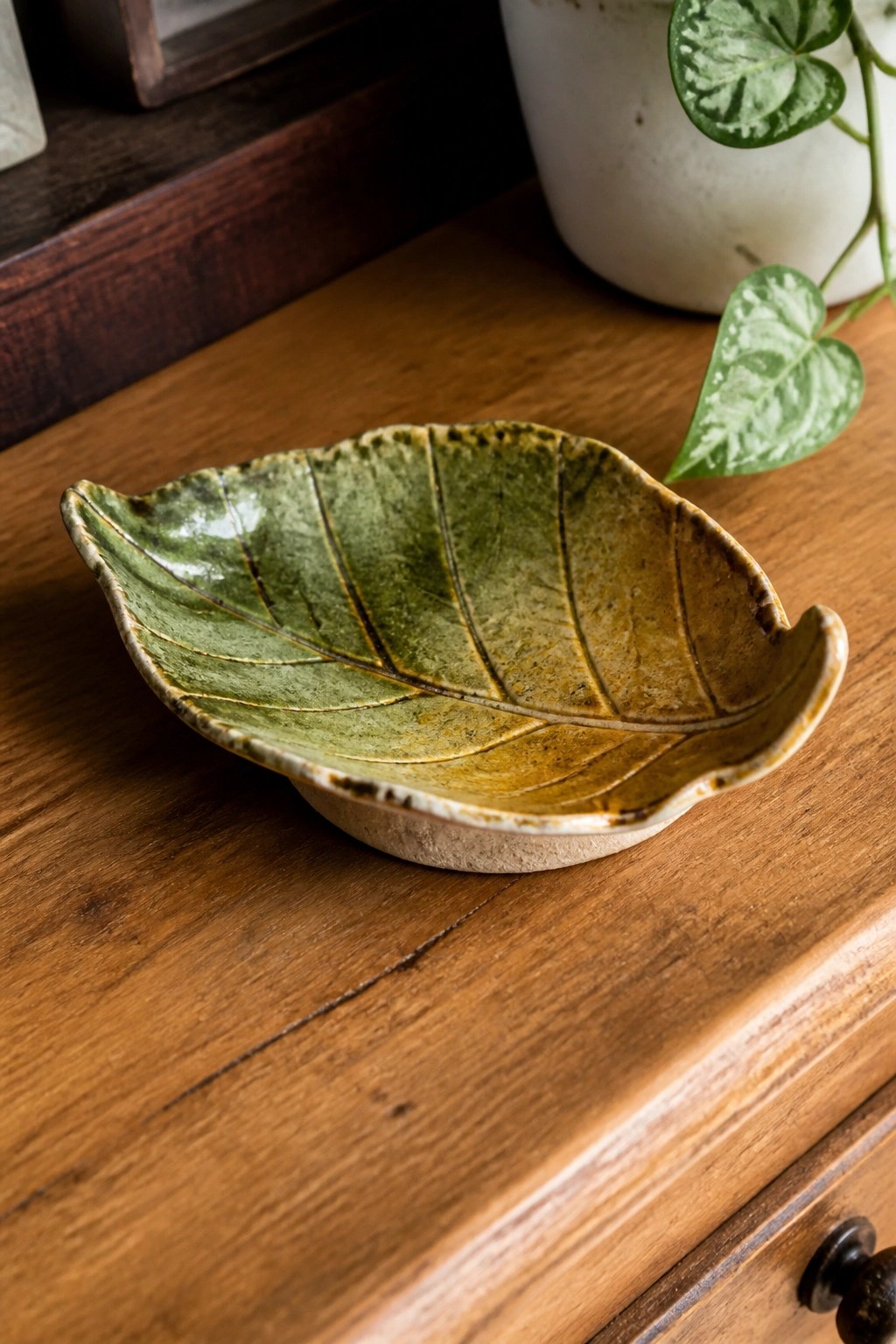
A small ceramic dish shaped like a single leaf makes a simple holder for rings or keys. The clay is formed with raised veins down the center and sides, then coated in a green glaze that turns brownish near the edges and rim. This lets the sculpted leaf structure show through while the color shifts keep the surface from looking flat. The result fits the forest category of nature-themed pottery because the shape itself carries the theme without extra painting.
The compact size works well on a nightstand or bathroom counter where it keeps small items from getting lost. You could make a similar piece by pressing a real leaf into a slab of clay for the vein pattern, then trimming it to shape before glazing in the same green-to-brown range. For an easier start, try the idea on a plain round dish and paint just the veins in layered green tones instead of building the full leaf form.
Blue Mountain Landscape Vase
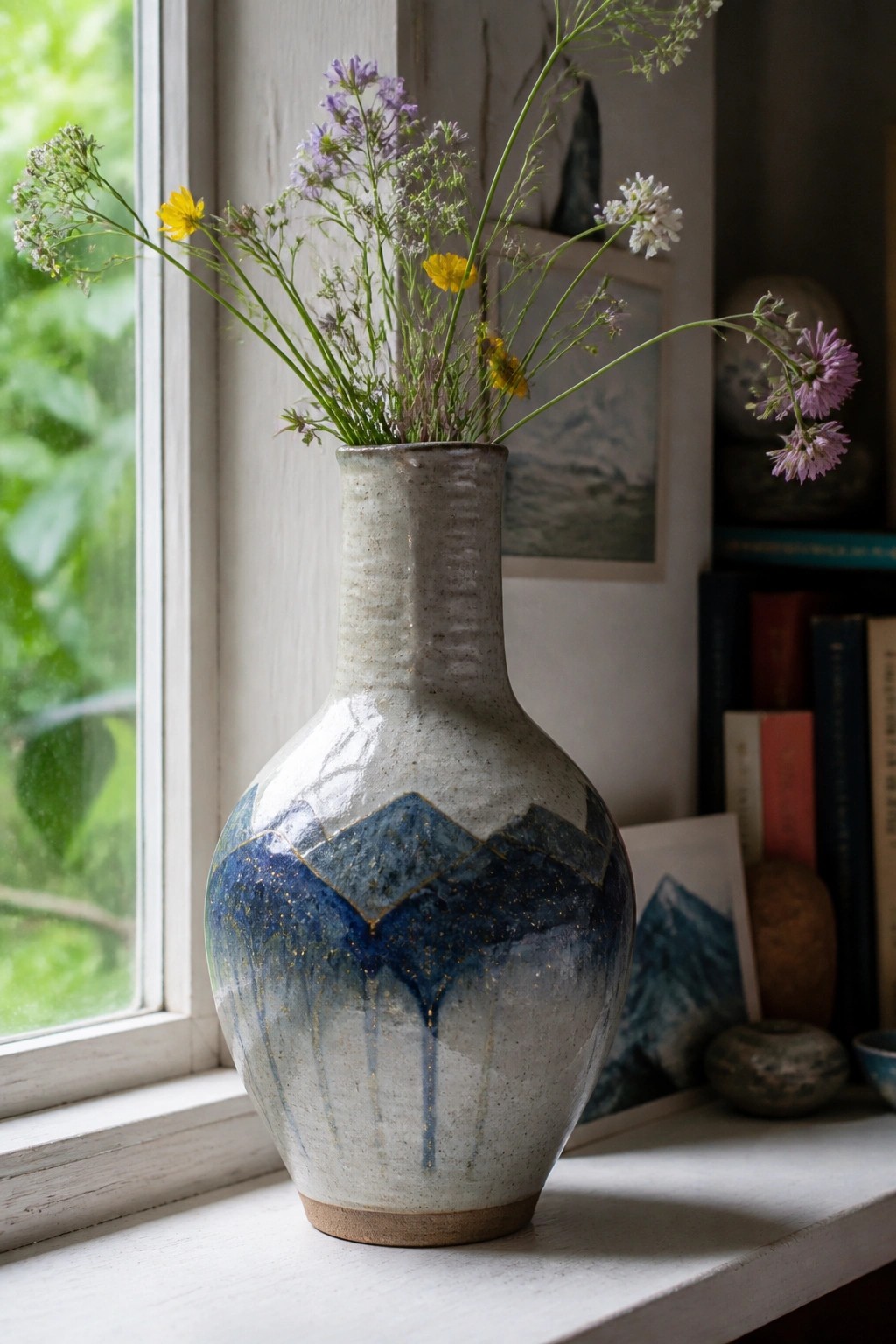
A tall ceramic vase with a bulbous body and tapered neck works well for a mountain scene painted in layers of blue glaze. The peaks are formed with horizontal bands that step down the middle section, outlined with fine gold lines to define the ridges. Speckled off-white glaze covers the top and bottom areas, with controlled drips running toward the base to suggest depth and distance. This creates a straightforward way to turn a standard vase shape into a nature-themed decor piece.
What makes this idea useful is how the mountain bands fit the curved surface without needing extra texture or carving. The same stepped peak layout could be simplified for a shorter vase or repeated around a bowl for a matching set. A piece like this works especially well as a holder for fresh flowers or dried stems on a shelf or table. The gold lines add contrast that shows up clearly in photos, which helps when sharing the project online.
Mountain Cutout Tea Light Holder
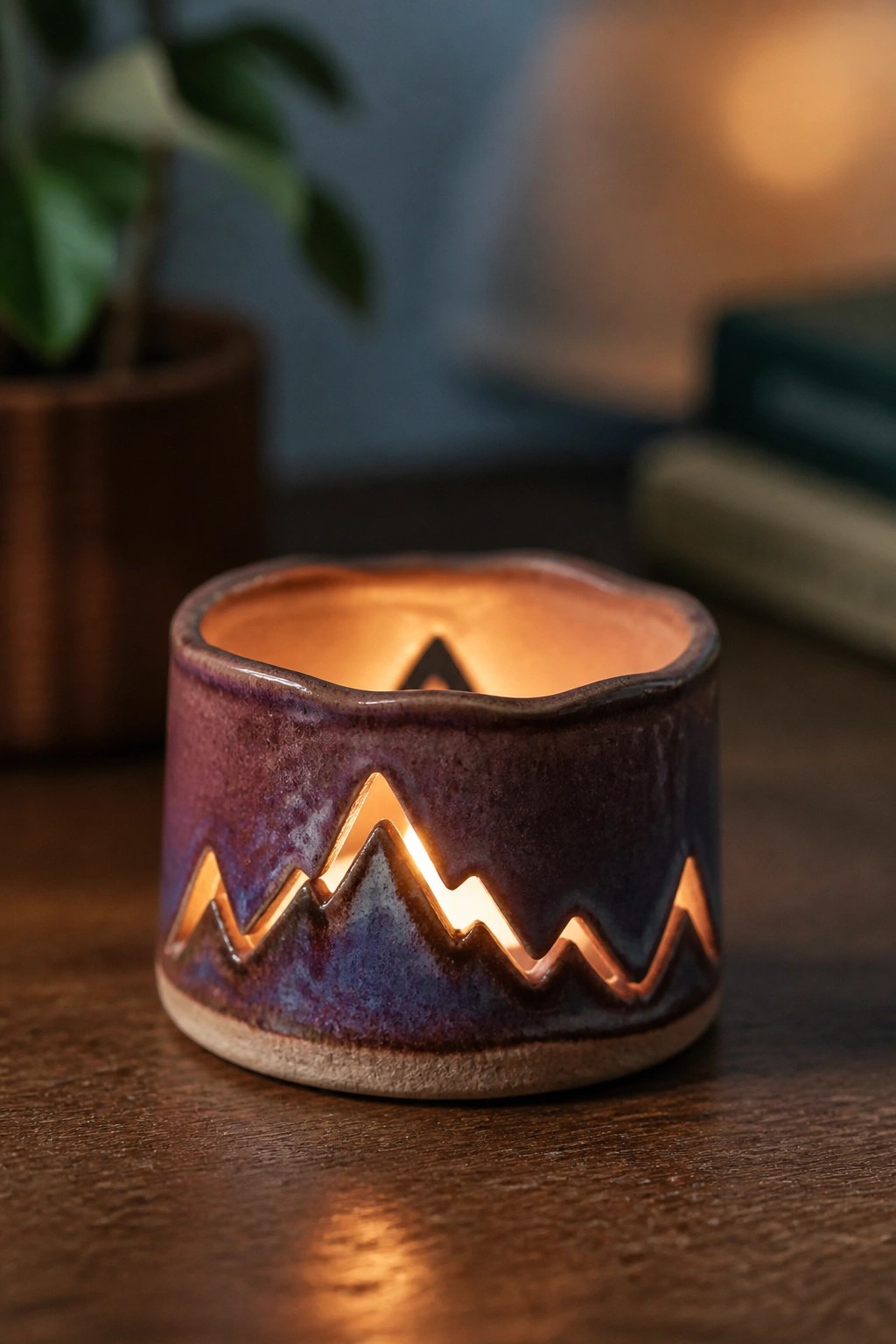
A small cylindrical tea light holder made from clay uses a continuous band of mountain peaks cut through the walls so light from inside glows outward. The form stays simple and low, with an open top that makes it easy to drop in a standard tea light. A glossy purple and blue glaze covers the exterior and pools slightly along the cut edges, which helps the mountain shapes stand out against the darker background.
The compact size lets this piece fit on a desk, shelf, or windowsill without crowding the space. You can adapt the cutout method to other outlines like trees or waves on the same basic cylinder shape. Scaling the height up a little turns the idea into a votive holder that gives off more light while keeping the same mountain motif. This approach works well for gifts because the finished piece needs only a battery tea light to function.
Blue Ocean Waves on a Ceramic Creamer
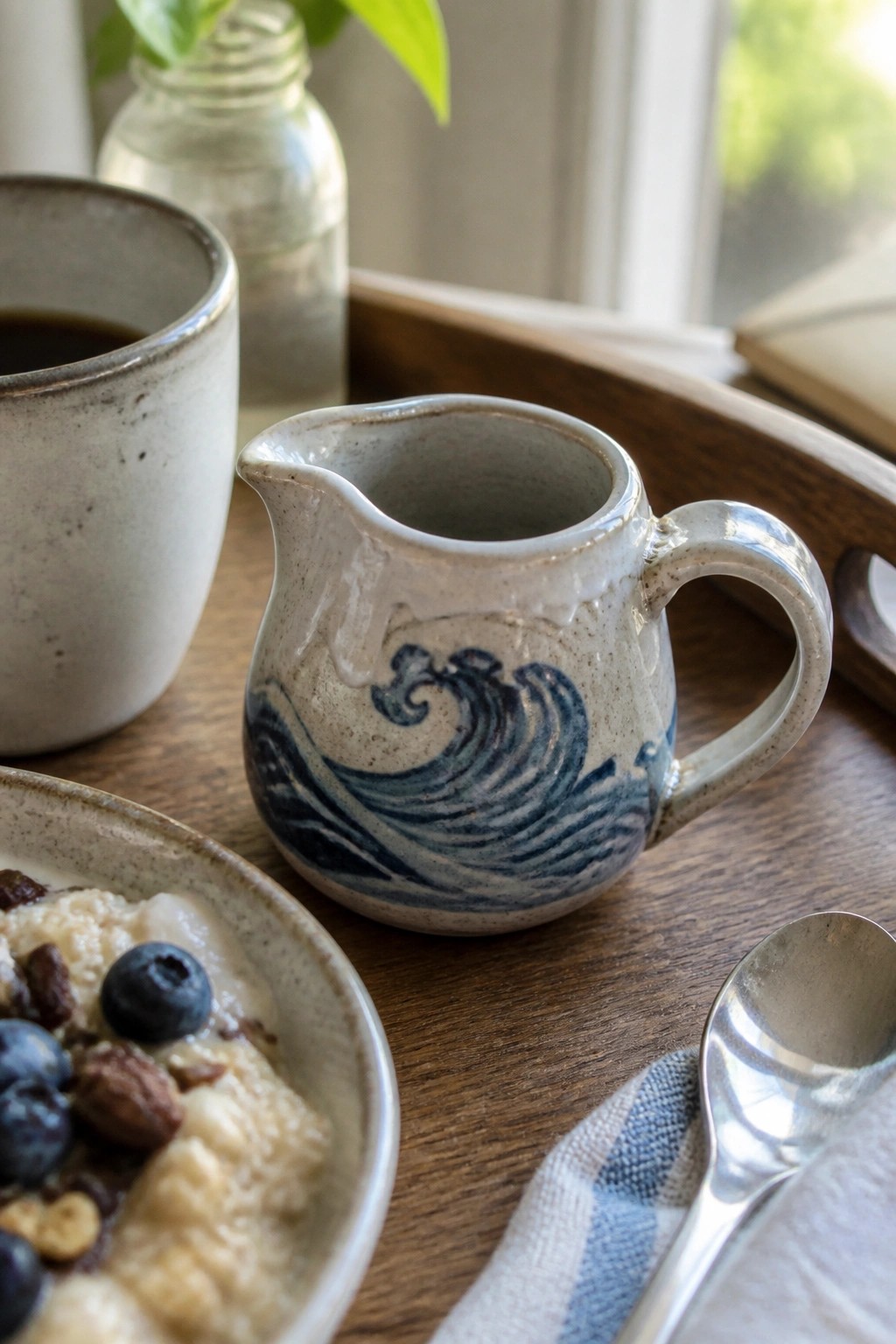
A small ceramic creamer with a spout and handle offers a straightforward surface for an ocean-themed painting project. The design uses layered blue brushstrokes to form repeating waves that wrap around the curved body, letting the shape itself help the pattern flow. This approach keeps the focus on the motif rather than complicated forms, and it suits any basic wheel-thrown or hand-built pitcher shape. The speckled background glaze keeps the waves visible while blending with natural table settings.
What makes this idea useful is how the wave pattern scales easily to other kitchen items like mugs or small bowls for a coordinated set. The compact size works well on a breakfast tray or as a gift that does not require much shelf space. You could paint just two or three waves for a quicker version or carry the design onto the handle to make the piece feel more complete. In everyday use the creamer stays functional while the painted motif gives it a clear nature theme that photographs well for sharing.
Hanging Ceramic Pocket with Painted Forest and Mushroom Details
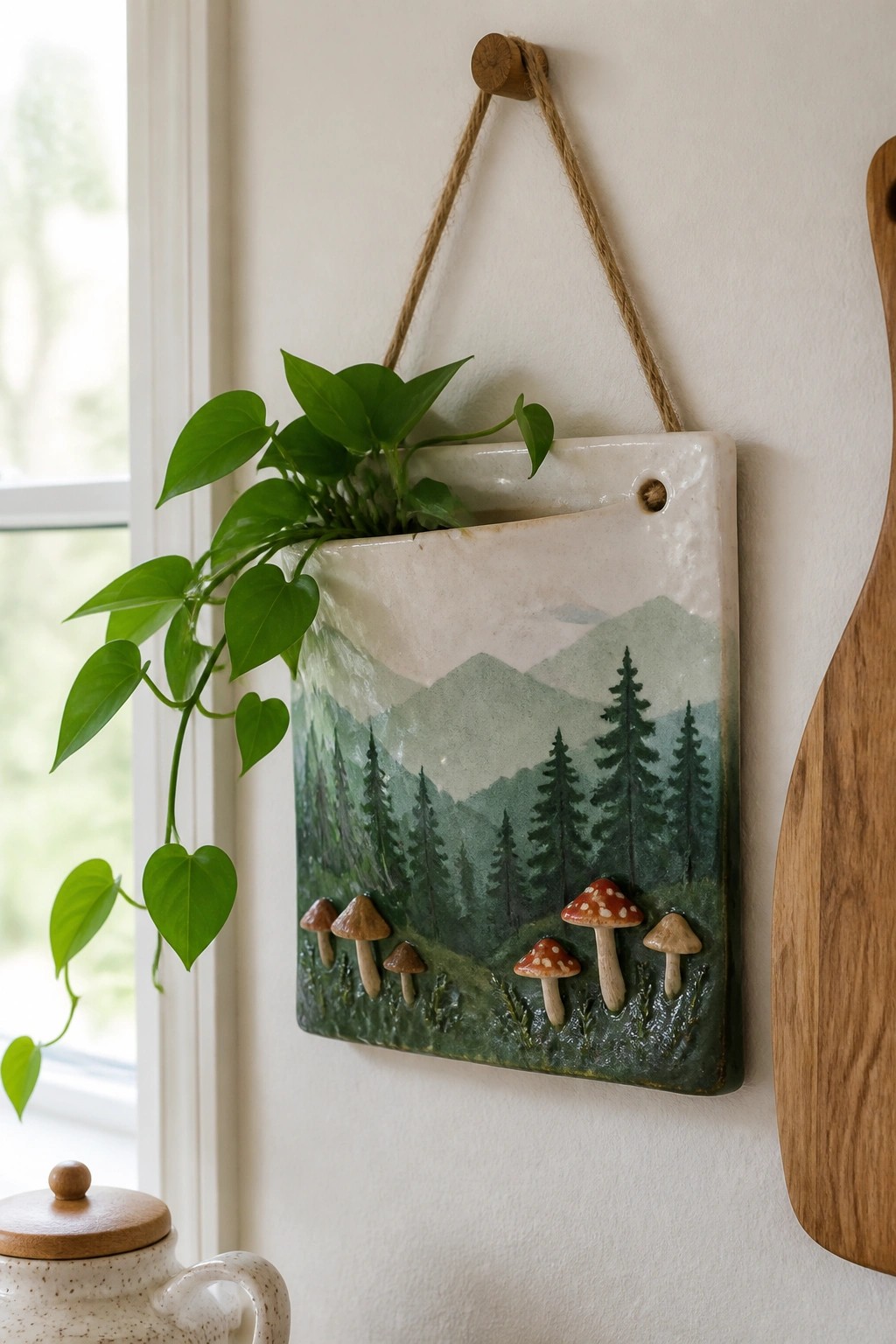
A rectangular ceramic wall pocket serves as a compact hanging planter when the front surface is painted with overlapping layers of green pine trees against a mountain backdrop. Adding raised clay mushrooms along the lower edge creates texture and depth without needing extra space. The pocket opening at the top holds a small plant while the overall shape stays flat enough to hang on a wall with cord or wire.
What makes this idea useful is how the pocket form keeps plants off counters yet still visible in a small room. You could simplify the design by painting the forest on a flat tile first, then try adding the mushrooms once you know the scale. The same layered tree technique and relief details would translate easily to a larger tray or a set of coasters if you want matching pieces. For a gift, this shape works well because it combines a functional planter with a clear nature motif that stands out in photos.
Mountain Peak Butter Dish
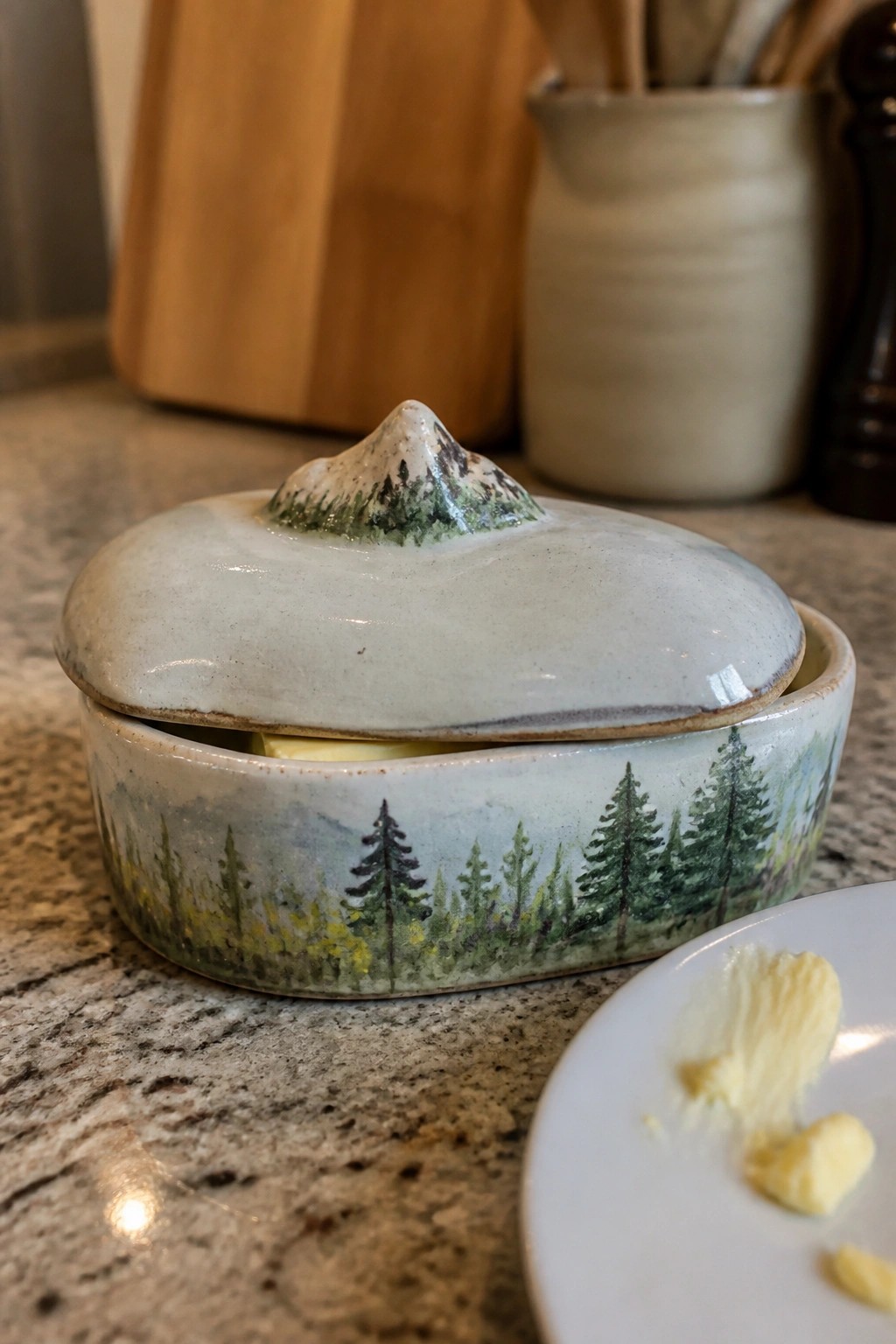
A covered butter dish works as a kitchen project when you paint a wraparound forest scene of trees and distant mountains on the oval base and sculpt the lid into a matching mountain peak. The painted trees use layered greens and earth tones to create a continuous landscape that flows around the sides, while the lid adds height with a raised peak and additional tree details. This combines simple underglaze painting with a basic sculpted element to turn a standard functional shape into a nature-themed piece.
What makes this idea useful is that the oval form holds a standard stick of butter and the lid keeps it covered on the counter or table. You could adapt the same tree line motif to a smaller jam pot or a rectangular cheese board by keeping the painted horizon consistent. The sculpted peak on the lid gives the project extra interest without requiring advanced carving skills, and the same approach scales easily to other lidded kitchen items.
Blue Wave Ceramic Soap Dish
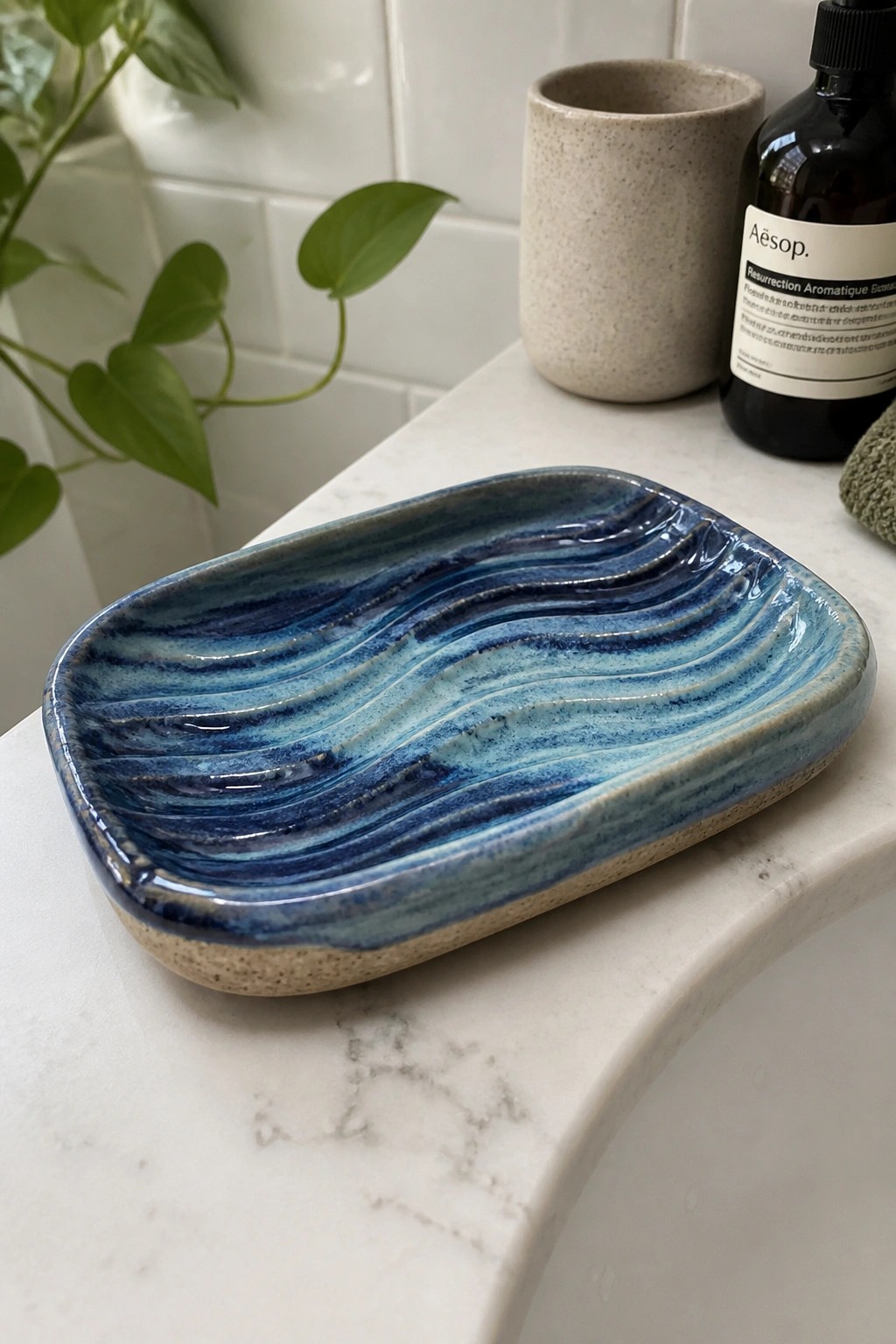
A small rectangular ceramic dish with softly irregular edges uses layered blue glazes in horizontal wavy lines to suggest moving water. The glaze application creates natural variation in tone and texture across the surface while the low profile keeps the focus on the pattern. This approach suits a bathroom tray or soap holder because the finished surface handles moisture well and needs no additional carving.
The compact size works on a sink edge or narrow shelf and can hold soap, a sponge, or small bathroom items without taking much space. You can repeat the same wave glazing on a longer tray or switch the blues for greens if you want a forest version instead. For gifts this shape is easy to make in batches since it only needs a simple slab and a few glaze passes.
Forest Tree Utensil Holder
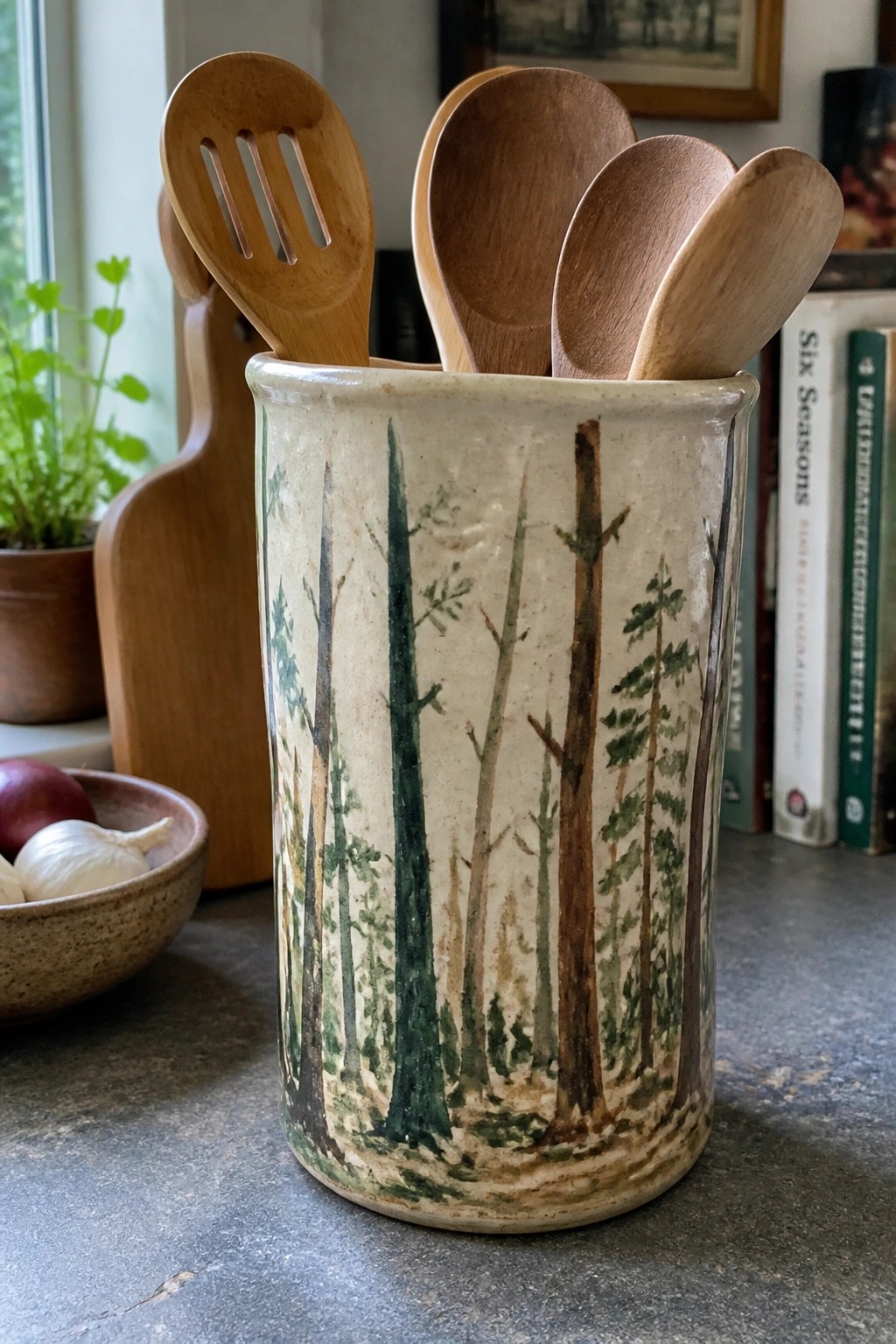
A tall cylindrical ceramic crock painted with a band of evergreen trees in muted greens and browns creates a straightforward kitchen holder for wooden spoons and spatulas. The design keeps the trees vertical and spaced around the form so the motif reads clearly without wrapping too tightly or leaving large empty gaps. This turns a basic storage piece into a nature-themed item that fits the forest category for pottery projects.
What makes this idea useful is how the height and diameter already handle everyday kitchen tools while the tree motif adds interest that still works on a busy counter. You could simplify the same idea by using fewer colors or painting only the upper half of a shorter crock if you want a faster version. In a kitchen this shape keeps utensils accessible and pairs easily with other forest or mountain pieces without needing extra space.
Frequently Asked Questions
1. What paints and supplies work best for creating mountain ocean and forest designs on pottery? Acrylic paints designed for ceramics offer vibrant colors and good adhesion for these themes. Start with a base coat of white or light blue for oceans and skies then layer in greens for forests and earthy tones for mountains. Use fine detail brushes for tree lines and wave patterns along with sponges for textured effects like foliage or rocky peaks. Many of the 21 ideas suggest sealing with a clear ceramic glaze afterward for durability.
2. How can beginners paint realistic forest scenes without advanced skills? Focus on simple layering techniques such as dabbing dark green for background trees and adding lighter shades for highlights on trunks and leaves. The ideas often recommend starting with a silhouette of pine trees against a lighter background then adding details like small animals or paths. Practice on paper first to build confidence and use stencils for straight mountain ridges if freehand feels tricky.
3. What techniques help achieve depth in ocean wave paintings on curved pottery surfaces? Apply a gradient from deep blue at the bottom to lighter turquoise near the top then use white paint with a dry brush for foam crests and splashes. Curve your strokes to follow the pottery shape for a natural flow. Several ideas incorporate small details like seashells or distant horizons to enhance the three dimensional feel without needing professional tools.
4. Are these nature themed ideas suitable for different pottery items like mugs plates or vases? Yes the designs adapt well across items. Mountains and forests suit taller vases or mugs with vertical compositions while oceans work beautifully on wide plates or bowls. Adjust scale by using larger brushes for big surfaces and finer ones for details on smaller pieces. The 21 suggestions include variations that fit both functional and decorative pottery.
5. How do you seal and care for finished pottery to protect the painted nature scenes? Apply two thin coats of food safe ceramic sealant after the paint dries fully then bake according to the product instructions if required. Hand wash gently with mild soap to preserve colors and avoid dishwashers for longevity. This step ensures the mountain ocean and forest motifs stay vibrant through regular use.

Pottery Path is my cozy corner of the internet where I share clay ideas, pottery inspiration, and simple projects you can recreate at home. I love exploring everything from air dry clay to handbuilt pottery to cute minis that brighten your day. My goal is to make clay crafting feel easy, fun, and welcoming for anyone who wants to try it.
You will find beginner friendly tutorials, creative pottery painting ideas, and lots of warm inspiration for slow and happy crafting. If you enjoy hands on creativity, this space will feel like home.