
I enjoy making ceramic garden pieces because I can build them one section at a time and let each part show a little of my style.
Garden totems are a fun way to use simple shapes, colors, and textures without needing a complicated plan.
I’ve gathered 18 ideas here that can help you find a design that feels right for your space.
You can adapt the pieces as you go and make a totem that feels like your own.
A Shallow Ceramic Drip Tray for a Garden Totem
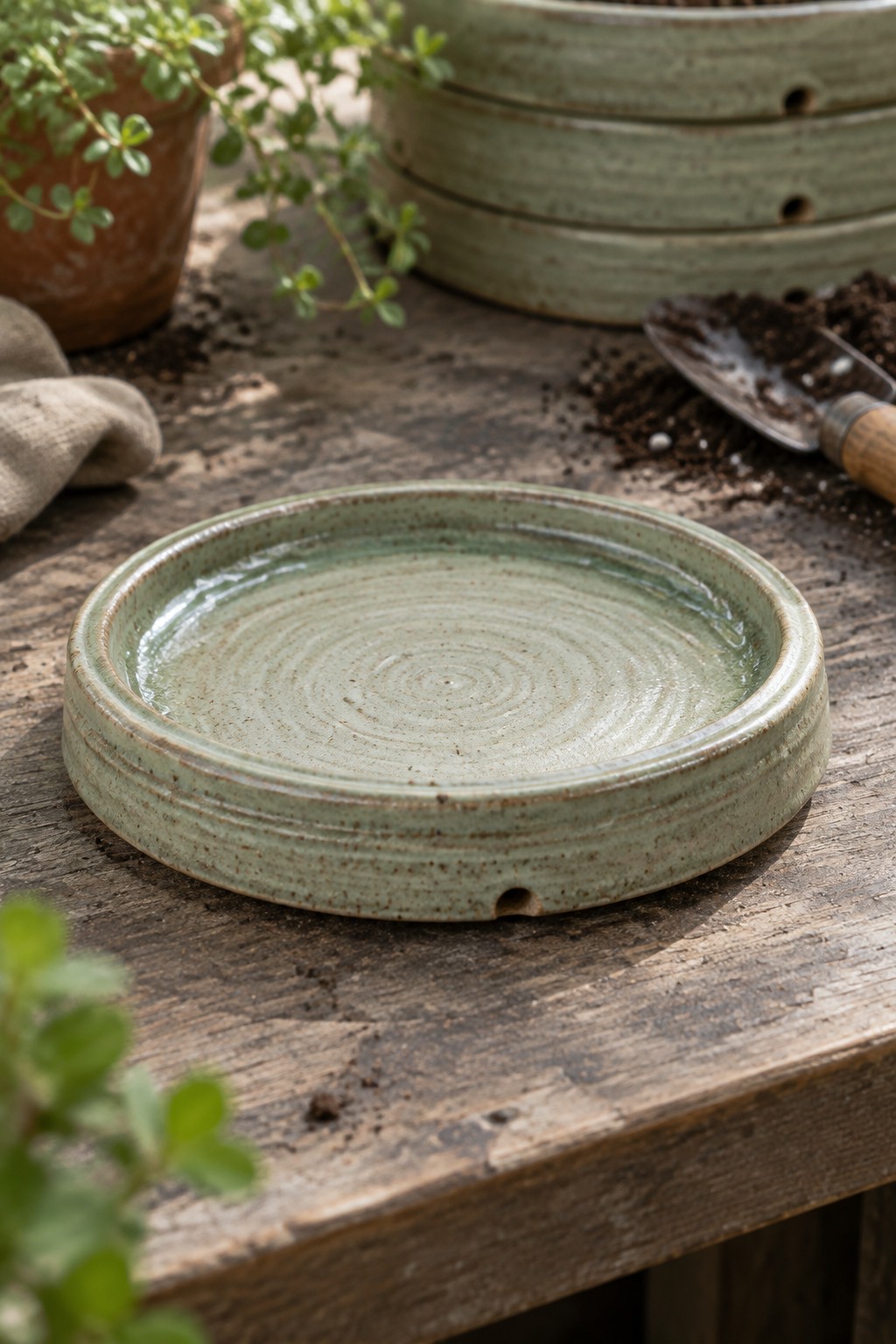
A handmade ceramic drip tray can serve as a sturdy base for a garden totem, catching excess water and helping protect the surface beneath it. Its low, round shape and raised rim keep the profile simple, while the muted green glaze and speckled finish give it a natural look that suits outdoor plant displays.
The broad, shallow form can be adapted to fit the bottom section of a stacked totem, with the size adjusted to match the pieces above it. Use a similar glaze across the stack for a coordinated look, or make the tray a contrasting color to define the base; just make sure the finished dimensions and drainage needs suit its intended use.
Face Planter Totem with a Removable Top

A handmade ceramic garden totem can double as a planter by stacking a face-shaped pot over a separate pedestal section. The blue-and-cream glaze and simple painted features make the upper planter stand out, while the two-part form gives the project a clear section-by-section structure.
Use the face planter as a focal point among outdoor succulents, and vary the painted features or glaze colors to suit your garden. The stacked sections can also be adapted into a simpler totem with plain pots, sculpted patterns, or another decorative motif, making it easy to build a coordinated set at different heights.
Carved Leaf Ring for a Garden Totem

A handmade ceramic ring can serve as a decorative spacer or finishing piece in a garden totem, with its open center fitting around a support rod. The low, wide form and carved leaf pattern give it visual interest from the side, while the earthy clay and muted green details suit an outdoor display.
Use the ring between larger stacked pieces to add a break in height and introduce a band of texture. You could simplify the pattern to a few broad leaves, or change the motif to match flowers or colors used elsewhere in the totem. Its clear shape and carved detail make it a distinctive element to save when planning a coordinated garden project.
Glazed Ceramic Birdhouse for a Garden Totem

A small ceramic birdhouse makes a distinctive garden accent, with its pitched roof, circular entrance, and warm golden glaze giving the familiar form clear shape and contrast. As a decorative pottery project, it can be made as a standalone garden object or adapted as the upper section of a ceramic totem.
The raised roof and broad base help the birdhouse read clearly when displayed outdoors, while the speckled glaze can be swapped for a solid color or painted pattern to suit a garden’s palette. For a totem, keep the opening as a visual detail and stack the birdhouse above simpler forms so it remains the focal point.
A Handmade Ceramic Saucer for a Garden Totem
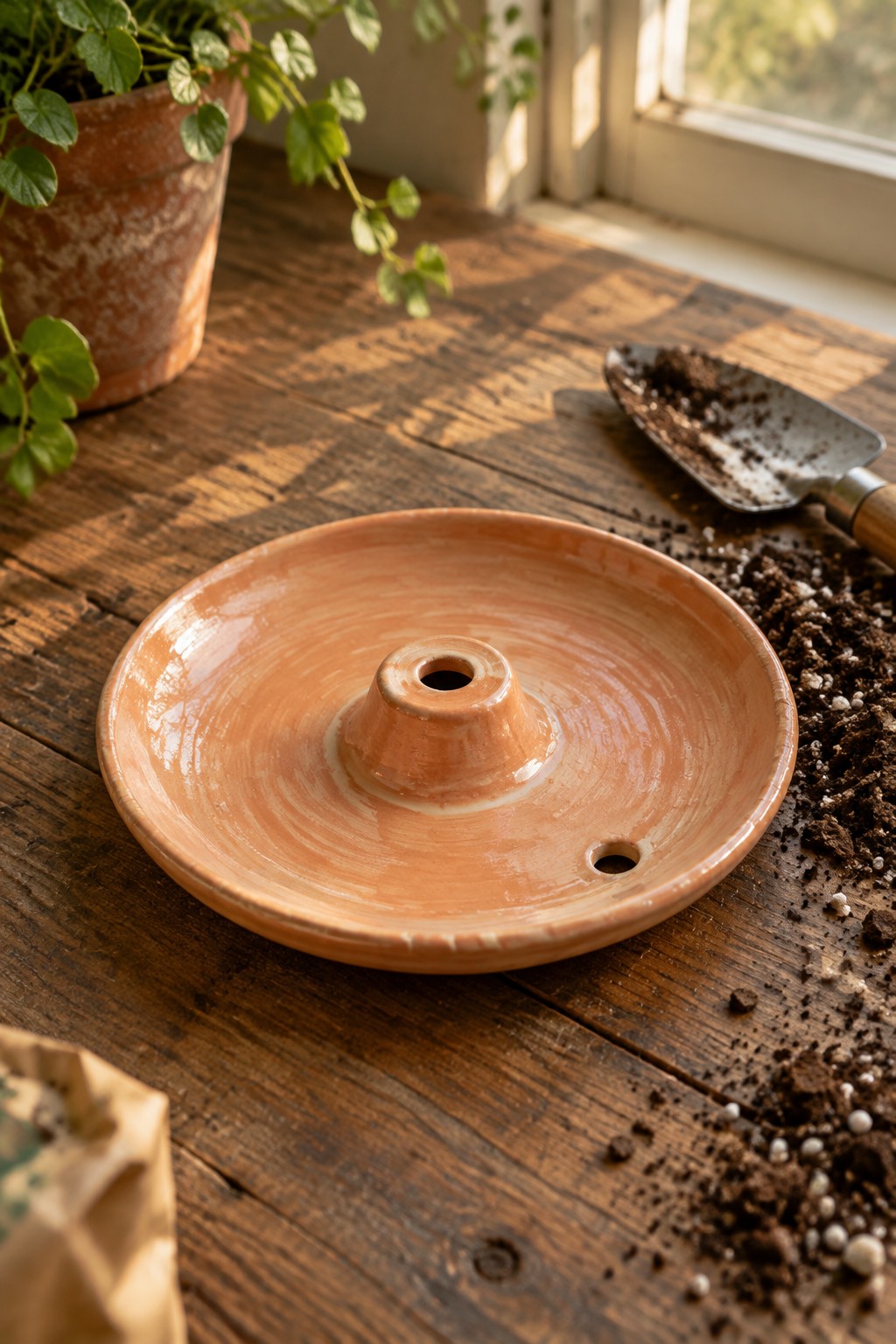
A wide ceramic saucer with a raised center and a drainage hole can serve as a sturdy base or connector for a garden totem. Its warm, glossy terracotta-colored surface keeps the form simple, while the raised hub gives it a clear spot to balance or attach another section.
For an outdoor totem, adapt the saucer’s diameter and center opening to fit the pieces you plan to stack, and make sure the finished assembly can drain after rain. The same handmade shape could also become a standalone plant saucer or a small potting-work tray, making it useful even when it is not part of the totem.
Fluted Ceramic Totem Sections with a Recessed Connector

A fluted ceramic garden totem can be built from stacked cylindrical sections, with a hollow opening in the top piece and a recessed connector that helps the pieces sit together. The dark, weathered finish and repeated vertical grooves give the column a unified look while keeping the handmade sections distinct.
The hollow center and matching shapes make this design useful as a modular garden ornament that can be rearranged or expanded with additional sections. Try varying the height, groove spacing, or glaze color to suit a patio or planting bed, and keep the join simple if you want the pieces to be easier to stack and move.
Tall Spiral-Textured Ceramic Garden Totem

A tapered ceramic garden totem can be built as a tall, freestanding form with a softly irregular spiral texture worked around its sides. The muted green glaze and warm earthy streaks bring out the handmade surface, making this a sculptural garden decor project rather than a planter or functional vessel.
The elongated shape can stand on its own as a focal point along a gravel path or among low plants, and the spiral texture gives the surface interest from different angles. Adapt the idea with shorter stacked sections, a narrower color palette, or a few coordinated forms to suit a smaller garden space.
A Hand-Painted Ceramic Bowl with a Recessed Center

A shallow, footed ceramic bowl with a recessed center makes a useful garden table piece for catching small items or holding a votive candle. Its cream glaze and blue leaf pattern give the handmade pottery a clear decorative style, while the raised foot lifts the bowl off the table and helps define its shape.
Use a bowl like this as a candle holder, a small dish for garden tools or keys, or a display piece beside a planter. The blue motif could be changed to simple dots or leaves, and the same form could be made shallower for a ring dish or deeper for a small planter; its bold painted pattern also gives it a strong, easy-to-read look in a project roundup.
A Ceramic Planter with a Built-In Moss Pocket

A handmade ceramic planter can pair a roomy central pot with a smaller sculpted pocket for moss or a trailing plant. The cream glaze, green drips, and botanical details make the asymmetrical form read as both a plant container and a decorative garden piece.
The built-in pocket gives trailing stems a place to spill over the side, so this design suits a bright windowsill or plant shelf. Adapt it with a simpler painted leaf motif, or make the smaller pocket shallow enough for moss while keeping the main chamber open for a compact plant.
A Garden Totem Built from Patterned Ceramic Tiles

A patterned ceramic tile totem is made by arranging decorated handmade tiles into a vertical garden feature, with plain clay sections or spacers between the colorful pieces. Simple leaf, flower, dot, and zigzag motifs keep the design varied while a shared square shape makes the sections feel like one coordinated project.
The tile-by-tile format makes it easy to customize a totem for a garden bed or large planter, choosing colors and motifs that suit the space. You could simplify the designs to painted dots or stripes, or make each tile a different size and pattern; the mix of handmade decoration and repeating sections also gives the project clear visual appeal in a Pinterest garden craft collection.
A Glazed Leaf Dish as a Garden Totem Accent
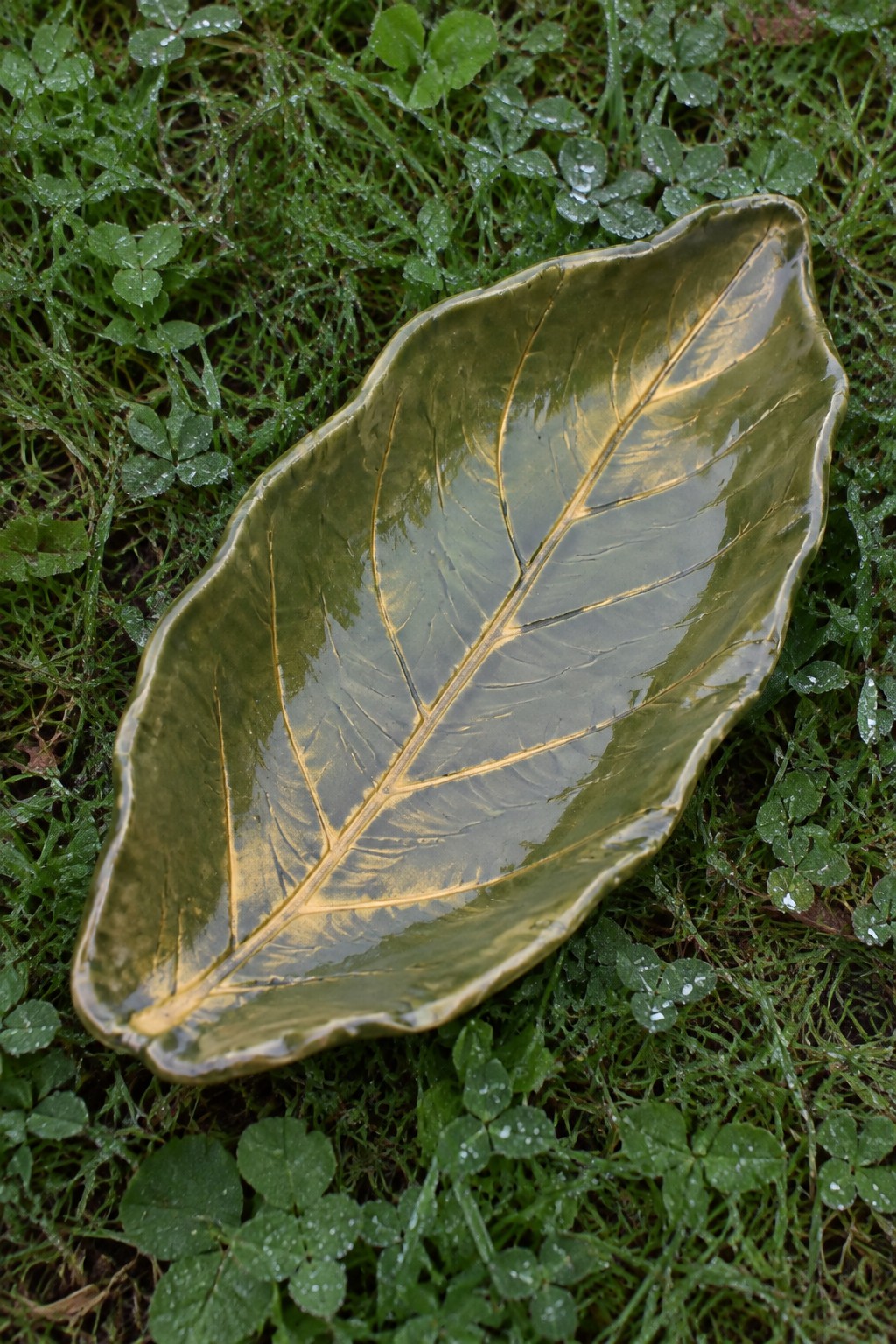
A handmade ceramic leaf dish can serve as a shallow topper or accent piece for a garden totem. Its broad, tapered shape and raised golden veins make the leaf form easy to recognize, while the muted green glaze fits naturally among garden plants.
Use it as a small catchall or decorative accent on a covered patio, or adapt the leaf outline into a flatter plaque for a totem section. The raised vein pattern can be simplified into a few carved or painted lines, and a different glaze color can make the same botanical design stand out against foliage.
A Lidded Ceramic Bowl for a Garden Totem
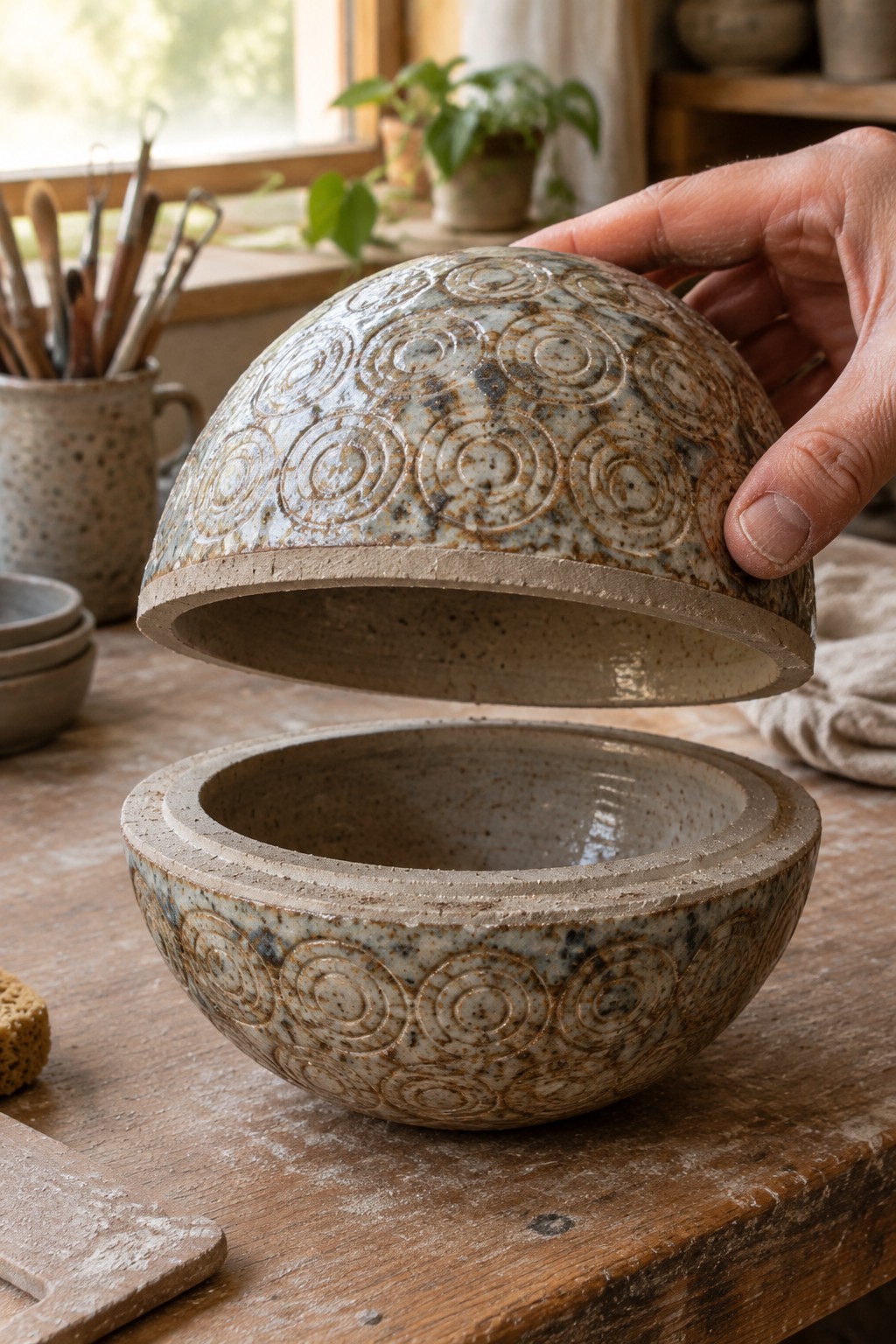
A two-piece ceramic bowl with a domed lid could serve as a sculptural cap or enclosed section in a garden totem. The rounded form and repeating circular pattern give it visual weight, while the earthy, speckled glaze keeps the decoration grounded in a garden setting.
The separate lid makes the shape easy to adapt into a covered planter section or a decorative topper, though it would need a stable way to attach to the rest of a totem outdoors. Try simplifying the pattern to a few carved rings, or repeat the motif across several sections to tie a taller stack together; the visible join and handmade texture also make the construction process clear in a Pinterest project image.
A Pierced Ceramic Bell for a Garden Totem
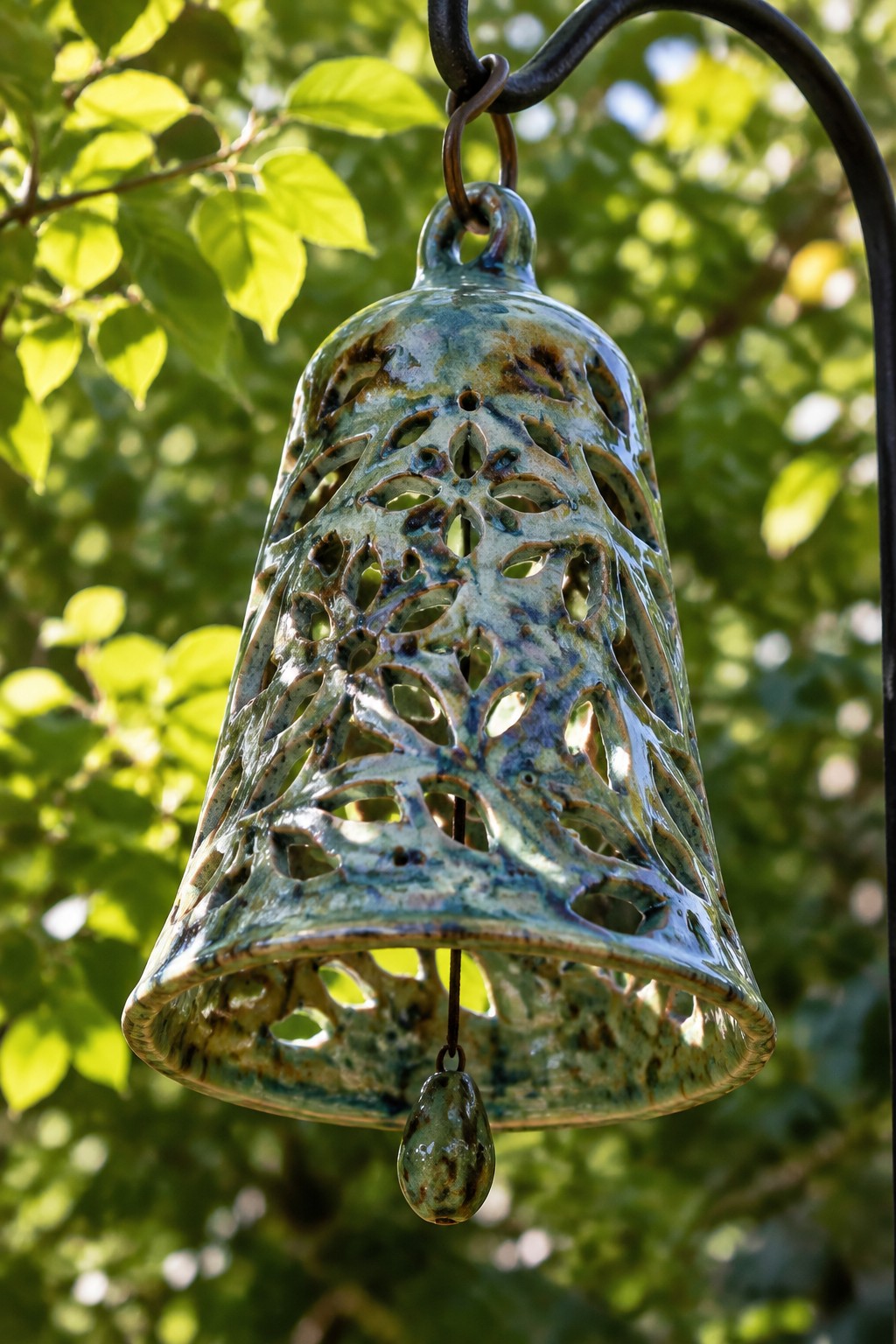
A pierced ceramic bell can serve as a decorative top or hanging accent for a garden totem. Its flared shape, cutout leaf pattern, and mottled blue-green glaze give the piece visual interest while letting light and the garden show through the openings.
Use the bell as a focal point near the top of a totem, or hang it separately from a sturdy garden hook where it can move freely. The openwork pattern could be simplified into a few larger cutouts, or adapted with a different motif and glaze to match the other sections of your totem.
A Ceramic Garden Totem Base with Drainage Openings
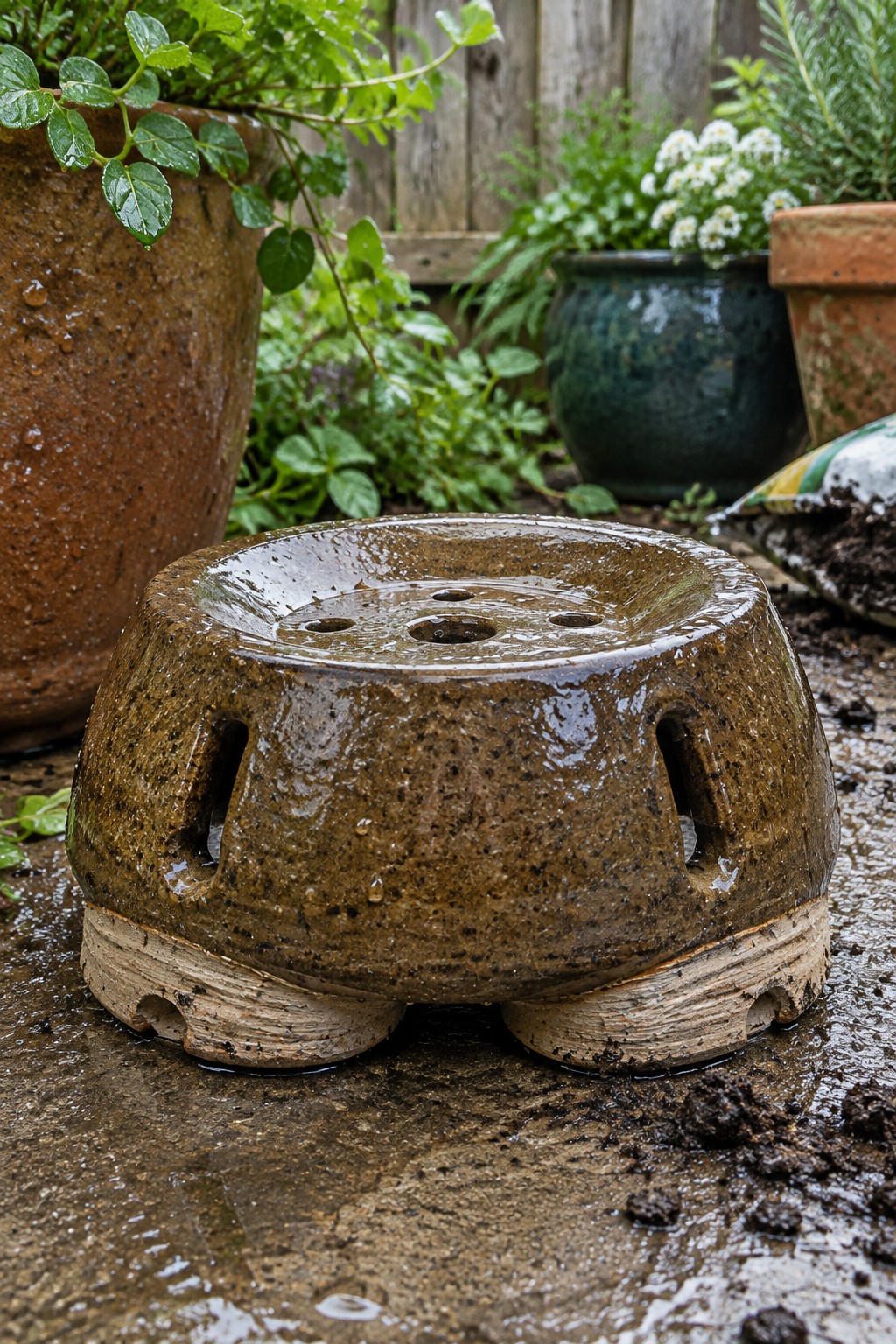
A handmade ceramic garden totem base can lift a stack of decorative sections off the ground while letting water drain through its top and sides. Its low, rounded form and earthy speckled finish make it a sturdy-looking foundation that suits a garden decor project.
Use this shape beneath stacked ceramic pieces to keep the totem raised above wet soil or paving. The openings can be adjusted to suit the connector or drainage needs, and a simpler version could become a small outdoor riser for a planter.
An Open-Lattice Ceramic Sleeve for a Garden Totem
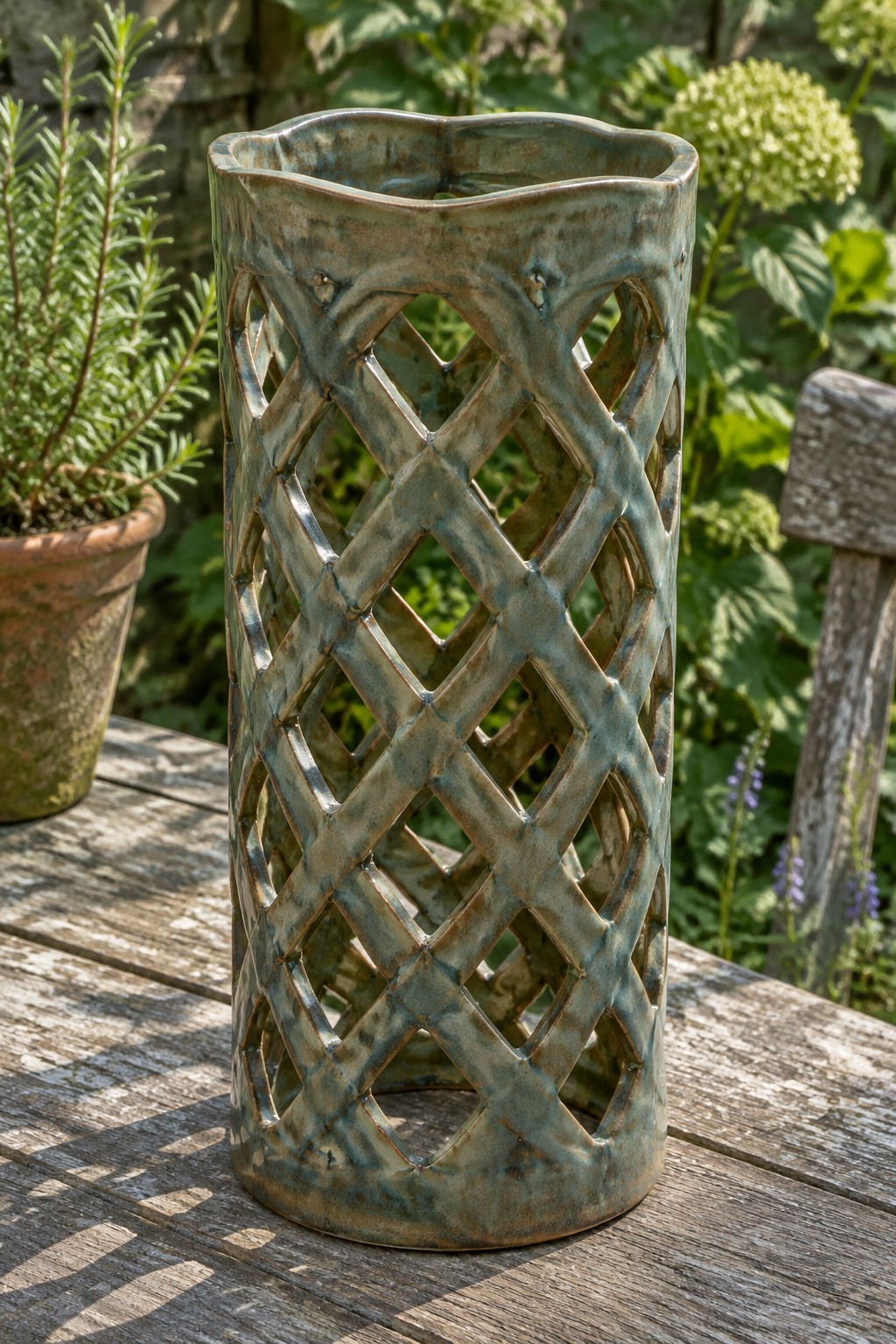
A cylindrical ceramic sleeve with a crisscross lattice can serve as a decorative section of a garden totem. Its open pattern creates depth and lets light and greenery show through, while the blue-green, weathered-looking glaze contrasts with the clean geometry. The broad solid rim and base frame the cutout design and help the piece read as a sturdy garden accent.
The openwork would stand out among leafy plants or as a focal section between simpler totem pieces. To adapt the idea, make the openings larger or fewer for a simpler pattern, or change the glaze to coordinate with nearby pots. Keep the solid top and bottom edges in mind when planning how this section will connect to the rest of the totem.
Smiling Ceramic Lidded Jar for a Garden Totem
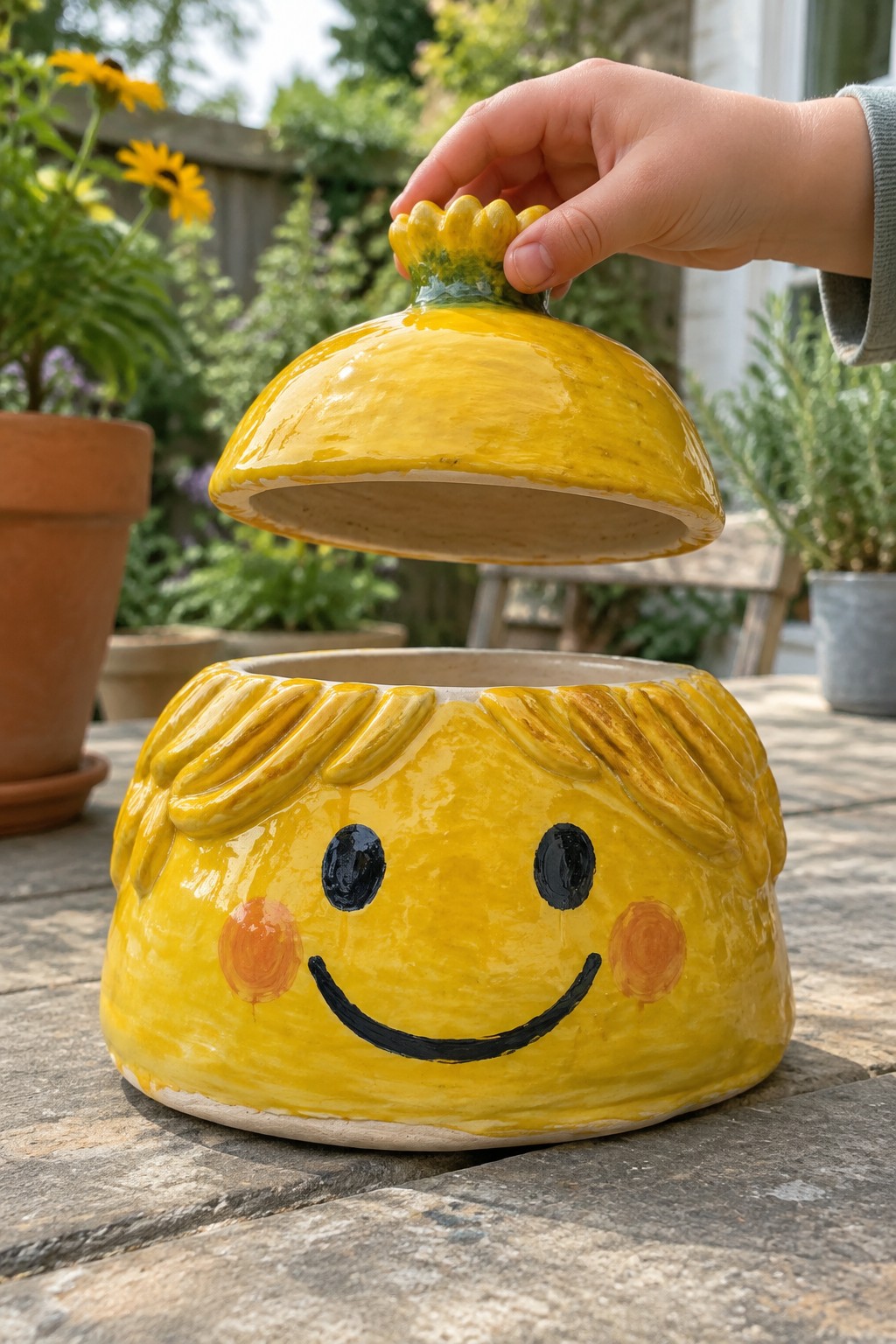
A handbuilt ceramic jar with a removable lid can become a playful garden totem section or topper. Its rounded, almost face-shaped body, sculpted hair detail, and bright yellow glaze make the form easy to recognize, while the painted eyes and smile give it a clear focal point.
Use a piece like this as a decorative accent in a sheltered garden, on a patio, or as part of a stacked totem, securing it so it stays stable outdoors. Adapt the idea with a simple painted face, leaf or flower details, or a different lid shape, and keep the opening useful for storing small garden items if the piece is made for that purpose.
Frequently Asked Questions
A ceramic garden totem is a vertical sculpture made by stacking ceramic elements, such as rings, bowls, tiles, or sculpted forms. Building it section by section means creating or choosing individual pieces, then assembling them around a sturdy center support. This approach makes it easier to plan the shape, add color and texture, and replace or rearrange parts if needed.
You’ll need ceramic pieces, a stable base, and a support method suited to your design. Common options include fired clay components, outdoor-rated ceramic dishes, a metal rod, or a pipe set into a weighted base. You may also need a drill with a ceramic or masonry bit, protective eyewear, gloves, and exterior-grade adhesive if the design calls for it. Check that every piece is rated for outdoor use, especially in areas with freezing winters.
Start with a broad, heavy base and place the totem on firm, level ground. A central rod or pipe can help align the sections and reduce wobbling. If the sculpture is tall or exposed to strong wind, anchor the support in concrete or another suitable foundation. Keep heavier pieces near the bottom, and test the assembled totem gently before leaving it unattended.
Not necessarily. You can build a totem from ready-made, fired ceramic pieces, such as outdoor-rated tiles or dishes, without firing clay yourself. If you want to sculpt custom parts, you’ll need access to a kiln or a suitable ceramics studio. Air-dry clay is generally not a reliable choice for a permanent outdoor sculpture unless its manufacturer specifically states that it is weatherproof.
Choose frost-resistant, outdoor-rated ceramic and avoid pieces with cracks or weak edges. Use a secure support system, and make sure water can drain rather than collect inside bowls or hollow forms. In freezing climates, water trapped in a piece can expand and cause cracking, so bring vulnerable components indoors for winter or cover them with a breathable shelter. Check the totem periodically for loose sections, chips, or movement in the base.

Pottery Path is my cozy corner of the internet where I share clay ideas, pottery inspiration, and simple projects you can recreate at home. I love exploring everything from air dry clay to handbuilt pottery to cute minis that brighten your day. My goal is to make clay crafting feel easy, fun, and welcoming for anyone who wants to try it.
You will find beginner friendly tutorials, creative pottery painting ideas, and lots of warm inspiration for slow and happy crafting. If you enjoy hands on creativity, this space will feel like home.