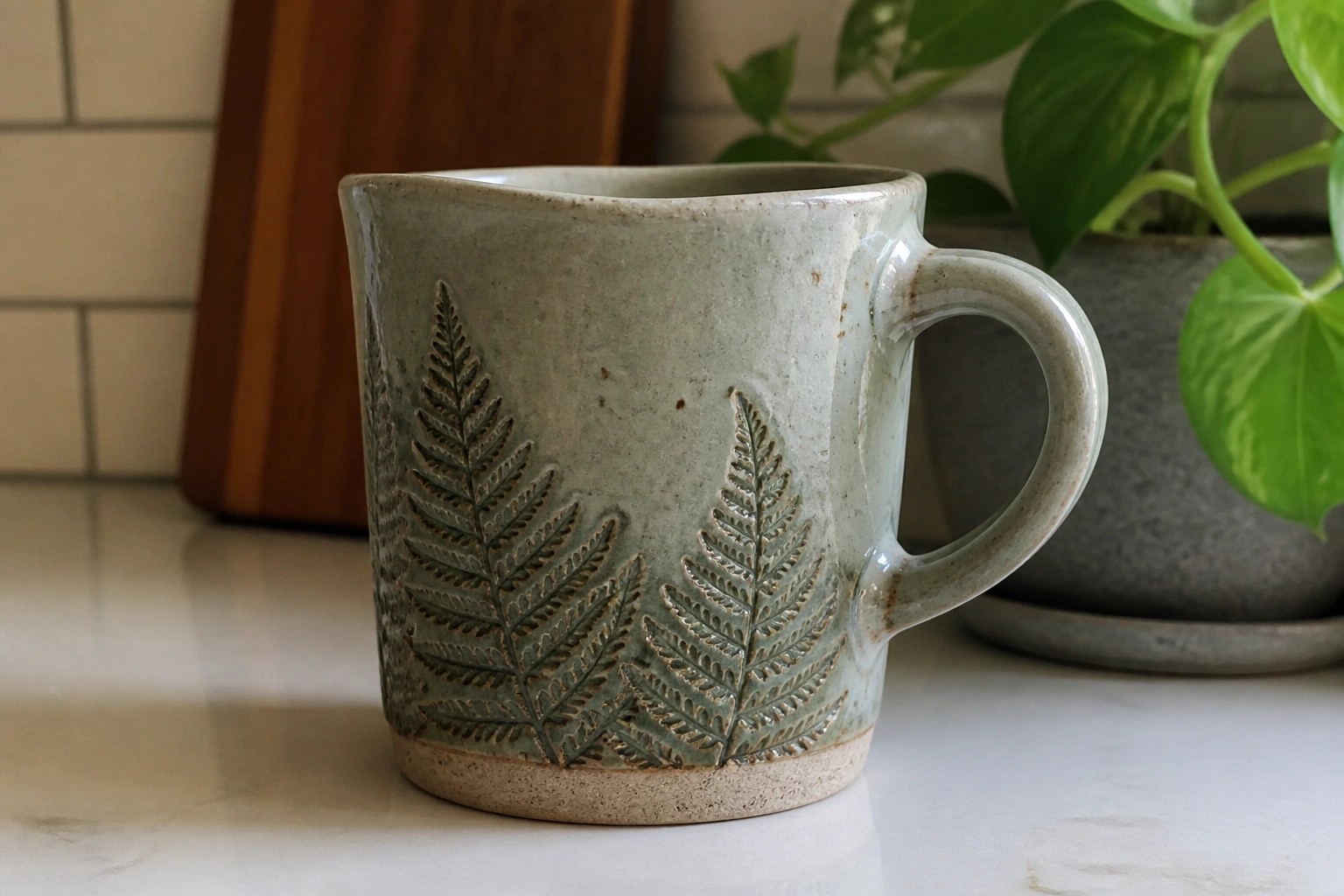
I have been pressing leaves and flowers into clay for a while now because it adds a nice texture without much fuss.
My garden usually supplies what I need and I like how the shapes show up after the pieces are fired.
Some turn out clearer than others depending on the plant and the pressure used.
These are a few ideas I have tried or come across that seem practical for anyone working with pottery at home.
They might be worth testing if you already have some clay and basic tools around.
Pressed Fern Mug with Two-Tone Finish
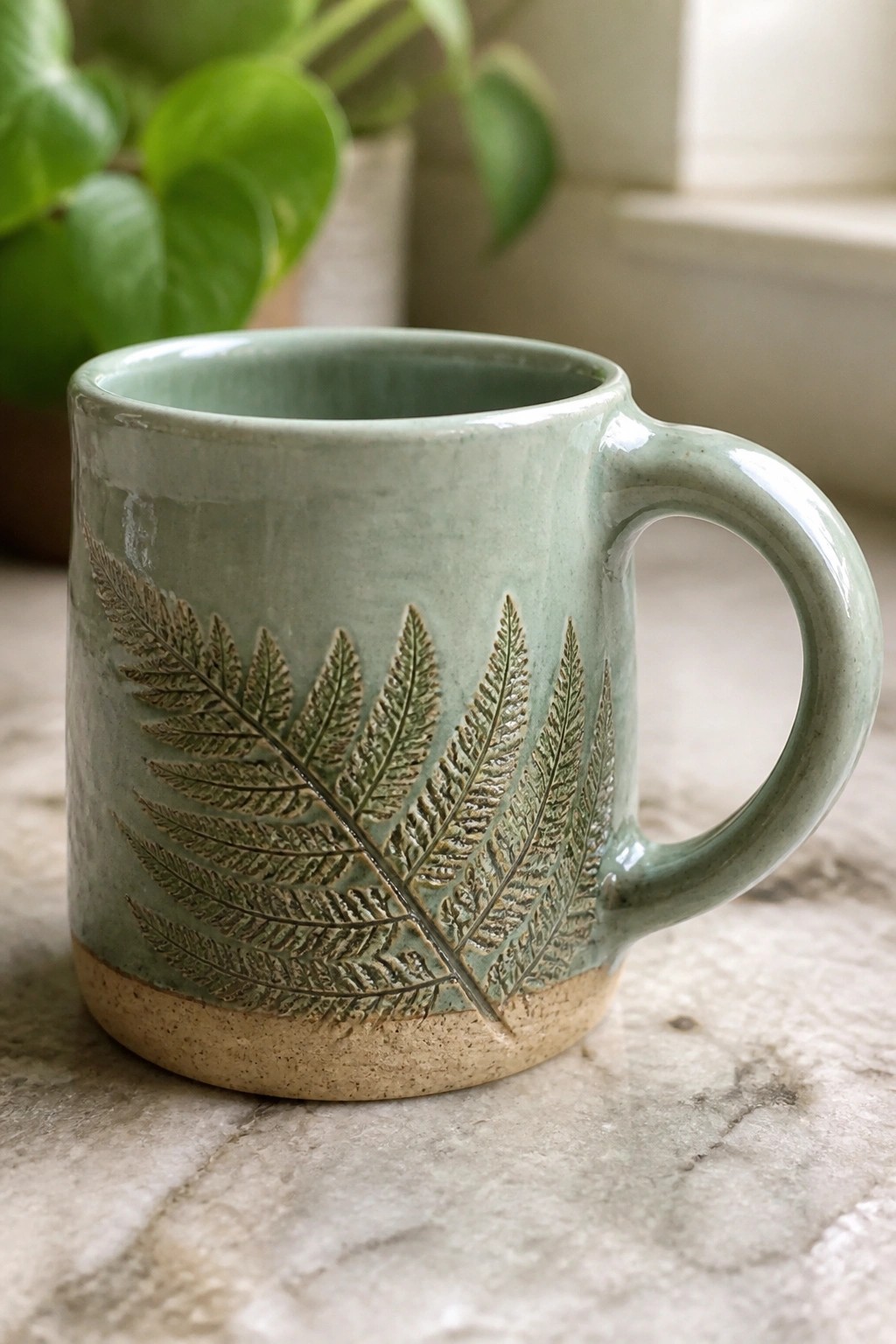
A basic mug shape works well for this idea because the straight sides give plenty of room for multiple fern fronds pressed into the clay. The impressions stay raised enough to catch glaze unevenly, creating natural color shifts without extra painting or carving. Leaving the base unglazed shows the raw clay and gives the piece a clear break between the botanical pattern and the foot.
What makes this idea useful is how simple it is to adapt the same pressing method to different leaf sizes or even mix in other flat botanicals like eucalyptus. The mug shape itself is practical for daily use while the exposed clay band at the bottom helps the design read as intentional rather than busy. You could scale the same technique down for small cups or apply it around the rim of a larger bowl if you want more surface area. For Pinterest, the clear plant detail combined with the simple color split makes the project easy to recognize in a thumbnail.
Pressed Maple Leaf Shallow Bowl
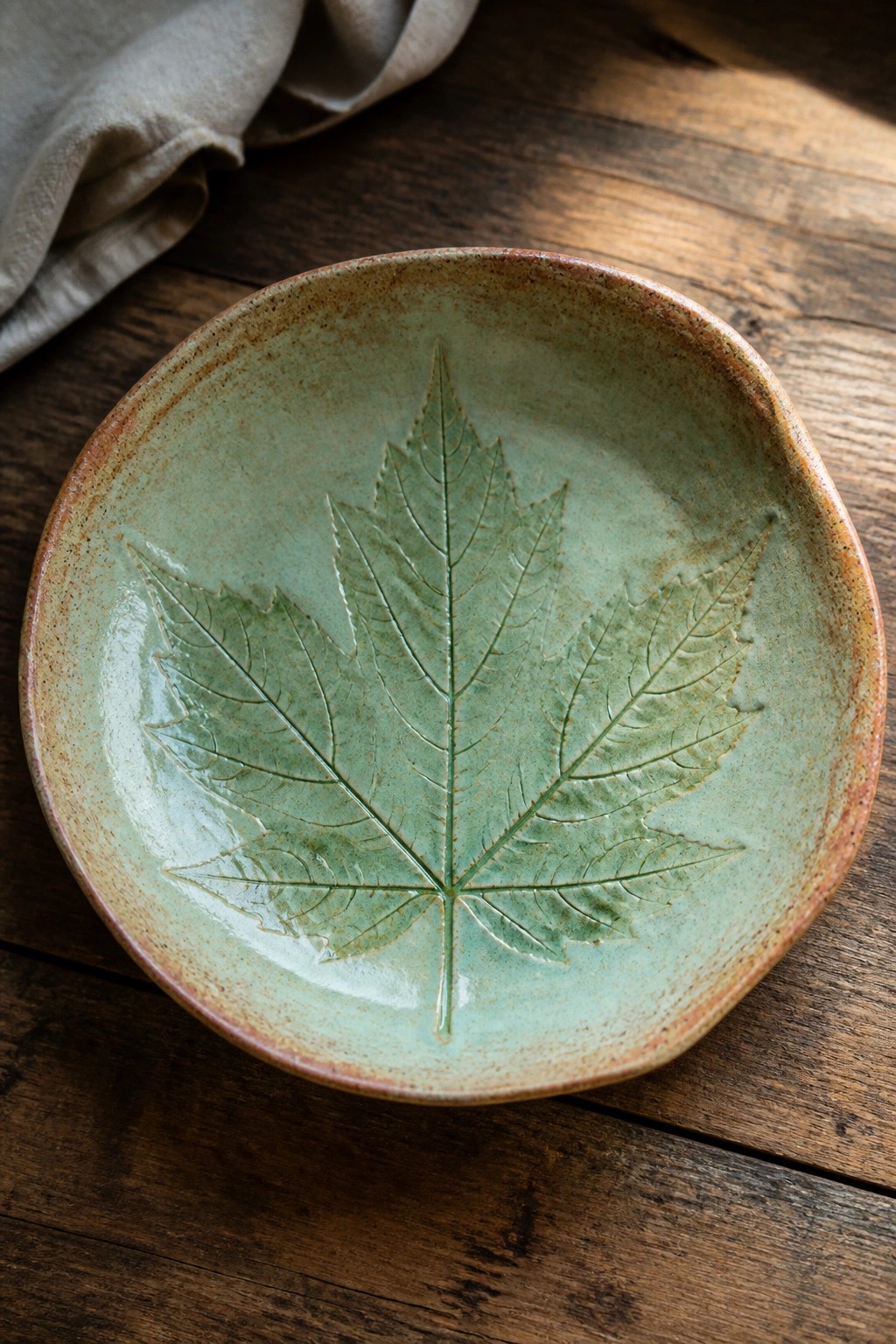
A shallow ceramic bowl with a single large maple leaf pressed directly into the clay gives the surface a clear botanical relief. The light green glaze settles into the leaf veins to make the details stand out while the warmer rim color frames the impression. This method turns a simple round form into a finished piece without added carving or painting.
The small diameter works well as a dessert plate, soap dish, or catch-all for keys. You can repeat the same pressing step on a dinner plate or a low tray using different leaf sizes for variety. The idea stays practical because the leaf supplies the pattern and the glaze does the rest, so the project requires only basic forming skills.
Pressed Wildflower Clay Wall Disc
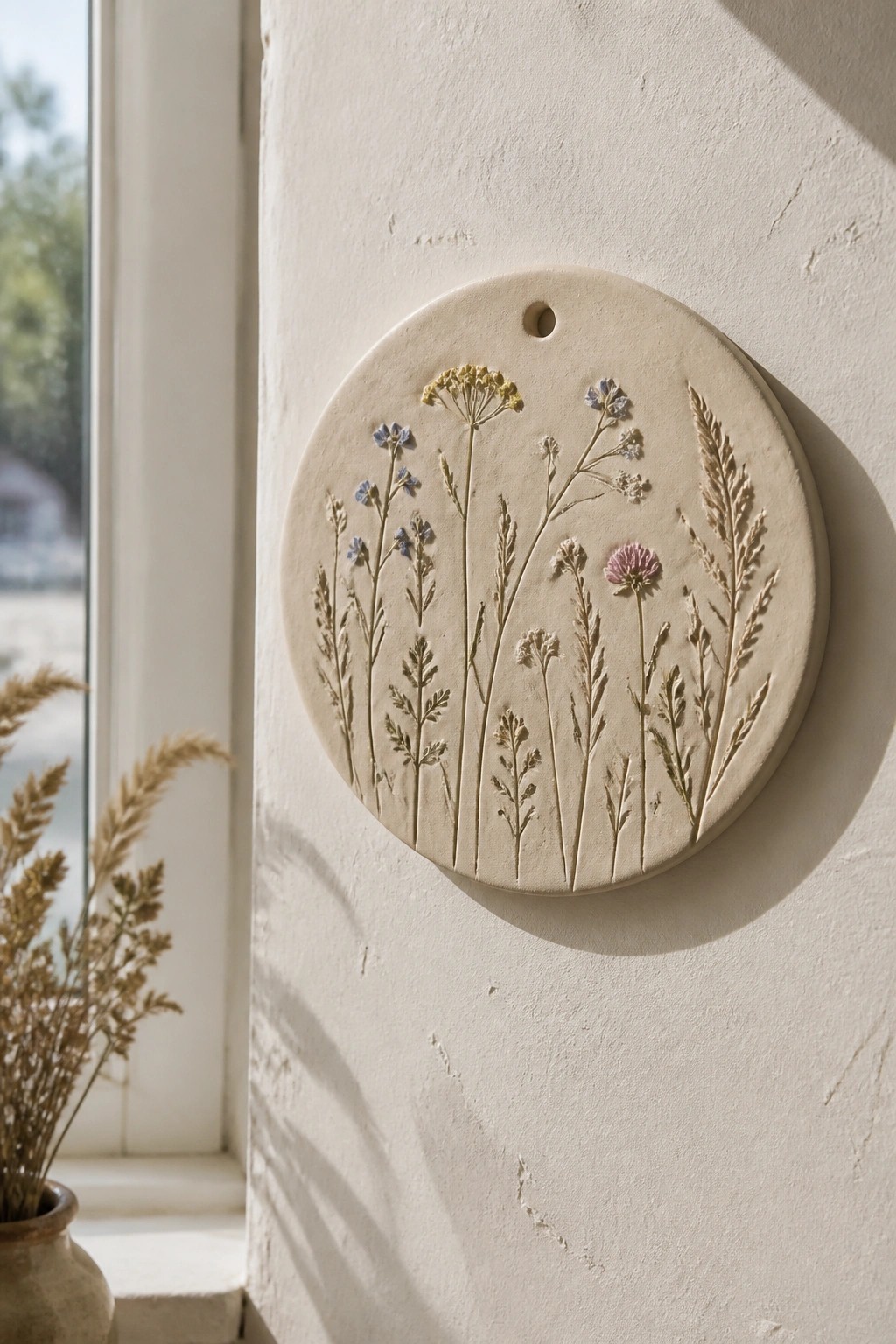
A flat round clay disc with a hole near the top works as a simple wall hanging when covered with pressed botanicals. Stems, leaves, and flower heads from several plants are laid into the soft clay so their shapes create clear relief impressions once the clay dries. Light color is added to a few of the flower centers to make the details easier to read against the plain background. The result is a low-profile decor piece that captures actual plant forms without needing paint or glaze layers.
What makes this idea useful is how the round shape and hanging hole let it work in small spaces like above a desk or beside a window. You can swap in whatever plants are in season or press from a specific walk to change the look without altering the base form. The same pressing method scales down easily for smaller versions that could hang on a plant hook or sit on a shelf. For gifts, this style stands out on Pinterest because the impressions read clearly in photos and require only basic clay tools.
Pressed Branch and Leaf Impressions on a Ceramic Planter

A rounded ceramic planter uses incised lines and leaf shapes to create repeating branch patterns around its body. The soft green glaze sits in the recessed areas, making the botanical details stand out against the lighter surface. An uneven rim adds a simple handmade quality without competing with the pressed patterns. This turns a standard plant pot into a nature-inspired piece by mirroring the form of the plant it holds.
What makes this idea useful is that the impressions can be made directly with real leaves or small branches pressed into the clay before it dries. The compact size fits easily on a windowsill or shelf and works for succulents or small herbs. You could adapt the same branching layout to a wider bowl or a set of small dishes by changing the spacing of the leaves. The design also photographs clearly for sharing because the contrast between the glaze and the impressed lines shows up well in photos.
Rectangular Tray with Mixed Leaf Impressions
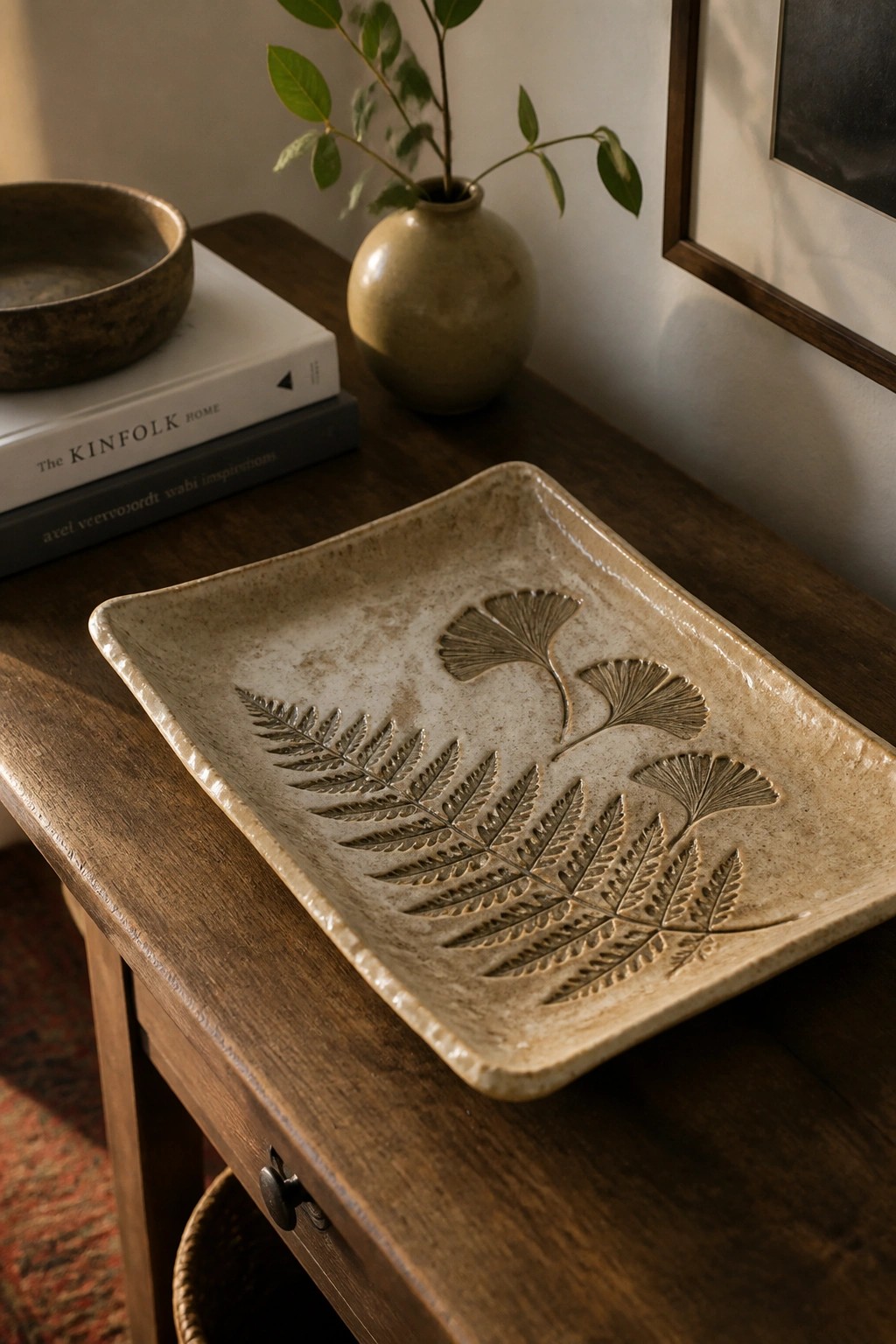
A rectangular ceramic tray uses pressed fern fronds and ginkgo leaves to create raised impressions across the surface. The light speckled glaze sits in the recesses to emphasize the leaf veins while leaving the rest of the tray smooth enough for practical use. This turns a basic tray shape into a nature-inspired decor object that can hold keys, candles, or small plants.
What makes this idea useful is the flat rectangular format that fits on dressers, entry tables, or bathroom counters without crowding the space. You could repeat the same leaf mix on a smaller square dish for rings or switch to a single leaf type for a more minimal look. The combination of two different leaves gives enough visual interest to perform well in saved images without needing extra color or detail.
Lavender Pressed Tea Light Holder

A small rounded ceramic vessel makes an effective tea light holder when lavender stems and flower heads are pressed directly into the clay to leave clear impressions. The soft purple glaze sits over the textured surface so the botanical details stand out without extra paint or carving. This approach keeps the project simple while turning a basic cylinder shape into a nature-inspired candle piece.
The compact size works well on a bedside table or desk where a full candle jar would feel too large. You can repeat the same lavender pressing on ring dishes or small planters and change the glaze color to suit different rooms. For a gift, this holder stands out because the pressed details come from real plant material rather than stamps or decals.
Embossed Botanical Ring Dish
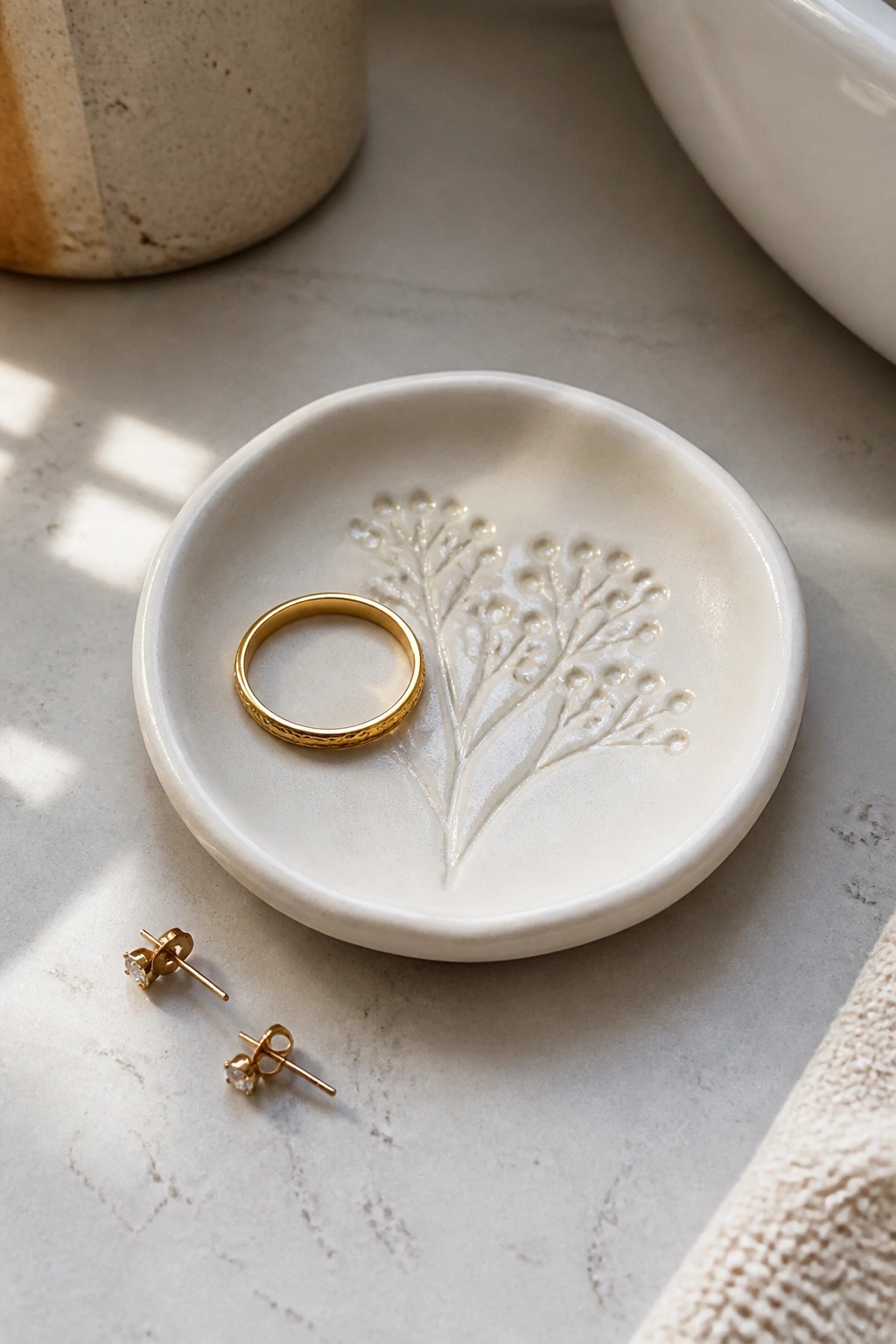
A small round ceramic dish with a raised botanical imprint makes an effective ring dish or jewelry holder. The design relies on a pressed plant motif featuring branching stems and clusters of small rounded forms to create a subtle raised texture across the surface. A soft off-white glaze highlights the impressed details without overpowering them. This approach fits the pressed botanical category and keeps the piece simple enough for daily use.
What makes this idea useful is its compact size that fits easily on a bedside table or bathroom ledge for holding rings and small earrings. You could adapt the same impression technique to a rectangular tray or the base of a soap dish while keeping the plant motif. The round shape leaves room to try different pressed botanicals like leaves or seed heads for variety. In a bathroom setting this kind of piece keeps jewelry organized without taking up much space.
Leaf Impressed Dish for Spoon Rests
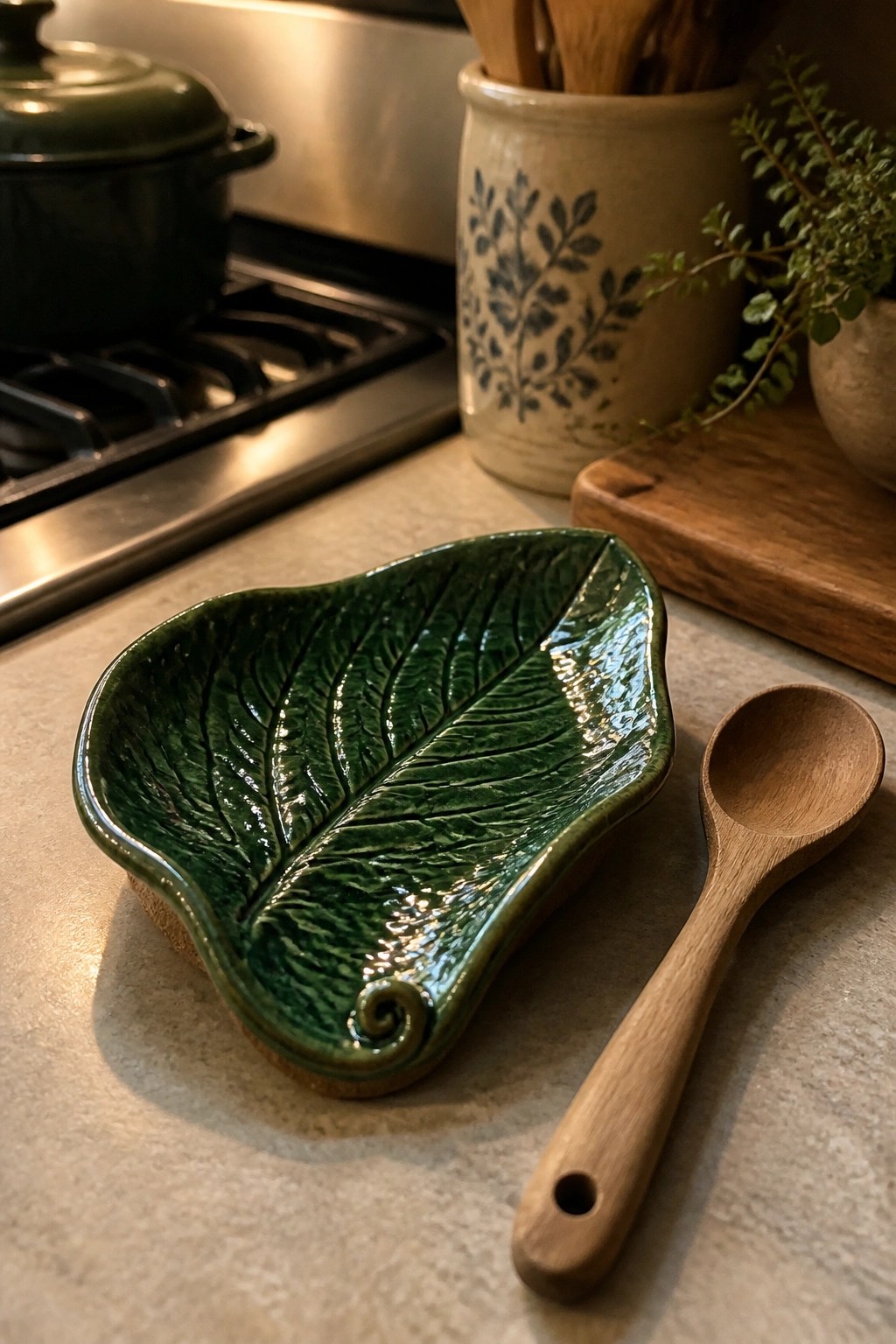
A small ceramic dish shaped like a leaf uses pressed botanical impressions to capture detailed vein patterns in the clay surface. The glossy green glaze settles into the recessed lines and highlights the natural texture without added paint. This approach produces a compact kitchen item that functions as a spoon rest or small prep bowl while keeping the focus on the leaf detail.
What makes this idea useful is how the curved leaf form holds utensils without taking much counter space. You could repeat the same pressing technique on flatter slabs to make coasters or a matching butter dish. The single glaze color keeps the process simple while still making the impressions stand out in photos. For a gift, the same shape works in a smaller size as a tea bag holder.
Slim Ceramic Vase with Vertical Botanical Impression
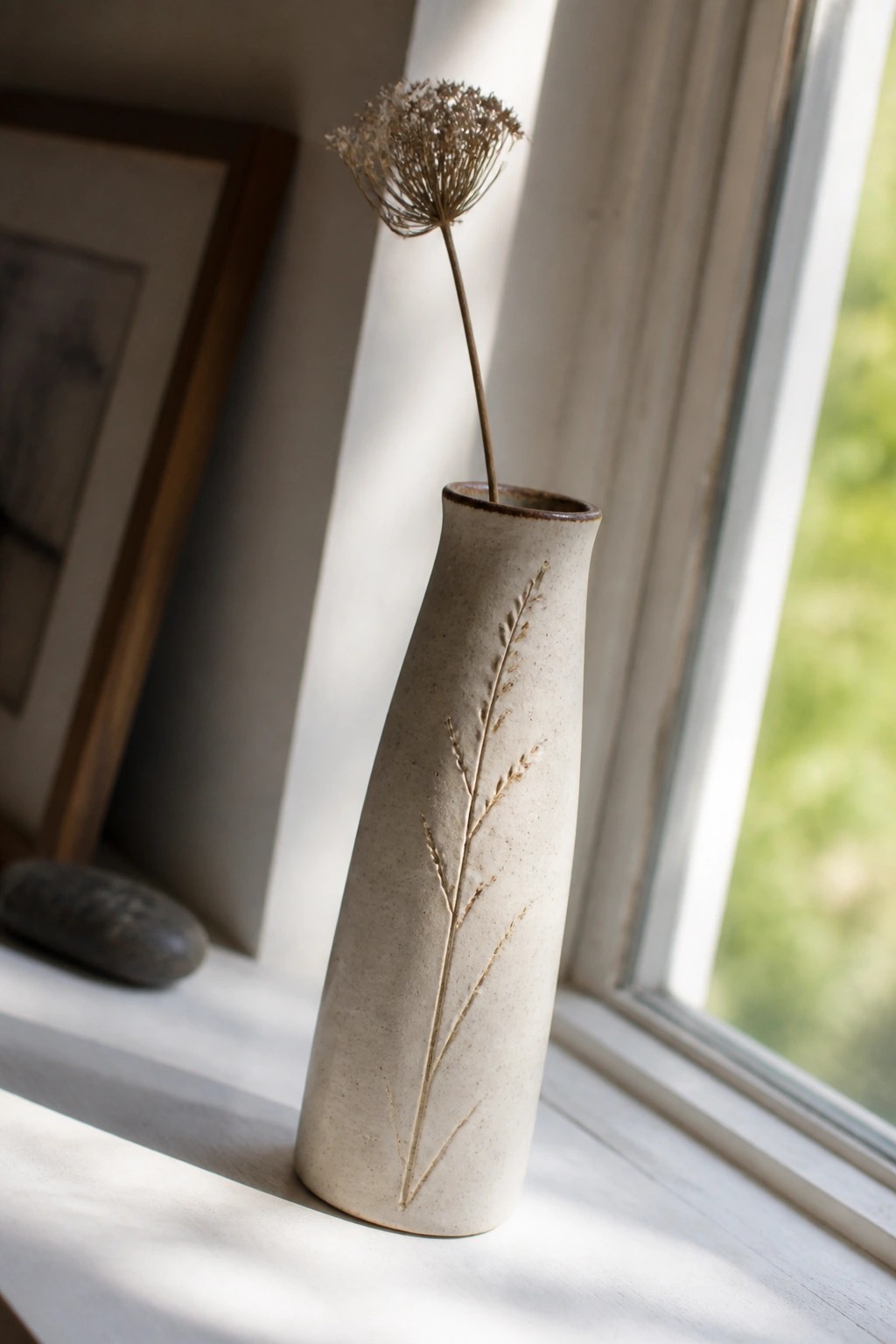
A tall tapered vase made from light stoneware clay uses a pressed stem of dried grass or grain to create a raised botanical line down the front. The impression sits directly in the clay surface so the natural form becomes part of the shape rather than added decoration. The narrow neck and wider base keep the focus on the single vertical motif while still functioning as a simple holder for one or two dried stems.
What makes this idea useful is how the tall narrow shape already matches the plant motif so the impression feels integrated instead of applied. You can repeat the same pressing method on a shorter cylinder or a low bowl by choosing smaller leaf clusters or seed heads. The plain matte finish also lets the texture do the work which makes the piece easy to style on a shelf or windowsill without competing colors. For a gift this shape works well because it needs only one strong impression to look finished.
Pressed Leaf Wreath Plate

A small ceramic plate works well for this idea, with real leaves and small berry clusters pressed directly into the clay to form a continuous wreath around the rim. The raised impressions are highlighted with a light green wash that sits in the details while the rest of the surface stays a soft off-white with a faint pink rim. The circular layout keeps the center open and smooth for food or display, and the handmade clay form gives the edges a gentle, irregular finish.
What makes this idea useful is how easily the wreath can be scaled up or down for different plate sizes or turned into a shallow bowl. The same leaf pressing technique works for a set of four dessert plates or a single trinket dish without needing extra tools beyond fresh foliage. In a kitchen it gives a finished look that still feels simple enough for everyday use, and the motif can be adapted with different plant types to match other pieces in a collection.
Pressed Needle Salt Cellar
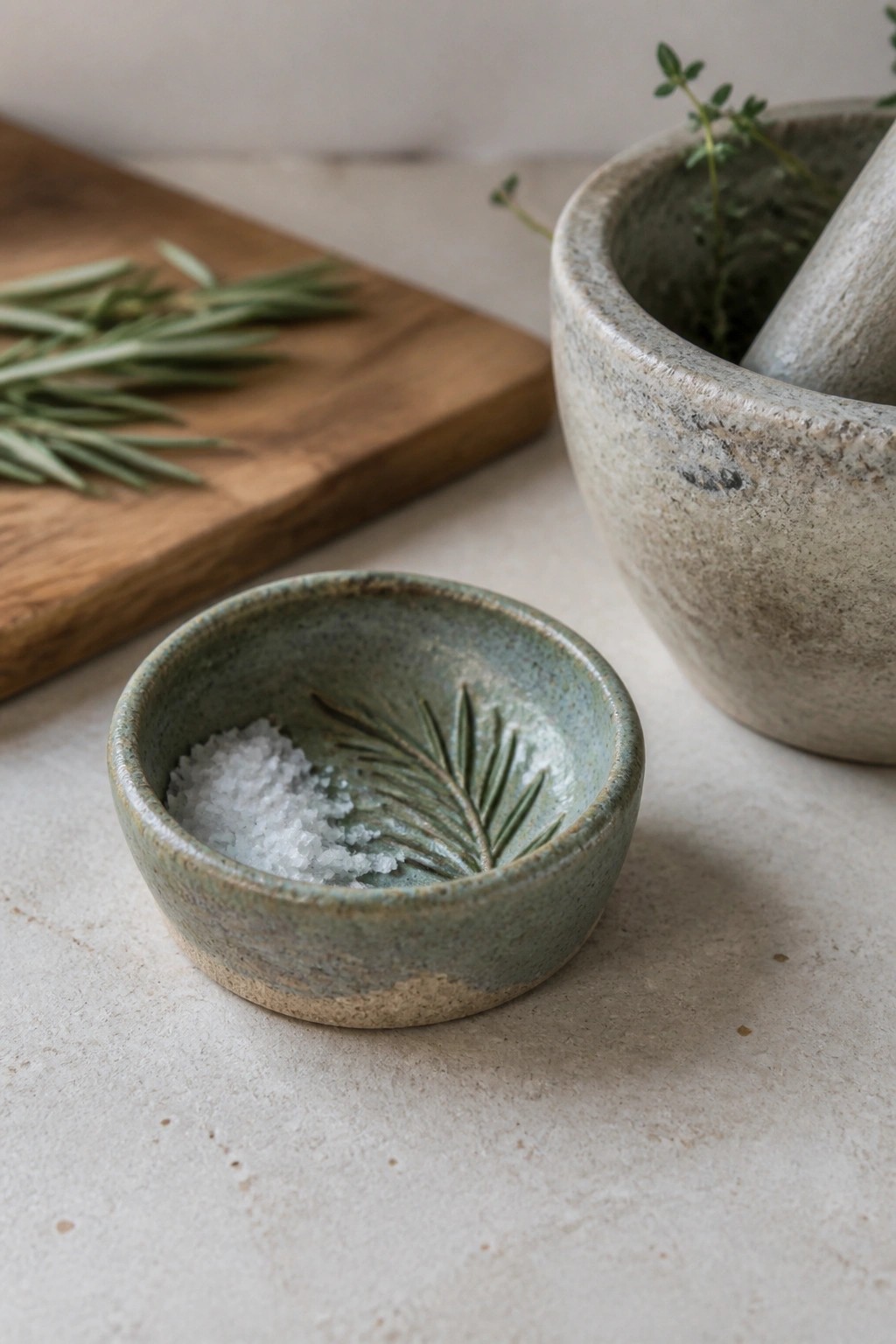
A small, shallow ceramic bowl works as a salt cellar or pinch pot when the interior base holds a clear pressed impression of a conifer sprig. The impression is made by pressing the plant material into soft clay before firing, then glazing the piece in a muted green-gray that keeps the raised needle details visible. This approach turns a basic functional form into a nature-inspired kitchen piece without adding extra color or decoration.
What makes this idea useful is how the small scale lets you test the impression technique with minimal clay. The same sprig press could be repeated on a set of four dishes or adapted onto the rim of a larger prep bowl. In a kitchen it keeps salt handy while the botanical detail gives it more visual interest than a plain dish, and the earthy glaze helps it blend with wooden boards and stoneware already in use.
Wheat-Stalk Impressed Soap Tray

A rectangular ceramic soap tray with a low rim uses pressed wheat stalk impressions along one side to create a repeating botanical pattern. The speckled clay body and light matte glaze keep the focus on the raised stalk details while letting the surface stay practical for holding wet soap. This fits the bathroom item category and shows how a single pressed motif can turn a basic tray into a nature-inspired piece without added painting or carving.
What makes this idea useful is how the impressions stay visible even after glazing and firing, so the design holds up to daily use. The compact size works well on a bathroom counter or shelf, and the same wheat motif could be scaled down for a ring dish or repeated across a larger soap holder. You could swap in other grasses or leaves depending on what you have growing, which keeps the project flexible for different seasons or plant collections.
Pressed Leaf Yarn Bowl for Knitting

A ceramic yarn bowl keeps a ball of yarn contained while allowing the strand to feed out through a notch cut into the rim. The round shape sits low and stable, and the exterior carries a band of small leaf impressions pressed into the clay before glazing. The matte purple surface makes the repeated botanical pattern stand out without competing with the yarn color.
What makes this idea useful is the way the notch turns an ordinary bowl into a dedicated tool for knitters and crocheters. You could repeat the pressed leaf band on a smaller dish for stitch markers or on a larger cylinder for storing scissors and needles. The same motif works on any neutral or earthy glaze, so the design stays easy to adapt for different yarn weights or project bags. In a craft room this piece stays visible and ready without taking up much space.
Monstera Leaf Ceramic Ring Dish

A small dish formed in the shape of a monstera leaf works well as a ring holder or catch-all tray. The clay is shaped with raised veins and the leaf’s natural splits, then coated in a deep green glaze that pools slightly along the edges and veins to emphasize the texture. This keeps the piece simple while making the botanical form the main feature.
What makes this idea useful is the way the leaf shape creates natural dips that keep small items from sliding around. You could press a real leaf into a slab of clay for a flatter version or stretch the same idea into a larger tray for keys. The compact size makes it easy to place on a dresser or desk, and the single glaze color keeps it from competing with other decor.
Pressed Daisy Creamer Pitcher

A small ceramic creamer pitcher makes a straightforward project for pressed botanical impressions. The compact rounded body leaves room for a cluster of daisy stamps along one side, and the short spout keeps the focus on the surface detail rather than on elaborate form. A light speckled glaze lets the raised flower edges catch light while the recessed centers hold a bit more color. This approach suits any kitchen item meant for daily table use.
The size works well on a breakfast tray or next to a coffee maker without taking up much space. You can repeat the same daisy stamps on matching sugar bowls or small butter dishes to build a set. Placing the impressions only on the front half keeps the design visible when the pitcher sits on a shelf. The same stamp layout transfers easily to a taller jug if you want a larger version for serving.
Pressed Botanical Coasters
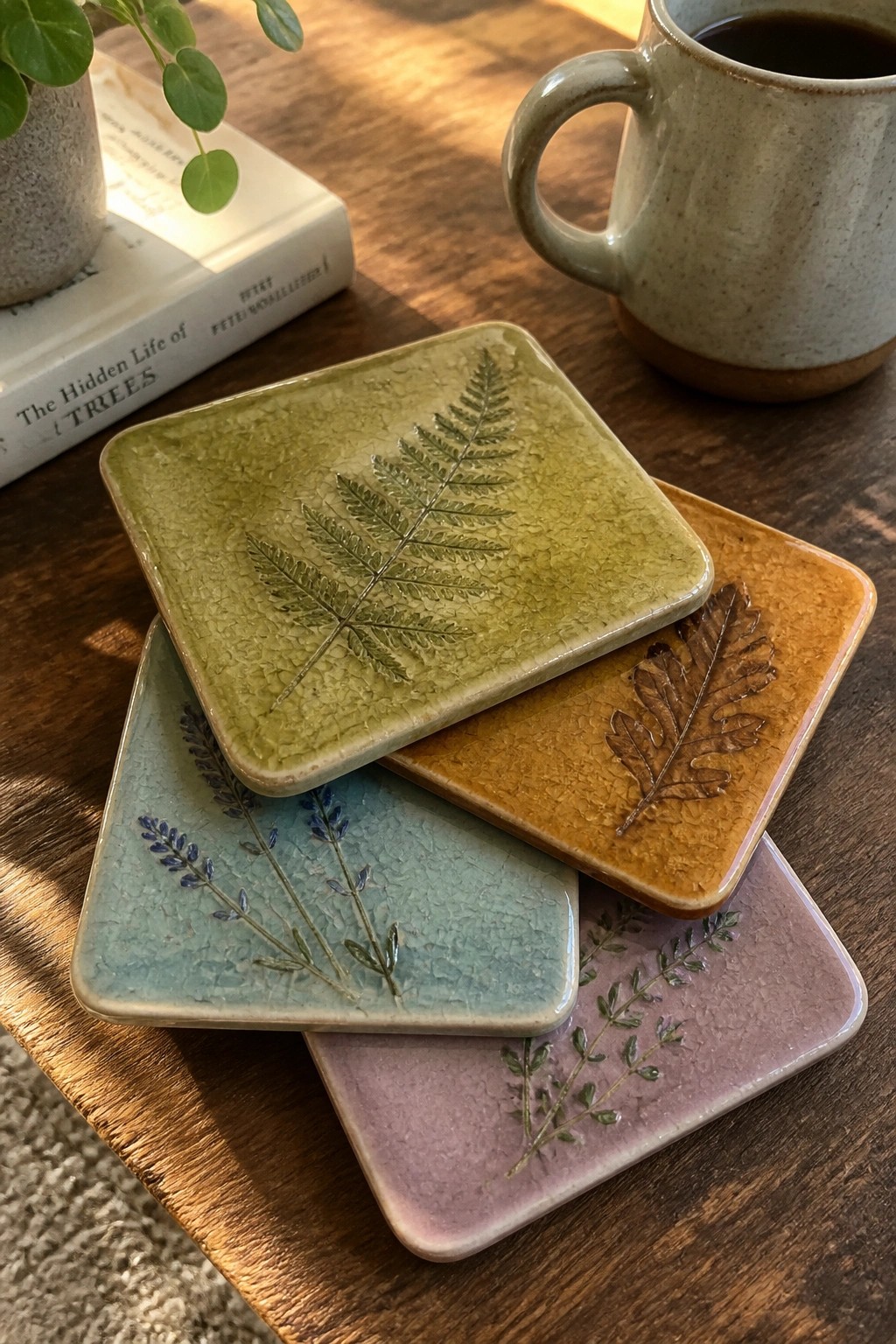
Square ceramic coasters made with real plant impressions give a simple way to bring leaf and herb details into everyday use. A fern frond, oak leaf, lavender stems, and thyme sprigs are pressed into the clay before glazing, and the crackle surfaces in green, orange-brown, teal, and lavender make the textures stand out clearly. The flat, four-inch size fits standard mugs and glasses without taking up much space.
What makes this idea useful is that the square shape stacks neatly and works on a desk, side table, or kitchen counter where you need quick protection for drinks. You can adapt the same pressing method to different plants or switch to a round shape if you want coasters that match existing pottery sets. For a gift, these stand out because the impressions stay sharp after firing and the small size keeps the project quick to finish in one kiln load. The same technique also works for making matching spoon rests or small soap dishes.
Hanging Ceramic Disc Mobile with Botanical Impressions
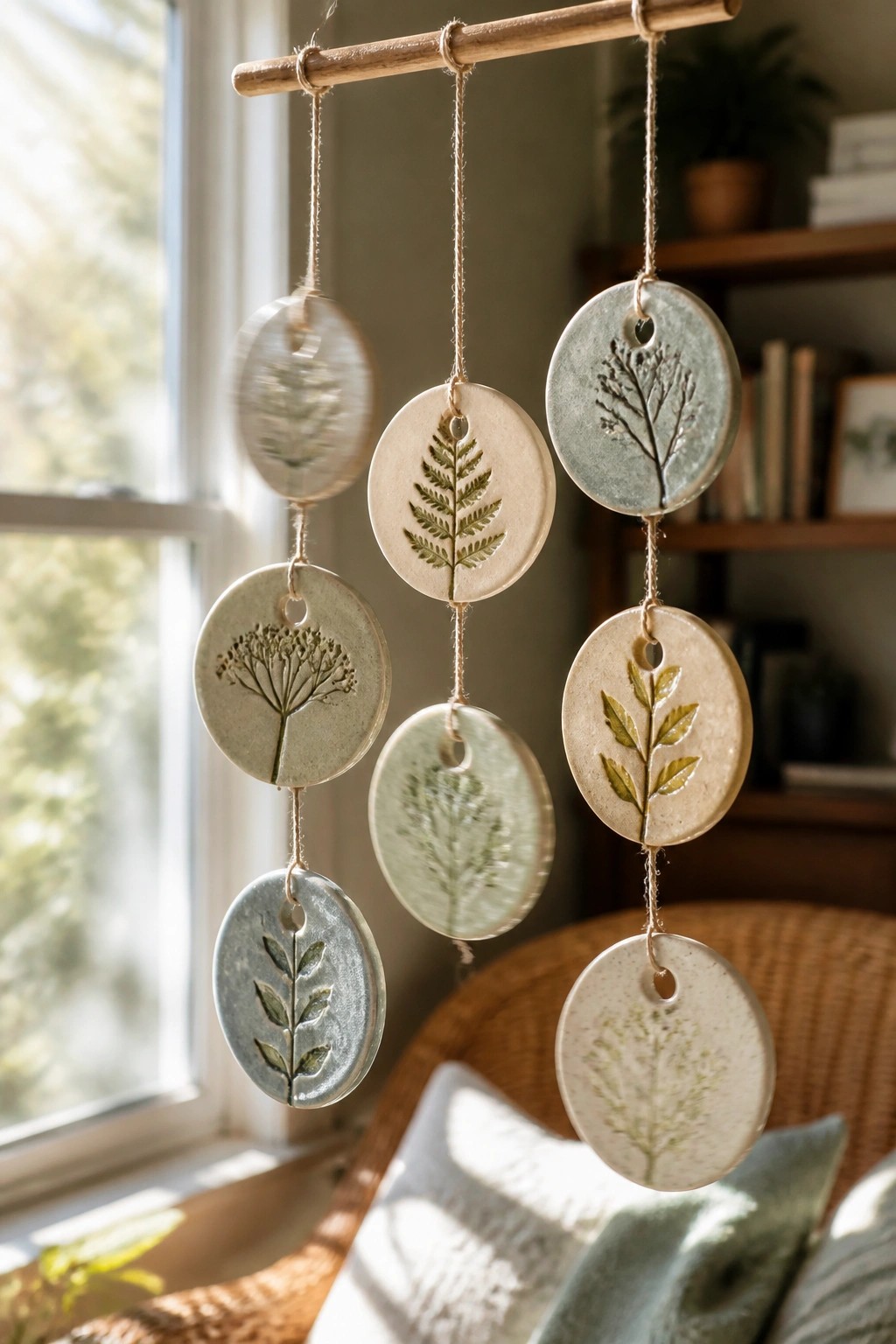
Flat circular clay slabs are impressed with real ferns, leafy stems, and flower heads before firing, then finished in a mix of matte off-white, soft green, and speckled gray glazes. Holes are drilled near the edges so the discs can be strung on twine at staggered lengths from a simple wooden dowel. The result is a lightweight hanging decor piece that lets the pressed plant textures stand out against the clay surface without any added paint or carving.
What makes this idea useful is how quickly the same pressing method can be repeated on different sizes of discs for a shorter version or a single-row window hanging. The neutral glaze choices keep the focus on the plant details and let the piece fit into plant corners or shelves where color might compete. You could rework the layout into individual ornaments for a garland or scale the discs larger to make a statement wall panel instead. The vertical stringing also makes it simple to adjust spacing or add more strands if you want to cover a bigger area.
Hedgehog Figurine with Pressed Fern Imprints

A small clay hedgehog figurine uses pressed fern fronds to create repeating patterns across its rounded back. The impressions stay visible through a light surface finish that leaves the natural clay color dominant. This turns a basic animal shape into a compact decor object that relies on the botanical texture for its main visual interest.
What makes this idea useful is how the small scale keeps the project quick to form and dry. The same fern-pressing method works on other animal shapes such as armadillos or turtles if you want variety. You could simplify the design by pressing leaves only along the spine or switch to different plant types for seasonal versions. In a room with houseplants, the figurine adds a matching natural detail without taking up much space.
Crescent Moon Incense Holder with Pressed Botanicals

A crescent moon shaped clay dish makes a simple incense holder when you press flowers and leaves directly into the surface to create impressions. The curve holds the stick at a steady angle while the wide base catches ash, and the botanical details stay visible without extra color or glaze. This keeps the piece small enough to sit on a table without taking much space.
What makes this idea useful is how the moon shape turns a basic holder into something more distinctive than a flat dish. You can adapt the pressing method to round trays or oval dishes if you want options for different surfaces. The small scale works well for desks or shelves where you need function without bulk. For a gift, use flowers from a specific season so the impressions feel more personal.
Frequently Asked Questions
What types of clay are best suited for making pressed botanical impressions on pottery? Air-dry clays or low-fire earthenware clays work well because they capture fine details from leaves and flowers without requiring high temperatures that could distort the impressions. Start with a smooth, moist clay body and roll it to an even thickness before pressing your botanicals firmly but gently to avoid tearing the surface.
How should I prepare fresh botanicals so the impressions turn out sharp and detailed? Select flat, sturdy plants like ferns, maple leaves, or lavender sprigs and press them between absorbent paper for several days until fully dry. This removes moisture that might cause cracking during drying or firing, and it helps the clay hold the vein patterns more clearly when you roll the clay over the botanicals or press them in by hand.
Do the pressed botanicals stay in the clay during firing, or must they be removed first? Always remove the botanicals before any firing or even air-drying if using oven-bake clay. Organic material burns away and can create smoke, cracks, or weak spots in the piece. Once the impressions are made, let the clay firm up slightly, then carefully lift the plants away and allow the pottery to dry completely before proceeding to bisque or glaze firing.
What glazing techniques help highlight the botanical impressions without filling them in? Apply a light coat of underglaze or a thin wash of contrasting glaze over the entire surface, then wipe away the excess from the raised areas with a damp sponge. This leaves color in the recessed impressions while keeping the higher parts lighter, making the leaf and flower details stand out on finished pieces like mugs or tiles.
How can beginners avoid common problems like blurred impressions or clay cracking around the designs? Work on a small test tile first and keep your clay consistently moist but not sticky. Press botanicals evenly using a rolling pin covered in plastic wrap to prevent sticking, and avoid overworking the clay afterward. Dry pieces slowly under plastic wrap for the first day or two to reduce cracking, especially around intricate impressions from delicate flowers or stems.

Pottery Path is my cozy corner of the internet where I share clay ideas, pottery inspiration, and simple projects you can recreate at home. I love exploring everything from air dry clay to handbuilt pottery to cute minis that brighten your day. My goal is to make clay crafting feel easy, fun, and welcoming for anyone who wants to try it.
You will find beginner friendly tutorials, creative pottery painting ideas, and lots of warm inspiration for slow and happy crafting. If you enjoy hands on creativity, this space will feel like home.