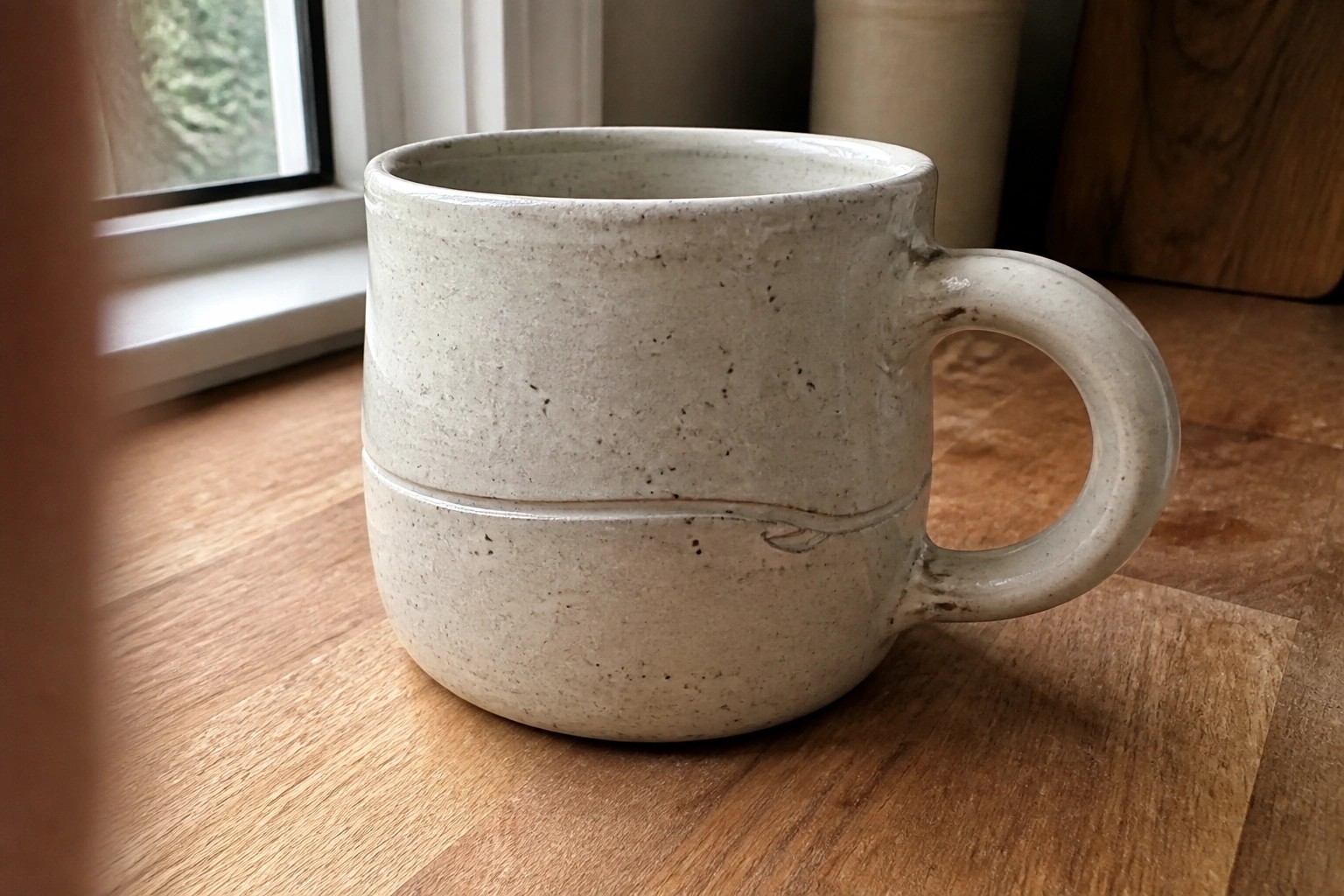
I have been playing around with carving simple lines on my pottery pieces lately.
It is a nice way to add some modern touches without making things too busy.
Minimal patterns seem to work well on different shapes and sizes.
I put together some ideas that focus on surface carving with clean lines.
These might give you a starting point if you want to try something similar.
Single Wavy Incised Line on a Ceramic Mug
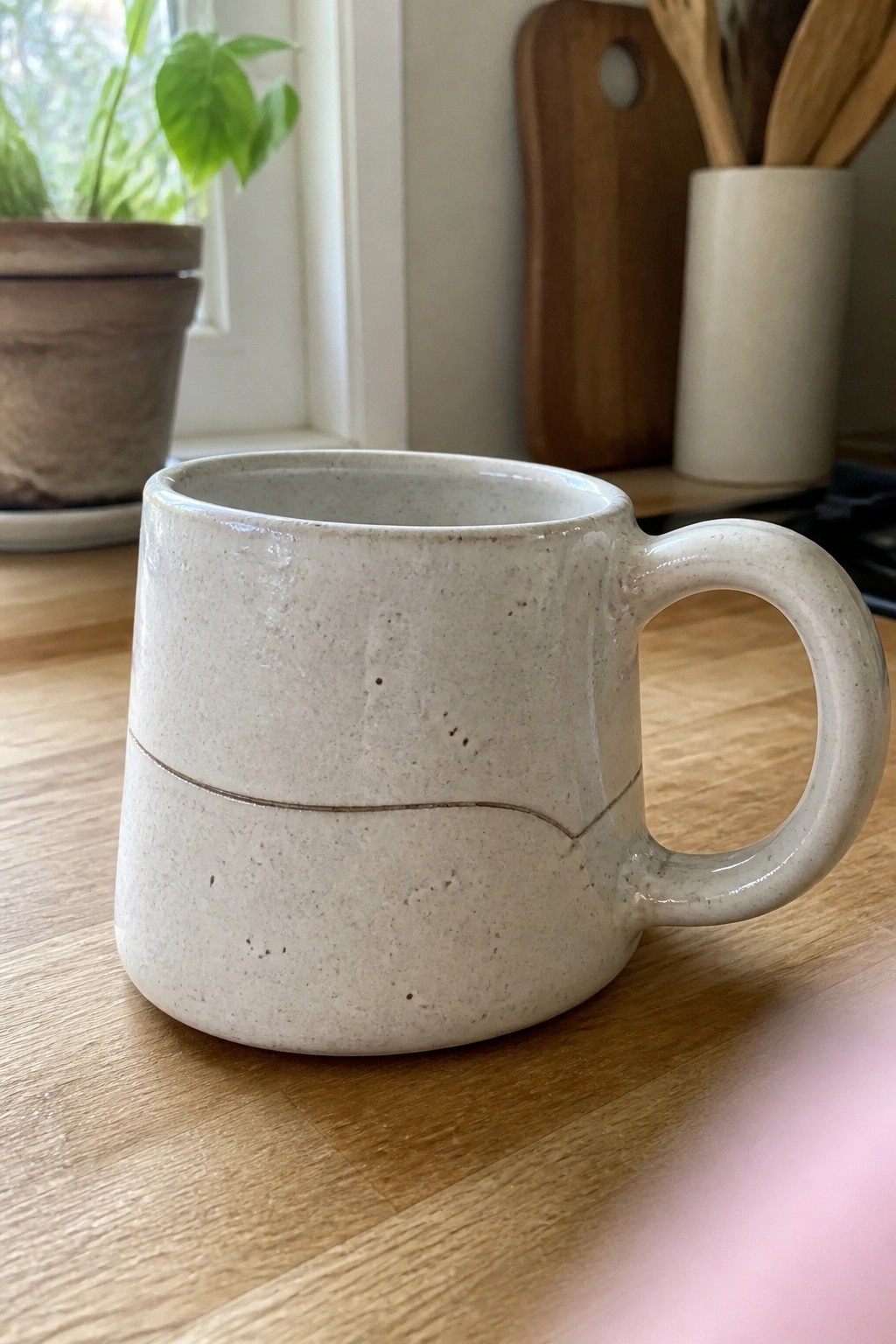
A short, wide ceramic mug gains a simple surface detail from one thin wavy line carved around the middle. The line sits low enough to break up the form without competing with the handle or rim, and the matte speckled glaze keeps the whole piece quiet and even. This kind of minimal carving works as a straightforward way to add interest to a basic mug shape while staying within a modern line-pattern style.
The compact size makes the mug practical for daily coffee or tea without taking up much space. You could repeat the same single carved line on a taller mug, a small pouring vessel, or a set of matching cups by changing the wave height slightly each time. The approach stands out for its restraint, so it photographs cleanly for inspiration boards and adapts easily if you want to test carving on other simple forms first.
Minimal Vertical Carvings on a Rounded Planter
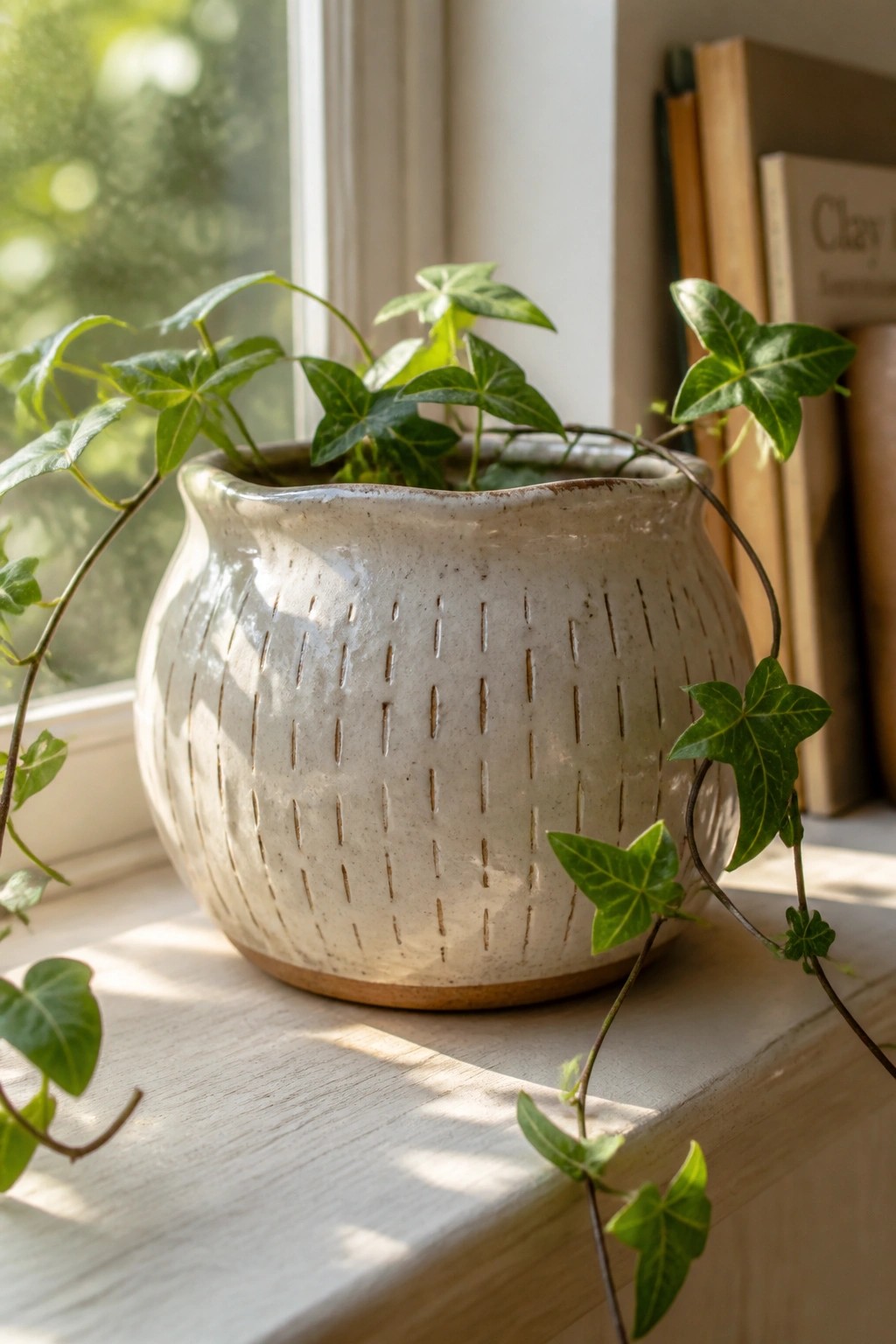
A rounded ceramic planter with short vertical lines incised into the surface gives a clean textured pattern without added color or detail. The light speckled glaze sits in the grooves to make the lines visible while keeping the overall surface simple. This style works well for a medium plant holder meant to sit on a windowsill or shelf where the carving can catch light.
What makes this idea useful is how the straight lines break up the curve without requiring complex tools. You could scale the same carving down for a smaller pot or stretch it taller on a vase form. The neutral finish pairs easily with most houseplants and lets the shape stay the focus. For a gift, repeat the pattern on a set of three different sizes to keep the look consistent.
Horizontal Incised Lines on a Rounded Serving Bowl

A ceramic bowl with a matte pink exterior and pale interior uses evenly spaced horizontal lines carved into the upper section. The lines sit just below the rim and follow the curve of the form, creating a quiet striped texture that catches light without adding color or pattern on top. This approach keeps the object clearly functional as a kitchen or table bowl while fitting the minimal line carving category.
The shape does a lot of the work here because the round profile lets the carved lines wrap naturally and stay visible from multiple angles. You could adapt the same spacing and depth on the outside of a taller vase or shorten the band to just the rim of a smaller dessert bowl. In a kitchen this kind of piece holds up well for everyday use and photographs cleanly for sharing because the lines read as intentional rather than busy.
Carved Minimal Face Profile on a Hanging Disc

A flat circular clay plaque works well for this kind of surface carving. The design uses a few continuous lines to outline a side-view face, with the eye, nose, and mouth cut into the surface before glazing. The light matte gray finish keeps the brown edges of the carving visible and gives the lines clear definition. This fits the decor object category, where the shape stays simple so the minimal pattern stays the main focus.
What makes this idea useful is how the same line technique can move to other flat pieces like tiles or shallow trays. You could repeat the profile at a smaller scale on a set of wall hooks or adapt the carving onto the lid of a lidded box. The drilled holes and cord make hanging straightforward and keep the piece lightweight. The neutral glaze also helps the motif stand out when the finished piece is photographed for sharing.
Grid Pattern Carved into a Low Clay Tray

A rectangular tray formed from clay uses a repeated grid of incised lines to cover the entire interior surface. The lines run evenly in both directions, creating small squares that add texture without changing the overall shape. The low sides keep the focus on the flat base where the carving sits. A single matte glaze in a neutral tone lets the carved lines show through clearly once fired.
What makes this idea useful is how the grid can be adjusted in spacing or depth to suit trays of different sizes. The same carving approach works on the bottom of a planter or the face of a wall tile if you want to repeat the pattern elsewhere. In a kitchen it doubles as a serving piece or a place to rest utensils, and the straight lines make it easy to mask sections if you want to test a partial grid first. The clean layout also translates well to photos for sharing the finished piece.
Concentric Carved Lines on a Small Sage Dish

A small ceramic ring dish or trinket holder works well here with two concentric circles carved into the base before glazing. The soft sage green glaze lets the lighter clay show through the lines, creating clear contrast without extra color or decoration. The slightly irregular rim keeps the form simple while the carved rings give it a defined center. This approach fits the minimal line pattern category by using surface carving on a compact, functional shape.
What makes this idea useful is how the small size and carved detail let it serve as a nightstand ring dish or desk catch-all without taking up space. You could scale the same two-circle pattern onto coasters or a shallow tray by adjusting the spacing to fit the larger surface. The muted glaze color works on natural wood or linen backgrounds, so the piece blends into existing setups easily. For another version, repeat the lines on a taller cylinder form to turn it into a small pencil holder or match holder.
Swirling Line Carved Candle Holder
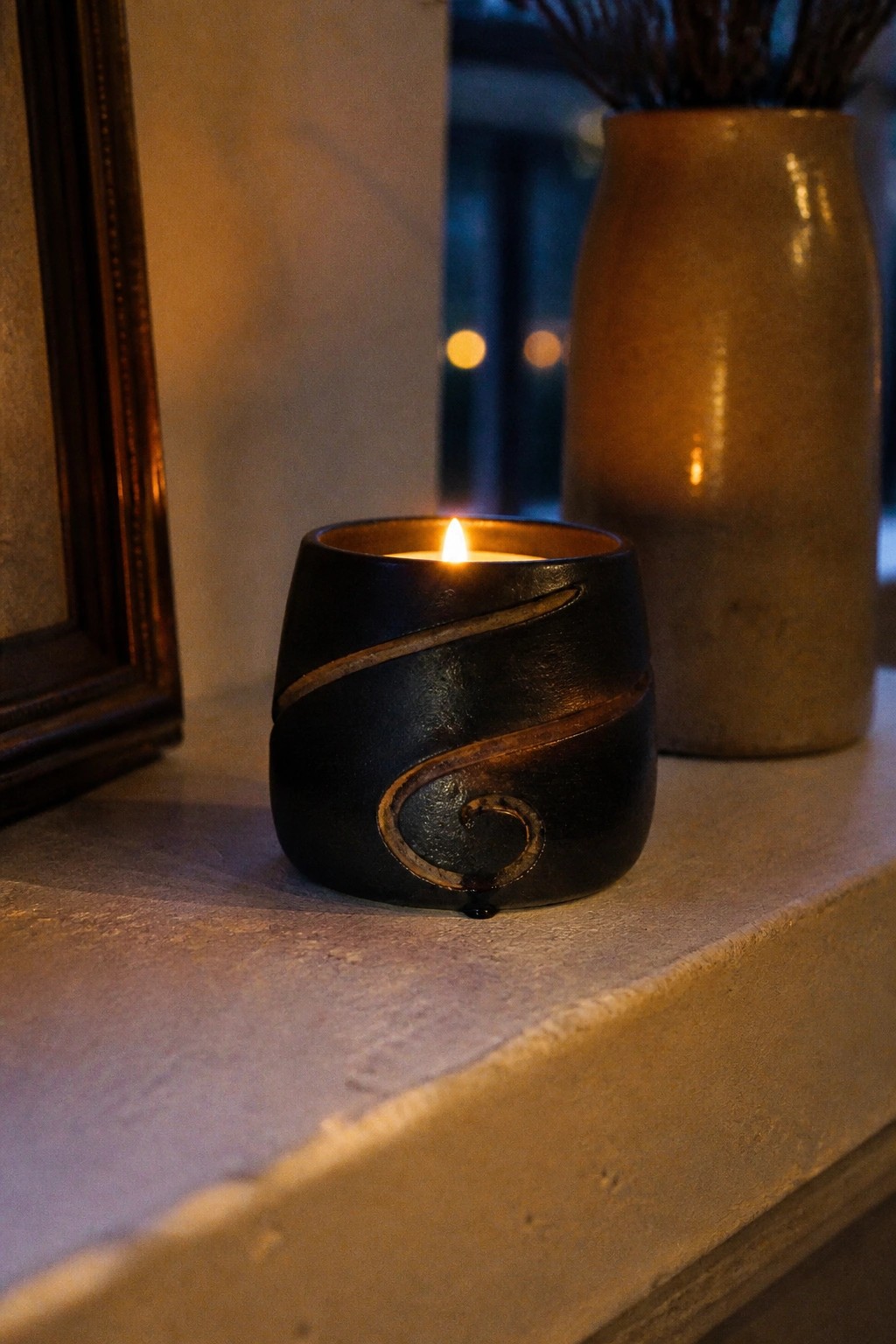
A small dark clay candle holder uses one continuous carved line that spirals around the form to create a minimal pattern. The line is cut into the surface and left with a slightly lighter edge against the matte black finish, letting the carving stand out without added color or detail. This keeps the project simple while turning a basic cylinder into a finished candle piece.
What makes this idea useful is how the single carved line can be repeated on other small forms like ring dishes or tiny vases without needing extra tools. The dark surface makes the cut stand out clearly, so the same approach works in low-light settings where the holder is meant to be used. You could adapt the swirl to a straighter line or shorten it into a partial curve if you want a quicker version for a set of matching pieces.
Oval Dish with a Single Flowing Line
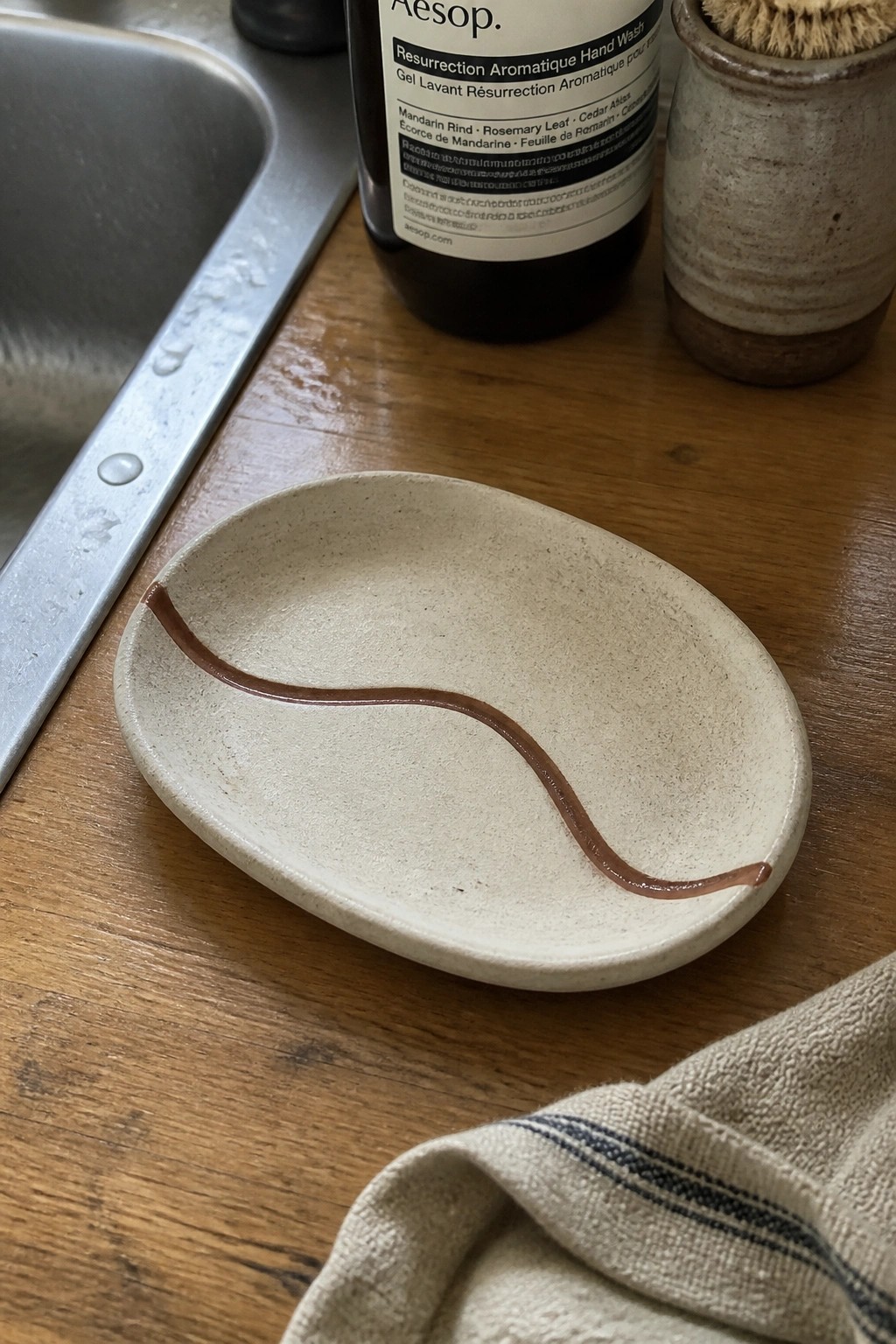
A small oval ceramic dish becomes a soap holder or catch-all when decorated with one continuous brown line that curves across the surface. The line starts thick on one side and tapers as it moves in a gentle wave, creating contrast against the light speckled clay without covering much of the form. This keeps the piece simple while the painted detail gives it a clear focal point that works in a bathroom or on a countertop.
What makes this idea useful is how the same single-line approach can be adjusted in length or color to suit different glaze tests or small batches. The oval shape already handles soap or small items well, so you can repeat the motif on a set of two or three dishes for a matching group. The narrow painted element also translates easily to a ring dish or small tray if you want to change the size.
Diamond Grid Carved Salt Cellar

A small ceramic bowl with a repeating diamond grid carved around the exterior works as a salt cellar or pinch bowl for kitchen use. The shallow rounded form keeps the carving visible while the matte glaze highlights the cut lines without adding color. This approach fits the surface-carved minimal line pattern category by using simple geometric repeats instead of complex motifs.
What makes this idea useful is how the same diamond carving can be adjusted in spacing or depth to suit different bowl sizes. In a kitchen it sits well on a counter or near the stove for quick access to salt or spices. The small scale makes it straightforward to try on other forms like a lidded jar or a shallow tray while keeping the pattern minimal.
Vertical Incised Lines on a Toothbrush Holder
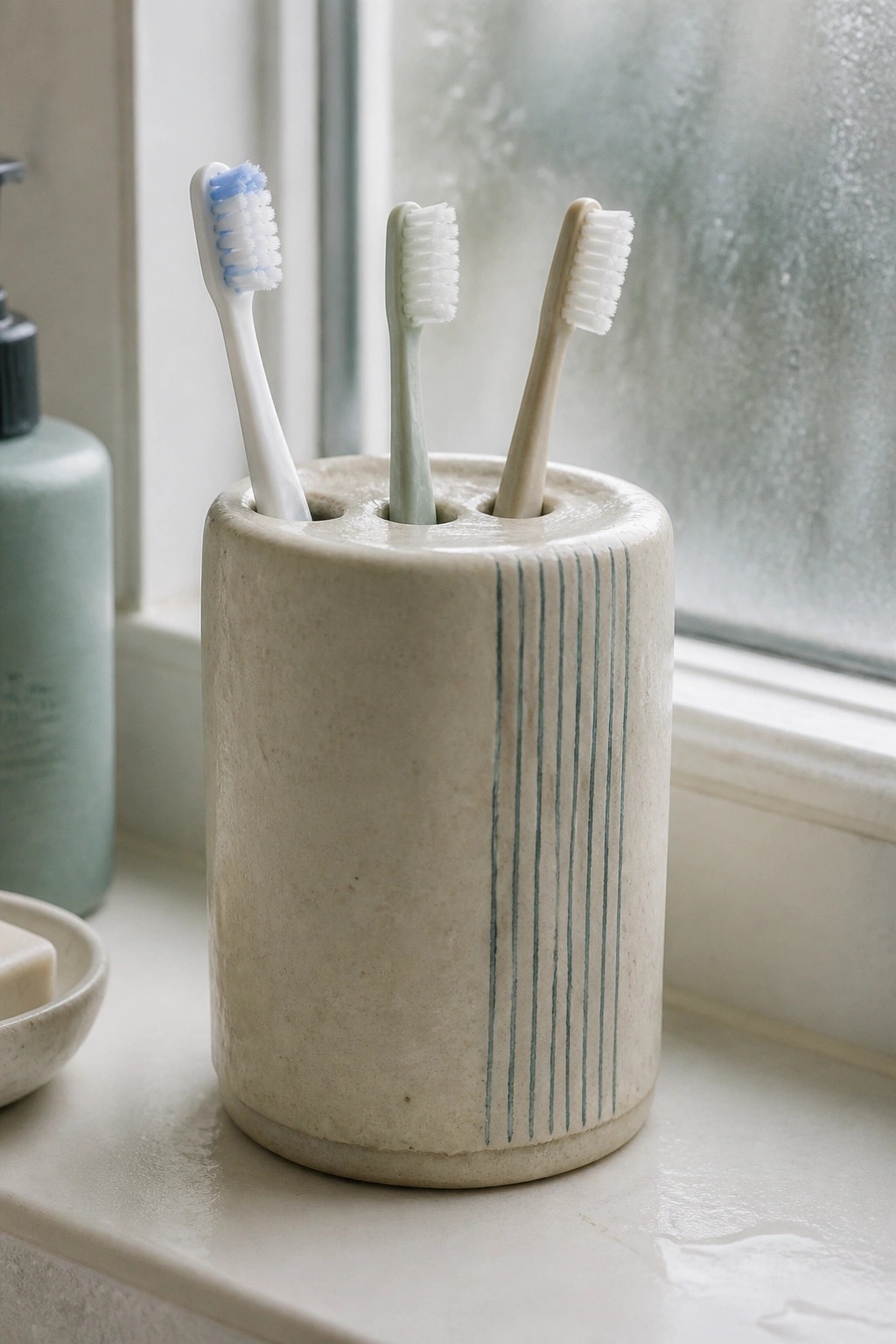
A simple cylindrical toothbrush holder becomes more interesting when you carve narrow vertical lines down one side before firing. The lines are cut into the clay surface and filled with a contrasting underglaze so they read clearly against the matte stoneware body. Three holes drilled into the top keep the piece practical for everyday bathroom use while the pattern stays minimal and modern. This approach works because the carved lines add texture without complicating the basic cylinder shape.
What makes this idea useful is how the same carving technique transfers easily to other small bathroom items like a soap dish or rinse cup. You can shorten the lines to run only halfway down the form or space them farther apart for a lighter look. The compact size means it uses little clay and fits on any counter, so it is a smart starter project for surface carving. In a kitchen you could rework the shape into a utensil holder using the same line pattern.
Carved Leaf Dish with Vein Lines

A small leaf-shaped ceramic dish makes a simple project for surface carving. The form itself is a shallow tray with raised edges, and the design comes from incised lines that follow a leaf vein pattern across the bottom. A single green glaze covers the piece and settles into the carved areas to add contrast. This approach fits the category of minimal line pattern dishes meant for small storage or display.
What makes this idea useful is that the shape and carving work together without needing extra color or detail. You could apply the same vein lines to a round or oval plate to create a different version. On a desk or dresser, the dish keeps rings or keys in one spot while staying compact. The small scale also means you can test the carving style on test tiles before committing to a full piece.
Spiral Notched Yarn Bowl

A yarn bowl formed on the wheel uses a wide, rounded shape with a sculpted spiral notch cut into the rim. The notch feeds yarn from the ball inside so it stays contained and unwinds without knots. Horizontal ridges left from throwing give the surface a simple linear texture that matches the minimal line theme. The functional cutout turns an ordinary bowl into a dedicated tool for knitting or crochet work.
What makes this idea useful is how the spiral slot solves a real problem while adding a strong visual detail. You could rework the same notch on a smaller scale for embroidery thread or even turn the form into a desk catch-all for cords. In a craft room the earthy tone keeps it from looking out of place next to other supplies. The design is easy to adapt by changing the glaze color or adjusting the depth of the spiral to suit different yarn weights.
Incised Horizontal Bands on a Small Bud Vase
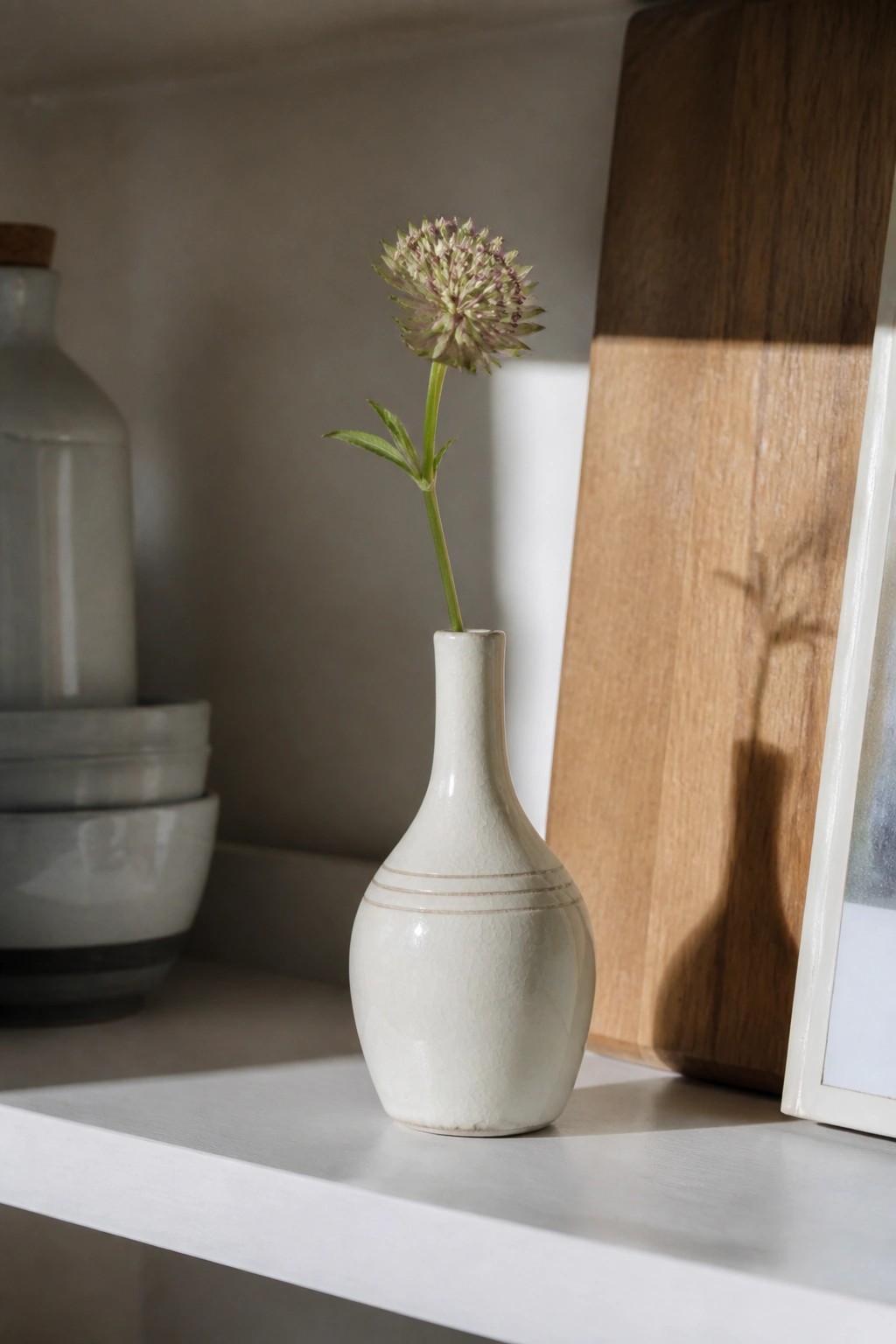
A slim bud vase with a rounded lower body and narrow neck takes on more structure when you carve a few thin horizontal lines into the clay before the final firing. The lines sit midway down the form and stay narrow enough to read as simple bands rather than busy decoration. The white crackle glaze keeps the surface light while letting the carved grooves catch a bit of shadow.
The small scale makes this shape easy to repeat in batches for gifts or shelf styling. You can shift the same line pattern onto taller cylinders or low bowls by changing the spacing and number of bands. In a kitchen or entryway, the narrow neck keeps single stems upright without needing extra support, and the carved detail photographs cleanly for Pinterest without competing with the flower.
Minimal Line Carved Cat Figurine
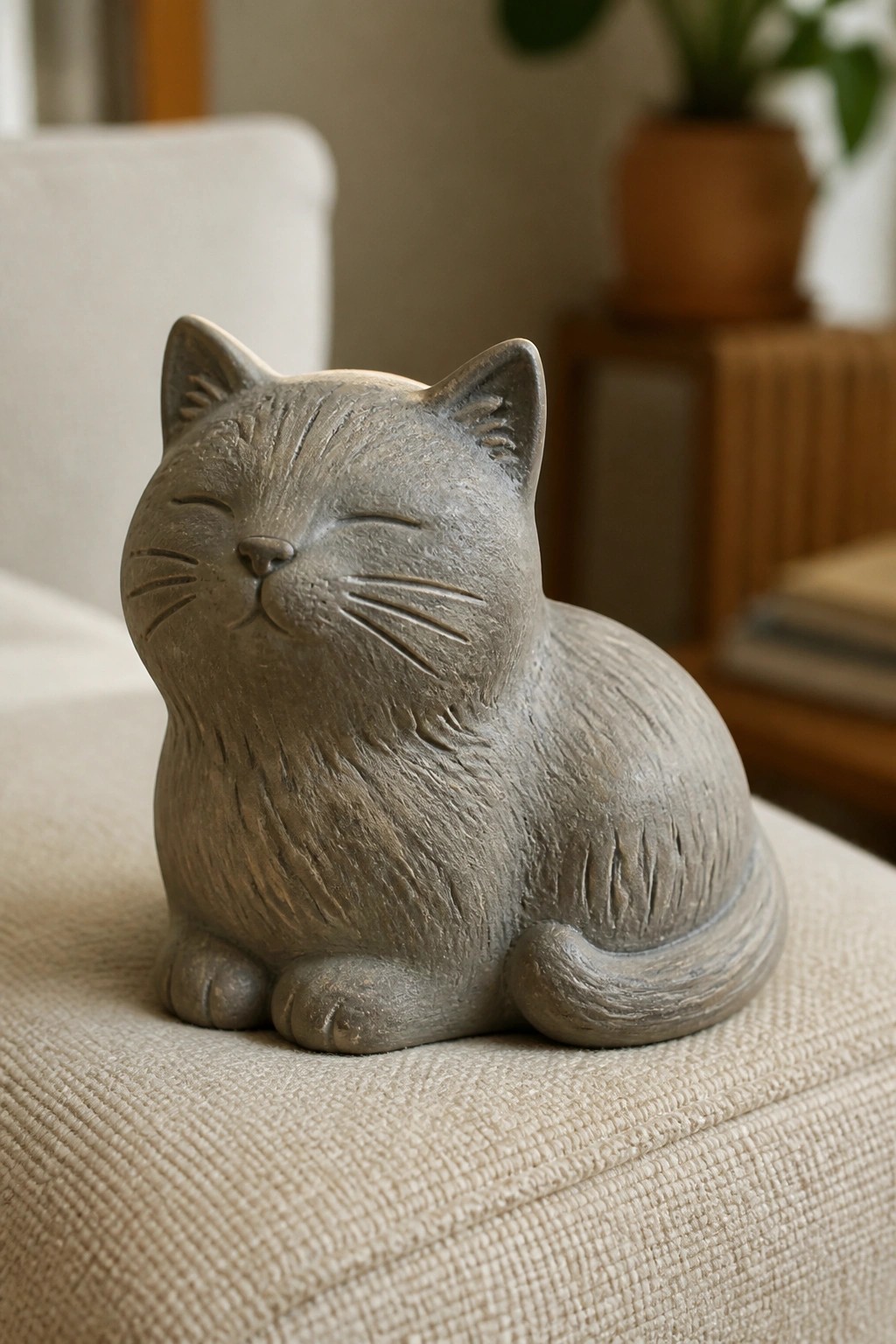
A seated cat figurine made from clay becomes a strong surface-carved project when you use fine incised lines to mark the fur, whiskers, and facial features. The closed eyes and relaxed posture read clearly through the carved details alone, keeping the design simple and focused on line work rather than added color or glaze. This style fits the decor object category and shows how basic etching can give a small sculpture enough texture and definition to stand on its own.
What makes this idea useful is that the same carving approach translates easily to other animal shapes or even simple abstract forms while staying consistent in scale and finish. The small size makes it practical for a shelf, desk, or side table without taking up much space. You could rework the line pattern by spacing the fur marks farther apart or carrying the carving style over to a matching set of two or three figures.
Minimal Incised Lines on Nesting Ceramic Bowls
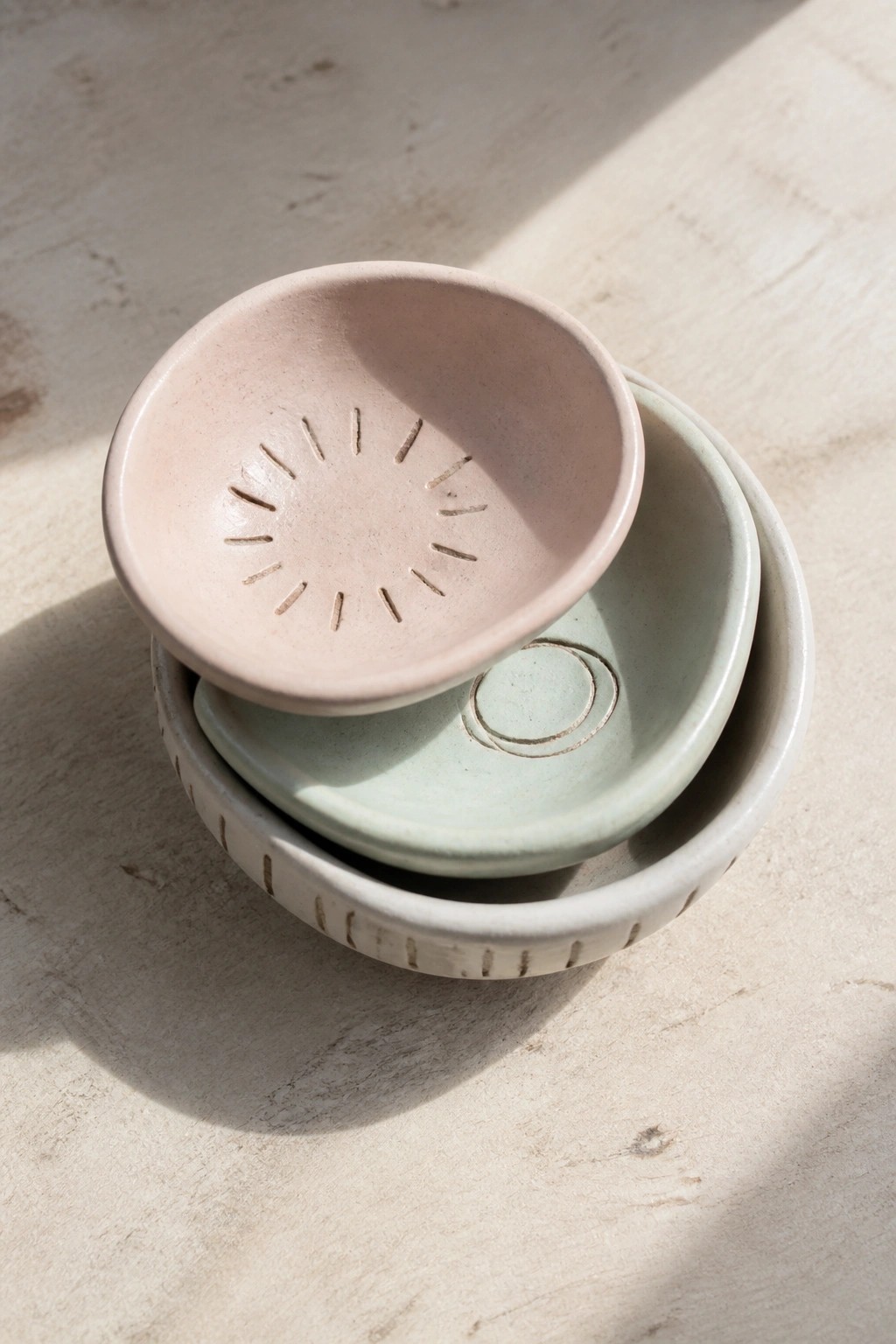
Small ceramic bowls take on a modern look through simple surface carving. One bowl shows short radiating dashes that form a loose sunburst in the center. Another uses two concentric circles, while the bottom bowl has evenly spaced vertical ticks along the outer rim. The matte pastel glazes in pink, mint, and off-white let the carved lines read clearly without extra decoration.
What makes this idea useful is how the same line motifs can move easily to ring dishes, soap trays, or small catch-all plates. The small scale fits well on a dresser or bathroom counter where bigger pieces would feel crowded. You could reduce the sunburst to four or five lines for a quicker version or repeat the vertical ticks around a mug instead. The clean contrast between the incisions and the soft glaze keeps the result looking current for everyday styling.
Minimal Impressed Lines Around a Lidded Jar Rim
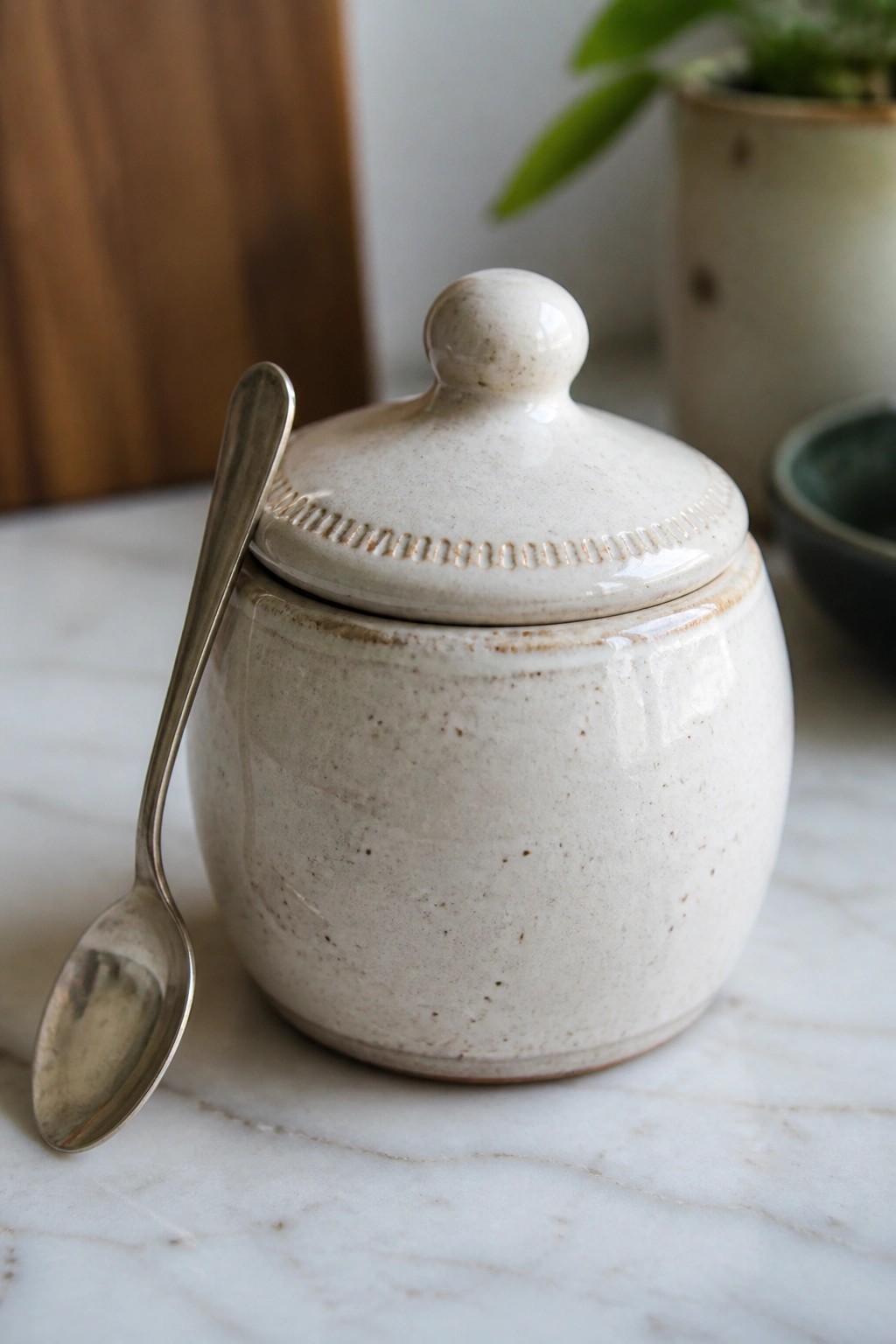
A small lidded jar gains interest when a narrow band of short impressed lines runs around the edge of the lid. The rest of the surface stays plain with a speckled matte glaze that lets the carved detail stand out without competing. The knob handle and rounded body keep the form simple so the line pattern reads as a deliberate accent rather than decoration spread across the whole piece. This approach fits the category of kitchen storage jars or small canisters meant for salt, sugar, or loose tea.
What makes this idea useful is how the carved band can be added to any round lid using only a simple tool or stamp. The same narrow repeat works on a taller canister or a smaller bathroom jar by adjusting only the width of the band. A piece like this sits comfortably on a countertop where the matte texture hides daily handling marks. The pattern also translates directly to a tray or a covered butter dish if you want to carry the line detail across a set.
Oval Hanging Decor with Minimal Incised Lines
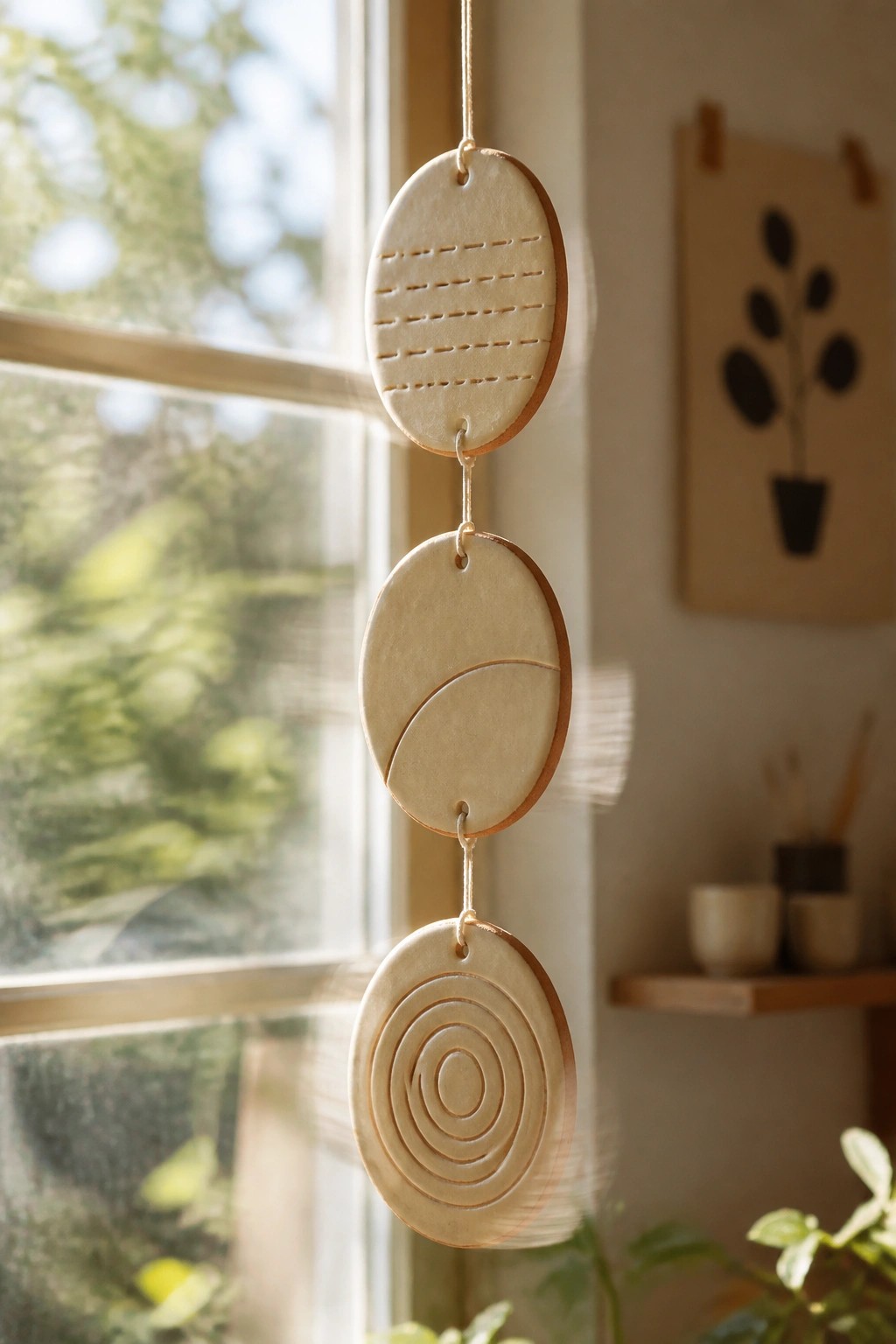
Three oval ceramic pieces are strung vertically with cord to create a lightweight hanging decoration. Each piece carries a different minimal line pattern carved directly into the surface: horizontal dashes on the top oval, a single curved divider on the middle one, and concentric circles on the bottom. The clay is finished in a matte off-white tone that leaves the carved lines visible as light shadows without added color or glaze. This format suits a simple vertical decor object that can be hung in a window or against a plain wall.
What makes this idea useful is how the oval shape and basic line carvings translate easily to other sizes or single pieces. You can repeat just the concentric circles on a round tile for a small wall accent or shorten the whole arrangement into a pair of hanging ornaments. The neutral surface lets the carved patterns stay the focus, so the same approach works for mixing a few different line styles on one string without clashing. For a gift or quick project, the stringing method requires no extra hardware beyond basic cord and a few drilled holes.
Vertical Grooves on a Desk Holder
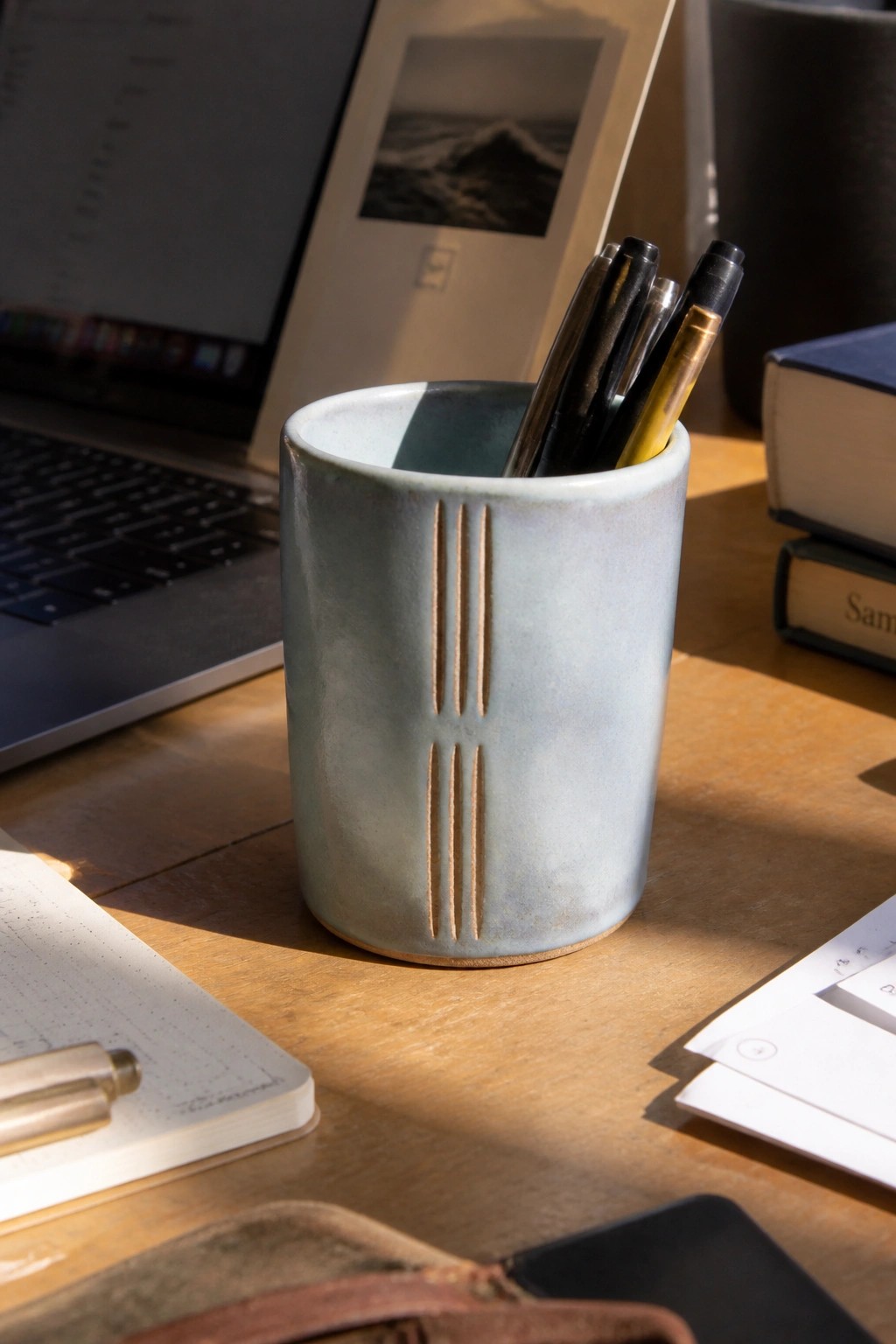
A cylindrical ceramic holder with three narrow vertical grooves carved down the front makes a straightforward desk organizer. The light blue-green glaze sits matte over the form while the incisions reveal the clay body for subtle contrast. This keeps the surface pattern minimal and lets the carved lines do the visual work instead of added decoration or color.
What makes this idea useful is how the grooves stay simple enough to repeat on other basic shapes like a small cup or a low tray. The same carving could be spaced wider on a taller cylinder or shortened for a match holder. A piece like this works especially well as desk storage because the neutral tone blends with most workspaces without competing with other items.
Radiating Lines Carved Across an Oval Platter

A large oval platter uses a set of evenly spaced incised lines that fan out from one central point to create a simple radial pattern. The lines stop before reaching the rim so the border stays smooth and the focus stays on the carved surface. A matte earthy glaze keeps the texture visible while letting the lines read as soft grooves rather than sharp contrast. This approach fits the category of surface-carved serving ware where the pattern stays minimal but adds clear visual structure.
What makes this idea useful is how the radial layout works on any oval or round form without needing extra color. You can scale the same pattern down for dinner plates by reducing the number of lines or try it on a rectangular tray by shifting the center point. The neutral glaze also lets the piece blend into existing tableware while the carving gives it enough detail to photograph well for sharing. For a first attempt at line carving, the wide flat surface of a platter gives plenty of room to practice spacing before moving to smaller pieces.
Frequently Asked Questions
What types of clay are best suited for creating surface carved pottery with minimal line patterns? Stoneware and porcelain clays work well because they hold fine details during carving and produce smooth surfaces that emphasize clean lines. Choose a clay with fine grog to reduce cracking risks when carving shallow patterns.
Which tools should beginners use to achieve precise minimal line patterns on pottery? Start with a sharp needle tool to lightly sketch designs and a small loop or sgraffito tool to remove thin clay layers. Practice on leather hard clay to control depth and keep lines consistent without over carving.
How can I adapt these surface carved ideas to create functional pottery pieces? Focus carvings on non contact areas like the exterior of vases or bowls. After bisque firing apply a food safe glaze to seal the surface and ensure the piece remains practical for everyday use.
What firing and glazing techniques help highlight minimal line patterns effectively? Bisque fire first to set the carved details then apply a contrasting underglaze in the lines before a clear top glaze. This process makes the patterns stand out while protecting the pottery during the final high fire.
Where can I source additional inspiration for modern minimal line pottery designs? Explore ceramic artist portfolios on Instagram or visit local pottery studios for hands on workshops. Experiment with simple geometric motifs on test tiles to develop your own variations of the ideas.

Pottery Path is my cozy corner of the internet where I share clay ideas, pottery inspiration, and simple projects you can recreate at home. I love exploring everything from air dry clay to handbuilt pottery to cute minis that brighten your day. My goal is to make clay crafting feel easy, fun, and welcoming for anyone who wants to try it.
You will find beginner friendly tutorials, creative pottery painting ideas, and lots of warm inspiration for slow and happy crafting. If you enjoy hands on creativity, this space will feel like home.