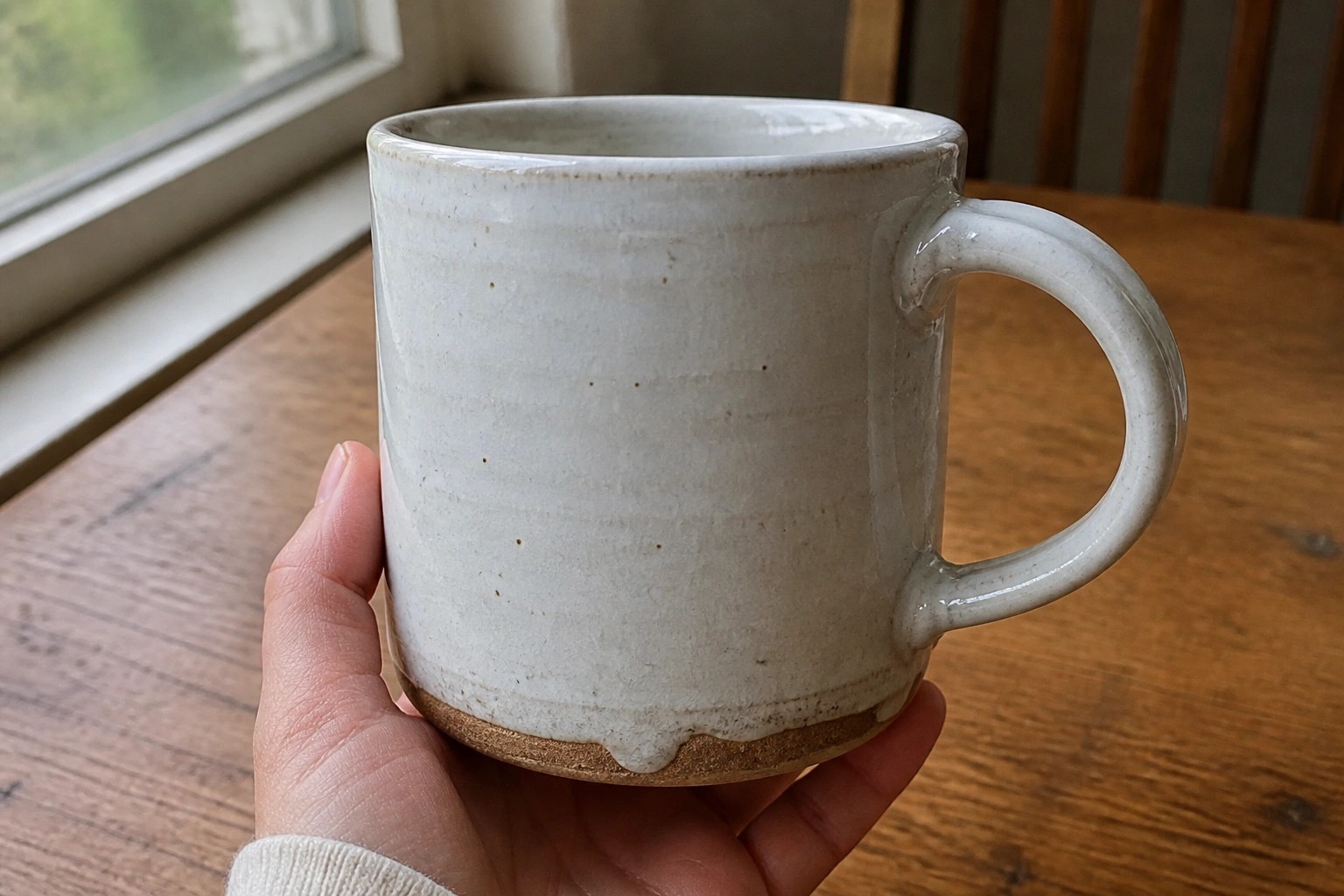
I’ve been working with handbuilt pottery for a few years and smooth cylinders have become one of my go to shapes.
They are simple to form and they give pieces a quiet look that works in most spaces.
I started collecting these ideas when I wanted projects that did not require much equipment or decoration.
Most of them stay basic but I have varied the heights and added small details like handles or lids on a few.
Here are twenty two versions that all build from that same starting point.
Neutral Cylindrical Mug with Speckled Base
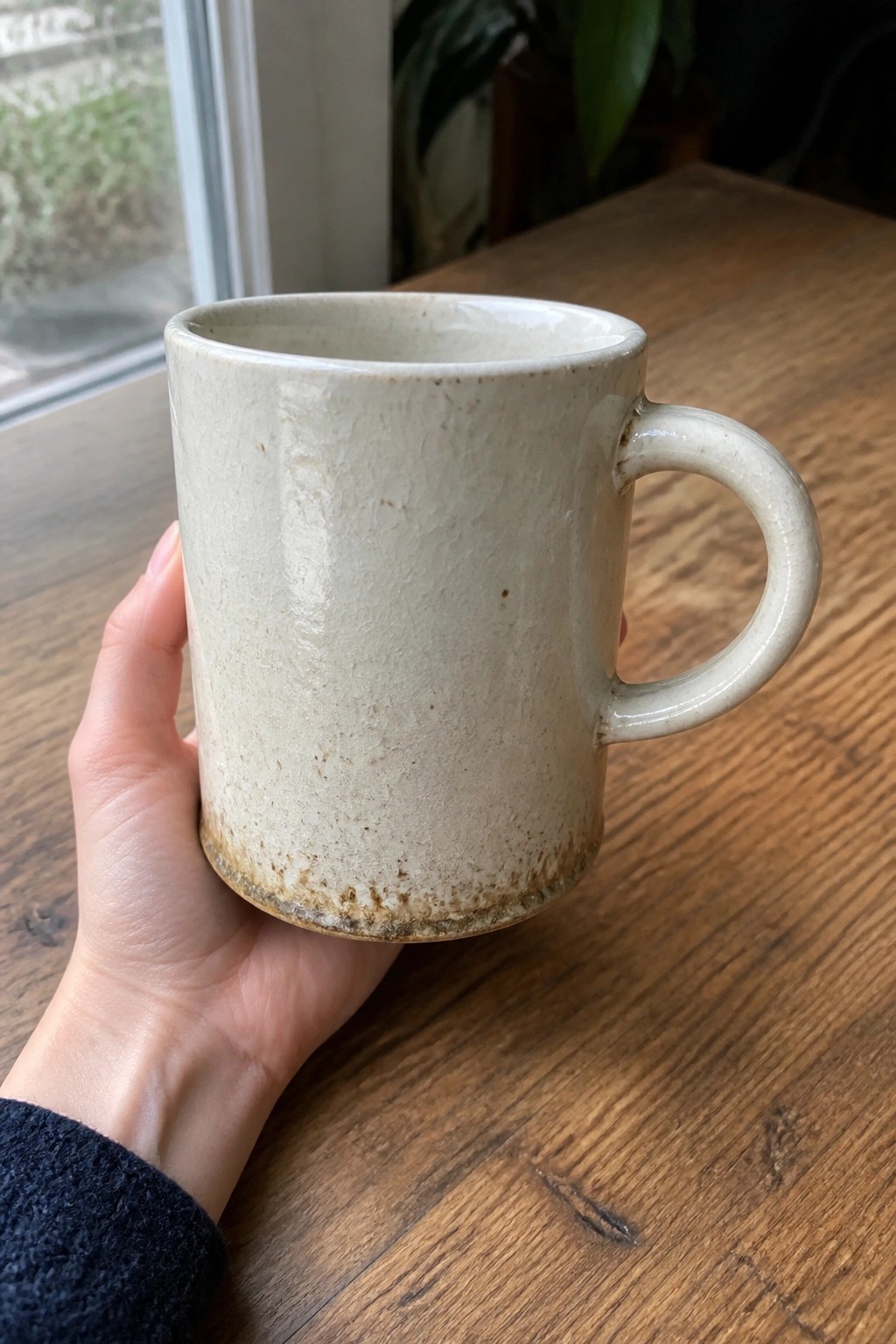
A handbuilt cylindrical mug starts as a straight-sided slab or coil form that is joined into a tube and fitted with a simple pulled handle. The matte off-white glaze keeps the surface quiet while the natural speckling and slightly darker foot give the piece a finished but understated look. This approach belongs in the minimal mug category because the clean cylinder shape stays the focus without added decoration or texture.
What makes this idea useful is how the straight walls let you change height or diameter quickly to make espresso cups, larger breakfast mugs, or even small soup bowls from the same template. You can swap the speckle for a light iron wash or leave the clay body exposed at the base for a similar effect with less glaze work. In a kitchen this shape stacks easily and pairs with other neutral ceramics without competing for attention.
Slim Cylindrical Bud Vase
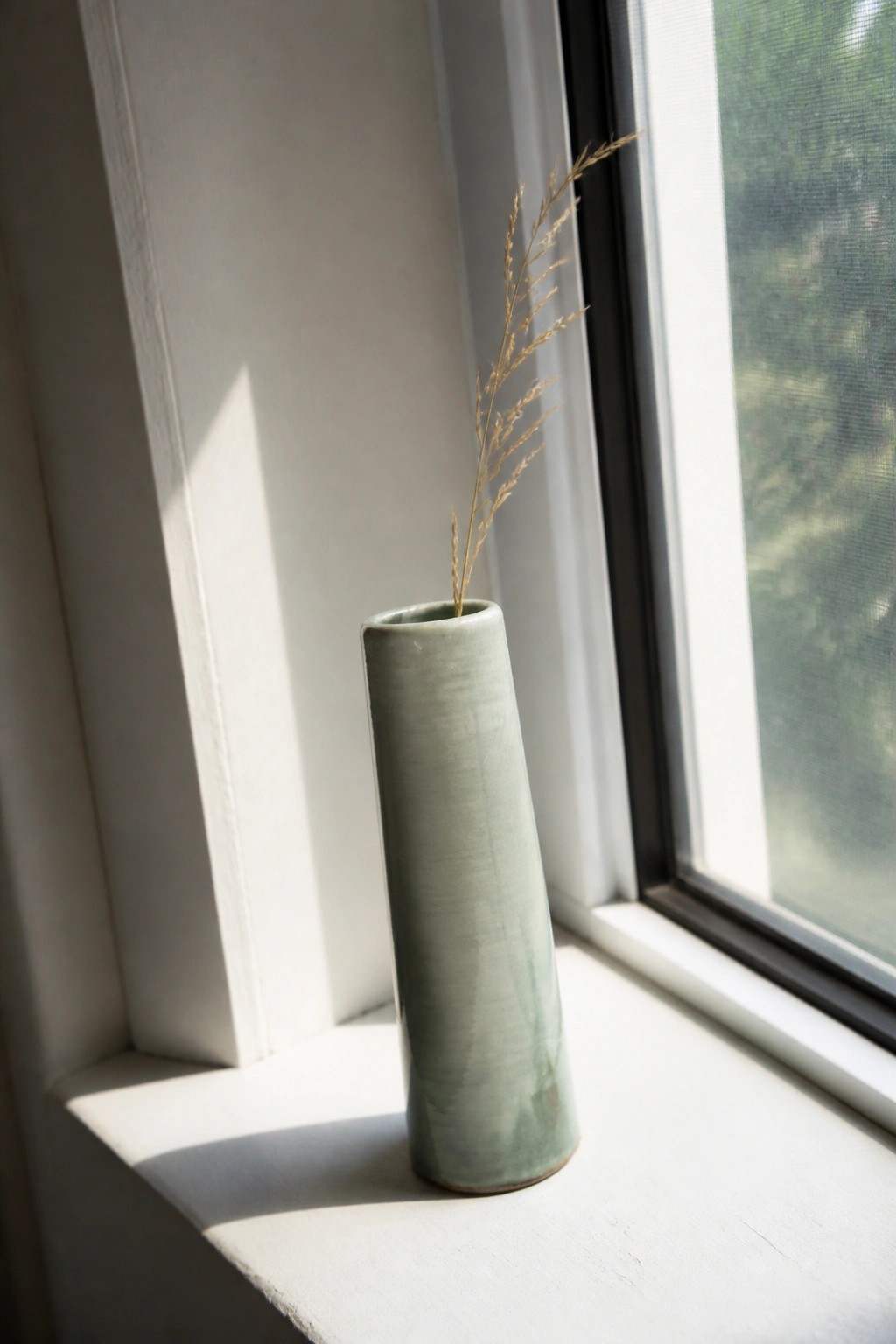
A tall narrow cylinder built from clay creates a simple bud vase that holds one or two dried stems upright. The smooth walls and soft green glaze keep the shape clean and let the form do the work. This style fits the category of minimal decor objects that stay useful without extra detail or color variation. Handbuilt construction allows even wall thickness so the piece stands straight and stable on a flat surface.
What makes this idea useful is how the proportions can be changed for different stem lengths or room scales. You can shorten the height for a desk version or add a slight flare at the rim to make pouring easier if you adapt it into a small pitcher. The same cylinder works as a single-stem vase on a shelf or grouped with two shorter ones of the same glaze. This shape shows up often in saved pins because it stays versatile across plant styling and neutral interiors.
Two Tone Cylinder Planter
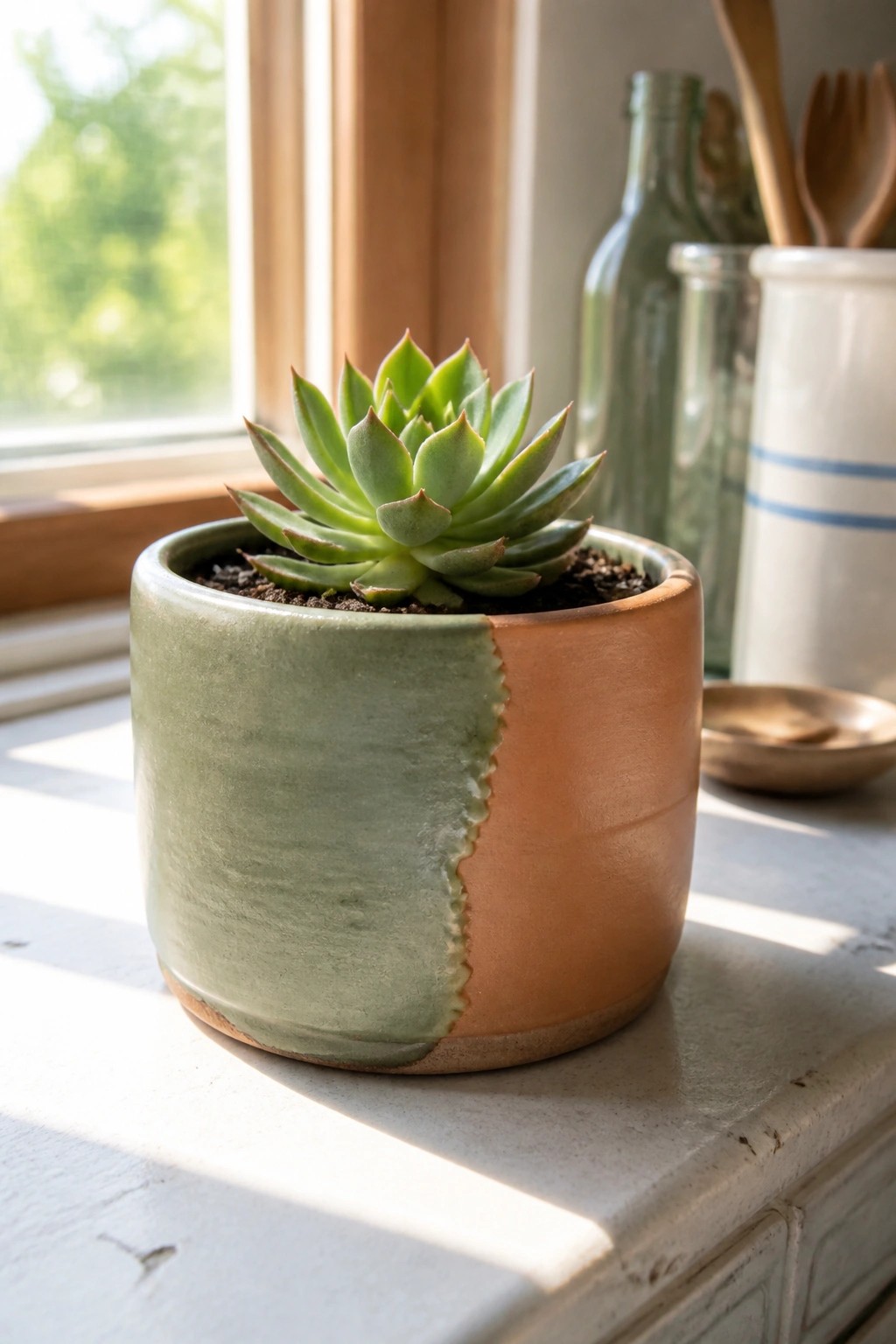
A handbuilt cylindrical planter gets its main interest from a simple split finish. One side takes a soft green glaze while the other remains the natural clay color, meeting along an irregular line that runs down the side. The smooth cylinder shape stays intact so the contrast between the two surfaces does all the visual work.
What makes this idea useful is how little extra work the split requires once the form is made. It suits a windowsill or small shelf where a compact plant needs a clean holder. You can change the glaze colors or straighten the dividing line if you want a more even look. The same cylinder could be turned into a small utensil holder by skipping the drainage hole.
Cylindrical Tealight Holder with Metallic Interior

A small handbuilt cylinder makes a straightforward tealight holder when the walls stay thick enough to feel stable. The exterior keeps a matte off-white finish while the interior gets coated in a glossy warm glaze that catches the light from the flame. This simple contrast turns the basic shape into something that works for low lighting without adding extra detail or decoration. The form stays compact so it fits on a nightstand or shelf without crowding other objects.
What makes this idea useful is how the cylinder can be resized in height or width to match different tealight cups or battery candles. You could keep the metallic lining or switch it to a plain matte glaze depending on the room. In a bedroom or living space the holder stays practical for everyday use and the same base shape adapts quickly into a small bud vase or incense stand if you change the opening.
Striped Cylinder Utensil Holder
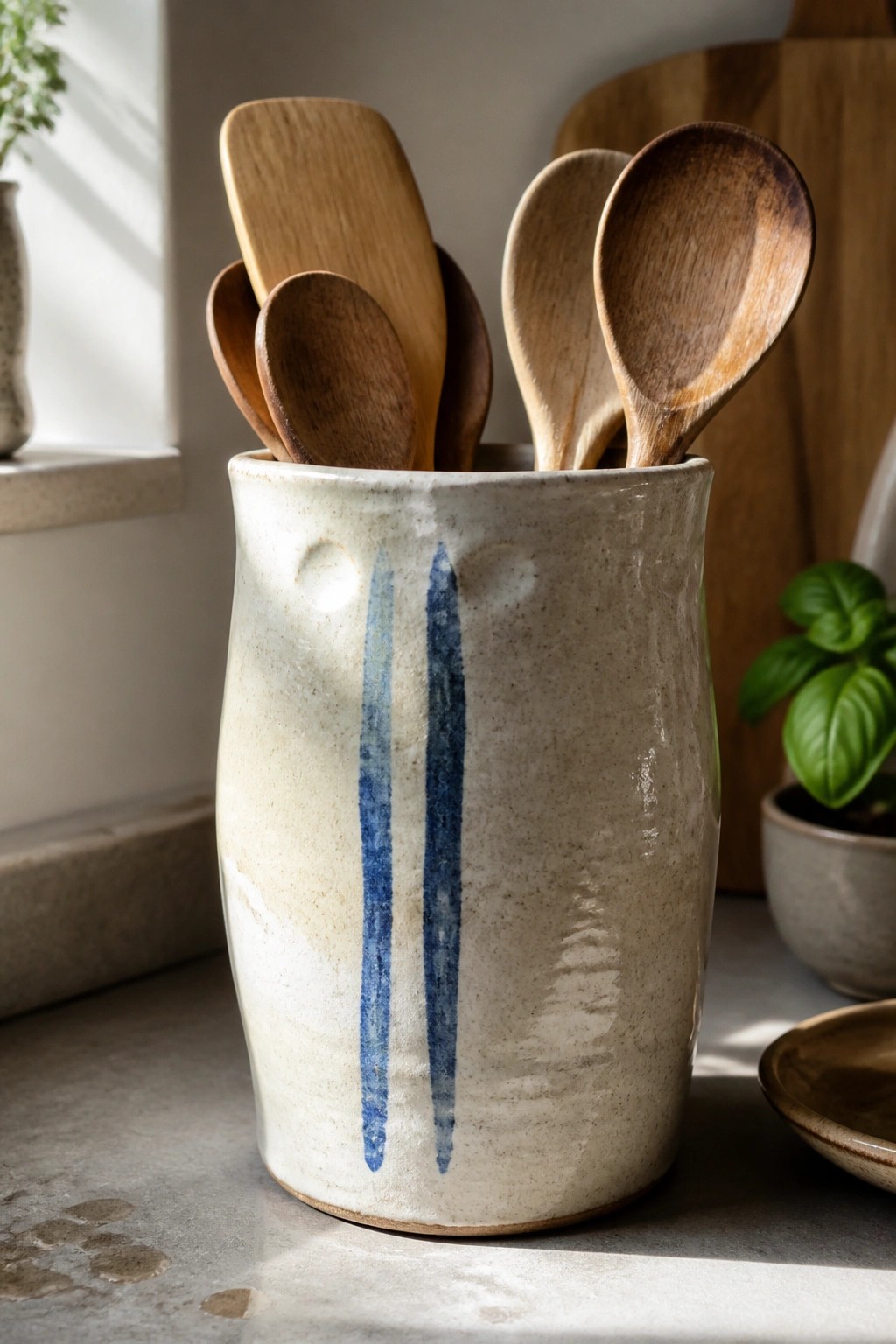
A tall cylindrical holder made from clay keeps wooden spoons and spatulas upright and easy to grab on a counter. The smooth form stays simple with two vertical blue stripes running down the front and a few small dimples pressed into the sides. This approach fits the kitchen item category and works because the stripes add contrast without complicating the overall shape. Handbuilt pottery gives the surface a slight texture that still reads as clean and minimal.
What makes this idea useful is how the height and round shape let you store a full set of tools in one spot. You could repeat the stripe pattern in different colors or remove the dimples to make a plainer version for a more neutral kitchen. In a kitchen this kind of piece keeps tools off the counter while matching other simple ceramics like small plant pots. The same cylinder could be made shorter for desk supplies or left open at the base to serve as a small planter.
Nesting Cylindrical Bowls
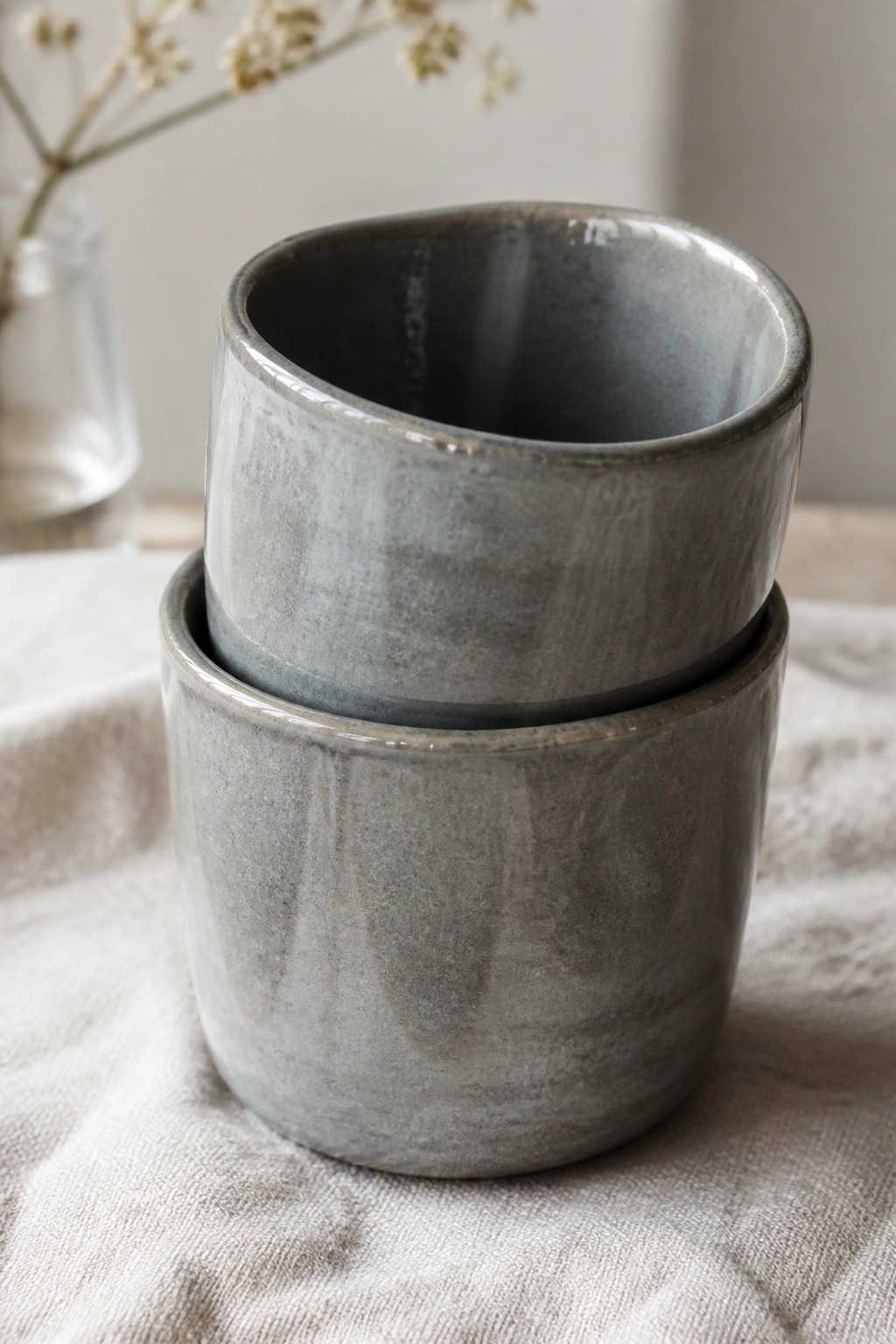
These handbuilt cylinders create a simple pair of nesting bowls with straight sides and a muted gray glaze that shifts in tone across the surface. The smooth form stays minimal while the slight variation in the glaze gives the pieces visual interest without added decoration or texture. This project works as a basic kitchen or tableware idea that can be repeated in different sizes.
The cylindrical shape makes the bowls easy to stack and store when not in use. You can adapt the same form into larger versions for serving or smaller ones for holding spices or small tools on a counter. The neutral finish also lets the idea transfer quickly to other colors or clay bodies if you want a matching set.
Nested Cylinder Toothbrush Holder

A handbuilt ceramic toothbrush holder built from two concentric cylinders creates separate compartments that keep brushes upright and organized. The outer cylinder forms the main body while the smaller inner tube provides built-in support and an extra slot, making the whole piece function as a compact bathroom item. The smooth, minimal shape and soft matte glaze keep the focus on clean lines rather than decoration.
What makes this idea useful is how the nested cylinders solve the tipping problem without adding feet or extra pieces. You could scale the same form down for a desk pen holder or widen it slightly for a kitchen utensil caddy. The straightforward cylindrical construction works especially well for quick handbuilding projects and photographs cleanly for bathroom organization boards.
Shallow Cylinder Ring Dish

A low cylindrical ring dish gives you a compact place to keep rings and small jewelry in one spot. The form stays simple with straight sides, a flat base, and a thin contrasting rim that defines the edge without extra detail. This shape works as a dedicated ring dish while staying minimal enough to blend into a dresser or desk surface.
What makes this idea useful is how little clay and time it takes to build. You can handbuild the same cylinder from a slab and trim the rim for a clean finish, then scale it slightly taller to turn it into a small soap dish or a shallow tray for keys. The small size also makes it easy to batch out a few at once for gifts.
Corked Spouted Cylinder Cruet

A simple handbuilt cylinder forms the body of this cruet, with a short spout pulled or cut into one side for controlled pouring. The form stays narrow and tall, finished with a matte green glaze that shows subtle horizontal variation from the making process. A cork stopper fits into the open top to keep contents sealed. This setup turns a basic cylindrical shape into a practical kitchen piece for oil, vinegar, or dressing.
The shape does a lot of the work here because the straight sides and even diameter make the form quick to slab-build or throw in multiples. You can adapt the same cylinder by changing the spout angle or trying a different glaze color to match other kitchen pieces. In a kitchen this kind of cruet keeps counters uncluttered while still being functional. For a gift or pantry set, the same proportions work well scaled slightly taller or paired with a matching tray.
Speckled Cylindrical Salt Cellar

A small cylindrical salt cellar gives you a compact kitchen container that stays functional without extra details. The straight sides and short height keep the form simple, while the light speckled glaze adds texture that contrasts with the smooth wood of a resting spoon. This approach fits the minimal handbuilt category because it relies on basic pinching or slab construction and a single glaze layer rather than added handles or carving.
What makes this idea useful is how the same cylinder shape can be repeated for other small kitchen items like a sugar bowl or spice holder by changing only the interior depth. The neutral speckled surface works on wood or stone counters without clashing, and you can swap the spoon for a metal or ceramic one if you prefer. For a variation, make two matching cylinders and nest one inside the other to create a lidded version for moisture-prone spots like near the sink.
Minimal Cylinder Incense Holder
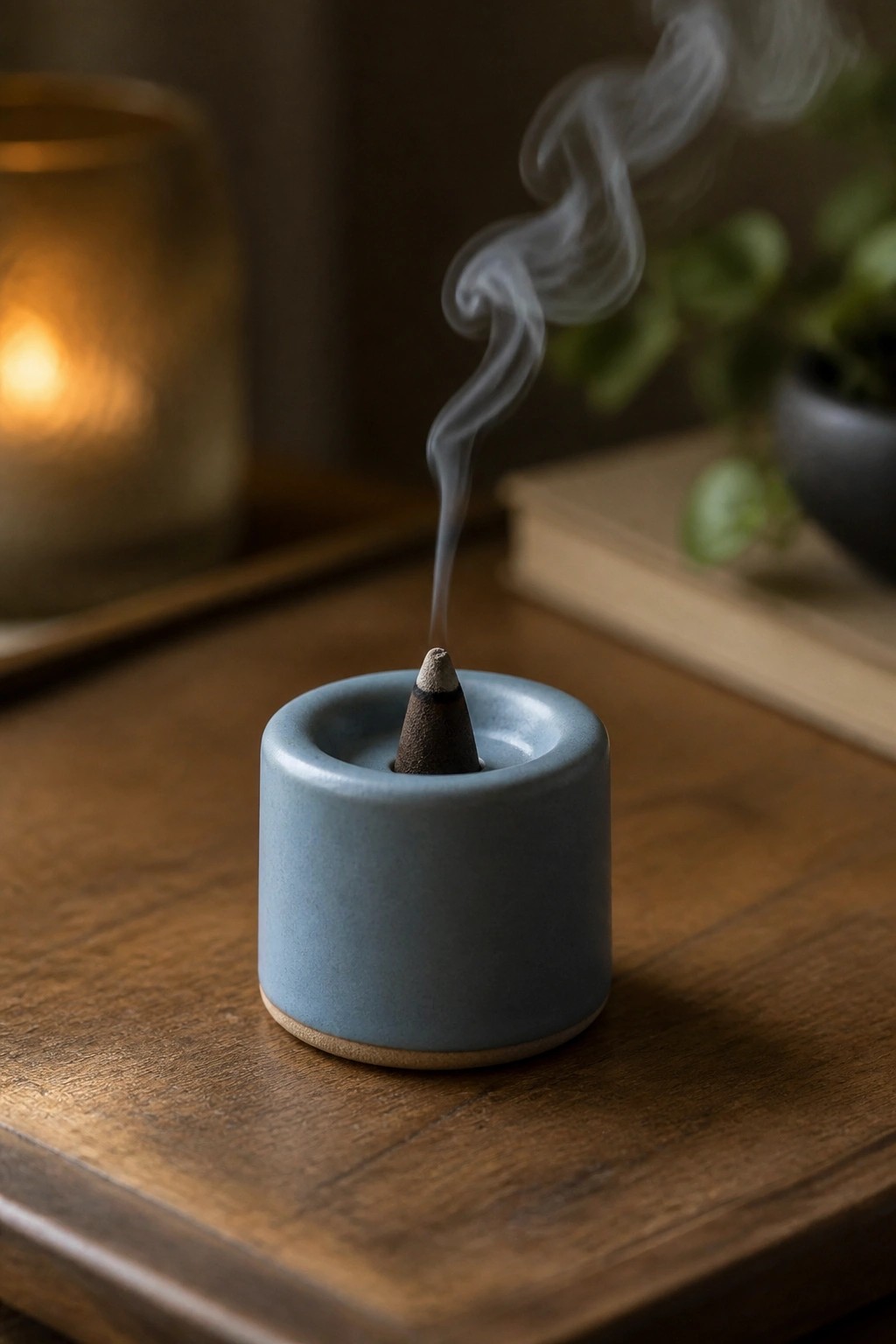
A small handbuilt clay cylinder with a centered opening makes a straightforward holder for incense cones. The form stays clean with a matte blue glaze on the exterior and a simple unglazed foot. This approach keeps the focus on the cylindrical shape while creating a stable, low-profile piece that works as both a functional burner and a quiet desk or shelf object.
What makes this idea useful is how easily the same cylinder can be resized or recolored to fit different rooms. The opening can be adjusted during building to fit cones or sticks without extra parts. In a bathroom or entryway, this shape takes up little space yet keeps ash contained. The basic cylinder also translates directly into a match holder or tiny tray by widening the top or flattening the rim.
Minimal Cylindrical Canister with Indented Lid

A lidded cylindrical jar makes a straightforward storage piece for dry goods or small household items. The smooth cylinder keeps the overall shape simple and stackable, while the lid includes a shallow central well that adds a single defined detail without breaking the clean lines. This approach works as a basic handbuilt form that can be repeated in different sizes to create matching sets.
What makes this idea useful is how the cylinder shape translates directly into practical storage without extra parts. You can scale the same form for coffee, sugar, or bathroom cotton balls, and the indented lid detail can be swapped for a small pulled knob or left plain depending on the glaze. In a kitchen or open shelf, these jars create a uniform row that still looks handmade rather than factory-made.
Tall Cylinder Vases in Mixed Glazes

Three narrow cylinders built from the same basic form work as vases for single stems or small flower bunches. The straight sides and open tops keep the focus on the glaze colors, which range from soft pink to warm yellow to cool blue-gray. Using the same shape across the set makes the color differences stand out without any added texture or decoration. This fits the minimal handbuilt category because the cylinders can be made quickly by hand or on the wheel and finished with whatever glazes are on hand.
What makes this idea useful is how the repeated shape lets you test different glaze results in one firing. The narrow profile takes up little space on a shelf or table while still holding fresh flowers upright. You could rework the same cylinder into shorter versions for desk use or stretch one taller for a single large bloom. In a small batch, mixing matte and glossy finishes on the same form gives enough variation to keep the set interesting without extra steps.
Cat Cylinder with Painted Face

A handbuilt cylinder forms the base for this small cat piece, with two ears pinched and attached at the top rim. Simple black lines create the eyes, nose, and whiskers directly on the surface, keeping the rest of the form clean and untouched. The result is a compact decor object or tiny holder that stays true to a smooth cylindrical shape while adding only the most basic features needed to read as a cat.
The shape does a lot of the work here since the straight sides and flat top make it easy to repeat at different heights for a matching set. You could adapt the same idea into a toothbrush holder, small plant pot, or desk catch-all by changing the scale or swapping the painted face for a different motif. For a gift, something like this stands out on Pinterest because the minimal lines and plain cylinder keep it quick to make yet clearly intentional.
Hanging Cylinder Planter with Leather Strap
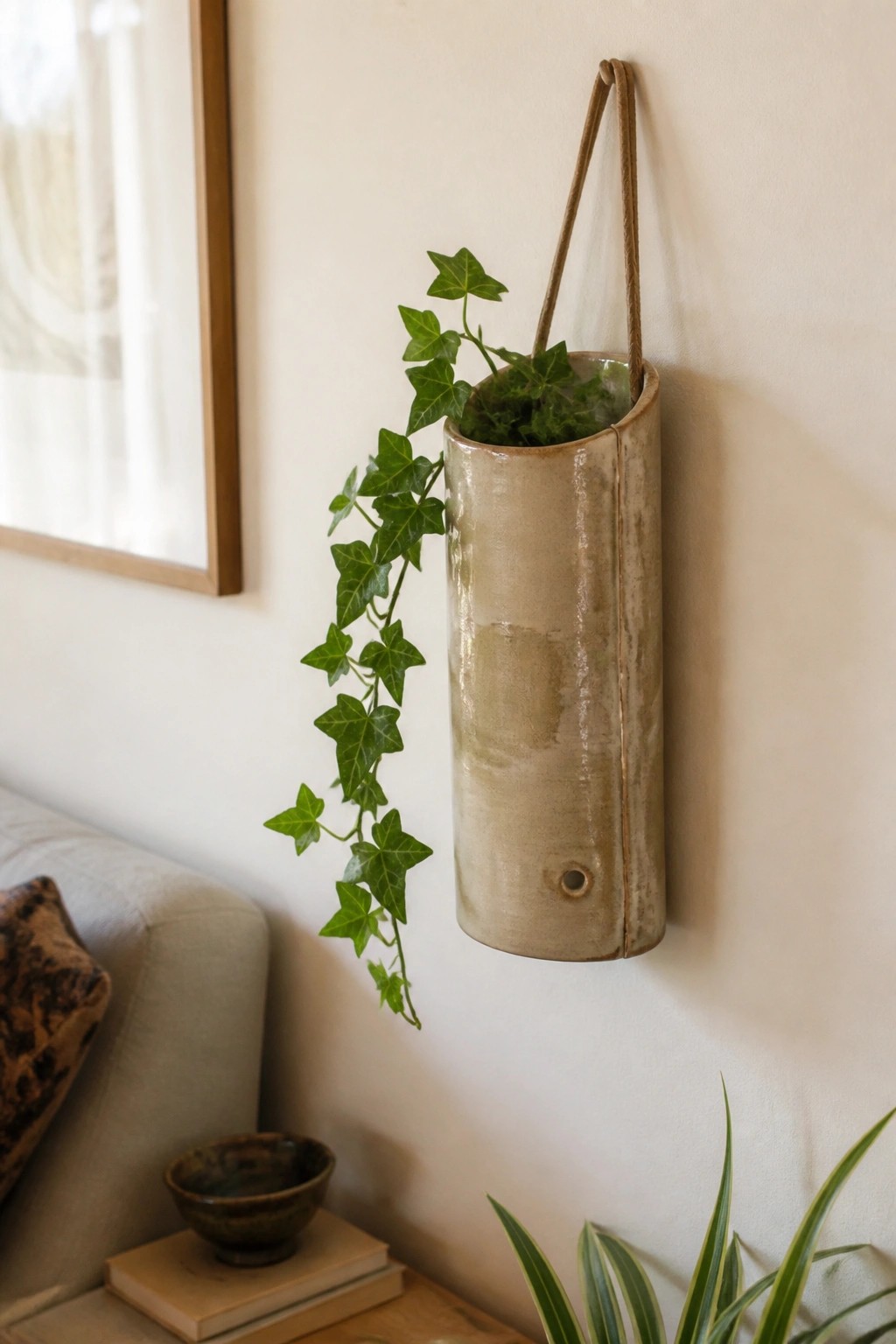
A tall cylindrical planter formed from handbuilt clay creates a simple vertical shape that hangs flat against the wall using a leather strap threaded through two top holes. The smooth sides stay free of extra detail, and a small drainage hole near the base keeps the form clean while allowing water to escape. The neutral glaze gives the surface a soft matte finish that works with most plant types. This idea sits squarely in the minimal cylindrical planter category.
What makes this idea useful is how the tall narrow shape fits into tight wall spaces where a wider pot would not. You could shorten the cylinder for a desk version or widen it slightly for larger root systems without changing the overall look. The leather strap lets you swap hanging heights or move the piece between rooms easily. In a small apartment, this form keeps plants off surfaces while staying simple enough to batch produce.
Small Mixed-Glaze Cylinder Cups
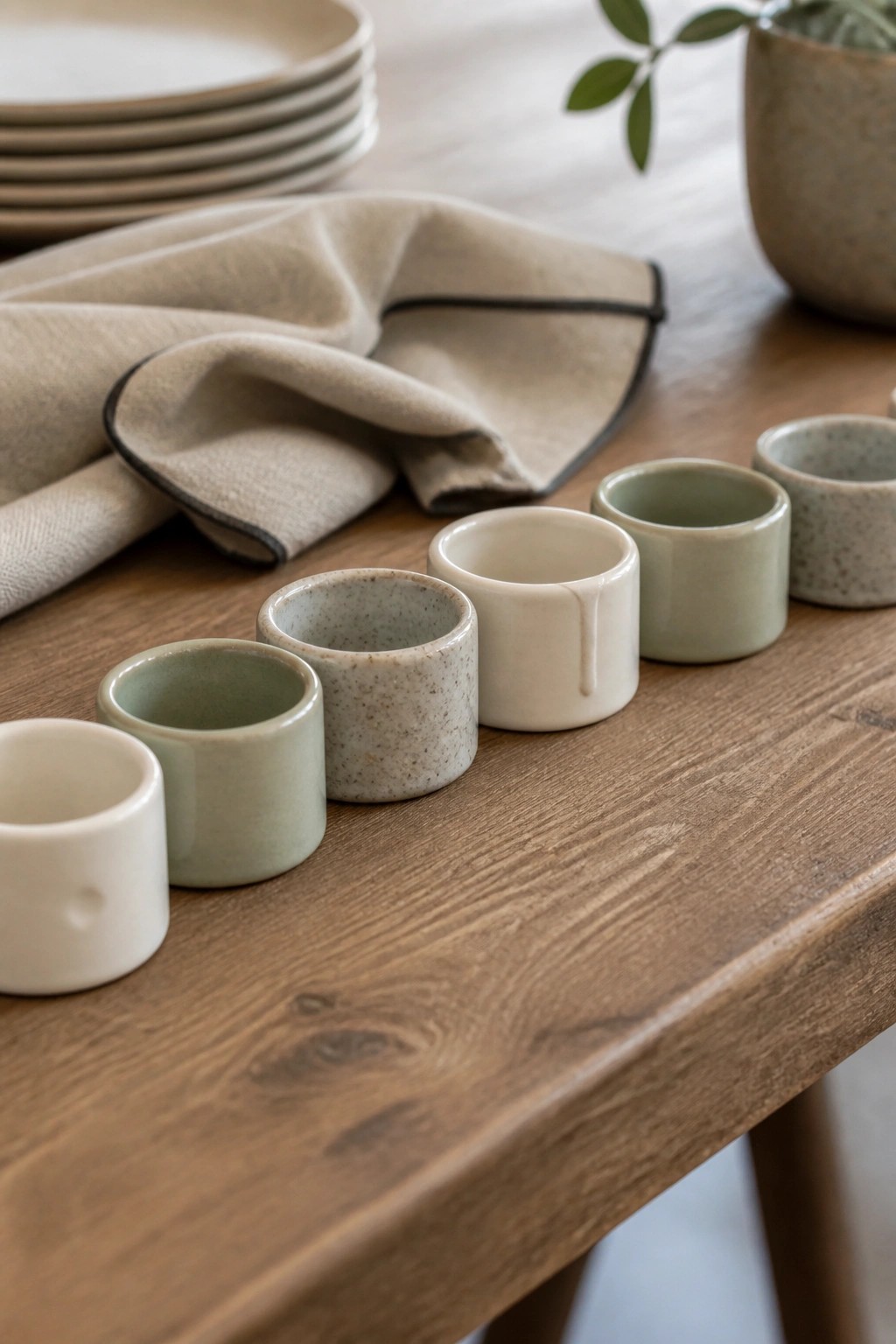
Small cylindrical cups built from clay work well as condiment holders, small snack dishes, or catchalls for jewelry and keys. The smooth walls stay minimal while the matte glazes in white, soft green, and speckled beige give each piece a slightly different surface without adding pattern or detail. Keeping the forms short and open makes them easy to repeat and practical for everyday table use.
The shape does a lot of the work here because the same cylinder can be made in one session and then glazed in a limited palette for a quick set. These pieces fit neatly along a table runner or on open shelving for small storage. You could adapt the height to make taller versions for pencils or shorten them into ring dishes while using the same glazing approach.
Cylinder Toothpick Holder with Rim Cutout
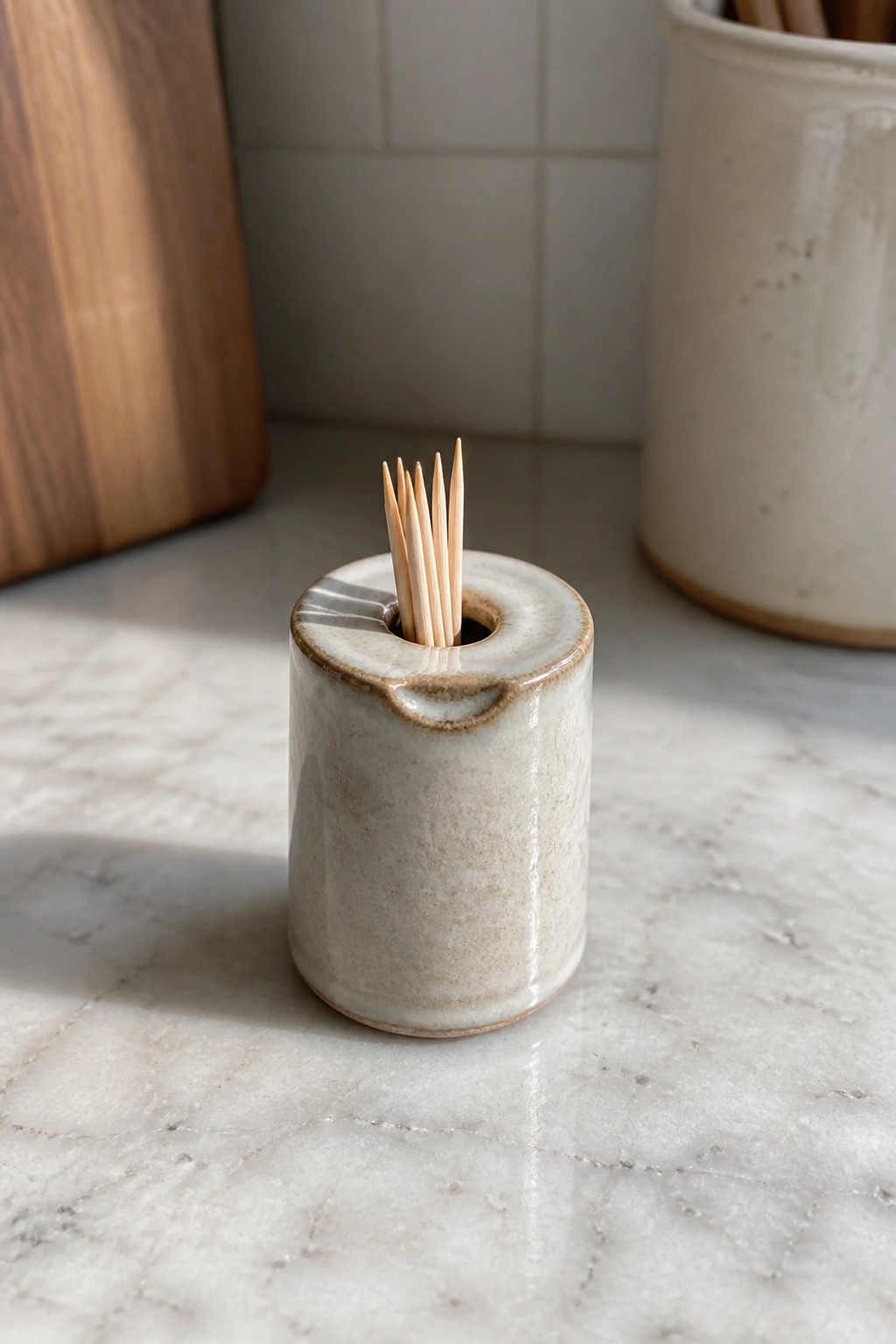
A compact clay cylinder makes a practical toothpick holder for a kitchen counter or table. The form stays simple and smooth, but a small cutout along the top rim gives easy access to the toothpicks without letting them spill. The light speckled glaze keeps the piece neutral so it fits with other kitchen tools or dinnerware. This approach turns a basic cylindrical shape into a functional holder that stays tidy and takes up little space.
What makes this idea useful is how the cutout turns a plain tube into something more usable while keeping the overall shape clean. You could repeat the same rim detail to hold cotton swabs, matches, or small craft sticks in other rooms. The small size means it uses little clay and can be made in batches for quick gifts. A version with a matte finish or a slightly wider base would work just as well for different countertop styles.
Low Cylinder Flower Frog

A simple handbuilt clay cylinder with a flat top and multiple drilled holes creates a functional flower arranger that keeps stems upright without extra mechanics. The low, wide shape sits stably on a table while the neutral speckled glaze keeps the focus on the flowers rather than the object itself. This approach turns a basic cylindrical form into a reusable holder that works for both fresh cuttings and dried stems.
What makes this idea useful is how the same cylinder can be scaled up or down depending on whether you want a single bud vase or a full table centerpiece. The hole pattern is easy to adjust during the leather-hard stage, letting you customize spacing for thicker or thinner stems. In a kitchen or dining space, this kind of piece doubles as both decor and a practical tool for quick arrangements from the garden. For a gift, you could make several in matching glazes and bundle them with a small bundle of seasonal flowers.
Perforated Cylinder Candle Holder

A handbuilt clay cylinder works as a candle holder when small to medium holes are punched through the walls in an irregular pattern. The smooth form keeps the focus on the light that escapes through the openings, creating scattered dots on nearby surfaces once a candle is lit inside. This approach fits the minimal cylindrical category because the shape itself provides both structure and the lighting effect without extra surface decoration.
What makes this idea useful is how the cylinder handles the dual role of holder and light diffuser in one step. You could change the hole sizes or clustering to alter the wall pattern, or skip the perforations entirely and turn the same shape into a basic vase or pencil cup. In a living room or on a nightstand, the piece adds soft lighting while taking up little space. Scaling it shorter makes it suitable for tea lights if you want a quicker version to try first.
Cylindrical Match Holder with Textured Panel
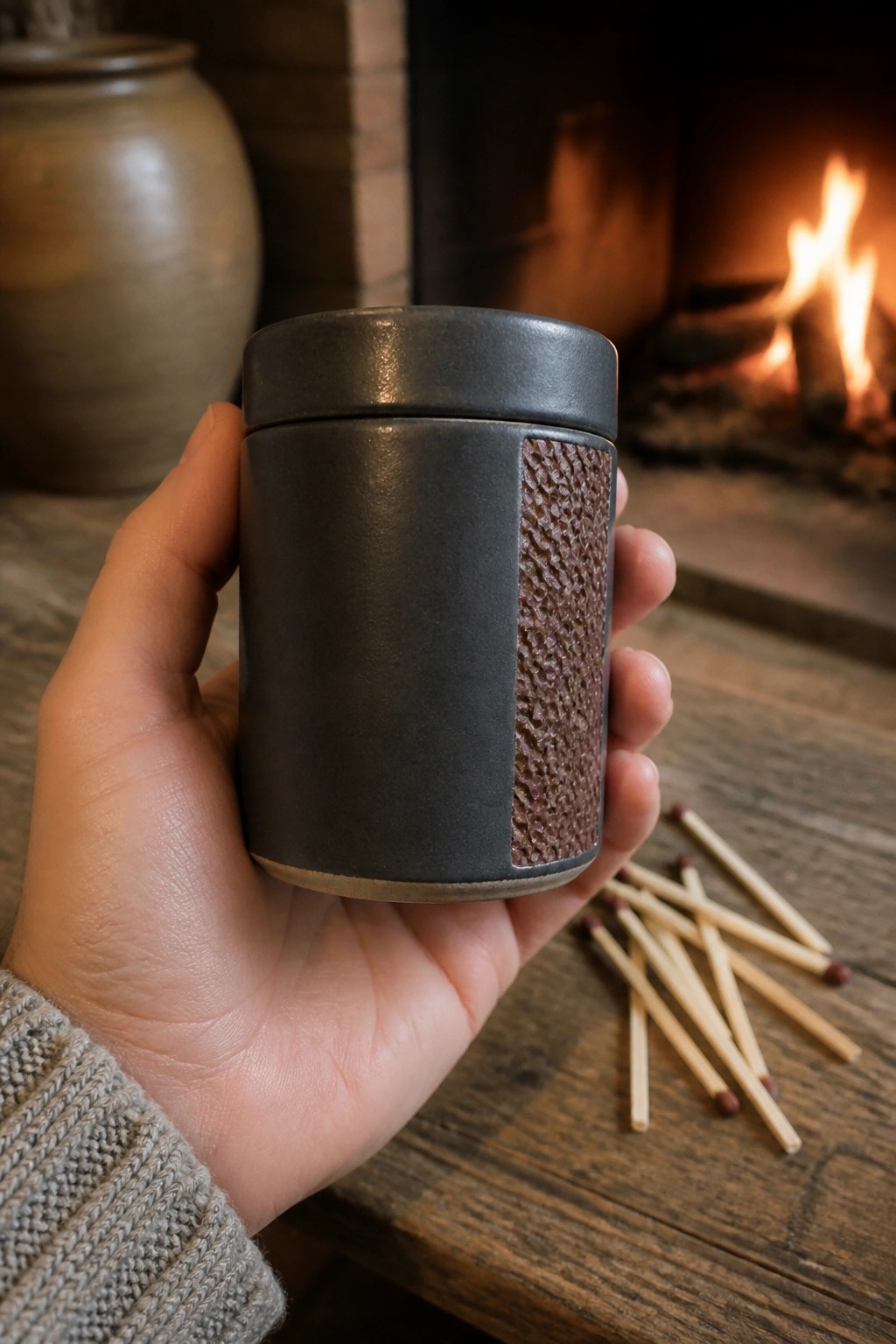
A small lidded cylinder in dark clay makes a practical match holder when one side carries a single rectangular panel of impressed texture. The smooth matte surface keeps the overall form minimal while the contrasting textured section draws the eye without adding extra elements. Handbuilding the base shape first then applying the panel lets the cylinder stay clean and simple.
What makes this idea useful is how the same proportions work for storing tea, cotton swabs, or desk supplies. You can change the panel size, swap the texture for lines or dots, or shift the color slightly to fit different rooms. The compact scale builds quickly and photographs well for sharing.
Cylinder Planter with Matching Saucer
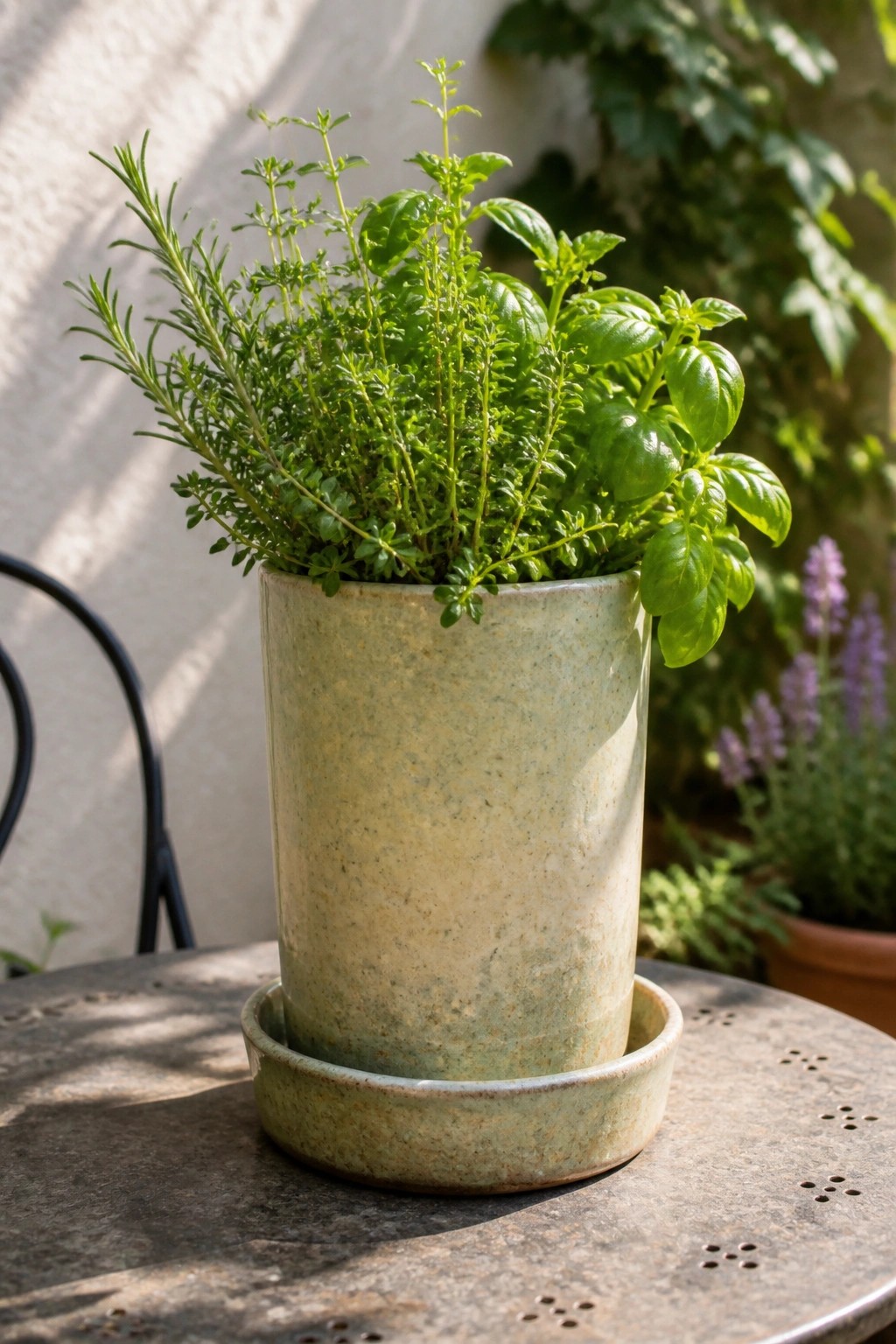
A tall cylindrical planter paired with a low matching tray gives herbs or small plants a stable base while keeping the overall shape simple and clean. The straight sides and speckled glaze let the plants show off without competing patterns or added details. This form works because the tray catches runoff and creates a complete set that still reads as minimal.
What makes this idea useful is how the cylinder and tray combination stays practical on a table or windowsill. You can change the height or width to fit different plants or make a wider version for several herbs together. The same basic shapes could be adapted into a smaller set for desk plants or turned into a matching tray for kitchen tools. The plain form also photographs well for sharing ideas online.
Cylindrical Egg Cups in Soft Glazes

These egg cups are formed as short, smooth cylinders from handbuilt clay. The clean cylindrical shape lets the form do the work, while matte glazes in lavender and mint create contrast without added decoration. One cylinder is sized to cradle a standard egg, and the same shape works for salt or small kitchen items. The slight handmade texture on the surface keeps the look simple but not machine-made.
What makes this idea useful is how the basic cylinder can be repeated in different heights or glazes for a matching set. The small scale makes it easy to fit on a breakfast table or adapt into shallow holders for spices or tea bags. You could rework the same form into slightly wider versions for small bathroom cups or desk organizers. The shape stands out on Pinterest because it stays minimal while showing off glaze color and clay texture.
Frequently Asked Questions
1. What handbuilding techniques are best for creating smooth cylindrical forms in minimal pottery? Coil building and slab construction work well for smooth cylinders. Start by rolling even coils or cutting precise slabs, then join them carefully on a cylindrical mold or form. Smooth the seams with a rib tool and water to eliminate ridges, building up layers gradually for height and strength without a wheel.
2. Which clays are ideal for these minimal handbuilt cylindrical projects? Stoneware or porcelain clays with fine particles suit minimal cylindrical forms because they hold shape well and fire to a smooth finish. Choose a clay body with good plasticity for handbuilding, and test small samples first to ensure it does not crack during drying or firing.
3. How can beginners adapt the 22 ideas to start with basic cylindrical shapes? Focus on simple variations like short tumblers or tall vases using basic cylinder templates. Begin with one or two ideas that require minimal joins, practice rolling uniform slabs, and add subtle details such as slight flares at the rim or base to keep the aesthetic clean while building skills.
4. What finishing methods help achieve a minimalist look on handbuilt cylinders? Apply a single matte glaze in neutral tones after bisque firing, or leave pieces unglazed for a raw texture if the clay is smooth. Sand any imperfections lightly before firing, and avoid decorative patterns to emphasize the clean lines and proportions of the cylindrical form.
5. How do you prevent warping in tall smooth cylindrical pottery pieces? Dry pieces slowly and evenly by covering them loosely with plastic for several days, turning them periodically. Use supports inside during construction if needed, and ensure even wall thickness throughout to maintain the smooth cylinder shape through the drying and firing stages.

Pottery Path is my cozy corner of the internet where I share clay ideas, pottery inspiration, and simple projects you can recreate at home. I love exploring everything from air dry clay to handbuilt pottery to cute minis that brighten your day. My goal is to make clay crafting feel easy, fun, and welcoming for anyone who wants to try it.
You will find beginner friendly tutorials, creative pottery painting ideas, and lots of warm inspiration for slow and happy crafting. If you enjoy hands on creativity, this space will feel like home.