
I’ve been working with slab pottery at home for a few years now and lately I’ve been trying out different ways to make serving trays.
Geometric shapes keep coming up because they are simple to measure and cut from a flat piece of clay.
My own trays usually end up with straight lines and basic patterns that still look finished without extra decoration.
I gathered some ideas that show different options for size and layout if you want to give it a try.
A few of them have become my go to pieces for holding snacks or small items around the house.
Hexagonal Slab Tray with Triangle Accents
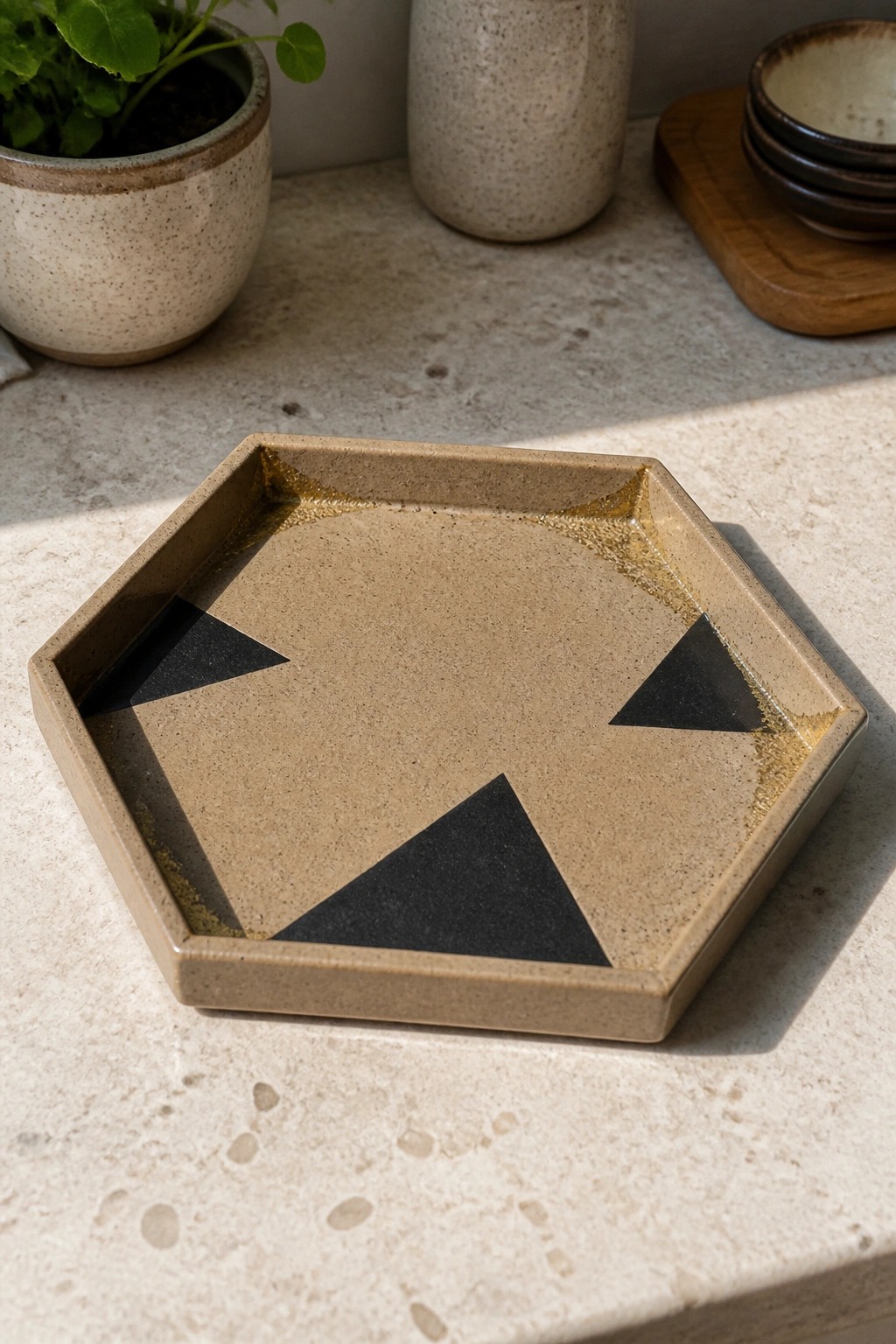
A slab-built hexagonal tray gives you a flat, stable surface that works for serving or display. The design places three black triangles at different angles across the base to break up the space while keeping the overall look balanced. Matte beige clay keeps the focus on the shapes, and the gold rim detail frames the piece without competing with the pattern. This approach fits the geometric serving tray category well because the straight sides and flat base come directly from simple slab construction.
What makes this idea useful is how the hexagon shape lets you stack or store multiple trays without them rolling. You could change the triangle count or size to fit a larger platter or shrink the whole thing into a small catchall dish. The same slab layout works if you want to swap the black for underglaze patterns or test different rim colors. In a kitchen or on a coffee table, this kind of tray keeps the surface clean while the geometry makes it easy to spot in photos.
Square Mug Paired with Geometric Slab Tray

A square mug built from clay slabs sits on a rectangular tray that carries a repeating geometric pattern across its surface. The tray uses angled lines and triangular shapes pressed or carved into the clay before glazing, while the mug keeps a simple box form with a pulled handle. Both pieces use the same streaky blue and white glaze application, which ties the set together without requiring exact color matching.
What makes this idea useful is how the tray doubles as a drip catcher and a small serving surface for the mug. You can adapt the pattern by swapping the triangles for straight lines or squares while keeping the same rectangular slab base. This kind of set fits well on a desk or side table where the tray adds structure and the square mug takes up less space than a round one. For a simpler version, make the tray alone in a few sizes to use under different cups or small bowls.
Nested Bowl on a Striped Triangle Tray
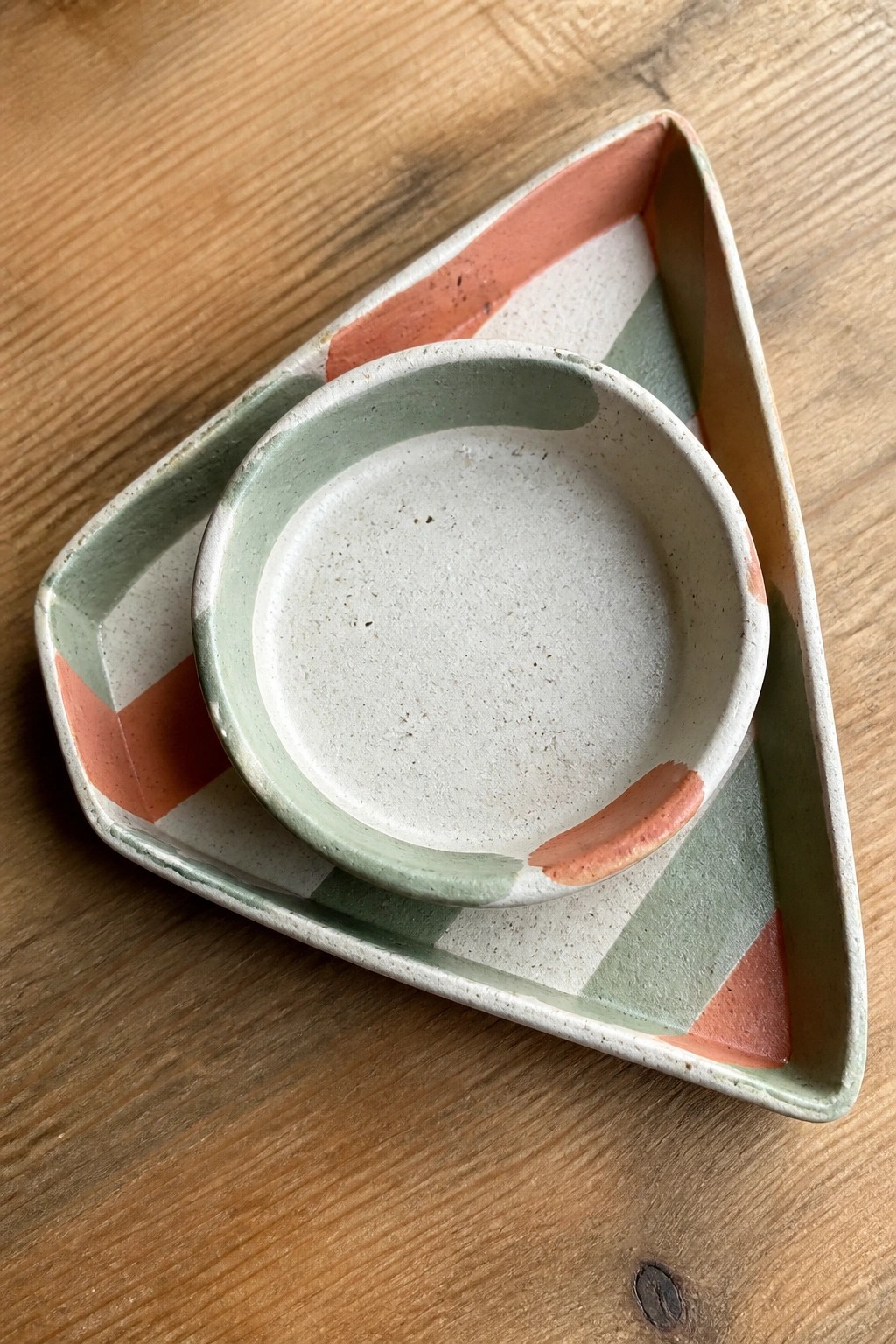
A slab-built triangular tray paired with a small round bowl forms a compact serving set. Straight color blocks in coral, sage green, and off-white run across the tray’s angled sides, while the bowl repeats the palette with a few soft brush marks near its rim. The speckled clay surface shows through the glazes and gives the set a casual, handmade look. This idea fits the serving tray category and works for holding small snacks or condiments.
The shape does a lot of the work here because the triangle creates clean lines that still leave room for the round bowl to sit centered. You could scale the same color blocking down for a ring dish or use it on a rectangular tray for a different layout. In a kitchen this kind of set keeps dips or nuts organized without taking much space. The limited palette and simple stripes also make the design easy to tape off and repeat for gifts or a matching set of two.
Geometric Slab Tray as a Plant Base
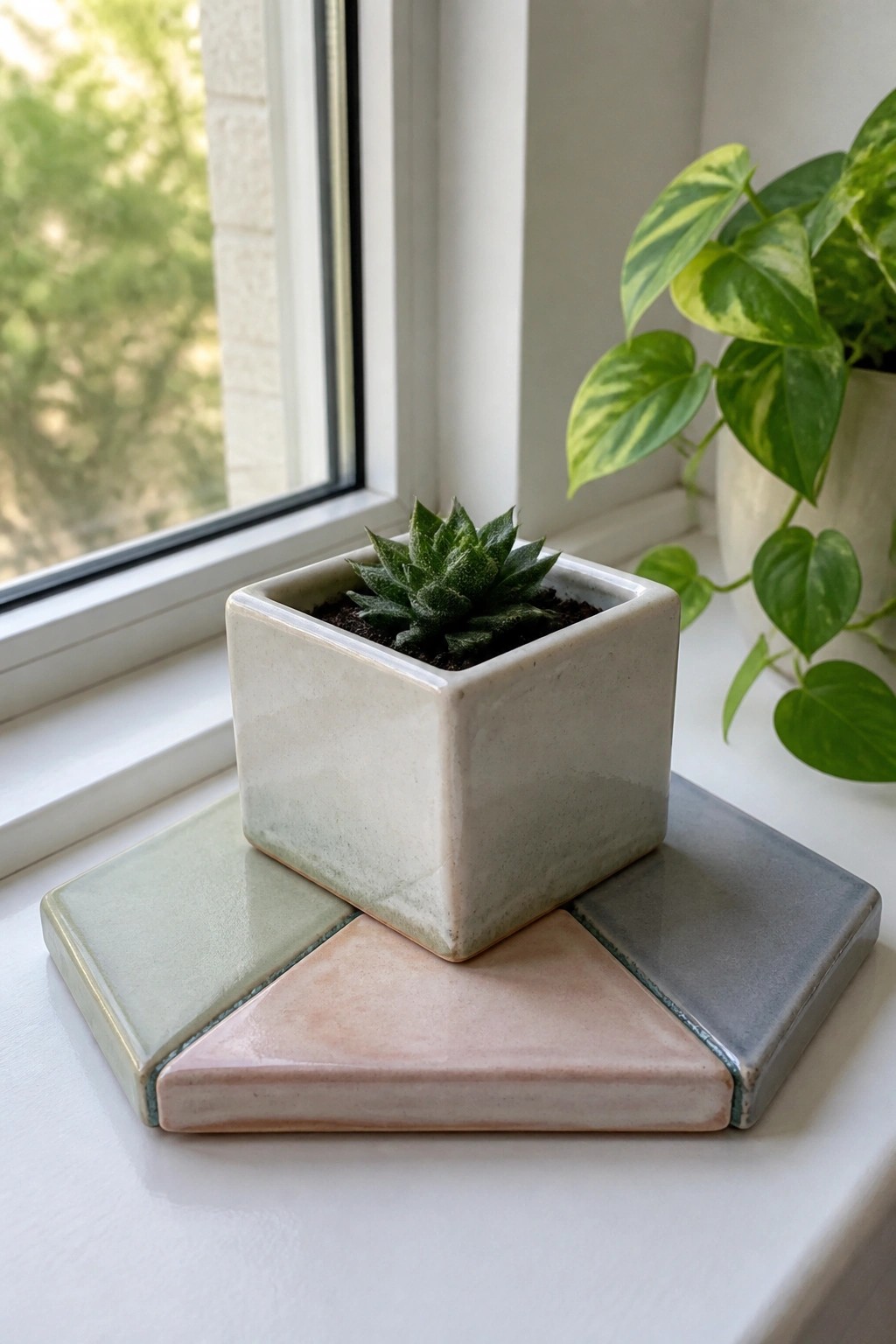
A square ceramic planter rests on a larger base built from multiple colored clay slabs fitted together. The base combines rectangular side pieces with triangular sections in the center, using sage green, pink, and gray glazes to form a simple geometric pattern. This setup creates a custom stand that lifts the planter slightly and adds contrast through the flat, matte surfaces and clean edges. The idea fits the category of a decorative tray or plant stand made entirely from slab construction.
What makes this idea useful is how the tray can be scaled down to fit different planter sizes or expanded with more slab sections for larger pieces. You could swap the colors to match a specific room or use the same layout under a candle holder or small dish instead. The divided design also makes it simple to personalize by changing just one or two sections without rebuilding the whole tray.
Geometric Octagonal Tray for Tea Lights
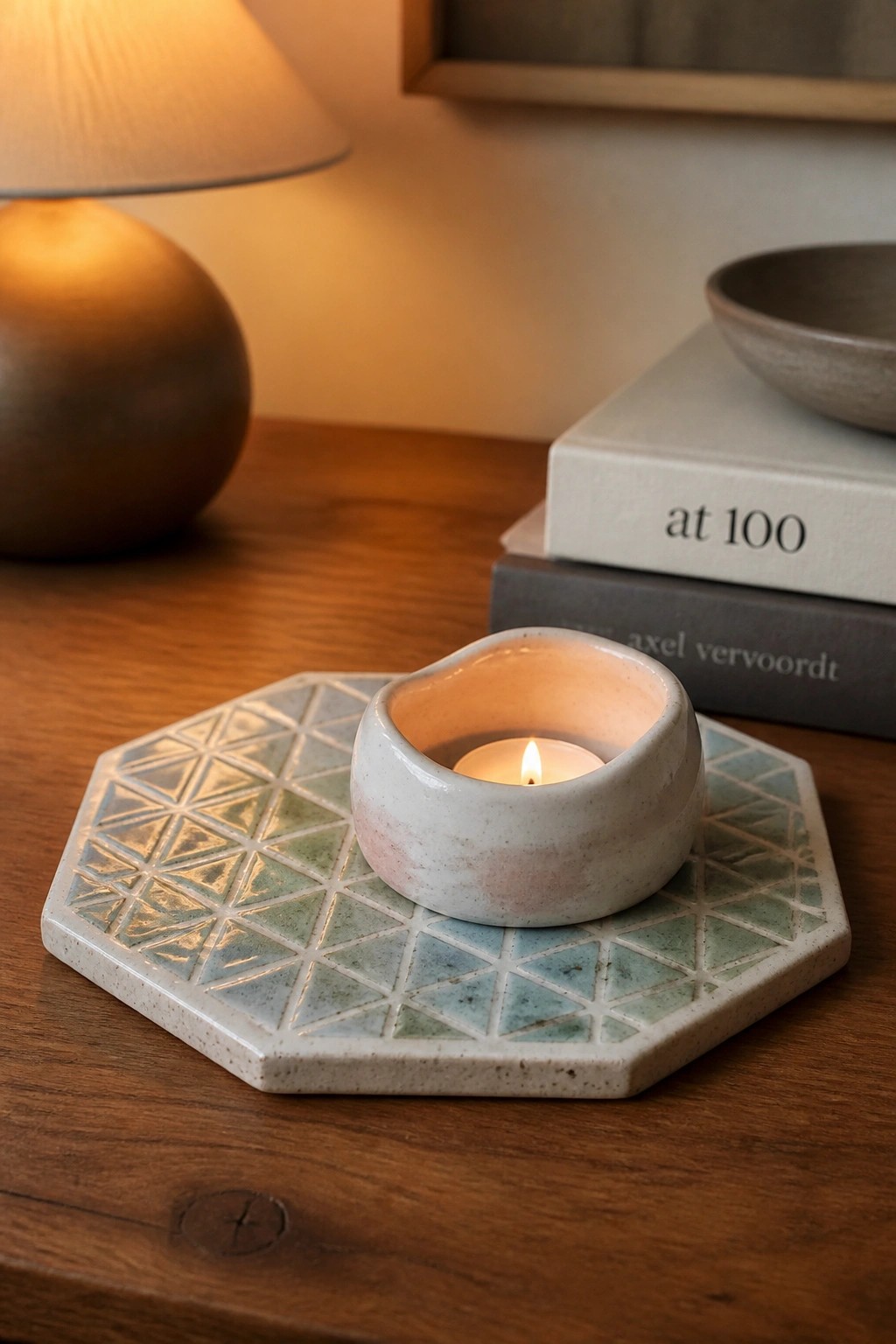
A slab-rolled octagonal tray with a repeating triangular pattern creates a clean base for a small tea light holder. The design uses impressed lines filled with blue and green glazes over a speckled clay surface, keeping the look modern and simple. The holder is a compact, rounded form that rests in the center without overpowering the tray. This combination turns a flat slab project into a ready-to-use candle piece.
The small size makes it easy to test geometric patterns without committing to a large piece. You can repeat the same triangle layout on square coasters or a longer tray for different uses around the house. In a living room or bedroom, the tray keeps the candle contained while adding a subtle pattern that still reads as handmade pottery. Swap the glaze colors or adjust the tray shape to match other slab projects you already have planned.
Slab Tray with Recessed Wells and Geometric Stripe
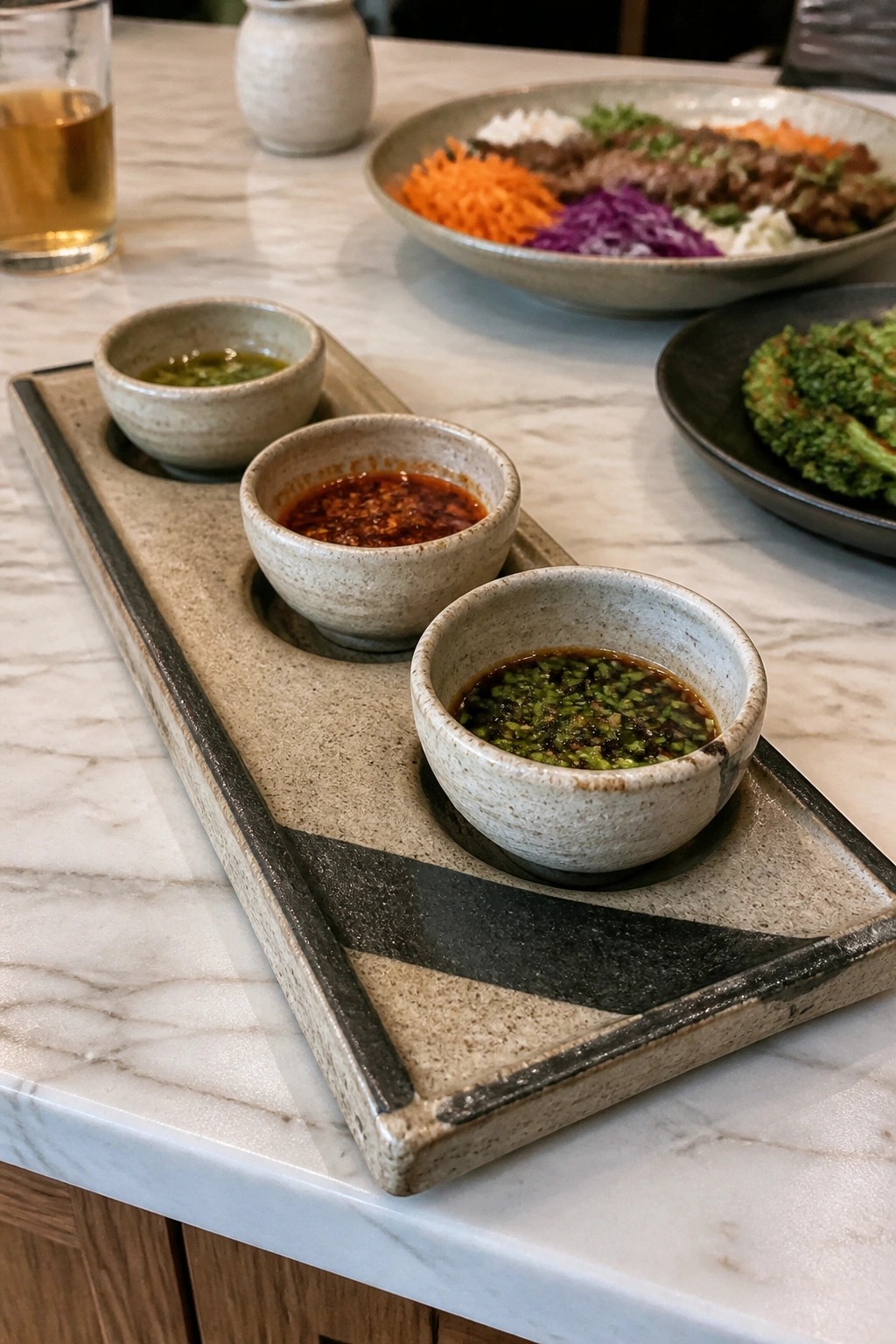
A rectangular slab tray built with three circular wells holds small bowls in place for serving sauces or dips. The surface includes a bold black band that runs diagonally across the lighter clay, giving the piece a sharp, graphic look without extra decoration. The elongated shape and stable cutouts make it practical for keeping multiple small containers organized on a table.
What makes this idea useful is how the wells keep bowls from shifting during use. You could scale the same slab layout down for a two-bowl version or widen it for four if you need more space for condiments. In a kitchen this tray works well for taco spreads, appetizer setups, or any meal where sauces get passed around. The stripe pattern can be swapped for a different color or left plain if you want a simpler surface.
Impressed Chevron Slab Tray

A slab-built serving tray with an impressed chevron pattern gives you a textured surface that holds food without slipping while adding visual structure. The repeating angled lines are created directly in the clay before firing, so the design stays part of the form rather than sitting on top. This fits the kitchen item category where the tray stays simple in shape but gains interest through the geometric surface.
What makes this idea useful is how the same slab and impression method works for different sizes. You can widen the chevron spacing for larger boards or tighten it for smaller appetizer trays that match the same set. In a kitchen the flat form handles cheese, fruit, or bread easily, and the pattern photographs well because the lines create natural contrast. The approach also translates to other flat pieces like cutting boards or plant saucers if you keep the same line layout.
Geometric Chevron Slab Tray with Spoon Rest

A square slab tray built with angled sides uses repeating chevron bands of teal, mustard, and cream glaze to form a strong geometric pattern across the surface. The design pairs the tray with a simple spoon rest in a speckled matte glaze that sits neatly inside the rim. This approach works well for slab projects because the flat base gives plenty of room for precise stripe placement without distortion during firing.
What makes this idea useful is how the chevron layout can be adjusted by widening or narrowing the bands to fit different tray sizes. The spoon rest adds a practical detail for serving small amounts of sauce or holding utensils during a meal. This would be easy to turn into a set of matching coasters or a longer rectangular version for a sushi board. In a kitchen, the contained shape keeps crumbs or drips in one spot while the bold pattern stands out on a neutral countertop.
Triangular Slab Tray with Nested Bowl
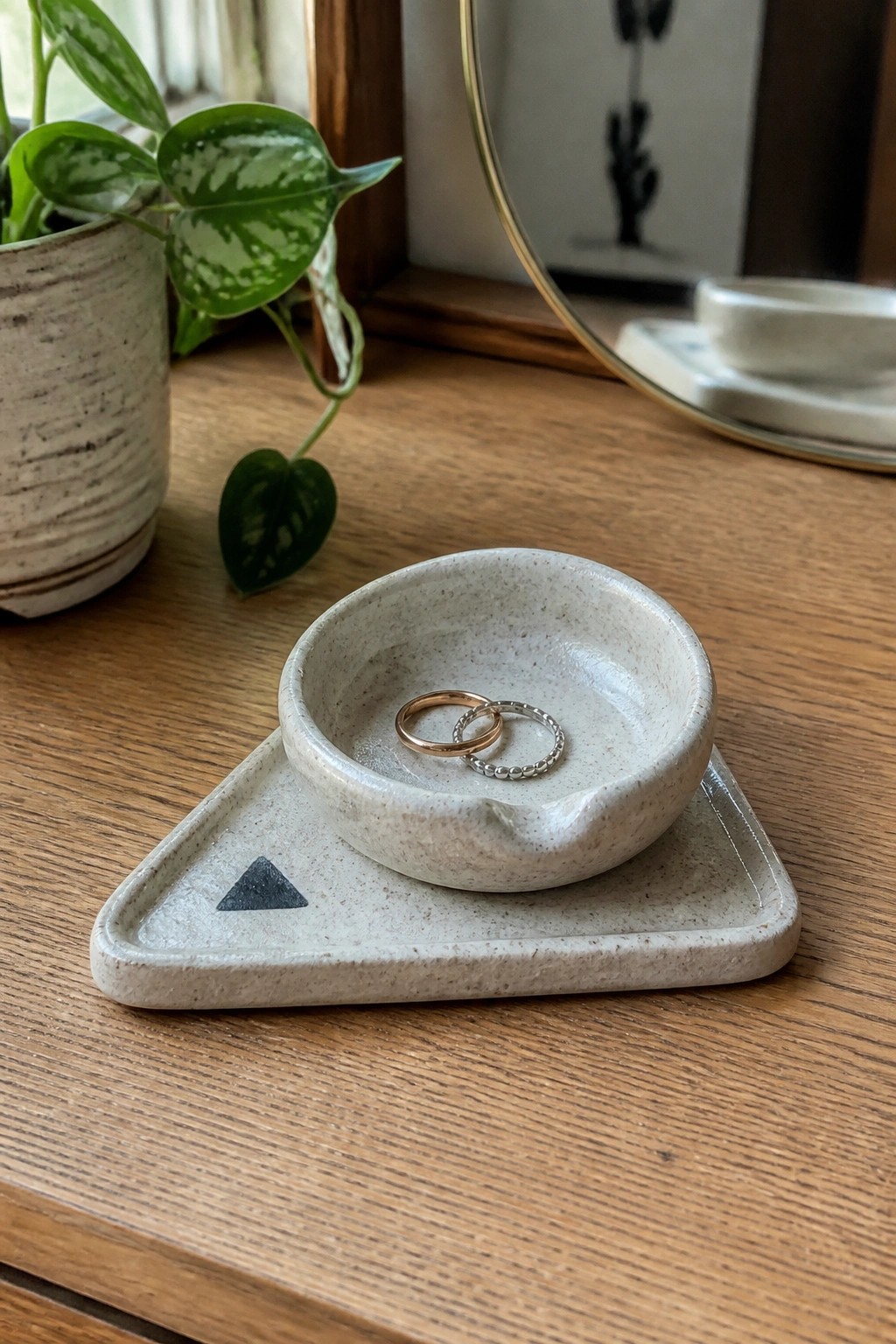
A slab-built triangular tray supports a shallow round bowl to form a compact two-piece holder for rings or small objects. The speckled clay finish and single black triangle accent keep the focus on the clean geometric contrast between the straight tray edges and curved bowl. This combination creates a simple ring dish that uses the flat tray surface for extra space while the bowl keeps items contained.
What makes this idea useful is the way the triangular base adds stability and visual interest without needing extra feet or stands. You could scale the same shapes larger for a desk tray or swap the bowl for a deeper dish to hold keys. The minimal painted motif is easy to adapt by changing the triangle color or repeating it along one edge for a different look.
Tiered Slab Tray with Small Nesting Bowls

A slab-built tray formed from stacked rectangular pieces creates a stepped geometric base with alternating orange and mint green glazes. Two small, hand-shaped bowls sit on different levels, one in green and one in orange, both trimmed with a brown rim. The design keeps the focus on clean angles and simple color blocking rather than surface texture. This approach works as a compact display tray for jewelry, small stones, or snacks.
The shape does a lot of the work here by letting you arrange multiple bowls at different heights without extra stands. You could build a smaller version for a nightstand or stretch the same stacking method into a longer platter for appetizers. The two-tone glazing makes it simple to adapt the colors to match existing kitchen or bathroom decor. For a gift, make the base once and change the bowl sizes depending on whether the recipient wants something for rings or for loose tea.
Geometric Slab Tray with Lidded Condiment Bowl

A square slab forms the base of this tray, with a repeating triangle pattern cut or stamped into the surface while the clay is still soft. The dark glaze settles into the lines to create contrast against the slightly raised metallic edges. The matching lidded bowl sits directly on top and includes a rim notch that keeps a small spoon in place for easy access.
The compact tray size makes it easy to keep on a kitchen counter near the stove. You can rework the same slab approach with different stamps to create hexagons or straight-line grids, or scale the whole piece larger for a cheese board. This layout works especially well for gifts because the tray and bowl can be made as a quick matching set without needing complex molds.
Rectangular Soap Dish on Triangular Slab Tray
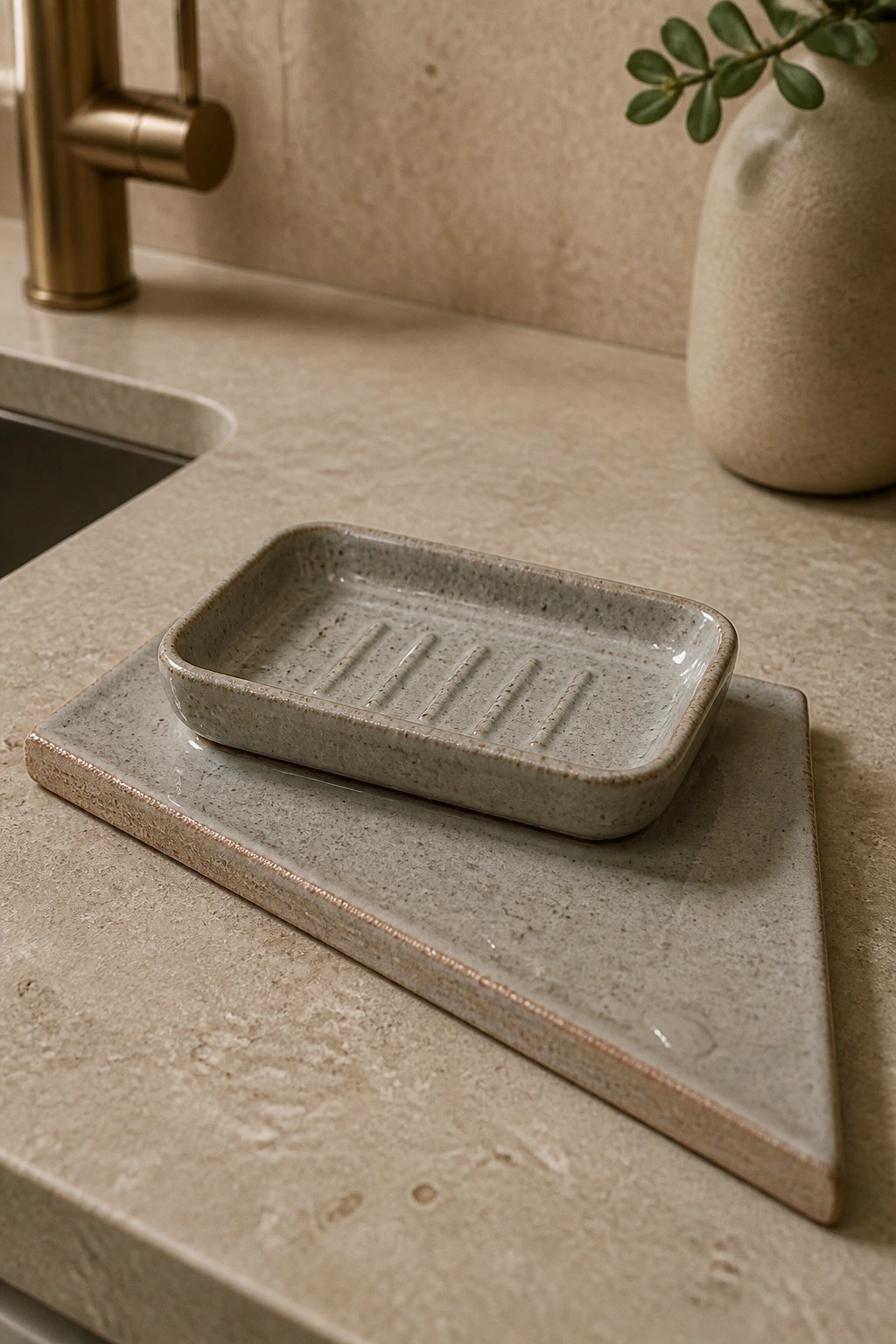
A slab-built rectangular soap dish with raised ridges along the bottom sits on a larger triangular tray made from the same clay. The ridges create drainage channels so water runs off the soap instead of pooling underneath. Both pieces carry a light speckled glaze that gives subtle texture without competing with the clean geometric outlines. This setup turns a basic bathroom or sink item into a coordinated pair of slab forms.
What makes this idea useful is how the triangular tray extends the function by catching drips while introducing a sharp shape contrast. You could rework the same approach with a square or hexagonal tray, or scale the dish down for a smaller ring holder. The neutral glaze lets the strong angles stand out, so the set reads as modern rather than rustic. In a bathroom, this kind of piece keeps soap dry and adds a simple geometric accent without taking up much counter space.
Geometric Striped Slab Tray

A rectangular slab tray with flat sides and a low rim gives a clean surface for serving small portions. The sides carry vertical stripes in blue, terracotta, and white that repeat around the form and create a simple geometric pattern. This approach keeps the tray functional while letting the painted stripes become the main visual element. The same slab method works for any size serving piece where straight edges are easy to cut and assemble.
The shape does a lot of the work here because the flat top and low walls suit appetizers or sushi without needing extra details. You can change the stripe colors or spacing to match different table settings or repeat the pattern on a square version for variety. A tray like this fits well on a kitchen island or dinner table when you want something handmade but not overly decorative. Scaling the stripes down to a smaller rectangle turns the idea into a chopstick rest or spoon rest without much extra work.
Square Butter Dish on an Octagonal Tray

A slab-built square butter dish with a flat lid and rounded knob rests inside a matching octagonal tray. Both pieces carry the same soft green glaze that emphasizes the sharp edges and smooth surfaces created by the slab construction. The tray extends just far enough to catch drips while keeping the overall footprint compact for table use.
What makes this idea useful is the way the octagonal tray gives the set a clear geometric identity without extra decoration. You can repeat the same tray shape for a matching salt cellar or change the dish to a rectangle if you want a longer butter stick. In a kitchen this size works well for daily use or small brunches because it covers the butter yet still leaves space on the tray for a knife. The form also translates directly to a lidded box for tea bags or a small desktop container.
Stepped Slab Tray with Three Bowls

A slab-built ceramic tray made from three connected angular sections, each holding its own round bowl. The sections decrease in size from top to bottom and use different matte glazes in green, cream, and black to keep the divisions clear. The irregular polygon outlines create a clean geometric layout that still feels balanced and stable for serving.
What makes this idea useful is the way the connected slabs keep multiple bowls together in one piece without separate stands. It works well for dips, snacks, or small portions on a table. You could simplify it to two sections or repeat the same glaze across all parts if you want a less busy version. The shape also translates easily to a desk tray or bathroom organizer by adjusting the bowl sizes.
Geometric Slab Tray in Mixed Glaze Blocks

A square serving tray built from multiple rectangular ceramic slabs joined edge to edge creates a patchwork surface with blocks of blue, green, cream, and dark gray glazes. The slabs sit at slight offsets rather than a strict grid, and the varied matte and glossy finishes add contrast across the flat plane. A small cylindrical cup with horizontal ridges rests on the tray, showing how the surface can hold drinkware without slipping.
What makes this idea useful is the way the tray works as both a drink coaster and a small serving piece on a dining table or desk. You can adapt the layout by reducing the number of tiles or repeating one glaze color to simplify the build while keeping the geometric feel. In a kitchen this shape gives you a stable spot for mugs or small plates, and the same slab approach scales easily into individual coasters or a longer rectangular version for a coffee station.
Geometric Slab Tray with Striped Accent
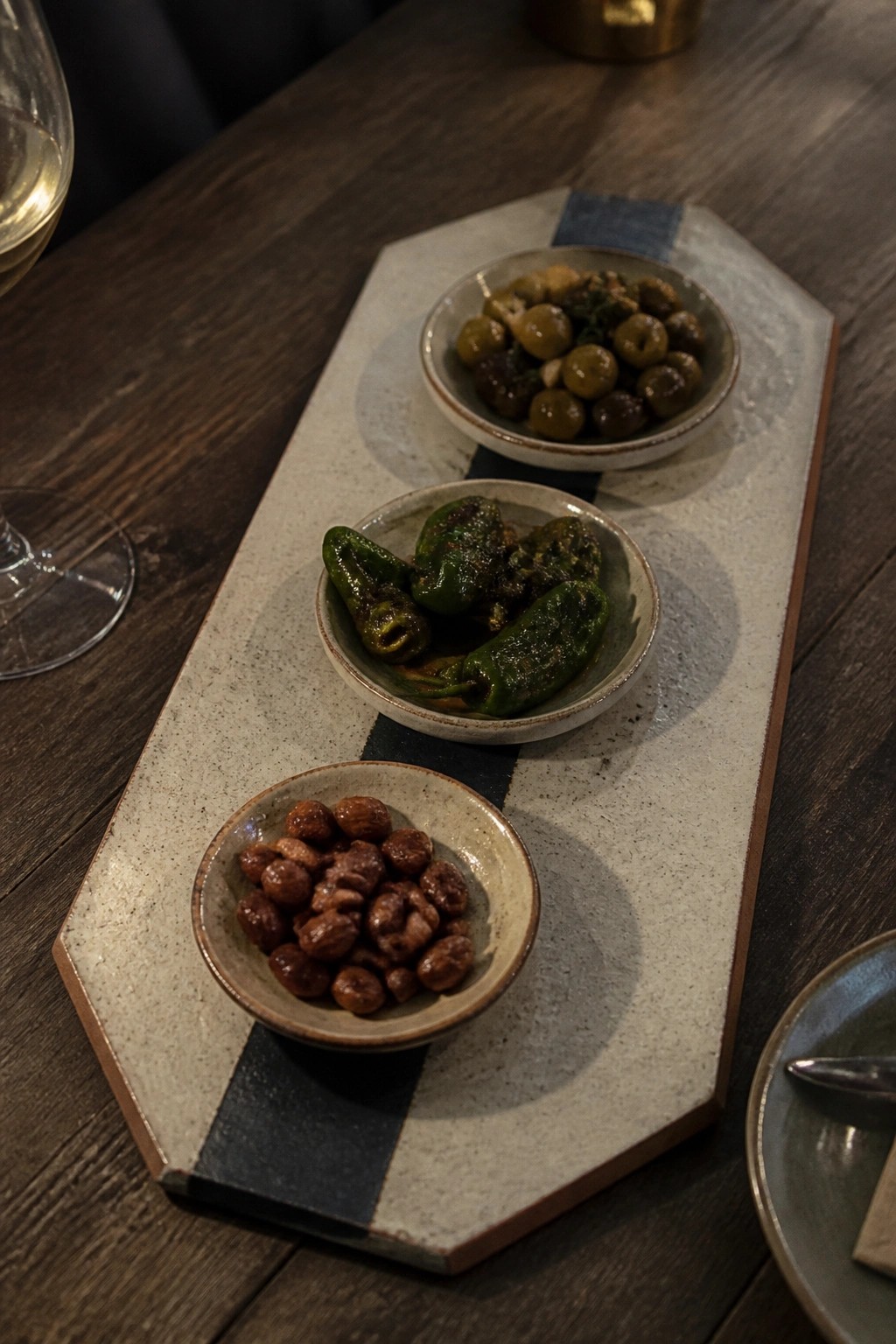
A long slab-built tray with an irregular octagon shape and a wide dark stripe running down the center creates a simple divider for arranging multiple small bowls. The tray pairs with three round, low bowls that sit directly on its surface, each holding different snacks. The speckled clay body and contrasting stripe give the piece a clean, modern look without extra decoration. This fits the serving tray category of slab projects where the flat form does most of the visual work.
The shape does a lot of the work here because the long format lets you line up several bowls without crowding. You could adapt the stripe idea by changing its width, color, or adding a second thinner line for more division. This kind of tray works well for snacks or small plates at a table and scales easily into a shorter version for two bowls or even a set of coasters. The same stripe treatment could be applied to a square platter or a shallow rectangular dish for different serving needs.
Slab-Built Toothbrush Holder on a Geometric Tray

A simple slab construction creates a compact ceramic toothbrush holder that sits on a matching octagonal tray. The holder uses a squared form with drilled openings sized for standard brushes, while the tray features straight edges and a low rim to keep water contained. Both pieces carry the same soft green glaze with subtle speckling that highlights the handmade surface without added decoration. This setup fits the bathroom item category and pairs storage with a stable base for daily use.
What makes this idea useful is how the flat tray doubles as a splash guard and a way to move the whole set for cleaning. The small scale works well on a narrow windowsill or counter edge where a larger piece would feel crowded. You could adapt the same tray shape for a soap dish or razor rest by changing the holder height and hole placement. In a bathroom, the muted glaze color blends with tile while still showing the slab edges that give it a modern look.
Divided Slab Tray for Salt and Pepper Shakers

A rectangular slab tray divided into two sections creates a compact holder for a pair of matching shakers. Each shaker is formed with a simple tapered dome shape and sits inside its own recessed square area on the tray. The dividers keep the pieces from sliding while the speckled surface and matte finish tie the set together visually. This approach works well for small kitchen items that need both storage and easy access on a table.
The shape does a lot of the work here by turning a basic tray into an organized serving piece. You could adapt the same slab layout for oil bottles or small condiment jars by adjusting the divider height and recess size. The recessed pads also make it practical for everyday use since they reduce tipping during meals. For a variation, try making the tray slightly longer to hold three or four shakers instead of two.
Geometric Slab Candle Tray with Dot Patterns
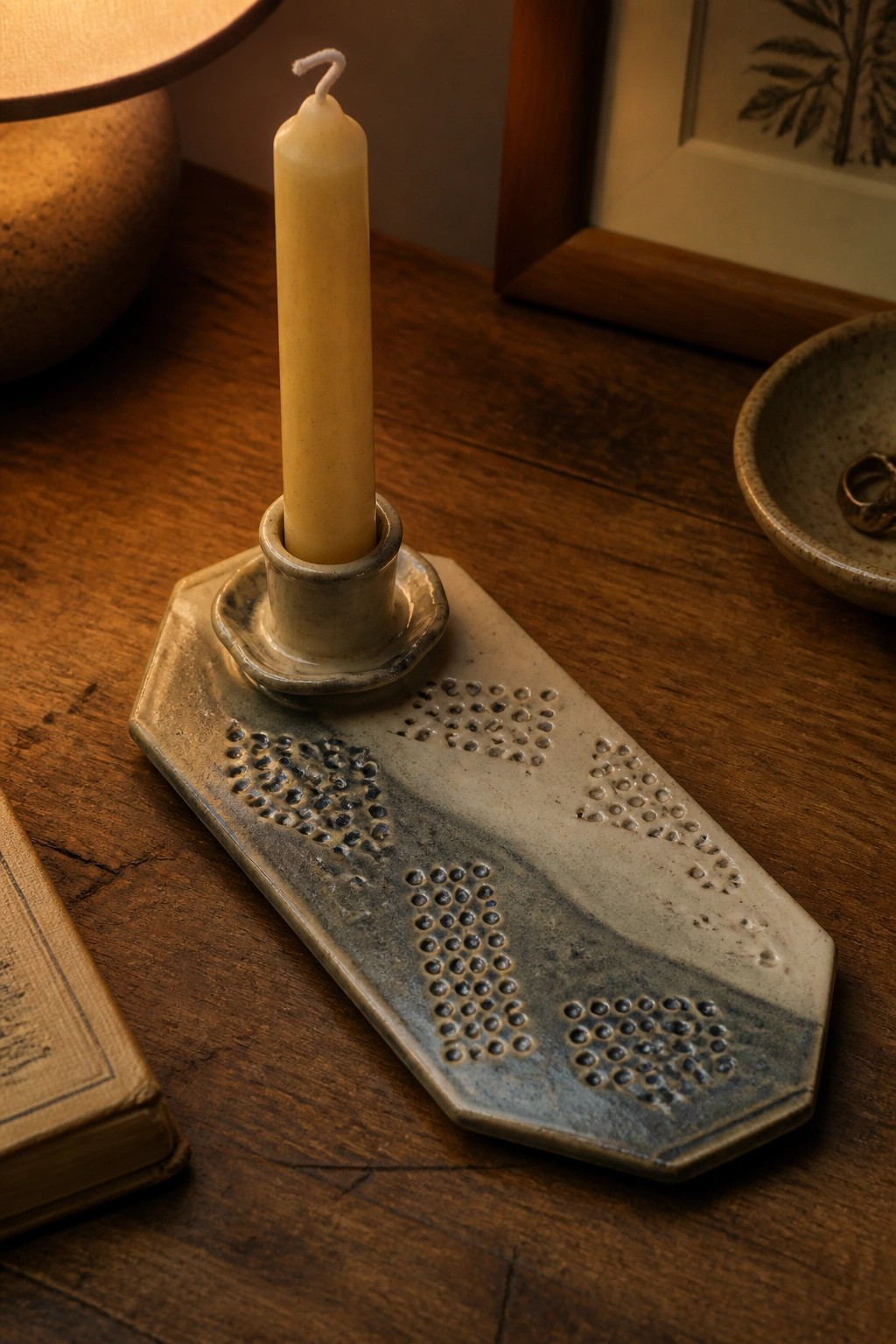
A slab-built candle holder starts with a flat rectangular base that supports a simple upright cylinder for the candle. The base uses impressed dots grouped into repeating geometric blocks that run across the surface in balanced rows. A muted streaky glaze in gray and beige tones lets the texture stand out without overpowering the shape. This turns a basic tray form into a dedicated candle piece that stays compact and stable.
What makes this idea useful is the way the elongated slab gives the candle a built-in drip catcher and visual anchor at the same time. You can swap the dot clusters for other simple stamp patterns or shorten the base to fit a narrow shelf. The same slab and impression method adapts easily to a ring dish or small incense tray if you leave off the candle holder. In a modern room this shape reads as intentional decor rather than a standard candlestick.
Stepped Slab Stand for Mini Planters
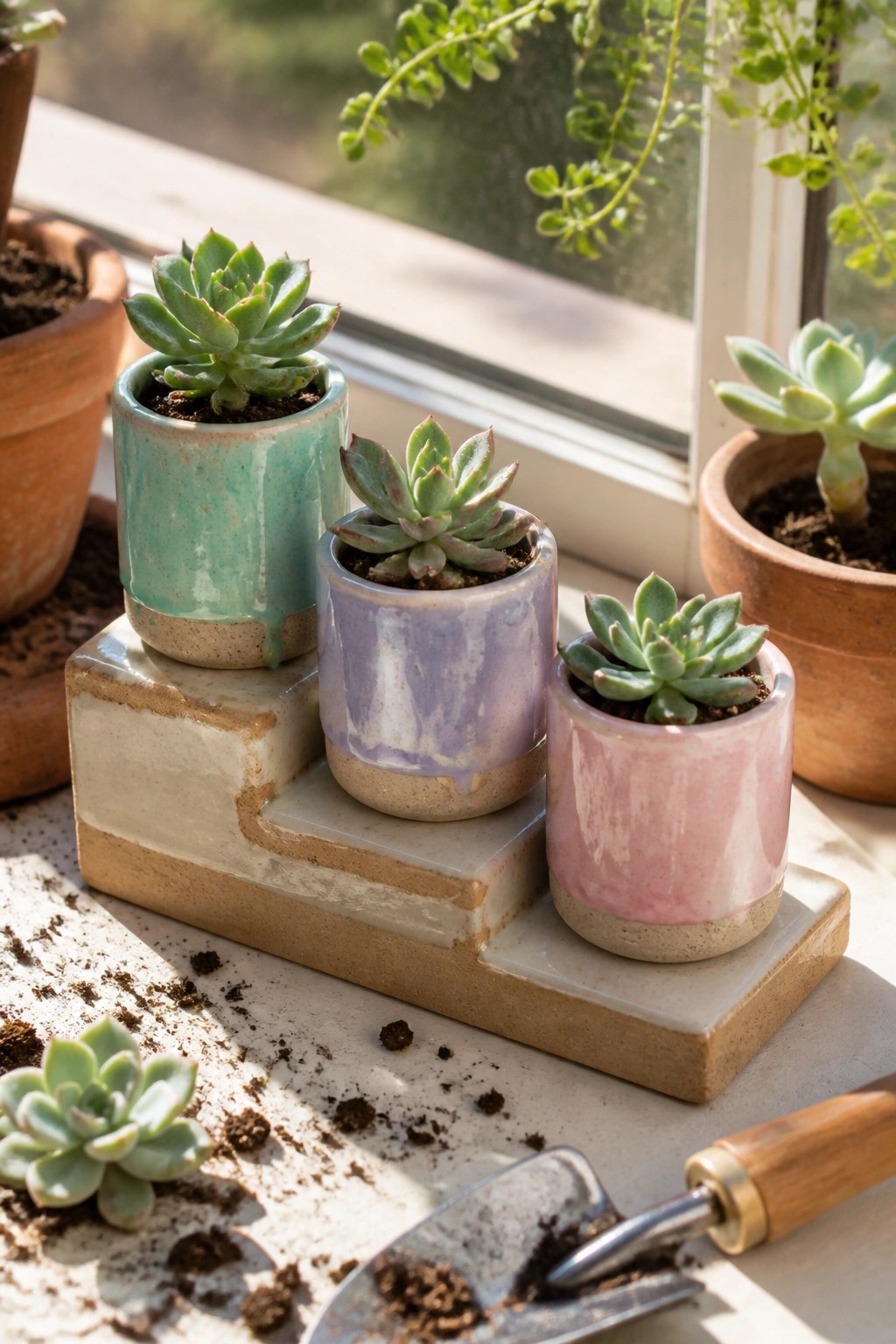
A simple slab construction forms a staggered rectangular base that holds three small cylindrical pots at different heights. The pots use a two-tone finish with unglazed clay at the bottom and soft colored glaze on the upper half in turquoise, lavender, and pink. This approach keeps the focus on the geometric levels while letting the pots add quick color without extra decoration. The whole piece works as a compact plant display rather than a flat tray.
What makes this idea useful is how the stepped levels let you arrange several small plants in a small footprint without them crowding each other. You can build the same slab base in a longer format to hold more pots or shorten it for a single row on a desk. The neutral clay body gives you room to change the glaze colors later or leave the pots plain if you want a quieter look. For a different use, skip the plants and turn the same shape into a tray for holding soap, keys, or small kitchen tools.
Hexagonal Slab Trays with Diamond Cutouts

These trays are built from flat slabs of clay cut into angular geometric shapes, then assembled into a layered set. The smaller top tray uses repeated diamond cutouts to create open windows that reveal the base tray underneath, while both pieces use a simple two-tone glaze with a cream border around a muted terracotta center. The clean edges and negative space keep the design balanced and modern.
What makes this idea useful is how the cutouts reduce weight while adding pattern without extra decoration. You could adapt the same layout to a single tray by skipping the top layer or change the cutout size for a different scale. The shape works well as a jewelry catchall or small serving piece on a table, and the two-tone glazing makes it easy to match with other kitchen or bathroom items.
Frequently Asked Questions
What basic supplies are required for creating modern slab pottery geometric serving trays?
To begin, gather a smooth rolling pin or slab roller for even clay thickness, a selection of geometric templates such as rulers and stencils, sharp cutting tools like pottery knives or wire cutters, and a work surface covered with canvas to prevent sticking. Choose a suitable clay body like stoneware or porcelain for durability, along with basic tools for scoring and slipping pieces together. Access to a kiln is essential for bisque and glaze firing, and consider investing in a banding wheel for precise rotations during decoration.
How do I achieve sharp geometric edges in my slab pottery projects?
Roll out consistent slabs of clay at least a quarter inch thick to maintain structure. Use firm templates and cut with steady pressure while the clay is leather hard to avoid distortion. Score and slip joints carefully before attaching sides or handles, then refine edges with a rib tool or sponge once assembled. Allow pieces to dry slowly under plastic to prevent warping, and sand any rough spots lightly before bisque firing for clean lines.
What are the best clays for modern slab pottery projects?
Stoneware clays offer good strength and work well for functional serving trays due to their resistance to thermal shock. Porcelain provides a sleek modern finish but requires more careful handling to avoid cracking. Experiment with grogged clays for added texture in geometric designs, and always test small samples to match your firing schedule and desired aesthetic.
How do I glaze and fire geometric serving trays safely?
Apply food safe glazes in thin even coats using brushes or dipping methods, avoiding areas that will contact food if using non safe options. Fire to the clay’s recommended cone temperature, typically cone 6 for stoneware, with a slow ramp up to prevent thermal stress on flat forms. Use kiln shelves with stilts or sand for support, and ensure proper ventilation during firing to handle fumes.
How can beginners adapt the advanced ideas from the article to their skill level?
Start with simpler tray shapes using basic rectangles or triangles before adding complex patterns. Practice slab construction on small test pieces to build confidence, and focus on one decorative technique like stamping or carving at a time. Many ideas can be scaled down or simplified by reducing the number of geometric elements while still achieving a modern look.

Pottery Path is my cozy corner of the internet where I share clay ideas, pottery inspiration, and simple projects you can recreate at home. I love exploring everything from air dry clay to handbuilt pottery to cute minis that brighten your day. My goal is to make clay crafting feel easy, fun, and welcoming for anyone who wants to try it.
You will find beginner friendly tutorials, creative pottery painting ideas, and lots of warm inspiration for slow and happy crafting. If you enjoy hands on creativity, this space will feel like home.