I got into slab pottery because it felt manageable even with a small workspace.
Making basic lidded boxes helped me learn how to handle the clay without getting overwhelmed.
From there I started experimenting with small changes to the shapes and lids.
These ideas grew out of that process and I wanted to share the ones that stayed simple.
I focused on minimal designs that anyone could try at home with basic tools.
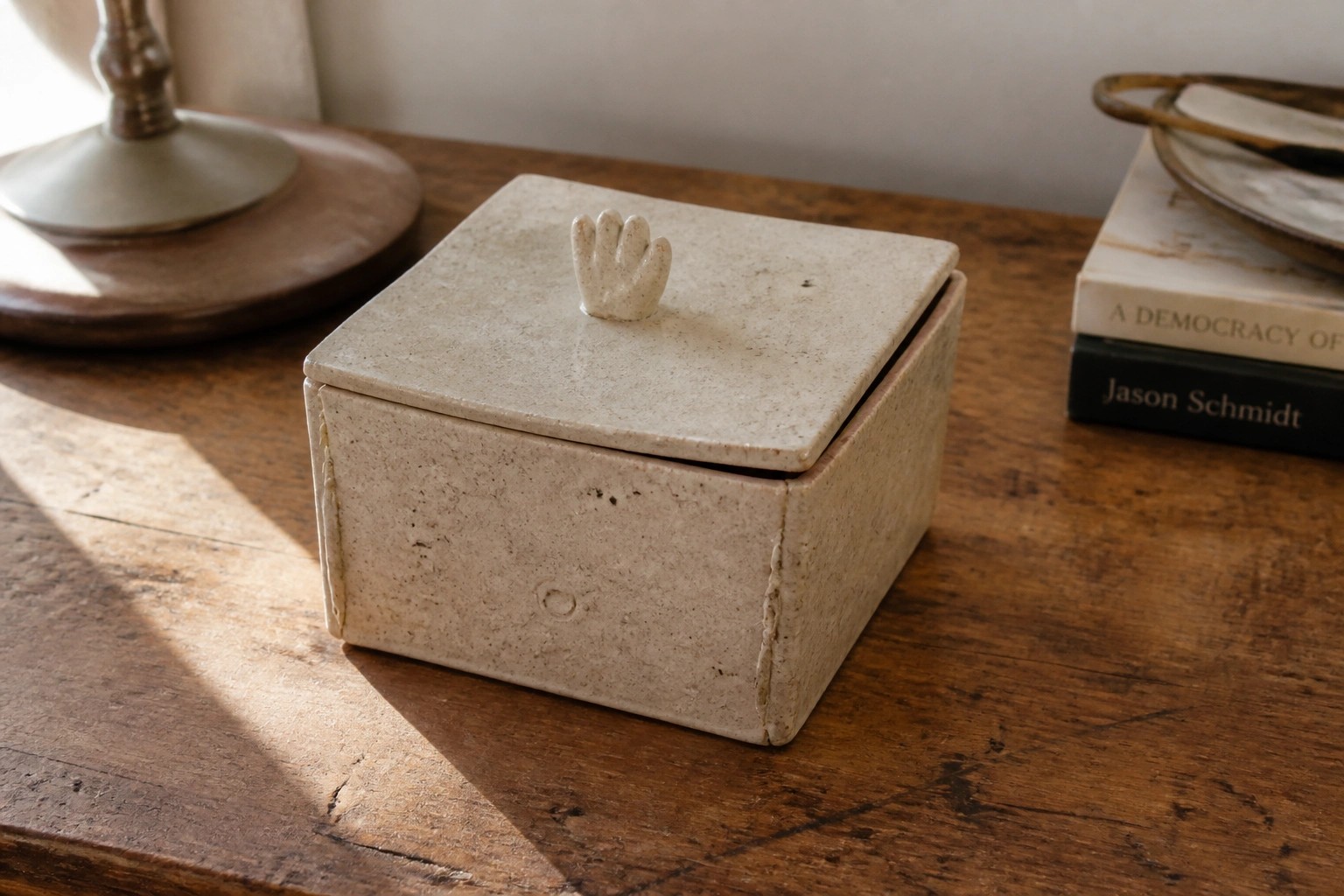
Square Slab Box with Hand-Shaped Lid Pull

A small square box formed from slabs makes a simple container for rings, keys, or other small items. The flat surfaces stay minimal while the tiny sculpted hand on the lid serves as both handle and focal point. A light speckled glaze keeps the overall look clean and lets the hand detail stand out without extra decoration.
What makes this idea useful is how the hand element can be swapped for other small shapes like a leaf or a plain knob if you want a different look. The compact size works on a desk, shelf, or bedside table and turns easily into a set of matching boxes for different rooms. You could scale the same slab construction larger for cotton swabs in a bathroom or keep the proportions for a few coordinated gift pieces.
Two-Tone Rectangular Lidded Box
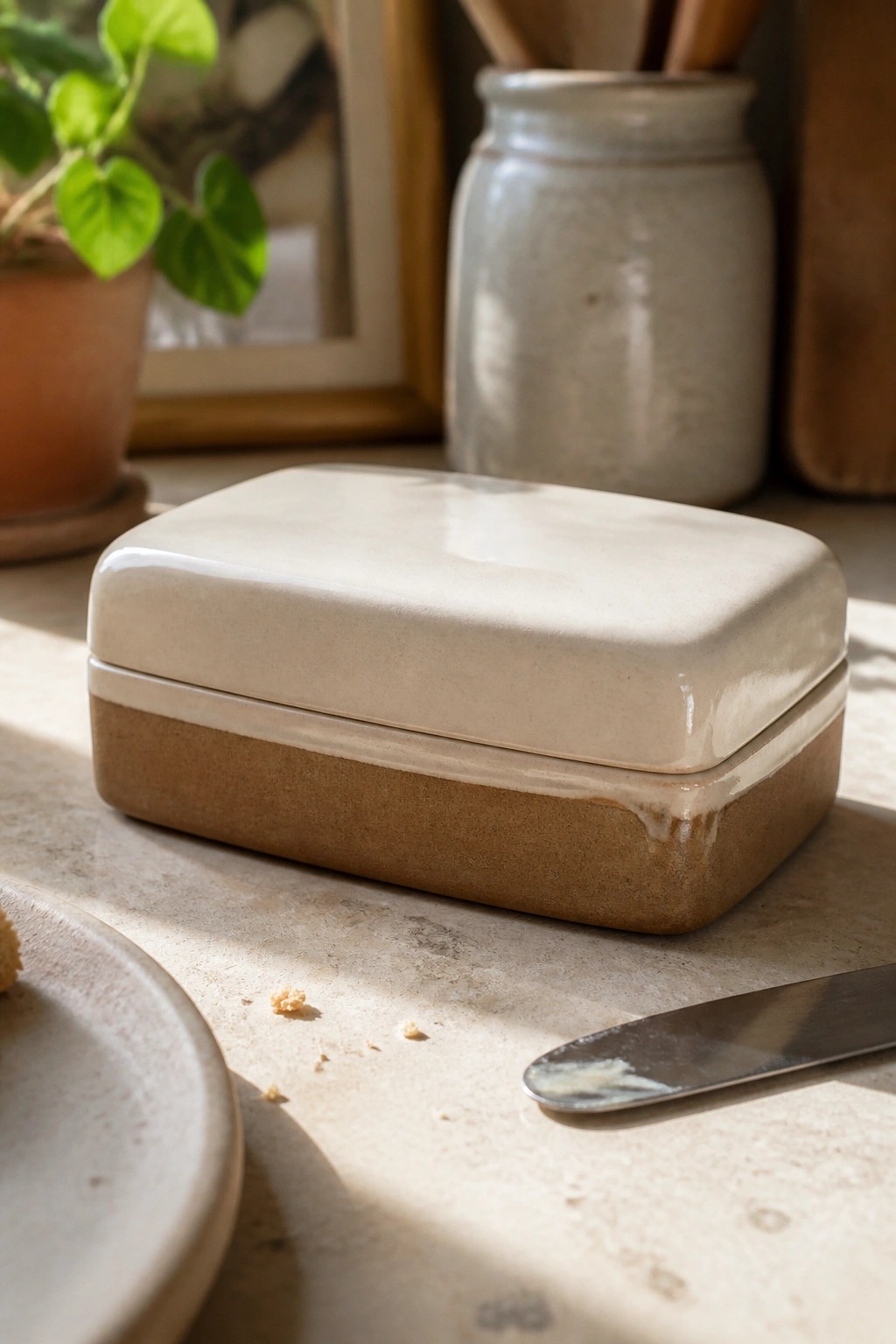
A rectangular slab-built box with a fitted lid makes a practical butter dish or small kitchen container. The top section carries a glossy off-white glaze while the base stays in a matte brown clay finish, giving a clear two-tone effect. The lid sits flush and the glaze shows a slight drip along one edge, which keeps the surface simple but still shows the handmade construction. This fits the category of basic kitchen storage that stays functional without added detail.
What makes this idea useful is how the rectangular proportions translate directly to other small lidded containers like a sugar box or tea bag holder. You can change the glaze on the lid to a soft gray or leave both parts unglazed for a single-color version. The same slab method works for a taller or narrower box if you want to adapt it for desk supplies or bathroom cotton balls. Beginners can start with this shape because the clean edges and limited surface area reduce the chance of warping during drying.
Round Lidded Box with Crescent Moons

A small round lidded box gives you a compact storage piece that fits on a desk or shelf. The form uses a straight-sided base and a slightly domed lid that rests in a shallow groove. A soft green glaze covers the surface evenly while two thin gold crescent shapes provide the only decoration.
The small scale makes this easy to adapt for jewelry, loose tea, or daily pills. You can swap the crescents for simple lines or leave the surface plain if you want a quieter version. This shape works especially well as a quick slab project since the lid and base follow the same circle template and require minimal trimming.
Rectangular Slab Jar with Etched Leaves

A slab-built rectangular jar gives you straight sides and sharp corners that stay stable once assembled. The design uses light incised lines to create a few simple leaves and a small cluster of dots on the front face, while a narrow band of impressed texture runs across the lid edge. The matte off-white surface keeps the focus on the form and the line work rather than on color or gloss. This type of piece works as a small kitchen canister or a desk container for cotton swabs or tea bags.
The narrow footprint lets the jar sit on a crowded shelf without taking much room. You can swap the leaf motif for straight vertical lines or leave one side blank if you want a quicker version. Reducing the height turns the same construction into a compact matchbox or a small trinket holder. The single textured strip on the lid is an easy detail to repeat across a matching set.
Square Slab Planter with Matching Tray
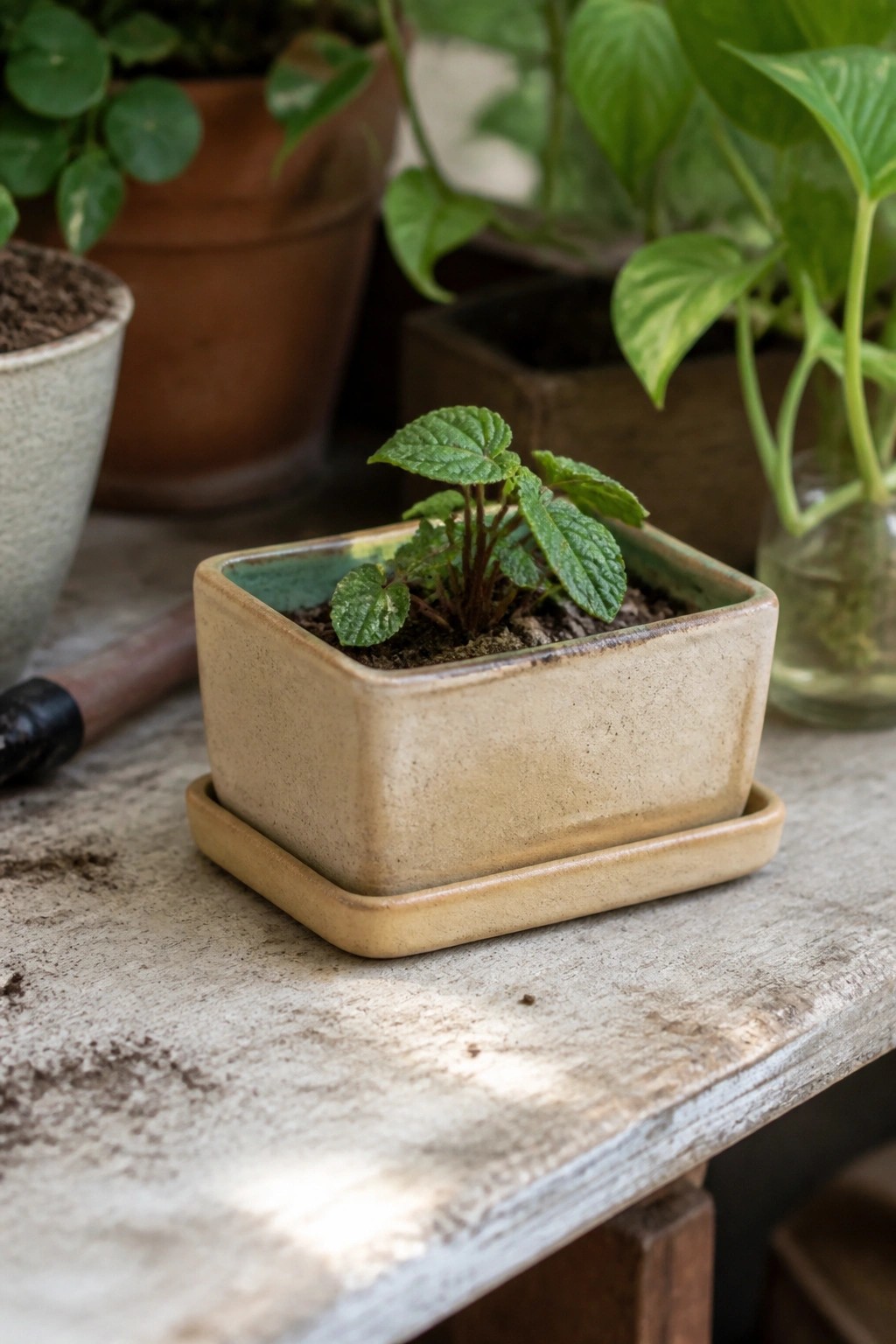
A small square planter built from clay slabs gives you straight sides and clean corners that hold a single small plant. The separate tray underneath sits flush with the base to catch water while keeping the whole piece compact. A matte neutral glaze on the outside paired with a simple interior color keeps the form minimal and easy to repeat.
What makes this idea useful is how the tray turns a basic box shape into something practical for windowsills or tabletops. You can adapt the same dimensions to make a lidded box by adding a flat lid that rests inside the rim. The small scale works well for testing slab joins or trying out new glaze combinations without using much clay. For plant styling, the square format stacks neatly in groups of different heights.
Cylindrical Lidded Storage Jar

A simple cylindrical lidded box made from slabs creates an easy small canister for kitchen use. The straight sides come from rolling a slab into a tube and attaching a flat base and lid, while the knob is pinched from a small coil or slab scrap. The speckled matte glaze keeps the surface minimal and lets the form stay the focus without added decoration.
What makes this idea useful is how the compact size fits on a shelf or counter for coffee, tea, or spices. The same cylinder can be made shorter for a ring dish or taller for a match holder by adjusting the slab height. A light stamp or score line around the lid edge gives a clean detail that still reads as minimal. This shape works especially well on Pinterest because the warm tone and simple profile photograph cleanly against wood or linen backgrounds.
Rectangular Tea Canister from Slabs

A slab-built rectangular canister works well for storing loose tea or similar kitchen staples. Flat clay slabs form the body and the lid, which sits low with a small finger notch cut into the top surface. The matte teal glaze gives the piece a uniform finish while a small stamped label keeps the front simple and readable.
What makes this idea useful is how the basic box shape translates directly to other pantry items like coffee or sugar by changing just the label. The proportions stay compact enough to sit on a counter or shelf without taking much space. You could shorten the height for a smaller spice version or lengthen it slightly for a taller match jar while keeping the same slab construction.
Lidded Jar with Clustered Dot Pattern

A small round lidded jar makes a practical kitchen storage piece for salt, sugar, or spices. The light glaze provides a neutral base that lets the groups of raised pink dots create simple visual interest without extra decoration. The looped handle on the lid keeps the overall form minimal while remaining functional, and the matching small spoon turns the set into a complete serving item.
What makes this idea useful is how the dot clusters can be added with slip or underglaze after the slab is formed into a cylinder. The compact size works well on a countertop or open shelf where larger jars would feel bulky. You could easily adapt the same shape into a tea caddy or small bathroom container by changing the dot color or spacing. For a gift, the addition of the spoon gives it extra usefulness without complicating the build.
Star Cutout Slab Box
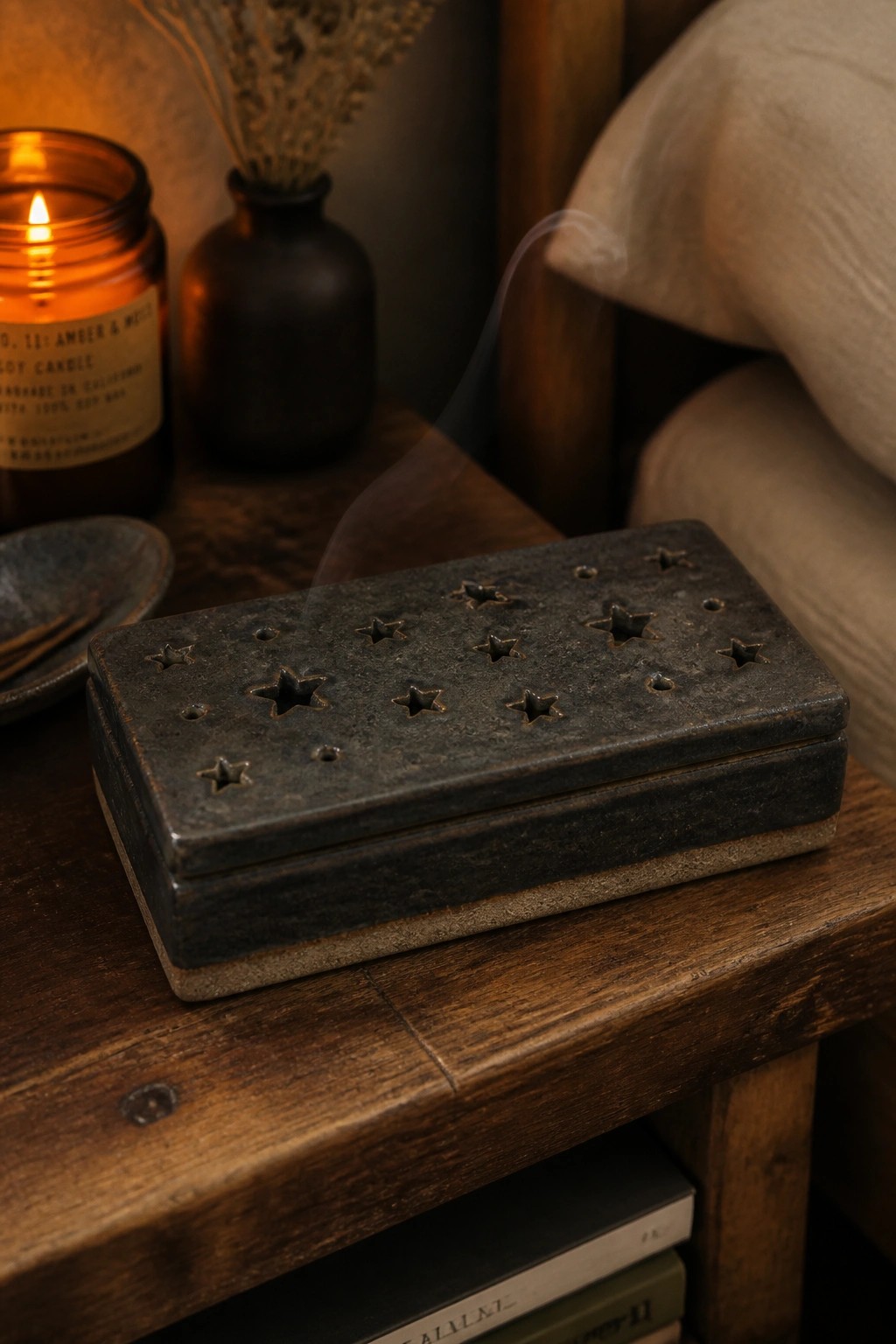
A rectangular slab-built box with a fitted lid works well as a small incense burner. The lid features multiple star-shaped cutouts that let smoke escape while adding a simple repeated pattern across the surface. The dark matte finish keeps the focus on the shape and the cutouts rather than on bright color or busy texture. This kind of piece fits the lidded box category and stays minimal because the decoration comes directly from the functional holes.
The small scale makes this easy to adapt into a jewelry box or a holder for matches and small items. You can change the cutout shape to circles, lines, or even leave the lid plain and move the pattern to the sides. The form works on a nightstand or desk because it stays low and does not take up much space. For a beginner project, start with the same rectangle proportions and adjust only the lid pattern on the next version.
Square Slab-Built Salt Cellar

A square lidded box made from slabs gives you a compact container that works as a salt cellar or small spice holder. The lid rests directly on the rim with a simple cutout for lifting, and the interior carries a solid blue glaze while the outside stays matte and unglazed. This contrast keeps the shape clean and lets the form stay the focus.
What makes this idea useful is that the same square proportions can be adjusted in height or width to hold different amounts of salt or loose tea. You could swap the blue for another kitchen-friendly color or add a small foot to lift the box slightly off the counter. The small footprint also means it stores easily in a drawer when not in use and translates quickly into a matchbox-style holder or a tiny jewelry box.
Two-Tone Slab Box with Heart Lid

A rectangular slab-built box with a fitted lid makes a simple storage piece for small items. The design splits the form into two glaze sections, keeping the top light and the base in a warm terracotta tone. A single heart shape is carved into the lid surface, and a small thumb indentation helps with lifting. This keeps the overall shape clean while using basic color contrast and one carved detail.
What makes this idea useful is the easy color blocking that works with any two glazes you already have on hand. You can change the carved motif to a name, date, or geometric line without altering the box shape. The same template set can be used to make a taller version for desk supplies or a flatter one for a tray. It stores jewelry or keepsakes on a shelf without needing extra hardware or complex lids.
Compact Lidded Storage Jar with Yellow Glaze

A small round lidded jar gives you a basic slab or wheel form that doubles as a storage piece. The mustard glaze covers the main body while the lower section stays in raw speckled clay, and the lid sits flat with a single centered hole. This keeps the overall shape low and simple, making it easy to repeat in different sizes without added details.
The small scale makes this easy to adapt into a holder for loose tea, salt, or cotton swabs in a bathroom. You can swap the glaze for a matte white or deep green to fit different rooms, or stretch the same form taller for a slightly larger version. In a kitchen this shape stays useful on open shelves where bigger containers would crowd the space.
Slotted Lid Soap Box

A rectangular slab box with a fitted lid makes a practical covered container for bar soap. The lid has several parallel slots cut into it for airflow, and a small looped handle on top keeps the design minimal while making the lid easy to remove. The soft green speckled glaze and clean rectangular form give it a simple, functional look that suits bathroom use.
What makes this idea useful is how the slots solve the problem of trapped moisture without adding extra parts. You could adapt the same shape and lid pattern for a small tea bag caddy or a holder for damp sponges by adjusting the slot spacing. The compact size works well on a sink edge or shelf, and the straightforward slab construction makes it easy to scale up or down for different storage needs.
Round Lidded Box with Pressed Star Motif

A small round lidded box built from slabs gives beginners an easy way to practice joining and finishing. Cut a base and a shallow cylinder wall from rolled clay, form a matching lid that sits slightly inset, and press a simple star stamp into the center before the final smoothing. A single solid glaze in a muted tone highlights the clean lines without adding extra steps.
The small scale makes this shape easy to adapt for different uses like a ring holder or pill container. Swap the star for a leaf stamp or skip the detail entirely to change the look while keeping the same construction. This style stands out on Pinterest because the lid detail reads clearly even in small thumbnails.
Paw Print Slab Lidded Box

A square slab box with straight sides and a fitted lid makes a simple container when you add a small sculpted paw print as the lid knob. The paw sits centered on the slightly domed lid and stands out against the plain matte surface without any other decoration. This keeps the form minimal while turning the box into a pet-themed piece. The neutral stoneware tone and clean edges fit the slab-built approach well.
What makes this idea useful is how the paw print can be swapped for another small motif like a bone or initial using the same slab method. The box shape works for small keepsakes or pet collars on a shelf beside books or plants. You could simplify it further by skipping the knob entirely or make a taller version for more storage. The small scale makes the project quick to repeat for gifts.
Round Slab Lidded Box with Leaf Knob

A round lidded box formed from slabs stays simple when the walls stay low and the lid sits flush. The small leaf detail on the knob gives the only decoration while the soft green glaze adds subtle variation across the surface. This shape works as a compact storage piece for small kitchen items or desk supplies. Slab construction keeps the form even and easy to repeat.
What makes this idea useful is how the flat lid and low height let it slide onto open shelves without taking visual space. You can change the leaf stamp to any small motif or skip it entirely for a plain top. The same round template can be adjusted into an oval if you want to pair it with other tableware. For small storage needs this shape keeps contents protected while still looking clean on a counter.
Speckled Slab Box with Vertical Line Motif

A rectangular lidded box built from clay slabs creates a compact storage piece that stays minimal while remaining functional. The speckled glaze produces a soft, matte surface that highlights the simple vertical lines and dots scored across the front. This approach keeps the form low and wide, which works well for a small kitchen container or desk holder.
The shape does a lot of the work here since the same slab construction can be adjusted in height or width to fit different contents. The line pattern is quick to add with a tool before the first firing, so you can swap it for other basic marks without extra steps. In a kitchen this kind of box holds tea bags or sugar well, and the same method scales easily into a taller version for bathroom supplies like cotton pads.
Minimal Slab Box with Bunny Knob

A small round lidded box built from clay slabs pairs cleanly with a simple sculpted bunny head as the lid knob. The low cylindrical form stays minimal while the bunny adds a single focal point through basic modeling and painted details like black eyes and soft pink cheeks. The matte gray surface keeps the overall look quiet and lets the knob stand out without extra decoration. This approach fits the category of small lidded storage that doubles as shelf decor.
What makes this idea useful is that the same slab base works with any small knob shape you can model quickly. The compact size suits a nightstand for rings, a desk for paper clips, or a shelf for small keepsakes. You could swap the bunny for a bird, a plain dome, or a simple leaf and change the color to white or soft blue to match different spaces. The painted face is easy to adapt or skip if you want a fully plain version.
Simple Rectangular Slab Box with Fitted Lid

A rectangular lidded box formed from slabs creates a compact storage piece with straight sides and a flat top. The lid sits level with the base edges and the even terracotta surface keeps the overall form plain and unfussy. This shape fits the category of small desktop or shelf storage and works especially well when you want something that stays low and unobtrusive.
The dimensions here make it simple to resize for different uses such as holding jewelry, desk supplies, or loose hardware. You can repeat the same slab layout in a taller or wider version to build a matching set without changing the construction steps. In a bathroom or entryway the box keeps small items contained while the solid color lets it blend with most surfaces. For beginners the clean lines also mean you can practice joining slabs and trimming lids without adding extra decorative elements.
Round Slab-Built Lidded Canister
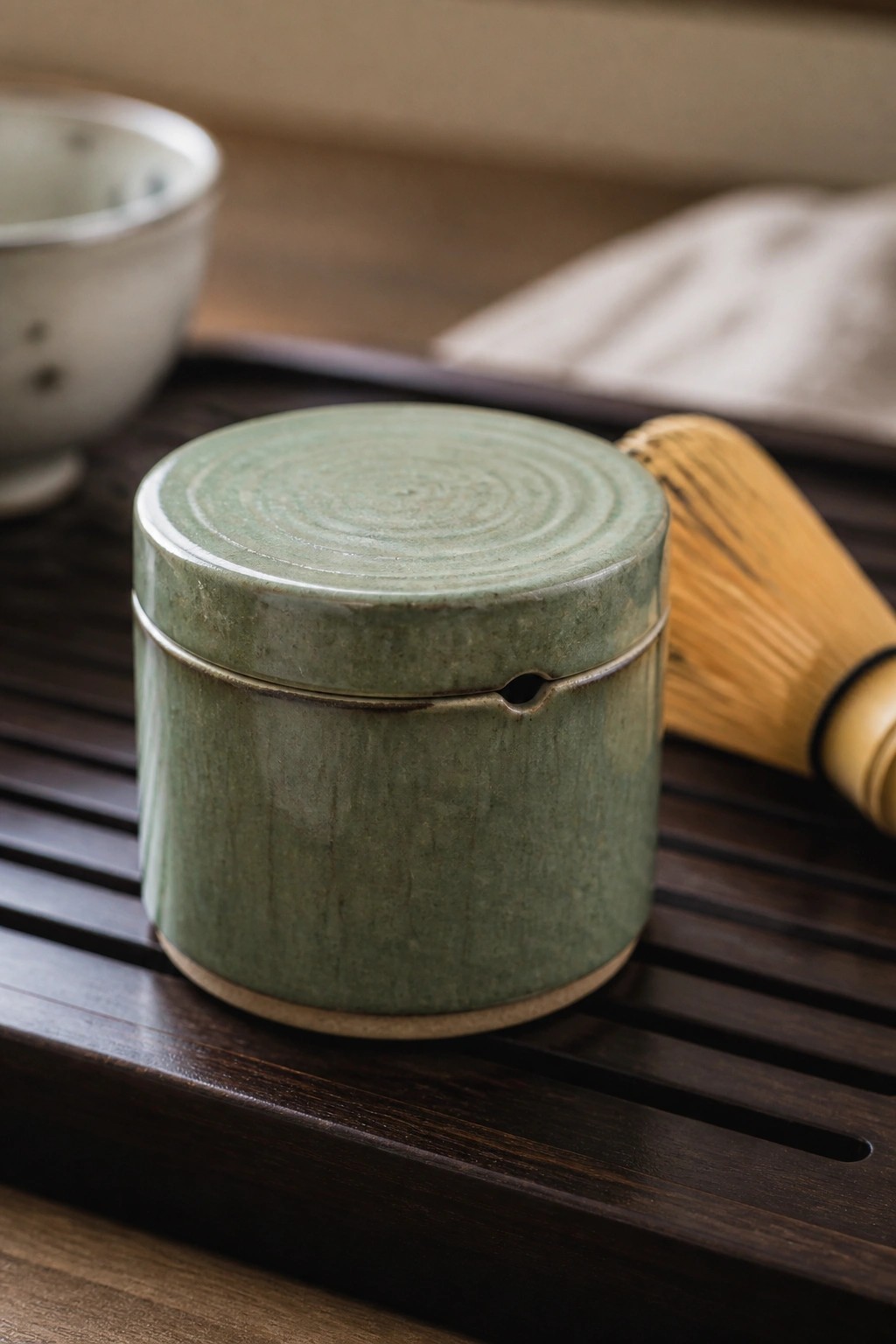
A small cylindrical lidded box built from slabs makes a straightforward storage container for loose tea or spices. The lid carries shallow concentric rings cut into the surface for quiet detail, while the matte green glaze covers the form evenly and highlights the handmade texture. A narrow notch along the rim allows controlled access without lifting the lid completely. The compact scale and simple profile keep the piece functional as a kitchen or desk item.
What makes this idea useful is how the same basic cylinder and lid can be adjusted in height or diameter to hold different amounts. You could skip the rings on the lid or swap the glaze color to match other pieces in a set. In a kitchen this shape sits neatly on a shelf or tray and keeps contents dry. The form also works as a small gift container if you add a simple stamp or leave the surface plain.
Oval Slab Lidded Box

A low oval lidded box made from slabs creates a compact container for small items. The rounded rectangular form keeps the profile flat and simple while the matte greenish glaze adds subtle variation without extra decoration. This type of project falls into the small storage category and works as a basic lidded holder rather than a decorative accent.
The shallow depth and wide base make it practical for a bathroom counter or entryway tray where you need quick access to items like keys or cotton pads. You can change the proportions to make a longer version for incense sticks or shorten the sides to create a ring dish instead. The same slab layout also works for a matching set of two boxes in different sizes.
Stacked Round Slab Lidded Boxes

These are simple round boxes built from slabs, each with straight sides, a flat lid, and a small rectangular tab on the body for lifting. The lids have a curved notch cut into the rim so you can slide a finger in to open them without a top knob. Stacking three in graduated soft glazes creates a compact set that stores small items while taking up little shelf space.
What makes this idea useful is how the side tab and lid notch solve the problem of opening a low-profile box without adding extra height. You could easily adapt the same slab template to make just two boxes or change the diameters for different contents like cotton pads or loose tea. The flat surfaces also give you room to test basic glazing without worrying about drips or runs.
Pastel Stacked Rectangular Slab Boxes

These are three simple rectangular lidded boxes built from slabs and stacked as a set. Each box uses straight walls with a flat lid that has a small cutout notch for lifting. The soft blue, peach, and cream glazes are applied one per box to create a clean color-blocked stack without extra decoration.
What makes this idea useful is that the same slab template can be cut to different heights or widths to make single boxes instead of a stack. The notched lid is quick to add during construction and keeps the surface flat. A piece like this fits on a bathroom shelf for small items or on a desk for paper clips and notes. You could rework the proportions into a longer version for jewelry or shorten them into square boxes for a different arrangement.
Frequently Asked Questions
What type of clay works best for beginners making these simple lidded slab boxes? A good starting point is a low fire earthenware or stoneware clay that has some grog added for strength. These clays are forgiving during slab rolling and construction, hold their shape well when building box walls, and fire at temperatures that most community studios can handle. Avoid porcelain at first since it can be finicky and prone to warping for new potters.
How do I keep the clay slabs from sticking or tearing when I roll them out? Lightly dust your work surface and rolling pin with cornstarch or a fine clay powder. Roll in one direction first, then rotate the slab 90 degrees and roll again to keep the thickness even. If the clay starts to grab, lift it gently and add a bit more powder underneath rather than forcing it. Aim for a consistent quarter inch thickness so the box walls stay sturdy yet lightweight.
What is the easiest way to make a lid that fits without gaps or wobbling? Cut the lid from the same slab as the box base so shrinkage stays the same. Measure the inner opening of the finished box walls and cut the lid about an eighth inch smaller on each side to allow for movement. Add a simple inner flange or rim made from a thin coil that sits inside the box opening. Let both pieces dry slowly under plastic to reduce warping before bisque firing.
How can I add minimal surface texture without extra tools or complicated steps? Use the edge of a ruler, a piece of lace, or even your fingertip to press subtle lines or dots into the leather hard clay. For a clean look, try pressing the slab against a textured fabric like canvas before assembling the box. Keep designs sparse so the focus stays on the simple box form itself, and wipe away any excess slip before the clay dries fully.
What should I do if the corners of my box start to crack while drying? Wrap the assembled box loosely in plastic for two or three days so it dries very slowly and evenly. Once it reaches leather hard stage, gently reinforce the inside corners with a small coil of the same clay and smooth the join with a damp sponge. If small cracks appear later, fill them with slip made from the same clay body before the first firing.

Pottery Path is my cozy corner of the internet where I share clay ideas, pottery inspiration, and simple projects you can recreate at home. I love exploring everything from air dry clay to handbuilt pottery to cute minis that brighten your day. My goal is to make clay crafting feel easy, fun, and welcoming for anyone who wants to try it.
You will find beginner friendly tutorials, creative pottery painting ideas, and lots of warm inspiration for slow and happy crafting. If you enjoy hands on creativity, this space will feel like home.