I’ve been working with a pottery wheel for a few years now and I’ve noticed that small changes in the design can make a big difference in how the final piece turns out.
Over time I’ve tried out various shapes and details that help my handmade items look more distinctive without requiring advanced skills.
Some of these ideas came from experimenting during quiet afternoons in my studio and others from chatting with fellow potters.
I wanted to put together a list of designs that have worked well for me so others can try them too.
These 21 ideas focus on practical ways to add character to bowls mugs and other everyday items.
Sunflower Band on a Wheel-Thrown Mug
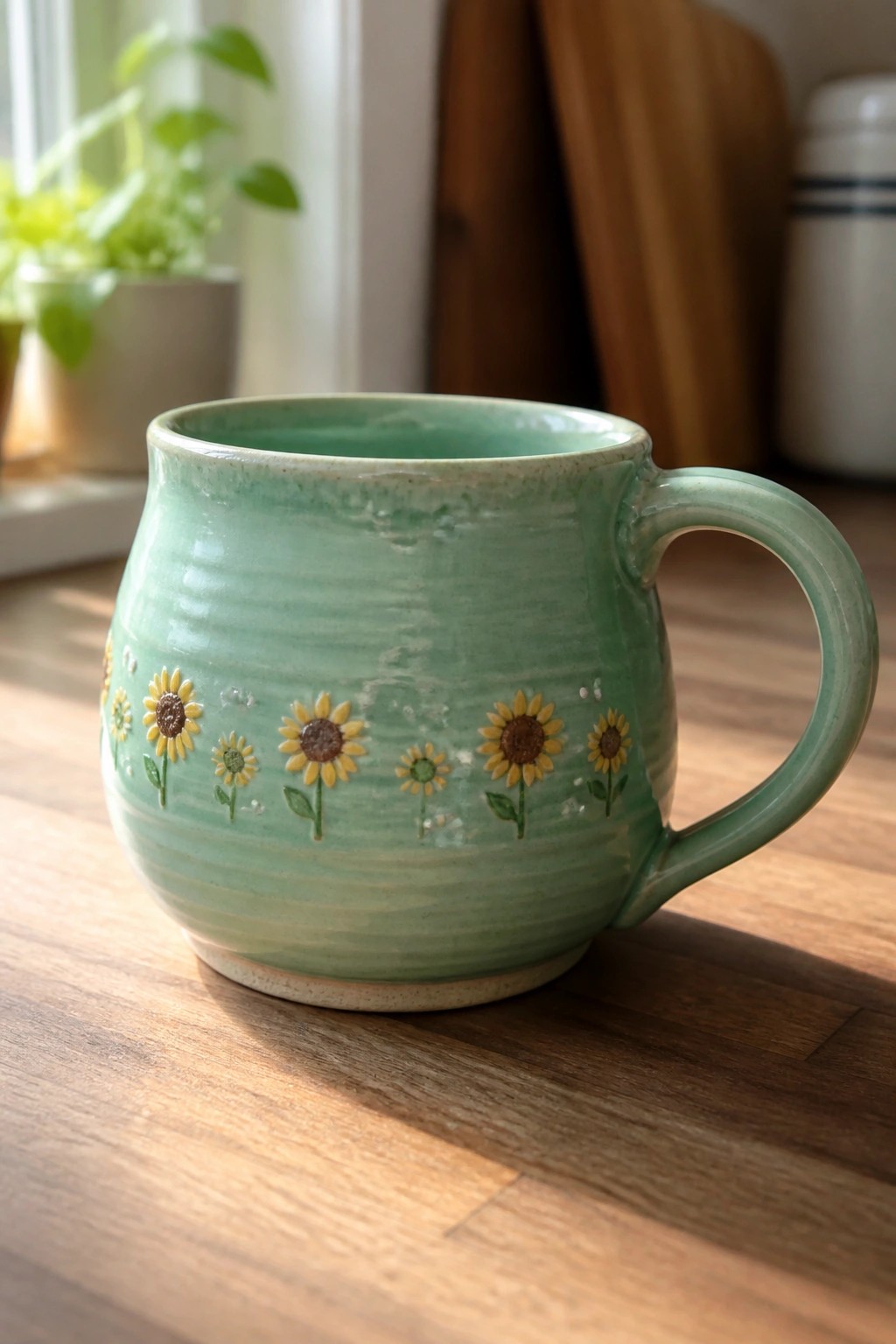
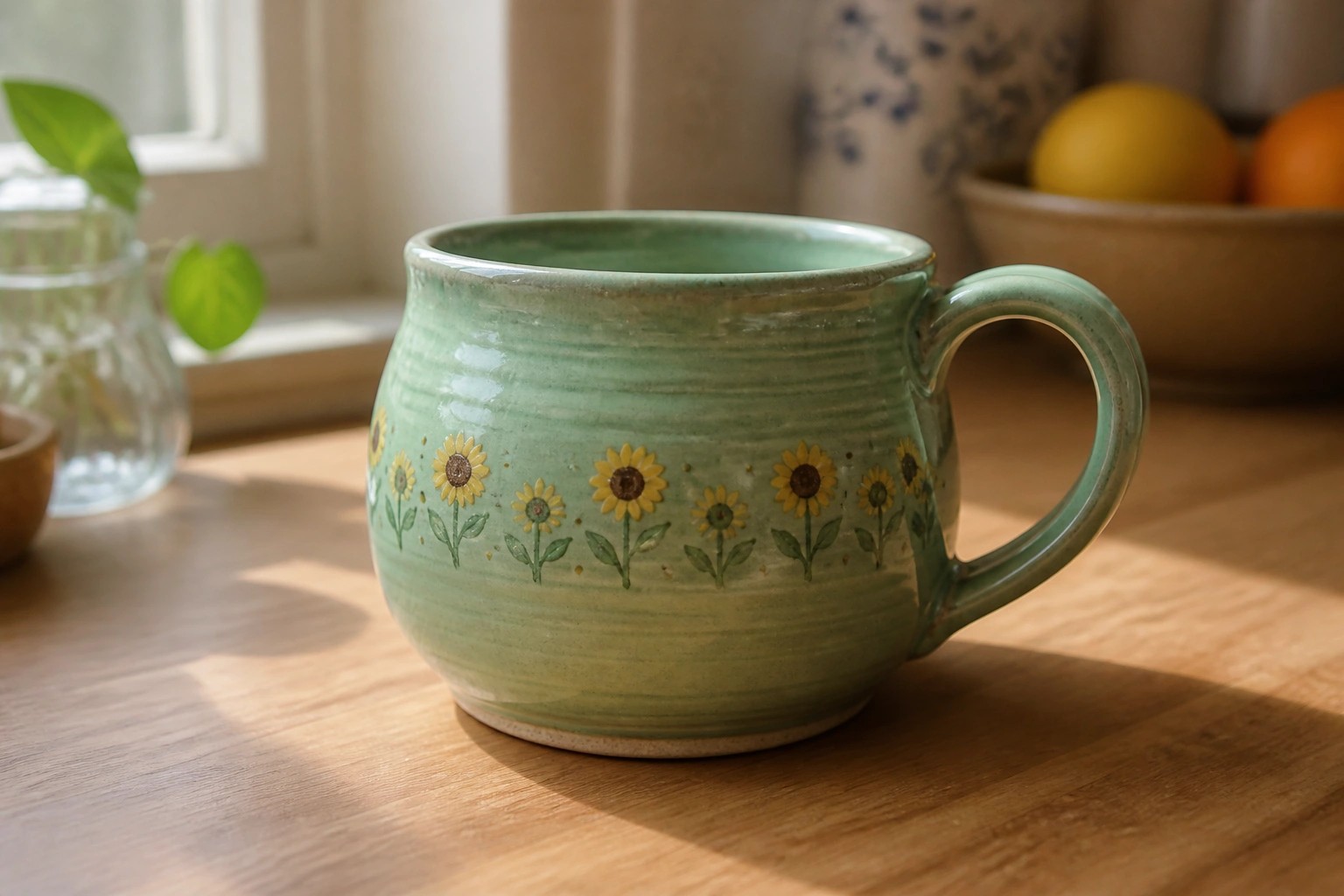
A rounded mug thrown on the wheel gets a soft green glaze that shows the horizontal ridges from the throwing process. A single row of small sunflowers is painted around the middle section, with yellow petals, brown centers, and short green stems that sit evenly against the glaze. The flowers stay small so the overall shape and color stay dominant.
This works well as a daily coffee mug or a simple gift. The painted band can be swapped for other flowers or repeated motifs without changing the glaze or form. You can scale the same idea down for a smaller cup or try it on a bowl using the same spacing. The contrast between the solid glaze and the bright flowers makes the design easy to spot in photos or on a shelf.
Spiral Pattern Bowl
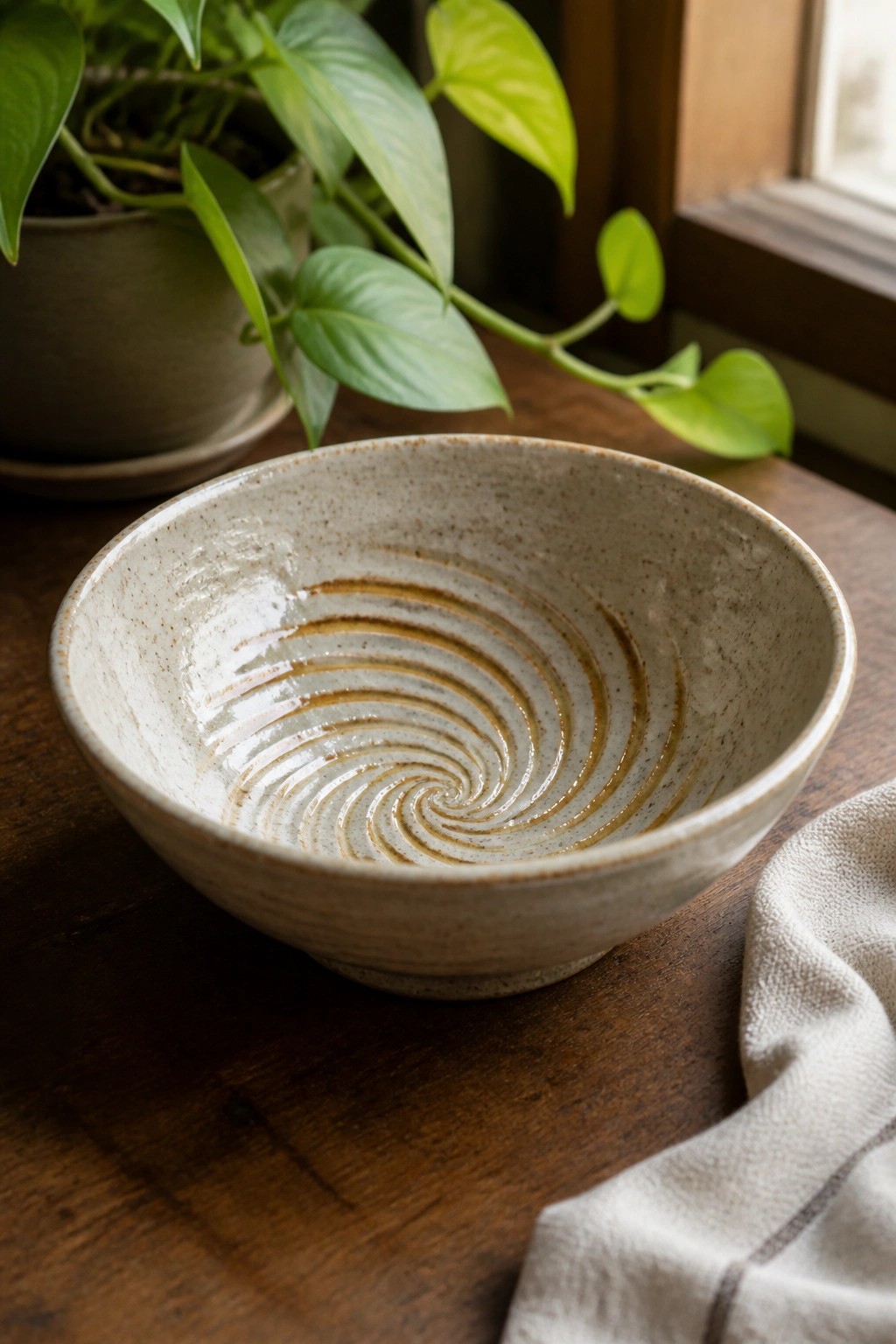
A wheel-thrown bowl with a spiral worked into the interior gives the piece a clear focal point that draws attention inward. The light base glaze with darker lines creates contrast that shows off the wheel marks and the handmade shape. This design works well for a medium-sized bowl meant for serving or for holding fruit on a counter.
What makes this idea useful is how easily the spiral can be adjusted by changing how many lines you pull or the color of the slip. The same shape scales down to a small catch-all dish or scales up for a larger salad bowl. You can keep the spiral tight in the center only or run it all the way to the rim depending on how much time you have on the wheel.
Wavy Rim Vase with Running Blue Glaze
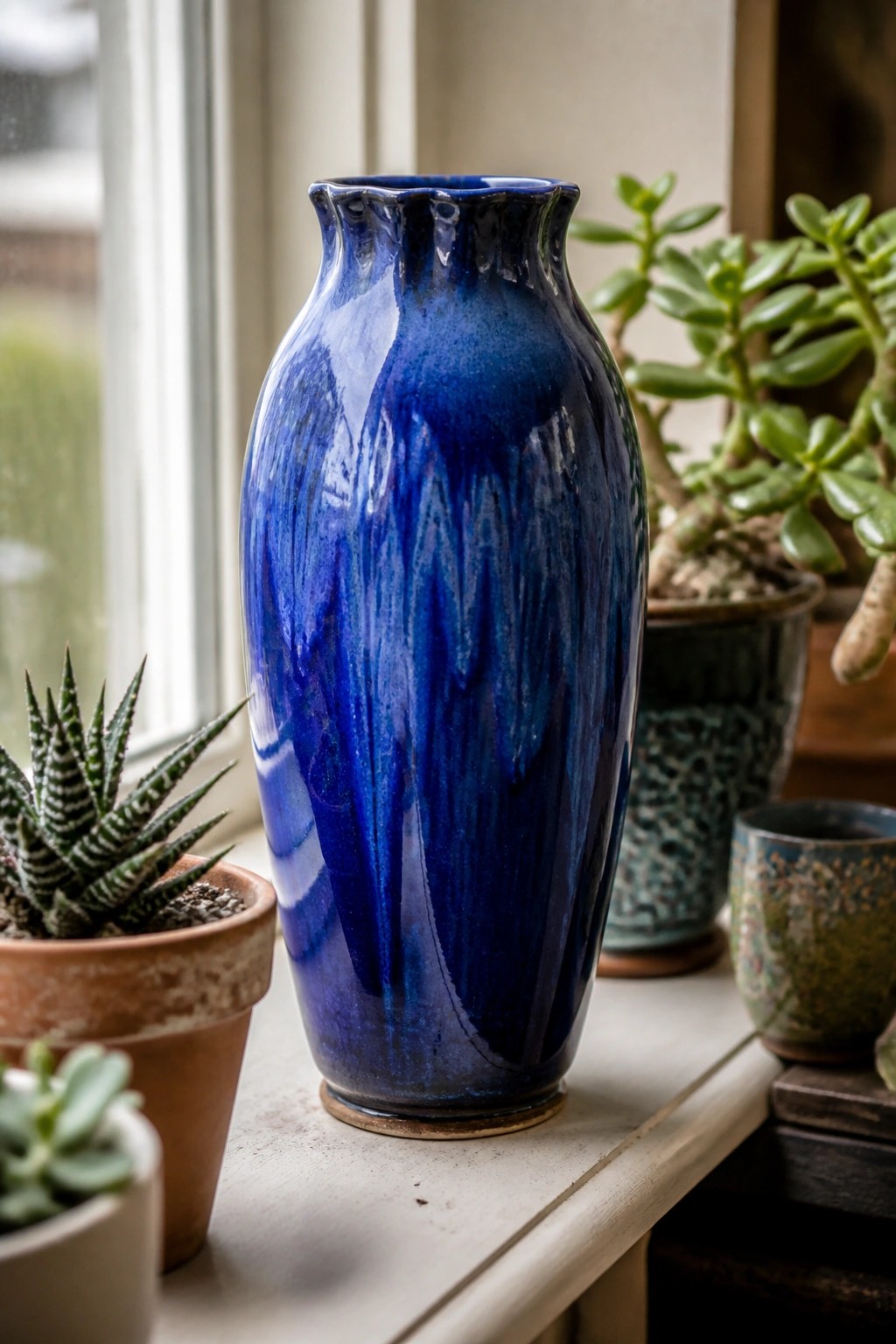
A tall wheel-thrown vase finished with a deep blue glaze that streaks and pools as it melts down the sides. The rim is shaped into soft waves before firing, which gives the opening an irregular edge without extra carving. This idea centers on letting the glaze movement and the rim shape create the surface interest rather than added texture or patterns.
What makes this idea useful is that the same glaze can be applied to different vase heights or even a pitcher form to build a small set. The wavy rim is easy to adapt by pinching the clay at the leather-hard stage or trimming it after the first firing. A piece like this works especially well on a windowsill or mantel where the glossy surface reflects light, and the tall shape holds a few stems without needing extra support.
Wavy Rim Planter with Gradient Glaze
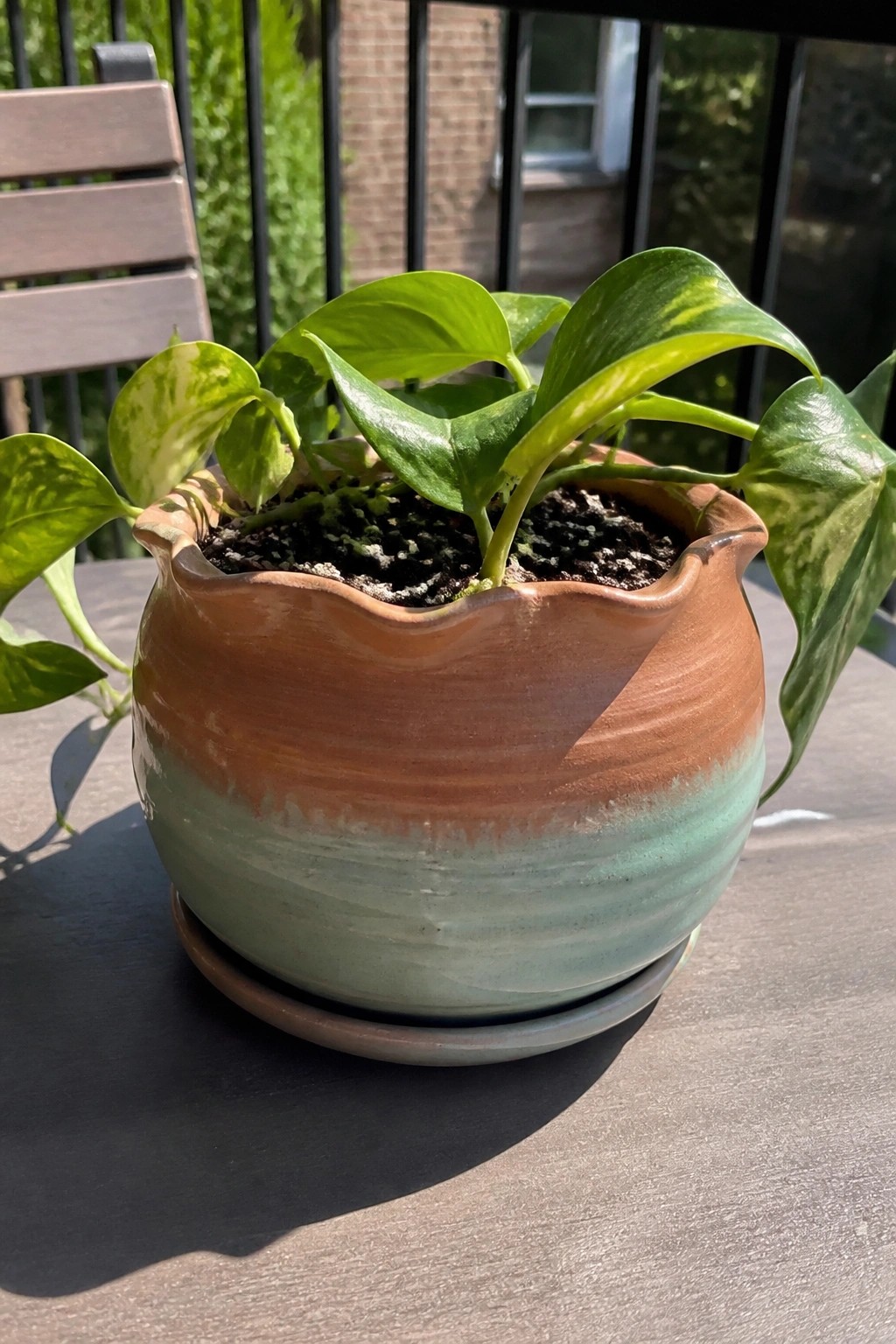
A wheel-thrown ceramic planter with a freeform wavy rim lets trailing plants spill over the edges without looking contained. The glaze shifts from a matte brown on the upper half to a soft teal green near the base, and the transition highlights the pot’s rounded form. This style keeps the surface simple while the rim and color change give it enough detail to stand alone.
The shape does a lot of the work here because the uneven rim adds movement that balances bushy or vining foliage. You could rework the same rim on a shorter, wider bowl for a tabletop herb garden or stretch it taller for a floor plant. In a sunny window or on an outdoor table, the glaze shift keeps the piece from blending into the background. For a gift, repeat the form but change the lower glaze to a warm gray so it fits different room colors.
Incised Daisy Rim on a Shallow Ceramic Bowl
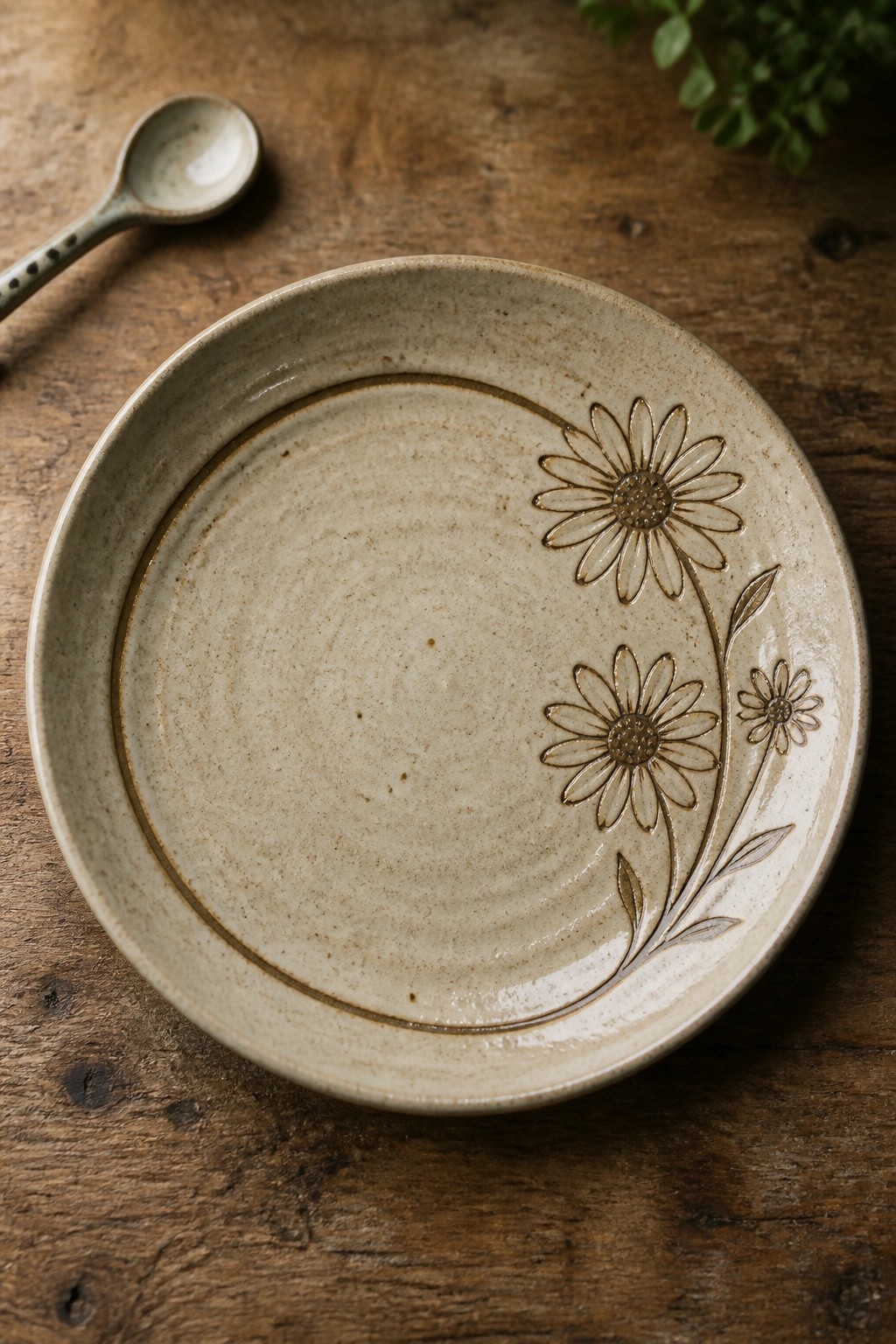
A shallow handmade bowl with a wide rim works well when the design is kept to one side. Here the maker carved a simple daisy stem and two smaller blooms into the clay before glazing, leaving the rest of the surface plain. The neutral matte glaze sits in the carved lines and creates contrast without extra color. This approach fits the category of decorative kitchen or table bowls that double as display pieces.
The shape does a lot of the work here because the wide rim gives the carving room without crowding the center. You can adapt the same idea by changing the flower to leaves, wheat, or abstract lines and still keep the same neutral glaze. It works especially well as a small serving dish for butter, olives, or snacks, and the carved detail makes it easy to photograph for Pinterest without needing bright colors. For a different version, try the same rim carving on a larger platter or scale it down to a set of small condiment dishes.
Rectangular Blue Ceramic Tray
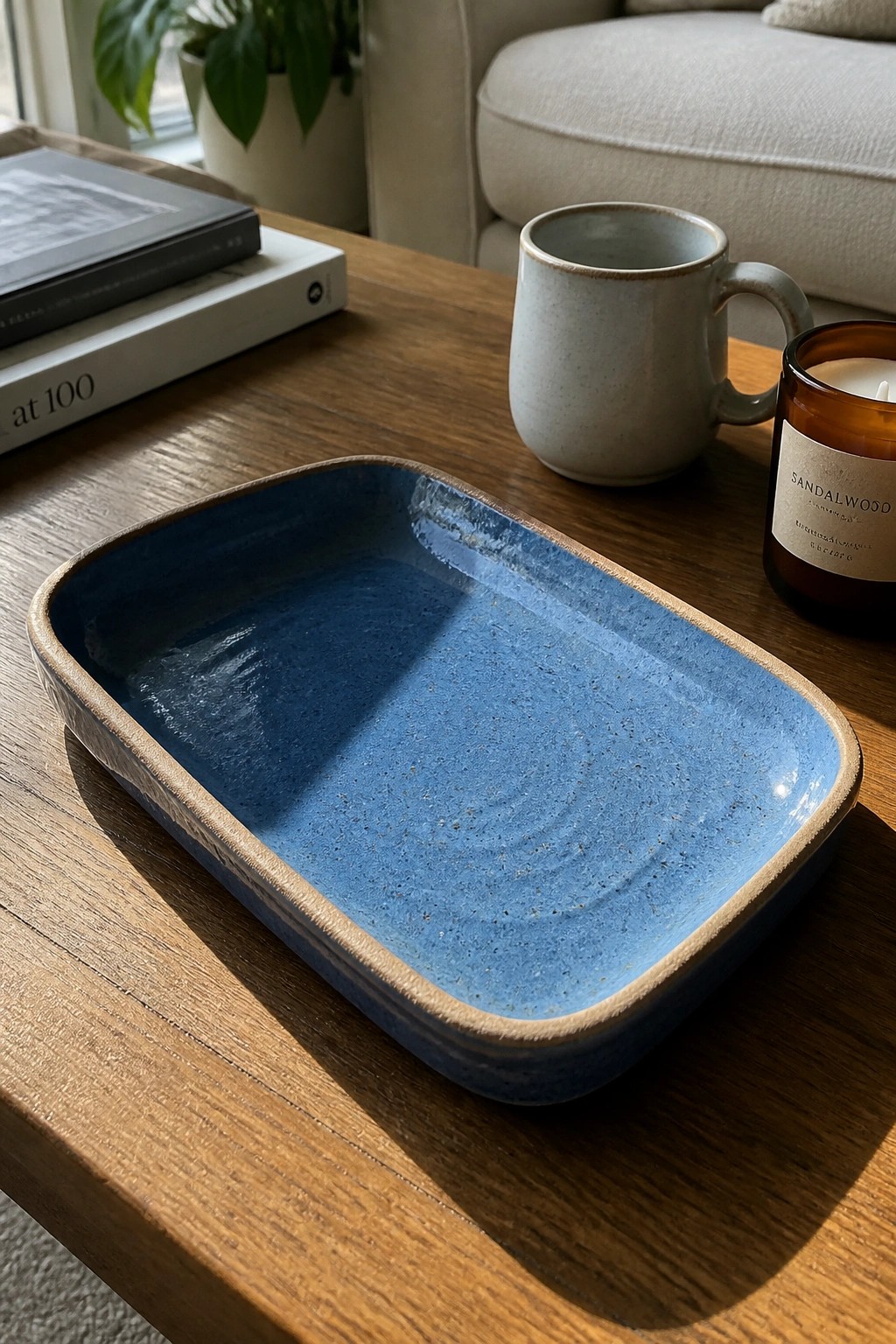
A rectangular ceramic tray with low sides and rounded corners works well as a catch-all or serving piece. The deep blue speckled glaze covers the interior while the rim stays in the natural clay color for contrast. This simple shape keeps the focus on the glaze and makes the tray easy to place on tables or counters without crowding the space.
The shape does a lot of the work here by giving a flat base that holds keys, mail, or small kitchen items. You could adapt the same rectangular form into a larger version for a cheese board or shrink it for a bathroom soap dish. The unglazed rim keeps the look clean and pairs with most glaze colors if you want to change the interior shade.
Scalloped Base Taper Candle Holder
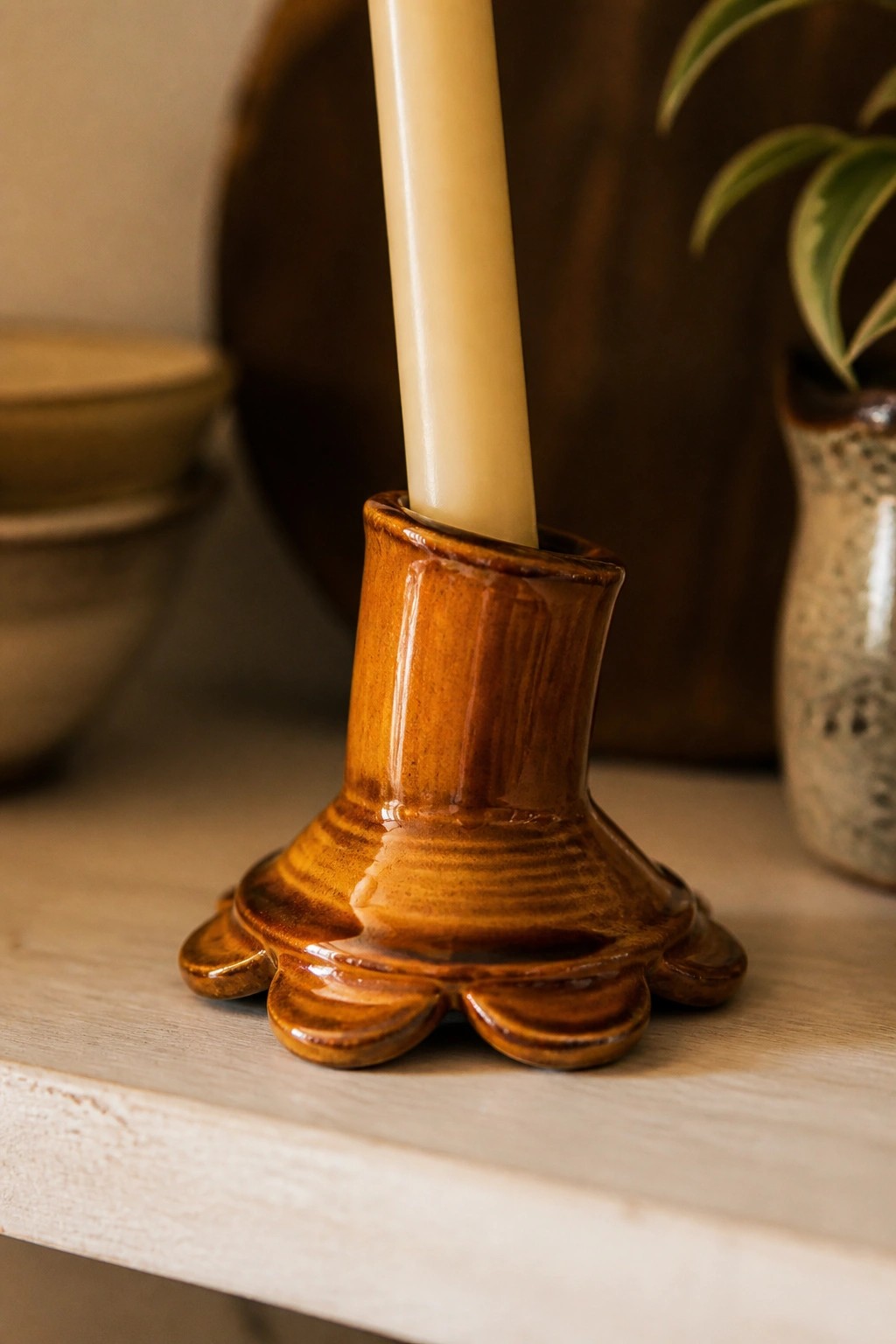
A handmade ceramic taper candle holder with a wide base shaped into rounded scallops creates a stable and eye-catching form. The glossy brown glaze accentuates the layered, petal-like edges at the bottom while the upper section stays simple and cylindrical to hold a standard taper. This approach works well in the candle holder category because the sculpted base adds shape and presence without extra surface patterns or multiple pieces.
What makes this idea useful is that the scalloped base can be resized or recolored to match different table settings or shelf displays. You could adapt the same flared shape for small vases or bud holders by narrowing the top opening. In a kitchen or dining area, this kind of piece gives height and focus to a grouping of other pottery without taking up much space. For Pinterest, the base detail photographs clearly and translates easily to other glaze colors or slightly taller versions.
Dripping Glaze Pitcher for Table Use
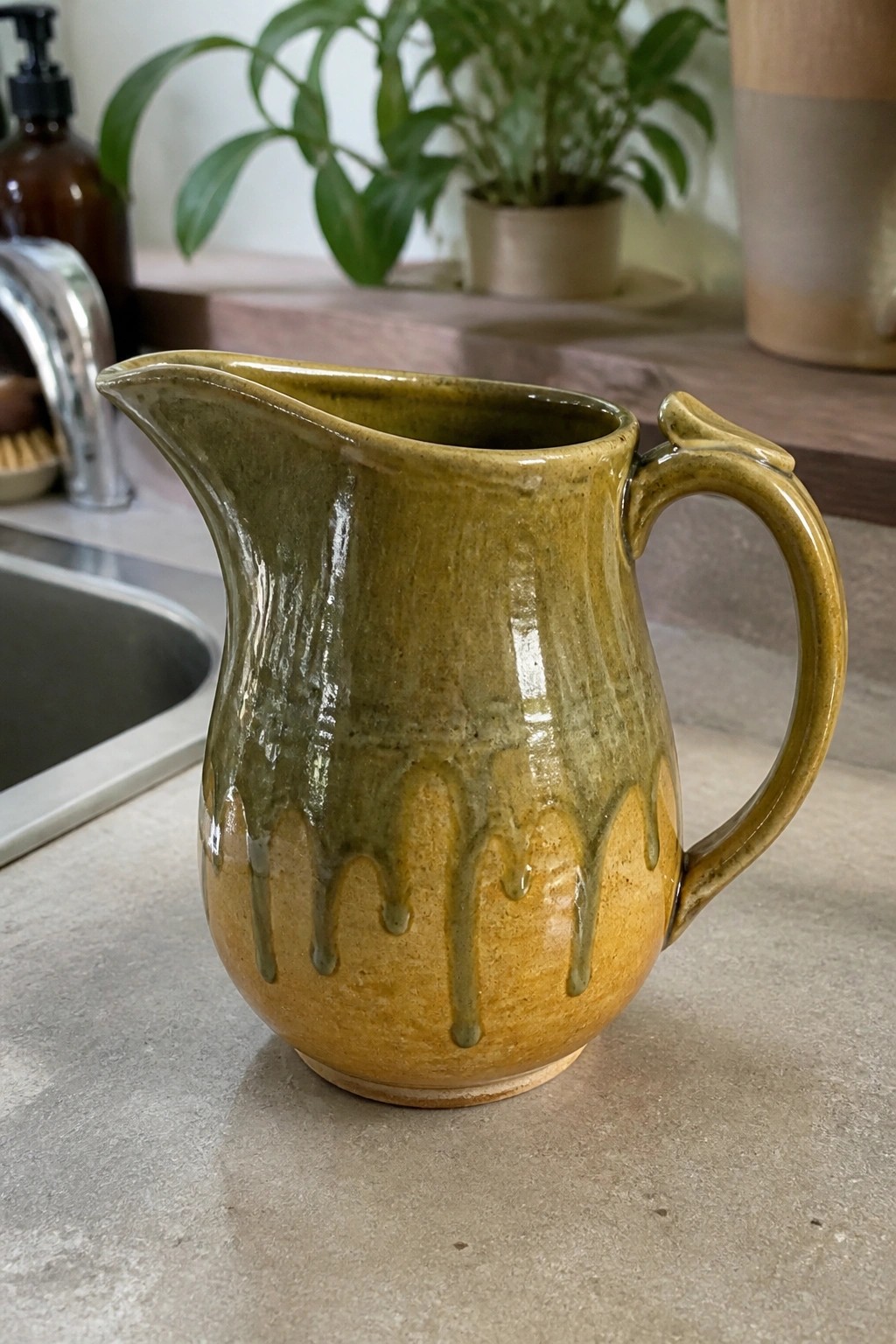
A wheel-thrown ceramic pitcher uses a simple rounded body and curved spout paired with a sturdy pulled handle. The glaze starts as a mustard yellow on the lower half and shifts to an olive green that runs downward in thick drips during firing. This creates vertical movement across the surface without any added carving or painting.
What makes this idea useful is how the pitcher serves both as a functional kitchen piece and a standalone object on the counter. The drip glaze can be adapted by changing the base color or limiting the runs to just the upper third for a subtler effect on mugs or small jugs. In a kitchen, this shape pours cleanly and stores easily on open shelves, and the same technique works on taller forms if you want to try it on vases or carafes next.
Carved Waves on a Lidded Storage Jar
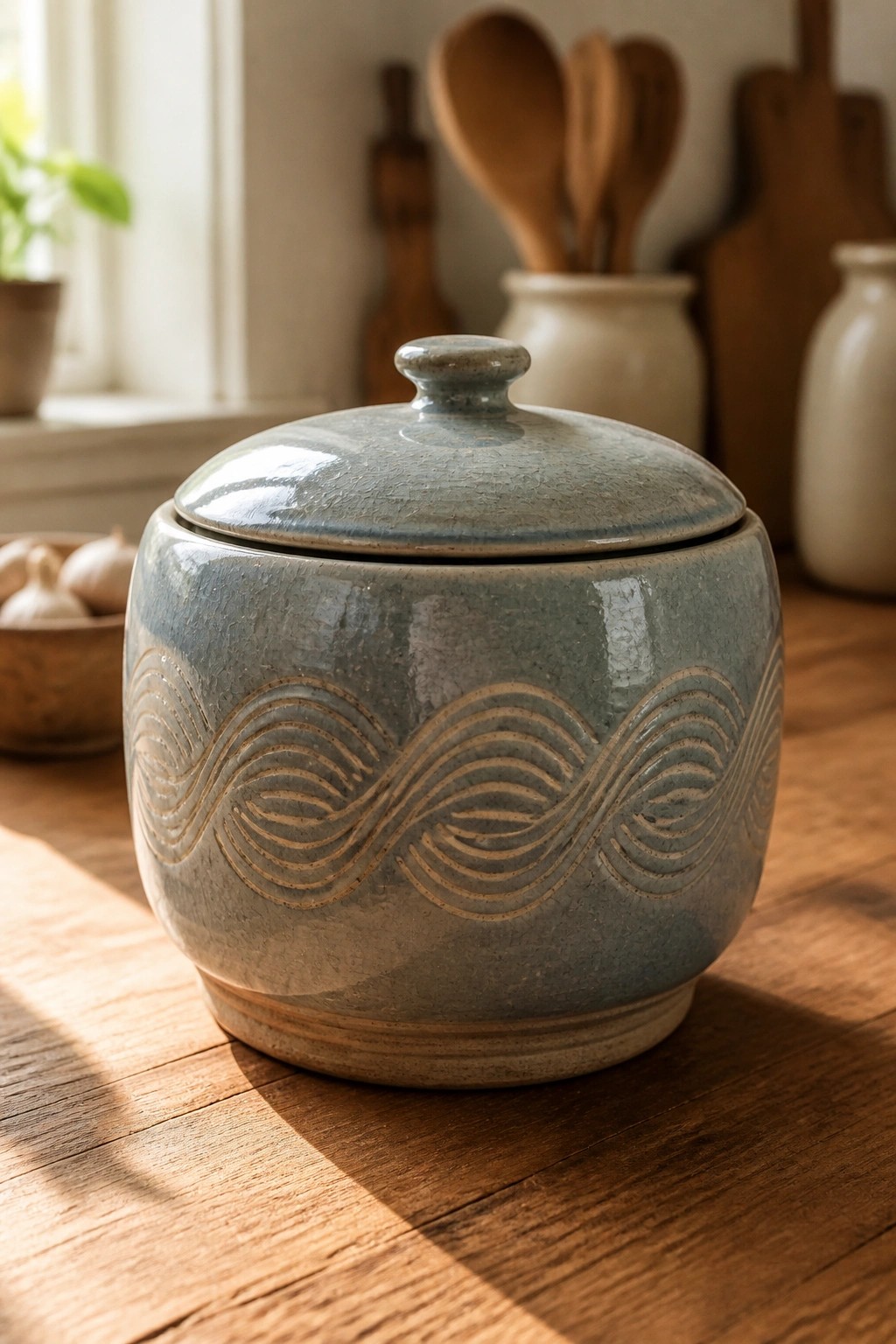
A round lidded jar with a blue-gray crackle glaze and a wide band of carved wavy lines offers a straightforward way to add surface interest to a basic wheel-thrown form. The waves are cut or pressed into the clay before glazing, creating repeating curved grooves that catch light and shadow. This keeps the overall shape simple and functional while giving the jar a clear handmade look. It works as a kitchen canister or small general storage piece.
What makes this idea useful is how the carved band stays away from the rim and base so the lid still fits cleanly. You could swap the waves for straight lines or arcs if the curves prove hard to repeat evenly, or use the same motif on a taller jar for coffee or sugar. In a kitchen this size sits well on open shelving next to wooden tools without taking up much space. The carving technique also transfers easily to a set of smaller matching jars.
Gold-Dot Ceramic Spoon Rest
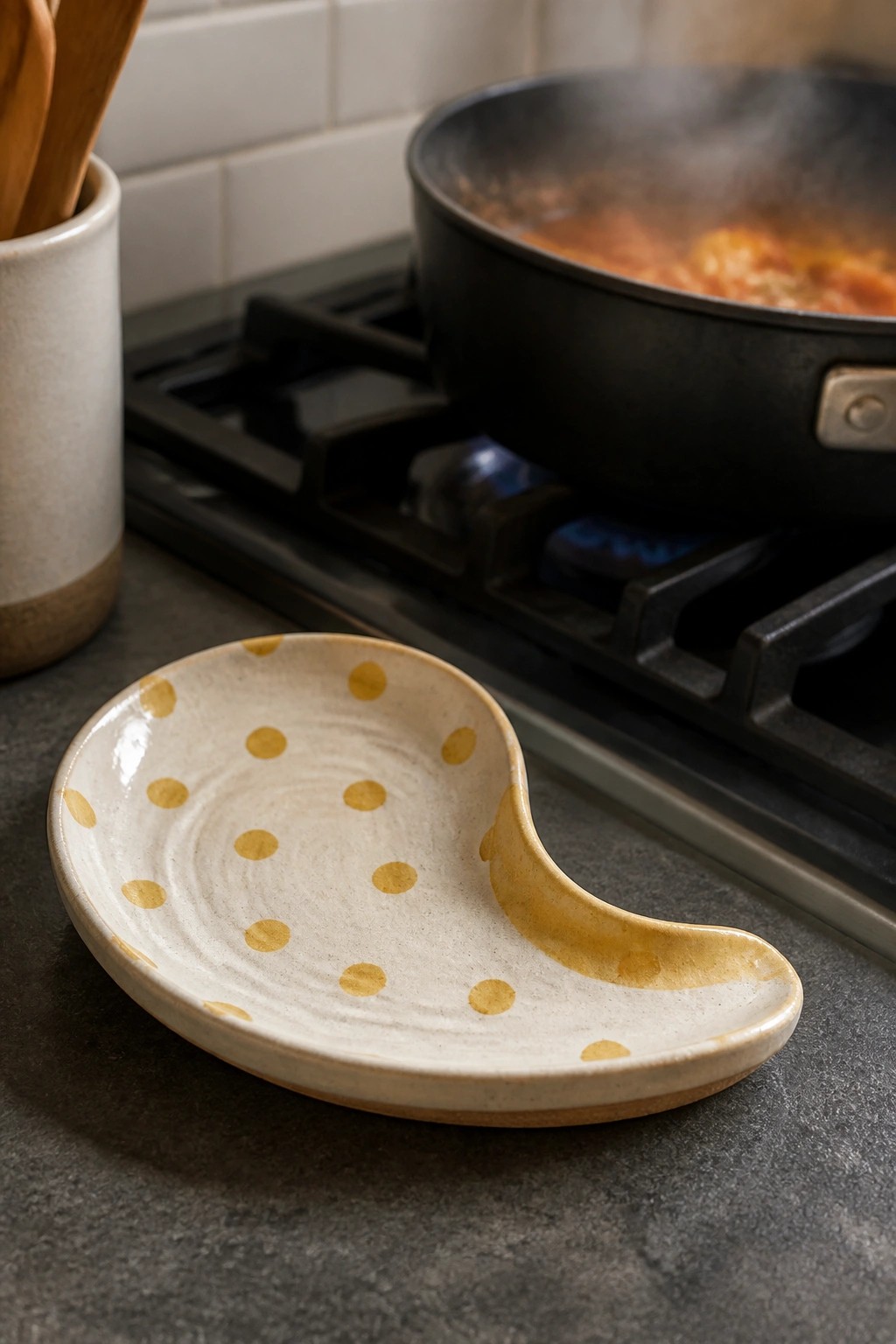
A handmade ceramic spoon rest with a curved, shallow bowl shape holds cooking spoons steady on the counter. The piece uses a light speckled base glaze and scattered gold dots, with a flowing yellow accent along the raised edge that adds contrast without extra steps. This kitchen item fits the category of functional utensil holders and keeps the working end of a spoon off the surface during cooking.
What makes this idea useful is the simple curve that does most of the work, so you can throw or hand-build the form quickly on the wheel or with slabs. In a kitchen, the small scale lets it sit beside the stove without crowding the workspace, and the dot pattern can be changed to other colors or skipped entirely for a faster version. The same shape works for a small brush rest in a studio or a holder for tea bag tags on the counter. For a gift, scale it up slightly and swap the dots for a single stripe to match different kitchen colors.
Ring Dish with Built-In Cone Holder
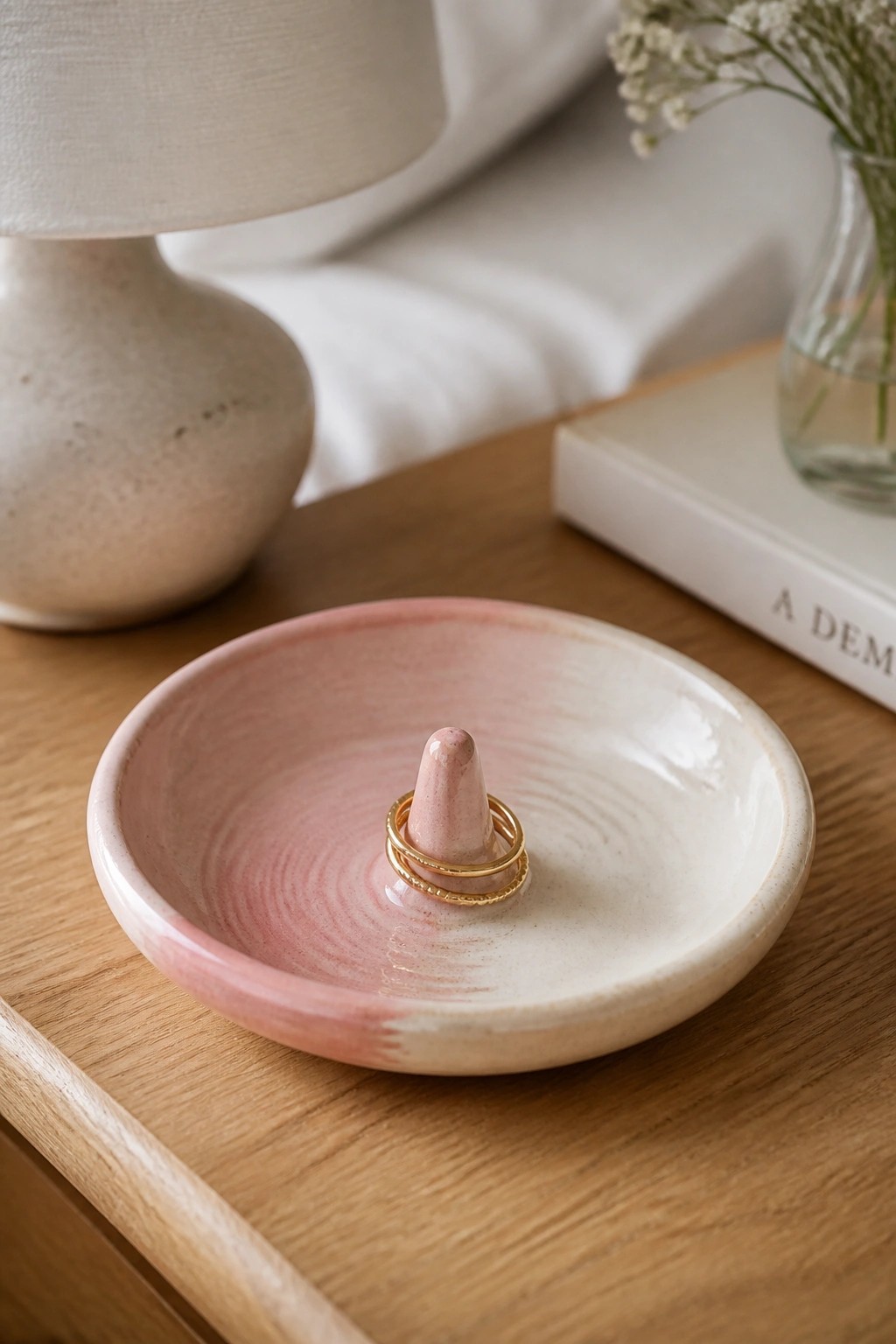
A small ceramic ring dish takes the form of a shallow bowl with a raised central cone that holds rings upright and separate. The piece uses a soft pink-to-cream gradient glaze that blends across the surface while the wheel ridges remain visible for added texture. This approach keeps the overall size compact and places the focus on the functional peg rather than extra decoration.
What makes this idea useful is how the cone can be made taller or wider depending on the rings you want to store. You could repeat the same shape in different glaze colors to create a matching set or simplify it to a flat disk with just a short post if you prefer less material. The small scale works well on a nightstand or bathroom counter where space is limited and the dish can double as a catch-all for small items like earrings. For a gift, something like this takes little time to throw and glaze once you have the basic form down.
Yarn Bowl with Spiral Side Cutout
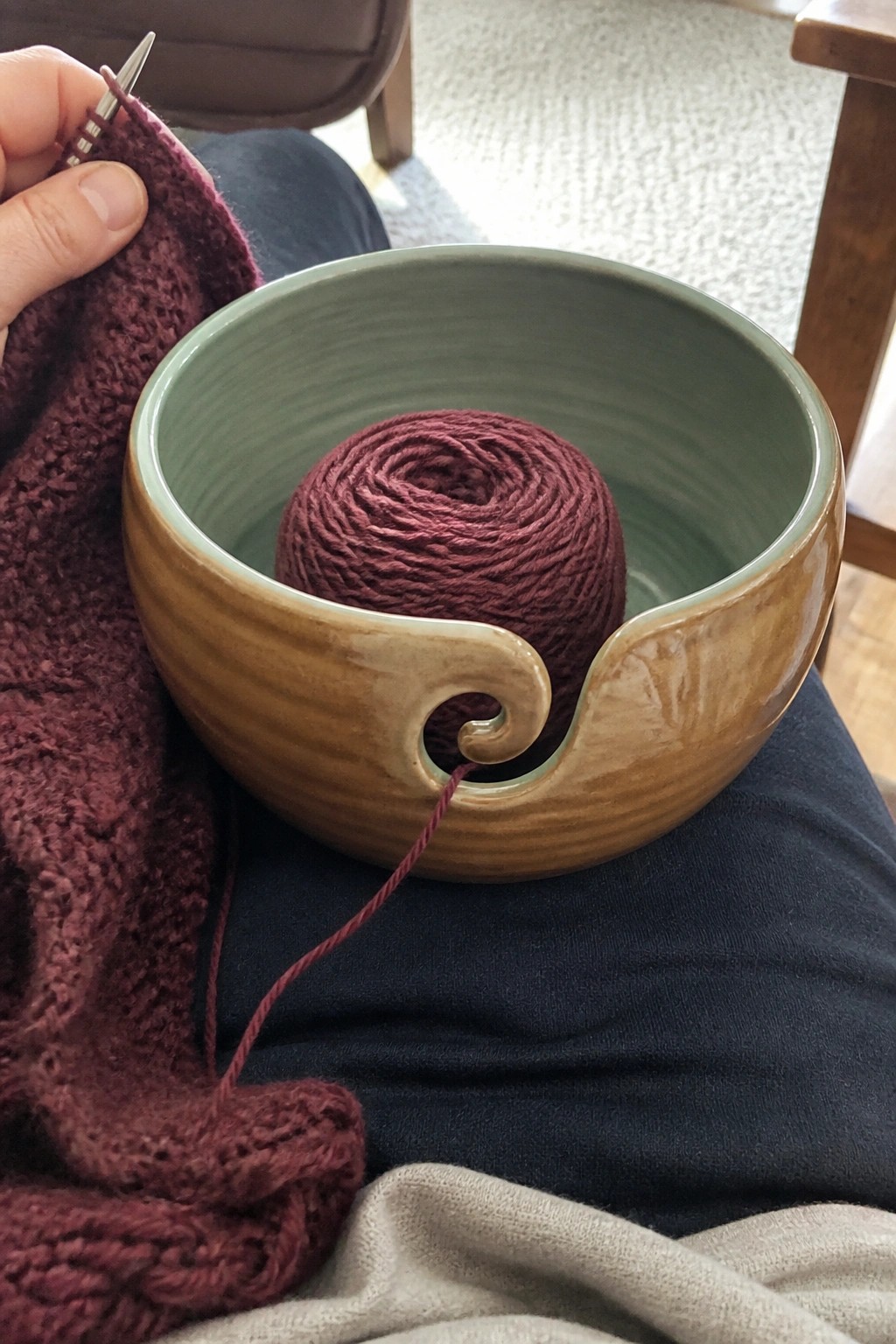
A ceramic yarn bowl uses a rounded body with a large spiral cutout on one side to hold a ball of yarn in place. The opening lets the strand unwind evenly without the ball rolling away or tangling. This turns a standard bowl shape into a dedicated tool that keeps yarn contained while someone knits or crochets.
What makes this idea useful is how the cutout solves a common problem without adding extra parts or hardware. You could scale the same spiral slot down for smaller bowls meant for embroidery thread or scale it up for chunky yarns. In a craft space this shape keeps supplies organized on a table or lap without needing a separate holder. For a gift the design appeals to knitters who want something both handmade and actually functional.
Impressed Leaf Teapot
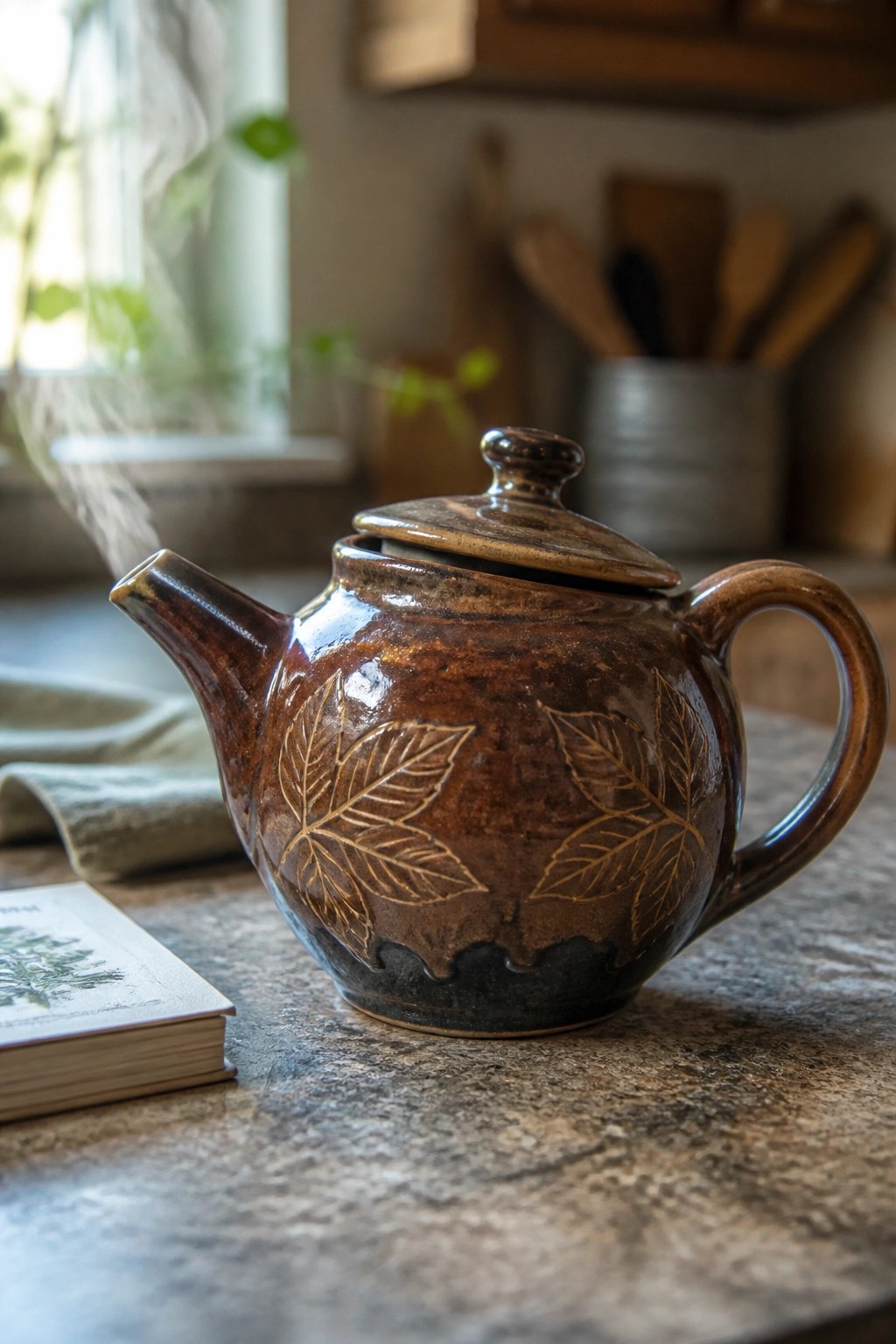
A wheel-thrown ceramic teapot works well when the body carries a repeating leaf motif pressed or carved into the clay before glazing. The rounded form gives plenty of surface area for the leaves while the darker lower band and glossy brown glaze keep the design readable. A simple lid with a knob and a standard spout and handle complete the piece without competing with the surface pattern. This approach turns a basic functional shape into a kitchen item that still feels distinctive.
The shape does a lot of the work here because the teapot already has a natural curve that shows off the leaves from multiple angles. You could adapt the same impressed leaves to mugs, butter dishes, or a small pitcher using the same glaze combination. In a kitchen this kind of piece sits comfortably on open shelving or a tray and still gets used daily. The motif also translates easily to other sizes, so the idea scales down for a creamer or up for a larger serving pot without losing impact.
Ceramic Toothbrush Holder with Drippy Glaze
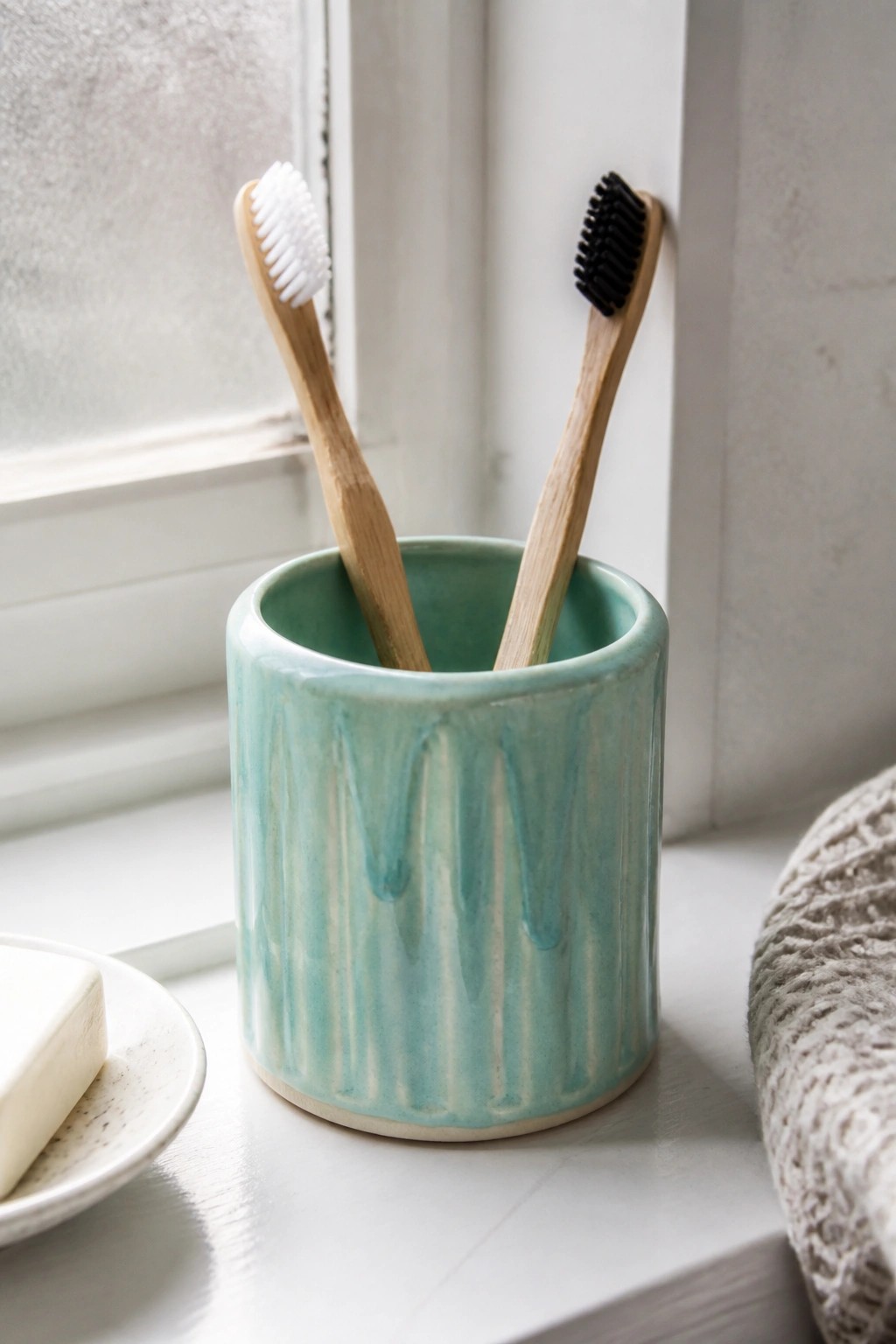
A straight-sided clay cylinder makes a practical toothbrush holder for the bathroom. The outside has shallow vertical ridges that break up the surface, and the turquoise glaze is applied so it runs down in thick, uneven drips that stop partway. This keeps the inside smooth and easy to clean while the exterior gives the piece its main visual detail.
What makes this idea useful is how the basic cylinder shape works for toothbrushes, makeup brushes, or small kitchen tools without any extra parts. You could make the same form shorter for a single brush or taller for more items, and change the glaze color to match tile or towel colors in the room. The ribbed texture and drip effect are simple enough to repeat on a second piece if you want a matching soap dish or small tray set.
Painted Coastal Scene on a Ceramic Plate
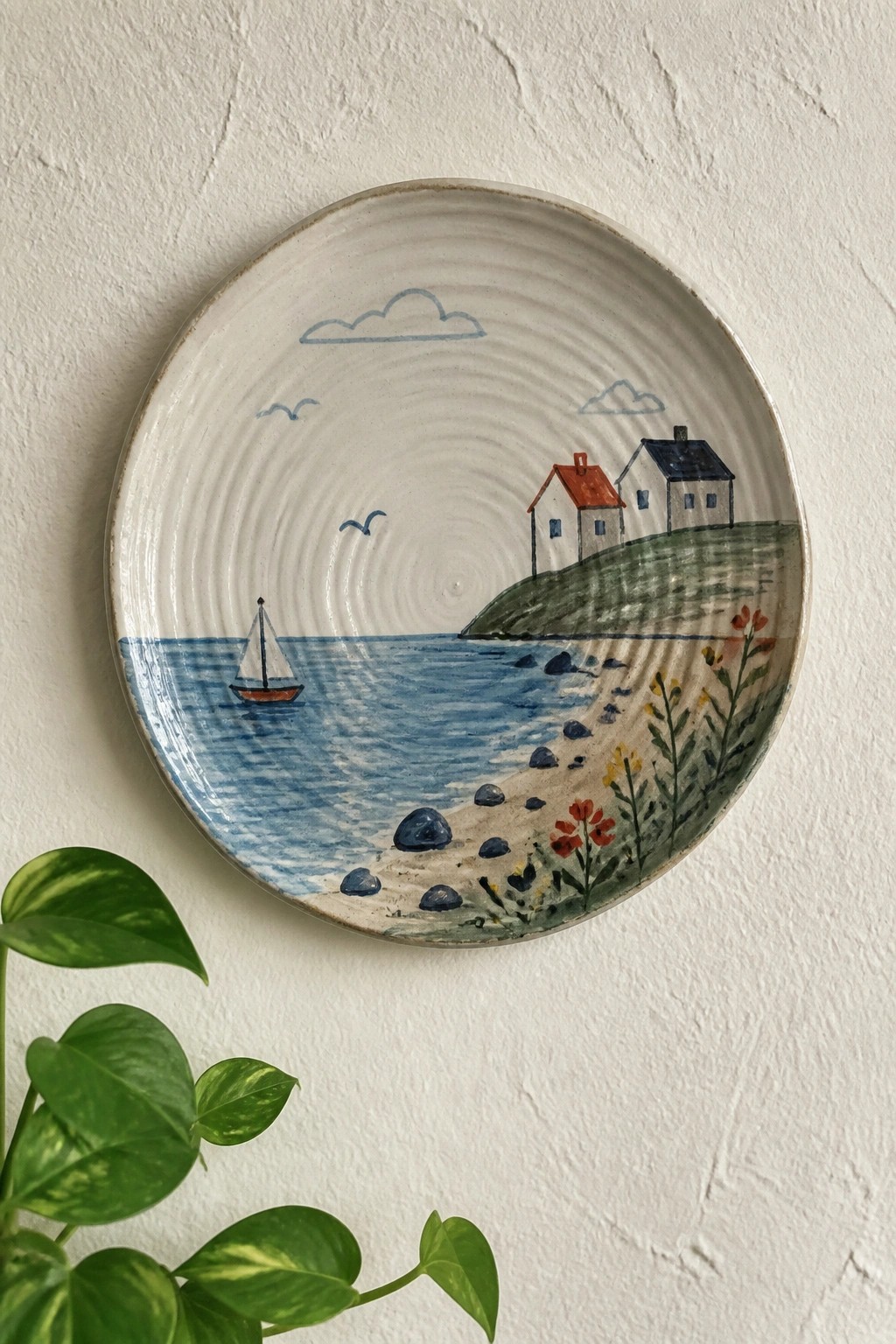
A thrown ceramic plate becomes a display piece when covered with a simple painted landscape. The design places water and a sailboat on one side, a beach with rocks in the center, and houses on a hill toward the right, leaving the rim mostly plain. This layout keeps the scene readable even when the plate hangs on a wall. The approach fits the category of decorative plates that use color and motif rather than texture or form for interest.
What makes this idea useful is how the painted elements turn a standard plate into something that reads as art without extra shaping. You can swap the coastal view for fields, a city skyline, or a garden by keeping the same balance of open space and focal points. A piece like this works especially well as a gift or for filling a small wall area where a larger painting would feel too heavy. The same layout adapts easily to smaller plates or shallow bowls if you scale the main shapes down.
Two-Part Ceramic Salt Cellar with Pouring Spout
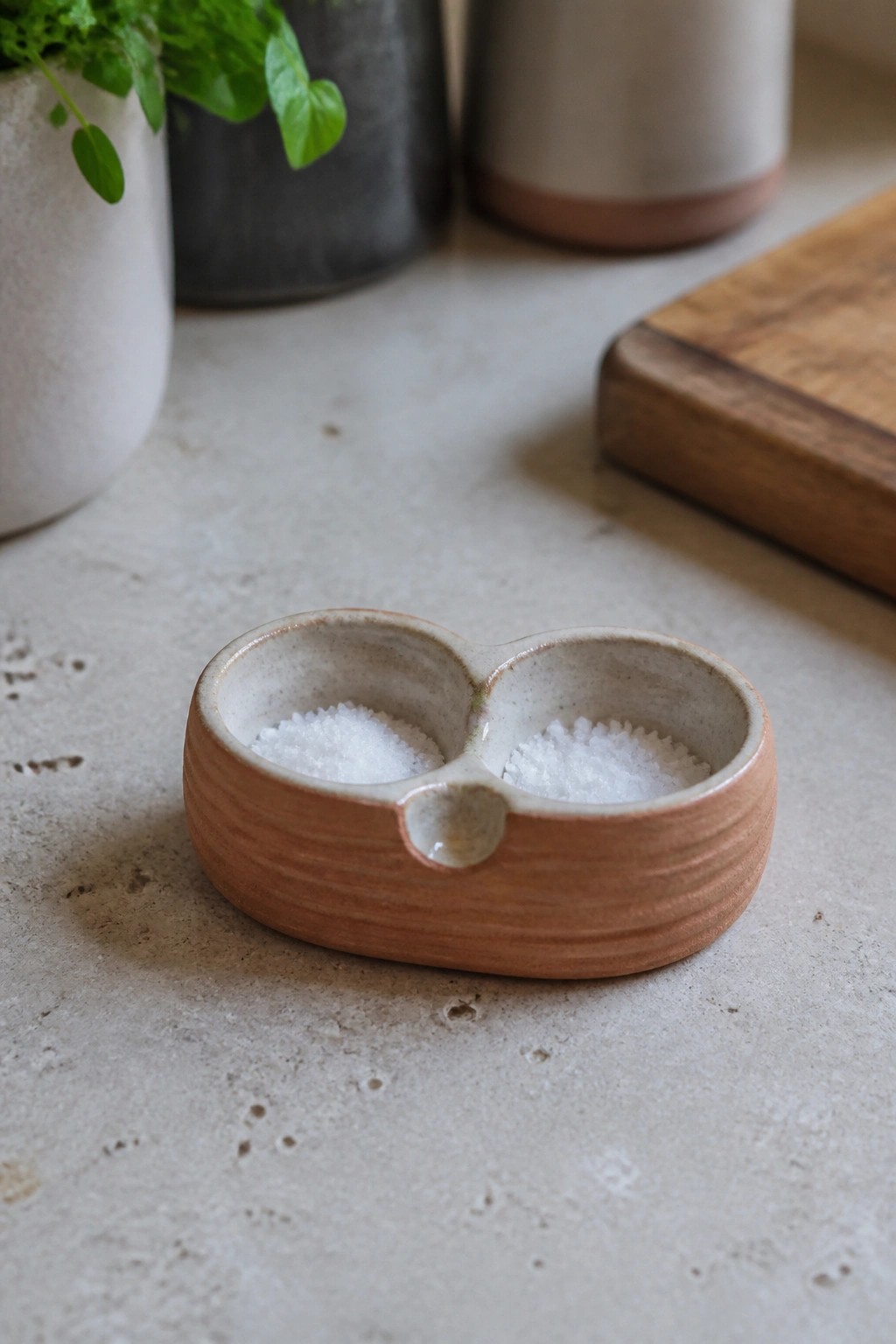
A divided ceramic dish with two connected compartments and a small spout on one side works well as a salt and seasoning cellar. The oval shape keeps the two sections close for easy reach while the spout allows controlled pouring from one side. The earthy brown clay body with a light speckled rim gives it a simple kitchen look that stays practical on a countertop or table.
What makes this idea useful is how the divided layout solves the common problem of keeping salt and pepper separate without needing two separate dishes. The small scale makes it easy to adapt into a spice holder for other seasonings or even a mini dip server for snacks. You could rework the same shape into a larger version for cooking ingredients or shrink it further for a travel-sized version. In a kitchen, this kind of piece stands out because it combines storage and serving in one compact form.
Scalloped Pedestal Bowl in Speckled Pink
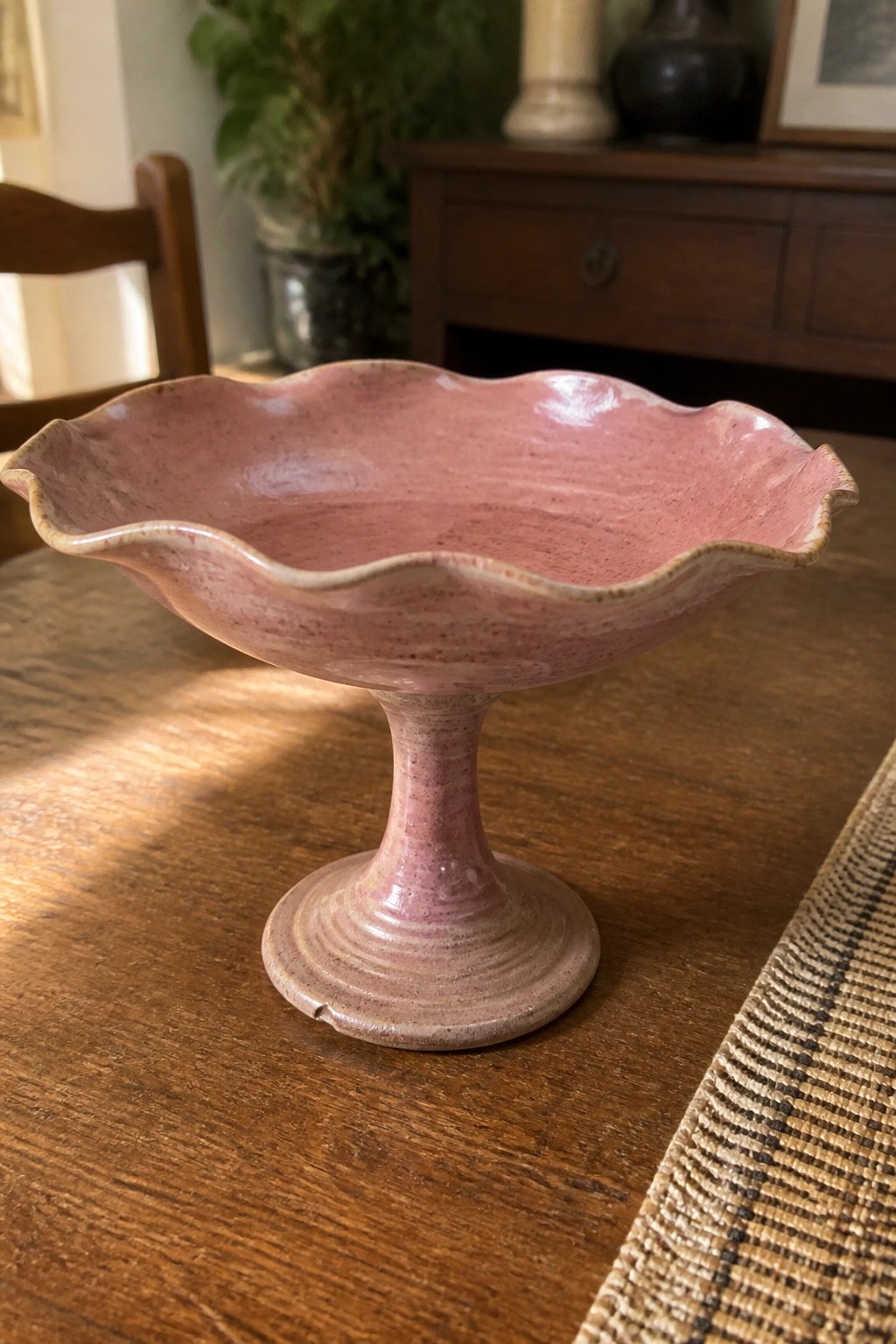
A handmade ceramic bowl set on a short pedestal base gives you an elevated form that works as both a serving dish and a display piece. The wide rim is shaped with a soft wavy scallop that creates gentle movement around the edge. A single pink glaze with fine speckling covers the whole piece and unifies the foot, stem, and bowl.
What makes this idea useful is how the pedestal raises the bowl just enough to catch light and separate it from the table surface. You could adapt the scalloped rim to plates or trays, or scale the same shape down for small catch-all dishes. In a kitchen or dining area, this form holds fruit or snacks while still reading as a finished decorative object. The speckled glaze also translates easily to other colors if you want to match existing dinnerware.
Crescent Moon Sake Set
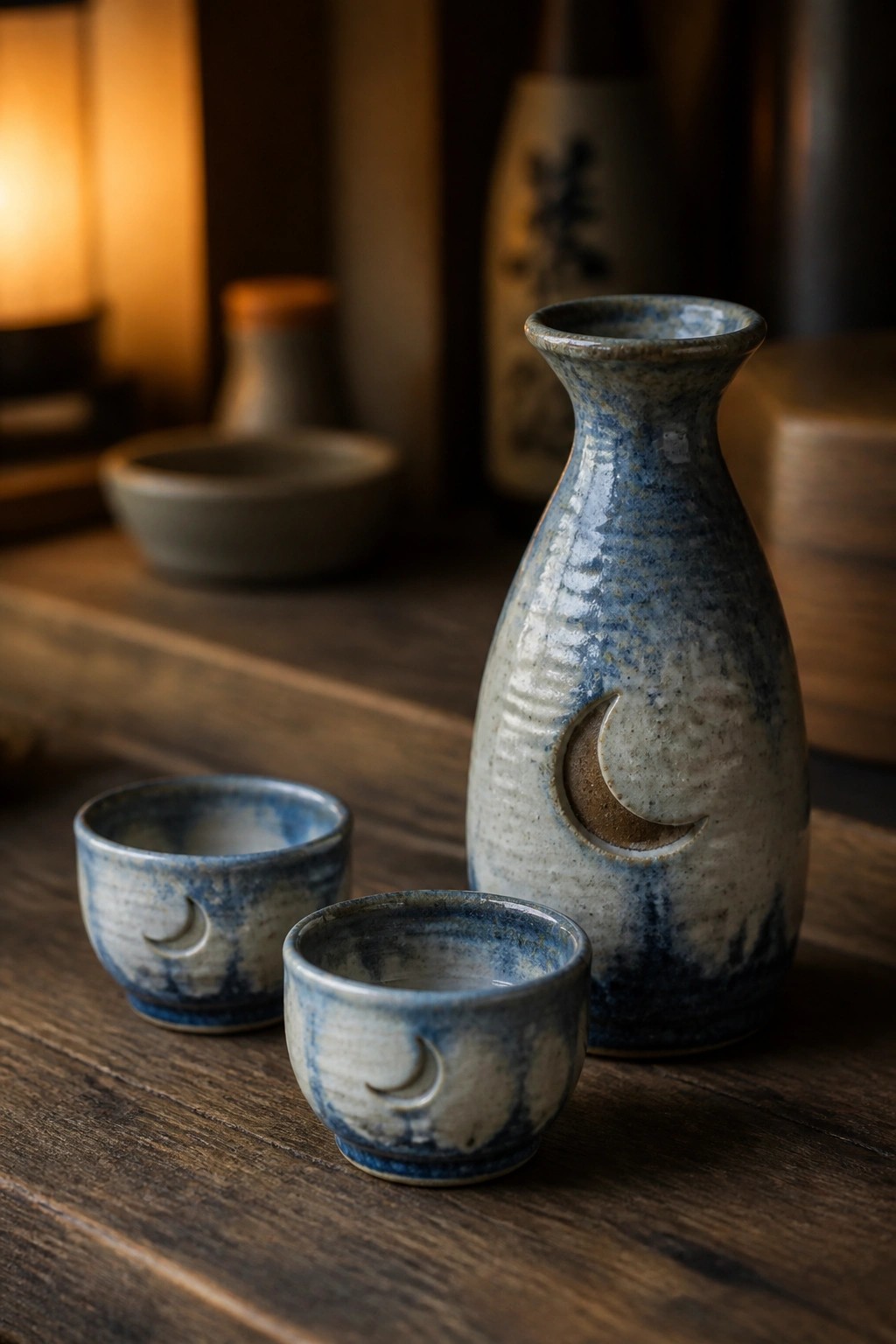
A ceramic sake set uses a tall bottle with a narrow neck alongside two small rounded cups, all finished in a blue speckled glaze. The crescent moon detail appears as a consistent impressed or inlaid motif on each piece, creating a simple repeated element across the set. This approach works because the shared glaze and motif tie the bottle and cups together while the forms stay practical for pouring and serving. The project falls into the drinkware category and demonstrates how one small detail can make a matching set feel intentional.
What makes this idea useful is the way the moon motif can be swapped for other simple shapes like stars or leaves when adapting the design to mugs or small bowls. The compact size of the cups keeps the project quick to throw and easy to fit into a kiln load. In a dining setup this kind of set gives a clean, coordinated look without needing extra pieces. For a gift you could change the glaze color while keeping the same bottle and cup proportions to make the idea feel fresh.
Spouted Pitcher with Side Grip Indent
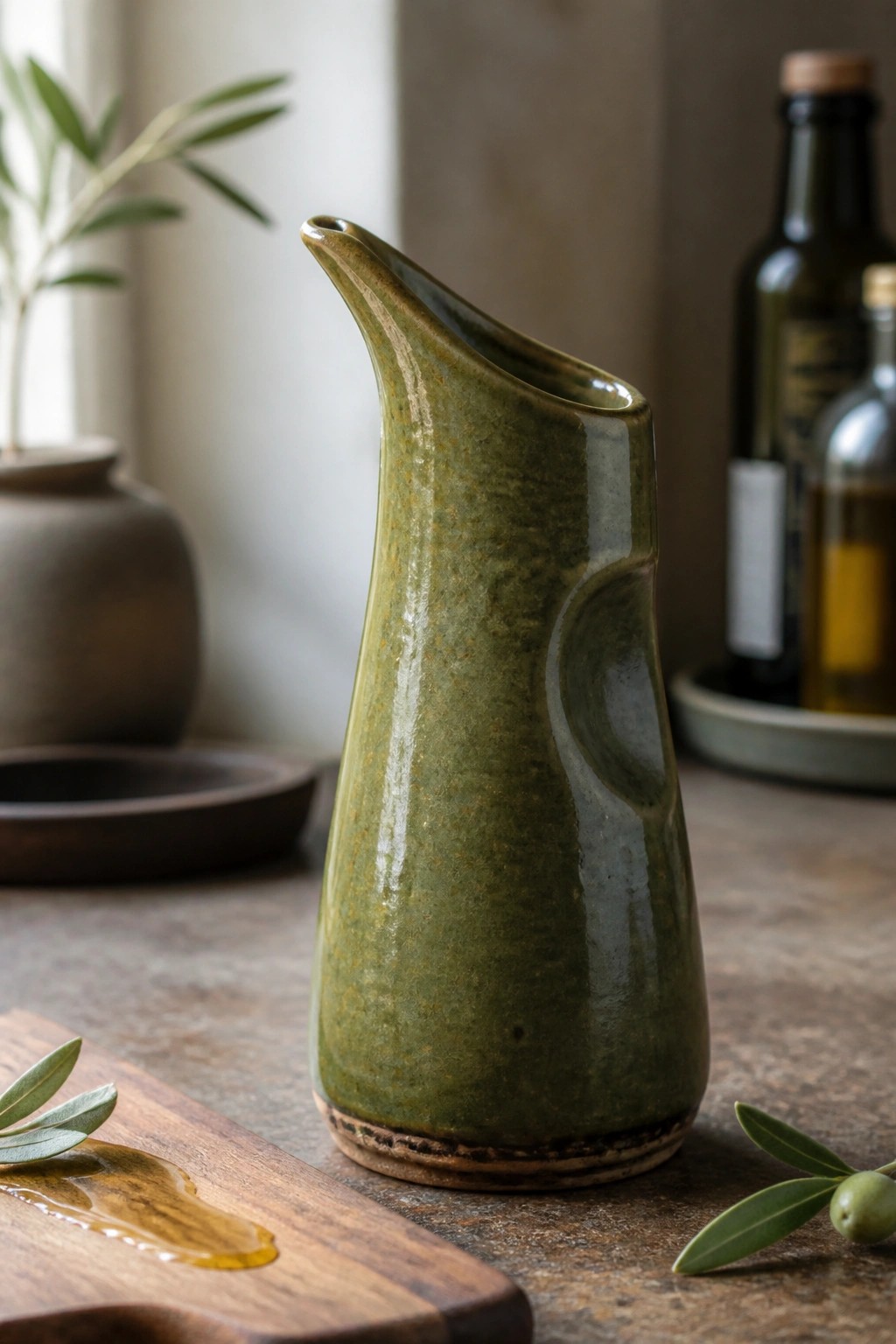
A wheel-thrown pitcher with a tall tapered body and angled spout makes pouring simple and controlled. The indented side creates a natural thumb rest that replaces a full handle while keeping the form streamlined. A speckled green glaze with slight pooling at the base adds depth to the surface and emphasizes the handmade contours. This approach fits the kitchen item category and works especially well for oils or dressings.
What makes this idea useful is how the indent keeps the profile slim for easy cabinet storage. You could adapt the same shape into a smaller creamer or a taller water carafe by adjusting the proportions on the wheel. In a kitchen, this kind of piece sits well next to wooden boards and fresh ingredients without competing for space. The glaze choice also translates easily to other forms like a matching set of small jugs.
Hedgehog Planter with Sculpted Spikes
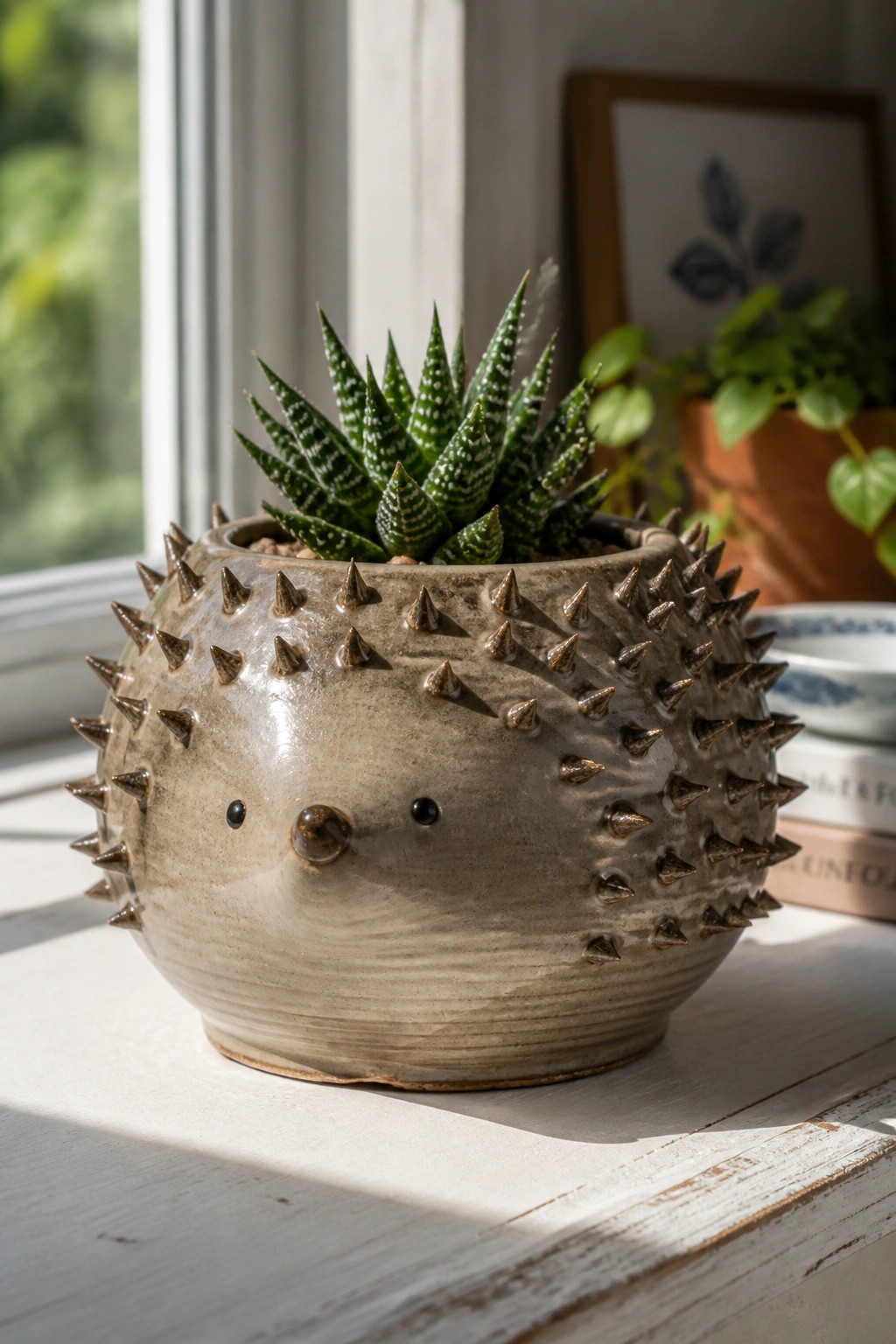
A round ceramic planter covered in short, pointed clay spikes creates a hedgehog shape that doubles as a plant holder. The spikes are pinched or attached directly to the surface before firing, and a simple face is added with small clay pieces and dots for eyes. An earthy matte glaze unifies the texture while letting the raised details stand out. This approach turns a standard pot into a decorative planter without relying on paint or decals.
The shape does a lot of the work here because the spikes give the piece visual interest from every angle. It fits well on a windowsill or low shelf next to other plants, where the texture contrasts with smooth leaves. You could scale the same spike technique down for smaller pots or switch the face details to create a different animal. The idea works especially well for succulents since the compact form keeps the focus on the surface rather than the plant size.
Frequently Asked Questions
1. What beginner friendly ideas from the list work well for those new to the pottery wheel? Start with basic forms such as simple bowls or mugs that focus on even walls and smooth rims. These build core skills like centering and pulling up clay before advancing to more detailed designs like textured vases or layered forms.
2. How can I combine several of the 21 ideas to create even more unique pieces? Blend elements such as adding carved patterns to a thrown cylinder or incorporating handles from one idea onto a bowl shape from another. Test small samples first to see how the techniques interact during drying and firing.
3. What tools besides the wheel help bring these design ideas to life? Gather ribs for shaping, wire tools for cutting, and stamps or texture mats for surface details. A good set of sponges and a needle tool also aid in refining edges and removing excess water while throwing.
4. How do I fix common issues like uneven thickness when trying these wheel designs? Slow down your wheel speed and use a rib to compress the walls evenly as you work. Check thickness frequently with your fingers or a caliper and recenter the clay if it starts to wobble.
5. What steps ensure my finished pieces from these ideas are durable and ready for use? Allow thorough drying to avoid cracks then bisque fire before applying glaze. Choose food safe glazes for functional items and fire at the correct temperature for your clay type to achieve strength.

Pottery Path is my cozy corner of the internet where I share clay ideas, pottery inspiration, and simple projects you can recreate at home. I love exploring everything from air dry clay to handbuilt pottery to cute minis that brighten your day. My goal is to make clay crafting feel easy, fun, and welcoming for anyone who wants to try it.
You will find beginner friendly tutorials, creative pottery painting ideas, and lots of warm inspiration for slow and happy crafting. If you enjoy hands on creativity, this space will feel like home.