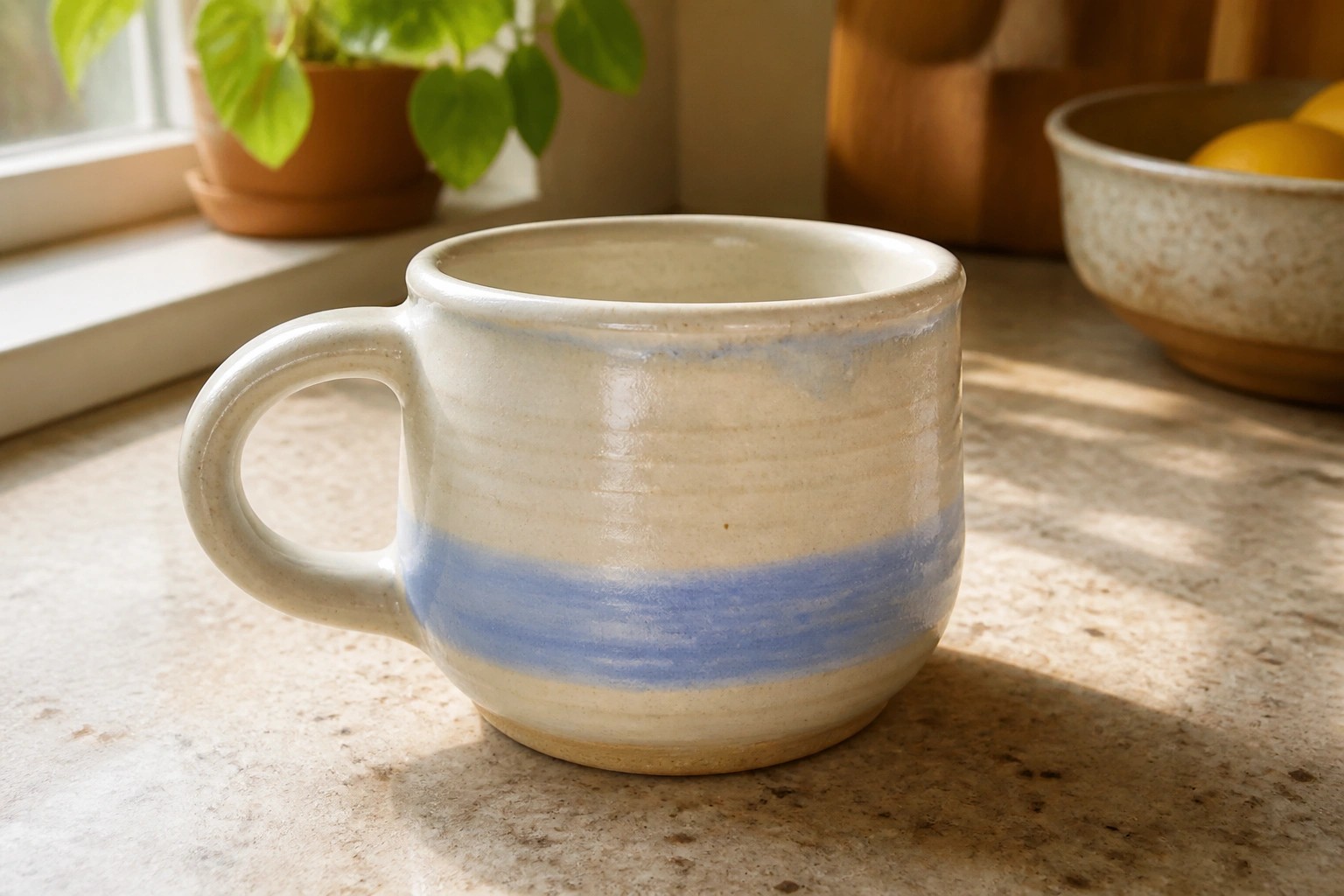
I picked up pottery a few years back and found that starting with easy wheel projects helped me stick with it.
My early attempts at more complex shapes often ended up in the reclaim bucket so I focused on simpler forms instead.
The ideas in this article are the ones that actually turned out well for me as a beginner.
They are straightforward enough to give you a sense of progress without too much frustration.
Blue Banded Wheel Thrown Mug
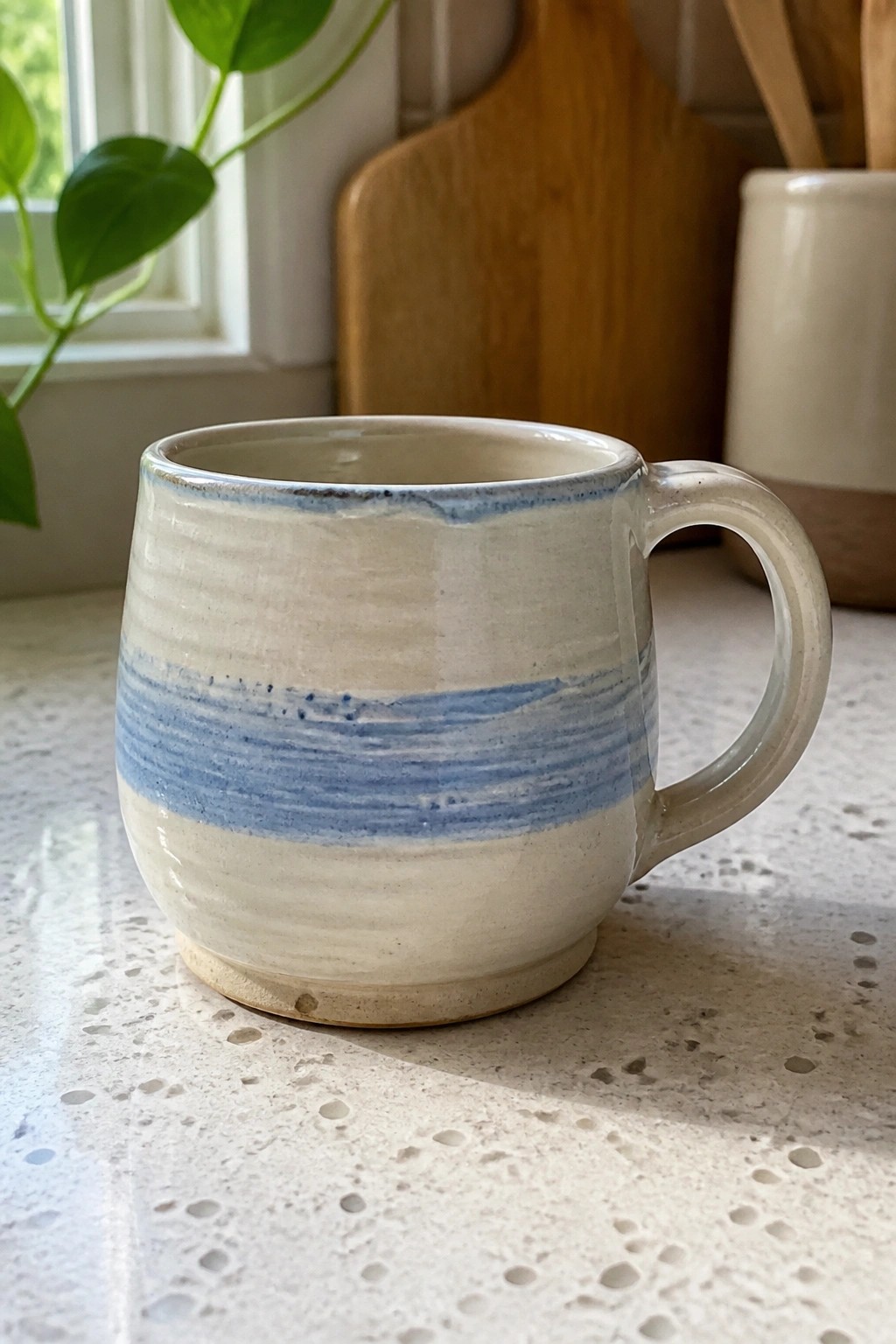
A wheel thrown mug with a rounded body and comfortable handle works well as a first project because the shape stays simple while still showing clear throwing lines. The design uses a light base glaze with several horizontal blue bands applied around the middle, letting the wheel texture show through without extra carving or handles beyond the basic form. This approach keeps the focus on form and basic glazing rather than complex details, making it a straightforward kitchen or desk item.
The shape does a lot of the work here since the tapered body and foot make the mug stable and easy to hold. You can adapt the idea by changing the band widths, trying different glaze colors, or scaling it slightly taller for a larger coffee cup. In a kitchen this kind of mug fits daily use without taking up much space, and the striped pattern translates easily to a small pitcher or bowl if you want to repeat the same glazing method on another project.
Wheel-Thrown Speckled Bowl

A wheel-thrown bowl makes a solid first project because the throwing rings stay visible and add built-in texture. This version uses a light tan speckled glaze that settles into the grooves and highlights the spiral pattern on the interior. The low, wide shape works for snacks, cereal, or fruit. The slightly irregular rim and earthy tone keep it simple while showing the handmade construction.
What makes this idea useful is how the same form can be made deeper for soup bowls or kept shallow for side dishes. The neutral glaze pairs with most tableware and lets you test different clay bodies without color complications. In a kitchen this size sits comfortably on open shelves or next to wooden cutting boards. You could rework the idea by leaving the outside unglazed or adding a small foot to change the profile.
Green Plate with White Brushstroke Accent

A wheel-thrown plate in a muted green glaze uses one wide white slip brushstroke to create contrast across the surface. The visible wheel marks under the glaze add subtle texture while the flat shape keeps the focus on that single painted detail. This approach works as a dinner plate, serving platter, or display piece because the limited color palette stays simple and adaptable.
The shape does a lot of the work here since the broad surface lets the brushstroke read clearly without competing elements. You could rework the same idea with a different base glaze color or add two thinner strokes instead of one to change the look. In a kitchen this plate fits everyday meals or casual entertaining because the neutral green pairs with most tableware. Scaling the design down creates smaller versions like dessert plates or coasters that still carry the same accent.
Mini Cylindrical Planter with Side Hole
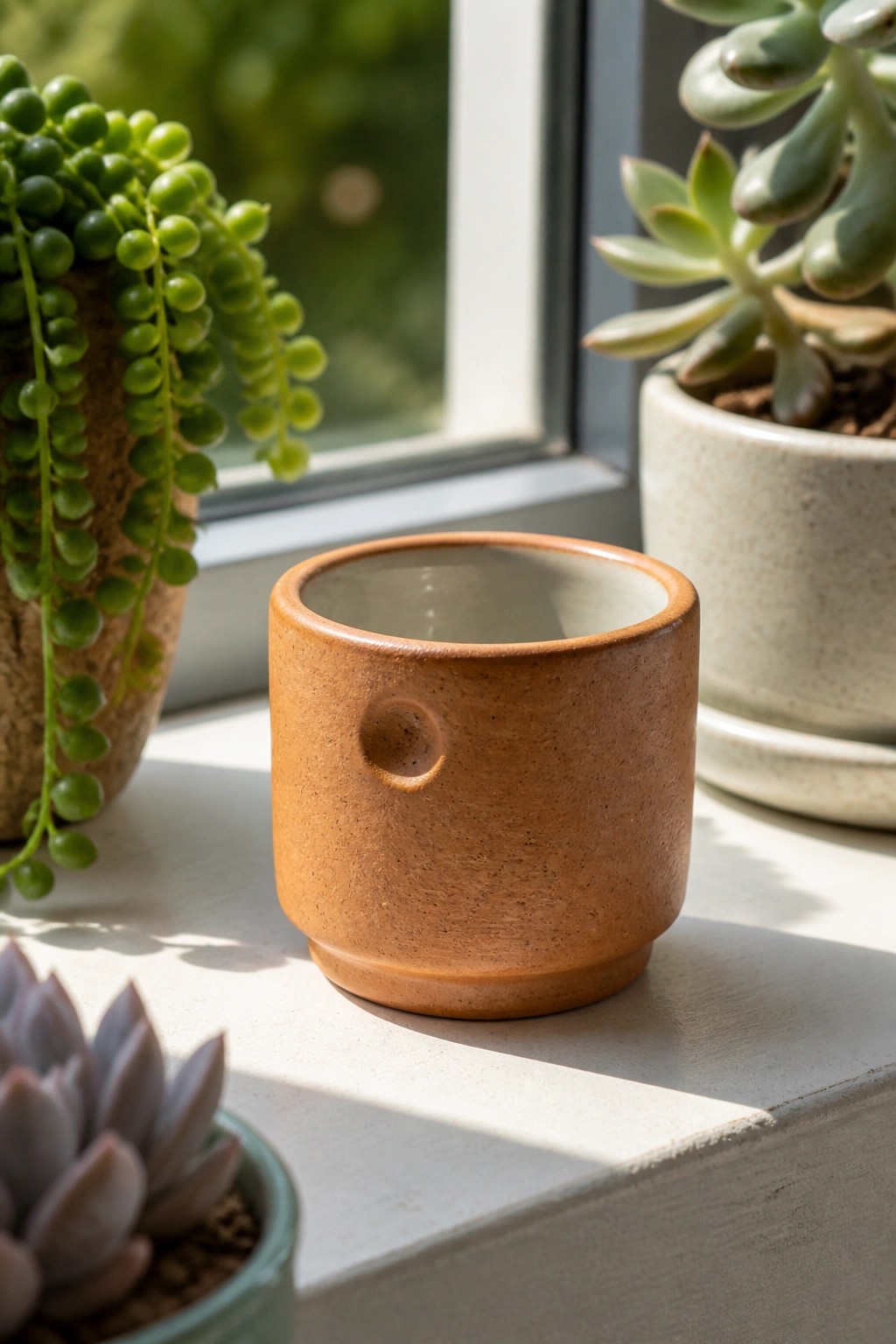
A small wheel-thrown planter in a simple cylinder shape works well as an early project because it requires basic centering and pulling skills. The matte terracotta surface and single circular side opening give the piece a clean, functional look without extra decoration. This object fits the planter category and stays compact enough to throw in one session.
What makes this idea useful is the small scale, which lets you finish and dry the piece faster than larger work. You can adapt the side hole for drainage on a real plant or treat it as a visual accent if the pot stays decorative. The same cylinder form could become a desk holder or small vase by skipping the hole and adjusting the height slightly. A piece like this keeps well on a windowsill with other pots and shows up clearly in photos for progress tracking.
Flower Shaped Ring Dish
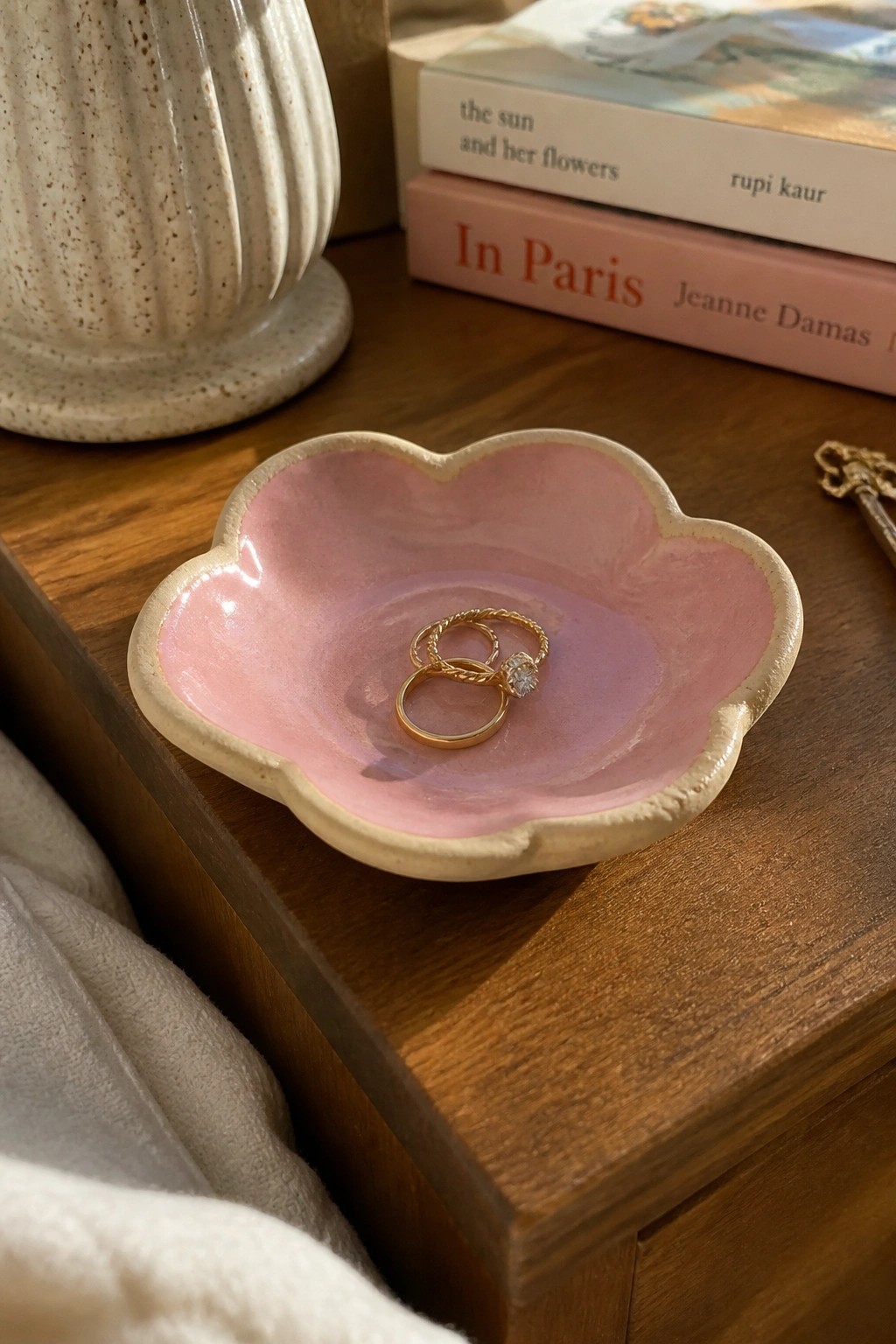
A small flower-shaped dish makes a simple ring holder or trinket bowl. The lobed edges give the form a clear boundary that keeps rings from sliding off, while the glossy pink glaze creates a smooth, reflective surface that highlights whatever small items sit inside it. This project stays basic on the wheel since it only needs a shallow open form trimmed into gentle curves rather than precise walls or handles.
What makes this idea useful is that the same shape works just as well for holding earrings on a dresser or spare keys by the door. You can change the glaze color or add a second contrasting rim to match different rooms without changing the form. The small scale also means you can finish and fire several at once, which helps when you want to test new glazes or make quick gifts.
Swirled Marble Tumbler

A small wheel-thrown cylinder with straight sides forms the base for this project. Two contrasting glazes are applied so they blend during firing and create flowing white and brown swirls across the surface. The result is a compact tumbler or holder that relies on the glaze pattern rather than added texture or carving for its look.
What makes this idea useful is that the cylinder shape is one of the first forms most beginners learn to center and pull. The marbled glaze can be repeated on taller versions for pencil cups or shortened for small planters. You can swap the brown for a blue or green to change the color story while keeping the same simple throwing and glazing steps.
Long Oval Spoon Rest
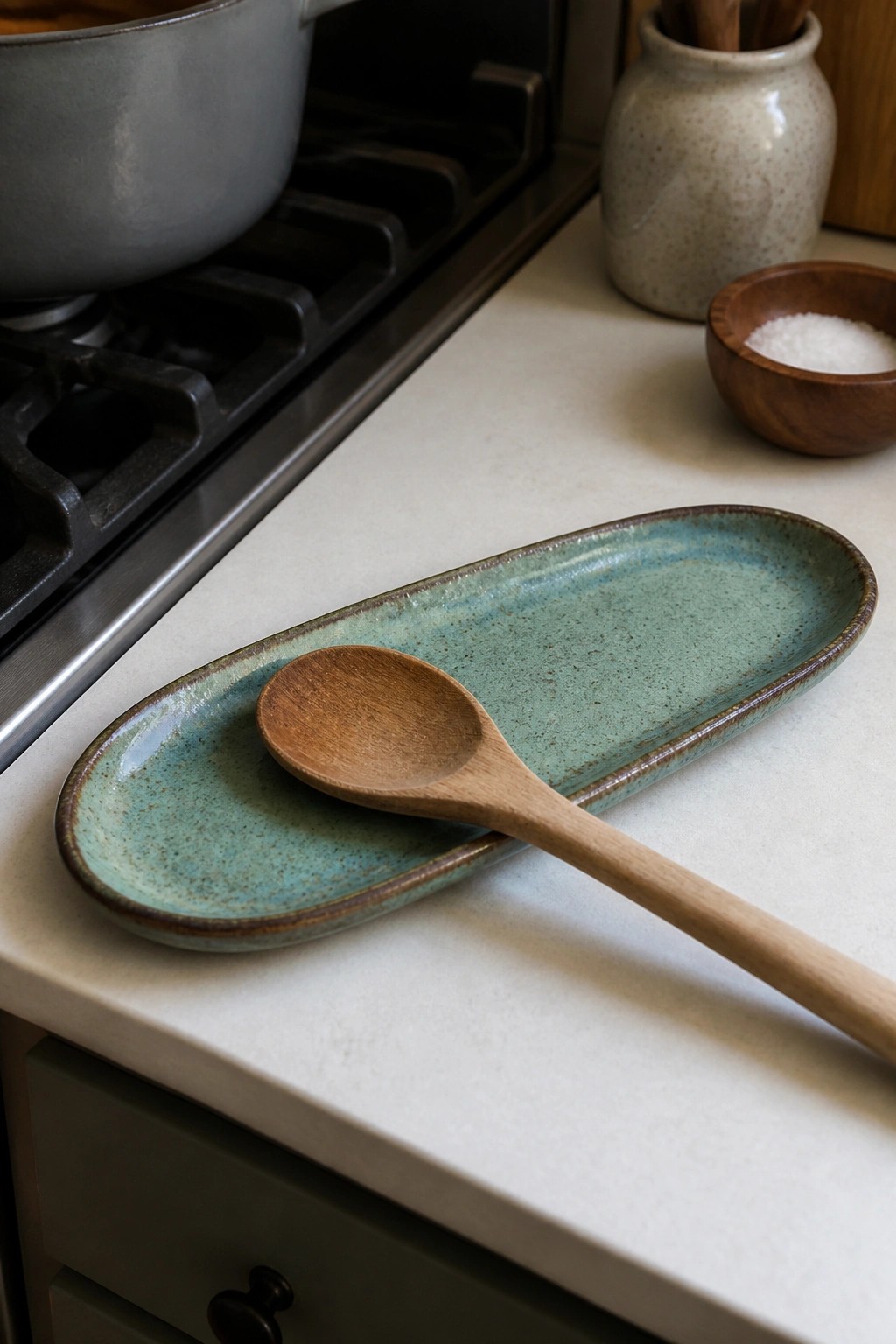
A long oval ceramic tray makes a practical spoon rest for the kitchen counter. The elongated shape supports a wooden spoon across the center without tipping, while the speckled turquoise glaze and darker rim keep the surface simple and easy to clean. This flat form is straightforward to shape on the wheel and trim into a narrow oval that fits beside the stove.
What makes this idea useful is how it solves a common kitchen problem without taking up much space. You can adapt the same oval into a slightly wider version for holding multiple utensils or shorten it into a compact rest for smaller spoons. In a kitchen, this kind of piece stays handy during cooking and pairs well with basic dishes or wooden tools. For a first wheel project, the open shape lets you focus on even walls and a smooth glaze application.
Tea Light Candle Holder
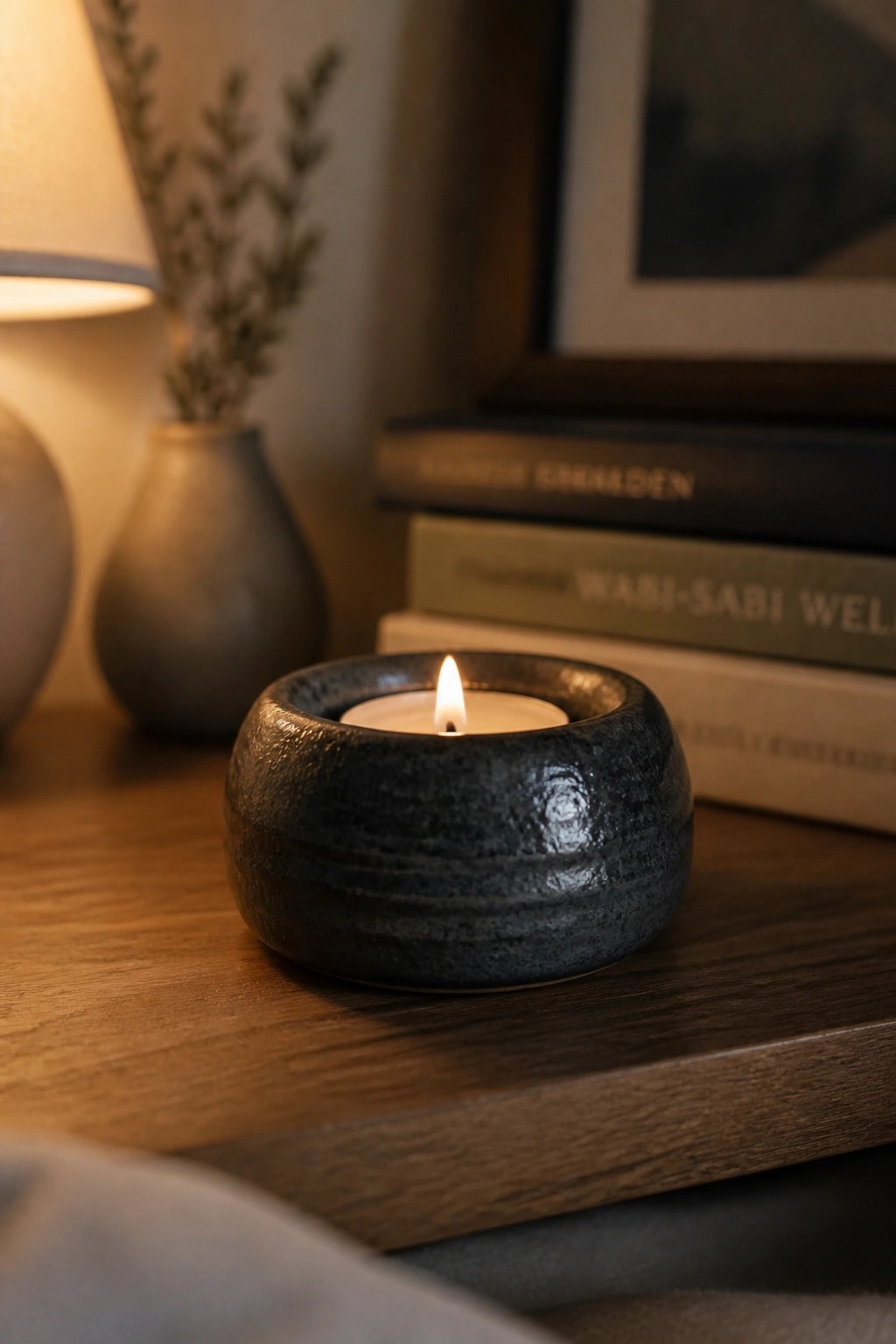
A shallow, wide ceramic bowl makes a straightforward tea light holder. The low profile keeps the flame contained while the rim helps catch wax. A dark, textured glaze gives the piece an earthy finish that works with wood surfaces and neutral decor. This idea falls into the candle piece category and stays simple because it only needs a basic open bowl form on the wheel.
What makes this idea useful is how little space it takes on a shelf or bedside table. You can repeat the same shape in different glazes to create a set for different rooms or to sell at markets. Skip the candle and the bowl becomes a ring dish or small catch-all. The compact size also makes it easy to finish in one or two sessions, which helps beginners complete a project they can actually use.
Small Yellow Ramekin Bowl
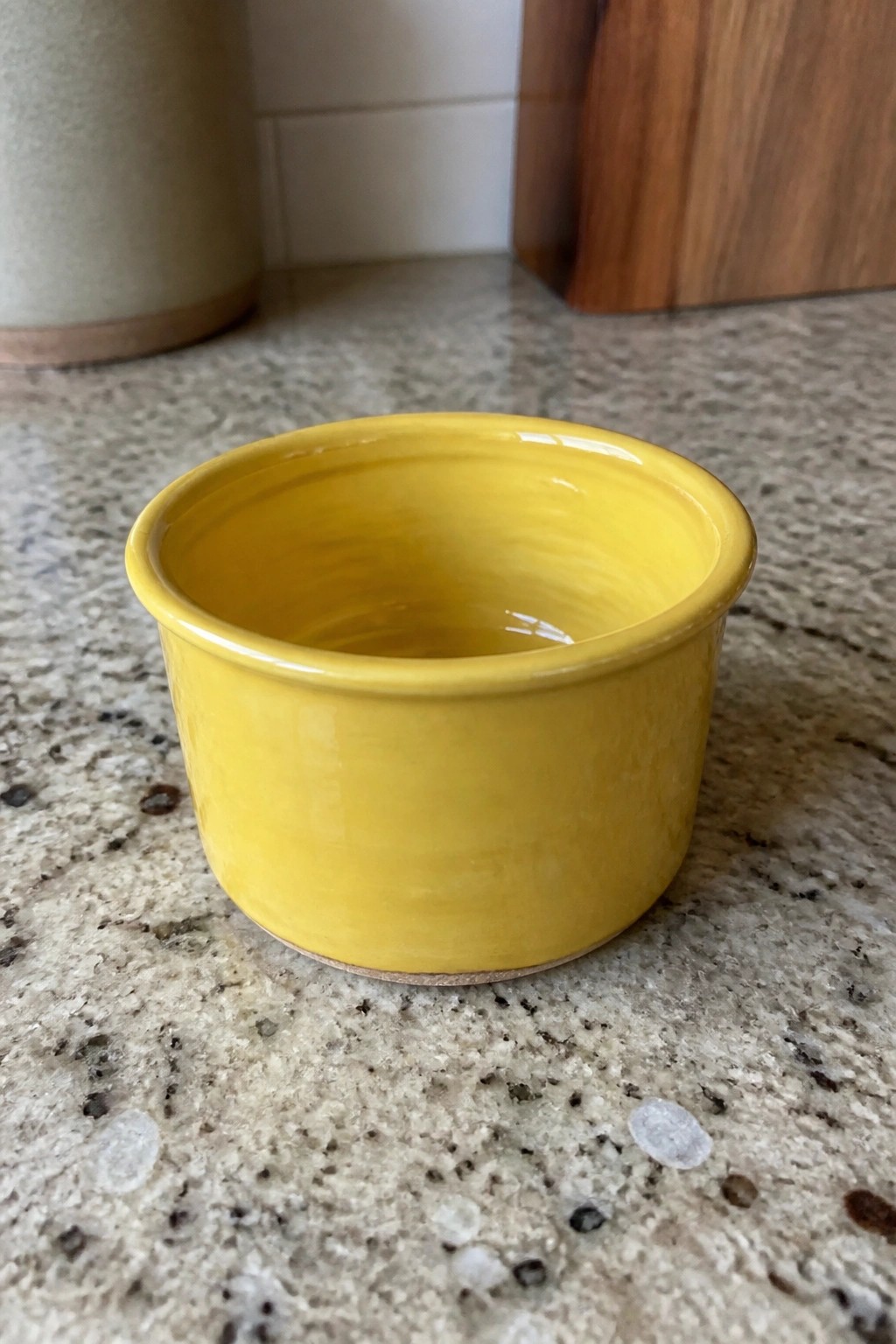
A small ramekin is a straightforward wheel project that starts with a basic cylinder shape thrown to a consistent height and wall thickness. The solid yellow glaze covers the entire surface except the foot, creating a bright, uniform finish that works without added texture or carving. This style falls into the kitchen item category and suits small portions like dips, sauces, or individual servings.
What makes this idea useful is how the compact size lets you practice centering and pulling walls without using much clay. The shape adapts easily into a set of matching ramekins in different glaze colors for a coordinated kitchen look. In a kitchen, this kind of piece keeps counter space clear while staying handy for daily use. For a gift, the same form works just as well as a small jewelry holder or desk catchall by changing the glaze to a matte finish.
Speckled Ceramic Toothbrush Holder
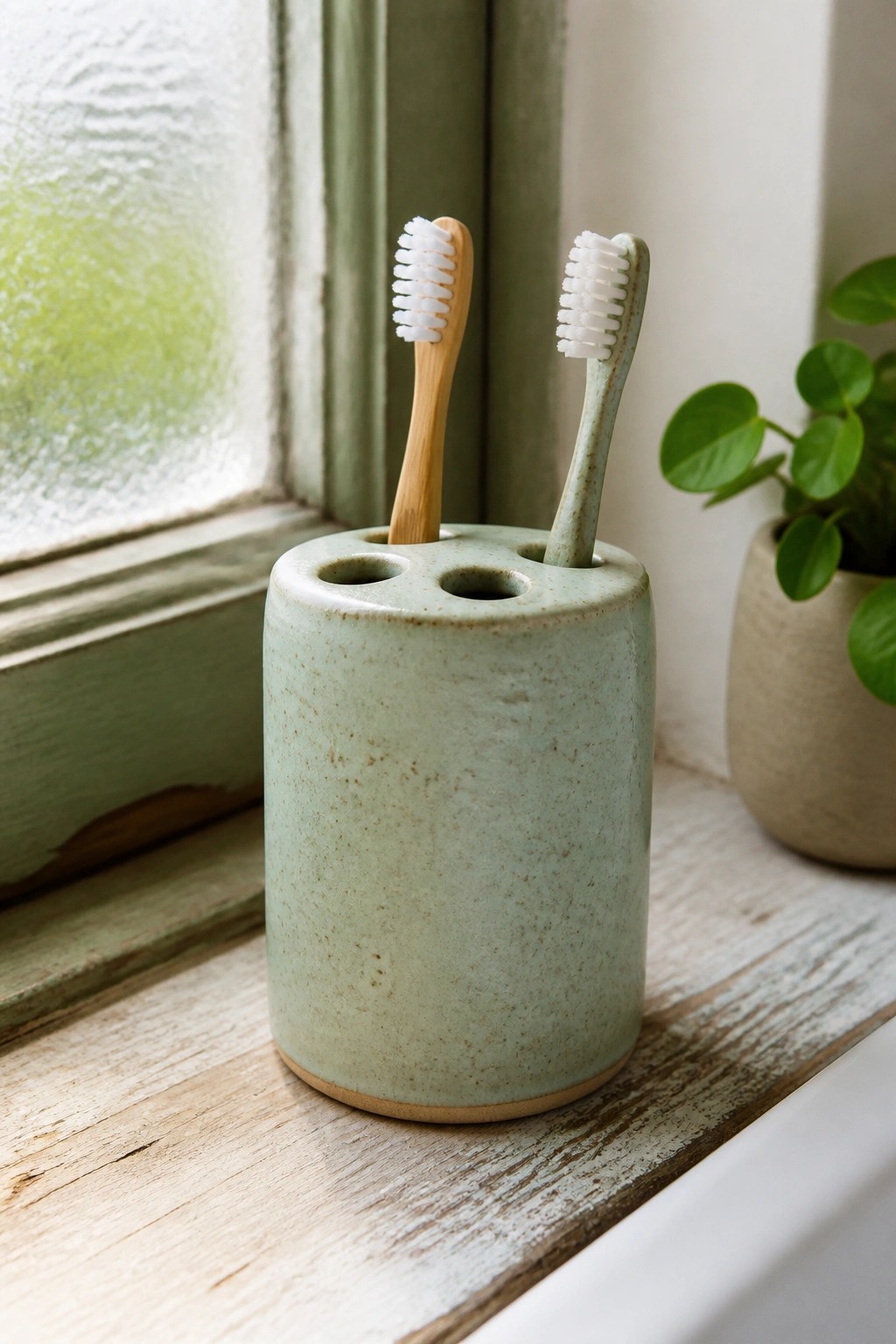
A wheel-thrown cylinder with several holes cut through the top works as a simple toothbrush holder for the bathroom. The light green speckled glaze covers the walls evenly while the base stays unglazed, giving a clean contrast that still reads as handmade pottery. The form stays low and wide enough to sit steady on a counter without tipping.
What makes this idea useful is how the basic cylinder shape lets you change the number of holes or the overall height without starting over. Use the same form in a matte white or deeper blue glaze to match different sinks or tile colors. You can also scale it down slightly to hold makeup brushes or small tools instead.
Double Bowl Salt Cellar
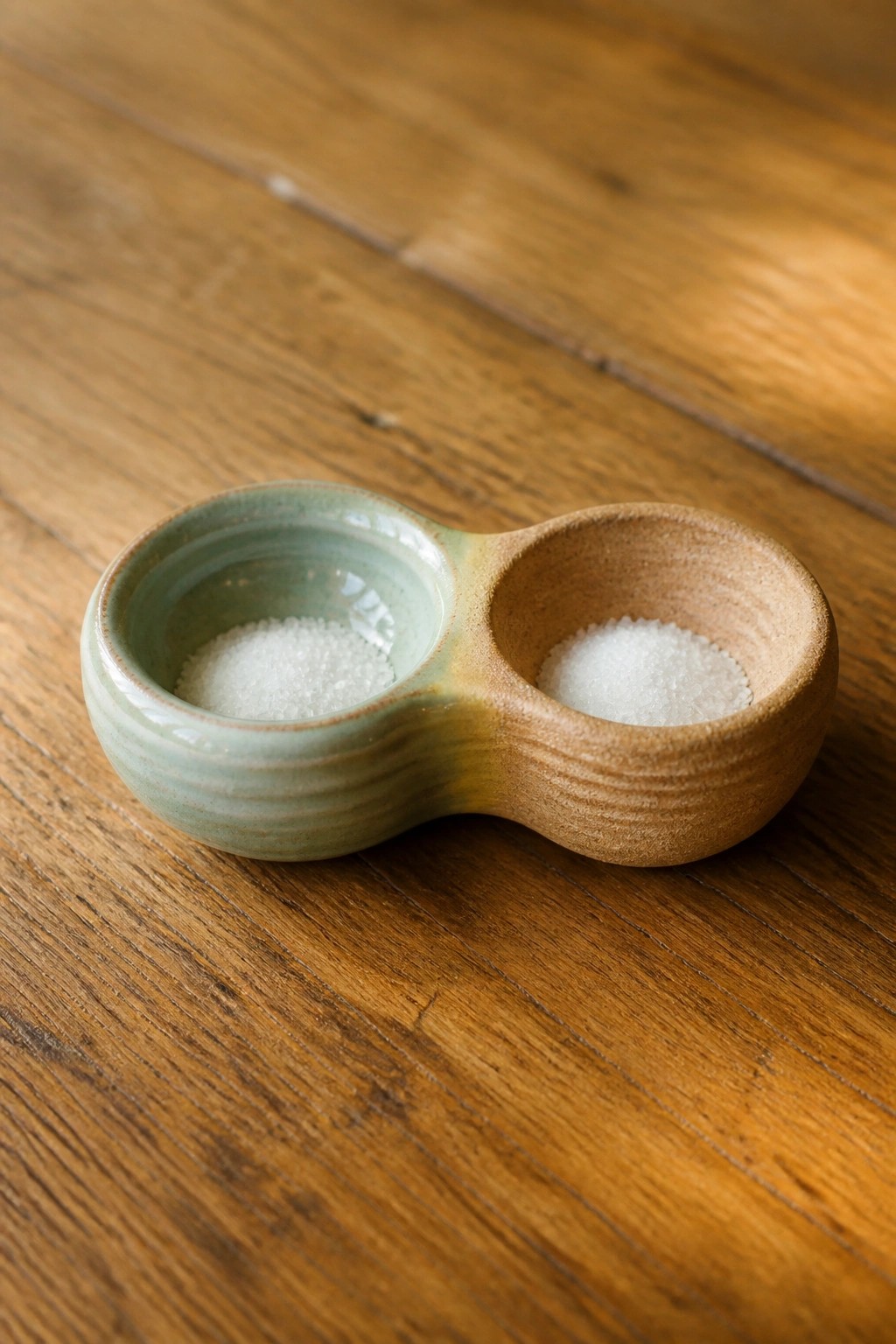
A double bowl formed by joining two small dishes at the side creates a compact holder for two seasonings at once. One side uses a glossy green glaze while the other stays unglazed or lightly finished, giving each compartment a clear visual separation without extra decoration. The rounded shape and low profile keep the piece stable on a table while the open tops make scooping or pinching easy.
The shape does a lot of the work here because two bowls share a single base, so you only need one piece of clay to solve two storage needs. You could scale the same joined form down for spice blends or up slightly for olive oil and vinegar on a small tray. For a gift, something like this works well because it stays useful without requiring much shelf space or special care.
Small Ceramic Pitcher for Kitchen Pouring
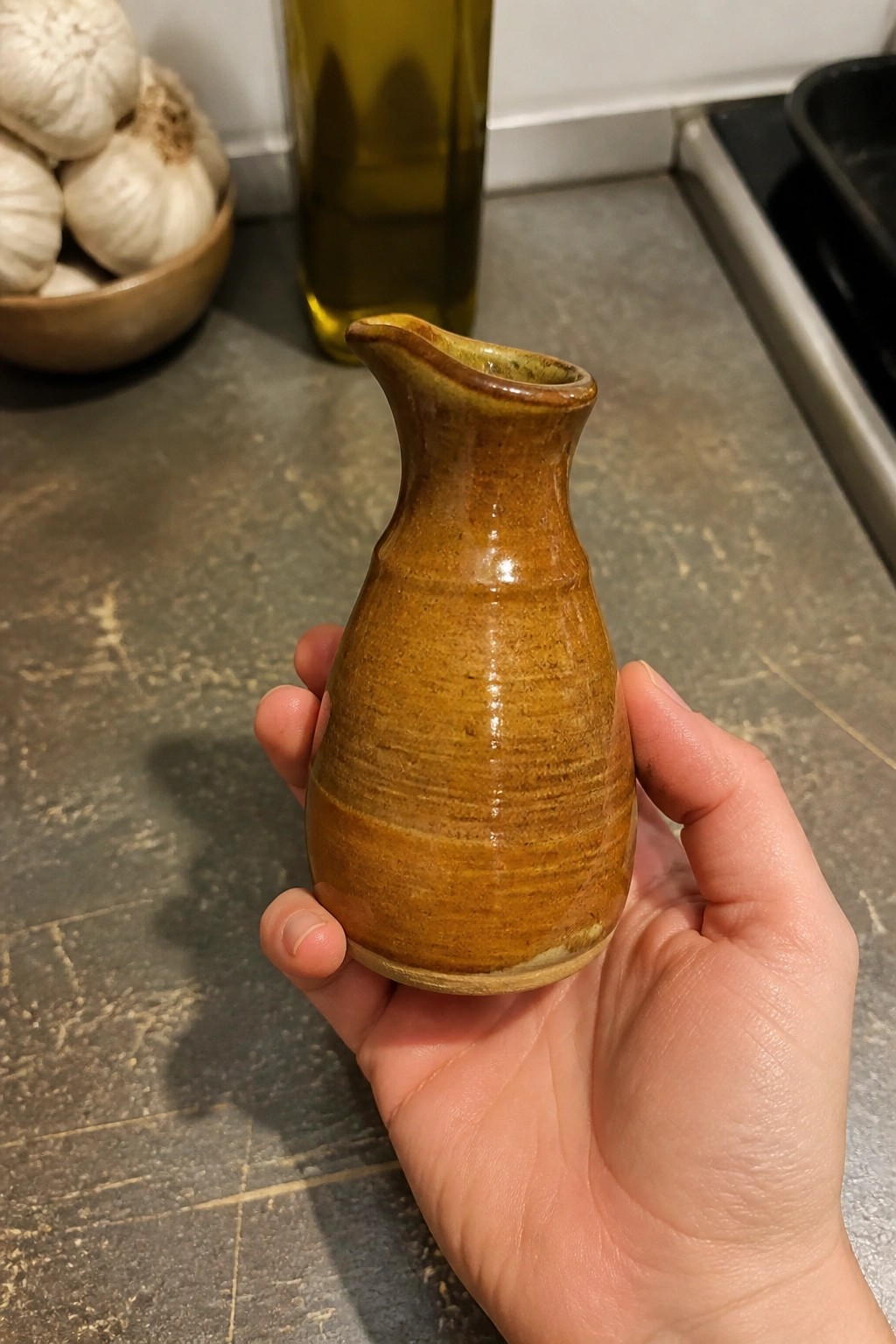
A small ceramic pitcher gives beginners a straightforward wheel project with a clear purpose. Throw a tapered body that narrows at the neck, then form a simple spout by pinching one side of the rim. The earthy brown glaze highlights the wheel ridges while keeping the surface easy to clean. This shape works as a cream pitcher, oil server, or small sauce container.
What makes this idea useful is how the compact size fits on a counter or table without crowding other items. You can widen the base slightly for better stability or shorten the neck if you want it to hold a small plant instead. In a kitchen, this kind of piece keeps frequently used liquids within reach during cooking. The same form can be adapted into a larger version for maple syrup or a shorter one to serve as a small vase.
Ceramic Egg Cups with Tripod Feet
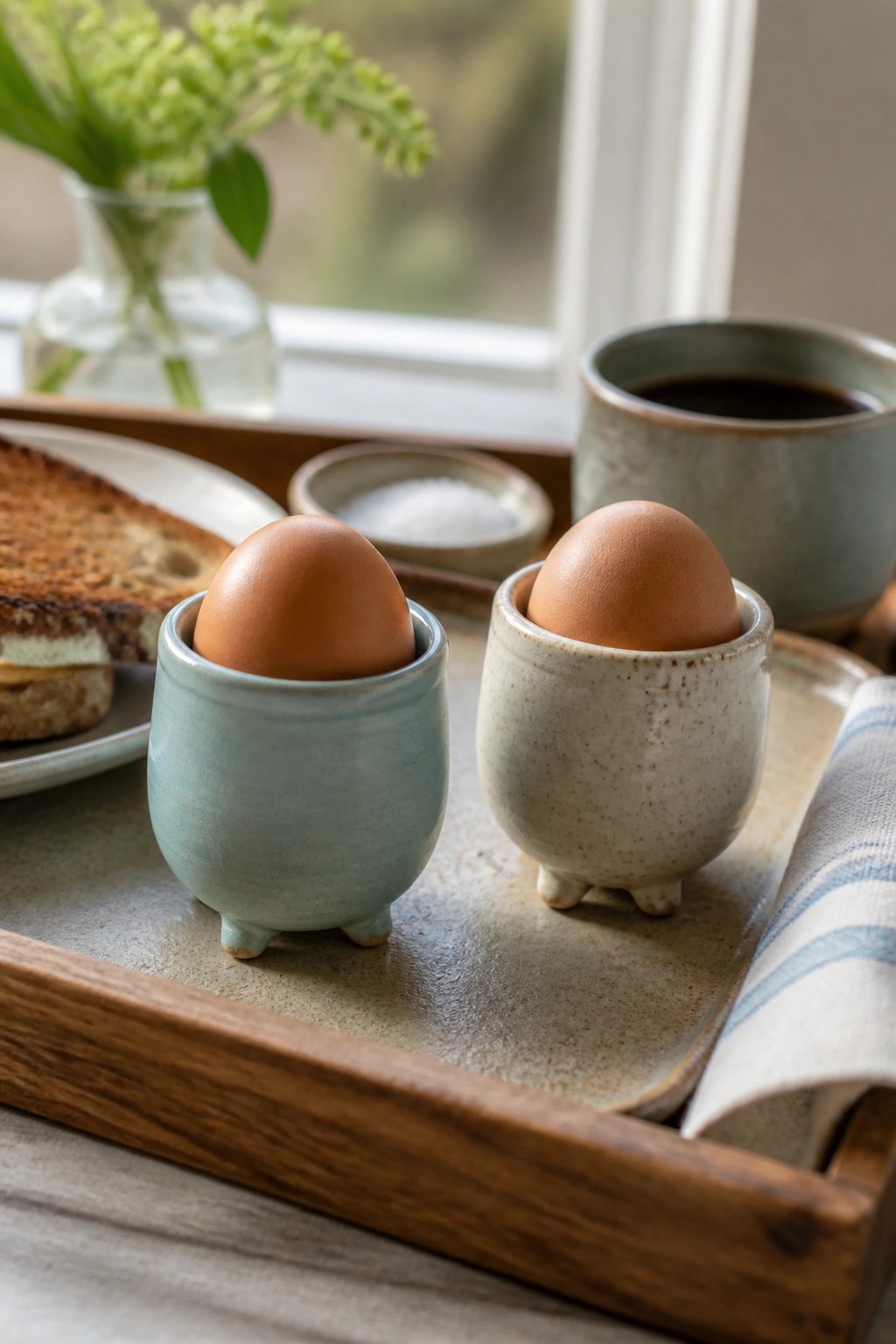
Egg cups are a compact kitchen project that works well on the wheel or with hand-building. The rounded bowl shape holds a single egg upright while the three small feet keep the piece stable on a flat surface. Simple glazing in one or two tones lets the form stand out without extra decoration. This type of holder falls into the everyday kitchen item category and scales easily for a set of four or six.
What makes this idea useful is how little clay and wheel time it takes compared with larger pieces. You can adapt the same base shape into a small salt cellar or a ring dish by widening the opening or shortening the height. The feet give the cup a finished look that still reads as handmade without needing carving or handles. In a kitchen setting these pieces stay useful daily and photograph cleanly for project sharing.
Notched Yarn Bowl for Knitting and Crochet
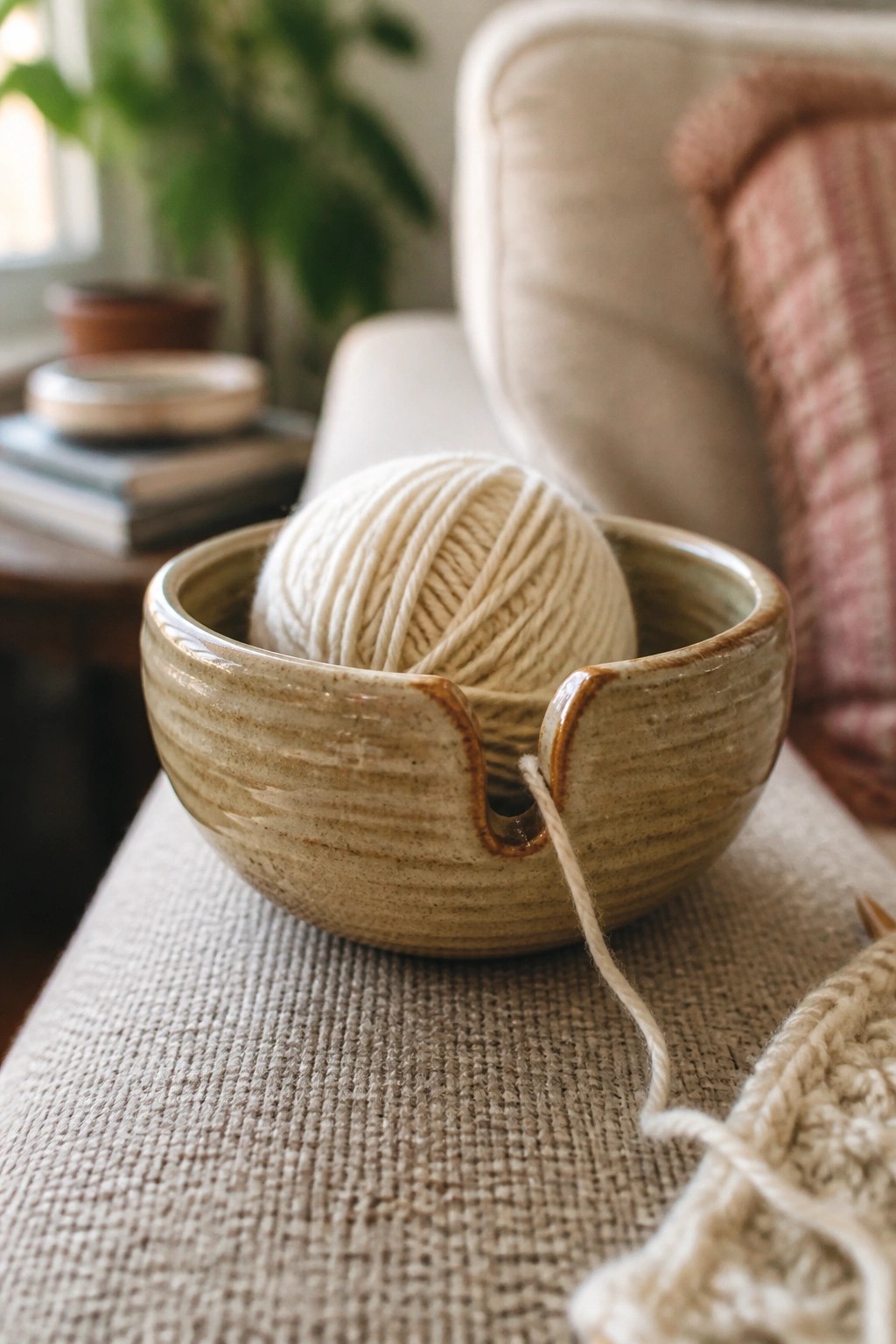
A yarn bowl is a thrown ceramics form with a rounded body and a cut notch or slot along the rim. The notch guides the yarn strand outward while the bowl keeps the ball from rolling across the floor or table. This example uses a simple wheel-thrown shape finished with a light speckled glaze that highlights the horizontal throwing lines. It belongs in the holder category and serves as a dedicated tool rather than general decor.
What makes this idea useful is that the notch adds function without extra parts or complex assembly. You can scale the bowl down for thinner threads or widen the notch for bulkier yarns depending on your projects. The same basic form works on a desk for charging cables or in a sewing space for embroidery floss. Beginners can finish the shape in one session and add the notch during trimming, keeping the steps straightforward.
Two-Tone Planters With Matching Saucers

A wheel-thrown planter divided into two horizontal color sections gives you a clean look using only the natural clay and one additional slip or glaze. The upper half stays in the warm terracotta body while the lower section takes a lighter tone, and the matching saucer repeats the same split. The visible throwing lines add texture without any carving or extra tools. This format stays simple enough for a first few wheel sessions while still producing a finished, usable piece.
What makes this idea useful is that the color split is easy to tape off during glazing, so you avoid complicated application. The shape works for small houseplants on a shelf or windowsill and can be made slightly taller or wider on the next round. You can also flip the color placement or keep both bands the same height to change the look without learning new techniques. For a gift or home use, adding the saucer turns the pot into a complete set that feels ready to display.
Cat Face Ceramic Planter
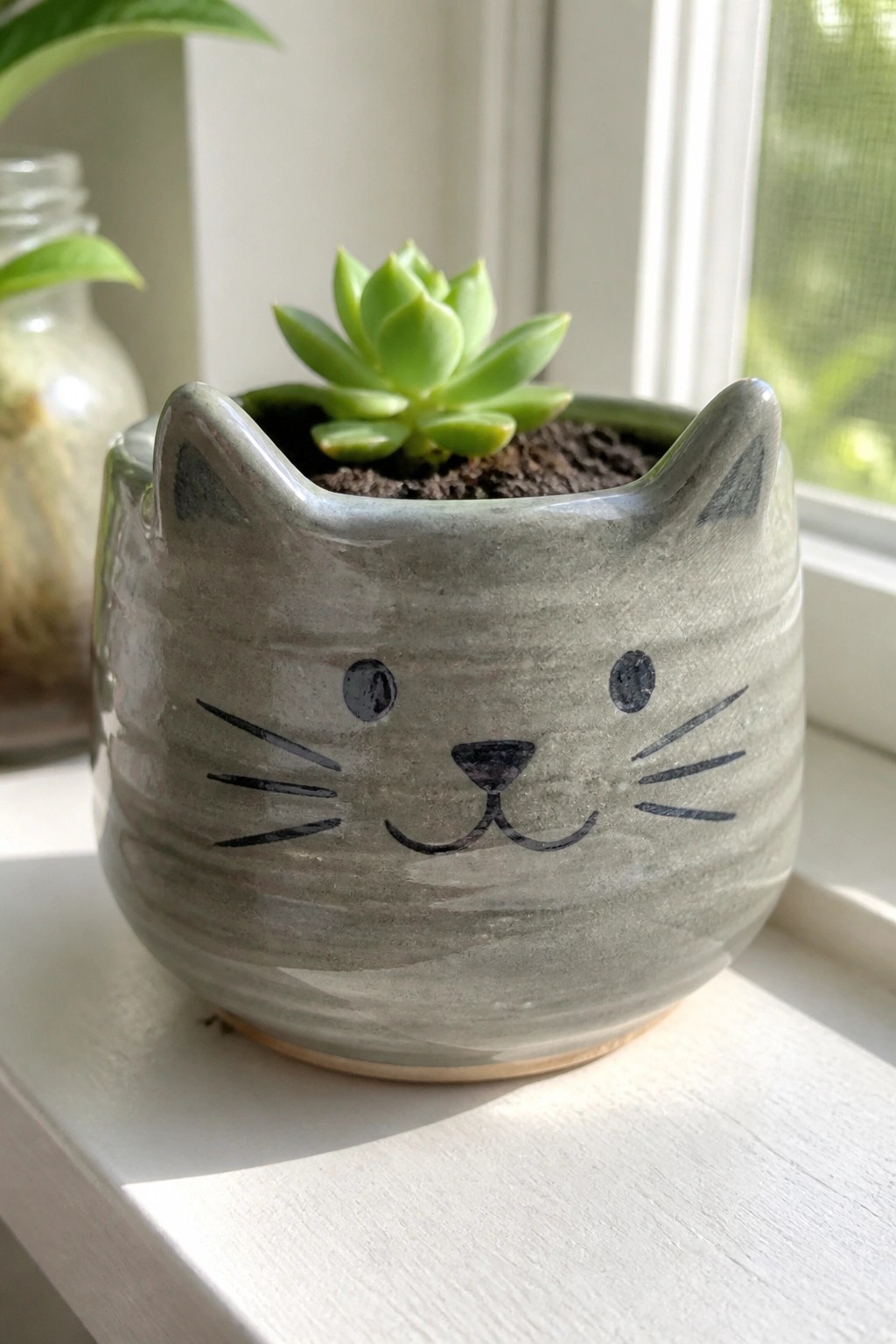
A small ceramic planter formed with upright ears and a rounded body creates a compact holder for succulents or other small plants. The design uses simple pinched details for the ears and painted black lines for eyes, nose, and whiskers over a gray glaze. This approach keeps the overall shape basic while adding a clear animal motif through surface decoration. The project falls into the decorative planter category that pairs wheel-thrown or handbuilt forms with minimal painting.
What makes this idea useful is the small scale, which fits easily on a windowsill or desk without taking much space. You can adapt the same form by changing the face details to another animal or using a different glaze color underneath the painted lines. The compact shape also works well for grouping several similar pots or as a starter gift paired with a plant. For another version, the same face motif could be applied to a slightly taller cylinder to hold a different type of plant.
Speckled Oval Trinket Tray
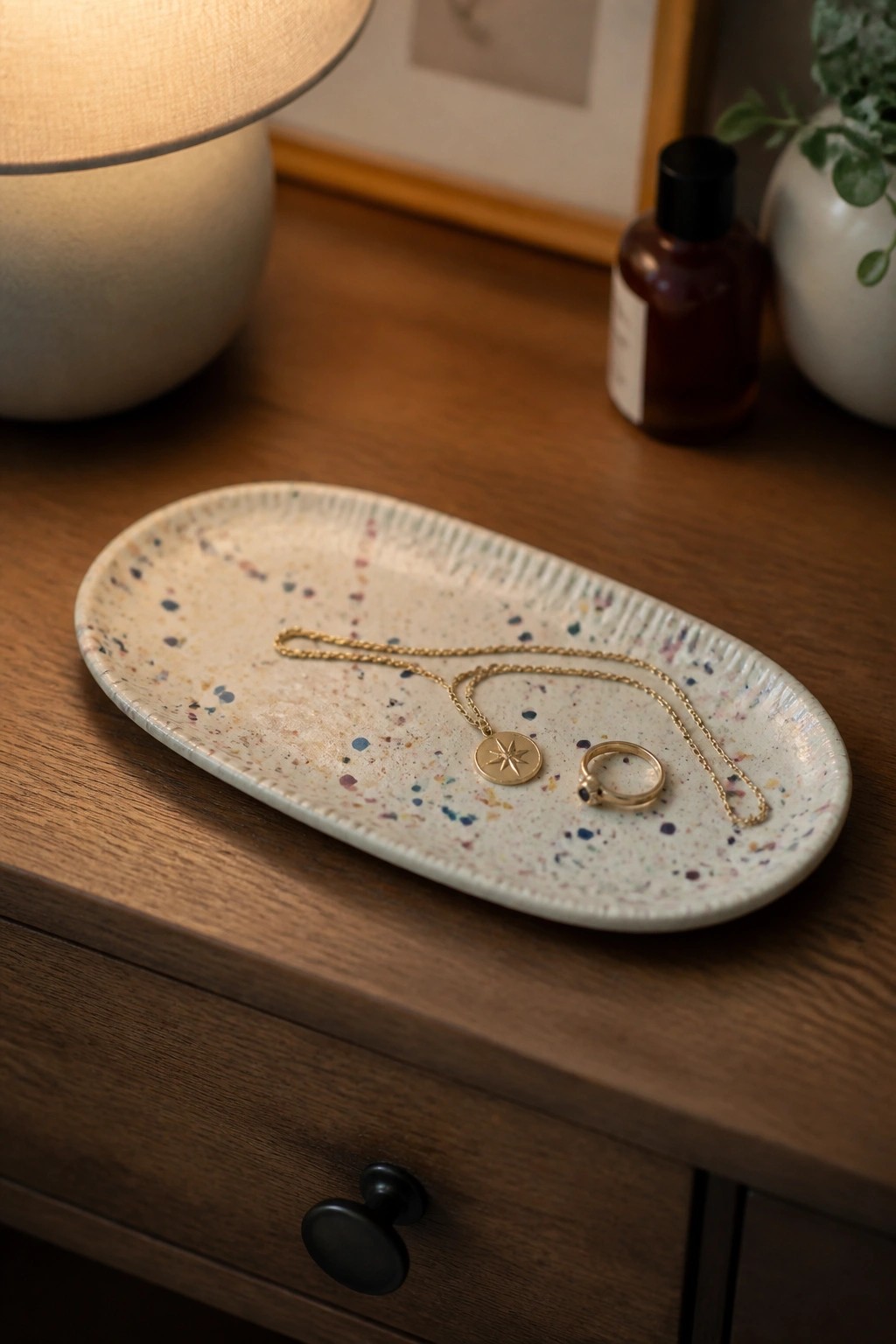
An oval tray with a multicolored speckled glaze works well as a small jewelry or accessory holder. The scattered blue, pink, and black flecks create texture across the surface while the raised rim keeps items from sliding off. This shape stays simple on the wheel yet gives enough surface area to hold a few pieces without taking up much space on a dresser or nightstand.
What makes this idea useful is how the speckled glaze covers small inconsistencies common in first attempts. The same oval form can be made smaller for a ring dish or stretched longer to hold keys and mail. A flat interior makes glazing straightforward, and the rim detail can be added with a simple tool or left plain for a quicker finish. This style also photographs cleanly for sharing project results.
Oval Soap Dish with Drainage Ridges
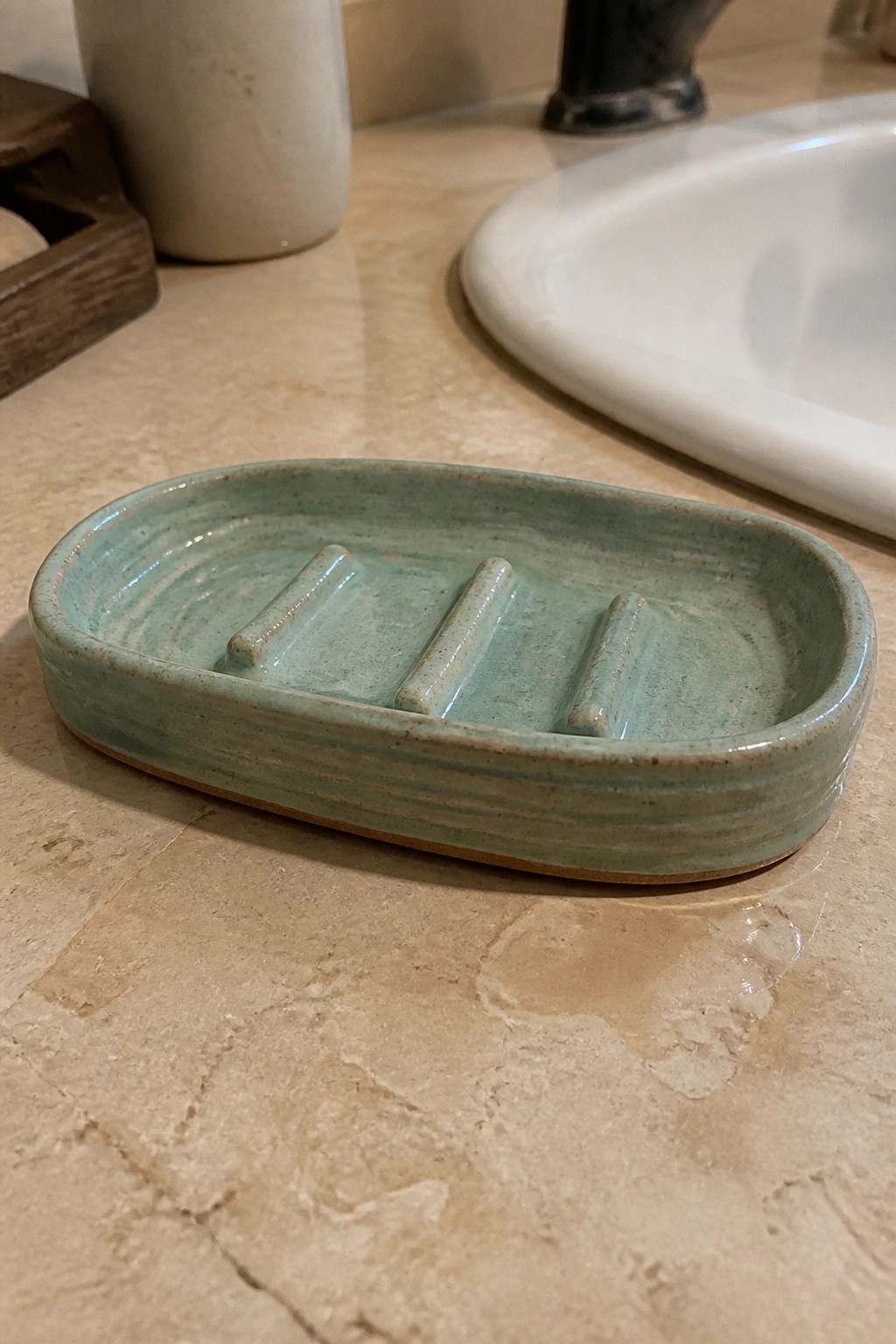
An oval soap dish thrown on the wheel gives you a compact bathroom item that keeps bar soap from sitting in water. The shallow basin shape includes three short raised ridges across the center to let air circulate underneath. A light speckled green glaze covers the piece and highlights the simple wheel-thrown lines without adding extra decoration.
What makes this idea useful is that the ridges solve a practical issue while the oval form stays easy to throw and trim. You can adapt the same base into a plain tray by leaving the ridges off or scale it down for a small jewelry holder. In a bathroom this shape fits neatly on the counter and works in any glaze color that matches your tiles. The small size also means it uses little clay and finishes quickly on the wheel.
Two-Tone Spiral Ring Dish
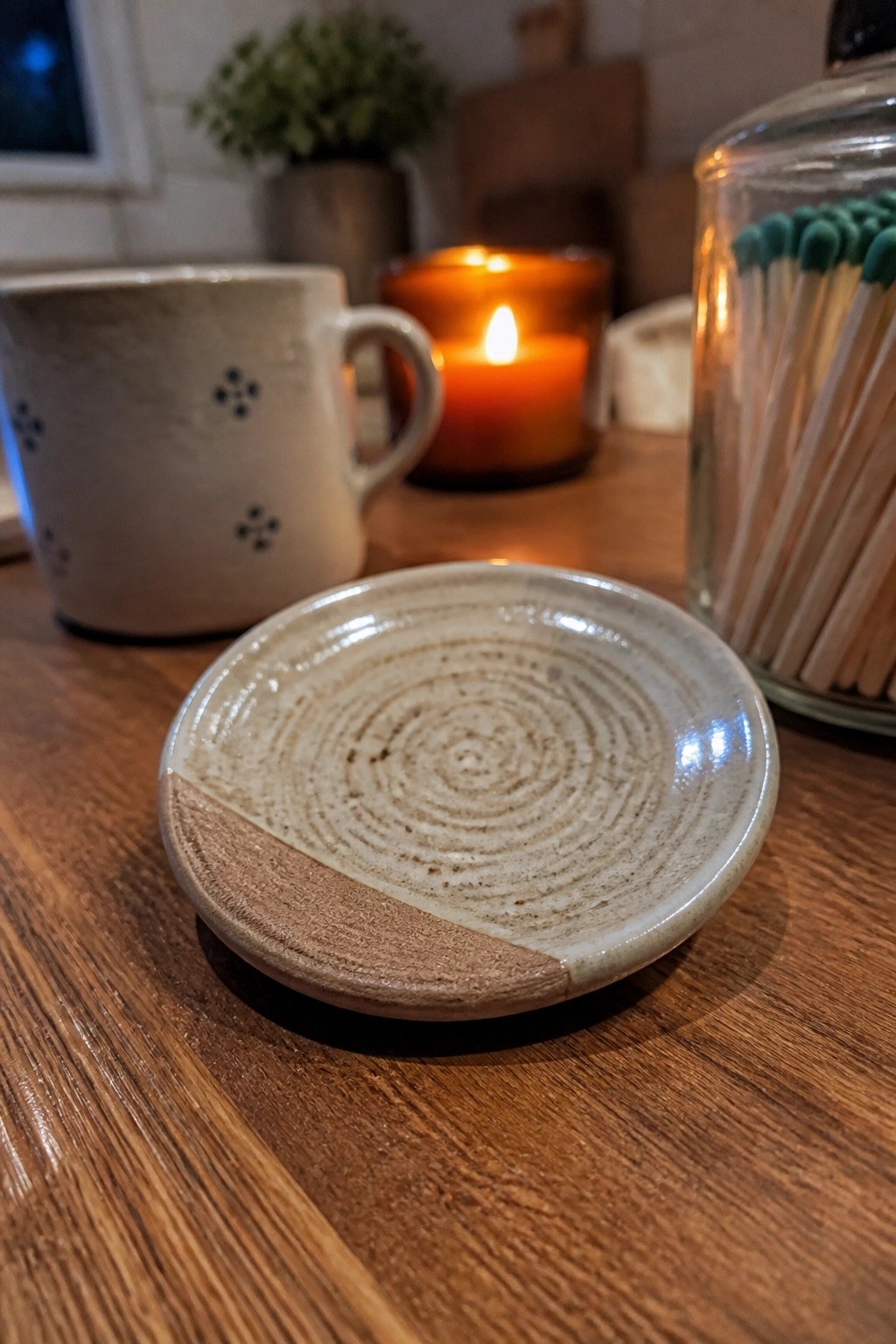
A small ring dish like this uses a shallow, wheel-thrown form with visible concentric ridges left from trimming. The design pairs a light glaze on the upper half with a darker dip on the lower section to create a simple split finish. The spiral texture inside adds interest without extra carving or painting. This approach keeps the project in the small dish or ring dish category and works for holding jewelry or keys.
What makes this idea useful is how the same spiral and dip-glaze method can be repeated on slightly larger versions for soap dishes or small catch-all trays. The compact size lets you test glaze combinations quickly and finish multiple pieces in one firing. For desk use, the low profile keeps it from taking up much space while still catching small items. You could also swap the two-tone split for a single color to change the look with minimal extra effort.
Nested Bowls in Soft Glazes
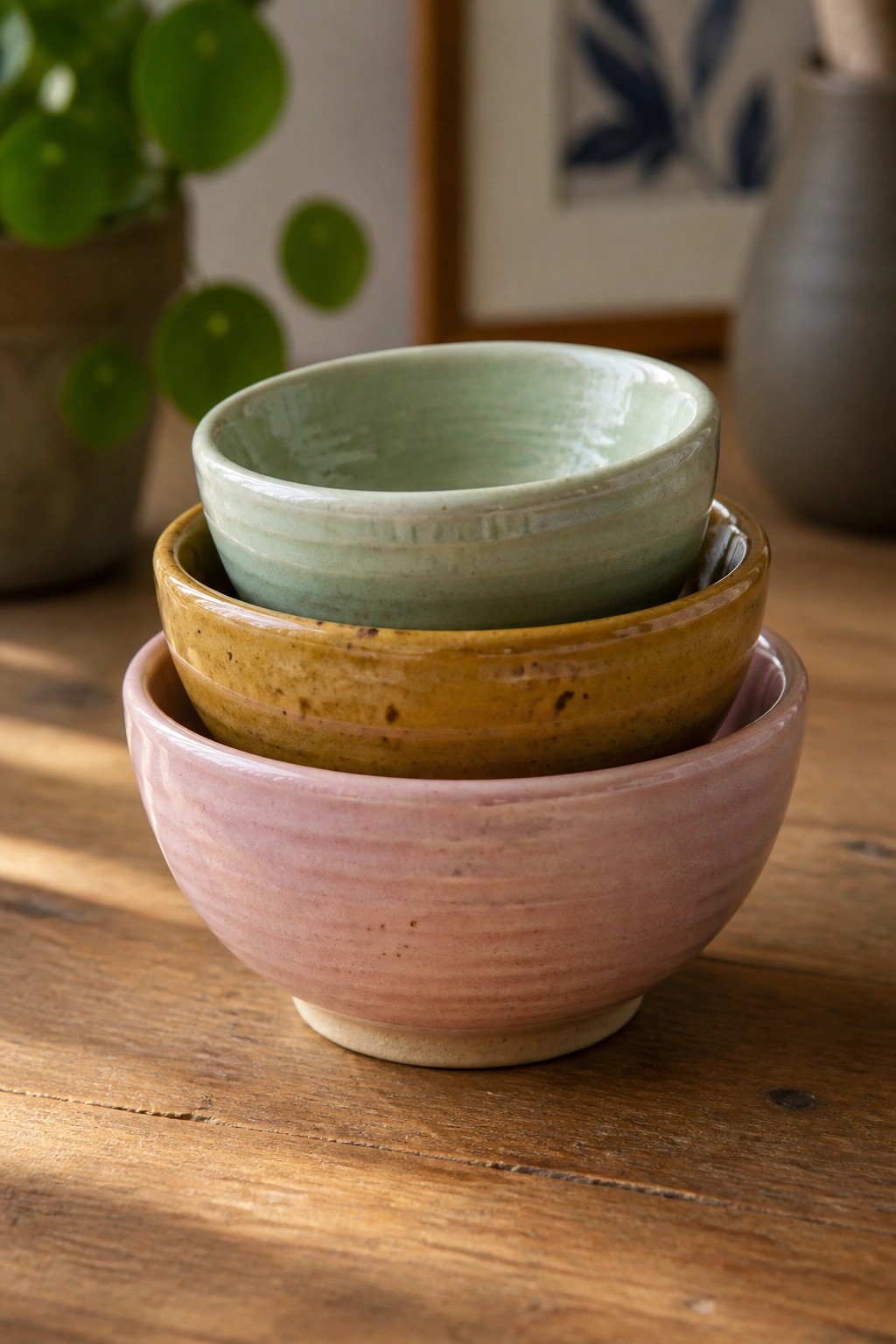
A set of three nesting bowls gives you multiple sizes that stack neatly for storage while still looking good left out on a counter or shelf. The bowls show simple wheel-thrown shapes with light horizontal ridges and speckled matte glazes in pink, mustard, and mint green. The color progression from bottom to top keeps the stack interesting without any added patterns or handles.
What makes this idea useful is that the same bowls can move from kitchen prep work to small serving dishes or even plant saucers. You can adapt the concept by changing the glaze order, making the set in two sizes only, or scaling the whole group up or down depending on how much clay you have. In a kitchen this kind of piece works especially well because the nesting saves space and the varied colors help you grab the right size quickly. For a gift, something like this stands out on Pinterest when the glazes stay soft and the rims stay clean.
Small Blue Bud Vase
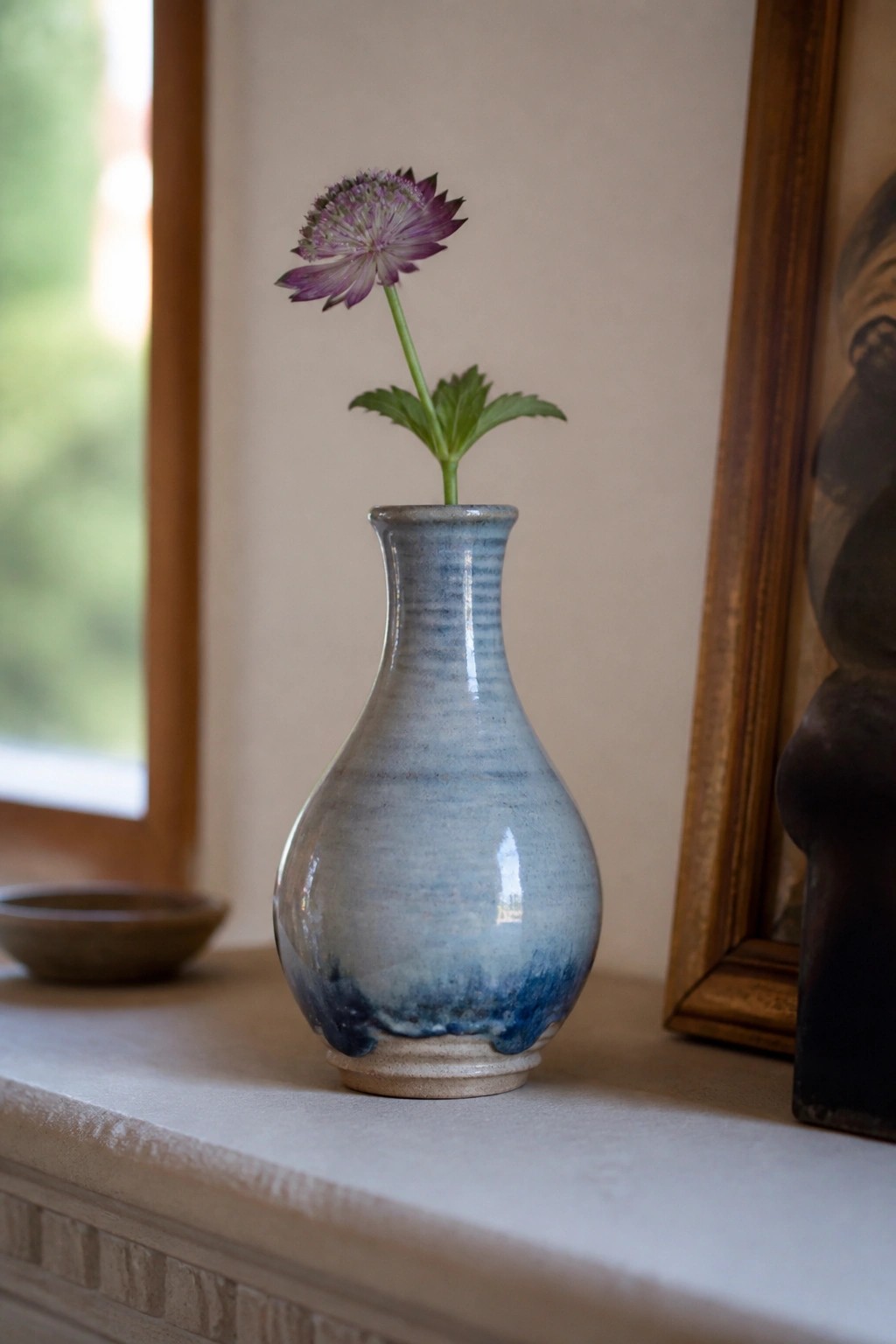
A small bud vase is a good first wheel project because it lets you practice centering, pulling walls, and forming a narrow neck without needing a lot of clay. The rounded body and short neck create a stable shape that holds one or two flower stems upright. A simple blue wash glaze that pools toward the base gives the piece a clean gradient without extra decoration. This style fits the vase category and stays functional for fresh flowers or dried stems.
What makes this idea useful is how the same basic form can be adjusted in height or width to match different flower sizes. You can change the glaze color or leave the neck unglazed for contrast. In a kitchen or on a desk, this size works without taking up much space. For a gift, the same shape can be made slightly larger and paired with a small bouquet.
Small Spotted Mushroom Figurine
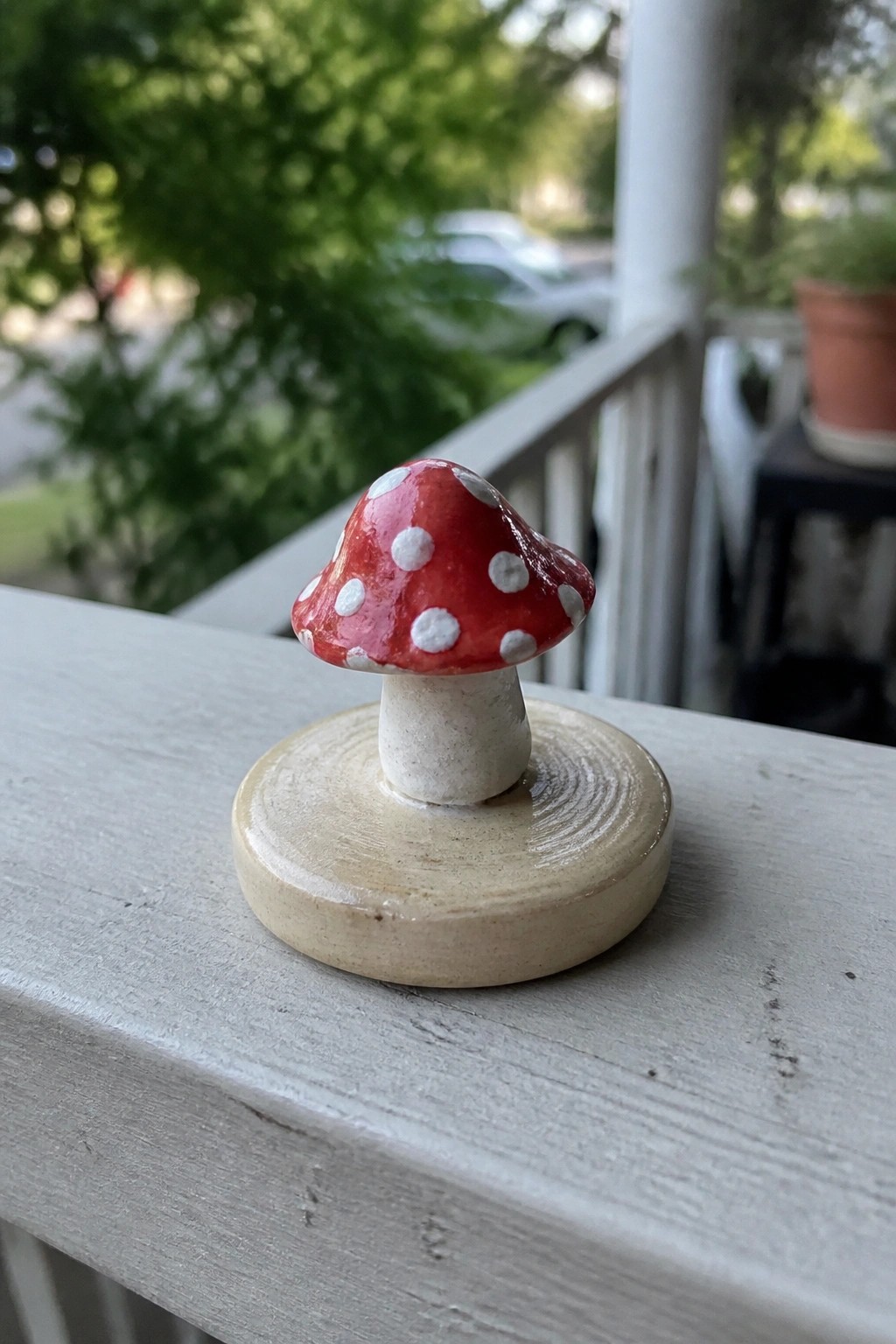
A small mushroom figurine makes a straightforward clay project by forming a rounded cap over a short stem and setting it onto a flat circular base. The bright red surface on the cap paired with scattered white dots gives the piece clear contrast and a simple pattern that reads well from a distance. This idea fits the decor object category and stays easy to manage because it relies on basic hand-building and surface painting rather than complex wheel work.
The small scale lets you finish the piece quickly and try it as shelf decor or a plant marker without using much clay. You could adapt the same shape into different colors or enlarge the base slightly to create a ring dish. For a gift, this kind of figurine stands out on Pinterest when grouped in sets of three with varied dot patterns.
Mini Cups with Flowing Glazes
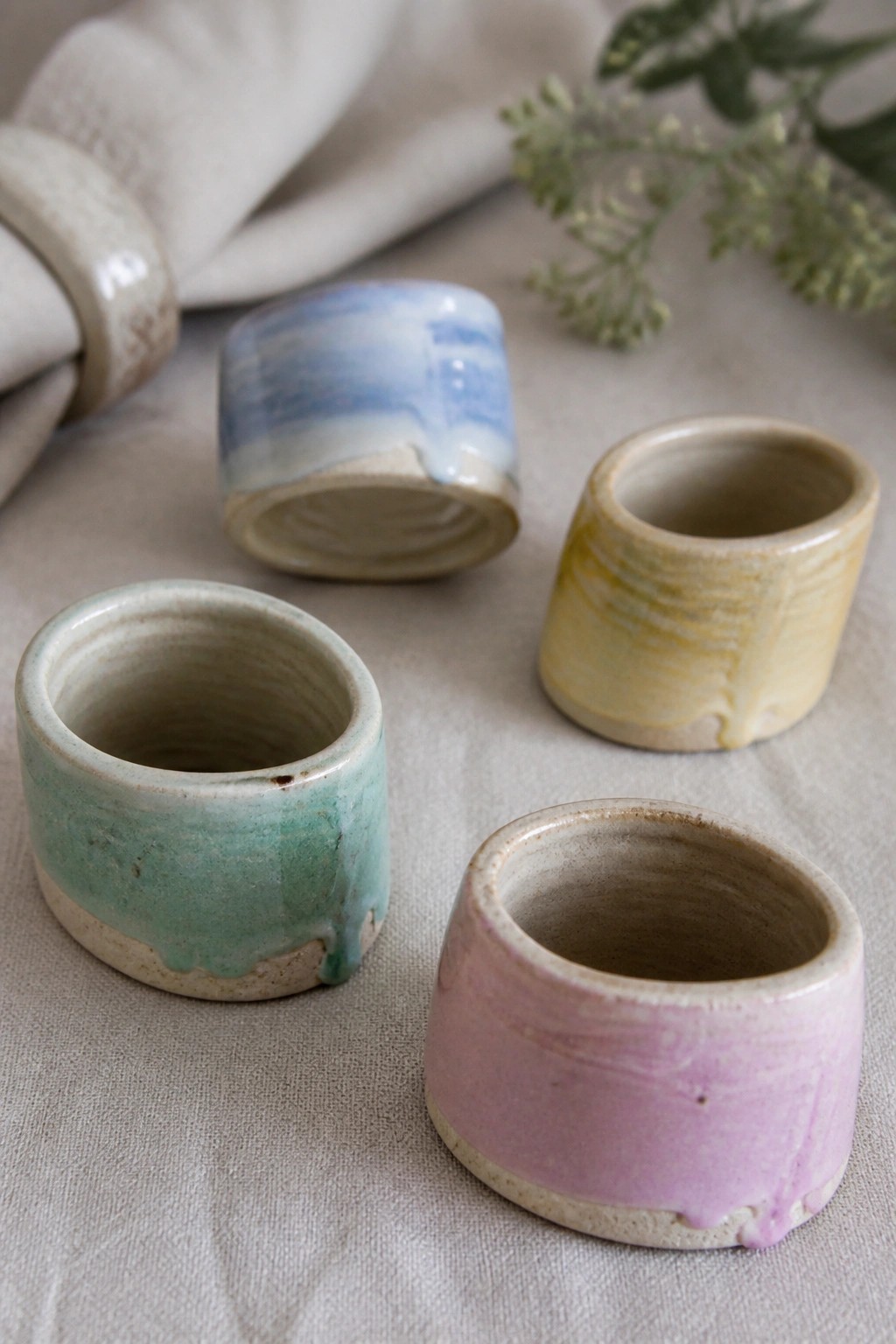
Small wheel-thrown cups like these use a basic cylinder shape and runny glazes that drip down the sides during firing. The contrast between the colored glaze and the raw clay base keeps the design simple while still giving each piece its own pattern. This works as an easy project for making a set of four or more in different colors without adding carved details or handles.
What makes this idea useful is the small scale, which lets you throw several pieces in one session and test different glaze combinations. The shape adapts easily into small planters for seedlings, desk holders for brushes, or tasting cups for sauces. You could swap the pastel tones for bolder colors or leave more of the clay exposed to change the look while keeping the same form. Sets like this photograph well for sharing project results online.
Espresso Cup and Saucer Set

A small wheel-thrown cup with a simple pulled handle sits on a flat saucer to make a basic coffee set. The dark green glaze builds horizontal bands across the surface, giving the form texture and depth while keeping the shape clean. This project stays in the mug category and works as everyday tableware rather than pure decoration.
What makes this idea useful is how the compact size lets beginners practice centering and pulling a handle without committing to a large piece. The same cup shape can be scaled up slightly for a standard coffee mug or reworked with a lighter glaze for contrast. In a kitchen this kind of set handles daily use and still looks finished on the table. For a first project the matching saucer adds purpose without extra steps.
Frequently Asked Questions
1. What type of clay works best for beginners trying their first pottery wheel projects? Stoneware or earthenware clay that is soft and moist is ideal for starters because it is forgiving and easy to center on the wheel. Avoid porcelain at first since it can be tricky to handle. Always wedge your clay thoroughly to remove air bubbles before you begin throwing.
2. How can I center clay on the wheel without it wobbling or flying off? Start by placing a small amount of water on the wheel head and slapping the clay down firmly in the center. Use your hands to apply even pressure from both sides while the wheel spins at a medium speed. Practice this step slowly until the clay spins smoothly without resistance.
3. What basic tools do I need besides the pottery wheel for these beginner projects? You will want a wire cutter for removing pieces, wooden ribs for shaping, a sponge for smoothing surfaces, and a needle tool for trimming. A bucket of water and a spray bottle help keep the clay moist during work. These items allow you to complete most simple forms like bowls or cups.
4. How should I dry my finished pottery pieces to prevent cracking? Place your projects in a cool area away from direct sunlight or heat sources and cover them loosely with plastic for the first day or two. Turn them occasionally to allow even drying. Once they reach a leather-hard stage you can refine edges before letting them dry completely for firing.
5. Can I complete these wheel projects without access to a kiln at home? Many community studios or local pottery classes offer firing services for a fee after you finish throwing your pieces. You can also look into air-dry clay alternatives for some simple forms though they will not be as durable as fired pottery. Check with nearby makerspaces for affordable options to finish your work.

Pottery Path is my cozy corner of the internet where I share clay ideas, pottery inspiration, and simple projects you can recreate at home. I love exploring everything from air dry clay to handbuilt pottery to cute minis that brighten your day. My goal is to make clay crafting feel easy, fun, and welcoming for anyone who wants to try it.
You will find beginner friendly tutorials, creative pottery painting ideas, and lots of warm inspiration for slow and happy crafting. If you enjoy hands on creativity, this space will feel like home.