
I have been making slab vases for some time and I like how they can take on different forms.
Soft organic shapes remind me of things I see in the garden or at the beach.
I collected nineteen ideas that use those kinds of curves and lines.
They are all based on simple slab techniques that do not require much equipment.
I hope some of them give you a starting point for your own projects.
Slab Vase with Pinched Rim and Vertical Seam Detail
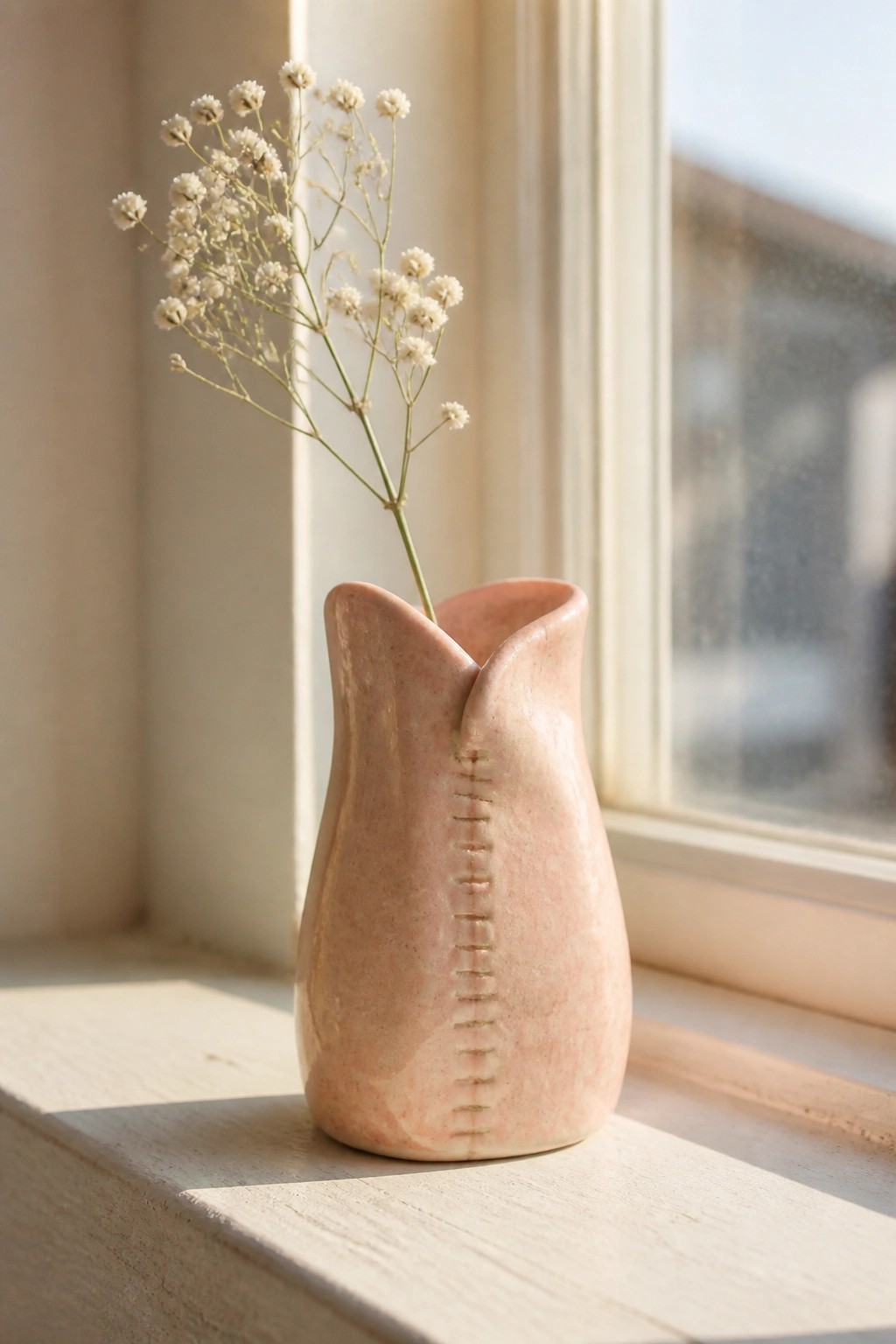
A hand-built slab vase uses a soft pinched rim to create an organic opening that avoids straight lines. The vertical row of small impressions down the front adds a simple handmade mark that breaks up the smooth surface. A single blush glaze keeps the piece light while the tapered body holds just a few stems without feeling crowded. This fits the slab vase category where flat clay sheets are joined and then altered by hand.
What makes this idea useful is how the pinched rim can be adjusted wider or narrower depending on the stems you plan to display. The seam texture is easy to recreate with a tool or fingertip before the clay firms up, and the same shape works in a taller version for branches or a shorter one for a windowsill cluster. You could swap the solid glaze for a matte finish or add a second color inside the rim if you want more variation. In a grouping on a shelf, this form stands out because the curves and single line of texture give it presence without extra decoration.
Organic Slab Wall Pocket Vase

A slab-built wall vase works well when the form stays soft and slightly asymmetrical. This piece uses a simple pouch shape with a wide, wavy opening that holds several stems without crowding them. The glaze moves from cream at the base into flowing sage green that drips and pools, letting the texture of the clay show through in places.
The flat back and small hanging hole make this easy to place on any wall where a regular vase would not fit. You could repeat the same slab pattern in a smaller size for a single flower or stretch it wider for a longer arrangement. The loose glaze application is forgiving on uneven surfaces, so the same technique works if you want to try different color combinations. This shape also translates easily into a shallow tray or a hanging planter for small air plants.
Double Slab Vase with Fused Organic Chambers
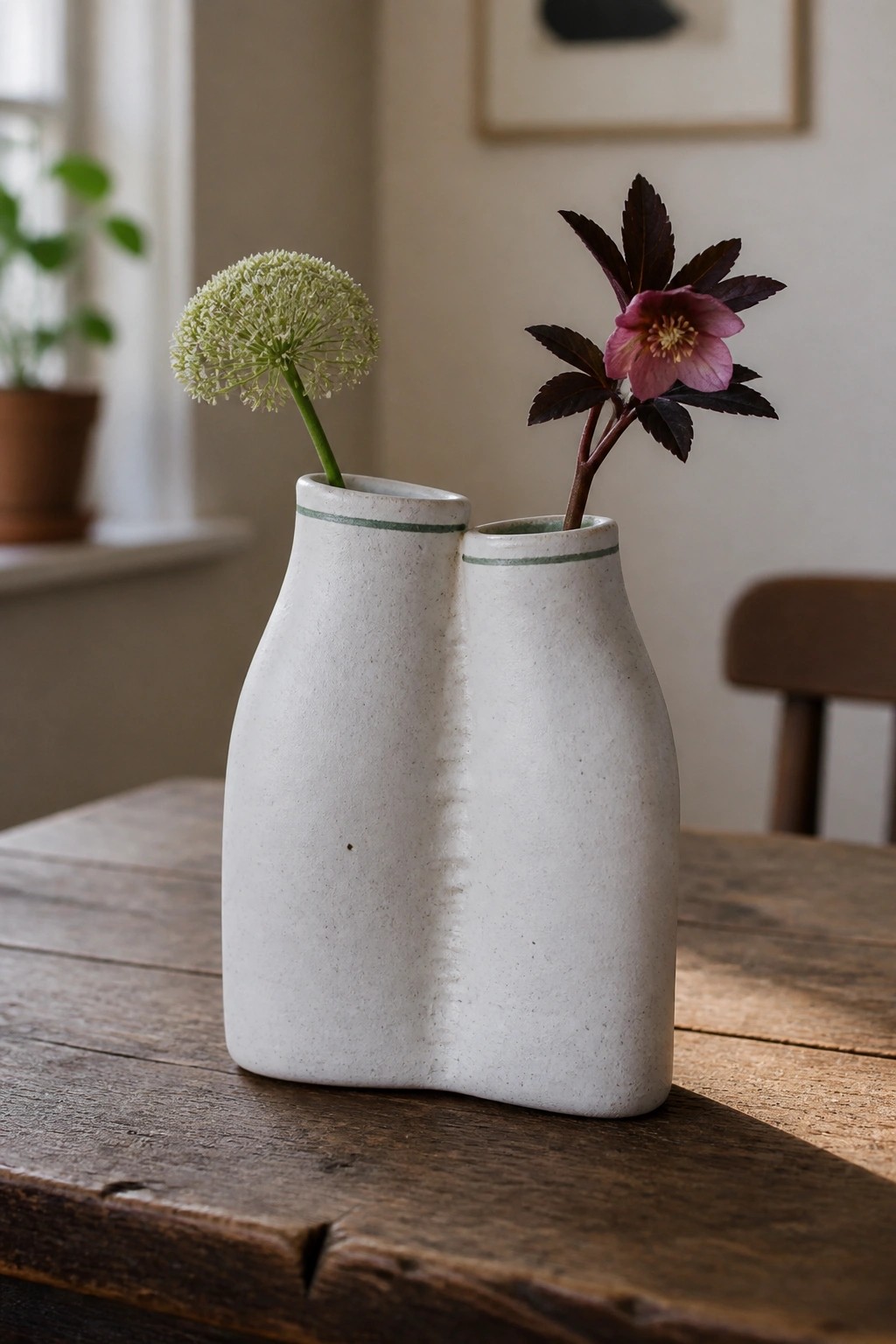
A slab built double vase uses two separate chambers joined along one side to form a single piece with two openings. The rounded, slightly irregular shapes come from rolling and shaping slabs then pressing them together while the clay stays soft, which produces the gentle outward curve where the forms meet. A thin green line at each rim provides a quiet accent against the speckled matte surface without adding extra decoration.
What makes this idea useful is how the connected chambers let you pair two different stem heights or flower types in one object. The low wide footprint works on a table or shelf where a tall single vase would feel too dominant. You could rework the same construction into three chambers or change the rim lines to a different color for a quick variation. The simple profile photographs cleanly, which helps when saving the design for later reference.
Petal Rim Vase with Two-Tone Glaze

This is a handbuilt ceramic vase shaped with several rounded lobes along the upper rim that suggest soft flower petals. The form widens through the belly then narrows to a short foot, and the glaze shifts from a cool green on the upper half to a warmer terracotta tone below. The lobed edge gives the piece a clear organic shape while keeping the body simple enough to build from slabs or coils. It works as a vase for cut flowers or small stems.
What makes this idea useful is the way the rim detail stands out without adding extra parts or handles. You can scale the same lobed shape down for a bud vase or widen it slightly for a low bowl. The two-tone glaze approach pairs easily with other earthy pieces in a kitchen or dining area and photographs well for sharing. For a quick variation, try the same rim treatment on a taller cylinder or a shallow tray.
Hanging Slab Vase with Carved Leaves
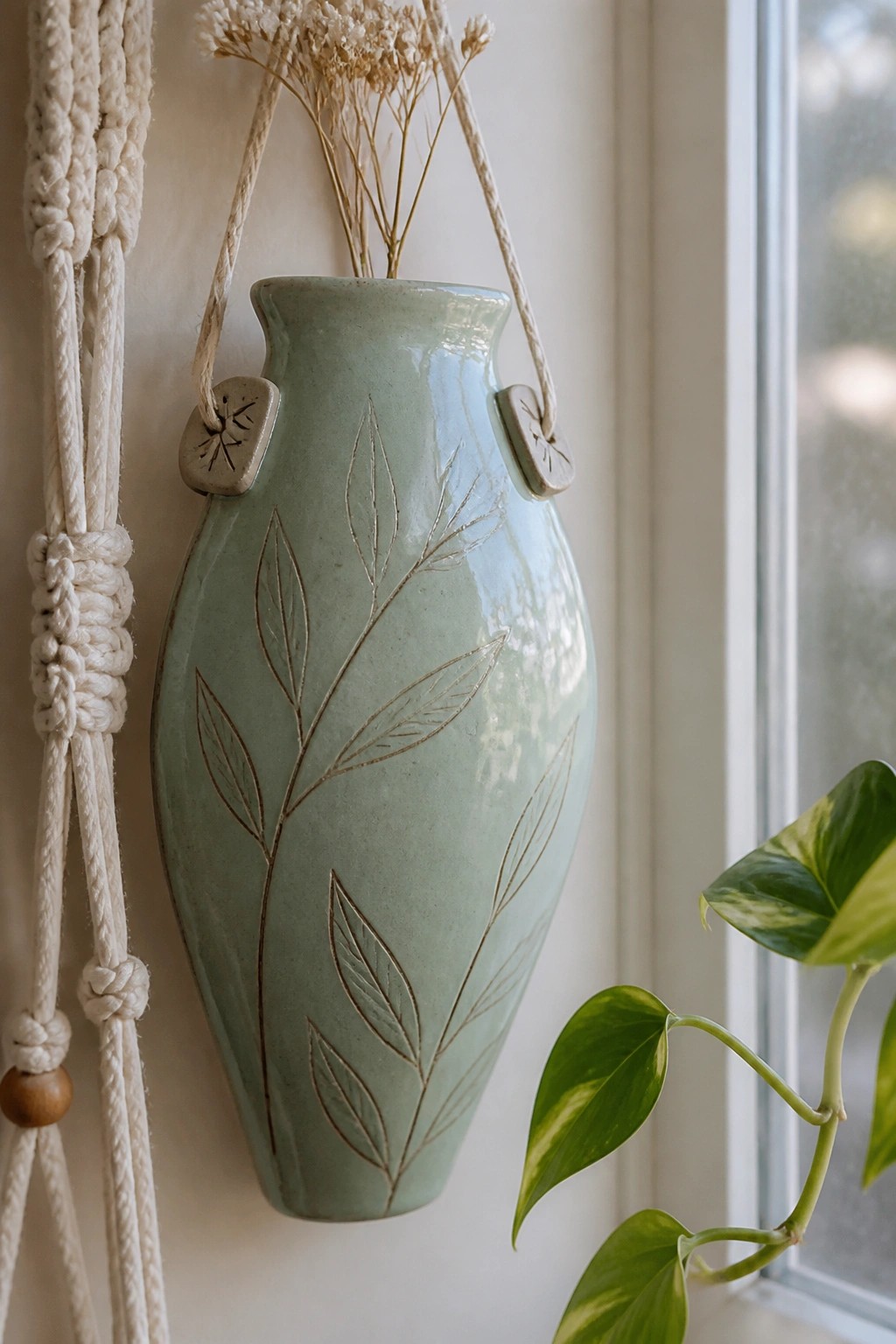
A slab-built vase with a tapered oval shape gains hanging capability from two small clay tabs placed near the rim. The surface carries vertical leaf patterns that are carved or impressed before glazing, and a soft sage green finish keeps the lines visible while adding subtle depth. This combination turns a basic vessel into wall-mounted decor that works without a stand or shelf.
What makes this idea useful is how the tabs let you swap in different cord styles or lengths depending on the room. The same leaf carving can be scaled down or spaced differently if you want to make a shorter version or a matching pair. In a kitchen or entryway the muted glaze keeps it from competing with other colors, and the overall form adapts easily to a freestanding piece if you skip the hanging hardware.
Pinched Slab Vase with Gradient Glaze

A slab vase built from flat pieces that are joined and then gently pinched along the sides creates an irregular, faceted form that tapers slightly toward the base. The glaze application produces a smooth shift from warm yellow at the top to pale cream below, giving the surface a soft, blended finish without added texture or pattern. This approach keeps the construction simple while the altered shape prevents the vase from looking like a basic cylinder.
What makes this idea useful is that the pinching step adds visual weight and interest using only the slab itself. The tall profile works well for holding branches or dried stems on a table or shelf where height helps fill space. You could rework the same method into a shorter, wider version for a desk or try a cooler glaze palette for a different season. The faceted sides also make the piece easy to photograph from multiple angles, which helps it stand out in a feed of more symmetrical vases.
Scallop Shell Slab Vase in Speckled Glaze
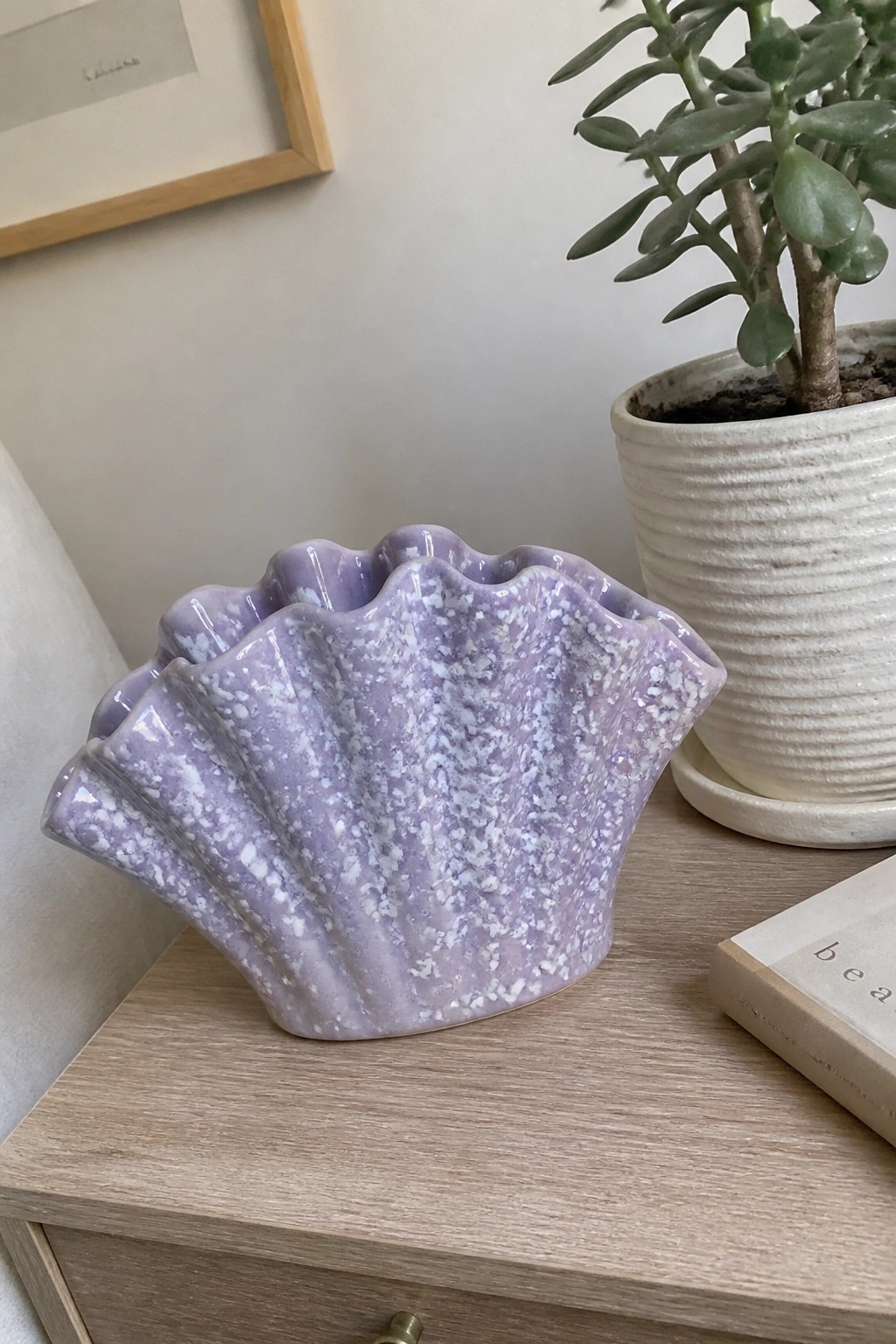
A slab vase formed into a scallop shell uses curved slabs joined along the back to create an open, fan-shaped vessel with natural ridges. The top edge is trimmed and folded into soft waves that follow the shell contour, and the surface is finished with a light purple glaze that breaks into white speckles over the raised areas. This style fits the organic slab vase category because the form stays low and wide rather than tall and narrow.
The compact size works well as a bud vase or small plant holder on a desk or windowsill. You can adapt the same idea by adjusting the slab curve to make a deeper bowl or by swapping the speckled glaze for a solid matte color on a different shell outline. The shape stands out in photos because the ridges cast clear shadows that highlight the handmade form without needing extra decoration.
Stacked Slab Vase with Two-Tone Glaze
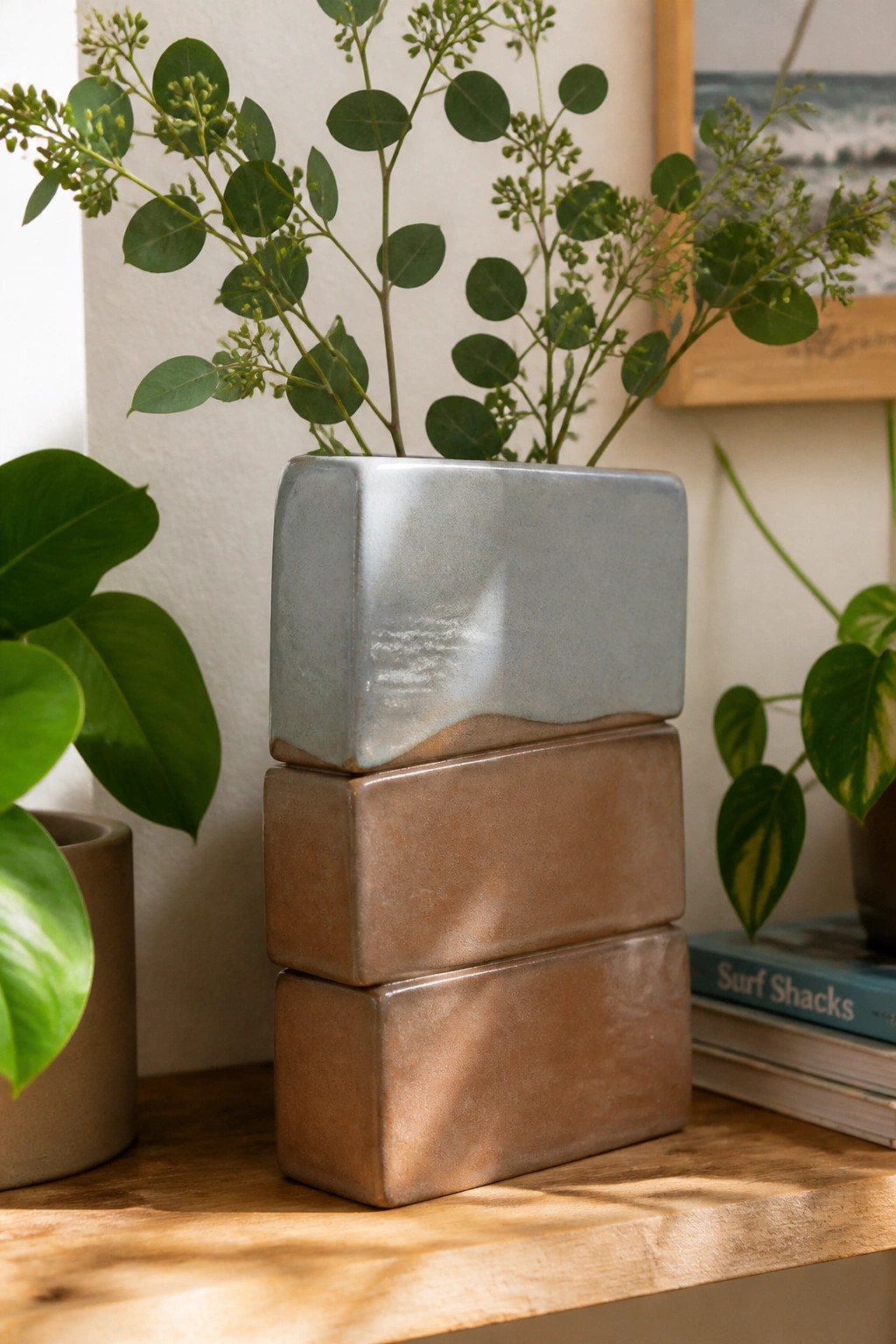
A slab vase built from three rectangular sections stacked vertically gives a clean geometric form that still feels approachable. The top slab carries a cool silver glaze while the two lower slabs use a warm brown glaze, separated by a soft wavy line that adds a slight organic touch. This construction works well because flat slabs are simple to cut and join, and the stacked layout lets you play with different glaze colors on one object.
What makes this idea useful is the way the stacked sections create natural places to test glaze combinations without making multiple separate pieces. You could scale it down to two sections for a shorter table vase or switch the brown to a matte green for a different mood. For a gift this shape holds up nicely with dried stems or fresh branches and stands out on a mantel or shelf because the color split draws the eye without extra decoration.
Lobed Bulbous Vase with Scattered Pink Dots
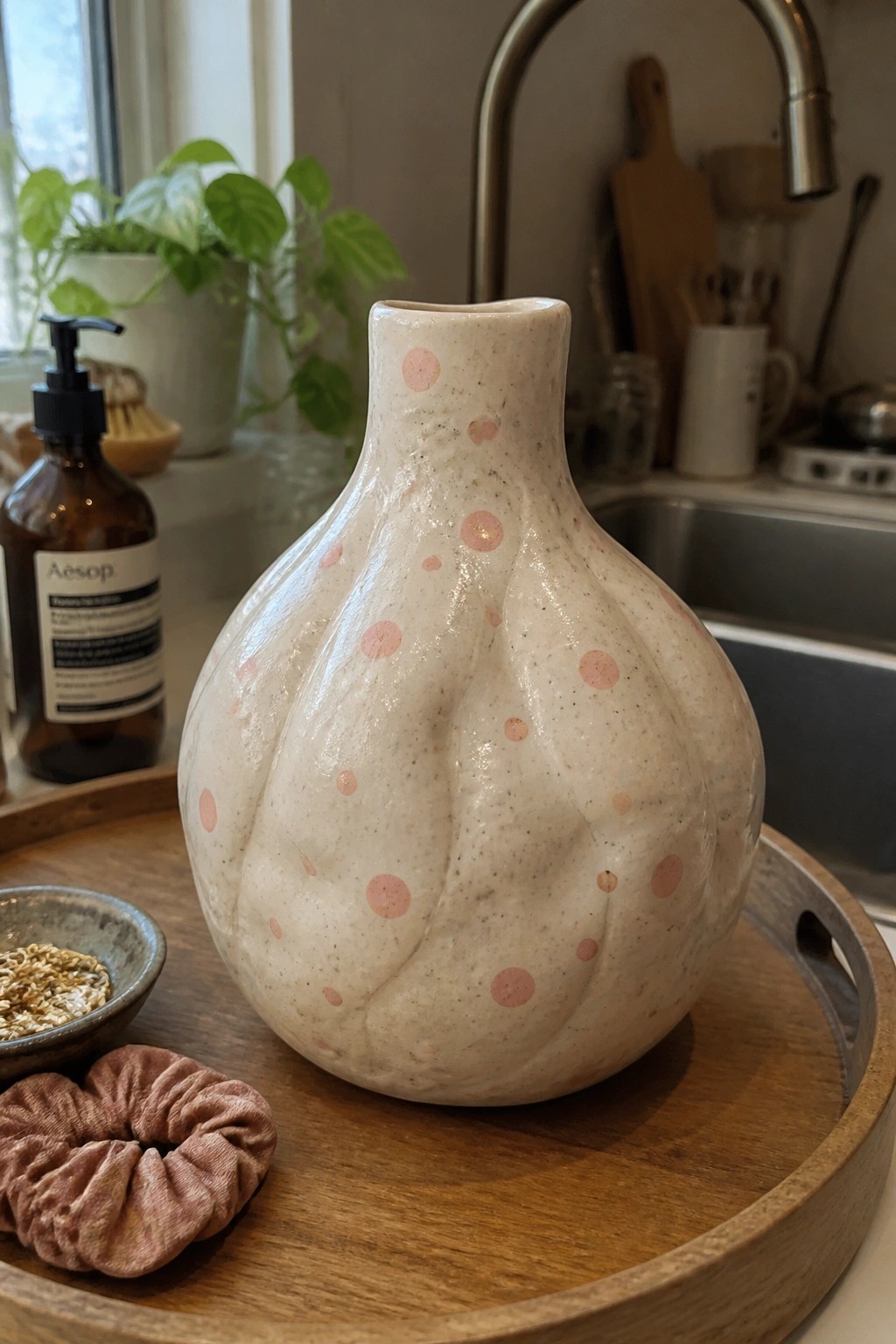
A handbuilt ceramic vase with a rounded body formed into soft lobes creates an organic gourd-like shape that tapers to a short neck. The surface uses a speckled matte glaze as a base with small pink dots applied in an irregular pattern across the lobes. This style suits slab or pinch construction where the clay is shaped and folded before the final form is set.
What makes this idea useful is how the lobed shape gives the vase presence even on a small scale. You could rework the same construction into a shorter planter or a wider bowl by adjusting the pinch points and rim. The dot pattern works as a simple way to add color without extra tools, and it translates easily to other neutral glazes for kitchen shelves or bathroom counters.
Scalloped Petal Slab Bowl as a Low Flower Vessel
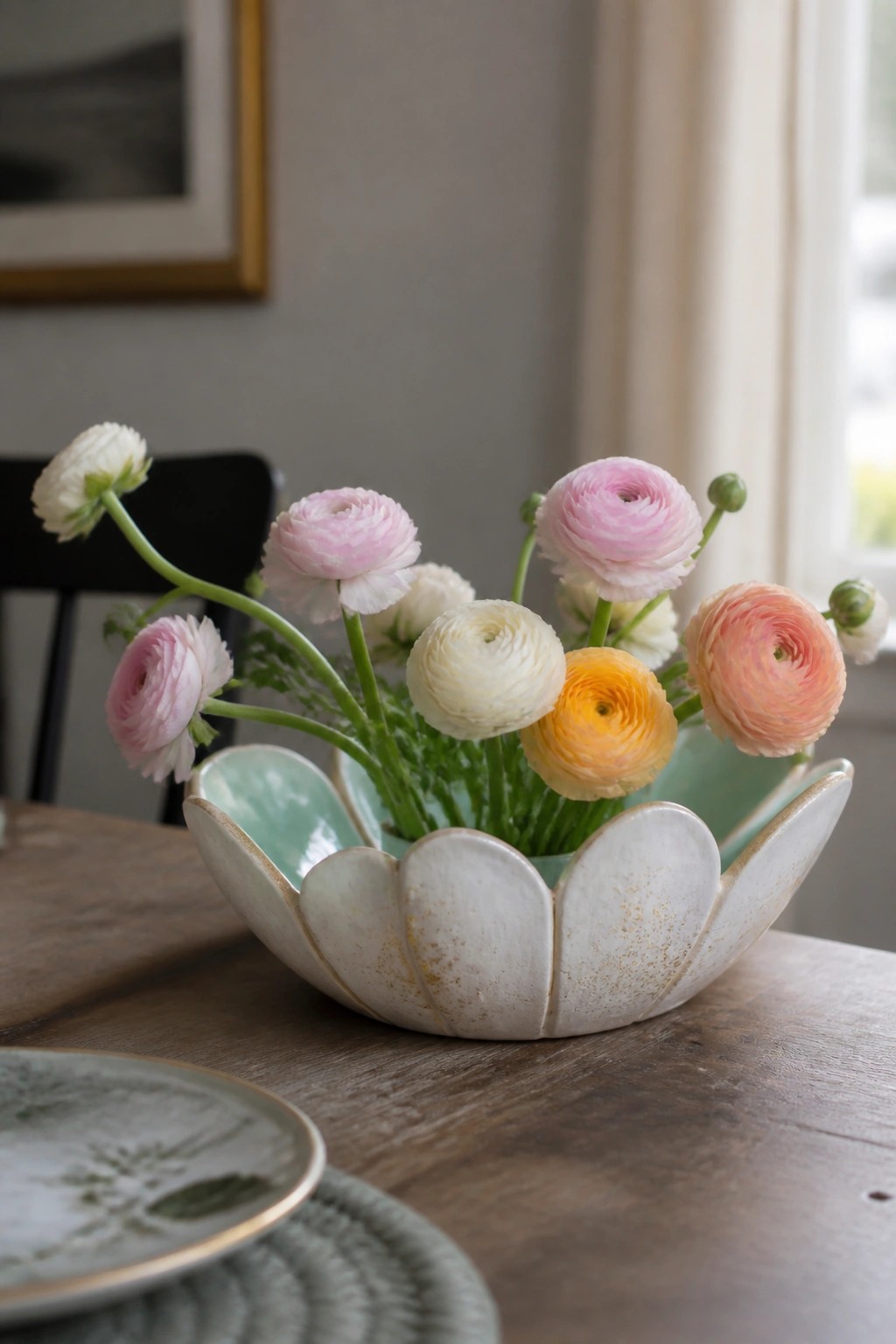
A slab-built ceramic bowl with a wide, open form and a rim cut into rounded petals creates a simple flower-shaped holder. The design keeps the piece low and stable while the overlapping edge details give it an organic outline that frames whatever is placed inside. A matte white glaze on the exterior with a soft green interior lets the shape stand out without extra decoration.
What makes this idea useful is how the petal rim does most of the visual work once the piece is formed. The low profile works well on a dining table or sideboard where taller vases would block views, and the same slab method can be adjusted to make a narrower version for a single stem or a wider tray shape. You could also swap the glaze colors to match different rooms or try a matte black exterior for more contrast with light flowers.
Wavy Slab Bud Vase with Directional Glaze Strokes

A small slab vase formed with softly curved walls and an uneven, pinched rim makes a simple bud vase or single-stem holder. The shape stays compact and slightly tapered, with a shallow indent near the base that adds subtle movement without extra pieces. Light blue glaze brushed in radiating strokes creates texture that follows the form and keeps the surface from looking flat. This approach works well for anyone wanting an organic outline while still using basic slab construction.
The shape does a lot of the work here because the small size lets it sit on a narrow shelf or windowsill without crowding other items. You can adapt the wavy rim by gently folding the top edge of the slabs before joining them, and the same brushstroke technique translates easily to other light glazes or even underglaze lines. For a gift, this kind of piece pairs well with a fresh cutting or small herb start. The same method can be reworked into a set of matching ring dishes or a low tray by flattening the profile and skipping the neck.
Ribbed Slab Vase with Soft Vertical Texture
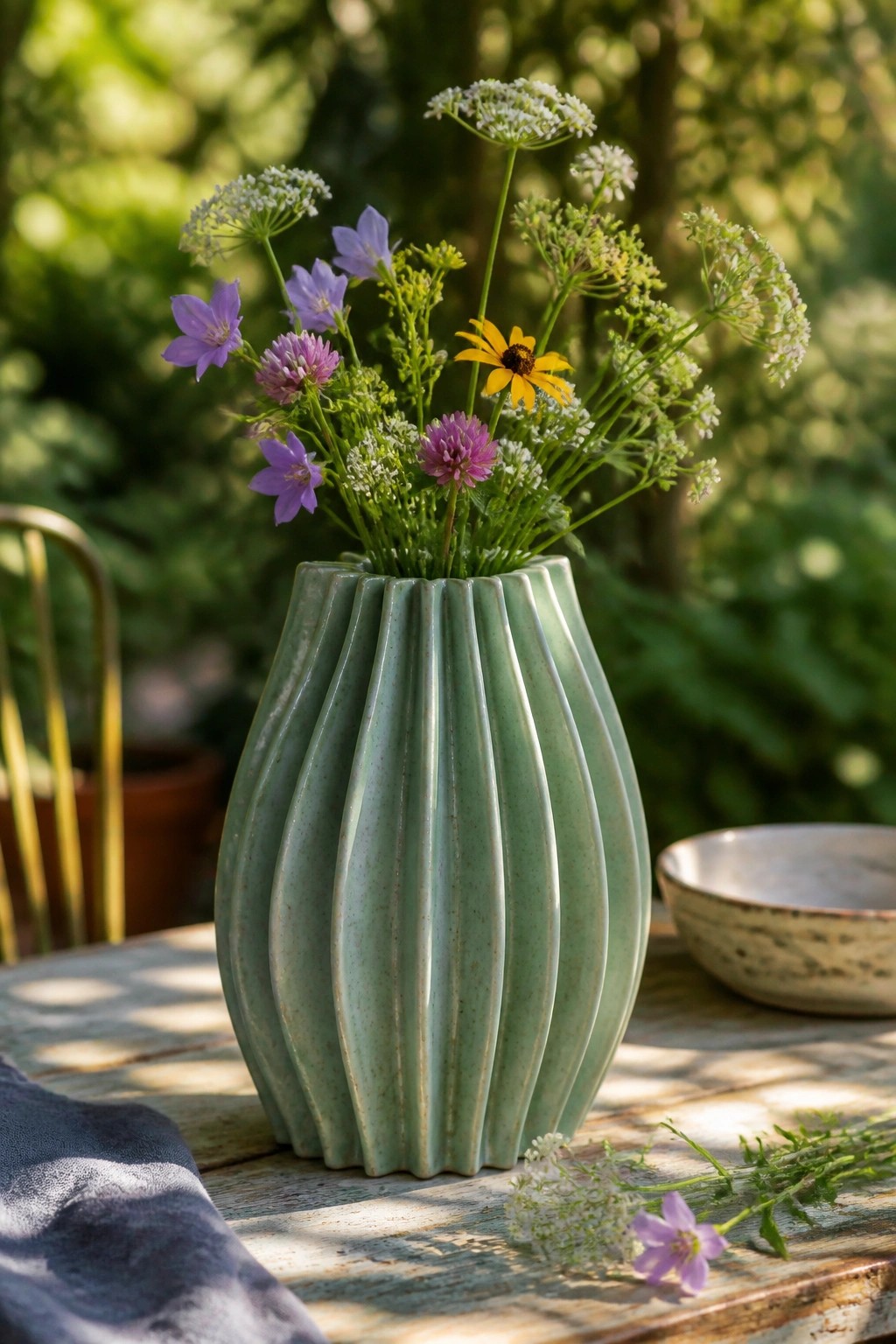
A slab vase built with evenly spaced vertical ribs creates a textured surface that gives the rounded form movement and depth. The shape stays simple with gentle curves that widen through the middle and narrow toward the base, making it stable for fresh flowers or branches. A soft green glaze with fine speckling keeps the surface matte and natural while highlighting the ridges without adding extra color or pattern.
What makes this idea useful is how the ribs do most of the visual work once the slab is formed and joined. You can adapt the same rib spacing to shorter or wider versions for different tabletops, or change the glaze to a warmer tone for a different season. This shape works especially well as a single accent on a dining table or entry console where the texture shows up in daylight. The slab method also makes it straightforward to adjust the height or curve slightly if you want to repeat the idea in a set.
Organic Slab Vase with Carved Motif Texture
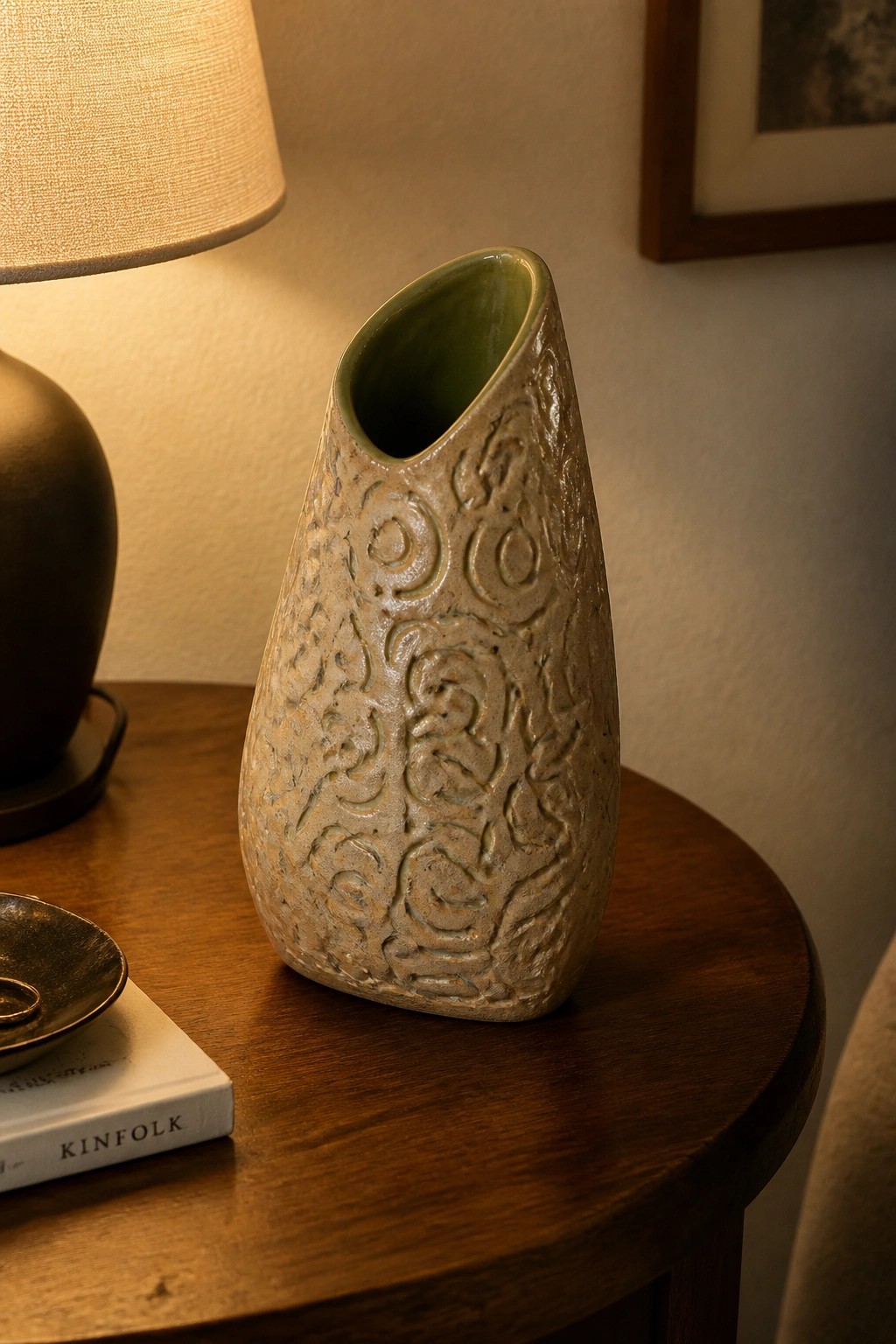
A slab-built vase with an asymmetrical, tapered form gives this project its soft organic shape. The exterior uses repeated carved or impressed patterns to create surface interest across the clay, while the inside is finished in a smooth green glaze that contrasts with the textured outside. This style works as a standalone decor vase because the hand-built silhouette and motif details keep the eye moving without needing added color or symmetry.
What makes this idea useful is how easily the carved patterns can be made with basic tools once the slab is firm. The shape works well on a shelf or side table where the texture shows up against a plain wall, and you could simplify the motifs or change their scale to fit a smaller version for a desk or bathroom. For a gift, something like this adapts quickly by adjusting the height or repeating fewer patterns on the surface.
Folded Slab Vase with Loose Brushstroke Painting
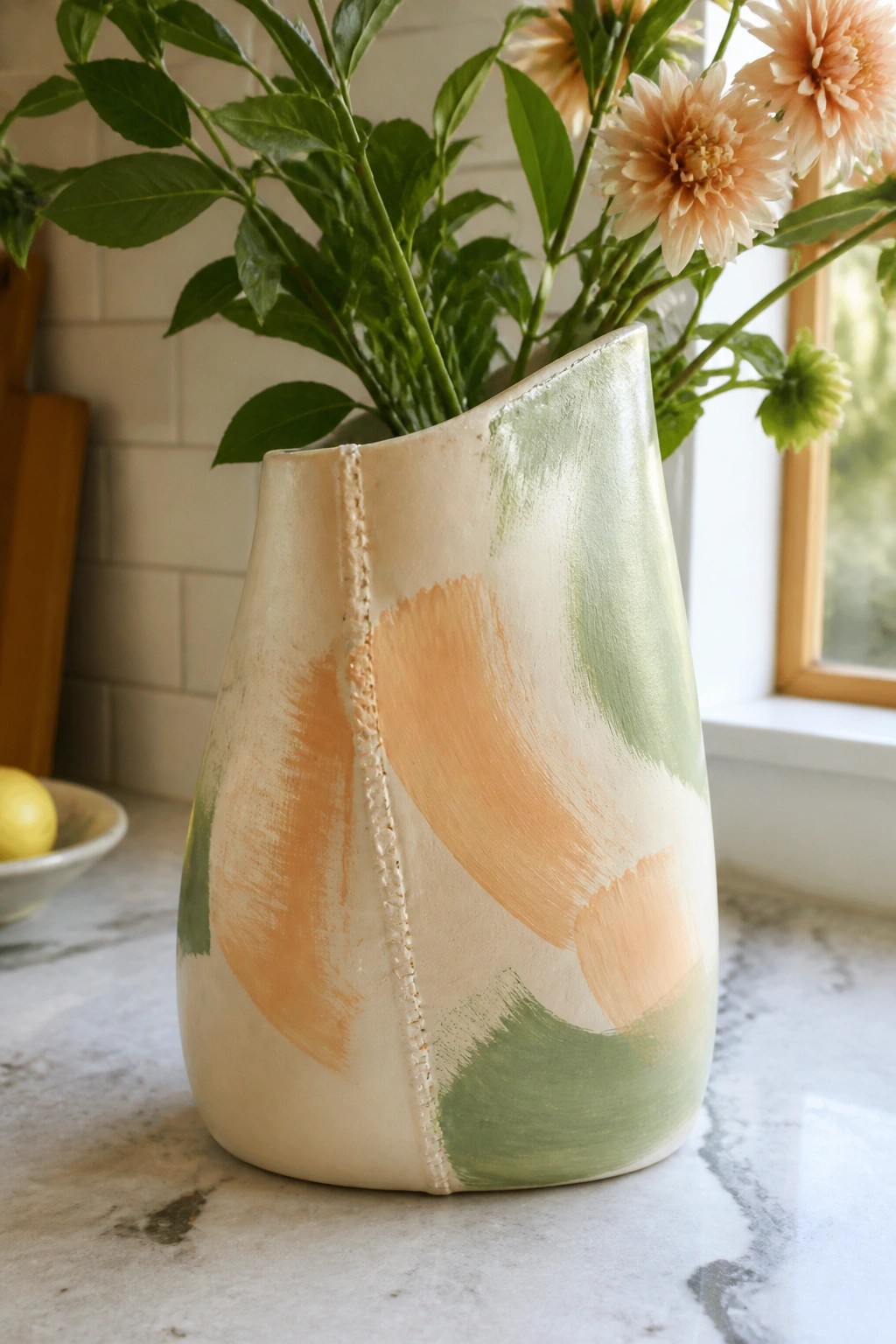
A slab vase formed from joined clay sheets produces an organic shape with a visible textured seam running down the center. The rim is pinched and folded to create an off-center opening that holds flower stems at different angles. Broad, overlapping strokes in peach and muted green sit over a cream base, giving the surface an abstract painted look rather than a uniform glaze. This idea sits in the slab construction category where the emphasis stays on simple forming and quick surface marks.
What makes this idea useful is how the folded rim and painted areas let the form feel finished without extra carving or multiple glaze firings. You could repeat the same slab layout at a smaller scale for a desk version or widen the base for a short planter. The brushwork adapts easily if you want to swap colors to match a room or try different stroke patterns on the next piece. In a kitchen or entryway, this shape gives you a functional vase that still reads as handmade rather than mass-produced.
Ribbed Oval Planter with Painted Rim Line

A slab-formed oval planter uses repeated vertical ridges to create a gentle, repeating texture across the surface. The wide, low shape keeps the piece stable while the blue underglaze line along the rim adds a single clean accent before the final glaze. This style works as a simple houseplant container because the open top accommodates root spread and the ridges catch light without extra carving.
What makes this idea useful is how the oval footprint sits flat on shelves or windowsills where round pots might roll or crowd. You could reuse the same rib template to make a longer tray or a shorter bowl by changing only the base curve. The single rim line stays easy to paint and gives the finished piece enough contrast to photograph well for sharing.
Pressed Leaf Slab Vase
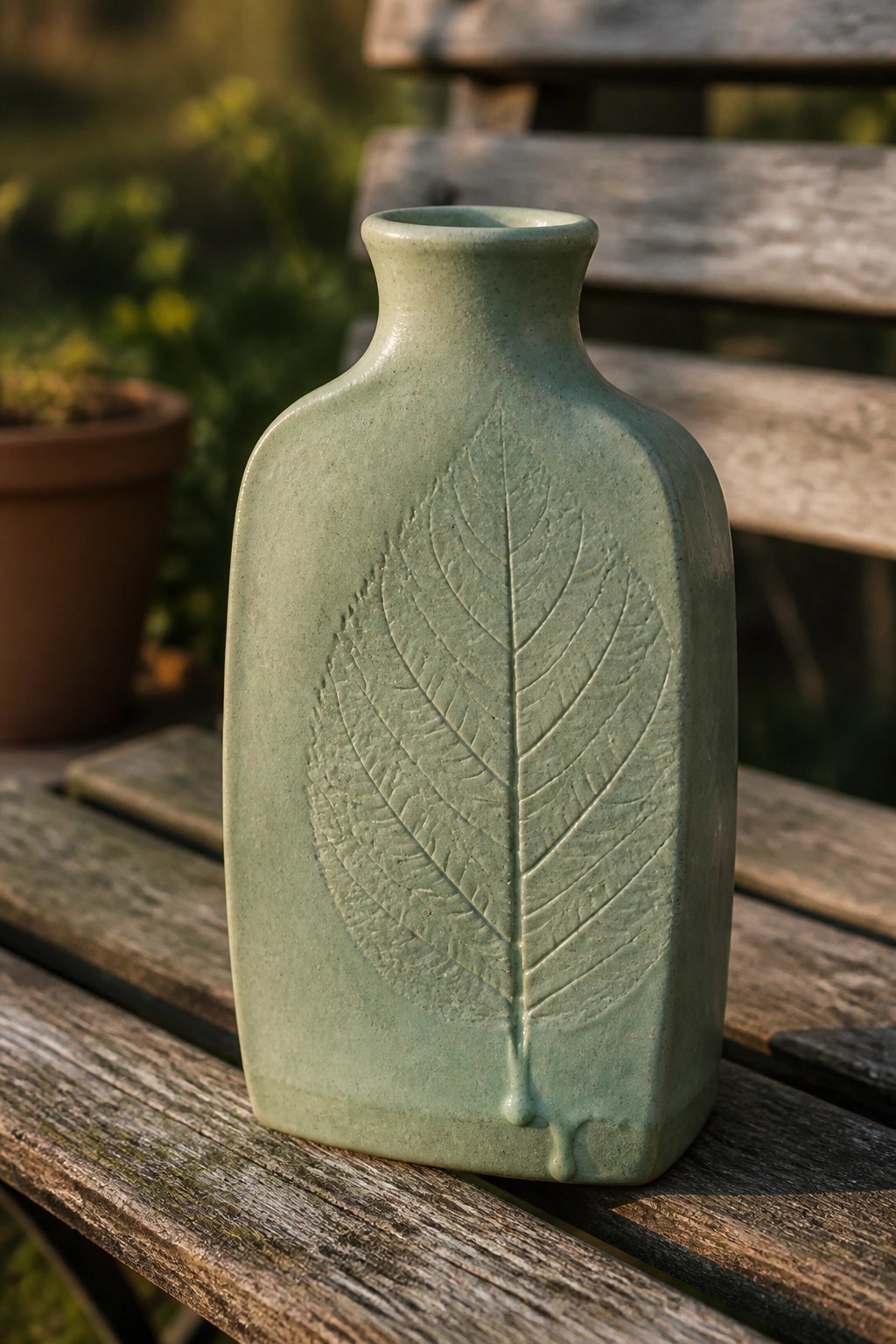
A slab vase formed from flat clay sheets creates a broad rectangular surface that works well for adding a single large leaf impression. The leaf is pressed into the clay while it is still soft so the veins and edges stay clear after firing. A muted green glaze covers the piece and settles into the recessed leaf details, with a small amount of glaze allowed to run at the base. This approach keeps the focus on the natural texture rather than on complex shaping or multiple colors.
What makes this idea useful is that the slab construction lets you control the exact width and height without a wheel. You can swap in different leaves from your yard to create a whole set with matching glazes but varied impressions. The flat shape sits stably on a shelf or table and holds a few stems without tipping. The same leaf pressing technique could be used on a shorter slab form to make a small tray or a wall-mounted pocket instead.
Rounded Slab Cluster Vase
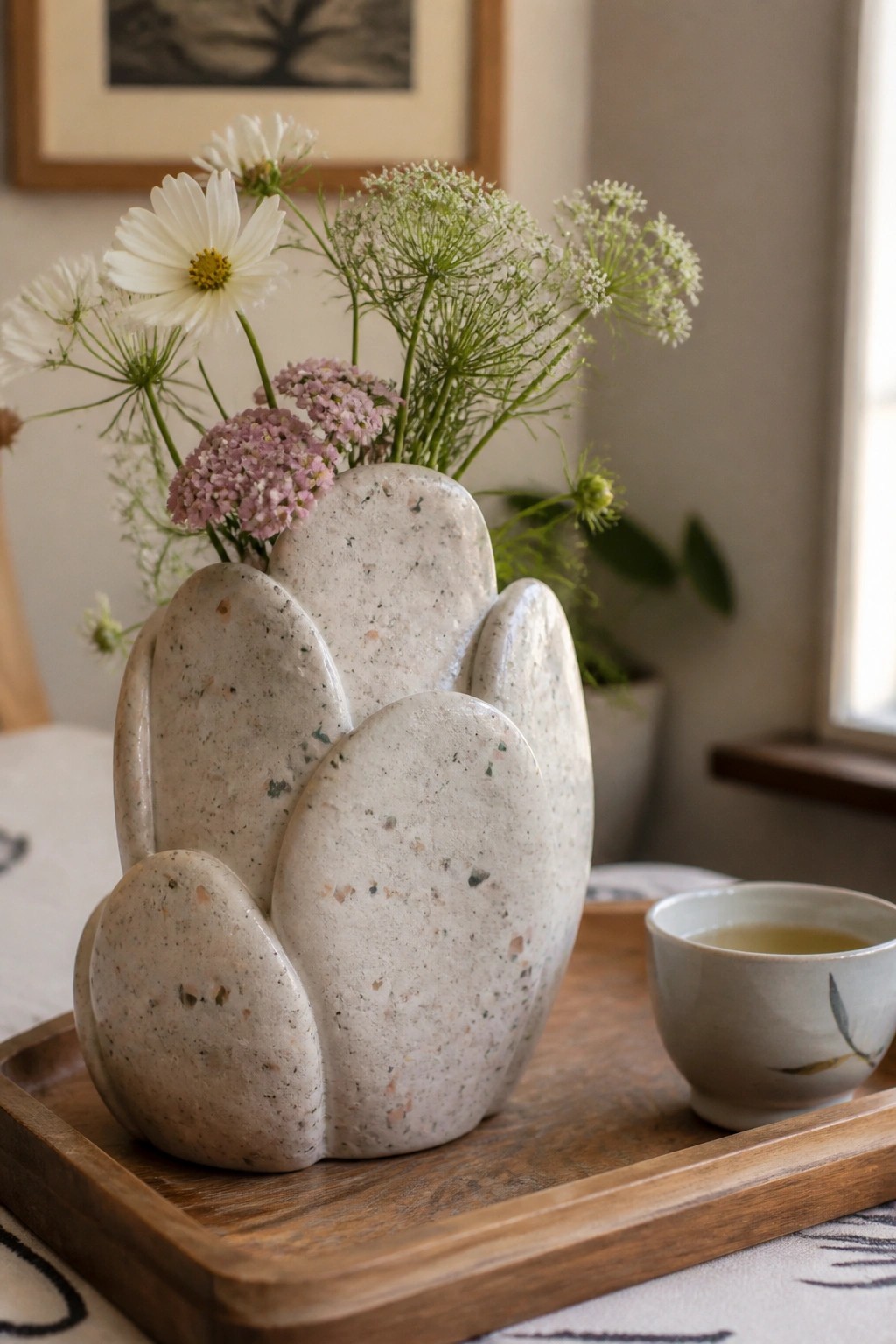
A slab vase made from several overlapping rounded forms gives the piece an organic, clustered shape that avoids straight edges or symmetry. The slabs are cut into irregular ovals of varying sizes and joined so they fan outward, creating multiple openings at the top for stems. A light speckled glaze keeps the surface simple while showing the clay texture and the way the forms meet. This fits the category of decorative slab vases where the construction itself becomes the main design element.
What makes this idea useful is that the overlapping slabs do most of the visual work once the pieces are assembled. The shape works especially well as a table centerpiece or on a windowsill where the outline can be seen from multiple angles. You could adapt it by changing the number or size of the slabs to make a taller or more compact version, or by using a smoother glaze for a different finish. For a gift, the same construction method can be scaled down into a small bud vase that still reads as intentional rather than basic.
Organic Poppy Paintings on a Tall Pitcher Vase
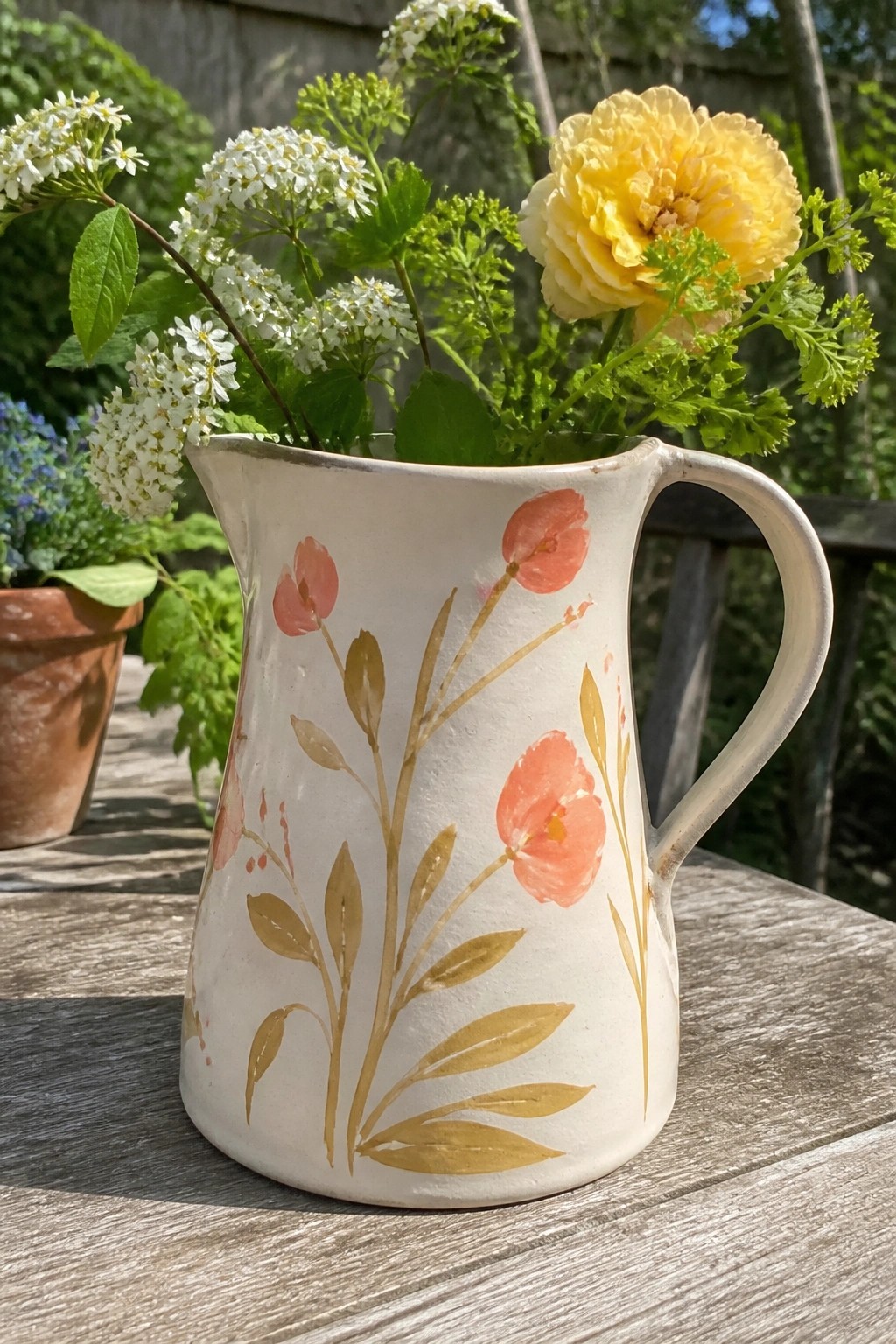
A ceramic pitcher works well as a vase when the surface carries loose painted poppies in soft coral with gold leaves and stems. The design keeps the white clay body mostly bare so the vertical lines of the flowers follow the shape without crowding it. This kind of painted motif fits any simple vessel because the stems add height while the rounded blooms soften the outline.
What makes this idea useful is how the same loose painting style can move to a slab built vase with only minor changes in spacing. You can reduce the number of flowers to fit a narrower form or switch the coral to another muted tone that matches your space. In a kitchen or entryway the pitcher holds cut flowers without needing extra decoration. For Pinterest the clean background and clear floral shapes photograph clearly even in simple lighting.
Curved Slab Pocket Vase with Gradient Glaze
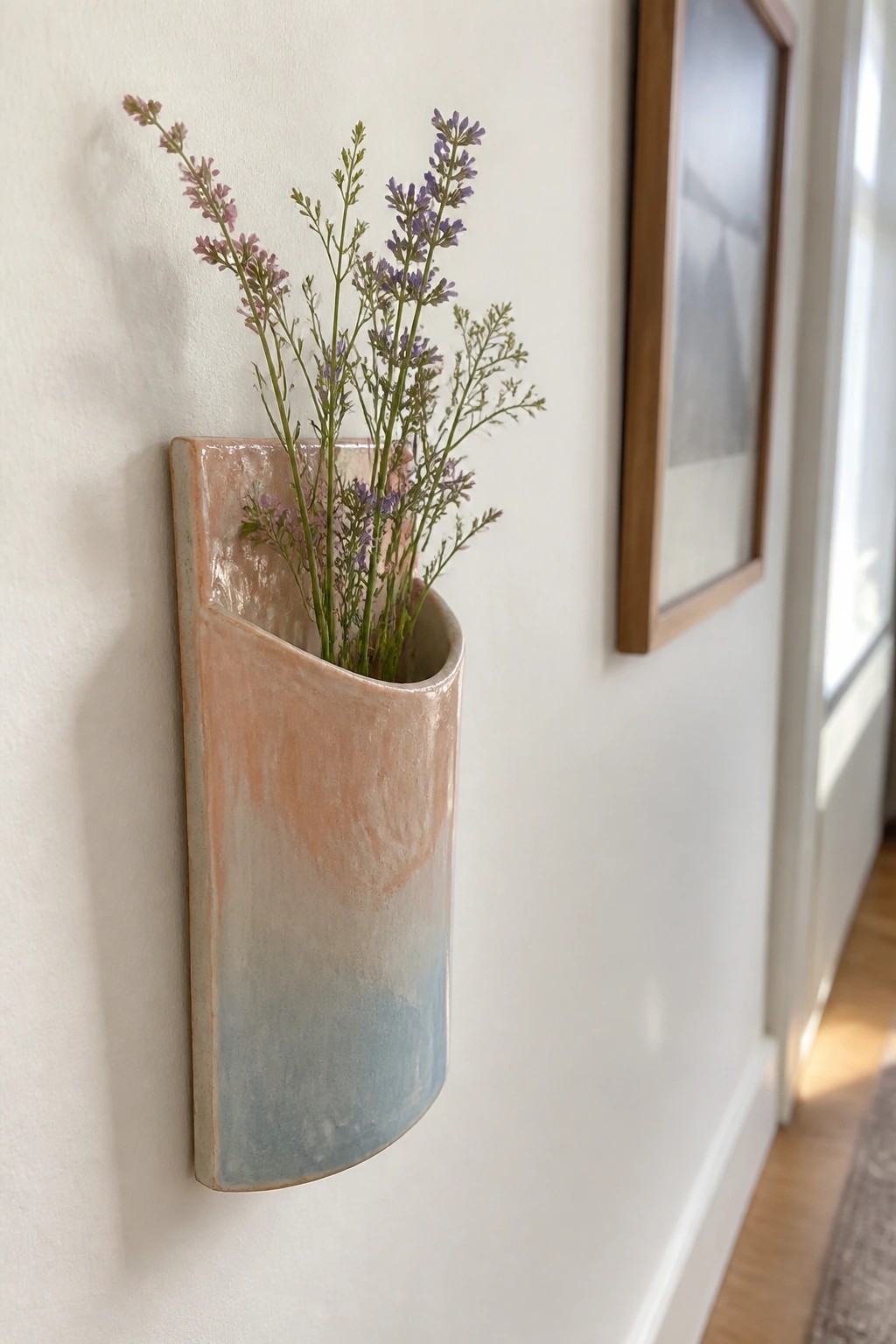
A slab-built wall pocket vase gives you a compact way to add flowers to a narrow space like a hallway or entry. The form is made from a single curved slab that creates an open front and rounded body without needing a wheel. The glaze moves from a warm peach tone at the top through a soft transition into blue at the base, which keeps the surface simple while adding depth.
What makes this idea useful is that the pocket shape mounts flat against the wall so it works in tight spots where a regular vase would not fit. You can change the width of the slab or the depth of the curve to hold different stem lengths or turn the same pattern into a shorter version for a bathroom. The gradient glaze is easy to adapt by swapping colors to match whatever room you want to place it in.
Frequently Asked Questions
What are slab vases and how are they constructed using the organic shape ideas?
Slab vases are built by rolling out flat sheets of clay and joining them together to form the vessel walls. To achieve soft organic shapes start by cutting gentle curves and flowing outlines from the slabs rather than rigid geometric forms. Score and slip the edges before pressing them together then support the structure with foam or fabric while it firms up to maintain those natural curves inspired by leaves stones or waves.
Which clays and tools work best for creating these soft organic slab vase designs?
Choose a clay body with good plasticity such as a stoneware or porcelain mix that contains some grog for strength during handling. Essential tools include a rolling pin or slab roller for even thickness a needle tool for cutting shapes and a rib tool for smoothing seams. Flexible plastic or foam supports help hold the curving forms in place as the clay dries to prevent distortion.
How can I adapt the 19 ideas for different sizes or practical uses like holding flowers?
Scale the templates up or down by adjusting the slab dimensions while keeping the same proportions for the organic curves. For flower vases add a drainage hole at the base before assembly or create a separate liner insert. Test the final piece by filling it with water overnight to confirm it holds without leaking and consider adding a narrow neck to the design for better stem support.
What glazing and firing tips help highlight the soft organic forms without cracking?
Apply glazes in thin layers using a spray or dipping method to avoid pooling in the curves which can lead to runs. Choose matte or satin finishes in earthy tones to emphasize the natural shapes. Fire slowly through the drying and bisque stages with the piece supported on a kiln shelf to reduce stress on the joins and always follow the clay manufacturer’s temperature guidelines.
How do I prevent warping or cracking when building these curved slab vases at home?
Work with clay at a consistent leather hard stage so the slabs are firm enough to hold shape yet flexible for joining. Dry the completed vase slowly under plastic sheeting for several days turning it occasionally to promote even moisture loss. Avoid direct heat sources and consider adding a small amount of paper pulp to the clay mix for extra flexibility during the drying process.

Pottery Path is my cozy corner of the internet where I share clay ideas, pottery inspiration, and simple projects you can recreate at home. I love exploring everything from air dry clay to handbuilt pottery to cute minis that brighten your day. My goal is to make clay crafting feel easy, fun, and welcoming for anyone who wants to try it.
You will find beginner friendly tutorials, creative pottery painting ideas, and lots of warm inspiration for slow and happy crafting. If you enjoy hands on creativity, this space will feel like home.