
I have been making small clay sculptures for a while now and animals always seem to turn out nicely.
These pieces work well as decorations because they do not take up much space.
I put together some ideas that focus on simple shapes and details anyone can try.
My favorites include birds and rabbits since they are easy to shape with basic tools.
You can place them on a windowsill or a desk to give a room a handmade feel.
Sleeping Cat Ring Dish

A curled ceramic cat creates this small ring dish where the body forms a shallow tray area and the head and tail define the outer edges. The design uses a smooth white glaze with simple pink paint on the inner ears for contrast. Sculpted details like closed eyes and pointed ears keep the form compact while still readable as a cat. This project falls into the ring dish category for jewelry storage on a small surface.
What makes this idea useful is how the animal shape turns a basic tray into something that stands out without extra decoration. You could rework the same curled pose into a dog or fox version to suit other rooms or gift themes. The compact size fits easily on a nightstand or bathroom ledge for everyday rings and small items. In a kitchen, the same shallow form could hold loose change or keys instead.
Sitting Fox Clay Figurine

A small sitting fox figurine is a straightforward clay sculpture project that uses basic pinching and shaping to build the body, ears, and tail. The design relies on a rounded torso and upright ears to suggest the animal without adding extra limbs or details. Warm orange glaze covers the back and head while a lighter tone defines the chest and face, and simple black lines mark the eyes and nose. This approach keeps the piece in the small decorative figurine category that works on shelves or desks.
The compact size lets you make several versions in one firing session and try them in different spots around a room. You can reuse the same body shape for other animals by swapping the ears and adding a different tail curve. The minimal face details make it easy to adjust the expression or leave it plain if you want a faster version. For gifts, this kind of piece stands out on Pinterest because the form reads clearly even in small photos.
Hedgehog Planter

A ceramic hedgehog planter gives a compact way to hold a small succulent or cactus. The rounded body uses a ridged texture to suggest spines while the head includes a short snout and simple eyes. This shape turns a basic pot into an animal figurine that stays functional for soil and drainage. The idea fits the category of small decorative planters that double as tabletop decor.
What makes this idea useful is how the low profile keeps the plant visible without overwhelming a shelf or windowsill. You could simplify the texture to basic lines or scale the same form down for tiny air plants. A piece like this works especially well as a gift because it needs little space yet stands out in a group of plain pots. The animal outline also photographs clearly for plant styling boards.
Elephant Face Mug

A small ceramic mug works well as an elephant when you add rounded ears on each side and shape the base into a short trunk spout. Simple indented eyes and a standard handle keep the form compact while still making the animal clear. This kind of project sits in the animal drinkware category where sculpted details turn a basic cup into a recognizable creature without losing function.
What makes this idea useful is the small size that lets you complete the sculpting and glazing in one session. You can change the ears and snout to make a bear, cat, or pig using the same mug base. On a desk or breakfast table the piece serves as both a cup and a small decorative object. For gifts the animal details help it stand out on a shelf compared with plain mugs.
Whale Ring Dish

A small ceramic dish formed in the shape of a whale makes a simple ring holder. The body creates the main basin while the tail adds a raised edge on one side. A blue glaze covers the interior and a white clay body forms the exterior, keeping the piece compact enough to sit on a nightstand or dresser. This idea falls into the category of animal-shaped ring dishes that combine a sculpted form with a shallow tray.
The shape does a lot of the work here since the whale silhouette already suggests a container without needing extra details. You could adapt the same idea by changing the tail angle or trying a different sea creature like a dolphin or fish for variety. The small scale means it uses little clay and fires quickly, so it works well as a weekend project or a gift that can hold a few pieces of jewelry. In a bathroom or entryway, the same form could hold earrings or keys instead.
Dachshund Spoon Rest

A dachshund-shaped spoon rest uses the dog’s stretched body to create a built-in trough that holds a wooden spoon or utensil. The brown glaze covers the entire form, bringing out the simple modeled details like the ears, paws, and tail without adding extra decoration. This turns a standard figurine into a kitchen holder that keeps spoons off the counter while staying compact enough to leave out.
The shape does a lot of the work here because the long body already provides the right length and depth for a spoon. In a kitchen, this kind of piece fits on a countertop near the stove or beside a cutting board where utensils get set down often. You could adapt the same idea by shortening the body for a cat version or using a lighter glaze to make the details stand out more. For a gift, something like this works well because it combines a small sculpture with everyday use.
Turtle Salt Cellar

A small ceramic turtle forms the base for a functional salt or spice holder. The shell creates the open bowl while the head, ridged back, and stubby feet are built as separate sculpted parts. Earthy green and brown glazes with speckling give the surface a natural, textured look that keeps the piece simple and cohesive.
The compact size makes it easy to keep on a kitchen counter or dining table where it stays both useful and visible. You could scale the same turtle shape down for a ring dish or stretch it slightly into a small planter for a single succulent. The animal form also gives a clear Pinterest-friendly hook without adding extra steps beyond basic sculpting and glazing.
Owl Candle Holder

A small ceramic owl figurine works as a tea light holder by leaving the top open and shaping the body into a shallow cup. The sculpted feathers, round eyes, and beak give the form clear definition while the matte glaze in brown and cream tones adds surface variation without extra paint. This fits the decor object category and keeps the piece compact enough to sit on a shelf or table.
The shape does a lot of the work here because the hollow body already provides the candle space without needing extra construction. A piece like this works especially well as a nightstand accent or grouped with other small animal forms on a mantel. You could swap the owl for another bird or animal, change the glaze colors, or simplify the feather texture to make a faster version. The small scale also makes it easy to adapt into a ring dish or tiny planter by adjusting the opening size.
Penguin Toothbrush Holder
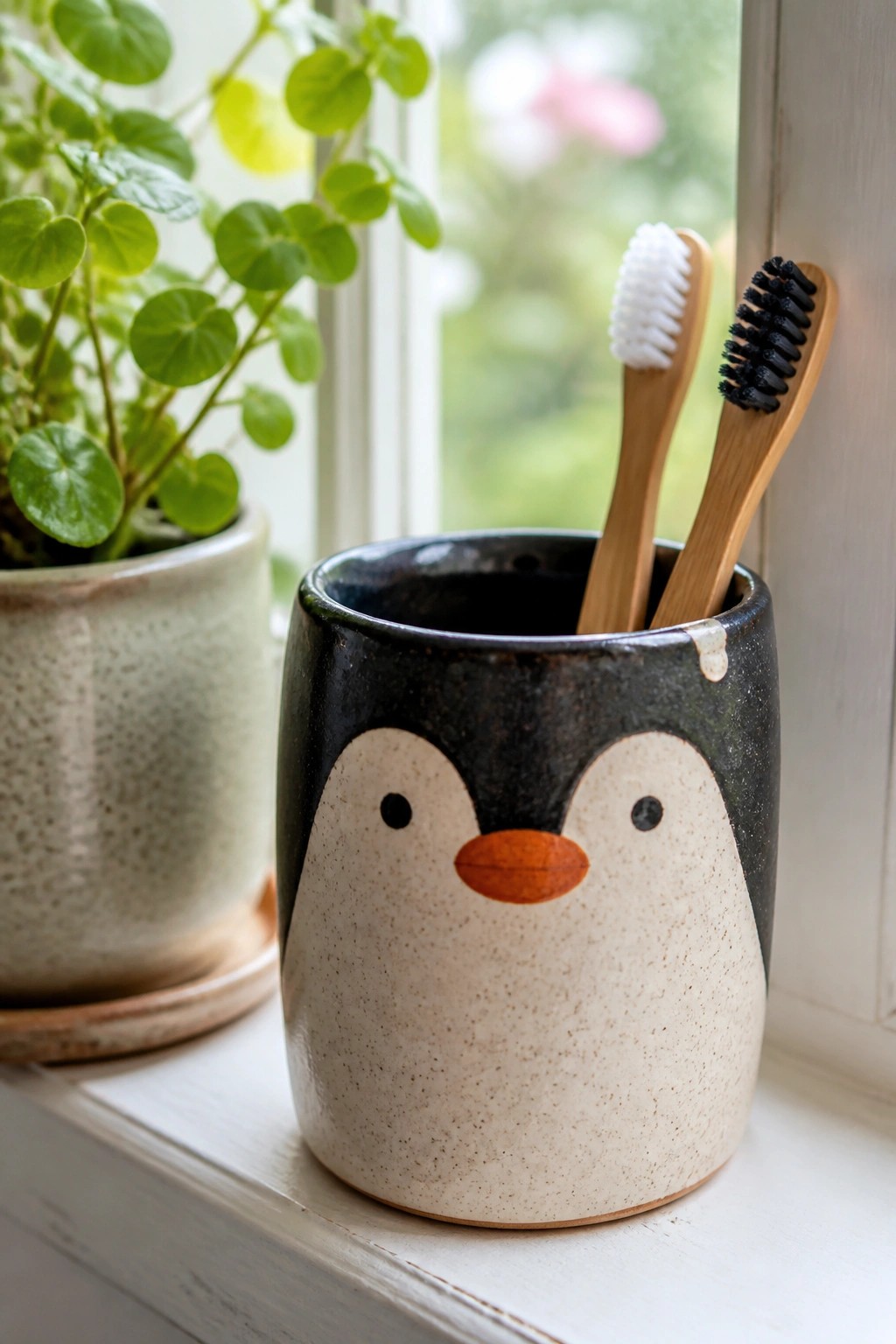
A simple cylinder of clay becomes a bathroom holder when painted as a penguin face. Black glaze covers the top half while the lower section stays light with a speckled finish, and a small orange shape forms the beak between two dot eyes. The form stays functional as a cup while the painted animal details turn it into a recognizable penguin without added sculpting.
What makes this idea useful is how the flat face painting works on any straight-sided cup or mug shape you already throw. You can swap the penguin for other animals by changing just the eye placement and beak color, or leave the top rim plain for a quicker version. The compact size fits on a sink edge or shelf without taking much space, and the same holder shape can be scaled down further for cotton swabs or desk items.
Sloth Hanging Ornament

A flat sloth shape cut from clay and finished with a matte green glaze creates a simple hanging decor object. The design uses a basic animal silhouette with three limbs, plus painted facial details and white stripes on the arms and foot for contrast. Small holes drilled at the top allow it to hang from twine or cord. This type of project falls into the small decorative hanging ornament category.
What makes this idea useful is how the flat form and drilled holes let it hang on a pegboard, hook, or wall without extra hardware. The small scale works well as a gift tag, plant accent, or nursery detail, and the same silhouette could be reworked into other animals or different glaze colors. You could simplify the painting further or add a magnet on the back to turn it into a fridge piece instead.
Frog-Shaped Ceramic Bowl

A shallow bowl built around a simple frog form creates a small decorative holder. The clay is pinched and pulled to form the head, eyes, and feet directly into the sides of the dish. A green crackle glaze covers the surface and highlights the sculpted details without needing extra paint. This approach turns a basic bowl shape into a functional animal piece that still holds small items.
The compact size works well on a dresser or desk for rings and everyday trinkets. You could rework the same idea with different animals or switch to a solid color glaze to change the look. For gifts, this shape stands out because it stays useful while keeping the animal theme clear. Making the dish a bit wider would let the same frog form hold soap or small plants.
Narwhal Ceramic Air Plant Holder

A narwhal-shaped ceramic planter works as a small holder for air plants or tiny succulents. The rounded body includes a long striped tusk, side fins, and tail, finished with a blue speckled glaze and minimal sculpted details like an eye and mouth. This approach keeps the form simple while making the animal shape easy to recognize. It belongs in the category of small decorative planters meant for desks or shelves.
The small scale makes it practical for tight spaces like a desk corner or grouped with other plants on a windowsill. You could rework the same basic body into other sea animals or swap the glaze color to fit different decor. For gifts, this shape stands out because it turns a basic planter into something more specific without needing extra parts. The speckled surface helps the form catch light while staying easy to reproduce in a few sizes.
Fawn Vase for Single Stems

A small clay deer vase turns the animal’s body into a narrow container that holds water and one or two flower stems. The head, ears, and legs are sculpted in one piece so the form stays compact while the opening sits at the top of the back. Speckled brown glaze with scattered white dots creates the fawn pattern directly in the surface rather than relying on added paint.
What makes this idea useful is how the animal shape doubles as a functional holder without needing extra parts. The small scale fits tight spots like a windowsill or desk corner where a regular vase would not. You could rework the same deer body into a pencil cup by widening the opening or shorten the legs to make a shallow tray for jewelry. A piece like this stands out on Pinterest because the animal silhouette is clear even from a distance.
Bird Soap Dish

A bird-shaped soap dish makes a compact bathroom holder out of a shallow tray form. The clay is pinched and carved into a simple side-view bird with a raised rim, tail details, and dotted texture along the edge. A glossy white glaze covers the whole piece and gives it a smooth, wipeable surface that suits wet areas.
What makes this idea useful is how the animal shape adds interest without needing color or extra parts. You can scale the same outline down for a ring dish or stretch it into a longer tray for jewelry. The built-in ridges keep soap from sitting in water, and the design works in any neutral bathroom setup. For a variation, swap the bird for another small animal while keeping the tray base and drainage lines.
Chick Egg Cup
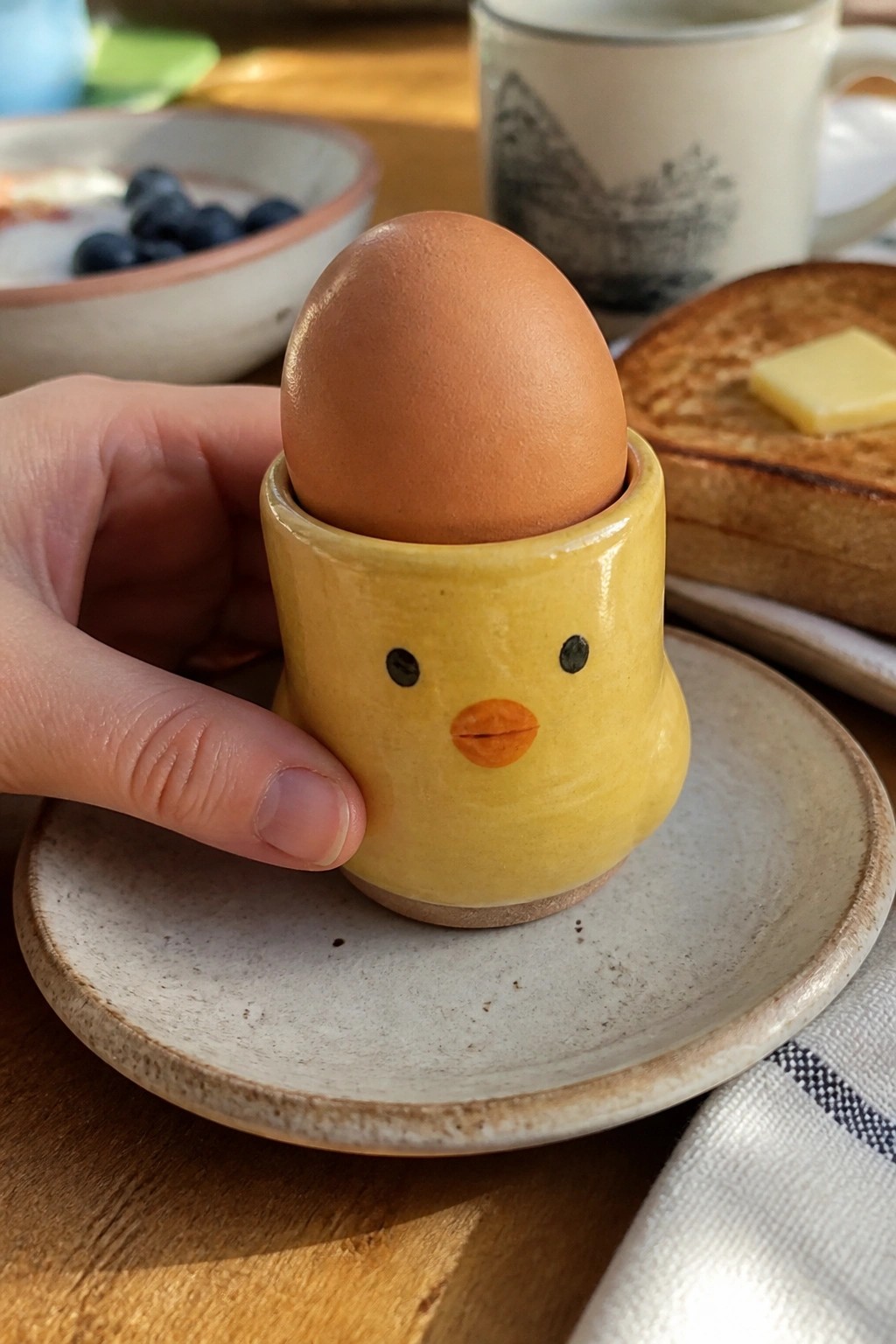
A chick egg cup starts as a small ceramic cylinder with a slightly flared base and an open top sized to cradle a standard egg. The body gets a smooth yellow glaze, then simple black dots and an orange oval are added to create the face after firing. This approach turns a basic kitchen holder into a compact animal sculpture that still serves a clear purpose at the table. The design stays functional while using minimal sculpted details to suggest the chick shape.
The shape does a lot of the work here because the open top and rounded walls already guide the form toward an egg cup. You can adapt the same body into a small salt cellar or tea bag holder by adjusting the opening size and skipping the face details. For a gift, something like this works well because it is useful on its own and easy to personalize with different glaze colors. The small scale also makes it a quick project to repeat in batches for markets or seasonal table settings.
Octopus Incense Holder

A small ceramic octopus works as an incense holder when a hole is added through the top of the head to support the stick. The eight tentacles are shaped into a low, rounded base that catches ash while keeping the piece stable on a flat surface. A speckled blue-green glaze adds subtle texture and color that suits the sea creature form without extra decoration.
The shape does a lot of the work here by combining the holder function with a compact footprint that fits on a nightstand or shelf. You could adapt the same idea by using a different glaze color or trying a simpler animal like a turtle with a similar hole and base. It serves as a practical gift because it handles a common task while taking up little space. This style also scales easily if you want to make a smaller version for a desk.
Small Clay Mouse Figurines

Small clay mice work well as a beginner-friendly figurine project for shelf or windowsill decor. Form the bodies from simple rounded shapes with added ears and feet, then fire and finish with basic painted lines for whiskers, eyes, and pink inner ears on a matte white surface. The minimal details keep the focus on the sculpted forms, and grouping different sizes creates a natural set without extra pieces. This style fits the small decorative figurine category that can stand alone or be arranged in clusters.
What makes this idea useful is how the basic mouse shape scales easily into multiple sizes using the same techniques. The small overall scale lets you test the form with little clay, and you can change the painted accents to fit different room colors. For a gift, something like this works well because you can customize the size or add a short name on the base. The same rounded body and ear method adapts quickly to other simple animals if you want to expand the set.
Swan Ring Holder with Tray Base

A swan-shaped ring holder uses the bird’s long neck as a tapered post for stacking rings while the body forms a shallow dish for smaller pieces like earrings or chains. The glossy white surface with minimal painted details on the head and beak keeps the focus on the simple sculpted form. This approach turns a standard ring dish into a small animal figurine that still functions for daily jewelry storage.
What makes this idea useful is how the single piece handles both display and containment without needing separate components. You could adapt the same shape to other long-necked birds or even simplify it into a plain cone on a round base for quicker making. It fits easily on a dresser or bathroom counter where you want something compact that still catches items. For a different version, shorten the neck slightly or swap the glaze color to match other decor pieces you already have.
Bear Paw Ring Dish

A small ceramic ring dish shaped like a bear paw gives you a compact tray for holding jewelry or small items on a desk or nightstand. The design uses a paw outline with sculpted claws and a fingerprint texture pressed into the center, finished in a glossy brown glaze that highlights the details. This approach turns a simple animal shape into a functional piece that still reads clearly as a tray rather than just a sculpture.
The small scale makes this easy to adapt by swapping the fingerprint for a paw print texture or changing the glaze color to match other decor. It works especially well as a gift because the paw form is recognizable without needing extra explanation. You could also stretch the same idea into a soap dish or a small catch-all for keys by widening the base slightly.
Cat Face Planter for Succulents

A small round ceramic planter becomes more distinct when the front surface is formed into a simple cat face using incised or painted lines for eyes, nose, and whiskers. The light speckled clay body keeps the overall shape compact so it sits low and stable while holding a single succulent or small cactus. This approach fits the planter category and works best with hand-built or wheel-thrown forms that stay under four inches wide.
What makes this idea useful is how the round shape and flat face area let you repeat the same animal details across multiple pots without changing the basic form. You can swap the cat features for other animals or adjust the clay tone to suit different plant colors on a windowsill or desk. For a gift, the same size works well with one small plant and needs only basic carving tools after the pot is formed.
Hedgehog Figurine with Carved Texture

A hedgehog figurine serves as a compact decorative clay sculpture. The body is formed into a smooth oval with shallow carved lines across the back to suggest spines, while the head stays simpler with a pointed snout and small black eyes and nose. A single brown glaze covers the whole piece and settles into the carved areas to add depth. This style works as a small animal figurine for display rather than functional use.
The small scale makes it simple to fit on a desk, shelf, or plant stand without crowding other items. You can adapt the carved spine idea to other animals by adjusting the body shape and snout length while keeping the same glaze. For a variation, try leaving the face unglazed or adding a matte finish on the spines to create contrast. This kind of project stands out because the texture adds visual interest with basic tools.
Raccoon Match Holder

A small ceramic bowl shaped like a raccoon face serves as a match holder. The rounded form with two ear cutouts at the rim keeps matches accessible while the painted black mask, nose, and whiskers define the animal clearly. Simple underglaze or slip lines for the fur texture and facial features add detail without extra clay attachments. This approach fits the small holder category for tabletop use.
The compact size works well next to a candle or on a shelf where larger pieces would crowd the space. You can change the animal to a fox or cat and keep the same bowl shape for cotton balls or small desk items. Painting the face after forming the basic bowl reduces the need for complex sculpting. The recognizable animal outline makes the finished piece easy to photograph for project boards.
Frequently Asked Questions
1. What type of clay works best for creating small decorative animal sculptures? Air dry clay is ideal for beginners because it does not require a kiln and is easy to shape into tiny details like ears or tails. Polymer clay offers more durability and can be baked in a home oven for a stronger finish. Always choose a clay that matches your skill level and available tools to avoid frustration during the sculpting process.
2. How can I keep my pottery animal figures from cracking while they dry? Work with thin layers of clay and allow each section to dry slowly at room temperature away from direct heat or sunlight. Cover the sculpture loosely with plastic wrap for the first day to control moisture loss. Scoring and slipping joints properly also helps maintain structure in small pieces like legs or wings.
3. What simple tools do I need to start making these charming clay animals at home? Basic supplies include a rolling pin for flattening clay, sculpting tools or even toothpicks for carving details, and a small sponge for smoothing surfaces. A set of miniature cutters helps with uniform shapes such as paws or beaks. Start with inexpensive options and build your collection as you practice different animal designs.
4. How do I add realistic textures like fur or scales to small clay sculptures? Use a stiff brush or wire tool to gently press patterns into the surface after the basic shape is formed. For fur effects roll tiny coils of clay and attach them with slip before smoothing the edges. Practice on scrap pieces first to achieve consistent results without distorting the overall form of your animal.
5. What are good ways to display or protect finished pottery animal sculptures? Place them on small wooden stands or inside shadow boxes to highlight their details and keep them stable. Apply a clear acrylic sealer for added protection against dust and moisture if the pieces are not glazed. Rotate displays seasonally and store extras in padded boxes to prevent chipping during handling.

Pottery Path is my cozy corner of the internet where I share clay ideas, pottery inspiration, and simple projects you can recreate at home. I love exploring everything from air dry clay to handbuilt pottery to cute minis that brighten your day. My goal is to make clay crafting feel easy, fun, and welcoming for anyone who wants to try it.
You will find beginner friendly tutorials, creative pottery painting ideas, and lots of warm inspiration for slow and happy crafting. If you enjoy hands on creativity, this space will feel like home.